Old Testament — Topic 18
18.1 Rotting to the Core: The Demise of the Kingdoms of Israel and Judah
(14:1–25:30)
The last twelve chapters of 2 Kings are preoccupied with the demise of Israel—both Northern and Southern Kingdoms. Since the fall of Samaria to the Assyrians in 722 BC happened 136 years before the fall of Jerusalem to the Babylonians in 586 BC, the narrator naturally deals with the former first (2 Kings 15:8–17:41), and then concludes with the downfall of Judah and the house of David (18:1–25:30). The previous division left us wondering how long Yahweh’s grace toward all the descendants of Abraham and Jacob will last. After the Omride decades, when Israel and Judah manage to work as allies politically and spiritually to the harm of both, the final division begins ominously with Judah and Israel clashing as they did prior to the Omride ascent (15:1–16:7). The northern rulers inflict a resounding defeat on Amaziah the Davidide, and Yahweh enables Jeroboam II to recover lost territories extending as far as Damascus and Hamath, despite the evil of his reign (14:23–29). However, after his forty-year tenure, the nation plunges headlong into the grasp of the Assyrians as six apostate Kings divide the remaining twenty-six years in rapid succession. Finally, in 722 BC the Assyrians capture Samaria and scatter the Israelite population throughout their vast empire (17:1–6). After tracking the disappearance of the Northern Kingdom of Israel, the narrator focuses on Judah, which is all that remains of the once-great nation of Israel and the Kingdom of David that extended from the River of Egypt to the Euphrates River (2 Sam 8:3). The following narrative exhibits two centers of gravity, dealing with aspects of the reigns of Hezekiah and Josiah, for both of whom David represents the standard of rule (18:1–6; 22:2, respectively). However, the former account ends with premonitions of Judah’s demise more than a century later (18:12–29), while the latter demonstrates that Yahweh marked the doom of Jerusalem/Judah in 586 BC on his calendar and that not even the rule of righteous Josiah could alter that decision. After Josiah’s death in 609 BC, the nation rapidly plunges to its doom at the hands of the Babylonians. Unlike in the fall of the north to Assyria, the narrator adds no interpretive soliloquy on the spiritual causes, presumably because the issues are the same (2 Kings 17:19–20). He describes the destruction of the temple (25:9, 13, 16), but Yahweh’s voice and hand are absent in the last chapter — but see the narrator’s brief theological reflection on the disaster in 24:1–4. Nebuchadnezzar and his hordes destroy Judah as agents of Yahweh because of the crimes committed in Jerusalem, especially by Manasseh. However as noted earlier, the story ends with a small shaft of light into the deep darkness of divine judgment and Babylonian exile (25:27–30).
 Background to the Demise of Israel and
Judah: Later Conflict Between Judah and Israel (14:1–15:7)
Apart from a few synchronic notes, this short narrative is silent on the relationship between Israel and Judah during the tenures of Joash (Jehoash) of Judah (836–798 BC) and Jehu and Jehoahaz of Israel (842–800 BC), presumably because both nations are dealing with pressure from the Arameans (12:17–18; 13:1–8, 14–25). However, during the reigns of Amaziah of Judah (798–769 BC) and Jehoash of Israel (800–784 BC), the hostile relationship between Northern and Southern Kingdoms that characterized the period between the division of the nation (930 BC) and the rise of the Omrides (884–842 BC) returns. The present section divides into four parts arranged in an ABABA order, with the narrative alternating between Judean (A) and Israelite (B) affairs.
King Josiah in a painting by unknown artist in the choir of St. Mary’s Church, Åhus [Sweden], 17th century
18.2 The Fall of the Northern Kingdom of Israel to Assyria, Yahweh’s Agents
of Doom (15:8–17:41)
After a brief report of the turmoil in the court in Samaria following Jeroboam II’s reign (15:8–16), the major portion of this division traces the demise of the Northern Kingdom that follows. Although the Assyrians destroy the nation, the narrator is keenly conscious that they come as Yahweh’s instruments of wrath against his own people. When the story ends, the northern tribes’ portion of the covenantal triangle involving Yahweh, Israel, and the land [of Canaan] has been obliterated:
1. Yahweh abandoned his people;
2. what remains of the population has been scattered all over the Assyrian empire; 3. the land lies in ruins, not to mention being inhabited largely by strangers.
The narrator tells this story in three stages that reflect the three visits of the foreign horde to the land:
- stage 1: the arrival of the Assyrians and the reduction of Israel to vassal status (15:6–26);
- stage 2: the return of the Assyrians and the loss of the northern tribal territories (15:27–31);
- stage 3: the final return of the Assyrians and the total destruction of Samaria and its environs (17:1–6).
Although the narrator remains preoccupied with the Assyrians, in 2 Kings 15:32–16:20 he presents a momentary interlude between the second and third stages, summarizing critical but related events transpiring simultaneously in Judah. After a brief review of Jotham’s reign (15:32–38), he focuses on Ahaz, who reigns in Jerusalem from 743–727 BC, which means that he witnesses the first two stages of the Assyrian invasion of his northern neighbors. Indeed, when the Aramean King Rezin and his ally Pekah of Israel invade Judah, he appeals to the Assyrians for aid and submits to Tiglath-Pileser III (745–727 BC) as his vassal (16:7–9). The account ends with the narrator’s extensive statement on the significance of these events (17:7–41).
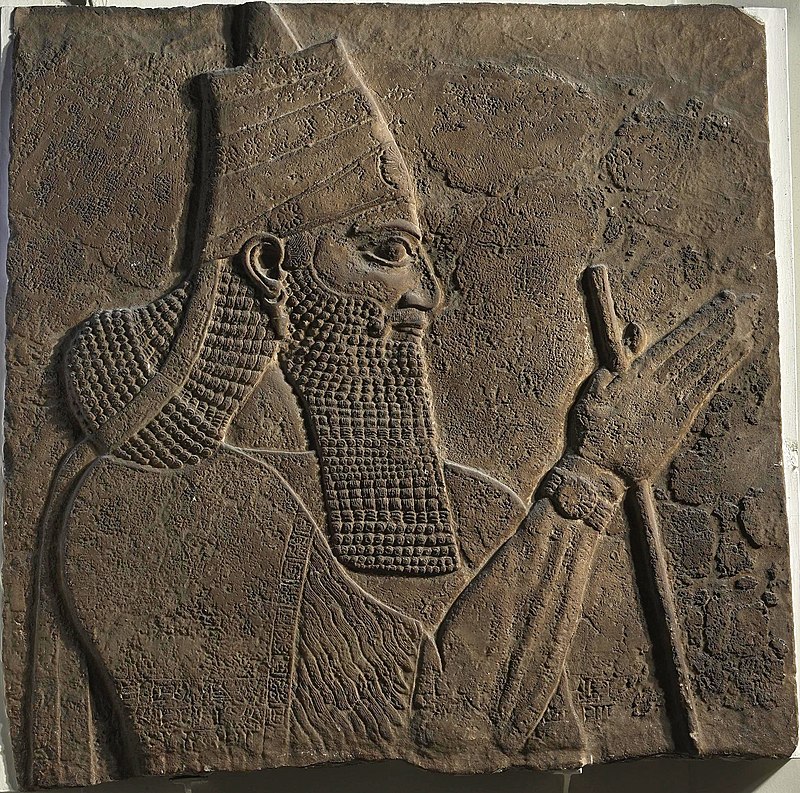
Tiglath-Pileser III as depicted on a
stele from the walls of his
royal palace.[He wears a long full beard, a moustache, and carefully curled
hair. His high crown is decorated with three bands which are ornamented with
rosettes. The ornamented ends of the lowest band hang down his back. His
garment has a fringed border decorated with rosettes alternating with
concentric squares. His earring is of a common type; on his wrist he wears a
four-fold bracelet with a many-petalled rosette in the middle. In his raised
right hand he holds a staff; his left hand is no longer preserved.
(Description extracted from the British Museum )]
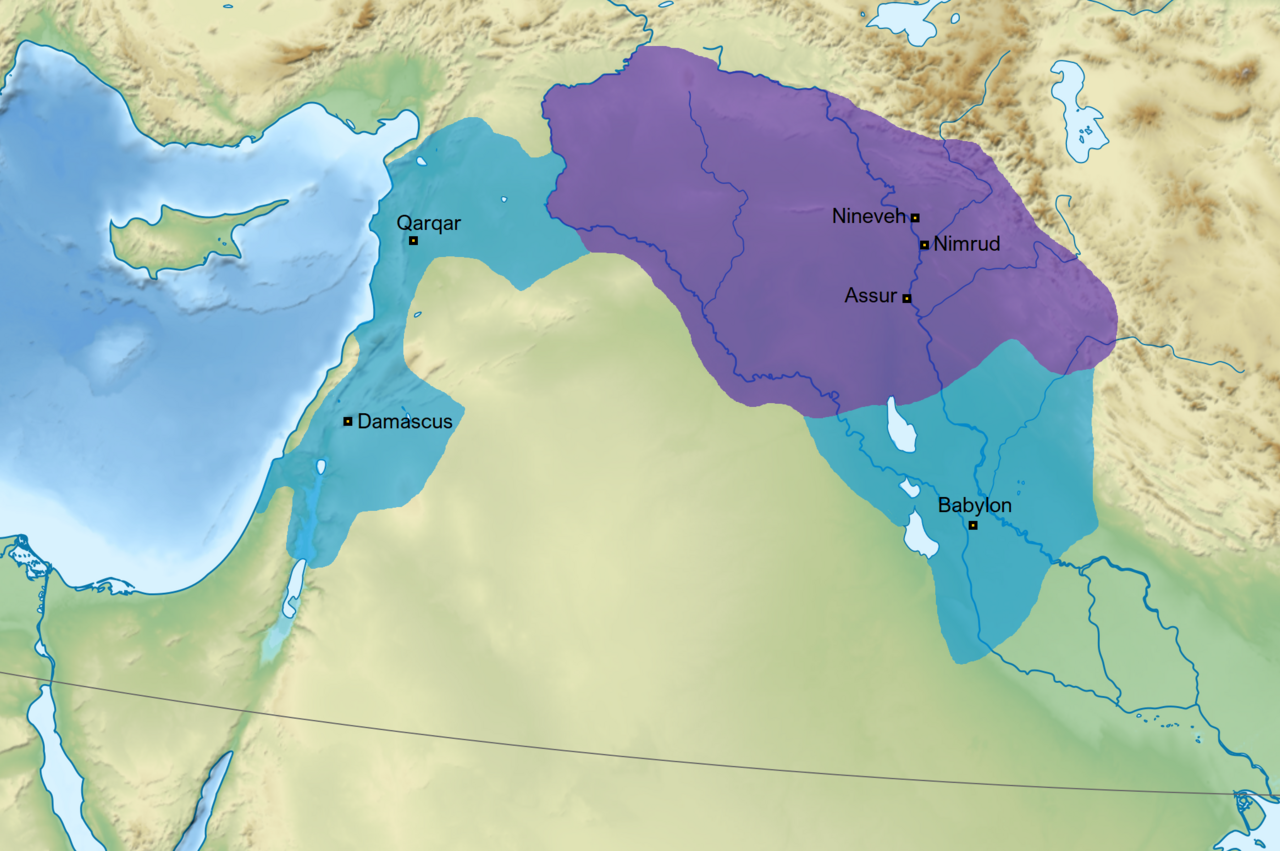
A map of the Neo-Assyrian Empire before (purple) and after (purple and blue)
Tiglath-Pileser’s reign
18.3 The Fall of the Southern Kingdom of Judah to Babylon, Yahweh’s Agents
of Doom (18:1–25:30)
Because more than 140 years separated the fall of the north (722 BC) from the fall of Judah (586 BC), it may seem unwise to trace the beginning of the end to Hezekiah’s time (727–698 BC). In contrast to his father Ahaz, who desecrated Yahweh’s house, Judah’s King Hezekiah restores Yahweh’s house and proper worship of Yahweh as soon as he becomes King. Hezekiah reconsecrates Yahweh’s house and reestablishes the priestly burning of offerings.
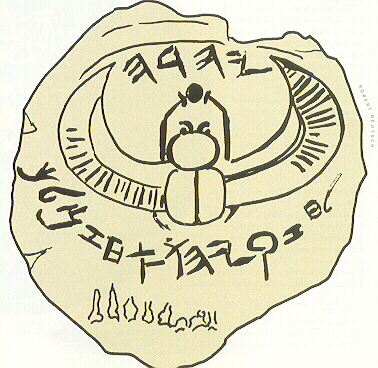
Seal of King Hezekiah
However, a series of prophetic utterances in the account justify this decision:
- First, the narrator ends the story of Hezekiah with Isaiah’s ominous prediction of the return of the Babylonians, who will carry off the treasures of Jerusalem and exile some of the King’s descendants (18:17–18).
- Second, after the fifty-five-year reign of the apostate Manasseh, through unnamed prophets Yahweh announces the certain dissolution of the covenantal triangle: he will abandon his people (Judah), wipe the land clean, and deliver his people into the hands of their enemies—all in fulfillment of the covenant curses in Deut 28 (2 Kings 21:12–15).
- Third, after the discovery of the Torah scroll in the temple, the prophet Huldah declares the irrevocable end of the nation (22:15–17).
These three prophecies anchor the narrative, dividing the period prior to the rush to the abyss into three sections: 18:1–20:21; 21:1–26; and 22:1–23:30, respectively. The remainder of this division reports the fulfillment of these prophecies. Remarkably, although the narrator’s primary interest is the fate of Judah and the Davidic dynasty, this time he offers no soliloquy on the causes and effects of Judah’s downfall. He probably assumes that readers/hearers will recognize that, as the spiritual heirs of the wretched Omrides in the north, the Judahites fully deserve the very same fate for the very same reasons (compare 21:12–15). Instead of such reflections here, the narrative concludes with a summary but enigmatic and hopeful reference to Jehoiachin’s fate in Babylon. Only time will tell the significance of this development.
18.4 A Theological Elaboration on the Division of the Kingdoms: An Orthodox
Perspective
The historical event of the division of the united Kingdom of Israel into the Northern Kingdom (Israel) and the Southern Kingdom (Judah) following the reign of Solomon (c. 930 BC) is, from the Orthodox patristic viewpoint, far more than a political schism. It is a profound event within the divine economy (oikonomia), governed by the permissive and directive will of God’s Providence. This division serves as a great paradigm, or typos , prefiguring the ultimate spiritual separation within humanity and revealing God’s faithful preservation of His people unto salvation in Jesus Christ.
1. The Division as Divine Pedagogy and Preservation
The division occurred “by the permission and providence of God.” The primary cause of the division was human sin—the idolatry of Solomon and the folly of Rehoboam (1 Kings 11-12). However, God, in His wisdom, permitted this fracture to achieve a greater good: the surgical separation of the faithful “remnant” from the corrupting influence of the majority.
- The Concept of the Remnant: The doctrine of the “remnant” (to hypoleimma) is central to Old Testament theology (e.g., Isaiah 10:20-22) and is fully realized in the New Testament. The Southern Kingdom, centered on Jerusalem and the Davidic throne, and containing the tribes of Judah and Benjamin (conventionally “2 tribes”), became the guardian of this remnant. This was not a matter of ethnic superiority but of covenantal faithfulness. It was here that the Temple worship, the God-established priesthood, and the line of David were preserved. The Lord, as a loving physician, amputated the gangrenous limb (the idolatrous North) to save the body’s core (the faithful South). This reflects a recurring pattern in salvation history: God allows a great falling away to purify and strengthen the “small flock” (Luke 12:32) that remains steadfast.
 2. The
Southern Kingdom: The Typology of the Davidic Messiah
The Kings of Judah, despite their many personal failings, sat upon the throne of David. This historical reality carries immense theological weight. The Davidic covenant (2 Samuel 7:12-16) was God’s unconditional promise that David’s line and Kingdom would be established forever.
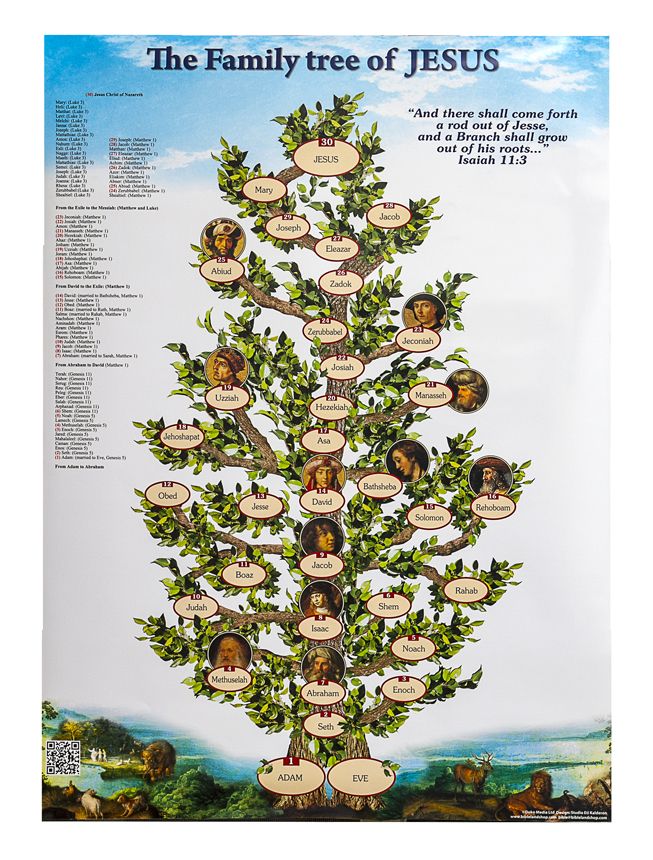
- Christological Fulfillment: The genealogy of Christ in the Gospel of Matthew (Matthew 1:1-17) meticulously traces the Lord’s legal descent through the Kings of Judah. This is a definitive theological statement: Jesus Christ is the fulfillment of the Davidic covenant. He is the ultimate “Son of David,” the true King of the Jews, and the eternal Monarch of the Heavenly Kingdom. Therefore, the Southern Kingdom, with its Davidic Kings, serves as a direct historical and prophetic typos (type) of the messianic Kingdom of our Lord. Its preservation through centuries of turmoil, exile, and restoration was a divine act to prepare the world for the arrival of the Anointed One, the Christ.
3. The Northern Kingdom: The Typology of Apostasy and the antichrist
In stark contrast, the Northern Kingdom of Israel immediately and persistently turned to idolatry. Its first King, Jeroboam, established a false worship system with golden calves in Bethel and Dan, creating a counterfeit priesthood and feasts (1 Kings 12:25-33). This was not merely religious error but a foundational apostasy , or**** a deliberate rejection of the God- established worship in Jerusalem.
-
The Tribe of Dan and the antichrist: The Holy Fathers, including St. Hippolytus of Rome in his treatise On Christ and antichrist , saw a particular significance in the Northern Kingdom and the tribe of Dan. This tradition draws from Old Testament prophecies where Dan is associated with treachery (Genesis 49:17) and from the fact that one of the centers of the idolatrous cult was in the city of Dan. The Fathers typologically interpreted this as a foreshadowing of the a****ntichrist , the “lawless one” who will establish a false and universal religion in opposition to the true Christ and His Church.
-
The Fate of the Kingdoms: The ultimate fates of the two Kingdoms confirm their typological meanings. The Northern Kingdom was the first to fall, being utterly destroyed and assimilated by the Assyrian Empire in 722 BC, its people lost to history—the “ten lost tribes.” This disappearance prefigures the ultimate fate of all that is opposed to God: complete and final dissolution. Conversely, the Southern Kingdom, though it fell to Babylon, was preserved in exile and allowed to return, maintaining its identity and the Davidic line, prefiguring the resurrection and eternal life found in Christ. The antichrist and his kingdom, like the Northern Kingdom, will seem powerful for a time but will be utterly annihilated by the “breath of the Lord’s mouth” at His Second Coming (2 Thessalonians 2:8).
4. Liturgical and Ascetical Application for Today
This historical-theological model is not a mere academic exercise but provides a vital lens for understanding the spiritual life.
-
Ecclesiological Understanding: The Church is the New Israel, the true “remnant” and “small flock” preserved by God in the world. Just as the faithful in Judah had to separate themselves from the syncretism of the North, so the Church must maintain its doctrinal and spiritual purity, resisting the “idolatry” of modern secularism and heresy.
-
Ascetical Understanding: On a personal level, this narrative illustrates the inner struggle of the soul. The “united Kingdom” represents the soul in its natural, God-intended state. Sin causes a division, where passions (the idolatrous “North”) war against the spirit (the faithful “South” guarded by grace). The spiritual life is the struggle, with God’s help, to allow the “Jerusalem” of the heart—where Christ the King reigns—to subdue and convert the rebellious “Northern Kingdoms” of our passions, so that the entire person may be united in worship of the one true God.
In conclusion, the division of the Kingdoms is a masterful stroke of divine Providence, a historical drama that reveals God’s unwavering commitment to His covenant, His power to bring good from evil, and His ultimate plan for the salvation of the world through the true King, Jesus Christ, Who gathers the scattered children of God into His eternal, undivided Kingdom — the Orthodox Church.
- Rotting to the Core: The Demise of the Kingdoms of Israel and Judah (14:1–25:30)
- The Fall of the Northern Kingdom of Israel to Assyria, Yahweh’s Agents of Doom (15:8–17:41)
- The Fall of the Southern Kingdom of Judah to Babylon, Yahweh’s Agents of Doom (18:1–25:30)
-
A Theological Elaboration on the Division of the Kingdoms: An Orthodox Perspective
18.1 Rotting to the Core: The Demise of the Kingdoms of Israel and Judah
(14:1–25:30)
18.2 The Fall of the Northern Kingdom of Israel to Assyria, Yahweh’s Agents
of Doom (15:8–17:41)
1. Yahweh abandoned his people;
18.3 The Fall of the Southern Kingdom of Judah to Babylon, Yahweh’s Agents
of Doom (18:1–25:30)
Seal of King Hezekiah
- Rotting to the Core: The Demise of the Kingdoms of Israel and Judah (14:1–25:30)
- The Fall of the Northern Kingdom of Israel to Assyria, Yahweh’s Agents of Doom (15:8–17:41)
- The Fall of the Southern Kingdom of Judah to Babylon, Yahweh’s Agents of Doom (18:1–25:30)
Related Concepts
- 2-kings-structure
- 2-thessalonians-28
- ahaz
- antichrist-typology
- apostasy
- assyria
- assyrian-exile
- babylonian-exile
- bethel-and-dan
- christ-the-king
- christocentric-exegesis
- christological-exegesis
- church-as-new-israel
- covenant-curses
- covenantal-faithfulness
- covenantal-triangle
- dan
- david
- davidic-messiah
- deuteronomic-history
- deuteronomy-28
- dissolution
- divine-judgment
- divine-pedagogy
- esau-as-flesh
- eternal-temple
- exile
- fulfillment
- hezekiah
- huldah
- human-sin
- inner-warfare
- isaiah
- isaiah-102022
- jeroboam
- josiah
- judgment
- land-theology
- liturgical-hermeneutics
- liturgical-interpretation
- luke-132-33
- manasseh
- matthew-1117
- matthews-genealogy
- messianic-typology
- mount-zion-as-church
- nebuchadnezzar
- northern-kingdom
- orthodox-church
- purity
- purity-of-doctrine
- reform
- resurrection
- romans-13
- sign-of-jonah
- small-flock
- southern-kingdom
- spiritual-life
- st-hippolytus-of-rome
- throne-of-david
- tribe-of-dan
- unnamed-prophets