History of the Russian Orthodox Church — Topic 16
The Russian Orthodox Church in 1941-1988. The newest
period.
-
The Russian Orthodox Church in 1941-1957
-
The Russian Orthodox Church in 1958-1964
-
The Russian Orthodox Church in 1965-1988
-
The newest period
-
The Russian Orthodox Church in 1941-1988. The newest period.
-
The Russian Orthodox Church in 1941-1988. The newest period.
-
The Russian Orthodox Church in 1941-1988. The newest period.
-
The Russian Orthodox Church in 1941-1988. The newest period.
The newest period
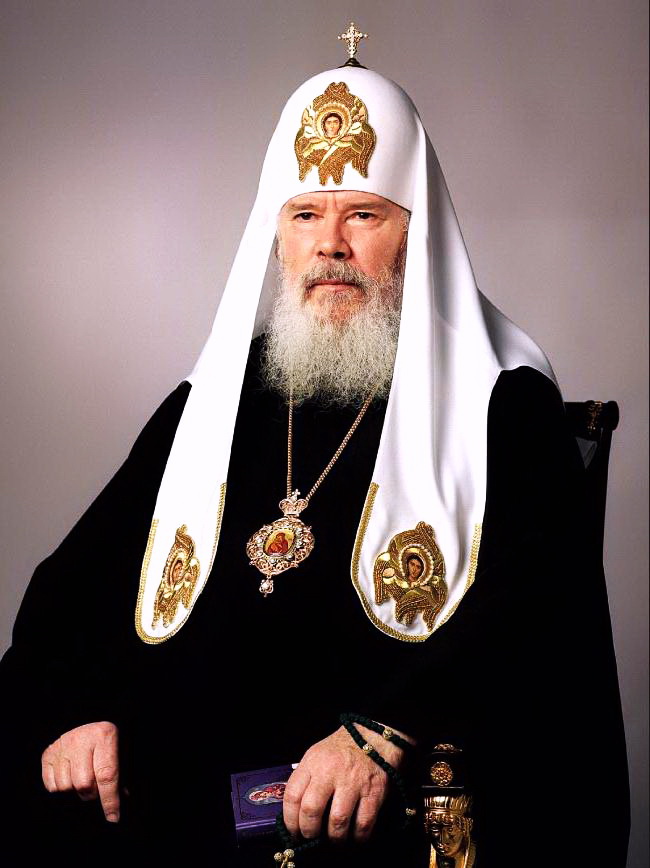
In 1985 Gorbachev came to power in the USSR. The liberalisation of the country’s political system began. This period is known in history as Perestroika. The features of totalitarianism were condemned, including repression of religion. The very attitude towards religious organisations changed. Churches began to receive their temples back (albeit in a sadly “shabby” form), new parishes were created and registered, monasteries were restored, and church treasures which by some miracle had managed to survive the Soviet repressions were returned. The publication of spiritual literature, in which secular publishers began to participate, expanded considerably. The leaders of the country recognised the immense moral influence of the Church on the education of young people and the population as a whole. Persecution of the Church was a thing of the past. However, overcoming the consequences of more than 70 years of godlessness and atheism will obviously take a long time.
With the beginning of Perestroika, the situation in the Church is beginning to change. For example, the number of parishes increased: while in 1986 the Russian Orthodox Church had 6,794 parishes, by the end of 1989 this number was close to 10,000. Many pulpits which previously had no ruling bishops were replaced by new bishops within decades. Monasteries were being returned to the Russian Orthodox Church, such as the famous Optina Pustyn, or Kiev Pechersk Lavra. New monasteries were also opened.
The anniversary year of 1988 saw an increase in the number of new entrants to the seminary. In Smolensk in the same year the first Interparochial Theological School was opened. This was followed by the opening of seminaries in Kishinev, Chernigov, Stavropol, Minsk, Novosibirsk. In 1989 the following seminaries were opened: Kiev, Tobolsk, and Minsk. Some parishes began to provide out-of-service catechetical instruction to the faithful, and the first Sunday schools were established. Church figures finally gained a wide access to the mass media - print, radio, and TV: they began participating in the public dialogue about problems worrying the people: about the moral state of the society and ways of its improvement, about the cultural heritage, about the national question, about the problems of peace preservation. The archpastors and pastors met with the general public in clubs, cultural centres, and were invited to schools and institutes.
The most important event of 1988 was the celebration of the 1000th anniversary of the Baptism of Rus.1 It was decided to coincide with this memorable date (among other events) with the anniversary Local Council. The festivities themselves took place from June 5 to 12 in Moscow. Heads of Local Churches and Exarchates, high non-Orthodox guests, representatives of non-Christian religious communities, public and political figures from all over the world were present. The Local Council opened on June 6 with a Divine Liturgy in the Trinity Cathedral of the Lavra of St. Sergius. The Council was attended by 272 representatives of 67 domestic and 9 foreign dioceses, 22 monasteries, 2 theological academies and 3 seminaries, foreign institutions of the Russian Church and the Autonomous Church of Japan. Sessions of the Council were held in the St. Sergius Refectory Church of the Lavra. Patriarch Pimen (Izvekov) and the permanent members of the Synod were elected to the Presidium of the Council. Among the acts of the Council an important place is occupied by the canonisation of saints. The following were proposed for a pan-Russian canonization: Blessed Prince Dimitriy Donskoy, Venerable Andrei Rublev, Venerable Maxim the Greek, St Macarius of Moscow, St Paisii of Velichkov, Blessed Xenia of St Petersburg, St Ignatius of Bryanchaninov, St Ambrose of Optina and St Theophanes the Recluse. By decision of the Council, they were all consecrated saints.
No less important was the new Charter of the Russian Orthodox Church. The urgency of the new Charter could be explained by the fact that the Statute on the Government of the Russian Church, which had been in force since 1945, had become obsolete. Its subsequent redrafting (1961) was dictated by the difficult situation in which the Church found itself at the turn of 50-60’s, led to the fact that the clergy was in fact removed from the management of parishes, legally - and even from the parishes themselves. The draft of the new Charter was made in connection with the “Definitions” of the Council of 1917-1918, which meant an attempt to express, in contemporary categories, the basic idea of Orthodox ecclesiology - the idea of synodality. The new Charter introduced the periodicity of convening Local and Bishops’ Councils. It also provided for the expansion of the composition of the Holy Synod: the number of its provisional members was increased to five. The Diocesan Assembly, as the supreme body through which the bishop governs the diocese, has also been restored.
As far as parishes are concerned, according to the Statutes, parish clergy are included in the Parish Assembly which is chaired by the rector. The Parish Council, according to the Statutes, is the executive body of the Parish Assembly and as such is accountable to it. The Council also resolved ”… to consider it necessary to increase the publication of books of the Holy Scripture, the works of the Holy Fathers and the prayer book, as well as catechetical, instructive, theological, church-historical and other literature… to increase the titles and circulation of church periodicals… … as well as teaching aids for theological schools… And also, to note the necessity of opening new educational establishments, … to improve the teaching and educational process in theological schools, to develop scientific theological thought in the spirit of the best traditions of Russian theological science”. In the following year, 1989, when the Russian Church was celebrating the 400th anniversary of the establishment of the Patriarchate, a Council of Bishops took place. Among other things, the Council glorified Patriarchs Job and Tikhon and instructed the Commission on Canonization of Saints to prepare materials for the canonization of the Archpriest John of Kronstadt. A decision was made to reorganize the system of theological education, deeming it appropriate to transform theological seminaries into institutions of higher learning.
By resolution of the Council of Bishops the Belarusian Exarchate of the Moscow Patriarchate was established, comprising the dioceses of Minsk, Mogilev, Brest and Polotsk. Metropolitan Philaret of Minsk became exarch of Belarus. Accordingly, the Holy Synod relieved him of his duties as the Chairman of the External Church Relations Department. Archbishop Kyrill of Smolensk was appointed as the new Chairperson of the External Church Relations Department.
On 3 May 1990, Patriarch Pimen of Moscow and All Russia died at the age of 80.2 On 6 May the funeral of the deceased Patriarch took place. His successor was Patriarch Alexy II (1929-2008). The episcopal service of the new Primate began on September 3, 1961, when he was consecrated Bishop of Tallinn by Archbishop Nicodim (Rotov). This was followed by the metropolitanate of Leningrad, which he continued to rule for another six years on a part-time basis until 1992, including his second term as Patriarch. During his archpastoral ministry Alexy was actively involved in foreign policy and ecumenical dialogue. When Patriarch Pimen died in 1990 he was elected as a candidate for the Patriarchal Throne. On 10 June 1990 Metropolitan Alexy became Patriarch of Moscow and All Russia.
In October of the same year a Council of Bishops of the Russian Orthodox Church took place. It must be said that the Council coincided in time with the collapse of the USSR3 when many of the Union republics showed sharp centrifugal tendencies which gave rise to separatist movements in the regions. This situation could not fail to have an impact on Church life. Among others, the question of the ecclesiastical situation in Ukraine, where Greek Catholics and Autocephalous schismatics continued to oppose the Orthodox Church, was at the heart of the Council. Throughout 1990, the Galician Uniates continued their campaign of forcible seizure of Orthodox churches. The Uniate Church fully restored its structure on the territory of Ukraine, and further efforts were directed towards the quantitative growth of its congregations.
The autocephalous movement was also growing: by early 1990 over 200 parishes in western Ukraine had split into schism, and their number was increasing with each passing month. The Ukrainian Orthodox Church (UOC) was granted autonomy in a letter that the Orthodox Episcopate of Ukraine sent to the Synod of the Russian Orthodox Church on July 9, 1990. In order to better oppose the union and the schism the UOC adopted a resolution on measures to further expand its autonomy. The response of the Council of Bishops was to grant independence and autonomy in the government of the UOC. Henceforth, the Primate of the UOC was elected by the Ukrainian bishops and was only blessed by His Holiness Patriarch of Moscow and All Russia. The Ukrainian Synod elected and installed ruling and vicarious bishops, established and abolished pulpits within Ukraine. Such powers have been given to the Ukrainian Orthodox for the sake of overcoming the schism and bringing peace to the Church. In fact, the UOC was given full internal independence while maintaining canonical unity with the Moscow Patriarchate. Moscow even renounced the rights to the property and assets which belonged to it on the territory of Ukraine. All of this belonged to the UOC. However, the granting of independence and autonomy to the Ukrainian Church did not bring conciliation in the local church life. Metropolitan of Kyiv and All Ukraine Philaret (Denysenko) hastened to use the granted independence of the UOC to his personal ends that were increasingly at odds with the interests of Ukrainian Orthodoxy. What was thought to be a means of preventing church turmoil was used by him not for the good of the Church, but solely to strengthen his influence.
From August 13-16, 2000 the new Council of Bishops met in the Hall of Church Councils of Christ the Saviour Cathedral. It had the following tasks: canonization of saints, adoption of a new version of the Charter, consideration of the draft “Fundamentals of the Social Concept of the Russian Orthodox Church” and a draft document on the basic principles of relations between the Russian Church and non-Orthodox Churches. It was unanimously decided that the Synaxis of the New Martyrs and Confessors of Russia of the twentieth century, known by name and hitherto unknown to the world but known to God, should be commemorated for general veneration in the Church. Their number was more than 1,200.4 It was the largest canonization in the history of the Russian Orthodox Church. The Council also canonized 57 saints who had lived in different historical periods (Holy Hierarch Archimandrite Arseniy (Macevich)5, St. Seraphim of Vyritsky, St. Reverend Alexy Mechyov, etc.).
The draft document “Basic Principles of the Relationship of the Russian Orthodox Church to Non-Orthodoxy” was approved, in which, on the one hand, the Orthodox Church is characterized as the only one of the confessions identical to the one holy conciliar and apostolic Church of the Creed, and on the other hand, the relative ecclesiasticity of the non-Orthodox Churches is also recognized, in as much as they have preserved the heritage of the ancient Church. Metropolitan Kirill presented a draft of the “Fundamentals of the Social Concept of the Russian Orthodox Church”. This document became a unique phenomenon in the history of the Orthodox Church, since no other local Church has such a document, in which the position of the Church on social problems, including property, secular culture and science, peace, war, crime, secular law, media, labor, family and marriage issues, bioethics and ecology would be expressed so completely and systematically.
After a detailed and hotly debated discussion a number of amendments to the new draft Charter were adopted whose publication was caused by the fact that after the political changes of the early nineties of the 20th century the Russian Orthodox Church found itself in the throes of a radical change. The Russian Orthodox Church found itself in radically different legal conditions than before: it gained its freedom and at the same time its canonical territory as a result of the collapse of the USSR found itself within several states. The main innovation of the 2000 Charter was the redistribution of the jurisdiction of the Local Council and the Council of Bishops in the direction of extending the authority of the latter. In addition, the new Charter regulated the management of church property and was formulated in accordance with current legislation, which recognizes the rights of legal persons for church institutions.
During the reign of Alexy II, there was also a process of handing over to the Russian Church its property (restitution). The beginning of the legislative process was the presidential decree No. 135-rp of December 31, 1991, “On the return of buildings and religious literature to the Russian Orthodox Church”. The building of the Council for Religious Affairs under the Cabinet of the USSR, together with its library of religious literature, was handed over to the Church. At short intervals thereafter, new orders and decrees regarding the transfer of properties and real estate to the Church were issued. For example, in the 1990s the Donskoi Monastery, the Church of Martyr Tatiana at Moscow State University, and the Holy Trinity Ipatiev Monastery in Kostroma were amongst the religious facilities handed over to the Russian Church. On 30 November 2010, the President of the Russian Federation D. Medvedev signed Federal Law No. 327-FZ “On the Transfer of State or Municipal Property to Religious Organizations,” which defines the “procedure for the gratuitous transfer of property of religious designation in federal, regional or municipal ownership to religious organizations for ownership or gratuitous use”.
However, this process evoked protests from both the museum administration and ordinary museum workers and the public at large. It was spoken about the absence of sufficient conditions for restitution: that the transfer of museum valuables to the Church could lead to their loss and that this would cause an economic blow to the museum sphere. There were, however, also more objective problems: for instance, the question of preservation of cultural monuments transferred from museum collections; the question of accessibility; and, finally, the problem of special premises where the objects to be transferred would be moved.
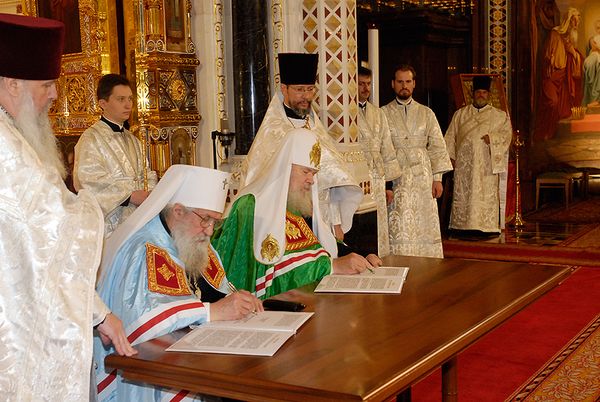
Returning to the person of Patriarch Alexy, let us mention one more remarkable page in his life and activity, namely, the reunion of the Russian and Foreign Churches. This took place on 17 May 2007. The Act of Canonical Communion between the Russian Orthodox Church Outside of Russia and the Russian Orthodox Church of the Moscow Patriarchate was signed by Patriarch Alexy II of Moscow and All Russia and Metropolitan Laurus, First Hierarch of ROCOR. Until the end of the Soviet state, there was a permanent conflict between the two jurisdictions. The Moscow Patriarchate regarded the clerics of the Russian Orthodox Church as schismatic and referred to the Russian Orthodox Church as a “Karlovacian schism” or “Karlovians”. From time to time the Moscow Patriarchate called upon “all of its members in exile and outside the fence of the Mother Church to come to the right decision to return to their homeland”. The Western hierarchy made its own accusations: 1) the rejection by the Moscow Patriarchate of the Martyrs and Confessors of Our Time; 2) the identification by the MP of the interests of the Church and the godless State; 3) Moscow’s statements about the schismatic nature of its foreign jurisdiction.
During the perestroika era, there were shifts in a positive direction in these complex relations. Even greater hope for rapprochement emerged with the election of Archbishop Laurus as First Hierarch of the ROCOR in 2001. Regular meetings and consultations between representatives of the two sides of the same Church began. By 2006 the Act of Canonical Communion was formulated, under which the ROCOR “remains an integral, self-governing part of the Local Russian Orthodox Church” and will be “independent in pastoral, educational, administrative, economic, proprietary and civil matters, thus remaining in canonical communion with the Entity of the Russian Orthodox Church. On May 17, 2007, the Feast of Ascension, the Act of Canonical Communion was solemnly signed in the Church of Christ the Savior in Moscow.
However, a number of clerics and laity of the Russian Orthodox Church have taken a negative view of unity. Opposition in the ROCOR was caused by the ROCOR’s refusal to withdraw from the World Council of Churches and other ecumenical organisations, as in the past the ROCOR has condemned ecumenism as heresy. Clerics in the ROCOR are concerned that appointments to the ROCOR, especially the first hierarch and bishops, will have to be approved in Moscow. Bishop Agafangel (Pashkovsky) of Tauris and Odessa became the centre of opposition. The most conservative parishes of ROCOR who wished to remain in canonical isolation and abstain from communion with the Moscow Patriarchate united around him. On November 18, 2008 they held the fifth All-Diaspora Council of ROCOR in New York where Metropolitan Agafangel was elected First Hierarch of ROCOR.6 A number of parishes joined the non-canonical Russian True Orthodox Church and Greek Old-Rite jurisdictions.
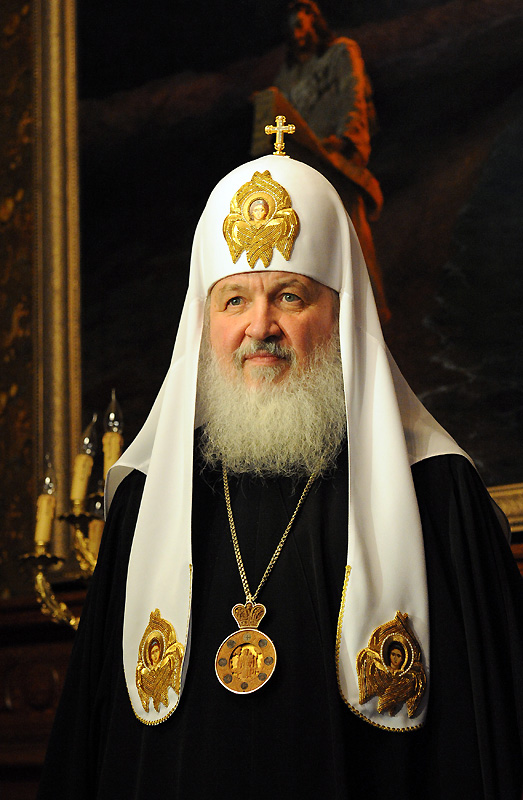
After the death of Alexy II on 5 December 2008. The Holy Synod elected Metropolitan Kirill (Gundyaev) of Smolensk and Kaliningrad onto the Patriarchal Throne. On 27 January 2009, he was elected Patriarch of Moscow and All Russia at the Local Council with 508 votes out of 677, that is 75%. Under Patriarch Kirill significant reforms took place in the Russian Church. These included the division of large dioceses into smaller ones and the appearance of new exarchates and metropolitan districts. Patriarch Kirill’s other achievement was the reunification of the Moscow Patriarchate with another part of the Russian Orthodox Church abroad - the Archdiocese of Western European Parishes of the Russian tradition. It happened on November 2-4, 2019.
The Russian Orthodox Church in 1941-1957
World War II, which began for Europe in 1939, dragged the USSR into its orbit in 1941, when Hitler’s troops crossed the western border on 22 June. The war called into question the expediency of the entire political system of the Soviets. All the resources of the country were mobilised to meet this challenge. This included the Russian Orthodox Church. From the beginning of the war the clergy returned from the camps. By September 1943 six archbishops and five bishops were released. Churches begin to be opened. It is known that Hitler himself disliked Christianity, believing it to be a slave religion. His ideal was the ancient epic religion of the Germans. Though in his practice he was guided by purely pragmatic tools, the role of which could play any religious concept, up to the occult and magic. In this logic from the end of December 1941 decrees on the freedom of the Church were issued in the occupied Russian territories. It was forbidden to work on Sundays, it was told to have icons at home, to wear crosses, to pray before and after meals. All acts of civil status had to be “completed” by the Church.
Why was this done? Hitler had a good sense of the separatist mood in the western suburbs of the USSR: Ukraine, Belorussia, the Baltic states - their Christian communities with a pronounced autocephalous attitude were very profitable grounds for the Germans to develop their political and military success. It was necessary to create pockets of an alternative hierarchy here, allied to the new power. Hitler’s decree of 11 April 19427 is well known: “We must avoid that a single Church meets the religious needs of large areas. Every village must be turned into an independent sect. If some villages want to practise black magic, let them, we must not hinder. In short, our policy should be to encourage any form of disunity and division.”
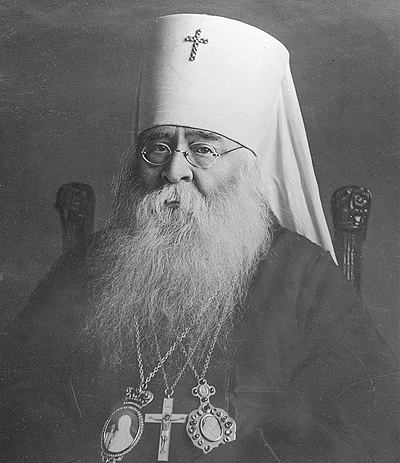
On the first day of the war - 22 June - when the Soviet leadership, led by General Secretary Stalin, had not yet recovered from the shock of the invasion, Metropolitan Sergius Stragorodsky, Patriarchal Locum Tenens, wrote a message to “Pastors and shepherds of Christ the Orthodox Church” in which he urged the Russian people to defend the Fatherland. This was the first official statement in the first hours of the war, emanating all the more from the Russian Church, not from the Soviet authorities (Stalin would remain idle for another 10 days)8. With the enemy closing in on Moscow in the autumn of 1941, the Patriarchate was evacuated to Ulyanovsk. From here Sergius denounced the enemies of the country and of Christianity, and wrote messages in which he inspired the people to fight the enemy, prophetically foretelling victory. During the daily divine service, the deacon proclaimed the Litany of Victory for Russian arms.
During the Red Army counter-offensive at Stalingrad on November 19, 1942, when the Red Army broke through in the area of the Romanian advance, Sergius addressed to the Romanian pastors and the Romanian people with a request to sever relations with Hitler. During these difficult days of the Battle of Stalingrad, Sergius appealed to the faithful to raise funds for the building of a tank column bearing the name of Dimitry Donskoy. In wartime poverty the faithful were able to raise a gigantic sum - 200 million rubles.9 During the war the government radically changes its attitude towards the Church. In September 1943 Stalin meets with the three metropolitans for talks. These talks resulted in the opening of churches, theological schools and pastoral courses. This is for a reason, for Stalin is a former seminarian and knows the spiritual potential of the Church. He knows the power and effect of her preaching, which can be an important factor in victory. Studying history on the seminary bench, he was acquainted with the role played by the Church in the crisis times of the past: the Mongol yoke, the German-Swedish aggression, the Time of Troubles and the Patriotic War of 1812. The Church could once again become the centre of patriotic revival, the upliftment of the Russian people.
To this should be added another reason: it was necessary to form a powerful and legitimate canonical competition to Hitler’s policy of opening churches. Clergy, bishops began to return. The union of the militant godless loses its state content, and quickly disappears. Finally, another reason was rooted in the realm of diplomatic arrangements. A conference in Tehran was scheduled for the end of November 1943, with Stalin, Churchill and Roosevelt in attendance. Here Stalin wanted to achieve the opening of a second front in Europe. In order to do that, it was necessary to create the appearance of freedom of religion and conscience in the USSR, to convince them that there was no persecution of the Church.
But back to Stalin’s memorable meeting with the metropolitans. Shortly before the meeting with them Stalin had an interview with Security Colonel G. G. Karpov about the state of affairs in the Russian Church, about the personality of Metropolitan Sergius, about the Eastern Patriarchs, about the situation in Romania, Bulgaria, Yugoslavia, about the relations of the Russian Church with foreign churches. The Secretary General asked about the number of parishes and the situation of the episcopate. He said that it was necessary to create a special body which would liaise between the government and the Church - the Council on the Russian Church. Karpov was appointed as its first chairman. The nature of the Council was outlined as follows: the Council did not take decisions, but merely monitored church affairs and reported on everything to the government. At the meeting itself Stalin expressed a desire to know the needs of the Church. Metropolitan Sergius spoke. He pointed out the need to open churches, the number of which did not meet the needs of the people. Asked permission to convene a council and elect a Patriarch. Stated the need for theological schools, as the Church had no staff. Stalin approved the idea of convening a Council, and ordered to provide everything necessary for this, up to and including military aircraft.
It was opened on September 8, 1943, with 19 hierarchs present, three of whom had been transported directly from prisons. The main act of the Council was the election of Sergius as Patriarch, he was elected by open ballot. Under the Patriarch a Synod was restored which included Metropolitans Alexei Simanskiy, Nikolai Yarushevich, Archbishops Alexei Kuibyshev, Sergius of Gorky, John of Yaroslavl and Luka Voyno-Yasenetsky. The Russian Orthodox Church Abroad did not support the election of Sergius, issuing a note of no confidence. The argument was that there was no quorum (there were only 18 bishops apart from Sergius). The new Patriarch did not rule for long. On 15 May 1944 he suddenly died of a stroke at the age of 77. The election of the new Patriarch was timed to coincide with the Yalta Conference, which began on February 4, 1945, in Livadia. On the same day the enthronement of Alexius I, who had been elected two days earlier, took place. The Eastern Patriarchs were invited to the Council to avoid the reproach of non-representation: the Patriarchs of Alexandria, Antioch, the Catholicos of Georgia, representatives of the Church of Constantinople and the Church of Jerusalem. A delegation from the USA (Metropolitan Veniamin Fedchenkov) was also present. The first issue of the Council was the elaboration and approval of the Charter of the Church - “Provisions on the Administration of the Russian Orthodox Church”.
This document sharply emphasized the hierarchical nature of governance and the status of the Patriarch, which clearly reflected the psychology of the secular cult of personality so characteristic of that era. The powers of the Patriarch were being elevated. Henceforth it was left to the Patriarchs or the Synod to convene a council under the presidency of the locum tenens, who was not elected. He became the senior permanent member of the Synod. Hierarchs were appointed by the Patriarch and elected by the Synod. It recommended the candidate to the Patriarch. The Diocesan Council was established by the bishop, and the rector of the parish was appointed by the bishop. He was responsible for the economic activities of the community. The church and the parishes had limited juridical personality. The second point was the election of the Patriarch. Metropolitan Alexey Simansky was unanimously elected.
In the post-war years thousands of new parishes were opened in all dioceses, especially in Belorussia and the Ukraine. By 1949 the Russian Church had 14,477 parishes. The churches were full, and it was mainly the women (“white shawls”) whose husbands, sons and fathers had either died in WWII or were in the ITL (penal labour camps). On April 21, 1946 the Trinity Sergius Laura was opened for divine services. Spiritual schools were revived: Moscow and Leningrad theological academies and seminaries were opened. Hundreds of priests were ordained every year. The most important task of the Patriarch and the Synod was to fill the bishopric. By 1949, the Episcopate of the Russian Church already had 74 bishops occupying cathedra within our country. However, beginning in 1948, cooperation between the Church and the Soviet government began to falter. The cooling down was naturally caused by the State. Stalin seems to have realised that his hopes for the mediation of the Russian Church in resolving his international ambitions, especially in the post-war bipolar world and the Cold War, were in vain. In addition, the flywheel of the “party purges”, to which the General Secretary’s attention was now directed, was gaining speed again within the party.
From the autumn of 1948 until Stalin’s death, the government did not allow a single church to be opened. Arrests of clergymen increased. Stalin’s death in 1953 brought about a profound change in the life of the country, which was called a thaw. These changes did not spare the Russian Church. The camps began to release the innocent convicts, first under an amnesty, then most of the convicts were rehabilitated. Priests and bishops came back. New hierarchical consecrations were being performed. The number of churches during this period increased to 13,500 parishes, and the number of clergy grew to 12,500 people. The beneficial changes in the life of the country gave hope for a further normalisation of relations between the Church and the Soviet state. However, this all came to an end in 1958, when Khrushchev came to power.10
His political programme also included a struggle to ‘overcome the religious remnants of capitalism’ in the minds of the Soviet people. This soon found expression in the media’s information harassment of the clergy and the Church. This period was marked by a sharp decrease in the number of parishes and monasteries, by the undermining of the Church’s material and financial base, by the almost complete liquidation of religious educational institutions, by tight control of the personnel policy of the Patriarchate, by pressure on various categories of believers up to and including the total ban on teenagers and members of the military to attend Church. The post-war period was marked by another event, namely the accession of the Uniates of Galicia to the Russian Church. The initiator and leader, was Protopresbyter Gavriil Kostelnik. At a council in Lviv on 8 March 1946 the union was abolished.11 About 3,000 parishes joined the Russian Church. Those who did not recognise the reunification were persecuted by the Soviet authorities, which led to hostility towards the Russian Church. Some Uniate communities went into hiding.
The Russian Orthodox Church in 1958-1964
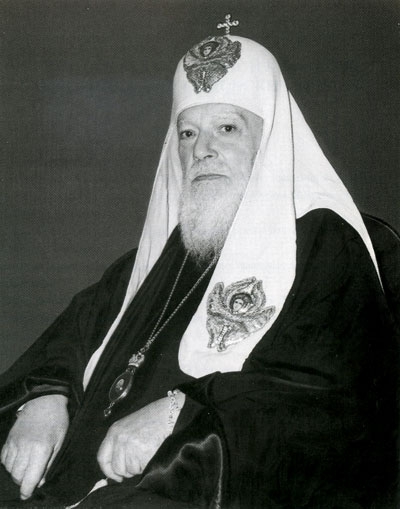
In 1953, after Stalin’s death, Khrushchev came to power. From 1958 he was Chairman of the USSR Council of Ministers. His political course also included a struggle to “overcome the religious remnants of capitalism” in the minds of the Soviet people. Attacks on the Russian Orthodox Church intensified in the press. Renegades were also involved in this campaign. In 1958 an atheist pamphlet was published by a former teacher of the Odessa Seminary, E. Duluman. Statements by former archpriests P. Darmansky, A. Spassky and Chertkov about renouncing God. On December 5, 1959, Pravda published an article by professor Alexander Osipov of the Leningrad Theological Academy, who was banned from the priesthood for having entered into a second marriage, in which he publicly blasphemed God and the Church. One after the other his atheistic articles and pamphlets began to appear. Khrushchev’s anti-Christian campaign gathered pace. The closing of churches began.
On February 21, 1960 G. G. Karpov, the Chairman of the Council on the Russian Orthodox Church, under whom during the war and post-war years there was a mass opening of orthodox parishes, was dismissed. He was succeeded by V.A. Kuroyedov. Later, in December, 1965, the Council on the Russian Church was merged with the Council on Religious Denominations. The new body, which was headed by V.A. Kuroedov, was called the Council for Religious Affairs at the Council of Ministers of the USSR. Changes were also occurring in the composition of the highest organs of church government. On June 21, 1960, Metropolitan Nikolai of Krutitsy and Kolomna, as Chairman of the Department for External Church Relations, was succeeded by Archimandrite Nicodim (Rotov), who was elevated to the rank of Bishop of Podolsk.
On July 18, 1961, the Feast Day of St. Sergius of Radonezh, immediately after Divine Liturgy, the Council of Bishops was held at the Trinity-St. Sergius Lavra. The Council was opened by Patriarch Alexy. The main topic on the agenda was the introduction of amendments to the “Regulations on the Russian Orthodox Church” as they pertained to parish administration. The Council of Bishops established a new organisation of parish management. The rector, together with the clergy, were removed from participation in the Parish Assembly and the Parish Council. All the economic and financial cares of the parish and the church were vested in the Parish Assembly and the Parish Council, which were composed exclusively of laymen and headed by a rising priest. This reform was implemented under pressure from the Khrushchev government, which demanded that parish life be brought into strict compliance with the 1929 All-Russian Central Executive Committee and Council of People’s Commissars of the RSFSR Regulation on Religious Associations, which excluded clergy as persons from involvement in the economic affairs of religious communities.
The Council approved the entry of the Russian Church into the World Council of Churches. While the Council was in session, church closures continued all over the country. The reasons were varied: the church had been opened during the war in occupied territory with the permission of the German authorities; there was a school near the church; the church was obstructing traffic, etc. The number of clergymen was also decreasing. The admission to the theological seminary was decreasing. Many of them were being closed. In 1959 the Russian Church had 47 monasteries, and by the mid 1960’s only 16 remained; the number of monks had dropped from about 3,000 to about 1,500 by that time. The great difference between the Khrushchev persecutions and those that befell the Church in the 20’s and 30’s was that they took place without bloodshed and almost without arrests. Priests whose parishes were being closed, dismissed or retired, went into secular service. At the turn of the 50’s and 60’s, amidst the internal oppression of the Church, its external contacts with the foreign Christian world became more intense.
In 1958 the first official meeting between representatives of the Russian Church and the World Council of Churches took place in Utrecht. The following year the Russian Church sent its delegation to the Council as observers. The Russian Orthodox Church has been represented in the World Council of Churches since 1962.12 Within the World Council of the Churches the representatives of the Russian Orthodox Church took part in the consultations with the theologians of the Anglican and non-Chalcedonian Churches. Contact with Roman Catholics was of particular importance. The Russian Church sent observers to Vatican Council II, held from 1962 to 1965, and the first meeting of Russian theologians with the delegation of the Roman Catholic Church was held at the Leningrad Theological Academy.
Relations with the brotherly Orthodox Churches remained an important aspect of our external Church activities in the 1960s. In 1960 Patriarch Alexy made his second pilgrimage to the East and paid a visit to Patriarch Athenagoras of Constantinople. In the 1960’s representatives of the Autocephalous Orthodox Churches repeatedly visited Moscow. At the initiative of the Patriarchate of Constantinople from 1961 to 1964, annual Pan-Orthodox Meetings of the Local Churches were held in Rhodes.13 Among their tasks they considered preparations for the great Pan-Orthodox Council, problems of theological dialogue with the Roman Catholic, Old Believers and Anglican Churches.
In the mid 60’s there were favourable changes in the position of the ROC. On October 14, 1964, N. S. Khrushchev resigned for “health reasons”. Leonid Brezhnev, whose government recognized the utopian nature of many of Khrushchev’s projects, was elected First Secretary of the Central Committee of the Communist Party of the Soviet Union and embraced reality in its internal policy, including religious policy. The mass closure of Orthodox churches was halted. However, the churches closed in the years of Khrushchev’s persecution were not returned to the faithful during the whole 20 years of stagnation. Large-scale urbanization meant that some rural parishes were losing parishioners and being closed; at the same time, it was extremely difficult to open new parishes in the rapidly growing cities. From the end of the 60’s, the practice of frequent transfers of bishops from one pulpit to another ceased because of the abnormal conditions in which the Church existed during the Khrushchev era. The bishops were given greater control of their diocese, but not to the same extent as in the post-war years.
In November 1965, priests Nikolai Ashliman14 and Gleb Yakunin openly stated that the civil authorities had violated the law on religious worship and that churches had been forcibly closed in 1959-1964. They accused the Patriarchate of connivance with the closure of churches. The priests demanded that a Local Council be convened immediately and that the 1961 resolution of the Council of Bishops on the reform of parish administration be repealed. This event, which became known abroad, became an international scandal and led to the priests being banned from the priesthood. At the end of the 60’s, church life stabilised compared to the turbulent beginning of the decade. But an acute shortage of personnel began to take its toll. The older generation of priests was leaving without leaving a successor. Closing of seminary schools, decrease of number of their students did not allow to make up for natural lessening of clergy by graduates of seminaries. The ordination of pious laypeople without a spiritual education, and often with insufficient general education.
In Ukraine, especially in Western Ukraine, in the Church there remained more children than in Russia; most of the children in Galicia, Transcarpathia, and Volynia were brought up in religious families. Therefore, among those ordained not only for their churches, but also for ministry in the Russian dioceses, predominantly came from Western dioceses. At the same time, the number of the Churchgoers, most of whom were born before 1917, was also decreasing. The number of baptisms decreased. Older women now predominated among the congregation. Those who returned to the Church during the war and post-war years became old, the influx of young people into the Church almost dried up. Conversions were few, mostly among the capital’s intelligentsia.
On April 10, 1970, Alexy I, along with the members of the Synod, signed a Thomos, which granted autocephaly to the Orthodox Church in America15, until then known as the Greek-Orthodox Catholic Church in America, or in another words, the “metropolitan district”, growing out of the missionary Aleutian and Alaskan Diocese. An agreement to normalize relations with the American Church was signed on March 31 by Metropolitan Nikodim (Rotov) and Metropolitan Iriney of All America and Canada. The Moscow Patriarchate then also normalized relations with the Church of Japan, which in the postwar years had fallen illegally into the jurisdiction of the American “metropolitanate,” which had granted it autocephaly. The bans that had been hanging over the hierarchies of the American and Japanese Churches were lifted. At its session on April 10, 1970, the Holy Synod canonized St. Nicholas (Kasatkin), the Enlightener of Japan.
On February 15, 1970, His Holiness Patriarch Alexy I, suffered a heart attack and died two days later.16 Patriarch Alexiy I (Sergei Vladimirovich Simansky) was born on October 27, 1877, in Moscow to a noble family. His father served as a synodal official, later becoming a chamberlain. In 1896, Sergey Simansky entered the law department of the Moscow University, from which he graduated as a candidate of law. Four years later in 1900, he enrolled at the Moscow theological academy. Such masters as V.Kluchevsky, N.Kapterev, A.Golubtsov taught here at that time. The rector was Bishop Arseniy (Stadnitsky), later Metropolitan, an outstanding church figure, one of three candidates for the Patriarchal Throne in 1917. He was a man of rare intelligence, fearlessness and will, a talented church historian and publicist, a preacher with an incomparable gift for words. On February 9, 1902 Sergei took monastic vows and adopted a new name - St. Alexy of Moscow. He was soon ordained to the rank of hierodeacon, and on December 21, 1903, to priestmonk. In 1904 Hieromonk Alexy, having graduated from the Academy with a degree in Theology, was appointed inspector of the Pskov Theological Seminary.
In 1921 Patriarch Tikhon appointed him first Vicar of the Diocese of Petrograd, with the title of Bishop of Yamburg. It was not long after this that the Renewal schism broke out. Bishop Alexy entered the administration of the Petrograd diocese. Here he was subjected to intrigues from the Renewal Church Administration and as a result he was exiled to Kazakhstan. However, in the spring of 1926 Bishop Alexy returned to Leningrad, and Metropolitan Sergius, the deputy locum tenens, appointed him administrator of the Novgorod diocese with the title of Archbishop of Tikhvin, later Khutynsk. While already Metropolitan of Leningrad, Alexy continued his struggle against the Renewalists. During the 900 days17 of the blockade, he was in the besieged city. Under continuous bombing and artillery attacks, he served Divine Liturgy every day. At one time he even lived in the bell tower of St. Nicholas Cathedral. In his subordinate churches as well as in blockade days, collection of means for defense, for the help to the wounded and orphans did not stop. All in all, more than 13 million rubles were collected in 1941-1944. Metropolitan Alexy and a group of clergymen were awarded the State Medal “For the, Defence of Leningrad” for organizing patriotic activities in the city’s churches during the siege. On September 4, 1943 Metropolitan Alexy participated in a conversation between three eminent hierarchs of the Russian Church and Stalin, and on February 2, 1945 the Local Council elected Metropolitan Alexy of Moscow, Patriarch of Moscow and All Russia. His ministry as Patriarch lasted for 25 years. He died on April 17, 1970. He was buried in the Trinity Sergius Lavra.
The Russian Orthodox Church in 1965-1988
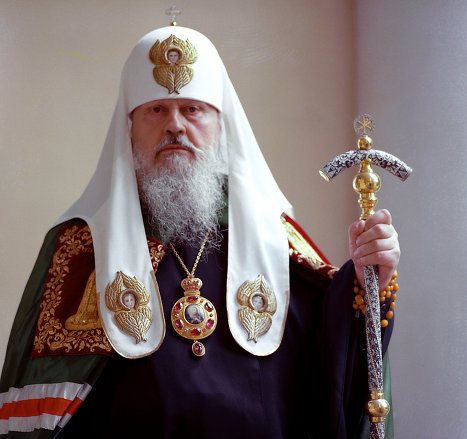
In the mid-60’s a very favourable change took place in the relations between the Soviet state and the Church. This began with the resignation of N.S. Khrushchev on 14 October 1964. The voluntaristic practices of previous years were reconsidered, and the country’s leadership took on more sober ground both in relation to secular policy and to the faithful. The mass closures of religious communities ceased. However, the previously closed churches had still not been returned to the Church. The shortage of churches was especially acute in the city due to intensive urbanisation. In the late 1960’s, the destructive practice of frequent transfers of bishops from one diocese to another ceased.
The effects of the 1961 reform of parish administration were already being felt, when rectors and clergy were removed from parish administrative affairs, which greatly discriminated against their status, created conflicts, and made it difficult to provide spiritual care for the flock. The, sometimes unchecked power of the elders, at times alien to Christian beliefs, became exorbitant. In 1965, an attempt was made to correct this ugly situation through an amendment, suggesting that rectors should be appointed to the Parish Assembly and the Parish Council as chairman. However, this was not successful. From the mid-60’s, objections from among the clergy to the present position of the Church in the State became more pronounced. A criticism was voiced against the principle of Church government established by the Local Council of 1945, in which the atheistic State had a great shadow influence on the structure and life of the Church. In November 1965, priests Nicolai Eshliman and Gleb Yakunin sent two open letters to the Chairman of the Presidium of the Supreme Soviet of the USSR, N. V. Podgorny and to the Patriarch of Moscow and All Russia, Alexy. The letters indicated that the civil authorities had violated the legislation on religious denominations and had closed churches, and the authors noted that the church hierarchy connived at this. The priests demanded that the 1961 decision of the Council of Bishops regarding the reform of parish administration be repealed.
The letters went abroad and received worldwide publicity. It was a scandal. A broad campaign began in the foreign media against the hierarchy of the Russian Church. Patriarch Alexy I, signed a resolution in which he condemned the actions of the priests as non-canonical (condemning the acts of the Council of Bishops as well as the acts and orders of the church authorities) and as violating the church subordination (the letters were arbitrarily sent to all diocesan bishops). A trial ensued, the result of which was the banning of both authors from priestly service. In general, the phenomenon of “church dissidence” is typical of this time in the 1960’s and 1980’s. It was a “new wave of religious renaissance”: the Soviet intelligentsia began to turn to faith. It was characterized by organizational informality (although there were individual circles, seminars, and committees within the movement), public appeals to the non-church community, appeals to existing laws, and so on. Participants in Church dissidence did not infringe on the Orthodox canons and dogmas. On the contrary, they defended the preservation of the traditional order of the Russian Church as well as the Church’s freedom from state control. Representatives of Church dissidence were a relatively small group of intellectuals consisting of laymen and clerics. These included, for example, the aforementioned Fr. Gleb Yakunin, Fr. Dimitri Dudko, Fr. Alexander Men. Their methods of resistance to the existing Soviet regime in Russia were different. In contrast to Fr’s. G Yakunin, D. Dudko and A. Men were known for their catechetical activities.
The end of the 1960’s is characterised on the one hand by a stabilisation of Church life, but on the other by problems that have become chronic. First of all, of course, there was an acute shortage of personnel. There was a lack of rotation and succession in the clergy: the older generation of priests was leaving, not knowing whom to pass on their experience to. Graduates of seminaries and colleges, which were still in operation, could not fill all the personnel gaps. Ordinary laymen, without any spiritual (or even general) education, were ordained. A large percentage of them came from the western regions of Ukraine, where Orthodox traditions were better preserved. And yet the general trend by this time was a noticeable decrease in Church attendance by parishioners. These were mostly elderly women. The number of baptisms decreased. Young people showed no interest in religion. Conversions were few, and it was mainly the intellectuals of the capital. Yet, despite this quantitative crisis, the quality of the Church did not deteriorate, but rather the opposite. Into the weakened and persecuted Church now went precisely those who sought in it something more than aesthetic satisfaction; more than a convenient form of socialization. In essence it was a new confession.
In terms of events occurring on the external borders of the Russian Orthodox Church, the signature on April 10, 1970 of the Thomos granting autocephaly to the Orthodox Church in America (previously known as the Greek-Orthodox Catholic Church in America, or metropolitan see, as it had been called from the Aleutian and Alaskan Missionary Diocese) was a significant milestone. To this must be added the normalization of relations with the Church of Japan, which in the postwar years was illegally placed in the jurisdiction of the American “metropolitan district,” which granted it autocephaly. At that time the Synod consecrated St. Nicholas (Kasatkin), an apostle of Japan, to the list of saints. These efforts to establish canonical relations between the Moscow Patriarchate of the Russian Orthodox Church and the American and Japanese Churches were the crowning glory of Patriarch Alexy I. On February 15, 1970 he suffered a heart attack and died 2 days later.
After the death of Alexy I, Metropolitan Pimen of Krutitsy and Kolomna, the most senior member of the Synod in terms of his elevation to the Throne, became the new Patriarch. On June 25, 1970, the Synod decided to convene a Local Council. The Council was opened on May 30, 1971 in the Trinity Sergius Lavra. At the Council, the ancient oaths and anathemas were abolished as a sign of favour to the Old Believers. A report of the same name was read by Metropolitan Nicodimo (Rotov). He presented the history of the Church’s schism and suggested a way to heal the sad divisions. However, this in no way meant recognition of the Old Believer hierarchy, much less an act of repentance on the part of the Russian Church. We must admit that so far, the fruits of this attempt to heal such a long-standing division within the Church have not risen.
Among other things, the council decided to approve the recognition of the 1957 autonomy of the Finnish Orthodox Church, once part of the Moscow Patriarchate. Most importantly, a new Patriarch was elected. Metropolitan Pimen of Krutitsy and Kolomna became the new Patriarch. On June 3, 1971 in the Epiphany Cathedral in Moscow the enthronement of the named Patriarch took place. Patriarch Pimen (Izvekov) of Moscow and All Russia was born on 10 July 1910 and took monastic vows at the age of 17. He was vicar of the Pskov-Pechersk Monastery and then of Trinity-Sergius Lavra. From there he was called to archpastoral ministry. As regards the time of His Holiness Pimen’s ministry, in the first half of the 70’s church life remained relatively stable and proceeded without great upheaval, smoothly declining. For example, many rural parishes disappeared as a result of continuing urbanisation. In the cities, however, new churches were opened only rarely. The same personnel problem still persisted: this was reflected in a sharp decline in the number of seminary students in the early 60’s. The educational level of the clergy declined: only half of them had a theological education, while another half had not even a general secondary education.
However, in the 1970’s, a slight, but growing trend towards conversion of those raised in atheistic families was also evident in the cities. The number of baptisms of adults increased significantly, especially in the big cities. The average age of parishioners began to decline: there were more young people in the churches. For the most part these were intellectuals (often of a technical persuasion), which is eloquent testimony to the Church’s continuing influence on society. But even this apparently optimistic trend, alas, had its unhealthy side. Neophytes from the Soviet intelligentsia (as is often the case) sought to reform the Church to suit their ideal (but inadequate) conceptions of its life and work. Among the guidelines for the external relations of the Russian Church in the 1970’s was the strengthening of links with Sister Churches. As part of this focus, the First Ecumenical Pre- Conciliar Conference was held in Chambesy in September 1976 with the participation of a Russian delegation. Hierarch visits to Constantinople, to the Holy Land and to other local Churches also served the same goal. Such meetings between the Primates of the Orthodox Churches have become regular.
Delegates of the Russian Orthodox Church also took an active part in the activities of the World Council of Churches. In 1975 Metropolitan Nikodim of Leningrad and Novgorod (Rotov) was elected one of the WCC presidents. He played a huge role in the life of the Russian Church in the mid-20th century by developing an ecumenical style of church diplomacy. Under him the Russian Church became a more visible participant in the international political space and lively relations were established with the Roman Catholic Church. Vladyka Nikodim took care to create a kind of “school”: a galaxy of young, competent bishops whose ministry would be aimed at maintaining the international prestige of the Russian Orthodox Church. To a certain extent he succeeded in this. Thus, through his efforts, the present Patriarch Kirill of Moscow and All Russia, Metropolitan Juvenaly of Krutitsy and Kolomna, Metropolitan Viktor of Tver and Kashinsk, Archimandrite Avgustin (Nikitin), and others were ordained.
Gorbachev’s assumption of power in spring 1985 marked the beginning of “Perestroika”, the main social and political features of which were the democratisation of the political system, glasnost, and the condemnation of the Soviet terror of the 30-50’s, including those suffered by the Church. The issues of the spiritual recovery of the people were also raised. All this created an environment in which new opportunities opened up for the Russian Church.
Editorial Footnotes
Related Concepts
- 1054
- 1961-parish-reform
- 2000-charter
- alexander-men
- anglican-dialogue
- anti-religious-propaganda
- autocephalous-movement
- autocephalous-schism
- autocephaly
- autonomy
- belarusian-exarchate
- bioethics
- bishops-council
- canonical-independence
- canonical-territory
- canonical-unity
- canonizationglorification
- catechesis
- charter
- church-administration
- church-and-society
- church-autocephaly
- church-governance
- church-of-japan
- church-property
- church-seizures
- church-separatism
- church-turmoil
- church-unity
- clergy-formation
- conciliar-forms
- constantinople-patriarchate
- constantius
- council-of-1917-1918
- dimitri-dudko
- dimitry-donskoy-tank-column
- diocesan-assembly
- diocese
- donskoi-monastery
- ecumenical-councils
- ecumenism
- enthronement
- eshliman-yakunin-letters
- exarchate
- federal-law-no-327-fz
- finnish-orthodox-church
- florentine-union
- galicia
- gavriil-kostelnik
- georgian-orthodox-church
- gleb-yakunin
- great-patriotic-war
- greek-catholics
- greek-metropolitans
- hagiography
- holy-synod
- imperial-authority
- intelligentsia
- interconfessional-dialogue
- ipatiev-monastery
- kant
- khrushchev-persecution
- kiev-period
- legal-personality-of-church-institutions
- local-church
- local-council
- local-council-of-1945
- local-veneration
- locum-tenens
- lviv-council
- martyrology
- metropolis
- metropolitan-district
- metropolitan-isidore
- metropolitan-jonah
- metropolitans-photius-and-isidore
- moral-law
- moscow-church
- moscow-metropolis
- mother-church
- museum-preservation
- nationalism
- neophytes
- new-converts
- new-martyrs
- non-chalcedonian-dialogue
- non-orthodoxy
- obedience-to-god
- orthodox-church-in-america
- pan-russian-veneration
- parish-life
- patriarch-of-constantinople
- patriarchal-enthronement
- patriarchate
- patriarchate-of-constantinople
- patriarchs-job-and-hermogenes
- peace-and-war
- perestroika
- persecution
- photian-schism
- post-soviet-revival
- presidential-decree
- primacy
- primate
- relations-with-constantinople
- religious-education
- religious-policy
- religious-renaissance
- renovationism
- restitution
- rocor
- rocor-critique-of-the-moscow-patriarchate
- rocor-opposition
- roman-catholic-relations
- romans-7
- russian-church
- saint-job
- schism
- secularization
- self-governance
- self-government
- seminary
- sergius-stragorodsky
- soviet-atheism
- soviet-persecution
- st-metropolitan-jonah
- synodal-period
- synodalitysobornost
- theological-academy
- thomos
- time-of-troubles
- ukrainian-church-council
- ukrainian-orthodox-church
- ukrainian-orthodoxy
- unia
- uniatism
- union-of-militant-godless
- uoc
- wartime-intercession
- world-council-of-churches
- world-methodist-conferences
- world-methodist-council
Footnotes
-
The traditional date for the “Baptism of Rus” is 988, when Prince Vladimir of Kiev adopted Christianity. That year is itself a scholarly convention — some sources place Vladimir’s own baptism in 987 or 989–990 — and the Christianization of the East Slavs was a gradual process spanning generations, not a single event. ↩
-
Patriarch Pimen was born in July 1910 (as this text itself states later) and died on 3 May 1990, making him 79 at his death, not 80. ↩
-
This Council of Bishops met in October 1990. The Soviet Union was not formally dissolved until December 1991, more than a year later; the separatist and “centrifugal” pressures described were under way, but the USSR had not yet collapsed. ↩
-
The Jubilee Council’s initial glorification of the New Martyrs and Confessors named roughly 1,097 individuals; “more than 1,200” overstates the number canonized by name in 2000. The synaxis also commemorates the unnamed martyrs “known to God.” ↩
-
Arseny (Matseevich, d. 1772) was Metropolitan of Rostov, not an archimandrite; the rank given here is inaccurate. ↩
-
This 2008 gathering was convened by a breakaway faction opposed to the 2007 reconciliation with Moscow, which styled itself the continuation of ROCOR (commonly distinguished as ROCA, the “Agafangelite” synod). The canonical ROCOR had already held its Fifth All-Diaspora Council in San Francisco in 2006; the mainstream Church does not recognise the 2008 meeting’s designation or Agafangel’s election as First Hierarch. ↩
-
This passage comes from Hitler’s recorded private “Table Talk” (Tischgespräche) of 11 April 1942, not a formal decree or published order. The reliability of the Table Talk transcripts, especially in their later French and English editions, is disputed among historians. ↩
-
Stalin’s first wartime radio address to the nation came on 3 July 1941, eleven days after the invasion. The depiction of him as simply “idle” in the interval is a popular simplification; he was engaged in command decisions during those days, though he made no public statement. ↩
-
The figure of 200 million rubles refers to the Church’s total wartime fundraising, not to the Dmitri Donskoy tank column specifically. The sum raised for that column is usually given as around 8 million rubles; total Church donations over the war are commonly estimated near 300 million rubles. ↩
-
Khrushchev did not “come to power” in 1958: he became First Secretary of the Party in September 1953 and had consolidated control by 1955–57 (adding the premiership in March 1958). What intensified around 1958 was his anti-religious campaign. The next section of this text dates his rise to 1953 — an internal inconsistency. ↩
-
The Lviv “Sobor” of March 1946 was organised under the direction of Soviet security organs and included no Greek Catholic bishops, the entire hierarchy having been arrested in 1945. Historians and the Catholic Church regard it as uncanonical and coerced; it forcibly liquidated the Ukrainian Greek Catholic Church, which survived underground until its legalisation in 1989–90. ↩
-
The Russian Orthodox Church was formally admitted to the World Council of Churches at the Third Assembly in New Delhi in late 1961, not 1962. ↩
-
There were three Pan-Orthodox Conferences on Rhodes (1961, 1963 and 1964); they were not strictly annual, as no conference was held in 1962. ↩
-
Transliterated as “Eshliman” elsewhere in this text (including in the 1965–1988 section); both spellings refer to the same priest, Nikolai Eshliman. ↩
-
The autocephaly Moscow granted to the Orthodox Church in America in 1970 has never been recognised by the Ecumenical Patriarchate of Constantinople or by several other autocephalous Churches, which continue to regard the OCA’s status as contested rather than settled. ↩
-
This is an error. Patriarch Alexy I died on 17 April 1970, as the same passage states a few lines later. The “February 15” date (also repeated in the 1965–1988 section) is incorrect. ↩
-
The Siege of Leningrad lasted about 872 days (8 September 1941 – 27 January 1944). “900 days” is a conventional round figure rather than an exact count. ↩