History of the Christian Church — Topic 10
-
What was the approach of the Alexandrian school and who were its main representatives?
- What was the approach of the Antiochian school and who were its main representatives?
- Name the Cappodocian Fathers of the Church.
- Name some of the heretical movements of the time and summarize briefly the theology of at least one.
- Apart from his defense of the veneration of icons, for what else is Saint John of Damascus renowned?
-
Anthony Meredith, The Cappadocians, London, 1995
- Robert Payne, The Fathers of the Western Church, New York, 1971
- Robert Payne, The Holy Fire: The Story of the Fathers of the Easter Church, Crestwood, 1957
General notes on church literature from the sixth to the eleventh centuries
The fifth century, perhaps a little earlier, saw the end of the brilliant epoch of church writing. At the turn of the sixth century both in the East and in the West, there began a decline in spiritual enlightenment, which simultaneously heralded a crisis in church literatures.
In the West, the level of enlightenment was on an even lower level. A decisive blow to enlightenment in the West was delivered to the Roman empire by the Barbarian invasions. With the fall of Rome, classical education was now to be found buried deep beneath its rubble. A long period of darkness began for the West, often resulting in barbarism. The decline of enlightenment was so great that in some parts of the Roman empire people ceased to be able to read and write, the schools were empty, the Latin language was partially forgotten and often distorted, while the elite Western clergy did not even have any basic education.
But for all of these unfortunate circumstances, in both the East and the West there were still writers whose erudition earned them a place in church history.
Saint Maximus the Confessor (580-662)
Saint Maximus the Confessor was born in 580 in Constantinople.1 He received a good education and was thoroughly well acquainted not only with church but also with secular literature.
In his youth Maximus served at the imperial court. However, he abandoned the world and retired to the monastery of Chrysopolis, where he earned the respect of the brethren through his ascetic endeavours and was elected abbot. When Constantinople fell into heresy, Saint Maximus went to the West. In 649 he participated in the Lateran Council in Rome, convoked by pope Martin (649-655). Greek bishops also attended this Council. The Council condemned Monothelitism. However, the emperor’s revenge awaited the defenders of Orthodoxy. Pope Martin was exiled to Chersoneses in Taurida, where he died in 655, while Saint Maximus the Confessor, after being exiled a number of times, was subjected to torture in Constantinople, after which he was exiled to Lazia on the east coast of the Black Sea, where he died in 662.
Saint Maximus was the most profoundly thinking theologian and original dialectician of his time. In profundity and plenitude of his theological contemplation he can be compared to the outstanding writers of the fourth century. The most important works of Saint Maximus the Confessor are: the Dispute with Pyrrhus, the Chapters on Love and the Mystagogy. Saint Maximus also wrote several works on the two natures and two wills in Christ.
Saint Maximus the Confessor has also left us his commentaries on Scripture. He tends to give preference to the mystical meaning of the text. In his commentaries he shows himself to be a strict adherent to the allegorical exegesis of the Alexandrian school.
Saint John of Damascus (latter half of the seventh century to 754)
Saint John of Damascus was born in the capital of Syria Damascus, his parents were of ancient stock and were noted for their lofty Christian piety.
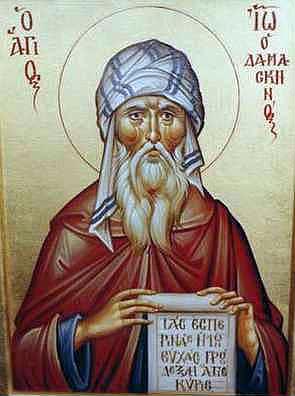 Saint John of Damascus had his right hand
amputated as a punishment for his involvement in church politics.2 The emperor
Leo Isaurus (717-741) composed a forged letter using John’s name which gave
information on a supposed plot against the Khalif and the transfer of Damascus
to the jurisdiction of the Byzantine emperor.
The Life of the saint relates that his right hand miraculously grew back again after ardently praying. In working as a state functionary, John of Damascus quickly drew a lesson on the vanity of worldly life. He distributed all of his property to the poor, granted his slaves their freedom and retired to the Monastery of Saint Sabbas the Sanctified, where he lived until his death, engaging in scholarly labours for the good of the Church. John of Damascus died at a venerable old age in 754.3
The most important of John’s works are those that deal with dogma, apologetics and polemics. Of his dogmatic works, we may highlight his An Exact Exposition of the Orthodox Faith, which contains the important treatise by John of Damascus entitled ‘The Fountain of Knowledge’.4
Among the dogmatic works of John of Damascus that are of a polemical nature we may include the Three Treatises on the Divine Images. These ‘treatises’ of John’s have always been considered to be the greatest among those written in defense of the veneration of icons. A correct and multifaceted resolution of the issue, based broadly on Scripture, is John’s great contribution to patristic theology.
Apart from his theological works, John of Damascus is also famous as a church poet. His wonderful hymns have made his name immortal. He has composed some of the greatest hymns of our Church, including the canons for Pascha, the Nativity of Christ, the Epiphany and Ascension, as well as dogmatic and many other hymns. It was John of Damascus who divided church singing into the Eight Tones, the so-called Octoechos.5
General notes on the state of theology from the fourth to the fifth
centuries
The fourth and fifth centuries became a Golden Age of Christian theology as it entered into the history of world literature and enlightenment.
It was at this time that theological terminology which defined the basic dogmatic formulae found expression in the works of the holy fathers and the Creeds of the Ecumenical Councils. The fundamental directions of the development of theological thought were formed in this epoch in the Greek East, in comparison to the Roman West, which was more inclined towards the resolution of practical issues. However, in the fourth and fifth centuries an invaluable contribution was also made to the treasure-trove of thought by such holy fathers of the Latin West as Saint Augustine of Hippo , Saint Ambrose of Milan , Saint Gregory the Great6 and Saint Jerome.
The nature of the main theological schools.
In highlighting the nature of the theological schools, we must pay attention to the two leading schools of Alexandria and Antioch.
There dominated within the Alexandrian school the contemplative approach with the use of allegory in interpreting Scripture aimed at revealing its higher mystical meaning.
The Antiochian school held to a more rational approach and its exegetes mainly expounded upon the literal and historical meaning of the sacred text and did not put much store by allegory, while in dogmatics they paid special attention to the divine, sacral side Scripture by explaining its relationship with human nature. At the greatest time of their flowering these schools produced outstanding theologians and exponents of the Orthodox faith.
The renowned representatives of the Alexandrian school.
1. Saint Athanasius the Great (297-373).
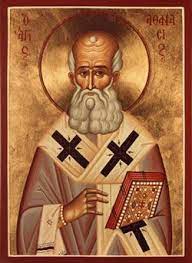 Saint Athanasius the Great was born in
Alexandria, received a fine and comprehensive education and especially
excelled with his knowledge of theology. These excellent qualities of
Athanasius were noted by the bishop of Alexandria Alexander, who ordained him
deacon and made him his personal secretary. As secretary, Athanasius
accompanied his bishop in 325 to the Council of Nicaea. After becoming
Alexander’s successor as bishop in 328, Saint Athanasius spent his entire life
fighting the Arians. Of his forty-seven years of episcopacy, more than twenty
were spent in exile.7
Saint Athanasius’ labours in the Church as a pastor are closely tied to the theological controversies and unrest which arose in the Alexandrian theological school. In his theological works Athanasius of Alexandria comes across as the implacable enemy of the heretics contemporary to him, that is to say, the Arians. Athanasius’ works may be divided into the dogmatic , historical and polemical , moral and exegetical. Of Athanasius’ dogmatic works we must note his Orations Against the Arians , Four Letters to Serapion and The Incarnation of the Word of God. Athanasius is also the author of The Life of Saint Anthony of Egypt. The works of Saint Athanasius were highly valued in antiquity.
Also belonging to the Alexandrian school were the great Cappadocian theologians Saint Basil the Great , Saint Gregory the Theologian and Saint Gregory of Nyssa.8
2. Saint Basil the Great (330-379).
Saint Basil the Great was born in Caesarea, the main city of Cappadocia. He received his early education at the school of Cappadocia, then studied in Constantinople where he listened to the great orator Libanius, and then completed his education in Athens. He spent around five years here, studying various sciences, especially philosophy and rhetoric. In Athens Basil became acquainted with Gregory of Nazianzus (also known as ‘the Theologian’), and they remained friends for the rest of their lives.
Upon completing his studies, Basil was baptized and set off on a journey to Syria, Palestine and Egypt. Upon returning from his journey, he retired to a place of solitude, which in due course became a monastery. But he could not live long in this solitude. In his struggle with the Arians the bishops of Caesarea were in need of helpers, and so Basil was recalled to his homeland.
Ordained to the rank of priest, he demonstrated his abilities as a preacher. From 371 he was bishop of Caesarea , and in the vicinity of the city there were built shelters, guest homes and hospitals.
But of greater significance was his battle against the Arians where his talents as an organizer came to the fore. He united the Orthodox bishops of the East and part of them from the West in the battle against a common enemy. Exhausted by his labours and cares, he died prematurely in 379 at the age of forty-nine.
Saint Basil wrote the following dogmatic and polemical works: Against Eunomius (in three books), in which he exposes the weak arguments of the Arian bishop and rejects their sophisms and conclusions by pointing towards the inconsistencies in their arguments and On the Holy Spirit , in which he demonstrates the divine nature and equality of the Holy Spirit with the Father and the Son.
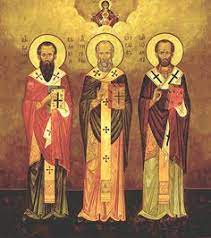 Basil is also especially noted as an important
interpreter of Scripture. Of his exegetical works we note his nine
dialogues on the six days of the creation of the world (Hexaemeron). The
Hexaemeron of Saint Basil the Great is a cosmology of its time. Alongside his
explanations of the sacred texts, we find profound philosophical and
scientific knowledge on nature.
Basil the Great made a contribution to the literary heritage of the Holy Church by introducing antiphonic chant. He composed the order of the Liturgy, as well as prayers and the Great and Lesser Rules for monks.
3. Saint Gregory the Theologian (330-390).
Intimately linked to the life of Saint Basil the Great was that of his friend Gregory the Theologian, who was a little older than Basil. Saint Gregory was born around 330 in the Cappadocian village of Nazianzus where his father was at first the head of village administration and then the local bishop.
Gregory received his education in the schools of Caesarea in Cappadocia and Caesarea in Palestine, where after Origen a rich library was founded. At the age of twenty-four he set off for Athens to complete his studies. Upon completing his education, Gregory received baptism. At the invitation of his friend Basil, he settled with him in the wilderness of Pontus.
Solitude in the wilderness suited Gregory, but his father recalled him from this state of solitude and in 361 made him, against his will, a priest. The prestige attached to this rank so concerned Gregory that he fled to his familiar hermitage in Pontus, but soon returned to his father and helped him in his pastoral ministry. Ten years later in 371 Basil the Great ordained him to the rank of bishop.
Gregory did not avoid conflict with the Arians too, when he lived in Constantinople. This struggle produced excellent results. The Orthodox people of the imperial capital wanted Gregory to be their bishop , and their wish was granted by the emperor Theodosius. The legitimacy of Gregory’s election to the episcopacy was confirmed in 381 and by the II Ecumenical Council. Yet at this Council there were arguments regarding his election. Gregory was compelled to abandon his see in Constantinople and spent the rest of his days in ascetic labours and literary works.
4. Saint Gregory of Nyssa (335-394).
The brother of Basil the Great, Gregory of Nyssa was born in 335 and his domestic upbringing was in the same godly atmosphere as that in which his elder brother was brought up. He further studied in the schools of his native city.
However, under the influence of his ascetically-inclined family and friends, he resolved once and for all to devote himself to the service of God, and joined the monastic community of Basil the Great in the wooded hills of Iris, where he lived for ten years. Basil the Great summoned him from monastic solitude and ordained him bishop for Nyssa, a small town in Cappadocia which would later become famous in history as the place of the title of its illustrious bishop Gregory. Like Gregory the Theologian, he could not avoid conflict with the Arians. In 381 he participated in the II Ecumenical Council.
As a writer, Gregory of Nyssa is renowned for his works in the realm of theology. Especially important for theology are his works Against Eunomius and his Great Catechetical Oration. The former is an expansive treatise against the Arians with a refutation of their theories. The latter is a theological and philosophical defense of the Christian teaching on the Holy Trinity, redemption, baptism, communion, heresy, pagans and the Jews.
Apart from his dogmatic works, Saint Gregory wrote many commentaries , dialogues and letters. In his commentaries he went further than the other exegetes in being influenced by the allegorical metho****d of the Alexandrian school.
5. Saint Cyril of Alexandria (+444).
By volume of knowledge, Saint Cyril was the most outstanding person of his time. In 412, it was the common wish of the clergy and the people that he be elected the successor to Theophilus as bishop.9 Saint Cyril was renowned for his strength of character, iron will and special zeal for the faith.
With the appearance of the heresy of Nestorius, all of Cyril’s energies were devoted to fighting against it and in defending Orthodoxy.
The main part of the works of this outstanding theologian are taken up by his dogmatic and polemical treatises. They are mainly aimed against Nestorius. Among his dogmatic works we make count: Five Tomes Against Nestorius , Twelve Chapters and Anathemas Against Nestorius and Scholia on the Incarnation of the Only-Begotten. Saint Cyril was equally important as a commentator of Scripture. He compiled commentaries to the Pentateuch of Moses, the Song of Songs, the psalms, the books of the prophecies of Isaiah, Ezekiel and the twelve lesser prophets. Of his New Testament commentaries , the best known are his works on the Gospels of Luke, John and Matthew, while only fragments have survived of his other commentaries, as well as commentaries on the epistles of Saint Paul to the Corinthians and the Hebrews.
In addition, there belong to Saint Cyril many dialogues of a moral nature for various feast days, which the Greek bishops were obliged to learn off by heart for the use of sermons in church.
General notes on the state of theology from the fourth to the fifth
centuries
The nature of the main theological schools.
1. Saint Athanasius the Great (297-373).
2. Saint Basil the Great (330-379).
3. Saint Gregory the Theologian (330-390).
4. Saint Gregory of Nyssa (335-394).
5. Saint Cyril of Alexandria (+444).
- General notes on the state of theology from the fourth to the fifth centuries
- The Antiochian school of theology
- Western church writers of the fourth and fifth centuries
- General notes on church literature from the sixth to the eleventh centuries
The Antiochian school of theology
** _1. Saint John Chrysostom
_**
At its zenith, the Antiochian theological school gave the Christian Church such remarkable theologians and proponents of the faith as Saint John Chrysostom and the blessed Theodoret, bishop of Cyrrus.
Saint John Chrysostom was one of the best and most renowned representatives of the Antiochian school, but never went to its extremes. In 386 he was made priest in the Church of Antioch and in this rank zealously preached the word of God. His accessible dialogues brought him glory as a great preacher.
In 397, at the wish of the emperor Arcadius, for his holiness of life and eloquence he was elected archbishop of Constantinople. In his new rank John devoted himself to the service of the Church and his flock: he corrected the morals of the clergy, constantly taught the people, cared for the poor and sick, and for all those who suffered or found themselves in constraints.
For his concern for the correcting of the morals of the clergy of Constantinople, however, he aroused opposition among the clergy. He had to listen to the complaints of the Constantinople elites who disliked his sermons against luxury and entertainments. Ultimately, the empress Eudoxia turned against him as he had been denounced to her by his enemies for supposedly criticizing her personally in his sermons against the use of luxury.
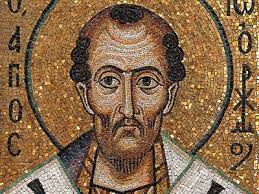 The situation became worse with the affair of
the monks of the Nitria hermitage, in which Saint John Chrysostom and the
bishop of Alexandria Theophilus took an active part. As a result, in 403 in
Chalcedon (beneath the Oak tree) a council was assembled which consisted of
the elites and bishops of Constantinople and its environs (the head of whom
was Theophilus) who opposed John. John was presented with the complaints of
the unhappy clergy who had been dismissed by him and as a result he was
accused of Origenism and of insulting their imperial majesties. The emperor
Arcadius, influenced by Eudoxia and the imperial court, affirmed the council’s
decision and sent Saint John into exile.
The indignant people demanded his return. The earthquake which occurred at this time only worsened the alarming situation, and the empress Eudoxia decided that Chrysostom should remain in Constantinople. But in 404 the saintly bishop was once again arrested and exiled to Cucusus on the border with Armenia. In 407, when it became known that the saintly bishop enjoyed the great love of the people there, his enemies contrived to have him exiled to Pityus (now Pitsunda). On the way there, John, exhausted by his sufferings, died in 407 in Pontus, not far from the settlement of Koman (Kamani). Under the Patriarch of Constantinople Proclus, the relics of John Chrysostom were solemnly translated in 438 to Constantinople.
Saint John Chrysostom had a unique gift as a preacher. There is not a single church writer who can, with such clarity and simplicity and at the same time such power of the word, expound upon the Christian truths as John Chrysostom. The power of his talents as an orator can be felt in the written works of John Chrysostom, but it was especially conveyed in his dialogues.
With the appearance of the heresy of Nestorius, all of the saintly bishop’s energies were concentrated upon the struggle against it and the defense of Orthodoxy.10
More than 800 dialogues and sermons of John Chrysostom have come down to us. In reflecting in his sermons, the life of the society in which he lived in all its fullness, in criticizing mercilessly the sinful ways of society in certain of its manifestations, Chrysostom at the same time conveyed the deeper meaning of the Christian message.
Apart from dialogues, Chrysostom devoted whole written treatises to the exposition of the moral teaching of Christianity. Among the best of these compositions by John Chrysostom are his treatise Six Dialogues on the Priesthood, which has special meaning for the pastors of the Church.
The archbishop of Constantinople left commentaries on the Old and New Testaments. There are 67 dialogues on the Book of Genesis, 60 dialogues on the content of 36 psalms, and there are commentaries on eight chapters of the prophecy of Isaiah and the books of the prophets Daniel, Ezekiel and Job.
Among the New Testament book Saint John left commentaries on the evangelists Matthew and John, the Acts of the Apostles and the fourteen epistles of Saint Paul.
Finally, there is the Liturgy which bears the name of John Chrysostom. We should also note the significant number of letters of John (240), most of which were written when he was in exile. In them the saintly bishop shows touching concern and care for those who maintained spiritual contact with him.
2. The Blessed Theodoret of Cyrus (393-457)
The blessed Theodoret was born in Antioch in 393 to a Christian family and received an excellent education at the Antiochian theological school.
In 423 he became bishop of Cyrus, the main city of the area of the Euphrates and there he devoted his energies to his flock.
With the emergence of Nestorianism, Theodoret for a while was shaken in his Orthodox beliefs. In using the methodology of the Antiochian theological school, he supported the views of Nestorius, in whose defense he wrote works. At the Council of Chalcedon in 451 he renounced Nestorius and condemned those works which he had written in Nestorius’ defense.
Theodoret was a very learned person for his time, He wrote works on church history, as well as a History of Religion, containing biographies of thirty living ascetics and a Compendium of Heretical Accounts. This consists of five books setting out the false teachings of ancient and contemporary heretics. This work is noticeable for its irenic tone, lack of polemic debate and tolerant spirit.
As a commentator of Scripture, Theodoret adhered strictly to the methods of interpretation accepted by the Antiochian school. His priority was a grammatical and historical interpretation of the texts. He did not like allegory, although he would allow it in certain instances. His commentaries, for all of their scholarly depth and artistic expression, were also distinguished by their simplicity and clarity. He has handed down to us commentaries on the psalms, the Song of Songs, the prophets and the epistles of Saint Paul. He interpreted the Old Testament in the light of the New Testament revelation and finds within it prototypes of the events of the New Testament.
Western church writers of the fourth and fifth centuries
** 1. Saint Ambrose of Milan (340-397)**
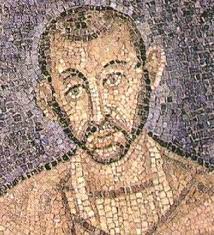 Saint Ambrose, the bishop of Milan, came from
a family of aristocrats. His father occupied an important position as prefect
of Gaul. Ambrose was educated in Rome. Thanks to his giftedness and
connections, he was quickly promoted in the imperial service and came to
occupy the position of governor of Liguria.
Ambrose did not prepare for his spiritual calling, but divine providence pointed him in the direction of this ministry. In the main city of the Liguria district Mediolanum (now Milan) in 374 elections to the episcopacy were taking place. At the elections there were two parties – the Arians and the Orthodox, and both wanted to have their candidate elected. The gathering was tempestuous. Ambrose came to the council with the intention of pacifying emotions. He had hardly finished his speech when a child’s voice could be heard from the gathering: “Ambrose is our bishop!” Everyone took this to be a sign from above and insisted that Ambrose take up his rank of bishop. He agreed.
Ambrose had not been prepared to be a bishop and thus had never received any theological education. Even at the moment of his election he was not even baptized but was merely going through the stages of catechism. But once he became a bishop, he seriously took to studying the Scripture and works of church writers.
He was especially renowned for his oratorical talents. The secular eloquence which he had used to brilliant effect at the forum now proved useful for him in his episcopal see, and Ambrose became one of the greatest preachers of the Western Church.
Ambrose of Milan produced a great many works, but we cannot call him an outstanding theologian. He did not have any broad theological erudition, and as a result of this, his theological works lack a certain originality. His dogmatic treatises On Faith, An Exposition of the Creed and On the Holy Spirit contain ideas derived almost exclusively from the works of the fathers of the Eastern Church.
Ambrose was, in addition, a church poet. He wrote many hymns and prayers, including the famous Te Deum.11
2. Saint Jerome of Stridon (345-420)
Saint Jerome of Stridon was one of the most erudite writers of the Western Church. Jerome studied in Rome, and then received his theological education in the East, where he lived the most part of his life.
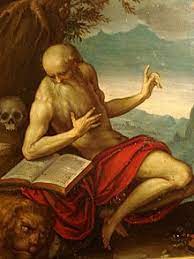 In 373 Jerome set off with his friends to Palestine to
venerate the holy places, but as a result of illness he was detained in
Antioch for two years. In 374 he went into the wilderness at Chalkidiki, where
he spent five years with the Syrian ascetics. In 379 the bishop of Antioch
Paulinus ordained him to the priesthood. From Antioch Jerome travelled to
Constantinople where he met Gregory the Theologian and Gregory of Nyssa. It is
thanks to them that Jerome became acquainted with the works of Origen.
In 381 Jerome came to Rome at the invitation of pope Damas. He was commissioned by the pope to correct the Latin translation of the Bible, which was riddled with mistakes. In Rome he made many enemies and as a result left Rome and went to the East, where he founded two monasteries near Bethlehem, one for men, the other for women. He was superior of the male monastery for thirty years until his death, leading the life of an ascetic and composing scholarly works.
It was at the monastery in Bethlehem that Jerome worked tirelessly and devotedly on his writings. His cave, located near the cave of the Nativity of Christ, was his study room where he gathered a huge library of classical literature and ecclesiastical writers. He possessed a great knowledge of the Greek language and under the guidance of learned rabbis he studied the Hebrew language. Jerome spent his years up until old age in ascetic and scholarly labours.
Jerome wrote a great many works. Especially significant are his exegetical works. We have from him commentaries on the book of Ecclesiastes, the psalms, the great and lesser prophets, the Gospel of Matthew and some of the epistles of Saint Paul.
Jerome’s greatest work on Scripture was his translation of the Bible into Latin, known as the Vulgate. This translation was accepted for liturgical use in both the Western and Eastern Church.12 Jerome’s labours as a translator remain unsurpassed.
Of the historical works of Jerome, we have On Famous Men (De viris illustribus), extremely valuable for the huge amount of ecclesiastical and historical information it gives, and many Lives of the saints. His Lives became the model for the hagiography of the middle-ages.
Yet as a theologian Jerome had little influence on the subsequent era. He was not an original thinker. In his theological works he adhered firmly to the ecclesiastical line and always endeavoured to base his views on Scripture and Church Tradition. For his eloquence and expressiveness and variety of stylistic forms, Jerome rightly became known the Christian Cicero.
3. Saint Augustine, bishop of Hippo (354-430)
Saint Augustine was born in 354 in the municipium of Thagaste in the Roman province of Numidia. His father Patricius was a pagan, while his mother Monica was a Christian. He received a good education first in his native town, then in Carthage.
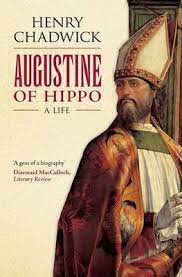 Augustine was brought up with Christian values
inculcated from his mother. But in school at the age of sixteen he started to
lead a life of sin. As he indulged in pleasures and vices, Augustine began to
feel the reproaches of his conscience. Soon, he was seeking out spiritual
truths. In his quest he went from one philosophical school to another, but
nowhere could he find satisfaction. For a while he was involved with the
heresy of the Manichaeans, finding in it an explanation for the dualism that
he experienced within his soul. In 383 Augustine left Carthage and headed for
Rome, from where he soon set off for Mediolanum. As a teacher of rhetoric in
Mediolanum, out of curiosity he started to hear the sermons of Ambrose of
Milan and was enchanted by them. The godly Monica took advantage of her son’s
new-found disposition and persuaded him to accept the teachings of Christ.
One day, Augustine heard a voice saying: “Take this and read it!” Augustine was holding the New Testament, he opened the book and read the first words that he came across: “Let us behave with decency as befits the day; no drunken orgies, no debauchery or vice, no quarrels or jealousies” (Rom 13.13), which struck him as a reproach to his behaviour. This was the beginning of his rebirth. Upon accepting baptism in Mediolanum, he returned to his homeland of Numidia, where he was first made priest, and then in 395 he was ordained bishop of Hippo.
As bishop, he devoted all of his rich gifts and the ardour of his temperament to the service of the Church, tirelessly preaching, exposing the Arian heretics, the Manichaeans and the schismatic Donatists. But it was the heresy of Pelagius that Augustine most of all fought against.
Augustine’s final years were a great ordeal for him. He witnessed the fall of Rome, plundered in 410 by Alaric, and also witnessed the destruction and ravaging by the Vandals of the flourishing Church of Africa and the diocese of Hippo, which was under his care. Saint Augustine died in 430.
As a writer, Augustine occupies a unique position among his contemporaries in the West. In his profundity of thought and originality of his theological insights he rivalled the greatest theologians of the Eastern Church. His works are autobiographical and reflect the events of the time. They can be divided into philosophical, dogmatic (on the Christian teaching, on true religion and the Holy Trinity), polemical (against the Manichaeans, Donatists, Pelagians, Arians and pagans, and against the followers of Marcion) and apologetic (The City of God).
His teaching on moral theology, exegetic sermons and writings of an autobiographical nature makes up a large part of his works. The classic works by Augustine that have become famous throughout the world, after his philosophical and theological works, are his autobiographical Confessions in thirteen books and the apologetic The City of God in twenty-two books.
Augustine is also renowned as a preacher. His sermons, which number approximately 400, are distinguished by their lively content, brevity, clarity and ability to convey what is being taught. They are fine models for sermons delivered to simple people.
Saint Augustine exercised a significant influence upon Western theology.
SPIRITUAL AWAKENING AND THEOLOGY FROM THE FOURTH TO THE ELEVENTH
CENTURIES IN THE EAST AND THE WEST
Editorial Footnotes
Flashcards
Download Anki flashcards for this topic’s quiz — import via Anki’s File > Import (note type “Basic”, fields separated by Tab, “Allow HTML in fields” checked).
Related Concepts
- adoptionism
- adoration
- african-church
- alexandrian-school
- an-exact-exposition-of-the-orthodox-faith
- antiochian-christology
- antiochian-school
- apologetics
- arianism
- arius
- athanasius
- athanasius-the-great
- augustine-of-hippo
- augustines-conversion
- augustinian-theology
- barbarian-invasions
- basil-the-great
- basils-antiphonal-chant
- byzantine-east
- caecilian
- cappadocian-fathers
- catechesis
- chalcedonian-definition
- chalcedonian-horos
- christology-of-the-two-natures
- church-literature
- church-literature-6th11th-centuries
- church-poetry
- clement-of-alexandria
- confessorshipmartyrdom
- contemplation
- contemplative-theology
- conversion
- council-of-carthage
- council-of-chalcedon
- council-of-ephesus
- council-of-nicaea
- creation-by-will
- crisis-in-church-literature
- cyril-of-alexandria
- divinity-of-the-holy-spirit
- dogmatic-formulae
- donatism
- dyothelitism
- ecumenical-councils
- eunomianism
- eusebian-party
- exile-for-orthodoxy
- fall-of-rome
- first-ecumenical-council
- free-will
- grace-and-free-will
- grammar-historical-interpretation
- grammatical-historical-exegesis
- great-and-lesser-rules
- great-and-lesser-rules-of-basil
- greek-east-and-latin-west
- greek-east-vs-latin-west
- gregory-of-nyssa
- hermitage
- hexaemeron
- honorius
- ibas-of-edessa
- image-and-prototype
- jerome
- john-of-damascus
- lapsed
- lateran-council
- lateran-council-649
- lateran-council-of-649
- latin-west
- legalistic-soteriology
- literal-historical-exegesis
- manichaeism
- maximus-the-confessor
- monothelitism
- moral-theology
- mystical-meaning-of-scripture
- mystical-theology
- natural-grace
- nestorianism
- nicaea
- nicene-creed
- north-african-church
- origen
- patristic-hermeneutics
- patristic-theology
- patristics
- pelagianism
- pneumatology
- pneumatomachianism
- pope-honorius
- preservation-of-tradition
- proverbs-822
- rational-theology
- rules-of-basil
- sacramental-validity
- second-ecumenical-council
- sergius-of-constantinople
- seventh-ecumenical-council
- single-god-man-action
- single-will
- sirmium
- sirmium-creed
- sixth-ecumenical-council
- spiritual-enlightenment
- st-athanasius-the-great
- st-augustine
- st-constantine-the-great
- st-cyprian
- st-maximus-the-confessor
- st-sophronius-of-jerusalem
- theodore-of-mopsuestia
- theodoret-of-cyrus
- theological-method
- theology-of-the-image
- traditors
- two-wills-and-operations
- two-wills-in-christ
- two-wills-of-christ
Footnotes
-
The birthplace is contested. The Greek Life presents Maximus as a well-born Constantinopolitan, but a hostile seventh-century Syriac source (the Life attributed to George of Resh’aina) states that he was born near the Golan at Hesfin to humble parents. Many modern scholars take the Syriac tradition seriously, so a Constantinopolitan origin is not settled fact. ↩
-
This is the hagiographical account drawn from John’s Life. Historically John served as a senior fiscal official for the Umayyad caliphs in Damascus before withdrawing to monastic life. The tale that his hand was severed on the strength of a letter forged by Emperor Leo III and then miraculously restored by the Theotokos is legendary rather than documented; note, too, that in the legend it is the caliph, not the emperor, who orders the mutilation. ↩
-
The standard modern dating places John’s death around 749 (sometimes given as c. 750); 754 reflects only one tradition. His birth is likewise usually set c. 675/676 rather than vaguely in “the latter half of the seventh century.” ↩
-
The relationship is reversed. The Fountain (or Fount) of Knowledge (Pēgē gnōseōs) is the title of the whole three-part work, of which An Exact Exposition of the Orthodox Faith is the third and largest part. The Exposition is contained by the Fountain of Knowledge, not the other way round. ↩
-
A traditional attribution now widely doubted. The eight-mode system (oktōēchos) of Byzantine chant developed gradually and in part predates John; modern scholarship credits him chiefly as a hymnographer rather than as the inventor of the system, and even some hymns long ascribed to him are of uncertain authorship. ↩
-
Anachronism. Gregory the Great (c. 540–604), pope from 590, belongs to the late sixth and early seventh centuries — well after the fourth-to-fifth-century “Golden Age” under discussion here. ↩
-
The figures are inflated. Athanasius was bishop from 328 to 373 — about forty-five years — and his five periods of banishment total roughly seventeen years, not “more than twenty.” ↩
-
An oversimplification. The Cappadocian Fathers are not normally classed within the Alexandrian school. Although deeply shaped by Origen and willing to use allegory, they are generally treated as a distinct group whose Trinitarian theology synthesized several traditions rather than as members of the Alexandrian exegetical school. ↩
-
The framing is hagiographical. Cyril’s accession in 412 was in fact violently disputed, his partisans prevailing over those of the rival archdeacon Timothy amid street fighting. His episcopate is also remembered for the expulsion of Alexandria’s Jews and for the murder of the philosopher Hypatia (415) by a Christian mob linked to his supporters — context this account omits. ↩
-
Anachronism. John Chrysostom died in 407, more than two decades before Nestorius became patriarch of Constantinople (428) and the Nestorian controversy erupted (431); he cannot have directed his energies against it. The identical claim is applied correctly to Cyril of Alexandria earlier in the text and appears to have been mistakenly attached to Chrysostom here. ↩
-
The attribution of the Te Deum to Ambrose — and the legend that he and Augustine improvised it together at Augustine’s baptism — is medieval, not historical. The hymn is now generally ascribed to Nicetas of Remesiana (c. 400) or left anonymous. ↩
-
Incorrect. The Vulgate was adopted in the Latin-speaking West; the Greek-speaking East continued to use the Septuagint and the Greek New Testament and never received Jerome’s Latin version for liturgical use. ↩