Old Testament — Topic 35
ZECHARIAH
Outline
1:1–6:8 Zechariah’s Eight Visions
6:9–15 Joshua’s Crown
7:1–8:23 Two Messages Occasioned by a Question on Fasting
9:1–11:17 An Oracle by Zechariah About God’s Salvation and His Shepherd
12:1–14:21 An Oracle by Zechariah About God’s Climactic Salvation
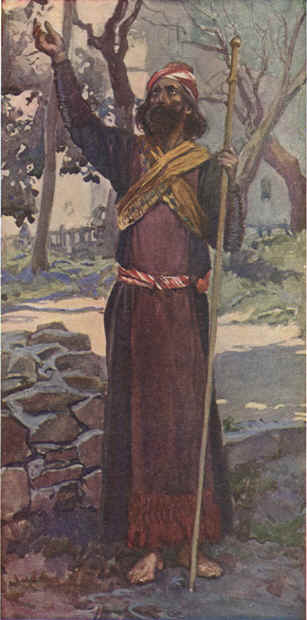
Zechariah as depicted by James Tissot
A Message of Hope
Zechariah, whose name declares that the Lord remembers, is a prophet of hope. A contemporary with Haggai, he ministered to a people who from every human perspective had every reason for despair and disappointment. In 537 BC, Zerubbabel led the first wave of exiles back to Jerusalem, marking the end of the seventy years of Babylonian captivity. Zerubbabel’s primary task was to rebuild the temple. At first, there was good progress, but intense opposition caused the work to stop. In 520 BC, God raised up Haggai and Zechariah to encourage the people. Zechariah, particularly, moved the people to work by directing their hope to God’s unfailing purpose.
Through divinely revealed visions and apocalyptic predictions, Zechariah directs the people to look away from the discouraging circumstances to the certain blessing the Lord has purposed. The foundation of this hope is the Lord and his word. Over and again, Zechariah calls attention to God’s person, promises, and power as the guarantee of divine intervention and care. Over fifty times, the title “Lord of Hosts” occurs to underscore God’s infinite power and authority. The focus of hope is on the certain coming of Christ, the ideal priest (Zech 3; 6), the ideal king (Zech 9), and the ideal prophet (Zech 13). The fulfillment of hope is conditioned on repentance and will be better than can be imagined. Zechariah points to the defeat of every enemy, the universal worship of God, and a universal holiness in which sin is subdued and the curse is reversed.
Zechariah’s Eight Visions (1:1–6:8)
In a series of night visions, God gives Zechariah a panoramic view of his redemptive purpose, extending from the immediate circumstances to the very end of time. The man on a red horse pictures the reversal of fortunes as God turns in mercy to his people and in judgment on the oppressors (1:7–17). The four horns and craftsman assure that God has sufficient power to dispose of every hostile force (1:18–21). The restored Jerusalem shows that God’s purpose for his people is greater than expectations, that his protection inspires confidence for duty, and that his presence is reason for joy (2:1–13). Joshua’s acquittal against Satan’s accusations portrays the forgiveness of sin on the ground of the coming Branch, the Messiah (3:1–10). The golden lampstand depicts the removal of every obstacle to service by the inexhaustible supply of power by the Holy Spirit (4:1–14). The flying scroll warns that God will execute judgment and justice against individual sinners (5:1–4). Wickedness in a basket pictures the final triumph over evil, when every vestige of sin will be gone (5:5–11). The four chariots assure the final victory over every opposition to God’s purpose (6:1–8).
Joshua’s Crown (6:9–15)
Using Joshua, the high priest, as an object lesson, Zechariah enacts a coronation ceremony in which a splendid crown is placed on the head of the priest. The symbolic gesture points to the coming Branch, who will be a priest on a throne. After the coronation, the crown is removed from Joshua, making it clear that he is not the focus of the lesson. The uniting of the Kingly and priestly offices in a single person speaks uniquely of the Messiah. The object lesson confirms the obsolescence of the Levitical priesthood and fosters the hope in the coming royal Priest who alone can wear and keep the crown.
Two Messages Occasioned by a Question on Fasting (7:1–8:23)
Two years after his initial visions and object lesson, Zechariah answers a question on whether the fast commemorating Jerusalem’s fall to the Babylonians is still in order given that the exile is over (7:1–3). The prophet first answers the question by assessing the fasts as hypocritical (7:4–7) and then arguing that obedience is better than heartless rituals (7:8–14). He next turns attention away from the fast-causing circumstances to a time when devastation will give way to restoration (8:1–17), and mourning will be replaced with joy (8:18–23). The blessing will include the Lord’s presence, peace, prosperity, and piety. So attractive will be the blessing that gentiles will seek the Lord and join in worship in a worldwide revival of true religion.
An Oracle by Zechariah About God’s Salvation and His Shepherd (9:1–11:17)
 The closing sections of Zechariah
date about thirty-five years after the completion of the temple and delineate
what the Lord is doing to reverse the fortunes of his people, who are still
subject to Persian rule. Chapter 9 announces divine judgment on the nations
around Judah, the coming messianic King, and the certainty of God’s defense of
his people. Chapter 10 employs the imagery of a new exodus to describe a
complete restoration, which will be accomplished by the Messiah and includes
both the punishment of useless shepherds and the assurance of strength for
conflict. Chapter 11 warns of the consequences of rejecting the good shepherd
and declares judgment on the bad shepherds who have misled the people.
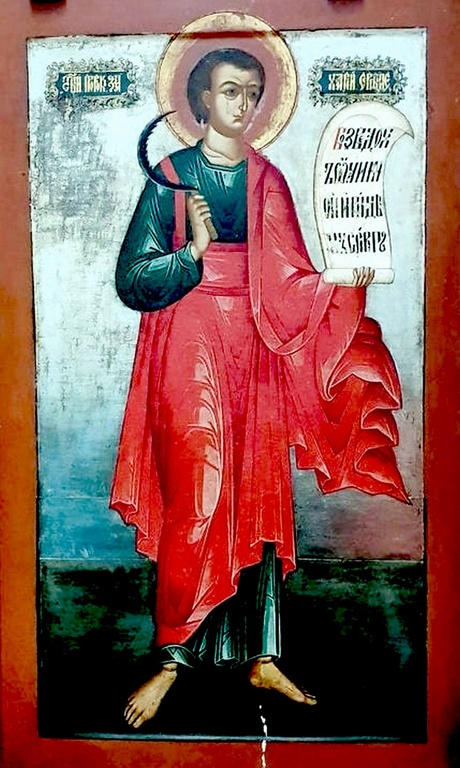
The Holy Prophet Zechariah the Sickle-Seer. A Russian icon
An Oracle by Zechariah About God’s Climactic Salvation (12:1–14:21)
This final section points to a national and spiritual deliverance in connection with the coming Messiah. Chapter 12 highlights God’s intent to deliver his people from every enemy and to inspire a spiritual awakening, evidenced by contrition over their rejection of the pierced Messiah. Chapter 13 describes a fountain opened for cleansing from sin that purges the land from all idolatry and declares that God will gather his remnant after the smiting of his shepherd. In the final chapter, Zechariah announces the coming of the final day of the Lord as he predicts the defeat of every enemy. The final display of divine victories is summed up in terms of the universal recognition of divine authority and reputation. True religion will triumph.
The Book of Zechariah, a contemporary of Haggai, is one of the most messianically dense and apocalyptic books of the Old Testament. For the Orthodox Church, Zechariah is not merely a prophet of the post-exilic restoration but a seer who, through a series of night visions and oracles, unveils the cosmic drama of redemption that finds its center in the Person, work, and eternal reign of Jesus Christ. His prophecies form a crucial bridge between the Temple of his day and the Church, the living Temple of the New Covenant.
1. The Vision of the cleansing of Joshua the High Priest: The
Restoration of the Priesthood
In a powerful vision, Zechariah sees Joshua the High Priest standing before the Angel of the Lord, clad in filthy garments, with satan accusing him. The Lord rebukes satan and commands:
“Then He answered and spoke to those who stood before Him, saying, ‘Take away the filthy garments from him.’ And to him He said, ‘See, I have removed your iniquity from you, and I will clothe you with rich robes.’” (Zechariah 3:4, NKJV).
-
Christological Interpretation: This scene is a profound icon of salvation. Joshua, representing the defiled and accused priesthood of Israel (and by extension, all of humanity), is unable to cleanse himself. The “Angel of the Lord” in this context is widely understood by the Fathers as a pre-incarnate appearance of the Son of God , the true Judge and Defender.
-
Patristic and Ascetical Understanding: The “filthy garments” represent the garment of corruption and sin inherited from Adam. The cleansing and reclothing are an act of pure divine grace, prefiguring the Sacrament of Holy Baptism , where the old man is stripped off and the newly illumined is clothed with the “garments of salvation” (Isaiah 61:10), which is Christ Himself (Galatians 3:27). Ascetically, this is the lifelong process of repentance, whereby we continually turn to Christ to have the stains of our passions cleansed, rejecting the accusations of the devil who reminds us of our past filth.
-
New Testament Parallel: This is directly fulfilled in the parable of the Wedding Feast (Matthew 22:11-14), where one must be clothed in a wedding garment to remain, and in the robes washed white in the blood of the Lamb (Revelation 7:14).
2. The Branch: The King-Priest
Zechariah receives the word of the Lord concerning the coming Messiah, who will unite the royal and priestly offices:
“Then speak to him, saying, ‘Thus says the LORD of hosts, saying: “Behold, the Man whose name is the BRANCH! From His place He shall branch out, and He shall build the temple of the LORD; yes, He shall build the temple of the LORD. He shall bear the glory, and shall sit and rule on His throne; so He shall be a priest on His throne; and the counsel of peace shall be between them both.”’” (Zechariah 6:12-13, NKJV).
-
Christological Interpretation: The “BRANCH” (Hebrew Tsemach) is a key messianic title from the line of David (cf. Isaiah 4:2, Jeremiah 23:5). This prophecy is radical: one person will be both the ruling King (“sit and rule on His throne”) and the mediating Priest (“a priest on His throne”). This uniting of two offices that were strictly separate in the Old Covenant is fulfilled only in Jesus Christ.
-
Patristic and Liturgical Understanding: The Fathers, such as St. Cyril of Alexandria, saw this as a clear prophecy of Christ’s dual nature: as King, He is God and ruler of all; as Priest, He offers Himself as the sacrifice for humanity. He “builds the temple of the LORD”—not a building of stone, but the Church , His own Body (Ephesians 2:19-22). This “counsel of peace” is the divine economy of salvation. This text is often referenced in the liturgical hymns celebrating Christ’s Kingship and His eternal high priesthood according to the order of Melchizedek.
3. The Meek and Victorious King
Zechariah provides one of the most explicit and paradoxical prophecies of Christ’s ministry:
“Rejoice greatly, O daughter of Zion! Shout, O daughter of Jerusalem! Behold, your King is coming to you; He is just and having salvation, Lowly and riding on a donkey, A colt, the foal of a donkey.” (Zechariah 9:9, NKJV).
-
New Testament Fulfillment: This is directly and deliberately fulfilled by Christ on Palm Sunday (Matthew 21:4-5, John 12:14-15). The King comes not on a warhorse, demanding submission, but on a donkey, the beast of peace, embodying humility (prautes).
-
Ascetical Understanding: This is the cornerstone of Christian asceticism: divine power made perfect in humility. The King who is “lowly” (Greek: praus) establishes the path of salvation. To follow Christ is to conquer not by force but by humility, love, and self-emptying (kenosis). This prophecy shatters all worldly conceptions of power and glory, teaching that the way to the Kingdom is through the “narrow gate” of humility.
4. The Shepherd Struck & The Flock Scattered
Zechariah prophesies a tragic event that leads to the scattering of God’s people, pointing directly to the Passion of Christ:
“‘Awake, O sword, against My Shepherd, Against the Man who is My Companion,’ Says the LORD of hosts. ‘Strike the Shepherd, And the sheep will be scattered; Then I will turn My hand against the little ones.’” (Zechariah 13:7, NKJV).
-
New Testament Fulfillment: Jesus Himself applies this prophecy to His own Passion, foretelling the desertion of the disciples: “Then Jesus said to them, ‘All of you will be made to stumble because of Me this night, for it is written: “I will strike the Shepherd, And the sheep of the flock will be scattered.”’” (Matthew 26:31).
-
Patristic Insight: The Fathers note the profound mystery here: the Shepherd who is struck is the “Companion” (equals) of the LORD of hosts, a bold statement of divine intimacy and equality, pointing to Christ’s divinity. The “sword” is the instrument of divine judgment that falls upon Christ, the true Shepherd, on the Cross.
5. The Mourning for the Pierced One and the Fountain of Cleansing
Zechariah culminates with prophecies that find their fulfillment in the Crucifixion and the grace that flows from it.
-
The Pierced One: “And I will pour on the house of David and on the inhabitants of Jerusalem the Spirit of grace and supplication; then they will look on Me whom they pierced. Yes, they will mourn for Him as one mourns for his only son, and grieve for Him as one grieves for a firstborn.” (Zechariah 12:10, NKJV). This is directly referenced in the Gospel of John (19:37) and Revelation (1:7). The “Spirit of grace” is poured out at Pentecost, leading to the realization and mourning over the One they crucified. The liturgical poetry of Good Friday is saturated with this theme of mourning for the pierced Christ.
-
The Fountain for Sin: “In that day a fountain shall be opened for the house of David and for the inhabitants of Jerusalem, for sin and for uncleanness.” (Zechariah 13:1, NKJV). This fountain is the grace of the Holy Spirit flowing from the pierced side of Christ (John 19:34), which becomes the source of the Sacraments, particularly Holy Baptism and the Eucharist , which cleanse from sin and impurity.
6. The prophecy of the thirty pieces of silver
This prophecy in Zechariah 11:12-13 is one of the most strikingly precise and poignant messianic texts in the Old Testament, and its fulfillment in the Passion of Christ is a cornerstone of the Orthodox understanding of Scripture as a unified, Christ-centered revelation.
The Prophecy in Zechariah
“Then I said to them, ‘If it is agreeable to you, give me my wages; and if not, refrain.’ So they weighed out for my wages thirty pieces of silver. And the LORD said to me, ‘Throw it to the potter’—that princely price they set on me. So I took the thirty pieces of silver and threw them to the potter in the house of the LORD.”(Zechariah 11:12-13, NKJV)
Context in Zechariah
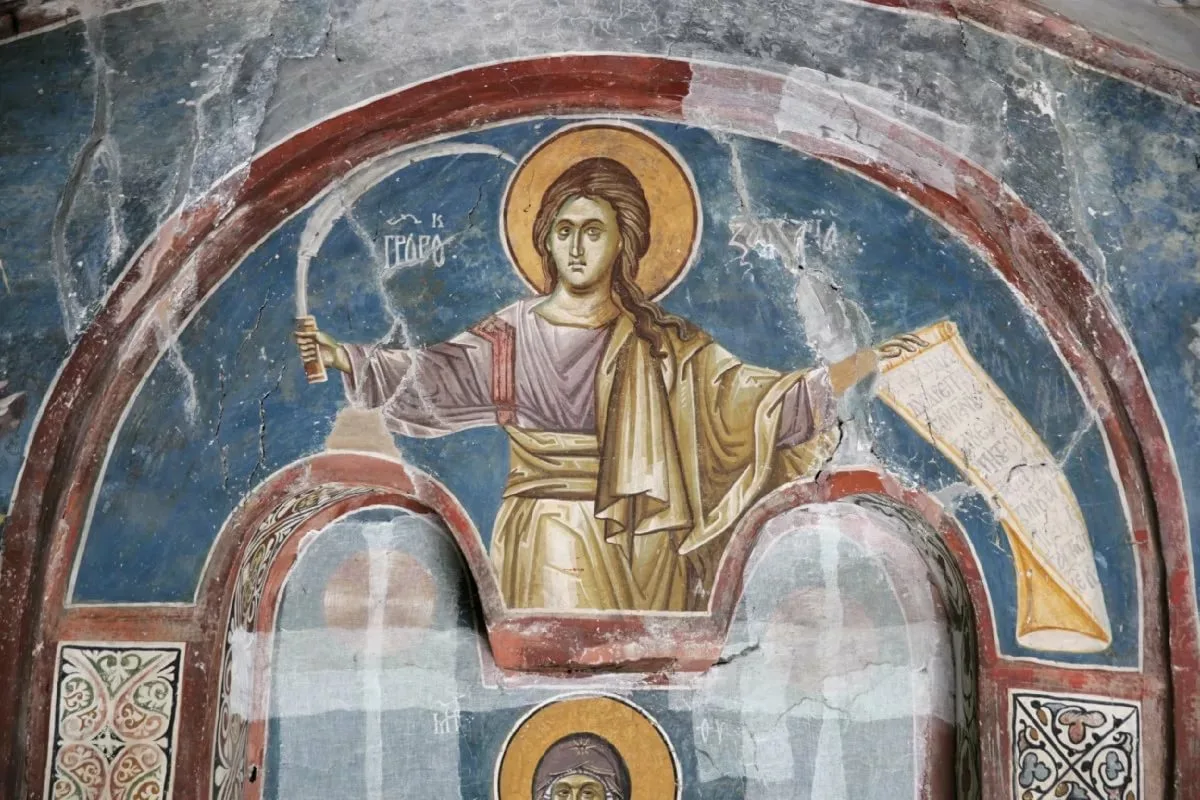
The Holy Prophet Zachariah the Sickle-Seer. Fresco of the Monastery of the Peć Patriarchate, Kosovo and Metohija, Serbia. XIV century
In its original context, this passage concludes Zechariah’s symbolic action of shepherding a “flock doomed for slaughter,” representing the spiritually corrupt people of Israel. The shepherds (their leaders) are condemned for their greed and neglect. When Zechariah, acting as the faithful shepherd, demands his wages, the people contemptuously pay him thirty pieces of silver —the price of a slave gored by an ox (Exodus 21:32). This sum reveals how little they value his faithful shepherding. The Lord’s command to “throw it to the potter” in the “house of the LORD” is a dramatic act of rejection, signifying that this insulting wage is fit only for a potter, a common craftsman, and that the transaction, though happening in the sacred precincts, is utterly profane.
New Testament Fulfillment in Christ’s Passion
The Gospel of St. Matthew explicitly identifies the fulfillment of this prophecy in the actions of Judas Iscariot:
“Then Judas, His betrayer, seeing that He had been condemned, was remorseful
and brought back the thirty pieces of silver to the chief priests and elders,
saying, ‘I have sinned by betraying innocent blood.’ And they said, ‘What is
that to us? You see to it!’ Then he threw down the pieces of silver in the
temple and departed, and went and hanged himself. But the chief priests took
the silver pieces and said, ‘It is not lawful to put them into the treasury,
because they are the price of blood.’ And they consulted together and bought
with them the potter’s field, to bury strangers in. Therefore that field has
been called the Field of Blood to this day. Then was fulfilled what was spoken
by Jeremiah the prophet, saying, ‘And they took the thirty pieces of silver,
the value of Him who was priced, whom they of the children of Israel priced,
and gave them for the potter’s field, as the LORD directed me.’”
(Matthew 27:3-10, NKJV)
Note: Matthew attributes the prophecy to Jeremiah, which has been a subject of discussion among the Fathers. Some suggest it was a collection of prophecies known by Jeremiah’s name, while others, like St. John Chrysostom, argue that the primary reference is to Jeremiah (cf. Jer. 18:1-6; 19:1-13; 32:6-9), but the specific details of the price and the potter are drawn from Zechariah, whom Matthew was inspired to cite directly.
Patristic and Theological Elaboration
1. “That Princely Price They Set On Me”: The Valuation of Christ
The Fathers see the thirty pieces of silver as a profound revelation of human sin. St. Jerome comments that this was the “price of the Lord,” which the Jews “weighed out” for Him, showing the depth of their contempt for the Shepherd of their souls. This “princely price” (sarcastically called “that magnificent sum” in the Septuagint) reveals the ultimate irony: humanity valued the God of all creation, the true King, at the price of a common slave.
- Christological Significance: Christ, the Good Shepherd (John 10:11), is valued and sold for the price of a slave. This embodies the Kenosis (self-emptying) of Philippians 2:7. He who is beyond all price willingly submits to being valued at the lowest price, taking upon Himself the form of a slave to redeem us from the slavery of sin and death.
2. “Throw it to the Potter”: The Rejection and Its Consequences
The action of throwing the money “to the potter” is fulfilled with chilling accuracy.
- Judas’s Act: Judas, in his remorse, throws the silver into the temple (naos) —the “house of the LORD” from Zechariah. This act of throwing the money back signifies his rejection of the transaction and his despair.
- The Chief Priests’ Act: The chief priests, in a display of hypocritical scruples, refuse to put the “price of blood” back into the Temple treasury (the korbanas). Instead, they use it to buy the potter’s field. The Fathers, such as St. Cyril of Alexandria, interpret the “potter” as a symbol of humanity, formed from the clay by God (Genesis 2:7). The field bought with the price of Christ’s blood becomes a cemetery for “strangers”—a symbol of the Gentile world.
- Ecclesiological Significance: The Field of Blood (Akeldama) becomes a powerful and paradoxical symbol. It is a place of death, bought with the wages of betrayal. Yet, in the providence of God, it is also a place of burial. This prefigures the work of Christ: through His blood, shed by a betrayer’s hand, He purchases a “field”—the world—and turns it into a place where the dead (spiritually dead strangers to the covenants) can be buried with Him in baptism and rise to new life (Romans 6:4). The Church, purchased by Christ’s blood (Acts 20:28), becomes the gathering place for all the “strangers and foreigners” who are now “fellow citizens with the saints” (Ephesians 2:19).
Liturgical and Ascetical Understanding
- Liturgical Fulfillment: The hymns of Holy Week , particularly during the services of Holy Wednesday (which commemorates the betrayal of Judas) and Holy Friday , are saturated with the imagery of this prophecy. We sing lamentations contrasting the infinite worth of Christ with the thirty pieces of silver, and we mourn the sin of Judas who “sold the priceless One for a price.”
“The lawless assembly of the scribes and the Pharisees offered thirty pieces of silver to the traitor, the price of Him Who priced the man formed by His own hand; and they watched for the proper time to hand Him over to death.” (From the Holy Wednesday Matins)
- Ascetical Understanding: This passage provides a deep ascetical lesson on the love of money (avarice) and the betrayal of Christ for worldly gain. Judas is the ultimate icon of this passion. The thirty pieces of silver represent any worldly desire—be it money, power, pride, or pleasure—for which we are tempted to “sell out” our Lord, betraying our baptismal vows. The ascetical life is a constant struggle to reject this “wage of sin” and to instead value Christ above all else, recognizing that our true wages are eternal life (Romans 6:23). The throwing of the silver back signifies the futility and self-destruction that comes from acquiring such ill-gotten gain, which leads only to despair.
Synthesis and Conclusion
Zechariah 11:12-13 is a microcosm of the Passion narrative. It reveals:
- The Betrayal: Christ, the faithful Shepherd, is betrayed by His own.
- The Price: He is valued at the contemptible price of a slave, revealing the depth of human sin.
- The Rejection: The “wages” are thrown in the Temple, showing the rejection of the Shepherd’s work.
- The Sovereign Plan: Yet, God incorporates even this evil act into His redemptive plan. The money, intended for betrayal, is used to purchase a field for strangers, prophetically signifying that the blood of Christ would purchase a people for Himself from every nation.
Thus, this prophecy powerfully demonstrates that the Cross was not a tragic accident but the fulfillment of God’s foreknown and pre-ordained plan (Acts 2:23) for the salvation of the world.
Conclusion: Zechariah as a Christ-Centered Book
The Book of Zechariah is a comprehensive prophetic icon of Christ and His Church. It reveals:
- Christ the High Priest , who cleanses His people and clothes them in garments of righteousness.
- Christ the Branch , the unique King-Priest who builds the true Temple, the Church.
- Christ the Meek King , who establishes His eternal reign through humility and sacrificial love.
- Christ the Struck Shepherd , who offers Himself for His flock, fulfilling the Father’s will.
- Christ the Pierced One , from whose side flows the Fountain of living water, the Holy Spirit, that cleanses the world.
For the Orthodox Christian, Zechariah provides the essential vision that the restoration of Jerusalem and the Temple was always a type and shadow of a greater reality: the coming of the Messiah, whose saving work would inaugurate the New and Eternal Covenant, calling all nations to become living stones in the spiritual Temple founded on His Body.
MALACHI
Outline
1:1–14 God’s Love for Israel and His Rejection of Israel’s Profane Offerings
1:1–5 God’s Love for Israel
1:6–14 God’s Rejection of Israel’s Profane Offerings
2:1–17 People and Priest Rebuked for Profaning the Covenant
2:1–9 God Rebukes the Priests for Profaning the Covenant
2:10–17 God Rebukes the People for Profaning the Covenant
3:1–4:6 God’s Messenger Will Purify the Sons of Levi and Bring Judgment and
Redemption
3:1–4 God’s Messenger Will Come and Purify the Sons of Levi
3:5–12 God’s Judgment on Israel for Its Sin
3:13–18 God Judges Israel but Remembers Those Who Fear Him
4:1–6 The Day of the Lord Will Bring Judgment and Redemption
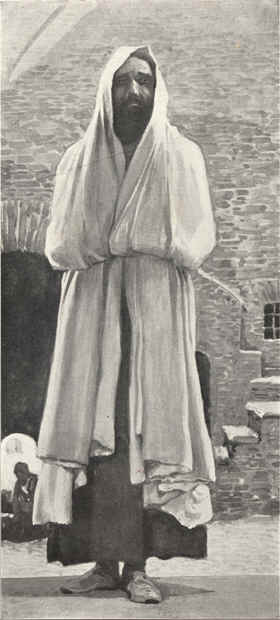
Imaginative image of Malachi (watercolor c. 1896–1902 by James Tissot)
Rekindling Israel’s First Love: God’s Messenger as Israel’s Solution to Profane Religion
Yahweh raises up Malachi, whose name means “my messenger,” as a prophet to the postexilic community. Having been restored to their land after exile, those now living in Judah have grown disappointed with their current reality—it was supposed to be better than this! In their disillusionment, they have grown complacent and half-hearted in their devotion to and worship of Yahweh. The community has despised, defiled, profaned, and soiled God’s reputation by their abominations in worship and by their marital unfaithfulness. Malachi exhorts the priests of the community and the nation of Israel as a whole to repent of their lukewarm nominalism in order to live with zeal for and obedience to Yahweh—to live in accordance with Yahweh’s covenantal and ethical standards, to live faithfully under the covenant in a vibrant relationship, to live with hope. Using an imaginary group of interlocutors who asks questions to set up Yahweh’s responses as a primary rhetorical strategy, the overall thrust of Malachi’s oracles is to kindle a glorious hope while calling for repentance—a renewal of the first love they had for Yahweh and a hope for a future according to his good promises.
God’s Love for Israel and His Rejection of Israel’s Profane Offerings (1:1–14)
Malachi opens his oracle by reminding Israel of their election as evidence of Yahweh’s love for them. In their disappointment over their return from judgment, God points to their restoration as evidence of his elective love—especially when juxtaposed to Esau/Edom’s permanent judgment. But God’s election of Israel is covenantal and therefore has requirements. The priests of the postexilic community are trifling with God’s sacrifices. In so doing, they are bringing disrepute on Yahweh’s name among the nations of the earth, whom God desires to bless through his people (see Gen 12:1–3; Exod 19:3–6). As “the great King” and “Yahweh of Armies,” he will protect his reputation.
God’s Love for Israel (1:1–5)
The book opens with an introduction of the prophet, Malachi (whose name means “my messenger”), who is speaking an “oracle”(see Zech 9:1; 12:1) as Yahweh’s word to Israel. Quoting Yahweh, Malachi reminds God’s people that they are indeed loved. The rhetorical device of the interlocutors’ question (“How have you loved us?” [Mal 1:2]) testifies to Israel’s disillusionment. They don’t sense divine love. God, through his prophet, reminds Israel of their election (see Gen 25:19–26). Truly, Israel has been judged for her sin in the exile, but God’s elective love for his people is demonstrated by their restoration. Esau/Edom’s judgment will be permanent (Mal 1:4; see Isa 34:5–15; Jer 49:7–22; Ezek 25:12–14; 35:1–15; Amos 1:11–12). God’s judgment of Esau/Edom and his restoration of Israel are evidence of his love and demonstrate his renown: “Yahweh is great beyond the border of Israel” (Mal 1:5).
God’s Rejection of Israel’s Profane Offerings (1:6–14)
Having reminded Israel of his love for them, God reminds them that their election demands a response. Yahweh condemns the priests (1:6) for their contemptible sacrifices. They offer blemished animals, violating the Levitical requirements (Lev 1:3; 22:18–25; Deut 15:19–23). Their contempt for Yahweh’s altar/table sullies his reputation among the nations. He is to be honored and feared (Mal 1:6); they defile, despise, and cheat him by offering what is not costly (1:6–7, 12). He is of international renown, “the great King” (1:11, 14; see 1:5; Is. 19:19–25; 66:1–21); they are wearied by his requirements (Mal 1:13). Their offerings would not please the human governor (1:8); Yahweh rejects them too (1:10). Malachi exhorts them to repent (1:9), asking for one of the priests to put an end to these empty offerings (1:10). Yahweh is the holy divine warrior, “Yahweh of Armies,” who will bring judgment without repentance, zealously protecting his honor.
People and Priest Rebuked for Profaning the Covenant (2:1–17)
Malachi continues to focus on the priests in chapter 2, but also expands out to the covenant community. Building on the previous oracle denouncing the priests, Malachi juxtaposes the practices of his contemporaries with their figurehead, Levi. They fail to “set their hearts” (2:2) on their obligations with the sacrificial system and on instructing the people in the ways of holiness. Often, where there is a moral decline in leadership, there is a moral decline in the general population. Like the priests, the people’s sins also bring disrepute on God’s reputation (2:11). Malachi responds with rhetorical questions and commands to remind God’s people of their unity within the covenant community and their need to guard their heart and be faithful.
God Rebukes the Priests for Profaning the Covenant (2:1–9)

The Prophet Malachi. A fragment of the painting of the Annunciation Church in Yuryevets Povolsky (Russia). The first third of the XVIII century
Yahweh continues to address the priests (2:1) who have violated their obligations. They have “set their hearts” (2:2) neither on their role as executors of the sacrificial system nor on their role as teachers of God’s instruction (2:6–9; see Lev 10:11; Hag 2:11; Zeph 3:4). Yahweh, through Malachi, contrasts Levi as a figurehead for the priesthood with Malachi’s contemporaries (see the powerful rhetorical phrase “but you” in Mal 2:8). Levi taught the torah faithfully and lived ethically (2:5–7); the postexilic priests “have turned from the way” from Levi, leading others astray and soiling the covenant (2:8). Yahweh announces judgment, which implies a call to repent (2:2): they will be humiliated and defiled by having feces spread on their faces (2:3), disqualifying them from priestly service. In fact, judgment seems already to be in force (2:2, 9). This is a heart issue; the priests need to repent and live into their calling as those who lead people away from sin through appropriate worship and torah-based instruction.
God Rebukes the People for Profaning the Covenant (2:10–17)
Having rebuked the priests, Malachi now turns to rebuke the people as a whole. They too violate the covenant. They prove treacherous to one another and thereby profane the covenant of their fathers (2:10). Malachi identifies two sins: (1) marrying foreign women, introducing foreign gods to the postexilic community (2:11; see Ezra 9:1–10; Neh 13:23–31; Exod 34:15–16; Deut 7:2–5; Josh 23:12–13), and (2) divorcing the “wives of their youth” (Mal 2:14). These sins are an abomination (2:11) and cause violence to the community (2:16). God, in his judgment, no longer regards their offerings (2:12–13), which has caused the people to weep (2:13). But this is no godly sorrow. It is not Yahweh’s love for his people that is in question (1:2–5); it is the people’s love for God that is flawed, as evident in their nominal and half-hearted approach to their covenant. To these sins, Yahweh issues two commands (repeated twice for emphasis) through Malachi to lead the people to repentance: guard their spirit and be faithful (2:15–16).
God’s Messenger Will Purify the Sons of Levi and Bring Judgment and Redemption (3:1–4:6)
Malachi transitions from divine rebuke to divine response. God himself is coming; the day of Yahweh is drawing near (3:2, 17; 4:1–6). But the day of Yahweh will not be what they are anticipating. The day of Yahweh will be a day of vengeance and vindication, a day for refining and judgment. The priests and the community are called out for various sins and called to repent in the face of coming judgment (3:7). To the disillusionment regarding the glory of God’s people and the impatience over God’s timing to bring his Messiah, who will restore justice and righteousness, Malachi proclaims that the day of Yahweh—which will result in judgment, repentance, and the blessing of all nations (4:5–6; see 1:5, 11, 14; 3:12, 17; Gen 12:1–3; Exod 19:3–6)—is coming soon. There is hope in God’s glorious promises for those who fear Yahweh (Mal 4:2).
God’s Messenger Will Come and Purify the Sons of Levi (3:1–4)
Malachi summarizes his rebuke of the covenant people and the priests by declaring that they “weary” God and then builds on the rebuke to articulate God’s response. “How do [they] weary God?” (2:17). Malachi’s response is simple: they live unethically and accuse God of being unjust (2:17). Whether they actually verbalize that those who practice evil are good or that God is unjust, their actions communicate these sentiments. This grieves Yahweh. So Yahweh is preparing to send his “messenger” (forming a wordplay with Malachi’s name), who “will prepare a way before” him (3:1; see Isa 40:3). When God arrives, he will refine the priests (“the sons of Levi”) with fire and purify them with a potent detergent (Mal 3:2–3; Isa 1:25). They may be tarnished, but they are worth purifying and refining. Divine purification will restore them (Mal 3:4), allowing them to live in accordance with the covenant discussed in 2:4–8.
God’s Judgment on Israel for Its Sin (3:5–12)
Having proclaimed the divine response against the priests, Malachi now turns to the broader community (“sons of Jacob” in 3:6). The day of Yahweh of Armies “draws near” (3:5) to the “whole nation” (3:9) for their covenant violation—sorcery, adultery, lying, oppression of the marginalized (3:5), and stealing from God (3:8; see Neh 13:10–12). All these actions are summarized by the final category, “those who do not fear” Yahweh. So Malachi, speaking for God, calls them to repent (Mal 3:7). Repentance entails a change in behavior, characterized by generous giving rather than “robbing God” (3:8–10). If the postexilic community will repent, God will bless them and restore them to their role as a source of blessing to all nations (3:12; see Gen 12:1–3; Exod 19:3–6). The language of 3:10–11 recalls the blessings of the covenant (Deut 28:10–12). God’s elective love remains, for he does not change (Mal 3:6), despite their persistent sin (3:7) and their disillusionment (1:2–5). It is because of God’s unchanging love that they are not finished off even in judgment (3:6–7, 12).
God Judges Israel but Remembers Those Who Fear Him (3:13–18)
Continuing the proclamation of the day of Yahweh, Malachi quotes Yahweh, condemning the community’s words again (3:13; see 2:17). This reiterates Israel’s lack of faithfulness: they embody empty religion, seeing no value in obedience (3:14). In fact, they call the “insolent” blessed and celebrate wickedness (3:15). Malachi contrasts the wicked with those who fear Yahweh. The latter see what is happening within the community and “speak to one another.” Yahweh regards their prayer and inscribes their names in his “scroll of remembrance”(3:16). Yahweh is neither deaf nor blind to the wicked ways of the community. The day of Yahweh is a day of vengeance against God’s enemies, and a day of vindication for those who fear Yahweh (3:17–18). Those who fear Yahweh are true Israel, rightly related to Yahweh, his “treasured possession” (3:17; see Exod 19:5).
The Day of the Lord Will Bring Judgment and Redemption (4:1–6)
Looking back to the “insolent” (3:15), Malachi quotes Yahweh saying judgment against the wicked is imminent (4:1). The day of Yahweh is described with consuming-fire imagery—a day of vengeance against those who reject Yahweh. But for those who fear Yahweh, the day of Yahweh is a day of vindication: a day of bright, healing sunshine (fire), restoration, and joy (4:2). The faithful will “tread down the wicked” (4:3). The figures of Moses and Elijah recall great heroes of Israel’s past and will serve as catalysts for repentance (4:4–6; see 3:1–4; Luke 1:17). These are appropriate references: Moses recalls the priestly emphases of Malachi’s oracle (Mal 1:6–2:9), while Elijah recalls the prophetic critique of the broader social issues regarding ethical laxity and wickedness (2:10–17; 3:5–15).
35.3 Rekindling Israel’s First Love: God’s Messenger as Israel’s Solution
to Profane Religion.
God’s Love for Israel (1:1–5)
God’s Rejection of Israel’s Profane Offerings (1:6–14)
God’s Judgment on Israel for Its Sin (3:5–12)
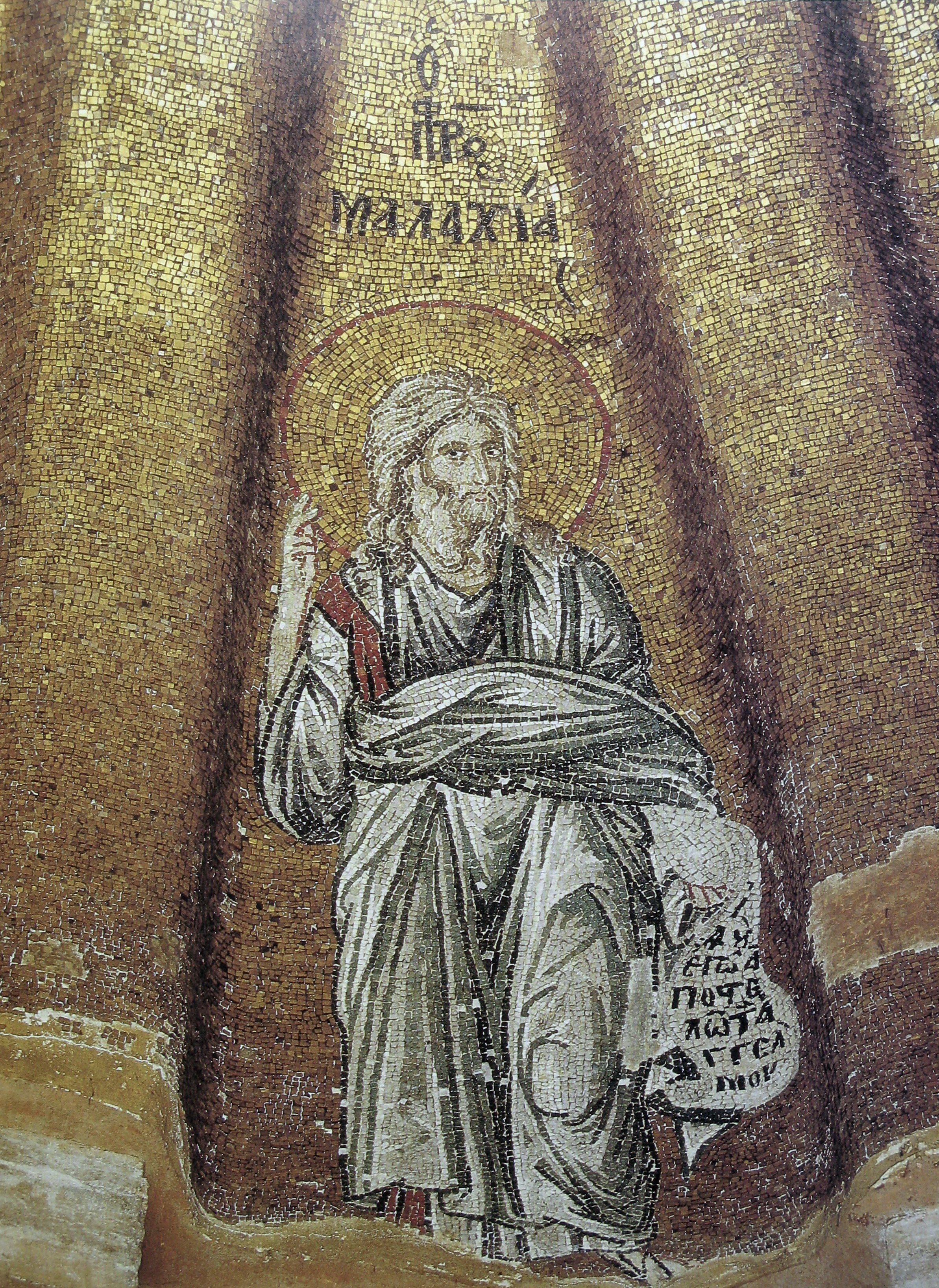
The Holy Prophet Malachi. Mosaic of the Church of the Theotokos of Pammakarista (All-Blessed) in Constantinople. XIV century
The Book of Malachi, whose name means “My Messenger,” delivers God’s final prophetic word to Israel before four centuries of silence. It is a book of piercing accusation and glorious promise, confronting a people grown spiritually cold and ritualistic. For the Orthodox Church, Malachi is not an epilogue but a potent prophecy that finds its “yes” and “amen” in Jesus Christ (2 Corinthians 1:20). It diagnoses the sickness of the Old Covenant priesthood and worship and prescribes their ultimate remedy in the coming Messiah and His eternal priesthood.
1. The Unfaithful Priesthood and the Pure Offering
Malachi’s primary indictment is against the priests who have corrupted the worship of God.
-
The Text: “A son honors his father, and a servant his master. If then I am the Father, where is My honor? And if I am a Master, where is My reverence?” says the LORD of hosts… “You offer defiled food on My altar… And when you offer the blind as a sacrifice, is it not evil? Offer it then to your governor! Would he be pleased with you?” (Malachi 1:6, 8, NKJV).
-
The Prophecy of a Pure Offering: In stark contrast to this defiled worship, God proclaims a universal and pure worship to come: “For from the rising of the sun, even to its going down, My name shall be great among the Gentiles; In every place incense shall be offered to My name, and a pure offering; For My name shall be great among the nations,” Says the LORD of hosts. (Malachi 1:11, NKJV).
-
Patristic and Liturgical Understanding: The Fathers, such as St. Justin Martyr and St. Irenaeus, identified this “pure offering” unequivocally as the Holy Eucharist. The sacrificial worship of the Old Covenant, which had become defiled, is fulfilled and replaced by the perfect, non-bloody sacrifice of Christ’s own Body and Blood.
- Liturgical Fulfillment: This prophecy is fulfilled in every Divine Liturgy. The “rising of the sun to its going down” signifies the catholic (universal) nature of the Church, where the Eucharist is celebrated across the entire world. The “incense” is the prayer of the saints (Revelation 5:8) and the liturgical incense offered during the service. The “pure offering” is the Lamb of God, slain from the foundation of the world, now offered in a bloodless manner upon the altars of the Church. This is the fulfillment of the prophecy that God’s name will be great among the nations (Gentiles).
2. The Messenger of the Covenant and the Refiner’s Fire
Malachi prophesies the coming of a forerunner and the Lord Himself in a powerful theophany.
-
The Forerunner: “Behold, I send My messenger, And he will prepare the way before Me.” (Malachi 3:1a, NKJV).
-
The Coming Lord: “And the Lord, whom you seek, Will suddenly come to His temple, Even the Messenger of the covenant, In whom you delight. Behold, He is coming,” Says the LORD of hosts. “But who can endure the day of His coming? And who can stand when He appears? For He is like a refiner’s fire And like launderers’ soap. He will sit as a refiner and a purifier of silver; He will purify the sons of Levi, And purge them as gold and silver, That they may offer to the LORD An offering in righteousness.” (Malachi 3:1b-3, NKJV).
-
New Testament Fulfillment: The Gospels explicitly identify the “messenger” as John the Baptist (Matthew 11:10, Mark 1:2, Luke 7:27). His mission was to “prepare the way” through a baptism of repentance.
-
Christological Interpretation: The “Lord” and “Messenger of the covenant” who comes suddenly to “His temple” is Jesus Christ. This was first fulfilled when He entered the Jerusalem Temple to cleanse it (John 2:13-17), and ultimately in His Incarnation, wherein God Himself came to dwell (“temple”) among us (John 1:14).
-
Ascetical Understanding: The “refiner’s fire” and “launderer’s soap” are powerful images of the ascetical life. Christ comes not merely as a comforting presence but as a purifying fire to burn away the dross of our passions and sins. This purification is the work of the Holy Spirit, whom Christ baptises with (Matthew 3:11). The ascetical struggle of prayer, fasting, and repentance is the process by which we voluntarily submit ourselves to this divine fire, allowing our souls to be purified as gold and silver, so that we too may become a righteous offering to God (Romans 12:1).
3. The Sun of Righteousness and the Return of Elijah
The book concludes with a glorious promise of healing and restoration, linked to the final prophet of the Old Covenant.
-
The Sun of Righteousness: “But to you who fear My name The Sun of Righteousness shall arise With healing in His wings…” (Malachi 4:2, NKJV).
-
The Return of Elijah: “Behold, I will send you Elijah the prophet Before the coming of the great and dreadful day of the LORD. And he will turn The hearts of the fathers to the children, And the hearts of the children to their fathers, Lest I come and strike the earth with a curse.” (Malachi 4:5-6, NKJV).
-
Patristic and Liturgical Understanding:
-
The Sun of Righteousness: This is a definitive title for Jesus Christ. The Fathers, like St. Gregory of Nyssa, saw in this the end of the night of sin and the dawn of the eternal Day of the Lord. The “healing in His wings” refers to the life-giving power that flows from His presence. This is celebrated vividly in the Liturgy, particularly in the Hymn of the Resurrection (“Having beheld the Resurrection of Christ…”), which proclaims Christ as the Light that illumines all. The imagery is also central to the Feast of the Transfiguration , where the uncreated Light of the Godhead shines forth from Christ.
-
The Return of Elijah: Christ Himself confirmed that this prophecy was fulfilled in John the Baptist (Matthew 11:13-14, 17:10-13). John came “in the spirit and power of Elijah” (Luke 1:17) to prepare the people for Christ’s first coming by turning their hearts in repentance. Liturgically, the Church honors John the Baptist as the culmination of the prophets and the “voice of one crying in the wilderness,” fulfilling this final, pivotal prophecy.
-
Conclusion: Malachi as a Christ-Centered Book
The Book of Malachi provides the essential closing argument of the Old Testament:
-
The failure of the Levitical priesthood points to the need for a new, eternal Priest according to the order of Melchizedek.
-
The defiled sacrifices point to the one, pure offering of the Body and Blood of Christ in the Eucharist.
-
The coming Messenger is fulfilled in John the Baptist, who prepares the way.
-
The Lord who comes to His Temple is Jesus Christ in His Incarnation and in His cleansing of worship.
-
The refiner’s fire is the purifying grace of the Holy Spirit received through the ascetical life and the Holy Mysteries.
-
The Sun of Righteousness is Christ Himself, whose Resurrection brings healing and immortality to light.
Thus, Malachi seals the Old Covenant with a promise that is entirely Christocentric. He foretells the end of the temple of stone and its priesthood, and the dawn of a new and living way where God is worshipped “in spirit and truth” (John 4:23-24) in the Apostolic Orthodox Church, from the rising of the sun to its going down.
35.1 A Message of Hope.
Zechariah as depicted by James Tissot
A Message of Hope
Zechariah’s Eight Visions (1:1–6:8)
Joshua’s Crown (6:9–15)
The Holy Prophet Zechariah the Sickle-Seer. A Russian icon
- A Message of Hope. Zechariah’s Prophecy.
-
An Orthodox Insight into the Book of Zechariah
-
Rekindling Israel’s First Love: God’s Messenger as Israel’s Solution to Profane Religion.
-
An Orthodox Insight into the Book of Malachi
-
- 35.1 A Message of Hope.
- 35.2 An Orthodox Insight into the Book of Zechariah
- 35.3 Rekindling Israel’s First Love: God’s Messenger as Israel’s Solution to Profane Religion.
- 35.4 An Orthodox Insight into the Book of Malachi
35.3 Rekindling Israel’s First Love: God’s Messenger as Israel’s Solution
to Profane Religion.
God’s Love for Israel (1:1–5)
God’s Rejection of Israel’s Profane Offerings (1:6–14)
God’s Judgment on Israel for Its Sin (3:5–12)
Related Concepts
- 1-peter-2
- 1-peter-25
- abrahamic-blessing
- accusation-of-the-devil
- adams-inheritance
- baptism-with-fire
- baptismal-burial
- branch
- burial-with-christ-in-baptism
- catholicity-of-the-church
- christophany
- christs-dual-nature
- church-purchased-by-blood
- cleansing-of-the-temple
- contrition
- counsel-of-peace
- covenant-faithfulness
- cross
- cup-of-wrath
- exodus-195
- field-of-blood
- final-judgment
- first-love
- good-friday
- holy-baptism
- holy-spirit
- hope
- humility-prautes
- incense
- john-219
- john-the-baptist
- joshuas-cleansing
- judas
- judgment
- king-priest
- levi-as-figurehead
- levitical-priesthood
- lex-talionis
- living-stones
- lord-of-hosts
- malachi-32-3
- malachi-45-6
- meek-king
- meekness
- melchizedekian-priesthood
- mission
- narrow-gate
- new-testament-citation
- obedience-better-than-sacrifice
- palm-sunday
- passion-of-christ
- pentecost
- philippians-26-7
- philippians-27
- post-exilic-restoration
- profanation-of-the-covenant
- profane-worship
- prophecy-and-fulfillment
- purification
- putting-on-christ
- resurrection
- royal-priesthood
- satan-as-accuser
- scroll-of-remembrance
- second-coming
- sensus-plenior
- spiritual-sacrifice
- teaching-office
- the-branch
- the-church-as-temple
- the-fathers
- the-gentile-mission
- the-meek-king
- the-narrow-gate
- the-sons-of-levi
- the-struck-shepherd
- tithing
- transfiguration
- treasured-possession
- true-religion-triumphant
- uncreated-light
- voluntary-suffering
- wages-of-sin-vs-eternal-life
- zechariah-1210