Old Testament — Topic 33
MICAH
Outline
1:1–2:13 First Cycle of Micah’s Prophecy: Judgment and Restoration for Israel
and Judah
1:1–16 Coming Judgment on Both Kingdoms
1:1 Introduction to Micah’s Prophecy
1:2–4 The Lord Approaches the Earth to Witness Against Israel
1:5 The Lord’s Motivation for Judgment
1:6–7 Samaria’s Coming Judgment
1:8–9 Micah Laments the Promised Judgments
1:10–16 Israel’s Coming Judgment
2:1–11 Micah Laments the House of Jacob’s Oppressive Injustices
2:1–2 The Unjust Actions of the Israelite Oppressors
2:3–5 God’s Appropriate Judgments for the Haughty Oppressors
2:6–11 The Enemies of the Lord Tell Micah What Not to Preach
2:12–13 God Assures the Remnant of Israel That He Will Restore Them
3:1–5:15 Second Cycle of Micah’s Prophecy: Blessings After Judgment on Judah’s
and Israel’s Leaders
3:1–12 Micah Denounces the Rulers of the House of Israel
3:1–4 Micah Accuses Israel’s Leaders of Hating Good
3:5–8 Micah Accuses the False Prophets of Leading God’s People Astray
3:9–12 Micah Again Accuses Israel’s Leaders of Hating Justice
4:1–5:15 Micah’s Reason for Hope: The Mountain of the House of the Lord Shall
Be Established
4:1–8 Micah Gives Hope for Future Peace and Restoration of Israel
4:9–13 Micah Offers Reason to Hope in the Lord During Zion’s Suffering
5:1–6 Micah Encourages Israel to Hope in Their Future Ruler
5:7–9 Micah Tells the Remnant of Jacob to Hope for Future Victory
5:10–15 Micah Offers Hope to Israel Through the Judgment It and the Nations
Will Undergo
6:1–7:20 Third Cycle of Micah’s Prophecy: God’s Charges Against Judah and the
Triumph of God’s Rule
6:1–16 The Lord’s Accusation Against His People
6:1–2 The Lord Announces an Indictment Against His People
6:3–5 The Lord’s Covenant Faithfulness to His People
6:6–8 The Lord’s Desire for Justice, Mercy, and Humility Among His People
6:9–12 Israel’s Sins of Deceit
6:13–16 The Lord Promises Judgment Against His People
7:1–6 Micah Laments the Absence of Faithful People
7:7–20 Micah’s Reasons for Hope
7:7–10 Hope Through Judgment
7:11–13 Hope in the Restoration of Israel
7:14–17 Hope in the Shepherd of Israel
7:18–20 Hope’s Foundation: The Steadfast Love of God
_
_
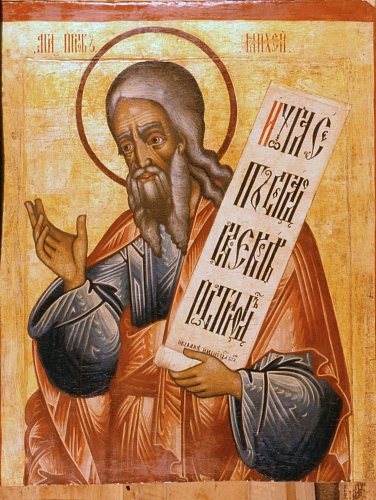
The prophet Micah, as depicted by an 18th century Russian Orthodox icon from the iconostasis of a church on Kizhi Island in Karelia, Russia.
_Loving God and Neighbor
_
Micah’s prophetic legacy has a long reach and may contain the most-quoted verse in all of the Minor Prophets: “Do justice, love mercy, and walk humbly with your God” (6:8). Micah came from the lowland region of Moresheth and was not part of the urban elite, like his contemporary Isaiah (Micah prophesied in Judah under Kings Jotham, Ahaz, and Hezekiah, circa 750–700 BC). The crosshairs of Micah’s prophetic ministry settle on the political and religious leaders of both Israel and Judah—who have forgotten the two tables of the law, namely, love Yahweh alone and love your neighbor as yourself. Nestled at the center of the Minor Prophets, Micah lays claim to familiar prophetic themes, particularly with the book’s focus on the interface of the vertical and horizontal dimensions of God’s covenantal claims on his people. The first three chapters of Micah set the tone for the remainder of the book. Micah 1 addresses the rampant idolatry of Samaria and Jerusalem. Micah 2 in turn addresses the oppression of the vulnerable, with Micah 3 returning full force to the themes of chapters 1 and 2. The prophetic hope of Micah rests on an arresting picture of the future when God will establish Mount Zion as the highest of mountains. In that day, nations will stream to Mount Zion in order for God to teach them his law. When that day comes, no one will ever be afraid again (4:1–5).
First Cycle of Micah’s Prophecy: Judgment and Restoration for Israel and Judah (1:1–2:13)
Micah 1–2 engages the two tables of the law: love of God and neighbor. The first chapter locates Micah the prophet in the eighth century BC. Though Micah is from Judah, the Southern Kingdom, his prophetic ministry focuses on the religious and political epicenters of the North and the South, Samaria and Jerusalem respectively. The first chapter is a legal scene, with the sovereign Lord making a case against his people. The chapter shudders under the judging presence of God. Mountains melt and valleys split. Why? Because Samaria and Judah have turned idolatrous. The love of God demands exclusive loyalty to him (Exod 20:3). The only adequate response is mourning and repentance. The second chapter leans against acts of injustice perpetuated by the powerful against the vulnerable. False prophets who are for hire also come under Micah’s prophetic scrutiny. Somewhat out of nowhere, Mic 2 ends with a messianic promise of a coming King who will lead them in freedom (2:12–13). Hope looks to the future.
Coming Judgment on Both Kingdoms (1:1–16)
Micah the eighth-century prophet from Judah announces the coming presence of God to judge Israel and Judah. The imagery associated with God’s coming is similar to other theophanies, notably on Mount Sinai in Exodus. God’s presence sends the material world into disorder. Mountains melt. Valleys split. Why is all of this happening? Because of Samaria’s and Jerusalem’s patent disregard for the first commandment: you shall have no other gods before me. Idolatry leads to God’s judgment, which in turn leads to mourning and eventual exile.
Introduction to Micah’s Prophecy (1:1)
The superscription of Micah’s prophecy provides important information for the book as a whole. Micah hails from the city of Moresheth in the Shephelah region of Judah. The Shephelah was the lowland region extending from the base of the Judean Mountains to the coastal plains. Micah, unlike Isaiah, was not from the religious and political epicenter, Jerusalem. He ministered during the eighth century BC, like his contemporary Isaiah. Most importantly, Micah was a servant of the Lord’s word.
The Lord Approaches the Earth to Witness Against Israel (1:2–4)
The imagery of these opening verses is stark. The Lord’s people are called to “hear,” echoing back to the Shema of Deut 6:4, where exclusive loyalty to the Lord is commanded. The scene is judicial, as the Lord stands as prosecutor and witness against his people. The imagery associated with the Lord’s coming resembles the theophanic imagery elsewhere in Scripture, especially Sinai and the cross of Christ. The earth responds to the judging presence of the Lord.
The Lord’s Motivation for Judgment (1:5)
The Lord’s judgment against Samaria to the north and Jerusalem in the south stems from their sin, particularly their sin of idolatry. Thus, the echo back to the Deut 6:4—“hear”—is all the more poignant. These capital cities as the central locations for Israel and Judah’s religious and political life make their offenses more acute. What takes place in these cities trickles down to the whole of the people.
Samaria’s Coming Judgment (1:6–7)
Samaria played the prostitute by not maintaining covenant loyalty to the Lord. As readers of the books of Kings are aware, no King of the Northern Kingdom did what was right in the sight of the Lord. They all repeated the initial idolatrous sins of the Northern Kingdom’s first King, Jeroboam, including the building of golden calves at Bethel and Dan. They played the prostitute and will lie in the bed they have made.
Micah Laments the Promised Judgments (1:8–9)
Micah laments and wails in the face of God’s announced judgment against Samaria and Jerusalem. Micah is no snide prophet, with a “they got what they deserved” spirit. He mourns and weeps. Perhaps more importantly, Micah enters into solidarity with the people who will experience God’s judgment. In other words, Micah, like Jeremiah after him, suffers under the weight of his own prophetic ministry.
Israel’s Coming Judgment (1:10–16)
This section is admittedly challenging. Some of the city names are known, and others are not. The known cities are from the Shephelah region, a region that suffered greatly when Sennacherib and his Assyrian hordes marched through Judah to the gates of Jerusalem. There are also plays on the Hebrew words in this section—e.g., roll in dust (Hebrew aphrah) on Beth Aphrah (house of dust). The judging presence of God elicits great cause for lamentation.
Micah Laments the House of Jacob’s Oppressive Injustices (2:1–11)
Loving God and loving neighbor are so fitted to each other that to claim one necessitates the other. Moreover, the breakdown of the first table of the law, loving God, leads necessarily to the breakdown of social concern: neighbor for neighbor, and leader for those dependent on them for justice. Micah 2 raises its voice against those in positions of power who spend their whole day devising plots of injustice. They then think about their evil plans on their beds and execute them in the morning. Micah warns them that God is devising his own plans against them. Micah also levels a charge against false prophets who refuse to speak the truth but peddle their own lies for selfish gain.
The Unjust Actions of the Israelite Oppressors (2:1–2)
From sunup to sundown, the wicked are devising their schemes of injustice and abuse of power. The first chapter of Micah deals with the first table of the law: love God. The second chapter turns to the law’s second table: love your neighbor as yourself. Here the wicked are making themselves their own neighbor. They see; they covet; they scheme; they take. Ahab’s scheming after Naboth’s vineyard illustrates the problem well.
God’s Appropriate Judgments for the Haughty Oppressors (2:3–5)
What goes around comes around. The wicked devise their unjust and exploitative plans. So too does the Lord devise his plans against them. While the wicked place their feet on the necks of those under their power, the Lord will in time bring the proud low. When he does so, those unfortunate to be the targets of God’s wrath will become the material for taunting songs.
The Enemies of the Lord Tell Micah What Not to Preach (2:6–11)
Like Jeremiah after him, Micah has to deal with false prophets as well. Their message is a simple one: Micah, stop preaching. There is no judgment of God heading our way; “disgrace will not overtake us.” But the true word of the Lord does good to those who walk uprightly. The false prophets can spin a good yarn on wine and spirits, but they fail to communicate God’s word faithfully.
God Assures the Remnant of Israel That He Will Restore Them (2:12–13)
Nestled between chapters 1–2 and chapter 3 is a surprising word of comfort and hope. These first three chapters of Micah are overwhelmingly dour. Yet here Micah offers a word of promise, a forward look beyond the current circumstances. Israel and Judah lack a righteous King, but Micah points to the day when a righteous King will shepherd his people, lead them in peace, and deliver them from their bondage. The identity of this figure is bound together with the promised King in Mic 5:1–2.
Second Cycle of Micah’s Prophecy: Blessings After Judgment on Judah’s and Israel’s Leaders (3:1–5:15)
Micah 3 returns to the themes of Mic 1–2, but it ups the rhetorical ante. Acts of injustice described in chapter 2 are now acts of cruel cannibalism as the leaders prey on their people for selfish gain. The false prophets are spoken against again. If fed, they are happy to speak a word of peace. If not, then war. Micah 3 ends in the gloomy shadow of death, with chapter 4 promising a future day of resurrection, a day whose promise includes Israel and all the nations. Zion is promised a future in these chapters, and their hopeful future emerges with a promised King who will shepherd the flock in the strength of the Lord. This coming King is Israel’s hope for peace. The nations who stand over against Israel and her coming King will meet the judgment of God. After the hopeful picture of Zion’s future, the prophet will return in the final section to the major themes outlined in chapters 1–3.
Micah Denounces the Rulers of the House of Israel (3:1–12)
Micah 3 returns to the themes Micah rehearsed in chapters 1 and 2. The leaders of Israel and Judah are excoriated for their lack of justice. Zion theology properly understood Yahweh as King, with appointed religious and political leaders who function as brokers of Yahweh’s beneficence to the people: a trickle-down justice, if you will. Yet the brokers of Yahweh’s justice failed. Instead of caring for God’s people, they were in fact cannibalizing them. Micah pulls off the gloves in chapter 3 and, by means of striking and offensive metaphors, reveals the gross misconduct of the leaders of Israel and Judah. The prophet turns his attention again to the false prophets who speak peace when fed and war when not. For all of these faithless actions, Zion will be ploughed like a field.
Micah Accuses Israel’s Leaders of Hating Good (3:1–4)
Chapter 3 turns back to themes of the previous chapter, namely, the injustice of people in positions of privilege and the character of false prophecy. Yet, the prophet ups the ante, so to speak. The metaphors used in these first four verses are unsettling. Micah gives no detached description of injustice but calls a thing what it is. These acts of injustice are the cannibalization of God’s people.
Micah Accuses the False Prophets of Leading God’s People Astray (3:5–8)
The false prophets are for hire, Micah tells us. Give them something to eat, and they will speak any word you want to hear. You want to hear a message of peace, even if it is not true—just pay the false prophets to do so. Beware, though, if you withhold payment from them; they will call fire down on you. These pandering prophets are a disgrace and shame. But Micah knows God’s power, is filled with the Spirit of the Lord, and announces to Israel the truth about their sin.
Micah Again Accuses Israel’s Leaders of Hating Justice (3:9–12)
Micah’s thought in chapters 2–3 circles around the same themes, and chapter 3 ties them off with a bow. The rulers of Israel build Zion, God’s city, off the back of detestable practices of injustice. All the while, the prophets are for hire, turning a blind eye to the whole mess. The result? Zion will be plowed like a field. Jerusalem will become a heap of ruins.
Micah’s Reason for Hope: The Mountain of the House of the Lord Shall Be Established (4:1–5:15)
The bleak picture of a ploughed and desolate Zion at the end of chapter 3 opens up to the beauty and hope of chapter 4. “In the last days” is a promise for the future, not necessarily a claim about the end of time as we know it. The future promise is a raised Zion with nations streaming to be taught God’s law. This era of universal peace brings instruments of war to an end—swords to plowshares—with humanity enjoying the fruits of their labor and no residual fear. The nation are presented in dual fashion, much like the Nineveh of Jonah and Nahum. Those who stream to Mount Zion to be taught by Israel’s God are like the Nineveh of Jonah. Those who stand against Yahweh, his people, and his anointed King will become the judged Nineveh of Nahum. The era of peace promised in these chapters centers on the coming King, born in Bethlehem and extending the Davidic rule of God’s Kingdom to the ends of the earth. This promised royal figure will be Israel’s peace and deliverer.
Micah Gives Hope for Future Peace and Restoration of Israel (4:1–8)
If the end of chapter 3 has the gloom of death, the beginning of chapter 4 brings with it the promise of new life. Zion goes from being a plowed field to a future day when it will be an exalted mountain. The nations will stream to be taught torah from God. Instruments of warfare will be turned into agricultural tools. People will know peace and not remember warfare anymore. Everyone will enjoy their own wine and figs. Zion and the whole world are offered the hope of a redemptive future.
Micah Offers Reason to Hope in the Lord During Zion’s Suffering (4:9–13)
These verses place Micah’s readers back into the reality of the present moment. The promise of 4:1–8 is not yet. In the current moment, Zion suffers in disorientation and loss. Yet the prophet encourages the people toward truth in the redeeming hand of the Lord. The nations who trampled on Zion will in time be trampled on. Zion’s hope rests in the future promises of God.
Micah Encourages Israel to Hope in Their Future Ruler (5:1–6)
Micah promises a future Davidic king. Interestingly, this King does not come from Jerusalem, where one would expect the Davidic lineage to continue. Rather, this King comes from Bethlehem and represents a new start in Judah’s history—back to the beginning, if you will. What kind of King is this? One who will shepherd God’s people in the Lord’s strength. He will be peace incarnate. Matthew’s Gospel is quick to identify this coming King as Jesus Christ and is right to do so.
Micah Tells the Remnant of Jacob to Hope for Future Victory (5:7–9)
A remnant remains among the scattered fragments of Israel throughout the nations. The Lord promises to gather them together and to empower them in defeat of their enemies. Like either the dew of blessing or the lion of judgment, the remnant of Israel remains under the guiding hand of the Lord.
Micah Offers Hope to Israel Through the Judgment It and the Nations Will Undergo (5:10–15)
The ending of chapter 5 links the beginning of the book together with this section. Israel and Judah will be the object of God’s wrath. The pride of their strong cities will be brought low. Their idolatrous ways will be exposed and destroyed. No more bowing down to the work of your own hands. Surprisingly, Micah describes Judah as a “nation” that does not obey.
Third Cycle of Micah’s Prophecy: God’s Charges Against Judah and the Triumph of God’s Rule (6:1–7:20)
Micah 6–7 brings readers back to the current moment of unrest. Where chapters 4–5 pointed to the future redemption and judgment of Israel’s God, chapter 6 moves back to the courtroom scene readers encountered in the first chapter. The Lord has a charge against his people and dismisses their attempt at appeasing him by means of mere religious rituals (6:6–7). God has spoken about his loving demands for his people: justice, loving-kindness, and a circumspect walk with God (6:8). Micah lays out a laundry list of unjust actions perpetuated by God’s people and leaves his readers waiting and hoping for the salvation of God (7:7, 18–20).
The Lord’s Accusation Against His People (6:1–16)
“Do justice, love mercy, and walk humbly with your God.” Micah 6:8 remains Micah’s claim to fame. The lack of justice or equity or faithful application of God’s law to all people takes concrete form in 6:9–16. The “haves” are taking advantage of the “have-nots” for their own gain. Micah speaks clearly on the matter. God has already revealed what he desires: justice, an affection and commitment to loving-kindness (love mercy), and a circumspect or prudent or reflective walk before God. This reflective walk entails a constant rehearsal of Israel’s own redemptive story (6:3–5). God claimed Israel as his own from their oppression and servitude. God is not interested in placating religious rituals (6:6–7). He has spoken and revealed his will. Redeemed people extend God’s mercy and kindness to others. A reflective walk with God in light of our own story of slavery and deliverance will keep this truth before God’s people.
The Lord Announces an Indictment Against His People (6:1–2)
The judicial scene of chapter 1 repeats itself here in chapter 6. The call to “hear” is the same call readers heard in 1:2. The mountains and foundations of the earth represent extreme poles. From the highest heights to the lowest depths, the creation is called on as a witness of the Lord’s indictment against his people. The mountains and foundations of the earth also represent things stable and enduring in opposition to the ephemeral character of Judah’s faithfulness.
The Lord’s Covenant Faithfulness to His People (6:3–5)
The Lord now gives form and language to his indicting cause. “How exactly have I wearied you?” the Lord queries. Like a parent bringing their adolescent children back from “unfair land” to the reality of their privilege, so too does the Lord remind his people. Did I weary you, asks the Lord, when I redeemed you from Egypt and brought you all the way to the promised land? Has my redemption of you been a burden?
The Lord’s Desire for Justice, Mercy, and Humility Among His People (6:6–8)
Humanity seeks to justify itself at every turn. In the face of the Lord’s indicting questions, the people respond with the good intentions of religious effort. Should I bring burnt offerings? Rivers of oil? My firstborn child, perhaps? No, the Lord replies. You have already been told what I desire: justice, devoted faithfulness and a reflective and circumspect walk before me. Live, Israel, as if I really do exist and as if what I say really matters.
Israel’s Sins of Deceit (6:9–12)
Here we go again. The acts of injustice set out for readers in chapters 2–3 appear again in chapter 6. Those who are in positions of privilege and power, and do not see their positions in terms of faithfulness to God and neighbor, will know God’s judgment. Moreover, those who perpetuate the abuse of their power for selfish gain are the opposition of those who fear the name of the Lord.
The Lord Promises Judgment Against His People (6:13–16)
God’s judgment against those who perpetuate acts of injustice places them on the hamster wheel of dissatisfaction. They will eat but not be satisfied. They will tread grapes but not drink wine. When the creature is worshiped over the Creator, our covetous desires become the prison of our own making. Judah is operating in accord with the principles of their northern neighbor Israel, particularly the wicked leadership of Omri and Ahab.
Micah Laments the Absence of Faithful People (7:1–6)
The themes of Mic 1–2 appear again in full force in the final chapter of the book. God’s justice leads to order in both political and familial life. Micah 7 reveals that order has turned to familial and civic chaos. The faithful are gone. Neighbors distrust one another, and for good reason. Sons dishonor fathers. Mothers-in-law are at enmity with daughters-in-law. In the midst of the chaos, the prophet declares the only stable and faithful location of hope. “I watch in hope for the Lord, I wait for God my Savior, my God will hear me” (7:7).
Micah’s Reasons for Hope (7:7–20)
Micah ends with a forward look of hope. The current cataclysmic circumstances do not encompass reality in its entirety. Nations that opposed God’s kingdom will come undone. Walls torn down will be rebuilt. God’s mighty acts of salvation accomplished at the exodus will happen again. How can Micah be so confident? Because there is no God like Yahweh. Micah’s very name means “Who is like Yahweh?” The implied answer is no one. God’s character is revealed in his name. With Moses in Exod 34, Micah has heard God’s own self-revelation as it pertains to God’s character: merciful and severe (Exod 34:6–7). God’s merciful character, revealed in God’s own explanation of his name (Exod 34:6–7), speaks to God’s quickness to forgive sin and heal brokenness.
Hope Through Judgment (7:7–10)
The prophet stands in stark contrast to the godless and faithless in the land. Readers should note, however, what this contrast entails. The prophet does not draw attention to his acts of piety. His faithfulness entails the following: waiting on the Lord, recognizing God as the source of salvation, and trusting in God’s vindication of him in time. In radical fashion, the prophet leaves himself and his future in the hands of God. “I will look to the Lord.”
Hope in the Restoration of Israel (7:11–13)
The prophet looks to Judah’s future day of vindication. The Lord will establish the borders of her land once again. While the rest of the nations lie in ruins, the kingdom of God will draw visitors from around the world. The prophet not only leaves himself in the faithful hands of God. He also leaves Zion in the same place. The Lord will establish Zion once again in his timing and for his redemptive purposes (see 4:1–5).
Hope in the Shepherd of Israel (7:14–17)
The prophet calls on the Lord to shepherd his people. Within the prophets, the shepherd image often has royal undertones. Micah recognizes the Lord as King in these verses and calls on the King to establish his Kingdom once again. The past is invoked for the sake of future hope. What the Lord once did in Egypt will repeat itself again. Like the Egyptians, when they see the redeeming hand of the Lord in action, they will cower in fear.
Hope’s Foundation: The Steadfast Love of God (7:18–20)
Micah ends beautifully. With a play on Micah’s name—Who is like the Lord?—this final section begins with the rhetorical question, “Who is a God like you?” The description of God’s character borrows from the language of God’s own exposition of his name, YHWH, in Exod 34:6–7. Though God’s judgment stings, his divine instinct is to forgive, to heal, and to remain faithful to his people.
**An Orthodox Synthesis of the Book of the Prophet Micah: The Judgment
of Zion and the King from Bethlehem**
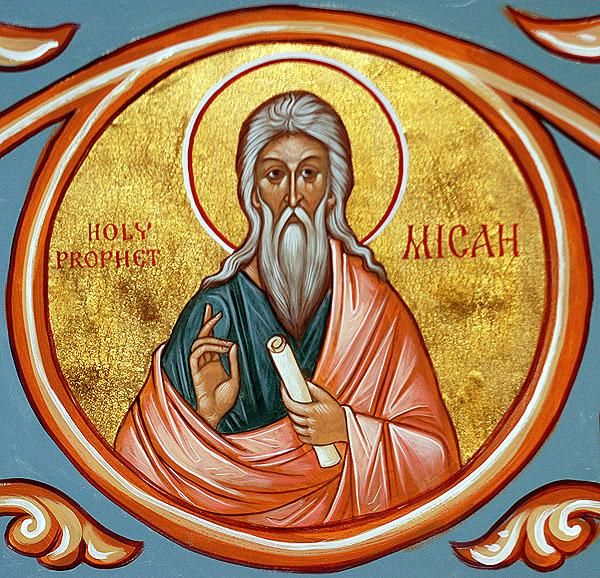
The Book of Micah stands as a powerful witness to God’s dual nature as both righteous Judge and merciful Savior. Prophesying to both the northern and southern Kingdoms, Micah delivers a searing indictment against social injustice, corrupt leadership, and empty ritualism, culminating in the destruction of Jerusalem. Yet, from the ashes of this judgment springs a glorious hope. For the Orthodox Church, Micah is profoundly Christ-centered because it diagnoses the sickness of sin that requires a divine cure and pinpoints the very origin and character of the Messiah who will bring healing, peace, and establish God’s eternal reign.
**The Central Theme: The Lawsuit of the Lord and the Promise of
Restoration**
Micah presents a divine lawsuit (רִיב, riv) against Israel (Micah 6:1-2). The Lord lays out His case against His people, not for minor infractions, but for a fundamental failure to embody covenant love: a failure of justice (מִשְׁפָּט, mishpat), covenant loyalty (חֶסֶד, chesed), and humble fellowship with God (הַצְנֵעַ לֶכֶת, hatzne’a lechet). The book’s structure moves from judgment (Ch. 1-3) to hope (Ch. 4-5) and finally to a call to repentance and a confession of God’s unique mercy (Ch. 6-7). This entire arc is fulfilled in Christ, Who answers the lawsuit, fulfills the hope, and embodies the required mercy.
Key Messianic Texts and Their Fulfillment
1. The Mountain of the Lord and the Universal Peace (Micah 4:1-5)
“Now it shall come to pass in the latter days That the mountain of the LORD’s house Shall be established on the top of the mountains, And shall be exalted above the hills; And peoples shall flow to it. Many nations shall come and say, ‘Come, and let us go up to the mountain of the LORD, To the house of the God of Jacob; He will teach us His ways, And we shall walk in His paths.’ For out of Zion the law shall go forth, And the word of the LORD from Jerusalem… Nation shall not lift up sword against nation, Neither shall they learn war anymore.” (NKJV)
-
Context: A vision of the eschatological future where Jerusalem becomes the spiritual center of a reconciled world, characterized by divine instruction and universal peace.
-
New Testament Fulfillment: This prophecy is fulfilled in the Person of Jesus Christ and His Church.
-
The Mountain of the Lord: Christ is the true “mountain of the Lord’s house.” He is the new and living Temple (John 2:19-21). The Church , as His Body, is this spiritual Zion (Hebrews 12:22-24), established as a beacon for all nations.
-
The Law Goes Forth from Zion: The “word of the LORD” is no longer a stone tablet, but the incarnate Word of God , Jesus Christ, Who teaches with divine authority from Jerusalem (Luke 24:47). The teaching (didache) of the Apostles is the new law going forth from the Church.
-
The Universal Peace: Christ is “our peace” (Ephesians 2:14), Who has broken down the dividing wall of hostility between Jew and Gentile, and ultimately, will establish an eternal Kingdom where “there shall be no more death, nor sorrow, nor crying” (Revelation 21:4).
-
-
Liturgical Understanding: The Church celebrates itself as the fulfillment of this prophecy. The Divine Liturgy is a foretaste of this heavenly mountain where all nations—represented by the faithful—gather to be taught and fed by the Word. The kiss of peace exchanged in the liturgy is a sacramental participation in the reconciliation Christ has accomplished.
2. The Ruler from Bethlehem (Micah 5:2)
“But you, Bethlehem Ephrathah, Though you are little among the thousands of Judah, Yet out of you shall come forth to Me The One to be Ruler in Israel, Whose goings forth are from of old, From everlasting.” (NKJV)
This is one of the most precise and significant messianic prophecies in the Old Testament.
-
Context: Spoken during a time of national crisis and failed leadership, God promises a true Ruler whose origins are both human (from the humble town of Bethlehem) and divine (from everlasting).
-
New Testament Fulfillment: The chief priests and scribes directly cited this prophecy when telling King Herod where the Messiah was to be born (Matthew 2:5-6). It is perfectly fulfilled in Jesus Christ , born in Bethlehem of the Virgin Mary, yet the eternal Word, Who was “in the beginning with God” (John 1:1-2).
-
Patristic Understanding: The Fathers (e.g., St. Justin Martyr, St. Jerome) marveled at this prophecy. It clearly affirms the hypostatic union : the Messiah is fully man (from Bethlehem, the city of David) and fully God (His origins are from eternity). This small, insignificant town prefigures the humility of the Incarnation, where the God of all condescends to be born in a cave.
3. The Shepherd-King Who is Our Peace (Micah 5:4-5a)
“And He shall stand and feed His flock In the strength of the LORD, In the majesty of the name of the LORD His God; And they shall abide, For now He shall be great To the ends of the earth; And this One shall be peace.” (NKJV)
-
Context: This describes the ministry and character of the Ruler from Bethlehem.
-
New Testament Fulfillment:
-
The Shepherd: Jesus declares, “I am the Good Shepherd” (John 10:11). He “stands and feeds His flock” through the Holy Eucharist , giving Himself as the bread of life.
-
This One Shall Be Peace: St. Paul explicitly calls Christ “our peace” (Ephesians 2:14). He does not merely give peace; He is Peace in His very Person. The peace He gives is not as the world gives (John 14:27) but is the reconciliation of humanity with God.
-
-
Liturgical Understanding: In the Orthodox Liturgy, the priest echoes this title after the Great Entrance, saying, “Peace be to all.” The ultimate proclamation of Christ as our Peace is in the Eucharistic gift, which is the communion (koinonia) that destroys enmity and unites the faithful to God and one another.
4. The Requirements of the Lord (Micah 6:6-8)
“With what shall I come before the LORD, And bow myself before the High God?… He has shown you, O man, what is good; And what does the LORD require of you But to do justly, To love mercy, And to walk humbly with your God?” (NKJV)
-
Context: In the divine lawsuit, the people ask what kind of sacrifice could possibly atone for their sins. God’s answer transcends ritual: He requires a heart transformed by justice, mercy, and humility.
-
Christological Fulfillment: No human being could perfectly fulfill this requirement. Jesus Christ is the one who perfectly “does justly,” “loves mercy,” and “walks humbly with His God.” He embodies these virtues and, through His Paschal mystery, empowers His followers to live them. He is the perfect sacrifice that makes our own flawed efforts at justice, mercy, and humility acceptable to the Father.
-
Ascetical Understanding: This triad is a summary of the Orthodox spiritual life. “To do justly” is to act righteously toward our neighbor. “To love mercy” (chesed) is to acquire a heart of compassion, reflecting God’s own love. “To walk humbly” is the foundation of it all—the practice of humility that conquers the pride which is the root of all sin.
Conclusion: The God Who Pardons Iniquity
The book concludes with a magnificent confession that finds its ultimate answer in Christ:
“Who is a God like You, Pardoning iniquity And passing over the transgression of the remnant of His heritage? He does not retain His anger forever, Because He delights in mercy.” (Micah 7:18, NKJV)
The Book of Micah is fundamentally Christ-centered because:
-
It reveals the need for a perfect Ruler from David’s line, who is also eternal God, to shepherd His people (fulfilled in Christ’s Person).
-
It prophesies the establishment of a universal and peaceful Kingdom rooted in divine teaching (fulfilled in the Church).
-
It outlines the perfect human response to God —justice, mercy, and humility—which Christ alone perfectly embodied and which He implants in us by grace.
-
It culminates in a hope based not on human merit, but on God’s character of pardoning mercy, a character fully and finally revealed on the Cross of Jesus Christ.
Micah’s name means, “Who is like the Lord?” The book answers its own question: there is no one like our God, Who judges sin with perfect justice and saves sinners with perfect mercy, all through the One Who was born in Bethlehem, the Ruler and only Peace of our souls, Jesus Christ.
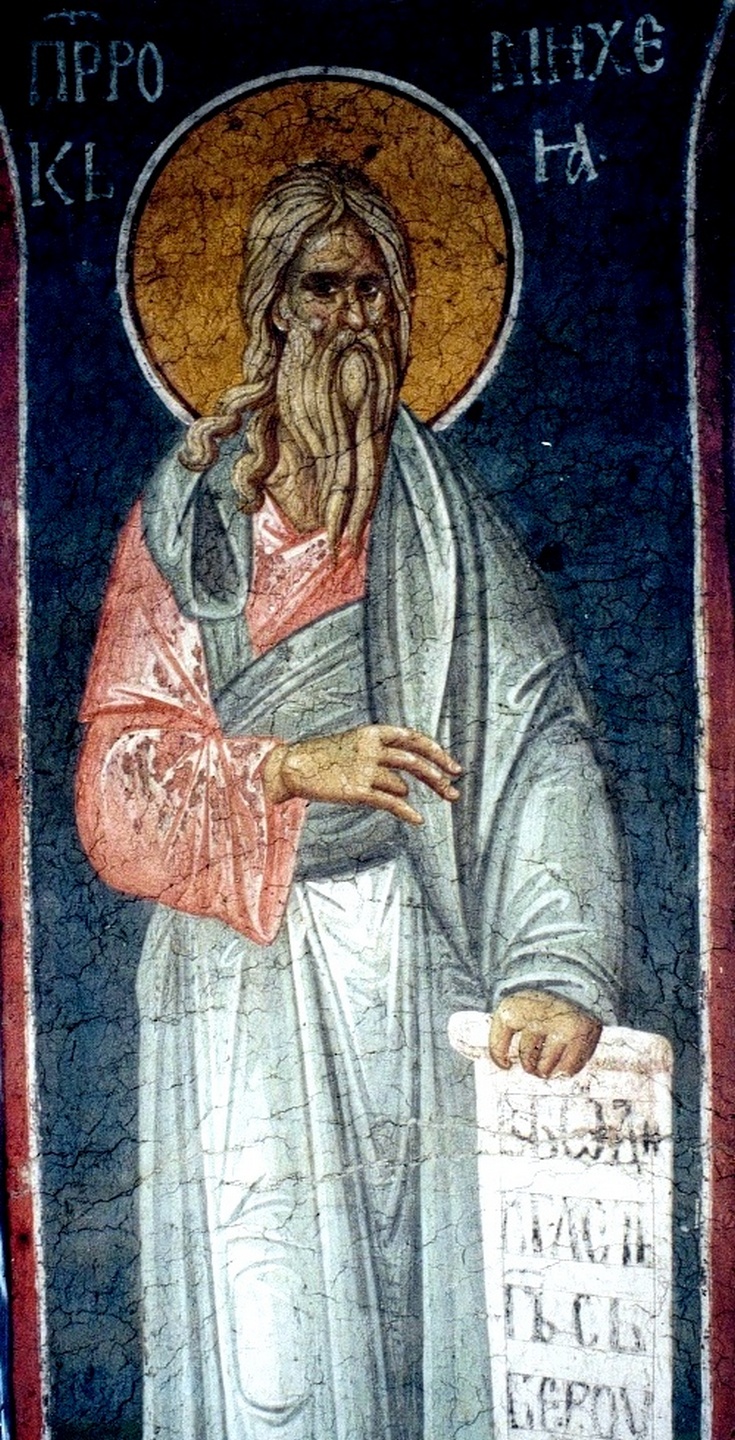
Prophet Micah. Fresco of the Gračanica monastery (Serbia, Kosovo). XIV c.
NAHUM
Outline
1:1–6 God’s Anger With Nineveh Expressed Through Creation
1:7–11 God Is Just
1:12–13 God Assures Judah That Assyria’s Reign of Terror Will End
1:14–2:2 Alternating Oracles Through Nahum
2:3–10 Battle Imagery Against Assyria
2:11–13 God Destroys the Once-Prominent Lions’ Den of Assyria
3:1–3 The City of Nineveh Is Full of the Dead
3:4–7 Nineveh as Prostitute
3:8–11 Assyria’s Battle Actions Will Be Returned
3:12–15 Siege Versus Fortifications
3:16–19 Assyria’s People Will Flee, and the Nations Will Be Happy
_Yahweh Punishes the Wicked
_
Nineveh, Assyria’s capital, is the epitome of evil. Though Yahweh used them to bring discipline (i.e., judgment) against his own people, the time has come for Assyria to face judgment for their actions. They profit from their evil toward other people, and they worship false gods. As a result, Yahweh is coming in judgment against Assyria, and that judgment will be severe. Though they think they are secure and protected against any potential enemy, their defenses will not stand against Yahweh’s wrath. The judgment will be swift and bitter. Nineveh will fall. Its fall will be complete and final. The Battle of Nineveh, also called the fall of Nineveh is conventionally dated between 613 and 611 BC, with 612 BC being the most supported date. After Assyrian defeat at the battle of Assur, an allied army which combined the forces of Medes and the Babylonians besieged Nineveh and sacked 750 hectares of what was, at that time, one of the greatest cities in the world.
God’s Anger With Nineveh Expressed Through Creation (1:1–6)
Yahweh’s oracle against Nineveh begins with a strong declaration of Yahweh’s coming wrath. He will not leave the guilty unpunished. When Yahweh comes in judgment, even creation shakes and withers in the presence of his wrath. His coming judgment is severe, and no one can withstand it. Yet, as the following passage reminds us, his judgment is not in contrast to his goodness, but directly related to it.
God Is Just (1:7–11)
Yahweh, the God who issues judgment against Nineveh, is good, and his judgment is good. He protects and shields those who trust him. Yet, for Nineveh, which does not, the coming judgment for their sins is unrelenting. Nineveh’s people have actively chosen to pit themselves against Yahweh and to do wickedness. For these actions Yahweh must bring judgment on their sins. Their evil against his people will end.
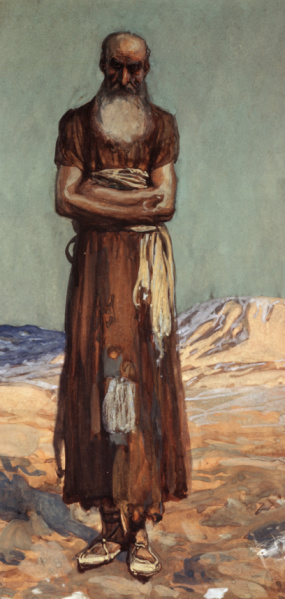
Nahum(watercolor circa 1888 by James Tissot)
God Assures Judah That Assyria’s Reign of Terror Will End (1:12–13)
Yahweh cares for those who seek refuge with him and issues judgment against those who do not, and for this reason Judah can have confidence that their oppressor will be judged. Assyria and her allies have oppressed Judah, but that oppression will end completely when Yahweh breaks Assyria’s power. Judah will be freed and their oppressors punished, as the following oracles continue to affirm.
Alternating Oracles Through Nahum (1:14–2:2)
Following Yahweh’s assurance to Judah that they will be freed from Assyria, four short oracles affirm this truth. Alternating between Assyria and Judah, these short oracles confirm the coming judgment of the oppressors and the hope and rejoicing coming to Judah. Assyria and their gods will be wiped out, but Judah will celebrate their religious festivals and vows in complete peace. Assyria should brace themselves for their coming destruction, while Judah should await their splendorous restoration. They will thrive while their enemy lies in ruins. The destruction of Assyria is coming.
Battle Imagery Against Assyria (2:3–10)
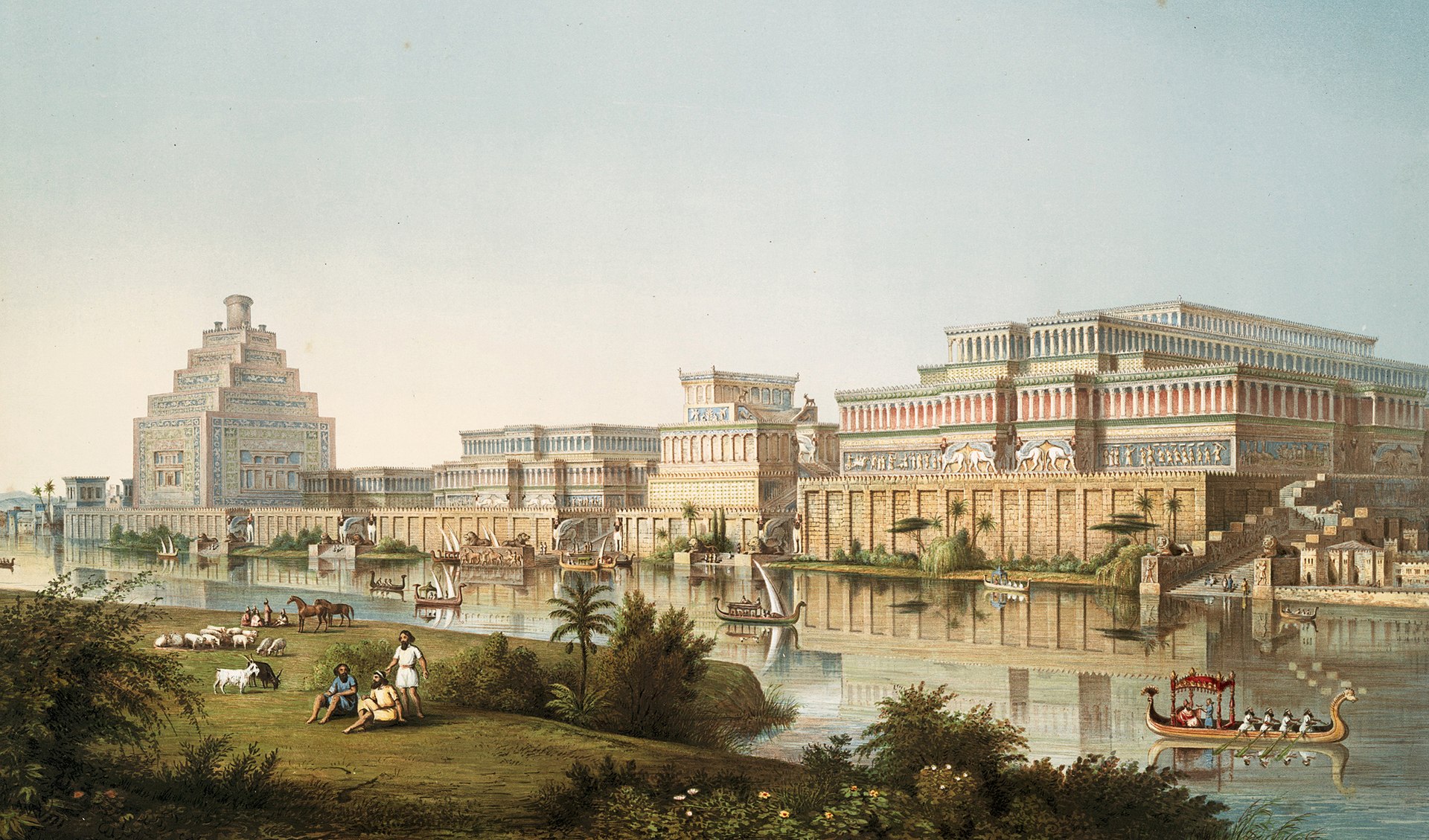
Artist’s impression of Assyrian palaces, from a sketch by J. Fergusson (1808–1886)
The promised coming judgment of Assyria is described in this passage with graphic and detailed imagery. Assyria’s enemy will attack using psychological warfare (dyeing their equipment red, as though covered in blood) as a mere precursor to the devastation they will bring. The protection of Assyria, its gates and palace, will fail, and all the people will be taken into exile, mourning their destruction. The destruction will not end until Assyria is stripped of possessions and all strength. As the following verses affirm, Yahweh is the one who will cause Assyria’s downfall.
God Destroys the Once-Prominent Lions’ Den of Assyria (2:11–13)
Following the detailed description of Assyria’s coming destruction, Yahweh again affirms that he is the one who will destroy Assyria in judgment. Using rhetorical questions and comparing Assyria to lions secure in their den after killing others, Yahweh talks as though their judgment is complete. Those who think they have nothing to fear will cease to exist. Yahweh is against them. They will have no more victims. They will be erased. The judgment continues as Yahweh next issues a woe oracle against them.
The City of Nineveh Is Full of the Dead (3:1–3)
Yahweh is the one who issued the preceding judgment against Nineveh, and he is the one who issues this woe against her. It is time for Nineveh to lament. She is full of wickedness, and the judgment will come with the enemy’s horses, chariots, swords, and spears. It will be a devastating and mournful time. A staggering number of Assyrians will die because of their sins. This judgment is coming because Nineveh behaved as a harlot.
Nineveh as Prostitute (3:4–7)
Many Assyrians will die because Nineveh sold itself to wickedness as a prostitute sells herself. She sold sorcery and witchcraft, dragging other nations into her traps. Yahweh responds by describing the coming judgment as though he is punishing a harlot. Assyria will be shamed, Yahweh will expose the truth of her to those around her. Others will flee from her while she lies in ruins, with no one to mourn for her. Yahweh will judge them, just as he has judged other nations.
Assyria’s Battle Actions Will Be Returned (3:8–11)
Yahweh’s condemnation of Assyria continues with a comparison to other nations. Assyria thinks they are secure, but they are like Thebes. Thebes thought they were safe since they were surrounded by water defenses and allies, yet they fell. They were attacked and taken into exile, from the greatest to the least of them. Assyria, too, will lose their security and try to hide from their enemy. As Yahweh reminds them next, their security is fleeting.
Siege Versus Fortifications (3:12–15)
Assyria will fall, just as other nations have fallen. Their fortresses are on the verge of collapse. Their fortresses are like ripe fruit that is about to fall off the vine into a hungry mouth. They think they are secure in their defenses, but they are on the verge of collapse. Their troops may as well be untrained women and their gates may as well be left open. They can try to strengthen their defenses, but they will be destroyed. This destruction will be unrelenting. As they flee, others will rejoice.
Assyria’s People Will Flee, and the Nations Will Be Happy (3:16–19)
Assyria’s defenses will fail, and their guards will flee. Though Assyria is currently prospering, with numerous merchants, they will only take what they can before they flee the failing nation. Even the leaders of the nations will flee in their time of trouble. The people of Assyria are unprepared for the coming destruction. Assyria’s coming destruction is fatal—their wound is incurable, and others will rejoice over their downfall. Those they crushed will celebrate.
**An Orthodox Synthesis of the Book of the Prophet Nahum: The Consolation
of Judah and the Judgment of the World’s Pride**
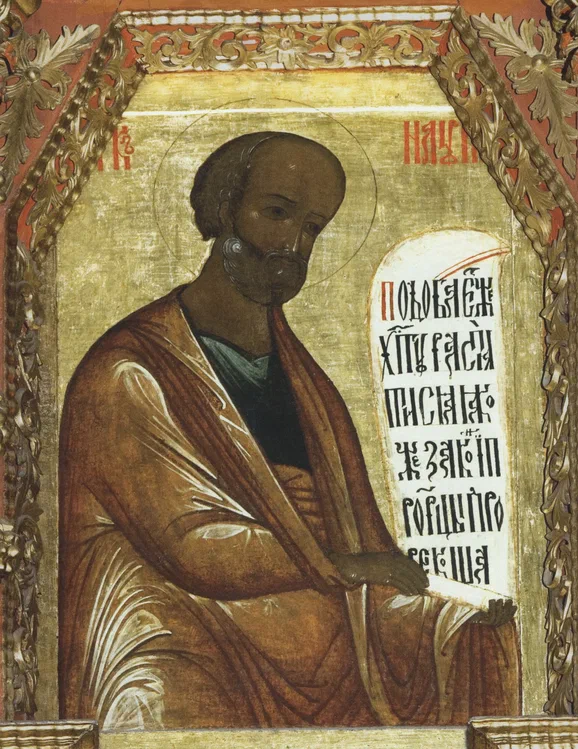
Prophet Nahum. Mid-17th century, Kostroma State Historical, Architectural and Art Museum-Reserve.
The Book of Nahum, a stark and powerful prophecy of the impending destruction of Nineveh, stands as the divine counterpart to the Book of Jonah. Where Jonah revealed God’s patience and mercy toward a repentant pagan nation, Nahum reveals His righteous and unwavering judgment against that same nation when it returned to and excelled in cruelty, violence, and arrogance. For the Orthodox Christian, Nahum is not a vengeful diatribe but a Christ-centered book because it reveals the divine Warrior-King who comes to definitively destroy the enemies of His people — not the Assyrians, but the spiritual powers of sin, death, and the devil themselves. It is a prophecy of cosmic consolation for the people of God, fulfilled in the Paschal victory of Christ.
The Central Theme: The Theophany of the Divine Warrior
Nahum opens not with a word against Assyria, but with a majestic and terrifying description of God’s own character. This establishes the theological foundation for all that follows: the judgment of Nineveh is not a random historical event, but a manifestation of who God is.
Nahum 1:2-3, 7-8:
“God is jealous, and the LORD avenges; The LORD avenges and is furious. The LORD will take vengeance on His adversaries, And He reserves wrath for His enemies; The LORD is slow to anger and great in power, And will not at all acquit the wicked… The LORD is good, A stronghold in the day of trouble, And He knows those who trust in Him. But with an overflowing flood He will make an utter end of its place, And darkness will pursue His enemies.” (NKJV)
-
The Dual Nature of God’s Revelation: This passage presents the two sides of God’s singular, holy love. He is simultaneously a “stronghold” for those who take refuge in Him and an “overflowing flood” of judgment for His enemies. This is not a contradiction but a reflection of His perfect justice and mercy.
-
Christological Fulfillment: This theophany finds its ultimate expression in Jesus Christ. In His first coming, He is the embodiment of the “good” Lord, the stronghold and refuge for the penitent (Matthew 11:28-30). In His Second Coming, He is the divine Warrior-King who executes final judgment on the wicked (2 Thessalonians 1:7-9; Revelation 19:11-16). The Cross is the nexus where both attributes meet: it is the place of ultimate refuge for believers and the place where the power of sin and death is judged and broken.
Key Christocentric Themes and Their Fulfillment
1. The Proclamation of Good News (Nahum 1:15)
“Behold, on the mountains The feet of him who brings good news, Who proclaims peace! O Judah, keep your appointed feasts, Perform your vows. For the wicked one shall no more pass through you; He is utterly cut off.” (NKJV)
-
Context: In the midst of the prophecy of judgment, this verse breaks through as a word of comfort to Judah. The messenger announcing Nineveh’s fall is a herald of “good news” (euangelion in the Greek Septuagint) and peace.
-
New Testament Fulfillment: The Apostle Paul directly applies this language to the preachers of the Gospel of Jesus Christ:
“And how shall they preach unless they are sent? As it is written: ‘How beautiful are the feet of those who preach the gospel of peace, Who bring glad tidings of good things!’” (Romans 10:15, NKJV).
- Patristic & Liturgical Understanding: The Fathers saw this as a direct prophecy of the Apostolic preaching. The “good news” is the Gospel that Christ, through His Death and Resurrection, has defeated the true “wicked one”—satan—and has cut him off, so he can “no more pass through” the people of God. This is the message proclaimed in every Divine Liturgy , and the “appointed feasts” of Judah find their fulfillment in the feasts of the Church, especially Holy Pascha , the celebration of Christ’s victory over the tyrannical “Pharaoh” of death.
2. The Destruction of the Lion’s Den (Nahum 2:11-13)
“Where is the dwelling of the lions, And the feeding place of the young lions?… ‘Behold, I am against you,’ says the LORD of hosts, ‘I will burn your chariots in smoke, and the sword shall devour your young lions; I will cut off your prey from the earth, and the voice of your messengers shall be heard no more.’” (NKJV)
-
Context: Nineveh, the city famed for its lion hunts and imagery, is described as a “dwelling of lions” that devoured the nations. God declares His direct opposition: “I am against you.”
-
Christological Understanding: The “lion” is a powerful biblical image for a predatory, devouring power (1 Peter 5:8). Assyria is a typos of all God-opposing, man-devouring empires, culminating in the kingdom of the devil. Christ’s declaration, “Now is the judgment of this world; now the ruler of this world will be cast out” (John 12:31), is the ultimate “I am against you.” Through His Cross, Christ entered the “lion’s den” of Hades and plundered it, stripping the principalities and powers of their authority (Colossians 2:15). The voice of the enemy’s accusing “messengers” is silenced by the Blood of the Lamb.
3. The Futility of Human Strength (Nahum 3:1-3)
“Woe to the bloody city! It is all full of lies and robbery… The noise of a whip, The noise of rattling wheels, Of galloping horses, Of clattering chariots!” (NKJV)
-
Context: Nahum vividly depicts Nineveh’s reliance on military might, violence, and endless wealth (3:1-4, 16-17).
-
Patristic & Ascetical Understanding: The Fathers interpreted this as a warning against trusting in the “chariots and horses” of worldly passions and the “wealth” of human reasoning and pride. The city built on violence, deceit, and greed is ultimately a city of “lies” and is doomed to fall. This finds its spiritual fulfillment in the soul that relies on its own strength. The victory, as Nahum shows, comes only from the Lord (Nahum 1:7). The ascetical struggle in Orthodoxy is to reject the “weapons” of the flesh and to put on the “whole armor of God” (Ephesians 6:11-13).
Liturgical and Eschatological Resonance
The themes of Nahum permeate Orthodox worship, particularly in the context of Christ’s victory.
-
The Paschal Liturgy: The entire book can be read as a Paschal prophecy. The destruction of Nineveh prefigures the Destruction**** of Hades. Christ, the Divine Warrior, smashes the gates of the “bloody city” of death, plunders it, and leads captivity captive. The hymn “Christ is risen from the dead, trampling down death by death…” is the anthem of this victory.
-
The Canon of St. Andrew of Crete: During Great Lent, the Church sings of the soul’s struggle against the passions, often using imagery of siege and warfare that echoes Nahum’s language, calling us to let God demolish the fortress of our own pride.
-
Eschatological Hope: Nahum provides a powerful image of the final judgment. Just as Nineveh, which seemed eternally secure, was utterly erased from history, so too will all forces of evil that oppose God and persecute His Church be finally and completely destroyed at the end of the age (Revelation 18-19). This is a source of profound hope and consolation for the Church amidst persecution.
Conclusion: The Comfort of Judgment
The Book of Nahum is fundamentally a Christ-centered book because:
-
It reveals the holiness and justice of God , which must and will judge evil without compromise—a judgment ultimately borne by Christ on the Cross for the believer and executed by Christ upon the unrepentant.
-
It proclaims the “good news” that the tyrannical power of humanity’s true enemy—sin, death, and the devil—has been broken by the victorious work of Jesus Christ.
-
It provides a powerful typology of Christ’s victory over Hades and the final destruction of all evil at the end of time.
-
It offers divine consolation to the people of God, assuring them that their suffering at the hands of the wicked has been seen by the Lord, and He Himself will be their “stronghold in the day of trouble.”
Nahum teaches that the judgment of evil is not separate from the salvation of the righteous; it is its necessary precondition. The comfort for Judah was the fall of Nineveh. The comfort for the Church is the victory of Christ, the Divine Warrior, Who has conquered our ancient foe and has become our eternal Stronghold.
HABAKKUK
Outline
1:1–2:5 Habakkuk Questions and God Answers
2:6–20 Five Woes from the Prophet Habakkuk
3:1–19 Habakkuk’s Prayer
_
_
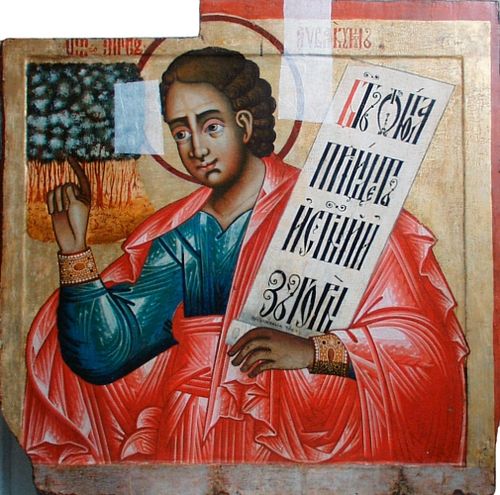
An 18th-century Russian icon of the prophet Habakkuk (Iconostasis of Transfiguration Church, Kizhi Patriarchal Metochion, Karelia, Russia)
_Yahweh’s Judgments Are Righteous
_
Habakkuk prophesied near the end of the time of the Southern Kingdom. As he sees the evil all around him in Judah, he cries out to Yahweh, questioning when Yahweh will bring an end to the evil. Yahweh assures him that he is about to bring it to an end through the Babylonians. This prompts Habakkuk to ask his second question: How can Yahweh bring judgment through those who are even more evil than Judah? Yahweh assures him that they, too, will face judgment for their evil. Yahweh then declares woe oracles against the Babylonians. They have built themselves up at the cost of harming others. They ignore justice in order to build their wealth and security. They worship false gods. Their sins will bring judgment. Hearing that the Babylonians, after they fulfill their role in Judah’s judgment, will face their own judgment prompts Habakkuk to praise Yahweh. He petitions Yahweh to again perform the marvelous actions he has in the past, actions that upheld justice and righteousness. Habakkuk closes his short book with a declaration that he will continue to praise Yahweh because Yahweh is the one who provides him with strength and allows him to stand.
Habakkuk Questions and God Answers (1:1–2:5)
Habakkuk’s prophecy begins with petitions to Yahweh about the dire situation of Judah. He first petitions Yahweh to stop the violence and injustice that has overtaken the nation. Yahweh answers that the violence and injustice are bringing judgment that will come through the hands of the Babylonians. Habakkuk is shocked at this response and questions Yahweh about why he has chosen to bring justice through such evil people. Yahweh responds and affirms that the enemy used for judgment is not righteous and will also be judged. He then instructs Habakkuk to record the prophecy of judgment that will come on Babylon in the future.
Five Woes from the Prophet Habakkuk (2:6–20)
Yahweh’s proclaimed coming judgment is founded on the sins recorded in these five woes. Babylon has rejected righteousness and justice. They have built up wealth by stealing from others. They build their own comfort and security at the cost of others. They build their nation and cities with blood. They shame and humiliate others for their pleasure. They worship false gods. Each woe is followed by a brief statement of judgment that twists the Babylonians’ sins into judgments. Hearing that those who will be used to punish Israel will also face judgment for their sins prompts Habakkuk to praise Yahweh.
Habakkuk’s Prayer (3:1–19)
In response to the oracles of woe and judgments against Babylon, Habakkuk stands in awe of Yahweh and praises him. He petitions Yahweh to once again perform the miracles of the past that affirmed Yahweh’s glory—actions that judged the wicked with power and might, actions that protected his people while their enemies approached. Though Habakkuk currently sees devastation around him, he confidently declares that he will praise Yahweh. He will praise Yahweh because he knows who Yahweh is. Yahweh is his deliverer and his strength. Yahweh enables Habakkuk to stand when there is nothing stable to stand on.
**An Orthodox Synthesis of the Book of the Prophet Habakkuk: From
Perplexity to Paschal Faith**
The Book of Habakkuk is unique among the prophets for its structure as a heartfelt dialogue, even a debate, with God. It grapples with the eternal question of theodicy : how can a good and righteous God permit evil and violence to thrive, often using even more wicked instruments to chastise His people? For the Orthodox Church, Habakkuk is profoundly Christ-centered because it moves from the anguish of this question to a revelation of God’s sovereign plan, culminating in a vision of divine glory that finds its fulfillment only in the Cross and Resurrection of Jesus Christ. The prophet’s journey from perplexity to triumphant faith is the journey of every Christian soul facing a world in turmoil.
The Central Dialogue: Faith in the Midst of Mystery
The book unfolds in three movements: The Prophet’s Complaint (Ch. 1), God’s Response and the Oracle on Faith (Ch. 2), and The Prophet’s Prayer of Awe and Triumph (Ch. 3).
Habakkuk’s First Complaint (1:2-4):
“O LORD, how long shall I cry, And You will not hear? Even cry out to You, ‘Violence!’ And You will not save. Why do You show me iniquity, And cause me to see trouble? For plundering and violence are before me; There is strife, and contention arises.” (NKJV)
-
Context: Habakkuk sees rampant injustice and violence within Judah. God seems silent and inactive.
-
God’s Response (1:5-11): God reveals He is raising up the Chaldeans (Babylonians), a “bitter and hasty nation,” as His instrument of judgment. This deepens the prophet’s perplexity: “How! The sinners will be punished by even more sinners!”.
Habakkuk’s Second Complaint (1:12-17):
“You are of purer eyes than to behold evil, And cannot look on wickedness. Why do You look on those who deal treacherously, And hold Your tongue when the wicked devours A person more righteous than he?” (NKJV)
- The Theological Crisis: How can the Holy God use a nation more wicked than Judah to punish it? This seems to violate God’s own righteous character.
Key Christocentric Texts and Their Fulfillment
1. The Revelation of Justification by Faith (Habakkuk 2:4)
“Behold the proud, His soul is not upright in him; But the just shall live by his faith.” (NKJV)
This single verse becomes the theological core of the book and a cornerstone of the New Testament.
-
New Testament Fulfillment: This verse is quoted three times in the New Testament, each emphasizing a different aspect of its fulfillment in Christ:
-
Romans 1:17: Paul uses it to establish the fundamental principle of the Gospel: a right standing with God (“the just”) is received not by works of the law but “by faith from first to last” (NIV), and this is the way to true life.
-
Galatians 3:11: Paul contrasts this principle of faith with the impossibility of being justified by the Law, arguing that Christ has redeemed us from the Law’s curse.
-
Hebrews 10:38: Paul uses it as an exhortation to endurance in the face of persecution, reminding believers that our “life” and preservation depend on holding fast to our faith in Christ.
-
-
Patristic Understanding: The Fathers (e.g., St. John Chrysostom, St. Augustine) saw this as a prophecy of the New Covenant. The “faith” (pistis) is not merely intellectual assent but a total entrusting of oneself to God. This faith is made possible and perfect in Jesus Christ , who is “the author and finisher of our faith” (Hebrews 12:2). We are “just” or “righteous” because we are united to Him by faith.
2. The Command to Write the Vision (Habakkuk 2:2-3)
“Then the LORD answered me and said: ‘Write the vision And make it plain on tablets, That he may run who reads it. For the vision is yet for an appointed time; But at the end it will speak, and it will not lie. Though it tarries, wait for it; Because it will surely come, It will not tarry.’” (NKJV)
-
Context: God tells Habakkuk that the resolution to the problem of evil is a sure, but future, reality. It requires patient, faithful waiting.
-
Christological Fulfillment: The “vision” that has an “appointed time” is the entire plan of salvation through the Messiah. The early Church saw this “waiting” as the period of the Old Covenant, which found its end in Christ (Galatians 4:4). The vision “spoke” definitively in the Incarnation, Life, Death, and Resurrection of Jesus. The message is “plain” in the Gospel, and the “runner” is the evangelist who proclaims it to the world.
3. The Theophanic Prayer and the Vision of Christ (Habakkuk 3:2-6, 13)
“God came from Teman, The Holy One from Mount Paran. Selah. His glory covered the heavens, And the earth was full of His praise. His brightness was like the light; He had rays flashing from His hand, And there was the hiding of His power… You went forth for the salvation of Your people, For salvation with Your Anointed.” (NKJV)
This chapter is a majestic theophany, a vision of God as a divine warrior coming to save His people.
-
The Vision of God’s Glory: Habakkuk describes God in terms of overwhelming power and splendor, causing the earth to tremble.
-
“For Salvation with Your Anointed” (3:13): The Hebrew word for “Anointed” is Mashiach (Messiah). The prophet sees that God’s ultimate purpose in His mighty acts is the salvation of His people in conjunction with His Messiah.
-
New Testament & Patristic Understanding: The Church Fathers (e.g., St. Cyril of Jerusalem) saw this entire theophany as a vision of Jesus Christ. He is the “brightness” of the Father’s glory (Hebrews 1:3). The “rays flashing from His hand” are prefigured in the radiant light that shone from His hands on the Mount of Transfiguration (Matthew 17:2), which is the revelation of His divine glory. Furthermore, Christ’s descent into Hades is the ultimate fulfillment of God “trampling the nations” (Habakkuk 3:12) and going forth “for the salvation of Your people,” crushing the head of the serpent and liberating the captives.
4. The Prophet’s Paschal Resolution (Habakkuk 3:17-19)
“Though the fig tree may not blossom, Nor fruit be on the vines; Though the labor of the olive may fail, And the fields yield no food; Though the flock may be cut off from the fold, And there be no herd in the stalls— Yet I will rejoice in the LORD, I will joy in the God of my salvation. The LORD God is my strength; He will make my feet like deer’s feet, And He will make me walk on my high hills.” (NKJV)
-
Context: This is the culmination of Habakkuk’s spiritual struggle. Having seen the vision of God’s sovereign glory and salvation in the Messiah, he can now express a faith that transcends circumstances.
-
Christological & Ascetical Understanding: This is the cry of Paschal faith. It is the faith of the Myrrhbearing Women who went to the tomb despite their grief. It is the faith of the martyrs who rejoiced in suffering for Christ’s name. This faith is not based on earthly prosperity but on the unshakable reality of Christ’s Resurrection. Because Christ is risen, the Christian can “rejoice in the Lord” even when all earthly supports fail. God gives “feet like deer’s feet”—surefootedness and stability—to those who trust in Him, enabling them to walk the “high hills” of the spiritual life and the Kingdom of God.
Liturgical and Sacramental Resonance
The Book of Habakkuk is deeply embedded in Orthodox worship:
- The Paschal Canon: The primary liturgical presence of Habakkuk is in the Canon of Holy Pascha , written by St. John of Damascus. The Irmos of the Fourth Ode is a direct quotation and celebration of Habakkuk’s theophany:
“On divine watch * let the God-inspired Habakkuk * stand with us, and show forth the light-bearing angel * clearly saying: Today salvation is come to the world, ** for Christ is risen as Almighty.”
-
This irmos does two things:
-
It invokes the Prophet: It calls to mind Habakkuk standing on his “divine watch” (from Habakkuk 2:1) as a prophet and witness.
-
It reinterprets his prophecy in a Paschal key: The “light-bearing angel” he is to show forth is the Angel of the Lord who announced the Resurrection at the empty tomb (Matthew 28:1-6). The prophecy of “Today salvation is come to the world” is now understood as the fulfillment of all salvation history in the Resurrection of Christ.
-
This is a perfect example of the Christian hermeneutic: the Old Testament prophet is seen as foretelling not just a future event in his own timeline, but the ultimate event of Christ’s victory over death.
-
The Feast of the Transfiguration: The vision of God’s glory in Chapter 3 is read as a prophecy of the light of Tabor, where Christ revealed His divine glory to His disciples.
-
The Eucharist: The Eucharist is the present reality of the “vision” for which we wait. In the Divine Liturgy, we partake of the “Anointed One” who has come for our salvation, and we receive the strength to “rejoice in the Lord” regardless of our external circumstances.
-
The Nativity Canon : The Book of Habakkuk is used in the Canon of the Matins for the Feast of the Nativity of our Lord (Ode 4 Irmos). It is a masterpiece of poetic and theological synthesis, weaving together several Old Testament prophecies to reveal their fulfillment in the Incarnation: “Sprouted as a rod of Jesse’ root, a flower that blossomed from his stem , O Christ, Thou didst come forth from the Virgin. From that well-shaded mountain overshadowed and from her who knew no man, Thou wast made flesh. And yet Thou art not formed from matter. Glory to Thy power, O Lord!”
“From that well-shaded mountain overshadowed and from her who knew no man, Thou wast made flesh.”
This is the most theologically dense and beautiful part, directly addressing your request about the “well-shaded mountain.”
The Prototype of the Holy Theotokos as the “Well-Shaded Mountain”
The title “well-shaded mountain” (sometimes translated as “mountain thick with foliage” or “shady mountain”) is a composite image drawn from several powerful Old Testament prototypes:
- The Primary Source: Habakkuk 3:3
The Septuagint (the Greek Old Testament used by the Church) reads: “God shall come from Teman, and the Holy One from the shady, thickly wooded mountain of Paran.”
In its original context, this describes God’s majestic theophany (a visible manifestation of God). The “shady, thickly wooded mountain” is a symbol of God’s awe-inspiring, hidden, and life-giving presence.
The Church Fathers, like St. Gregory of Nyssa, interpreted this “mountain” as a prophecy of the Theotokos. Just as God came from Mount Paran in Habakkuk’s vision, now God in the flesh comes from the “mountain” of the Virgin Mary.
2. The Connection to the “Overshadowing” (The Power of the Most High):
The hymn explicitly links the “well-shaded mountain” to the Virgin who was “overshadowed.” This is a direct reference to the Annunciation (Luke 1:35), where the Archangel Gabriel tells Mary: “The Holy Spirit will come upon you, and the power of the Highest will overshadow you; therefore, also, that Holy One who is to be born will be called the Son of God. ” The “shade” or “shadow” of the mountain, therefore, is not a shadow of darkness but the divine, life-giving, and protective shadow of the Holy Spirit. It signifies the presence of God, just as the “overshadowing” cloud filled the Tabernacle in the wilderness (Exodus 40:35).
3. Other Mountain Typologies:
Mount Sinai: This mountain was covered in a cloud and smoke when God gave the Law to Moses (Exodus 19:16-18). The Theotokos is the new, living Sinai, from whom the New Law—Christ Himself—is given to the world.
The Mountain in Daniel 2: The “stone was cut out without hands” which became a great mountain and filled the whole earth (Daniel 2:34-35). This “stone not cut by hands” is a type of Christ’s miraculous, non-human seed conception, and the mountain is His Kingdom, which finds its origin in the Theotokos.
Synthesis: By calling the Theotokos the “well-shaded mountain,” the hymn proclaims that:
- She is the dwelling place of God, the new Holy of Holies.
- She is lush with the grace of the Holy Spirit (the “shade”).
- She is protected and set apart for this divine purpose.
- From her, the Sun of Righteousness (Christ) dawns upon the world, while she remains the “mountain” that, like a cloud, bears the divine presence.
In conclusion, the liturgical texts for both Pascha and the Nativity demonstrate a profound and cohesive theological vision. The Prophet Habakkuk’s theophany finds its ultimate meaning in the Resurrection, while his imagery of the “shady mountain” is revealed to be a prophecy of the Theotokos, from whom the God-Man, Jesus Christ, entered into history for our salvation.
Conclusion: From Why to Who
The Book of Habakkuk is fundamentally a Christ-centered book because it shows that the answer to the problem of evil and suffering is not a philosophical explanation, but a Person.
-
It moves the question from “Why does God allow this?” to “In whom can I trust while it happens?”
-
It reveals that the righteous “live by faith” in the Son of God, Who loved us and gave Himself for us.
-
It provides a vision of God’s ultimate purpose: salvation “with Your Anointed,” Jesus Christ.
-
It culminates in a Paschal hymn of faith that rejoices in God our Savior, even in the midst of total desolation, because our hope is built on the reality of the Resurrection.
Habakkuk teaches us that faith is the assurance that the Lord of history, revealed in Jesus Christ, is working His purpose out, and that in Him, we can have peace and even joy, no matter what befalls us.
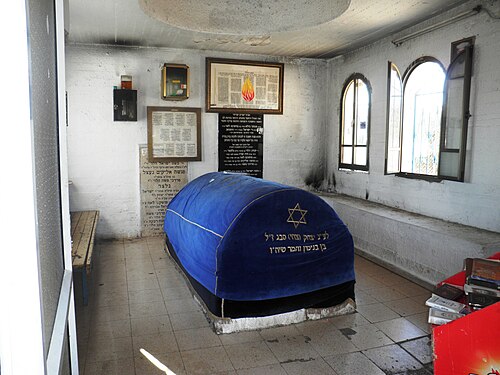
Tomb of Habakkuk near Kadarim, Upper Galilee region of northern Israel
ZEPHANIAH
Outline
1:1–2:3 Zephaniah Prophesies God’s Judgment and the Day of the Lord
1:1 Introduction to Zephaniah’s Prophecy
1:2–3 Zephaniah Declares That the Lord Will Destroy All Life on the Earth
1:4–6 Zephaniah Declares That the Lord Will Destroy Idolatrous Judah and
Jerusalem
1:7–18 Zephaniah Announces the Coming Day of the Lord
1:7–13 Zephaniah Describes the Lord’s Impending Judgment on Jerusalem
1:14–18 Zephaniah Declares the Severity of the Day of the Lord
2:1–3 Zephaniah Commands Judah to Repent in Order to Potentially Avert God’s
Anger
2:4–3:8 Zephaniah Prophesies Against Jerusalem and Her Enemies
2:4–7 Zephaniah Prophesies the Lord’s Desolation of Philistia
2:8–11 Zephaniah Prophesies the Lord’s Destruction of Prideful Moab and Ammon
2:12 Zephaniah Prophesies the Military Destruction of Cush
2:13–15 Zephaniah Prophesies the Lord’s Destruction of Assyria
3:1–7 Zephaniah Recounts Jerusalem’s Failure to Repent
3:1–5 Zephaniah Denounces the Rebellious People of Jerusalem
3:6–7 Jerusalem Persists in Her Evil Despite God’s Judgment Against Her Wicked
Neighbors
3:8 Zephaniah Prophesies the Lord’s Destruction of the Entire Earth
3:9–20 Zephaniah Prophesies God’s Work of Restoration
3:9–10 Zephaniah Prophesies That the Nations Will Turn to the Lord
3:11–13 Zephaniah Prophesies That Israel Will Turn to the Lord
3:14–20 Zephaniah Prophesies That the Lord Will Rejoice Over Israel and Bless
Her
_
_
_A 17th century Russian icon of Zephaniah
_
The Great Day of the Lord
The book of Zephaniah is named after the prophet who delivered God’s message to Judah that is recorded in this book. Of all of the prophets, Zephaniah is the only one who includes his ancestry back four generations in his book. No reason is given for this, but the most reasonable explanation is that Zephaniah was part of the royal family and the great-great-grandson of King Hezekiah. The focus of his message and his familiarity with Jerusalem and its court officials, such as the princes, judges, prophets, and priests, align well with Zephaniah’s royal pedigree. Zephaniah’s name means “Yahweh has hidden/protected.” This is possibly a reference to his birth being during the bloody reign of Manasseh, who filled Jerusalem with innocent blood (2 Kgs 24:4).
Zephaniah’s message came during the reign of King Josiah (640–609 BC), and the content of Zephaniah’s prophecy seems to best fit the earlier part of Josiah’s reign, when the kingdom of Judah was still heavily influenced by the wickedness of King Manasseh (696–642 BC) and King Amon (642–640 BC). Zephaniah’s message focuses on one imminent, catastrophic world event: “the day of the Lord.” It will be a universal day of judgment that will affect all the nations, including the people of Judah. Nevertheless, on that day God will also purify for himself a remnant of Israel and people from all of the nations who will unite to worship him.
Zephaniah Prophesies God’s Judgment and the Day of the Lord (1:1–2:3)
Immediately, Zephaniah begins describing the imminent day of the Lord, when God will destroy every living thing. Having made this general declaration, Zephaniah focuses particularly on Judah and Jerusalem. Even though God’s chosen people claim loyalty to him, they are worshiping other gods. Therefore, the Lord will deal in judgment with his covenant people. Since they have been behaving like the unbelieving nations, they will experience God’s wrath like the other nations when the day of the Lord comes. Their only hope is to repent by humbly seeking the Lord and his righteousness, and they must do so while there is still time, because the day of the Lord is near.
Introduction to Zephaniah’s Prophecy (1:1)
The superscription of Zephaniah’s prophecy reveals three things: the source of his message, his immediate ancestral background, and the time in which his ministry happens. First, the source of his message is Yahweh, the one who made a covenant with Abraham and his descendants, the nation of Israel. Second, Zephaniah is a descendant of the godly king of Judah Hezekiah. Therefore, Zephaniah is deeply familiar with the issues and audience he will address. Third, Zephaniah delivers his message during the reign of Josiah, a godly king who was preceded by two wicked kings, Manasseh and Amon. The next section contains the first part of Zephaniah’s message of judgment.
Zephaniah Declares That the Lord Will Destroy All Life on the Earth (1:2–3)
After having introduced himself and the time frame of his prophetic ministry, Zephaniah quickly gets to the point of his message: the Lord is going to annihilate every living thing from the face of the earth. Zephaniah begins with an all-encompassing statement and then explains in more detail that God will extinguish every person, animal, bird, and fish from the face of the earth. God will reverse the fifth and sixth days of creation all because of the “wicked.” The repetition of “from the face of the earth” emphasizes the comprehensiveness of the destruction, and the repetition of “declares the Lord” emphasizes the certainty of the judgment. Zephaniah will get even more specific in the next verses.
Zephaniah Declares That the Lord Will Destroy Idolatrous Judah and Jerusalem (1:4–6)
Having declared what will happen to every creature, Zephaniah focuses on what will happen to God’s covenant people. Judah and Jerusalem are blessed like no other people because Judah is God’s covenant people and Jerusalem is the place where God reveals his manifest presence with his people in the temple. However, with greater blessing comes a greater culpability for their sin against God. The people of Judah are being judged because of their unfaithfulness to the Lord. They claim loyalty to the Lord and yet are worshipers of Baal, Molech, and the heavenly bodies. Judah and Jerusalem have forsaken the Lord. This indictment anticipates Zephaniah’s next announcement.
Zephaniah Announces the Coming Day of the Lord (1:7–18)
Following Zephaniah’s accusations against the people of Judah and Jerusalem, he announces the coming day of the Lord and emphasizes its nearness. This announcement is directed to the people of Judah (1:7–14a) and then to the entire world (1:14b–18). Since sin demands a sacrifice, God has prepared a sacrifice for this day. It is a metaphorical picture of the slaughter of the sinful people of Judah in particular. Moreover, all the world will experience God’s wrath, and every world power will be defenseless and helpless before him. Each will come to ruin as the Lord executes his judgment because they have sinned against him. Nevertheless, Zephaniah is about to reveal a possibility of hope.
Zephaniah Describes the Lord’s Impending Judgment on Jerusalem (1:7–13)
As Zephaniah announces the message of judgment on Jerusalem, he commands his hearers to be silent because the day of the Lord is near, and the people need to show reverence and awe in God’s presence. Zephaniah reveals God is preparing a sacrifice since death is associated with sin and judgment. Ironically, the people who are invited to this sacrificial feast appear to be the ones who will be consumed. God will be thorough in his judgment; none will escape. The plans, complacency, comforts, and ill-gotten gains of Jerusalem’s leaders, merchants, and people in collusion with them will come to a startling end.
Zephaniah Declares the Severity of the Day of the Lord (1:14–18)
The combination of “near” and “rapidly approaching” to describe the impending Day of the Lord emphasizes there is reason for alarm, especially when one considers it is Yahweh who will bring about this desolation. It will be a bitter day as the sound of battle and the collapse of fortifications and strong towers give way to cries of agony and despair. No objects of human security will be able to save the people. The amount of bloodshed will be staggering, and humanity will be in a stupor as the full weight of God’s wrath is brought to bear against it. God’s judgment will be a consuming fire, and none will be able to escape it. This urgent warning calls for an immediate response.
Zephaniah Commands Judah to Repent in Order to Potentially Avert God’s Anger (2:1–3)
Even though Zephaniah’s message has unrelentingly described the worldwide devastation that will happen on the day of the Lord, when God will pour out his burning wrath on the world for its sin, there is a word of hope for those who will listen. Zephaniah emphasizes the urgency of their response because the day of the Lord is nearing. If the people will seek the Lord, seek righteousness, and seek humility, then “perhaps” they will survive the Lord’s anger. They cannot earn their deliverance from God’s judgment, but perhaps he will graciously spare them. This word of hope concludes the first part of Zephaniah’s prophecy. Next, Zephaniah will turn his attention to specific foreign nations.
Zephaniah Prophesies Against Jerusalem and Her Enemies (2:4–3:8)
As the last section ended with a word of hope for those who repent of their rebellion against God, this section also contains a word of hope for those who trust in God and must patiently wait for the day when God will destroy the wicked nations on the earth along with those of Israel who have arrogantly ignored God’s word and rebelled against him. Zephaniah calls out a handful of nations in particular in order to communicate how God’s judgment will extend to every nation, both near and far, both small and great. This purging also will rid the holy city, Jerusalem, of those who brought shame on it.
Zephaniah Prophesies the Lord’s Desolation of Philistia (2:4–7)
The preceding passage contained a word of hope to those who seek God and will perhaps experience his grace on the day of the Lord. This passage begins the second portion of Zephaniah’s message, and it addresses Philistia, a longtime enemy of the people of God located to the west of Judah. There were originally five major cities in Philistia, but Zephaniah states God will destroy four of them, probably because the fifth city, Gath, has already been destroyed by the Assyrians in 711 BC. Zephaniah reveals the Lord will do away with the Philistines and give their land to the remnant of the people of Judah, whom he will shepherd and restore. Next, Zephaniah will turn his attention east of Judah to Moab and Ammon.
Zephaniah Prophesies the Lord’s Destruction of Prideful Moab and Ammon (2:8–11)
After having addressed the Philistines, located west of Judah, Zephaniah addresses the Moabites and Ammonites, who are located east of Israel across the Jordan River and are descendants of Abraham’s nephew Lot. They had a longtime history of animosity toward Israel. Zephaniah declares God has heard these nations’ contempt for his people and therefore vows he is going to bring them both to ruin like Sodom and Gomorrah. It is reminiscent of God’s promise to Abram to curse those who curse Abram and his descendants (Gen 12:3). The God of Israel is faithful to his covenant people, and their remnant will possess what belonged to these enemies. After addressing the nations next to Israel, Zephaniah will turn his attention to nations farther away.
Zephaniah Prophesies the Military Destruction of Cush (2:12)
The first message of judgment on a more distant foreign power from Judah than those Zephaniah already addressed is against Cush. Ancient Cush was located south of Egypt in what is today parts of Sudan and Ethiopia. Even though Egypt was arguably the strongest power south of Judah, Cush was a formidable nation. However, Zephaniah’s point is not so much the strength of the nation but its location. As it was located far south of the ancient Near East, Zephaniah uses Cush in order to emphasize the universal reach of God’s judgment on every nation, both near and far. Next, Zephaniah will turn his attention to the far north.
Zephaniah Prophesies the Lord’s Destruction of Assyria (2:13–15)
Having emphasized the reach of God’s judgment by pointing to Cush in the far south, now Zephaniah points the opposite direction to Assyria in the northernmost region of the ancient Near East. At this time the Neo-Assyrian Empire had become the largest empire in the world, having come to power just before the beginning of the ninth century BC and lasting three hundred years until it fell about three decades after this prophetic word from Zephaniah. Zephaniah prophesies that God will bring to ruin the once–seemingly invincible Assyrian capital, Nineveh. All the nations, both small and great, both near and far, will experience the Lord’s judgment.
Zephaniah Recounts Jerusalem’s Failure to Repent (3:1–7)
Having addressed the far-reaching scope of God’s judgment on all of the nations, Zephaniah now returns his focus on Jerusalem. The people of God enjoy spiritual privileges the other nations do not, such as God’s word from the prophets along with God’s manifest presence at the temple. Nevertheless, the people have disregarded and disobeyed God’s word. Their civic leaders oppress the people by taking advantage of them, and the priests are guilty of misconduct in the sanctuary and of failure to faithfully teach God’s law to the people. God has spoken to his people, but they ignored his correction and instead have become even more corrupt. Nevertheless, Zephaniah’s message of judgment will not be without hope.
Zephaniah Denounces the Rebellious People of Jerusalem (3:1–5)
Zephaniah’s message must have shocked his audience, as he included Jerusalem and Judah along with the godless nations as objects of God’s judgment. However, with great privilege comes greater responsibility. The word “woe” is a warning of death. Why this dire warning? It is because the people of Jerusalem have received God’s revelation and invitation to draw near to him. However, instead of choosing to listen and trust in God, they choose to withdraw from him. Their civic leaders are voraciously greedy, and their spiritual leaders are self-promoting frauds. What’s more, they shamefully commit their acts of disobedience in the presence of the righteous Lord, in his holy city.
Jerusalem Persists in Her Evil Despite God’s Judgment Against Her Wicked Neighbors (3:6–7)
Demonstrating his personal concern for his people in Jerusalem, in 3:6–17 the Lord speaks directly to them. The Lord describes how he has executed his judgment on the wicked gentile nations and destroyed them. His judgment on these nations was thoroughly devastating, leaving no survivors in their cities. These actions had a dual purpose. One was to mete out justice on these nations. However, God’s second purpose was to graciously warn his people and encourage them to fear him and repent when they witnessed what he did to the other wicked nations so that Jerusalem’s judgment can be averted. Nevertheless, its citizens persist in their rebellion against God.
Zephaniah Prophesies the Lord’s Destruction of the Entire Earth (3:8)
Given the severity of Zephaniah’s allegations against the people of God in Jerusalem and his overall description of worldwide destruction, it may be surprising that this message of judgment is a message of hope. The verb in the phrase “wait for me” is commonly an expression of hope in the OT. Therefore, the day of the Lord will be a day when God pours out his indignation on the nations, but it will also be a day when those faithfully waiting on the Lord will be vindicated for their persevering faithfulness to him while suffering under the yoke of the wicked nations. The faithful need to wait patiently for the Lord to execute his righteous wrath on the nations, which will result in a surprising result for the nations.
Zephaniah Prophesies God’s Work of Restoration (3:9–20)
Once God’s work of judgment has been fully realized, God will bring about an amazing change in the hearts of those in every nation. The Lord will cleanse all of them, and they will join together in worshiping him. Furthermore, once those who shamefully rebelled against the Lord in Israel are gone, the remnant who remain will enjoy the Lord’s presence, protection, provision, and peace. Therefore, Zephaniah exhorts the people to rejoice, because they will no longer be under the threat of judgment but instead will enjoy both the sweet fellowship of a loving God who delights in his people and the admiration of the nations.
Zephaniah Prophesies That the Nations Will Turn to the Lord (3:9–10)
In light of the expansive wickedness of the nations and the worldwide destruction Zephaniah has described, it is surprising that God will purify the lips of these same nations that once worshiped other gods so that they may worship him. All of the peoples will call on the Lord’s name in faith, and united they will worship him alone. Just as God’s judgment went out to the ends of the earth, this restoration will reach to the most remote places on the planet. God will unite the nations he once dispersed, those that united against him at Babel (Gen 11:1–9), and together they will worship him. Next, Zephaniah will prophesy of Israel’s changes.
Zephaniah Prophesies That Israel Will Turn to the Lord (3:11–13)
The nations will not be the only ones who will experience a tremendous reversal. The blessings and changes Zephaniah spoke of concerning the nations also will extend to Israel. God will remove from his people the shame of disobedience that characterizes them by removing those who arrogantly rebel against him. Moreover, God will preserve a remnant, who will willingly submit to him and trust in him. Unlike the rebellious ones God will remove from among his people, those who remain will be pure and rest safely in the Lord’s provision and peace. Therefore, Zephaniah will exhort the faithful who hear his message to rejoice.
Zephaniah Prophesies That the Lord Will Rejoice Over Israel and Bless Her (3:14–20)
Even though Zephaniah has delivered a shocking message of a devastating worldwide judgment that will include Israel, he exhorts those who have remained faithful to the Lord to rejoice because God is going to relent of his judgment against them, he is going save his faithful remnant from their enemies, and he is going to rule over them in peace. Furthermore, Israel should rejoice because the Lord himself will rejoice over her. He will demonstrate his love for her and delight in her with singing. What’s more, the Lord will repay those who have humiliated Israel, and he will restore her such that Israel will be admired by all the peoples of the earth.
An Orthodox Synthesis of the Book of the Prophet Zephaniah
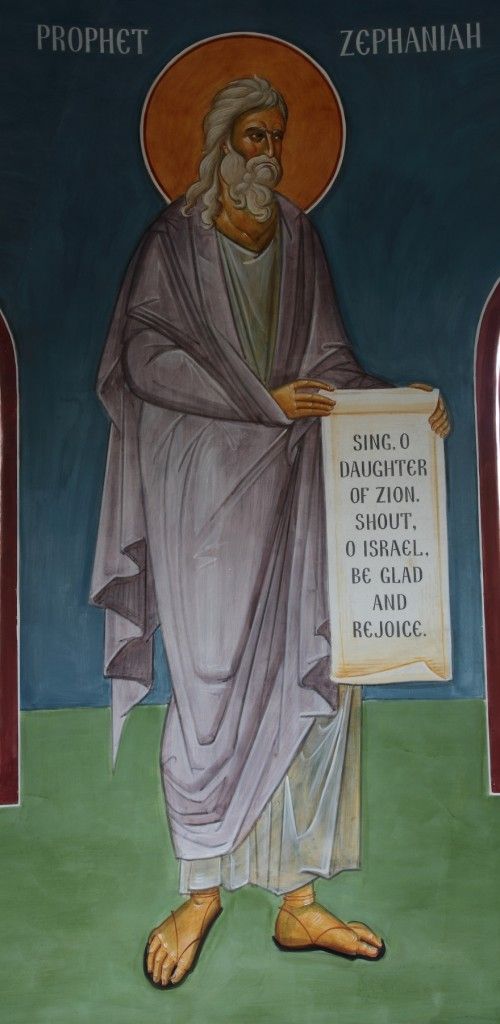 The Prophet Zephaniah, prophesying in
the years preceding the Babylonian exile, presents a stark and cosmic vision
of God’s judgment, known as the “Day of the Lord.” For Orthodox theology,
this “Day” finds its ultimate meaning not in a single historical event, but in
the coming of Jesus Christ—both in His First Coming in humility and His Second
Coming in glory. Zephaniah’s message, therefore, is a profound journey from
universal condemnation to universal restoration, prefiguring the salvation
wrought by Christ.
1. The Day of the Lord: From Wrath to Paschal Joy
Zephaniah opens with a terrifying description of the Day of the Lord as a day of wrath, trouble, distress, ruin, darkness, and gloom (Zephaniah 1:15). This is a judgment against Judah, the surrounding nations, and ultimately all creation for its rebellion against God.
-
Patristic Insight: The Fathers saw this “darkness” not merely as political catastrophe but as the consequence of sin and the tyranny of death. St. Gregory of Nyssa, in his Life of Moses , interprets such biblical darkness as the state of being separated from the Light of God.
-
New Testament Parallel: The language of the Day of the Lord is directly applied by the Apostles to the Final Judgment (e.g., 2 Thessalonians 1:7-10; 2 Peter 3:10). However, in the light of Christ, this “day” is first and foremost encountered at the Cross. The darkness that fell upon the earth at the Crucifixion (Matthew 27:45) is the true “Day of the Lord,” where God’s wrath against sin and His boundless mercy meet.
-
Liturgical Fulfillment: This is why the hymns of Holy Friday are filled with the language of Zephaniah. We sing of the cosmic mystery of the Creator being judged, and the light of the world voluntarily entering the darkness of death to destroy it from within. The judgment of the “Day of the Lord” is undergone by Christ Himself on our behalf.
2. The Call to Repentance: Seeking Humility and Righteousness
In the midst of judgment, a prophetic call rings out: “Seek the LORD, all you meek of the earth, who have upheld His justice. Seek righteousness, seek humility. It may be that you will be hidden in the day of the LORD’s anger” (Zephaniah 2:3, NKJV).
-
Patristic Insight: The “meek” or “poor in spirit” are those who constitute the true Israel, the faithful remnant. St. John Chrysostom, in his homilies, consistently identifies this humility and spiritual poverty as the foundational virtue of the Christian life. To be “hidden” is to take refuge in God Himself.
-
New Testament Parallel: Christ begins His Sermon on the Mount with “Blessed are the poor in spirit, for theirs is the kingdom of heaven” (Matthew 5:3). He Himself is the ultimate model of meekness and humility (Matthew 11:29). He is the true “hiding place” from the final judgment.
-
Liturgical Fulfillment: This call is the essence of the Lenten journey. The Triodion and the services of Great Lent repeatedly call us to “seek the Lord while He may be found” (Isaiah 55:6), to cultivate the humility of the Publican, and to find refuge not in our own righteousness but in God’s mercy. The faithful who heed this call constitute the New Israel, the Church.
3. The Daughter of Zion
A central theme is the restoration of Jerusalem, personified as the “Daughter of Zion.”
-
Restoration: This is followed by one of the most glorious Messianic prophecies: “The LORD has taken away your judgments, He has cast out your enemy. The King of Israel, the LORD, is in your midst; you shall see disaster no more… The LORD your God in your midst, The Mighty One, will save; He will rejoice over you with gladness, He will quiet you with His love, He will rejoice over you with singing” (Zephaniah 3:15, 17, NKJV).
-
Patristic Insight: The Fathers universally saw the purified “Daughter of Zion” as a prototype of the Theotokos and the Church. The Theotokos is the true Daughter of Zion who, in perfect humility and obedience, reversed the sin of Eve and became the dwelling place of God. St. Cyril of Alexandria calls her the “living Zion,” from whom Christ the King took flesh.
-
New Testament Parallel: The Angel Gabriel’s salutation to Mary is a fulfillment of this restoration. The Lord is literally “in her midst” (Luke 1:28, 31). Furthermore, the Church is the New Jerusalem, the “bride” for whom Christ gave Himself (Ephesians 5:25-27), and over whom He rejoices.
-
Liturgical Fulfillment: This text is proclaimed in its entirety as the Old Testament reading for the Feast of the Nativity of the Theotokos (September 8/21). It is also read on Great and Holy Saturday, as the Church contemplates Christ the King in the midst of Hades, destroying the enemy and preparing to lead a restored humanity into the glory of His Resurrection.
4. The Conversion of the Nations and the Remnant
Zephaniah prophesies that after judgment, God will “restore to the peoples a pure language, that they all may call on the name of the LORD, to serve Him with one accord” (Zephaniah 3:9, NKJV). A humble and meek remnant will be gathered from all nations.
- Patristic Insight: The “pure language” is understood by the Fathers as the language of pure doctrine and true worship, freed from the confusion of Babel. St. Irenaeus links this to the proclamation of the Gospel, which unites all peoples in the truth of Christ.
- New Testament Parallel: This is fulfilled at Pentecost (Acts 2), when the Holy Spirit descends and the Apostles speak in various tongues, calling all nations to worship God in the one Faith of Jesus Christ. The Church, composed of Jews and Gentiles, is this humble remnant, the “Israel of God” (Galatians 6:16).
- Liturgical Fulfillment: The entire liturgical life of the Church is the embodiment of this “pure language.” The Divine Liturgy is the act of the one people of God, from every tribe and tongue, offering a common worship to the Father through the Son in the Holy Spirit.
**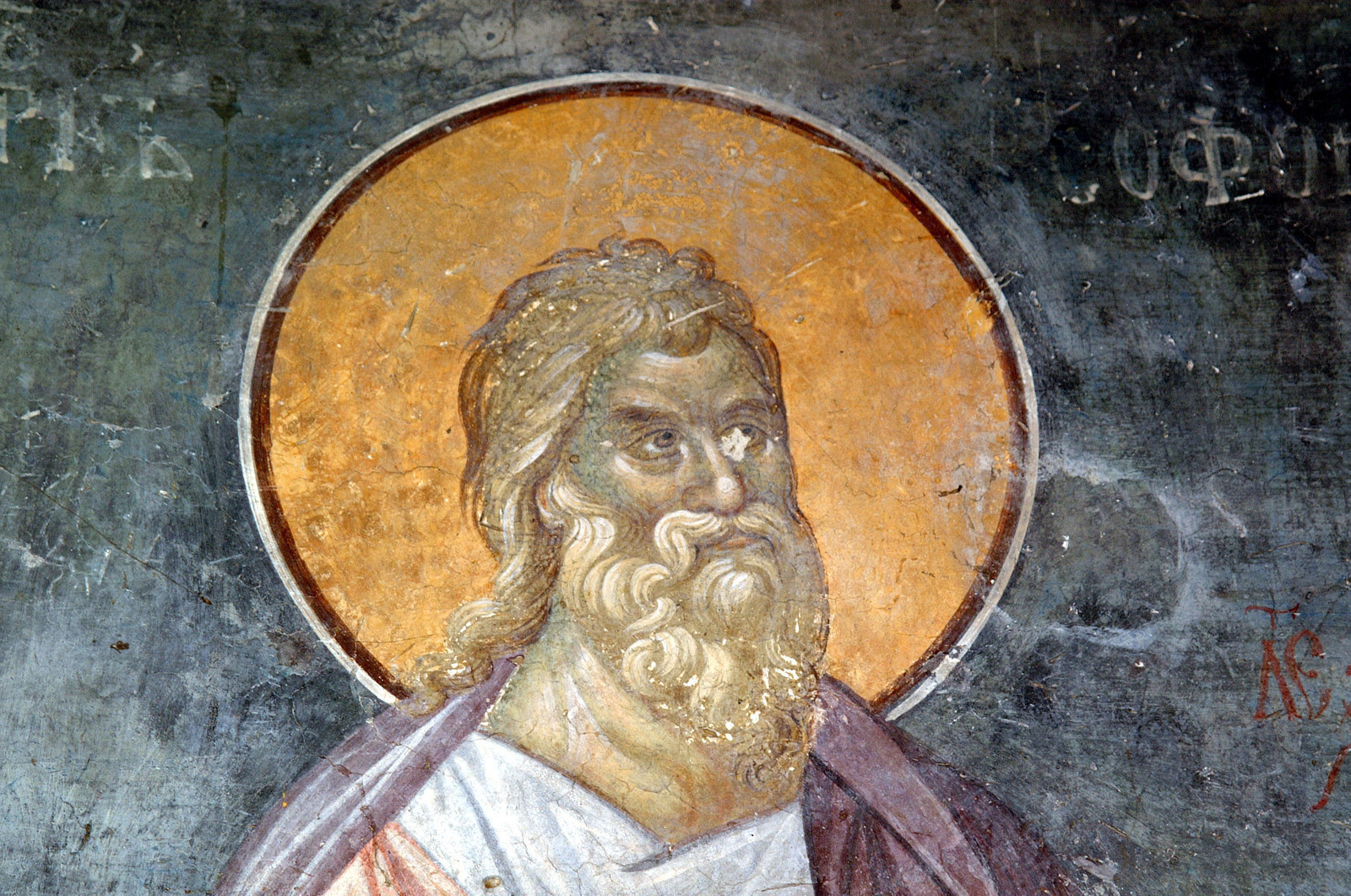
**
Prophet Zephaniah , Fresco in the Monastery of Studenica Monastery (Serbia, XIII c.)
Conclusion: Zephaniah as a Christ-Centered Book
For the Orthodox Christian, the Book of Zephaniah is a profound prophecy of the Paschal Mystery. The “Day of the Lord’s” wrath is endured by Christ on the Cross. The call to humility is answered perfectly by the Theotokos and is the path of salvation for all believers. The restoration of the Daughter of Zion is realized in the Incarnation and the birth of the Church. The conversion of the nations to a “pure language” is the gift of Pentecost and the continuous life of the Liturgy.
33.1 Loving God and Neighbor. Coming Judgment on Both Kingdoms (1:1–16).
_
_
_Loving God and Neighbor
_
Coming Judgment on Both Kingdoms (1:1–16)
Introduction to Micah’s Prophecy (1:1)
The Lord’s Motivation for Judgment (1:5)
Samaria’s Coming Judgment (1:6–7)
Micah Laments the Promised Judgments (1:8–9)
Israel’s Coming Judgment (1:10–16)
The Unjust Actions of the Israelite Oppressors (2:1–2)
Micah Accuses Israel’s Leaders of Hating Good (3:1–4)
The Lord’s Accusation Against His People (6:1–16)
The Lord’s Covenant Faithfulness to His People (6:3–5)
Israel’s Sins of Deceit (6:9–12)
The Lord Promises Judgment Against His People (6:13–16)
Micah Laments the Absence of Faithful People (7:1–6)
Micah’s Reasons for Hope (7:7–20)
Hope Through Judgment (7:7–10)
Hope in the Restoration of Israel (7:11–13)
Hope in the Shepherd of Israel (7:14–17)
Hope’s Foundation: The Steadfast Love of God (7:18–20)
**An Orthodox Synthesis of the Book of the Prophet Micah: The Judgment
of Zion and the King from Bethlehem**
**The Central Theme: The Lawsuit of the Lord and the Promise of
Restoration**
Key Messianic Texts and Their Fulfillment
2. The Ruler from Bethlehem (Micah 5:2)
3. The Shepherd-King Who is Our Peace (Micah 5:4-5a)
- New Testament Fulfillment:
4. The Requirements of the Lord (Micah 6:6-8)
Conclusion: The God Who Pardons Iniquity
The Book of Micah is fundamentally Christ-centered because:
33.2 Yahweh Punishes the Wicked. God’s Anger With Nineveh Expressed Through
Creation (1:1–6).
_Yahweh Punishes the Wicked
_
God Is Just (1:7–11)
Nahum(watercolor circa 1888 by James Tissot)
Alternating Oracles Through Nahum (1:14–2:2)
Battle Imagery Against Assyria (2:3–10)
The City of Nineveh Is Full of the Dead (3:1–3)
Nineveh as Prostitute (3:4–7)
Assyria’s Battle Actions Will Be Returned (3:8–11)
Siege Versus Fortifications (3:12–15)
**An Orthodox Synthesis of the Book of the Prophet Nahum: The Consolation
of Judah and the Judgment of the World’s Pride**
The Central Theme: The Theophany of the Divine Warrior
Nahum 1:2-3, 7-8:
Key Christocentric Themes and Their Fulfillment
1. The Proclamation of Good News (Nahum 1:15)
2. The Destruction of the Lion’s Den (Nahum 2:11-13)
3. The Futility of Human Strength (Nahum 3:1-3)
Liturgical and Eschatological Resonance
Conclusion: The Comfort of Judgment
33.3 Yahweh’s Judgments Are Righteous. Habakkuk Questions and God Answers
(1:1–2:5).
_
_
_Yahweh’s Judgments Are Righteous
_
Habakkuk Questions and God Answers (1:1–2:5)
Five Woes from the Prophet Habakkuk (2:6–20)
Habakkuk’s Prayer (3:1–19)
**An Orthodox Synthesis of the Book of the Prophet Habakkuk: From
Perplexity to Paschal Faith**
The Central Dialogue: Faith in the Midst of Mystery
Habakkuk’s First Complaint (1:2-4):
Habakkuk’s Second Complaint (1:12-17):
Key Christocentric Texts and Their Fulfillment
2. The Command to Write the Vision (Habakkuk 2:2-3)
4. The Prophet’s Paschal Resolution (Habakkuk 3:17-19)
Liturgical and Sacramental Resonance
- This irmos does two things:
The Prototype of the Holy Theotokos as the “Well-Shaded Mountain”
- The Primary Source: Habakkuk 3:3
3. Other Mountain Typologies:
Conclusion: From Why to Who
33.4 The Great Day of the Lord. Zephaniah Prophesies God’s Judgment and the
Day of the Lord (1:1–2:3).
_A 17th century Russian icon of Zephaniah
_
The Great Day of the Lord
Introduction to Zephaniah’s Prophecy (1:1)
Zephaniah Announces the Coming Day of the Lord (1:7–18)
Zephaniah Prophesies God’s Work of Restoration (3:9–20)
An Orthodox Synthesis of the Book of the Prophet Zephaniah
1. The Day of the Lord: From Wrath to Paschal Joy
2. The Call to Repentance: Seeking Humility and Righteousness
3. The Daughter of Zion
4. The Conversion of the Nations and the Remnant
**
**
Conclusion: Zephaniah as a Christ-Centered Book
- 33.1 Loving God and Neighbor. Coming Judgment on Both Kingdoms (1:1–16).
- 33.2 Yahweh Punishes the Wicked. God’s Anger With Nineveh Expressed Through Creation (1:1–6).
- 33.3 Yahweh’s Judgments Are Righteous. Habakkuk Questions and God Answers (1:1–2:5).
- 33.4 The Great Day of the Lord. Zephaniah Prophesies God’s Judgment and the Day of the Lord (1:1–2:3).
33.1 Loving God and Neighbor. Coming Judgment on Both Kingdoms (1:1–16).
_
_
_Loving God and Neighbor
_
Coming Judgment on Both Kingdoms (1:1–16)
Introduction to Micah’s Prophecy (1:1)
The Lord’s Motivation for Judgment (1:5)
Samaria’s Coming Judgment (1:6–7)
Micah Laments the Promised Judgments (1:8–9)
Israel’s Coming Judgment (1:10–16)
The Unjust Actions of the Israelite Oppressors (2:1–2)
Micah Accuses Israel’s Leaders of Hating Good (3:1–4)
The Lord’s Accusation Against His People (6:1–16)
The Lord’s Covenant Faithfulness to His People (6:3–5)
Israel’s Sins of Deceit (6:9–12)
The Lord Promises Judgment Against His People (6:13–16)
Micah Laments the Absence of Faithful People (7:1–6)
Micah’s Reasons for Hope (7:7–20)
Hope Through Judgment (7:7–10)
Hope in the Restoration of Israel (7:11–13)
Hope in the Shepherd of Israel (7:14–17)
Hope’s Foundation: The Steadfast Love of God (7:18–20)
**An Orthodox Synthesis of the Book of the Prophet Micah: The Judgment
of Zion and the King from Bethlehem**
**The Central Theme: The Lawsuit of the Lord and the Promise of
Restoration**
Key Messianic Texts and Their Fulfillment
2. The Ruler from Bethlehem (Micah 5:2)
3. The Shepherd-King Who is Our Peace (Micah 5:4-5a)
- New Testament Fulfillment:
4. The Requirements of the Lord (Micah 6:6-8)
Conclusion: The God Who Pardons Iniquity
The Book of Micah is fundamentally Christ-centered because:
33.4 The Great Day of the Lord. Zephaniah Prophesies God’s Judgment and the
Day of the Lord (1:1–2:3).
_A 17th century Russian icon of Zephaniah
_
The Great Day of the Lord
Introduction to Zephaniah’s Prophecy (1:1)
Zephaniah Announces the Coming Day of the Lord (1:7–18)
Zephaniah Prophesies God’s Work of Restoration (3:9–20)
An Orthodox Synthesis of the Book of the Prophet Zephaniah
1. The Day of the Lord: From Wrath to Paschal Joy
2. The Call to Repentance: Seeking Humility and Righteousness
3. The Daughter of Zion
4. The Conversion of the Nations and the Remnant
**
**
Conclusion: Zephaniah as a Christ-Centered Book
33.2 Yahweh Punishes the Wicked. God’s Anger With Nineveh Expressed Through
Creation (1:1–6).
_Yahweh Punishes the Wicked
_
God Is Just (1:7–11)
Nahum(watercolor circa 1888 by James Tissot)
Alternating Oracles Through Nahum (1:14–2:2)
Battle Imagery Against Assyria (2:3–10)
The City of Nineveh Is Full of the Dead (3:1–3)
Nineveh as Prostitute (3:4–7)
Assyria’s Battle Actions Will Be Returned (3:8–11)
Siege Versus Fortifications (3:12–15)
**An Orthodox Synthesis of the Book of the Prophet Nahum: The Consolation
of Judah and the Judgment of the World’s Pride**
The Central Theme: The Theophany of the Divine Warrior
Nahum 1:2-3, 7-8:
Key Christocentric Themes and Their Fulfillment
1. The Proclamation of Good News (Nahum 1:15)
2. The Destruction of the Lion’s Den (Nahum 2:11-13)
3. The Futility of Human Strength (Nahum 3:1-3)
Liturgical and Eschatological Resonance
Conclusion: The Comfort of Judgment
33.3 Yahweh’s Judgments Are Righteous. Habakkuk Questions and God Answers
(1:1–2:5).
_
_
_Yahweh’s Judgments Are Righteous
_
Habakkuk Questions and God Answers (1:1–2:5)
Five Woes from the Prophet Habakkuk (2:6–20)
Habakkuk’s Prayer (3:1–19)
**An Orthodox Synthesis of the Book of the Prophet Habakkuk: From
Perplexity to Paschal Faith**
The Central Dialogue: Faith in the Midst of Mystery
Habakkuk’s First Complaint (1:2-4):
Habakkuk’s Second Complaint (1:12-17):
Key Christocentric Texts and Their Fulfillment
2. The Command to Write the Vision (Habakkuk 2:2-3)
4. The Prophet’s Paschal Resolution (Habakkuk 3:17-19)
Liturgical and Sacramental Resonance
- This irmos does two things:
The Prototype of the Holy Theotokos as the “Well-Shaded Mountain”
- The Primary Source: Habakkuk 3:3
3. Other Mountain Typologies:
Conclusion: From Why to Who
- Loving God and Neighbor. Coming Judgment on Both Kingdoms (1:1–16).
- Yahweh Punishes the Wicked. God’s Anger With Nineveh Expressed Through Creation (1:1–6).
- Yahweh’s Judgments Are Righteous. Habakkuk Questions and God Answers (1:1–2:5).
- The Great Day of the Lord. Zephaniah Prophesies God’s Judgment and the Day of the Lord (1:1–2:3).
Related Concepts
- 2-corinthians-129
- annunciation
- apologetics
- ascetical-life
- bethlehem
- canon-of-holy-pascha
- chalcedonian-dogma
- chesed
- christs-passion
- christus-victor
- church-as-new-jerusalem
- covenant-faithfulness
- covenant-lawsuit
- covenant-loyalty
- cross
- cross-of-christ
- daniel-2-mountain
- daniels-mountain
- davidic-dynasty
- descent-into-hades
- divine-faithfulness
- divine-goodness
- divine-sovereignty
- divine-warrior
- election
- enhypostaton
- evil
- final-judgment
- galatians-311
- gods-speech
- goodness-of-creation
- habakkuk
- habakkuk-24
- hebrews-1038
- holy-friday
- hymns-of-zion
- israel-of-god
- jeremiah
- jeroboams-calves
- job
- job-3841
- joy
- judgment
- judgment-and-redemption
- kant
- kiss-of-peace
- leibniz
- lions-den
- liturgical-exegesis
- love-of-god
- love-of-neighbor
- meekness
- messianic-kingdom
- micah-68
- mishpat
- molech
- mountain-of-the-lord
- myrrhbearing-women
- mystery
- nahum
- nativity-canon
- nativity-of-the-theotokos
- new-sinai
- overshadowing
- paran
- paschal-canon
- paschal-victory
- pastoral-responsibility
- problem-of-evil
- prophetic-indictment
- restoration
- romans-117
- second-coming
- sinai
- social-injustice
- social-justice
- spirit-of-the-lord
- st-john-chrysostom
- st-justin-martyr
- stronghold
- suffering
- the-servant
- theodicy
- theophany
- transfiguration
- two-natures
- virgin-birth
- zion
- zion-restored