Old Testament — Topic 20
EZRA / 2 EZRA (Greek Old Testament tradition)
Outline
1:1–2:70 The Judean Exiles Return to Judah to Rebuild the Temple of the Lord
3:1–6:22 God’s People Rebuild His Temple
7:1–8:36 Ezra Returns to Jerusalem With Royal and Divine Aid
9:1–10:44 Ezra Discovers Israel’s Sinful Intermarriages and Leads the Men to
Divorce Their Foreign Wives
Temple Reconstruction and Spiritual Reformation
The book of Ezra is named for its central character and author, according to Jewish tradition. While it is impossible to substantiate this beyond doubt, some scholars believe the book to be a continuation of the book of Chronicles and that Ezra was the author of Chronicles along with the book of Ezra and possibly Nehemiah—given that Ezra and Nehemiah are one book in the Hebrew canon (as is, Chronicles is one book). Ezra and Nehemiah were separated when Jerome produced his Latin translation of the Bible, the Vulgate, in the third century AD. The writing of Ezra dates to the middle of the fifth century BC. Therefore, its original audience was the Jewish postexilic community in and near Jerusalem. The book of Ezra serves several purposes. First, it provides a record of the first and second of three returns of Jewish exiles from Babylonian captivity. Second, it shows how Cyrus the Great’s edict in 539 BC allowed the first Jewish exiles to return to Jerusalem and Judah to rebuild the temple. Sheshbazzar led this return in 536 BC. Third, Ezra records the opposition the returnees faced. Fourth, the book records the completion of the temple in 515 BC and the reestablishment of temple worship. Finally, it records Ezra leading a second group of returnees in 457 BC, followed by the spiritual reformation he brought about in Jerusalem and Judah.
The Judean Exiles Return to Judah to Rebuild the Temple of the Lord (1:1–2:70)
In 605 BC, Nebuchadnezzar subdued Jerusalem and Judah, deporting thousands of God’s people into Babylonian captivity. When Judah rebelled in both 597 and 586 BC, more Israelites were taken. However, in 539 BC the Medo-Persian Cyrus (559–530 BC) conquered all of Babylon, and here he issues a decree proclaiming that Yahweh has appointed him to allow the Israelites to return to Jerusalem and Judah to rebuild the temple. Moreover, he provides the money and materials needed to complete the work (1:1–11). Altogether, 42,360 people return home under the leadership of Sheshbazzar, a prince of Judah (2:1–70). The next section will highlight the commencement of rebuilding the temple, the opposition it faced, and its completion.
God’s People Rebuild His Temple (3:1–6:22)
When the people listed in the previous section return to Jerusalem, they immediately rebuild the temple’s foundation and altar and begin offering sacrifices (3:1–13). The builders’ enemies ask to join the project, however, Zerubbabel refuses, and the enemies of God’s people begin harassing and making false accusations against the builders, persuading Artaxerxes to halt the work (4:1–24). After sixteen years, the prophets Haggai and Zechariah exhort the builders to resume rebuilding. Tattenai, the governor, asks the builders who gave them authority to rebuild. They tell him it was Cyrus (5:1–17). Tattenai inquires of Darius whether this is true, and Darius confirms the builders’ claim. The temple is completed in 515 BC (6:1–22). This sets the stage for a second return of exiles led by Ezra.
Ezra Returns to Jerusalem With Royal and Divine Aid (7:1–8:36)
Much like Cyrus’ decree at the beginning of Ezra, Artaxerxes issues a decree appointing Ezra to lead a second group of Jewish exiles back to Jerusalem from Babylon. Artaxerxes gives Ezra a substantial amount of silver, gold, utensils, and other goods to be used for service in the temple from his personal treasury and the royal treasuries near Judah. Furthermore, Artaxerxes appoints Ezra to establish a judicial system in Judah that is in accordance with God’s law (7:1–28). A list of names honors those who joined Ezra, since Ezra is to teach God’s law, he recruits Levites to join him also. Trusting in God’s protection, the returnees safely reach Jerusalem (8:1–36). After this, Ezra will encounter his first challenge.
Ezra Discovers Israel’s Sinful Intermarriages and Leads the Men to Divorce Their Foreign Wives (9:1–10:44)
Having safely arrived in Jerusalem, leaders approach Ezra and inform him that a significant number of men, including both religious and secular leaders, have married foreign wives. This is serious given that it is in disobedience to God’s law and was one of the primary causes for the Israelites’ worship of foreign gods—which was the very sin that resulted in their exile. Deeply grieved, Ezra confesses the people’s sin to God (9:1–15). The people fear God and join Ezra in confession; then they ask him to remedy the matter. Ezra calls on those who had intermarried to repent and put away their foreign wives and children. The section concludes with a list of the names of those who committed this sin (10:1–44).
The Book of Ezra chronicles the end of the Babylonian Captivity and the return of the Jewish exiles to Jerusalem to rebuild the Temple and restore the Mosaic Law. For the Orthodox Church, this is not merely a post-exilic historical account but a powerful typological narrative of redemption. It prefigures humanity’s return from the captivity of sin to the true worship of God through Jesus Christ, the true Temple and the ultimate Scribe of the Father’s will.
1. The Decree of Cyrus: The Divine Initiative for Restoration
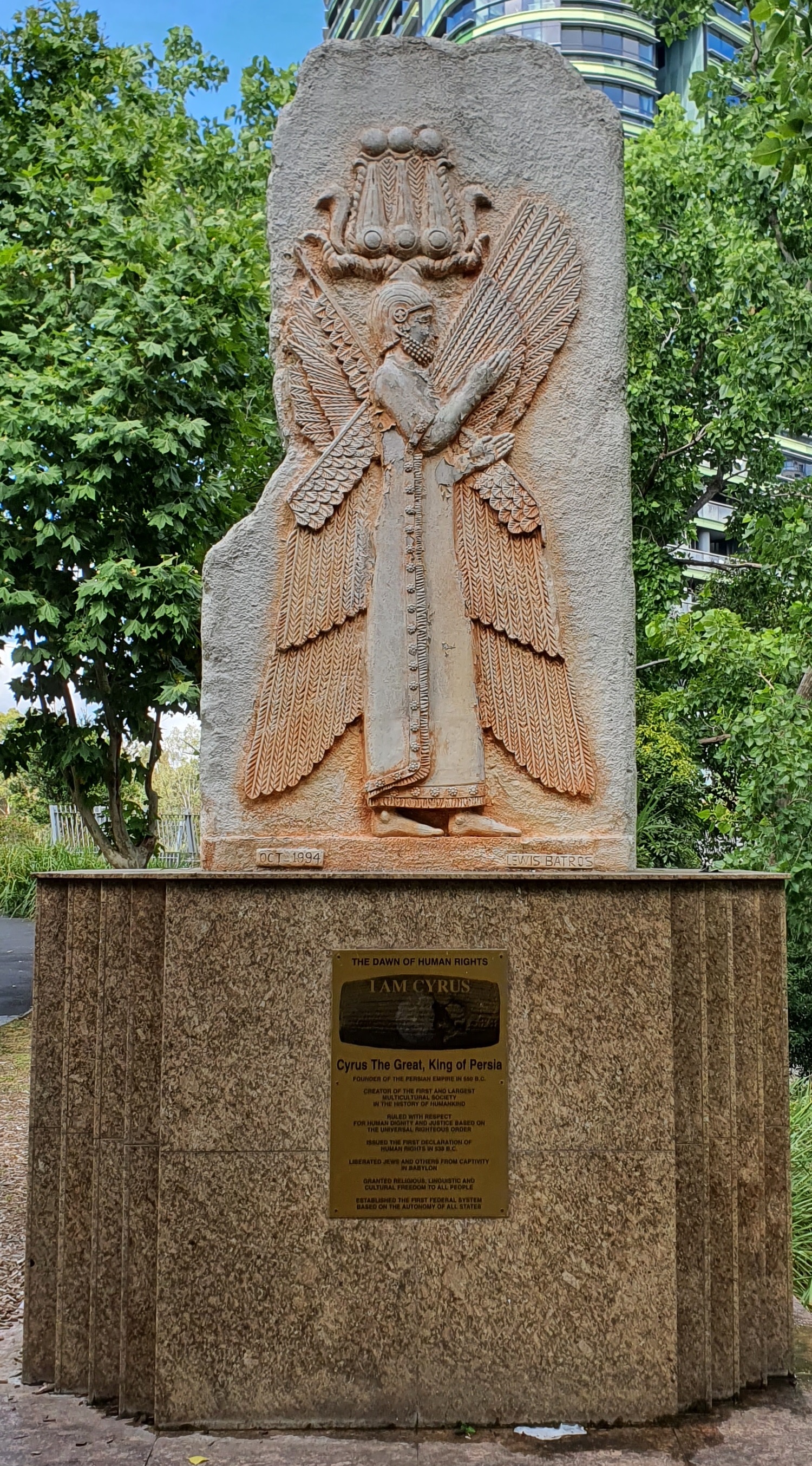
The book opens with a stunning fulfillment of prophecy: a pagan king, Cyrus of Persia, is anointed by God to issue a decree freeing the Jews to return to Jerusalem and rebuild the Temple.
“Now in the first year of Cyrus King of Persia, that the word of the LORD by the mouth of Jeremiah might be fulfilled, the LORD stirred up the spirit of Cyrus King of Persia, so that he made a proclamation throughout all his Kingdom… ‘The LORD God of heaven… has given me all the Kingdoms of the earth, and He has commanded me to build Him a house at Jerusalem which is in Judah.’” (Ezra 1:1-2, NKJV)
Statue of Cyrus the Great at Olympic Park in Sydney
-
Christological Interpretation: Cyrus is a type of Christ. As a non-Jewish King, he prefigures Christ’s universal Kingship over both Jew and Gentile. Just as Cyrus was “stirred up” by God to proclaim liberty to the captives and authorize the building of God’s house, so too does Christ , the true Anointed One, proclaim “liberty to the captives” (Luke 4:18) and authorize the building of the Church, the new Temple of God.
-
Patristic Insight: The Fathers saw in Cyrus a foreshadowing of how God uses even secular rulers and historical events to accomplish His salvific plan. St. Irenaeus and others emphasized that God is the Lord of all history, working through all things for the salvation of His people.
2. The Rebuilding of the Temple: The Foundation of the Messianic Age
The central drama of Ezra is the rebuilding of the Temple amidst external opposition and internal discouragement.
-
The Mixed Reaction: The laying of the foundation evokes a mixed response: joy from the young and weeping from the old who remembered Solomon’s glorious Temple (Ezra 3:12-13). This reflects the tension between the old covenant and the new.
-
Christological Fulfillment: The Second Temple is the very Temple in which Jesus Christ , the true Glory of God, would teach and whose veil He would tear at His Passion. The rebuilding, therefore, is a direct preparation for the Incarnation. Furthermore, Christ Himself declares His body to be the true Temple (John 2:19-21), and the Apostle Paul identifies the Church as the “household of God, built on the foundation of the apostles and prophets, Jesus Christ Himself being the chief cornerstone” (Ephesians 2:19-20).
-
Ascetical Understanding: The rebuilding of the Temple amidst opposition is an icon of the Christian’s spiritual struggle. Each believer is a “temple of the Holy Spirit” (1 Corinthians 6:19) that has been damaged by sin. The return from exile is repentance; the laying of a new foundation is baptism and faith; the ongoing building amidst the obstacles represents the daily ascetical effort to guard the heart from passions and demonic suggestions, slowly rebuilding a life of virtue through prayer, fasting, and obedience.
3. The Mission of Ezra the Scribe: Restoring the Law
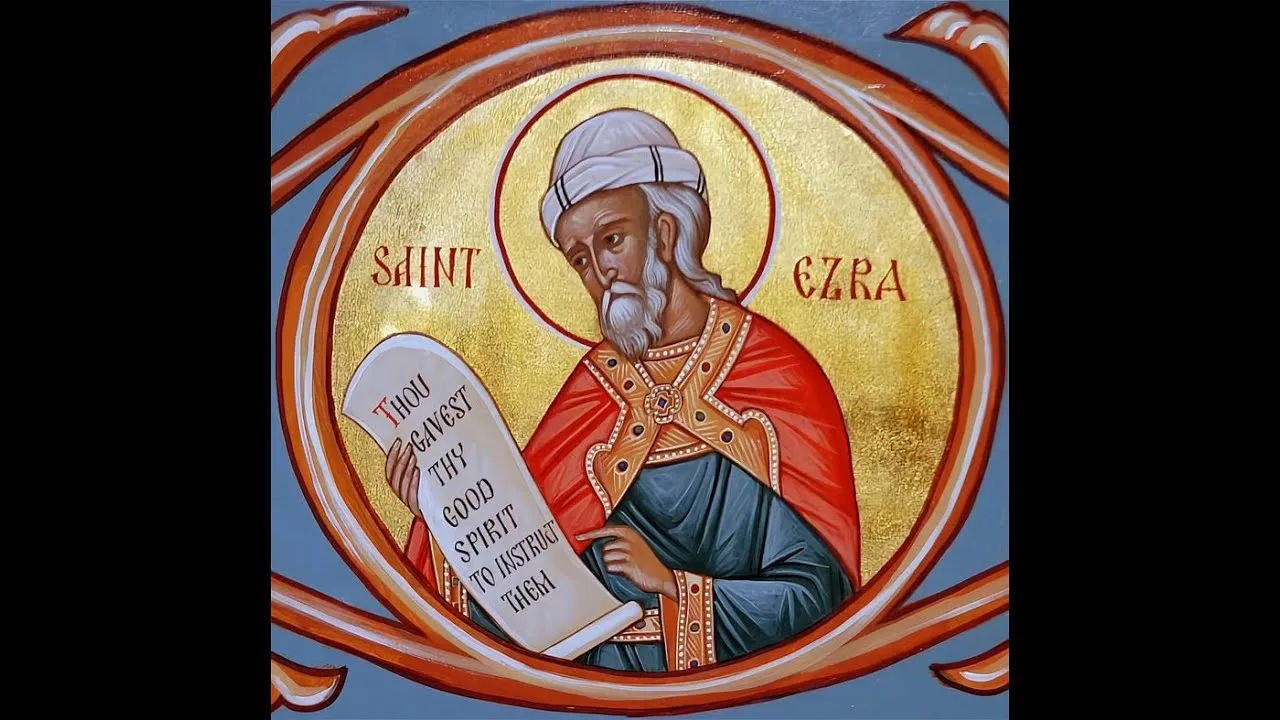
Ezra himself is a pivotal figure, a priest and “a skilled scribe in the Law of Moses” (Ezra 7:6). His mission is not just political but spiritual: to re- establish the Law as the governing principle of the community.
“For Ezra had prepared his heart to seek the Law of the LORD, and to do it, and to teach statutes and ordinances in Israel.” (Ezra 7:10, NKJV)
-
Christological Interpretation: Ezra is a profound type of Christ. He is the faithful priest and teacher who comes from the royal center (Babylon) to Jerusalem to interpret and re-establish the Law with authority. This prefigures Christ , the ultimate High Priest and Word of God, who comes from the Father to “fulfill the Law” (Matthew 5:17) and to teach with divine authority, not as the scribes.
-
Liturgical Understanding: Ezra’s public reading and explanation of the Law to the assembled people (a scene more fully detailed in Nehemiah 8) is the direct prototype of the Liturgy of the Word in the Orthodox Divine Liturgy. The people stand as the Scripture is read from the ambo, and the priest or deacon explains and expounds upon it in the homily, leading the people to respond, “Amen! Amen!” with worship and weeping (repentance) that is then turned into the joy of the feast (the Eucharist).
4. The Problem of Mixed Marriages: The Purity of the Covenant Community
A major focus of Ezra’s reform is the dissolution of marriages with foreign wives, which had led to the corruption of Israel’s unique covenant identity (Ezra 9-10).
-
The Text: Ezra is appalled that “the holy seed is mixed with the peoples of those lands” (Ezra 9:2). He offers a profound prayer of corporate confession (Ezra 9:6-15), leading the people to separate themselves from these foreign unions.
-
Patristic and Ascetical Understanding: This difficult passage is understood ascetically as the need for the soul, the Bride of Christ, to remain pure from union with the “foreign” passions and ideologies of the world. As St. Paul commands, “Do not be unequally yoked together with unbelievers… come out from among them and be separate, says the Lord” (2 Corinthians 6:14, 17). The severe action of putting away foreign wives is a typos of the spiritual struggle to eradicate deeply entrenched passions from the soul, a painful but necessary process for the preservation of one’s covenant identity in Christ.
-
Ecclesiological Interpretation: It also speaks to the holiness and distinct identity of the Church. The Church is the “chosen race, a royal priesthood, a holy nation” (1 Peter 2:9), called to be separate from the syncretistic spirit of the age to maintain her purity as the spotless Bride of Christ.
Conclusion: Ezra as a Christ-Centered Narrative
The Book of Ezra is a powerful narrative of redemption that finds its ultimate meaning in Jesus Christ:
-
Cyrus prefigures Christ the King , who proclaims our liberation from the captivity of sin and death.
-
The Rebuilt Temple prefigures Christ’s Body , both His physical body and His mystical body, the Church, which is built up as a dwelling place for God.
-
Ezra himself prefigures Christ the Teacher and High Priest , who reveals the perfect will of the Father and intercedes for His people.
-
The Purging of Foreign Wives prefigures the ascetical call to purity and the Church’s call to holiness.
The journey from Babylon to Jerusalem, from a ruined Temple to a restored altar, is the journey of every soul from the desolation of sin to the glorious liberty of the children of God, accomplished through the true and greater Ezra, our Lord Jesus Christ.
NEHEMIAH
Outline
1:1–6:19 Nehemiah Travels to Jerusalem and Leads the Rebuilding of the City
Walls With the Full Backing of King Artaxerxes
7:1–10:39 The People of Israel Hear God’s Law and Make a Written Covenant to
Obey
11:1–13:31 The People of Israel Repopulate the City of Jerusalem and Dedicate
the Wall; Nehemiah Later Returns and Implements Reforms in Israel
Rebuilding the Wall
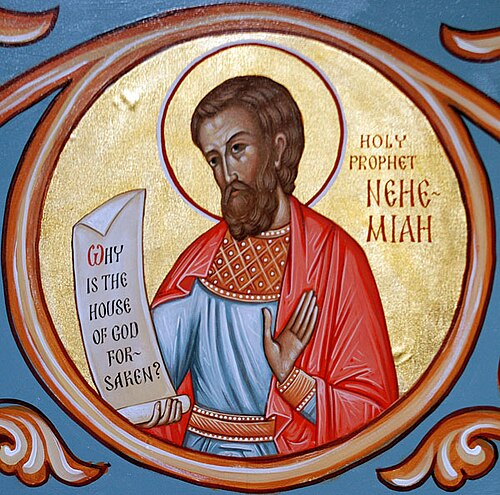
The Book of Nehemiah is named after its central figure, Nehemiah, whose name means “Yahweh has comforted.” Since the book originally was combined with the book of Ezra in the Hebrew canon as Ezra-Nehemiah, many believe Ezra wrote both books. With the numerous uses of the first person in Nehemiah, some believe Nehemiah is its author. If Nehemiah is not the author, then whoever wrote it, surely incorporated his memoirs into the book’s final form. As Ezra records the first and second returns from Babylonian captivity, Nehemiah records the third, which happened in 445/444 BC. Therefore, its original audience was the postexilic community of Jerusalem, and its purpose was to remind them of the events that transpired making it possible for them to live in the land of their fathers once again. The book of Nehemiah focuses on the faithfulness of God in keeping his promises both to scatter his sinful people into exile and then to gather them back together and lead them home. It also highlights how God used Nehemiah, a man of faith and determination, to lead the people of God in the rebuilding of the walls of Jerusalem and to be faithful in keeping the covenant they made with him.
Nehemiah Travels to Jerusalem and Leads the Rebuilding of the City Walls With the Full Backing of King Artaxerxes (1:1–6:19)
When Nehemiah hears that Jerusalem is in ruins and its inhabitants are a reproach to the surrounding nations, he is overcome with grief, and he fasts and prays that God will use him to bring about the city’s revitalization (1:1–11). Nehemiah then secures Artaxerxes’ permission and provision to go to Jerusalem and rebuild its walls (2:1–10). People from all walks of life in Jerusalem and from all over Judah agree to join Nehemiah in the project (3:1–32), but they encounter opposition from their neighbors and challenges from within their own community. In spite of this, Nehemiah and the people face these challenges, are resolute, and complete the project (4:1–6:19). They are now able to turn their attention to other concerns.
The People of Israel Hear God’s Law and Make a Written Covenant to Obey (7:1–10:39)
Though the walls are completed, more needs to be done. Nehemiah appoints leaders to oversee the city’s security, and then he looks at the census of those who first returned to Jerusalem as he contemplates the repopulation of the city (7:1–73). Next, the people gather together to listen to Ezra read the law. As they listen, they begin weeping over their sin, but their leaders encourage them to rejoice over hearing God’s law. They observe the Feast of Tabernacles and begin obeying the law (8:1–18). Moreover, as they continue to hear God’s law, they confess their sin and make a written covenant to obey it (9:1–10:39). This sets the stage for the repopulation of Jerusalem and a reformation among the people.
The People of Israel Repopulate the City of Jerusalem and Dedicate the Wall; Nehemiah Later Returns and Implements Reforms in Israel (11:1–13:31)
Having recognized the need to repopulate Jerusalem, the people cast lots so that one out of every ten families will relocate within the city. Those who relocate are a mixture of laypeople, priests, and Levites. The rest of the people support the city throughout Judah (11:1–36). Given their significance as spiritual leaders, the text contains a record of all the priests and Levites who had served since the first return to Jerusalem (12:1–26). This leads up to the dedication of the wall of Jerusalem and a public commitment to support the priests and Levites (12:27–47). Nevertheless, when Nehemiah returns from reporting to Artaxerxes, he has to confront and correct the people for their disobedience to God’s law (13:1–31).
The Book of Nehemiah continues the narrative of restoration begun in Ezra, shifting the focus from the rebuilding of the Temple to the rebuilding of the community itself, symbolized by the walls of Jerusalem. For the Orthodox Church, Nehemiah is not merely a story of civic and political reconstruction but a powerful typological narrative of the New Covenant. It prefigures Christ, the true Redeemer and Governor, who restores the walls of human nature broken by sin and establishes the Church as the protected and governed City of God.
1. Nehemiah as a Type of Christ: The Sorrowing Intercessor and Redeemer
Nehemiah’s story begins not in Jerusalem, but in the Persian court, where he hears of the desolation of his homeland. His response is a model of Christ- like compassion and intercession.
- The Text: “And it came to pass, when I heard these words, that I sat down and wept, and mourned for many days; I was fasting and praying before the God of heaven.” (Nehemiah 1:4, NKJV). His prayer is a profound confession of corporate sin and a plea for God’s covenant faithfulness (Nehemiah 1:5-11).
- Christological Interpretation: Nehemiah, the cupbearer in a foreign King’s court, is a type of Christ. He embodies the divine kenosis (self-emptying): he leaves his position of comfort and privilege in the Persian court to identify with the suffering and disgrace of his people. This prefigures Christ , who, “though He was in the form of God… emptied Himself, taking the form of a servant” (Philippians 2:6-7) to come to our fallen world and share in our humanity.
- Ascetical Understanding: Nehemiah’s grief, fasting, and prayer are the foundational ascetical response to the brokenness of the world and one’s own soul. He teaches that true restoration begins with compassionate prayer and repentance. The Christian’s first work in rebuilding the “walls” of their soul is to sit in godly sorrow, confess the breaches made by sin, and intercede for God’s mercy before any external action can succeed.
2. The Rebuilding of the Walls: The Restoration of the Church and the Soul
The central action of the book is the rebuilding of Jerusalem’s walls amidst relentless opposition from Sanballat, Tobiah, and Geshem.
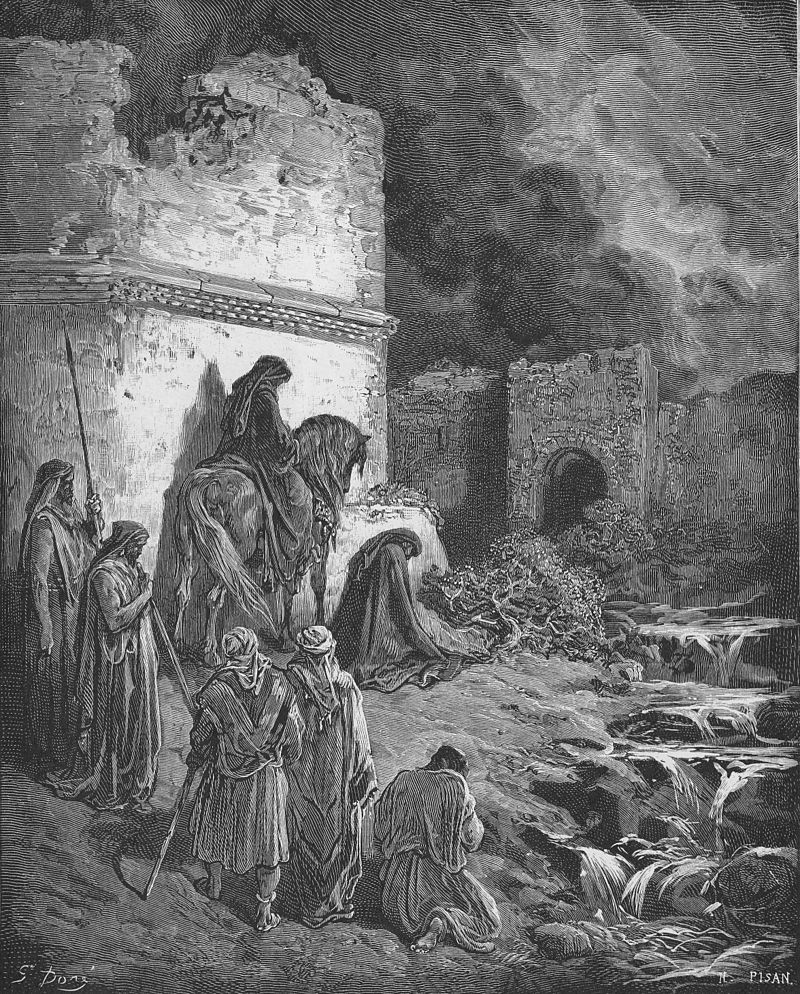
- The Text: The people work with one hand and hold a weapon in the other, for “the builders, everyone had his sword girded at his side as he built.” (Nehemiah 4:18, NKJV). Nehemiah declares, “Do not be afraid of them. Remember the Lord, great and awesome, and fight for your brethren, your sons, your daughters, your wives, and your houses.” (Nehemiah 4:14).
- Christological and Ecclesiological Interpretation: The wall of Jerusalem is a symbol of the Church. It represents the boundary that separates the holy people of God from the world, the realm of salvation from the realm of chaos and enemy. Christ, through His Apostles and saints, builds this Church, against which “the gates of Hades shall not prevail” (Matthew 16:18). The opposition from Sanballat (a type of the devil) and his allies represents the constant spiritual warfare waged against the People of God.
- Ascetical Understanding: This is a masterful icon of the Christian ascetical life. Every believer is called to be a “living stone” (1 Peter 2:5) in the wall of the Church, while simultaneously engaging in spiritual warfare. The trowel represents the tools of spiritual growth: prayer, fasting, almsgiving, and the sacraments. The sword represents the “sword of the Spirit, which is the word of God” (Ephesians 6:17) and the vigilance (nepsis) needed to guard the heart from the assaults of the passions and demonic thoughts. We must build our spiritual life while constantly fighting off distraction, despair, and temptation.
3. The Reading of the Law and the Feast of Booths: The Liturgy of the Word
A pinnacle of the narrative is the public reading of the Law by Ezra at the direction of Nehemiah (Nehemiah 8). This event is a profound liturgical moment.
- The Text: “So they read distinctly from the book, in the Law of God; and they gave the sense, and helped them to understand the reading.” (Nehemiah 8:8, NKJV). The people weep upon hearing the Law, but Nehemiah and Ezra tell them, “Do not sorrow, for the joy of the LORD is your strength.” (Nehemiah 8:10). They then celebrate the Feast of Booths (Tabernacles) with great joy.
- Liturgical and Patristic Understanding: This scene is the very pattern of the Liturgy of the Word in the Orthodox Church. The priest or deacon reads from the Apostolos and the Gospel “distinctly” from the ambo, and the homily “gives the sense” so the people may “understand the reading.” The people’s weeping is the godly sorrow of repentance that leads to salvation (2 Corinthians 7:10), which is then transformed by the assurance of God’s grace into the joy of the Eucharistic feast. The celebration of the Feast of Booths, a feast of pilgrimage and temporary dwelling, prefigures the Christian life as a pilgrimage toward the eternal Kingdom.
4. Nehemiah’s Reforms: Governing the Covenant Community
Nehemiah’s final acts involve internal reforms: he confronts the exploitation of the poor by the rich (Nehemiah 5), enforces the sanctity of the Sabbath (Nehemiah 13:15-22), and purges the Temple of a foreigner who had been given a room there (Nehemiah 13:4-9).
- Christological Interpretation: As a righteous governor, Nehemiah acts as a type of Christ the Judge and Reformer. He cleanses the community of injustice and impurity, just as Christ cleansed the Temple (John 2:13-17) and will come again to judge the living and the dead.
- Ascetical Understanding: These reforms represent the ongoing work of personal purification. The exploitation of the poor symbolizes the soul’s exploitation by the passion of greed. The desecration of the Sabbath symbolizes the soul’s failure to keep a sacred rest in God, becoming busy with worldly cares. The foreigner in the Temple is the ultimate image of a passion or a demonic “logismos” that has been allowed to dwell in the inner sanctuary of the heart. The work of salvation requires that, like Nehemiah, we must continually and courageously cast out whatever defiles the temple of our heart (2 Corinthians 6:16).
Conclusion: Nehemiah as a Christ-Centered Narrative
The Book of Nehemiah provides a comprehensive typology of salvation:
- Nehemiah himself is a type of Christ the compassionate Intercessor, the self-emptying Redeemer, and the righteous Governor.
- The Rebuilding of the Walls is a type of Christ building His Church and the soul’s struggle to erect a fortress of virtue through ascetical warfare.
- The Reading of the Law is a type of the Liturgy of the Word, where Christ speaks to His people, turning sorrow into Eucharistic joy.
- The Internal Reforms are a type of theosis—the ongoing purification and governance of the soul by Christ to make it a fit dwelling for God.
Thus, the story of Nehemiah is the story of every Christian: called by God to leave the comfort of sin, to take up the trowel of virtue and the sword of prayer, and to labor tirelessly, amidst all opposition, to rebuild the ruined city of our soul into the New Jerusalem, the city of the Great King, our Lord Jesus Christ.
Nehemiah sees the ruins of the walls of Jerusalem. Engraving by Gustave Doret
- Temple Reconstruction and Spiritual Reformation
-
An Orthodox Insight into the Book of Ezra
-
- Rebuilding the Wall
-
An Orthodox Insight into the Book of Nehemiah
- 20.1 Temple Reconstruction and Spiritual Reformation
- 20.2 An Orthodox Insight into the Book of Ezra
- 20.3 Rebuilding the Wall
- 20.4 An Orthodox Insight into the Book of Nehemiah
20.3 Rebuilding the Wall
Rebuilding the Wall
20.1 Temple Reconstruction and Spiritual Reformation
Temple Reconstruction and Spiritual Reformation
God’s People Rebuild His Temple (3:1–6:22)
- Temple Reconstruction and Spiritual Reformation
- Rebuilding the Wall
Related Concepts
- ambo
- anointing-messiah
- ascetic-life
- beasts
- bethlehem
- body-of-christ
- bride-of-christ
- christocentric-exegesis
- christological-exegesis
- chronology-of-the-nativity
- cross
- crucifixion
- cyrus-as-type-of-christ
- demonology
- divine-condescension
- divine-energies
- dragon
- eradication-of-passions
- esau-as-flesh
- eucharistic-joy
- exorcism
- feast-of-tabernacles
- fulfillment
- gates-of-hades
- holy-seed
- homily
- humility-of-christ
- kenosis
- kingship-of-god
- law-of-moses
- liberty-of-the-children-of-god
- liturgical-interpretation
- liturgical-year
- luke-418
- meek-king
- mount-zion-as-church
- nehemiah-as-type-of-christ
- nepsis
- nepsis-vigilance
- new-jerusalem
- obedience
- passion
- philippians-2
- philippians-2-hymn
- philippians-26-7
- pilgrimage
- priesthood
- prohibitions
- prophecy-fulfillment
- prophecy-fulfilment
- purification
- purification-of-the-temple
- righteous-governance
- satan
- scribal-authority
- separation-from-the-world
- sign-of-jonah
- stranger-and-pilgrim
- sword-of-the-spirit
- temple-of-the-holy-spirit
- theology-of-history
- trowel-and-sword
- unequal-yoke
- victory
- victory-over-the-devil
- virtue
- voluntary-suffering
- watchfulness