New Testament — Topic 9
The Savior’s Social Service. Part 6.
Christ Sends His Apostles on their Mission. (Mat. 10:1-42; Mark 6:7-13;
Luke 9:1-6, 12:11-12).
Christ Sends His Apostles on their Mission. (Mat. 10:1-42; Mark 6:7-13; Luke 9:1-6, 12:11-12).
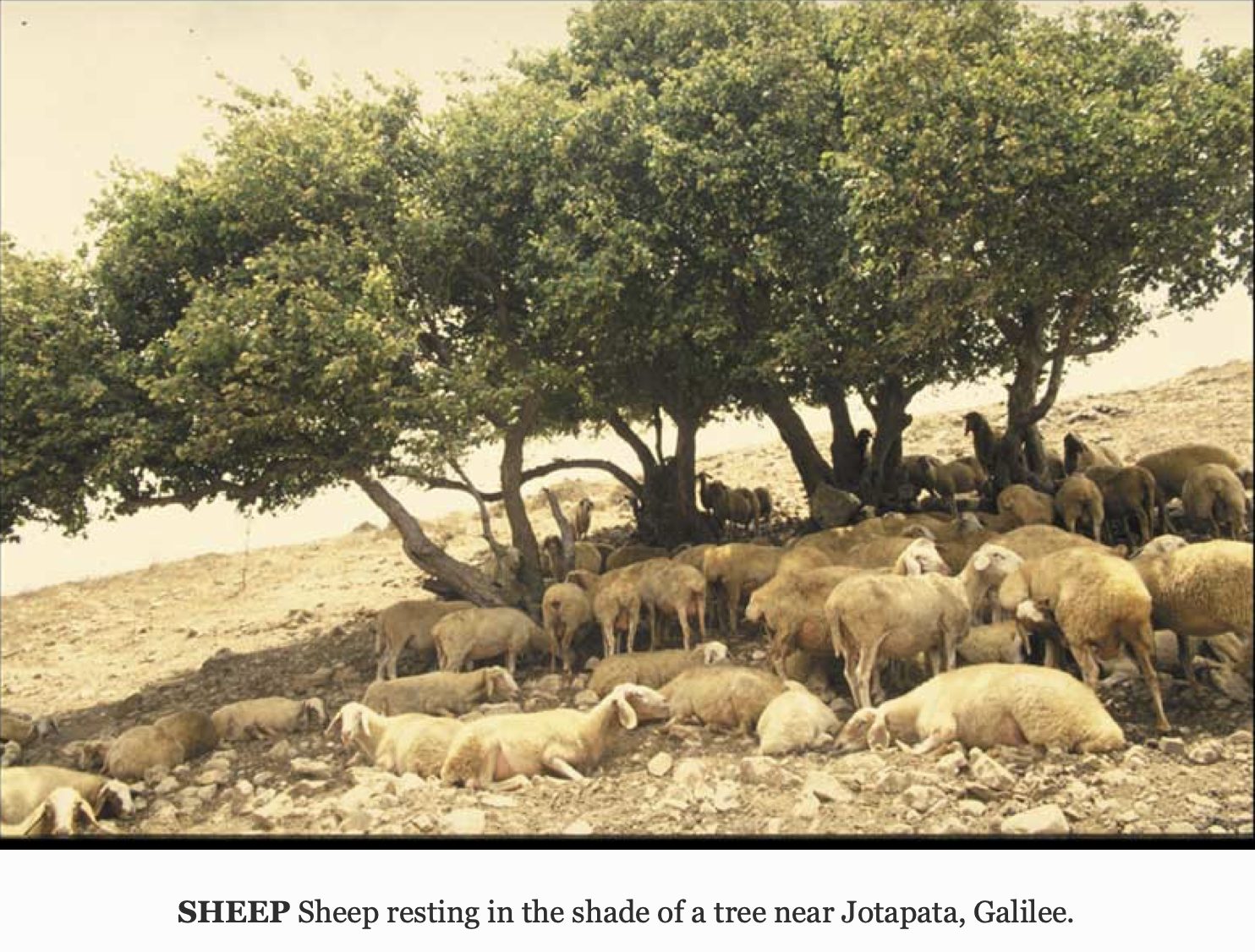
Having mercy on the multitudes of people not having a pastor, and not having the opportunity to have them by His side perpetually, the Lord sends His disciples to preach, this mission is different to that which will follow Christ’s Resurrection. Then, the Lord will send the Apostles into the whole world to preach the New Testament to “every creature” and to lead all the peoples into His Kingdom through the Mystery of baptism, teaching them faith in Christ. However, at this time, the Lord sends them only “to the lost sheep of Israel” (Mat. 10:6), i.e., to the Jews only.
Knowing that they will demand from the Apostles to show signs to prove the genuineness of their sermon, the Lord endowed them with the power over the demons, and the power to heal and resurrect the dead. In order that their sermon would be successful, He warns them against the love of money and all concerns about the food, clothing and dwelling, saying: “for a worker is worthy of his food” (Mat. 10:10).
“You will not have gone through the cities of Israel before the Son of Man comes” (Mat. 10:23). This does not refer to the Second Coming of Christ to judge before the end of the world. The coming of Jesus Christ in His Kingdom is the same as the moment of revealing of this Kingdom — and that revealing of Christ’s Kingdom occurred with His Resurrection and the sending of the Holy Spirit to the Apostles, after which they went out into the whole world with the sermon about the revealing of it. This statement of the Lord has the following meaning: while the Apostles will still be traveling through Palestine with their sermon about the approaching of Christ’s Kingdom, the hour, revealing His Kingdom through His sufferings, the Resurrection from the dead and the ascension of the Holy Spirit will arrive.
The Lord warns them that they should not expect any honors and, on the contrary, be ready for insults, for if the Jews are rudely slandering the Lord Himself and calling Him Beelzebub, then they will even more defame His disciples: “A disciple is not above his teacher, nor a servant above his master” (Mat. 10:24). “Therefore do not fear them (enemies). For there is nothing covered that will not be revealed, and hidden that will not be known” (Mat. 10:26), — said the Lord to the Apostles; i.e. there is no need to fear slander: with time, faith and innocence will be clearly revealed.
Having finished His edification to the 12 Apostles, Jesus went out to preach in the towns of Galilee, while the Apostles, dividing themselves into pairs, went to the settlements “and preached that people should repent” (mark 6:12). The Apostles’ answer to the Lord’s question (Luke 22:35), posed to them at the Last Supper, clearly shows that during their sermon they did not lack anything necessary. Apparently, they all gathered anew with the Lord when He found out about John the Baptist’s death.
-
The Second Visit to Nazareth. (Mat. 13:53-58; Mark 6:1-6).
- Christ Sends His Apostles on their Mission. (Mat. 10:1-42; Mark 6:7-13; Luke 9:1-6, 12:11-12).
- The Beheading of John the Forerunner. (Mat. 141-12; Mark 6:14-29; Luke 9:7-9).
- The Miraculous Feeding of Five Thousand People. (Mat. 14:15-21; Mark 6:32-44; Luke 9:10-17; John 6:1-15)
- The Lord’s Walk on the Water. (Mat. 14:22-36; Mark 6:45-52; John 6:16-21). The Talk about the Heavenly Bread. (John 6:22-71).
- The Third Pascha. Exposing the Pharisees’ Traditions. (Mat. 15:1-20; Mark 7:1-23).
- The Healing of a Canaanite Woman’s daughter. (Mat. 15:21-28; Mark 7:24-30). The Healing of the Speech-Impeded Deaf Person. (Mat 15:29-31; Mark 7:31-37).
- The Miraculous Feeding of Four Thousand People. (Mat. 15:32-39; Mark 8:1-9). The Exposure of the Pharisees Seeking the Signs. (Mat. 16:1-12; Mark 8:11-21). The Healing of a Blind Person in Bethsaida. (Mark 8:22-26).
- Peter’s Confession: Jesus is Christ, the Son of God. (Mat. 16:13-20; Mark 8:27-30; Luke 9:18-21).
- The Lord Foretells His Death and Resurrection. (Mat. 16:21-28; Mark 8:31-38 and 9:1; Luke 9:22-27).
- The Transfiguration of the Lord. (Mat. 17:1-13; Mark 9:2-13; Luke 9:28-36).
- The Healing of the Possessed Adolescent. (Mat. 17:14-23; Mark 9:14-32 and Luke 9:37-45).
-
The Savior’s Social Service. Part 6.
-
The Savior’s Social Service. Part 6.
-
The Savior’s Social Service. Part 6.
-
The Savior’s Social Service. Part 6.
-
The Savior’s Social Service. Part 6.
-
The Savior’s Social Service. Part 6.
-
The Savior’s Social Service. Part 6.
-
The Savior’s Social Service. Part 6.
-
The Savior’s Social Service. Part 6.
-
The Savior’s Social Service. Part 6.
-
The Savior’s Social Service. Part 6.
-
The Savior’s Social Service. Part 6.
Peter’s Confession: Jesus is Christ, the Son of God. (Mat. 16:13-20; Mark
8:27-30; Luke 9:18-21).
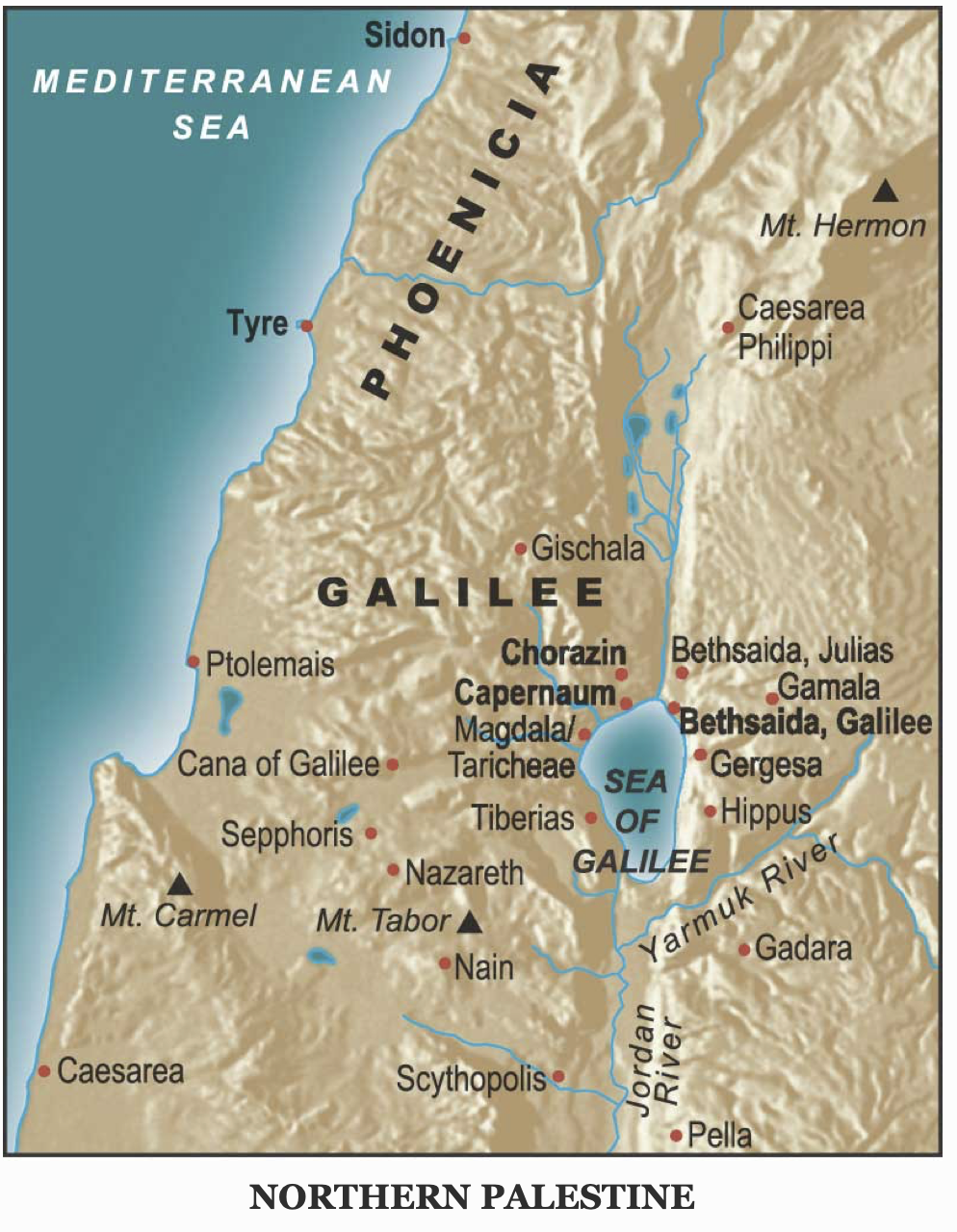
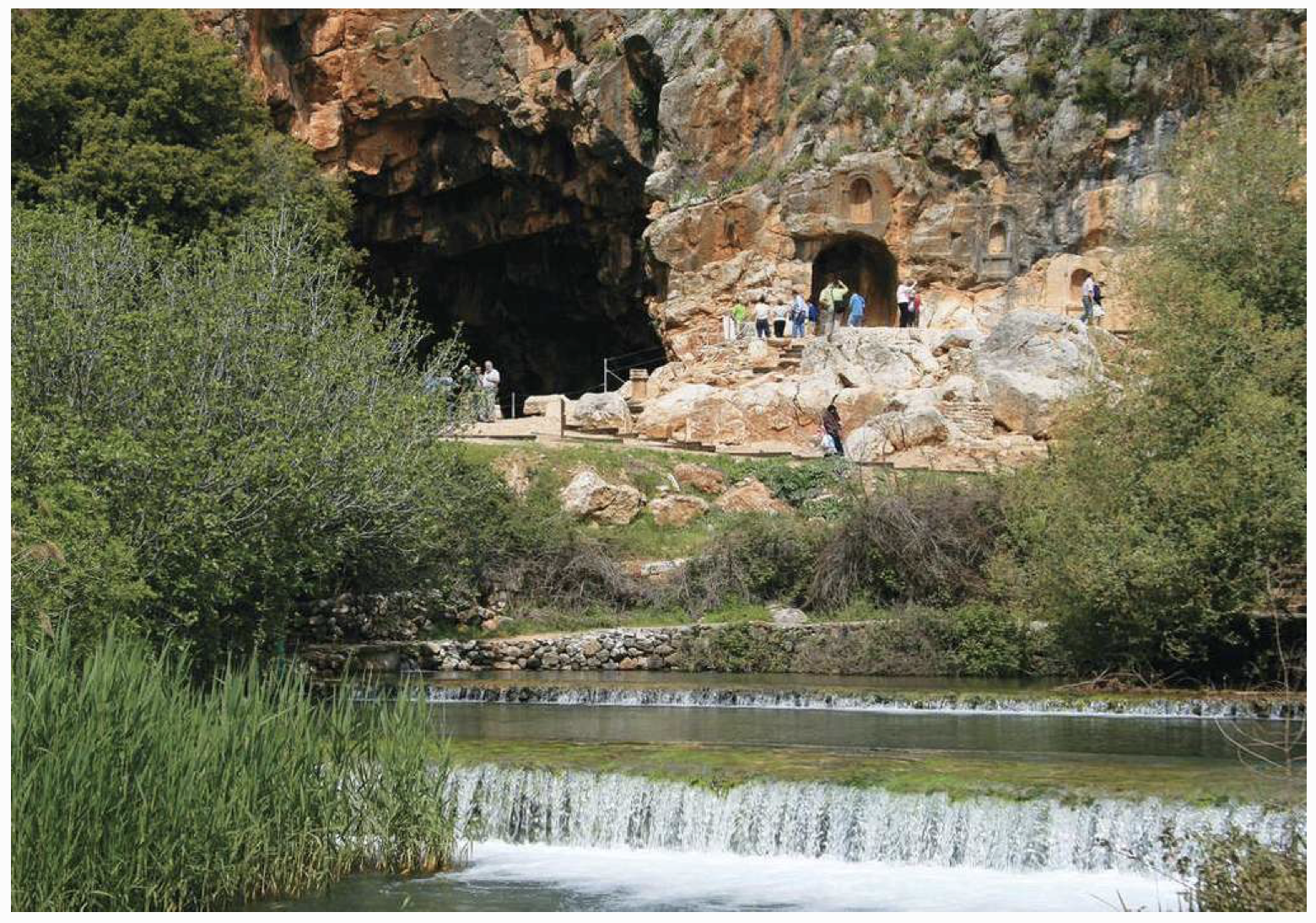
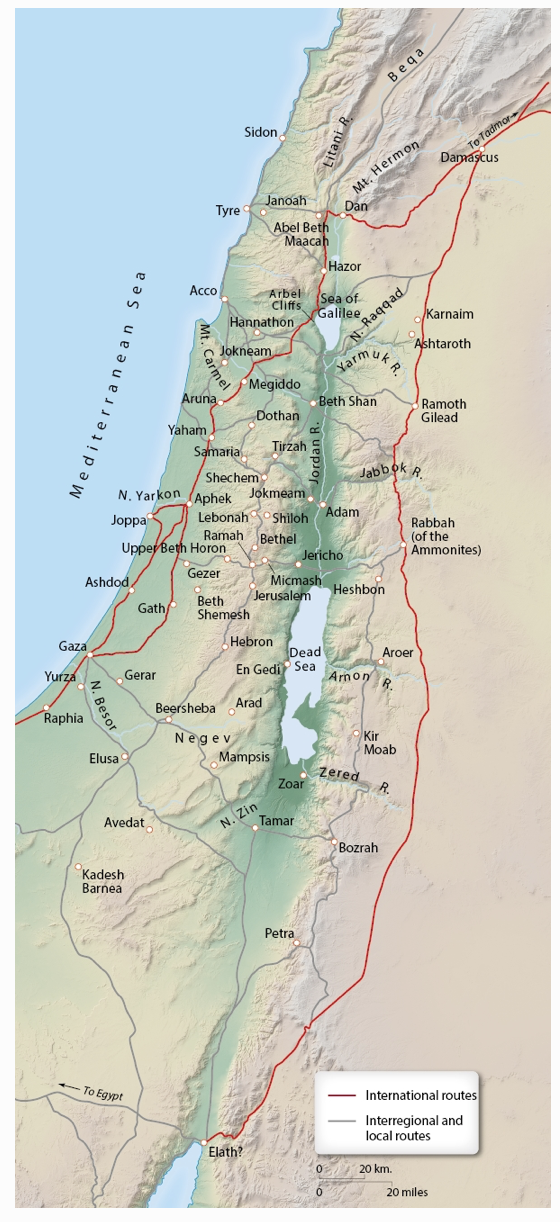
From Bethsaida-Julias, the Lord and His disciples headed towards the land of Caesarea Phillipi. This city (formerly known as Panis, located on the northern boundary of Naphtali tribe, at Jordan’s river-bed, at the foothill of the Mount Lebanon), was expanded and decorated by the Tetrarch Philip, and named Caesarea — in honor of the Roman Caesar (Tiberius). In the contrast to the other — Palestinian Caesarea, situated on the banks of the Inland Sea, this Caesarea was called Philippi.
While the Lord’s earthly life was coming to an end, the preachers of His Teaching, those chosen by Him, were not so well-prepared for their grand mission. Consequently, the Lord sought opportunities to be alone with them more frequently. In His conversations with them, He attempted to accustom them to the idea, that the Messiah is not an earthly king that will help the Jews to conquer all the nations of the world, but that the Messiah is the King, Whose Kingdom is not of this world, Who will suffer for the world, Who will be crucified and will then resurrect from the dead. And so it was during that long journey, being left alone with His Apostles and wishing to provoke the talk about Himself, the Lord said: “Who do men say that I, the Son of Man, am?” (Mat. 16:13; Mark 8:27 and Luke 9:18) The Apostles answered that the people had different opinions of Him: for example, the court of Herod- Antipas regarded Him as resurrected John the Baptist, while the people considered Him to be the one of the great Old Testament Prophets (Elijah or Jeremiah or some other one). There was a belief among the people that before the arrival of the Messiah, another prophet will precede Him, and not regarding Jesus as the Messiah, they supposed Him to be just the forerunner of the Messiah.
The Lord then poses a direct question to His disciples: “But who do you say that I am?” (Mat. 16:15; Mark 8:29; and Luke 9:20) Then the “always fervent Peter”, “the voice of the Apostles” — as Chrysostom called him, exclaimed: “You are the Christ, the Son of the living God” (Mat 16:16; Mark 8:29 and Luke 9:20). With those words, Evangelists Mark and Luke limit the narration of that episode, stating that the Lord commanded them not to tell anyone about this. However, Saint Matthew adds to this, that the Lord praised Peter, telling him: “Blessed are you, Simon Bar-Jonah, for flesh and blood had not revealed this to you, but My Father Who is in Heaven” (Mat. 16:17).
With those words, the Lord showed to Simon-Peter that he should not regard his faith as the result of his watchful mind, for it is the precious gift from God. “And I also say to you,
— adds the Lord in the sense that, well you told Me, now I am telling you: You are Peter, and on this rock I will build My Church, and the gates of hades shall not prevail against it” (Mat. 16:18). It was at the first meeting that the Lord named Simon as Peter in Greek, or Cephas in Syrian-Chaldean, meaning “a rock” (John 1:42). Then, He as if He was witnessing that Peter was justifying the name given to him, and that he by the firmness of his faith is truly a rock. However, can an assertion be made that through these words, the Lord promises to establish His Church on Peter’s personality — just like the Roman Catholics are doing, trying to justify their false teaching on the primacy of the Roman Pope, as the successor of Apostle Peter, over the whole Christian Church?
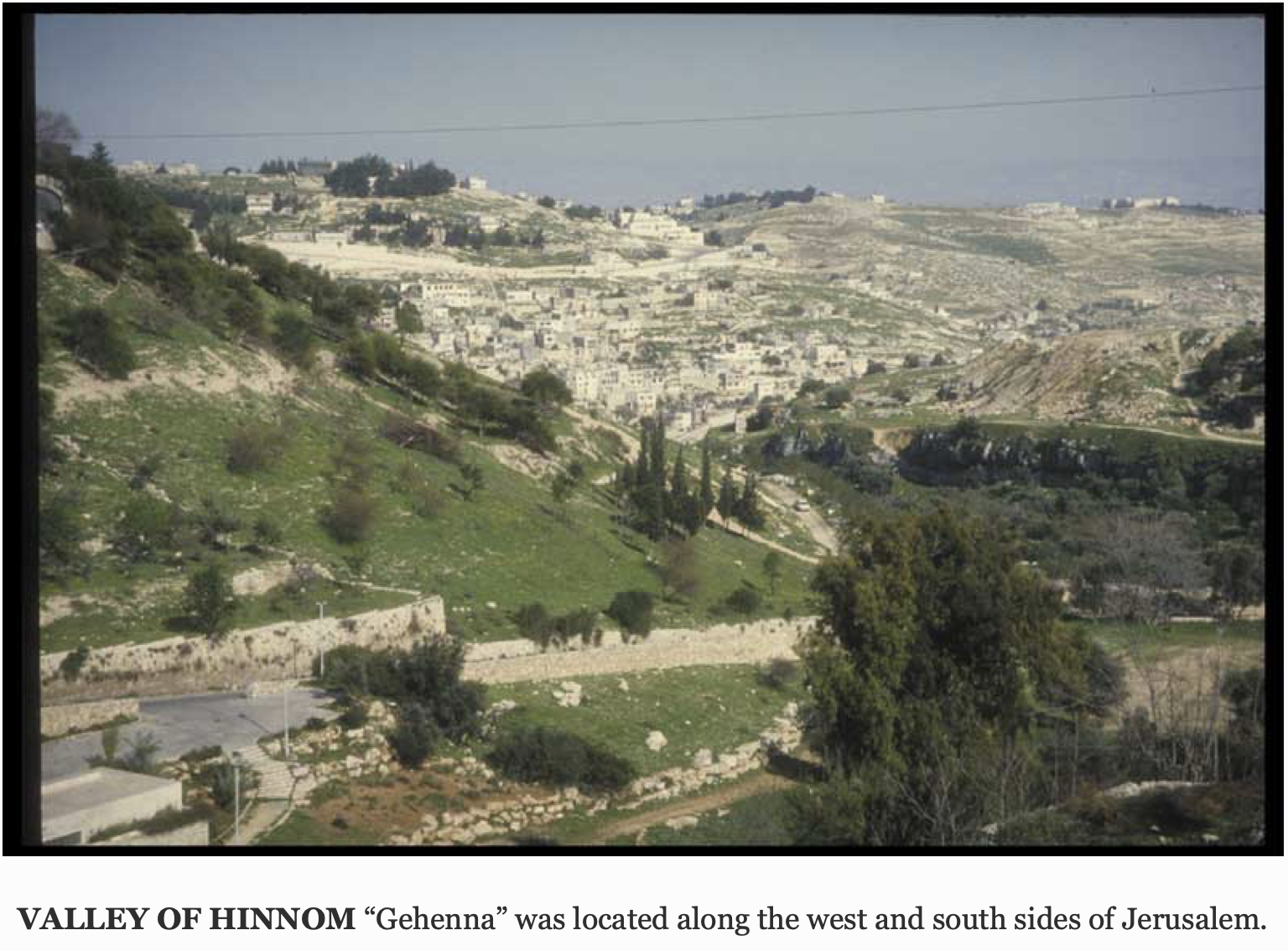
Certainly not! If the Lord had in mind Peter’s personality, He would have said something like this: “You are Peter, and I shall build My Church upon you!” However, what was said was totally different, which is especially evident in the Greek text of the Gospel, which it is necessary to consult in the cases of misunderstanding. The word Petros is not repeated there, although it too means a rock. What is used is the word petra, meaning a cliff. From this, it is clear that the Lord addressing Peter promises to establish His Church not on him but on that faith, which Peter displayed, i.e., on the great truth that “Christ is the Son of the Living God”. This is the way how Saint John Chrysostom and other great Fathers of the Church interpreted this extract. Under the word “rock” they understood the confession of faith in Jesus Christ as the Messiah, the Son of God, or even simply faith in Jesus Christ, Who is often mentioned in the Holy Scripture as a rock (e.g. Exodus 28:16; Genesis 4:11; Romans 9:33; 1 Cor. 10:4).
It is remarkable that Apostle Peter himself in his first Epistle calls Jesus Christ as the stone, but not himself. He encourages the faithful to approach the Lord “as to a living stone, rejected indeed by men, but chosen by God and precious” (1 Peter 2:4), and themselves would “be as living stones” (1 Peter 2:5), being a part of the spiritual dwelling. Apparently, Peter is teaching the faithful to walk on the same path as he had done, having become “Petros” after confessing his faith in Christ the Rock.
Thus, the meaning of this profound and wonderful statement of Christ is in the following: “Blessed are you Simon, the son of Jonah, because you comprehended this not through the human means, but through My Heavenly Father’s revelation; and I shall tell you that it was not by chance that I named you Peter, having affirmed Myself on what you have confessed as on a rock; you will truly remain the rock and My Church will be erected indestructible; no hostile forces of hell will be able to conquer It”.
The expression “the gates of hell” was characteristic of the eastern customs of those times: because of the possibility of attacks, the gates of a city or a fortress were always especially reinforced, and there the people in authority gathered for various deliberations, trials and punishment of the guilty individuals, as well as for other societal matters.
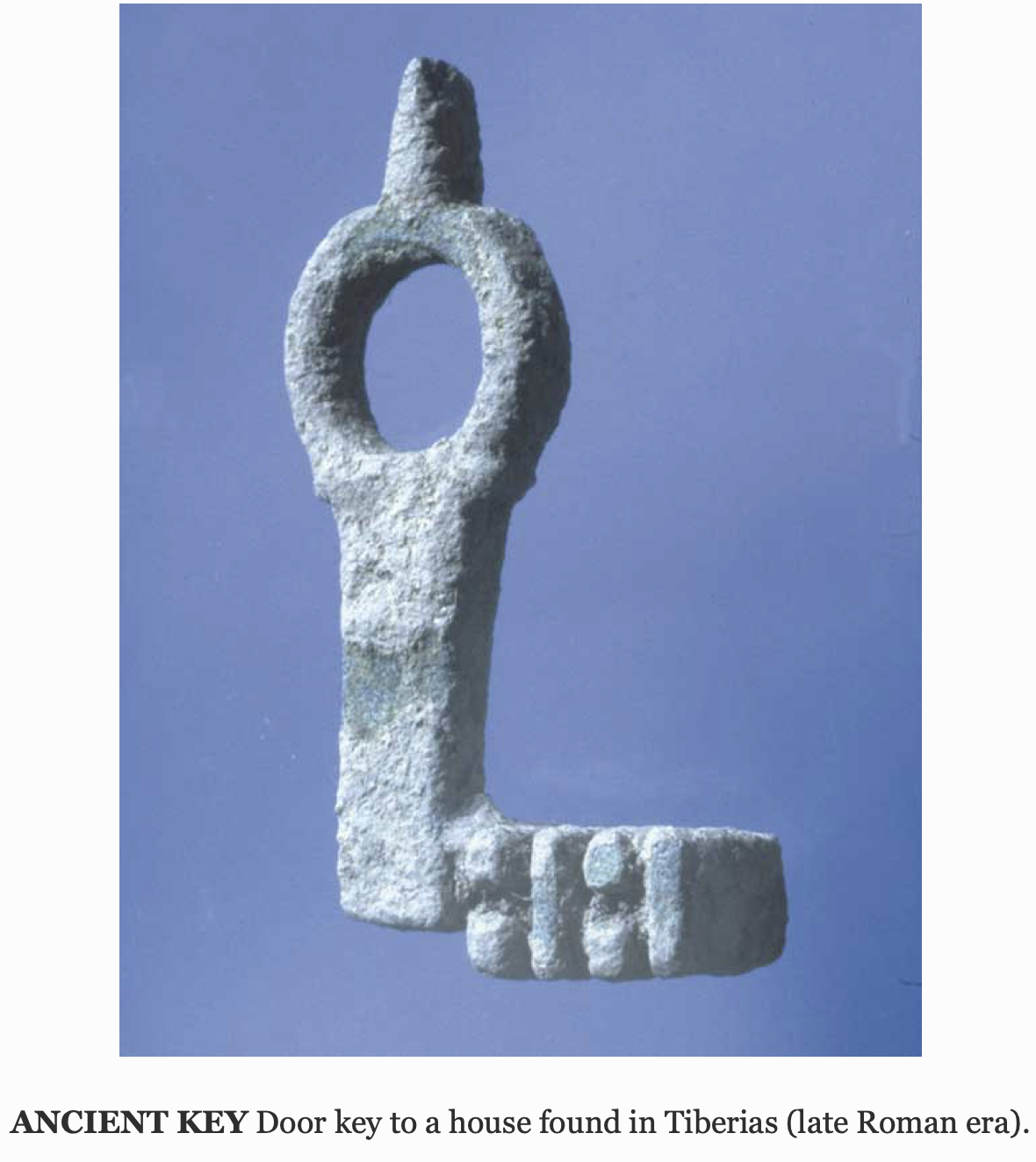
Apparently, the further promise was given to Peter alone: “And I will give you the keys of the Kingdom of Heaven, and whatever you bind on earth will be bound in Heaven, and whatever you loose on earth will be loosed in Heaven” (Mat. 16:19).
The same promise was later given to all the Apostles and is the part of the authority of the Apostles and their successors — bishops: to judge and punish sinners, up to their excommunication from the Church. The power to loose means the authority to forgive sins, accepting people into the Church through confession and baptism. After the Lord’s Resurrection, this grace was granted by Him to all the Apostles equally: “So Jesus said to them again, ‘Peace to you! As the Father has sent Me, I also send you.’ And when He said this, He breathed on them, and said to them, ‘Receive the Holy Spirit. If you forgive the sins of any, they are forgiven them; if you retain the sins of any, they are retained’” (John 20:21- 23).
The Lord prohibited His disciples to speak of Him as of Christ, so as not to inflame passions among the people, as they had the false understanding of the Messiah.
The Beheading of John the Forerunner. (Mat. 141-12; Mark 6:14-29; Luke
9:7-9).
The Beheading of John the Forerunner. (Mat. 141-12; Mark 6:14-29; Luke 9:7-9).
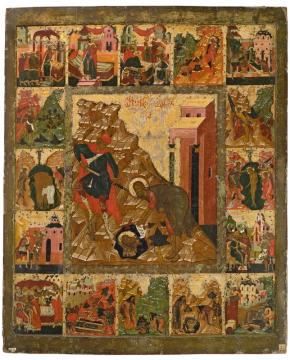
The Evangelists describe this event in connection with the idea that the tetrarch Herod-Antipas had mistakenly thought that Jesus Christ was John the Baptist, risen from the dead . Although Saint Luke does not fully narrate about that, he does explain in brief that that thought did not originate from Herod, but that he realised it later, from overheard conversations with people surrounding him.
While the Jews were not accustomed to celebrating birthdays, Herod once on his birthday, in imitating the eastern kings, held a huge feast for the lords, military commanders and Galilean elders. According to the eastern custom, women were not permitted to be present at those feasts, except for slaves that danced before the men. Though Salome, the worthy daughter of her depraved mother Herodias, who cohabited illegally with Herod, ignoring that custom, appeared at the feast as a dancer in the skimpy costume of a dancer and aroused Herod with her sensuous dance to such an extent, that he promised to fulfill everything she desired. Salome left the hall to consult with her mother, not present at the feast, who unhesitatingly stated that the best present she could get was the death of the hated John the Baptist — the accuser of her offensive connection with Herod. She demanded: “The head of John the Baptist”. However, on the one hand Herod was afraid of the people and on the other, he respected the Baptist as “a just and holy man” and even “when he heard him, he did many things, and heard him gladly” (Mark 6:20); consequently, fearing that the promise would not be fulfilled, Herodias suggested her daughter to demand the immediate execution. “Give me John the Baptist’s head here on a platter” (Mat. 14:8), — Salome demanded from Herod. “The king was sorry; nevertheless, because of the oaths and because of those who sat with him, he commanded it be given to her” (Mark 6:26, Mat. 14:9). It meant, Herod did not want to execute John, but his pride and false shame did not allow him to violate his vow, so he sent his executioner to cut off the Prophet’s head and bring it to the feast on a silver platter. It must be assumed that the feast did not take place at Tiberias, Herod’s usual place of residence, but in his beyond-the-Jordan residence in Julias, which was not far from the fortress at Machaerus where John was confined; or perhaps the feast was held at the fortress itself.

The tradition states that Herodias taunted the Baptist’s head for a long time: she was piercing his tongue with a needle for accusing her of wantonness and ordered his body to be thrown into the gully that surrounded Machaerus. John’s disciples picked up his beheaded body and as St. Mark states, placed it in the coffin, in a cave. According to the tradition, that cave, situated near the township of Sebaste, built on the place of former Samaria contained the remnants of Prophets Obadiah and Elisha. This sad event of John the Baptist’s beheading is celebrated each year by the holy Church on the 29th Aug., having settled at this day the strict fast. Herod received the punishment his action deserved: he met with total defeat at the war, and, traveling to Rome, he was deprived of all his privileges and estates, and together with unrighteous Herodias was imprisoned at Gaul, where he finally died. Whereas Salome, in traveling on a frozen lake, fell through the cracked ice and was decapitated by it.
Having buried their teacher, John’s disciples told the Lord Jesus Christ about what had happened, apparently seeking soothing, and at the same time wanting to warn Him of the possible danger, for exactly at that time He was preaching in the area that was under Herod’s control. Evangelist Mark tells us that by that time the Apostles had gathered at the Lord’s side, telling him about everything that they managed to do.
Having learned of the Baptist’s violent death, the Lord withdrew into the wilderness. Evidently, at that time, He was somewhere close to the Gennesaret lake because He “departed from there by boat” (Mat. 14:13). That secluded, i.e., sparsely populated area (according to Saint Luke), was situated close to the town of Bethsaida. Saint Luke also adds that Herod, under the influence of rumors and comments, thought that Jesus Christ was John the Baptist resurrected from the dead — and “sought to see Him” (Luke 9:9).
The Healing of a Canaanite Woman’s daughter. (Mat. 15:21-28; Mark 7:24-30).
The Healing of the Speech-Impeded Deaf Person. (Mat 15:29-31; Mark 7:31-37).
The Healing of a Canaanite Woman’s daughter. (Mat. 15:21-28; Mark 7:24-30).
Leaving Galilee, the Lord departed to “the region of Tyre and Sidon” (Mat. 15:21; Mark 7:24), i.e., to the heathen land of Phoenicia, to the northwest of Galilee, and their major towns of Tyre and Sidon. From the words of Saint Mark “and wanted no one to know it” (Mark 7:24), it can be assumed that the Lord’s aim of departing into the midst of other tribe’s population of different faith was to be alone for a while; to rest from the ubiquitous crowds following Him constantly in Galilee, and perhaps from the implacable hatred of the Pharisees. “But He could not be hidden” (Mark 7:24), because the woman, who Saint Matthew calls a Canaanite, while Saint Mark — a Syrian-Phoenician, heard about Him. According to Saint Mark’s words, an evil spirit possessed this heathen woman’s daughter and she began asking Him to cast the demon out of her daughter. Aware from the Jews of the coming Messiah, she called Him “Son of David” (Mat. 15:22), thereby professing her faith in His Messianic worthiness. Testing her faith, the Lord “answered her not a word” (Mat. 15:23), so that even the disciples began to ask on her behalf. Jesus replied: “I was not sent except to the lost sheep of the house of Israel” (Mat. 15:24); after all, the Jews were God’s chosen people and it was to them that God’s Redeemer was promised, and to nobody else, and it was to them specifically, that He had to come in the first instance; to save them and perform miracles among them.
Wishing to discover the full measure of the woman’s faith in front of His Apostles, and to edify them, perhaps the Lord adapted His words in such a manner as to reflect the Jews’ idea of the heathens. Gradually getting closer to Jesus, the woman finally, on the words of Saint Mark, fell at His feet, pleading for her daughter to be healed. Although knowing her faith, but continuing to test her, the Lord refuses the woman with the words that might have seemed cruel, if they were not said by the Lord, filled with love for the suffering humanity. “It is not good to take the children’s bread and throw it to the little dogs” (Mat. 15:26; Mark 7:27). The meaning of these words is that the Lord did not withdraw from the chosen people, so as to take away His grace-giving miraculous power and dissipate it in the land of the heathens. Of course, those words were uttered so as to reveal before everyone the power of that woman’s faith, and also to show that even the heathens, when they believe, are worthy of God’s mercy — contrary to the contempt that the Jews nurtured towards them. Through her response to the Lord, the woman truly displayed the full stature of her faith, together with the extraordinarily depth of humility, by accepting the offensive name of a dog, being a heathen: “Yes Lord, yet even little dogs eat the crumbs which fall from their masters table” (Mat. 15:27; Mark 7:28). Such great faith and deep humility were rewarded immediately: “O woman” — said the Lord — “great is your faith! Let it be to you as you desire” (Mat. 15:28; Mark 7:29). And at that moment, the daughter of the Canaan woman was healed. This miracle is noteworthy in that it was performed at a distance from the ill person, just as the healing of the Centurion’s servant at Capernaum (Mat. 8:13), also the same heathen, whose faith also earned God’s praise.
The Healing of the Speech-Impeded Deaf Person. (Mat 15:29-31; Mark 7:31-37).
The Lord came through the borders of the Decapolis from Phoenicia to the Lake of Galilee. This land represented a union of ten cities, which, with the exception of the city Scythopolis, was situated to the east of the lake of Galilee; from the time of the Assyrian captivity of Jews, the land was populated essentially by the heathens. On the way, the Lord healed a speech- impeded deaf individual, that is narrated only by Evangelist Mark. Usually, the Lord healed only with His word. However, this time He took the afflicted person aside — apparently to evade idle curiosity of the semi-heathen crowd — inserted His fingers into the ailing person’s ears, and having spat, touched his tongue: apparently all that was done to arouse faith in the sick person — an essential prerequisite for healing — for he was deaf, and it was impossible to communicate with him. Looking up to heaven He sighed in prayer, so as to make clear to the surrounding people that He is healing through the Divine — and certainly not through demon’s power, as the Pharisees said of Him in the slanderous rumors. Having pronounced authoritatively “Ephphatha” (Mark 7:34), what means “open” in Syrian, the Lord healed him. As usual, He commanded the surrounding eyewitnesses not to tell anyone, in order perhaps not to excite the people and thereby not to arm the Pharisees further against Himself. But no matter how much He prohibited that, the more those who had witnessed the miracle told and repeated about what they had seen.
According to Saint Matthew, having passed through Decapolis, the Lord arrived at the Lake of Galilee, more than likely, from the east or the northeast. Here, as usual, masses of people awaited and followed Him, and wherever He stayed, there was an instant congregation of people. They brought to Him the lame, blind, mute, maimed and those suffering with different types of illnesses. Their faith in Christ’s miraculous power was so great that they did not ask Him for anything, but just silently placed the ill at His feet, “and He healed them” (Mat. 15:30). Seeing those miracles, the people “glorified the God of Israel” (Mat. 15:31), regarding Him, like the chosen people, as their own God.
The Healing of the Possessed Adolescent. (Mat. 17:14-23; Mark 9:14-32 and
Luke 9:37-45).
This healing is narrated by all the three synoptic Gospels, indicating that it was performed by the Lord, directly after He came down from the mountain of Transfiguration. During that time, many people gathered around Christ’s disciples, waiting for Him at the foot of the mountain. According to Saint Mark, the disciples were arguing with the Scribes. The same Evangelist testifies that seeing Christ descending from the mountain, “all the people were greatly amazed”. Apparently, this was because His face and His whole appearance retained some of the glow of that glory, in which the Lord glistened at Tabor. A man came to the Lord with an appeal to cure his son who, with every new moon frenzied and suffered greatly by throwing himself first into the fire, then water. With that, he added that he had already brought him to His disciples, but they were not able to cure him. Hearing about His disciples’ failure to heal, even though He gave them the power over the evil spirits, the Lord exclaimed: “O faithless generation (not having faith), how long shall I be with you? How long shall I bear with you?”
Some interpreters assign the Lord’s reproach to His disciples, because they were unable to cure the possessed because of their lack of faith, while the others — to all the Jewish people. Saint Matthew then narrates that the Lord directed the youth be brought to Him, and “rebuked the demon, and it came out of him”. Evangelists Mark and Luke bring up some additional detail. When the youth was brought before the Lord, he went into a frightening fit of frenzy. To the Lord’s question, how long the youth had been that way, the father replied that since infancy, adding: “But if you can do anything, have compassion on us and help us”. To that, the Lord said: “If you can believe, all things are possible to him who believes”. Shedding tears, the father of the unfortunate youth cried out: “Lord, I believe; help my unbelief!”, i.e., he humbly acknowledged that his faith was not complete, insufficient. Such humble confession was rewarded: the youth was released from the demon.
When the disciples inquired as to why they could not cast the demon out, the Lord replied: “Because of your unbelief”. Perhaps learning from the father about the strength of the demon, the length of his presence and the tenacity of possession, that time they doubted that they could cast him out, and therefore failed to do so, just as Peter, having commenced walking on the water towards the Lord, and then seeing the strong wind and waves, began to have doubts in his ability to reach the Lord and started to sink. With that, the Lord added: “If you have faith as a mustard seed, you will say to this mountain, ‘Move from here to there,’ and it will move; and nothing will be impossible for you”, i.e., even the smallest faith, if only it exists, is already capable to perform great miracles, because it contains the great power — similar to that hidden in a mustard seed nondescript in appearance, yet eventually growing into a huge tree. However, one should not think that faith has its own power: it is but an essential condition, with which God’s almighty power works. Faith is like the conductor of His almighty power. Naturally, God can perform miracles even with insufficient faith, like He cured the possessed youth, notwithstanding his father’s little faith. “All things are possible to him who believes” means, that the Lord is ready to do anything for a person, having his faith as the condition. Faith is like the receiver or bearer of God’s grace, which works wonders.
In conclusion, the Lord said: “However, this kind (i.e., demonic) does not go out except by prayer and fasting.” This is because there is no genuine faith without the exploits of prayer and fasting. Genuine faith begets prayers and fasting, which in their turn further assist in strengthening it more. That is why the Orthodox Church chants praise prayer and fasting are the double-edged weapons against demons and passions. “Demons can sense a person that fasts and prays from afar,” — says Saint Theophan, the Recluse of Vyshensk, — “and flee from him so as not to receive a painful blow. Can it be surmised that where there is no fasting and prayer, there are demons? — Yes, it can be”.
During that stay in Galilee with His disciples, the Lord once more “taught His disciples and said to them, ‘The Son of Man is being betrayed into the hands of men, and they will kill Him. And after He is killed, He will rise the third day.’ But they did not understand this saying, and were afraid to ask Him” (Mark 9:31-32). The Lord saw that it was especially at that time, that His disciples needed to know about the closeness of His sufferings, death and resurrection. Consequently, in order to prepare them for this, He reiterates that to them to fix it in their memory more firmly. However, they, who not yet renounced the usual Jewish ideas of the Messiah, found all that incomprehensible.
The Lord Foretells His Death and Resurrection. (Mat. 16:21-28; Mark 8:31-38
and 9:1; Luke 9:22-27).
The Lord summons the disciples for professing Him as the Messiah and the Son of God, and notifies them of the sufferings awaiting Him in Jerusalem in order to prepare them for the thought about the earthly fate of the Messiah, and also to refute the Jews’ sensual ideas of the Messiah and to consecrate them into the great Mystery of His redeeming exploit. Although already deeply devoted to the Lord, but still not free from the Jews’ ideas of the Messiah as of the earthly king, ardent and decisive Peter could not tolerate such a revelation of his deeply beloved Teacher, but, not wishing to disagree with Him in front of everyone, Peter takes Him aside saying: “Far be it from You, Lord; this shall not happen to You!” (Mat. 16:22). These words express the thought that suffering and death are incompatible with the worthiness of Jesus Christ as the Messiah, as the Son of God. The Lord responds to this with indignation: “Get behind Me, satan!” (Mat. 16:23; Mark 8:33). He clearly felt that it was not Peter that was saying that to Him — attempting to turn Him aside from the forthcoming sufferings — but the seducer-satan himself, taking advantage of Peter’s pure feelings, wanted Christ’s human nature to hesitate before His exploit of redeeming mankind. The remarkable thing is that the Lord, having just recently named Peter “a rock” suddenly calls him “satan”; this disproves the false Roman-catholic teaching that Christ’s Church was built upon Peter’s human personality. Can the foundation of Christ’s Church, when “the gates of hades shall not prevail against it”, be so mutable, inconstant and unreliable? And if we are to take all of Christ’s words literally, we would be obliged to come to the completely absurd, yet strictly logical, from the catholic point of view, conclusion that the Church is established on satan!
The Lord further says: “You are an offence to Me!” (Mat. 16:23). Here, the Lord means that Peter, “in opposing Him and in wishing that the aim for which the Lord came and which has the eternal pre-destination of God not to happen, he becomes an obstacle” (Evph. Zigaben). And the Lord adds: “You are not mindful of the things of God, but the things of men.” (Mat. 16:23; Mark 8:33). In other words, the Lord wants to say that Peter is not thinking of what is pleasing God, and what He had predetermined concerning the sufferings and death of the Messiah but about what is advantageous to the Jews: treating the Messiah as an ordinary person — although the powerful king-conqueror. It is natural for a person to preserve his life, avoid sufferings and strive for contentment and earthly pleasures and delights. But this is the path upon which the devil tries to attract people, wishing their destruction. This is not Christ’s path and that of His genuine followers. “If anyone desires to come after Me (be a faithful follower), let him deny himself (deny yourself, reject your natural will and inclinations), and take up his cross (condition yourself in such a way, in order be ready for any deprivations and sufferings, including death, for the sake of Christ), and follow Me (imitate Christ in His exploit of self-renouncement and self-denial). “For whoever desires to save his life will lose it (in the sense of earthly blessings), but whoever loses his life for My sake (who will not spare himself for Christ) will find it (will save his soul for eternal life). For what profit is it to a man if he gains the whole world (will attain all the world’s honors and pleasures, acquire all its impermanent treasures for his personal use) and loses his own soul? Or what will a man give in exchange for his soul?” (Mat. 16:24-26; Mark 8:34-37 and Luke 9:23-25). The human soul is more precious than all the treasures of the world, and the ruined soul it would not be possible to save with anything, with none of the earthly treasures.
The Lord couples the thought about the eternal destruction of the people that maintain themselves for this world only, with the thought of His Second and Dread Coming, when each one will get rewards “according to his works” (Mat. 16:27). This is the important thought, as it refutes the Protestant and sectarian assertions that good deeds are not important in order to be saved. Evangelists Mark and Luke similarly report of the other important words of the Lord: “For whoever is ashamed of Me and My words in this adulterous and sinful generation (he who is ashamed to be in the number of the followers of Christ, particularly to fulfill the commandment of carrying his cross), of him the Son of Man also will be ashamed (will refuse to recognize him as His follower) when He comes in the glory of His Father with the holy Angels (on the Judgment Day)” (Mark 8:38; Luke 9:26).
The Lord concluded this conversation with the following significant words: “Assuredly I say to you, there are some standing here who shall not taste death till they see the Son of Man coming in His glory” (Mat. 16:28; Luke 9:27). Those words gave (and are still giving) cause for some people to conclude about the nearness of the Second Coming of Christ — tempting them to think that the prophecy was not fulfilled. However, the other two Evangelists — Saints Mark and Luke — define this, making it possible to understand the Lord’s words correctly. Saint Luke conveys it so: “But I tell you truly, there are some standing here who shall not taste death till they see the Kingdom of God” (Luke 9:27). Saint Mark adds to that: “They will see the Kingdom of God present with power” (Mark 9:1). From these words, it can be seen clearly that the conversation is not of the Lord’s Second Coming, but of the revelation of God’s Kingdom, i.e., about its blessed power on earth among the faithful — about establishing Christ’s Church. So “the Kingdom of God present with power” is Christ’s Church, established by the Lord, which dissemination across the face of the whole world many of His disciples and contemporaries were worthy to see.
The Lord’s Walk on the Water. (Mat. 14:22-36; Mark 6:45-52; John 6:16-21).
The Talk about the Heavenly Bread. (John 6:22-71).
The Lord’s Walk on the Water. (Mat. 14:22-36; Mark 6:45-52; John 6:16-21).
Compelled by the Lord to go to the western bank of the Gennesaret Lake, the Apostles got into the boat and sailed off. The darkness descended and “the sea arose because a great wind was blowing” (John 6:18), “the boat was now in the middle of the sea (i.e., lake), tossed by the waves” (Mat. 14:24), and the Lord was not with them; He remained alone on land, but “saw them straining at the rowing” (Mark 6:48). “They had rowed about three or four miles” (John 6:19) away from the eastern bank. It was the fourth watch of the night, i.e., close to the sunrise, and suddenly the Apostles saw Jesus walking on the water towards them “and would have passed them by” (Mark 6:48). They thought it was a spirit and cried out in fear. But the Lord calmed them with the words: “Be of good cheer! It is I; do not be afraid” (Mat. 14:27; Mark 6:50; John 6:20).
Possessing a fiery temperament, Apostle Peter became inflamed with the desire to greet the Lord by walking towards Him, and asked permission to do so — to which the Lord replied: “Come” (Mat. 14:29). Peter stepped out of the boat, and the power of his faith made a miracle — he walked on the water. However, the strong wind and turbulent waves distracted Peter’s attention from Jesus: the fear that seized him weakened his faith, and he started to sink, crying out in despair: “Lord, save me!” (Mat. 14:30). The Lord immediately stretched forth His hand to support him and said: “O you of little faith, why did you doubt?” (Mat. 14:31). As soon as “they got into the boat, the wind ceased” (Mat. 14:32), “and immediately the boat was at the land where they were going” (John 6:21). Then, everybody who was in the boat came up to Jesus and exclaimed: “Truly you are the Son of God” (Mat. 14:33).
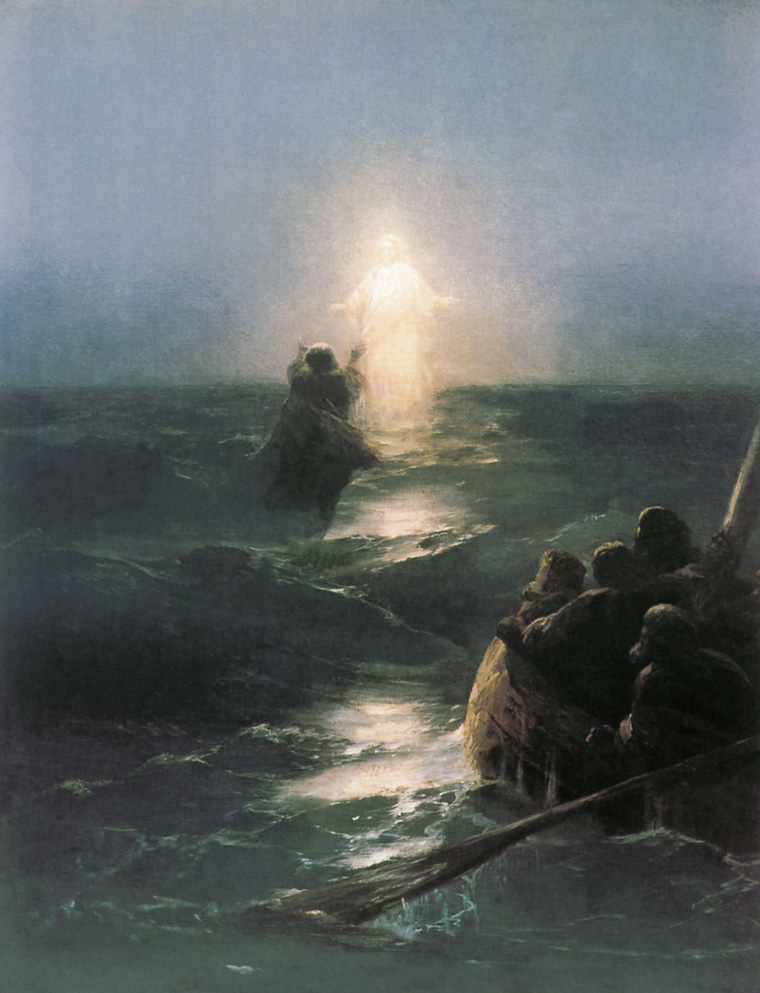
As soon as the Lord landed, the local inhabitants immediately surrounded Him: they recognized Him and informed all the people in the neighboring settlements, who brought Him all their sick. The faith in the miraculous power that emanated from the Lord was so strong, that the local residents, in receiving permission from the Lord to touch His clothing instantly got cured.
The Talk about the Heavenly Bread. (John 6:22-71).
The Lord’s miraculous crossing of the Gennesaret Lake, provoked amazement among the people, who already tried the miraculous bread. This event is narrated by Evangelist John alone, who also conveys the Lord’s sermon about Himself as about the bread that had descended from heaven, revealing the necessity to have communion of His Flesh and Blood in order to be saved.
Knowing that the Lord did not enter the boat with His disciples, the people sought Him in the wilderness. Having found Him on the other side of the lake, teaching in a synagogue at Capernaum, they were astounded and began to question Him about how He got there. The Lord did not respond the question; He used it as a reason to give the detailed sermon about Himself, as about the Heavenly Bread. He began the talk with reproaching the Jews for the fact that they remain slaves to their sensations in everything — even in following Him. “You seek Me, not because you saw the signs, but because you ate of loaves and were filled”; i.e., not because they were enlightened through the miracles by God’s goodness, which offers eternal and incorrupt blessings, but because through the miracle, made the day before, their hunger was satiated — just as the other miracles stopped the other physical sufferings; but nobody was concerned about the satisfaction of the needs of the spirit, for which, after all, Christ came down to earth. “I am the Bread of life, he who comes to Me shall never hunger, and he who believes in Me shall never thirst,” — this reproach of the Lord was directed at those who treat the Christianity valuable only because it is beneficial for establishing the welfares of our temporary earthly life. “Do not labor for the food which perishes” together with the body, “but for the food which endures to everlasting life,” i.e., about that, which remains forever and serves the eternal life. This food “the Son of Man will give you” — says the Lord — “because God the Father has set His seal on Him”. Under the word “seal” must be understood those signs and miracles, which the Lord performed on God’s will. Excited by the reproach, the Jews asked Him: “What shall we do, that we may work the works of God?” They understood that His words contained the demand for moral actions on their part, but they did not understand which ones exactly. To that, instead of pointing at many deeds of pleasing God according to the Law of Moses, the Lord points at just one: “This is the work of God, that you believe in Him Whom He sent”. This is the main work that is pleasing to God, without which there is no life that is God- pleasing in general, for in it, like in a seed, are contained all the works that are pleasant to God. Comprehending that Jesus is calling Himself “the Messenger of God”, the Jews reply that they do not have such faith in Him, as the Israelites had in God and Moses, His prophet, because the signs that He was performing were not enough.

Here is the proof of how unstable the faith is, when it is based on miracles alone: it demands greater and greater miracles. And the Jews are no more satisfied that Christ had fed 5000 people with 5 loaves, and start demanding a greater miracle, something like the miraculous manna from Heaven that was sent to them during their forty-year wandering period in the wilderness. The Lord responds to that saying that the miracle performed by God through Moses is less important than that which He performed through Messiah-Jesus, giving them not the visual manna but “the true bread from Heaven”. This bread “gives life to the world”. However, the Jews understand that like the sensual, physical bread, although somewhat special — and they express their desire to always receive that type of bread. This response reflects their extremely physical inclination of their thoughts and ideas of the Messiah — as being a wonder- worker and nothing more. Then the Lord directly and decisively reveals the teaching about Himself as about the “bread of life”, saying that He is that bread, which “comes down from Heaven and gives life to the world”; that the one who comes to Him will have no hunger, and the one who believes in Him will never thirst again. The Lord notes with sorrow that, although the Jews do not believe in Him, that will not interfere with the realization of the Heavenly Father’s will. Everybody seeking salvation through the Lord, “who come to Him”, will become the inheritors of the Messiah’s kingdom established by Him, and they will be resurrected by Him on the last day and become worthy of the eternal life. Nonetheless, the Jews are bewildered and with complaints start to discuss among themselves how Jesus could say that He had descended from Heaven when everybody knows His earthly origin. The Lord explains their complaints by saying that they are not among those elected by God, whom God the Father attracts to Him through the power of His grace. Without such a blissful call, it is not possible to start believing in the Messiah — His Son, sent to the earth by Him to save the people. However, this thought does not destroy the concept of the man’s free will.
As blessed Theothylactus wrote: “God the Father attracts those who have the capability, with their consent; but those, who have made themselves incapable, He does not attract to faith. Just as a magnet does not attract all that it comes into the contact with, but only iron, so does God, coming close to everyone, attracts only those who are capable of revealing some resemblance to Him”. It is as though the Lord is saying: “Do not complain about Me, but about yourselves, for not having the ability to believe in Me as in the Messiah.”
All the Old Testament books testify to the coming of Christ, and those who consciously study them, cannot but be taught by God, and accept the Messiah- Christ sent by Him. The teaching given by God is not like looking at God, for God the Father is only seen by the One, Who is from Him, i.e., Messiah-Christ. A person studies as though directly from God Himself when he studies the Scripture attentively and with faith, for the main theme of the Scripture is Christ. “I am the Bread of life”, says the Lord of Himself: not lifeless as the manna was, but the bread that is alive. The manna fed only the body, and that was why those who ate it died anyway; the real Bread, that comes down from heaven is such, that all who eat it will not die but receive the eternal life. And this Bread is the very Lord Jesus Christ. Following this, the Lord says more clearly and definitively: this Bread that has come down from heaven is His Flesh, Which He gives for the life of the world; here He is talking about His forthcoming death on the cross at Golgotha for the redeeming of humanity from its sins. In connection with the approaching feast of Pascha with Himself, the Lord teaches about Himself, as about the true Paschal Lamb that accepts the sins of the whole world upon Himself.
The paschal lamb was only a symbol of Lamb-Christ, — through which the Lord wanted to show His listeners that the time of the symbolism had passed, because the Very Truth had arrived in His person: the partaking of the paschal lamb will be replaced in the New Testament by the partaking of the Body of Christ, brought as a sacrifice for the sins of the whole world. The Jews, having accepted the words of the Lord literally, became confounded and started arguing among themselves over those words: “How can this Man give us His flesh to eat?” They indeed understood those words literally and not figuratively, just as the contemporary sectarians who reject the Mystery of the Holy Communion, which grants the blissful unity with Christ, want to treat them. In order to stop their argument, the Lord decisively and categorically repeats: “Most assuredly, I say to you, unless you eat the Flesh of the Son of Man and drink His Blood, you have no life in you. Whoever eats My Flesh and drinks My Blood has eternal life, and I will raise him up at the last day”. Here, the Lord reveals in all its fullness and clarity, His teaching on the necessity of Communion of His Flesh and Blood, in order to have the eternal salvation. With their fleeing from Egypt, the Jews smeared the door jambs and the entrances of their dwellings with the blood of sacrificial lambs, in order to save their new-born from the hands of the Angel-slayers (Exodus 12:7-13). With the killing of the paschal lamb at the temple, its blood was used to smear the entrance to the altar, reminding the doorjambs and entrances of the Jewish dwellings. On the paschal supper, the blood was symbolically replaced with wine. Because the paschal lamb was a symbol of Christ, just as the liberation of the Jews from the Egyptian captivity served as a symbol of the world’s redemption, then in the words of Christ that in order to have eternal life it is essential to “eat the flesh of the Son of Man and drink His blood”, one should see as the replacement of the Old Testament lamb with Christ’s Body, and the symbolic wine — with His Blood. This is the New Pascha, which is prophetically depicted by the Lord in His sermon.
The meaning of Christ’s words is consequently in the fact that the one, who wants to understand the atonement performed by Christ through His death on the cross, must eat His Flesh and drink His Blood. Otherwise, he will not become a participant of this atonement, will not have within himself eternal life, i.e., will remain alienated from God, which is, actually, eternal death. By the Lord’s own words, His Flesh and Blood are food indeed and drink indeed, for only they report to a person eternal life. This occurs because they give the partaker the closest internal communion with Christ, mysterious joining with Him (56). In such a way, through this Mystery, the man that had fallen into sin, is grafted a new life. Just like a gardener grafts a piece of cutting from one tree to another in order to make it fruit - bearing, so does Christ, wishing to make us the participants in the Divine life — He Himself physically enters into our body, desecrated by sin, and gives the start for the internal transformation and sanctification, making us a new creation.
In order to be saved it is not sufficient just to believe in Christ. It is necessary to fuse with Him, abide in Him so that He too may abide in us, and this is achieved only through the means of the Holy Communion of His Body and Blood. However, these words of the Lord were so unusual for the Jews that at that time not only His enemies but some of His disciples were tempted, saying: “This is a hard saying; who can understand it?” Having read their thoughts and feelings, the Lord replied: “Does this offend you? What then if you should see the Son of Man ascend where He was before?” Here, the Lord means how they would be tempted, seeing Him crucified! Further on, the Lord explains how to understand His words properly: “It is the Spirit Who gives life; the flesh profits nothing. The words that I speak to you are spirit, and they are life”. So, Christ’s words need to be understood in the spiritual sense and not sensually or roughly, as though He is offering His Flesh, like the meat of an animal, to satisfy bodily hunger.
It is as though the Lord is saying that His teaching is not about the meat or food, which nourishes the physical life, but about the Divine Spirit, the grace and eternal life, which is developed in people through the blissful means. Stating “The flesh profits nothing”, the Lord was not speaking of His own Flesh — not at all — but of those, who understood His words sensually. What does it mean to understand sensually? It is to look upon the objects simply and think about nothing more but satisfying one’s natural needs. In other words, it is to accept life purely physically or sensually. However, one should not judge according to what he sees. All its mysteries have to be viewed with the inner sight. This means to understand life spiritually (St. John Chrysostom). If Christ’s Flesh was separated from His spirit, it would not be able to give life; and of course, it goes without saying, Christ’s words are not about His soulless and lifeless Flesh, but of the Flesh that is united with His Divine Spirit.
“But there are some of you who do not believe”. Of course, it is difficult to believe in the humble Divinity, without the assistance of God’s grace. As it can be seen later, these words of the Lord contained the first indication at Judas-betrayer. The teaching about the Holy Eucharist was and will be the touchstone of faith in Christ. There are many people that are impressed by Christ’s moral law, but who yet do not understand the necessity of unity with Him in this Mystery. Meanwhile, without this Mystery of unity with Christ, without the grafting of His “cutting,” it is impossible to follow even the moral law in one’s life, because it is beyond the human power. That is why after this sermon, as the Gospel states, many people left Christ, especially because the talk went against the Jews’ earthly understanding of the Messiah. Then the Lord, testing His closest disciples, the twelve Apostles, in their faith in Him, asked if they would like to leave Him too. But in response Peter-Simon, speaking undoubtedly on the behalf of the rest, pronounces the great confession of faith in the Lord as “Christ, the Son of the living God”. However, the Lord noticed that not all the twelve believed in Him, and that one of them was devil; of course, not in the literal sense, but as the enemy of Christ and His works. With that the Lord wanted to give a warning to Judas himself, as He knew beforehand that he was planning to betray Him. On the feast-day of Pascha, the Lord did not go to Jerusalem this time, because the Jews were seeking to kill Him (John 7:1), while the hour of His sufferings on the cross had not arrived.
The Miraculous Feeding of Five Thousand People. (Mat. 14:15-21; Mark
6:32-44; Luke 9:10-17; John 6:1-15)
The Miraculous Feeding of Five Thousand People. (Mat. 14:15-21; Mark 6:32-44; Luke 9:10-17; John 6:1-15)
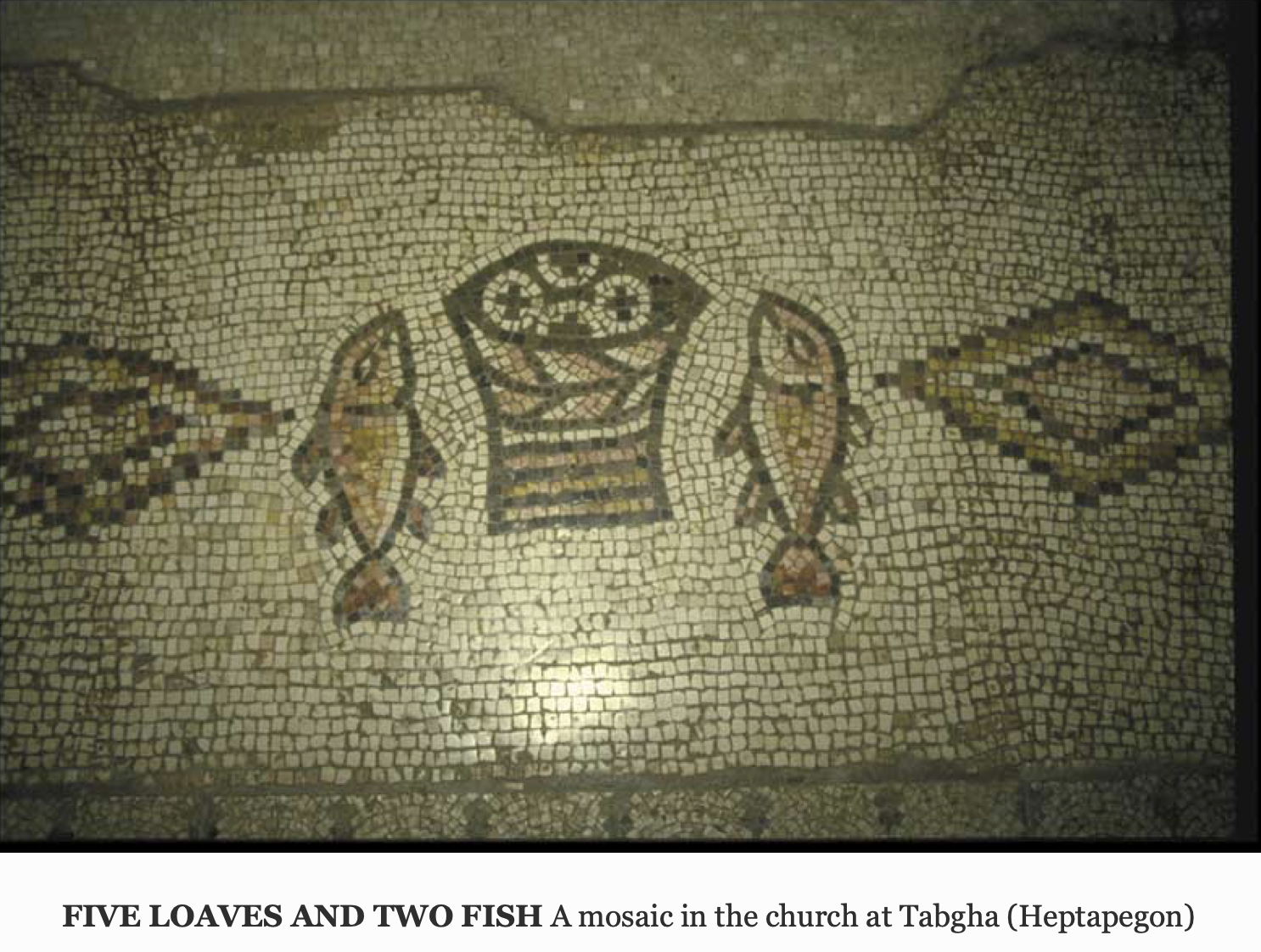
All the four Evangelists describe this miraculous event. Moreover, Saint John connects this with the Lord’s teaching about the heavenly bread and the Mystery of Communion of His flesh and blood and gives us the important chronological indication, that all this was happening at the time of “the Passover, a feast of the Jews, was near” (John 6:4), the third Passover in the Lord’s service time.
Having received the news about John the Baptist’s death, the Lord Jesus Christ withdrew from Galilee with His Apostles, who recently returned from their preaching trip. They sailed across to the eastern side of the Sea of Tiberias, to a desolate area close to the town of Bethsaida. As only Bethsaida was located on the western bank near Capernaum, it can be supposed that this was another town, Bethsaida-Julias, situated to the east from the place, where the river Jordan flowed into the lake of Gennesaret. According to Evangelist Mark’s narration, the people, after having determined where the Lord was going with His Apostles, “ran there on foot from all the cities. They arrived before them and gathered around Him” (Mark 6:33). Seeing the multitude of people that had gathered around Him, the Lord took pity on them, “because they were like sheep not having a shepherd. So, He began to teach them many things” (Mark 6:33), and was telling them about God’s Kingdom (Luke 9:11) and cured the sick (Mat. 14:14). After a while, according to Saint John, He ascended the mountain and sat down there with His disciples, when He saw a crowd of people coming towards Him. The day was starting to give way to the evening. Then all the Apostles approached Him and exclaimed: “This is a deserted place and the hour is already late. Send the multitudes away, that they may go into the villages and buy themselves food” (Mat. 14:15; Mark 6:35-36; Luke 9:12). However, the Lord did not want to send the people away, saying to His disciples: “They do not need to go away. You give them something to eat” (Mat. 14:16; Mark 6:37; Luke 9:13).
Meanwhile, the Lord testing Apostle Philip’s faith asked him: “Where shall we buy, that these may eat?” (John 6:5), to what Philip replied: “Two hundred denarii worth of bread is not sufficient for them, that every one of them may have a little” (John 6:7). The rest of the disciples were telling the same. Then the Lord said: “How many loaves do you have? Go and see” (Mark 6:38). Having found out, Andrew replied to Him: “There is a lad (probably, a person, selling food and following the crowd) here who has five barley loaves and two small fish, but what are they among so many?” (John 6:9). Then the Lord said: “Make them sit down in groups of fifty” (Luke 9:14, Mark 6:39-40). And the people sat down on the green grass — 100 across and 50 crosswise. Thus, it was possible to count that there were 5000 individuals, excluding women and children (Mat. 14:21; Mark 6:44; Luke 9:14; John 6:10).
Taking the five loaves and two fish, the Lord raised His eyes to the sky, gave thanks (John 6:11), blessed them (Luke 9:16), broke the loaves and gave them to the disciples, so that they distributed them among the people; likewise, He divided the fish for all the people (Mark 6:32; John 6:11). “So, they all ate and were filled” (Mat. 14:20; Mark 6:42; Luke 9:17). When everybody was full, the Lord directed His disciples to collect the remaining portions, so that nothing would be wasted; and they collected 12 full baskets.
Evangelist John tells us that the people, who witnessed that miraculous feeding of the five thousand, exclaimed: “This is truly the Prophet Who is to come into the world” (John 6:14); they wanted to come and unexpectedly take Jesus, and take advantage of the coming feast of Pascha, lure Him to Jerusalem and proclaim Him the King in the presence of people. But the Lord naturally did not want to indulge those false ideas about the Messiah as the earthly king. He directed His disciples to go to the western side of the lake, while He Himself having calmed the people excited by the miracle, sent them away and “departed again to the mountain by Himself alone” (John 6:15), for to pray.
The Miraculous Feeding of Four Thousand People. (Mat. 15:32-39; Mark
8:1-9). The Exposure of the Pharisees Seeking the Signs. (Mat. 16:1-12; Mark 8:11-21). The Healing of a Blind Person in Bethsaida. (Mark 8:22-26).
The Miraculous Feeding of Four Thousand People. (Mat. 15:32-39; Mark 8:1-9).
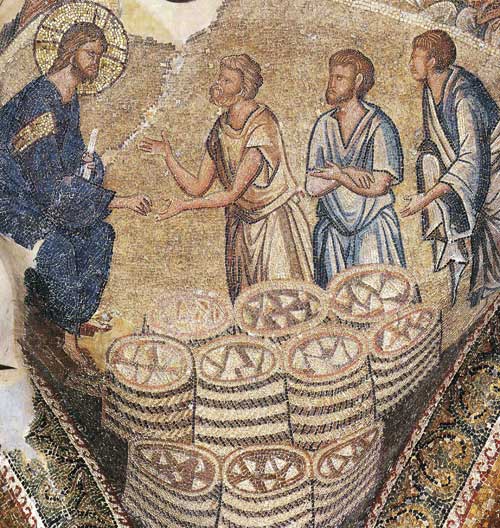
The Lord spent three days with the people on the barren bank of the Gennesaret Lake. The supplies of bread were over, there was nowhere to buy it and the Lord performed the miracle of feeding the masses anew; this time — feeding four thousand with 7 loaves. On this occasion, there were 7 baskets of bread remaining. Having fed the people, the Lord let them go, while He and His Apostles made their way to the western bank in the boat, to the region of Magdala or, as Saint Mark notes, to the Dalmanuthian region. Dalmanutha was a small village beside the city of Magdala that was located on the western bank of the Lake of Galilee.
The Exposure of the Pharisees Seeking the Signs. (Mat. 16:1-12; Mark 8:11-21).
As soon as the Lord stepped off the boat, the Pharisees and Sadducees approached Him, evidently waiting for Him specially. Normally, the Pharisees (the conservatives) and the Sadducees (the liberals/free thinkers) were hostile towards each other, but they were united in one spirit against the Lord. They tempted Him, hypocritically and insincerely asking Him to show them such a sign from heaven that would serve as a definite proof of His Divine worthiness as the Messiah to them and to the rest of people. Being convinced that the Lord would refuse them, they wanted to use that as another reason to proclaim to the people that because Jesus could not give them a sign, He could not be the Messiah. The Lord sternly answered the Pharisees, calling them hypocrites, because while knowing how to judge on the forthcoming weather, they did not want to notice the evident signs testifying of His Messianic worthiness. And again, He told them that no signs would be given to them, “except the sign of the prophet Jonah” (Mat. 16:4).
Not wishing to continue conversing with the hypocrites, the Lord, having just arrived at that side of the lake, got back into the boat with the Apostles and went back. Such a rush did not give the Apostles an opportunity to replenish their bread supply. Meanwhile, grieving over the spiritual blindness of the Pharisees and Sadducees, and wishing to warn His Apostles of the same destructive state, the Lord said: “Beware of the leaven of the Pharisees and Sadducees” (Mat. 16:11). Saint Mark replaces the word “Sadducees” with another — “Herod’s”, which doesn’t change the meaning of the phrase, for Herod-Antipas belonged to the Sadducees sect. However, the Apostles did not understand the Lord’s warning, thinking that He was reproaching them for wasting the opportunity of obtaining bread. The Lord then truly chastised them for their lack of faith, for their lack of understanding and forgetfulness, and reminded them of the twice happened miracle of feeding several thousand with a few loaves. Only then did the Apostles realize that the Lord was warning them against the Pharisees’ and Sadducees’ teaching.
The Healing of a Blind Person in Bethsaida. (Mark 8:22-26).

The miracle, about which only Saint Mark narrates, the Lord performed after He and His disciples went to the eastern bank of the Gennesaret Lake. On the way to Caesarea Philippi, in the town of Bethsaida (also known as Julias, in the name of Tetrarch Philip’s daughter Julia), a blind person was brought to the Lord so that He could cure him with the touch of His hands. More than likely, he was not born blind, for with the first touch of the Lord’s hands, he announced that he could see trees and people; i.e., he was already aware of what people and trees looked like. Having cured him, the Lord acted as He did with the healing of the speech-impeded deaf individual: He led the man out of the settlement, spat on his eyes and his sight returned, not instantly but gradually, after the Lord laid His hands on him twice. Apparently, by His actions the Lord once again was trying to arouse faith in the man, which was essential for the performance of the miracle. Thereupon, the Lord sent him home, commanding him not to enter the settlement, and not to tell anyone there about the miracle.
The Second Visit to Nazareth. (Mat. 13:53-58; Mark 6:1-6).
The Second Visit to Nazareth. (Mat. 13:53-58; Mark 6:1-6).
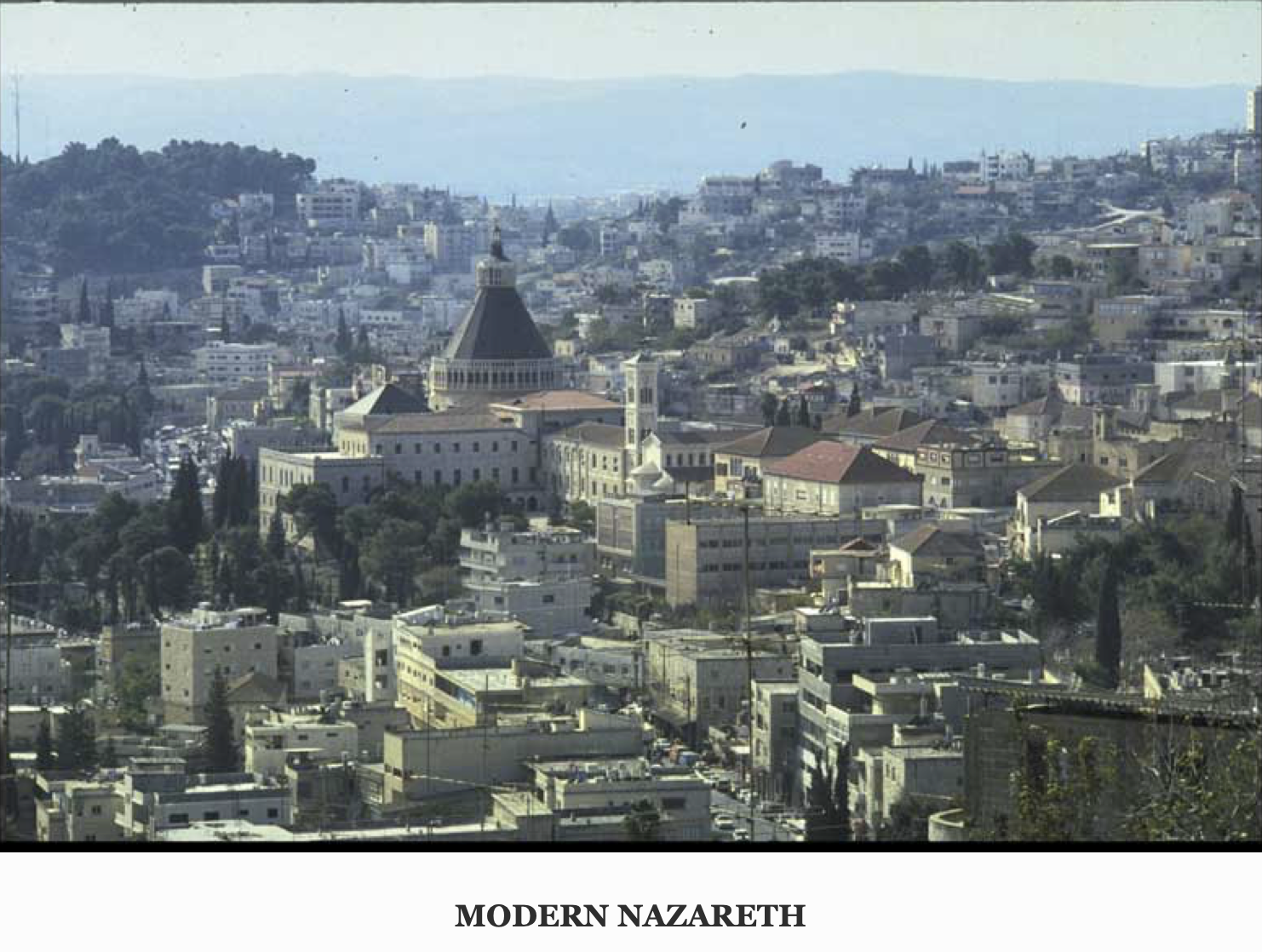
After that, Jesus returned “to His own country” (Mat. 13:54; Mark 6:1), i.e., to Nazareth
His Mother’s and His so-called father Joseph’s land of birth, and to the place where He was brought up. There, the Lord began to teach His countrymen in the synagogue, amazing them and prompting them to say: “Where did this Man get this wisdom and these mighty works?” (Mat. 13:54; Mark 6:2). This was not the type of amazement that was shown to Him in other places — this was mixed with scorn: as though, “Is this not the carpenter’s Son? Is not His Mother called Mary? And His brothers James, Joseph, Simon, and Judas?” (Mat. 13:55; Mark 6:3). The Nazarenes either did not know, or did not believe in the miraculous incarnation and birth of Jesus Christ, regarding Him simply as the Son of Joseph and Mary. This is quite inexcusable, as in the past there were many inconspicuous parents who had children, who further on became famous. As an example, such were David, Amos, Moses and the others. The Nazarenes should have shown reverence towards Jesus, especially because having such plain parents He showed such wisdom that definitely proved to come not from the human education but from the Divine grace.
Nowhere Jesus found so much opposition towards Himself and His teaching, as in His own “native” town, where they even tried to kill Him (Luke 4:28-29).
In Nazareth, the Lord “did not do many mighty works there because of their unbelief” (Mat. 13:58, Mark 6:5), because He always performed miracles as a reward for having faith, and not to satisfy idle curiosity or to prove His supernatural powers.
Christ Sends His Apostles on their Mission. (Mat. 10:1-42; Mark 6:7-13;
Luke 9:1-6, 12:11-12).
The Beheading of John the Forerunner. (Mat. 141-12; Mark 6:14-29; Luke
9:7-9).
The Miraculous Feeding of Five Thousand People. (Mat. 14:15-21; Mark
6:32-44; Luke 9:10-17; John 6:1-15)
The Lord’s Walk on the Water. (Mat. 14:22-36; Mark 6:45-52; John 6:16-21).
The Talk about the Heavenly Bread. (John 6:22-71).
The Talk about the Heavenly Bread. (John 6:22-71).
The Third Pascha. Exposing the Pharisees’ Traditions. (Mat. 15:1-20; Mark
7:1-23).
The Third Pascha.
Exposing the Pharisees’ Traditions. (Mat. 15:1-20; Mark 7:1-23).
At the third Pascha, the Lord was not in Jerusalem. However, but the Jerusalem Pharisees never paused their surveillance on Him and not finding Him in Jerusalem, went to Galilee. Meeting Him with His disciples there, they renewed their previous condemnations of His disciples for not following the traditions of the elders. Their reason was that His disciples did not wash their hands before eating. According to the laws of the Pharisee piety, before eating and afterwards, the hands had to be washed obligatory. Moreover, the Talmud determines precisely the required measure of water; the time and order of washing the hands, depending on the fact if there were more than 5 people, or if there were less. Following these rules was supposed to be so important that those who violated them, were subjected to the Sanhedrin’s punishment — up to excommunication. The Jews believed that Moses received two sets of commandments on the Sinai: the one was recorded in books, while the other was not, and passed orally from fathers to sons, and thereafter was eventually recorded in the Talmud. That second law was named “the elders’ traditions”, i.e., the traditions of the ancient men, ancient rabbis. The unwritten law was remarkable for its great pettiness. Thus, for example, the law on washing the hands, initially inspired by the strife for hygiene and was useful by itself, became a prejudice and together with the similar requirements, obscured the more important demands of the law of God, becoming senseless and harmful.
The disciples, with their Divine Teacher were working for a very important goal, building God’s Kingdom on earth and did not have time to even eat bread (Mark 3:20, while the Pharisee’s demanded that they should strictly follow all these petty traditions. The Lord Himself responds to the Pharisees’ accusations: “Why do you also transgress the commandment of God because of your tradition?” (Mat. 15:3; Mark 7:9). “Through this, the Lord showed that the one sinning in great deeds should not note, with such solicitude, the minor transgressions of the others” (St. John Chrysostom). Specifically, the Lord pointed out that in the name of their tradition, the Pharisees were violating the direct and definite commandment about honoring parents. This tradition permitted children to deprive their parents of the material support, if they declared their possessions as “Corban”, i.e., as dedicated to God. And such dedication as a gift to God could include everything: a house, a field, sanctified and unsanctified livestock; at the same time, the one who dedicated could continue using his possessions by making a small payment into the temple’s coffer. But for that, he regarded himself free of any social obligations, even from the responsibility to take care of his parents — denying them even the very necessary for life and sustenance.
Calling the Pharisees hypocrites, the Lord ascribes Isaiah’s prophesy (29:13) to them, confirming that they honor God superficially, while their hearts are far away from Him; and it is futile to think that in such a way they are pleasing God, and fruitless that they are teaching the others to do the same thing. Addressing then all the people, the Lord further added that to expose the Pharisees: “Not what goes into the mouth defiles a man; but what comes out of the mouth, this defiles a man” (Mat. 15:11; Mark 7:15). The Pharisees did not understand the difference between physical and moral cleanliness. They presumed that if food is unclean or is taken by the unclean hands, it was capable of soiling the person morally, making him unclean before God. But the Lord shows that what makes a person morally unclean is everything what comes out from an unclean heart.
However, sectarians and the other opponents of fasting, maintain a completely groundless presumption that these words of the Lord were against the fasts, established by the Holy Church. Naturally, the food entering the mouth does not make a person unclean, if this is not associated with gluttony, disobedience and other types of sinful inclinations of the heart. We fast not because we are afraid to desecrate ourselves with the non-Lenten food, but for the sake of making it easier to struggle with the other sinful passions, to conquer our sensuality, to train ourselves to curb our will through the obedience to the Holy Church determinations. For example, acknowledging that drunkenness is the evil, we do not assert that wine is the evil because it desecrates a person. The Pharisees got tempted because the Lord had no respect for the tradition of the elders, and evidently, not even for the Law of Moses, which established the strict difference between different types of food. The Lord calmed His disciples, calling the Pharisees “blind leaders of the blind” (Mat. 15:14), and so there was no need to follow the invented by them teaching: any similar teaching that does not emanate from God will be uprooted. Further on, the Lord explains to the Apostles that the food, coming through the mouth, bypasses the soul and is expurgated, not leaving any trace in the soul. But the sins that come forth from the mouth and heart of the man, desecrate him.
The Healing of a Canaanite Woman’s daughter. (Mat. 15:21-28; Mark 7:24-30).
The Healing of the Speech-Impeded Deaf Person. (Mat 15:29-31; Mark 7:31-37).
The Miraculous Feeding of Four Thousand People. (Mat. 15:32-39; Mark
8:1-9). The Exposure of the Pharisees Seeking the Signs. (Mat. 16:1-12; Mark 8:11-21). The Healing of a Blind Person in Bethsaida. (Mark 8:22-26).
Peter’s Confession: Jesus is Christ, the Son of God. (Mat. 16:13-20; Mark
8:27-30; Luke 9:18-21).
The Lord Foretells His Death and Resurrection. (Mat. 16:21-28; Mark 8:31-38
and 9:1; Luke 9:22-27).
The Transfiguration of the Lord. (Mat. 17:1-13; Mark 9:2-13; Luke 9:28-36).
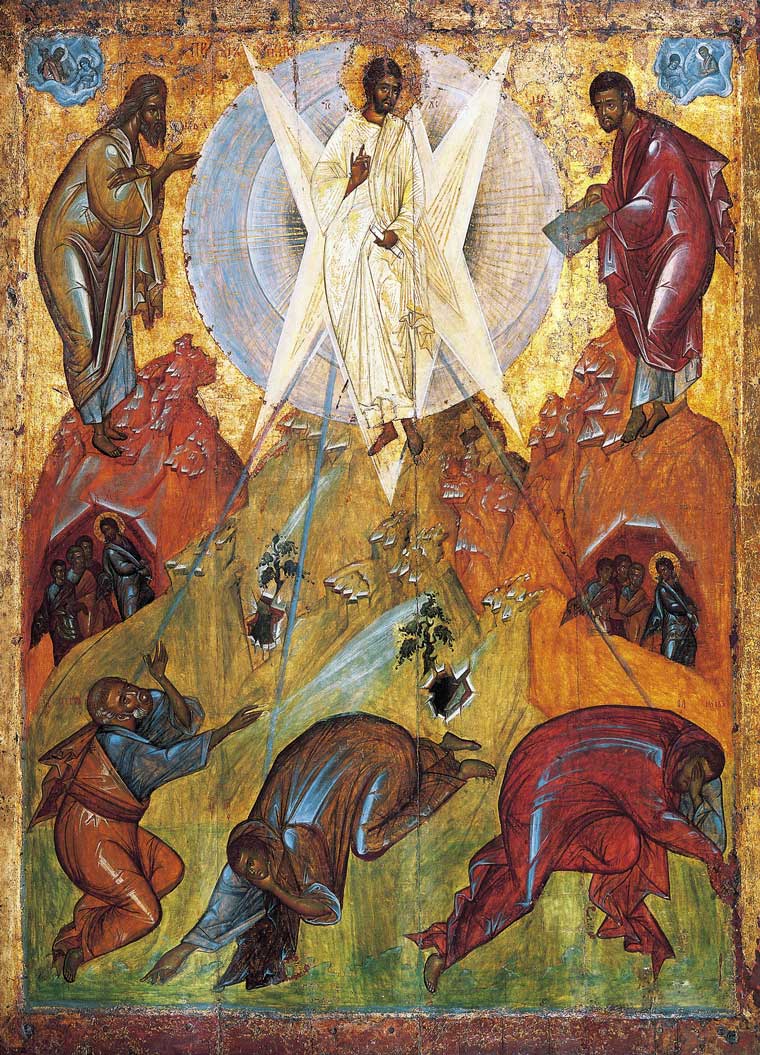
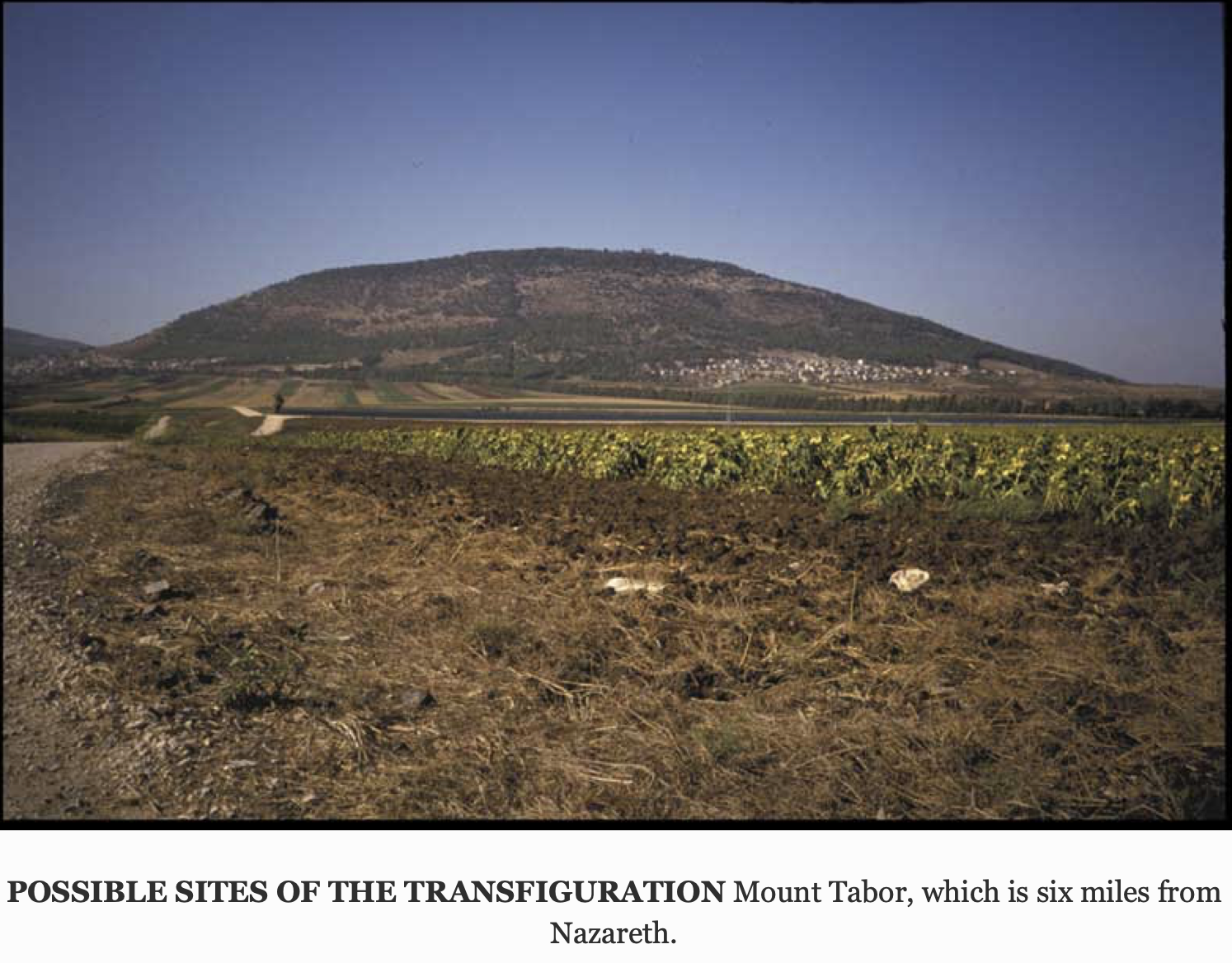
All the three Evangelists narrate about this event; moreover, it is worthy to note that they all link it to the Lord’s sermon, made six days — 8 days according to Luke – prior to His forthcoming sufferings, about the carrying of the cross by His followers and about the imminent revelation of God’s kingdom, coming with power. Taking His closest and trusted disciples, who were with Him during the most triumphant and important moments of His earthly life — Peter, James and John — the Lord “led them up on a high mountain by themselves” (Mat. 17:1; Mark 9:2 and Luke 9:28). While the Evangelists do not name this mountain, the ancient Christian traditions unanimously testify that it was the Mount Tabor in Galilee, to the south of Nazareth, on the magnificent Israeli plain. This majestic mountain, the height of which is nearly 3000 feet, is covered halfway up with the beautiful vegetation, and the magnificent long- distant panorama presents itself from its top.
The Lord “transfigured before them”, appearing before His disciples in all His heavenly glory, from which “His face shone like the sun, and His clothes became as white as the light” (Mat. 17:2), while according to Saint Mark (9:3), “His clothes became shining, exceedingly white, like snow, such as no launderer on earth can whiten them”, and Saint Luke (9:29) simply states: “His robe became white and glistening”. Evangelist Luke also makes an important supplement, pointing out that the purpose of going up the mountain was to pray and that the Lord transfigured, “as He prayed” (Luke 9:29). The same Evangelist, as distinct from the others, adds that during the prayer, “Peter and those with him were heavy with sleep” (Luke 9:32) and having just awakened, saw the transfigured Lord’s glory and appearing in glory Moses and Elijah. They talked with Jesus Christ, as St. Luke clarifies, about His end, which He had to face in Jerusalem. As Saint John Chrysostom explains that the reason why especially Moses and Elijah appeared was because some of the people regarded Christ as Elijah, or as one of the Prophets. That is why “the major Prophets appear, in order to differentiate the servant from the Lord”. Moses appeared to show that Jesus was not a violator of his law, which is what the Scribes and Pharisees often attempted to present Him as. Neither Moses — through whom God’s Law was given — nor Elijah would not present themselves or follow the orders of the One, Who was not truly the Son of God. The appearance of the deceased Moses and Elijah, who had not seen death as he was taken up to Heaven alive, denoted the Lord Jesus Christ’s sovereignty over life and death, over the heaven and earth. The particularly amazing, grace-filled feeling that overwhelmed the Apostles’ souls was expressed by Saint Peter’s exclamation: “’Master, it is good for us to be here; and let us make three tabernacles: one for You, one for Moses, and one for Elijah’ — not knowing what he said” (Luke 9:33; Mat. 17:4 and Mark 9:5). It was as though Apostle Peter wanted to say: it’s better not to return to the distant world of hatred and slyness, where sufferings and death await you. Evangelist Mark, undoubtedly from Peter’s own words, testifies that the feeling of joy so overwhelmed Peter, “he did not know what to say” (Mark 9:6).
A miraculous cloud — being an indication of the exceptional Divine presence — enveloped them (a similar cloud that was constantly present in the Holy of Holiest was called “sheheena” — 1 Kings 8:10-11). The voice of God the Father was heard from the cloud: “This is My beloved Son, in Whom I am well pleased. Hear Him” (Mat. 17:5; Mark 9:7 and Luke 9:35). The same words were heard during the Lord’s Baptism, but with an addendum “Hear Him”, which must remind of Moses’ prophecy about Christ (Deut. 18:15), while its fulfillment is found in the persona of Jesus. So as not to arouse the sensate feelings of the Jews about the Messiah, the Lord directed His Apostles not to reveal this to anyone until His resurrection from the dead. Saint Mark adds a detail taken from Peter’s own words, that the disciples “kept this word to themselves” (9:10), bewildered, why the Lord had to die to resurrect later, and what means: “rising from the dead” (9:10).
Totally convinced that the Teacher Jesus is truly the Messiah, they inquire: “Why then do the Scribes say that Elijah must come first?” (Mat. 17:10; Mark 9:11). And the Lord confirms that indeed, “Elijah is coming first and will restore all things” (Mat. 17:11; Mark 9:12) (in Greek — apokatastisi, i.e., to restore). Just as the Prophet Malachi prophesied: “Behold, I will send you Elijah the prophet before the great and terrible day of the Lord come. And he shall turn the heart of the fathers to the children, and the heart of the children to their fathers; lest I come and smite the earth with a curse” (Mal. 4:5-6), i.e., it is necessary for Elijah to appear in the world and restore the original good and pure feelings in people’s souls, without which the Messiah’s work would not be successful, for it would not find the favorable ground in people’s hearts barnacled with sin and hardened by their ongoing iniquitous lifestyle. The Lord continues further: “But I say to you that Elijah has come already, and they did not know him but did to him whatever they wished” (Mat. 17:12; Mark 9:13), i.e., Elijah had already come like John the Baptist, who was endowed by God with Elijah’s power and spirit — but they did not recognize him, threw him into a dungeon and put him to death. The Lord concludes His thought like this: “Likewise the Son of Man is also about to suffer at their hands” (Mat. 17:12; Mark 9:12), i.e., just as they did not recognize Elijah and killed him, so they will not recognize the Messiah and also put Him to death.
The Healing of the Possessed Adolescent. (Mat. 17:14-23; Mark 9:14-32 and
Luke 9:37-45).
The Second Visit to Nazareth. (Mat. 13:53-58; Mark 6:1-6).
The Third Pascha. Exposing the Pharisees’ Traditions. (Mat. 15:1-20; Mark
7:1-23).
The Third Pascha.
The Transfiguration of the Lord. (Mat. 17:1-13; Mark 9:2-13; Luke 9:28-36).
Related Concepts
- 1-peter-24-5
- anti-catholic-polemic
- anti-protestant-polemic
- anti-sectarian-polemic
- beheading-of-john-the-forerunner
- beheading-of-the-forerunner
- blind-leaders-of-the-blind
- bread-of-life
- christ-as-the-cornerstone
- christian-asceticism
- corban
- councils-and-hierarchy
- demonology
- divine-energies
- divine-glory
- divine-justice
- election-of-israel
- elijah-typology
- exodus-12
- exorcism
- faith-of-gentiles
- false-messiahs
- good-deeds
- grace-and-free-will
- grafting-into-christ
- great-faith
- great-friday
- holy-communion
- honoring-parents
- hypocrisy
- israel-and-the-gentiles
- jewish-messianic-expectations
- john-2021-23
- john-the-forerunner
- kingdom-of-god
- law-and-prophets
- legal-hypocrisy
- malachi-4
- malachi-45-6
- messianic-forerunner
- messianic-secret
- moral-theology
- moses-and-elijah
- mustard-seed
- mystery
- mystery-of-baptism
- mystery-of-confession
- nazareths-rejection
- new-pascha
- old-testament-theophany
- old-testament-types
- old-testament-typology
- orthodox-church-discipline
- particular-and-last-judgment
- passion
- passion-predictions
- passoverpascha
- pedagogy-of-the-disciples
- pentecost
- peters-confession
- petrine-primacy-refuted
- petros-vs-petra
- power-of-the-keys
- prayer-of-illumination
- predestination-orthodox-understanding
- revelation-of-the-kingdom
- shekinah
- signs-and-wonders
- souls-infinite-value
- temple
- the-kingdom-of-god
- theophylact
- traditions-of-the-elders
- transfiguration
- universal-salvation
- value-of-the-soul
- works-and-faith