Liturgics — 2. Sacred and non-sacred Textbooks. Hymnology
The Church Books.
The liturgical books are divided into Sacred Liturgical Books and Ecclesiastical Liturgical Books.
Sacred liturgical books:
These are books of the Old and New Testament Scriptures, adapted for liturgical use:
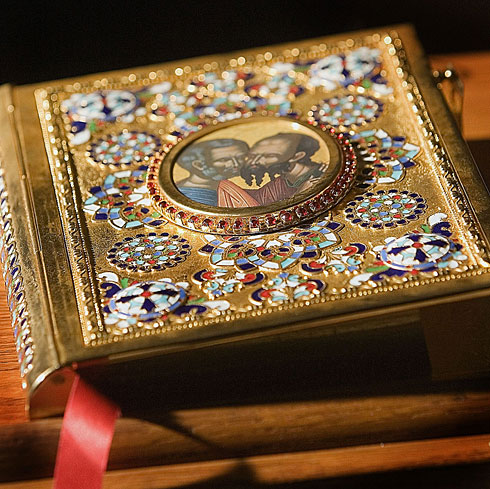
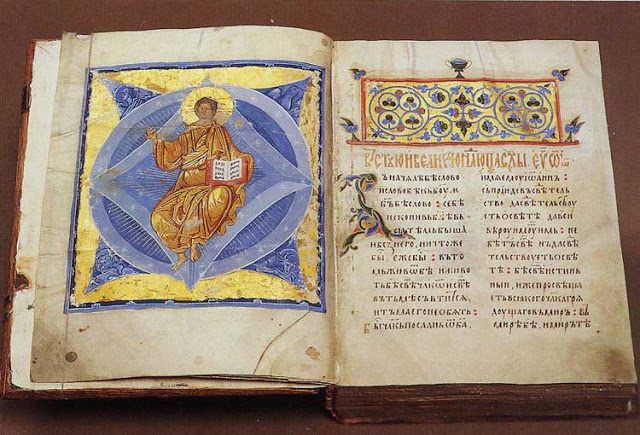 The Gospel is the most revered book in the
Church. In terms of format, the liturgical Gospel can be either an altar book
or a supplementary office book;
The Apostle (book). The liturgical Gospel and the Apostle, in addition to the usual division into chapters and verses, are also divided into special sections called “beginnings”, the numbers of which, in accordance with the Easter schedule, the Menaion, the various saints, and the personal feasts, are included in the annexes to both of these books, with also detailed references to the prokimena, the alleluias, the koinonika keys and the liturgical antiphons to them;
The Psalter. At the present time the so-called Small Psalter, in which all
the psalms are grouped in 20 kathismas, is used extensively in liturgical
services. In Russian Orthodox Church and in some other Slavonic Churches there
is a rather massive Psalter, which consists of five parts: 1) The Small
Psalter, 2) The Book of Hours, 3) The Menologium, 4) The Canon Book, 5) The
Weekbook (Semidnev). However, most psalmists (often women) in parish choirs
prefer to use the more compact books and manuals. Due to the special love of
Christians for the Psalter, this is the only book of the Old Testament that
has become the most important liturgical book for Christians, passages from
which are used many times each day in their worship services;
Unused nowadays:
The Scrolls of the Old Testament. The first Christians were Jewish, and for some time continued to punctiliously observe all the injunctions of the Old Testament religion, which included the reading and careful study of all the sacred books of the Old Testament. The sacred texts of the Old Testament were traditionally written on rolled up scrolls (the New Testament books were immediately written in more convenient bound codices, resembling modern books). The number of scrolls was large (they were made small so that when they were rewound they were less likely to tear). The books of the Old Testament were read in order over a period of 3.5 years (half of the seven- year “Sabbath cycle”) but the most important passages (with prophecies about the Saviour) were often repeated, especially on the occasion of Christian feasts.
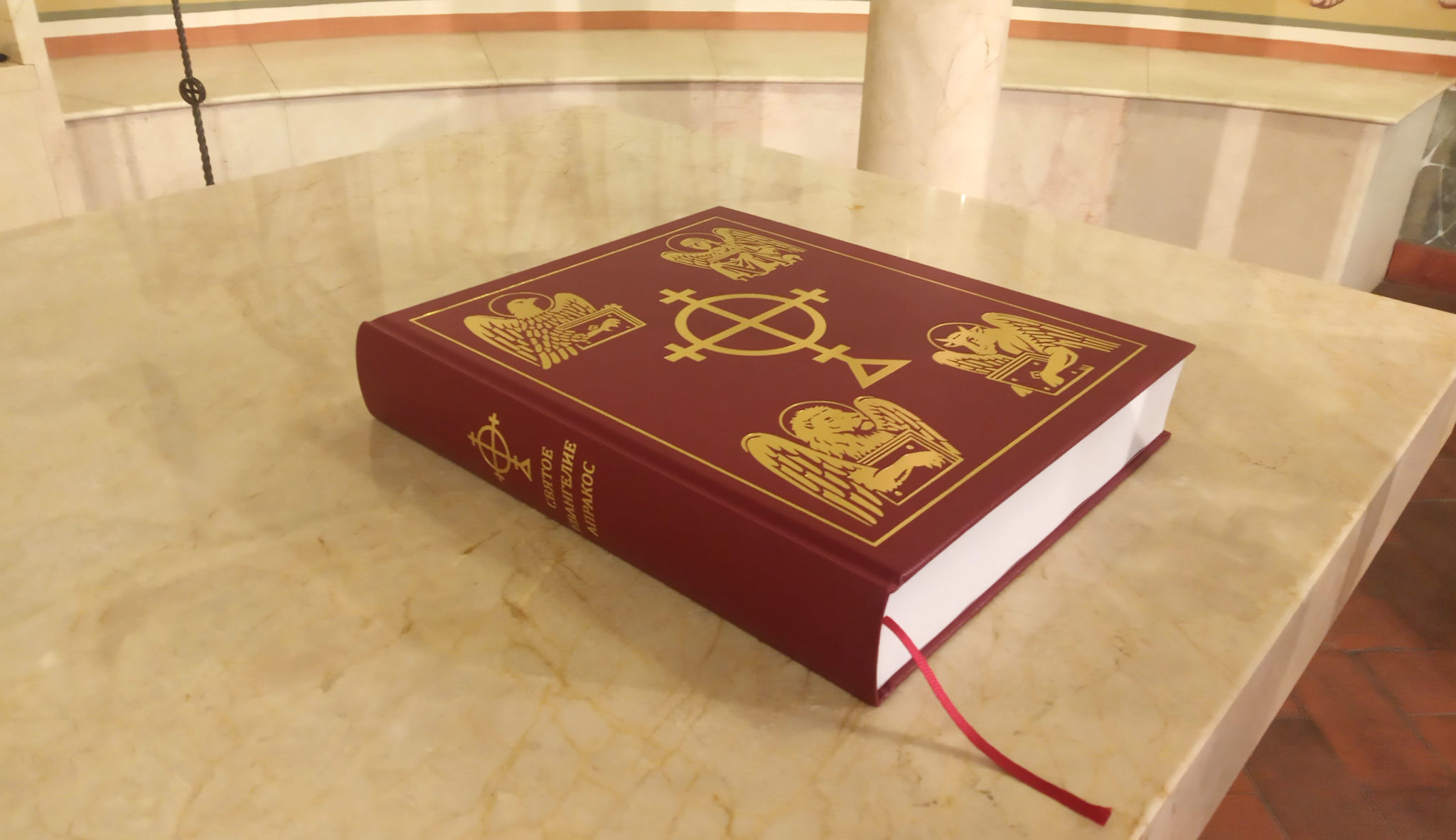
The Aprakos (Evangelarium in Catholicism) is a variant of the Lectionary, a collection of passages from the Gospel (sometimes also from other books of Holy Scripture), arranged in the order of the annual festive liturgical readings.
Paremias Book (“Prophetology”). Originally the authority of the Old
Testament books was even higher than that of the New Testament Epistles
(Colossians 4:16) and the Gospels (because of the many unverified heretical
apocrypha that appeared). The increase in the number of New Testament
Christian prayers, hymns and sermons led to a reduction in the number of
readings from the Old Testament, from which only the most valuable passages,
the Old Testament Paremias (Prophecies), later included in the Menaion and
Triodion, were selected. All of these Paremias, together with the additions of
various prayers and doctrines, were collected into a Paremias Book, but it
wasn’t distributed any further.
Ecclesiastical liturgical books:
Church liturgical books began to appear considerably later and were gradually put in order. Their number is not precisely specified:
The Typicon or Ustav , Greek and Slavonic words for «Charter » or «Order», recommends an ideal model for the performance of monastic services;
The Tropologium (Τροπολόγιον) is a unified complex of Sunday and festive
hymns of the troparic and chanting type, presumably in the 7th century, split
up into the Menaion (texts of the fixed annual cycle of divine services), the
Triodion (texts of the movable Easter cycle) and the Octoechos (texts of the
weekly cycle). Later another liturgical collection of troparia, the Troparion
Book, adapted for singing in crowded choruses, appeared;
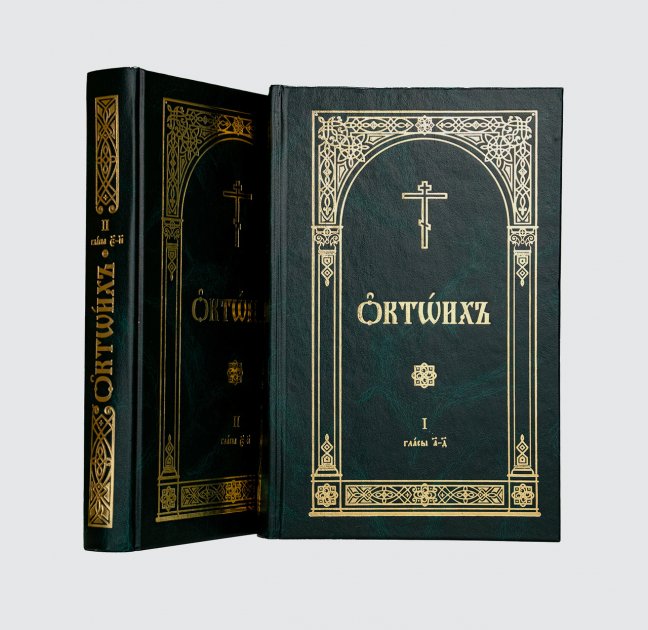
The Octoechos (book) has Sunday, midweek and Saturday services of eight successive tones (variations of texts with their own tones). For the sake of convenience the Octoechos is divided into two almost identical books: The first tome contains the 1st, 2nd, 3rd and 4th tones, and the second the 5th, 6th, 7th and 8th tones;
The monthly “Menaion ” contains the services of non-transitory feasts with saints for each day of the year. It is divided into 12 books according to the number of months in a year: some months have two, or even three big books;
The Festive Menaion contains the services of only the most important feasts from the ordinary Menaion;
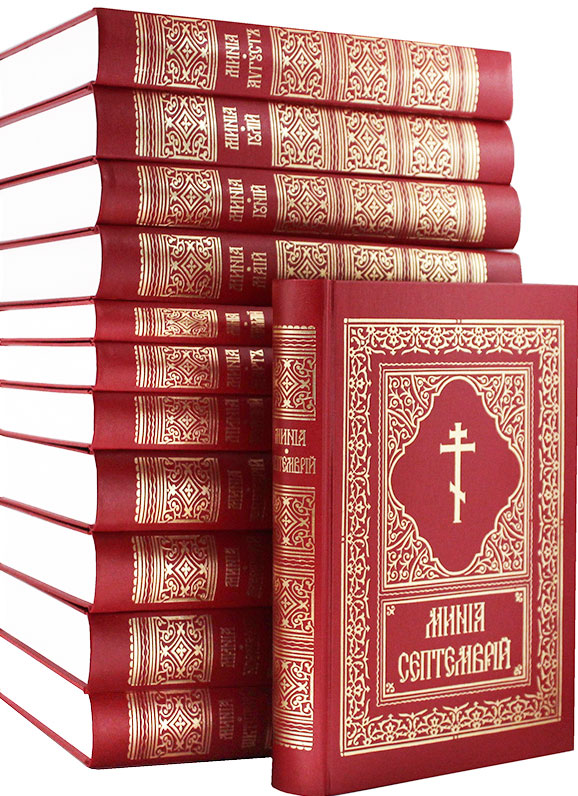 The Common Menaion contains services of
the same type for the various saints. The Common Menaion can be used to
celebrate the divine services for those saints who have not yet been written
or whose individual services have not been approved by the Editorial Council,
or whose distribution has been insufficient;
The Additional Menaion contains services for the newly glorified saints who have not yet been included in the ordinary Menaion;
The Triodion contains the sequences of services for the transitional feasts and fasts. The Triodion consists of two books: 1) the Lenten Triodion used from the Week of the Publican and Pharisee through all of Lent until Holy Saturday, and 2) the Pentecostarion (or Coloured or Flowered Triodion, borrowed from Russian «цветная») used from Easter until All Saints Week;
The Irmologion contains chants used by church choirs from various
liturgical books. The Irmologion, using the ancient musical signs of the
Znamenny (Signs) chants, is considered a liturgical book, but with modern
music notes it sometimes already belongs to the liturgical manuals. Previously
there were many different liturgical books used in church singing: the
Akoluthias - Greek Ἀκολουθίαι, Ἀκολουθιών - Books of Chants containing full
Services, the Obikhod (a book with common chants), the Psalticon - Greek
Ψαλτικόν (a book initially composed for a soloist chanter), the Asmatikon -
Greek Ἀσματικόν (book for Choir performances), the Papadiki - Greek Παπαδική
(Priest’s book), “Anastasimatarius” - Greek Ἀναστασιματάριον (Books for
Sundays Vespers and Matins services), “Anthologia” - Greek Ἀνθολογία (Short
versions of Acolouthias), “Doxastarion” - Greek. Ϫοξαστάριον (Books with
Doxology, a chant performed at certain services), «Sticheraria» (Books with
Stikheras), “Kontakaria» (Books with Kontakia), and others. 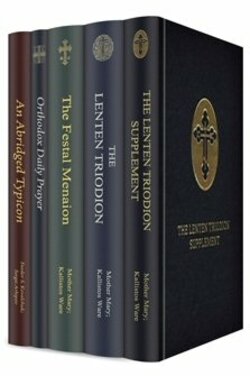
The Troparion contains troparia, continents, megalynaria, and some other prayers. It is suitable for use at Liturgy, devotions, masses, akathist and for prayers at home. Due to the appearance of troparia to the newly saints, it is supplemented regularly;
The Bishops’ liturgical book contains various rites for the bishops divine service and is published in two (sometimes three) books;
The Hieraticon (or Priest’s book) is a liturgical book containing prayers of priests and deacons. It can be a miniature pocket book, which can easily fit into a cassock pocket, or a large-printed book that can be placed on the lectern near the altar. The Greek Orthodox office book is called the Euchologion (from the Greek Prayer Book), which contains prayers and liturgical texts, typical not only to Russian Priests books, but also to the additional service books (Trebnik or Euchologion). The services of the 1) “Divine Liturgy of St. John Chrysostom”, 2) “Divine Liturgy of St. Basil the Great”, 3) “Sequence of Vespers and Matins”, and 4) “Divine Liturgy of the Presanctified Gifts,” included in the Service Book, are often published as separate small books.
The Trebnik (or Euchologion) contains prayers for the rites of the individual divine services and sacraments.
Still later, including in modern times, various new books and manuals are compiled, actively used in Orthodox worship, but not having the status of canonical liturgical books, for example:
Liturgical Instructions;
Orthodox Calendar;
Orthodox Liturgical Collection Book;
Obikhod of Church Chanting;
“Services of the first week of Lent”;
“Services of the Holy Week”;
“The Great Canon of St. Andrew of Crete. The Service of St. Mary’s Standing. Twelve Holy Gospels”;
“The Passion with the Akathist to the Divine Passion of Christ”.
“Intercession on Holy and Great Week of Easter» and many others.
- The Church Books.
Sacred liturgical books:
Unused nowadays:
Ecclesiastical liturgical books:
Liturgical Instructions;
Orthodox Calendar;
Orthodox Liturgical Collection Book;
Obikhod of Church Chanting;
“Services of the first week of Lent”;
“Services of the Holy Week”;
- The Holy Scripture in the Liturgical use.
Scripture in worship.
Holy Scripture is of fundamental importance both for Christianity in general
and for Orthodox Christian worship. First of all, we will look at the texts of
the New Testament, which are the pinnacle subject of all services. All
Orthodox worship is deeply imbued with the spirit of the New Testament, and is
filled with quotations, indications, terms, references that are scattered
throughout all its texts; therefore, it is rather difficult to name everything
that is taken directly from the New Testament. So we will address the
fundamental aspects: readings and large passages of Holy Scripture that are
used in the service.
First of all, let’s single out the Four Gospels. Let us remember what place this reading occupies in worship and, in general, what place this book occupies in the church. Let us remember what the liturgical gospel physically looks like: it is always decorated, it is kept on the altar table as an object of special worship. Let us also remember that the Gospel is a book that does not need to be additionally blessed or sanctified for use in the church.
The text of the Gospel is sacred. Let us remember how ceremonially the deacon brings the Gospel to the liturgy, how the special proclamation is pronounced: “And let us be vouchsafed to hear the holy Gospel…”. This is, of course, not just about physical hearing, but by that hearing which is spoken of in the Gospel: “Have ears to hear, let them hear” (Matt. 13, 9). So, there is a special prayer to correctly hear and understand the Gospel.
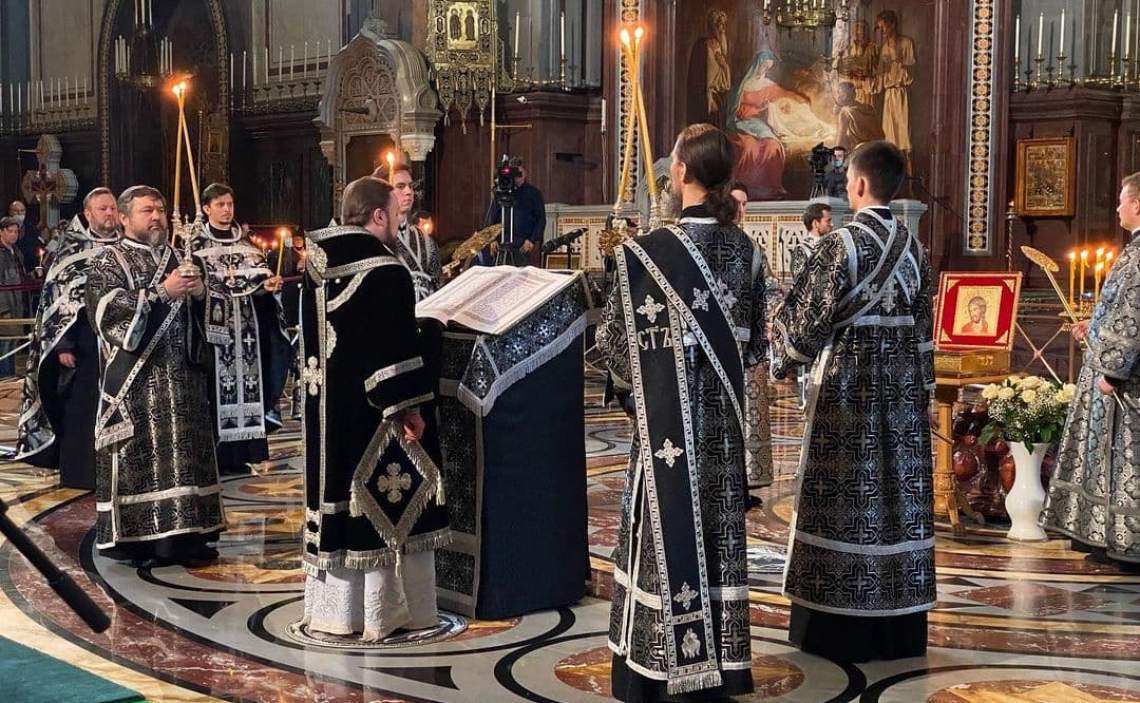 The Gospel is read
mainly during the service of liturgy. The Gospel is also read both at
Sunday Matins and at festive matins , when the polyeleos is served.
The reading of the Gospel at Matins can be unusual: let us recall the Matins
of Great Friday (“service of the Twelve Gospels”; in our country it is usually
performed on Thursday evening). These are the main times when the Gospel is
read at the service.
But there are other cases when the Gospel is read at less important services, and in these cases it is read at a very unusual point in the service. For example, the Gospel can also be read at Vespers, but this is a rare case: these cases include Vespers on the first day of Pascha and Vespers on Great Friday. Of course, these days are very special, adhering to exceptional liturgical rules.
There is an even more intersting case - reading the Gospel during the service of the Hours. The Hours are the humblest of services, and such Hours, when the Gospel is read, are called “Royal”. The Royal Hours are celebrated on the eve of Christmas and Epiphany, as well as on Great Friday. The Gospel is also read during the standard service of the Hours on the first three days of Passion Week. The reading set out for these days is very large: almost the entire Four Gospels should be read. Many parishioners are not able to cope with such long readings, so in most churches the reading of the Gospel begins long beforehand: from the 5th or 6th week of Great Lent, and sometimes, even starting from the 2nd week.
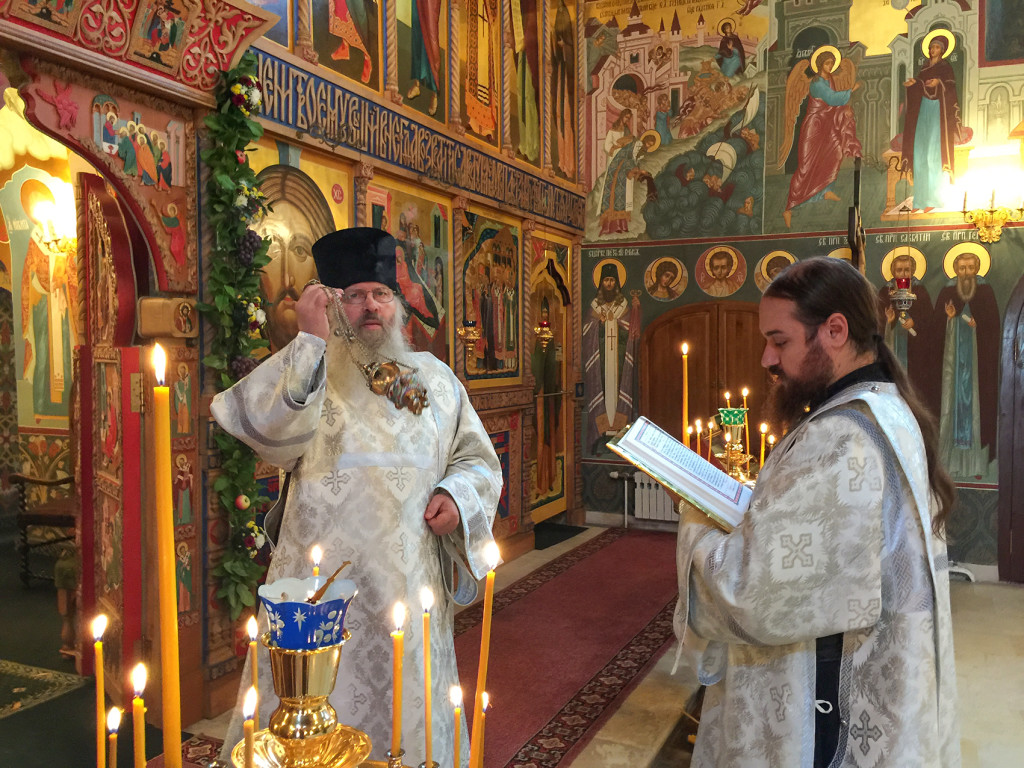 The next part of
the New Testament canon is the Acts and Epistles of the Apostles. Most
often and mainly they are read at the liturgy. The reading of the Apostle
precedes the reading of the Gospel. The Apostle is also read on the Royal
Hours.
The Gospel texts are read not only in succession, but in sections. These serve as a fixed part of the divine service.
For example, during Great Vespers we hear the prayer of Symeon the God-bearer “Now let Thy servant depart” and at great vespers served as part of the vigil – we hear the prayer “Virgin Mother of God”. This chant is not completely taken from the Gospel, but its initial words are the appeal of the Archangel Gabriel to the Blessed Virgin. At Vespers, the Lord’s Prayer is always read.
At Matins, the Six Psalms begins with the song of the Angels «Glory to God in the highest… «(Luke 2:14). After the 8th song of the canon, the song of the Most Holy Theotokos is sung: “My soul magnifies the Lord” (Lk. 2, 46-55), and the 9th song of the canon should be sung with the verses of the song of the prophet Zechariah (Lk. 2, 68-79). This last song, however, is heard in our parish services only on the weekdays of Great Lent. At Lenten and weekday Matins, «Our Father» is also read in the final part.
At the liturgy, although not on all days of the year, but, as a rule, the third antiphon - “In Your Kingdom …” the so-called “Beatitudes ” - is also a text from the Gospel (Matt. 5). “In Thy Kingdom, remember us, Lord…” – the first words are built in the image of the prayer of the righteous thief (Luke 23:42), and then – “Blessed are those who weep…” – these are the Beatitudes from the Sermon on the Mount.
Let’s move on to the Old Testament texts.
Large texts of the Old Testament, sounding at the service, are the paremias or Prophecies (in some books you can find the spelling “paremia”, this is due to the different phonetic rendering of the Greek word παροιμια, which means “parable”, “type”). Paremias are read in the first part of Great Vespers and form certain cycles. There are paremia on feasts of the Mother of God: remember the Ladder of Jacob and the parable of Solomon “Wisdom builds a house for himself …”, remember the “closed gates” from the prophecy of Ezekiel - all this is an amazingly beautiful prototype of the Old Testament about the Mother of God. There are also paremias for the Lord’s feasts, as well as for various faces of Saints: venerable paremias, saintly paremias, etc.
We hear an amazing, unique reading of paremia on Great Saturday at Vespers,
when 15 paremia are read with prophecies about the three-day Resurrection of
the Savior. It is believed that this reading arose back in those days when a
particularly large number of catechumens were baptized on this day. And so,
one can imagine how in Byzantium, in Sophia of Constantinople, all the people
were gathered in the temple, and the Patriarch in the baptistery baptized
many, many people. Most likely, it was at this time that the paremias were
read, waiting for the procession of the newly baptized in white robes to
appear. But such a practical explanation may seem too simplistic, because
reading such paremias as a whole book of the prophet Jonah or reading about
the sacrifice of Abraham becomes a regular part of the service. The day
before, on Friday night, Great Saturday Matins is performed, with a procession
with the Holy Shroud and upon return to the temple - a special end to Matins:
the prokeimenon is proclaimed, paremia, the Apostle and the Gospel are read.
Here again there is a paremia - a reading from the prophet Ezekiel, a majestic
prophecy about the general resurrection. 
Christmas Eve and Epiphany are likened to the service of Holy Saturday. At vespers these days cycles of paremias are also read. On the weekdays of Great Lent, paremias from the book of Genesis and the book of Proverbs are read at Vespers.
The most popular and widely used part of the Old Testament in worship is, of course, the Psalter. In terms of its use in worship, no other book can compare. The Psalter is divided into kathismas (there are twenty of them in the Psalter); The psalter is read either by one psalm, two psalms, six psalms on each reading. The psalter is divided into separate lines and passages. Its use in worship is very varied! There is not a single service when the Psalter is not used.
If you open the Book of Hours, you will see that the basis of the service, almost all the fixed texts, are taken from the Psalter. This part of the Holy Scripture stands out not only for its extraordinary wisdom, but also for its beauty, as amazing poetry. The word “psalm” itself comes from the Greek verb ψαλλω), which once meant “to pinch”, and later “to play a stringed instrument”. Remember how King David played and sang psalms, and it was his musical creativity that gave the name to the text.
You open the Book of Hours, you will see that the basis of the service, almost all unchanging texts are taken from the Psalter. This part of the Holy Scripture stands out not only for its extraordinary wisdom, but also for its beauty, this is amazing poetry. The word “psalm” itself comes from the Greek verb ψαλλω), which once meant “to pluck”, and later “to play a stringed instrument”. Remember how King David played and sang psalms, and it was his musical creativity that gave the name to the text.
The byzantine rite prescribes to diligently and often read the Psalter. During most of the year, the Rule distributes the reading of the Psalter in the following way. Every week the Psalter must be read in its entirety once. From the beginning of the reading of the Psalter on Saturday evening at Vespers—(which is why we hear the chanting of “Blessed is the husband”, the first Kathisma)—until Saturday morning. During Lent, the Psalter is read twice each week.
From the Psalter we also use prokeimena. A prokeimenon is a short verse (we will talk about the rules for its pronunciation later). The word προκειμενον itself means “present” in literal translation.
This is explained by the fact that the prokeimenon, as a rule, precedes the reading of Holy Scripture. Remember the liturgy: Prokeimenon, Apostle, Gospel; so the reading of Holy Scripture begins with the prokeimenon.
From the text of the Psalter, we also use alleluiars. The reader at the liturgy proclaims the prokeimenon with verses, the choir sings it, then the Apostle is read, after which the reader announces: “Hallelujah, second tone …”; the choir sings Alleluia. The reader reads the alleluia verses, and the choir sings Alleluia to each verse. Hallelujah is sometimes called the prokeimenon of the Gospel: our prokeimenon precedes the reading of the Apostle, and Hallelujah precedes the reading of the Gospel. So, the verses from the psalm, to which the Alleluia is sung, are called alleluiars.
Another short liturgical text is usually taken from the Psalter, it is called
a koinonikon (or kinonik in Church Slavonic tradition), in literal
translation - a communion verse. This is the text that is sung in the
liturgy after the priest proclaims: “Holy Things are for the Holy”, the choir
sings: “One is Holy …” and then a short verse that changes depending on the
day of the week or holiday (on Sunday it is always “Praise the Lord from
heaven…”). This verse is called the koinonikon, or communion. Most often it
is taken from the Psalter. The kinonikon is correlated with the prokeimenon,
each prokeimenon has its own kinonikon.
Important texts from the Holy Scriptures are biblical songs, which on all days of the year, except for Passion and Easter weeks, as well as Thursday of the 5th week of Lent, must accompany the singing of the canon. In parishes everywhere they are used only on the weekdays of Great Lent. A detailed discussion about them lays ahead, in connection with the canon.
THE ORDER OF READING OF THE GOSPEL AND THE APOSTLE THROUGHOUT THE YEAR
On the day of Pascha, the church Paschal year (or circle) of readings of Holy Scripture opens. The schedule of these readings is placed at the end of the liturgical gospel and the Apostle, in the index, which bears the title “How Every Day One Should Read the Gospel of the Weeks of the Whole Year” and “About the Antiphons and Prokeimnes and about What One Should honor every day of the Apostle in the weeks of the whole year ” (also printed in the liturgical editions of the Gospel and the Apostle). The readings or pericope (зачало) are given in an index for 50 weeks, which may be arranged into the following groups:
I. The Feast Triodion or Pentecostarion - the period from Holy Easter to Holy Pentecost - 7 weeks.
II. The period from Pentecost to the Week (Sunday) after the Theophany is 33 weeks. The weeks, in turn, are divided into the weeks of Matthew - the Evangelist Matthew (17) and the weeks of Luke in the Evangelist Luke (16).
III. The Lenten Triodion: 10 weeks (3 weeks of preparation for Great Lent and 7 weeks of Great Lent with Holy Week).
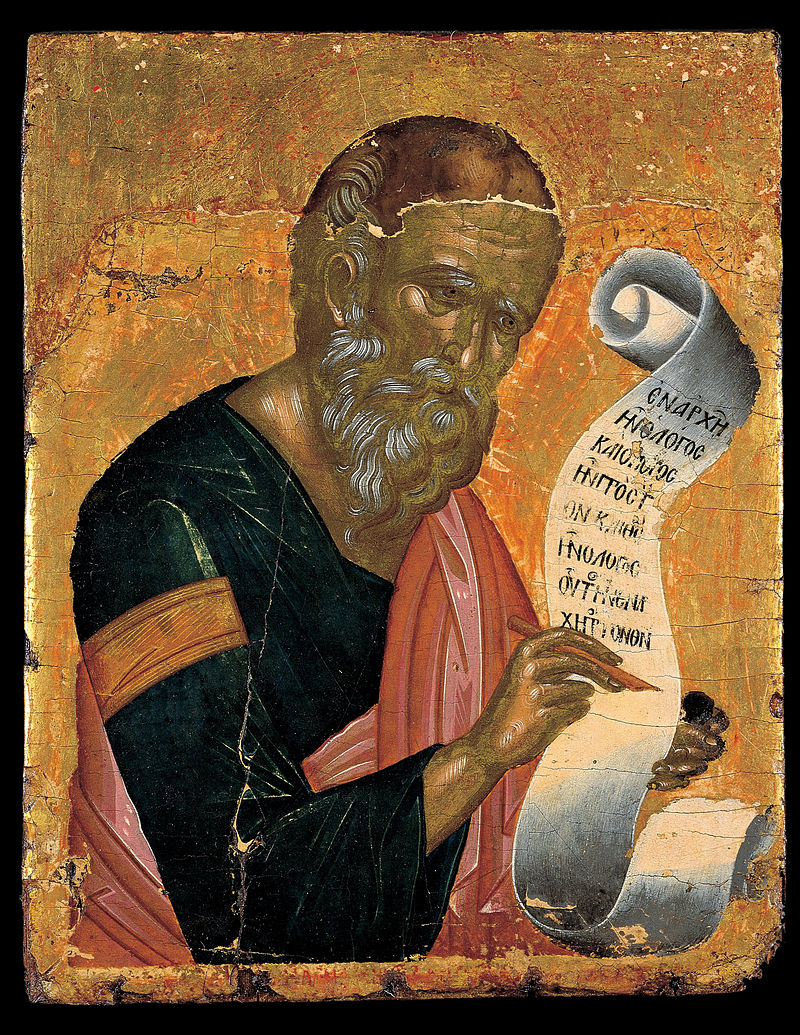 The first to be read is the
Gospel of John , already in the Paschal liturgy, illuminating us with the
first words of his Gospel: “In the beginning was the Word.” The Gospel of John
is read during the seven weeks of Pentecost, with the exception of three days:
Easter Tuesday, the Week of the Myrrh-Bearers, and Thursday, the Ascension of
the Lord, when the sections from the other Gospels are read. The reading of
the Gospel of John ends at the liturgy of Pentecost (the day of the Holy
Trinity). In the same period, the book of Acts is read from the Apostle.
On the Day of the Holy Spirit, the Gospel according to the Evangelist Matthew becomes the main read Gospel for 11 weeks. On the same day, the reading of the Epistles of the Apostle Paul is read, which in the book of the Apostles precede the Council Epistles, but according to the liturgical rite, they are read six weeks before the start of Great Lent, that is, after the feast of the Baptism of the Lord (January 6/19).
In the next six weeks (12-17), the Evangelist Mark announces with his Gospel the weekday (week) days (Monday, Tuesday, Wednesday, Thursday, Friday), leaving the Evangelist Matthew all Saturdays and Sundays (Sundays). These 17 weeks in the Charter are prescribed to Matthew.
Evangelist Luke preaches the Gospel for 18 weeks after the Evangelist Matthew: first for 12 full weeks alone, then with the Evangelist Mark, who takes weekdays, leaving the Evangelist Luke all Saturdays and Sundays.
The combination of the Gospels of Luke and Mark continues until the Lenten Triodion, week 13-16, then during the period of the Triodion in the week of the publican and the Pharisee and the prodigal son, and ends on meat-fare Saturday. These 18 weeks in the Charter are prescribed to Luke.
They are followed by the cheese week with sections from the Gospels of Luke and Matthew; on Saturdays and Sundays of Great Lent, the Evangelist Mark predominates, and then read only on weekdays.
The Gospel holiday readings are given for 50 weeks because in the annual circle of holidays the Church combines the solar and lunar astronomical calendars. According to the solar calendar (it has 52 weeks) the fixed holidays of the church year are set, and according to the lunar calendar (it has 50 weeks) - the feast of Easter, from which the other dependent holidays are counted.
According to ancient Church regulations, Easter is celebrated after the 14th day of Nisan, the first month of the lunar calendar, on the first Sunday after the first spring full moon. This Sunday either coincides with or immediately follows the spring equinox (March 21). Due to the mismatch of the lunar calendar with the solar one, this is the first Sunday after the first spring full moon.
The full moon in different years turns out to be on different dates of March and April of the solar year - from March 22 to April 25. From one Easter to another there are no 52 weeks - there are either fewer or more: 50, 51, 54 and 55. Since the circle of gospel festive readings is associated with the Easter holiday, celebrated according to the lunar year, consisting of 50 weeks, then the readings are given according to the number of lunar weeks - 50.
If there are 50 or 51 weeks in the year from Easter to Easter, then in a solar year consisting of 52 weeks there are two Easters, since the subsequent Easter falls within one solar year. This Easter is called Inside-Easter. The Intra- Easter Triodion begins either on the Week of Enlightenment, or on the first or second Sunday following it.
Paschal years with 54 and 55 weeks are called Outer-Easter. In such cases, in the solar year there is one previous Easter, and the subsequent Easter goes beyond its limits, outside. In these cases, between the Triodion of the future Easter, that is, the beginning of the next Easter year, and the Week of Enlightenment, a time interval of three to five weeks (two to four Sundays) is formed.
 According to the Gospel index of readings,
the Week of Enlightenment from January 7 to 13 falls on the 33rd Sunday from
Pentecost; the Sunday of the publican and the Pharisee falls on the same
Sunday, which is listed as the 33rd in the index. Such a coincidence occurs
only at the earliest Inside-Easter: the previous one is on the 6th, 7th, 8th
of April, the next one is on March 22nd, 23rd. In other years, both with
Inside-Easter and Outside-Easter, the Week of Enlightenment happens on the
33rd Week, earlier and later than it: on the 30th, 31st, 32nd, 33rd (with
Inside- Easter) or on the 33rd, 34th and 35th Weeks after Pentecost (at Out-
Easter); and the Week of the publican and the Pharisee (January 11 to February
14) may be in the 34th, 37th and 38th Week from Pentecost.
For weeks included in the time interval, there are no readings in the index. In this case, they return to the beginning, which were previously read. Such a technique in the Russian Church is called an «otstpuka» = а retreat.
It must be remembered that this do not concern the apostolic readings, therefore, for all the apostolic epistles, beginning with the book of the Acts of the holy apostles, there is one general set of sections, while each of the four Gospels has its own, special one.
One of the starting points in compiling a series of readings of the Four Gospels and the Apostle has always been the concern that the Holy Scriptures of the New Testament be read in full during the year (with the exception of the book of Revelation).
READING ORDER OF THE OLD TESTAMENT DURING THE SERVICE YEAR
Throughout Holy Forty Days of lent, with the exception of Saturdays and Sundays, almost always during the divine service we hear passages only from the Old Testament books, and only on especially solemn days readings from the New Testament can be heard. Unlike selected passages of the Old Testament, which are read outside of Great Lent on the eve of great holidays, Old Testament readings during the period of Lent consist of a consistent and almost complete fulfillment of several books of the Bible: Genesis, the Proverbs of Solomon, and the book of the prophet Isaiah. The choice of these particular biblical books is not accidental and is largely connected with the history of the appearance and special purpose of Great Lent.
With Great Lent, which appeared in the first centuries of the history of the
Church, very soon began the catechism - that is, the preparation of new
converts for Baptism. On the eve of Easter on Great Saturday, the sacrament of
Baptism was usually performed, which, according to church canons, should be
preceded by a study of the foundations of the faith of Christ. At the
beginning of Lent, no later than the first two weeks, who wished to be
baptized on Holy Saturday had to notify the bishop or priest of his desire,
after which, among other catechumens, he had to undergo a whole catechism
course. Most often, the categorical course consisted of a series of talks
devoted to the consistent explanation of the most important passages of Holy
Scripture, initially the Old, and then the New Testament.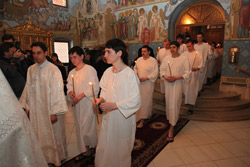
From the integrity of Old Testament texts, individual fragments, and even entire books, were chosen that were most suitable for this purpose. Over time, the reading of the relevant passages of biblical books, on the basis of which a specific catechetical conversation was conducted, began to be performed during the divine service on the weekdays of Great Lent, which not only served the cause of announcing the new converts, but also edification of other members of the Church of Christ. Moreover, in ancient times, books were very expensive, so often the only way for the majority of people to get acquainted with the content of the Holy Books was to hear them read in the temple. So the reading of individual books of the Old Testament, originally intended to introduce a person into the Christian tradition, became the norm of the Orthodox worship of Great Lent.
Excerpts from the Old Testament that are read during Orthodox worship (with the exception of the Psalter), in the Slavic tradition, received the name “paremia ” (from the Greek. Πaροιμία) . The set of Lenten proverbs, like the entire corpus of Bible readings during the divine service, acquired its modern form no later than the 8th century.
The first Books of Paremias appeared approximately at the same time as collections of liturgical readings from the Old Testament. In Greek Church practice, similar collections are called “Prophetologies”, that is, the books of the Prophets. Later, paremias, for convenience, began to be included in other liturgical books, such as the Triodion and the Menaion, in connection with which, starting from the 14th century, the paremia gradually fell into disuse. When printing appeared in the 16th century, the need for this book was already so small that it was not printed. Despite this, the reading order of Lenten sayings was strictly preserved and without any changes.
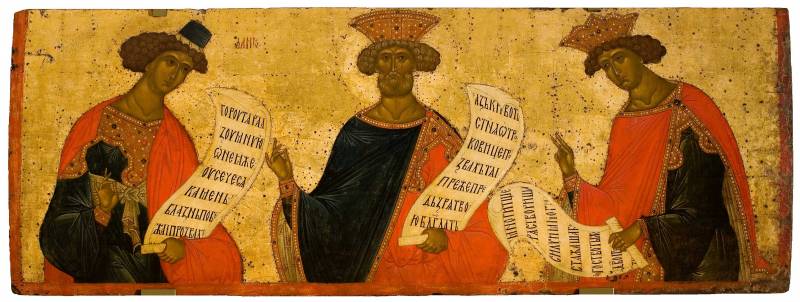 So, on all weekdays of Great Lent, starting
from Monday of the first week and ending on Friday of the sixth week, three
paremias are performed at the service: at the sixth hour - an excerpt from the
book of the prophet Isaiah, at Vespers - two successive fragments from the
books of Genesis and Proverbs of Solomon. These books, being chosen for
didactic reasons among other books of the Old Testament, for consistent
reading during the period of lent, are called upon to remind every Christian
that, despite his age and experience of church life, he must always remain a
student. The book of Genesis introduces the Christian concept of the world and
man, the fall into sin and the expectation of salvation, and also indicates
the initial foundations for the law of Moses, faith in the one true God,
Creator and Ruler of all, for moral prescriptions and ritual institutions. The
Proverbs of Solomon teach the basics of Christian ethics through vivid and
concise advice and images. The book of the prophet Isaiah foreshadowing the
“coming existence of Salvation” - the coming into the world of Christ - calls
to change the way of one’s life and set life priorities correctly, to renew in
one’s memory the Divine truths from these books again and again, to experience
again and again the experience of becoming in faith, which is dear to every
Christian.
The special originality of paremias of the weekdays of Great Lent lies in the consistent study of entire books of the Old Testament, which is not typical for the services of other days of the year. A vivid example of this is the set of paremias of Passion Week, which are a “wonderful flower garden” of the most beautiful and heartfelt readings of the Old Testament, illustrating the passionate path of the Divine Sufferer with amazing accuracy.
READING OF THE PSALTER DURING THE SERVICE YEAR
During the long divine service of the weekdays of Great Lent, the penetrating
hymnographic texts of the Lenten Triodion are performed, named the prayer of
St. Ephraim the Syrian. Being amazing in its repentant mood, it is repeated
again and again, without which it is already impossible to imagine any Lenten
service. Special melodies are heard that are characteristic only for the holy
Forty Days, and yet most of the services of these days are the consistent
reading of the same book of the Old Testament - the Psalter. 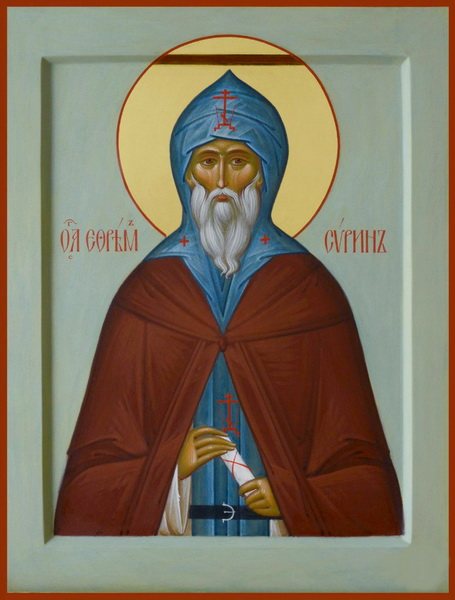
No other book, not only of the Old, but also of the New Testament, is used in Orthodox worship in such a volume and with such frequency as the Psalter. The worship of the Orthodox Church is literally simply permeated with the Psalter: certain psalms or passages from them are an indispensable part of any worship. In addition, many liturgical texts are genetically related to the Psalter.
The liturgical charter suggests that, with the exception of Bright Week, the Psalter is read in full during the divine services during the week. During Great Lent, the Psalter is read twice during the week.
Such a special position of the Book of Praises (this is how the name of the Psalter, accepted in the Jewish tradition, is literally translated), of course, is not accidental. The Psalms contain all the main themes of the other books of the Old and New Testaments, which is why the Psalter is sometimes called the “small Bible.” According to St. Basil the Great, “the book of Psalms encompasses everything that all other Holy Books represent. She prophesies about the future, and brings to mind the once past, and gives laws for life and rules for our activity in this life.
Biblical themes are presented in the Psalter in a poetic way, due to which it has a particularly strong effect not only on the mind of a person, but also on his heart.
St. Athanasius the Great notes that the psalmists “express their speech as if on behalf of the readers, merging their soul with the soul and heart of the readers. From this it happens that the one who reads and sings psalms reads and sings not someone else’s, but his own, said from himself and about himself.
This amazing property of the Davidic psalms was noticed even before the birth of Christ, when the Psalms occupied one of the leading places both in the temple and in the synagogue worship of Old Israel. For every Jew, psalms from the earliest years were an integral part of religious life: they were sung in the morning and in the evening, on weekdays and holidays, in sorrow and in joy. According to the Psalms, they learned to pray, from the psalms they received edification, admonition, reproof, consolation.
The Lord Jesus Christ prays with the words of the psalmists, denounced the Pharisees with them, taught the apostles and called on His disciples to look into the prophecies of the psalms about Him (Luke 24:44), along with the testimonies of the law (the Pentateuch of Moses) and the prophets (the prophetic books of the Old Testament). The appeal to the Psalter of the Lord is an unequivocal confirmation of the undeniable authority of the Book of Praises for all Christians. The apostles of Christ throughout their entire ministry did not abandon the use of psalms, as evidenced by the New Testament texts (James 5:13, Eph. 5:19, Col. 3:16).
Due to its special authority and amazing poetry, the Psalter became one of the foundations of the worship of the Church of Christ, which over time was supplemented by various Christian hymns. Interestingly, for monks in the 4th-5th centuries, singing or reading psalms was the predominant and almost the only form of prayerful service to “God, glorified in the Trinity.” The ascetics sang the entire Psalter in a day. Since that time, the consistent performance of all the psalms in a row, without any exceptions, has become an integral part of Orthodox worship.
The Psalter is quite a large book. It would be extremely difficult to perform all 150 psalms in a day in a parish church and even in cathedrals. Therefore, following the desire “to be edified from the Divine Psalms”, the Psalter was divided into approximately equal parts, which were successively performed during the divine service during the week.
There were various traditions of dividing the book of psalms into parts. The modern division of the Psalter into 20 parts (or kathismas), as well as each verse into three antiphons (or glories), goes back to the Palestinian tradition of the 7th-9th centuries. The name versification (from the Greek στιχολογία) comes from the method of execution, which was intended for the Psalter at the service. To chant means to perform in verse alternately with someone in a certain chant. The fact that the psalms were once sung without fail, and not recited, is reflected in the designation of each of the three parts of the versification as an antiphon, which were certainly sung most often by two choirs. Because of this, the Psalter is the only book of the Bible, the performance of a passage from which in worship is almost never preceded by the designation of the name of this biblical text.
In view of the fact that kathismas occupy a fairly significant part of the divine service, their performance as a chant, especially in small churches and monasteries, was extremely difficult. That is why, back in 1551, the Stoglav Council allowed kathismas “not to be sung, but to sing hymns instead”, which was understood as “perform alone in a chant”. This practice soon spread almost everywhere.
Unlike those psalms that are intended primarily for prayer and which are always included in the sequence of the services of the daily liturgical circle, kathismas are performed less solemnly, because the purpose of their performance is primarily edification. That is why psalms that have already been performed at the same services, but in a different place, are not excluded from kathismas. Based on the didactic nature of the verses, it is permitted to sit during their performance, from which their other name “kathisma” comes from (from the Greek κάθισμα, which means “sitting”). According to the famous litrugist of the early twentieth century M.N. Skaballanovich, “kathismas are of such a nature, especially at matins, where, thanks to this, they serve as a rest for the body and soul of those who pray from fervent prayers - litanies and from many solemn hymns.” At the same time, “rest from fervent prayers” should be associated with special attention to the unique religious poetry of the Psalter, which carries a purely edifying principle. Moreover, the very nature of the poetics of the psalms is special.
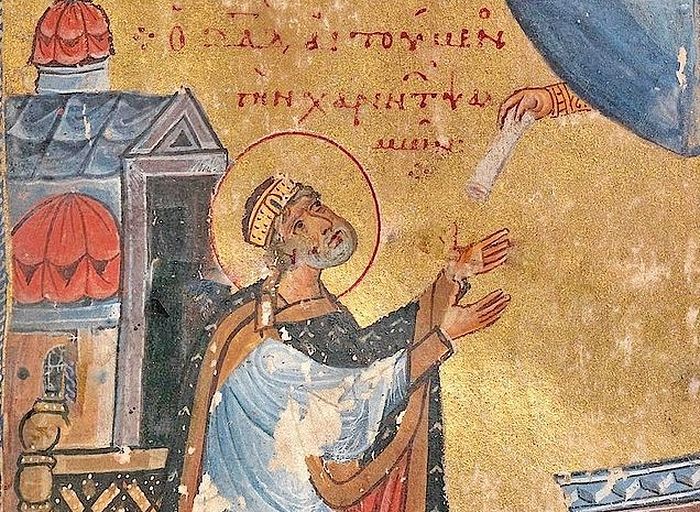 In contrast to the versification we are
accustomed to, the internal rhythm of the Psalter is expressed to a greater
extent by semantic rather than rhythmic means. Abundant repetitions, semantic
parallels, returns, refrains create a special “semantic rhyme”, which is not
lost even in the translation of psalms into other languages. In addition, the
numerous repetitions in the Psalter, according to Metropolitan Hilarion
(Alfeev), “are not mechanical, but, as a rule, superimposed on the development
of the main idea, give a huge variety of new approaches and sounds, each time
richer, more penetrating” .
The Great Lent is not only a time of purely prayerful work , but also a period of attentive, sober reflections on one’s spiritual path, to which the psalms of King David have been so skillfully set up for several millennia. In this regard, it was established during Holy lent to perform the Psalter twice a week during the divine service, which makes it possible more often than at other times of the year to learn from the “wonderful words of the divine psalmist.”
THE PLACE OF THE DIDACTIC ELEMENT IN AN ORTHODOX SERVICE
Let’s move on to the next type of liturgical texts, directly related to the fulfillment of Holy Scripture, perhaps somewhat unexpected: that is, the sermon. According to Canon 19 of the Sixth Ecumenical Council, it is necessary to deliver sermons “on all days <…> choosing from the Divine Scripture the understanding and reasoning of the truth”, that is, daily and exclusively on the basis of the Holy Scripture, explaining its content.
Speaking about the history of the formation of the liturgical rite, we mentioned that in early Christian times, preaching occupied a particularly important place behind the divine service. Naturally, when the Apostles were still alive, they preached first of all. In addition, liturgical forms were not developed, there were very few liturgical texts, so the sermon was of particular importance. In ancient times, the liturgy began with a sermon, as evidenced by canon No. 19 of the Laodicean Council, which took place in the 4th century, where it says “according to the episcopal homilies … make a holy offering.”
But even now the sermon occupies a special place in worship. In the liturgy its real place is after the Gospel. Those who were lucky enough to attend such a service could feel that in the liturgy, not that something is changing, the main theme is the same and always the same, but this position of the sermon puts a very special emphasis. Thus, the first part of the service, the liturgy of the catechumens, takes on its full didactic character: this part includes the singing of psalms, the reading of Holy Scripture, and here is the place for preaching.
It is sometimes said that preaching after the Gospel disrupts the course of the liturgy, but this is not true. On the contrary, the Word of God once again appears to us through a sermon, and this sermon does not stop, although two thousand years have passed, and all languages have heard it. And sometimes, when a sermon is delivered after the service, in its usual place, it is a pity that we did not hear these words earlier, they would have made our participation in the service more complete. Another thing is that it is difficult to deliver a sermon that would organically fit into the service.
It must be said that the very principle of preaching, teaching, and interpretation is connected with the almost completely lost part of the divine services: the reading of patristic writings.
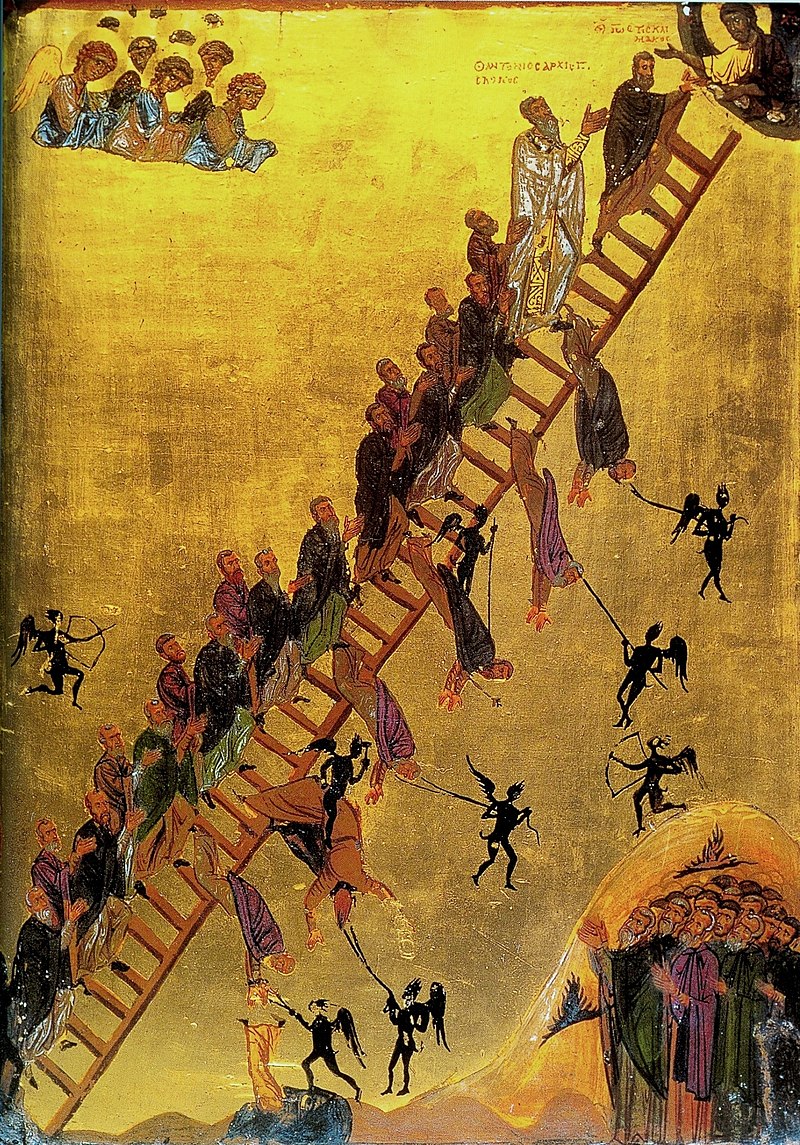 The typikon indicates
(mainly vespers and matins) to read patristic writings during the divine
service. It is presumed to read works of Simeon Logothete, John Chrysostom,
Theophylact of Ohrid, St. Ephraim the Syrian, Lausiac History, Ladder of
Paradise and many other works. The life of the celebrated saint of that
particular day is regularly read. And one can imagine how wonderful it is, for
example, at Matins, to hear the interpretation of the Gospel, thereby
preparing in advance for hearing it at the Liturgy. It is believed that in
ancient Russia the art of preaching was unknown, the sermon itself did not
exist, but instead the Prologue was read, i.e. collection of readings for
every day of the year. These were patristic creations. It must be said that
this part of the service is sorely lacking. In modern practice, the reading on
Thursday of the 5th week of Great Lent has preserved this tradition, when the
life of St Mary of Egypt is read at the “standing of St. Mary of Egypt”.
According to the Typicon, everyone sits and listens, this is both a respite in
the service and a time for learning. At the Sunday All-Night Vigil, six
instructive readings are prescribed, at weekday matins - four or five
(depending on the period of the year). As you can see, this is a pretty
significant part of the service.
A special text is associated with the teachings, which appears in the Triodion system: it is called the “synaxarion ”, or synaxarium. This word comes from the Greek verb συναγω - “to gather”. The explanation for this term can be twofold. On the one hand, it is read at cathedral services, which are called “synaxis”. On the other hand, in this text, as it were, information about the holiday is collected.
There are amazingly beautiful synaxaria, unfortunately, they are no longer read at services, but you can open the Triodion yourself and read them, although they are not written in a very comprehensible language. A few years ago, at least two translations of the Synaxaries into Russian were published, which greatly simplifies their use during divine services in the churches of the Russian Orthodox Church.
 Before
studying the liturgical services and talking about the prayers and hymns that
comprise them, the order and manner of their execution, let us consider the
types of church hymns themselves. Unfortunately, many ministers and preachers,
using the terms “Troparion”, “Kontakion”, “Stikheron”, “Irmos”,
“Exapostilarion” (or “Photagogikon”), etc., have no idea of their history and
cannot explain why this or that hymn is called in a certain way. Needless to
say, it is important and even necessary to know the meaning and etymology of
the terms that are used in the liturgical books and in all the manuals
dedicated to the Charter, including this very book. We will therefore first
consider the types and a short history of all the church hymns. The contents
of this chapter are based on the books of two eminent Russian liturgists:
‘Liturgics. Hymnography and Eortology’ by Archimandrite Cyprian (Kern), and
‘The Explanatory Tipikon’ by M. Skaballanovic; these sources are to be
consulted for more detailed information.
1. HYMNS FROM THE BIBLE
Christianity was born in a Judaic environment, and its influence was felt long after the Ascension of the Saviour and the Descent of the Spirit upon the apostles. The Lord’s disciples maintained the connection with the temple in Jerusalem, the synagogues and the “assemblies” for many years, even after the formal break with Judaism. For this reason our whole worship service is imbued with Old Testament material. Whole songs and verses of psalms, prophetic lines, and images from the Old Testament fill our divine service. Not only are the psalms themselves “recited poetically” in our churches, not only are “biblical hymns” sung in their entirety together with our canons, not only are all our prokeimena and alleluaria put together from Psalms, but even the stikhera and troparia are full of Old Testament allusions. Even the Eucharist, a New Testament service, is based on prayers inspired from the Old Testament.
1.1. PSALMS
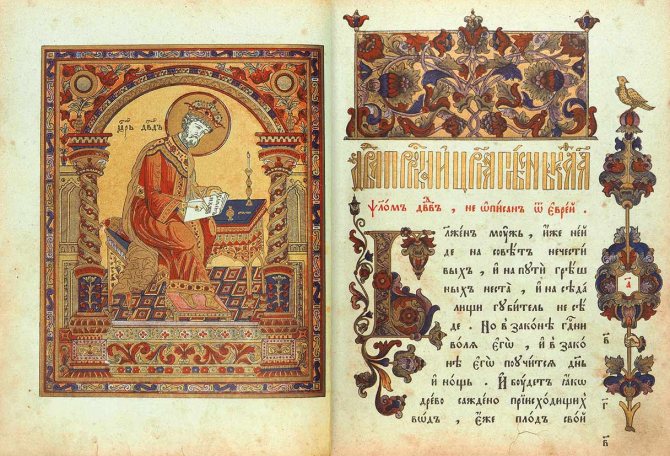 The Psalms, which were divided by their
content into praise, repentance and prayer by the ancient Jews, became part of
our worship very early. As they were the poetic backdrop of the Old Testament
worship, so they have remained for Christians. ” The sun would rather not rise
than the Psalms go silent in a monk’s cell,” says an old saying. The Psalter
was used by Christians very early on; indeed, it has never ceased to be used.
The Council of Laodicea prescribes in its 17th rule that psalms should not be
sung consecutively, but in connection with other prayers and readings. One may
conclude from this that an order of recitation of Psalms already existed at
that time. The later Acts of the Apostles identify special morning psalms to
be read at Matins (probably Psalm 62: “Lord, my God, I come to Thee in the
morning…”) and an evening psalm (Psalm 140: “Lord, I have cried unto
Thee…”). In the sixth century a regulation was introduced to sing the 1st
kathisma “Blessed is the man…” at Sunday Vespers.
Nowadays, according to the Charter, the Psalms must be entirely recited during one week, and twice a week during the period of Lent. In addition to these direct readings of the kathismas, almost all services of the daily cycle contain a selection of psalms (e.g. the six Psalms (Hexapsalm) at Matins) as well as the hymns that include psalmic verses (e.g. “God is the Lord,” prokeimena, etc.) or psalm-based prayers (e.g. some prayers at Vespers).
1.2. BIBLICAL HYMNS
The biblical hymns are the second pillar of the Orthodox song-writing tradition. These hymns were sung by the Old Testament prophets and righteous men about the most important events in their lives and in the history of all Israel. These Old and New Testament hymns have been incorporated into the worship service as the foundation of the canons. The structure of the canon cannot be understood without considering these hymns. Therefore, their content, their order and their performance shall be explained in more detail in connection with the canons.
1.3. PROKEIMENON
The Prokeimenon (from the Greek for “preceding”) is a Bible verse (usually from a Psalm) preceding a reading from the Old or New Testament and chosen for this purpose with a corresponding reading, for example, in memory of the Apostles: ” Their message went forth throughout the whole world and their words reached the ends of the universe”; on the Day of Transfiguration: “Tabor and Hermon rejoice in Thy name”; the Sunday First Tone: “Now I will arise, says the Lord;
I will set him in the safety for which he yearns” and so on. The prokeimenon is also accompanied by its own verse. According to the fact whether the prokeimenon contains a single verse or three verses, the prokeimenon is called short (minor) and long (great). Great prokeimena can be used only at Vespers (on Saturday evenings, at Vespers of the Twelve Great feasts, on Sundays of the Lent, on all the days of Bright Week at Vespers). At the same time, the usual prokeimena are sung at Vespers, Matins, Hours and Divine Liturgy, i.e. at all the services of the daily cycle, where the Holy Scripture (Prophecies, the Apostle and the Gospel) is read.
All prokeimenes are to be found in the liturgical Apostle as well as in the services for the given day or feast as given in the Mineaia or Triodion (Sunday prokeimenes are also found in the Octoechos).
The history of the prokeimenon is as follows: it is the remainder of the chanting of a Psalm preceded by a refrain of some verse more suitable or familiar to the people. As early as the fourth or fifth centuries whole Psalms were sung in this manner.
Sometimes the prokeimenon is the first line of the Psalm, and its verse is one of the following verses of the same Psalm, such as the prokeimenon sung on Saturday evening: “The Lord reigns…” (Psalm 92). Sometimes, on the other hand, a verse from the middle of a psalm is taken as a prokeimenon and its verse is the 1st verse, which confirms the ancient custom of singing the whole psalm, which has been reduced over time to only one 1st verse, such as the prokeimenon for the feast of Our Lady: “I will remember Thy name in every generation and generation” and the verse “I will burst forth my heart with a good word”.
1.4. ALLELUARIUM (or Alleluiar)
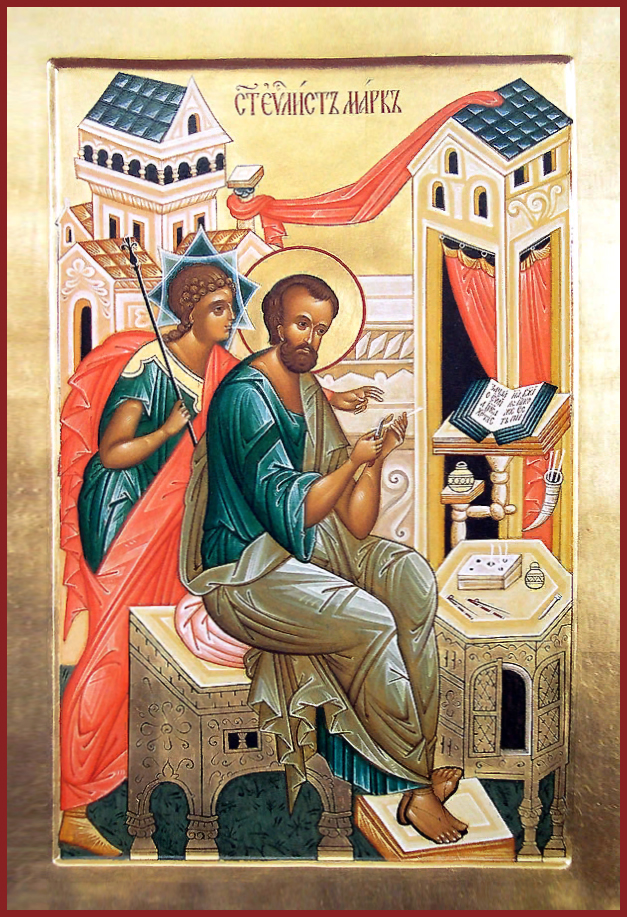 The Alleluarium is a verse or verses taken,
like the prokeimenon, mostly from the Psalter (often they are adjacent verses
from one psalm) and from other holy books (very rarely) and preceding the
Gospel reading, and only in those cases where the Apostle was read before it.
These verses of the psalm alternate with the singing of “Alleluia” (hence the
name). This Hebrew word literally means ‘praise Yahweh (the Lord)’ and, as M.
Skaballanovich notes, ‘apart from ‘amen’, it is the only Hebrew expression
that the translator hand has not dared to touch, leaving it also in those
sounds in which it is inspired by God’. In divine service, the Alleluia is
often used as a refrain for the psalms, but the liturgy “is almost the only
place (the others are at Lenten and Funeral Matins) where it appears as an
independent hymn, having, on the contrary, a refrain called Alleluarium.” In
the East, as early as the seventh century, the allluarium was sung in the
Church of Jerusalem, just as it is sung in the liturgy of the Apostle Mark in
Alexandria.
Like the prokeimenon, the alleluia can be found in the liturgical Apostle, as well as in the service of the day or holiday in the Minea or Triodion (Sunday alleluias are also found in the Octoechos).
1.5. THE COMMUNION VERSE (KOINONIKON)
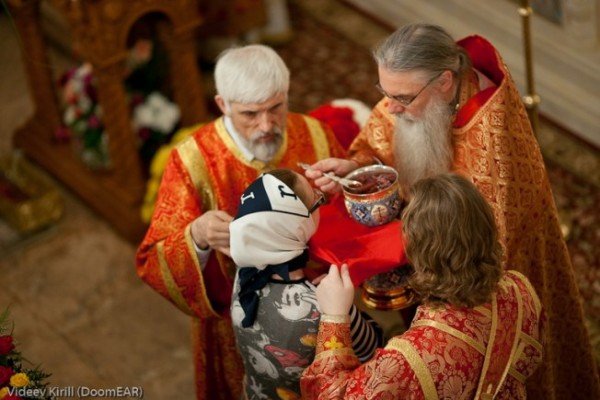
The Communion, or kinonikon, is a biblical verse sung during the communion of the clergy at the altar. In the vast majority of cases, communion verses are taken from the Psalms, except for the communion of the Epiphany (“The saving grace of God is revealed to all men” - Tit 2:11), Easter (“Take ye the body of Christ, ye shall taste the fountain of deathlessness”) and the Pentecost (“He that eateth my flesh and drinketh my blood abideth in me, and I in him, saith the Lord” - cf: Jn. 6, 56). The tune of the communion verses is solemn and slow, corresponding to the sacramental moment of the communion of the clergy.
The Communion verse of a given day or feast can be found in the Apostle (since the Liturgy’s chanting instructions are linked to the singing of the prokeimenon), as well as in the service of the day or feast contained in the Minea or Triodion. Here are the most frequently used communion verses:
 - Sunday - “Praise the Lord from
heaven, praise him in the highest” (Psalm 148:1);
- feasts of the Theotokos - “I will take the cup of salvation and call on the name of the Lord” (Psalm 115:4);
- The feasts of the saints - “In memory everlasting shall the righteous fear not the hearing of evil” (Ps. 111:6-7), or “Rejoice, O righteous ones, in the Lord, to the righteous be praise” (Ps. 32:1).
1.6 ANTIPHONS
Antiphons is an ancient term which means, in fact, not even a form of special chants (such as troparion, kondakion, stikhera), but rather a way of singing certain psalms or hymns. The name comes from the two words anti (“instead of”, “against”) and phoneo (“to speak”, “to make a sound”) and means to sing in turns, alternately, or to sing in two choirs. The origin of this mode of singing is from ancient Greece; it was known in ancient drama, and from there it passed into ecclesiastical usage. There is evidence that Christians were using antiphonal singing as early as the second century. But apart from this meaning as a mode of singing, the word “antiphon” is also used in Liturgics to designate individual canticles. Here are the main uses of the term:
1. Typica (figurative) and all-day antiphons. These are hymns performed by two choirs (according to the Charter) and are sung at the beginning of the liturgy of the catechumens throughout the year. The Charter makes a distinction between the Typica (Psalms 102, 145 and the Beatitudes: “In Thy Kingdom…”), which are sung most days, and the all-day antiphons (Psalms 91, 92 and 94 with their respective refrains), which are sung on weekdays in the case of saints without a sign. Both of them are found in the Irmologion.
2. Feast Antiphons. The Feast Antiphons are sung in the liturgy on the Twelve
Great Feasts of the Lord. They are composed of the verses of different psalms,
according to the content of the feast. These verses of the psalms alternate
with special refrains: the refrain “By the prayers of the Mother of God, Thou
Saviour, save us” is sung in connection with each verse of the 1st antiphon
and a special refrain is executed in connection with the 2nd antiphon: “Save
us, O Thou Saviour of God,
3. The Psalter antiphons. The first kathisma of the Psalms, divided, as the others are, into three hymns, is called an antiphon. This is because, according to the Charter, at the polyelaic services and at the all night vigils the whole kathisma or its first “Glory…” (the first antiphon) is sung antiphonically, that is, alternately in two choirs.
4. Ascents antiphons (Anabathmoi or Stepenny). These antiphons form part of a solemn celebration of the Great Lenten Matins, and are similar to the AscentsPsalms (i.e. Psalm 119-133), also called “The Song of Ascents”. These were sung by the pilgrims when they ascended the steps of the Temple in Jerusalem. There are 8 antiphons in total (according to the number of tones), the text of which can be found in the Octoechos. Each antiphon of each tone consists of three parts, except for the 8th tone, which has four parts. These hymns are of ascetic content, they contain words about purification and correction of the soul from passions and sin. They are chanted in a special melody. A glorification of the Holy Spirit is added at the end of each gradual antiphon.
1.7. POLYELEOS
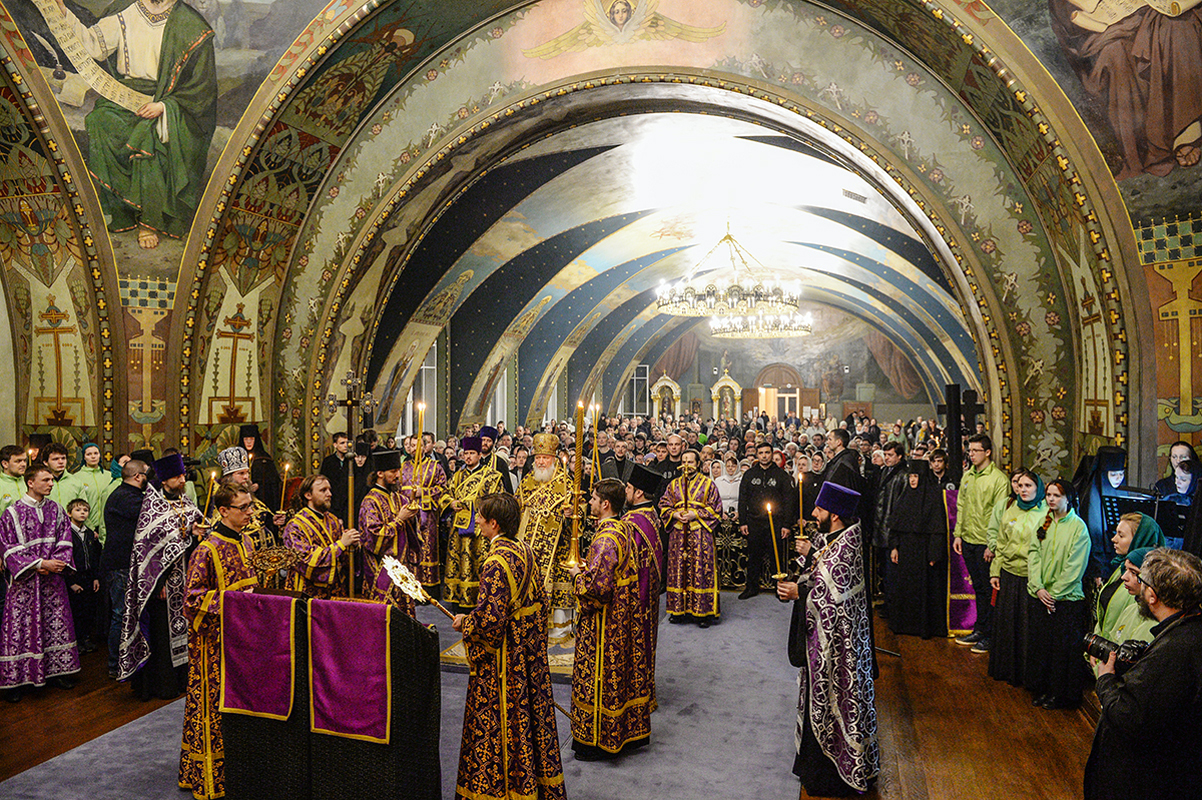 Polyeleos is a technical expression in our
liturgical tradition, applied to the two psalms (134 and 135), which are
solemnly sung at Matins after the kathismas and before the megalynarion and
the Gospel readings. The Greek term polyeleos is composed of two words: poly
‘many’ and eleos ‘grace’ or ‘mercy’ and means “abundant grace”. The Psalms are
so called because of the frequent use of the phrase in Psalm 135: “For His
mercy endures forever”, and because they also speak of the great favours that
God gave to the people of Israel during their Exodus from Egypt and their
wanderings in the desert. According to the Charter, the Polyeleos is sung only
on Great Feast, or those with Vigil or Polyeleos and on certain Sundays,
although in parish churches the Polyeleos is sung at all Sunday mornings.
1.8. THE “UNDEFILED”
This term refers to the 17th kathisma of the Psalter, which consists of Psalm 118 alone (Septuagint). The psalm begins, “Blessed are the undefiled in the way, who walk in the law of the Lord…”. The whole psalm is named after the word in the first verse. The chanting of the Psalm 118 is very important in the course of the church year. It is sung at Matins on Saturdays, according to the Charter it is also sung at Sunday matins when there is no Polyeleos and thus for most of the year, and at funeral services. In contrast to all other kathismas of the Psalms, Psalm 118 is not only divided into three parts (Glories), but is furthermore divided into two halves by the word “middle” in the middle of the second “Glory”, as it is sung in this way at some funeral services. This kathisma had a prominent place already in the 10th century in the Constantinople Charter of the Great Church.
2. CHURCH HYMNOGRAPHY
The hymn writing of the church authors gave an extraordinary abundance of liturgical hymnographic material, both in the sense of its vastness and variety of forms.
2.1. STICHERON
As the name itself indicates, it is a hymn written in verse form or connected to verses. In ancient times the term Stichera (plural in Greek) was used to refer to the teachings of the Old Testament, written in a poetic form. It is possible that in ancient Statutes the term ‘sticheron’ referred to the verses from the psalms themselves, and then this name moved to the chants that were sung along with these verses. The modern Church Charter contains several types of stichera, depending on their place in the daily liturgical cycle:
- Stichera for “Lord, I have cried…”;
- The Lity stichera;
- The aposticha;
- The “Praise” Stichera.
Stichera for “Lord, I have cried…” are chants which are connected to the single verses of the vespers Psalms “Lord, I have cried…” (140, 141, 129 and116). Hymns on “Lord, I have cried” are already mentioned in the seventh century, but they were called Stichera much later (originally they were called troparions). The ancient verses were shorter than the present ones. This is especially evident from the first verses to “Lord, I have cried…” in the Octoechos. Over time excessively long verses appeared, especially in the Slavonic services. The modern Church Charter prescribes a daily use of Stichera on “Lord, I have cried…”. Their number varies depending on the importance of the event that is celebrated: 6, 8 or 10.
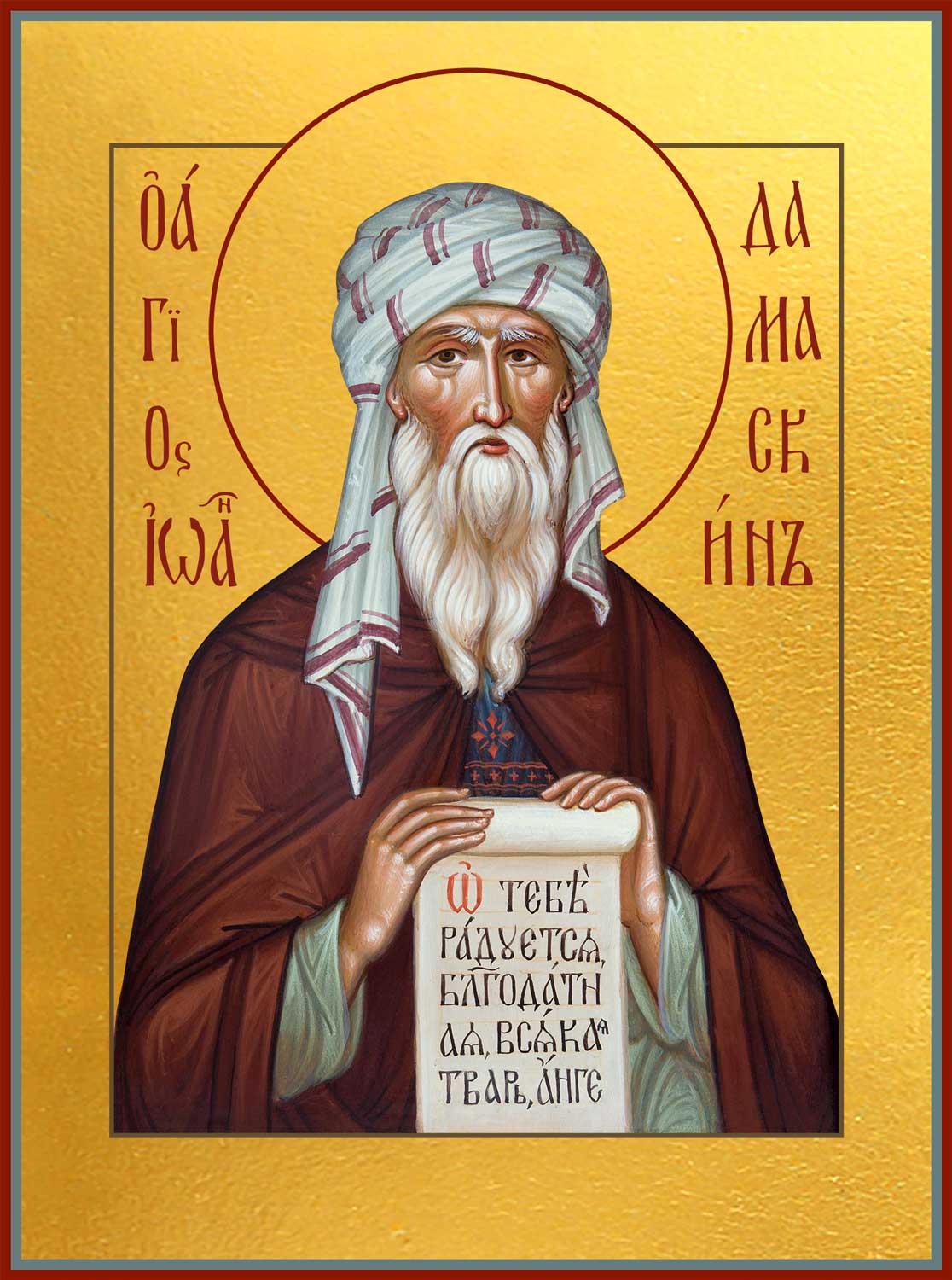
The last Sunday Stichera for “Lord, I have cried” has a special name - the “Dogmaticon”. The author of the Dogmaticon seems to be Saint John of Damascus. Such a designation is due to the content of these Stichera, which initiate Christians into the mysterious profoundness of the faith.
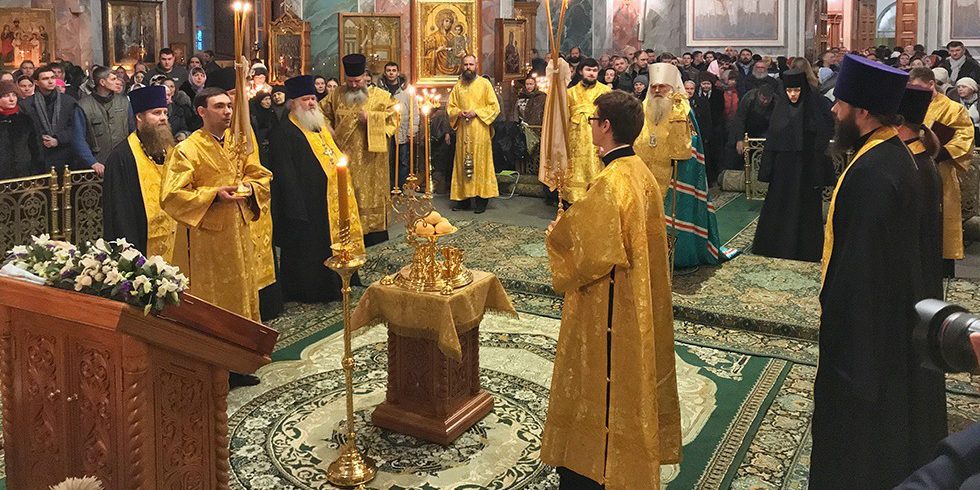 The Lity Stichera are so called because they are
sung when the priests go out to the Lity. These Stichera are sung without
verses or refrains at all, so that the original meaning of the term Stichos
(verse) is lost here. The first Lity Stichera appeared in the manuscripts of
the Jerusalem Charter in the XIII century. However it is possible to suppose
that they appeared in more ancient times, as the procession to the Lity was
already present in the Jerusalem practice in the V century. It is possible
that already at this time some chants were sung at the entrances of the
clergy.
The Aposticha appeared approximately at the same time as the Stichera on “Lord, I have cried” and differ from them by greater solemnity and depth. They were first called Aposticha in the ninth century charters. Their particularity is also shown in the manner of their performance: the first Apostichon is sung without a verse, while before the rest special verses are sung, depending on the feast.
The Praise Stichera are named after the Psalms of Praise (148, 149, 150), the verses of which are sung before the Stichera. These psalms call upon all creation to solemnly praise the Lord, and the Stichera accompanying them are solemn and full of praise. As Archimandrite Cyprian (Kern) indicates, these verses are sung in the most solemn part of Matins. They appeared in the charters in the 7th century.
To conclude the topic of the Stichera, it is necessary to mention the way they are sung together with their verses. Nowadays two practices exist, depending on the possibilities of the choir: either the canonarch proclaims the first half of the verse, and the choir finishes the rest of the verse and then sings the Sticheron (in cathedral choirs), or the canonarch says the whole verse and the choir immediately sings the Sticheron (in smaller choirs). The first practice is more preferable, though its major difficulty lies in the singing of the verses, which are sung in a special way that differs from the Sticheron (which is a stumbling block for inexperienced or insufficiently trained choirs). Before the ‘Glory’ verse, the canonarch acclaims ‘Glory, tone…’. (names a tone)” and the choir sings: “Glory to the Father, and to the Son, and to the Holy Spirit”, and before the Virgin Mary or the last verse the canonarch chants: “Both now and always, tone… (he names a tone)”, and the choir sings: “Both now and always, and unto the ages of ages. Amen”. If the Sticheron for “Glory, both now and always” is sung at once, the canonarch acclaims: “Glory to the Father and to the Son and to the Holy Spirit, both now and always, tone… (he names a voice)” and the choir sings: “Both now and always, and unto the ages of ages. Amen” (and then sings the sticheron).
2.2 TROPARION
A troparion is the oldest Christian chant, from which the hymnography of the Church started its development. The origin of the word, and therefore its true meaning, can be explained in various ways. The word troparion comes from tropos, which means “victory sign, trophy”; in this case its meaning is the praise of the victory of a martyr over paganism, of a venerable monk over the passions, or of the Saviour Himself over death. Another interpretation connects it with the term tropos, which means “pattern”. Literally this technical term indicated the mode of singing, the melody or harmony in which the chant was sung. It was the first hymn that did not have a scriptural source. In the liturgical books the term troparion is used for two types of hymns:
1. A dismissal troparion (or Apolytikion) - a hymn sung before the dismissal. It is a troparion in the common sense of the word. These troparia are found in the service of a feast or saint (in the Minaea or the Triodion) at the end of Vespers (sometimes at the Little Vespers). All the troparions can also be found in part II of the Liturgical Psalter.
2. Canon troparions are the hymns that constitute the canons.
2.3 KONTAKION.
The word Kontakion comes from the Greek “stick” (a scroll of parchment was wound onto a special stick, and the ancient kontakion was a whole complex of chants, which formed a kind of theological poem and was kept as a separate scroll). Tradition associates the origin of the Kontakion with the name of venerable Roman the Melodist, a contemporary of Emperor Anastasius I (491-518). The ancient Kontakion in its classical form is a collection of 25 chants gradually developing one general theme. This poem had the following components: an opening strophe, the ‘kukulion’, written in a particular meter and ending in a particular refrain; and Ikos, most often 24, written in a common meter and ending in the same refrain, which was the last phrase of the ‘kukulion’.
Throughout history the 23 Ikos were gradually omitted, leaving only the Kukulion and the 1st Ikos, whereupon the Kukulion received it’s name Kontakion. Therefore in its present form and volume the Kontakion is a small hymn, very similar to the Troparion, which in Russian practice is even sung in the same melody as the Troparions (the Serbs use a special chant). The Kontakion, however, slightly differs from the Troparion in its content. As M. Skaballanović points out, the Kontakion presents usually a different side of the feast event, than the Troparion: while the Troparion presents the external aspect of the event, the Kontakion presents the internal meaning of the feast, or vice versa; moreover, the Kontakion presents the event in a more complete way. Examples of these are the Kontakia and Troparia of the Nativity of Christ, Epiphany, Ascension and Transfiguration.
Kontakia are included in the service text of a feast or saint (in the Minaea or in the Triodion) after the 6th or after the 3rd hymn of the canon. Likewise all the Kontakia together with the Troparia can be found in Part II of the Liturgical Psalterion. Apart from Matins, the Kontakion is read at the Hours, sung at the Liturgy, and on feasts with a Doxology and Polyeleos - at Compline. The latest in origin are the Sunday Kontakia and Ikos’. They are mentioned only in manuscripts of the 11th century. Modern liturgical service has preserved the integrity of the Kontakion only in the funeral rite of the priests. The usual Kontakion “With the saints rest…” here is accompanied not only by one hymn “You alone are immortal…”, but by all twenty-four.
2.4 CANON
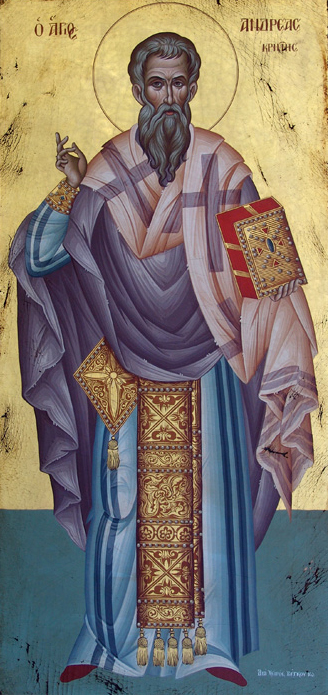 The canon is the latest form
of Byzantine liturgical poetry, which took its present form in the VIII-IX
centuries. St. Andrew of Crete (650-726), the author of the Great Canon of
Penance, is considered to be the founder of this new type of liturgical
poetry. The canon is a complex chain of Old Testament hymns interwoven with
Christian chants. This type of hymn writing became popular among the Byzantine
writers, the first attempts to compile canons easily found imitators, and very
soon canons occupied a dominant place in liturgical usage, completely
replacing Kontakia. The most famous canons are those of Saint Cosmas of Mayum
and Saint John Damascene, who wrote canons for almost all of the Twelve Great
Feasts.
The number of hymns in the canon has varied over time. A description of a 7th century Sinai Matins testifies that at this time all the biblical songs were sung simply, without troparions, while special refrains already existed for the 8th Ode. Thus the original form of the canon was a one-ode canon, which consisted of a single 8th ode. Soon it became a two-ode canon, by joining ode 8 to ode 9. Besides the 8th and 9th odes, the troparions were gradually joined to the daily chant (on Monday to the 1st hymn, and so on); thus a triodion was formed, which for a time was the exclusive form of the canon. Finally, under the influence of Saint Andrew of Crete, Saint John of Damascus and Saint Cosmas of Mayum, full canons were introduced in the 8th century, corresponding to the number of the Biblical odes, of 9 odes.
Although theoretically the canon consists of 9 odes, in the contemporary Church Statutes the 2nd ode is rarely sung. In particular it is sung at Matins on only 11 days of the year: on Tuesday of the Cheesefare Week, on all the Tuesdays of the Holy Week, on Saturdays of the Lenten Fast, Cheesefare Week and Trinity Week, and on Thursday of the 5th week of Great Lent. The 2nd ode is also sung very rarely at the Lenten service: on December 21, on Monday, Tuesday, Wednesday and Thursday of the 1st week of Great Lent, on Saturday of Lazarus, on Holy Tuesday and on all the Tuesdays from St Thomas Sunday until the last day of Pentecost. In all other cases the canons contain not more than 8 odes.
Thus, the canons are based on the biblical odes:
The Ode of Moses (Exodus 15:1-19) influenced the 1st Ode of the canon.
The Ode of Moses (Deuteronomy 32, 1-43) produced the 2nd Ode of the canon.
The Ode of Annas (1 Kings 2, 1-10) resulted in the 3rd Ode of the canon.
The Ode of Habakkuk (Hab. 3: 1-19) gave the 4th Ode of the canon.
The Hymn of Isaiah (Isaiah 26:9-19) gave the 5th Ode of the canon.
The Hymn of Jonah (Jonah 2:3-10) gave the 6th Ode of the canon.
The song of the three young men made up the two Odes of the canon, viz: Dan. 3: 26-56, the 7th Odes of the canon, and Dan. 3: 57-88 - 8th Ode of the canon.
The hymn of the Mother of God (Luke 1: 46-55) didn’t make a separate canon, but became a part of it, it is sung as a whole nearly every day of the year (it is called “The Most Honoured” Hymn of Our Lady in Church usage and is sung between the 8th and 9th Odes of the canon).
The hymn of Zechariah (Luke 1: 68-79) gave the 9th Ode of the canon.
Ideally, the theme of the biblical hymn should be carried not only in the irmos of the Ode, but also in all of the troparions of the canon. This is very difficult to achieve, however, as in addition to being faithful to the biblical content of the song, the composer must also include a glorification of the saint of the day or event being celebrated in the particular canon hymn. In addition , the Church Charter also connects the use of canon odes to biblical songs. Apart from serving as a theme for the authors of the canons, biblical songs are also used in church services. Verses of biblical songs serve (or should serve) as refrains to the individual irmos and troparions of the canon. However, almost everywhere, practice has eliminated the use of verses of biblical songs, except on the seven days of Lent. They were replaced with special shortened refrains in honour of the person or event being celebrated: “Glory to Thee, O God, glory to Thee,” or “Have mercy on me, O God, have mercy on me,” or “Most Holy Mother of God, save us,” or “Venerable Father … (name) pray to God for us”. The process of replacing biblical songs with verses began in the 16th century and by the present time the canon had become independent and separated from the songs of the Holy Scripture.
Each song of the canon consists of an irmos, troparions and katavasia.
Irmos is a Greek term that means “connection”, “row” and comes from the verb “to string, to put in a row, in connection with something”. The Irmos is the ideological link between a given canon Ode and a biblical song; it is also the musical and metrical pattern for all the troparions of a given canon song. All the troparions, with regard to accentuation, syllable count and troparion, are to be set in line with the irmos, as if strung on it. Thus, in the ancient canons, the Odes that begin with short irmos always have small troparions, and vice versa.
 The troparions of the canon Odes
are the strophes of a given Ode, which must be adapted both metrically and
melodically to their irmos; moreover, in their ideal meaning, they must also
somehow match the content of the song in question. This means that, to glorify
an event in the life of the Lord or the Mother of God, or in the memory of a
saint, the troparions of the first song, for example, should be ideologically
connected with the passage through the Red Sea. But since this is difficult to
achieve, even such outstanding song-writers as St. Cosmas of Mayum and St.
John Damascene often deviated from the themes of biblical songs when composing
their canons.
Usually (but not always) the penultimate troparion is dedicated to the glorification of the Blessed Trinity (called the Trinity Troparion or Triodikon and the last troparion is dedicated to the glorification of the Mother of God (Theotokion).
The katavasia is the same irmos, but it is sung at the end of the song. This term comes from the verb, which means “to descend” or “to come together”, as in monastic liturgies the katavasias are sung not by one choir, as it happens with the irmos, but by both together. Both choirs come down from their elevations, line up in the middle of the temple and chant the final irmos together.
The acrostichon, or kraegranesie, (line-edge) is a characteristic feature of Christian hymnography, particularly in the creation of the canons. The acrostichon is borrowed from non-Christian poetry and is of very ancient origin. It is a purely external, technical embellishment of the canon. The acrostichon is the phrase that is obtained by combining the initial letters of all the irmos and troparions of the canon together (sometimes only the troparions). The acrostic refers to the event being celebrated (e.g. on Palm Sunday - “Hosanna Christ the blessed God”), or very often, and this is especially valuable for historians, it reveals the name of the author of the canon. While it has no liturgical use and does not stand out in any noticeable way to the ears of those praying, it is nevertheless important as a testimony to the time of writing or to the poet himself. It is clear that the “acrosticha” are only noticeable and accessible in the original pre-translated language of the chants.
To conclude our study of the canon, it is necessary to review the process of its composition. First, the songwriter composed an irmos for each song, which had to reflect the theme of the corresponding biblical song. Then, following the example of the irmos, and following its metrical and melodic structure, the author composed troparions, which reflected the meaning of the feast, and, at the same time, the initial letters of all the irmos and troparions together were to provide an acrostichon, connected with the event being celebrated. It is clear that such creation was a true art, and both the talent of the author himself and divine inspiration were needed for its realisation.
2.5 KATHISMA (or Sedalen)
A kathisma is a hymn, timed for the sitting of the faithful while being sung. Indeed, in monasteries, when a service was traditionally performed for several hours, rest after long periods of standing was needed, and these moments of rest were the kathismas. Already in the VII century they were sung after the reading of the Psalter.
In their contents and melody sessional hymns are close to troparions, in ancient charters they are called “troparions”. At present the sessional hymns are sung:
- After the reading of the kathismas at Matins (from the Octoechos, Mineaia, or Triodion);
- After the polyeleos (Mineaia or Triodion);
- After the 3rd ode of the Canon at Matins (Mineaia or Triodion);
- After the 6th ode of the Canon to the Mother of God at the Little Vespers (Octoechos).
2.6. YPAKOË
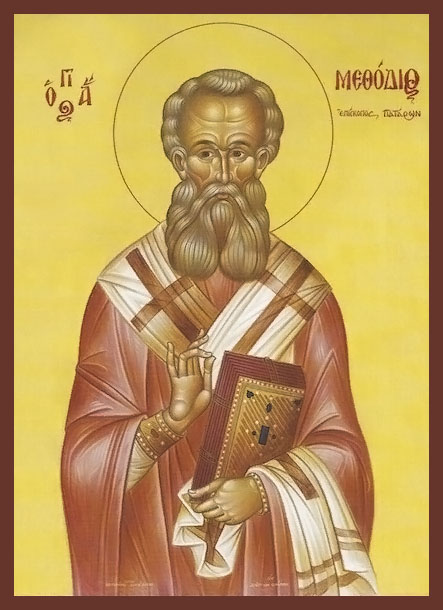 Ypakoë is one of the
oldest church chants. It is derived from the Greek verb, which means “to
hearken” and “to be obedient”. Already St. Methodius of Pattara, who lived in
the 3rd century, in his work “The Feast of the Ten Virgins” mentions a chant
that he called “ypakoë”.
The chant of the ypakoë is close to that of the sessional hymn (kathisma), but according to the Charter, the chanting of the ypakoë should be done while standing. The proximity of the ypakoë to the sessional hymn is also confirmed by its place in the divine services of the daily cycle. At present the ypakoë are sung at the places where sessional hymns are usually sung: at the Sunday morning service of the polyeleos, at the 3rd ode of the canon on some feasts, and at the Sunday midnight service of the Trisagion (if there is a midnight service on Sunday).
2.7. PHOTAGOGICON (or Svetilen)
The Svetilen is the hymn which ends the Canon. It is a more solemn chant than the sessional hymn, and in ancient times it had a specific tune, unlike the troparion or the canticle. The significance of this name is that the Photagogicon is sung at the end of Matins, just before the acclamation “Glory to Thee, who hath shown us the light” (according to the Charter, this acclamation is pronounced after dawn). In addition, the very content of the Svetilen reveals the theme of light. Performed before sunrise, the it also announces a spiritual dawn. The Photagogica are also called exapostilaria (from the verb “to send out”), inasmuch as to sing this chant the canonarch was “sent out” to the middle of the church. In the liturgical books, however, the term exapostilarion is used only in relation to the Octoechos, both on Sunday and midweek.
One of the most ancient Photagogica is ‘Holy is the Lord our God’. This verse (Psalm 98:9) is sung at each Sunday Matins and is often sung before the Exapostylarion, but sometimes it is sung alone, without the other Photagogica (on Palm Sunday and Holy Saturday). The Sunday exapostilaria appeared in the 10th century, and by their contents each Sunday exapostilarion is a paraphrase of the corresponding Gospel of the morning.
The Sunday and weekday exapostilaria are in the annexes of the Octoechos, while the other photagogica can be found in the service texts of the respective feasts and saints in the Minaiea or Triodion.
2.8. AKATHIST
The Akathist, or ‘non-sitting hymn’ is a poetic work, which is close in form to the ancient Kontakion, but at the same time differs significantly from it. It is also a long poem, consisting of a main kontakion with a definite ending or refrain, followed by 24 chants. But whereas in the ancient Kontakion the opening chant was only followed by the Ikos, in the Akathist the 12 Ikos and 12 Kontakia alternate, the Ikos ending with the same refrain as the first Kontakion, and all the other Kontakia ending with the refrain “Alleluia”. The first of the known akathists is an akathist in honour of the Most Holy Mother of God, written, probably, during the reign of Emperor Heraclius (610-641) or, more precisely, in the year 626, i.e. after the liberation of Constantinople from the Persian invasion. There is also a note to this effect in the akathist itself: “Hail, fire-worship extinguishing”. The author of this hymn is considered to be Patriarch Sergius of Constantinople (610-638) or his contemporary George of Pisidia, hartophylax of Hagia Sophia under Emperor Heraclius.
 The liturgical use
of the akathist to the Mother of God is prescribed in our Typikon on the 5th
Saturday of Lent at Matins (this feast is called the Praise of the Theotokos).
There are no other akathists in the orthodox liturgical charter. However an
uncountable number of the currently known akathists were written in the 19th
and 20th centuries.
Although many believers prefer akathists to other prayers because of their simplicity and comprehension, theological content of many akathists is still inferior to the depth and expressiveness of the psalms and ancient church hymns (stichera, canons). Archimandrite Cyprian (Kern) has even sharply criticised contemporary akathists: ”… all the endless number of akathists which have proliferated in Russia especially, are nothing but a miserable and contentless attempt to rehash the classic akathist. <…> Some of them are [a] mere listing of geographical and personal names of princes, saints and venerable men with very few and poorly contained praises or, as in the akathist to the Passion of Christ, a mere Uniatic adoration of plagues, nails, etc.”.
Bearing in mind, however, the attachment to akathists which is present among the clergy and the faithful, it is possible to recommend that they should be sung at the service of Paraklesis, that is, outside the services of the daily cycle, where akathists are not at all envisaged by the Charter. This is probably the only correct way of performing the akathist, whereas the modern practice of singing akathists at the end of Vespers or at Matins instead of the kathisma is, after all, an artificial innovation. Archimandrite Cyprian (Kern) also strongly opposes the singing of the akathist at Matins: ”… replacing the kathisma of the Psalter with an akathist, as - alas! - frequently done, is simply an abuse of the Charter, liturgical illiteracy, and aesthetic tastelessness.
2.9. SELF-TONED (IDIOMELON), SELF-SIMILAR (AUTOMELON), SIMILAR (PROSOMOION) CHANTS
Apart from the fact that a hymn can be sung in one of the 8 tones, within the boundaries of each tone there were special melodies for the stichera, kathismas and other chants. The following terminology is used in the liturgical books to make this point.
An Idiomelon (Samoglasen) is a hymn, which itself does not borrow any metrical or melodic style from other hymns, but which serves as a prototype or example for others.
An Automelon (Samopodoben) is a chant that not only has its own ways of metric and melody, but is also a metrical and melodic model for other chants. An example of such hymn is the praise verse of December 20, “O, Come Angelic Forces…”.
A Prosomoion (Podoben) is a chant which is sung according to the pattern of another Automelon. For example, on December 23 at Matins on “Praise…” 6 stichera are prescribed, which are marked with the words “similar: O, Come Angelic Forces”. This means that these verses are to be sung according to the metrical and melodic pattern of the self-similar “O, Come Angelic Forces…” (Stichera from Matins on 20 December).
-
Church Hymnology.
-
The types of Books used in the Orthodox Church.
- The Sacred Liturgical Books.
- The non-Sacred Liturgical Books.
- The types of Chants performed during Church Services.
Related Concepts
- acrostichon
- akathist
- alleluia
- alleluiarium
- alleluias
- anabathmoi
- annual-reading-cycle
- antiphon
- apolytikion
- aprakos
- authorship
- beginnings
- biblical-odes
- canon
- canonarch
- catechumenate
- church-music
- dogmaticon
- editorial-approval
- eight-tones
- entry-of-the-theotokos
- evangelarium
- feasts
- festal-antiphons
- festal-rank
- fixed-annual-cycle
- funeral-services
- gospel-reading
- gospel-veneration
- great-feast
- great-lent
- hieraticon
- hymnography
- idiomelon
- ikos
- irmologion
- irmos
- katavasia
- koinonika
- koinonikon
- kontakion
- lectionary
- liturgical-cycles
- liturgical-worship
- lunar-and-solar-calendars
- methodius-of-pattara
- modern-church-life
- monastic-practice
- nativity
- odes
- parables
- paraklesis
- paremias-bookprophetology
- paschal-cycle
- patriarch-sergius
- pericope-zachalo
- polyeleos
- praise-of-the-theotokos
- prokeimenon
- prokimena
- psalm-136
- psalmody
- psalter
- psalter-kathismata
- resurrectional-services
- rites
- roman-the-melodist
- saturday-matins
- scripture
- st-andrew-of-crete
- st-athanasius
- st-basil-the-great
- st-john-of-damascus
- sticheron
- stichologia
- sunday-exapostilaria
- tones
- trebnik
- troparion
- tropologium
- typica-antiphons
- concepts/ypakoë