History of the Russian Orthodox Church — Topic 5
The Russian Church under Metropolitans Photius and Isidore. The beginning
of autocephaly of the Russian Church. The division of the Russian Church into two metropolias.
-
The Russian Church under Metropolitan Photius
-
The Russian Church under Metropolitan Isidore
-
The beginning of autocephaly of the Russian Church
-
The division of the Russian Church into two metropolias
-
The Russian Church under Metropolitans Photius and Isidore. The beginning of autocephaly of the Russian Church. The division of the Russian Church int
-
The Russian Church under Metropolitans Photius and Isidore. The beginning of autocephaly of the Russian Church. The division of the Russian Church int
-
The Russian Church under Metropolitans Photius and Isidore. The beginning of autocephaly of the Russian Church. The division of the Russian Church int
-
The Russian Church under Metropolitans Photius and Isidore. The beginning of autocephaly of the Russian Church. The division of the Russian Church int
The beginning of autocephaly of the Russian Church
The condemnation and deposition of the uniate Isidore inevitably led to a conflict with the Uniate Church of Constantinople. For Russia, the situation was truly unprecedented: the Mother Church, from which Russians had been learning the faith for centuries, deviated into the Latin heresy. There were no direct canonical definitions for this case. It was unclear how to act in such a situation. One thing became obvious: the Russian Church absolutely needed autocephaly.
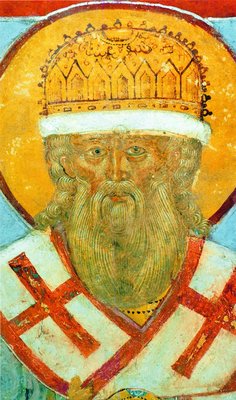
Everyone in Russia understood this. The Russians understood it with their hearts, but the mind, brought up in the legal field of the ancient church canons, refused to go to such a formal violation of the laws. The need to break the union with the formally Uniate Church of Constantinople frightened the Russians. According to Kartashev, “The moment of their historical maturity had not yet come when such an independent attitude to the oldest Church could no longer seem impossible.”
The attempt to break this impasse pursued the apparent preservation of formal unity with the Ecumenical Patriarchate (having actually separated from it) under an independently appointed Russian metropolitan. In order to maintain the appearance of formal unity, it was necessary to appoint a metropolitan with the knowledge and blessing of the Patriarch (uniate). But how to do it? After all, these are different dogmatic, and, consequently, canonical planes: the Constantinople patriarch is a Uniate, the Russians are Orthodox. There could be no direct ways to solve this issue, and the Russians went round in circles.
In 1441 Vasily II Vasilyevich wrote a message to the Patriarch, in which he is allegedly still the head of Orthodoxy. The prince tells at length about the deeds, condemnation and corruption of Metropolitan Isidore, and insistently assures the Patriarch of his firm devotion to Orthodoxy. And further, Vasily asks to appoint Jonah as metropolitan in Russia, moreover, to bless the Primate of the Russian Church in general to elect and deliver him to a home in Russia, while maintaining a canonical connection with Constantinople. Of course, Vasily understood that such a request should be supported by substantial arguments. Therefore, he tried to present them, despite their obvious weakness and frivolity: these were, first of all, the distance and difficulty of traveling to Constantinople, as well as the ignorance of the Greek metropolitans of the Russian language.
Whether this letter was sent to the patriarch is unknown. It has been preserved for us in later edition from 1445. It is likely that it was sent to Constantinople only in 1445, when the patriarch-Uniate Mitrofan died. The Russians hoped to resolve the issue of autocephaly with only the emperor. In any case, no positive response to the Russian request was received from Constantinople. Which, in principle, was not surprising. But essentially, what other justifications were needed? After all, a dogmatic argument was enough to break church relations with Constantinople: having gone to union with Rome, the Greek Church ceased to be Orthodox, the Russian Church remains in the Truth, therefore, there can be no canonical connection and communication between them. However, the Russians remained trapped by their fear to the end — to not openly declare a formal ecclesiastical break with Constantinople, and decided only on the virtually inevitable act of arbitrarily appointing themselves a metropolitan. And even then, not immediately.
The case of autocephaly was caused to be postponed by external circumstances: the dynastic war for the Moscow throne resumed with renewed vigor. Twice Grand prince Vasily Vasilyevich was captured (in 1445 and 1446): by the Tatars, and by his rival Dmitry Yuryevich Shemyaka. He was blinded (for this he received the nickname Dark in history), and returned to his desk only on February 17, 1447. The metropolitan ‘s independent appointment took place only in December 1448.
Bishop Jonah of Ryazan, who was already elected to this ministry 17 years ago, became the Metropolitan of “Kiev and All Russia”. Interestingly, his re- election took place, which, unlike the previous one, and, in fact, was really supposed to be the beginning of the autocephaly of the Russian Church. On December 5, 14481, Jonah was solemnly appointed metropolitan.
Metropolitan Jonah was born in the churchyard of Odnoushevo, on the Kostroma land. In his youth, he became a monk in the nearby Soligalichsky Resurrection Monastery. His outstanding character and abilities allowed him to advance quickly. But at the same time, the young monk also possessed the true spiritual depth of an ascetic monk, which he did not lose even at the top of the church administrative service. Even under the holy Metropolitan Photius, Jonah became bishop of Ryazan and Murom. Under him, the mission was widely spread among the Mordvins and some other pagan tribes that inhabited the borders of his vast diocese.
As Metropolitan, Jonah proved himself an active supporter of the unification policy of the Moscow princes, and strongly supported Grand prince Vasily II Vasilyevich “the Dark”. Jonah was very keenly anticipating the moment of his delivery, which had to take place in violation of the usual order of things, without the knowledge of Constantinople. He even sent a district message to his flock, in which he explained the reason for the violation of the established order - because of the apostasy of the Greeks from Orthodoxy. Although there were those in Moscow Russia who did not recognize the legality of the appointment of a new metropolitan bypassing the Ecumenical Patriarch. The representative of this party was, as is known, the Monk Paphnutius Borovsky, who did not allow Jonah to be called metropolitan in his monastery and to execute his decrees.
But it cannot be said that the Florentine Union had launched irreversible processes in the Russian ecclesiological consciousness. The Russians expected that the black streak was about to pass, the Greeks would come to their senses and return to the true faith. In the face of this expectation, they were even ready to abandon the autocephalous way of being of the Russian Church, if only Constantinople would break with the union.
With the death of Emperor John VIII– one of the creators of the uniate with the Roman-Catholics, these sentiments were documented. We are talking about a message that was sent to the last Byzantine Emperor, Constantine XII2. The thesis is repeated again that Jonah was placed by the Russians on the metropolis in an emergency - in the conditions of Isidore’s betrayal.
However, the empire was stepping on the old rake. In the face of the death of Constantinople, Basileus again relied on the ephemeral help of the Catholic West, and therefore also accepted the uniate. So, it is quite fair to say that it was not for the sake of ecclesiastical independence or any national ambitions that Russia sought autocephaly, it was forced by close historical circumstances. In order to keep the apostolic faith pure, it was vitally important to move to an independent existence.
On May 29, 1453 Constantinople was taken by the troops of Mehmet II Fatih. The second Rome no longer existed. It was a terrifying event for the entire Orthodox Ecumenical community, which in turn reflected on the idea of the independence of the Russian Church. The Greeks realized their mistake and very soon the uniate was liquidated. Orthodox Patriarch Gennady Scholarius was now sitting in Turkish Istanbul3. But something had been violated, something had disappeared irrevocably – the idea of the holy kingdom, once embodied in the Byzantine symphony - the consent and co-possession of two heads: the Orthodox emperor and the patriarch, has gone. The sacred table of the Porphyrogenites was now occupied by a Muslim. The sacred norm was violated.
In such conditions, the patriarch of Constantinople could not remain for Russia what he was before: he was no longer in a symphony with the Orthodox sovereign, but was dependent on the Muslim Sultan of Turkey. This did not add to his authority, but on the contrary prevented him from regaining his former trust by the Greeks. On the other hand, Russia – the only Orthodox power in the world at that time - had almost thrown off the yoke of the Mongol-Tatars. The Moscow Principality was in a phase of tremendous spiritual uplift. For the first time, she felt herself the guardian of that true, Orthodoxy-based order of things in its entirety, the logic of which forced her to conclude: now Moscow Rus’ has taken over the legacy of Rome, the Empire, the Orthodox Kingdom. However, this exalted mood that was in the air needed to be corrected by reality, which required a considerable price for the status of the Third Rome4. This price was Lithuanian Rus.
The division of the Russian Church into two metropolias
In the Catholic world, after the fall of Constantinople and after prolonged internal conflicts, peace and unity finally came. The new Pope Nicholas V united the warring parties, preserving the Uniate rhetoric, to which the rulers of Eastern Europe now began to listen with interest. King of Poland Casimir IV Jagiellon, having understood the details, discovered in the unionist movement the tempting prospects of power in Poland and Lithuania: Orthodox Russians and Litvins, accepting the unia, ceased to be the “fifth column” of Moscow in the eyes of the Roman-Catholic sovereign and became the guaranteed loyalists to the monarch. In the future, one could hope for a complete merger of Poland and Lithuania (the latter was dominated by the Orthodox population) into a unitary state, one of the largest in Europe. And then with this force to defeat Moscow in order to create a single empire on its ruins and through the same uniate.
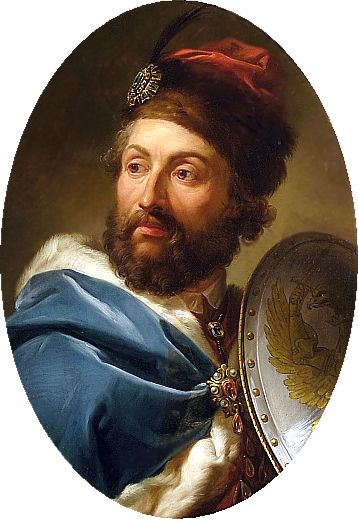
Guided by such far-reaching plans, in 1458 Casimir took away all the western dioceses from St. Jonah and handed them over to the Uniate metropolitan. As such, in place of the elderly Isidore (who nevertheless nominally continued to be titled “Metropolitan of All Russia” until his death) his former disciple and Protodeacon, Gregory the Bulgarian was elected. He was ordained by the Uniate patriarch “in exile” Gregory Mamma, who then lived in Rome. In Moscow, of course, they opposed such a delivery. Grand prince Vasily II Vasilyevich sent an exhortatory embassy to Kazimir, and Metropolitan Jonah sent his embassy to the entire Lithuanian Orthodox clergy and nobility, and after the embassy addressed a district message to the entire Russian population, convincing the Orthodox in it to stand for their faith to the last extreme and not to surrender to the Metropolitan Uniate.
But all this was to no avail. The Lithuanian princes, for the most part, remained indifferent to the voice of Moscow. The indifference of the secular authorities was genearally shared among the church. It is quite likely that the Lithuanian bishops themselves now wanted to be independent from Moscow, which over time became more and more unsympathetic to them in spirit: they remained unresponsive and, with the exception of one (Chernigov bishop Euphemius), quite calmly accepted Gregory. This is where the special history of the Western Russian Church begins, and a number of Western Russian metropolitans independent of Moscow originate from Gregory. The jurisdiction of the new metropolitan included 9 dioceses: Bryansk (Chernihiv), Smolensk, Peremyshl, Turov, Lutsk, Vladimir-Volyn, Polotsk, Kholm and Galician.
The answer to this unionist enterprise was the Bishops’ Council in Moscow at the end of 1459, which gathered all the bishops of Northeastern Russia (there were only Tver and Novgorod bishops). The bishops announced the division of the Russian Church into Kiev and Moscow, and took an oath of allegiance to the Metropolitan of Moscow – that they would never give up on the “Church of Moscow”. Actually, the introduction of this phrase - “Moscow Church” - into the legal turnover of that time meant changes in the consciousness of the Orthodox people of Moscow Russia: the Greeks and Lithuania deviated into the heresy of papism and accepted the uniate – all this made the former unity of the Church impossible. The true apostolic faith was concentrated only in the northeastern borders of the Russian land, in the Moscow Principality, whose Church became independent because it was the only one that preserved Orthodoxy.
Therefore, the division of 1459 became final. And if all the past precedents of division in the XIV-early XV centuries were thought of only as something temporary, connected with politically transient moments, now the installation of the Uniate Gregory Metropolitan in Kiev made it impossible to recreate the unity of the Russian Church.
After 12 years of ruling the metropolis, St. Jonah died on March 31, 1461. His incorruptible relics are in the Assumption Cathedral of the Moscow Kremlin, and in 1547 his all-Russian canonization took place. During the life and activity of the first autocephalous metropolitan, two major events took place in the Russian Church: quantitative and qualitative. The first was reflected in the reduction of the external limits of the Russian Church through the separation of the Lithuanian-Galician part from it, which since then has begun to live its own special life, under peculiar political and cultural conditions, and therefore deserves a separate systematic exposition.
Qualitative changes were expressed in the beginning of the actual autocephaly of the Russian Church. The installation of Metropolitan Jonah himself in Moscow took place without the intention on the part of the Russians to get out of the power of the Patriarch of Constantinople forever. According to Kartashev, “the Russians in the present case showed scrupulous canonical conscientiousness to excess and did not dare to do what they not only could with full right, but, under the circumstances of that time, even had to do, i.e., openly proclaim their metropolitans independent of the patriarchs- uniates”. Such a determination was formed a little later, and although the Patriarchs of Constantinople had already returned to Orthodoxy, St. Jonah himself blessed the Rostov Archbishop Theodosius to be his successor.
The Russian Church under Metropolitan Isidore
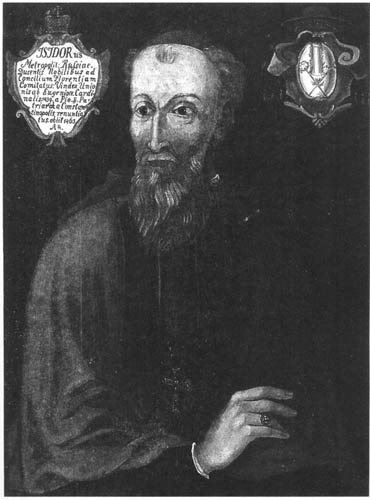
By the time Isidore was installed, the Greeks were already preparing with all their might to conclude an agreement with Catholic Rome. Byzantium hoped for the help of the Pope. The question of the union was to be considered by a joint council. Constantinople clearly understood what the decision would mean: the union - recognition of the Catholic faith and worldview was the price Constantinople was trying to buy itself a temporary respite. It also testifies to the inner spiritual impoverishment of the Greeks of that time: when the patristic faith, as a commodity, is sold in exchange for ephemeral promises of support.
Anyway, it was simply vital for the Greeks to enlist the loyalty of their largest metropolis – the Russian one. And the Russians themselves, from whom any surprise could be expected, should be excluded from participation in the council as much as possible. That is why Byzantium puts “its” man – Isidore in the place of the primate of the Russian Church, even without the consent of the Grand Duke of Moscow.
As for the new metropolitan, I must say he was a passionate patriot of his country (although there is no evidence to assume his Bulgarian origin). It was patriotism that motivated his unionist interests: the defense of the empire by the forces of the Catholic West. Although perhaps not only patriotism: the reviews of his contemporaries testify to the extraordinary giftedness, erudition of this man. However, these intellectual qualities were not complemented by a deep spiritual content. He was rather an intellectual in the spirit of the European Renaissance, alien to Orthodox spirituality and, on the contrary, close to the ideals of Western European humanism.
In Moscow, of course, such a maneuver of the Ecumenical Patriarchate was received without enthusiasm, but they decided not to make a scandal. Grand Duke Vasily II Vasilyevich himself did not sit very firmly on the throne: the sons of the rebellious prince were ready to continue the work of his opponent Yuri Zvenigorodsky. Isidore, not having had time to really settle in Moscow, began to gather in Ferrara – for the upcoming council. Of course, he shared his views and plans with the Moscow sovereign, and apparently managed to convince Vasily of the purity of his intentions - he promised that there would be no damage to Orthodoxy. On the contrary, it promised great benefits: the unification of the forces of the entire Christian world to confront Islamic countries. Do not forget that Russia at that time was still under the yoke of the Mongols, who by that time had already been Islamized. The Metropolitan left for Italy in September 1437.
Novgorod the Great was on the route of the hierarch. There were already rumors about the purpose of his journey (initiated by Isidore himself, by the way).: Allegedly, the Russian metropolitan is going to Italy to convert Catholics to the true faith. It was a real advertisement, the effect of which was discovered quite quickly. Enthusiastic Novgorodians refused to fight with the metropolitan for such an occasion and returned to him all the former privileges. In addition, Pskov– the largest trading center of northern Russia, was separated from the Novgorod diocese in favor of the Metropolitan of Moscow.
But, arriving in the Baltic States, in Livonia, Isidore threw off all masks, presenting himself to his contemporaries in all the Uniate pathos: in the cities, he first of all applied himself to the Catholic cross, and only then to the Orthodox eight-pointed one. He was a frequent guest in Latin churches, he did not enter Orthodox churches at all. In August 1438, Isidore’s cortege arrived in Ferrara, where the council began in April, which was subsequently moved to Florence. The entire Greek delegation was already here.
During the council, Roman-Catholics exerted the most brutal pressure on the Greek delegation. This concerned, first of all, issues of dogmatics. To win them over to their side, they used underhanded means: they threatened but they did not give content. In those days, many of the Greek delegation were ready to bend under the pressure of the Latins, but fortunately, there were also those who actively resisted this ideological pressure.
Saint Mark of Ephesus5 became the main exponent of the pure Orthodox position, which he zealously defended during the conciliar hearings. Since he was argumentatively criticizing Catholic dogmatic innovations, the Latins were never able to impose their teachings on the Greeks. This of course angered the pontiff, and as a result he presented the Greeks with an ultimatum: by Easter 1439, either accept Roman-Catholic teaching, or go over to Constantinople. Actually, this is where the council finished. However, the pope’s private meetings with the Greek delegates continued, many of whom cowardly accepted the conditions of the Roman-Catholics. Among them was Metropolitan Isidore. They fully accepted Roman-Catholic teaching, and with its dogmatic innovations. For example, the doctrine of papal primacy.
Together with Isidore, other Russian bishops signed the union. Abraham of Suzdal was among them. However, he was forced to do it. After signing, he managed to escape to Russia, where he recounted what had happened, and achieved repentence. The union did not bear fruit. No hordes of the Bishop of Rome came under the walls of Constantinople. And the common people immediately understood what had happened, and cursed all the traitors. The Emperor John himself, before his death, renounced his lawless offspring and died Orthodox.6
The Russian metropolitan received very high praise from the pope. He was granted a special favor by the pontiff. Isidore received the title of uniate cardinal, and now his jurisdiction included not only Russia and Lithuania, but also Livonia and Polish Galicia. Soon he started on his way back, and everywhere he calls on the Orthodox to take Eucharistic communion together with the Roman-Catholics. In March 1441 Isidore finally arrived in Moscow. In the Russian capital, it was already known about the deeds of the metropolitan. This was recounted in detail and without concealment by Abraham of Suzdal, who fled Italy earlier.
But still, the situation was extraordinary. Such a thing had never happened in Russia, that the head of the Church himself deviated into heresy. It was necessary to find the optimal way out of this scandalous situation. When Isidore’s cortege entered the Russian capital, a Latin cross – “Lyatsky kryzh”
- was carried in front of him as the papal legate and cardinal. But Moscow met him with restrained silence: the apostate himself had to expose himself by his actions.
And it happened very soon. During the divine service, the metropolitan ordered to remember the name of Pope Eugene in the first place, and not the Patriarch of Constantinople. After that, the metropolitan ordered to proclaim the act of union with Rome, and gave the Grand prince a message from Pope Eugene with an appeal to help Isidore. That was more than enough. The fact of apostasy was obvious, and Isidore testified to it by his actions and words. And now Grand prince Vasily had every right to declare him a “heretic and Latin charmer.”
He was taken into custody and put under lock and key in the Chudov Monastery. A council was convened, which in the history of the Church was called the Moscow council of 14417. The Council considered the Florentine uniate definition and recognized it as “heresy contrary to Divine rules and Tradition.” Isidore was offered the chance to repent and return to the bosom of Orthodoxy, but he flatly refused. But what was to be done with him next? Judged? Deposed? Or even executed for apostasy? What, was still unclear, but the Russians were timid even before the most humane outcome of the trial. There were reasons for this: they had to act soon and completely independently, and they were not used to this in Russia. After all, the Greeks used to tell them what to do, how to solve church problems. The very act of condemning the metropolitan protege of Constantinople was considered as a speech against the Greeks. This created a natural ethical difficulty: the Mother Church and the Greeks, our teachers in the Orthodox faith, had to be denounced for heresy. Finally, it was just scary because of the consequences. Especially political consequences.
At that time, the international situation of Russia was not the most favorable: the Tatars were gathering in the south and east. The Horde, though weakening year by year, was still a dangerous enemy. In the northwest - the Teutonic and Livonian Orders. Opposition to the union in Russia from this side could be the reason for a new crusade against the “schismatics” disobedient to Rome. Finally, Lithuania and the Poles – from the West - were always ready to oppose Moscow, especially now with the help of the union, such a tempting prospect of creating a gigantic Catholic empire from Poland, Lithuania and Russia under the rule of the Jagiellons opened up. Russia was squeezed between the Muslim East and the Catholic West, as between a hammer and an anvil.
A way out of this difficult situation suddenly appeared. Isidore fled. First to Tver, where he also came up against the Prince of Tver, then to Novogrudok, the Metropolitan See of Lithuanian Rus’. But here, too, failure awaits him: Lithuania does not accept the Uniate. Isidore left for Rome.
Interestingly, as a patriot, he participated in the defense of Constantinople in 1453, and miraculously escaped death in captivity. He died in Rome on April 27, 1463, and was buried in St. Peter’s Basilica.
The Russian Church under Metropolitan Photius
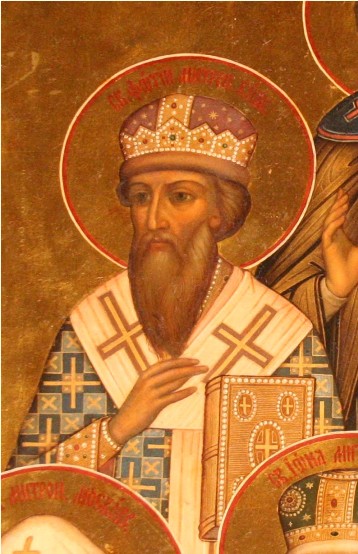
In 1406 Metropolitan Cyprian died. With his death, relations between the Moscow Prince Vasily Dmitrievich (the son of Dmitry Donskoy) and his father–in–law, the Grand Duke of Lithuania Vitovt, deteriorated again. Of course, the two warring parties could not have unity on the issue of the new metropolitan. Vitovt appealed to the Patriarch of Constantinople to appoint a new metropolitan of the Russian Church, who would live in Kiev controlled by Lithuania. By such a measure, Lithuania sought to bypass Moscow, securing the authority of the spiritual center of Russia.
Along with this proposal, Constantinople received a request from Moscow. Prince Vasily I of Moscow showed diplomatic flexibility and restored the old tradition of supplying Greek metropolitans to Russia. By this he attracted Constantinople to his side. In addition, Russia was the largest and richest metropolis of the Patriarchate of Constantinople. The Greeks understood that it was not worth straining relations with such a convenient source of financing, especially in the face of the growing Ottoman threat. After all, it is known that the empire itself at that time was in dire need of funds, which it received - mainly from a rich Moscow prince. In addition, Moscow and Constantinople were connected by a new dynastic bond: the daughter of Basil I, Anna, married the heir to the Byzantine throne, John Palaiologos8.
Thus, it was decided to put a Greek on the Russian metropolis. Patriarch Matthew’s choice fell on Photius. The consecration took place on the 2nd of September 1408.
Photius was born in Peloponnese. From a young age, he decided to devote himself to the service of the Church, becoming a novice of the spiritual elder Acacius. At the same time, Photius met and closely accepted the teachings of the Hesychast Palamites. His friend was the monk Joseph Vriennius– a prominent representative of this teaching in the Church. When Acacius was elected metropolitan of Peloponnese, Photius followed him. In 1408, he arrived in Constantinople on business, where, quite unexpectedly, he was appointed to be the Metropolitan of Kiev and All Russia. The following year he arrived in Kiev.
For some time, Photius had been organizing affairs here, but over time he realizes that the metropolitan’s throne cannot be located in the Kievan land, which increasingly fell into dependence on Roman-Catholic Poland. Therefore, following the example of the previous Russian metropolitans who moved their residence first to Vladimir and then to Moscow, Metropolitan Photius arrived in Moscow at Easter in 1410.
Arriving at the place, the new head of the Russian Church meets the devastation and destruction, the result of another Tatar raid and an epidemic of pestilence. Only the Kremlin survived the predatory fires. The economy of the metropolitan house was in decline - affected by being vacant for four years after the death of Cyprian: the property was looted and plundered, and the boyars took possession of the church lands. The Metropolitan began a most resolute struggle against these outrages. Despite his contemplative nature, he was forced to enter into lawsuits and boldly denounce all the kidnappers. He did not spare even the Grand prince – he, too, was involved in violating some of the financial rights of the metropolis.
The metropolitan managed to restore the economy of the metropolitan house very quickly. However, following his energetic actions, the saint made many enemies, who tried in every possible way to encourage dispute between Photius and the Grand prince. Often, they were successful. Many of the offended boyars fled to Lithuania, to Vitovt, and schemed there against Photius. The result of these slanders was the enmity of Vitovt with the Russian metropolitan. And although the latter came back to Kiev in 1411 and ordained bishops there for Lithuania, his relations with the Lithuanian prince soon turned out to be irretrievably spoiled.
Driven by a long-standing desire to form an independent church government, Vitovt in 1414 summoned the bishops and archimandrites of his region to a council in Novgorod-Litovsky (now Novogrudok, Belarus). He proposed his plans to the clergy, and for the apparent legitimacy of his demands, he accused Photius of neglecting the Church and burdening the southern dioceses with duties in favor of Moscow.
Vitovt nominated the nephew of Metropolitan Cyprian as a candidate for the Lithuanian metropolitanate – abbot Gregory Tsamblak, who came from the Bulgarian Tarnovo. Having become a monk in his youth, he fell into the entourage of the Bulgarian Patriarch St. Euphemius, where he received his education. It was the epicenter of the spiritual life of Bulgaria (after the first third of the XIV century) both in the intellectual and religious sense (the ideas of hesychasm were also widespread here). Later, Gregory probably lived for some time on Mount Athos, possibly in the Great Lavra of St. Athanasius. By the XIV century - it was the center of Bulgarian translation and book-writing activities, as well as in the Serbian monastery of St. Paul.
Like his uncle, Gregory was for some time in the clergy of the Patriarch of Constantinople, then he was a cleric of the Metropolitan of Moldavia, hegumen of the Dechan monastery in old Serbia and hegumen of the Greek Plinair monastery. In 1406, metropolitan Cyprian summoned Gregory to Moscow, but was not have time to see him. On his way to his uncle, being already within Lithuania, Tsamblak received the news of his uncle’s death. In Lithuania, he decided to remain. It was here that Gregory’s fate brought him together with Prince Vitovt. According to the plan of the Lithuanian ruler, Tsamblak goes to Constantinople with a proposal to put him on the Kiev Metropolitan throne. His personal participation in this mission is probably explained by relying on his (and not just Vitovt’s) connections at the patriarchal court.
But the Moscow bishop was half a step ahead. The ambassadors of Photius arrived in Constantinople in advance, and armed the patriarch against the Lithuanian venture. Gregory’s report caused a scandal: of course - to oust the metropolitan, who was legitimately elevated earlier to the chair of the hierarch during his lifetime – this is an obvious turmoil. Gregory Tsamblak was defrocked and given a church curse. However, Photius tried to find ways of reconciliation: he came to Lithuania to solve all the problems face to face, wanted to meet with Vitovt, but was not accepted by him. The metropolitan was robbed and driven back. All metropolitan estates in Lithuania were confiscated and transferred to the prince’s entourage.
Vitovt wasn’t going to back down. Having secured the support of the Western Russian bishops, in March 1415 he sent envoys to Constantinople, who again had to demand the approval of Gregory’s candidacy. Otherwise, the Lithuanian clergy will appoint a metropolitan for themselves. Byzantium was silent. And on November 15, 1415, Gregory Tsamblak was elevated to the metropolitan throne by the Council of Western Russian Bishops.
Immediately after his election, the West Russian Metropolitan tried to justify the legality of this act. A special District Charter was drawn up, where the bishops are trying to give a clear argumentation of what happened. In addition, Vitovt forced the bishops to write an outrageous act of renunciation of Photius, in which the Moscow bishop was accused of some shameful sin. It is noteworthy that in responding to this message, Photius addresses exclusively to the Lithuanian bishops, and almost does not touch the main reason of the trouble arranged for him - Vitovt. Apparently, even then he did not lose hope for the possibility of reconciliation with the Lithuanian prince and the cessation of the church rebellion; about this he expresses himself as follows: “I hope for the love of God, it will be soon.”
As a result of the scandal, 7 dioceses broke away from Moscow again: Polotsk, Smolensk, Lutsk, Chernihiv, Turov, Kholm and Vladimir-Volyn.
The conflict of the Lithuanian protege with the Patriarchate of Constantinople did not last long. The new Patriarch Joseph II, who ascended the throne in May 1416, confirmed the oaths of his predecessor. He assured Moscow that “let there be no relaxation from us” in relation to the self-styled Metropolitan of Kiev. However, the Greeks had other problems. The Turks were looming on the horizon, and Byzantium, needing military and financial assistance, was not interested in aggravating the conflict with Lithuania and Poland. Patriarch Joseph eventually recognized Gregory’s election9.
There are several versions about the death of Gregory:
-
he died in Kiev in the winter of 1419-1420;
-
there is an opinion that Gregory left (by himself or under pressure) to the Moldavian Nyametsky monastery, where he lived and wrote under the name of the schemer Gabriel.
On July 1, 1431, Metropolitan Photius died and was buried next to St. Cyprian in the Assumption Cathedral of the Moscow Kremlin. Subsequently, Metropolitan Photius was canonized.
His ministry contributed in many ways to the fact that the Russian Church maintained its unity in conditions when it would seem that it was inevitably going to collapse. At the same time, Photius never showed the Hellenic chauvinism - characteristic of the Greek hierarchy of that time. He fully supported the unification course of the Moscow princes, often providing them with very substantial assistance. With his mediation, the largest dynastic transaction of that time took place: the marriage of Anna Vasilyevna (daughter of Grand prince Vasily I) with Emperor John Palaiologos in 1411.
But even more important, if not decisive, was the participation of Photius in establishing a new order of succession to the throne of the Moscow Grand prince - direct inheritance as opposed to the so-called “ladder law”. Photius actively promoted the elevation of Vasily II Vasilyevich to the Grand prince’s throne after the death of his father, Vasily I in 1425, and not the latter’s brother, Yuri Dimitrievich Zvenigorodsky. This tradition was new in Russia, but contributed to the strengthening of the dynasty. This, of course, led to conflict, the settlement of which was also handled by Photius.
The dispute between Yuri Zvenigorodsky and Vasily II about the rite of succession dragged on for more than one year. The death of St. Photius almost coincided with a new round of conflict. Of course, in such a situation, and in such a short time, it was difficult to resolve the issue of Photius’ successor. The Grand prince and the Council of bishops have already elected bishop Jonah of Ryazan for this role. However, due to the civil strife in the Grand prince’s house, he could not be sent to Constantinopole in time for delivery. The new Lithuanian Grand prince Svidrigailo decided to take advantage of this.
He sent his candidate, Bishop Gerasim of Smolensk, to Constantinople to be appointed, who became the new Primate of the Russian Church (autumn 1433). Despite the fact that Gerasim was titled Metropolitan of Moscow, he did not appear in Moscow once, which was probably due to the conflict there. There is reason to believe that Gerasim was not inclined to conclude a union with Roman Catholics. Gerasim’s death was quite tragic. He was accused of treason and by order of Svidrigailo at the end of March 1435 was arrested and sent to Vitebsk, where he stayed in prison for 4 months. Gerasim was burned at the stake on July 26, 1435.
The figure of Gerasim became one of the reasons why Moscow did not send its protege to Constantinople. To this it is worth adding a number of problems for the Moscow Grand ducal throne. Yuri Dmitrievich continued to be at enmity with Vasily II Vasilyevich, and in 1433-34, twice defeating him, occupied the grand duchy. Only in 1434, with the death of Yuri, the internecine strife stopped: Vasily became the Grand Duke. Now, it would seem, the time has come for the Moscow candidate, Bishop Jonah of Ryazan, to go to Constantinople to bow. However, he took too long with the visit. Then the Greeks, unable to wait for too long and guided by their own interests, put their candidate, Isidore, who was extremely necessary to them, on the Russian metropolis. This all happened in the summer of 1436.
Editorial Footnotes
Related Concepts
- apostasy
- apostolic-faith
- assumption-cathedral
- autocephaly
- bishops-council-of-1459
- byzantine-empire
- byzantine-inheritance
- canon-law
- canonical-independence
- canonical-territory
- canonization
- church-of-japan
- church-separatism
- church-turmoil
- church-unity
- collegiality
- constantinople-patriarchate
- divine-service
- division-of-1459
- dynastic-war
- economyemergency-appointment
- eucharistic-communion
- fall-of-constantinople
- fear-of-schism
- finnish-orthodox-church
- florentine-union
- formal-unity
- georgian-orthodox-church
- greek-metropolitans
- gregory-the-bulgarian
- gregory-tsamblak
- john-of-kronstadt
- lithuanian-rus
- local-church
- metropolis
- metropolitan-isidore
- metropolitan-jonah
- metropolitan-peter
- metropolitans-photius-and-isidore
- miracles
- moscow-as-spiritual-center
- moscow-church
- moscow-council-of-1441
- moscow-dynasty
- moscow-metropolis
- moscow-patriarchate
- mother-church
- mount-athos
- nationalism
- orthodox-church-in-america
- orthodox-kingdom
- papal-legate
- pastor-aeternus
- patriarch-and-sultan
- patriarch-of-constantinople
- patriarchate-of-constantinople
- relations-with-constantinople
- relics
- rocor
- roman-catholicism
- russian-church
- russian-church-prestige
- sacred-norm
- simeon-the-new-theologian
- spiritual-eldership
- st-jonah
- st-mark-of-ephesus
- st-metropolitan-jonah
- st-photius
- submission-to-the-apostolic-see
- symphony
- thomos
- truthorthodoxy
- ukrainian-church-council
- unia
- uniate
- uniate-cardinal
- uniate-church-of-constantinople
- universal-pope
- vasily-ii
- veneration
- veneration-of-saints
- western-russian-church
- yuri-zvenigorodsky
Footnotes
-
St. Jonah’s solemn installation as metropolitan is more commonly dated to 15 December 1448 (the preceding paragraph gives only “December 1448”), so the precise “5 December” here is unusual. Regardless of the exact day, this ceremony — performed by a council of Russian bishops without sanction from Constantinople — is conventionally taken as the practical beginning of the Russian Church’s autocephaly. ↩
-
Factual error: the last Byzantine emperor was Constantine XI Palaiologos (reigned 1449–1453), not “Constantine XII.” No emperor bore the regnal number XII. He died defending the city when it fell on 29 May 1453. ↩
-
Gennadios II Scholarios was enthroned as the first patriarch under Ottoman rule, installed by Sultan Mehmed II in 1454 (after the 1453 conquest). “Istanbul” is anachronistic for this period: the city was still known officially as Constantinople (Ottoman Kostantiniyye), and “Istanbul” became the state’s official name only in 1930. ↩
-
Anachronism. The doctrine of Moscow as the “Third Rome” is a later ideological construct, usually traced to the early-16th-century writings of the monk Filofei (Philotheus) of Pskov. Reading this fully formed theory into Muscovite self-understanding of the 1450s is a projection backward; at mid-15th century such ideas were at most embryonic. ↩
-
Clarification: Mark Eugenikos, Metropolitan of Ephesus, was in fact the only member of the Greek delegation who refused to sign the union decree (Laetentur Caeli, 6 July 1439). His solitary refusal is the famous detail here, and tradition reports that Pope Eugene IV, on learning that Mark had not signed, said “we have accomplished nothing.” ↩
-
The claim that Emperor John VIII Palaiologos renounced the union on his deathbed and “died Orthodox” is a pious tradition rather than established history. John VIII was a leading architect of the Florentine union and is generally held to have remained committed to it until his death in 1448; Byzantium never formally repudiated the union, though it was widely rejected by clergy and people and was not solemnly proclaimed in Hagia Sophia until December 1452. ↩
-
Whether a formal church council actually convened in Moscow in 1441 to try Isidore is debated. The surviving documentation is later and tendentious, and some scholars regard the “Council of 1441” as a partly retrospective construction. What is well attested is that Isidore was denounced, placed in custody, and subsequently allowed or caused to flee. ↩
-
Anna of Moscow, daughter of Vasily I, married the future John VIII Palaiologos around 1411, when he was co-emperor and heir rather than reigning emperor (so the later description of “Emperor John Palaiologos in 1411” elsewhere in this text is anachronistic — he became sole emperor only in 1425). The marriage was brief and childless: Anna died of plague in Constantinople in 1417. ↩
-
Contested. The usual scholarly account is that Constantinople never recognized Gregory Tsamblak, who had been uncanonically elevated by the western-Russian bishops in 1415 and remained under the patriarchate’s condemnation; his separate metropolitanate effectively lapsed with his death around 1419–1420. The statement that Patriarch Joseph II “eventually recognized” his election overstates what the sources support. ↩