History of the Russian Orthodox Church — Topic 3
Development of the Orthodox Church in Northern Rus
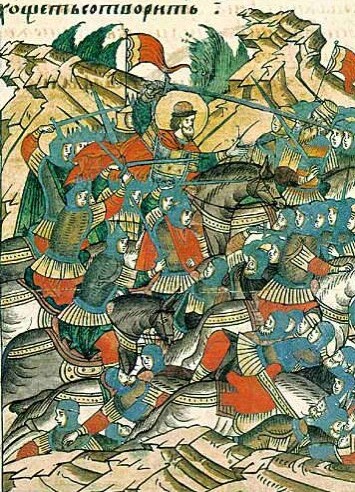
In northern Russia, along with the Mongol threat, there was also a threat from the Roman Catholic Church. Crusades were undertaken from Sweden against the Russians. In 1240, the jarl (the highest title in the hierarchy in medieval Scandinavia) Birger1 led such a campaign. On the Neva he was met by the Novgorod Prince Alexander Yaroslavovich.
Aleksander inflicted a terrible defeat on the Swedes, after which he became known as Nevsky2. Somewhat later, the Livonian Knight Order attacked Izborsk and Pskov, but was stopped in 1242 by the same Holy Prince Alexander Nevsky on the Chudskoe Lake (Lake Peipus)3. After that, the Pope tried to establish peaceful relations with Alexander and in 1248 sent two legates to him with an exhortation to submit to the Roman Church. Nevsky sent them away with a decisive refusal.
In 1265, another holy prince, defender of Orthodoxy, the Lithuanian Dovmont (Timothy), who fled from Lithuania from the vengeance of relatives of Prince Mindovg, who was killed by him4, came to Pskov. Having become the Prince of Pskov, he became famous for protecting the Pskov lands from Lithuania and the Livonian knights, who with the help of weapons again began to spread Catholicism. After his death (+1299) Dovmont became the patron saint of Pskov. But, despite the exploits of Saints Alexander Nevsky and Dovmont, the rule of the Livonian Order was firmly established on the Baltic coast of Lithuania5. The local population, Latvians and part of the Finnish tribes, were converted to Catholicism, and the weak beginnings of Orthodoxy were almost destroyed throughout the region.
Meanwhile, papal bulls were constantly being sent to Sweden, urging the Swedes to a religious war with Russia. In 13476, the Swedish King Magnus went to the Novgorod lands. Previously, he sent envoys to Novgorod, asking them to appoint a dispute about faith so that everyone would accept the faith that would prevail. Archbishop Vasily replied that the Novgorodians had nothing to argue about the faith, that they had accepted it from the Greeks, and therefore, if the King himself wanted to know whose faith was better, then let him send ambassadors to the Greek patriarch. Then the King devastated the entire Karelian and Novgorod lands and everywhere baptized the people into his faith. However, after his return to Sweden, the inhabitants converted back to Orthodoxy.
Orthodoxy spread among the Finnish tribes thanks to the preaching and high examples of the holy life of ascetics. Not far from Kargopol at the end of the XIII century, the Monk Kirill settled and founded the Chelmogorsky monastery. During the 52 years of his ascetic life, he enlightened the local Finno-Ugric tribes with Christianity. In 13297, on Lake Ladoga, on the island of Valaam, the venerable elder Sergius settled, who was soon joined by another monk, the Monk Herman. Their works founded the famous Valaam Monastery, which had a great influence on the enlightenment of the Karelians. At the end of the XIV century, the monk of the Valaam monastery Arseny settled on the island of Konevsky next to Valaam and founded the Konevsky Monastery. On Lake Onega in the XIV century, St. Lazarus founded the Murmansk Monastery. The famous Solovetsky Monastery appeared on the Solovetsky Island of the White Sea.
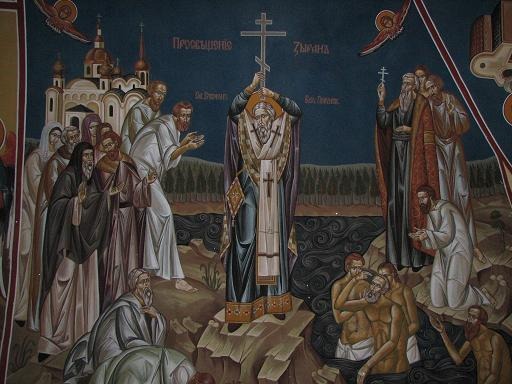
Together with the names of the Arseny Konevsky, Kirill Chelmogorsky, Lazarus, monks of the Valaam and Spaso-Kamenny monasteries in the history of the Christian mission, the name of St. Stephen, the enlightener of the Perm Region, should be mentioned. In 1365, he entered the Rostov Monastery of St. Gregory the Theologian, where there were many books. He had, for a long time, the idea of becoming an educator of the wild inhabitants of Perm, with whose language and life he was familiar back in his homeland. For thirteen years he worked at the monastery, preparing translations of Sacred books into the languages of the Perm tribes. Soon Stephen was ordained a hieromonk and sent to the mission. He chose a village near the mouth of the Vym River as his place of activity, where he built a small church. From here he traveled to the Perm region with a sermon and destroyed temples and idols everywhere.
The pagans were surprised to notice that Stephen did not take anything from the rich offerings that were in their sacred places, involuntarily recognized his superiority over the mercenary priests and were baptized. The missionary activity of St. Stephen alarmed the pagan priests. They began to turn the people against him, taking advantage of the local hatred of Moscow. “What is there to listen to—” they said— “an alien from Moscow who oppresses us with taxes?” Saint Stephen entered into disputes with them and by defeating them attracted new members to the Church. Especially important was his victory over the chief magician Pama8. The famous magician himself volunteered to walk with Stefan through fire and water, covered with still weak ice, to test whose faith is stronger, thinking that Stefan would not agree to this. But when the saint agreed, Pama himself refused the test. A huge crowd, who had gathered to watch the miracle, almost tore Pama apart and went over to the side of St. Stephen.
Stephen’s mission was also successful because he preached to the Permian tribes and performed divine services in their native language. He tirelessly continued his translation of church books, worked on their correspondence and, in addition, taught the aborigines to read and write their native alphabet. He sent the best students, who were fit for priestly positions, to neighboring dioceses for placement, and in 1383 Metropolitan Pimen consecrated Stephen to the rank of bishop. With the foundation of the diocese (in Ust-Vym), the Perm Region began to be replenished with priests from the local people. One of the most powerful means of educating Permians was the charitable activity of St. Stephen. During the famine years, he brought bread from Vologda and Ustyug for distribution to the poor people, made large loans and alms from the bishop’s treasury, asked the Grand Duke for forgiveness of arrears. Saint Stephen died in 1396. During the 18 years of his apostolic ministry, he converted almost the entire Perm Region to Christianity.
- The Mongols’ Ruin of the Southern Russia (Rus)
- Development of the Orthodox Church in the Northern Russia (Rus)
- The Russian Church under Metropolitans Kirill II and Maxim
The Russian Orthodox Church during the Mongol
yoke
- The Mongols’ Ruin of Southern Rus
- Development of the Orthodox Church in Northern Rus
- The Russian Church under Metropolitans Kirill II and Maxim
The Mongols’ Ruin of Southern Rus
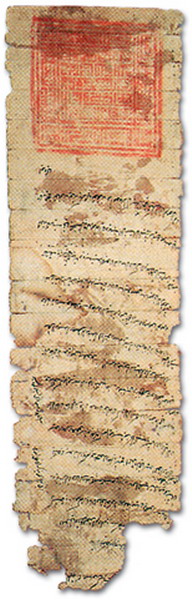
In 1237-1240, Rus suffered the invasion of the Mongols. At first the Ryazan and Vladimir principalities were devastated. The people in them were slaughtered, churches and monasteries destroyed or desecrated. Then Pereyaslavl, Chernigov, Kiev, Volyn and Galician cities were destroyed in Southern Rus. The main shrines of Kiev - St. Sophia’s cathedral and the Church of the Tithes – also suffered. From the Kiev-Pechersk monastery the monks dispersed to the forest wilds and caves. The beauty of the Russian land, the capital city of the Grand Prince and Metropolitan turned into an insignificant place, in which there were about 200 houses9.
The disaster struck with unequal force between the south and north of Russia. At the same time, northeastern Rus suffered less, while the south turned into a barren desert. In addition, the Mongols continued to roam its steppe borderlands, and were a constant threat to the population. Therefore, farmers and industrial people moved to the north. Russian historical life moved to the Volga region, formed a new center for itself, instead of Kiev, in Moscow, and began to develop here in a new direction. The center of church life, the Russian metropolis, also moved here.
During the conquest of Russia, the Mongols were pagans and, although they recognized a single God, they worshipped many other gods: the sun, moon, water, shadows of deceased khans, believed in the purifying meaning of fire, in witchcraft and kept many shamans. There was hardly one dominant religion in the Horde (the Orda), probably there was a mixture of all the beliefs of Central Asia. This explains the religious indifference of the Mongols. In his Yasa (the code of customary Mongolian law)10, Genghis Khan ordered to respect and fear all gods, no matter who they belonged too. Various divine services were freely conducted in the Horde, and the khans themselves participated in the performance of Christian, Islamic, Buddhist rites and respected the clergy of all faiths. The destruction of Russian shrines, cruelty against Christians during the invasion of Russia did not contradict this religious tolerance in the least, stemming from the usual Asian manner of waging war.
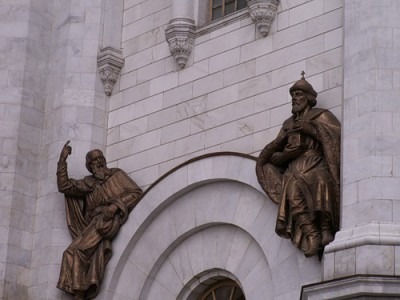
Taking advantage of the tolerance of the Mongols, Metropolitan Kirill, the first in the Mongol period, established an Orthodox diocese in the capital of the Khans, Sarai, placing Mitrofan as bishop in it in 1261, and begged a jarlig (edict) for the clergy from Khan Mengu-Temir. Even at the first imposition of tribute on Russia, the clergy were exempt from its payment. In his jarlig, Khan Mengu also exempts all “white” (married) and “black” (monk) clergy from all their tributes and duties - let them pray for him and for his entire tribe ceaselessly.
Brothers and children of clergymen were also exempt from tributes and duties. Church lands and grounds, church people, things, icons, etc. declared inviolable. It was forbidden to blaspheme the Orthodox faith on pain of evil death. According to another jarlig (Uzbek Khan) issued to Metropolitan Peter, the clergy were exempted from any Khan’s court, all church people were subordinated to the metropolitan’s court, and moreover in all cases, not excluding criminal ones. The clergymen were given seven jarligs11. However, during the Mongol invasion, clergy were among the dead: Mitrofan, Bishop of Vladimir, Simeon Pereyaslavsky and several Pechersk monks.
The Russian princes who went to the Horde were subjected to humiliating and often deadly trials there. Russians could see the Khan only after passing through the cleansing fire, bowing to the bush, the sun, and images of deceased Khans. By performing these superstitious rites before the audience, they had to show a sign of respect for the faith of the Khan himself. Refusal to fulfill this requirement, which contradicts the Christian commandment to worship the one True God, led to the martyrdom of many Russian people who fell into the Horde. So, for example, Mikhail, Prince of Chernigov, and his boyar Theodore suffered.
Sending Mikhail to the Horde, his spiritual father urged him not to follow the example of those who please the Khan’s will, even if they promised worldly dominion for this, he urged him not to even eat pagan food. Michael promised to sacrifice his life for the sake of faithfulness to the Lord, took spare Eucharistic Gifts from his spiritual father in order to commune before his death, and fulfilled the word. It was in vain that Boris, the Prince of Rostov, promised to take upon himself and for the whole region the heavy penance that would be imposed on Mikhail for this sin. The Holy Confessor, strengthened by the boyar Theodore, was firm in his feat, and both of them courageously accepted martyrdom.
Roman of Ryazan also received the martyr’s crown in 1270 at Mengu-Temir.
The Russian Church under Metropolitans Kirill II and Maxim
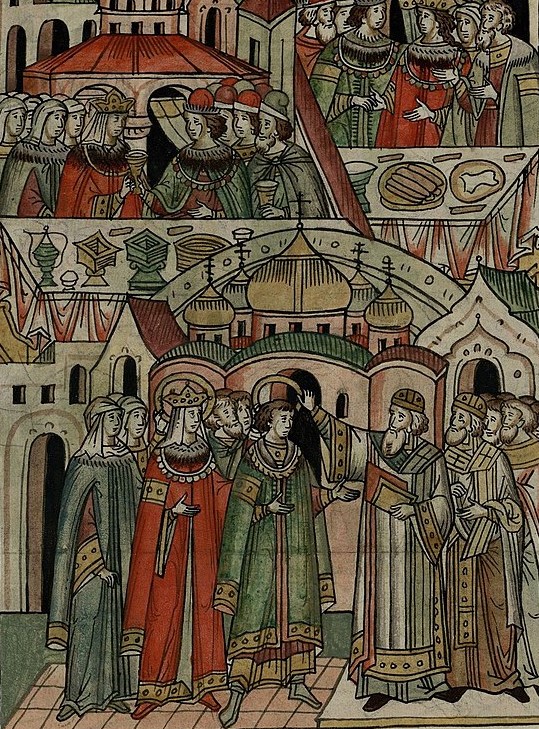
The Mongol period had a sad effect on the state of the Russian Church. During the devastation of Kiev, Metropolitan Joseph, who had been sent from Greece, disappeared shortly . In his place, around 1243, a new metropolitan from the Russians, Kirill II, was elected. After returning from his initiation from Greece12, he no longer found a haven in the devastated Kiev and had to choose another city for his residence: Galich – the capital of the southern Grand Duke, or Vladimir - the capital of the northern Grand Duke. He could not make a decisive choice between them, and, thus not having a permanent residence, he spent the entire time of his ministry traveling around the metropolis. But the metropolitan preferred Vladimir more. Kirill himself spent most of his time in the north, and for a long time he did not ordain even a special bishop in Vladimir.
During his travels, the metropolitan met with a lot of unrest, both in the church administration and in the life of the people. This disorder led to the convocation of the famous Vladimir Council in 1274. The Metropolitan Kirill made a strong speech at the Council against the vices he had noticed, seeing in them the cause of all the troubles of his time. The Council drew attention to the extortion during the ordination of the proteges to the holy order and to the work they had to do in favor of the episcopal houses in the event that they had nothing to pay for the delivery. It was indicated to charge the henchmen only such an amount of the fee as would cover the costs of delivery. Also, the bishops were obliged to carefully test the proteges.
In addition, the Council corrected many of the recent mistakes in the performance of worship; clergy caught in a reprehensible lifestyle would be ordered to be defrocked; drew attention to the people’s revelry and outrages during the holidays, and so on. For guidance in the church administration, Metropolitan Kirill submitted, for the approval of the Council, a new list of church rules, obtained from Bulgaria13 and containing a complete collection of canons (Nomocanon) with the addition of new provisions and interpretations of the rules still unknown in Russia.
During the reign of Metropolitan Kirill, the Sarai diocese was established – with the center in the capital of the Horde. The active metropolitan died in 1280 and was buried in Kiev.
Kirill’s successor in the Metropolitanate was St. Metropolitan Maxim, a Greek by origin. By the time of Metropolitan Kirill II’s death, the Greeks had managed to recapture Constantinople from the Catholics and revive the Byzantine Empire. The political situation had changed, and now, after some stabilization of the empire, there was no need to be afraid of having a Greek hierarch at the head of the Russian Church in the territories subject to the Mongols.
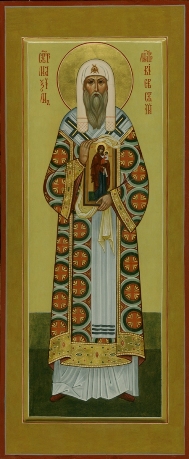
Despite his Greek origin, Maxim proved himself to be as zealous a pastor as Kirill. He continued the line of his predecessor, aimed at reviving spiritual life in the Russian lands. Maxim was appointed Metropolitan to Kiev in 1283. Arriving in Russia the following year, he went to the Horde for the Khan’s jarlig. Returning to Kiev, Maxim in 1284 convened a Council of Bishops. It is characteristic that during the years of the yoke, the conciliar principle in the Russian Church became more active. Councils were convened much more often than during the quiet Kiev period, because there was a need to solve the most important matters of Church life with a conciliar mind and eliminate shortcomings.
Probably, the purpose of the Kiev Council was to inform the Russian bishops about the situation in the Patriarchate of Constantinople. and consequently, the question of the Church Union of Lyon 1274 was an important priority. The fact that Maxim convened his Vladimir Council in the same year suggests that he was the antithesis of the Lyon Council. Perhaps after that there was some distrust of the Greeks. Metropolitan Maxim probably wanted to announce to the Russian bishops that the idea of Emperor Mikhail Palaiologos with the Church Union had failed, and Orthodoxy was still triumphant in Byzantium.
Maxim very soon confirms that his image of governing the Russian Church remains the same as under Kirill. In 1285, the metropolitan undertook a long journey through the Russian lands, also teaching everywhere, preaching and making corrections to the church life of dioceses. He visited Novgorod and Pskov, came to the Suzdal land, to which, he too, like Kirill, begins to gravitate the most.
At first, Maxim does not think about moving to Vladimir, as evidenced by the consecrations of bishops for Vladimir – James (in 1288) and Simeon (in 1295). Finally, in 1299, Maxim, having transferred Bishop Simeon to Rostov, decides finally, to move from Kiev, completely ruined by the Mongols, to Vladimir. The choice of Maxim was most likely dictated by the commitment of the Vladimir- Suzdal princes to Orthodoxy as opposed to the pro-Catholic adventures of the Galician princes.
The transfer of the department, of course, was not an easy matter. Initially, it was a small private event for Maxim himself, who changed not the department, but only the residence. The transfer of the pulpit could take place only under the condition of conciliar approval and an imperial decree (from Byzantium). All this was later done retroactively in Constantinople. Probably, Maxim’s decision was due to the fact that Kiev was once again defeated by the Mongols in 1300. Maxim died in Vladimir in 1305 and was buried there, in the Assumption Cathedral, and not in St. Sophia of Kiev. Although he was still called the Metropolitan of Kiev and All Russia.
Maxim, being the Greek, showed himself to be a hierarch who takes the concerns of the Russian Church to heart. He had, of course, a remarkable flair, because he correctly grasped the peculiarities of the political situation in Russia, making his choice in favor of the Vladimir-Suzdal, and not the Galician-Volyn Principality. The fate of the latter, unfortunately, was already predetermined by the ruinous policy of his princes (they often entered into political alliances with Catholics). Metropolitan Maxim probably understood that it was easier for him, a Greek, to carry out such a painful procedure as the transfer of the church capital from Kiev to Vladimir. By doing this, he rendered an invaluable service to both the Church and the state. In fact, Vladimir’s new status as the church center of Russia was a blessing to the Grand Princes of Vladimir for the gathering of Russian lands.
The Mongols’ Ruin of Southern Rus
Development of the Orthodox Church in Northern Rus
The Russian Church under Metropolitans Kirill II and Maxim
Editorial Footnotes
Related Concepts
- bishops-treasury
- byzantine-imperial-authority
- byzantine-imperial-decree
- canon-law
- canonical-reform
- church-administration
- council-of-bishops
- crusades
- distrust-of-greeks
- enlightenment-of-karelians
- eucharistic-gifts
- feat-of-confession
- first-commandment
- holy-prince-as-defender-of-the-faith
- inculturation
- kiev-council-of-1284
- livonian-order
- local-priesthood
- lyon-union-1274
- metropolitans-canonical-jurisdiction
- metropolitans-court
- monastery-founding
- monastic-colonization
- native-language-worship
- northern-thebaid
- orthodox-confession
- papal-bulls
- pastoral-care
- pastoral-reform
- penance
- penance-and-spiritual-fatherhood
- pentecostal-inculturation
- perm-alphabet
- religious-tolerance-of-the-mongols
- residence-vs-department
- retroactive-conciliar-approval
- rise-of-moscow
- sarai-diocese
- symphonia-of-church-and-state
- tolerance-of-the-mongols
- translation-of-sacred-books
- vladimir-council-of-1274
- yasa
Footnotes
-
The identification of the Swedish leader as “Birger” and his styling as “jarl” are both problematic. The near-contemporary Novgorod First Chronicle does not name the commander; the attribution to Birger Magnusson comes from later tradition. Birger did not become jarl of Sweden until 1248, so in 1240 he held no such title (the jarl at the time was likely Ulf Fasi). Note also that jarl was not “the highest title” in Scandinavia — it ranked below the king (konung). ↩
-
The epithet “Nevsky” is not contemporary; it is first attested in sources only from the fifteenth century onward. Because Swedish sources are entirely silent about any 1240 defeat on the Neva, a number of modern historians regard the engagement as a relatively minor skirmish whose grandeur owes much to the hagiographic Life of Alexander and to later Russian national myth. ↩
-
The 1242 “Battle on the Ice” of Lake Peipus was far smaller than Russian tradition suggests. The contemporary Livonian Rhymed Chronicle records only about twenty Order knights killed and six captured, whereas later Russian chronicles inflate German losses into the hundreds. Its decisive, nation-defining character is largely a product of later (especially twentieth-century Soviet) mythologizing. ↩
-
Daumantas (Dovmont) fled to Pskov c. 1265–66 and was baptized Timofei. The assassination of Grand Duke Mindaugas in 1263 was carried out chiefly by Treniota and Daumantas of Nalšia; Daumantas’s exact role and the personal-feud motive are drawn from later and partly legendary accounts, and the details are debated by historians. ↩
-
This is a geographic/historical confusion. The Livonian Order ruled Livonia (roughly modern Latvia and Estonia), not Lithuania. The Grand Duchy of Lithuania was never subjugated by the Order; it remained independent and officially pagan until 1386–87 and repeatedly defeated the crusading orders. The converted population named here was likewise Baltic (Latvians) and Finnic (Livs, Estonians) peoples of Livonia. ↩
-
Magnus IV (Magnus Eriksson) launched his crusade against Novgorod in 1348, when he captured the fortress of Oreshek (Nöteborg); 1347 at most marks the preparations. Archbishop Vasily Kalika of Novgorod (r. 1331–1352), to whom the reported reply is attributed, is a genuine historical figure. ↩
-
The founding date of Valaam Monastery is highly uncertain and much disputed. Traditional accounts range from the tenth to the late fourteenth century, and many modern historians favour a late-fourteenth-century foundation. The precise year 1329 reflects one monastic tradition rather than a securely established fact. ↩
-
The contest with the sorcerer Pam (Pama) — including the proposed ordeal of walking through fire and water/under ice — derives from Epiphanius the Wise’s hagiographic Life of St. Stephen of Perm. The ordeal-by-fire is a standard hagiographic topos and should be read as edifying legend rather than documented event. ↩
-
The figure of roughly 200 houses comes from the Franciscan traveler Giovanni da Pian del Carpine (John of Plano Carpini), who passed through Kiev in 1246. It is a single eyewitness estimate repeated in later literature; the actual scale of Kiev’s depopulation after 1240 is debated, and archaeology suggests recovery was underway within a few generations. ↩
-
The “Great Yasa” of Genghis Khan does not survive as an actual text; knowledge of it comes only from fragmentary and sometimes contradictory later sources (Juvayni, Rashid al-Din, al-Maqrizi). Its reconstructed provisions on universal religious tolerance are to some degree an idealization, and scholars disagree about how systematic or codified Mongol law actually was. ↩
-
The surviving “Collection of Khans’ Yarliks to the Russian Metropolitans” exists in differing redactions (the short collection preserves six labels), and both its exact number and its authenticity have long been debated. Several yarliks — notably the one ascribed to Uzbek Khan for Metropolitan Peter — are regarded by many scholars as later embellishments or partly spurious. ↩
-
At this date “Greece” is imprecise. Because Constantinople was held by the Latin Empire (1204–1261), the Orthodox patriarch and emperor resided at Nicaea; Kirill II would have been consecrated there rather than in Constantinople. The text’s own later note about the Greeks recapturing Constantinople in 1261 reflects this same exile. ↩
-
The canonical collection (Kormchaia Kniga / Nomocanon) adopted at the 1274 council was based on the Serbian redaction compiled by St. Sava of Serbia in the early thirteenth century, which reached Rus by way of Bulgaria. “Obtained from Bulgaria” thus describes the route of transmission rather than the origin of the redaction. ↩