Comparative Theology — Topic 14. The Old Catholicism.
- The prehistory of the Old Catholic movement and the emergence of Old Catholicism
- The Old Catholic Congresses and the reform activity of the Old Catholics
- The Bonn Conferences (1874-1875) and dialogue with the Orthodox Church
- The Utrecht Declaration of the Unification of the Old Catholic Churches (1889)
- The Old Catholicism outside Germany. The Old Catholicism in the 20th and 21st centuries
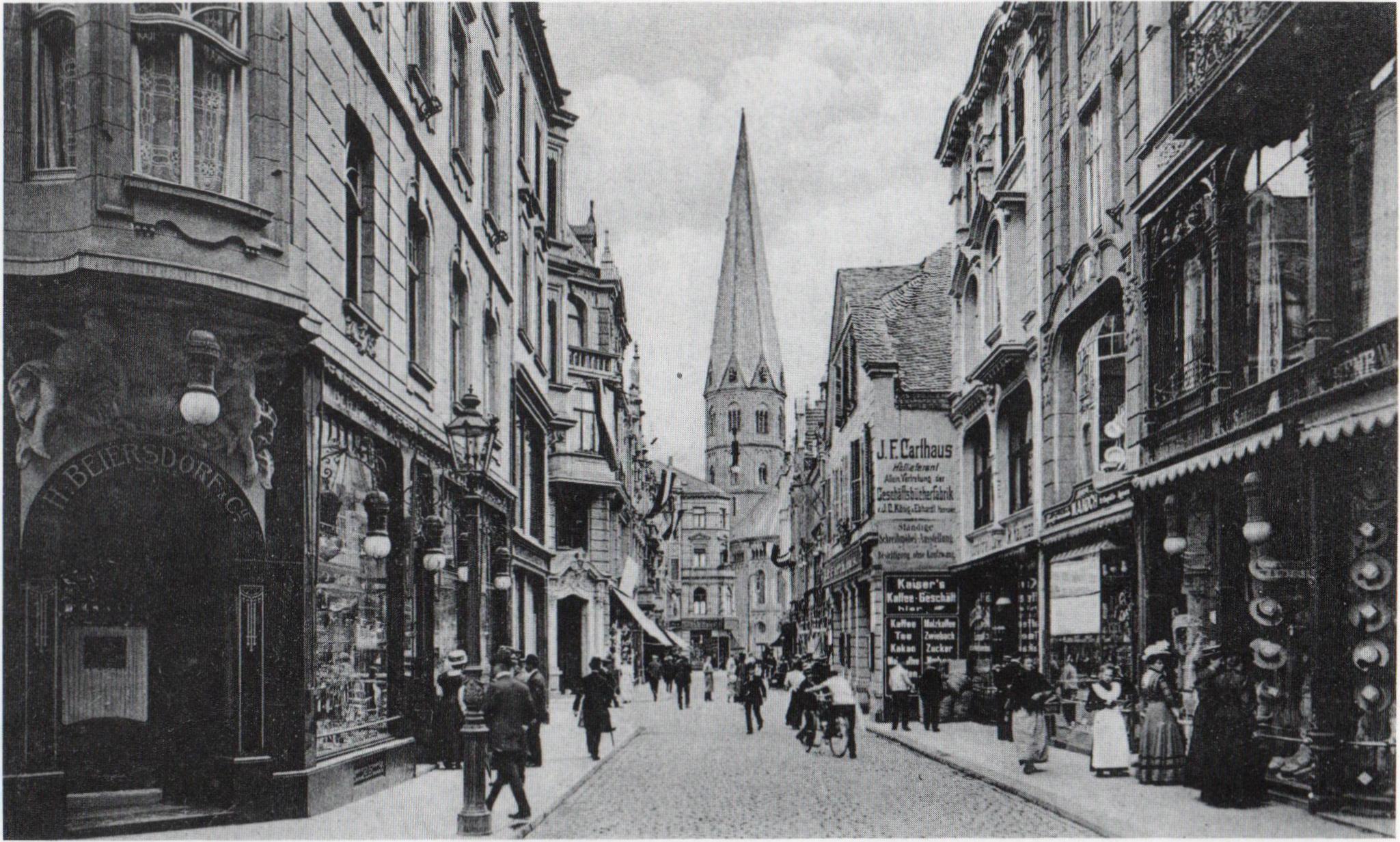
Dogmatically, Methodism is close to Anglicanism, but The Bonn Conferences were organized by the Old Catholics to discuss a possible union with the Orthodox and Anglicans. The central issue in the discussions was the issue of the exodus of the Holy Spirit and Filioque. Most of the conference participants were satisfied with the conclusion that the idea of the Holy Spirit coming “and from the Son” is a later illegal insertion of the Western Church. However, the Old Catholics, rejecting the Filioque as a dogma, considered it possible to adhere to this teaching as a private theological opinion. The Orthodox side was not satisfied with the opinion of the Son as the same source of the Holy Spirit as God the Father, as it casts doubt on the doctrine of the one principle in the Holy Trinity.
Much attention has been paid to determining the canonicity of the Anglican hierarchy. The opinions of the parties also differed on this issue. After heated discussions, the Orthodox delegates declared non-recognition of the validity of Anglican ordinations due to the fact that the Anglican Church itself does not consider the priesthood to be a full-fledged sacrament.
The dialogue between Orthodoxy and the Old Catholic Churches continued after the Bonn Conferences, ending only after the Second World War. And, unfortunately, the Old Catholics never agreed to join Orthodoxy. Instead, it increasingly leaned towards Protestantism. The proof of this was the following circumstance: at the Bonn Conferences, the Protestant concept of “intercommunion” arose, denoting the possibility of Eucharistic communion between members of one denomination and members of another without full-fledged unity in the doctrinal and canonical spheres.

In 1871, the first Old Catholic Congress was held in Munich. About 500 deputies took part in the congress, including representatives of the Orthodox Church and Protestant communities as observers. The congress participants saw their main goal as “meeting the spiritual needs of those excommunicated for refusing to submit to the Vatican Council.” Thus, the Congress faced important tasks.:
- The initial definition of the religious and ecclesiastical canonical position of the Old Catholic movement.
- The organization of the first Old Catholic parishes and their organizational structure.
The last point of the program was especially important for the Old Catholics, as the movement did not have a single bishop in its membership, which precluded the possibility of ordaining new priests. This spirit of reform, expressed in the program, frightened some prominent figures of the Old Catholic movement, as it was immediately associated with Protestantism. Professor Dellinger preferred to distance himself from reform activities and henceforth ceased to take an active part in it, although he continued to be the spiritual leader of the Old Catholics.
The first Old Catholic communities began to form in Germany immediately after the end of the congress, but the lack of priests due to the lack of an episcopate among the Old Catholics did not allow them to worship properly. In Munich itself, the Liturgy was celebrated by Professor Schulte. In a number of cities, local authorities handed over several churches to the Old Catholics, where Old Catholic parishes were formed.
One of the tasks of the second Old Catholic Congress, held in Cologne in 1872, was to solve the problem of the shortage of clergy. Archbishop Henrik Loos of Utrecht was invited to the congress. The guests from Russia were Archpr. I. V. Vasiliev, Archpr. I. L. Yanishev and the secretary of the St. Petersburg department of the Society of Lovers of Spiritual Enlightenment general A. A. Kireev. Professor Schulte was elected Chairman of the Congress. The Congress decided to accept priests excommunicated by the Vatican into the circle of the Old Catholic clergy. In addition, it was established that worship, if necessary, can be carried out in Protestant churches without prescribed clothes, but in compliance with all liturgical rules. From this it can be seen that from the very beginning the Old Catholic movement really tends towards Protestantism.
The Cologne Congress appointed a board for the election of the first Old Catholic bishop. Temporarily, the episcopal duties in the Old Catholic confession were assigned to the Archbishop of Utrecht, since the Old Catholics considered the Utrecht Church to be the closest in dogma and basic provisions, and the Utrecht Church itself considered its hierarchy canonical.
The election of a bishop was held in Cologne in 1873. 22 clergymen and 55 lay people took part in them. Joseph-Hubert Reinkens, a professor at the University of Breslau, was elected. On August 11 in Rotterdam, he was ordained by Hermann Heikamp, Bishop of the Denver Utrecht Church. The ordination was performed according to the Roman Catholic rite, but the ordination was carried out by one bishop. Instead of the papal mandate, the official proofs of the election were read.; In addition, the bishop’s oath contained a promise of loyalty to the government with the simultaneous reservation that the bishop would not allow the interference of secular authorities in church affairs. Reinkens was recognized as a canonical bishop by an imperial decree. All lands, excluding Bavaria, recognized the new bishop.
The Third Old Catholic Congress in Constance (1873) established a project of church administration, according to which the main parts of the Old Catholic Church in Germany were:
- Parish communities
- Dioceses (synodal representations and courts) headed by bishops
- The highest body of church administration is the Synod
The Council of Constance in 1873 established two commissions for negotiations with various confessions: the commission for negotiations with the Eastern Churches took its place in Munich, and the commission for relations with Anglicans and Protestants was in Bonn.
The Old Catholic Synods were convened every year, and already from 1874 to 1881, a number of resolutions were adopted concerning the disciplinary procedure and the administration of worship. The obligatory celibacy of the clergy was abolished; the obligatory annual “oral” confession was no longer considered mandatory, but began to be of a recommendatory nature; the Roman practice of fasting was abolished. The national language was included in the liturgical use, a new round of annual gospel readings, new missals and prayer books were compiled, and the old ones were edited.
After 1881, the frequency of the Old Catholic synods became rarer. The increase in new members has also decreased. In 1879, Bishop Reinkens was forced to report that the movement of Old Catholics had not increased. He noted the same fact of stabilization of the movement at the Synod of 1881.
Initially, the Old Catholics expressed hope for unification with the Orthodox Church and for the unification of the Western Churches that had departed from Rome as a whole. The Old Catholics chose the saying of Vincent of Lérins as the manifesto of their activity in matters of dogma and church transformation: “Id teneamus, quod ubique, quod semper, quod abomnibus creditum est; hoc est etenim vere proprieque catholicum” (“We adhere to what we have always believed everywhere, because that is the only thing in the true sense - universal”).
In general, the ideological development of the Old Catholic movement took shape gradually and was consolidated in the main document of the Old Catholics – the “Utrecht Declaration” (1889), the first paragraph of which was the above-mentioned dictum of Vikenty Lirinsky. Old Catholicism saw one of its main goals as reforming the structure of the church and purifying the teaching from later layers. Old Catholicism resolutely rejected the pope’s dogmas of infallibility, the immaculate conception of the Virgin Mary, the doctrine of purgatory, justification by merit, super-due merit, and the treasury of merit. In addition, the Old Catholics condemned and rejected the decisions of the Council of Trent and the post-Tridentine papal decrees.
The most notable in their content are the doctrinal books published by the Old Catholics in the 70s of the 19th century:
- “Guidelines for teaching the Catholic faith in higher schools”, issued on behalf of the Catholic Synod in Bonn in 1875.
- “A Short Catechism”, published in Bonn in 1875 and framed in the form of questions and answers regarding religious practices and dogmas.
The Old Catholic catechism defined the Church as follows: “The Kingdom of God or the Church is the society of all who participate in the atonement through Christ.”… The head of this society is Christ Himself.” This definition can be considered close to the Orthodox one. However, the following are words that should rather be correlated with the Protestant teaching about the churches visible and invisible.: “Not everyone in the visible church belongs to the invisible church, because the visible church embraces sinners who are no longer united in love with the Redeemer.”
By the true universal Church, the Old Catholics mean the entire body of orthodox people on earth, regardless of their religious affiliation. This is how the Old Catholicism justified its opportunity to participate in Eucharistic communion with the Anglican Church. The entry of the Old Catholics into the intercommunion with the Anglicans in 1879 caused numerous disputes between the Orthodox and Old Catholic sides, and also caused difficulties in the possibility of further cooperation.
Old Catholics recognize all seven sacraments, but distinguish among them Baptism and the Eucharist as the only sacraments established by God. The doctrine of the Eucharist in the catechism was formulated by the Old Catholics in a different way than in the Utrecht Declaration. The catechism does not interpret the Eucharist as commemorating the atoning sacrifice of Christ.
In the catechism, the Old Catholics cited the apostolic Creed, which lacks a detailed teaching on the exodus of the Holy Spirit. The “Guide to the Teaching of the Catholic Faith” already contains the Nicene-Constantinople Creed without the Filioque, indicating in a note that the Filioque is a later addition of the Western Church. However, Professor Dellinger, actually defending this doctrine, argued that it would be possible “to resolve the formal side of the Filioque issue without prejudging the material dogmatic issue.”
Despite rejecting the dogma of purgatory, the Old Catholics partially retained the idea of posthumous satisfaction inherent in the legal consciousness. In the 295th question and the answer to it, the catechism contains the following wording: “Do those who depart from this life imperfectly righteous enter into eternal bliss immediately after death? No; those who leave this life imperfectly righteous need to be cleansed first, because nothing unclean can enter the heavenly kingdom.” There are clear echoes of the Catholic doctrine of purgatory.
The sacrament of Unction loses the meaning of the “last anointing” among the Old Catholics. Unction is considered as a sacrament that is taught to the sick, but not to those on their deathbed, but only to those who have fallen into a serious illness. It serves to ensure that God helps the sick and absolves the latter of his sins. Unction can be taken whenever a person falls into a serious illness. In Old Catholicism, chrismation can also be performed by a priest. Unlike Catholicism, where confirmation is the prerogative of the bishop.
The Old Catholics sought to dissociate themselves from the Roman Catholic Church so much that, struggling with abuses in terms of veneration of saints, they actually came to deny any need to invoke saints for salvation.
Both types of communion were restored, celibacy was abolished and the “silent” Masses that took place in the Catholic Church were eliminated; indulgences were abolished and the number of celebrations and processions held in large numbers and lavish decorations in the Roman Catholic Church was reduced.
The abolition of celibacy has caused a polarization of opinion in Old Catholic circles. Many influential figures of the movement threatened to return to Rome. In 1876, the Synod declared the possibility of marriage on condition of defrocking, but later in the Old Catholicism, the idea of prohibiting celibacy was nevertheless implemented for both priests and bishops.
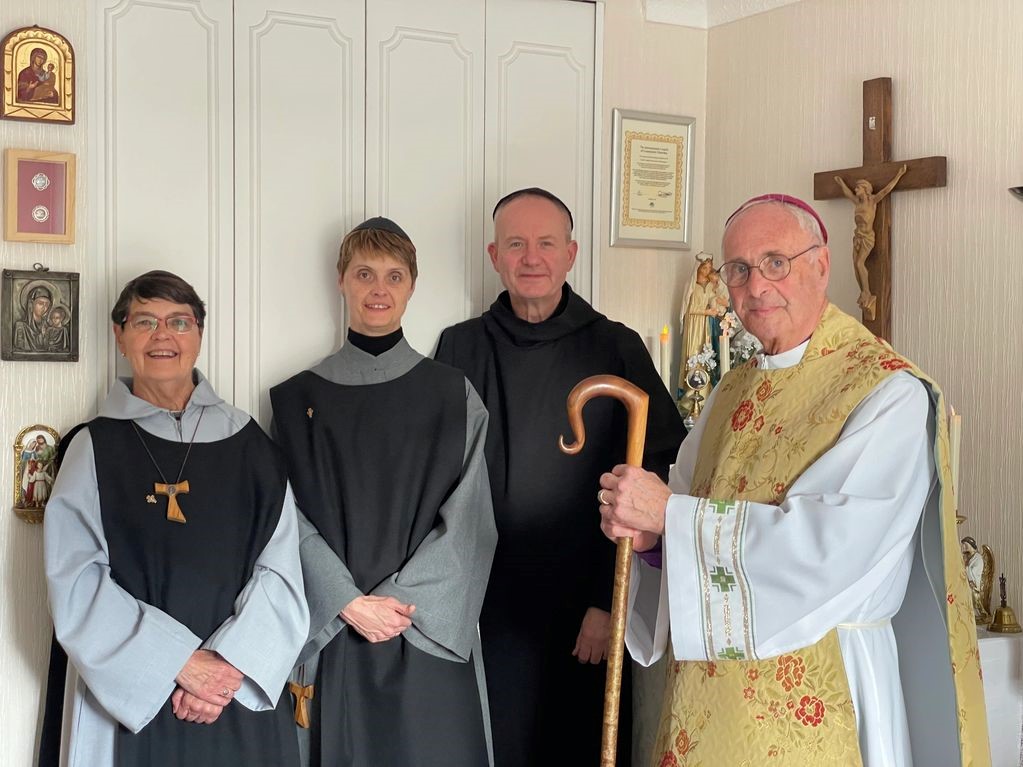
The Old Catholicism in Switzerland
Switzerland’s first congress of Old Catholics met in Solothurn in 1871. It was attended by a large number of lay people, and the congress had a pronounced political character. At the Second Congress in Olten in 1872, the program of the Old Catholic movement in Switzerland was adopted. It focused mainly on the issues of the church’s interaction with civil authorities and the replacement of priestly positions and theological chairs of universities by Old Catholics.
Since 1874, the Old Catholicism in Switzerland has adopted the name “Christian Catholic National Church.” The administration of the community was organized in the likeness of the Old Catholic administration in Germany: It was a communal synodal meeting. The Supreme Bishop was subordinate to the Synod in everything. Only a Swiss citizen could become a bishop of the Swiss Old Catholic Community, provided that he did not have any ecclesiastical posts abroad. The bishop’s salary was paid from the municipal budget. The very structure of the church structure was a pyramid, in which the national Synod occupied the highest position, cantonal synods stood below, and district synods stood at the base of the hierarchy.
The Supreme Bishop of the Swiss Old Catholic Community was elected only at the second national Synod in Olten, which was convened in 1876. Like Germany, where university professors played leading roles in the Old Catholic movement, Priest Eduard Herzog, professor of theology at the University of Bern, was elevated to the rank of bishop in Switzerland. He was ordained by the German Old Catholic Bishop Reinkens.
The 1872 Congress of Olten preferred to postpone radical reforms, but in 1875 the Bern Cantonal Synod, without the knowledge and approval of the central Synod, decided to abolish private confession and celibacy of the clergy. Such harshness was caused by the actions of local priests, some of whom, at their discretion, destroyed oral confession and freely married. In addition, in 1877, Bishop Herzog made a statement during the sessions of the Third Synod that the church’s blessing of marriage bonds was not a matter of primary importance. Thus, a civil marriage could be fully equalized in rights with a church marriage.
Later, reformation activities led to the fact that the Swiss Old Catholics abandoned not only the false elements of the Catholic tradition (for example, indulgences), but also actually embarked on the path of iconoclasm in the spirit of Zwinglianism. Only Christmas, New Year’s Eve, Good Friday, Resurrection of Christ and All Saints’ Day began to be considered church holidays. The understanding of the Eucharist, rather vaguely formulated and enshrined in the Utrecht Declaration, also approached the Zwinglian vision of it as commemoration of the redemptive sacrifice of Christ. At the end of the 19th century, the Swiss branch of Old Catholicism was one of the most radical and numerous in terms of the number of parishioners after the German one.
The Old Catholicism in Austria-Hungary
In the Austro-Hungarian Empire, the Old Catholic movement began to develop immediately after the First Vatican Council, but it was not until 1877 that the government issued a law regulating the existence of the Old Catholic Church and granting it all the relevant rights. The first meeting of delegates of the Old Catholic communities in the Austro-Hungarian Empire was held in 1879. At this meeting, the governing body, the Synodal Council, was elected, and reforms in the field of liturgical practices and rituals were discussed. All the points of discussion were further consolidated at two Synods in 1880 and 1881 in Vienna. The first Old Catholic bishop of Austria was ordained only in 1925, in Czechoslovakia in 1924.
The Old Catholicism in Italy
The Old Catholic community of Italy was closely connected with the Italian risorgimento, as it grew out of the “society for National Liberation and Mutual assistance of the Italian clergy”, founded in Naples in 1862. The Old Catholic Archbishop of Italy was ordained in 1875. The Italian Old Catholic community rejected all the decisions of the First Vatican Council and other papal innovations, recognizing only the definitions of the seven Ecumenical Councils. The structure of the Italian Old Catholic Community was similar to that of the German and Swiss, where bishops were elected by both clergy and laity as “first among equals.” The highest church governing body in the Italian Old Catholic Community is the Synod, which convenes with varying frequency. The diocesan Synod is held annually; the provincial Synod is held every two years, and the national Synod is held every four years. The bishop’s advisory body is the Synodal Council, which includes the cathedral chapter, all the priests of the diocese, and lay deputies. The Italian community has not carried out drastic reforms of the worship system, except for the partial use of the Italian language.
The Old Catholicism in the 20th and 21st centuries
The First World War (1914-1918) interrupted the regular convocations of the Old Catholic congresses. In 1925, after a long break, the Tenth Old Catholic Congress was held in Bern. The Congress recognized the validity of Anglican ordinations. Thus, the Old Catholicism became increasingly closer to the Anglican Church. In 1930, at the Lambeth Conference, a commission was formed to discuss the unification of the Old Catholic Churches with the Anglicans. Officially, this union was concluded in 1931 at a congress held in Vienna.
During the Second World War (1939-1945), the Old Catholic communities of Austria, Czechoslovakia, and the Netherlands experienced a severe crisis. During the bombing of Rotterdam in 1940, the Church of St. Lawrence and St. Mary Magdalene was completely destroyed, where the first Old Catholic Bishop Reinkens was ordained in 1873.
In 1982, the institute of deaconesses was restored in the Old Catholic Confession. In the Dutch Old Catholic Community, the issue of ordination of women was being resolved, and later, in 1997, it was decided to leave the decision on ordination of women to the discretion of each individual national Church. The Old Catholic communities of Germany, Austria and Switzerland were the first to ordain women in 1996. In 1999, the first ordination of a woman was performed in the Old Catholic Community of the Netherlands. The Polish National Community strongly opposed the ordination of women, and when in 2003 Members of the Utrecht Union decided to bless the marriages of homosexual couples, the Polish and Slovak Old Catholic communities withdrew from the Union.
Today, the Old Catholic communities are united in the Utrecht Union, the highest body of which is the International Old Catholic Episcopal Conference. Each national community is autonomous and the main body in each is still the Synod, in which clergy and laity participate at the same level.
The number of Old Catholics tended to decrease. For example, in Switzerland in 1879 there were 56 Christian Catholic local communities and 70 clergy, when by 1881 the number of communities had decreased to 42, and the number of clergy was limited to 59 persons. In the early 1880s, the number of Old Catholics in Switzerland did not exceed 70,000, when there were about 1.5 million Catholics. By 1889, there were about 10,000 Old Catholics in Italy.
The Utrecht Union currently consists of: The Old Catholic Church of the Netherlands (Oud-Katoholieke Kernvan Nederland), the Catholic Bishopric of the Old Catholics in Germany (Kath. Bistumder Altkatholikenin Deutschland), the Christian Catholic Church of Switzerland (Christkatholishe Kircheder Schweiz), the Old Catholic Church of Austria (Altkatholische Kirche Osterreichs), the Old Catholic Church of the Czech Republic (Altkatholische Kircheinder Tshechoslowakei), the Polish National Catholic Church in America and Canada (Polish National-Katholishe Kircheinden USA u. in Kanada), the Catholic Church in Poland (Polnisch-Katholische Kirchein Polen), the Old Catholic circle of communities in Croatia and Bosnia .
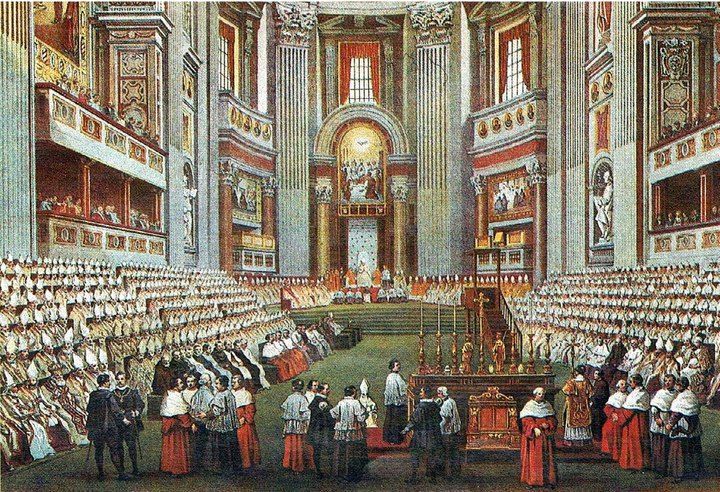
The Old Catholicism (German: Altkatholizismus) is a denomination that arose as a result of the rejection by a number of Catholic clerics and theologians of the decisions of the First Vatican Council (1869-1870). Initially, Old Catholics tried to exist as a true and ancient (“old”) form of Catholicism cleansed from the errors of Rome. But later on, Old Catholicism turned, in fact, into one of the types of Protestantism, having entered into communion first with the schismatic Utrecht Church, and then with the Anglicans.
The Old Catholic protest did not arise out of thin air and was the result of the accumulated dissatisfaction of representatives of the Catholic clergy and the faculty with the understanding of the Roman Catholic Church as a monarchical organization with a clear and indisputable hierarchy, at the very top of which stands the Roman pontiff. Starting from the 17th century, national projects of church organization began to develop in contrast to the imperial model of the Church’s vision. In 1682 An attempt to gain independence from Rome was the “Declaration of the Gallican Clergy,” which proclaimed the partial independence of the national (in this case, the French) church from the authority of the pope, as well as the right of the state to participate in the life of the church. To a certain extent, the key idea of Gallicanism - the independence of the French Church and the divine character of the absolute power of the monarch - echoes the ideas of Anglicanism, but Gallicanism did not envisage a complete break with Rome. Thus, at the cathedrals of the French clergy in Avignon (1725) and Evreux (1727), the French clergy proved their loyalty to Rome. The situation was different in the Netherlands, where in 1702 the apostolic vicar of Utrecht (Archbishop of Utrecht) Peter Codd, who supported Jansenism, was deposed by Pope Clement XI (1700-1721). The local chapter, without approving any of the papal candidates for bishop, nominated its own without the approval of Rome. In 1724, the Utrecht Church was formed, the archbishop of which was ordained by the Bishop of Babylon, who had Roman ordination. Henceforth he was chosen by the Bishops of Haarlem and Deventer.
In the 19th century, anti-papal sentiments intensified in Germany and Switzerland. The universities of these countries had strong theological departments, whose professors tried to dissociate themselves as much as possible from scholasticism and the medieval vision of papal power. Ignaz Heinrich von Wissenberg (1774-1860), vicar of the Archbishop of Constance, defended the idea of the primacy of Ecumenical Councils over the Church. His ideas were developed in the movement of the so-called “German Catholicism” in the 1840s. The Silesian chaplain John Rogge became the leader of this movement. However, during the revolution of 1848 in the German lands, the movement died out.
All these attempts at a new vision of the church structure took place against the background of socio-political upheavals in Europe. The desire of national churches for independence from Rome in the political context was dictated primarily by the formation of new territorial borders in Europe, the fruits of the Reformation and the Thirty Years’ War (1618-1648) and the emergence of unification movements. In a religious context, it was a desire to separate from the Roman Catholic Church, whose theological thought and instruments of influence have not fundamentally changed since the Middle Ages.”
These problems fully manifested themselves at the First Vatican Council, during which the participants were divided into two factions: the Ultramontanist (pro-papal) and the liberal opposition. The main representatives of the latter at the council were: Archbishop Cardinal Schwarzenberg of Prague, Archbishop Darbois of Paris, Archbishop Scheer of Munich, Bishop Strossmeier of Bosnia, and others. The Liberal Party was under intense pressure from the ultramontanists. As a result, the dogma of papal infallibility was accepted. The work of the cathedral was soon interrupted by revolutionary actions.
In Germany, Austria-Hungary, and Switzerland, the doctrine of papal infallibility provoked protest among the clergy and intellectuals. Ignaz von Dellinger (1799-1890), a professor at the University of Munich, published an article against the adoption of the dogma of papal infallibility in the Augsburg Allgemeine Zeitung. The opposition was formed mainly by university professors. Prague Professor Johann Friedrich Schulte has taken the initiative to convene a true Ecumenical Council to condemn Rome’s heretical decisions. Schulte also took the initiative to collect signatures from the protesters. There were about 60 students from the Universities of Munich, Tübingen, Bonn, Breslau, Munster and Württemberg.
Despite widespread protests and disagreement, the episcopate did not support the theological professors, and in the middle of spring 1871, some of them were excommunicated from the Roman Catholic Church, followed by a ban on teaching. However, the protesters were supported by the state authorities. In particular, the professors were supported by the Ministry of Public Education of Prussia, Chancellor Otto von Bismarck (Protestant) and King Ludwig II of Bavaria (Catholic). Dellinger was elected rector of the University of Munich, and six of his supporters occupied leading chairs. Chancellor Otto von Bismarck saw papal Rome as a threat to the integrity of the territory of the practically united Germany and pursued a harsh policy against clerics and supporters of the papacy. The support of the secular authorities allowed the Old Catholic movement to move on to formalizing the structure and organization of church communities.
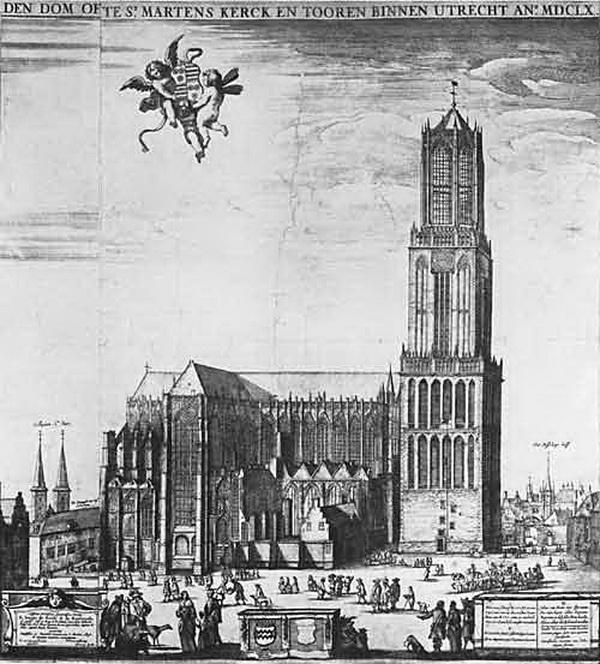Despite the similarity of ideas and long-term communication between the Old Catholics and members of the Utrecht Church, the clergy of the latter were concerned about the reform activities of the Old Catholics in Switzerland and Germany. The German and Swiss Old Catholicism denied the authority of the Council of Trent and the obligation of celibacy for the clergy, while the Utrecht Church continued to recognize the Tridentine decrees.
To resolve the situation, Archbishop Hermann Heikamp of Utrecht convened the Utrecht Conference in 1889. Five Old Catholic bishops took part in the conference: Archbishop Heikamp of Utrecht, Bishop Rinkel of Haarlem, Bishop Diependaal of Deventer, Bishop Reikens of Germany and Bishop Herzog of Switzerland.
The document adopted as a result of the Utrecht Conference has become mandatory for all Old Catholic communities. Thanks to this declaration, the trend towards secession was negated in the Old Catholic world. The Union of Utrecht united the Old Catholics of Germany, Switzerland, Austria and the Utrecht Church. In the declaration, the foundations of the Old Catholic faith were formulated, where pro-Protestant tendencies again manifested themselves.
In the 6th paragraph of the declaration on the Eucharist, there is a noticeable tendency towards a synthesis of the Catholic tradition and the Protestant (rather, the Zwinglian, since Luther recognized the Eucharist as a sacrament). The interpretation of the Eucharist as commemorating the sacrifice of Christ shows uncertainty and a desire to dissociate from the traditional understanding of the Eucharist by the Catholic Church, formulated by Thomas Aquinas (one of the first ideologists of ultramontanism) and called “doctrina de fide” (“doctrine of faith”). The thesis on the recognition of the sacrament of the altar makes it clear that Old Catholics do not completely deviate from the understanding of the Eucharist as a sacrament, since denying this would immediately alienate them from the Eastern Churches, but there is also no direct mention of “transubstantiation” among Old Catholics.
In addition, the Utrecht Declaration does not address the issue of the exodus of the Holy Spirit at all, although the certainty of the opinion of the Old Catholics on this issue would facilitate dialogue with the Orthodox Church. The declaration also does not specify which Ecumenical Councils it refers to.
The reforms in the Swiss Old Catholic community to a greater extent directed the national Old Catholic movement towards Protestantism and iconoclasm characteristic of Calvinism. The problem of the language of worship remains outside the focus of the declaration; the issues of the Anointing ceremony; celibacy, which each Old Catholic Church interprets in its own way; the issue of the obligation of confession before the Holy Spirit. Communion; the question of fasts.
Related Concepts
- anglican-church
- anglicanism
- anti-papal-sentiment
- antipope
- augustine
- body-and-blood-of-christ
- bonn-conferences
- church-hierarchy
- church-life
- church-structure
- church-unity
- cluniac-reform
- communion
- conciliarism
- confession
- confirmation
- consistory
- council-of-ferrara-florence
- council-of-konstanz
- council-of-trent
- councils-of-pisa-constance-basel-and-florence
- declaration-of-the-gallican-clergy
- disciplinary-reform
- double-procession
- ecumenical-councils
- election
- eucharist
- filioque
- first-vatican-council
- gallicanism
- goths
- gregory-palamas
- holy-gifts
- holy-spirit
- holy-trinity
- ignaz-heinrich-von-wissenberg
- illness
- intercommunion
- jansenism
- laity
- liberal-opposition
- liturgical-reform
- magisterium
- manna
- mark-of-ephesus
- merit
- modern-reforms
- national-churches
- nicene-constantinople-creed
- nicene-constantinopolitan-creed
- old-catholic-catechism
- old-catholic-prehistory
- one-principle
- orthodox-protestant-tensions
- papal-absolutism
- papal-authority
- pastoral-theology
- photius
- priesthood
- protestantization
- religious-conformity
- sacramental-economy
- sacramental-theology
- second-ecumenical-council
- st-augustine
- st-maximus-the-confessor
- state-surveillance
- swiss-old-catholicism
- synod
- synodality
- third-ecumenical-council
- triadology
- ultramontanism
- unction
- utrecht-church
- valid-sacraments
- vatican-i
- zwinglianism