Old Testament — Topic 32
OBADIAH
Outline
Obad 1–14 Obadiah’s Vision Concerning Edom
Obad 1–4 The Lord Will Humble Prideful Edom
Obad 5–7 Nothing Will Remain, and Allies Will Become Enemies
Obad 8–14 Edom Will Regret Being Israel’s Enemy
Obad 15–16 The Day of the Lord Is Near
Obad 17–21 Israel Will Prevail Over Many Lands
Obad 17–18 Mount Zion Will Be Holy, and Jacob Will Be in Control of Their
Enemies
Obad 19–21 The Nations That Destroyed Judah Will Be Possessed by Judah; Mount
Zion Will Rule Over Mount Esau With the Lord as King
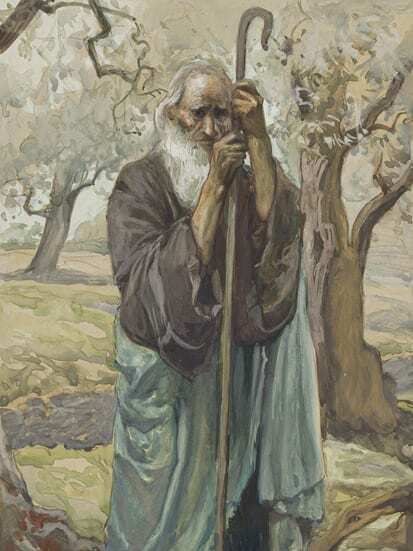
The Prophet Obadiah by James Tissot, c. 1900
Introduction
Obadiah the prophet
The Book of Obadiah is the shortest book in OT, with only twenty-one verses. Obadiah’s name means ‘Servant of Yahweh’. There are thirteen different people mentioned in the Bible as Obadiah, making it one of the commonest names. We have no way of knowing who the Prophet Obadiah was. Obadiah prophesied against the nation of Edom. He was probably a contemporary of Jeremiah and Ezekiel.
Historical background
The date of Obadiah is difficult to determine, as there are few clues. There are two main views, based on times when Edomites plundered Jerusalem:
1) During the reign of Jehoram (843-840 BC)
Some people suggest a date of approximately 844 BC, connecting the book in with 2 Chr 21:16f and 2 Kg 8:20, during the reign of Jehoram. There is no mention of destroyed temple or description of the fall of Jerusalem. The nations mentioned in the book are not neighbours from the time of the exile, but earlier foes such as the Philistines. Obadiah rebukes the same sins as Amos did in the eighth century.
2) During the reign of Zedekiah (597-586 BC)
More often the book is dated sometime after the fall of Jerusalem to the Babylonians in 586 BC. Verses 11-14 appear to fit most naturally with the destruction of Jerusalem, when Edom was particularly hostile to Judah, and rejoiced over her fall (Ps 137:7, Ezek 25:12-14, 35:1-15, Lam 4:21).
Other suggestions are during the reign of Amaziah (803-775 BC - 2 Chr 25:11-12,23-24) or during the reign of Ahaz (741-726 BC - 2 Chr 28:16-21). Whatever the date we know that Jerusalem was plundered and sacked (probably either by Philistines in 844 (2 Chr 21:16f) or Babylon 586 BC) and Edom had delighted in this and shared in the plunder. The Edomites are particularly rebuked for standing aloof while Jerusalem was being attacked, siding with the attackers, gloating over Judah’s misfortune, rejoicing on the day of their ruin, boasting on the day of their distress. They also entered Jerusalem and looted goods, cut off the fugitives from the city and delivered up survivors on the day of distress (v. 11-14).
The nation of Edom
Various names are used for Edom in the OT. The most common is Esau, Mount Esau or The House of Esau. Another is Seir or Mount Seir (Gen 36:8), named after the mountainous region in the north-west of Edom. Sometimes one of the cities of Edom is used to indicate the whole nation. These include Teman, Dumah, Dedon, Bozrah and Selah (Petra).
The land occupied by the Edomites is south and east of the Dead Sea. It is a rocky mountainous ares, east of the Arabah (100 miles (160 km) North to South, 20 miles (30 km) East to West). Much of the land was inhospitable, but there were good areas to cultivate. The trade route connecting Mesopotamia and Egypt called ‘The King’s Highway’ passed through the southern extremity of this region, thus adding to the treasury of Edom. Edomites went out on raiding parties, then returned to impregnable strongholds.
The Edomites were descended from Esau, the older twin brother of Jacob (Gen 36:1,8-9). Even before the children were born to Rebekah, she was told that, two nations are in your womb … the elder shall serve the younger” (Gen 25:22f). Esau sold his birthright for some food (Gen 25:27-34) and became the type of all irreligious people who are insensitive to spiritual values, as described by the author of Hebrews, “See to it that no one fails to obtain the grace of God, that no root of bitterness springs up and causes trouble, an by it the many become defiled, that no one be immoral or irreligious like Esau … For you know that afterwards, when he desired to inherit the blessing, he was rejected, for he found no chance to repent, though he sought it with tears”. (Heb 12:15-17).
Esau had occupied this area around the time when Jacob came back from Haran (Gen 32:3) and was well established by the time of the Exodus and living by a monarchic pattern. Jacob was forbidden to travel through Edom, so had to go round the country (Num 20:20-21). God had given Edom their land and Israel was not to take them.
Saul had conflict with Edom but David subdued them putting garrisons throughout the land (2 Sam 8:14). This opened up the way for Solomon to build a port at Ezion-Geber on the Gulf of Aqaba, and exploitation of the copper and iron mines in that territory.
Edom joined other nations to fight against Jehoshaphat (2 Chr 20). Edom rebelled in the reign of Jehoram (848-841 BC) and became independent for forty years (2 Chr 21:16, 2 Kg 8:21).
Amaziah started the re-conquering of Edom and Uzziah, his successor, completed the conquest, he restored the port at Elath, but a few years later Edom formed an alliance with Israel and Syria and carried captives away from the southern Kingdom in 735 BC and gained independence (2 Kg 16:5-6, 2 Chr 28:16-17). Judah never recovered Edom.
In 732, Tiglath-pileser III of Assyria subdued Edom to be a vassal state. This lasted for one century. It quietly accepted Babylonian suzerainty in 604 BC. Edom joined Nebuchadnezzar in the overthrow of Jerusalem in 586 BC and were overjoyed (Ps 137:7, Lam 4:21-22, 2 Chr 36:11-21, Ezek 35:5,12,15).
In the era after the exile Edom came under Arab control and by the fourth century had been overrun by the Nabataeans who made their capital in Petra, carved in cliffs in mountain canyons. Some Edomites moved into the area south of Judah forming the Idumaean peoples, others were absorbed by the Arabs.
Judas Maccabeus had a victory over the Idumeans in the Akrabattene in 164 BC. John Hyrcanus occupied all of Idumaea about 120 BC and compelled its people to adopt Judaism.
The Idumeans naturally came under the Romans when Rome took over Palestine. One result was that from these peoples came Antipater, the father of Herod the Great, as governor of the country in 63 BC. His son founded in 37 BC the final dynasty of Palestinian rulers. After the destruction of Jerusalem in AD 70 the Idumeans disappeared from history thus ending the Edomites.
Judgment Comes to the Proud
Edom, a prideful nation and the relatives of Israel, played a role in Israel’s downfall. They rejoiced and gloated while their brothers faced serious devastation. They even turned over fleeing refugees and celebrated the destruction of Israel. In Obadiah’s vision, Yahweh issues an indictment against their deplorable actions and levels strong judgments against them. Edom will be completely destroyed. Their pride will not save them. Their secure cliff dwellings will not save them. Their wise men will be destroyed, and their warriors will be terrified. There will be no survivors. They turned their back on their brothers and participated in their downfall, but in the end, their brothers will be restored to their land and their kingdom, and they will rule Edom’s land. The day of the Lord is coming for Edom, and that day of judgment will be fierce and devastating.
Obadiah’s Vision Concerning Edom (Obad 1–14)
Edom dwelled in lofty cliffs, which provided a secure and easily defensible position. Their haughty pride in their secure dwellings mirrors their haughty pride over other nations, primarily their blood relatives Israel. When others went against Israel, Edom responded by gloating, rejoicing, and handing the fleeing refuges over to destruction. In response, Yahweh issues a devastating judgment against them. They will be destroyed. Their trust in their cliffs to save them is misplaced. They will be slaughtered and destroyed forever. There is a coming reckoning. There is a coming day of the Lord.
The Lord Will Humble Prideful Edom (Obad 1–4)
Obadiah’s vision begins with a brief reference to what led to Edom’s downfall, followed by a devastating judgment. An envoy encouraged Edom to go against “her,” that is, Israel, in battle. Here the vision only alludes to the sin that followed, implying that they agreed and went against their brother. Edom’s dwelling in the high rocks and caves of their land provided physical security against attackers and is a metaphor for their pride. Their pride says nothing can topple them, and that very pride will be their downfall—both literally and figuratively. As the indictment continues, the details of their downfall become more specific and devastating.
Nothing Will Remain, and Allies Will Become Enemies (Obad 5–7)
Edom pridefully believes nothing can destroy them, yet Yahweh’s judgment details a full and total destruction. In an almost taunting manner, Yahweh explains that while some disasters are partial, their coming disaster will be full and complete—leaving them with nothing. To heap insult on injury, it will be the ones they are friends with, those they trust, who will betray them and ruin them. The description of their coming devastation is not yet complete, though, as the details and specifics continue to build in the following section.
Edom Will Regret Being Israel’s Enemy (Obad 8–14)
Not only will Edom’s friends betray and destroy them, but those who are relied on and revered by the people (wise men and warriors) will be destroyed. Here, the indictment compares their judgment to the evil they did to Israel. They stood aloof while their brother was devastated; they gloated, rejoiced, and boasted that their brother was ruined and they were not. Even worse, they betrayed those escaping destruction. Their actions, as the next verses reveal, will be turned back on them.
The Day of the Lord Is Near (Obad 15–16)
After the initial indictment and declaration of coming judgment, Obadiah warns Edom of the coming day of the Lord, a time when they will face judgment for their actions. What they did to Israel will be returned on them. They rejoiced and desecrated the holy place of Mount Zion (i.e., Jerusalem, the Temple Mount), and their judgment will be to drink until they are destroyed, likely a reference to drinking Yahweh’s wrath (see Jer 49:12). Their destruction is contrasted to the restoration of Israel in the final section.
Israel Will Prevail Over Many Lands (Obad 17–21)
While Edom’s judgment will be devastating and final, Israel will be restored and their land expanded. Though Israel is currently suffering the devastation of exile, the survivors will return to the land and become a strong power. Edom, though, will become nothing, with no survivors, and their land will be governed and occupied by Israel. Those that are currently dispossessed will again possess their land. The restored kingdom will be Yahweh’s.
Mount Zion Will Be Holy, and Jacob Will Be in Control of Their Enemies (Obad 17–18)
While Edom will be devastated, Israel will be restored. Edom mocked their brother from lofty heights, but the height of Israel—Mount Zion—will be restored to a place of deliverance. Their brothers, who had been forced out, will return to possess their inheritance, while the inheritance of Edom will not be restored. Israel, represented by the names of their ancestors Jacob and Joseph, will become a bright flame, while Edom, represented by Esau, will become chaff in the wind (i.e., stubble), which the fire of Israel will destroy. Edom will have no survivors. The following verses describes the final step of their destruction.
The Nations That Destroyed Judah Will Be Possessed by Judah; Mount Zion Will Rule Over Mount Esau With the Lord as King (Obad 19–21)
Edom will be destroyed, while Israel flourishes, and even more devastating is the news that others will possess the inheritance of Edom. Israel, who is currently in exile, will flourish and expand into the land of Edom and into the other surrounding lands. Edom will be ruled by Israel and belong to Yahweh. Yahweh next assures them that they will be completely and utterly destroyed.
**An Orthodox Synthesis of the Book of the Prophet Obadiah: The Judgment
of the Prideful and the Kingdom of God**
The Book of Obadiah, a single chapter of fierce judgment against the nation of Edom, can appear on the surface to be a parochial and vengeful text. However, through the lens of Christ and Holy Tradition, its message is universalized and revealed to be a foundational part of the Gospel narrative. Obadiah is not about a petty grudge; it is a divine revelation about the fate of all God- hating pride and the ultimate triumph of Zion through her King, Jesus Christ. It is Christ-centered because it reveals the spiritual warfare between the seed of the serpent and the Seed of the woman, and it proclaims the final victory that belongs to the Lord and His Anointed One.
The Central Typology: Edom and the Pride of the Fallen World
The conflict between Israel (Jacob) and Edom (Esau) is a recurring theme in Scripture, originating in the womb of Rebekah (Genesis 25:23). Edom, the descendants of Esau, represents:
-
The Flesh vs. The Spirit: Esau, the profane man who sold his birthright for a meal, stands in typological opposition to Jacob, the heir of the promise. Edom thus symbolizes the carnal, prideful mind that is hostile to God (Romans 8:7), the world that opposes the people of God.
-
Betrayal of Brotherhood: Edom’s sin, highlighted by Obadiah (v. 10-14), was not just hostility, but a betrayal of kinship. They stood aloof, rejoiced, and even participated in the plunder of Jerusalem during its time of calamity. This prefigures the world’s hatred for Christ (John 15:18-25) and the persecution of His Body, the Church.
Therefore, the judgment against Edom is a typos of God’s final judgment against all spiritual forces of arrogance, hatred, and betrayal that assail His people. It is the condemnation of the “pride of your heart” (Obadiah 1:3) that seeks to dethrone God.
Key Christocentric Themes and Their Fulfillment
1. The Judgment of Pride (Obadiah 1:3-4)
“The pride of your heart has deceived you, you who dwell in the clefts of the rock, whose habitation is high; You who say in your heart, ‘Who will bring me down to the ground?’ Though you ascend as high as the eagle, and though you set your nest among the stars, from there I will bring you down,” says the Lord.”
-
Context: Edom trusted in its impregnable mountain fortresses, particularly Petra, believing itself to be secure from all threats. This physical pride mirrored their spiritual arrogance.
-
New Testament Parallel: This is the fundamental sin of the devil and of fallen humanity: the desire to be like God (Isaiah 14:13-14). Christ confronts and reverses this pride not with greater force, but with kenotic humility. His Incarnation is the ultimate “bringing down,” as the Divine Logos descends from the highest heaven to the lowest depths of human existence, even death on a cross (Philippians 2:6-8). The Cross is the divine answer to the pride of the world, foolishness to the Greeks and a stumbling block to the Jews (1 Corinthians 1:23).
-
Patristic Understanding: The Fathers saw this as a warning to every soul. St. John Chrysostom often preached that spiritual pride is the most dangerous passion, as it leads to a fall worse than that of any earthly city. The “clefts of the rock” are a false refuge; the only true rock and refuge is Christ (1 Corinthians 10:4).
2. The Day of the Lord and the Law of Retribution (Obadiah 1:15)
“For the day of the Lord upon all the nations is near; As you have done, it shall be done to you; Your reprisal shall return upon your own head.”
-
Context: God’s judgment on Edom is framed within the universal “Day of the Lord” against all nations. The principle of lex talionis (an eye for an eye) is invoked.
-
New Testament Fulfillment: While this principle operates within the Old Covenant, Christ transfigures it in the New. He teaches, “Do not resist an evil person. But if anyone slaps you on the right cheek, turn to him the other also” (Matthew 5:39). However, this does not negate divine justice; it internalizes and eschatologizes it. The ultimate “reprisal” for sin was poured out upon Christ on the Cross. He absorbed the violence of the world, and in His resurrection, He broke the cycle of retribution. The final “Day of the Lord” will be the ultimate enactment of this verse, where Christ the Judge will render to each person according to what they have done (Matthew 16:27, Romans 2:6).
3. The Deliverance on Mount Zion and the Kingdom of God (Obadiah 1:17, 21)
“But on Mount Zion there shall be deliverance, and there shall be holiness; the house of Jacob shall possess their possessions… Then saviors shall come to Mount Zion to judge the mountains of Esau, And the Kingdom shall be the Lord’s.”
This is the triumphant, messianic conclusion of the prophecy.
-
Context: In contrast to the destroyed mountain of Esau, Mount Zion will be the place of deliverance (p’letah) and holiness. The “saviors” or “deliverers” (Hebrew: moshia ’) who will judge Edom are understood as the righteous rulers or judges of the restored people.
-
Christological Fulfillment:
-
Mount Zion is the Church: The true “Mount Zion” is no longer the earthly Jerusalem but the heavenly Jerusalem, the Church of the firstborn (Hebrews 12:22-24). It is in the Church that true deliverance—from sin, death, and the devil—is found.
-
The Ultimate Savior and Judge: The plural “saviors” finds its singular fulfillment in Jesus Christ , the ultimate Moshia (Savior). He is the one true Deliverer who has come to Zion to judge the spiritual “Edom”—the powers of darkness. His victory on the Cross is the judgment of the “prince of this world” (John 12:31).
-
The Kingdom Shall Be the Lord’s: This final proclamation is the ultimate goal of all salvation history. It finds its fulfillment in the eternal Kingship of Jesus Christ. The angel Gabriel announces this Kingdom to the Theotokos (Luke 1:32-33), and the final book of Scripture echoes Obadiah’s climax: “The Kingdom of the world has become the Kingdom of our Lord and of his Christ, and he shall reign forever and ever” (Revelation 11:15).
-
-
Liturgical Understanding: This final verse is a foundational doxology. It is the confession of the Church in every Divine Liturgy. The Eucharistic celebration is a foretaste of this reality, where Christ the King is enthroned upon the holy altar, and the faithful partake of His Kingdom. The phrase is sung in various liturgical hymns, affirming that despite the apparent power of the “Edoms” of this world, the ultimate and final victory belongs to Christ.
Conclusion: From the Ashes of Edom to the Throne of Christ
The Book of Obadiah is fundamentally a Christ-centered book because it paints, in miniature, the entire cosmic drama of redemption:
-
It reveals the enemy : not merely a nation, but the spiritual pride and hostility to God that infects the world.
-
It proclaims the certainty of God’s justice : the arrogance of the creature will be humbled by the Creator.
-
It points to the place of salvation : the true and eternal Mount Zion, which is the Church, the Body of Christ.
-
It culminates in the final victory : the universal and everlasting Kingdom of God, which is established, ruled, and embodied by Jesus Christ, the Savior of Zion and Judge of the world.
Obadiah assures the persecuted Church that the betrayals and hatred of the world (the “Edomites”) will not have the final word. The final word is: “The Kingdom shall be the Lord’s.” And for the Christian, this Lord is Jesus Christ, to Whom be glory forever. Amen.
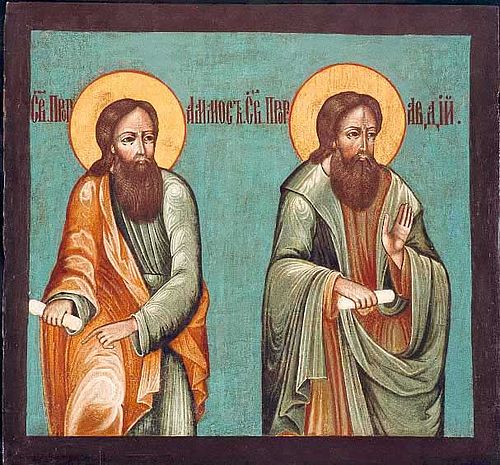
Russian icon of Prophets Amos and Obadiah, 18th century
JONAH
Outline
1:1–2:10 The Outrageous Grace of God Individually Experienced by the Prophet
Jonah
1:1–3 God’s First Announcement of His Mission of Grace to Nineveh
1:4–16 Jonah’s Experience of Divine Grace Despite His Rebellion
1:4 God’s Creation of a Crisis at Sea
1:5–9 The Sailors’ Response to the Crisis at Sea
1:10–13 The Intensification of the Crisis at Sea
1:14–16 The Resolution of the Crisis at Sea
1:17–2:10 Jonah’s Celebration of God’s Grace to Him
1:17 God’s Agent of Grace in Jonah’s Rescue
2:1–9 Jonah’s Response to God’s Grace in Rescuing Him
2:10 God’s Climactic Act of Grace in Jonah’s Rescue
3:1–4:11 The Outrageous Grace of God Corporately Experienced by the City of
Nineveh
3:1–3 God’s Second Announcement of His Mission of Grace to Nineveh
3:4–10 Nineveh’s Experience of Divine Grace Despite Its Prior Rebellion
3:4 God’s Implicit Offer of Grace to Nineveh
3:5–9 The Ninevites’ Response to the Explicit Offer of Grace
3:10 God’s Gracious Reaction to the Ninevites’ Response
4:1–4 Jonah’s Outrage at God’s Grace
4:5–11 God’s Lesson on Grace for His Prophet Jonah
4:5–8 God’s Object Lesson on Divine Grace for Jonah
4:9–11 God’s Rebuke of Jonah for His Selfish and Pathetic Lack of Grace
_
_
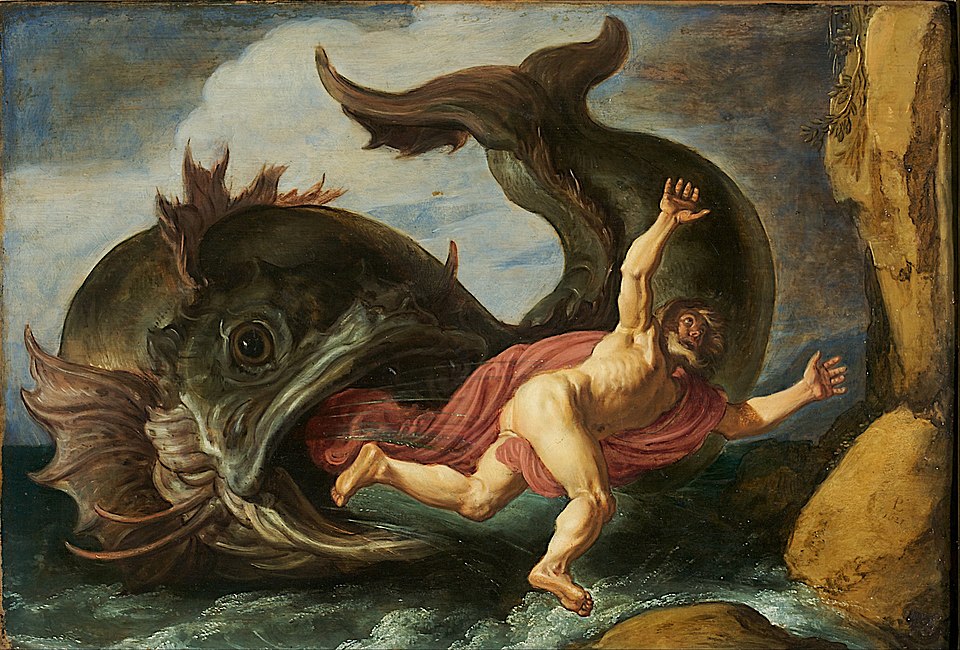
Jonah and the Whale(1621) by Pieter Lastman
The Outrageous Grace of God: A Story of a Hardened Israelite Prophet
In the Hebrew Bible the book of Jonah is one of twelve short prophetic tractates gathered on one scroll, known as “the Book of the Twelve.” Jonah is unique in this collection for several reasons but especially because, rather than containing a collection of the prophet’s oracles, this is a short story, written in classical Hebrew prose, resembling the book of Ruth more than Amos and Micah. The only oracle it contains is a mere five words in Hebrew (3:4). On the surface, the focus seems to be on the prophet himself, rather than on his prophetic utterances.
In terms of message, the book operates at two levels. As suggested, the author’s locutionary goal was to tell a story about the prophet, or to recall a drama in two acts. He casts Jonah as a cartoon figure, totally out of character with the dignity of his prophetic office. However, the narrator’s illocutionary (message) goal was much more profound and theological. This book is a lesson for all, especially for pious bigots, of God’s amazing grace, which reaches out to the most despised and hated.
Structurally the book divides into two parallel parts, each involving: (1) setting the stage with the divine commissioning of the prophet (1:1–3; 3:1–3); (2) a narrative description of a crisis event (1:4–16; 3:4–10); and (3) a climactic scene involving the prophet’s reflection on the outcome of the events (1:17–2:10; 4:1–4). However, the second act adds one more section that concludes with an unanswered but haunting question, forcing us who hear the story to reflect on the significance of its core theological message for ourselves.
The Outrageous Grace of God Individually Experienced by the Prophet Jonah (1:1–2:10)
The first division of this literary cartoon consists of three frames (sections), all related to the overriding theme of Yahweh’s grace. In the first (1:1–3), Yahweh announces his mission of mercy and his election of Jonah (2 Kgs 14:25) to be his agent of grace to the hated city of Nineveh. To Jonah and his fellow Israelites, Nineveh represented the Assyrians, who had been tyrannizing the region for several centuries (compare Nahum). The second frame (section) takes up the bulk of the narrative, portraying Yahweh engaging the forces of nature to discipline the prophet and give him a taste of the fate that awaits the Ninevites (1:4–16). The frame ends with Jonah getting what he deserves and floundering around at the bottom of the sea, while the pagan sailors onboard the ship celebrate Yahweh’s undeserved grace. This episode climaxes in the third frame (section), which the narrator cast in a totally different genre, a poetic recollection of divine rescue from the belly of a great sea creature (1:17–2:10). This prayer celebrates the theme of the first division—God’s grace individually applied—and introduces for the first time a key concept in the story, Yahweh’s ḥesed (“unfailing love”; 2:8). With a simple command to the fish, Yahweh’s fury gives way to his grace, captured in Jonah’s concluding exclamation, “Salvation is Yahweh’s to deliver.”
God’s First Announcement of His Mission of Grace to Nineveh (1:1–3)
The book opens by introducing key factors that will drive the story, all related to the theme of God’s mission of mercy: the source of this mission—Yahweh himself; Yahweh’s chosen agent of grace—Jonah, a prophet from the Northern Kingdom of Israel (Josh 19:13); the target of the mission of grace—Nineveh; and Jonah’s response to his commission—rebellion and flight. From 2 Kgs 14:25 we learn that Jonah was from Gath-Hepher in Naphtali and that he ministered prophetically during the reign of Jeroboam II (782–753 BC), who led the Northern Kingdom to new political and economic heights. In the commission, Yahweh characterizes Nineveh as extremely wicked (1:3), hence deserving of judgment rather than grace (“undeserved favor”). Because Nineveh did not become a significant city until a half century later, the narrator probably wrote this account after the Assyrians had conquered the north (734 and 722 BC), using the name “Nineveh” as a designation for whatever city was the capital of Assyria. In Jonah’s time the capital was in Kalhu (Calah). The section ends with an image of a prophet not only heading in the opposite direction from that called for by Yahweh, but also fleeing “the presence of Yahweh,” which is tantamount to repudiating his prophetic status.
Jonah’s Experience of Divine Grace Despite His Rebellion (1:4–16)
This episode divides into four parts that deal successively with the divinely created crisis in response to Jonah’s rebellion (1:4–5a), the people’s responses to the crisis (1:5–9), the intensification of the crisis (1:10–13), and the resolution of the crisis (1:14–16). Although the narrator identifies Yahweh as the active agent only in the opening line (1:4a), obviously the hidden hand of God is in full control throughout. Yahweh not only hurls the wind on the sea, causing a vicious storm that threatens to shipwreck the vessel, but he also controls the dice that expose Jonah as the “cargo” that has unleashed his fury (1:6–7; compare Prov. 16:33), intensifies the storm when the sailors refused to throw Jonah overboard (1:11–13), and calms the sea after they dispose of Jonah (1:15). The target of Yahweh’s fury has shifted from Nineveh to this ship on the Mediterranean, because his agent of grace sleeps below amid the cargo.
Like Hebrew narrative generally, people’s conversations (1:6–9, 10–12, 14) provide clues to the significance of this section. Ironically, the pagan sailors are deeply concerned about Jonah’s well-being, but he, the professional prophet and “godly” Israelite, is willing to sacrifice the whole crew in self-interest. The final image is even more ironic: while Jonah fears for his life at the bottom of the sea (compare 2:2–4), these presumably Phoenician sailors worship Yahweh (1:15–17).
God’s Creation of a Crisis at Sea (1:4)
Without any reference to the rebellious prophet, and without a word from Yahweh, the narrator casts the latter’s response as a single simple action: Yahweh hurls a powerful wind against the boat, so powerful it is in danger of breaking apart. Of course, his fury is not against the inanimate object, but against a small segment of the cargo it is hauling from Joppa to its destination in distant Tarshish.
The Sailors’ Response to the Crisis at Sea (1:5–9)
The narrator begins by describing the crew’s reaction to the storm. To make the ship more manageable in turbulent waters, they begin tossing its cargo overboard (1:1). But they miss the critical piece, whom the narrator casts as a cartoon figure and the opposite of what a prophet should be. In contrast to the frantic action of the sailors (and Paul’s in Acts 27:14–44), the narrator inserts a single dismissive parenthetical comment: amid all the commotion around and above him, Jonah is in a very deep sleep in a cargo hold below (1:5). In 1:6–9 the narrator refines his portrait of Jonah by means of the conversations onboard the vessel. First, after waking Jonah, the captain commands him to intercede before his god to spare them. Second, convinced that someone on board has provoked the fury of the gods, the crew proposes exposing that person by casting lots, and to Jonah’s shame, inanimate objects declare God’s answer. In response to the sailors’ questions, Jonah identifies himself as a Hebrew and declares his citizenship with “I fear Yahweh.” Sadly, from the lips of a prophet who belongs to the people of Yahweh the word “fear” (yārēʾ) does not mean “trusting awe,” as it did for Abraham in Gen 22:12.
The Intensification of the Crisis at Sea (1:10–13)
Jonah’s characterization of Yahweh as “the God of heaven, who made the sea and the dry land” at the end of his testimony in 1:9 intensifies the sailors’ fear. Whereas the sailors thought they were dealing with Yam, an angry second- rate Phoenician god of the sea (= Greek Poseidon; Roman Neptune), from Jonah’s words they realize they are engaged in mortal combat with the high God of the universe. They are shocked that Jonah would flee from Yahweh’s presence, but they request his counsel on what to do with him to placate God’s fury. Admitting he is the culprit, Jonah instructs the sailors to throw him overboard, and calm will return. With delicious irony, the narrator has portrayed Jonah as willing to put the lives of the entire crew at risk, while the pagan sailors appear compassionate and unwilling to take his life. Therefore, instead of heeding Jonah’s counsel, they row harder, but the storm intensifies and neutralizes their efforts.
The Resolution of the Crisis at Sea (1:14–16)
Finally, pleading with Yahweh (the God of Israel!) not to hold them responsible for Jonah’s life, the sailors toss the critical piece of cargo overboard, and calm returns. Whereas Jonah’s confession in 1:9 sounded piously fraudulent, these “pagan” sailors demonstrate genuine fear of Yahweh in the best sense of the word by offering sacrifices and vowing their fidelity to him.
Jonah’s Celebration of God’s Grace to Him (1:17–2:10)
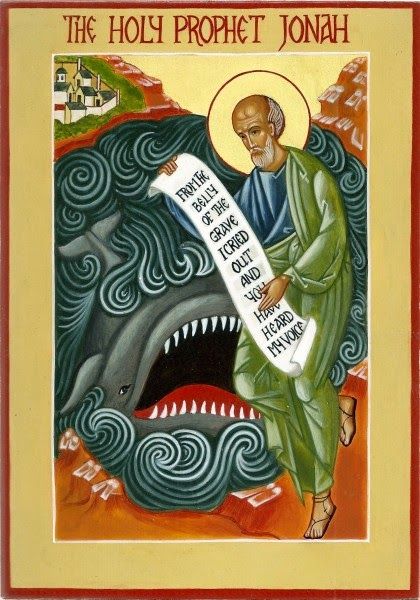
For this section, we need to follow the Hebrew verse numbering. Two narrative statements involving Yahweh frame this section, which clarifies how he fulfills his mission of grace to Jonah. At the beginning, Yahweh appoints a great sea creature (dāg, species undesignated) as his agent of grace (1:17). At the end he speaks to the animal, which dutifully vomits him onto the shore, presumably the eastern shore of the Mediterranean. Between these two bookends the narrator has inserted Jonah’s response from the belly of the sea creature. The narrator identifies Jonah’s action as “praying” (hithpallel), but it is a brilliant poetic composition, glowing with praise to Yahweh for his covenant faithfulness (ḥesed, 2:8) and his salvation (yĕšûʿātâ). Only time will tell whether Jonah’s response has integrity.
God’s Agent of Grace in Jonah’s Rescue (1:17)
The opening to this section highlights the same divine control that we observed in the wind that Yahweh hurled on the sea (1:4), except that the language the narrator uses is bizarre: Yahweh appoints a great fish to swallow Jonah. The story the narrator tells is laced with divine appointments, beginning with Jonah, the professional prophetic appointee, and ending with a series of appointments in the final segment in 4:6–8. However, the nature and purpose of the appointment are remarkable—God appoints a large sea creature (dāg) to swallow a human. On first hearing, this looks like part of Jonah’s punishment, but the narrator’s comment that the prophet is in the animal’s belly for three days hints at something exceptional happening to him; what that is we learn from the conclusion in 2:10, which followed immediately after 1:17 before Jonah’s prayer was inserted.
Jonah’s Response to God’s Grace in Rescuing Him (2:1–9)
Jonah’s response to YHWH’s rescue is striking.
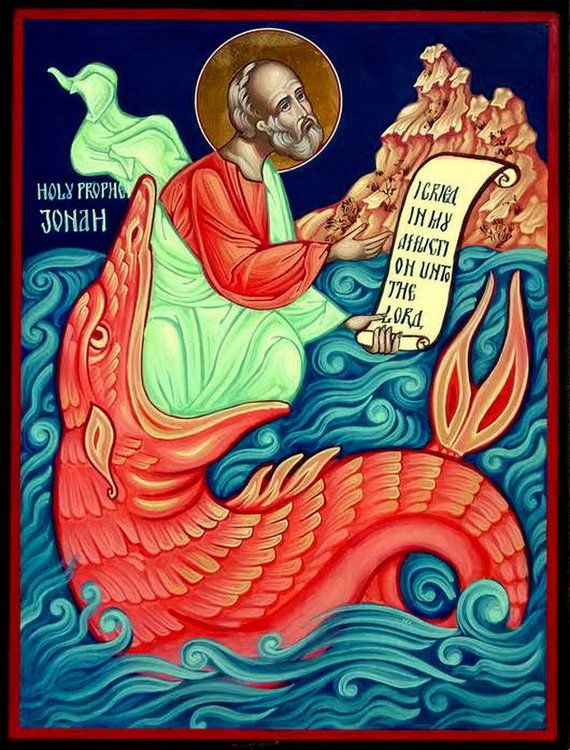
First, it is identified as a prayer (hithpallel) to YHWH from the belly of the fish. What sort of prayer it is we learn from the content. Second, it is cast in brilliant poetry and colorized with all sorts of metaphors, reinforcing the cartoon-esque style of the entire book. Third, Jonah’s prayer contains very little original material. From beginning to end it is laced with citations and allusions to other biblical texts, especially the Psalms. Like Jesus in his most critical moments (Matt 27:47), in the prophet’s hour of need he expresses himself in the words of saints who preceded him. Fourth, this prayer breaks down into four strophes.
1. In 2:2 we learn of Jonah’s SOS to Yahweh, from his distress on the brink of Sheol, which means that Jonah thinks he is about to die.
2. In 2:3–7 Jonah describes his desperate condition at the bottom of the sea. In contrast to the pagan sailors, who viewed the god of the sea (Yam) as the threat from which they needed rescue, Jonah perceives the sea itself as the entrance to Sheol (the place of the dead). Jonah also recognizes that it was not the sailors who consigned him to this fate, but Yahweh himself who had cast him into the deep and that the currents, billows, and seaweed are his agents sending him to the “pit.” Remarkably, speaking from the belly of the sea creature, he speaks of his distress and YHWH’s rescue in the past tense. Although it opens with a recollection of his appeal for rescue, this prayer is a song of praise for rescue already experienced; the fish is Yahweh’s agent of grace and deliverance from certain death.
3. In 2:8 Jonah offers a reflective summary of the significance of his experience. To turn to any other god is to turn to a vacuum, but when he turns to Yahweh he discovered the embodiment of ḥesed. It is impossible to express the sense of this Hebrew word with a single English word because it involves all the positive attributes of God: love, kindness, compassion, grace, mercy, faithfulness, loyal, fidelity, covenant faithfulness.
4. Verse 10 expresses Jonah’s renewed commitment to Yahweh in response to grace that he has personally experienced. Like the sailors in 1:16, he promises Yahweh sacrifices of thanksgiving and fidelity to his vows, and then ends his prayer with a glorious summary statement: “Salvation belongs to Yahweh!”
God’s Climactic Act of Grace in Jonah’s Rescue (2:10)
It seems that in the narrator’s mind, Yahweh coordinates the timing of his order to the sea creature to deliver its cargo with Jonah’s final announcement. This represents the climactic act of grace in Jonah’s adventure.
The Outrageous Grace of God Corporately Experienced by the City of Nineveh (3:1–4:11)
To a large extent, the structure of the second division parallels that of the first. In the first frame (3:1–3) Yahweh announces his mission of grace once more, declaring again that Jonah is his agent of grace and that wretched Nineveh is still the target of grace (3:1–3). Instead of resisting his call, in the second frame (3:4–10) the prophet accepts the commission and heads for Nineveh. The Ninevites respond unanimously to Jonah’s cry by repenting of their sin and pleading to God for mercy. The frame concludes with God’s change of disposition and sparing the city. Whereas in the third frame of the first division Jonah cast his prayer after his experience of God’s grace in lofty poetic language (2:2–9), in the present third frame (4:1–4), he blurts out his fury against God because the Ninevites have experienced his grace with condemnatory prose undergirded by suicidal desires (4:1–3). In a new move, in this second division, the narrator adds a fourth frame, in which he recounts Yahweh’s rebuke of Jonah for his hard-heartedness and his follow-up lecture on divine grace (4:5–11). Yahweh closes the division and the book with a question that leaves us wondering whether Jonah got the message, and it compels us to reflect on whether we get it.
God’s Second Announcement of His Mission of Grace to Nineveh (3:1–3)
In announcing a second mission of grace, the opening to the second half of the book echoes the opening to the first (1:1–3). It reintroduces hearers to the source, agent, and target of the mission. Jonah is to go to Nineveh and there declare whatever Yahweh will tell him to say. Apparently assuming Jonah remembers the details from the previous call, Yahweh does not repeat his earlier characterization of Nineveh as great or wicked. Nor does he give Jonah any new clues about what his message will be. Since Yahweh tells him “to cry out against” Nineveh, Jonah probably expects it to be a message of judgment, which probably contributes to his positive response this time (3:3). The narrator describes Nineveh as “a great city to God.” Most interpreters treat this phrase as a superlative expression for the city’s greatness, but they are not sure in what respect: size, population, political significance? It is preferable to understand it as very significant in the plans of God. Within thirty years of this moment, God will call the Assyrians to be his agents of judgment against Jeroboam’s Northern Kingdom of Israel. Therefore, he needs to avert the destruction that they deserve at that very moment. This explains one divine motive underlying Yahweh’s mission of grace to the wretched Ninevites.
Nineveh’s Experience of Divine Grace Despite Its Prior Rebellion (3:4–10)
The account of Jonah’s trip to Nineveh divides into three parts: God’s implicit offer of grace (3:4), the Ninevites’ response to the offer of grace (3:5–9), and Yahweh’s gracious reaction to the people’s response (3:10). As was the case in the core episode of the first division (1:6–14), direct speech dominates this section. In the first paragraph, Jonah delivers the speech, but like all true prophecy, he is simply a mouthpiece for Yahweh’s words (compare 3:2). The narrator casts the second speech in the form of an executive order issued by the King of Nineveh (3:7–9). The narrator concludes this section with his own voice, summarizing with few but powerful words God’s reaction to the Ninevites’ plea for grace: Observing their repentance, he withdraws the calamity he threatened to impose on them (3:4).
God’s Implicit Offer of Grace to Nineveh (3:4)
Jonah is probably relieved to receive from God the message of God that he is to announce the doom of Nineveh, Israel’s archenemy. However, we need to recognize the grace in the message, as the Ninevites do. It is very gracious of God to send the city forty days’ advance notice that it is about to be destroyed. This gives them time to prepare, either by escaping the city or by averting the fury of God. In that context people naturally interpreted events like this theologically.
The Ninevites’ Response to the Explicit Offer of Grace (3:5–9)
The description of the Ninevite response consists of two parts. The first summarizes the reaction of the Ninevite population (3:5). Using the same grammatical construction we find with reference to Abraham in Gen 15:6, we learn that they believe in God, but they also call on all to fast and wear sackcloth, verbal expressions of grief, presumably over their imminent doom. The second part concerns the response of the King of Nineveh, who is also ruler of the vast Assyrian empire (3:6–9). The report summarizes his nonverbal gestures of grief (3:6) and then offers a verbatim citation of an edict he decrees for all the human population, as well as for all animals the people own (3:7–9). All are to fast and wear sackcloth, implore God for mercy, and repent of their wickedness and violence. As elsewhere in Scripture, “to repent” (šûb) involves a physical turning around and walking the other direction. Here it is a metaphor for abandoning one’s wicked behavior and walking down a path of righteousness. The King ends with the motivation for the executive order. Not knowing the God behind Jonah’s warning personally, he hopes that this God might himself change his course of action (šûb, i.e., “repent”), “change his mind” (niḥam), and change his disposition (“turn back [šûb]) from his intense fury”) and withdraw the threat to destroy the city.
God’s Gracious Reaction to the Ninevites’ Response (3:10)
God responds as the King hoped. Recognizing their repentance (changed behavior) and accepting their gestures of faith and grief, he withdraws his threat and spares the city. This means that the people’s prayers have been answered and Yahweh’s goal for his mission of grace in the first place has been accomplished. This city is indeed great to God (3:3), not only because he created each person as his image and each creature as his own (see on 4:11), but also because of the commission he has in mind for the Assyrians on the horizon. Ironically, the mission of grace to a foreign nation sets the stage for a mission of doom for a significant element of his own people in the coming decades.
Jonah’s Outrage at God’s Grace (4:1–4)
Here the second division reaches its climax. The narrator characterizes Jonah’s response to Yahweh’s sparing the Ninevites as a “prayer” (hithpallel), the same word he used for Jonah’s “prayer” of praise in 2:1, but the contrast in tone and intent could scarcely be more stark. Whereas earlier he sung the praises of God because of his ḥesed (compare 2:8), now that same ḥesed is the reason for his fury—because it has been applied to Israel’s archenemy. With extraordinary transparency, Jonah admits that he planned his trip to Tarshish precisely to avoid this outcome. He justified his intent theologically and scripturally by citing select portions of Exod 34:6–7, where Yahweh introduced himself by name to Moses and listed his essential attributes. That six of the seven characteristics involve “grace” words reinforces Jonah’s theological problem; it is outrageous that Yahweh has applied that grace to Nineveh. Jonah tried to stop God from doing the wrong thing. Because God intercepted him, recommissioned him to go to Nineveh, and spared Nineveh when he saw their reaction, like Elijah in 1 Kgs 19:4, the prophet demands that he take his life. However, for the moment, Yahweh responds simply with a question, challenging him to reflect on the validity of his anger (4:4).
God’s Lesson on Grace for His Prophet Jonah (4:5–11)
The last segment of the book of Jonah is remarkable, not only for the rhetorical and pedagogical strategy Yahweh chooses to correct Jonah’s spiritual myopia and ethnic arrogance, but also for its enigmatic ending. This addendum to the plot consists of three parts: a narrative summary report of Jonah’s reaction to Yahweh’s question (4:5), Yahweh’s object lesson in three parts intended to expose the stupidity of Jonah’s reaction to Nineveh’s salvation (4:6–8), and a verbal rebuke of Jonah for his lack of compassion (4:9–10). And with that the literary version of this fascinating drama has ended.
God’s Object Lesson on Divine Grace for Jonah (4:5–8)
Despite Yahweh’s rebuff, Jonah still thinks there might be a chance that God’s mind will change again. Having fulfilled his commission, he leaves the city, constructs a shelter from the hot sun outside the walls, and waits to see what will happen inside. Inverting the Ninevite King’s motivation, he seems to have asked himself, “Who knows, God may turn [again] and destroy this place” (compare 3:9). In effect, he is turning God’s question back to him: “Is it good for you to be so gracious?” (compare 4:4). However, determined to keep Jonah the focus of attention and to answer his own question (4:4), in 4:6–8 Yahweh toys with his prophet. Rather than exposing Jonah’s heartlessness with a lesson from history, or theology, or a specific scripture, Yahweh appeals to natural revelation to challenge Jonah’s lack of comprehension concerning the nature and depth of God’s grace. As he did with the sea monster, in rapid succession, God appoints a plant to provide more intense shade than Jonah’s own shelter gave, a larva of some sort to cut off the trunk from the source of nutrients, and finally the scorching sirocco east wind to speed up the plant’s withering. As the prophet sits under the plant and loses his shade, Yahweh exposes him as a fool. The description of Jonah’s reaction confirms the effectiveness of Yahweh’s pedagogical strategy. By means of identical grammatical constructions the narrator casts Jonah’s extreme delight over the plant (4:6) as a match for his earlier outrage over Yahweh having spared Nineveh (4:1). But when the pathetic prophet loses his shade, he has his answer to God’s earlier question (4:4): “Kill me now, for without shade, life is not worth living” (4:8).
God’s Rebuke of Jonah for His Selfish and Pathetic Lack of Grace (4:9–11)
The final paragraph begins with Jonah insisting before God that he is fully justified in his outrage over the death of the plant, and by extension over Yahweh’s gracious sparing of Nineveh. Rather than designing another object lesson, this time Yahweh answers with a verbal rebuff, heightening the cartoon-esque nature of this portrait of Jonah. Observing the prophet’s self- absorbed focus, Yahweh contrasts his utilitarian value system with his own. Unlike Jonah, who has no emotional or economic attachment to the plant, Yahweh’s emotional attachment to Nineveh is deep. He treasures the city’s inhabitants, not because they are able to serve his providential agenda, but because he made them. As his creation, they are invested with his own energy and they draw their very existence from him. This applies not only to the ruling class, who can serve his providential agenda, but even to clueless and innocent children, and even livestock. As Ezekiel will declare (Ezek 18:22–23, 32), God does not delight in the death even of the wicked, but in their life. For this reason, he delights in (demonstrating) ḥesed and compassion (compare Jer 9:24), which, by definition, extends to the weak and undeserving. If Yahweh must judge people for their rebellion, idolatry, and wickedness—which he sometimes must—he never does so with joy, but always with a heavy heart. That is the heart that Jonah lacks.

Prophet Jonah. Miniature from the Minology of Emperor Basil II. X century. The Vatican Library. Rome.
That the book ends by raising a question, which it does not answer, raises a further question: Does Jonah get the message? Does he ever come to the point where he can admit Assyrians into his own circle of persons who have experienced the grace of God? The narrator does not say. The only clue we have that he might have learned his lesson is the existence of the book itself. This book is not flattering to the prophet. How then have we learned of this sequence of events involving a man first “doing his own thing” and second “doing God’s [outrageous] thing alone,” with no Israelite observers? Apparently, upon his return to Israel he must have told someone of his adventures. However, since Nineveh was not on the map as a significant site during his lifetime, under divine inspiration, the author of the book waited until the Assyrians had fulfilled their commission as agents of divine judgment against Jonah’s own people (compare 3:3), and until Nineveh had emerged as the capital and could be used as a cipher for all previous capitals, including Calah (Kalhu), which was the capital in Jonah’s day.
But this text has come to us as our Scripture (2 Tim 3:16–17). Whenever we hear this story, the question for us is, “Do we get the point?”
**An Orthodox Synthesis of the Book of the Prophet Jonah: The Sign of
the Prophet to a Disbelieving Generation**
The Book of Jonah stands apart from the other prophetic books, as its core is not a collection of oracles but a narrative about the prophet himself. For the Orthodox Church, this narrative is a masterfully crafted prophecy in action , a typos that finds its ultimate meaning and fulfillment in the Paschal Mystery of Jesus Christ. Our Lord Himself declared Jonah to be the definitive “sign” of His own death and resurrection, making this book fundamentally Christ-centered.
The Central Typology: Jonah as a Type of Christ
The entire story of Jonah serves as an extended icon of Christ’s descent, death, and resurrection for the salvation of all humanity.
-
Jonah’s Flight to Tarshish vs. Christ’s Obedient Descent: Jonah is commanded to go east to Nineveh but flees west to Tarshish, away from God’s presence. Christ, the eternal Word, willingly descends from heaven to earth, and even into the depths of Hades, in perfect obedience to the Father’s will to save His creation.
-
The Great Storm and the Sleep of Jonah (Jonah 1:3-5): A great storm threatens the ship, while Jonah sleeps in its hold. The terrified sailors awaken him. This prefigures Christ, who slept in the boat during the storm on the Sea of Galilee (Matthew 8:24-26). He is the Lord who has power over the chaotic waters of sin and death, and whose divine peace can calm the storm for a terrified world.
Key Messianic Texts and Their Fulfillment
1. The Three Days and Three Nights in the Fish (Jonah 1:17)
“Now the LORD had prepared a great fish to swallow Jonah. And Jonah was in the belly of the fish three days and three nights.” (NKJV)
- New Testament Fulfillment: This is the most explicit prophecy, directly interpreted by Christ.
“For as Jonah was three days and three nights in the belly of the great fish, so will the Son of Man be three days and three nights in the heart of the earth.” (Matthew 12:40, NKJV)
-
Patristic & Liturgical Understanding:
-
The Fish as Hades: The Fathers (e.g., St. Cyril of Jerusalem, St. Jerome) saw the belly of the fish as a vivid type of Hades , the abode of the dead. Jonah’s sojourn there prefigures Christ’s Harrowing of Hades after His death on the Cross.
-
Jonah’s Prayer as Christ’s Descent: Jonah’s psalm from the fish (Jonah 2) is liturgically understood as the voice of Christ in Hades, proclaiming victory and liberation. “I cried out to the LORD because of my affliction, And He answered me. Out of the belly of Sheol I cried, And You heard my voice.” (Jonah 2:2, NKJV). This is chanted during the Matins of Holy and Great Saturday , identifying Christ with Jonah in the depths.
-
The Sign of Jonah: Christ refers to this sign for the “evil and adulterous generation” (Matthew 12:39). The ultimate proof of His messiahship is not a spectacular display but the Paschal Mystery —the Cross and Resurrection. The Resurrection is the vindication of His identity and mission, prefigured by Jonah’s miraculous deliverance.
-
2. The Repentance of Nineveh (Jonah 3:5-10)
“So the people of Nineveh believed God, proclaimed a fast, and put on sackcloth, from the greatest to the least of them… And God saw their works, that they turned from their evil way; and God relented from the disaster that He had said He would bring upon them, and He did not do it.” (NKJV)
-
Context: Jonah’s one-sentence proclamation results in the immediate and universal repentance of Israel’s greatest enemy.
-
New Testament Parallel: Jesus uses the repentance of the Ninevites to condemn the unbelief of His own generation:
“The men of Nineveh will rise up in the judgment with this generation and condemn it, because they repented at the preaching of Jonah; and indeed a greater than Jonah is here.” (Matthew 12:41, NKJV, also Luke 11:32).
-
Christological & Missiological Significance:
-
Christ is Greater than Jonah: Jonah was a reluctant prophet; Christ is the willing and divine Savior. Jonah preached judgment; Christ preaches the Kingdom of God and forgiveness.
-
The Salvation of the Gentiles: The salvation of pagan Nineveh prefigures the mission to the Gentiles inaugurated by Christ and carried out by the Apostolic Church. It reveals God’s universal salvific will, a mystery fully revealed in the New Covenant where there is “neither Greek nor Jew” (Colossians 3:11).
-
3. The Gourd and God’s Compassion (Jonah 4:6-11)
“And the LORD God prepared a plant and made it come up over Jonah, that it might be shade for his head… But God said to Jonah, ‘Is it right for you to be angry about the plant?’… ‘And should I not pity Nineveh, that great city, in which are more than one hundred and twenty thousand persons who cannot discern between their right hand and their left—and much livestock?’” (NKJV)
-
Context: Jonah is angry that God has shown mercy to Nineveh. God uses a withered plant to teach him about divine compassion.
-
Patristic & Theological Understanding:
-
Jonah’s Narrow Heart vs. God’s Cosmic Love: Jonah represents a narrow, exclusivist nationalism. His concern for a temporary gourd exposes the absurdity of his lack of concern for a city full of immortal souls. This contrasts sharply with the heart of God, revealed perfectly in Jesus Christ.
-
The book ends with a question, pointing forward to the One who would provide the ultimate answer. The compassion God feels for Nineveh is the same compassion that led Him to “so love the world that He gave His only begotten Son” (John 3:16). Christ is the ultimate expression of God’s pity for a lost and perishing humanity. In His Incarnation, He fully enters our condition to save us.
-
Liturgical and Sacramental Resonance
The Church sees its own life and mission prefigured in the story of Jonah:
-
Holy Pascha (Easter): The primary liturgical fulfillment. The typology of the three days is central to the Paschal celebration. The Resurrection of Christ is the reality of which Jonah’s deliverance was the shadow.
-
The Sacrament of Baptism: The descent into the water of the baptismal font is a participation in the death and burial of Christ (Romans 6:3-4). Just as Jonah passed through the waters to a new life of proclamation, the Christian passes through the baptismal waters to a new life in Christ. Early Christian art frequently depicted Jonah alongside baptismal scenes.
-
The Sacrament of Repentance (Confession): The immediate and sincere repentance of the Ninevites is the model for Christian metanoia. The Church, in her wisdom, calls the faithful to emulate their example, especially during Great Lent , the period of collective repentance and return to God.
Conclusion: The Greater Jonah and the Salvation of the World
The Book of Jonah is fundamentally a Christ-centered book because:
-
It prophesies the central sign of Christ’s ministry : His Death and Resurrection.
-
It reveals Christ’s divine compassion for all humanity, Jew and Gentile alike.
-
It prefigures the Harrowing of Hades , Christ’s victory over death.
-
It establishes the pattern of salvation : descent into death and triumphant resurrection to new life.
-
It commissions the universal mission of the Church , which is to proclaim repentance and forgiveness to all nations in the name of the Risen Christ.
Jonah is the reluctant sign; Christ is the willing Savior. Jonah was preserved in the belly of the fish; Christ destroyed the power of death from within. Jonah preached to one city; Christ commands His Church to preach to all creation. Thus, in the story of Jonah, we see a brilliant prefiguration of the Gospel of Jesus Christ, the One “greater than Jonah.”

The Prophet Jonah. Serbia (Kosovo). XIV century. Gračanica Monastery.
32.1 Judgment Comes to the Proud. Obadiah’s Vision Concerning Edom (Obad
1–14).
The Prophet Obadiah by James Tissot, c. 1900
Introduction
Obadiah the prophet
Historical background
1) During the reign of Jehoram (843-840 BC)
2) During the reign of Zedekiah (597-586 BC)
The nation of Edom
Judgment Comes to the Proud
Obadiah’s Vision Concerning Edom (Obad 1–14)
The Lord Will Humble Prideful Edom (Obad 1–4)
Edom Will Regret Being Israel’s Enemy (Obad 8–14)
The Day of the Lord Is Near (Obad 15–16)
Israel Will Prevail Over Many Lands (Obad 17–21)
**An Orthodox Synthesis of the Book of the Prophet Obadiah: The Judgment
of the Prideful and the Kingdom of God**
The Central Typology: Edom and the Pride of the Fallen World
Key Christocentric Themes and Their Fulfillment
1. The Judgment of Pride (Obadiah 1:3-4)
- Christological Fulfillment:
Conclusion: From the Ashes of Edom to the Throne of Christ
Russian icon of Prophets Amos and Obadiah, 18th century
32.2 The Outrageous Grace of God: A Story of a Hardened Israelite Prophet.
The Outrageous Grace of God Individually Experienced by the Prophet Jonah (1:1–2:10).
Jonah and the Whale(1621) by Pieter Lastman
God’s Creation of a Crisis at Sea (1:4)
The Sailors’ Response to the Crisis at Sea (1:5–9)
The Intensification of the Crisis at Sea (1:10–13)
The Resolution of the Crisis at Sea (1:14–16)
Jonah’s Celebration of God’s Grace to Him (1:17–2:10)
God’s Agent of Grace in Jonah’s Rescue (1:17)
Jonah’s Response to God’s Grace in Rescuing Him (2:1–9)
Jonah’s response to YHWH’s rescue is striking.
God’s Climactic Act of Grace in Jonah’s Rescue (2:10)
God’s Implicit Offer of Grace to Nineveh (3:4)
Jonah’s Outrage at God’s Grace (4:1–4)
God’s Lesson on Grace for His Prophet Jonah (4:5–11)
God’s Object Lesson on Divine Grace for Jonah (4:5–8)
**An Orthodox Synthesis of the Book of the Prophet Jonah: The Sign of
the Prophet to a Disbelieving Generation**
The Central Typology: Jonah as a Type of Christ
Key Messianic Texts and Their Fulfillment
- Patristic & Liturgical Understanding:
2. The Repentance of Nineveh (Jonah 3:5-10)
- Christological & Missiological Significance:
3. The Gourd and God’s Compassion (Jonah 4:6-11)
- Patristic & Theological Understanding:
Liturgical and Sacramental Resonance
Conclusion: The Greater Jonah and the Salvation of the World
- 32.1 Judgment Comes to the Proud. Obadiah’s Vision Concerning Edom (Obad 1–14).
- 32.2 The Outrageous Grace of God: A Story of a Hardened Israelite Prophet. The Outrageous Grace of God Individually Experienced by the Prophet Jonah (1:1–2:10).
32.2 The Outrageous Grace of God: A Story of a Hardened Israelite Prophet.
The Outrageous Grace of God Individually Experienced by the Prophet Jonah (1:1–2:10).
Jonah and the Whale(1621) by Pieter Lastman
God’s Creation of a Crisis at Sea (1:4)
The Sailors’ Response to the Crisis at Sea (1:5–9)
The Intensification of the Crisis at Sea (1:10–13)
The Resolution of the Crisis at Sea (1:14–16)
Jonah’s Celebration of God’s Grace to Him (1:17–2:10)
God’s Agent of Grace in Jonah’s Rescue (1:17)
Jonah’s Response to God’s Grace in Rescuing Him (2:1–9)
Jonah’s response to YHWH’s rescue is striking.
God’s Climactic Act of Grace in Jonah’s Rescue (2:10)
God’s Implicit Offer of Grace to Nineveh (3:4)
Jonah’s Outrage at God’s Grace (4:1–4)
God’s Lesson on Grace for His Prophet Jonah (4:5–11)
God’s Object Lesson on Divine Grace for Jonah (4:5–8)
**An Orthodox Synthesis of the Book of the Prophet Jonah: The Sign of
the Prophet to a Disbelieving Generation**
The Central Typology: Jonah as a Type of Christ
Key Messianic Texts and Their Fulfillment
- Patristic & Liturgical Understanding:
2. The Repentance of Nineveh (Jonah 3:5-10)
- Christological & Missiological Significance:
3. The Gourd and God’s Compassion (Jonah 4:6-11)
- Patristic & Theological Understanding:
Liturgical and Sacramental Resonance
Conclusion: The Greater Jonah and the Salvation of the World
- Judgment Comes to the Proud. Obadiah’s Vision Concerning Edom (Obad 1–14).
- The Outrageous Grace of God: A Story of a Hardened Israelite Prophet. The Outrageous Grace of God Individually Experienced by the Prophet Jonah (1:1–2:10).
Related Concepts
- 2-timothy-316-17
- antichrist-typology
- apostolic-call
- ascetical-model
- attributes-of-god
- betrayal-of-brotherhood
- book-of-the-twelve
- brotherly-love
- canon-of-st-andrew-of-crete
- carnal-mind
- christ-the-victor
- christocentric-exegesis
- christological-exegesis
- church-as-new-israel
- colossians-311
- compassion
- conversion
- cross
- cup-of-wrath
- davidic-messiah
- death-and-resurrection
- deliverance
- deliverance-pletah
- descent-into-hell
- devils-fall
- divine-compassion
- divine-justice
- concepts/divine-relenting-niḥam
- divine-will
- edom-typology
- election
- election-of-israel
- esau-and-jacob
- esau-as-flesh
- eschatological-victory
- eucharistic-celebration
- fall-of-the-devil
- final-judgment
- flesh-vs-spirit
- fulfillment
- gentile-faith
- gentile-mission
- gods-attributes
- concepts/gods-relenting-niḥam
- great-lent
- hadessheol
- heavenly-jerusalem
- holy-saturday
- immutability-of-god
- irony
- irony-in-scripture
- jonah-2
- judgment
- judgment-of-god
- justice-of-god
- kingdom-of-god
- kingship-of-christ
- lex-talionis
- liturgical-hermeneutics
- liturgical-interpretation
- messianic-prophecy
- metanoia
- mission-of-the-church
- mount-zion
- mount-zion-as-church
- nature-miracles
- nineveh
- paschal-mystery
- persecution-of-the-church
- philippians-28
- philippians-hymn
- pious-bigotry
- pride
- profanityirreligion
- prophetic-literature
- prophetic-office
- psalm-50
- renunciation
- resurrection
- resurrection-icon
- reverence
- sackcloth
- schadenfreude
- scripture-as-address
- scroll-of-remembrance
- second-coming
- self-examination
- sermon-on-the-mount
- sheol
- sign-of-jonah
- three-days
- transformation
- treasured-possession
- turn-the-other-cheek
- universal-salvific-will
- voluntary-sacrifice