Old Testament — Topic 31
HOSEA
Outline
1:1–3:5 Israel’s Broken Covenant Introduced and Illustrated
1:1–2:1 Sin and Grace
2:2–13 Judgment on Israel for Unfaithfulness
2:14–3:5 God’s Mercy and Judgment Together
4:1–14:9 Israel’s Broken Covenant Explained
4:1–10:15 Divine Judgment on Israel for Her Sin
11:1–14:9 Grace Will Prevail in the End
God’s Grace Overcomes Israel’s Spiritual Adultery
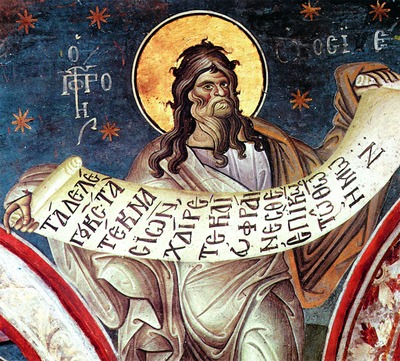
Fresco of the catholicon of the monastery of Vatopedi on Mount Athos. 1311/12
Israel is unfaithful to Yahweh. As a picture of this unfaithful relationship, he instructs Hosea to marry an unfaithful wife. His marriage and the resulting three children serve as a reminder to Israel of the seriousness and consequences of unfaithfulness, as well as Yahweh’s persistence to draw Israel back to himself. Yahweh indicts Israel for their adulterous nature. They have chosen to chase after false gods and commit a multitude of other sins. They have abandoned the one who loves them and cares for them. They have broken the covenant. Since they have broken the covenant with their unfaithfulness, they must face the consequences. Yahweh has decreed a coming judgment for their sins. Yet, even as Yahweh decrees the coming judgment, he urges them to return to him in repentance. Yahweh loves his people and desires to forgive them and bestow blessings on them. Yahweh is calling his unfaithful wife to return. While Israel is unfaithful, Yahweh is persistently faithful. Though the guilty will be punished, he promises a future where his people will return to him and become a faithful wife.
Israel’s Broken Covenant Introduced and Illustrated (1:1–3:5)
Yahweh instructs Hosea to marry an unfaithful wife as a depiction of Israel’s unfaithful relationship with Yahweh. The three children resulting from that marriage serve as reminders of Yahweh’s coming judgment over Israel’s unfaithfulness. Israel has repeatedly chosen to abandon Yahweh and chase after false gods, breaking the covenant. In return, Yahweh will punish her for her unfaithfulness. Even though Yahweh will punish Israel for her sins, his judgment is not without mercy. Yahweh still loves Israel and longs to show her mercy. Though she is currently sinning and unfaithful, he promises a future day when Israel will return as a faithful wife.
Sin and Grace (1:1–2:1)
Yahweh calls Hosea to marry an unfaithful wife as a mirror to his relationship with unfaithful Israel. After Hosea marries Gomer, she bears three children. Hosea gives them prophetic names: Jezreel, because of the sins of Jehu, which will be punished; Lo-Ruhamah, because Yahweh will no longer have compassion (Hebrew: ruchamah) on Israel (but Judah will be delivered); and Lo-Ammi, because Yahweh will treat Israel as though they are not his people (Hebrew: lo ammi = “not my people”). Yet despite these prophetic accusations against Israel, Yahweh still promises that in the future Israel and Judah will gather together, and they will be Yahweh’s people, and he will show them compassion. This, however, does not negate the more immediate judgment that Hosea continues to detail.
Judgment on Israel for Unfaithfulness (2:2–13)
While there is a future promise of compassion, judgment is still coming because Israel has not yet returned to Yahweh. Continuing the imagery with the husband and wife, Yahweh calls for the wife, Israel, to stop her adultery. Her sins will expose and shame her. Her unfaithfulness has drawn her away from Yahweh and toward her pleasures and desires. She has turned Yahweh’s blessings into avenues for sin. She goes after her lovers, false gods, instead of Yahweh. In judgment, she will find all her pursuits empty, and she will face punishment for her sins. Eventually, she will return to her first husband, Yahweh. In the meantime, Yahweh continues to pursue her.
God’s Mercy and Judgment Together (2:14–3:5)
Though Israel continues to abandon Yahweh and seek other gods, Yahweh has not given up on her. He continues to show mercy as he seeks to draw her back to himself. Once Israel returns to Yahweh, he will purify her, removing the sins and false gods from her life. When the relationship is restored, Israel will become a faithful wife. The judgments for her sins will be reversed. As another depiction of this promised truth, Yahweh instructs Hosea to bring back his adulterous wife and encourage her to be a faithful wife. This picture of future restoration gives hope as Yahweh turns next to a description of the more immediate judgment.
Israel’s Broken Covenant Explained (4:1–14:9)
Israel, the unfaithful wife, will someday return to Yahweh as a faithful wife, but before that day comes, she must pass through judgment. Israel’s chosen path has led her far from Yahweh, and judgment must follow. Their worship of false gods and numerous sins has led to Yahweh’s anger and ensuing judgment, just as foretold in the covenant. Yet, the judgment is not retribution; it is a way to draw the unfaithful back to Yahweh. Yahweh loves Israel and longs to show her grace and forgiveness. When the unfaithful wife returns, she will flourish with Yahweh’s blessings.
Divine Judgment on Israel for Her Sin (4:1–10:15)
Though there is hope for a future restoration and a faithful Israel, that hope will come after the judgment. Israel has chosen to behave as an adulterous wife. They chose to abandon Yahweh, reject his teachings. Because they have chosen instead to indulge in their sins and worship false gods, Yahweh is bringing judgment on them, and their allies will not be able to help them. The judgment will continue until they turn and earnestly seek Yahweh. Until that time, Yahweh’s anger will remain against them. Yet, as Hosea’s prophecy continues, they are reminded of the hope of a future blessing.
Grace Will Prevail in the End (11:1–14:9)
The coming judgment will be severe, but there is hope beyond the judgment. Yahweh has always loved Israel. Yet the more he drew them to himself, the more they pulled away. Their choice to sin draws Yahweh’s judgment, yet he is still filled with compassion and will not completely destroy them. Even though they continually multiply their sins, Yahweh has not abandoned them. Discipline comes as judgment with the goal of causing them to return to their God. When they return, Yahweh will forgive them and bless them. Israel will flourish again under Yahweh’s protection.
**An Orthodox Synthesis of the Book of the Prophet Hosea: The Book of
Divine Pathos and Redemptive Love**
The Book of Hosea stands as a foundational revelation of God’s heart in the Old Testament. It is a book of spousal betrayal, righteous judgment, and, most profoundly, a love that refuses to let go. For the Orthodox Christian, Hosea is not merely a story of a prophet and his unfaithful wife; it is a prophecy in action , a living icon of the relationship between Christ (the Divine Bridegroom) and His Bride, the Church , and between God and the soul mired in sin. The entire narrative arc—from covenant betrayal to restorative love—finds its ultimate meaning in the Paschal Mystery of Jesus Christ.
The Central Typology: Hosea, Gomer, and the Unfaithful Spouse
God’s command to Hosea to marry the promiscuous Gomer (Hosea 1:2-3) establishes the book’s primary metaphor. This shocking command is a living parable for God’s relationship with Israel.
-
Hosea as a Type of Christ: The prophet, called to love an unfaithful wife, prefigures Christ , who willingly unites Himself to fallen humanity. Christ enters the “brothel” of our world to redeem His Bride.
-
Gomer as a Type of Israel/The Church/Sinful Humanity: Gomer’s adultery and pursuit of other lovers (the Baals) represent humanity’s idolatry—the turning away from the Living God to pursue passions, wealth, power, and false ideologies.
-
The Children’s Names: The names of Hosea’s children are prophetic judgments that become promises of redemption:
-
Jezreel (“God Scatters”): Signifies judgment for the bloodshed of the house of Jehu (1:4-5). Yet, in its literal meaning “God sows,” it hints at a future gathering and planting.
-
Lo-Ruhamah (“Not Pitied”): Signifies the withdrawal of mercy (1:6).
-
Lo-Ammi (“Not My People”): The ultimate consequence of sin—the severing of the covenant relationship (1:9).
-
The entire drama of Hosea’s pursuit, disciplinary correction, and ultimate redemption of Gomer from the slave market (Ch. 3) is a stunning prefiguration of Christ’s work. As Hosea buys back his wife, Christ buys us back from the slavery of sin and death, not with silver or barley, but with His own precious blood on the Cross.
Key Messianic Texts and Their Fulfillment
1. Hosea 11:1: “Out of Egypt I Called My Son.”
“When Israel was a child, I loved him, and out of Egypt I called my son.”
-
Context: God speaks of His fatherly love for Israel, recalling the Exodus.
-
New Testament Fulfillment: St. Matthew, writing under divine inspiration, directly applies this to the Holy Family’s flight from Herod and their return from Egypt (Matthew 2:15). This is a prime example of typological interpretation.
-
Patristic & Theological Understanding: The Fathers (e.g., St. Justin Martyr, St. Irenaeus) saw this as a profound prophecy. Christ is the true Israel. Where historical Israel, God’s “son,” failed and fell into idolatry, Jesus, the eternal Son of the Father, perfectly recapitulates Israel’s journey. He goes down into Egypt (a symbol of the world and sin) and emerges victorious, inaugurating the new and greater Exodus —from the bondage of sin and death to the freedom of the Kingdom of God.
2. Hosea 6:2: “After Two Days He Will Revive Us; On the Third Day He Will Raise Us Up.”
“After two days he will revive us; on the third day he will raise us up, that we may live before him.”
-
Context: A seemingly penitential plea from Israel, which God exposes as shallow and insincere (6:4-6). Yet, the words themselves contain a divine truth beyond the speakers’ understanding.
-
New Testament Parallel: This is the clearest Old Testament prophecy of the timeline of Christ’s Resurrection. The Apostles and the Church have always understood “the third day” of Christ’s resurrection as the direct fulfillment of this pattern (1 Corinthians 15:4).
-
Patristic & Liturgical Understanding: The Fathers saw this as a direct prophecy of the Resurrection of Christ , and by incorporation into Him, the resurrection of all the faithful. This verse is prominently featured in the Paschal (Easter) Liturgy and the services of Holy Saturday, proclaiming that Christ’s victory over death is the source of our own revival and resurrection. What Israel could not achieve through fickle repentance, Christ accomplishes for us in truth.
3. Hosea 6:6: “For I Desire Mercy, and Not Sacrifice.”
“For I desire mercy [ hesed ] and not sacrifice, And the knowledge of God more than burnt offerings.”
-
Context: God condemns Israel’s empty ritualism. Their sacrifices were external acts devoid of the inner reality of covenant loyalty (hesed) and genuine, relational knowledge of God.
-
New Testament Fulfillment: Jesus twice quotes this verse to condemn the Pharisees’ legalistic hypocrisy (Matthew 9:13, 12:7). He is the embodiment of God’s hesed , and to know Him is eternal life (John 17:3).
-
Patristic Understanding: The Fathers (e.g., St. John Chrysostom) consistently used this verse to emphasize that the virtue of love and mercy is the heart of the Law. The external rituals of the Old Covenant were pedagogical “shadows” pointing to the internal reality of grace in the New. The ultimate “sacrifice” God desires is a “broken and contrite heart” (Psalm 51:17) and the offering of ourselves as a living sacrifice (Romans 12:1). The liturgical services are not a replacement for this mercy but are meant to be its fountainhead.
4. Hosea 13:14: “O Death, where are your plagues? O Sheol, where is your destruction?”
-
Context: In a passage full of judgment, God suddenly erupts with a triumphant declaration of His power over humanity’s ultimate enemies: Death and Hades (Sheol).
-
New Testament Fulfillment: St. Paul, in his great treatise on the Resurrection, quotes this verse as the prophecy of Christ’s final victory: “‘O Death, where is your sting? O Hades, where is your victory?’ … But thanks be to God, who gives us the victory through our Lord Jesus Christ.” (1 Corinthians 15:55-57).
-
Patristic & Liturgical Understanding: This is the Paschal victory hymn of the Old Testament. It is not merely about physical resuscitation but about the total destruction of the power of death. Christ, through His own death, enters Hades as the Divine Plague and Destruction, shattering its gates, emptying it of its captives, and rendering it powerless. This is the central theme of the Orthodox Paschal (Easter) Liturgy , celebrated with the triumphant hymn: “Christ is risen from the dead, trampling down death by death, and upon those in the tombs bestowing life!” The “pity hidden” from God’s eyes is understood as His relentless and uncompromising war against death itself.
Liturgical and Sacramental Resonance
The themes of Hosea permeate Orthodox worship:
-
The Sacrament of Marriage: The book provides a profound, albeit challenging, icon of the marriage covenant, reflecting the self-emptying love of Christ for the Church.
-
The Sacrament of Repentance (Confession): The call to “return to the Lord” (Hosea 6:1, 14:1-2) is the constant call of the Gospel, heard in every confession. God’s promise to “heal their backsliding” and “love them freely” (14:4) is the assurance of absolution.
-
The Eucharist: The ultimate act of hesed , where Christ, the faithful Bridegroom, gives Himself as the ransom (Hosea 13:14) to His Bride, the Church, uniting her to Himself in the most intimate communion.
Conclusion: The Gospel According to Hosea
The Book of Hosea is fundamentally a Christ-centered book because it reveals the pre-incarnate heart of God the Son. It shows:
-
The depth of our sin as spiritual adultery.
-
The pain of the Bridegroom whose love is spurned.
-
The necessity of judgment to purify and save.
-
The unstoppable, redemptive love (hesed) that pays the ultimate price to buy back the unfaithful.
-
The promise of resurrection on the third day.
-
The final victory over humanity’s ancient foes, Death and Hades.
Hosea reveals that the story of salvation is not a legal transaction but a marital drama. It finds its resolution only in Jesus Christ, the faithful Husband who, by His Cross and Resurrection, takes the Church—the former spotted one—and makes her a “bride without spot or wrinkle,” holy and without blemish (Ephesians 5:25-27).
JOEL
Outline
1:1–20 Joel Identifies Judah’s Locust Invasion as Divine Judgment
2:1–17 Joel Issues a Call for Judah to Repent in Light of the Future Day of
the Lord
2:18–32 Joel Prophesies the Lord’s Response to Judah’s Repentance
3:1–16 Joel Prophesies Divine Judgment Against Judah’s Enemies
3:17–21 The Lord Describes His Future Blessings for Judah
_Yahweh Will Restore
_
The prophecy given to Joel depicts the tension between judgment for sin and blessing when there is repentance. Yahweh’s people have already faced devastating judgment from locust swarms, leaving them with nothing. Yet, even more judgment will come unless they repent and seek Yahweh. If his people will repent and return to him, he may relent the coming judgment. He promises them future blessings when they return to him. The blessings include physical and spiritual bounty beyond one’s imagination. In that future day when Yahweh brings blessings on his people, he will also bring judgment against those who are against his people and him. Those who harm his people will face destruction. His people, however, will receive blessings more abundant than they could even imagine. His people will flourish; the others will wither and fade. His people will receive forgiveness; the others will not.
Joel Identifies Judah’s Locust Invasion as Divine Judgment (1:1–20)
Joel, a prophet of Yahweh, receives the following message. The date and intended audience of the prophecy are uncertain. Joel’s prophecy begins by describing the judgment the people are already facing—devastating locust swarms. The locusts have eaten everything, absolutely everything. The devastation is utterly severe. Yet, still the people do not respond as they should. Joel urges them to mourn the judgment that they are currently facing. But, more importantly, Joel calls the people, especially the religious and community leaders, to come before Yahweh in repentance. This call for repentance grows louder in the following section.
Joel Issues a Call for Judah to Repent in Light of the Future Day of the Lord (2:1–17)
The severe judgment brought by the locusts is only the beginning of the judgment that is to come. The devastation and the coming judgment should bring their people to their knees in repentance before Yahweh. The coming judgment will be even more devastating and severe than the locusts. Yet, in the midst of the declaration of further judgment, Yahweh again calls the people to repent. Yahweh longs for the people to return to him, for he is a compassionate God who may relent the coming judgment. Yahweh wants to spare his people and bestow blessings on them, as described in the following verses.
Joel Prophesies the Lord’s Response to Judah’s Repentance (2:18–32)
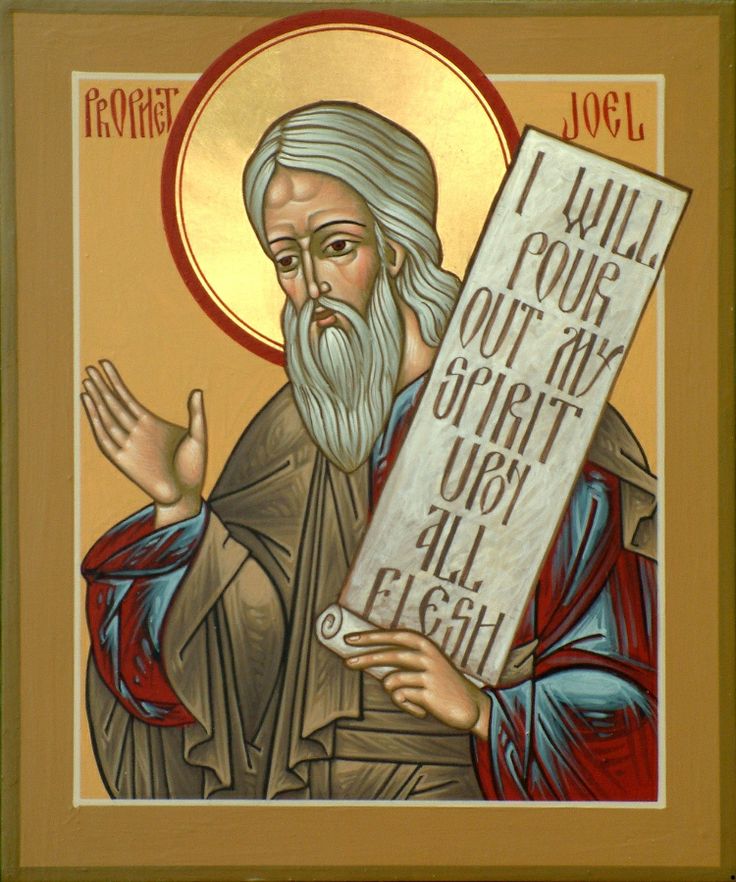
Though they have already faced judgment through the locust devastation, and further judgment has been proclaimed, if the people repent, Yahweh will respond favorably. Yahweh wants to take pity on them and bless them. He desires to provide abundantly for them and drive their enemies away. This time of future blessings will lead the people to rejoice in Yahweh as he blesses them and restores to them what the judgment took. He even promises to pour out his spirit on everyone, and to speak to and through all the people—men and women, young and old. Those who trust in Yahweh will be spared and receive blessings, while the others will face judgment. In this promised future, their enemies will be punished.
Joel Prophesies Divine Judgment Against Judah’s Enemies (3:1–16)
While Yahweh desires to bless his people, the nations who are against his people will be judged. The nations who attacked, exiled, and exploited his people will face Yahweh’s judgment. Specifically addressing Tyre, Sidon, and the Philistines as culprits, Yahweh promises to do to them what they did to Judah. All nations will come before Yahweh for judgment, but His people will find safety and security—not judgment. No longer will His Kingdom face attacks; the future will be a time of blessings for His people.
The Lord Describes His Future Blessings for Judah (3:17–21)
Once the nations are judged, Jerusalem, Yahweh’s Kingdom, will be perpetually secure, and He will bring abundant blessings for His people. The imagery of flowing milk and wine picture a land with endless abundance—with more than the people could ever need. Plentiful blessings will fill the land. But those who went against His people, pictured as Egypt and Edom, will be a wasteland. Not so for Judah. Judah will endure forever. They will be forgiven.
**
**
**An Orthodox Synthesis of the Book of the Prophet Joel: The Book of the
Day of the Lord and the Outpoured Spirit**
The Book of Joel, though brief, presents a sweeping cosmic drama that moves from a tangible, localized calamity to a universal eschatological vision. For the Orthodox Church, Joel is not merely a prophet of ancient Judah but a herald of the New Covenant in Christ. His prophecy finds its ultimate key and fulfillment in the events of Pentecost, the life of the Church, and the final consummation of all things in Jesus Christ. The book is Christ-centered because it proclaims the only remedy for divine judgment and reveals the promised gift that inaugurates the messianic age.
The Central Theme: The Day of the Lord
The phrase “the Day of the LORD” (Yom Yahweh) is the theological backbone of Joel’s prophecy. It is a day of two contrasting realities:
-
A Day of Darkness and Judgment: For the unrepentant and the enemies of God, it is a day of terror, wrath, and cosmic upheaval (Joel 1:15; 2:1-2, 11).
-
A Day of Light and Salvation: For those who are in right relationship with God, it is a day of refuge, hope, and restoration (Joel 2:31-32; 3:16-18).
This dual nature finds its ultimate resolution in the Person of Jesus Christ. He is the stone of stumbling and a rock of offense (1 Peter 2:8) for those who reject Him (a day of judgment), and the chief cornerstone and source of salvation for those who believe (1 Peter 2:6-7).
From Locusts to Repentance: A Typology of Sin and Salvation
Joel begins with a devastating plague of locusts, which he interprets as a divine judgment and a foretaste of the “Day of the LORD.”
-
The Locust Plague as a Type of Sin and Death: The swarming, devouring locusts that strip the land bare are a powerful image of the destructive power of sin, the passions, and ultimately, death itself. They represent everything that lays waste to the soul and separates it from the life of God.
-
The Call to Repentance (Joel 1:13-14, 2:12-17): In response to the crisis, Joel does not first call for political or military action, but for a corporate and liturgical repentance. He commands the priests to lead the people in solemn assembly, with fasting, weeping, and mourning, rending their hearts and not their garments.
-
Christological Fulfillment: This call finds its ultimate answer in the Gospel. Christ begins His ministry with the call, “Repent, for the Kingdom of heaven is at hand” (Matthew 4:17). The Orthodox Church continues this call, especially during Great Lent , which mirrors Joel’s description: a solemn assembly of the people, fasting, and the prayer of St. Ephraim, “O Lord and Master of my life… grant me to see my own sins and not to judge my brother.” Christ is the One Who makes true repentance possible by forgiving sins and healing the soul from the “locusts” of the passions.
Key Messianic Texts and Their Fulfillment
1. Joel 2:12-13: The Nature of True Repentance
“‘Yet even now,’ declares the Lord, ‘return to me with all your heart, with fasting, with weeping, and with mourning; and rend your hearts and not your garments.’ Return to the Lord your God, for he is gracious and merciful, slow to anger, and abounding in steadfast love ( hesed ).”
-
New Testament Parallel: This description of God’s character is echoed throughout the New Testament (e.g., John 3:16, Ephesians 2:4-5). The call to rend the heart prefigures the internal, spiritual transformation that Christ effects, as opposed to the external piety of the Pharisees.
-
Patristic Understanding: The Fathers saw this as the foundational posture for the Christian life. St. John Chrysostom emphasizes that God desires a contrite heart above all external acts. This “rending of the heart” is the work of humility and the first step toward healing (theosis).
2. Joel 2:28-32 (3:1-5 in LXX): The Outpouring of the Holy Spirit
“And it shall come to pass afterward, that I will pour out my Spirit on all flesh; your sons and your daughters shall prophesy, your old men shall dream dreams, and your young men shall see visions. Even on the male and female servants in those days I will pour out my Spirit… And it shall come to pass that everyone who calls on the name of the Lord shall be saved.”
This is the theological climax of the book and its most explicit Christological link.
-
New Testament Fulfillment: The Apostle Peter, filled with the Holy Spirit on the very day of Pentecost, stands up and declares that the event the crowd is witnessing is the direct fulfillment of Joel’s prophecy (Acts 2:16-21). This is the definitive interpretation given by the Holy Spirit Himself through the Apostolic Church.
-
Christological & Pneumatological Significance:
-
Christ is the Agent of the Outpouring: The one who “pours out” the Spirit is God the Father, through the mediation of the ascended Christ. As Peter preaches, “Therefore, being exalted to the right hand of God, and having received from the Father the promise of the Holy Spirit, He poured out this which you now see and hear” (Acts 2:33). Jesus Christ is the fulfillment of the “afterward” promised by Joel.
-
The Church is the Sphere of the Spirit: The prophecy “on all flesh” signifies the universal scope of the New Covenant in Christ. The gift is not for a select few (prophets, Kings, priests) but for the entire people of God—Jew and Gentile, male and female, slave and free (Galatians 3:28). This is the birth of the Universal Church.
-
-
Liturgical Understanding: The Feast of Pentecost is the liturgical celebration of this prophecy’s fulfillment. The hymns of the feast proclaim that the Spirit has been poured out, renewing the entire creation and empowering the Apostles to preach to all nations. The phrase “whoever calls on the name of the Lord shall be saved” (Joel 2:32) is actualized in the Sacrament of Baptism , where the name of the Holy Trinity is invoked upon the catechumen, and in the constant invocation of the Name of Jesus in the Church’s prayer.
3. Joel 3:13 (2:24 in LXX): The Harvest of Judgment
“Put in the sickle, for the harvest is ripe. Go in, tread, for the winepress is full. The vats overflow, for their evil is great.”
-
New Testament Parallel: This image of the harvest of judgment is directly used in the Book of Revelation to describe the final judgment of the nations: “So the angel swung his sickle across the earth and gathered the grape harvest of the earth and threw it into the great winepress of the wrath of God.” (Revelation 14:19).
-
Christological Understanding: Christ Himself is the divine harvester. In His Parable of the Wheat and the Tares (Matthew 13:24-30, 36-43), He identifies Himself as the One Who will send His angels to gather the harvest at the close of the age. The “winepress of wrath” is a stark image of His role as the righteous Judge.
4. Joel 3:16-17 (4:16-17 in LXX): The Lord as Refuge
“The Lord roars from Zion, and utters his voice from Jerusalem, and the heavens and the earth quake. But the Lord is a refuge to his people, a stronghold to the people of Israel. So you shall know that I am the Lord your God, who dwells in Zion, my holy mountain.”
- New Testament & Liturgical Understanding: This imagery is fulfilled in Christ. He is the Lord who “roars” in judgment against the powers of evil, culminating in His victory on the Cross. Simultaneously, He is the refuge and stronghold for His people. In the Orthodox Divine Liturgy, we seek refuge in Christ, praying, “Lord, have mercy ” and finding sanctuary in His Holy Church, which is the New Zion. The Eucharist is the ultimate “stronghold” where the faithful are sheltered and nourished.
Conclusion: The Pentecostal Prophet
The Book of Joel is fundamentally a Christ-centered book because it points beyond the Old Covenant’s cycle of sin, judgment, and temporary repentance to the permanent solution enacted by Christ. It prophesies:
-
The need for a repentance that only Christ can make effective and complete.
-
The coming of the Holy Spirit , which is only possible through the life, death, resurrection, and ascension of Jesus Christ.
-
The establishment of the Church , the community of the Spirit where “all flesh” can be saved by calling on the name of the Lord.
-
The final judgment that Christ will execute as the divine King and Judge.
Joel’s prophecy finds its “yes” and “amen” in Christ (2 Corinthians 1:20). He is the one who turns the “Day of the Lord” from a threat into a promise for all who are united to Him in the life-giving Spirit poured out at Pentecost.
AMOS
Outline
1:1–2 Introduction to Amos’ Vision
1:1 The Prophet Amos and His Setting
1:2 The Theme of Amos’ Prophecy
1:3–6:14 The Words of Amos
1:3–2:3 Judgment Oracles Against the Nations
2:4–3:15 Judgment Oracles for the Chosen: A Covenant Lawsuit
4:1–13 Past and Future Judgments
5:1–17 Judgment Brings Mourning to Israel
5:18–27 Rejected Worship
6:1–14 God’s People’s Arrogance Denounced
7:1–9:15 The Visions of Amos
7:1–8:3 Visions and Threats
8:4–14 Greedy Israelites Accused
9:1–15 Yahweh’s Final Words to Sinful Israel Through Amos
_
_
_Judgment Is Coming
_
The prophet Amos proclaims Yahweh’s message of indictment and judgment on the Northern Kingdom, Israel. He begins with indictment oracles against the surrounding Kingdoms, which lull Israel into a sense of ease, thinking that Amos’ words do not affect them. However, Amos soon turns his attention to the Northern Kingdom with the severest of accusations. Each successive oracle indicts and laments Israel’s many sins. Their lists of sins consist of two primary types: oppression and denial of justice to the oppressed, and failure to worship Yahweh alone. For these sins, Israel will face severe judgment. Yahweh then shows Amos visions of the impending judgment. Even with Israel’s lengthy list of sins, after the first three visions, Amos petitions on their behalf for a less devastating judgment. Yet after Amos intercedes for Israel, King Jeroboam’s priest accuses Amos of conspiracy. The following final vision affirms the seriousness of the coming judgment, and Amos does not intercede again. Next, Amos reveals even more indictments and declarations of the coming judgment. Surprisingly, Amos ends on a hopeful note as he reminds Israel of the covenant promises. Yahweh’s people will not be completely wiped out. A remnant will remain and return, the Davidic dynasty will be restored, and Yahweh will issue abundant blessings.
Introduction to Amos’ Vision (1:1–2)
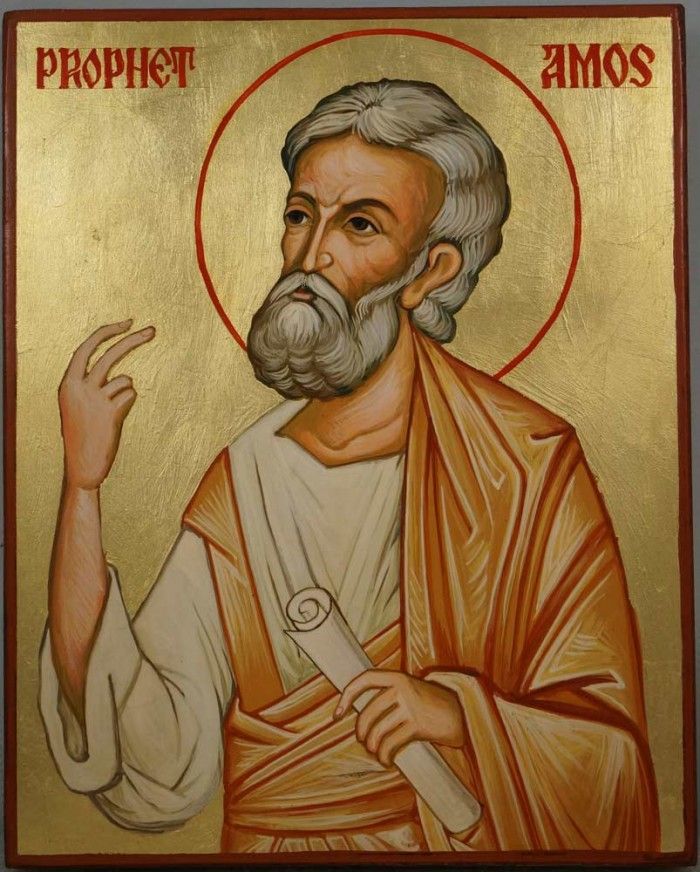
Amos was a prophet to the Northern Kingdom during the reign of Jeroboam II of Israel. Even though he was from the Southern Kingdom and a shepherd, Yahweh chose him to deliver his message to Israel. The second verse serves as a thematic statement of all of Amos’ prophecies: Yahweh is coming in judgment. Yahweh is pictured as standing at his holy place—the temple in Jerusalem—and issuing judgments. The judgments are so terrifying that the surrounding places of lush foliage wither. This description of the seriousness of Yahweh’s coming judgment prepares readers for the following oracles and visions.
The Prophet Amos and His Setting (1:1)
Amos was a prophet to the Northern Kingdom, yet he was from the Southern Kingdom. Prior to becoming a prophet, or perhaps in addition to being a prophet, he worked with sheep. His exact role with sheep is unclear; he may have been a lowly shepherd, but many believe he oversaw shepherds. He worked in Tekoa, which was south of Jerusalem in the hill country. These collections of prophecies were given during the reigns of Uzziah in the south and Jeroboam II in the north, placing them between 782 and 742 BC, when the Northern Kingdom was particularly evil, hence the indictment oracles that follow.
The Theme of Amos’ Prophecy (1:2)
As Amos prophesied to the Northern Kingdom during the evil reign of Jeroboam II, the message centered on Yahweh’s coming judgment. Here, the first words of Amos’ oracles set the stage with a chilling account of the coming judgment. Throughout Scripture, Yahweh’s judgments are often described in terms of a lion’s roar and a storm. Amos combines the two. The roar and thunder of Yahweh’s judgment is so severe that places of lush greenery, pastures and the top of Mount Carmel, will dry up in response. This first verse sends shivers down the spine of the accused, setting the stage for the immediately following eight indictments.
The Words of Amos (1:3–6:14)
The introductory statement of Yahweh’s coming judgment is followed by detailed descriptions of Israel’s sins and the coming judgment. Amos’ words begin by addressing the surrounding nations, which plays into Israel’s pride—they think they are better and more secure than those around them. Then, in a surprising turn, Amos turns the longest accusation against Israel. The focus on Israel’s sins continues through the rest of this division. They are guilty of denying justice and oppressing the poor and needy, and of worshiping false gods while pretending to worship Yahweh. In response, Yahweh is now coming in judgment against them. The visions that follow reinforce the seriousness of the coming judgments.
Judgment Oracles Against the Nations (1:3–2:3)
Yahweh begins his indictment by focusing on those who surround Israel and Judah. The six surrounding nations are all guilty of sins and will face judgment. Though Amos only lists one sin for each nation, that one sin stands as a representative of all its sins. The description of the judgment for each nation varies in details and intensity, but each judgment boils down to a destruction of the nation. Each has sinned, and each is responsible to face the consequences for its sins.
Judgment Oracles for the Chosen: A Covenant Lawsuit (2:4–3:15)
Following the judgment of the surrounding nations, Yahweh turns his attention to those who are in a covenant relationship with him. Though he briefly mentions Judah for neglecting their covenantal relationship, Israel receives the bulk of the indictment and is the intended audience of the entire book of oracles. Israel has neglected justice for the needy and instead has turned toward false gods and profiteering off the poor. Their judgment will be severe and devastating. Yahweh is warning Israel, giving them a chance to repent, yet he knows they will not. Their judgment will come, yet a small remnant will be spared. Their places of false worship and signs of wealth will not survive; they are the outward signs of their inwardly sinful hearts. As the following oracle states, Israel has consistently refused to repent.
Past and Future Judgments (4:1–13)
Yahweh’s indictment turns from the more general accusations and warnings to detailed accounts of her sins and a list of times that Yahweh tried to draw her back to him in the past. In the first half of this chapter, the oracle focuses on the people’s sins and the coming judgments, with a focus on their idolatrous worship. Though they did actions of service toward Yahweh, their hearts were far from him. The latter half of this section is a recounting of the numerous times Yahweh had leveled judgments against them and they had stubbornly refused to repent. It is their refusal and sins that lead Amos to lament in the next section.
Judgment Brings Mourning to Israel (5:1–17)
Amos now turns from an indictment to a lament over Israel. Their sins and coming judgment are a cause for lamenting. Israel will fall, and only a few will remain. During the lament, Yahweh twice appeals for them to seek him and not their false gods. Their false gods will fail them; Yahweh will not. Israel rejected righteousness and justice in favor of elevating themselves and their wealth, and they rejected Yahweh in favor of false gods. But justice and righteousness will be established through their judgment, and Yahweh will triumph over their gods. This call for lament over their coming judgment continues in the next section, with a focus on their false worship.
Rejected Worship (5:18–27)
Continuing with another lament, Amos warns the Israelites that the coming judgment will be inescapable. Even those who think they escaped where others did not will find they did not escape. It will be a time of utter darkness. The second portion of this section turns to Yahweh’s accusations of their false worship. The Israelites were guilty of doing acts of worship to Yahweh while not worshiping him and while neglecting his justice. Yahweh is not fooled by their religious actions and completely rejects their false acts. Amos’ lamenting continues in the next section with a focus on their arrogance.
God’s People’s Arrogance Denounced (6:1–14)
After the previous oracle focused on Israel’s false worship, this lament oracle focuses on their pride. The Northern Kingdom looked down with disdain on the Southern Kingdom and thought themselves secure in their Kingdom. Yet, Yahweh reminds them that their pride and arrogance are no match for his judgment. Though they feel confident that no harm will befall them, they will be the first to go into exile. Israel’s pride will be their downfall. They have rejected justice and righteousness; thus, Yahweh will reject them. Their judgment is coming, and as the following visions show, that judgment will not be abated.
The Visions of Amos (7:1–9:15)
Shifting away from oracles, Amos records four visions with an intervening short narrative. Through the visions Yahweh reveals his plans for judgment. Amos responds to the first three, petitioning Yahweh to lessen the severe judgments; the fourth vision, though, affirms that Yahweh’s judgment will wait no longer. The visions are followed by yet more indictment oracles, affirming both the seriousness of Israel’s sins and the seriousness of the coming judgments. Amos, though, ends with a note of hope as he affirms that the judgment will not be the end of Yahweh’s people. A remnant will survive, the Davidic dynasty will be restored, and Yahweh will bestow boundless blessings on his people.
Visions and Threats (7:1–8:3)
After lamenting Israel’s sin and coming judgment, Yahweh now shows Amos four visions of Israel’s coming judgment, based on wordplays in the Hebrew. After the first three visions, Amos petitions Yahweh to relent, fearing the judgment will be too severe for the Israelites to survive. After Amos petitions Yahweh for a less devastating judgment, a priest of Jeroboam confronts Amos. He accuses him of conspiring against the King and Kingdom, and attempts to kick him out of the Kingdom. Amos stands firm, knowing that Yahweh is the one who called him and gave him the words to say. Following this, Amos has another vision of the coming judgment, and he does not petition Yahweh to relent. Judgment will come. This coming judgment is affirmed with the following indictment oracle.
Greedy Israelites Accused (8:4–14)
The prior vision affirmed that Yahweh’s judgment was coming, and now this oracle reaffirms Israel’s sins and describes the specifics of the coming judgment. Israel had rejected even the most basic levels of justice and religious feasts. They constantly looked for ways to deny justice and to steal and oppress the poor. In return, their judgment will be a time of intense mourning, beyond their imagination. During this judgment, even the teachings of Yahweh will be absent from their midst, leading to a spiritual thirst, which will coincide with their physical thirst. The best of them will succumb to the judgment, and, as the next oracle affirms, Israel will be destroyed.
Yahweh’s Final Words to Sinful Israel Through Amos (9:1–15)
In this final section, Yahweh begins by reaffirming the judgment just described. Their people will die. Anywhere they try to hide, Yahweh will find them. Just as Yahweh controls the destiny of other nations, so too does he control the destiny of Israel. Yahweh sees their sin, and judgment will follow. Yet, in his mercy, some will survive, but not the ones who are guilty. In the final portion of this section, surprisingly, Amos turns to hope. There will be a future restoration of Israel—which will bring not just a return of the Davidic dynasty but an abundance of blessings that stagger the imagination.
**An Orthodox Synthesis of the Book of the Prophet Amos: The Cry for
Justice and the Coming King**
The Book of Amos, the shepherd-prophet from Tekoa, delivers a thunderous message of divine judgment against the surrounding nations and, most piercingly, against the Kingdom of Israel itself. Its themes of social justice, religious hypocrisy, and the impending “Day of the Lord” can seem stark and severe. Yet, through an Orthodox Christological lens, Amos is revealed not as a mere social reformer, but as a prophet of the incarnate Word of God , who is Himself the embodiment of Justice and the fulfillment of all righteous judgment and mercy. The book is Christ-centered because it diagnoses the terminal illness of sin for which Christ is the sole cure and foreshadows the restoration He alone can accomplish.
The Central Theme: The Plumb Line of God’s Righteousness
A central image in Amos is the plumb line (Amos 7:7-8). God shows the prophet a wall built true to the plumb line, symbolizing His covenant law and standard of absolute righteousness. Israel, however, is found to be crooked, out of alignment, and destined for ruin.
- Christological Fulfillment: Jesus Christ is the living Plumb Line. He is not merely an external standard of measure; He is the perfect human, the New Adam, who alone has lived in perfect alignment with the Father’s will. In His Person, He reveals both the full demand of God’s righteousness and the grace that enables us to participate in it. The Law was given through Moses, but grace and truth came through Jesus Christ (John 1:17). He is the standard by which all are judged, and He is the One Who, through His Cross, straightens what is crooked in fallen humanity.
Key Messianic Texts and Their Fulfillment
1. The Famine of the Word (Amos 8:11-12)
“‘Behold, the days are coming,’ declares the Lord God, ‘when I will send a famine on the land— not a famine of bread, nor a thirst for water, but of hearing the words of the Lord. They shall wander from sea to sea, and from north to east; they shall run to and fro, to seek the word of the Lord, but they shall not find it.’”
-
Context: This is the culmination of God’s judgment against Israel’s empty religiosity. The ultimate curse is not physical deprivation but spiritual desolation—the silence of God.
-
New Testament Fulfillment: This prophetic famine finds its end in Jesus Christ, the Living Word. The prologue of John’s Gospel stands as the divine answer: “In the beginning was the Word… And the Word became flesh and dwelt among us” (John 1:1, 14). Christ ends the famine. He is the Word whom we can see, hear, and touch.
-
Patristic & Liturgical Understanding: The Fathers saw this as a prophecy of the period before Christ’s coming and a warning to those who reject Him. St. John Chrysostom teaches that to have the Word of God in the flesh present and to reject Him is to experience the ultimate fulfillment of this famine. In the Liturgy, the Church constantly seeks to “hear the word of the Lord” in the Scripture readings and in the homily, finding its fullness in the Eucharistic Word, who is Christ Himself.
2. The Restoration of the Fallen Booth of David (Amos 9:11-12)
“‘In that day I will raise up the booth of David that is fallen and repair its breaches, and raise up its ruins and rebuild it as in the days of old, that they may possess the remnant of Edom and all the nations who are called by my name,’ declares the Lord who does this.”
This is the most explicit messianic prophecy in Amos and the theological climax of the book, turning from judgment to hope.
-
Context: The “booth” or “tabernacle” (sukkah) of David refers to the Davidic monarchy, which had become dilapidated and fallen into ruin by Amos’s time. God promises a future, miraculous restoration that will encompass not only Israel but the Gentiles.
-
New Testament Fulfillment: The Council of Apostles in Jerusalem (Acts 15:13-18) explicitly cited this very passage from Amos to resolve the critical question of whether Gentile converts needed to be circumcised. St. James, the Lord’s brother, argues that the inclusion of the Gentiles was foretold by the prophets and that the rebuilding of the “booth of David” is fulfilled in the resurrection and reign of Jesus Christ , the Son of David. The Church, composed of both Jews and Gentiles, is this restored and glorified “dwelling of David.”
-
Christological & Ecclesiological Significance:
-
Christ is the Rebuilt Booth: The fallen dynasty is restored and eternalized in the Person of the Risen Christ, Whose Kingdom will have no end (Luke 1:32-33).
-
The Church is the Universal Kingdom: The phrase “that they may possess the remnant of Edom and all the nations” finds its fulfillment in the Great Commission (Matthew 28:19). The Gentiles are not conquered by force but are “called by [God’s] name” through faith and baptism, becoming part of the people of God.
-
3. The Promise of Abundant Restoration (Amos 9:13-15)
“‘Behold, the days are coming,’ declares the Lord, ‘when the plowman shall overtake the reaper, and the treader of grapes him who sows the seed; the mountains shall drip sweet wine, and all the hills shall flow with it… I will plant them on their land, and they shall never again be uprooted out of the land that I have given them,’ says the Lord your God.”
-
Context: Following the promise of Davidic restoration, God promises a miraculous renewal of creation and a permanent return from exile.
-
New Testament & Patristic Understanding: The Fathers interpreted this super-abundant fertility as a prophecy of the New Creation inaugurated by Christ’s resurrection.
-
It is fulfilled in the spiritual fruitfulness of the Church , where the sowing of the Gospel yields an immediate and continuous harvest of souls (John 4:35-38).
-
It points to the Eucharistic feast , where the “mountains drip sweet wine” prefigures the blood of Christ, the true Vine, which flows from the “mountain” of Golgotha to give life to the world.
-
The promise of being planted and never uprooted finds its ultimate fulfillment not in the earthly land of Canaan, but in the eternal Kingdom of Heaven , the new and everlasting inheritance secured by Christ (1 Peter 1:3-5).
-
Liturgical and Ascetical Resonance
The themes of Amos resonate deeply within Orthodox worship and spirituality:
-
The Call to Social Justice: Amos’s condemnation of those who “trample the head of the poor into the dust of the earth” (Amos 2:7) is a perpetual call to the Church to embody Christ’s love for the poor, the widow, and the stranger. The almsgiving and fasting of Great Lent are a direct response to this prophetic call, unifying worship with concrete acts of justice and mercy.
-
The Day of the Lord: Amos’s warning that the “Day of the Lord” is “darkness, and not light” (Amos 5:18-20) is a sobering ascetical theme. It calls the faithful to a life of vigilance and repentance, so that when Christ, the Judge, comes in glory, He will find us not in hypocrisy but in truth, and what is for the unrepentant a day of darkness will be for the faithful the day of radiant light.
Conclusion: The Shepherd-King and the True Justice
The Book of Amos is fundamentally Christ-centered because it reveals:
-
The universal need for a righteousness that humanity, on its own, cannot achieve (the Plumb Line).
-
The end of God’s silence and the quenching of our spiritual famine in the Person of Jesus Christ, the incarnate Word.
-
The restoration of the true Kingship in the resurrected Christ, the Son of David, whose Kingdom embraces all nations.
-
The promise of a New Creation , flowing from the side of Christ, that will be an eternal and secure inheritance for His people.
Amos, the shepherd, points to Christ, the Good Shepherd , Who lays down His life for the sheep. Amos, the prophet of justice, points to Christ, the righteous Judge , Who on the Cross executes justice by taking the judgment upon Himself, so that mercy and justice meet in His wounds. In Him, the fearful “Day of the Lord” becomes for the faithful the blessed hope of eternal day.
31.1 God’s Grace Overcomes Israel’s Spiritual Adultery
God’s Grace Overcomes Israel’s Spiritual Adultery
Sin and Grace (1:1–2:1)
Judgment on Israel for Unfaithfulness (2:2–13)
God’s Mercy and Judgment Together (2:14–3:5)
Israel’s Broken Covenant Explained (4:1–14:9)
Divine Judgment on Israel for Her Sin (4:1–10:15)
Grace Will Prevail in the End (11:1–14:9)
**An Orthodox Synthesis of the Book of the Prophet Hosea: The Book of
Divine Pathos and Redemptive Love**
The Central Typology: Hosea, Gomer, and the Unfaithful Spouse
Key Messianic Texts and Their Fulfillment
1. Hosea 11:1: “Out of Egypt I Called My Son.”
3. Hosea 6:6: “For I Desire Mercy, and Not Sacrifice.”
Liturgical and Sacramental Resonance
The themes of Hosea permeate Orthodox worship:
Conclusion: The Gospel According to Hosea
-
The depth of our sin as spiritual adultery.
-
The pain of the Bridegroom whose love is spurned.
-
The necessity of judgment to purify and save.
-
The promise of resurrection on the third day.
31.3 Judgment Is Coming
_
_
_Judgment Is Coming
_
Introduction to Amos’ Vision (1:1–2)
The Prophet Amos and His Setting (1:1)
The Theme of Amos’ Prophecy (1:2)
The Words of Amos (1:3–6:14)
Judgment Oracles Against the Nations (1:3–2:3)
Past and Future Judgments (4:1–13)
Judgment Brings Mourning to Israel (5:1–17)
Rejected Worship (5:18–27)
God’s People’s Arrogance Denounced (6:1–14)
The Visions of Amos (7:1–9:15)
Visions and Threats (7:1–8:3)
Greedy Israelites Accused (8:4–14)
**An Orthodox Synthesis of the Book of the Prophet Amos: The Cry for
Justice and the Coming King**
The Central Theme: The Plumb Line of God’s Righteousness
Key Messianic Texts and Their Fulfillment
1. The Famine of the Word (Amos 8:11-12)
- Christological & Ecclesiological Significance:
3. The Promise of Abundant Restoration (Amos 9:13-15)
Liturgical and Ascetical Resonance
Conclusion: The Shepherd-King and the True Justice
- 31.1 God’s Grace Overcomes Israel’s Spiritual Adultery
- 31.2 Yahweh Will Restore
- 31.3 Judgment Is Coming
31.2 Yahweh Will Restore
_Yahweh Will Restore
_
**
**
**An Orthodox Synthesis of the Book of the Prophet Joel: The Book of the
Day of the Lord and the Outpoured Spirit**
The Central Theme: The Day of the Lord
From Locusts to Repentance: A Typology of Sin and Salvation
Key Messianic Texts and Their Fulfillment
1. Joel 2:12-13: The Nature of True Repentance
- Christological & Pneumatological Significance:
3. Joel 3:13 (2:24 in LXX): The Harvest of Judgment
4. Joel 3:16-17 (4:16-17 in LXX): The Lord as Refuge
Conclusion: The Pentecostal Prophet
- God’s Grace Overcomes Israel’s Spiritual Adultery
- Yahweh Will Restore
- Judgment Is Coming
Related Concepts
- bridegroom
- christ-as-judge-and-refuge
- christ-the-bridegroom
- church-as-universal-kingdom
- contrite-heart
- cross
- davidic-dynasty
- divine-bridegroom
- election
- ephesians-5
- eucharistic-word
- false-worship
- final-judgment
- golgotha
- gomer
- gomer-as-type-of-humanity
- great-commission
- great-lent
- hosea-111
- hosea-1314
- hosea-as-type-of-christ
- incarnate-word
- inheritance
- israel-of-god
- jesus-prayer
- john-117
- judgment
- judgment-and-redemption
- judgment-as-discipline
- kingdom-of-heaven
- law-and-grace
- meekness
- mercy-and-judgment-together
- mercy-not-sacrifice
- messianic-prophecy
- name-of-jesus
- new-adam
- new-exodus
- new-testament-fulfillment
- paschal-liturgy
- paschal-mystery
- pentecost
- plumb-line
- pneumatology
- prophetic-critique
- redemptionransom
- refuge-in-christ
- rejected-worship
- rejection-of-christ
- restoration
- resurrection
- son-of-david
- sonship
- spiritual-thirst
- the-baals
- the-servant
- universal-church
- zion
- zion-restored