Old Testament — Topic 27
ISAIAH
Outline
1:1–39:8 The Lord of Israel and of the World Is Worthy of Trust
1:1–12:6 The Sovereign Lord’s Messages to Judah and Israel
1:1–6:13 Judgment and Redemption for Sinful Judah and Israel
7:1–8:22 God’s Plan Moves Forward Despite the Faithlessness of the Davidic
King
9:1–12:6 The Sovereign Lord of All Will Bring the Davidic Messiah as Prince of
Peace
13:1–27:13 The Sovereign Lord’s Messages About the Nations
13:1–16:14 Messages About Babylon, Assyria, Philistia, and Moab
17:1–21:17 Messages About Damascus, Cush, and Babylon
22:1–27:13 Messages About Jerusalem, Tyre, and the Whole World
28:1–39:8 Judgment and Redemption Dependent on Faith
28:1–30:33 Judgment and Marvelous Deliverance for Zion
31:1–35:10 Localized and Worldwide Judgment and Redemption
36:1–39:8 Faith or Unbelief in the Sovereign Lord
40:1–66:24 The Sovereign Lord Will Send His Servant
40:1–48:22 The Incomparable God’s Sure Promises Contrasted With Weak Idols
40:1–43:28 The Incomparable God Speaks Grace by His Servant
44:1–48:22 The Incomparable God, the Judge and Savior of Israel and the World
49:1–55:13 The Lord’s Servant, God’s Means of Redemption
49:1–52:12 The Resolute Servant Redeems and Purifies Israel
52:13–55:13 God’s Servant Crushed, Exalted, and Providing an Eternal Covenant
56:1–66:24 God’s Judgment and Redemption in Israel and All the Earth
56:1–58:14 Grace for the Disadvantaged and the Repentant
59:1–61:11 Judgment and Redemption Through the Anointed One
62:1–64:12 Messages of Salvation Given in Perplexing Times
65:1–66:24 God Will Judge and Redeem in History and Also Eternally
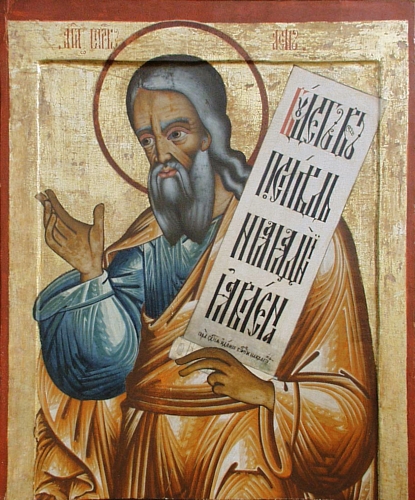
Russian icon of the Prophet Isaiah, 18th century (iconostasis of Transfiguration Church, Kizhi, Karelia, Russia)
Trust the Sovereign Lord, Who Redeems Israel and the Earth by His Servant
Isaiah is sometimes referred to as the Bible of the OT, with thirty-nine chapters in the first section and twenty-seven chapters in the second, corresponding to the numbers of books in the OT and NT, respectively. Additionally, a portion of Isaiah often called “the Little Apocalypse” (24–27) contains themes similar to the NT book of Revelation. Within its sixty-six chapters is an interesting combination of oracles of judgment and promise in which God, through his chosen servants, attempts to draw the nation of Israel back to himself. While there is little hope that the Israelites will turn back to God during Isaiah’s lifetime, his task is not entirely hopeless, for he foresees a time when God will rule over a restored nation, containing a remnant of both Jews and gentiles who are wholly devoted to him. The book is written in semipoetic form, addressing issues pertinent to the Jewish nation from the eighth century BC onwards. It is one of the earliest books to speak of a remnant (10:20–22; etc.) and a future deliverer, from which developed the concept of a Messiah (9:1–7; etc.). Isaiah is the prophetic book most quoted by NT writers (at least 69 times), who saw the continuing relevance of this book to the NT Church.
The final form of Isaiah highlights three introductions (1:1; 2:1; 13:1), each delineating major sections of chapters 1–39. The primary message of chapters 1–39 is that Yahweh, because of his amazing love for his people, will send the rebellious nation of Israel through severe punishments until a righteous remnant emerges. The wicked will be purged away, and the righteous remnant will arise to live in peace and safety in a glorified Zion. This message is repeated in each of its three sections, increasing in detail with each repetition. The structure of Isaiah is much less chronological than it is thematic; for instance, Isaiah’s call does not appear until chapter 6. The frequent messages of impending punishments raise the question, “Will Israel ever repent?” The answer is a qualified yes. On a day much further into the future than Isaiah would ever expect, a remnant will repent and faithfully serve God.
The Sovereign Lord’s Messages to Judah and Israel (1:1–12:6)
Chapters 1–12 contain two major sections of the book, as indicated with an introduction in 1:1 and another in 2:1. The first chapter, most likely serving as an introduction to the whole book, begins by calling Israel to make a defense for her actions as to why she has rebelled against her God. By contrast, the section ends with the assurance that Zion will be restored and the wicked will be punished. Chapters 2–12 describe God’s plan of restoration even further and comprise two sections: (1) chapters 2–4 picture God’s ultimate future plan for Israel (2:1–4; 4:2–6) against the backdrop of Israel’s condition at the time (2:5–4:1). (2) Chapters 5–12 form an extended chiasm (i.e., a palinstrophe), consisting of a middle section (6:1–9:7), commonly called “the Isaianic memoir,” that is surrounded by three corresponding sets of oracles.
Judgment and Redemption for Sinful Judah and Israel (1:1–6:13)
Chapter 1 resembles a covenant lawsuit, whereby God formally accuses Israel of sin and finds her guilty. By the end of the chapter, God promises that the wicked will be punished, yet a believing remnant will be redeemed. This message is reiterated in chapters 2–4, wherein the wickedness of the nation is described (2:5–4:1) against the backdrop of the ultimate cleansing of the nation that God will accomplish (2:1–4; 4:2–6). Chapter 5 begins with a song picturing the despicable condition of God’s vineyard (5:1–7), which is then described in more detail in the rest of the chapter. The call narrative of Is. 6 is the beginning of God’s plan to bring Israel back to himself—step one is to call Isaiah as God’s spokesperson to warn Israel that he will discipline their sin and also bring a believing remnant out of Israel.
God’s Plan Moves Forward Despite the Faithlessness of the Davidic King (7:1–8:22)
These two chapters further explain the message that Isaiah was given at his commissioning. They are closely associated with the Syro-Ephraimite War in 734–732 BC and center on symbolic names given to Isaiah’s children, Shear- Jashub (7:3), Maher-Shalal-Hash-Baz (8:1), and perhaps Immanuel (7:14). The signs in these two chapters are very similar and describe the imminent threat to Judah from the Syro-Ephraimite alliance. Both signs confirm that Syria and Israel will be defeated by the Assyrians, but because of Ahaz’s lack of faith, Judah will also be punished by them (i.e., the events of 701 BC).
The Sovereign Lord of All Will Bring the Davidic Messiah as Prince of Peace (9:1–12:6)
Isaiah 9:1–7 is the climax to the Isaianic memoir in 6:1–9:7 and pictures a complete reversal of the judgment of the preceding chapters. The rest of chapter 9 contains four “uplifted-hand” oracles again describing God’s discipline of Judah for their wickedness. Chapters 10–11 are a woe oracle describing Assyria’s downfall for going beyond the punishment God had permitted; her downfall is contrasted to Judah’s restoration in chapter 11. This section ends with a song of thanksgiving in chapter 12, praising God for bringing about this great restoration for the nation of Israel.
This section begins with a third introduction (13:1) and contains two main parts: (1) the oracles against the nations (chapters 13–23), consisting of nine oracles against nations that have rebelled against God or harmed his people (the last one being Judah, who also rebelled against God); and (2) what is commonly referred to as “the Little Apocalypse” (chapters 24–27). This second part is a continuation of the first in that there will be a culminating, ultimate punishment/destruction of evil (24:3) at some point in the distant future. The themes in this part are similar to the NT book of Revelation: destruction of the earth (24:1–6), a great banquet (25:6–8), destruction of God’s enemies (pictured as Moab; 25:9–12), resurrection from the dead (26:19), protection for the remnant (26:20–21), and destruction of the Leviathan (27:1, a metaphor for evil or the evil one).
Messages About Babylon, Assyria, Philistia, and Moab (13:1–16:14)
The first section of the oracles against the nations (chapters 13–23) contains judgment oracles against Babylon, Assyria, Philistia, and Moab. These oracles (maśśāʾ) confirm that God has control over all nations, not simply Israel. The two longest are against Babylon and Moab: for Babylon’s cruelty to Israel, she will be utterly devastated, which prompts Israel to sing a taunt against her; by contrast, Israel is to show mercy toward Moab. The two short oracles against Philistia and Assyria also describe their punishment, but Assyria’s punishment goes further and represents God’s punishment of any nation that goes against him.
Messages About Damascus, Cush, and Babylon (17:1–21:17)
The second section of the oracles against the nations (chapters 13–23) contains judgment oracles against Damascus, Egypt, Cush, Babylon, Edom, and Arabia. These first three countries are likely linked because they refer to the events of 701 BC, when Cush assisted the Egypt-Israel alliance against Assyria, the country God had sent to punish Israel. God used Egypt initially to protect his people, but later they either plundered or dominated Israel. The last three oracles may be connected because of their alliance later when the Babylonians rose to power. Edom will be punished for aiding the Babylonians, and the Arabs will be defeated by the Babylonians.
Messages About Jerusalem, Tyre, and the Whole World (22:1–27:13)
The last section of the oracles against the nations (chapters 13–23) contains judgment oracles against Jerusalem and Tyre. Judgment then continues on the whole earth in what is commonly called “the Little Apocalypse.” The oracle against Jerusalem begins with a veiled reference against the Valley of Vision, which turns out to be the prophet’s own people (22:8–10). It contains two distinct messages, the first describing punishment on Judah (22:1–14) and the second specific punishment of Shebna, the chief palace administrator (22:15–25). Isaiah 24–27 contains eschatological material describing events in the distant future—both judgment on the world and restoration of his people.
Judgment and Redemption Dependent on Faith (28:1–39:8)
This section is composed of three parts: (1) nine judgment oracles balanced by nine restoration oracles, most of which concern events around 701 BC (chapters 28–33); (2) a future judgment oracle followed by the restoration of Zion (chapters 34–35); and (3) the “Isaianic narratives” (chapters 36–39), which describe the events that led up to the punishment of Jerusalem by Assyria in 701 BC. These events, not appearing in chronological order, include the siege mounted by Sennacherib on Jerusalem and God’s deliverance (chapters 36–37), the extension of Hezekiah’s life by God when on his deathbed (chapter 38), and the visit of the Babylonian emissaries (chapter 39). Concluding the section is the prophecy that Judah will be taken as captives to Babylon because of Hezekiah’s pride (chapter 39). Chapter 40 then pictures a remnant of Israel returning from the Babylonian captivity.
Judgment and Marvelous Deliverance for Zion (28:1–30:33)
Isaiah 28–33 contains nine judgment oracles and nine restoration oracles that alternate back and forth. The restoration oracles underscore that Zion will be wonderfully delivered, often using terms opposite to those in the judgment oracles. Chapter 28 begins with an announcement of judgment on Samaria and then warns Jerusalem that she can expect the same type of judgment if she does not repent. Since Jerusalem does not repent, the next three chapters (29–31) describe her punishment. Her sin is that of looking to Egypt for aid against the Assyrians instead of relying on God—Jerusalem will soon see the error of her ways.
Localized and Worldwide Judgment and Redemption (31:1–35:10)
The last two oracles in chapters 28–33 have the same pattern of judgment followed by restoration, but the restoration section in both is greatly expanded. Zion will be ruled by a righteous and just King, who will govern over a restored nation that not only seeks justice and righteousness, but also will be a place of peace and safety. This section reaches a climax with oracles of judgment (chapter 34) and restoration (chapter 35). God will arise and punish the wicked, but will also bring great restoration, blessing, peace, and joy to his people in Zion.
Faith or Unbelief in the Sovereign Lord (36:1–39:8)
Isaiah 36–39, commonly called the Isaianic narratives, deals with events surrounding Sennacherib’s attack on Judah in 701 BC. The imminent threat of judgment can be seen in chapters 36–37 before God steps into protect Jerusalem (see 37:36). The Assyrian army is wiped out, and Sennacherib returns home, where he is eventually killed by his sons. Chapter 38 precedes 701 BC and records Hezekiah’s healing by God, who gives him fifteen more years of life. It also contains Hezekiah’s song of praise for this deliverance. Chapter 39 concludes this section by recounting Hezekiah’s pride when hosting the Babylonian emissaries, which lays the foundation for a prophecy concerning the Babylonian exile.
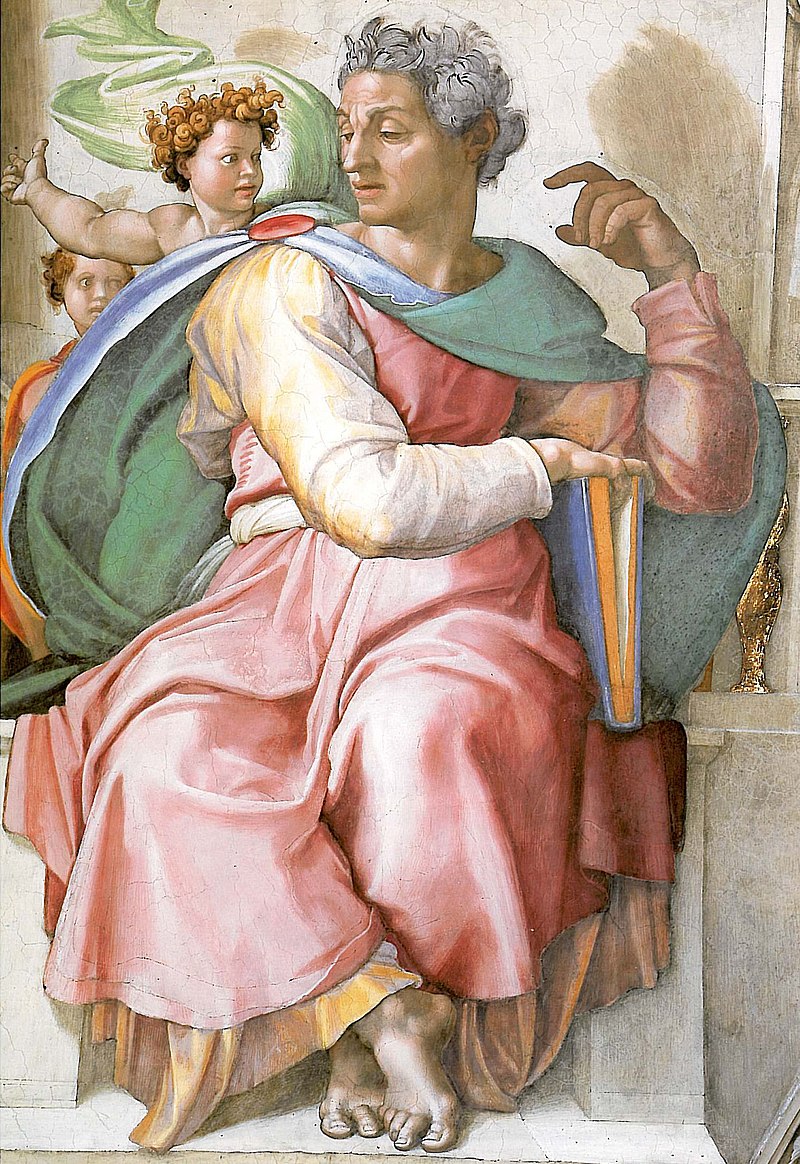
Isaiah Fresco painted by Michelangelo and his assistants for the Sistine Chapel in the Vatican between 1508 to 1512
Chapters 40–66 address a different set of historical and interpretational issues from the first thirty-nine chapters. They no longer emphasize the punishment of the wicked that will lead to the Babylonian exile, but there is a clear message of encouragement to a righteous remnant who return from exile around 539 BC. Chapters 40–66 are also divided into three sections (chapters 40–48; 49–57; 58–66), each one ending with the refrain “there is no peace,” says my God, “for the wicked” (or something very similar; see 48:22; 57:21; 66:22)—the last one is a significant elaboration of this theme. These chapters expand the theme of the book even further by describing how God is going to bring about this amazing deliverance of the nation of Israel. Initially, God uses Cyrus to deliver his people from Babylon, but Cyrus can only bring about physical deliverance, so God needs to raise up his “servant,” the Messiah, to bring about the ultimate deliverance of his nation.
The Incomparable God’s Sure Promises Contrasted With Weak Idols (40:1–48:22)
Chapters 40–48 highlight God’s amazing power, demonstrated by his use of Cyrus, the pagan King of Persia, to deliver his people from the Babylonian exile. This message is reiterated three different ways within this section: (1) the first Servant Song of the book (see 42:1–9), (2) God’s eleven declarations that idols are nothing and can never deliver his people (see 40:18–20; 41:5–7, 21–24; 42:17; 44:9–20; 45:5–6, 16, 20–21; 46:1–2, 5–7; 48:5), and (3) seven declarations that God will bring Cyrus to deliver his people (41:2–4, 25–26; 42:1–9; 44:28–45:7, 13; 46:11; 48:14–15).
The Incomparable God Speaks Grace by His Servant (40:1–43:28)
Chapters 40–43 contain a clear message of encouragement to a righteous remnant who return from exile around 539 BC, almost 150 years after Isaiah. Chapter 40 begins the section by encouraging the Israelites that God will rescue them from the Babylonian exile. Because the hope of deliverance had grown dim for many, the prophet reassures them by answering two very important questions: (1) Is God willing to deliver the exiles? The author offers strong assurance that God still loves them and is willing to deliver them. (2) Is God able to deliver the exiles? The author affirms that this same God, who created the world and reigns over all creation, is certainly able to deliver them from captivity.
The Incomparable God, the Judge and Savior of Israel and the World (44:1–48:22)
This section begins with Yahweh assuring Israel that they need not fear, for their God is the only sovereign God, and he has promised to deliver them. When they see this mighty deliverance, they will be able to declare to the nations the greatness of their God. No other nation has a God like Yahweh; in fact, the author describes in great detail the idol-making process in order to make clear the folly of idols. Three times the statement is made that any nation who foolishly trusts in idols will be put to shame. The section reaches a climax in 44:28–45:7, where Yahweh proves he is the only God by bringing Cyrus, the King of the Persian Empire, to deliver his people. No other God has done anything like this. The chapter ends with the dismal sight of the Babylonian gods being helplessly carried off into captivity, whereas Israel is delivered by their God.
The Lord’s Servant, God’s Means of Redemption (49:1–55:13)
Isaiah 49–55 again describes God’s deliverance of a remnant of Israel, except that this section goes beyond the deliverance from Babylon in that it is open to everyone who is “thirsty” (55:1). One of the most significant differences between this section and chapters 40–48 is that some themes prevalent in chapters 40–48 (i.e., Cyrus, the capture of Babylon, and idolatry) are no longer mentioned. These chapters contain three Servant Songs (49:1–13; 50:4–11; 52:13–53:12) describing a servant whom God will use to deliver Israel, but the identity of this servant is somewhat vague. Since no one in Israel can serve as her deliverer (see 50:2a; 51:18), Yahweh will have to bring his own—the Messiah. The theme of the servant will culminate in this section and cease to be referred to after this.
The Resolute Servant Redeems and Purifies Israel (49:1–52:12)
Isaiah 49–52 again describes God’s deliverance of a remnant of Israel, except that this section goes beyond the physical deliverance from Babylon to a description of spiritual deliverance. These chapters open with the second Servant Song, which serves as a major turning point in the book, in that Israel realizes that she has failed in her mission to be a light to the nations to lead them to God (49:4). Since Israel cannot accomplish this mission (50:2a; 51:18), Yahweh will have to accomplish it by means of his own special servant, the Messiah. Both the third Servant Song (49:1–7) and the fourth (50:4–9) confirm that God will make this servant successful, and he will be able to lead nations to God (49:5–6).
God’s Servant Crushed, Exalted, and Providing an Eternal Covenant (52:13–55:13)
This section picks up the promise of the servant in the previous one to bring it to a climax in the fourth Servant Song in 52:13–53:12. This song goes into much further detail concerning the servant than the previous songs, even stating that it will be necessary for the servant to suffer and die for the nation. Through the servant’s death, he will justify “the many” and offer this deliverance freely to everyone. Chapter 54 confirms that Yahweh’s servant will indeed prepare the way for this glorious deliverance of his people and highlights some of its benefits. Then, in Is. 55, this deliverance is offered freely to anyone who desires it and is willing to seek the Lord, but there is a warning that they must call on God while he is near.
God’s Judgment and Redemption in Israel and All the Earth (56:1–66:24)
The final chapters of the book of Isaiah reiterate the key elements of God’s plan to deliver a remnant in its entirety one last time, with an emphasis on the future glory of Zion. Following the call of deliverance to anyone who is “thirsty” in Is. 55, the next two chapters highlight the rewards for obedience (chapter 56) and the punishment for the wicked (chapter 57). Then Is. 58 reiterates the marks of true righteousness that should characterize God’s people, in contrast to the description of the many sins of his people in chapter 59. Yet chapter 59 concludes on a hopeful note, with God coming to their rescue (i.e., “a redeemer will come to Zion,” 59:20). Chapters 60–62 portray the deliverance that the Lord will bring for his people: “good news to the poor … freedom for the captives and release from darkness for the prisoners” (61:1). The book ends with the restoration of a righteous remnant drawn from all the nations living in a restored Zion, and the final punishment of the wicked.
Grace for the Disadvantaged and the Repentant (56:1–58:14)
Following the earlier call of God for people to come and have their spiritual thirst quenched (55:1–56:8), the author now describes what will happen to those who reject this offer. He begins with the watchmen (leaders), who should know better but are blind and mute. They seek after false gods, bringing their idols into their homes, and even offering up their children to them. Because they refuse to look to the true God, when punishment comes, they will be taken away by it (57:13). Isaiah 58 begins with Israel’s complaint that God has ignored her ritual observances, to which God responds that her rituals were empty, heartless actions. He expects true marks of righteousness to characterize his people.
Judgment and Redemption Through the Anointed One (59:1–61:11)
Chapter 59 begins with a description of the many sins of God’s people. Seeing their sad plight, God laments that no one within Israel is able to deliver them; thus, he himself must bring deliverance to his people. The chapter then concludes with the phrase “a redeemer will come to Zion” (59:20). This deliverance is then pictured in chapters 60–61, where the nations will bring their wealth to Zion, and she will be honored with children, flocks, protection, and even God’s presence. However, this restoration has a further spiritual dimension that will bring righteousness, glory, honor, and joy.
Messages of Salvation Given in Perplexing Times (62:1–64:12)
This section begins by once again reminding Israel of God’s great love for her and his assurances that he will deliver her. He promises that he will never again allow other nations to harm her or take her precious resources. These assurances are confirmed by bestowing on her a new name (i.e., “my [God’s] delight is in her,” 62:4). But this is not the case for the wicked, as 63:1–6 points out, for the day of the Lord’s vengeance will be on all who have rejected him. Despite this, Israel, still doubting God’s love and protection, pleads with him (in the form of a lament) to deliver them as he did in their past: “Would that you would rend the heavens and come down … make your name known to your enemies” (64:1–2). Chapter 64 ends with two final questions expressing Israel’s doubts: (1) “After these things, O LORD, will you restrain yourself?” and (2) “Will you be silent and afflict us beyond measure?”
God Will Judge and Redeem in History and Also Eternally (65:1–66:24)
In Is. 65–66 God responds to the lament of the previous section (63:7–64:12), especially the two final questions in 64:12. In response to the first question, God confirms that He called to his nation, but they rebuffed Him (see 65:1, 12)—a consistent problem throughout Israel’s history. In response to the second question, God responds that the extent of their punishment will be in just proportion to the extent of their sin. Their sin was great, so their punishment has to be equally great; but all of that is about to change. Yahweh’s plan, as stated at the beginning of Isaiah, is about to be fulfilled: “Zion will be delivered with justice … and those who forsake the Lord will perish” (1:27–28).
The Book of Isaiah stands as a monumental pillar of Old Testament prophecy, a work of such stunning clarity concerning the Messiah that the Church Fathers referred to it as the “Fifth Gospel.” For Orthodox Christianity, Isaiah is not merely a prophet who foretold Christ; he is a seer who was granted a vision of the entire divine economy of salvation. His book is a grand theological icon, revealing the Holy Trinity, the Incarnation, the Atonement, the Church, and the final glorification of creation, all centered on the person and work of Jesus Christ.
1. The Revelation of the Holy Trinity
Isaiah’s prophecy begins with a foundational revelation of God’s holiness and His triune nature.
- The Trisagion Hymn:
- Text: “And one cried to another and said: ‘Holy, Holy, Holy is the LORD of hosts; The whole earth is full of His glory!’” (Isaiah 6:3, NKJV).
- Patristic and Liturgical Understanding: The threefold “Holy” is universally understood by the Fathers as a revelation of the Holy Trinity. This verse forms the core of the Trisagion Prayer (“Holy God, Holy Mighty, Holy Immortal, have mercy on us”), which is ceaselessly prayed in Orthodox worship. The vision is not abstract; it is an entry into the eternal worship of the angelic hosts before the Throne of God, a worship in which the Church on earth participates during the Divine Liturgy.
- Christological Link: The “LORD of hosts” whom Isaiah sees is identified in the Gospel of John as the pre-incarnate Christ: “These things Isaiah said when he saw His glory and spoke of Him” (John 12:41).
2. The Prophecies of the Incarnate Messiah
Isaiah provides the most detailed and diverse prophecies of the Messiah’s person and birth.
- The Virgin Birth:
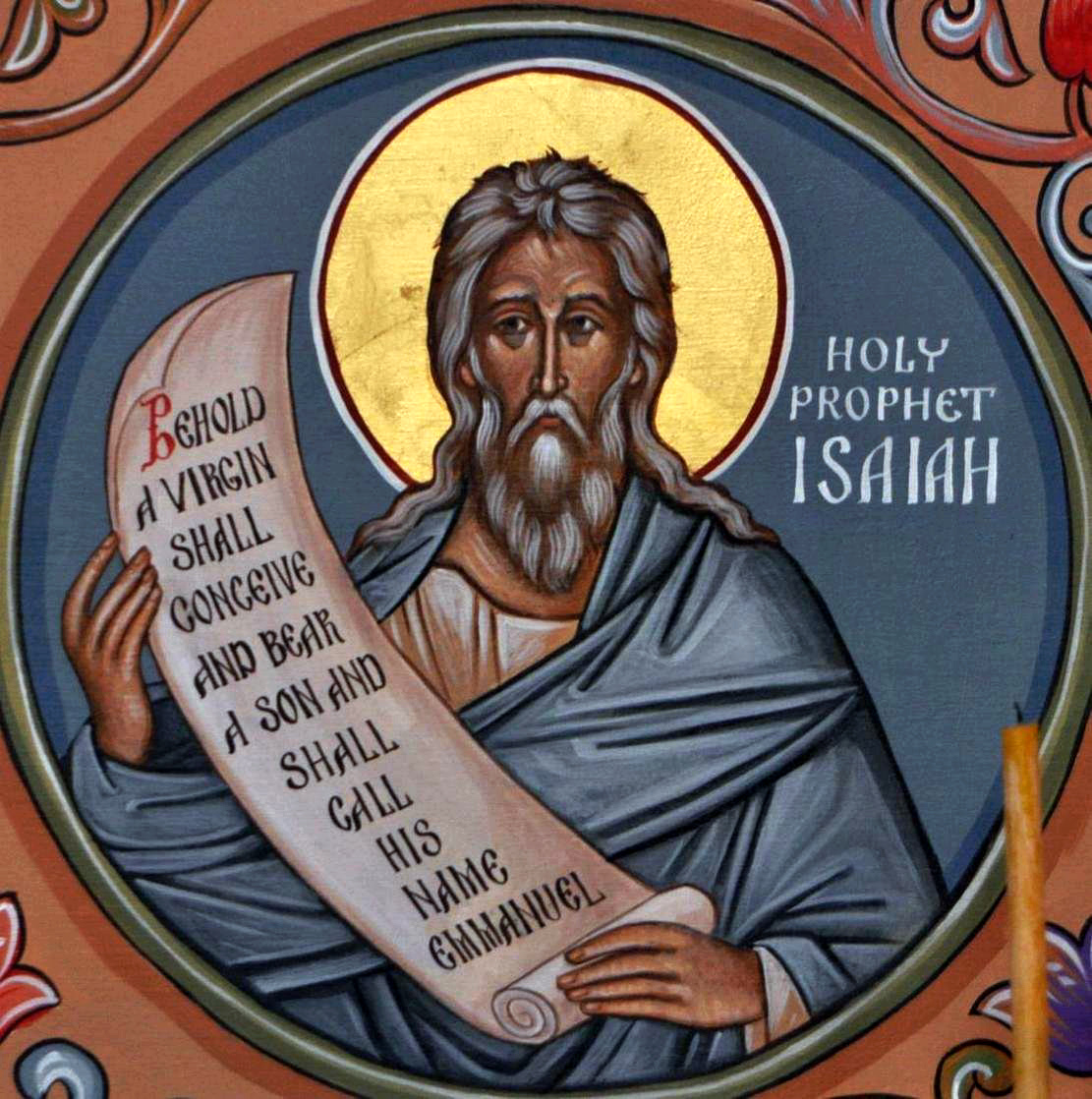
- Text: “Therefore the Lord Himself will give you a sign: Behold, the virgin shall conceive and bear a Son, and shall call His name Immanuel.” (Isaiah 7:14, NKJV).
- New Testament Fulfillment: The Evangelist Matthew explicitly states this was fulfilled in the birth of Jesus from the Virgin Mary (Matthew 1:22-23).
- Patristic Insight: The Fathers emphasize that “Immanuel” means “God with us.” This is not a symbolic title but a declaration of the hypostatic union: God has truly become one with humanity in the womb of the Theotokos.
- The Divine Child and Eternal King:
- Text: “For unto us a Child is born, Unto us a Son is given; And the government will be upon His shoulder. And His name will be called Wonderful, Counselor, Mighty God, Everlasting Father, Prince of Peace.” (Isaiah 9:6, NKJV).
- Christological Fulfillment: This prophecy unequivocally affirms the divinity of the Messiah. The “Child” born in time is also the eternal “Mighty God” and “Everlasting Father” (a title indicating His divine origin and authority). This is fulfilled in Jesus Christ, the Son of God who shares the Father’s divine nature.
- The Shoot from the Stump of Jesse:
- Text: “There shall come forth a Rod from the stem of Jesse, And a Branch shall grow out of his roots. The Spirit of the LORD shall rest upon Him…” (Isaiah 11:1-2, NKJV).
- Liturgical Understanding: This prophecy is read on the Feast of the Nativity of Christ. It emphasizes Christ’s human lineage from David (Jesse being David’s father) while also pointing to His anointing by the Holy Spirit at His Baptism. The sevenfold Spirit (Isaiah 11:2) rests upon Him, and from Him, the grace of the Spirit is poured out upon the Church.
3. The Suffering Servant: The Heart of the Atonement
The four “Servant Songs” (Isaiah 42, 49, 50, 52-53) culminate in the most profound and moving prophecy of the Passion in the entire Old Testament (chapters 52:13-14+53:1-12).
- The Man of Sorrows(4-th Song, chapter 53):
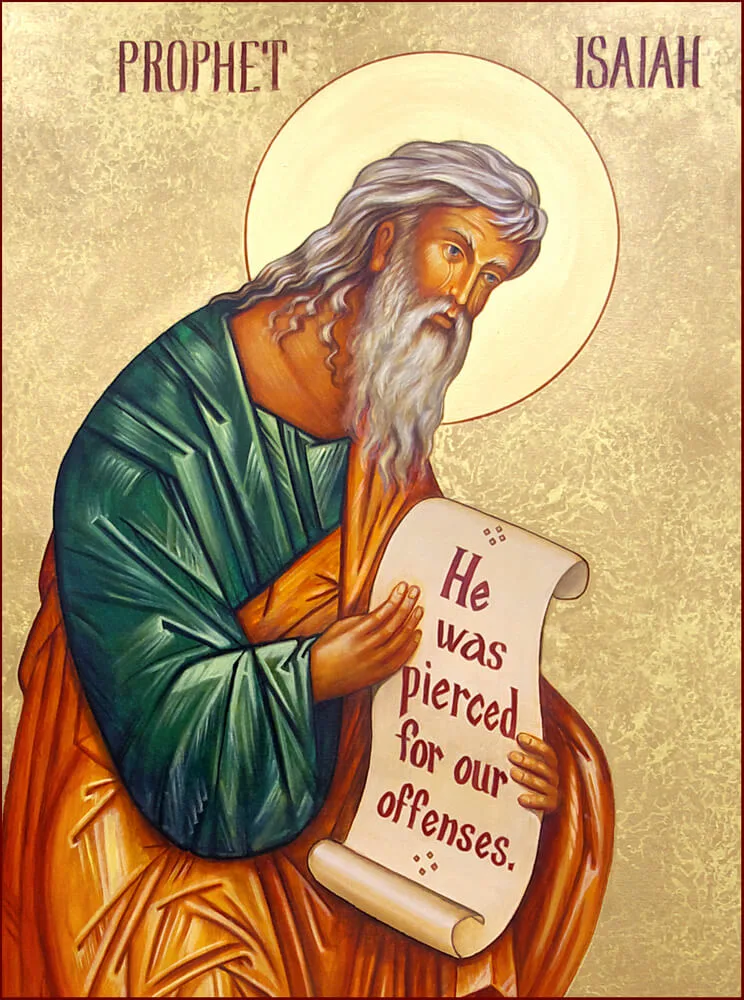
- Text: “He is despised and rejected by men, A Man of sorrows and acquainted with grief… But He was wounded for our transgressions, He was bruised for our iniquities; The chastisement for our peace was upon Him, And by His stripes we are healed… He was led as a lamb to the slaughter…” (Isaiah 53:3-7, NKJV).
- New Testament Fulfillment: The Ethiopian eunuch was reading this very passage when Philip the Deacon “preached Jesus to him” (Acts 8:26-35). The Gospels show how every detail of Christ’s Passion—the silence before His accusers, the mocking, the piercing, the burial with the rich (Isaiah 53:9)—fulfills this prophecy.
- Patristic and Ascetical Understanding: The Fathers see this as the ultimate revelation of God’s kenosis (self-emptying) and love. The ascetical application is profound: the path of salvation involves uniting our own sufferings to those of the Suffering Servant. We are called to bear injustice with humility, to accept sorrow without despair, and to offer our own pains for the healing of others, following the model of Christ. “By His stripes we are healed” is the foundation of the Orthodox theology of redemption—Christ’s voluntary suffering absorbs and destroys the power of sin and death.
- The Man of Sorrows(3-rd Song, chapter 50):
- The Third Servant Song (Isaiah 50:4-7, with verses 6-7 being the climactic core) presents a startling shift from the public ministry of the Servant to His intimate, personal suffering. It reveals the voluntary and deliberate nature of Christ’s Passion, highlighting His unwavering obedience and the source of His endurance: absolute trust in the Father. The Third Song is a first-person confession of the Servant. It is no longer a description about Him (as in the First, Second and Fourth Song) but His own testimony from the depths of His suffering. This creates an incredibly intimate and profound portrait of the Messiah’s inner state during His Passion.
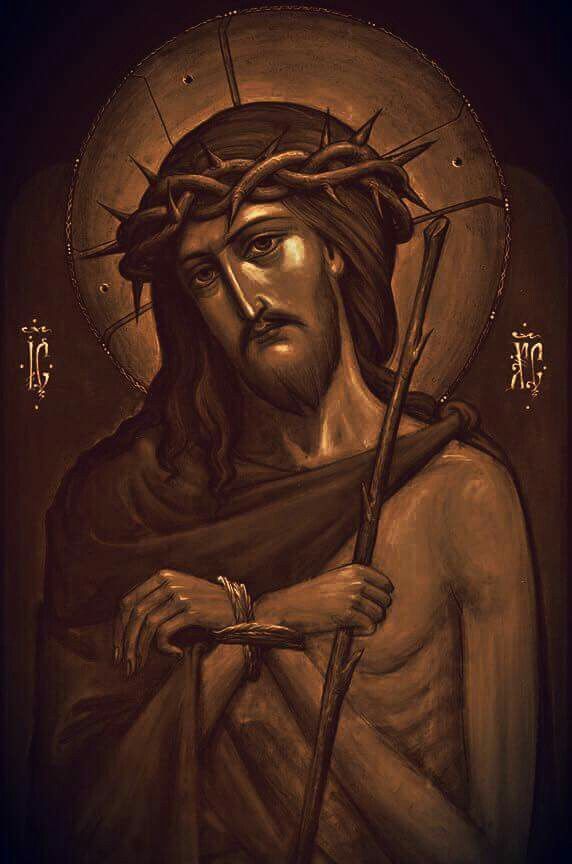
a. The Depth of Humiliating Suffering (v. 6)
The Servant describes three escalating acts of violence and humiliation, all of which He endures with conscious, willing submission.
- “I gave My back to those who struck Me”: This is not a passive acceptance but an active offering. The word “gave” (nathan in Hebrew) implies a voluntary handing over. This prophesies the scourging of Christ (Matthew 27:26; John 19:1). The Servant does not merely endure the lash; He gives His back to it, transforming a brutal act of punishment into an offering of love.
- “And My cheeks to those who plucked out the beard”: This is an act of extreme personal contempt and cruelty, intended to dehumanize and mock. It signifies the brutal physical abuse and mockery Christ suffered at the hands of the soldiers and the crowd (Matthew 26:67, 27:30). By offering His cheeks, the Servant demonstrates a humility that absorbs the very worst of human malice without retaliation.
- “I did not hide My face from shame and spitting”: Spitting was the ultimate gesture of disgust and rejection in the ancient world (compare Numbers 12:14). To “not hide My face” means to steadfastly endure this ultimate shame without turning away. This was fulfilled when the soldiers spit in Jesus’ face and struck Him (Matthew 26:67). He received the full measure of human sin’s contempt for holiness.
Patristic Insight: The Fathers, such as St. Cyril of Alexandria, emphasize that Christ endured these very physical sufferings in His human nature to sanctify every aspect of our bodily existence. By willingly accepting these humiliations, He tramples down the power of shame and pride, which are fundamental roots of sin. His voluntary suffering becomes a healing medicine for our own wounded pride and our fear of human contempt.
b. The Source of Steadfast Endurance (v. 7)
The Servant does not endure this torment through mere human stoicism. He reveals the divine, unshakeable foundation of His resolve.
- “For the Lord GOD will help Me; Therefore I will not be disgraced”: The Servant’s strength flows from His absolute, unbroken communion with the Father. The word “for” is crucial: it links the horrific suffering of verse 6 to the unshakable confidence of verse 7. His trust is not that the Father will prevent the suffering, but that He will vindicate Him through it. The “disgrace” in the eyes of the world is, in the eyes of God, the very path to glory. This points directly to the Resurrection, where the Father vindicated the Son, proving that His shameful death was the victory over death itself.
- “Therefore I have set My face like a flint”: This is one of the most powerful images of resolve in all of Scripture. Flint is a hard stone used to start fires. To “set one’s face like flint” means to be immovably determined, come what may. This prophecy was fulfilled in the Gospel of Luke: “Now it came to pass, when the time had come for Him to be received up, that He steadfastly set His face to go to Jerusalem” (Luke 9:51, NKJV). Jesus was not a helpless victim swept along by events; He was the divine Victor, deliberately and courageously walking the path of suffering laid out for Him.
- “And I know that I will not be ashamed”: This is the triumphant conclusion. The Servant’s “knowing” is a certainty of faith, based on His relationship with the Father. He knows that obedience to the Father’s will, even to the point of death, is the only path to true glory and victory. The “shame” of the Cross is, paradoxically, the throne from which He reigns.
New Testament Fulfillment and Christological Significance
The entire Passion narrative is a fulfillment of this song, but several moments stand out:
- The Scourging and Mocking (Matthew 27:26-31) perfectly fulfills the physical abuses described.
- The Silence before His Accusers (Matthew 26:62-63, 27:12-14) is the lived expression of “setting His face like a flint.” He refuses to be drawn into a defensive argument, steadfastly embracing His mission.
- The Road to Jerusalem (Luke 9:51) is the active, determined fulfillment of His resolute will.
This song reveals Christ as the New Adam , who, unlike the first Adam who hid from God after his sin, stands boldly before His accusers without shame. It reveals Him as the true High Priest who offers not the blood of animals, but His own body and dignity as the perfect sacrifice for sin.
Ascetical and Liturgical Understanding
- Ascetical Understanding: For the Orthodox Christian, this passage provides the pattern for enduring trials, insults, and sufferings—what the Fathers call “bearing shame for the sake of Christ.”
1. Voluntary Acceptance: We are called not just to endure difficulties, but to actively offer them to God (“I gave My back…”). This transforms suffering from a meaningless ordeal into a sacrificial offering. This is the essence of taking up one’s cross (Matthew 16:24).
2. The Struggle Against Pride: The deepest wound of the Fall is pride. By voluntarily accepting humiliation without retaliation, following Christ’s example, we allow our ego to be crushed and healed. We learn to find our worth not in the opinion of others, but in God’s love alone.
3. Unshakeable Hope: The Christian’s endurance is not based on optimism but on the certainty of God’s ultimate help and vindication. “Setting our face like flint” means persisting in prayer, fasting, and love, even when we feel no consolation, trusting in God’s promise.
-
Liturgical Understanding:
- This Servant Song is read during the Passion Gospels of Holy Week , particularly on Holy Thursday evening at the service of the Twelve Passion Gospels. As the Church contemplates the beating, mocking, and spitting upon the Lord, these words from Isaiah are heard as Christ’s own testimony from the Cross.
- The Prothesis (Preparation of the Gifts) before the Divine Liturgy also reflects this. The priest, using the liturgical spear, cuts a cubic piece of bread from the prosphora, saying, “As a sheep He was led to the slaughter…” This ritual action identifies the Lamb of God with the suffering Servant of Isaiah 53:7 and 50, whose body is “given” for the life of the world.
To sum up, the Third Servant Song reveals the heart of the Passion: not a tragic failure, but a deliberate conquest. It shows us a Messiah who, in His deepest humanity, feels the full sting of pain and shame, yet, in His perfect divinity, transcends it through His unwavering obedience and trust in the Father. He is the Lamb who is silent before His shearers, yet He is also the Warrior-Priest who “sets His face like flint” to battle against sin and death, not with a sword, but with the invincible weapons of humility and love. In His voluntary offering of His body to strikers and His face to spitters, we see the very power of God that turns the world’s greatest shame into its ultimate salvation.
4. The portrait of the Messiah and the Mission to the Gentiles
Isaiah’s vision extends beyond Israel to the salvation of the entire world through the Messiah.
The First Servant Song of Isaiah (Isaiah 42:1-4) presents a profound and counter-intuitive portrait of the Messiah, not as a conquering warlord, but as a gentle, persistent, and compassionate servant. This portrait finds its perfect fulfillment in Jesus Christ, and the Holy Gospel of Matthew explicitly confirms this, showing how Christ’s ministry embodies this divine meekness.
a. The Identity and Empowerment of the Servant
- “My Servant… My Elect One… My Beloved”: The Song opens with a triple affirmation from God the Father. This is not a reluctant messenger, but the Father’s own chosen and beloved Son. This language is echoed directly at Christ’s Baptism (Matthew 3:17) and Transfiguration (Matthew 17:5), revealing Jesus as the ultimate fulfillment of this Servant. He acts not by His own separate will, but in perfect union with the Father who “upholds” Him.
- “I have put My Spirit upon Him”: The Servant’s power is divine, not worldly. He is anointed by the Holy Spirit. This is fulfilled at Christ’s Baptism, when the Spirit descends upon Him like a dove (Matthew 3:16), empowering His entire messianic ministry of teaching, healing, and overcoming evil.
b. The Mission of the Servant: A Universal Justice of Mercy
- “He will bring forth justice to the Gentiles”: The mission is shockingly universal. The “justice” (mishpat in Hebrew) He brings is not merely legal judgment, but the divine order of salvation, righteousness, and truth. It is for the Gentiles —the entire world—breaking the exclusive nationalistic expectations of a Messiah for Israel alone. This foreshadows the Great Commission (Matthew 28:19).
c. The Meekness of the Servant’s Method
This is the heart of the passage, describing a mode of operation utterly contrary to worldly power.
- “He will not cry out, nor raise His voice… in the street”: The Servant will not be a rabble-rousing demagogue or a self-promoting celebrity. His authority is intrinsic and quiet. Christ fulfilled this perfectly: He often told those He healed to be quiet (e.g., Mark 1:44), withdrew from crowds seeking to make Him king (John 6:15), and stood in silent majesty before Herod and Pilate, refusing to put on a self-justifying spectacle (Luke 23:9, John 19:9-10). His power is demonstrated in humble restraint.
- “A bruised reed He will not break, And smoking flax He will not quench”: These are two of the most beautiful metaphors in Scripture, revealing the exquisite compassion and patience of Christ.
- A Bruised Reed: A reed was used for many purposes, but if it was cracked or bruised, it was worthless and would be snapped and discarded. This represents a person who is spiritually wounded, weak in faith, broken by sin, or emotionally fragile. The world discards such people. Christ, the divine Physician, does not. He binds up the brokenhearted. He does not crush the penitent sinner with harshness but lifts them up with grace. Think of the Woman caught in adultery (John 8:1-11)—the religious leaders were ready to “break” her; Christ saved her and called her to repentance.
- Smoking Flax: Flax was used for a lamp wick. If it was “smoking,” it was barely alight, flickering, and about to go out, producing more unpleasant smoke than light. This represents a person whose faith is feeble, whose love has grown cold, whose spiritual life is almost extinguished. The world, and even a harsh religiosity, would “quench” such a weak spark. But Christ gently nurses the flame back to life. He blows gently on the embers through His grace, His forgiveness, and the oil of the Holy Spirit. He patiently tends to the struggling believer until they burn brightly again.
Patristic Insight: St. John Chrysostom, in his homilies, constantly highlights this aspect of Christ’s character. He notes that Christ’s meekness is not weakness but the ultimate strength—the strength to restrain power for the sake of love and salvation. The Fathers see in these images the heart of God’s economy of salvation: He does not save us by overwhelming force but by condescending love, meeting us in our fragility.
d. The Perseverance of the Servant: The Certainty of Victory
- “He will not fail nor be discouraged, Till He has established justice in the earth”: The Servant’s meekness is not a recipe for failure but the very path to a sure and lasting victory. He will not be disheartened by rejection, unbelief, or the slowness of His disciples. This was fulfilled in Christ’s journey to the Cross: “He steadfastly set His face to go to Jerusalem” (Luke 9:51). He was not discouraged by betrayal, denial, or torture, but endured the Cross “for the joy that was set before Him” (Hebrews 12:2). His victory is achieved precisely through His humble endurance.
- “And in His name Gentiles will trust”: Matthew’s version concludes with this note of hope. The ultimate result of this gentle, suffering Servanthood is the conversion of the world. His “name”—His very person and authority—becomes the object of faith for all nations. This is the foundation of the Church.
Ascetical and Liturgical Understanding
- Ascetical Understanding: For the Orthodox Christian, this passage is a direct instruction on acquiring the virtue of meekness (praotes). Meekness is the state of a soul that has tamed the passions of anger and pride, and has so much inner strength that it does not need to assert itself violently. Christ is our model.
- We are called to be “bruised reeds” that do not “break” others through judgmentalism, harsh criticism, or impatience.
- We are called to be “smoking flax” that does not “quench” the struggling faith of others through scandal, cynicism, or a lack of compassion.
- The spiritual life is a process of allowing Christ to heal our own “bruises” and rekindle our own “smoking flax” through the Holy Mysteries, especially Confession and the Eucharist.
- Liturgical Understanding: The Church embodies the spirit of the Servant in its worship and life. The prayers of the Church, even in their majesty, carry a tone of humble supplication. The Eucharist is the ultimate expression of God’s gentle condescension: the King of Glory comes to us not in awesome spectacle, but hidden in the humble forms of bread and wine, to heal and nourish our bruised and weary souls. The hymnography of Great Lent, in particular, is filled with the theme of God’s boundless compassion for the sinner, directly reflecting the heart of the Servant who does not break the bruised reed.
So, the First Servant Song reveals that the power of God’s Messiah is made perfect in meekness. Christ does not conquer with the sword but with sacrificial love; He does not rule by shouting but by the silent authority of truth; He does not discard the weak but is uniquely attentive to them. In a world that equates power with noise and force, the Servant of Isaiah and the Christ of the Gospels present a radical alternative: the quiet, relentless, and compassionate power of God, which alone can establish true justice and bring salvation to the ends of the earth. He is the strength that protects the weak, and the gentle breath that fans the faintest spark of faith into the blazing light of the Kingdom.
- The Light to the Nations:
- Text: “I, the LORD, have called You in righteousness… I will keep You and give You as a covenant to the people, As a light to the Gentiles.” (Isaiah 42:6, NKJV; See also the 2-nd Song of the Servant: 49:6). “The Gentiles shall come to your light, And kings to the brightness of your rising.” (Isaiah 60:3).
- New Testament Fulfillment: The Elder Simeon, holding the Christ Child, echoes this prophecy: “A light to bring revelation to the Gentiles, And the glory of Your people Israel” (Luke 2:32). The Apostles understood their mission to the Gentiles as the fulfillment of Isaiah’s words (Acts 13:47).
- The New Creation and the Heavenly Banquet:
- Text: “Behold, I create new heavens and a new earth…” (Isaiah 65:17). “And the LORD of hosts will make for all people A feast of choice pieces, A feast of wines on the lees…” (Isaiah 25:6, NKJV).
- Liturgical and Eschatological Understanding: The prophecy of the new creation is read in the Orthodox service for Holy Pascha (Easter) , celebrating Christ’s Resurrection as the dawn of the new creation. The “feast for all people” is understood as the Eucharistic Banquet , where all nations are invited to partake of the Body and Blood of the Messiah. This is prefigured in the Liturgy of the Presanctified Gifts during Great Lent, where Isaiah 55:1-13 is read, inviting all to “come to the waters” of baptism and the wine of the Eucharist.
Conclusion: Isaiah as a Christ-Centered Narrative
The Book of Isaiah is fundamentally Christ-centered because it presents a unified and comprehensive vision of salvation history, with Christ as its Alpha and Omega.
- It reveals the Holy Trinity whom Christ manifests.
- It foretells the Incarnation through the Virgin Theotokos.
- It proclaims the divine titles of the Messiah.
- It provides the most detailed icon of His Passion and Atoning Sacrifice.
- It announces His mission as the Light to the Gentiles.
- It points to His establishment of the New Covenant in the Church and the Eucharist.
- It culminates in the hope of the Resurrection and the New Creation which He inaugurates.
For the Orthodox Christian, reading Isaiah is to walk through the Old Testament with a lamp that illuminates the face of Jesus Christ. His words are not merely read but are chanted and prayed in the Church’s services, from the Royal Hours of Nativity to the solemn prostrations of Great Lent, making his prophecy a living and enduring witness to the Lord, the God of Israel, Who has come to save His people.
27.4 The Sovereign Lord Will Send His Servant (40:1–66:24)
27.1 Trust the Sovereign Lord, Who Redeems Israel and the Earth by His
Servant
27.2 The Lord of Israel and of the World Is Worthy of Trust (1:1–39:8)
27.3 The Sovereign Lord’s Messages About the Nations (13:1–27:13)
Messages About Damascus, Cush, and Babylon (17:1–21:17)
Judgment and Redemption Dependent on Faith (28:1–39:8)
Faith or Unbelief in the Sovereign Lord (36:1–39:8)
27.4 The Sovereign Lord Will Send His Servant (40:1–66:24)
27.5 An Orthodox Insight into the Book of the Prophet Isaiah
1. The Revelation of the Holy Trinity
2. The Prophecies of the Incarnate Messiah
3. The Suffering Servant: The Heart of the Atonement
a. The Depth of Humiliating Suffering (v. 6)
b. The Source of Steadfast Endurance (v. 7)
Ascetical and Liturgical Understanding
- Liturgical Understanding:
a. The Identity and Empowerment of the Servant
c. The Meekness of the Servant’s Method
Ascetical and Liturgical Understanding
Conclusion: Isaiah as a Christ-Centered Narrative
- 27.1 Trust the Sovereign Lord, Who Redeems Israel and the Earth by His Servant
- 27.2 The Lord of Israel and of the World Is Worthy of Trust (1:1–39:8)
- 27.3 The Sovereign Lord’s Messages About the Nations (13:1–27:13)
- 27.4 The Sovereign Lord Will Send His Servant (40:1–66:24)
- 27.5 An Orthodox Insight into the Book of the Prophet Isaiah
27.2 The Lord of Israel and of the World Is Worthy of Trust (1:1–39:8)
27.3 The Sovereign Lord’s Messages About the Nations (13:1–27:13)
Messages About Damascus, Cush, and Babylon (17:1–21:17)
Judgment and Redemption Dependent on Faith (28:1–39:8)
Faith or Unbelief in the Sovereign Lord (36:1–39:8)
27.1 Trust the Sovereign Lord, Who Redeems Israel and the Earth by His
Servant
- Trust the Sovereign Lord, Who Redeems Israel and the Earth by His Servant
- The Lord of Israel and of the World Is Worthy of Trust (1:1–39:8)
- The Sovereign Lord’s Messages About the Nations (13:1–27:13)
- The Sovereign Lord Will Send His Servant (40:1–66:24)
Related Concepts
- 1-corinthians-1545
- ambassador-for-christ
- angelic-worship
- apocalyptic-literature
- bethlehem
- book-of-revelation
- bruised-reed
- bruised-reed-and-smoking-flax
- chalcedonian-dogma
- christocentric-hermeneutics
- christocentrism-of-scripture
- christology-john-1241
- cross
- davidic-dynasty
- divine-holiness
- divine-initiative
- election
- enhypostaton
- gentile-mission
- great-commission
- high-priest
- holy-spirit
- hope
- humility-prautes
- idolatry-polemic
- inaugurated-eschatology
- incomparability-of-yahweh
- israel-of-god
- judgment
- judgment-and-redemption
- judgment-of-nations
- little-apocalypse
- liturgical-participation
- meek-king
- meekness
- messiah
- new-birth
- peace-shalom
- philippians-26-7
- philippians-27
- pride
- priesthood
- prophets-and-cult
- restoration
- resurrection
- revelation
- revelation-211
- salvation
- scripture-and-liturgy
- servant-songs
- shame-and-glory
- shame-and-pride
- sin
- smoking-flax
- st-john-chrysostom
- st-justin-martyr
- structure-of-isaiah
- struggle-against-pride
- suffering-servant
- taking-up-ones-cross
- the-meek-king
- the-servant
- two-natures
- union-with-christ
- universal-mission
- virgin-birth
- voluntary-suffering
- zion
- zion-restored
- zions-restoration