Old Testament — Topic 17
17.1 The Division of Solomon’s Kingdom (12:1–14:31)
This division is short but extremely significant, because it marks the turning point in the history of the nation of Israel. The account exhibits a chiastic ABBA pattern, with the accounts of Rehoboam (A elements: 12:1–24; 14:21–31) framing segments in which Jeroboam is the chief character (B elements: 12:25–13:34; 14:1–29). This framing reflects the narrator’s primary interest in the Davidic house in Jerusalem. If Solomon ended his reign as a fool, Rehoboam consciously intensifies the pattern his father established in the second half of his reign. Through Yahweh’s intervention, a full-scale civil war is averted at this time, but his prophets put the divine imprimatur on the division of the kingdom and Jeroboam’s assumption of the throne over the northern ten tribes. The dynasty in Jerusalem will remain in the hands of David’s descendants, but those who govern Judah with Davidic integrity and spirituality will be few. As for the Northern Kingdom of Israel, with the exception the Omrides, who manage to rule for four decades (ca. 884–842 BC), the throne is unstable until its demise in 722 BC, with assassinations and usurpations of power happening in rapid succession. Of the kings in the north, Jehu alone receives a commendation from the narrator for having been Yahweh’s agent of judgment against Ahab and his entourage, but in the end, he condemns him for following the course set by Jeroboam I (2 Kgs 10:30–31).
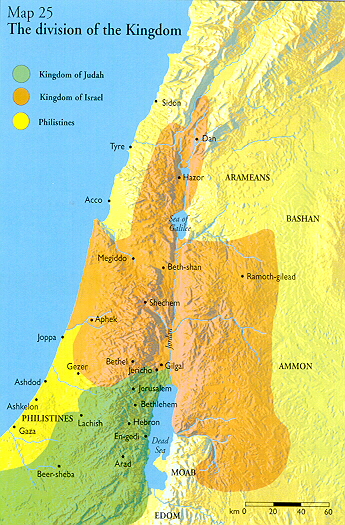
The division of the Kingdom
17.2 Rotting in the Branches, Part I: The House of Omri and the Ministry of
Elijah (1 Kings 15:1–2 Kings 2:12)
1 Kings 15:1–2 Kings 13:25 is the longest and most complex section of 1–2 Kings, because it concerns the history of two kingdoms. However, it is also unique, because the narrator has devoted an unexpected amount of space to the Northern Kingdom’s Omride dynasty and to Yahweh’s response to its representatives through his prophets, Elijah and Elisha (1 Kings 16:8–2 Kings 11:20). For the sake of convenience we have divided this long “book of the house of Omri” into two sections:
- The first deals with a short account of the rise of the house of Omri, but the center of gravity is on the reign of his apostate son Ahab and on Yahweh’s response through the remarkable ministry of Elijah.
- The second part (2 Kings 2:1–13:25) concerns Omride successors to Ahab and the ministry of Elisha, Elijah’s prophetic successor.
Although the state has broken away from the Davidic house, from Elijah’s statements on Mount Carmel (1 Kings 18:36–37) and Elisha’s conversations in the context of Jehu’s anointing, Yahweh obviously continues to identify himself as “the God of Israel” and the northern Israelites as “the people of Yahweh” (2 Kings 9:3–7), and to maintain authority over the occupants of the throne (2 Kings 9:12). After briefly recounting the rise of Omri in troubled times in the court of Israel (15:1–16:7), the narrator gives a lengthy but vivid account of the earthly outworkings of the conflict raging between Baal and Yahweh in the heavens, with Ahab as the royal antagonist representing Baal, and Elijah the prophetic protagonist representing Yahweh. The challenge of devotion to Yahweh alone and repudiation of Canaanite deities comes to climax in Elijah’s contest with the prophets of Baal (1 Kings 18). In the aftermath of this event, the narrator anticipates a transition in royal and prophetic leadership (19:15–21), but spends three chapters setting up and describing the death of Ahab in fulfillment of the prophecy of another prophet, Micaiah ben Imlah (20:1–22:40). This part ends with a brief account of Ahab’s successor, Ahaziah (1 Kings 22:41–2 Kings 1:18).
Background to the Rise of the House of Omri: Early Conflict Between Judah and Israel (15:1–16:7)
This section is transitional between two centers of gravity, the preceding reigns of Rehoboam and Jeroboam and the large literary unit on the reigns of the Omrides in the Northern Kingdom that follows. The narrator offers a synoptic view of the two royal houses, beginning with two representatives from the Davidic house in Judah (15:1–24) and then presenting two representatives from Israel (15:25–16:7). The burden of the presentation of the respective kings of Judah is to report their involvement in the ongoing conflict with their northern counterparts and to assess their performance. The thematic significance of the former is evident in the refrain “There was continuous warfare between A and B,” which we heard in 14:30, but variations of which recur four times in chapter 15 (15:6, 7, 16, 32). The narrator’s prioritizing Judean developments (15:1–24) over events in Israel (15:25–16:7) and affording the former more space than he devotes to the latter seem to reflect his Judean location. However, in both cases he offers summary assessments of the reigns of two Kings, with the account of the first being shorter than the account of the second.
The Emergence of the House of Omri in Israel (16:8–28)
Ancient Assyrian texts that refer to the Northern Kingdom of Israel as bīt ḫumria, “ the house of Omri,” indicate the historical significance of Omri in the history of Israel. Apart from occasional chronological correlation with events in Jerusalem (16:8, 10, 15, 23, 29), in what we may for practical purposes call “the book of Omri” the narrator will focus on developments in Samaria, the northern seat of power. The rapid turnover in occupants of the throne in 16:8–22 reflects the instability of the political situation. However, matters change with the emergence of Omri as the victor in the struggles for power. Spiritually Omri continues the course of Jeroboam, but politically he has set a new direction, moving his capital to Samaria, where it will remain until the Northern Kingdom falls to the Assyrians in 722 BC.
The Conflict Between Yahweh and Baal, Part II: The Idolatrous Reign of Ahab (16:29–19:21)
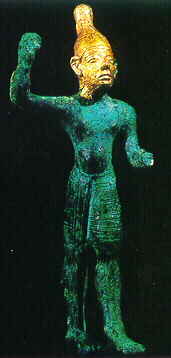
Statuette of Baal
Assyrian records of the Battle of Qarqar in 853 BC reveal that under Ahab (873–852 BC) “the house of Omri” was a major military player in the resistance of a dozen western allies (including the Arameans of Damascus) against the growing threat of the Assyrians to the east. The account of Ahab’s reign in 1 Kings 16:29–22:40 shows no interest in this event, but ends by highlighting the belligerent relationship that exists between Ahab and Ben-Hadad II (Hadadezer, 880–842 BC) of Damascus, leading ultimately to the Israelite King’s death in battle against the Arameans (852 BC). To the biblical narrator this event is not as important for its political implications as it is for its profoundly spiritual significance; this is Ahab’s due punishment for his sponsorship of Baal worship in Israel. Even so, the earlier chapters tend to be preoccupied not with Ahab’s relationship to the Arameans, but to his relationship with Elijah, the prophet of Yahweh, and in the end with a second prophet, Micaiah ben Imlah, who predicts his doom (1 Kings 22). As noted earlier, the narrator casts the entire record of Omride rule as reflections of events transpiring in the heavens, where a spiritual contest for the hearts of the Israelites rages between Yahweh and his prophets, on the one hand, and the forces of Baal, on the other. This contest continues in the following division involving Elisha. In reading these Ahab-Elijah texts we need to study the significance of every episode in the light of that conflict, which reaches its physical and ideological highpoint on Mount Carmel (1 Kings 18). Once the author has presented the background to that event (16:29–17:24), its nature (18:1–46), and its aftermath (19:1–21), his focus shifts to Ahab’s demise at the hands of the Arameans (20:1–22:40). However, the contest continues under Ahab’s successor, Ahaziah, who continues the legacy of his father as an antagonist to true Yahwism but also dies as a victim of that contest—in fulfillment of Elijah’s word (2 Kings 1:1–18). Because Elijah is the principal protagonist on Yahweh’s behalf in this spiritual battle, this phase of the conflict between Yahweh and Baal does not end with the death of Ahab, but with the ascension of Elijah (2 Kings 2:1–18). To grasp the message of the narrator, throughout this compelling account, we must keep our eyes on the actions of Yahweh’s prophets and our ears on their speeches.
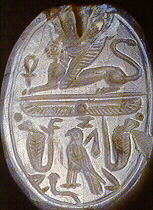
Seal of Queen Jezebel
The Demise of Ahab and His World (1 Kings 20:1–2 Kings 1:18)
The amount of space the narrator devotes to Ahab’s demise is extraordinary, probably having to do with the extraordinary depths of his depravity. According to 22:1, in the author’s mind, the process takes three years, and the Arameans (ancient Greek reads Syrians) based in Damascus are Yahweh’s agents. Had Ahab read the Torah, specifically Yahweh’s curses in Deuteronomy 28:49–57, he would have recognized this as divine judgment for his apostasy, coming in the form precisely predicted within the covenant. As will be the case with the Assyrians in the next century and the Babylonians in the late seventh and early sixth centuries, it takes three strikes by the Arameans to accomplish the divine purpose:
- in Samaria (20:1–25),
- at Aphek (20:26–34),
- at Ramoth-Gilead (22:29–40).
While the first two battles are probably intended as wake-up calls for Ahab, this does not happen. On the contrary, Naboth and Jezebel’s brazen violation of ancient covenant tradition regarding the inviolability of landholdings and the murder of Naboth (21:1–29) turns out to be the last straw, after which Yahweh predicts in graphic terms his intent to eliminate this wicked royal couple (21:20–24). The event does not happen until three years later. In a curious account, Yahweh apparently controls the minds of Ahab’s pseudo- prophetic lackeys to predict his demise in ambivalent terms (which Ahab interprets in his favor), but then has Micaiah ben Imlah, a prophet of Yahweh, declare the prophecy (22:5–28). The proof of Micaiah’s status as a true prophet comes with the death of Ahab in battle. Remarkably, during the evil reign of the Omrides, we observe a rare moment when the kings of Israel and Judah work together to defend Israel against a common foreign enemy. This division concludes with a summary description of the reign of Ahab’s ally, Jehoshaphat of Judah (22:41–50), and an unusual story of Ahab’s successor’s accident that leads to his death after a short reign of two years (2 Kings 1:1–18).
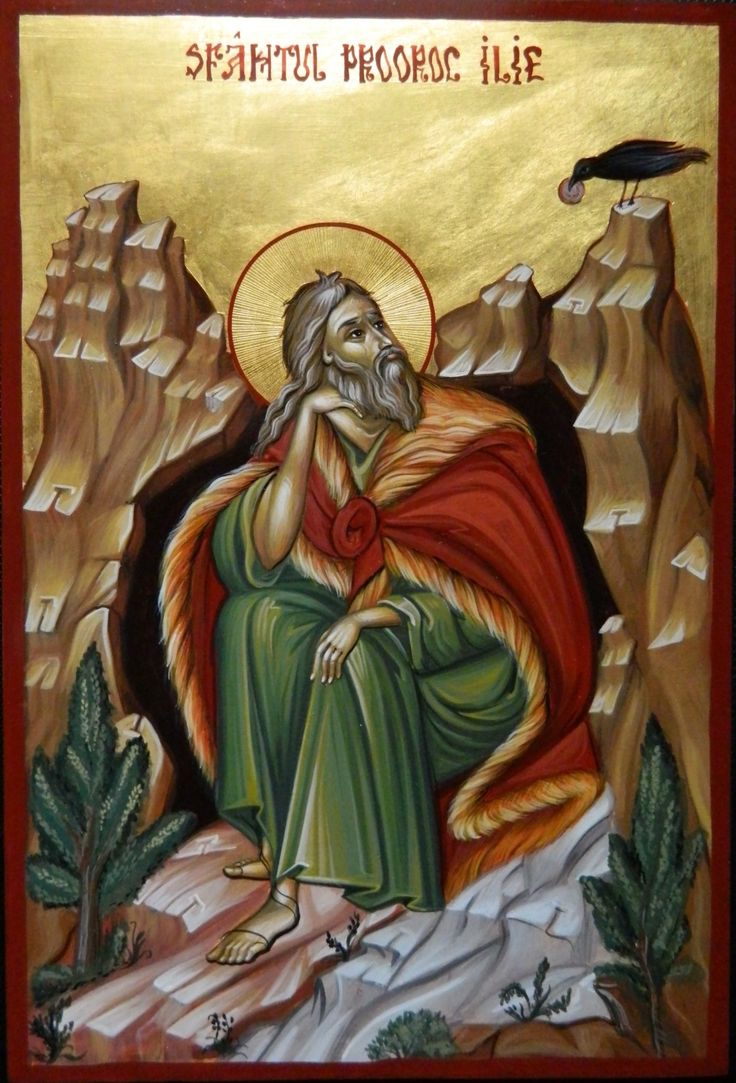
17.3 An Orthodox Insight into the Story of the Prophet Elijah
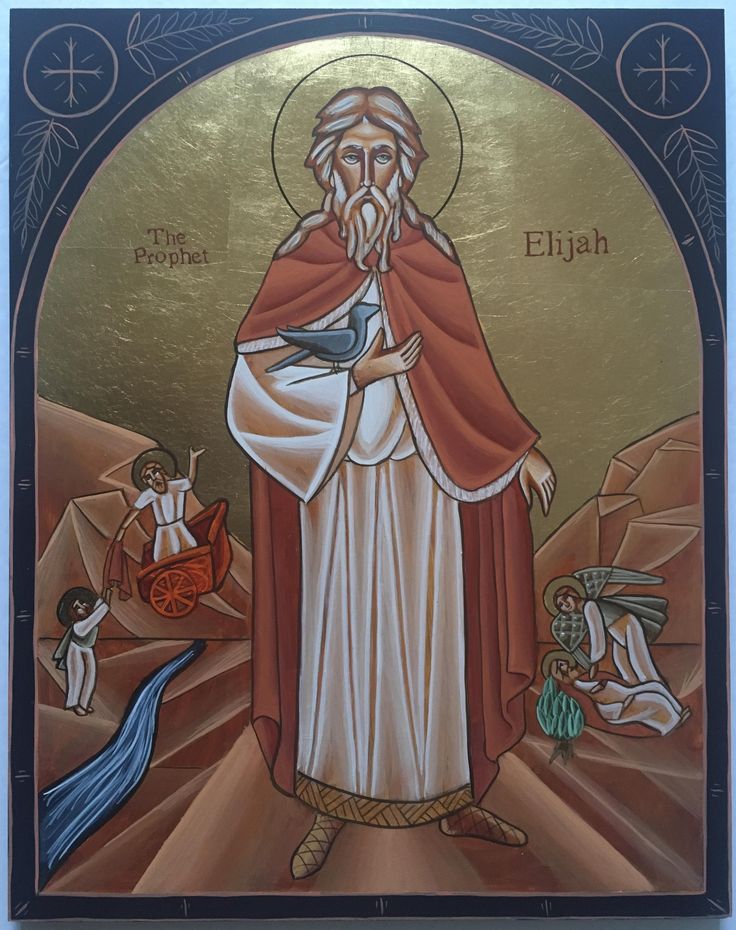 The story of the Prophet Elijah is a
cornerstone of Orthodox spirituality, a narrative that is not merely
historical but intensely contemporary, providing a blueprint for the spiritual
struggle and the pursuit of God in every generation. He is a “man with a
nature like ours” (James 5:17), whose life becomes a powerful icon of Christ
and the Christian journey. The Prophet Elijah (Elias) appears in Scripture as
a fiery and abrupt figure, a defender of God’s sole sovereignty against the
syncretistic worship of his age. For the Orthodox Church, Elijah is more than
a prophet; he is a proto-monastic, a forerunner of the Messiah, and an
enduring model of zealous faith. His story, found primarily in 1 Kings 17-19
and 2 Kings 2, is a Christ-centered narrative that illuminates the path of
salvation.
1. The Champion of Monotheism: The Contest on Mount Carmel
The dramatic confrontation on Mount Carmel is the defining public act of Elijah’s ministry.
“And Elijah came to all the people, and said, ‘How long will you falter between two opinions? If the LORD is God, follow Him; but if Baal, follow him.’… Then you call on the name of your gods, and I will call on the name of the LORD; and the God who answers by fire, He is God.’” (1 Kings 18:21, 24, NKJV)
-
Christological Interpretation: This contest is a cosmic battle between the true God and the demonic powers of idolatry. Elijah, as God’s champion, prefigures Christ’s own defeat of satan during His temptation in the wilderness and His ultimate victory over the “ruler of this world” (John 12:31). The fire that consumes the sacrifice, the wood, the stones, and even the water is a type of the Holy Spirit , who descends upon the sacrifices of the New Covenant, confirming them with power. It prefigures the fire of Pentecost.
-
Ascetical Understanding for Today: This is the foundational spiritual battle for the modern believer: the struggle against inner idolatry. “How long will you falter between two opinions?” is God’s question to every soul. The “Baals” today are not statues but the passions: love of money (philargyria), love of pleasure (philhedonia), and pride (hyperephania). Mount Carmel represents the moment of decisive prayer and ascetical effort where we must choose, unequivocally, to serve God. The filling of the trench with water symbolizes the grace of repentance and tears that, by God’s power, becomes the very fuel for divine fire.
2. The Journey to Horeb: From External Zeal to Inner Stillness
After his great victory, Elijah falls into despondency and flees from Queen Jezebel. His journey culminates in the profound theophany at Mount Horeb.
“Then He said, ‘Go out, and stand on the mountain before the LORD.’ And behold, the LORD passed by, and a great and strong wind tore into the mountains… but the LORD was not in the wind; and after the wind an earthquake, but the LORD was not in the earthquake; and after the earthquake a fire, but the LORD was not in the fire; and after the fire a still small voice.” (1 Kings 19:11-12, NKJV)
-
Christological Interpretation: The “still small voice” (or “sound of a gentle stillness”) is a profound revelation of God’s mode of operation. It prefigures the kenosis (self-emptying) of Christ , who came not in the overwhelming power of a political liberator, but in the humility and silence of a baby in a manger and a man on a cross. God is revealed not only in dramatic, cataclysmic events but in the gentle, personal, and intimate whisper that speaks to the heart.
-
Ascetical Understanding for Today (Hesychasm): This is the core of Orthodox asceticism, the foundation of Hesychast (from hesychia - stillness) spirituality. The lesson for the modern believer is that after the struggles and external victories (the wind, earthquake, and fire), the deepest encounter with God occurs in the stillness of the heart. The noise of the world, the passions, and our own thoughts must be quieted through the Jesus Prayer and inner watchfulness (nepsis) so that we can hear the “still small voice” of God. Elijah’s journey from the dramatic fire of Carmel to the gentle stillness of Horeb maps the Christian’s journey from initial zeal to mature, contemplative prayer.
3. The Ascension and the Double Portion: The Forerunner of the Messiah
Elijah does not see death but is taken up to heaven in a chariot of fire, and his mantle falls upon Elisha.
“Then it happened, as they continued on and talked, that suddenly a chariot of fire appeared with horses of fire, and separated the two of them; and Elijah went up by a whirlwind into heaven… And Elisha saw it, and he cried out, ‘My father, my father, the chariot of Israel and its horsemen!’ So he saw him no more. And he took hold of his own clothes and tore them into two pieces. He also took up the mantle of Elijah that had fallen from him…” (2 Kings 2:11-13, NKJV)
-
New Testament Fulfillment: This event prefigures the Ascension of Christ. Just as Elijah was taken up, so Christ ascended into heaven, opening the way for humanity. Elisha receiving a “double portion” of Elijah’s spirit (2 Kings 2:9) is a type of the Holy Spirit being poured out upon the Church at Pentecost, granting the apostles and all believers the power to continue Christ’s work.
-
Liturgical Understanding: The Church celebrates Elijah as a forerunner. He appears alongside Moses at the Transfiguration of Christ (Matthew 17:3), representing the Law and the Prophets bearing witness to Jesus as the fulfillment of both. His feast day (July 20) is a major celebration. In the prayers of the Church, he is invoked as a great intercessor and a model of the angelic life.
4. The Coming of Elijah and John the Baptist
The Old Testament closes with the prophecy that Elijah will return before the “great and dreadful day of the LORD” (Malachi 4:5).
-
New Testament Fulfillment: Jesus identified this “Elijah” as John the Baptist (Matthew 11:13-14, 17:10-12). John came “in the spirit and power of Elijah” (Luke 1:17) to prepare the way for the Messiah. Like Elijah, he was a voice crying in the wilderness, confronting a corrupt king (Herod/Ahab) and calling Israel to repentance.
-
Ascetical Understanding for Today: This establishes the pattern for the Christian life: we are all called to be “forerunners” of Christ’s second coming in our own spheres. Like John the Baptist, our task is to “prepare the way of the Lord” by practicing repentance ourselves and calling others to it, embodying the fiery, uncompromising spirit of Elijah in a world captive to the “Baals” of modernity.
 Synthesis: How Elijah’s Story is
Actual for Believers Today
The narrative of Elijah is not a relic but a living guide. It shows us that the spiritual life is a dynamic journey with peaks (Carmel) and valleys (the juniper tree), with public confrontation and hidden stillness.
-
The Call to Radical Monotheism: We are called to constantly examine our hearts and root out the “idols” of consumerism, nationalism, and self-worship.
-
The Necessity of Inner Stillness (Hesychia): In a world of digital noise and constant stimulation, the pursuit of inner silence through the Jesus Prayer is not a monastic luxury but a vital necessity for spiritual survival and hearing God.
-
The Pattern of Spiritual Warfare: Elijah’s life teaches us that spiritual victory is often followed by intense attack and despondency. This is normal. The answer is not in our own strength but in the journey to meet God, who nourishes us (as with the angel bringing cake and water, 1 Kings 19:5-8) and speaks to us in the stillness.
-
The Hope of Glorification: Elijah’s ascension affirms the Christian hope that the goal of our life is not merely moral improvement but theosis —union with God and participation in the divine life, foreshadowed by his fiery translation.
Elijah, the “superman of the Old Testament,” is revealed to be a man on the same path we walk. His story is Christ-centered because it points to the One who is the true Fire, the true Stillness, the true Ascended King, and the ultimate fulfillment of the prophetic ministry. In following Elijah’s example, we are ultimately following Christ.
17.4 Rotting in the Branches, Part II: The House of Omri and the Ministry
of Elisha (2:1–13:25)
As noted earlier, our division of the “book of the house of Omri” into two parts is admittedly artificial. Literarily, the account runs continuously from 1 Kings 16:8 through 2 Kings 13:25, and theologically the contest between Yahweh and Baal for the hearts of the Israelites narrowly defined as the northern ten tribes under Omride rule continues. This means that we need to examine each episode and each passage to see how the events described speak to that issue. However, between the events of 1 Kings 22 and 2 Kings 3 we witness a shift in the identity of the antagonists (Ahab is gone) and Yahweh’s protagonists (Elisha replaces Elijah), as well as a shift in the way the contest between Yahweh and the spiritual forces of Baal plays out. Although Elisha will don the mantle of Elijah, in the accounts that follow we find no counterparts to Elijah’s direct challenge to the proponents of Baalism; the contest will transpire more subtly. Accordingly, we interpret 2 Kings 2:1–25 as a transitional division, marking the end of the previous prophetic administration under Elijah and the official establishment of the new administration under Elisha.
The Transition of Prophetic Authority from Elijah to Elisha (2:1–25)
Our division of the “book of Omri” into two parts is admittedly artificial. Literarily, the account runs continuously from 16:8 through 2 Kings 13:25, and theologically the contest between Yahweh and Baal for the hearts of the Israelites narrowly defined as the northern ten tribes under Omride rule continues. This means that we need to examine each episode and each passage to see how the events described speak to that issue. However, between the events of 1 Kings 22 and 2 Kings 3 we witness a shift in the identity of the antagonists (Ahab is gone) and Yahweh’s protagonists (Elisha replaces Elijah), as well as a shift in the way the contest between Yahweh and the spiritual forces of Baal plays out. Although Elisha will don the mantle of Elijah, in the accounts that follow we find no counterparts to Elijah’s direct challenge to the proponents of Baalism; the contest will transpire more subtly.
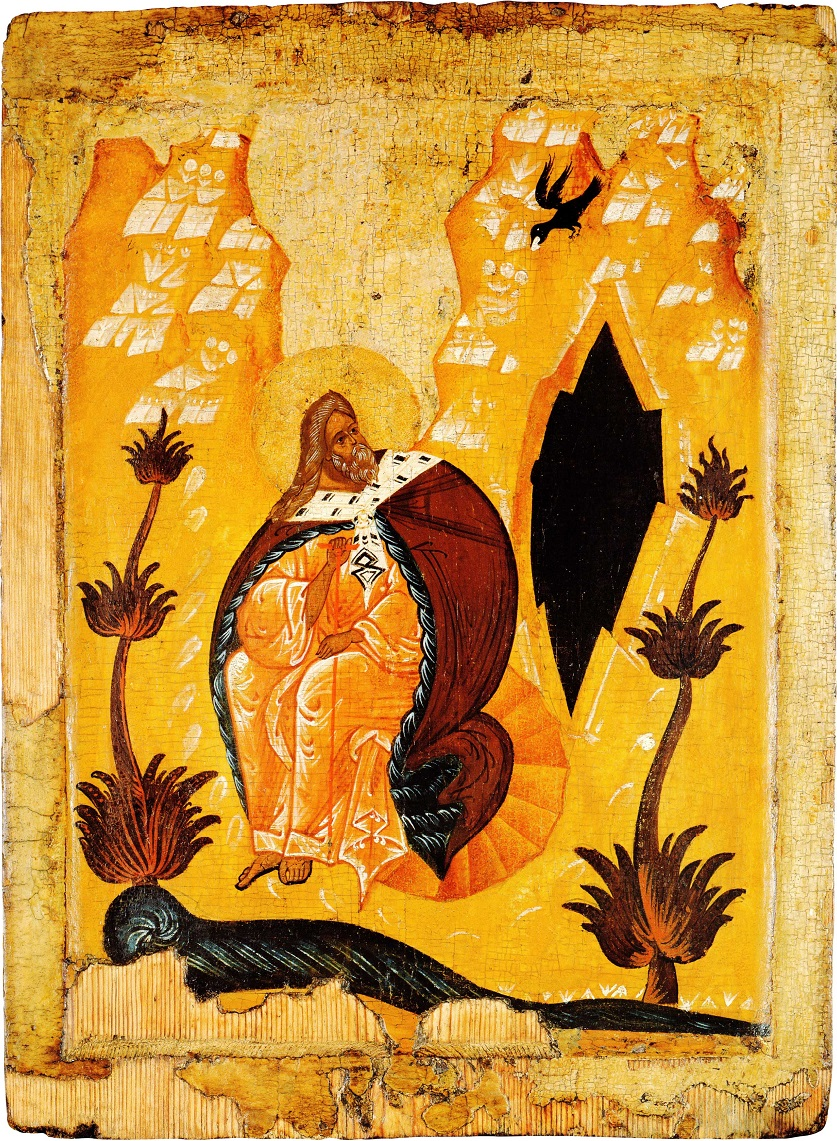
Prophet Elijah at Sinai
Accordingly, we interpret 2 Kings 2:1–25 as a transitional division, marking the end of the previous prophetic administration under Elijah and the official establishment of the new administration under Elisha. This account is carefully structured. The first describes Elijah’s extraordinary reward for his faithful service, but the larger point is to describe the divine transfer of prophetic authority from one man to the other (2:1–14). The burden of the second half is to present the immediate evidence of the authorization of Elisha as Elijah’s successor (2:15–25).
The Reign of Jehoram and Yahweh’s Response (3:1–8:29)
Although structurally the account of Jehoram and his successors exhibits some parallels to the Ahab account, with narratives of the contest between Yahweh and Baal followed by a detailed account of Yahweh’s removal of the antagonist (9:1–11:20; compare 1 Kings 22:1–40), the form of the contest involving Elisha differs significantly from the form we observed when Elijah served as Yahweh’s prophetic protagonist. In keeping with Elisha’s request that Yahweh grant him a double portion of Elijah’s spirit (2:9), the number of miracles this prophet performs more than doubles the “signs and wonders” performed by his predecessor. Whereas most of the episodes of Elijah’s ministry involved public challenges to Ahab and his prophetic lackeys, a collection of signs and wonders performed largely in private by Elisha (4:1–6:23) make up the core of these narratives. Their purpose is to discredit Baal and Baalism and declare that, whether the people acknowledge Yahweh or not, he alone rules in Israel, and exclusive devotion to him is a key to their well-being. To be sure, Elisha also has his days in court, both in the court of Jehoram (3:1–25; 6:24–8:6) and in the court of Damascus (8:7–15), as well as in the events involving Damascus officials (5:1–19). However, the narrator’s portrayal of Jehoram is interesting:
- In Elisha’s first set of interactions with him, the text identifies him as Jehoram (3:1, 6, 9);
- in the second he is anonymous—the narrator refers to him by the royal epithet “the king of Israel” (6:8–12, 21, 26; 7:6) or simply “the king” (6:26–32; 7:12–18; 8:3–6);
- in the third he is identified by the abbreviated form of his name, Joram, presumably in deference to another Jehoram who has emerged as king of Judah (8:16–9:29).
Indeed, the narrator ends this division by turning his attention to Judah, to summarize the nature and influence of issues transpiring in Israel on developments in the Judean court and to set the stage for what lies ahead for the Omride dynasty (8:16–29).
The End of the House of Omri (9:1–11:20)
When the preceding division ends, neither the story of the Omrides nor that of Elisha has concluded. However, the account takes a dramatic turn in 9:1, which marks the beginning of a shift in attention away from the prophet and on to a new character called by Yahweh to take down the Omride dynasty. To be sure, Elisha makes a cameo appearance in the opening section of this final division in the Omride story, and he will make another in the next division (13:14–21). However, this division begins with Elisha commissioning another unnamed prophet to anoint Jehu as Yahweh’s replacement for the Omrides, suggesting this division represents the final chapter in the “book of Omri.” This is a violent period in the Northern Kingdom’s dynastic history. To be sure, it terminates the evil royal legacy of the Omrides, but sadly the spiritual legacy of Jeroboam lives on in Samaria. Jehu, Yahweh’s newly anointed king of Israel, eliminates the explicit Baalism of Ahab and his Sidonian wife (10:18–28), but the syncretism of the Northern Kingdom’s first King, Jeroboam, persists, and the Israelites continue to worship at the compromised cult centers of Bethel and Dan. For this reason, during the tenure of Jehu Yahweh begins to dismantle the territorial integrity of the Israel (10:32–33). Following the notice of Jehu’s death (10:28–31), the narrator’s attention returns to Jerusalem, where Ahab’s daughter Athaliah, who has claimed supreme royal power after the death of her husband Ahaziah, represents the reach of Omride evil. Although Jehu killed her husband (9:27–29), he is not involved in Athaliah’s death, which represents the final act in Yahweh’s elimination of Omride evil.
2 Kings 9:24 «Now Jehu drew his bow with full strength and shot Jehoram between his arms; and the arrow came out at his heart, and he sank down in his chariot»
«Now it happened, as soon as he had made an end of offering the burnt offering, that Jehu said to the guard and to the captains, «Go in and kill them; let no one come out!» And they killed them with the edge of the sword; then the guards and the officers threw them out, and went into the inner room of the temple of Baal.
And they brought the sacred pillars out of the temple of Baal and burned them.
Then they broke down the sacred pillar of Baal, and tore down the temple of Baal and made it a refuse dump to this day.
Thus Jehu destroyed Baal from Israel.
However Jehu did not turn away from the sins of Jeroboam the son of Nebat, who had made Israel sin, that is, from the golden calves that were at Bethel and Dan». 2 Kings 10:25-29
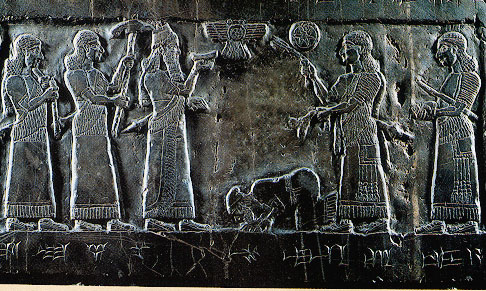
Jehu, bows before Shalmaneser III. This is the only portrayal we have in ancient Near Eastern art of an Israelite or Judaean monarch.
Flickers of Light in the Branches (11:21–13:25)
Having completed his account of the Omride dynasty’s rise and demise, the division concerned with the rotting in the branches closes with two notable themes. First, focusing on the situation in Judah, the narrator offers a brief account and positive assessment of the reign of Jehoash (Joash), the son of Ahaziah and grandson of Athaliah (11:21). Concerning the Northern Kingdom of Israel, the flickers of hope derive from a different source. The narrator finds no reasons to commend Jehoash of Judah’s contemporaries ruling in Samaria, either Jehoahaz or Joash (Jehoash). On the contrary, both pattern their evil reigns after Jeroboam, the first King of the north (13:2, 11). Here we find flickers of light in YHWH’s grace and compassion; he delays his destruction of the Northern Kingdom on account of his covenant commitments to the ancestors. These events bring this long superdivision to a close.
17.5 An Orthodox Insight into the Story of the Prophet Elisha
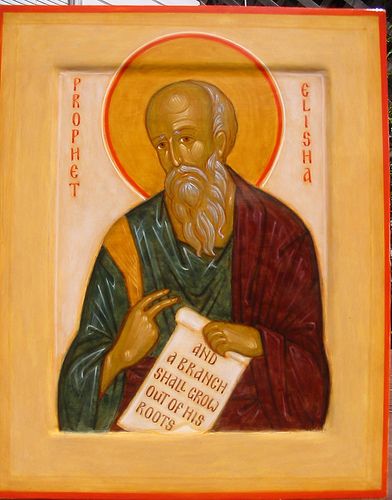
The story of the Prophet Elisha, the successor of Elijah, is a profound and multifaceted narrative in the Orthodox tradition. While Elijah is the fiery, solitary prophet of judgment, Elisha is the prophet of grace, community, and miraculous restoration. His life is a detailed and powerful icon of the ministry of Jesus Christ and the ongoing life of the Church, offering deep ascetical wisdom for believers today. Elisha’s story, spanning 2 Kings 2-13, is characterized by a double portion of Elijah’s spirit (2 Kings 2:9), leading to twice as many recorded miracles. These miracles are not mere wonders; they are prophetic acts that reveal the nature of God’s kingdom and prefigure the messianic age.
1. The Anointing of Elisha: The Call to Discipleship
Elisha’s calling is abrupt and total. Elijah throws his mantle upon him, and Elisha leaves everything to follow him.
“So he departed from there, and found Elisha the son of Shaphat, who was plowing with twelve yoke of oxen before him… Then Elijah passed by him and threw his mantle on him… So he arose and followed Elijah, and became his servant.” (1 Kings 19:19-21, NKJV)
-
Christological Interpretation: This prefigures the call of the Apostles by Jesus. The call is sovereign and decisive (“I will make you fishers of men,” Matthew 4:19). Elisha’s sacrifice of his oxen (using the wood of the yokes for a fire) signifies a complete break with his former life to follow the prophet, just as the Apostles “left their nets and followed Him.”
-
Ascetical Understanding for Today: This is the foundational Christian act of metanoia (repentance) —a radical turning away from one’s former life and priorities to follow Christ. The “twelve yoke of oxen” can symbolize the burdens of worldly cares and attachments. The Christian life begins with a decisive break, burning the bridges to a life lived for oneself in order to become a “servant” of the Lord.
2. The Crossing of the Jordan: Baptism and the New Humanity
Elisha’s first independent act after Elijah’s ascension is to part the waters of the Jordan with the mantle he inherited.
“Then he took the mantle of Elijah that had fallen from him, and struck the water, and said, ‘Where is the LORD God of Elijah?’ And when he also had struck the water, it was divided this way and that; and Elisha crossed over.” (2 Kings 2:14, NKJV)
-
Christological Interpretation: This is a direct parallel to Joshua leading Israel into the Promised Land (Joshua 3) and a profound type of Holy Baptism. The Jordan is the river of death and repentance, which Christ sanctifies through His own baptism. Elisha, bearing the spirit of his master, crosses over, prefiguring how the Christian, clothed with Christ (Galatians 3:27), passes through the waters of baptism from death to life.
-
Liturgical Understanding: The hymnography for the Feast of Theophany (Baptism of the Lord) is saturated with this imagery. Christ’s baptism “cleaves the streams of the Jordan” and opens the way to the true Promised Land, the Kingdom of Heaven. Elisha’s crossing is seen as a prophecy of this event.
3. The Healing of the Waters: The Transformation of Creation
At Jericho, the city has a problem with bad water and barren land. Elisha performs a symbolic act to heal it.
“Then he went out to the source of the water, and cast in the salt there, and said, ‘Thus says the LORD: “I have healed this water; from it there shall be no more death or barrenness.”’ So the water remains healed to this day, according to the word of Elisha which he spoke.” (2 Kings 2:21-22, NKJV)
-
Christological Interpretation: This miracle prefigures Christ’s redemption of all creation. The “salt” cast into the bitter waters is a type of Christ, who said, “You are the salt of the earth” (Matthew 5:13). Christ, through His Incarnation, enters the “bitter waters” of our fallen, cursed world and heals it from within, ending its spiritual barrenness and death.
-
Ascetical Understanding for Today: This is an icon of personal transformation through grace. The “bad water” represents the bitterness of our passions and sins. The “salt” represents the purifying and preserving power of the Holy Spirit received through prayer, the sacraments, and ascetical struggle. The miracle gives hope that no part of our life is beyond the healing touch of God.
4. The Miracle of the Oil: The Abundance of God’s Grace
A destitute widow, whose sons are about to be taken into slavery, cries out to Elisha. He instructs her to gather empty vessels and pour her one jar of oil into them.
“Then he said, ‘Go, borrow vessels from everywhere, from all your neighbors—empty vessels; do not gather just a few. And when you have come in, you shall shut the door behind you and your sons; then pour it into all those vessels, and set aside the full ones.’” (2 Kings 4:3-4, NKJV). The oil miraculously multiplies until there are no more vessels.
-
Christological Interpretation: This is a clear type of the Messianic abundance brought by Christ. The oil, a symbol of the Holy Spirit, is multiplied based on the capacity of the vessels (faith). It prefigures the miracle of the loaves and fishes and the overflowing grace of the Eucharist. The “shut door” signifies the inner, hidden nature of prayer and the mystical life.
-
Ascetical Understanding for Today: This is a direct lesson for our spiritual life. God’s grace is infinite, but its flow into our lives is limited by the “vessels” we provide—our faith, prayer, and capacity to receive. The command to “borrow empty vessels… do not gather just a few” is a call to cultivate a great desire for God, to prepare our hearts through humility (emptiness) to be filled with the oil of the Holy Spirit, especially in the “inner chamber” of the heart (Matthew 6:6).
5. The Healing of Naaman the Syrian: Salvation for the Gentiles
The healing of the Syrian commander Naaman from leprosy is one of the most significant messianic narratives.
“So he went down and dipped seven times in the Jordan, according to the saying of the man of God; and his flesh was restored like the flesh of a little child, and he was clean.” (2 Kings 5:14, NKJV)
-
New Testament Parallel: Jesus Himself references this event to illustrate that God’s salvation is for all people, not just Israel (Luke 4:27). Naaman, a proud Gentile, must humble himself and obey the simple, seemingly foolish command to wash in the Jordan.
-
Patristic and Sacramental Understanding: The Fathers, such as St. Cyril of Jerusalem, saw this as a profound type of Holy Baptism. The sevenfold washing in the Jordan prefigures the baptismal font, where the leprosy of sin is washed away and the believer is reborn as a “little child” in the Kingdom of God (John 3:5). It teaches that salvation comes not through our own efforts but through humble obedience to God’s commanded means of grace.
6. The Axe Head that Floated: Restoration of What Was Lost
When a borrowed axe head falls into the Jordan, Elisha throws a stick in the water, causing the iron to float.
“But as one was cutting down a tree, the iron axe head fell into the water; and he cried out and said, ‘Alas, master! For it was borrowed.’ So the man of God said, ‘Where did it fall?’ And he showed him the place. So he cut off a stick, and threw it in there; and he made the iron float.” (2 Kings 6:5-6, NKJV)
- Ascetical Understanding for Today: This is a beautiful icon of God’s power to restore what is lost through sin. The “axe head” represents our spiritual gifts, our zeal, or our very soul, which can fall into the “deep waters” of passion and despair. The “stick” is a type of the Holy Cross. The miracle proclaims that through the power of the Cross, what was lost and sunk in the depths of sin can be recovered and restored. It gives hope that no failure is final for those who cry out to Christ.
Synthesis: How Elisha’s Story is Actual for Believers Today
The narrative of Elisha provides a practical blueprint for the life of the Church and the individual Christian:
-
The Church as Elisha’s Community: The “sons of the prophets” represent the Church community, living in obedience and receiving God’s word. Elisha’s miracles for them (healing the pottage, 2 Kings 4:38-41; multiplying bread, 2 Kings 4:42-44) prefigure the Eucharistic life of the Church.
-
The Prophet as a Type of Christ and the Priest: Elisha acts as a mediator of God’s healing and life-giving grace, just as Christ is the one Mediator and His priests continue to dispense His mysteries.
-
A Spirituality of Practical Grace: Elisha’s miracles are overwhelmingly focused on life : healing, feeding, restoring, and raising the dead (the Shunammite’s son, 2 Kings 4:32-37). This directs our faith toward a God who is intimately involved in restoring every aspect of our broken existence.
Elisha shows us that the “double portion” of the Spirit is manifested not in spectacular displays of power for its own sake, but in a compassionate, creative, and life-giving ministry that prefigures the work of Christ and continues in His Body, the Church, to this day. His story teaches us to expect God’s grace in the mundane, to approach Him with humble obedience, and to believe in His power to heal, restore, and make all things new.
- The Division of Solomon’s Kingdom (12:1–14:31)
-
Rotting in the Branches, Part I: The House of Omri and the Ministry of Elijah (1 Kings 15:1–2 Kings 2:12)
-
An Orthodox Insight into the Story of the Prophet Elijah
-
Rotting in the Branches, Part II: The House of Omri and the Ministry of Elisha (2:1–13:25)
-
An Orthodox Insight into the Story of the Prophet Elisha
-
17.2 Rotting in the Branches, Part I: The House of Omri and the Ministry of
Elijah (1 Kings 15:1–2 Kings 2:12)
The Emergence of the House of Omri in Israel (16:8–28)
Statuette of Baal
Seal of Queen Jezebel
17.4 Rotting in the Branches, Part II: The House of Omri and the Ministry
of Elisha (2:1–13:25)
Prophet Elijah at Sinai
The Reign of Jehoram and Yahweh’s Response (3:1–8:29)
The End of the House of Omri (9:1–11:20)
Thus Jehu destroyed Baal from Israel.
Flickers of Light in the Branches (11:21–13:25)
17.1 The Division of Solomon’s Kingdom (12:1–14:31)
The division of the Kingdom
- The Division of Solomon’s Kingdom (12:1–14:31)
- Rotting in the Branches, Part I: The House of Omri and the Ministry of Elijah (1 Ki 15:1–2 Ki 1:18)
- Rotting in the Branches, Part II: The House of Omri and the Ministry of Elisha (2:1–13:25)
Related Concepts
- adoption-as-sons
- ancestral-promises
- angelicos-bios
- apostolic-call
- ascension
- ascetical-model
- bethel
- canon-of-st-andrew-of-crete
- charismatic-succession
- christ-centered-exegesis
- church-community
- communion
- communion-with-god
- contemplative-prayer
- conversion
- covenant-faithfulness
- cross
- crucifixion
- cultic-compromise
- deuteronomic-theology
- deuteronomistic-history
- divine-abundance
- divine-condescension
- divine-judgment
- divine-providence-over-kings
- double-portion
- elishas-community
- exile
- forerunner
- glorification
- glory
- concepts/gods-relenting-niḥam
- great-canon
- great-lent
- healing
- heart
- holy-humility
- holy-spirit
- horeb-theophany
- humility-of-christ
- icon
- illumination
- jesus-prayer
- john-the-baptist
- jordan
- judah
- judgment-and-mercy
- kenosis
- long-suffering
- mantle
- messianic-banquet
- messianic-prophecy
- metanoia
- micaiah-ben-imlah
- mount-carmel
- nehemiah-as-type-of-christ
- new-testament-fulfillment
- northern-kingdom-apostasy
- nuptial-union
- obedience
- passion
- pentecost
- personhood
- philippians-2
- philippians-2-hymn
- philippians-28
- philippians-hymn
- priesthood
- prophetic-authority
- prophetic-authority-transfer
- prophetic-contest
- prophetic-judgment
- prophetic-signs
- prophetic-witness
- psalm-50
- radical-monotheism
- regeneration
- renunciation
- revelation
- sackcloth
- sacramentality
- salvation
- temporal-consequences
- testing-of-prophets
- theosis
- transformation
- union-with-god
- voluntary-sacrifice