Old Testament — Topic 5
5.3 A Brief Review of the Textology of the Holy Scriptures of the Old
Testament
The absence of manuscripts reflecting the initial stage of existence of the books of the Old Testament makes it practically impossible to solve the problem of restoring its ancient Jewish original. Our knowledge of the original Old Testament is based mainly on later Hebrew manuscripts and ancient translations. Very often these sources do not fully agree with each other. However, a comparison of thousands of Hebrew manuscripts and manuscripts of ancient translations has allowed modern scholars to make sure that the Word of God was transmitted in an accurate and reliable form, and existing reading options do not affect the meaning of the text.
The oldest fragments of the Old Testament are the silver scrolls from Ketef Hinnom, dated to 600 BC. They contain a priestly blessing from the book of Numbers.
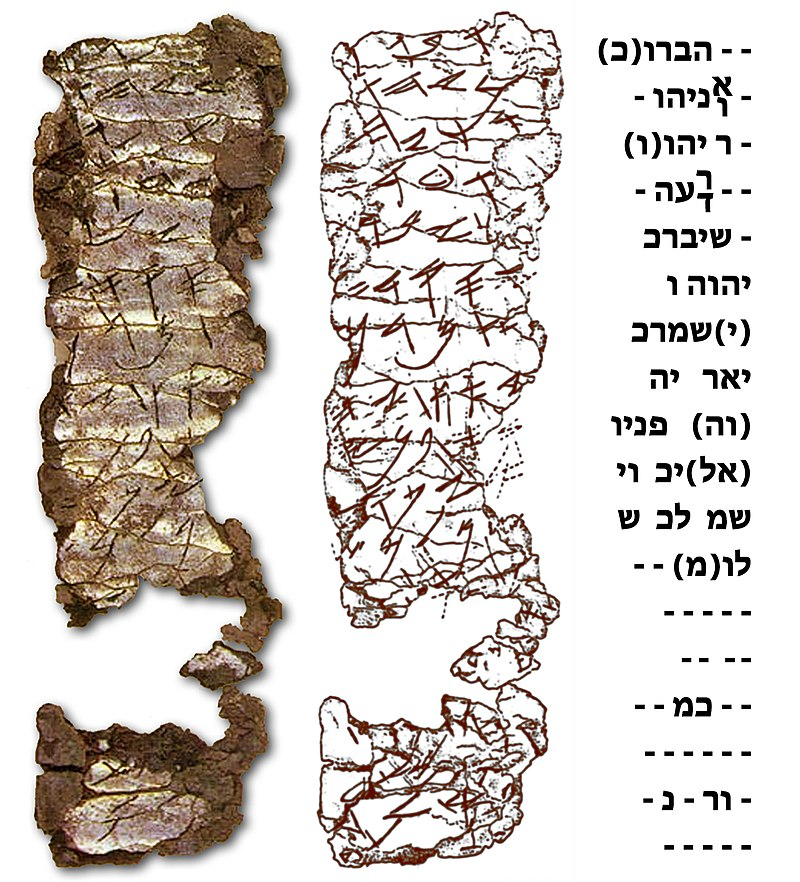
Silver scroll KH2
Masoretic text. The only complete text of the Old Testament at our disposal in the original language took shape later than many translations that have come down to us. By the time of the emergence of Christianity, the Jews did not yet have such a text of Scripture that would be considered universally binding for everyone. There was an extraordinary variety of options.
The work of fixing the text of Scripture began among the Jews, apparently, only in the 2nd century BC, but the emergence of Christianity, and especially the disputes between the Jews and the early Christians, gave this work a new impetus. The Jews had the idea that Christians, arguing that the law and the prophets testify to the suffering of the Messiah, were unscrupulously manipulating the text of Scripture. The possibility of such “manipulations” was naturally explained by the fact that Scripture does not have a single fixed text. Hence the desire to fill this gap as soon as possible. Rabbi Akiva (†137 AD) said that fixing the letter of Scripture is “a fence for the Torah”.
However, large-scale work, culminating in the final consolidation of the text of Scripture by the Jews, unfolded only in the period from the 6th to the 10th centuries. The Masoretes (Hebrew: בעלי המסורה, romanized: Ba’alei ha-Masora) were groups of Jewish scribe-scholars who worked from around the end of the 5th through to the 10th centuries, based primarily in medieval Palestine in the cities of Tiberias and Jerusalem, as well as in Iraq (Babylonia).
The final consolidation of the Masoretic text occurred by the 10th century. The only complete Masoretic manuscript of the Bible that has come down to us since that time, which received the name of the Leningrad Codex (Codex Leningradensis; abbreviated - L) according to the place of storage, was created around 1008 in Cairo. The final formation of its text and notes is attributed to the hereditary Masoretes of the Ben Asher family. From the middle of the 19th century it is in the Russian State Public Library named after Saltykov-Shchedrin in St. Petersburg. Despite the return of the historical name to the city, the manuscript continues to be called the Leningrad Codex in order to avoid confusion and misunderstandings. It was this manuscript that formed the basis of the scientific edition of the Hebrew Bible carried out by Rudolf Kittel (1853-1929) and Paul Kahle (1875-1964) in 1929-1937 and revised in subsequent editions of the so-called Biblia Hebraica Stuttgartensia (“Stuttgart Hebrew Bible).
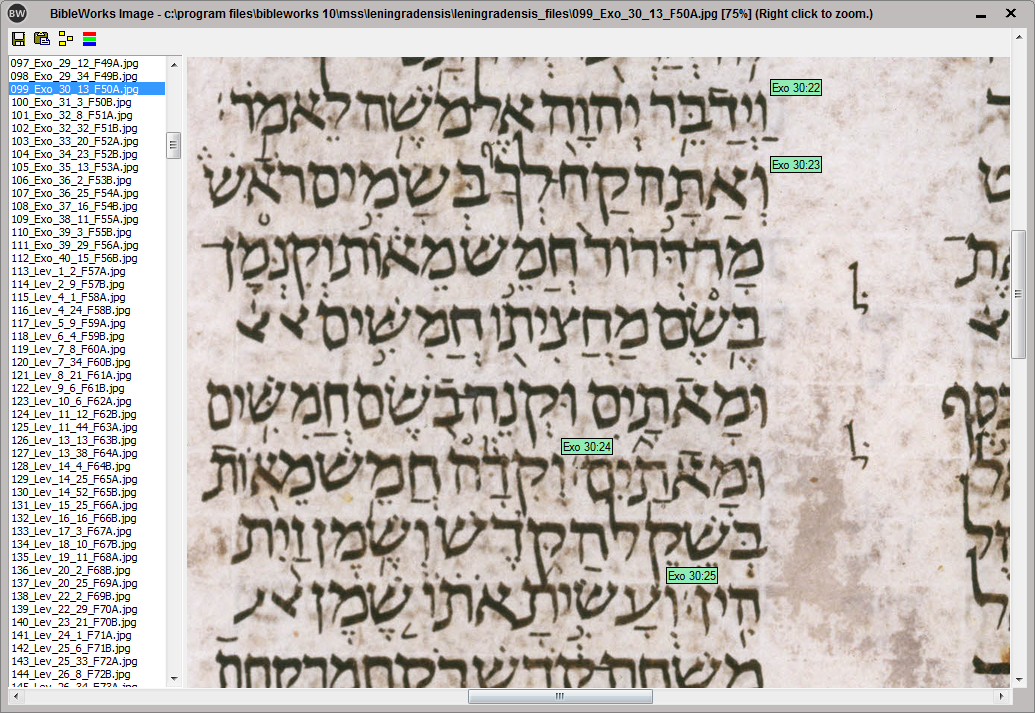
Leningrad Codex in BibleWorks 10
Since the Masoretes avoided direct interference with the Hebrew text of the Bible, they compiled their textual remarks into a set of instructions. These remarks are called מסוֹרח [masorah] - “tradition”. The most interesting remarks of the Masoretes relate to the rules of synagogue reading. When reading in the synagogue, the reading that was in the handwritten text (ketiv - “what is written”) was replaced by another, accepted by tradition (kere - “what is being read”).
The most famous substitution of reading is connected with the prohibition on pronouncing the Name of God. Where ְ֨הוָה [Yahweh] appears in the text, “kere” instructs to pronounce ְאִדֺנׅי [Adonai] - “my Lord” or הַשֵם [hashem] - “the name”.
Samaritan Pentateuch. Under this name is known the text of the Pentateuch, adopted by the Samaritan community, who lived north of Judah.
The name Samaritans (ֹשוֹמְרוֺנׅים [Shomronim]) comes from the capital of the Northern Kingdom of Samaria (ֹשוֹמְרוֺן [Shomron]), founded in the 9th century BC. From the time of the reign of David, the inhabitants of the North were burdened by the primacy of Jerusalem and separated after the death of Solomon.
The Samaritan Pentateuch is written in Paleo-Hebrew script. The text of the Samaritan Pentateuch, while similar to the Masoretic text, has up to 6000 discrepancies in it, most of which relate to the field of spelling and syntax.
Septuagint. The Septuagint is the most significant ancient translation of the Old Testament into Greek and, apparently, the first translation of the Holy Scriptures in the history of mankind.
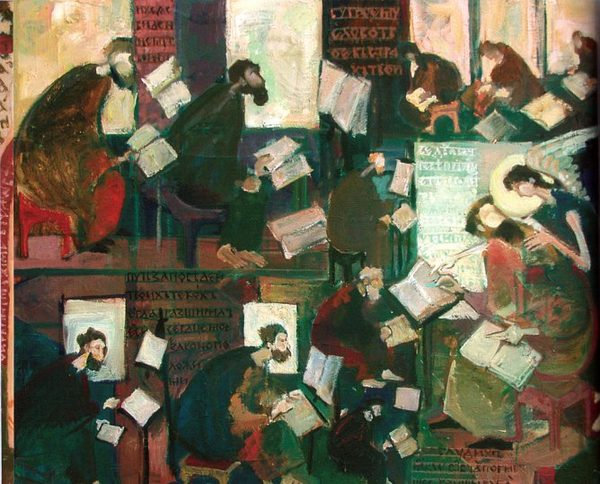
Seventy elders interpreters. Artist E Cherkasova
The translation takes its name from the Latin word Interpretatio Septuaginta Seniorum, that is, “translation of the seventy elders”, and therefore is indicated by the Roman numerals LXX. The name comes from a tradition in the Epistle of Aristeas, which says that the translation was made by seventy-two Jewish translators within seventy-two days. The Epistle of Aristeas tells that the Egyptian king Ptolemy II Philadelphus (285-246 BC), having learned about the sacred Jewish books, wished to get acquainted with them and receive an accurate Greek translation of them for the Library of Alexandria. Despite the fact that there were many Jewish sages in Egypt, Ptolemy wrote a letter to the high priest Eleazar and asked to send knowledgeable people to Alexandria who could translate Hebrew books into Greek. Eleazar fulfilled Ptolemy’s wish and sent 72 scholars, 6 from each tribe of Israel, who brought with them the original Torah for translation.
The Epistle of Aristeas reports only a translation of the Pentateuch, but later traditions add that the entire Scripture was translated. Traditions add that each translator worked while in an isolated cell, but the translation of all turned out to be identical. From this arose the idea of the inspiration of the Septuagint, which was shared, in particular, by Philo of Alexandria (c. 25 BC – c. 50 AD). He wrote that on the island of Pharos there is an annual festival, and “the place is honored where the light of the translation shone” (“On the Life of Moses”, 2.5). However, St. Jerome vehemently rejected this idea. “It is another thing,” he wrote, “to be a prophet and quite another to be a translator” (“Against Rufinus”, II, 26).
But the Septuagint played an even greater role in the New Testament era. This is the translation used by the writers of the New Testament. The apostles mainly cited Old Testament quotations from the text of the Septuagint. According to some estimates, out of 235 Old Testament quotations in the New Testament, 215 are taken from the Septuagint and only 20 are quoted from the Hebrew text. For example, in Ps. 39:7 the Hebrew text says, “You opened my ears,” while the Greek reads, “You prepared a body for me.” It is the latter reading that is cited in Paul’s Epistle to the Hebrews 10:5 as pointing to Christ.
Under the influence of the Septuagint, Christian terminology was formed. Almost all the names and place names received a different form in the Septuagint in accordance with the norms of the Greek language. For example, instead of Hava - Eve, instead of Noax - Noah, instead of Moshe - Moses, instead of Shilo - Silom, etc. Liturgical terms (tabernacle, kivot, censer), sacred positions (priest, bishop), and much more - moved from the Septuagint.
The appearance of the Septuagint, according to the holy fathers, was of great importance in the history of the Divine economy of the salvation of the human race. Through this translation, the Old Testament books became available to all nations, and with them the aspirations of the coming Messiah.
The Septuagint has not lost its value today. It helps to find errors that may have crept into Hebrew manuscripts during copying.
Apart from the Septuagint, the translation of Aquila has come down to us only in a few fragments.
The fragments that have come down from the translation of Theodotion and the translation of Symmachus are also rather scarce.
The Codex Sinaiticus, designated by siglum א [Aleph] or 01 (in the Gregory- Aland numbering), δ 2 (Soden), or “Sinai Bible”, is a fourth-century Christian manuscript of the Greek Bible, containing the majority of the Greek Old Testament, and the Greek New Testament written in uncial letters on parchment. It is one of the four great uncial codices. Along with Codex Alexandrinus and Codex Vaticanus, it is one of the earliest and most complete manuscripts of the Bible.
You can view the scanned Codex Sinaiticus here:
http://www.codex-sinaiticus.net/ru/
5.1 Biblical writing
The oldest example of alphabetic writing in which the Old Testament is written is well known from the Sinai Peninsula from the mines of Serabit el-Khadim. They date from the 15th century BC. This writing became the ancestor of all modern alphabetic and many other writing systems. The origin of the proto- Sinaitic writing coincides with the time of the Exodus of the Israelites from Egypt. Therefore, Moses could well write in such a manner.
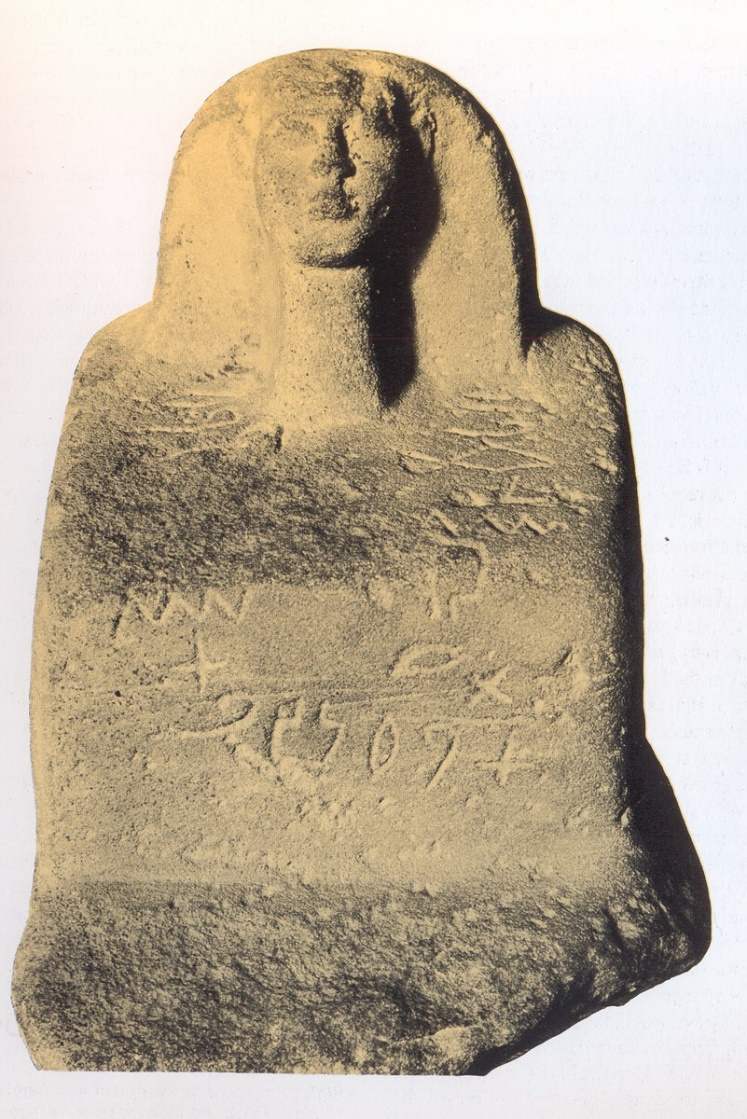
Proto-Sinaitic inscription from Serabit el-Khadim
From the 1st millennium BC to write the Hebrew language a Paleo-Hebrew script was used, very close to the Phoenician. Phoenician writing is one of the first systems of phonetic writing recorded in the history of mankind.
The Jews, having accepted and changed it, developed their own script, which was used until the destruction of the Jerusalem Temple in 586 BC and, consequently, was used in the writing of most of the Old Testament books.
5.1 Biblical writing
Proto-Sinaitic inscription from Serabit el-Khadim
5.2 Writing materials
Before presenting a brief overview of the textual history of the Holy Scriptures of the Old Testament, it is necessary first to give a brief description of the materials and methods used by the ancient scribes. Before the invention in the middle of the 15th century of printing with movable letters, books were copied by hand. Such copies are called “manuscripts”, derived from two Latin words manus and scribo, which means «written by hand».
Jews used various materials for writing. Some especially important sayings and decrees of the law were carved on stones. Even shorter sayings were carved on metal: on gold plates and on copper sheets. In some cases, inscriptions were made on wooden tablets.
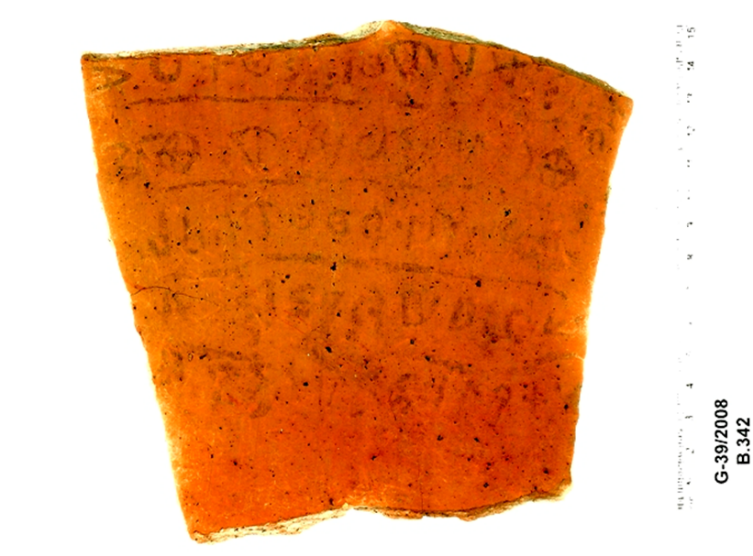
The oldest Jewish ostracon of the 10th century from Khirbet Qeiyafa
But from the biblical evidence it is clear that only small sayings were made and cut out of this material. Books were usually written on papyrus and parchment.
Papyrus was made from Egyptian reeds, also called papyrus.
Even more durable and lasting writing material was parchment, which was made from calf, sheep and goat skin. For the most expensive manuscripts, parchment was dyed purple and written in gold or silver ink. After removing the hair and treating the surface of the skin on such a sheet, a line was drawn along the ruler with a blunt rounded instrument. One side of the papyrus was already “lined” - in the direction of the fibers.
Sheets of parchment were sewn together with veins or threads, and papyrus was glued together. The usual form of “book” in biblical times was the scroll. The text on the scrolls was written perpendicularly on one side of each sheet. Only in the most valuable scrolls was the text written on both sides.
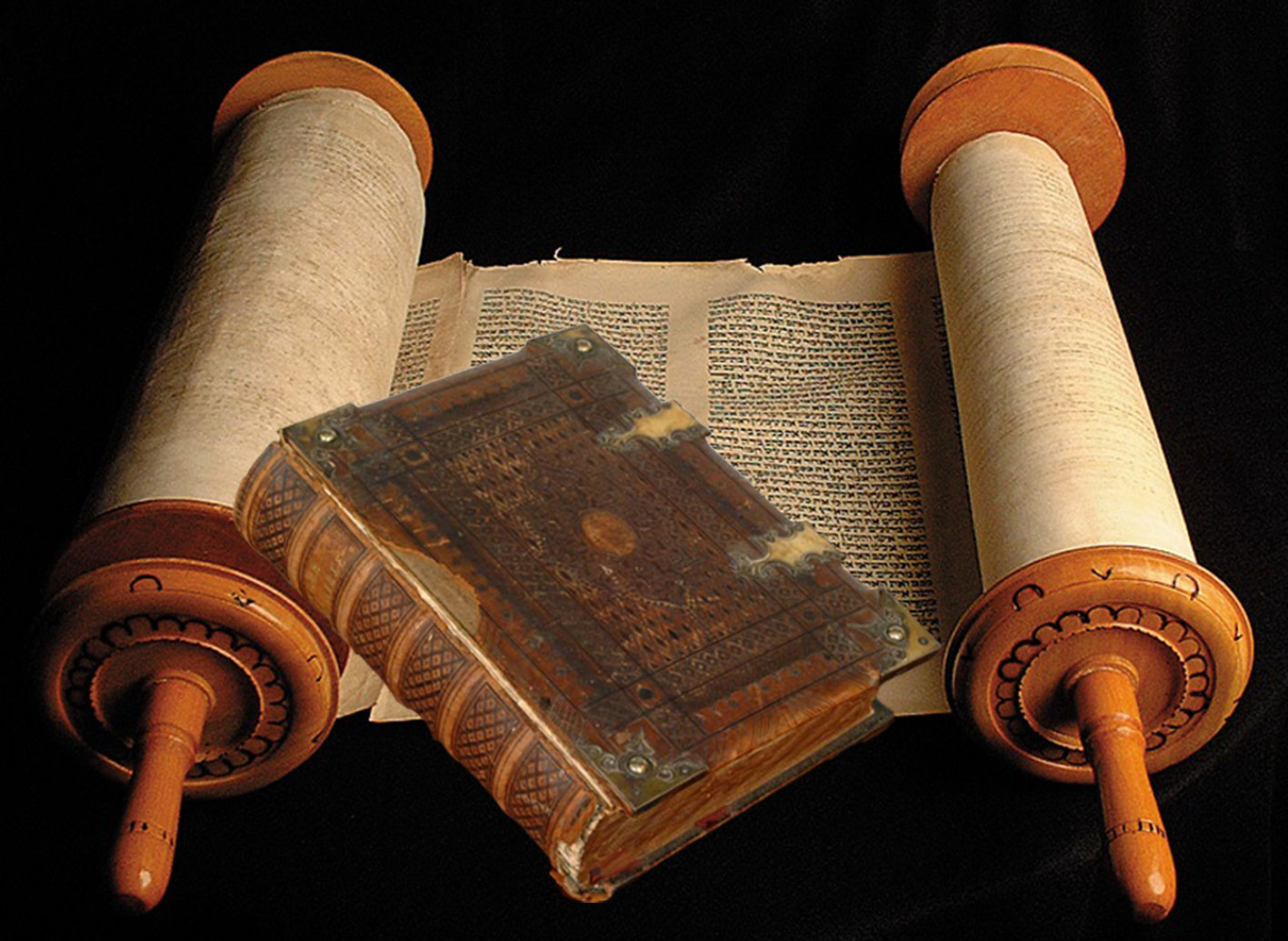
Then special rolling pins were attached to the beginning and end of the scroll. With their help, the scroll was wound while reading. To read what was written, it was necessary not to “open the book”, but to “unfold” the scroll, and after reading it, not to “close”, but to “fold” it. Such scrolls are still used by Jews in synagogues.
Unlike the Jewish one, the Christian tradition preferred codices, that is, books sewn from notebooks.
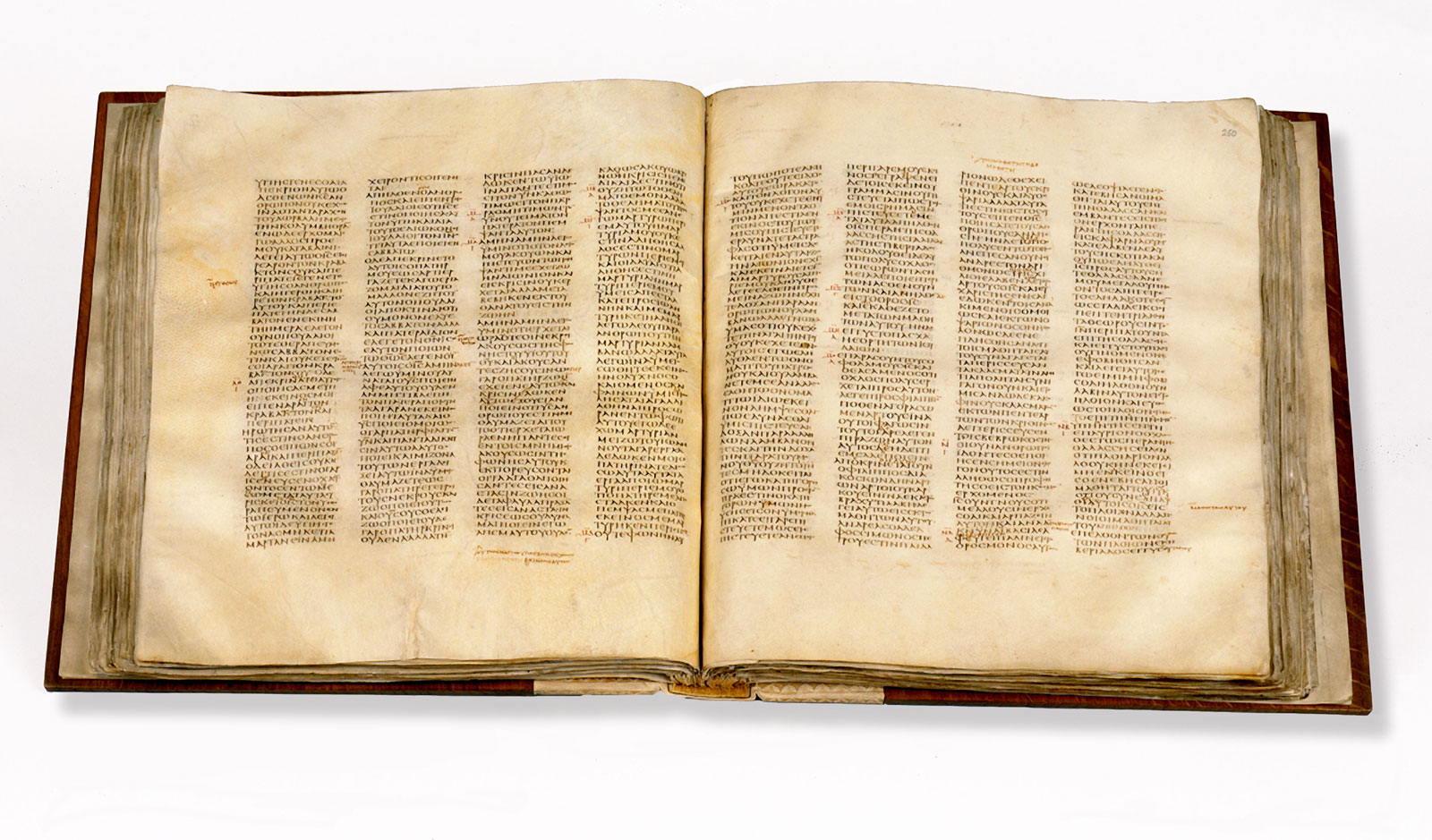
Codex Sinaiticus, IV AD
In ancient times, there were two ways of making manuscripts. One way was to rewrite letter by letter, word by word. This inevitably led to random changes creeping into the text. The accuracy of the copy, of course, depended on how familiar the copyist was with the language and content of what he was copying, as well as on the diligence with which he carried out his work. In addition, the likelihood that errors would creep into the work was increased due to some features of the ancient writing. Some letters in the Hebrew and Greek alphabets were similar, and even the most conscientious scribes could easily confuse them. Another way of making books was used in scriptoria - workshops for copying manuscripts. There, one man read aloud from the original, slowly and distinctly, and several scribes sitting around him wrote, making at the same time as many copies as there were scribes. As a result of this method, the number of errors that crept into the source text increased. In addition to the errors that appeared due to the inattention of the scribes or their ignorance of the text, others arose, because some letters and words in the ancient Greek language were pronounced the same. So, for example, in Koine, words with the meaning of “we” and “you”, and “us” / “us”, “you” / “you” were indistinguishable by ear.
5.3 A Brief Review of the Textology of the Holy Scriptures of the Old
Testament
Silver scroll KH2
Leningrad Codex in BibleWorks 10
Seventy elders interpreters. Artist E Cherkasova
You can view the scanned Codex Sinaiticus here:
5.4 The Dead Sea Scrolls (also the Qumran Caves Scrolls)
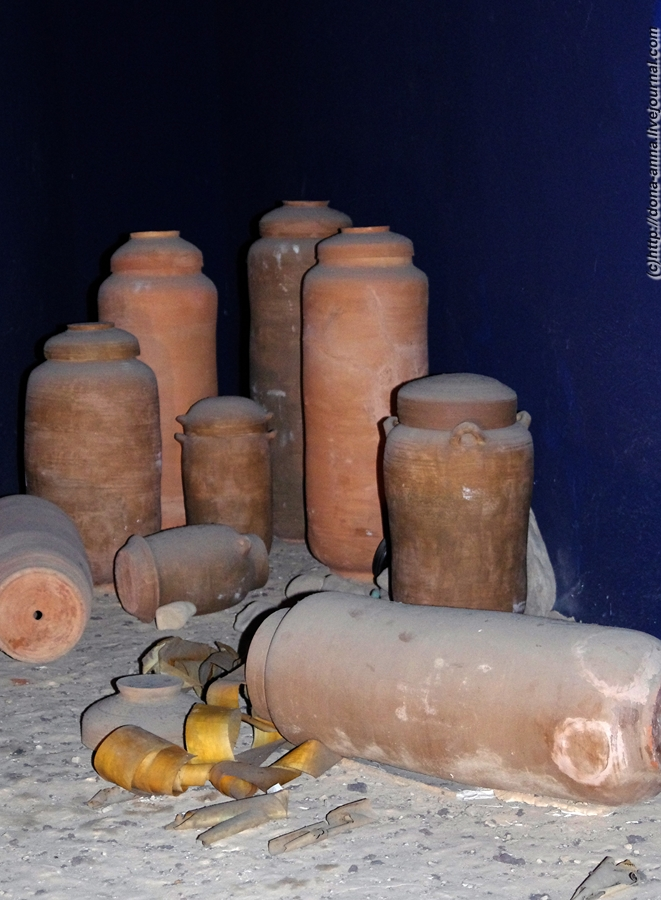
Between 1947 and 1956, more than 190 biblical scrolls were discovered in the eleven caves of Qumran. Basically, these are small fragments of the books of the Old Testament. In 2008, one fragment of the book of Nehemiah was found. The only book of the Hebrew Bible, not a single fragment of the manuscripts of which has been identified, is the book of Esther. Also found is one complete text of the book of Isaiah - 1QIsaa. Among the non-canonical or deuterocanonical books and additions to the Old Testament at Qumran were found fragments of the book of Tobit, the Wisdom of Jesus, the son of Sirach, the Epistle of Jeremiah and Psalm 151. In addition to biblical texts, valuable information is also contained in quotations from non-biblical texts, for example, Pesharim.
According to Emanuel Tov (1992), in terms of their textual status, the Qumran texts belong to five distinct groups, four of which (1, 3, 4, 5) were unknown prior to the Qumran finds:
1. Texts written in accordance with Qumran practice. These texts are distinguished by a special spelling style, the characteristic addition of numerous matres lectionis, which facilitate the reading of the text. They make up about 25% of the Qumran Bible scrolls.
2. Proto-Masoretic texts. These texts are close to the modern Masoretic text and make up about 40% of all Qumran biblical texts.
3. Pre-Samaritan (pre-Samaritan or harmonizing) texts. These texts bear similarities to the later Samaritan Pentateuch. Apparently, one of the texts of this group became the basis for the Samaritan Pentateuch, and Samaritan ideological changes and phonological features were subsequently introduced into this text. These texts make up 5% of the Qumran biblical manuscripts.
4. Texts close to the Hebrew source of the Septuagint. These texts show close similarities with the Septuagint, for example, in the arrangement of the verses. However, the texts of this group differ significantly from each other, not forming such a close group as the above groups. Such scrolls make up 5% of the Qumran biblical texts.
5. Peculiar texts. These are the rest of the texts that have no resemblance to any of the above groups. Such texts make up 25% of the Qumran biblical texts.
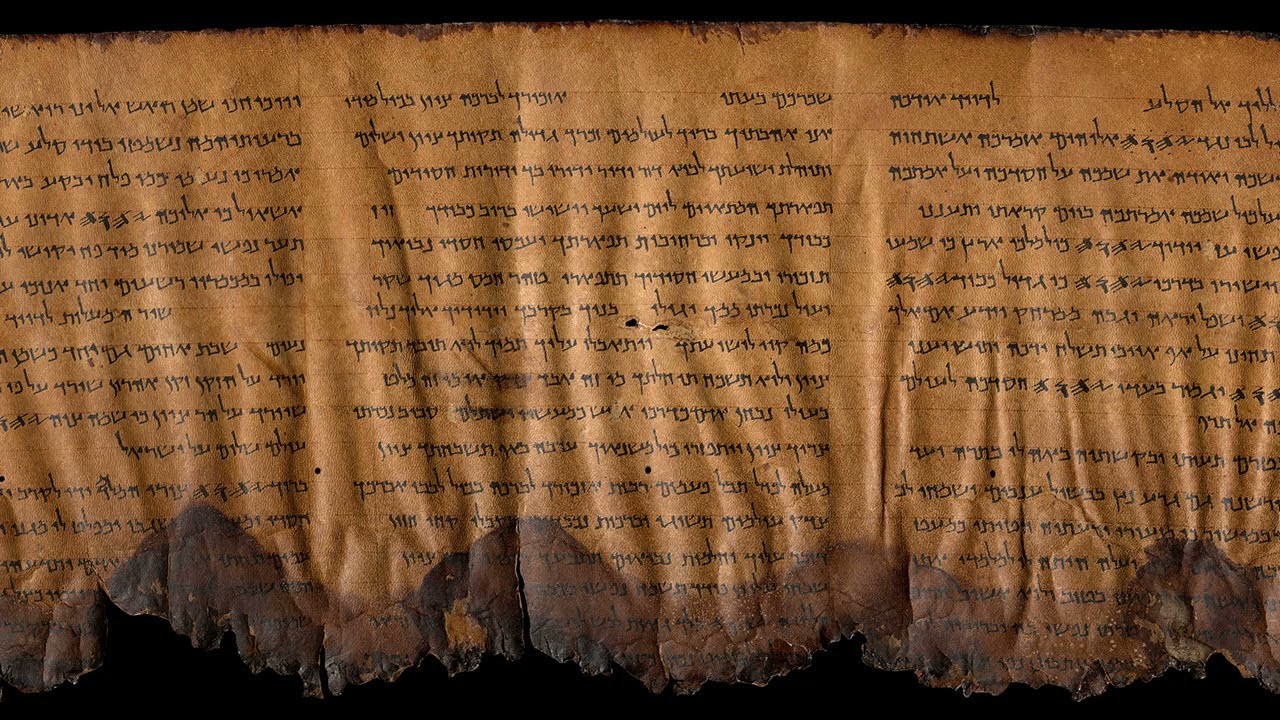
Before the Qumran finds, the analysis of the biblical text was based on medieval manuscripts. The Qumran texts have greatly expanded our knowledge of the Old Testament text from the Second Temple period:
Previously unknown readings help to better understand many details in the text of the Old Testament.
The textual diversity reflected in the five groups of texts described above gives a good idea of the multiplicity of textual traditions that existed during the Second Temple period.
The Qumran scrolls provided valuable information about the technical aspects of biblical copying and transmission during the Second Temple period.
The reliability of ancient translations, primarily of the Septuagint, has been confirmed. The found scrolls belonging to the fourth group of texts confirm the correctness of earlier reconstructions of the Hebrew original of the Septuagint.
Some Scanned Qumran Manuscripts:
http://dss.collections.imj.org.il/
https://www.deadseascrolls.org.il/home?locale=ru_RU
https://ao.net/~fmoeller/qumdir.htm
- Biblical writing
- Writing materials
- A Brief Review of the Textology of the Holy Scriptures of the Old Testament
- The Dead Sea Scrolls (also the Qumran Caves Scrolls)
5.4 The Dead Sea Scrolls (also the Qumran Caves Scrolls)
Some Scanned Qumran Manuscripts:
5.2 Writing materials
Papyrus was made from Egyptian reeds, also called papyrus.
Codex Sinaiticus, IV AD
Related Concepts
- ben-asher-family
- christian-vocabulary
- codex-sinaiticus
- dead-sea-scrolls
- divine-name
- emanuel-tov
- epistle-of-aristeas
- inerrancy-of-the-word-of-god
- jewish-christian-polemics
- leningrad-codex
- liturgical-language
- manuscript
- manuscript-comparison
- masorah
- masoretes
- masoretic-text
- messianic-prophecy
- mission-to-the-nations
- patristic-exegesis
- pre-samaritan-texts
- prohibition-on-pronouncing-the-divine-name
- prophecy-versus-translation
- proto-masoretic-texts
- providential-preservation
- qumran-scrolls
- righteousness-of-god
- scriptorium
- septuagint-vorlage
- synagogue-reading
- synagogue-use
- textual-criticism
- textual-fixation
- textual-pluralism
- textual-transmission
- textual-variants
- translation-of-scripture
- writing-materials