Old Testament — Topic 4
4.1 Foundations of Orthodox hermeneutics
Orthodox theology has developed its own principles of hermeneutics, which the exegete must adhere to in order to correctly understand the meaning of the biblical text and apply it in life.
1. The inspiration of the Holy Scriptures. This principle is based on the belief that the Holy Scriptures were written under the special influence of the Holy Spirit.
2. The theanthropic (divine-human) character of Holy Scripture. Orthodox theology claims that God, who inspired the prophets and apostles, did not dictate word for word the Holy Scriptures. And, although all the books of the Bible are written under the guidance of the Holy Spirit, the style of each author has its own individual characteristics, explained by the historical context of the era or the personal qualities of the writer, his level of education, origin and temperament. The influence of the Holy Spirit on the authors of Scripture was to save the authors of Scripture from mistakes, to help them write the Word of God, and make it available to the reader. Therefore, it can be argued that the Bible is the book of God and man.
3. The statement about the need for a harmonious unity of faith and reason in the process of interpreting Holy Scripture is connected with the provision on the theanthropic nature of Holy Scripture. As the Word of God, Scripture requires faith, and as the word of man – reason. A deviation from this principle can lead either to rationalism, that is, an attempt to explain biblical narratives incomprehensible to the natural mind, especially miracles, by the laws of nature, or, conversely, to radical mysticism – an attempt to allegorically interpret Scripture without taking into account the data of philology, history, etc.
4. Christocentricity of Holy Scripture.
From the point of view of the Orthodox Church, Holy Scripture is characterized by perfect unity. Both Testaments constitute a single testimony of the Divine and Eternal Word, which came into the world for the salvation of mankind (see Jn. 1:12-13; 20:31). The relationship between the two Testaments is the relationship of promise and fulfillment: the Old Testament history is understood as a preparatory period for the acceptance of the Divine Messiah by humanity, the New Testament – as the coming of the Savior and the fulfillment of all the promises. From the time of the apostles, exegetes looked in the Holy Scriptures of the Old Testament for various prophecies and types that were fulfilled in the Person and in the ministry of Christ. In doing so, they used the technique that Christ Himself used. In order to reveal to His contemporaries the meaning of His life and death, the Savior applied to Himself various messianic images and names from the Old Testament, which were well known to them. In addition, He spoke directly that these images and names find their final fulfillment in His own life and work of salvation (Jn. 5:39). There is no need to prove that Jesus Christ and His ministry constitute one central theme in all the New Testament Scriptures. But the fact that all New Testament history is based on Old Testament history may not be so obvious. However, the development of the messianic idea can be traced in the books of the Old Testament. The Promise of the Deliverer, given to the fallen ancestors in Paradise (Gen. 3:15), is the beginning of an unbroken chain of Old Testament messianic prophecies that began with Adam and ended with Zechariah, the father of John the Baptist. Since the era of Noah, this promise has been clarified: only the children of Shem are called the seed of a woman (Gen. 9:26). In the era of Abraham, a new refinement takes place. In his Seed (that is, in Jesus Christ, according to the interpretation of the Apostle Paul, Gal. 3:16) salvation is proclaimed to all mankind (Gen. 12:3; Gen. 18:18). Subsequently, Jacob was singled out from the offspring of Abraham (Gen. 27:27), later Jacob himself gives a special blessing to his son Judah (Gen. 49:8 et seq.). Subsequently, the various features of the messianic ministry were defined even more clearly. Thus, the prophet Balaam speaks of the royal power of the Messiah (Num. 24:17), Moses – of His threefold ministry: royal, high priestly and prophetic (Deut. 18:18-19). Many events from the life of the Messiah are predicted - about His origin as the Messiah from the royal family of David (2 Sam. 7:12-14), about His birth from a Virgin (Is. 7:14) in Bethlehem (Mic. 5:2), about His solemn entrance to the Jerusalem Temple (Mal. 3:1), about His suffering and death on the cross (see Is. 53 / Ps. 21:17-19; Ps. 39:79; Ps. 40:9-10; Ps. 68:22; Zech. 11:12), about His glorious resurrection (see Is. 53:9-21; Ps.15:10; Ps.19:6-7; Ps. 40:11; Ps. 67:2), about the coming of His grace-filled kingdom (Ps. 21:28-32; Ps. 44:7, 14-17; Ps. 71:7-19; Joel. 2:28; Is. 2; Is. 35:1; Isa. 61:1-2) and about His formidable second coming (Dan. 7:25, 12:7; Zech. 14:2-3, 9). It can be argued that there is not a single feature of the life of Christ that was not foreseen in the Old Testament. Thus, we can rightfully say that the main theme of the Bible, starting with the first chapters of Genesis (Gen. 3:15) and ending with the last chapters of the Apocalypse (Rev. 21:6, 21; 22:20), is the God-man, our Lord Jesus Christ.
The words of Blaise Pascal, said on this occasion, are remarkable: “Both Testaments look to Him, the Old as to its hope, the New as to its model, and both as to their focus”.
St. Simeon the New Theologian said: “All the Divine Scripture, Old and New, leads naturally sick human nature to Jesus Christ, the only Doctor of our souls and bodies”(Word VI. 3).
So, if Christ is the principal and main Figure of the Holy Scripture, then He is the linkage of the Old and New Testaments. On the basis of this, it can be concluded that Christ is the beginning, center and completion of the interpretation of the Scripture. It follows from this principle that when reading the Old Testament, it is necessary to look for an indication to Christ. This reading is completely in line with the Orthodox tradition. For example, st. Irenaeus of Lyon wrote:
“If anyone will carefully read the Scriptures [st. Irenaeus was referring specifically to the Old Testament], then he will find in them a speech about Christ and a pre-image of the new invocation. For [the Scriptures] are the treasure hidden in the field, i.e. in the world – for “the field is the world” (Mt. 13:38) – and the treasure hidden in the scriptures is Christ, Who was depicted through images and parables, because what related to His humanity was impossible to be understood before the fulfillment of prophecies, i.e. the coming of Christ (Against heresies. IV. 26. 1)”.
5. Interpretation of the Old Testament in the light of the New.
The relationship of the Old and New Testaments with each other and their internal organic connection is expressed in the well-known Latin couplet: « Vetus Testamentum in Novo patet, Novum autem in Vetere latet », that is, the Old Testament is revealed in the New, while the New is hidden in the Old (St. Augustine of Hipponian Question 73 on Exodus). Both the Old and New Testaments are inseparable parts of God’s supernatural revelation. They have one task, they contain one teaching about salvation and morality, and they speak about one Christ. The Holy Fathers, claiming that the Old Testament is a Christian book, confirmed this by considering every appearance of God in the history of Israel as the words not of God the Father, but of God the Son, the second Person of the Holy Trinity. Many passages of the New Testament can only be understood in connection with the Old. For example, J.n 1:29 says: «Behold the Lamb of God who takes away the sin of the world». This phrase can only be understood in connection with the Old Testament. In Genesis Abraham says to his son Isaac, whom he is going to sacrifice: «God will provide for Himself a lamb» (Gen. 22: 8). The blood of the lamb saves the children of Israel (Ex. 12). There is also a connection here with Lev. 23:12, where it is said that the lamb sacrificed must be without blemishes. It is also necessary to turn to Is. 53:7, where it is written that the Servant of God (Christ) was «like a sheep, led … to the slaughter.» This and many other verses shed light on the meaning of the word «Lamb» in Jn. 1:29. At the same time, an exegete should not separate the Holy Scripture and, honoring the New Testament, consider the Old Testament only as a preparation and a type of the New. It can be said that the Old Testament is not just conventional signs indicating the path to the New, not a preface to it, but an intense spiritual life leading a person to the New Testament.
6. The inseparability of knowledge of the Bible and spiritual life. If Scripture is the Word of God, then it requires a different approach than ordinary writing. Orthodox theology teaches that reading and explaining the Word of God requires prayerful deeds and purification of the heart. A correct understanding of the Scriptures requires trust in what the Lord wanted to reveal to man in His Word. In addition, prayer is necessary, since the human mind alone is not enough to penetrate into the true meaning of Scripture, for this, help from above is needed. St. Isaac the Syrian († c. 700) taught: «Never approach the words of the sacrament contained in Scripture without praying and asking God for help, but say: Lord, let me feel the power of Scripture. Consider prayer as the key that reveals its true meaning» (Conversation 85).
7. Interpretation of Holy Scripture in the Light of Holy Tradition. This principle is fundamental in Orthodox hermeneutics.
The Fifth-Sixth Council of Trull (691-692) in the 19th canon decreed: «If the word of Scripture is examined, then let it be explained in no other way, except as the luminaries and teachers of the Church have stated in their writings». Our Lord Jesus Christ before His crucifixion promised the apostles that “when He, the Spirit of truth, comes, He will guide you into all truth…” (Jn 16:13). This Spirit gave the apostles the knowledge for a correct understanding of the Holy Scriptures of the Old Testament. In the future, while in the Church, He chose worthy people through whom He faithfully explained the Old and New Testaments. Their creations are an expression of the Church’s understanding of Holy Scripture.
For an Orthodox Christian, the Bible is a Church book; it was created by the Church and can only exist in the Church. Only in the Church do Bible books acquire the status of Holy Scripture. St. Augustine Aurelius said: «I would not have believed the Gospel if the authority of the Catholic Church had not prompted me to do so».
Taken out of the Church, the Bible becomes simply a collection of books. The meaning of the biblical books can be comprehended only in the Church, in the light of the teachings of the holy fathers preserved by it. St. Irenaeus of Lyons insisted that the true interpretation of Scripture takes place only in the Church (Against Heresies. IV. 26. I). A correct understanding of Scripture is achieved only if it is read according to the «rule of faith» to which the believer is baptized. It is nothing else than «the apostolic sermon, which was left in the Church and handed over to her by the apostles, and then faithfully preserved and transmitted with complete unanimity throughout the succession of bishops». Therefore, according to St. Irenaeus, it is necessary to follow the presbyters in the Church to those who … have succession from the apostles and, together with the succession of the bishopric, by the good pleasure of the Father, have received a certain gift of truth (Against Heresies. IV. 26. 2).
8. The diversity of the biblical text. Orthodox hermeneutics claims that the biblical text has several semantic levels. This principle implies the possibility of discovering in any text of Scripture not only the obvious “literal” meaning, but also several deeper semantic levels, the identification of which required a purposeful effort on the part of the interpreter.
In the Conversation on the 46th psalm, St. John Chrysostom emphasized: “Some things in Scripture must be understood as they say, and others in a figurative sense; others in a double sense, sensual and spiritual.
4.1 Foundations of Orthodox hermeneutics
4. Christocentricity of Holy Scripture.
Methods of Interpreting Holy Scripture
Usually, the following semantic levels are distinguished in the Holy Scriptures:
- Literal.
- Non-literal or spiritual.
This corresponds to the distinction of different levels of meaning in the ancient and medieval schools of interpretation. In the terminology of the Cappadocian fathers - Basil the Great, Gregory the Theologian and Gregory of Nyssa, as well as John Chrysostom, it is necessary to distinguish between historical (literal meaning) and contemplation. For example, St. Gregory of Nyssa in his treatise «On the Life of Moses the Legislator» first retells the biblical story, taken literally (this part of his work he calls ἱστορία – «narration»), and then returns to each of the episodes narrated to interpret it allegorically or typologically (this part called θεωρία [theoria] – «contemplation»).
This results in different methods being used at what level of the biblical text is being interpreted.
Several methods of interpreting the Scriptures can be suggested. However, it must be remembered that excessive systematization leads to simplification. Each method is, to a certain extent, an art, depending on the personality of the interpreter and his experience of knowing God. In particular, such a simplification is the medieval “quadriga” method, which includes a literal, allegorical, tropological and anagogical meaning.
The difference between these methods was briefly explained in a rhymed saying composed in the XIV century by Nicholas de Lira:
Littera gesta docet, quid credas allegoria,
Moralis quid agas, quote das anagogia.
The letter teaches what was done; allegory – what to believe, morality – how to act; anagogy – what to strive for.
St. Maximus the Confessor (†662) writes: “The body of all Holy Scripture, the Old and New Testaments, is its historical literalness, while the soul is the meaning of what is written… Just as a person is mortal in his visible part, but immortal in his invisible, so Holy Scripture, on the one hand, has the transient manifestation of the letter, and on the other, it contains the spirit hidden in it, whose existence is enduring and which constitutes the true object of contemplation” (Mystagogue, 6).
To understand the different shades of meaning, it is possible to interpret one fragment in different ways.
Historical and philological method of interpretation
The purpose of the historical-philological method of interpretation is to establish the literal (direct) meaning of the biblical text. Determining the literal meaning is an important step, without which it is impossible to proceed to clarify other semantic levels of the Holy Scriptures.
When reading Holy Scripture, one must remember that words in any language can express direct and figurative meaning. Therefore, it is necessary to distinguish words with their own meaning from words with a figurative meaning. For example, “for you are my stone mountain and my wall” (Ps. 30:4). It is clear that all these words are figurative expressions, and they cannot be taken literally.
The same word can be used both literally and figuratively. In the expression: “And the heart of David trembled” (2 Samuel 24:10), the word “heart” is used in the literal sense, since in this case we are talking about a sharp contraction of the heart muscle under the influence of emotional overload. In the expression “Create in me a clean heart, O God…” (Ps. 50:12), the word “heart” is used in a figurative sense, since it refers to a spiritual change in a person.
The same figurative expressions, which should not be understood in the literal sense, include natural morphisms, anthropomorphisms and anthropopathisms.
Non-literal (spiritual) methods of interpretation.
There are several non-literal methods of interpretation: allegorical, tropological, typological and analogical.
Allegorical method of interpretation. The allegorical method of interpretation is the clarification of the provisions of Christian teaching through the interpretation of allegories. This kind of interpretation is based on the assumption that the author of the passage being interpreted wanted to express something other than what is expressed by its literal sense.
Allegory (άλληγορία - “allegory”, hence άλληγορέω [alligoreo] - “to speak differently”, “to explain in a figurative sense”) is a conditional representation of abstract ideas (concepts) through a specific artistic image.
In Hellenistic philosophy, allegorical interpretation was used to interpret mythology, for example, Hesiod and Homer.
Clement of Alexandria († 215) believed that the Holy Scriptures of the Old and New Testaments contain everything that Greek philosophy teaches, you just need to be able to reveal the meaning of the Holy Scriptures. And this cannot be achieved if the text of the Bible is taken literally.
However, not only representatives of the Alexandrian school interpreted the Holy Scriptures allegorically. For example, St. Gregory the Theologian (†389) considered the Garden of Eden as an image of the highest communion with God (“Mysterious Chants”, 7), and St. Ambrose of Milan (†397) understood Adam as an allegory of the rational side in human nature, and Eve as an allegory of the sensual component (“On Paradise”, 2).
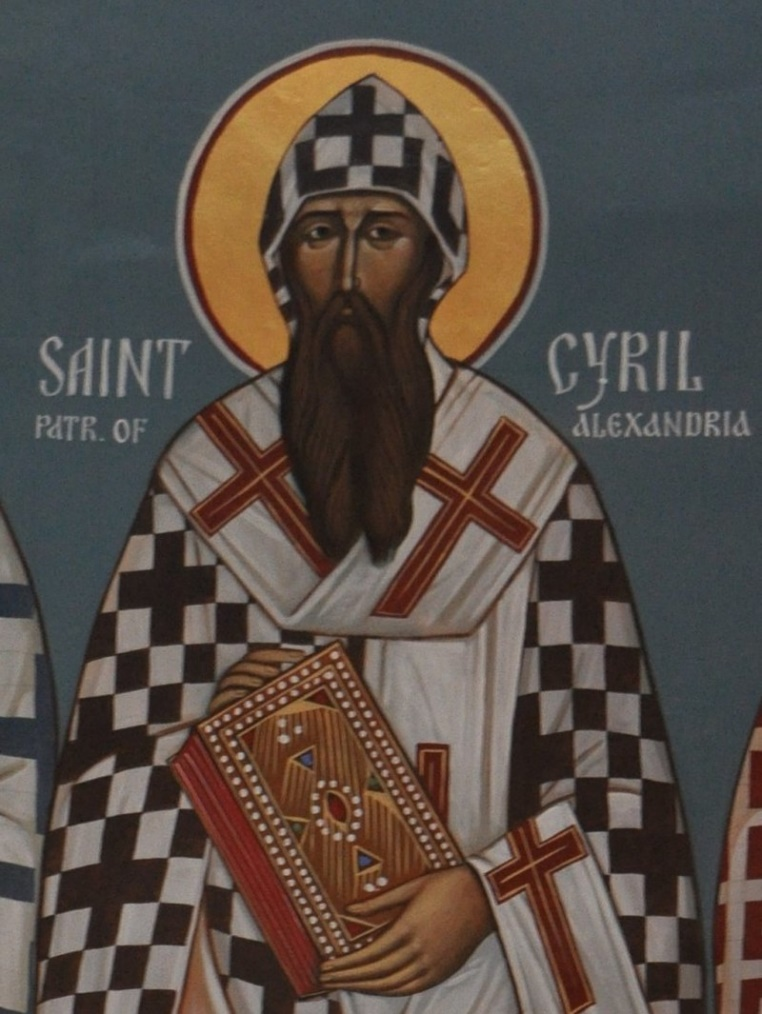
St. Cyril of Alexandria
Allegorical interpretations include those that speak of the realities of the world, or of God Himself, or of the two natures in Christ. For example, St. Cyril of Alexandria (†444), interpreting Exodus 25:31-32, wrote: “So, the golden candlestick represents the image of Christ; for the Son in nature and in truth is God; meanwhile, gold should be likened to ‹…› Divine lordship and superiority. Immanuel was sculpted (the lamp), because he is beautiful and beyond any word, as far as the goodness of the mind is concerned: for it is written that He is more beautiful than the sons of men (Ps. 44: 3) ” (On worship and service in Spirit and truth. Book. 9. About the Holy Tabernacle, that it was a type of the Church of Christ).
The allegorical method of interpretation is in some cases quite acceptable. The authority of the Church testifies that some passages of Scripture are allowed to be understood allegorically (for example, some texts of the Old Testament devoted to the transfer of property, etc.), some should be understood mainly allegorically (for example, the Song of Songs), but some should be understood in an allegorical sense is strictly forbidden (for example, a description of the Passion on the Cross).
Naturally, with all attempts to prevent abuses in the allegorical method, almost all interpreters of that era did not avoid extremes, and, naturally, this caused criticism. The Antiochian theological school was most radically opposed to allegorical extremes in the interpretation of the Holy Scripture.
For example, here is what a prominent representative of the Antiochian school, st. Theodoret, wrote about the allegorical interpretation:
“What should the tree of life and the tree of knowledge of good and evil be called, are they imaginary or sensual trees? The Divine Scripture says that these trees also grew out of the earth, and therefore have no other nature, different from the nature of other plants. Just as the tree of the Cross is actually a tree and is called salvific for the sake of salvation acquired from faith in the power of it, so these trees grew out of the earth, but by God’s definition one of them is called the tree of life, and the other is called the tree of knowledge of good and evil” (A question on the book of Genesis. XXVII).
St. Basil the Great (†379), a representative of the Cappadocian school, wrote: «I know the laws of allegory, though less by myself than from the works of others. There are those truly, who do not admit the common sense of the Scriptures, for whom water is not water, but some other nature, who see in a plant, in a fish, what their fancy wishes, who change the nature of reptiles and of wild beasts to suit their allegories, like the interpreters of dreams who explain visions in sleep to snake them serve their own ends. For me grass is grass; plant, fish, wild beast, domestic animal, I take all in the literal sense. “For I am not ashamed of the gospel.” Those who have written about the nature of the universe have discussed at length the shape of the earth. If it be spherical or cylindrical, if it resemble a disc and is equally rounded in all parts, or if it has the forth of a winnowing basket and is hollow in the middle; all these conjectures have been suggested by cosmographers, each one upsetting that of his predecessor. It will not lead me to give less importance to the creation of the universe, that the servant of God, Moses, is silent as to shapes; he has not said that the earth is a hundred and eighty thousand furlongs in circumference; he has not measured into what extent of air its shadow projects itself whilst the sun revolves around it, nor stated how this shadow, casting itself upon the moon, produces eclipses. He has passed over in silence, as useless, all that is unimportant for us. Shall I then prefer foolish wisdom to the oracles of the Holy Spirit? Shall I not rather exalt Him who, not wishing to fill our minds with these vanities, has regulated all the economy of Scripture in view of the edification and the making perfect of our souls? It is this which those seem to me not to have understood, who, giving themselves up to the distorted meaning of allegory, have undertaken to give a majesty of their own invention to Scripture. It is to believe themselves wiser than the Holy Spirit, and to bring forth their own ideas under a pretext of exegesis. Let us hear Scripture as it has been written». (The Hexaemeron. Homily IX).
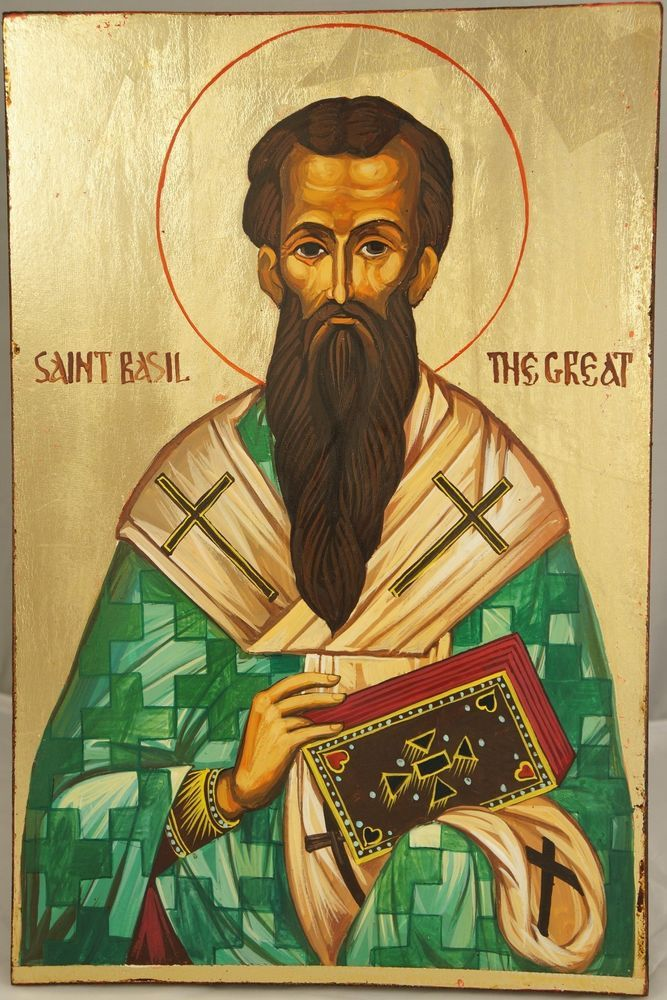
St. Basil the Great
The tropological (moral) method of interpretation considers the actual narratives of Holy Scripture as models for the life of a Christian.
It should be understood that the tropological method interprets not the commandments, which are considered literally, but the biblical stories. A parallel can be drawn between the allegorical and the tropological methods of interpretation. The tropological method is partly a variant of the allegorical one, but only the main emphasis is on moral issues.
According to the tropological interpretation, the Holy Scripture is considered as a guide to practical activity. That is why exegetes insist that everything said in the Scripture must be applied to one’s own life, and then its hidden meaning will become clear. St. Anthony the Great said:
Wherever you go, always have God before your eyes; whatever you do, have a reason for it in the Divine Scripture (Ancient Pateric. I. 1) 220.
He also wrote:
Be diligent in reading the Scriptures, and they will expel you from impurity [i.e., they will disperse impure thoughts]. If you are constantly and diligently engaged in reading the Scriptures and fulfilling the commandments, then God’s mercy will be with you (The Charter of the hermit life. XXII–XXIII).
According to the holy fathers, each individual act of a person should be checked in obedience to the gospel testimony. This approach to Scripture, which can be defined as “exegesis through experience”, is summarized in the following words of St. Mark the Ascetic (IV century):
The humble-wise and practicing in spiritual work person, reading the Divine Scripture, will relate everything to himself, and not to others. When reading the Divine Scripture, try to understand what is hidden in it, for everything that was written before was written for our instruction (Rom. 15:4). <…> Read the words of the Divine Scripture by deeds and do not talk too much, being vain of one understanding (The first Word. On the spiritual law 200 chapters. VI. XXVI. LXXXV).
One example of a tropological interpretation in Scripture itself is the words “Do not forget to show hospitality to strangers, for by so doing some people have shown hospitality to angels without knowing it” (Heb. 13:2). Here the author refers to the story from the Book of Genesis about the hospitality of Abraham (Gen. 18 ch.); Lot (Gen. 19 ch.), Manoah - the father of Samson (Judg. 13 ch.).
Many tropological interpretations are found in the homiletic heritage of the holy fathers.
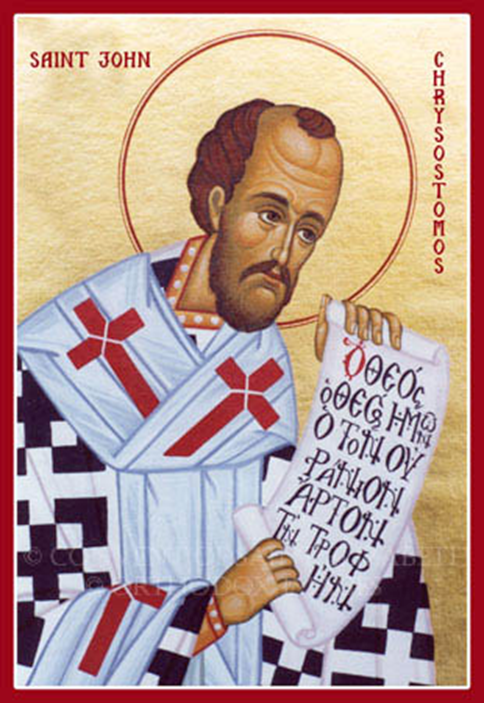
St. John Chrysostom
An example is the interpretation of St. John Chrysostom (†407): «Don’t you know that the youths were not burned in the cave, and Daniel did not suffer any evil in the den? And now it can happen. And we are surrounded by lions, wrath and lust, having dangerous teeth and tearing apart everyone who has been (their attack). Be like Daniel and don’t let these passions sink their teeth into your soul. But, you will say, grace helped Daniel in everything. True, but it helped because it was preceded by his own will. Thus, if we also wish to become like him, then grace is ready to help even now. No matter how hungry the animals are, they will not touch your rib. If they were ashamed when they saw the body of a servant, then will they not be humbled now when they see the members of Christ (and such are we believers)? If they do not pacify, then, of course, through the fault of those who were cast down. Indeed, many deliver plentiful food to these lions by keeping harlots, breaking marriages, taking revenge on enemies - therefore they are torn to pieces before they reach the bottom (ditch). But that did not happen to Daniel, nor will it happen to us, if we wish, but something more will happen than what happened before with Daniel» (Conversations on the Epistle to the Romans. Conversation III). Here the saint deduces the following meaning of the biblical text: the lions that surrounded Daniel are a symbol of our passions, and the historical ditch where Daniel was thrown symbolizes the «ditch of passions». One more example of a tropological interpretation can be given, which is connected with the history of the creation of man: “And the Lord God formed man from the dust of the ground, and breathed into his nostrils the breath of life, and man became a living soul” (Gen. 2:7). From this follows, if we pay attention, an important lesson of humility. When we think about what our body was originally formed from, then, no matter how much we frown our eyebrows, we must humble ourselves; reflecting on our nature, we learn modesty” (Homilies on Genesis, 12, 4).
How st. John Chrysostom understood the tropology can be seen in the interpretation of Ps. 46:
“As I said before, so I will say now: something in Scripture should be understood as it is said, and something else in a figurative sense, for example, when it says: “the wolf will live with the lamb” (Isaiah 11:6). Here We do not understand wolves, lambs, pastures, oxen, or bull, but under the guise of animals we represent the morals of people” (Conversations on Psalms. XLVI. I).
The Monk Saint Isidore Pelusiot († c. 449) writes about the history of Jerusalem: «Jerusalem (I will use a clear example), when it was supported by God’s complicity, stood unbendingly and without labor and bloodshed gained victories, and when it was deprived of it because rebelled against Him, enemy fire conveniently bowed him to the ground. So the soul, when for the constancy of morals it is protected by power from above, will easily overcome enemies, and when it sins, it will be embraced by the fire of passions here, and there it will be tormented by the fire of judgment» (Letters, 2, 112).
The Rev. Nile of Sinai taught: “If it is also desirable for us that the Lord should come to us, as to the apostles, when the door was shut up (John 20:19), then we will also try to close the doors, that is, the mouth, with the most perfect silence, the eyes - so as not to look passionately, we will forbid our hearing to listen to corrupting speeches, and we will avoid the sense of smell and touch from sensual delights (Letters. III. 267).
Rev. John Cassian of Rome writes: “The Lord commanded Abraham to make these three renunciations together when he said to him: “Depart from your land, and from your family, and from your father’s house” (Gen. 12:1): “from your land,” i.e. from the wealth of the world and earthly possessions; “from your family”, i.e. from the former way of life, former morals and vices, which, clinging to us from birth, are closely related to us, as if half-blood; “from your father’s house”, i.e. from every memory of the world and everything that meets our eyes in it.” We can see here how the author deduces specific ascetic actions from the biblical text relating to Abraham, which at first glance does not contain a moral component: to move away from former morals and vices, from memories of the world, etc.
Similar images are also used in the liturgical texts of the Holy Week. For example, the episode with the withered fig tree (Matthew 21:19) is commented as follows: “From the withered fig tree for infertility, brethren, being afraid of reproach, we will bring fruits worthy of repentance to Christ, Who gives us great mercy” (Stichera on stichovna, voice 8).
Typological (prototypical) method of interpretation. This method is based on the fact that the Old Testament, in its various events, personalities and institutions, points to the events, personalities and institutions of New Testament history. Such indications in patristic literature are called images or in Greek τύπος [typos] (see 1 Cor. 10:6,11; Rom. 5:14). The typological method of interpretation recognizes the historical reality of the events and persons described in the Old Testament, but considers the Old Testament persons and events as an occasion by which God expands the historical framework and makes the biblical writer and readers think about future events. The fulfillment of the type is called άντίτυπος [antitypos] (1 Pet. 3:21, Heb. 9:24).
The Holy Fathers typologically understood the destinies and deeds of many Old Testament personalities. For example, we can cite typological interpretations of events from the life of the prophet Elijah.
St. Gregory the Theologian (†389), reflecting on the fact that God revealed himself to the prophet in the form of a “breeze of a still wind”, and Elijah, like Moses, saw Him only with his face covered and could not know His essence, argues: in Christianity, there is a complete revelation of God to man in Jesus Christ, the path to full knowledge of God is indicated (Homilia 28, 19).
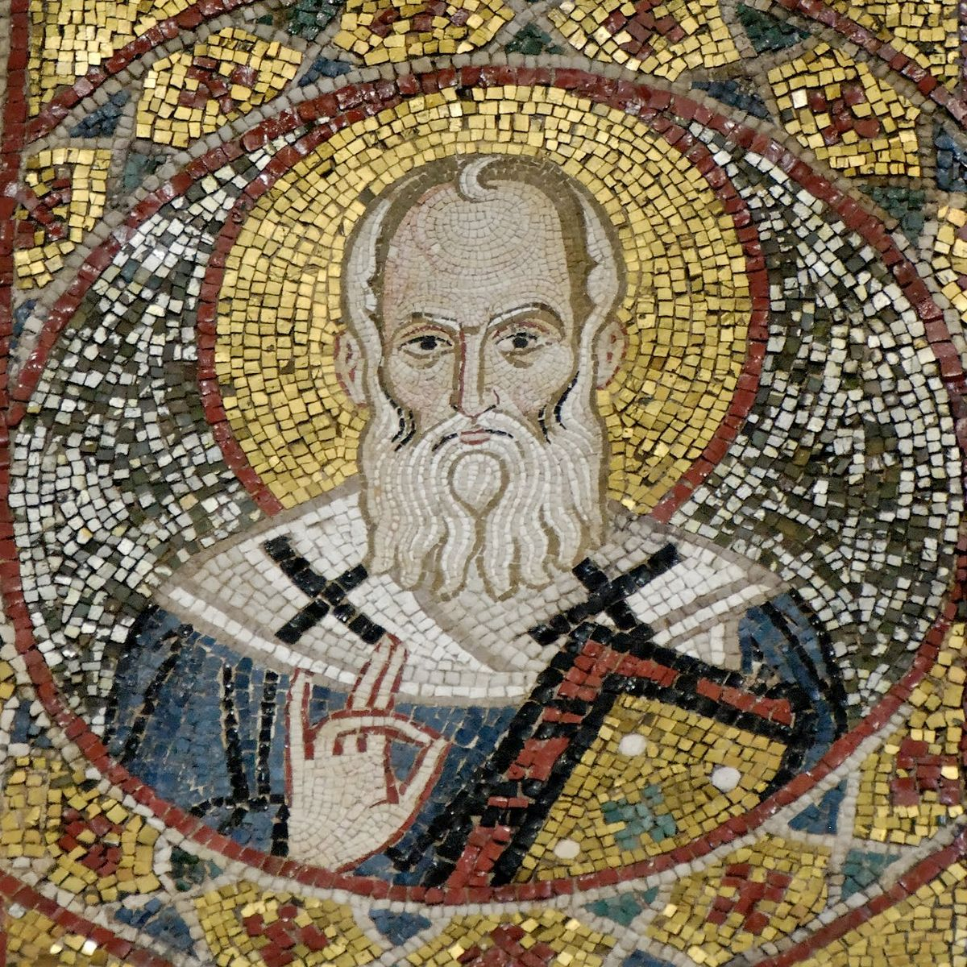
St. Gregory the Theologian
A classic example of a New Testament typological interpretation of the Old Testament is the beginning of chapter 10 of 1 Corinthians of the Apostle Paul (10:1-11): “I do not want to leave you, brethren, in ignorance that our fathers were all under the cloud, and all passed through the sea ; and all were baptized into Moses in the cloud and in the sea; and all ate the same spiritual food; and all drank the same spiritual drink: for they drank from the spiritual subsequent stone; the stone was Christ. But not many of them were favored by God, for they were smitten in the wilderness. And these were images (τύποι) for us, so that we would not be lustful for evil, as they were lustful. Do not also be idolaters, like some of them, about whom it is written: the people sat down to eat and drink, and stood up to play. Let us not commit fornication, as some of them committed fornication, and in one day twenty-three thousand of them perished. Let us not tempt Christ, as some of them were tempted and perished by snakes. Do not grumble, as some of them grumbled and died from the fighter. All this happened to them as images (τυπικῶς); but it is written for the instruction of us who have reached the last ages” (1 Corinthians 10:1-11).
Paul points out that the passage through the Red Sea and following the clouds, in which the Lord Himself was present, was a type of baptism - since through the first Israel was delivered from the physical yoke of the pharaoh, and through the second new Israel - believers in Christ - get rid of the spiritual slavery of the mental pharaoh - the devil. The leader of the old Israel was Moses, and the leader and liberator of the Church is already the Messiah - Christ. But not all the Israelites managed to escape the danger, even with such a wise leader as Moses, because they showed evil willfulness - likewise, believers in Christ are subject to a similar danger if they deviate from their Shepherd.
That is how the passage was understood by St. Efrem Syrian (†373).
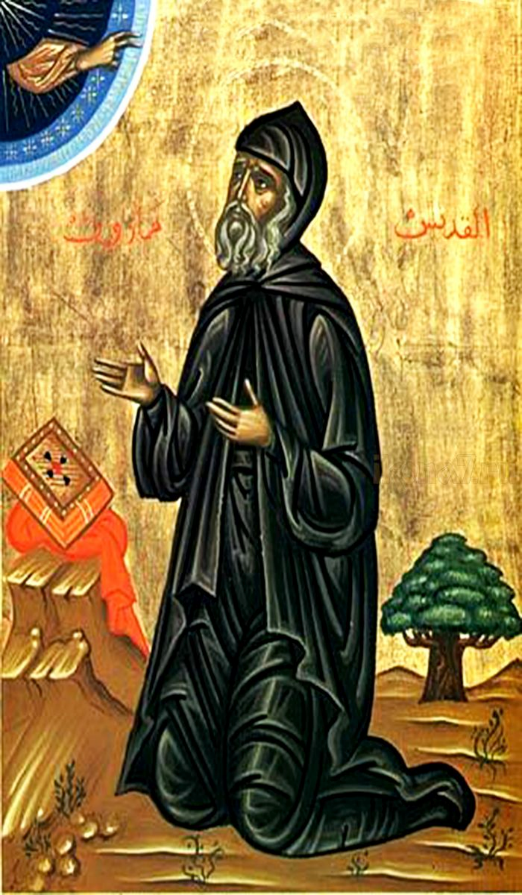
St. Efrem Syrian
He wrote that Paul «begins to prove that in the passage of the Jews through the sea and the events in the wilderness, the mysteries of our Lord were foretold. <…> So, he (the apostle) set the sea as a symbol of baptism, - and the cloud that spread over them and overshadowed them was the image of the priest’s hand. Just as after baptism a person approaches the Body and Blood (of Christ), so the Jews at that time were baptized in antitype, then they tasted spiritual manna and drank spiritual water. They are called spiritual because of the manna that descended from above (from heaven). Also the waters, which again and miraculously flowed from that rock. So he also called Christ the Rock, for like a rock the side of our Lord was pierced with a spear, and blood and water were drawn from it (John 19:34), - blood - for purification and for the drink of all peoples». (1 Corinthians 10).
For example, the prototype of Jesus Christ in Adam st. Ambrose of Milan explains in this way: “how Adam was created from the virgin land: so Christ was born of the Virgin Mary; for if the earth, the mother of Adam, was neither cultivated nor sown by anyone, then the Virgin Mother of Christ did not know neither a husband nor a seed; Adam was created from the earth by the hands of God: Christ was conceived in the womb by the Holy Spirit; both are from the one Father of God both are sons of virginity; both are sons of God; but Adam is a creation, and Christ is a Creator co-existent with the Father and is God by nature” (Word XXXVIII).
The Prophet Jonah as a type of Jesus Christ. The story of the ministry of the prophet Jonah was used by our Lord Jesus Christ. He said, “For as Jonah was in the belly of the whale for three days and three nights, so the Son of Man will be in the heart of the earth for three days and three nights. The Ninevites will rise up in judgment with this generation and condemn it, for they repented from the preaching of Jonah; and behold, there is more Jonah here” (Matthew 12:40-41).
Here it is shown that an event from the life of the prophet Jonah (being in the belly of the whale) forms another event in the future – the three-day stay of Christ in the tomb. This shows the structural similarity in the main features. It is clearly seen how, with such an interpretation, the historical and educational meanings of the text coexist – the incident from the life of the prophet is not denied, it is recognized as having been in reality, but at the same time it is not the case itself that is important, but what is formed through it – the great event of the saving deed of Christ. The differences between the typos and the antitypos, the superiority of the second over the first, the antecedence of the prototype in time are clearly visible.
In the Old Testament, one can find prototypes relating to the Most Holy Theotokos. The Burning Bush is considered as a prototype of the Virgin (Ex. 3:2). According to the holy fathers, She is the tabernacle and the Ark of the Covenant (Exodus 25:9, 16), Noah’s ark, the ladder seen in a dream by Jacob (Gen. 28:12), the fleece of Gideon (Sud. 6:37-40), the queen in Ps. 44, the bride of the Song of Songs, the closed gates seen by the prophet Ezekiel (Ezek. 44:2) and the mountain from the dream of King Nebuchadnezzar (Dan. 2:34) .
The anagogical method of interpretation (from the Greek ἀναγογή [anagogi]
- “ascension”) is the clarification of the eschatological meaning of Holy Scripture, i.e. seeking guidance for the fulfillment of all God’s promises in the coming Kingdom of God.
The beginning of anagogical interpretation dates back to the Old Testament time. For example, the prophet Amos added new content to the idea of the Lord’s Day. If before it was understood as the victory of the people of God over enemies, then it was revealed to the prophet as the Judgment of God over human unrighteousness (Amos 5:18–20).
The anagogical level of Holy Scripture is most often considered on the example of Jerusalem. On a literal semantic level, it is a Jewish capital city; figuratively - all of Judea; typologically - the Church of Christ; on the allegorical or tropological - the soul of man; on the anagogical - heavenly city.
Another example of an anagogic interpretation is Ezekiel’s prophecy about dry bones (Ezek. 37:1-14). In the text itself, the prophet Ezekiel clearly explains what the revived bones mean – this is the image of the crushed and exiled Israeli people, who will have to return to their homeland and live a full life there. However, today this passage is read as an indication of the resurrection of the dead.
The acceptability of the anagogic method of interpretation can be confirmed by the words of our Lord Jesus Christ. He said, “As it was in the days of Noah, so it will be also in the days of the Son of Man: they ate, they drank, they married wives, they were given in marriage, until the day that Noah entered the ark, and the flood came and destroyed them all” (Luke 17:26-27). Here a parallel is drawn between the time before the flood and the Second Coming.
Saints John Chrysostom and Cyril of Alexandria often applied the term «contemplation» (θεωρία [theorya]) to non-literal methods of interpretation, because a mysterious meaning is contemplated behind the literal meaning.
- Foundations of Orthodox hermeneutics
- Methods of Interpreting Holy Scripture
Methods of Interpreting Holy Scripture
- Literal.
- Non-literal or spiritual.
Littera gesta docet, quid credas allegoria,
Moralis quid agas, quote das anagogia.
Historical and philological method of interpretation
Non-literal (spiritual) methods of interpretation.
St. Cyril of Alexandria
St. Basil the Great
He also wrote:
St. John Chrysostom
St. Gregory the Theologian
St. Efrem Syrian
Related Concepts
- 1-corinthians-10
- alexandrian-school
- allegory
- anagogy
- antiochene-school
- christocentricity
- christology-two-natures-analogy
- church-as-divine-human-organism
- clement-of-alexandria
- consensus-patrum
- council-of-trullo
- cyril-of-alexandria
- exegesis-through-experience
- faith-and-reason
- figurative-language
- four-senses-of-scripture
- god-man
- gregory-of-nyssas-life-of-moses
- heavenly-jerusalem
- historical-philological-method
- historical-reality-of-the-old-testament
- holy-spirit
- jonah-as-type
- literal-sense
- maximus-the-confessors-bodysoul-of-scripture
- messianic-idea
- messianic-prophecy
- nepsis
- nicholas-de-lira
- old-and-new-testament-unity
- patristic-exegesis
- prayer-as-key-to-scripture
- promise-and-fulfillment
- protoevangelium
- quadriga
- radical-mysticism
- rationalism
- revelation
- second-coming
- spirit-of-truth
- spiritual-sense
- st-anthony-the-great
- st-gregory-the-theologian-on-elijah
- st-irenaeus-of-lyon
- st-isaac-the-syrian
- st-john-chrysostom
- st-mark-the-ascetic
- the-church-as-interpreter
- theanthropic-character
- theanthropic-character-of-scripture
- theoria
- tropology
- two-testaments
- typosantitypos