Old Testament — Topic 3
3.7 Division of Books in the Hebrew and Greek Bible
The 39 books of the modern Old Testament, according to early Jewish tradition,
were originally divided into 24. The Talmud and rabbinic literature indicate
that there were five books of the Law, eight books of the Prophets and eleven
books of the Scriptures. The modern Hebrew Bible retains this three-part
structure.
In addition to the division of books accepted in the Jewish tradition,
attempts were made to divide them into 22 - Ruth united with the Judges, and
the Lamentations of Jeremiah with the book of Jeremiah. This combination
corresponds to the number of letters in the Hebrew alphabet. Tanakh is
an acronym, made from the first Hebrew letter of each of the Masoretic Text’s
three traditional divisions: Torah (literally ‘Instruction’ or ‘Law’), Nevi’im
(Prophets), and Ketuvim (Writings)—hence TaNaKh.
**Books of the Tanakh.
**The Tanakh consists of twenty-four books, counting as one book: 1 and 2
Samuel, 1 and 2 Kings, 1 and 2 Chronicles, and Ezra–Nehemiah. The Twelve Minor
Prophets (תרי עשר) are also counted as a single book. In Hebrew, the books are
often referred to by their prominent first word(s).
**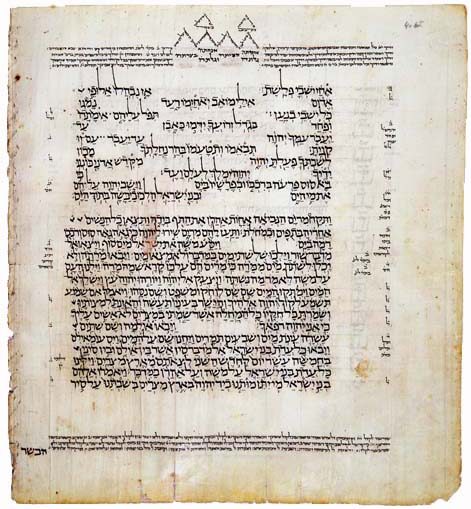
**** _The Leningrad Codex (Latin: Codex Leningradensis), 1008 AD. The oldest
Jewish manuscript with the complete text of the Old Testament
_****Torah.
** The Torah (תּוֹרָה, literally “teaching”), also known as the “Pentateuch”,
or as the “Five Books of Moses”.
- Bərē’šīṯ (בְּרֵאשִׁית, literally “In the beginning”) – Genesis
- Šəmōṯ (שְׁמֹות, literally “The names [of]”) – Exodus
- Vayyīqrā’ (וַיִּקְרָא, literally “And He called”) – Leviticus
- Bəmīḏbar (בְּמִדְבַּר, literally “In the desert [of]”) – Numbers
- Dəvārīm (דְּבָרִים, literally “Things” or “Words”) – Deuteronomy
Nevi’im (נְבִיאִים Nəḇī’īm, “Prophets”) is the second main division of the
Tanakh, between the Torah and Ketuvim. This division includes the books which
cover the time from the entrance of the Israelites into the Land of Israel
until the Babylonian captivity of Judah (the “period of prophecy”). Their
distribution is not chronological, but substantive.
The Former Prophets (נביאים ראשונים Nevi’im Rishonim)
- Yəhōšua‘ (יְהוֹשֻעַ) – Joshua
- Šōfṭīm (שֹׁפְטִים) – Judges
- Šəmū’ēl (שְׁמוּאֵל) – Samuel
- Məlāḵīm (מְלָכִים) – Kings
The Latter Prophets (נביאים אחרונים Nevi’im Aharonim)
- Yəša‘yāhū (יְשַׁעְיָהוּ) – Isaiah
- Yīrməyāhū (יִרְמְיָהוּ) – Jeremiah
- Yəḥezqē’l (יְחֶזְקֵאל) – Ezekiel
The Twelve Minor Prophets (תרי עשר, Trei Asar, “The Twelve”), which are
considered one book
- Hōšēa‘ (הוֹשֵׁעַ) – Hosea
- Yō’ēl (יוֹאֵל) – Joel
- ‘Āmōs (עָמוֹס) – Amos
- ‘Ōḇaḏyā (עֹבַדְיָה) – Obadiah
- - Yōnā (יוֹנָה) – Jonah
- Mīḵā (מִיכָה) – Micah
- Naḥūm (נַחוּם) – Nahum
- Ḥăḇaqqūq (חֲבַקּוּק) – Habakkuk
- Ṣəfanyā (צְפַנְיָה) – Zephaniah
- Ḥaggay (חַגַּי) – Haggai
- Zəḵaryā (זְכַרְיָה) – Zechariah
- Mal’āḵī (מַלְאָכִי) – Malachi
**Ketuvim
** Ketuvim (כְּתוּבִים, “Writings”) consists of eleven books. This is a genre
of poetry or Poetic books.
In Masoretic manuscripts (and some printed editions) Psalms, Proverbs and Job
are presented in a special two-column form emphasizing the parallel stichs in
the verses, which are a function of their poetry. Collectively, these three
books are known as Sifrei Emet (an acronym of the titles in Hebrew, איוב,
משלי, תהלים yields Emet אמ”ת, which is also the Hebrew for “truth”).
These three books are also the only ones in Tanakh with a special system of
cantillation notes that are designed to emphasize parallel stichs within
verses. However, the beginning and end of the book of Job are in the normal
prose system.
- Təhīllīm (תְהִלִּים) – Psalms
- Mīšlē (מִשְׁלֵי) – Book of Proverbs
- ’Īyyōḇ (אִיּוֹב) – Book of Job
**Five scrolls or Five Megillot
**The five relatively short books of the Song of Songs, the Book of Ruth, the
Book of Lamentations, Ecclesiastes, and the Book of Esther are collectively
known as the Ḥamesh Megillot (Five Megillot). These are the latest books
collected and designated as “authoritative” in the Jewish canon, with the
latest parts having dates ranging into the 2nd century BCE. These scrolls are
traditionally read over the course of the year in many Jewish communities.
These books are read aloud in the synagogue on particular occasions. The
occasion listed below in parentheses.
- Šīr hašŠīrīm (שִׁיר הַשִּׁירִים) – Song of Songs, also known as Song of
Solomon (on Passover)
- Rūṯ (רוּת) – Book of Ruth (on Shavuot)
- ’Ēḵā (אֵיכָה) – Book of Lamentations (on Tisha B’Av[26])
- Qōheleṯ (קֹהֶלֶת) – Ecclesiastes (on Sukkot)
- ’Estēr (אֶסְתֵר) – Book of Esther (on Purim)
**Division of books in the Septuagint and Vulgate
** The division of books in the Septuagint and Vulgate depends on their
content. Books are divided into: law, historical, teaching and prophetic. In
addition, both the Vulgate and the Septuagint contain non-canonical books.
They are also arranged according to the content. This arrangement of books
passed into the Slavonic Church and Russian Bibles.
**Books of the Law (Pentateuch of Moses)
** Γένεσις - Genesis - Genesis
Ἔξοδος - Exodus - Exodus
Λευϊτικòν - Leviticus - Leviticus
Ἀριθμοὶ - Numeri - Numbers
Δευτερονόμιον - Deuteronomium - Deuteronomy
**Historical books
** Ἰησοῦς - Iosue - Joshua
Κριταὶ - Iudicum - Judges
Ροὺθ - Ruth - Ruth
Βασιλειων Α ”- I Samuelis - 1 Kings
Βασιλειων Β ”- II Samuelis - 2 Kings
Βασιλειων Γ ”- I Regum - 3 Kings
Βασιλειων Δ ”- II Regum - 4 Kings
Παραλειπομέν Α ”- I Paralipomenon - 1 Chronicles
Παραλειπομένων Β ”- II Paralipomenon - II Chronicles
Ἒσδρας Α “(This book is not in the Vulgate. In the Slavonic and Russian
translations this book corresponds to 2 Ezra)
Ἔσδρας Βʹ (In the Vulgate and Church Slavonic and Russian translations this
book corresponds to 1 Ezra and the book of Nehemiah)
Ἐσθὴρ - Esther - Esther
Ιουδίθ - Judith - Judith
Τωβιθ - Tobias - Tobit
Μακκαβαίων Αʹ - II Machabaeorum - 1 Maccabees
Μακκαβαίων Βʹ - II Machabaeorum - 2 Maccabees
Μακκαβαίων Γʹ - 3 Maccabees (This book is not in the Vulgate)
Μακκαβαίων Δʹ - 4 Maccabees
Μακκαβαίων Αʹ - II Machabaeorum - 1 Maccabees
Μακκαβαίων Βʹ - II Machabaeorum - 2 Maccabees
Μακκαβαίων Γʹ - 3 Maccabees (This book is not in the Vulgate)
Μακκαβαίων Δʹ - 4 Maccabees (This book is not in the Vulgate, Slavonic and
Russian translations)
**Teaching books
** Ψαλμοὶ - Psalmorum - Psalter
Ὠδαί - Odes (Songs) (This book contains the Old Testament and New Testament
texts that were included in the service)
Παροιμίαι - Proverbiorum - Proverbs
Ἐκκλησιαστὴς - Ecclesiasticus - Ecclesiastes
ᾎσμα - Canticum Canticorum - Song of Songs
Ἰῶβ - Iob - Job
Σοφία Σαλoμῶντος - Liber Sapientiae - Wisdom of Solomon
Σοφία Ἰησοῦ Σειράχ - Ecclesiasticus - Wisdom of Jesus son of Sirach
Ψαλμοὶ Σαλoμῶντος - Psalms of Solomon (This book is not in the Vulgate,
Slavonic and Russian translations)
**Prophetic books
** Ὡσηὲ - Osee - Hosea
Ἀμὼς - Amos - Amos
Μιχαίας - Michaeae - Micah
Ἰωὴλ - Ioel - Joel
Ἀβδιοὺ - Abdiae - Obadiah
Ἰωνᾶς - Ionae - Jonah
Ναοὺμ - Nahum - Nahum
Αμβακοὺμ - Habacuc - Habakkuk
Σοφονίας - Sophoniae - Zephaniah
Ἁγγαῖος - Aggaei - Haggai
Ζαχαρίας - Zachariae - Zechariah
Μαλαχίας - Malachiae - Malachi
Ἠσαΐας - Isaiae - Isaiah
Ἱερεμίας - Ieremiae - Jeremiah
Βαρούχ - Baruch - Baruch
Θρῆνοι - Lamentation of Jeremiah - Lamentationes
Επιστολή Ιερεμίου - Epistle of Jeremiah (In the Vulgate, this book is the 6th
chapter of the book of the prophet Baruch)
Ἰεζεκιὴλ Ezechielis - Ezekiel
Σουσάννα Susanna (In the Vulgate, Slavonic and Russian translation, this book
is the 13th chapter of the book of Daniel)
Δανιὴλ - Danielis - Daniel
Βὴλ και Δράκων - Bel and the dragon (In the Vulgate, Slavonic and Russian
translation, this book is the 14th chapter of the book of Daniel)
**Divisions of the text of books.
** Originally, there was no chapter or verse division in the Bible.
Subsequently, the text of the Torah was divided into פָּרָשַׁת הַשָּׁבוּעַ
[parashat ha-shavya] - literally “weekly chapters” or “weekly portions”. The
entire Pentateuch is divided into 54 parashas, which are read throughout the
year on Saturdays. After the Torah, passages from prophetic books are read in
synagogues. They are called הַפְטָרָה [haftarah] - “liberation”, “farewell”,
“end”, “permission”. Whenever possible, readings are selected that correspond
to the readings from the Law on the same day.
In the XIII cent. Archbishop Canterbury Stephen Langton (c. 1150-1228) created
a system of chapters, which in the XVI cent. by Robert Étienne Stephen
(1503–1559) were divided into verses. This system of chapters and verses
exists and is still used today.
3.3 History of the Canon in the Old Testament and Inter-Testament Period
(Second Temple period)
The history of the formation of the canon is described by the Holy Scriptures
as follows.
The first to lay the foundation of the canon was Moses. He gave the “book of
the law” written by him to the priests from the tribe of Levi and commanded
them to put it “at the right hand of the ark of the covenant of the Lord” and
read it every seven years, on the Sabbath year on the days of Tabernacles
(Deut. 31:9, 26-27). Thereby Moses set an example of reverent attitude towards
the sacred books by placing the book he wrote for safekeeping it next to the
Ark of the Covenant - the greatest shrine of Israel. Moses’ successor Joshua
did the same: “And Joshua wrote these words in the book of the law of God …”
(Josh. 24:26). From the above quote, it is clear that he looked at his
scripture in the same way as Moses looked at his own. The prophet Samuel
followed the example of Moses and Joshua. After Saul was anointed as king,
Samuel described the rights and responsibilities for him and the future Jewish
rulers. This is stated in the first book of Samuel: “And Samuel expounded to
the people the rights of the kingdom, and wrote in a book and laid it before
the Lord” (1 Sam. 10:25). The “book” referred to here appears to have been the
book of the Law, begun by Moses and continued by Joshua. Samuel put this book
“before the Lord,” that is, in the tabernacle where the writings of Moses and
Joshua had been previously placed.
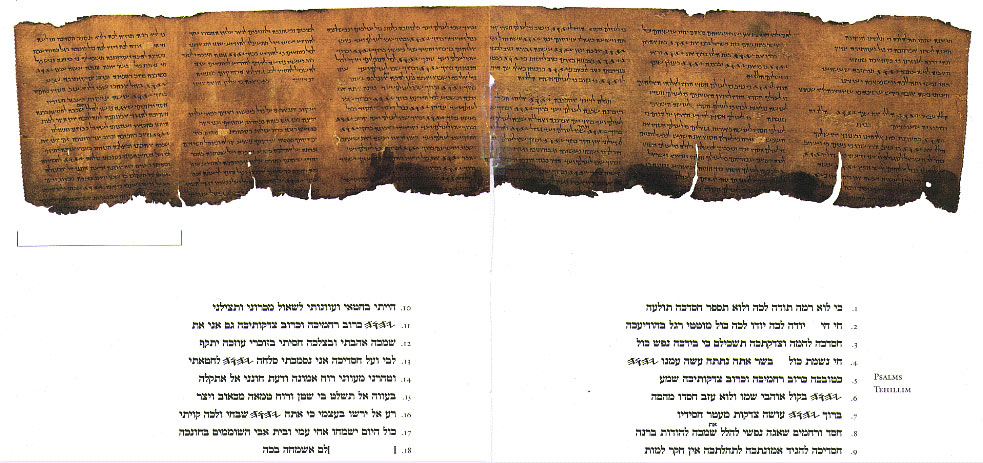
_The Psalms scroll, one of the Dead Sea scrolls.
_ A particularly important and valuable testimony of this was preserved in
the book of Proverbs, where it says: “And these are the parables of Solomon,
which were gathered together by the men of Hezekiah, king of the Jews” (Prov.
25:1). Perhaps this society included the contemporaries of King Hezekiah - the
prophets Isaiah and Micah. Jewish tradition reports about such societies that
existed before the Babylonian captivity and calls them: “the court house of
Samuel”, “the court house of David”, “the court house of Solomon”. Who entered
these societies is unknown, but indirect evidence from historical and
prophetic books shows that they were prophets, priests, elders and other pious
people. They read, rewrote and studied the Pentateuch of Moses, which was kept
in the temple (2 Chronicles 34:14) and was considered “the book of the Lord”
(Is. 36:16). They also wrote their own books, which then became part of the
canon of Holy Scripture.
When Jerusalem and the Temple were destroyed by the troops of Nebuchadnezzar,
and the Jews were sent into exile in Babylon, the Old Testament books did not
perish.
In Babylonian captivity, the Holy Scriptures were read by the prophets Daniel
(Dan. 9:1-2) and Ezekiel (Ezek.16:20, 23). For example, in the book of the
prophet Daniel it is said that in the first year of the reign of Darius, the
son of Assuir, he “figured out from the books the number of years, about which
the word of the Lord was to Jeremiah the prophet, that seventy years would be
fulfilled over the desolation of Jerusalem” (Dan. 9:1-2; compare: Jer. 25:11;
29:10). Among these books, as can be seen from this passage, was the book of
the prophet Jeremiah, an older contemporary of Daniel.
In addition to the prophets Daniel and Ezekiel, other captives also had holy
books. According to the 2nd book of Maccabees, the Jews went into captivity
with lists of holy books taken from the prophet Jeremiah (2 Macс. 2:2). The
book of Tobit indicates that the Israelite captives are aware of the Law (Tob.
1:6; compared to Deut. 16:16), historical and prophetic books, for example,
Jonah (Tob. 14:4, 8), Isaiah (Tob. 13:16-18; compared to Is. 60)
On their return from Babylonia, the captives brought with them to Palestine
their main shrine - the scrolls of the holy books. They were read and known by
the prophets Haggai, Zechariah (Zech. 7:12) and Malachi (Mal. 2:4-6, 4:4-6),
Zerubbabel and the high priest Joshua, the scribe Ezra and Nehemiah (Ezra
3:2-5, Neh. 9-10).
In the prophet Zechariah one can find an indication of the division of the
sacred code into “law” and “prophets” accepted in Jewish theology. He said
about the Jews that “they turned their hearts to stone so that they would not
hear the law and the words that the Lord of hosts sent by His Spirit through
the former prophets” (Zech. 7:12). These words of the prophet, firstly,
testify to the fact that in his time the sacred code was already to a large
extent collected and even divided into sections; second, they are the first to
provide a foundation for the doctrine of “inspiration” as applied to the books
of the Old Testament. In the above quotation, the prophet recognizes the law
and the prophetic words as “sent by the Lord of hosts and His Spirit,” that
is, the inspired Word of God.
The final collection of the Old Testament canon dates back to the times after
the Babylonian captivity, and was accomplished by Ezra, Nehemiah and the last
prophets Haggai, Zechariah and Malachi. Jewish tradition ascribes to the
scribe Ezra the creation of the Great Synagogue - a collection of Jewish
teachers, which for some time finally formed the canon. According to Jewish
tradition, canonization was completed by Simon the Righteous at the beginning
of the 3rd century B.C.
We cannot say for sure, according to what rules, in the Old Testament,
canonical books were distinguished from non-canonical ones. It can be assumed
that the criterion of canonicity was the holiness of the authors of the
biblical books and their prophetic character.
About 100 B.C., the Jews had the impression that the prophetic charisma had
faded. The years of the reign of Artaxerxes I (5th century B.C.) were
considered the end of the era of Revelation. This was the point of view of the
Pharisees, who, however, did not reject the development of oral teaching. The
same view was held by Josephus Flavius, a famous Jewish historian and military
leader who lived in the 1st century A.D.
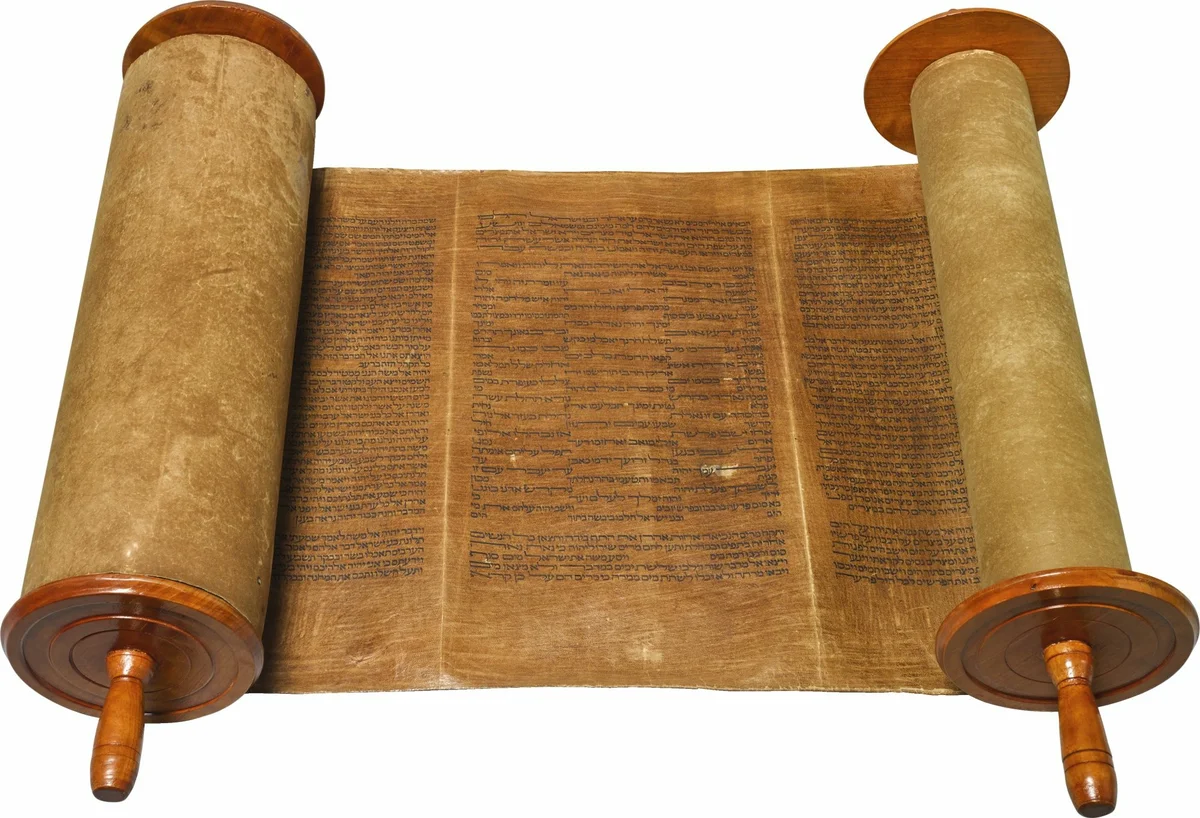
_Synagogue Torah scroll
_ He argued that by the time of Ezra and Nehemiah, all 22 inspired books
were collected, divided into the Law (5 books), Prophets (13 books) and 4
Books of Songs and Teachings. To these books, nothing could be added, or
subtracted, or reinterpreted (Against Apion 1, 8).
The list of books cited by Josephus Flavius is usually called the Jamnian
Canon in biblical studies, since some scholars believe that the canon was
finally fixed in the Palestinian city of Jamnia at the turn of the 1st and 2nd
centuries A.D.
After the suppression of the Jewish anti-Roman revolution in 66-73 A.D. the
Jamnian Sanhedrin became the supreme governing body, which saw the most
important task in the creation of a strictly fixed, canonical list and text of
the books of the Bible. Jewish teachers discussed the canonicity of some
controversial books in Jamnia, but these discussions did not lead to the final
establishment of the canon. It is known that in the 2nd and early 3rd
centuries among the teachers of Judaism there was still controversy about the
canonicity of the Song of Songs and Ecclesiastes.
In biblical studies, there is also a concept of the so-called “Alexandrian
Canon”. In Alexandria in the 3rd century B.C. was created the ancient Greek
translation of the Old Testament - the Septuagint. The Septuagint included not
only canonical, but also non-canonical books written in the 3rd and 2nd
centuries B.C. Some of them were written in Hebrew and then translated into
Greek, other books were immediately created in Greek. Such a list of canonical
and non-canonical books is called the “Alexandrian Canon” in biblical studies,
in contrast to the Jamnian one, which includes only canonical books.
3.1 History of the canon of Old Testament Scripture
The meaning of the term “canon”
**
The Biblical Canon is those books of the Old and New Testaments that are
recognized by the Church as divinely inspired, that is, authoritative in
matters of faith and life.
The term κανών [canon] is equivalent to the Hebrew word קָנֶה [kane], which
originally meant “reed”, “stick for measuring”, and then came to be used
figuratively: “rule” or “measure”.
The Orthodox view on the term “canon” is expressed in the words of St. John
Chrysostom (c. 347–407): “just as an ordinary measure (whether length,
capacity, or gravity) can not be arbitrarily increased or decreased so that it
does not lose its measuring value, so the collection of canonical inspired
scriptures cannot be arbitrarily changed with the addition or subtraction of
something from them” (Commentary on the last one to Phil. 3:16).
The concept of inspiration
** The term “inspiration” (θεόπνευστος [theopneustos]) is found in the Bible
only in 2 Tim. 3:16 (“All Scripture is inspired by …”). Calling Holy
Scripture divinely inspired, St. Ap. Paul sets out the common belief of the
Old Testament and New Testament Church that the Old Testament was written
under the special inspiration of the Holy Spirit (compared to. Matt. 22:43).
The same idea is affirmed by St. Ap. Peter: ”… The prophecy was never
uttered by the will of man, but the holy men of God spoke it, being moved by
the Holy Spirit” (2 Pet. 1:21).
In the Old Testament, the idea of collaboration of the prophets and the
Spirit of God in their preaching is expressed quite clearly. For example, the
Lord told the prophet Moses: “I will be with your mouth and teach you what to
say” (Exod. 4:12). Likewise, other prophets claimed that they spoke on behalf
of God His words (Is. 2:1; Ezek. 1:3; 6:1; 7:1; Mic. 1:1). The prophet and
psalmist David exclaimed: “The Spirit of the Lord speaks in me, and His word
is on my tongue” (2 Sam. 23:2). Our Lord Jesus Christ Himself confirmed that
David prophesied by the Holy Spirit (Mark 12:36). The same is said about David
in the book of Acts (Acts 1:16; 4:25).
There are several points of view regarding the nature of inspiration:
Mechanistic understanding or verbalism (from the Latin verbum -
“word”), that is, the idea that Scripture is dictated by God and written down
word for word. In this case, the true author of the Bible is God Himself, and
man mechanically records His speech. However, God never destroys the freedom
and personality of man.
Psychological understanding. If verbalism minimizes human participation in
the transmission of Divine Revelation, then psychological understanding
reduces Divine participation to inspiration similar to poetic. In this case,
the Bible becomes not the Word of God, but a purely human labor. However, no
amount of human inspiration or intuition can open the future.
The traditional understanding presupposes an inextricable interaction between
the will of the Divine and the human. This interaction is similar to the
action of the grace of God in symphony with the human will in the matter of
human salvation.
The human side of Holy Scripture is manifested in the literary forms used by
the writers of the Bible. According to st. Augustine (354–430), God “speaks
humanly through man” (On the City of God, XVII, 6). St. Jerome of Stridon
(342-419 / 420) wrote that “Jeremiah seems rude in comparison with Isaiah and
Hosea” (Commentary on Isaiah). And St. Gregory the Great (c. 540-604) noted
that “with the beauty of style Isaiah surpassed all the prophets.”
In these passages it is important to think that the Word of God is written in
accordance with the individual characteristics of the author, which are
clearly manifested in many biblical books. However, despite all the
peculiarities of the authors, it is impossible in Scripture to find the
boundary where the Word of God would end and the word of man would begin.
Every word in the Bible is sealed by the Holy Spirit.
The main evidence that the Bible is not only the word of man, but also the
word of God are prophecies, some of which have already been fulfilled, while
others will only be fulfilled in the future. Therefore, the Bible can be
called the book of the God-man or a theantropical book.
Thus, inspiration can be defined as the special influence of the Holy Spirit
on the writer`s personality. But the author, with full preservation of all his
powers and with their active manifestation, in accordance with the goals of
_ Divine economy_ of human salvation, wrote the Word of God in a specific
language, in certain cultural conditions and in a specific historical setting
in order to reveal the Divine Revelation to the people of God as fully as
possible.
Of course, you need to understand that in the process of rewriting the Bible
books, errors could appear in the text. However, this does not contradict the
doctrine of inspiration. The autographs of biblical books were inspired, and
the scribes tried to keep the text from mistakes as much as possible,
especially in those places where doctrinal truths were stated.
3.1 History of the canon of Old Testament Scripture
3.2 Stages of the formation of the canon of the Old Testament
The collection (canonization) of the sacred Old Testament books into one
collection began in ancient times.
In the ancient Jewish tradition there are two testimonies about the
compilation of a collection of sacred books: “Moses received the law at Sinai,
passed it on to Joshua (Ben Nun), Joshua to the elders, the elders to the
prophets, and the prophets to the men of the Great Synagogue” (Pirkei Avot, 1,
1)… “The wise had with them and left behind them the law, prophets and
scriptures united into one whole. Moses wrote the Pentateuch and the Book of
Job. Joshua wrote his book and the last eight verses of Deuteronomy. Samuel -
the books of Samuel (that is, 1 and 2 Kings), Judges and Ruth. David with the
help of 10 men wrote the book of Psalms. Jeremiah wrote his book - the books
of Kings (3 and 4 Kings) and Lamentations.
Hezekiah and his company wrote Isaiah, Proverbs, Song of Songs, and Qoheleth
(Ecclesiastes). The men of the Great Synagogue wrote Ezekiel, the 12 prophets,
Daniel and Esther. Ezra wrote his book and the genealogy of the Chronicles
(Chronicles) before returning from Babylon. Who finished them (Chronicles)?
Nehemiah, the son of Helkiah ”(Bava Batra, 13–15). (Full Hebrew and English
text of the Mishnah for tractate Bava Batra
https://www.sefaria.org/Mishnah_Bava_Batra.1?lang=bi
)
From these two passages it is clear that the Old Testament canon did not take
shape immediately, and several stages of its formation can be distinguished in
its history. Modern biblical studies believe that the division of the Bible in
the Jewish tradition into 3 parts reflects the main stages in the formation of
the biblical canon.
3.3 History of the Canon in the Old Testament and Inter-Testament Period
(Second Temple period)
3.4 Old Testament Canon in the New Testament
Our Lord Jesus Christ fully recognized the Old Testament canon.
Citing sayings from the Old Testament books, Jesus Christ called the sacred
books “Scripture” (John 10:35; 17:12), “Scriptures” (Matt. 21:42; 22:29),
“Law” (John 10:34), and called the Old Testament writers divinely inspired
(Mark 12:35; compared to Ps. 109:1). He considered His ministry and appearance
to the world to be the fulfillment of the Old Testament Scripture (Matt.
5:17-18).
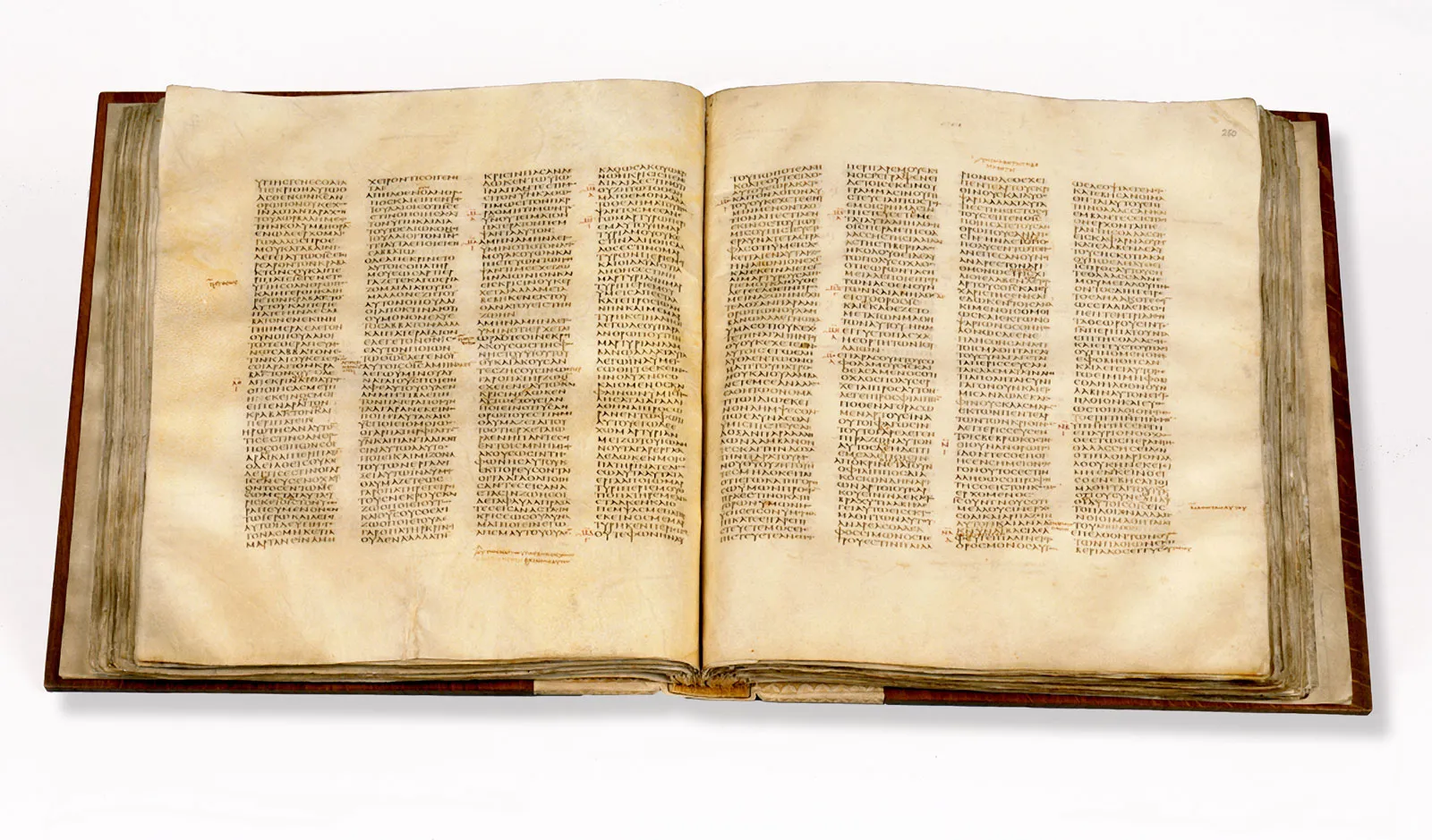
_Codex Sinaiticus. 4th century Greek biblical manuscript
_The apostles also taught about the sacred books of the Old Testament in the
same way. The Old Testament books, according to the teachings of the apostles,
prepared Jews for the acceptance of the Messiah - Jesus Christ. They were for
the Jews “a teacher to Christ” (Gal. 3:24), because they contained the
covenants and promises for the salvation of mankind (Heb. 10:1). Therefore,
the apostles called the Old Testament books “Holy scriptures” (2 Tim. 3:15),
“The word of God” (Rom. 3:2), “The Ancient Testament” (2 Cor. 3:14). All the
Old Testament books were recognized by the apostles as divinely inspired (2
Pet. 1:21; 2 Tim. 3:15-16).
But what kind of books are recognized in the New Testament as sacred and
inspired?
The list of canonical books in the time of Christ began with Genesis and ended
with 2 Chronicles. In Matt. 23:35 the words of Christ are given, which certify
the truth of the Old Testament canon ”… may come upon you all the righteous
blood shed on earth, from the blood of Abel the righteous to the blood of
Zechariah, the son of Barachiah, whom you killed between the temple and the
altar.” Compared to Luke 11:51: ”… that the blood of all the prophets, shed
from the creation of the world, from the blood of Abel (Gen. 4: 8) to the
blood of Zechariah, who was killed between the altar and the Temple (2 Chron.
24:20)”.
The murder of Abel is described in Genesis 4, and the murder of Zechariah in 2
Chron. 24, in a book considered to be the last in the Jewish canon. Therefore,
the Lord seems to be saying: “From the first to the last murder in the Old
Testament.”
The New Testament cites all of the Old Testament canonical books as
“Scripture” except for Esther, Ezra, Nehemiah, Ecclesiastes, and the Song of
Songs.
The second question facing researchers: “Did Jesus Christ or the apostles
quote non-canonical books?”
Some biblical scholars believe that the New Testament cites non-canonical and
even apocryphal books. In their opinion, our Lord Jesus Christ in the Sermon
on the Mount quotes, albeit without references, for example, the words from
the book of Tobit, “What is hateful to you, do not to anyone else” (Tob. 4:15;
compared to Matt. 7:12 and Luke 6:31) and “Give to the hungry of your bread
and to the naked of your clothes; from whatever you have in abundance, do
alms, and let your eyes not pity when you do alms “(Tob. 4:16; compared to
Luke 14:13).
The book of Sirach, is also quoted, “Forgive your neighbor’s offense, and then
through your prayer your sins will be forgiven” (Sir. 28:2 compare with Matt.
6:14 and Mark 11:25), and the book of the Wisdom of Solomon the time of their
reward they will shine like sparks running along the stalk ”(Wis. 3:7;
compared to Matt. 8:43). St. Ap. Paul in the Epistles to the Romans (Rom.
1:21), to the Corinthians (1 Cor. 1:20-27), to Timothy (1 Tim. 1:15) finds the
words from the book of the prophet Baruch. St. Ap. James has a lot in common
with the book of Sirach. The Epistle to the Hebrews and the book of the Wisdom
of Solomon are so close to each other that some critics considered them the
creation of the same author.
A number of researchers believe that the New Testament authors cite not only
non-canonical books, but also the Old Testament apocrypha. For example, verse
9 of the Epistle of St. Ap. Jude is taken from the apocryphal book “The
Assumption of Moses”. But other researchers find here similarities with the
book of the prophet Zechariah (Zech. 3:1–2) and a simple replacement of the
name Joshua with the name Moses, since both of them were representatives of
the people. Also, some scholars assume that the words of verses 14-15 of the
Epistle of Jude are taken from the 2nd chapter of the Apocryphal Book of
Enoch, while others believe that these words are a reference to the book of
Genesis (Gen. 5:24).
Even if we assume that non-canonical books are cited in the New Testament,
then neither Jesus Christ nor the apostles ever quoted them with the words:
“as it is written,” or “the scripture speaks,” and even more so with the
words: “The Holy Spirit speaks… “.
3.5 The period of the Ancient Church (I-III centuries)
At the very beginning of the history of the Church, there appeared some
differences in views on the scope of the canon among the fathers and teachers
of the ancient Eastern and Western Churches.
The Eastern fathers and teachers (Martyr Justin the Philosopher (+ 166), St.
Melito of Sardis (+ 170) and Origen (+ 254) very early became acquainted with
the composition of the Jewish canon of the Old Testament.
All of them quoted and listed only the canonical books. Origen notes that
besides the canonical books, the Jews have other books, but they are not
accepted into the canon in the number of 22 books. Origen also talks about the
books of Tobit, Judith, the Wisdom of Solomon and the Wisdom of Sirach, and
notes that they should be read by the catechumens (Conversation 27 on the Book
of Num.).
On the contrary, representatives of the Western Church of this period did not
encounter Jews and did not get acquainted with the composition of the Jewish
canon. Not knowing the Hebrew language, they were forced to study the Old
Testament books only from the ancient Greek translation, and, not seeing the
differences between canonical and non-canonical books in the lists, they
considered everyone to be equally authoritative as “Divine Scripture.” Thus,
the non-canonical books were quoted as “Scripture” by St. Clement of Rome (+
97/99/101), St. Irenaeus of Lyons (c. 130 - c. 202), St. Cyprian of Carthage
(+ 258) and Tertullian (155/165-220/240).
**Patristic period. Establishment of the canon (IV-V centuries)
**
The view of the Old Testament canonical and non-canonical books, which was
established in the eastern and western churches in the first three centuries,
remained unchanged in the subsequent. Thus, both fathers and the councils of
the Eastern Church of this period recognized the difference in the authority
and dignity of canonical and non-canonical books, while the fathers and
councils of the Western Church did not make such a distinction.
The views of the Eastern St. Fathers and Councils of the IV-V centuries on the
Old Testament canon, its composition and volume are set forth in the 60th
canon of the Laodicean Council of 360, in the 39th Easter Epistle of St.
Athanasius of Alexandria (c. 298–373), in the 4th announcing lecture of St.
Cyril of Jerusalem (315–386), in the 33rd poem by St. Gregory the Theologian
(329-389), in the epistle to St. Amphilochius of Iconium (c. 340 – after 394)
to Seleucus, at St. Epiphanius of Cyprus (+ 403) and in the 85th apostolic
canon.
Councils and St. Fathers distinguish three classes books that are considered
biblical: canonical, non-canonical and apocrypha. Canonical books are only
those that are accepted in the Jewish canon and only they are inspired by God.
Non-canonical books are assigned to be read to the catechumens as useful and
edifying for Christian teaching. Apocryphal books are completely rejected as
books written by heretics and misleading people.
Almost all St. Fathers enumerate the canonical books in the same way, with the
exception of some particulars. Thus, the book of Esther in some of the
enumerations was excluded from the canon and was even placed among the non-
canonical books, while the book of the prophet Baruch and the Epistle of
Jeremiah, and sometimes the Maccabean books were included in the canon.
The Western Church in the IV-V centuries established a view of non-canonical
books as equals to canonical ones. They were called Deuterocanonical. This
opinion was confirmed by Western councils and the fathers of that time. These
views are set forth in the decree of Pope Damasus (300-384) of 374 “On books
accepted and not accepted”, in the decrees of Popes Innocent I (+ 417) of 405
and Gelasius (+ 496) from 495, in the decisions of the African Councils - of
Hippo in 393 and two Carthaginian Councils in 397 and 419.
The Western idea of the canon is most fully expressed by the St. Augustine
of Hippo. In the essay ” De Doctrina Christiana” (II, 8) he lists the
canonical books and places among them 6 non-canonical books. The main sign of
canonicity, according to Augustine, consists in their use and recognition by
all Christian churches, and if this is not the case, then by the largest and
most authoritative.
The Eastern view of canonical and non-canonical books was not accepted in the
West, although it was adhered to by Hilary of Poitiers, Jerome of Stridon and
Rufinus of Aquileia. They thought like the Eastern St. Fathers - only those
books that were included in the Jewish canon were considered divinely
inspired. Only from them could we draw evidence of our faith, and non-
canonical books were offered to be used only for reading.
3.6 Old Testament Apocrypha
The word “apocryphal” (ἀπόκρῠφος [apokryphos] - “hidden”) is used in biblical studies in two meanings:
-
Protestants call so non-canonical books;
-
The Eastern Orthodox Church, like the Roman-Catholic, calls this way books that have never been considered either canonical or non-canonical. Apocrypha are often signed with the names of the characters of the Old Testament history, so they can be called “pseudepigrapha”, that is, falsely signed.
Apocrypha are most often books of visions.
Since the Jews were convinced that the period of prophecy was over, the authors of revelations and visions attributed their writings to ancient patriarchs or prophets, or declared themselves people who were given to explain the true meaning of those passages in the Bible, which, in their opinion, indicated the “end of days”. The period of “end of days”, according to the authors, was the time in which they lived. In this regard, great importance is attached in the Apocrypha to the question of the coming of the Messiah.
The largest Old Testament apocrypha are the Book of Enoch and the Book of Jubilees. The first of these books is an eschatological account of what was revealed to Enoch in heaven when “God took him” (Gen. 5:24). In the second, a discourse on the predetermination of all things is presented, presented in the form of a dialogue between an angel and Moses on Mount Sinai. Also very famous are the “Covenants of the Twelve Patriarchs” - the dying instructions given to their children by each of the sons of Jacob. Fragment 2: 6–5: 3 tells how Levi ascended through heaven to the throne of God and learned the secrets that he was to reveal to the people. During Levi’s heavenly journey, the angel answered his questions about what he saw in heaven.
3.7 Division of Books in the Hebrew and Greek Bible
- History of the canon of Old Testament Scripture
- Stages of the formation of the canon of the Old Testament
- History of the Canon in the Old Testament and Inter-Testament Period (Second Temple period)
- Old Testament Canon in the New Testament
- The period of the Ancient Church (I-III centuries)
- Old Testament Apocrypha
- Division of Books in the Hebrew and Greek Bible
3.6 Old Testament Apocrypha
- Protestants call so non-canonical books;
3.4 Old Testament Canon in the New Testament
3.2 Stages of the formation of the canon of the Old Testament
3.5 The period of the Ancient Church (I-III centuries)
Related Concepts
- alexandrian-canon
- anthropomorphism-of-scripture
- apocrypha
- augustine
- autographs
- canonical-books
- canonicity-criteria
- cantillation
- catechesis
- cessation-of-prophecy
- council-of-trent-implied
- deuterocanonical
- ezra
- freedom
- grace-and-free-will
- josephus
- jubilees
- ketuvim
- manuscripts
- masoretic-text
- megillot
- messiah
- neviim
- non-canonical-books
- old-testament-canon-in-the-new-testament
- oral-tradition
- pirkei-avot
- pseudepigrapha
- psychological-understanding
- revelation
- salvation-history
- sanhedrin
- simon-the-righteous
- synagogue-lectionary
- tanakh
- testaments-of-the-twelve-patriarchs
- textual-criticism
- the-creed
- theandric-book
- theantropical-book
- traditional-understanding
- verbalism
- vulgate
- western-canon