New Testament — Topic 36
Jude is a polemical letter. It employs harsh rhetoric, laden with threats, insults, and derogatory remarks. If it is unpleasant to read, this may be because it deals with an unpleasant topic: the capacity for religion to do great harm. The author is convinced that his readers are being hurt. They are not simply being convinced to adopt wrong ideas; they are being duped and exploited by people who are only pretending to have their interests at heart (v. 18). This explains why Jude cannot adopt a tolerant “Let everyone believe what they want to believe” attitude. He writes from necessity (v. 3), driven by a passionate concern to rescue those whom he believes are in danger—to snatch them from the fire, so to speak (v. 23).
The Greek name Ioudas is variously translated as “Jude,” “Judah,” or “Judas” in English Bibles, and we hear of several persons who bore that name. The author of this letter, however, is almost always associated with the Jude who is identified in the Gospels as one of four brothers of Jesus (Matt. 13:55; Mark 6:3). Another of those brothers, James, became the leader of the church in Jerusalem (see Acts 12:17; 15:13-21; 1 Cor. 15:7; Gal. 1:19; 2:9), and we also have a letter in the New Testament attributed to him (see box 24.2 on p. 448). According to the Gospels, the brothers of Jesus did not believe in him during his life on earth (Mark 3:21; John 7:1-5). They did, however, come to faith after the resurrection (Acts 1:14). At least two of them became missionaries, accompanied by their wives in their travels (1 Cor. 9:5). It seems likely that Jude was one of these. At any rate, although Jude did not attain the same level of renown as James, the very existence of this letter indicates that his name carried some weight in certain circles. One historical report indicates that his grandsons were still leaders of churches in Palestine toward the end of the first century (Eusebius, Ecclesiastical History 3.19–20).
The letter of Jude often has been identified as a pseudepigraphical writing simply because the author’s command of Greek surpasses what scholars have thought a Palestinian peasant would have been capable of producing. In recent years, however, there has been increasing appreciation for the level of sophistication that such persons may have attained if they were actively engaged with the Roman world, as Jesus’ disciples and siblings appear to have been. There has also been an increased awareness of the role that professional scribes sometimes played in the composition of letters. Accordingly, most scholars today are willing to grant the possibility that this letter was written by Jude the brother of Jesus (probably with the help of an amanuensis).
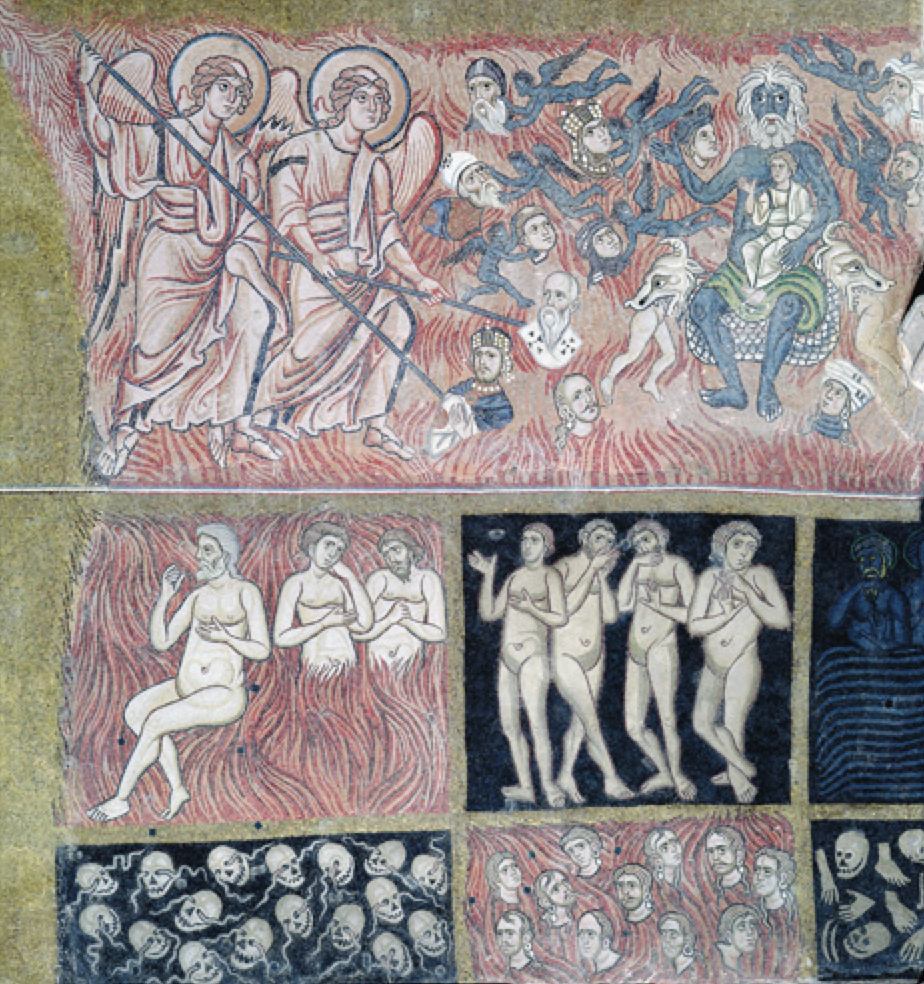
Snatching Souls from the Fire. For the author of Jude, rescuing those who have fallen victim to false teaching is serious business (vv. 22-23).
A few additional points are cited in favor of Jude being the author. Allusions to scripture in the letter reflect knowledge of Hebrew manuscripts rather than dependence on the Greek Septuagint, and the Hebrew Bible was used most prominently in Palestine, where Jude lived. Furthermore, the authorship of this letter appears to have gone unquestioned in the early church, even by those who had some problems with its contents. It has also been suggested that a pseudonymous writer would have invoked a more prominent name, or at least might have identified himself as the “brother of Jesus” rather than as “the brother of James” (v. 1). None of these points are decisive, however, and a number of scholars continue to regard Jude as a pseudepigraphical letter from some second-generation Christian who wanted his words to be regarded as part of the legacy of the Holy Family.
Hypothetically, this letter could have been written at almost any point during the last half of the first century. Certain factors are cited in favor of a date near the beginning of that period: the author believes that he is living in the last days (v. 18), a perspective that became less prominent as time passed. He also draws upon nonbiblical Jewish traditions (vv. 6, 9, 14–15), whose relevance would decline for believers as the Christian church continued to develop. Other factors point to a later date: the author refers to “the faith that was once for all entrusted to the saints” (v. 3), suggesting a body of tradition that can be passed from one generation to the next; he also urges his readers to “remember the predictions of the apostles” (v. 17), which suggests that he is looking back on the apostolic age as a bygone era (albeit one in which some of the readers may have participated [cf. v. 18: “they said to you”]).
When the letter is dated early—contemporaneous with Paul’s letters in the 50s and early 60s—it is almost always accepted as an actual correspondence from Jude the brother of Jesus. When it is dated later—in the postapostolic period of the 80s or 90s—it often is regarded as pseudepigraphical. But some scholars maintain that the date has little bearing on the question of authorship: if Jude was one of Jesus’ younger brothers (listed last in Matt. 13:55 and third in Mark 6:3), he could realistically have lived until the end of the first century.
In any case, the letter of Jude is addressed to a readership that is identified theologically rather than geographically: “To those who are called, who are beloved in God the Father and kept safe for Jesus Christ” (v. 1). Some interpreters take this to mean that the letter was not intended for any particular church or group of churches. Most, however, think that a particular crisis is being addressed: false Christians (called “intruders” in v. 4) are wreaking havoc somewhere in the church (we don’t know where), and the letter of Jude pulls no punches in condemning such troublemakers.
A good deal of research has been devoted to determining who these troublemakers were and what they did that was so offensive. Although Jude says that they “deny our only Master and Lord Jesus Christ,” the people whom he has in view almost certainly claim to be Christians (see vv. 4, 12). Most likely, the point is that although these troublemakers do not deny Christ overtly, their words and deeds have the effect of doing so.
They are described with a number of colorful insults:
· “irrational animals” (v. 10)
· “waterless clouds carried along by the winds” (v. 12)
· “wandering stars, for whom the deepest darkness has been reserved forever” (v. 13)
· “autumn trees without fruit, twice dead, uprooted” (v. 12)
· “wild waves of the sea, casting up the foam of their own shame” (v. 13)
We also hear that they are “worldly people” (v. 19) who are “ungodly sinners” (v. 15) and “devoid of the Spirit” (v. 19). They are “malcontents” (v. 16) and “scoffers” (v. 18); they grumble (v. 16) and flatter people (v. 16), and they are self-indulgent with regard to their own lusts (vv. 16, 18). All of this, however, is generalized invective; we gather that the troublemakers are bad people who exhibit lots of vices, but still we want to know if there was some particular philosophy or failing that caused them to be this way.
A few references might offer more specific insight. First, the people whom Jude rejects are said to “pervert the grace of our God into licentiousness” (v. 4). Thus, they might be libertine Christians who confuse forgiveness with permissiveness and adopt an attitude similar to what Paul caricatures as continuing in sin “in order that grace may abound” (Rom. 6:1; cf. 3:8; 6:15; 1 Cor. 6:12; 10:23; Gal. 5:13). They follow their own animal instincts (v. 10) and yield willingly to lusts of the flesh (vv. 8, 18; cf. 7, 16). Indeed, their doings have become blemishes on the Christian “love feasts,” the daily or weekly gatherings that served as a primary occasion for worship and fellowship (v. 12; cf. Acts 2:46; 1 Cor. 11:17-34). We cannot be sure exactly what the troublemakers were doing at these community meals, but the implication is that they were behaving in a manner typically associated with pagan banquets and secular celebrations.
In a somewhat different vein, Jude also refers to the intruders as “dreamers” (v. 8) who reject authority (v. 8) and slander what they do not understand (v. 10). This might mean that they are hyperspiritual Christians who place more value on their own ecstatic and visionary experiences than they do on other sources of religious authority (e.g., scripture, apostolic tradition, community consensus, decisions of elders). If so, then Jude’s description of them as worldly people who are devoid of the Spirit (v. 19) is ironic: they are the opposite of what they claim to be (cf. Col. 2:18).
The extensive use of Jewish traditions suggests that the letter of Jude is probably addressed to Jewish Christians. If this is the case, then the “intruders” might be Gentiles who have been only partially converted from paganism, accepting certain elements of the Christian gospel but rejecting Jewish morality and, perhaps, retaining pagan notions of revelation and enlightenment. In any event, the presence of such people in the community has proved divisive (v. 19), which implies that the intruders have garnered support from some members of the church. In fact, most scholars believe that at least some of these troublemakers present themselves as teachers in the church. They might be itinerant prophets who travel from church to church making converts and charging fees for their services (see v. 11; and cf. v. 16 with Rom. 16:18).
In any case, the issue is not simply one of dealing with wayward Christians who fail to live as they should. These people are actively promoting an understanding of the faith that supports their appalling lifestyle. The letter of Jude seeks to address this crisis. Its purpose is stated clearly: to appeal to the readers to contend for the faith that was delivered to them by the apostles (vv. 3, 17–18).
- Overview
- Historical Background
- Major Themes in Jude
- Conclusion
The Certainty of Judgment
The first and most prominent thing that Jude wants to say is that the fate of the false believers is sealed: they were designated long ago for condemnation (v. 4). The judgment of God upon them is inevitable (vv. 13-15). To drive this point home, he reminds his readers of how God has judged infamous sinners of the past (see box 28.1). The current batch of troublemakers belong on the same list and are likewise destined for eternal fire (v. 7) or deepest darkness (v. 13). Jude makes no attempt to argue with his opponents. He doesn’t even call them to repentance. Like an Old Testament prophet, he simply pronounces a “woe” against them, and that’s that. The church should, of course, have a merciful attitude toward all sinners, but in the case of these false believers, such mercy must be exercised with caution; the greater concern is rescuing those who might come under their influence (vv. 22-23).
The Apostolic Faith
__ The positive affirmation in Jude is for readers to build themselves up in their “most holy faith” (v. 20), which is the faith that has been entrusted to the saints “once for all” (v. 3; cf. Acts 2:42; Rom. 6:17; 1 Tim. 4:6; 2 Tim. 1:13; 4:3; Titus 1:9). Jude believes that the tradition received by the apostles is sufficient and needs no supplementation; his readers simply need to remember those things of which they have already been informed (vv. 5, 17). Thus, innovation can be equated with wavering (v. 22) or even with a denial of Christ (v. 4). There is no need for innovation, furthermore, because all things have been taken into account; even the current crisis was predicted by the apostles, who said that troublemakers would appear in the last days (v. 17; cf. Acts 20:29-30; 1 Tim. 4:1; 2 Tim. 3:1-9).
Jude provides no summary or description of the faith tradition that he commends, but we gather from the letter that it involves identification with God as Father and Savior (vv. 1, 25), with Jesus Christ as Master and Lord (v. 4), and with the Holy Spirit (v. 20; cf. v. 19). These relationships are made possible through the grace of God and the mercy of Jesus Christ (vv. 4, 21), but such grace must not be exploited as an excuse for self-indulgence. Indeed, there is a certain synergy assumed for the divine-human relationship: God is able to keep people from falling (v. 24), and God does do this (v. 1), but people must also do things to keep themselves in the love of God (v. 21). Finally, the apostolic faith has a strong eschatological component: believers look forward to eternal life (v. 21) without forgetting the prospect of eternal punishment (vv. 7, 13–15).
Use of Apocryphal Writings
The letter of Jude draws freely on Jewish writings that are not considered to be canonical scripture by either Jews or Christians. First, Jude alludes to a story found in 1 Enoch, according to which the angels that mated with earth women to produce a race of giants (reported in Gen. 6:1-4) were imprisoned by God for the day of judgment (v. 6; cf. 1 Enoch 6–8). Later, Jude quotes directly from 1 Enoch in a way that indicates that he regards the book’s prophecies as reliable and true (vv. 14-15; cf. 1 Enoch 1:9). The book of 1 Enoch is an apocalyptic Jewish writing from the third century BCE; its contents may also be assumed by 1 Peter 3:18-20.
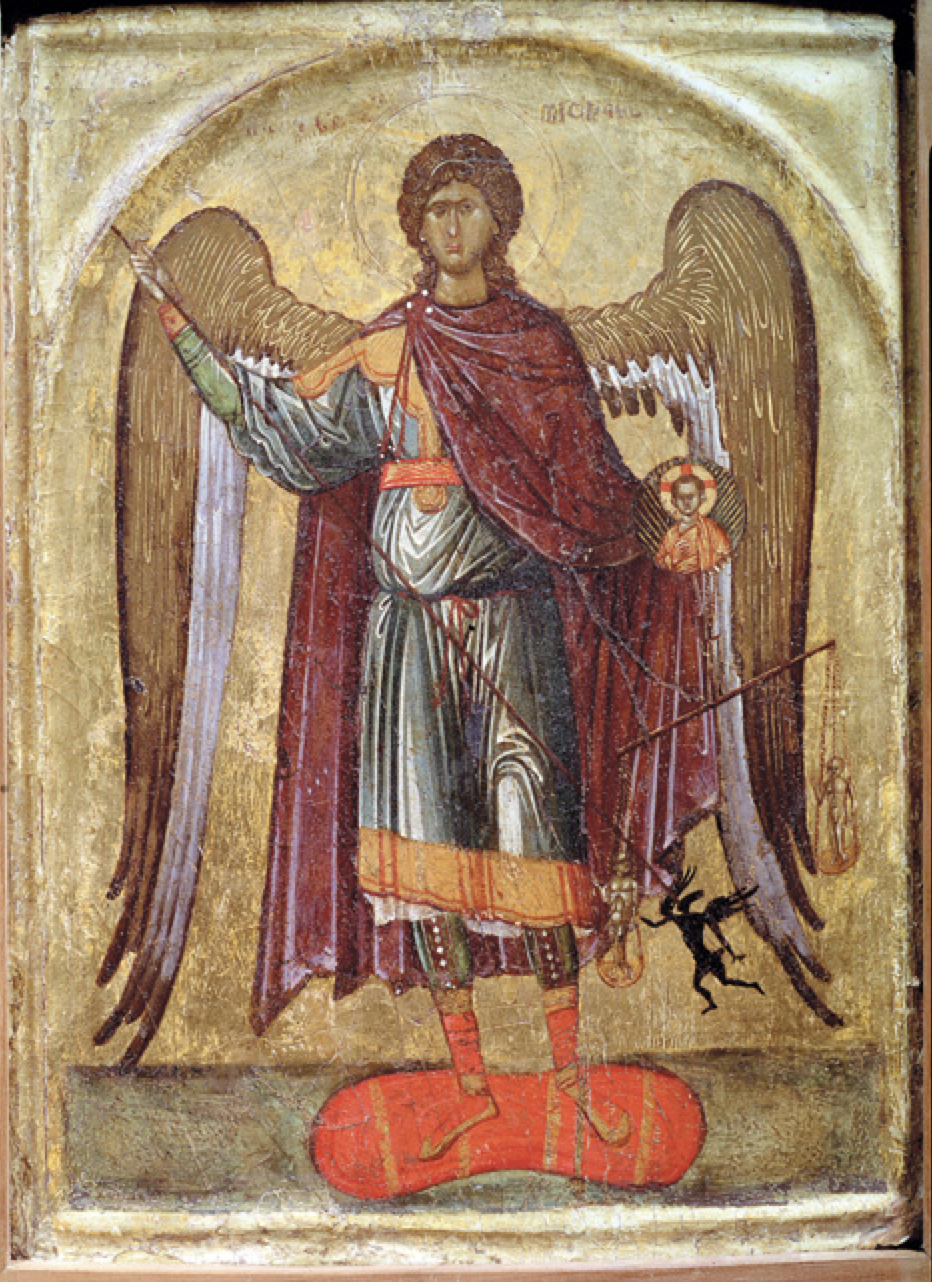
The Archangel Michael. According to Jude, the warrior angel Michael did not allow himself to be drawn into a conflict with the devil but instead simply said, “The Lord rebuke you” (v. 9).
Elsewhere, Jude refers to a story in which the archangel Michael had a dispute with the devil over who should take possession of the body of Moses (v. 9). This tale is not actually recorded in any literature available to us, but Clement of Alexandria (ca. 150–215) and a number of other early Christian scholars maintain that it was reported in a Jewish work called The Assumption of Moses, which was extant in their day. Most contemporary scholars think that this writing probably was part of a Jewish work known to us as The Testament of Moses; our manuscripts of the latter work are incomplete, and the story to which Jude refers may have been contained in the portion that is missing.
Thus, the letter of Jude conveys a rather open or relaxed view regarding canon. Jude uses legendary materials and apocryphal writings in the same way that he uses scripture, without making any distinction between the authoritative value of those writings that we deem canonical and those that we do not. This aspect of the book has posed problems for Christians throughout history. On the one hand, it has caused some Christians to question whether Jude should be accepted as scripture (how can a writer who is inspired by God fail to discern that other writings are not inspired by God?). On the other hand, it has caused some to suggest that if Jude is to be regarded as scripture, then the books that Jude cites (especially 1 Enoch) should be regarded as scripture also. This was the view of Tertullian (155–230) and, in general, of the Ethiopic church. But neither 1 Enoch nor The Assumption of Moses became part of the Old Testament. They are not even a part of the Apocrypha, which is regarded as a secondary canon by some Christians (including Roman Catholics). Today, Jude’s reliance on these books usually is viewed as a curious holdover from a time when the concept of canon was still in flux.
The letter opens with a salutation and blessing that identifies it as a message from Jude, the brother of James, to those who are “kept safe for Jesus Christ” (vv. 1-2). The author explains that the intrusion of ungodly people who pervert the grace of God into licentiousness has made necessary a letter that champions orthodox faith (vv. 3-4). He recites a list of occasions in which God punished the wicked in the past (vv. 5-7) and promises that the current “dreamers” who “slander the glorious ones” will likewise be destroyed (vv. 8-10). He pronounces a prophetic “woe” or curse upon them in language filled with invective and illustrated by allusions to various Jewish writings (vv. 11-16). The letter concludes with exhortations to faithfulness (vv. 17-23) and a doxology to God, who is able to keep people from falling (vv. 24-25).
Jude.
Related Concepts
- 1-enoch
- antinomianism
- apocrypha
- assurance
- authority
- canon-formation
- choice
- christification
- community-conflict
- community-meals
- conquest
- deepest-darkness
- denial-of-christ
- development-of-pauline-thought
- discernment
- divine-human-cooperation
- divine-inspiration
- divine-power
- division
- doxology
- early-church-reception
- eternal-fire
- exploitation
- false-teaching
- freedom
- gentile-converts
- glory
- god-the-father
- good-works
- greek-style
- hebrew-scripture-allusions
- holy-family
- holy-spirit
- human-responsibility
- hyperspirituality
- jesus-christ
- jewish-tradition
- judgment
- licentiousness
- lordship
- macarius
- moral-effort
- obedience-of-faith
- orthodox-faith
- pagan-morality
- pastoral-care
- pastoral-rescue
- perseverance
- polemic
- relation-to-ephesians
- relation-to-philemon
- remembrance
- revelation
- st-gregory-palamas
- st-theophan-the-recluse
- synergy
- testament-of-moses