New Testament — Topic 34
The letter known as 1 Peter offers us a striking portrayal of the final stage of faith development for one of the most fascinating religious figures in world history. By any account, the man Peter is an amazing figure—an uneducated Galilean fisherman who ended up being revered and honored by millions of people for over two thousand years. He is known to most as “Saint Peter.” One of the world’s largest and most magnificent churches is named after him (the Basilica of St. Peter in Vatican City, home parish to the pope). He has been memorialized in thousands of sculptures and paintings and stained-glass windows, and even at a crass popular level he is assigned a role in jokes and stories as the man who stands at the “pearly gates,” determining who should be admitted to the kingdom of heaven. How did this happen? How did this simple fisherman become such an important person?
One of the more intriguing aspects of Peter’s legacy is that even after he had come to be regarded as a hero and martyr, the church preserved traditions that cast him in a less than favorable light. In the Gospel stories, Peter often comes off as an impetuous and overly confident buffoon, as someone who repeatedly gets things wrong. He is the one who tried to walk on water but sank because of fear and doubt (Matt. 14:28-31). He is the one who earned Jesus’ most stinging rebuke, “Get behind me, Satan!” (Mark 8:33). And, of course, he is the one who is remembered for denying three times that he even knew who Jesus was (Mark 14:66-72). The letter known as 1 Peter serves as almost irrefutable evidence that this story had a second act. Free of bluster, it offers exactly the sort of sober advice that Peter himself once needed to hear: following Jesus does not guarantee a trouble-free life, and it might even make things worse. Still, fear is not a helpful or necessary response. If Peter himself wrote this letter, then we may surmise that he had learned his lessons well; if the letter is pseudepigraphical, it nevertheless reflects the unanimous opinion of second-generation Christians that Peter’s own journey of faith had taken him beyond doubt and denial. Either way, the letter presents Peter as someone who can be regarded as a faithful apostle and elder of the church (1:1; 5:1) having much to offer his younger siblings in the faith (cf. Luke 22:31-32).
This letter presents itself as being written by the apostle Peter, one of Jesus’ original twelve disciples, who now regards himself as an elder in the church (5:1). He is sending it from Rome (referred to as “Babylon” [5:13; cf. Rev. 17:1, 5]) to Christians in Asia Minor (1:1).
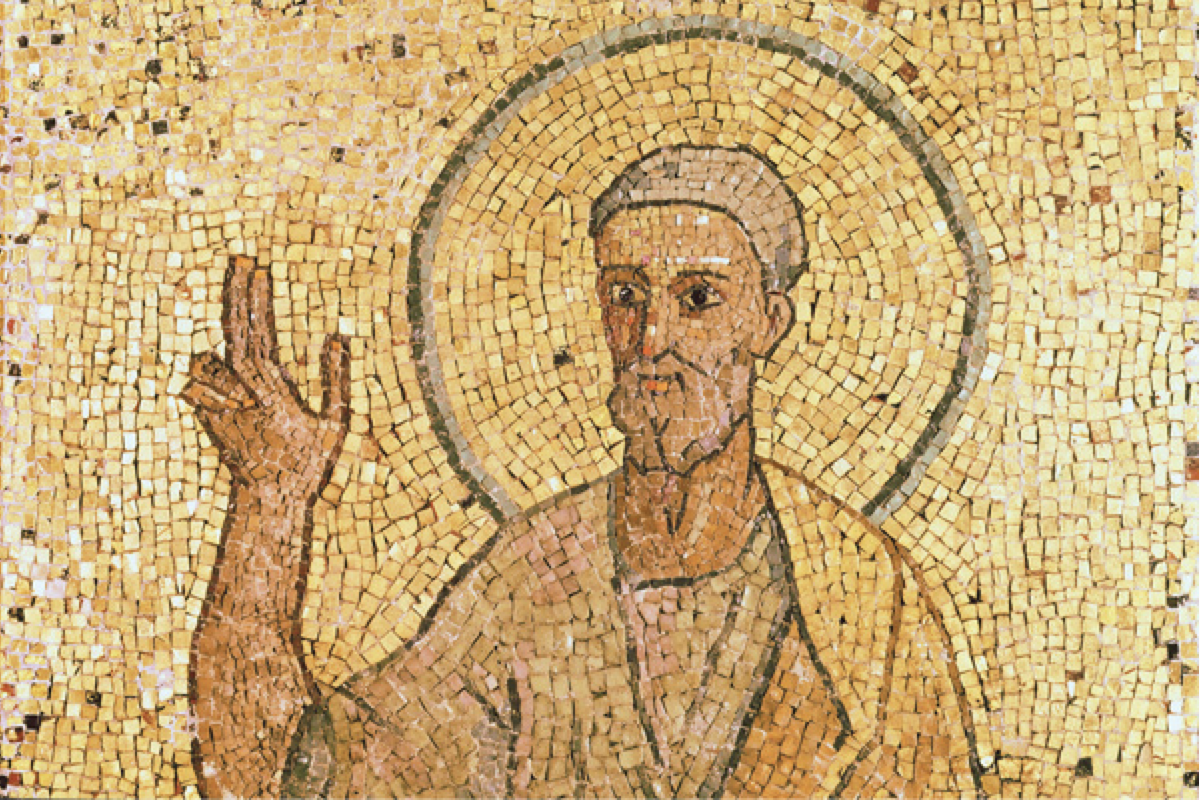
St. Peter. This mosaic of the apostle Peter pronouncing a blessing is found on the crypt of Peter (regarded as his tomb) at St. Peter’s Church in Rome.
Peter is probably the most celebrated of all Jesus’ disciples. Often called “Simon” or “Simon Peter” (but referred to as “Cephas” by Paul), he is always listed first among the twelve (Matt. 10:2; Mark 3:16; Luke 6:14; Acts 1:13). He figures prominently in many Gospel stories (see, e.g., Matt. 14:22-33; Mark 14:53-62). Peter is singled out as one who will have a distinctive role in the post-Easter church (Matt. 16:17-19; Luke 22:31-32), and various biblical traditions indicate that the risen Lord appeared privately to him (Luke 24:34; 1 Cor. 15:5; cf. John 21:15-19). Peter plays a leading role in the ministry of the early church described in the book of Acts (see Acts 1–5; 8:14-25; 9:32-11:18; 12:1-19), and he is also mentioned as a missionary and “pillar of the church” in Paul’s letters (1 Cor. 9:5; Gal. 2:9). Fairly reliable church tradition indicates that Peter was martyred in Rome under the emperor Nero around 64–68. Not surprisingly, numerous pseudepigraphical works were produced in his name, including a Gospel of Peter, an Acts of Peter, and an Apocalypse of Peter, none of which appear to bear any connection to the actual apostle or to be expressive of his thoughts. Many (but not all) scholars view the New Testament letter known as 2 Peter as a pseudepigraphical work as well.
The hope of heaven has been a staple in gospel music of all varieties. African American spirituals such as “Swing Low, Sweet Chariot” and “When the Saints Go Marchin’ In” focus on the prospect of leaving this world behind for a better life beyond. One of the all-time classics of Southern gospel music is the song “This World Is Not My Home,” written in 1946 by J. R. Baxter Jr. and recorded by The Stamps Quartet. In the early 1970s, Larry Norman released what is sometimes regarded as the first Christian rock album, a record bearing the provocative title Only Visiting This Planet. Fifteen years later, the somewhat more secular rock band U2 enjoyed an enormous hit with a gospel-like song called “I Still Haven’t Found What I’m Looking For.” Its composer, Bono, explained that it was based on his conviction as a Christian that the longings of the human soul can never be satisfied by the pleasures that this earthly world affords.
The common theme in all of these works is not simply that “heaven will be great,” but rather that Christians who have placed their hope in heaven can never truly be at home on earth. Historically, this perspective has been especially meaningful to Christians beset by troubles and hardships, particularly when those difficulties do not seem to be ameliorated by their faith and may even come as a result of that faith. The letter known as 1 Peter addresses this theme in words that have inspired millions of struggling believers throughout the ages.
- Introduction
- Overview
- Historical Overview
- Martyrdom of Peter
- Parallels between 1 Peter and Other New Testament Writings
- Silvanus and Mark
- Major Themes in 1 Peter
- Postscript to 1 Peter: Persecution in Bithynia-Pontus
- Conclusion
Suffering Abuse for Christ
Numerous texts in 1 Peter refer to abuse that the readers are suffering. Most of the references seem to imply “verbal abuse”: Christians are maligned as though they were evildoers (2:12; cf. 3:16) and reviled for bearing the name of Christ (4:14; cf. 4:16). They have experienced a loss of status and social reputation. In some instances, the abuse may have turned physical, as in the case of Christian slaves who are beaten by their masters for doing what is right in God’s eyes (2:19-20). In any case, the level of abuse is sufficient to qualify as a “fiery ordeal” (4:12).
The root cause of this abuse seems to be caught up with the letter’s identification of its readers as “aliens and exiles” (2:11; cf. 1:1, 17). Their conversion to Christ has led them to cut off ties with former associations, and so they have come to be regarded as social misfits or deviants (4:3-4). They may have been viewed as impious for refusing to give the gods their due, as unpatriotic for neglecting to worship the emperor, and as antisocial for avoiding the various rites and festivities that constituted social life in a pagan world.
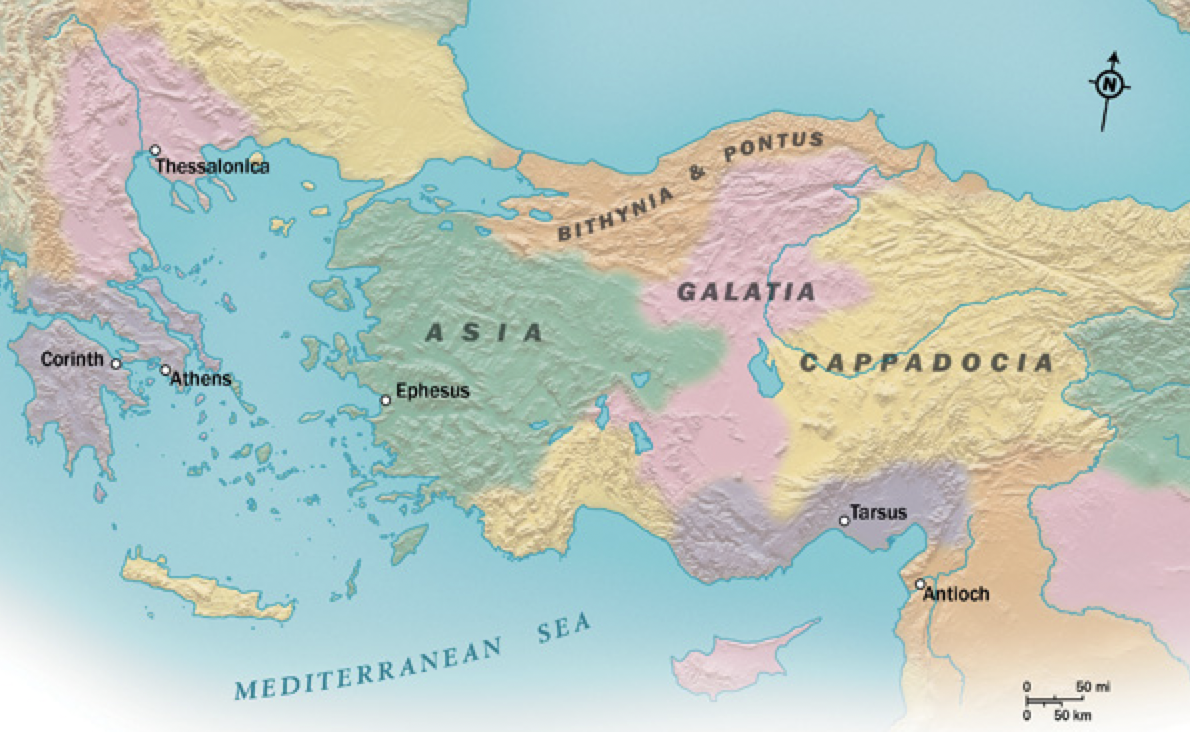
Asia Minor: Provinces addressed in 1 Peter.
By way of advice, 1 Peter makes several points:
· Jesus predicted such suffering for his followers; the readers should neither be surprised by it nor think that they have done anything wrong to bring it upon themselves (4:12; 5:9).
· Such suffering may accord with God’s will in that it is allowed by God (3:17), but it does not come from God; it is caused by unrighteous people and by the devil (5:8).
· God cares for those who suffer (5:7) and protects them (1:4-5).
· The time of suffering will be short (1:6; 5:10), for the end of all things is near (4:7; cf. 1:5). Those who have caused suffering will be defeated and punished (4:5, 17–18).
· Those who have endured unjust suffering will be blessed and rewarded (1:7, 11, 13; 2:19-20; 3:9, 14; 4:14; 5:4, 10).
Beyond these assurances, the letter encourages the readers to adopt a particular perspective toward their suffering.
First, they should know that trials can be a proving ground for faith, serving to refine it just as precious metals are purified in a hot fire (1:6-7; cf. 4:1). This image for the refinement of faith (or character) was common in Jewish wisdom literature (see Prov. 17:3; Wis. 3:4-6; Sir. 2:5).
Second, and at a deeper level, the readers are urged to understand what is happening to them as sharing in the suffering of Christ (4:13). Throughout the letter, Jesus is consistently portrayed as one who suffers (1:11, 19; 2:22-25; 3:18; 4:1), and the Christian who suffers is said to follow in his footsteps (2:21; cf. 3:17-18). This idea is common in Christian writings (cf. Rom. 8:17; Phil. 3:10-11; 2 Tim. 2:11-12). A practical implication is that believers ought to suffer in the same manner that Christ did, thus not seeking retaliation against their foes (2:21-23; 3:9) and totally trusting in God (2:23; cf. 1:13, 21; 2:19).
Finally, 1 Peter also offers readers two practical suggestions that might help to make life more bearable for them:
1. The church should become an alternative community of support, a substitute family termed the “household of God” (4:17; cf. Eph. 2:19; 1 Tim. 3:15). The readers are urged to love and honor one another as a family of believers (2:17; cf. 1:22; 3:8) and to regard all other Christians in the world as their brothers and sisters (5:9).
2. The readers are to behave respectfully in ways that “give the lie” to the false accusations being made against them (2:15-16; cf. 1:15-16). They should be careful not to antagonize the opposition unnecessarily, but they should show by their deeds that their faith is genuine (2:12; 3:12) and be ready to give a defense of the gospel that sustains them when the occasion presents itself (3:15-16). They must show that they are different in a positive way, that they not only have given up those aspects of the pagan life that their neighbors still find appealing (4:3-4) but also have rid themselves of vices that are more universally regarded as undesirable (2:1; cf. 3:9). They should concentrate on conducting themselves honorably, so that those who malign them will see their honorable deeds and be put to shame (3:16) or possibly be converted (2:12).
In short, those who suffer abuse because they are Christians should not be intimidated by such harassment (3:14) or consider it a disgrace (4:16). Rather, they should cast their anxiety upon God (5:7), realize that the Spirit of God is with them (4:14), set their hope on what is coming (1:13), and discipline themselves for faithful living in what is currently a dangerous world (5:8).
Christians as the New Israel
In 1 Peter Christians are described with terminology and categories traditionally used for Israel. Gentiles who believe in Jesus are identified as “a chosen race, a royal priesthood, a holy nation, God’s own people” (2:9). Christian believers also represent a new temple, a spiritual house for God composed of living stones (individual believers) where sacrifices acceptable to God are offered through Jesus Christ (2:5). The salvation of God promised by Israel’s prophets is being received by people who love Jesus and who believe in him (1:8-10). In fact, the Jewish scriptures were inspired by the Spirit of Christ and written for the benefit of those who believe the Christian gospel (1:11-12).
Images for the Church in 1 Peter
· the Dispersion—exiles on earth, separated from the true home in heaven (1:1, 17; 2:11)
· the new Israel—a chosen race and a holy nation (2:9; cf. Deut. 7:6; 10:15; Isa. 43:20); God’s own people (2:9; cf. Exod. 19:5; Isa. 43:21)
· a priesthood of all believers—a holy priesthood (2:5); a royal priesthood (2:9; cf. Exod. 19:6) a living temple—a spiritual house made of living stones, where spiritual sacrifices are offered (2:5; cf. 1 Cor. 3:16)
· a flock of sheep—tended by pastors (= shepherds) with Christ as chief shepherd (2:25; 5:3-4; cf. John 10:11; 21:15-19; Acts 20:28; Isa. 40:11; Ezek. 34:12)
· a woman—“your sister church in Babylon” (5:13), referring to an individual congregation as a woman (literally, “she who is in Babylon”); cf. 2 John 1
The author of 1 Peter does not spell out a clear rationale for why Christians are now to be regarded as the new Israel or chosen people of God. The thinking probably is that because Jesus is the Jewish Messiah, people who believe in him and follow him are brought into the special relationship that God has always had with the Jewish people (regardless of ethnic identification). The letter does not speak explicitly of a transfer of privileges (from Jews to Christians) but rather stresses the inclusion of Christians in the blessings of Israel. Many interpreters, however, have thought that such a transfer is implied, and 1 Peter is then read as a key text in support of supersessionism, the doctrine that Christians have replaced or superseded Jews as the chosen people of God. Whether or not that is the case, we may at least affirm that the emphasis in 1 Peter is not on demotion of traditional Israel (the fate and destiny of Jews who do not accept Jesus is never mentioned) but instead on the accession of others: the grace (1:10, 13; 4:10; 5:10, 12) and mercy (1:3; 2:10) of God has made salvation available to all through the death and resurrection of Jesus Christ (1:3, 11; 2:21-24; 3:18, 21). And 1 Peter also wants to emphasize that Christians have inherited the expectations and responsibilities of being God’s people along with the privileges: like Israel of old, those who are brought to God through Christ (3:18) are to be holy, for God is holy (1:15-16; cf. Lev. 11:45).
Finally, we should note that Christians are portrayed not simply as the new Israel in 1 Peter but specifically as the “Dispersion” (1:1)—that is, as Israel-in-exile or as Israel-in-the-Diaspora. This metaphor of dispersion is appropriate because the readers’ situation is one of both peril (1:6-7; 2:11-12, 15, 18–20; 3:13-4:6; 4:12-19; 5:8-9) and privilege (1:3-5, 9–12; 1:13-2:10). Christians may be God’s elect—chosen, destined, and sanctified (1:2; cf. 2:9)—but they are also exiles (1:1; cf. 1:17; 2:11). At a practical level, the metaphor of dispersion works in two specific ways: (1) a primary danger that the readers face is assimilation to the surrounding culture (the temptation that confronted Israel in the Diaspora); (2) the return from exile to the homeland (in this case, the Christian pilgrimage from earth to heaven) involves a journey of faith accompanied by many trials (as did that of Israel from Babylon to Palestine).
Baptism and Spiritual Growth
In 1 Peter baptism is mentioned in connection with the appeal or pledge to God that believers offer and the salvation that they receive through the resurrection of Christ (3:21). Many interpreters have thought that much more of the letter can be related to the general theme of baptism or at least that its contents could be especially meaningful for the newly baptized. The author addresses his readers as persons who have begun a new life (1:3, 23) and acquired a new identity (1:21; 2:10, 25). They are urged to discipline themselves (1:13; 4:7; 5:8) for a way of life appropriate to that identity (1:15; 2:12). They are like newborn infants who have only tasted the Lord’s goodness but who will “grow into salvation” if they continue to be nourished with pure spiritual milk (2:2-3; contrast this with 1 Cor. 3:2 and Heb. 5:12-13, where supposedly mature readers are rebuked for being such babies that they still need milk). The readers of 1 Peter are Christians in process, or “under construction,” as the metaphor of being built into a not-yet- completed house implies (2:4-5). A key word for such people is hope (1:3, 13, 21; 3:15): the readers can look back on a futile and dubious past (1:18; 2:25; 4:3), and they can look forward to an absolutely certain future (1:4-5; 5:10), but the present is a time of “living hope” (1:3). They are already receiving the outcome of their faith (1:9), but this is only the beginning of what God has for them (1:13).
Submission to Earthly Authorities
__ In 1 Peter 2:13-3:7 we find a fairly long Haustafel (“household table”) that may be compared with similar ones elsewhere in the New Testament (Eph. 5:21-6:9; Col. 3:18-4:1; 1 Tim. 2:8-15; 5:1-2; 6:1-2; Titus 2:1-10 [see box 16.4 on p. 337]). What is particularly striking about this table is its emphasis on submission to non-Christian authorities: the Roman emperor, masters who are not believers, husbands who do not respect their wives’ commitment to the Christian faith. A great deal of attention is devoted to exhorting those who lack social power to accept the authority of those who have it (2:13, 18; 3:1); relatively little attention is paid to instructing the persons in authority to exercise their power responsibly (e.g., there are no directions for Christian masters regarding treatment of their slaves [cf. Eph. 6:9; Col. 4:1]). This could be partly due to the actual composition of the Christian communities to which the letter is addressed (more slaves than masters, more wives than husbands). It also may be that subservient positions were the ones that the author regarded as most Christlike (2:21-24): slaves and wives get the most attention because they are the ones that all believers should emulate, humbling themselves in selfless service (3:8; 5:2, 6).
Christian tradition holds that Peter was martyred in Rome under the emperor Nero, that he was put to death by crucifixion, and, specifically, that he was crucified upside down.
The Gospel of John records a prediction by Jesus concerning “the kind of death” by which Peter would glorify God: “When you grow old, you will stretch out your hands, and someone else will fasten a belt around you and take you where you do not wish to go” (John 21:18-19). The reference to outstretched hands seems like an allusion to crucifixion (though not, actually, to upside- down crucifixion).
Around the year 96, the bishop Clement writes from Rome, “Because of jealousy and envy the greatest and most upright pillars were persecuted, and they struggled in the contest even to death… . Peter bore up under hardships not just once or twice, but many times; and having thus borne his witness he went to the place of glory that he deserved” (1 Clement 5:2-4). About one hundred years later, Tertullian states that Nero was the one responsible for the apostles’ deaths (Scorpiace 15). He refers to Rome as “a fortunate church … where Peter had a passion like that of the Lord, where Paul was crowned with the death of John” (Praescriptione 35). The reference to Peter having a passion “like that of the Lord” probably refers, again, to crucifixion (Paul’s death was like that of John the Baptist, because he was beheaded).
The idea that Peter was crucified upside down actually comes from the apocryphal Acts of Peter, a fanciful second-century work that usually is given little credibility by religious scholars. In this case, however, the work devotes several paragraphs to explaining why Peter was crucified in this manner: Peter himself requested it and then explained the elaborate and esoteric symbolism of the act (something like birth imagery, recalling Adam). Elsewhere, the Jewish historian Josephus notes that soldiers sometimes amused themselves by crucifying criminals in different positions, so it is possible that the Acts of Peter is not inventing the story but rather supplying theological reasons to explain an actual fact regarding Peter’s execution (a humiliating detail passed over by others).
The letter of 1 Peter has a greater claim to authenticity. Scholars remain divided over the question of whether it is pseudepigraphical. Many scholars think that this letter might actually have been written by the apostle a few years before his martyrdom; others suspect that it may come from a circle of Peter’s followers who wanted to articulate his ideas with new relevance a decade or two after his death. In either case, the letter is regarded as expressive of a “Petrine perspective” associated with Rome in the last third of the first century.
Ironically, perhaps what is most noteworthy about this “Petrine perspective” is that it seems to lack anything overtly distinctive. The ideology of 1 Peter seems to be generically expressive of “mainstream Christianity,” an integrated faith that provides a synthesis of numerous strands of tradition: some elements may derive from the Galilean ministry of Jesus, others from concerns of the Jerusalem church, still others from the theological witness of Paul. Interpreters have long noted that almost every verse of 1 Peter can be read as a parallel passage to some other New Testament writing (see box 25.2). The letter also seems to draw upon numerous liturgical and catechetical materials; it is peppered with snatches of hymns or creeds (1:18-21; 2:21-25; 3:18-22), and it seems to employ homiletic or apologetic conventions that had achieved widespread use (e.g., the discussion in 1 Pet. 2:4-10 uses many of the same scripture texts that feature in Rom. 9:25-33; likewise, 1 Pet. 5:5-9 offers a sequence of exhortations similar to James 4:6-10).
The letter opens with a salutation that identifies the author as “Peter, an apostle of Jesus Christ” and designates the readers as “exiles of the Dispersion” who inhabit five regions of Asia Minor (1:1-2). It continues with an eloquent blessing of God that segues into a call for the readers to rejoice in the salvation that God is providing for them (1:3-9): they have received a new birth and await their glorious inheritance with hope, faith, and love that cannot be tarnished by suffering temporary trials. What prophets predicted is now a reality, announced through the gospel (1:10-12). Therefore, the readers should discipline themselves for lives appropriate to the gospel, lives marked by obedient holiness, reverent fear, mutual love, and continued spiritual growth rather than by the ignorant desires and futile ways of their former lives (1:13-2:3). Their identity as God’s chosen people allows them now to be built into a living house for God to inhabit (2:4-10).
The author exhorts the readers as aliens and exiles to abstain from evil and to conduct themselves honorably (2:11-12). They are to honor the emperor, as instituted by God (2:13-17). Further instructions are provided for slaves (2:18-25), wives (3:1-6), and husbands (3:7). In general, they should conduct themselves in ways that do not invite opposition, and they should regard as a blessing any abuse that they suffer for doing good (3:8-17). In this way they follow the example of Christ, whose suffering secured salvation for the baptized and led to a vindication over all angels and spiritual powers (3:18-22). In keeping with this, their intention must be to live in a distinctive way, as stewards of God’s grace and gifts, ready to give an account of themselves in the final judgment, which is near (4:1-11).
The next section of the letter seems to recapitulate previous exhortations regarding the proper response to suffering (4:12-19). The readers should not be surprised by the “fiery ordeal” that tests them; indeed, they should rejoice insofar as they share Christ’s suffering and suffer in accordance with God’s will. Then, the author speaks “as an elder” to encourage church leaders to exercise their office responsibly and to urge others to submit to their leadership (5:1-5). He exhorts everyone to humility and steadfastness, and he assures his readers that even though their adversary the devil is on the prowl, God’s deliverance is near (5:6-11). The letter closes with greetings and a benediction (5:12-14).
1:1 Heb. 11:13; James 1:1
1:2 Heb. 12:24
1:3 Eph. 1:3
1:3-5 Titus 3:4-7
1:4 Matt. 6:20
1:6-7 Rom. 5:3-5; James 1:2-3
1:10-12 Eph. 3:2-6
1:12 Matt. 13:17
1:14 Rom. 12:2; Eph. 2:2-3
1:17 Luke 11:2
1:20 Eph. 1:4
1:22 Rom. 12:9-10
1:23-2:2 James 1:10-11, 18–22
2:1 Eph. 4:25, 31; Titus 3:1; James 1:21
2:2-6 Eph. 2:18-22
2:5 Rom. 12:1
2:6-8 Rom. 9:32-33
2:7 Matt. 21:42
2:9 Titus 2:14; Rev. 1:6; 5:10
2:10 Rom. 9:25
2:11 Heb. 11:13; James 4:1
2:12 Matt. 5:16
2:13-17 Rom. 13:1-7
2:16 Gal. 5:13
2:19-20 Luke 6:32-33
2:24 Rom. 6:2, 11; Heb. 10:10
2:25 Heb. 13:20
3:1 Eph. 5:22
3:1-6 1 Tim. 2:9-11
3:8-9 Rom. 12:16-17
3:9 Luke 6:28; Heb. 12:17
3:14 Matt. 5:10
3:18 Rom. 6:10; Eph. 2:18; Heb. 9:28
3:22 Eph. 1:20-22; Col. 2:15
4:8 James 5:20
4:10-11 Rom. 12:6-7
4:13 Matt. 5:10
4:14 Matt. 5:11; Heb. 13:13
5:2 Acts 20:28
5:4 Heb. 13:20
5:5-9 James 4:6-10
As an apostolic missive from Rome, 1 Peter is addressed specifically to “the exiles of the Dispersion in Pontus, Galatia, Cappadocia, Asia, and Bithynia.” All these regions are located in Asia Minor (what now is Turkey [see map on p. 471]), and they are probably listed in the order in which the letter was delivered to them (carried, apparently, by Silvanus [see 5:12]). The Romans did not actually distinguish between “Pontus” and “Bithynia” (having established a single province that incorporated both areas), so the terminology used here perhaps reflects traditional territories rather than the official (imposed) political designations. In any case, 1 Peter appears to have been composed as a “circular letter” intended for multiple congregations (cf. Acts 15:23-29; Col. 4:16).
What do we know of the areas to which 1 Peter was sent? Two of the regions are familiar to New Testament students: Galatia is an area to which Paul also wrote a well-known letter; Asia is the province in which Ephesus and Colossae were located. But we know almost nothing about the spread of Christianity into Pontus, Cappadocia, or Bithynia. Curiously, the book of Acts says that the Spirit of Jesus actually prohibited Paul and his company from taking the gospel to Bithynia (Acts 16:7). Still, one way or another, the faith spread to these regions, and by the time 1 Peter was written there were churches that had become sufficiently well established to have elders who were paid salaries (see 5:1-2).
What became of the Christians to whom 1 Peter was addressed? Around 112, Pliny the Younger, a Roman governor, wrote to the emperor Trajan concerning the status of Christianity in Bithynia-Pontus, two of the areas named in 1:1. Pliny’s letter provides information about the churches addressed by 1 Peter a few decades later.
On the one hand, we learn that the church in this region has continued to grow and prosper. Pliny notes that “many persons of every age, every rank, and also of both sexes” were associated with the faith, and he complains that “the contagion of this superstition has spread not only to the cities but also to the villages and farms.”
On the other hand, it is clear that the suffering of the believers has also increased, for now they are experiencing deliberate persecution at the instigation of the Roman state. Pliny reports,
The method I have observed towards those who have been brought before me as Christians is this: I asked them whether they were Christians; if they admitted it … I ordered them to be at once punished: for I was persuaded, whatever the nature of their opinions might be, a contumacious and inflexible obstinacy certainly deserved correction… . An anonymous information was laid before me containing a charge against several persons, who upon examination denied they were Christians, or had ever been so. They repeated after me an invocation to the gods, and offered religious rites with wine and incense before your statue … and even reviled the name of Christ: whereas there is no forcing, it is said, those who are really Christians into any of these compliances: I thought it proper, therefore, to discharge them. Some among those who were accused … at first confessed themselves Christians, but immediately after denied it; the rest owned indeed that they had been of that number formerly, but had now … renounced that error… . After receiving this account, I judged it so much the more necessary to endeavor to extort the real truth, by putting two female slaves to the torture, who were said to officiate in their religious rites: but all I could discover was evidence of an absurd and extravagant superstition. (Translation by William Melmoth; revised by F. C. T. Bosanquet [Project Gutenberg, 2001])
Many scholars, however, suggest another explanation for the unbalanced presentation: the author believes that Christians need to demonstrate that their faith is not a threat to the social order. The Christian religion had potential for being perceived as a radically subversive social movement. At the end of the first century, the Greek author Plutarch stated that “a married woman should worship and recognize the gods whom her husband holds dear, and these alone” (Advice on Marriage 19); Christian wives would be in defiance of such conventional wisdom, as would Christian slaves with regard to the gods of their pagan masters. Thus, 1 Peter urges believers to show the world that as a general rule their religion does not cause people to become insubordinate, rebellious, or insolent, though there are some matters on which Christians will not compromise. The letter does not deal with the question of social transformation (creating a society that is more just) but simply offers counsel to believers in circumstances for which the hierarchical arrangement is a given. Nevertheless, many social critics have complained that the stance of 1 Peter encourages accommodation in a way that inevitably favors maintenance of the status quo. In Christian theology, the teaching of 1 Peter on this subject is usually considered alongside other biblical texts that offer alternative perspectives on political and hierarchical power (e.g., Mark 10:42-44; John 15:18-19; Acts 5:29; 1 John 2:15-17; Rev. 13; 17–18).
Two of Paul’s colleagues appear to be associated with the writing of 1 Peter.
Silvanus. The letter from Peter is to be delivered to churches by Silvanus (5:12). This probably is the same Silvanus (aka Silas) who, according to the book of Acts, was previously entrusted with delivering a different circular letter following the apostolic council (see Acts 15:22-29). Elsewhere in the New Testament, Silvanus/Silas is closely linked with Paul (Acts 15:40; 17:14-15; 18:5; 2 Cor. 1:19), and he is even listed as co-author of two Pauline letters (1 Thess. 1:1; 2 Thess. 1:1). Mark. Peter sends greetings to the churches from Mark, who is identified as Peter’s “son” (5:13). The latter ascription usually has been taken metaphorically, and this “Mark” traditionally has been identified with John Mark, whose mother knew Peter in Jerusalem (Acts 12:11-12). This Mark, a relative of Barnabas (Col. 4:10), had also been a colleague of Paul for a time, but Paul became dissatisfied with him and replaced him with none other than Silvanus/Silas (see Acts 12:25; 15:37, 39; cf. 2 Tim. 4:11; Philem. 24).
The description of the recipients as “exiles of the Dispersion” is interesting because such language typically was used to describe Jews who lived outside of Palestine (in the Diaspora [see p. 32]). The New Testament letter of James uses a similar description to refer to Jewish Christians who live outside of Palestine (James 1:1 [see box 24.3 on p. 450]). The recipients of 1 Peter, however, almost certainly are Gentile Christians: there are frequent references to their pagan background (1:14, 18; 4:3-4) and a clear assertion that before their conversion they were not God’s people (2:10). Interpreters conclude that the Jewish language of exile is being applied to these believers metaphorically (they are in a diaspora from their true home, the promised land of heaven). Other Jewish categories are also applied to them (2:9), and the letter sometimes uses the term Gentile in a nonliteral sense to mean “pagan”or “unbeliever” (2:12; 4:3). The Christian readers of 1 Peter may be literal Gentiles (in terms of ethnic identification), but apparently they no longer think of themselves as being Gentiles; now they see themselves as part of Israel, God’s chosen people.
Why would the apostle Peter (or others writing in his name) send a letter from Rome to the Gentile believers in these provinces? The main purposes of the letter are clearly stated: to encourage the readers, to testify to them concerning what constitutes “the true grace of God,” and to exhort them to stand fast in that grace (5:12). Thus, the genre of this letter is often described as parenesis, a type of teaching that seeks to motivate an audience to live in accord with what it already knows to be true. But we can go further. One of the more noticeable aspects of 1 Peter is the repeated reference to suffering (1:6, 11; 2:19, 20, 21, 23; 3:14, 17, 18; 4:1, 13, 15, 16, 19; 5:1, 9, 10). This, no doubt, indicates why the readers need the motivation that this letter seeks to provide: they are undergoing hard times. Much attention has focused on this element of the letter’s context. Scholars have attempted to link the composition of 1 Peter to some known crisis or wave of persecution that affected believers in Asia Minor around the time this letter was written. In recent years, however, most scholars have become convinced that the variety of suffering being addressed in 1 Peter is social ostracism and general harassment rather than government-run persecution of the church. As far as we know, Christians in Asia Minor did not endure state- sponsored persecution until the second century. This letter, furthermore, never mentions persecution per se; rather, it speaks of suffering as a common experience that should be regarded as the expected lot of anyone who is a Christian (4:12), anywhere in the world (5:9).
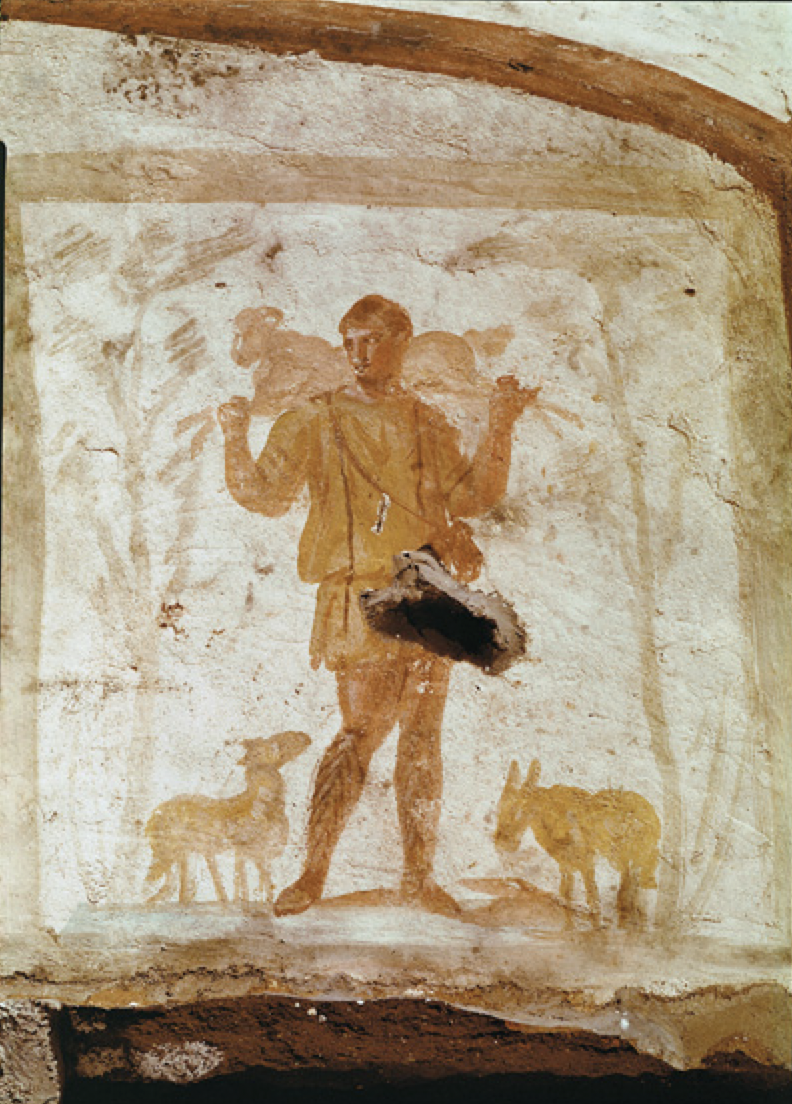
Shepherd of Souls. An early depiction of Christ from the catacombs in Rome. In 1 Peter, Christ is presented as the “shepherd and guardian of your souls” (2:25).
With regard to date, if this letter actually was written by Peter, it was composed probably in the early to mid-60s, after Peter came to Rome but before Nero began his violent attacks on believers (given the remarks about the emperor in 2:13-14). Or, we might say that it was written after Paul wrote his letter to the Romans (since Paul does not include Peter among the persons whom he greets in the city, Peter probably was not in Rome at the time) but before Paul was brought to Rome under house arrest (since 1 Peter does not mention Paul or provide any update on his situation, Paul probably was not in the city at the time). On the other hand, if 1 Peter is pseudepigraphical, it could have been written almost anytime in the latter three decades of the first century, though a time before 89 may seem more likely (given the remarks in 2:13-14), since that is when Domitian began to vent his hostility toward Christians.
In either case, the letter addresses Gentile Christians in Asia Minor who are suffering for their faith. It seeks to provide them with apostolic encouragement from a revered leader, the apostle Peter, who knows a thing or two about suffering (5:1) and who can testify to them about God’s grace and exhort them, with integrity, to remain steadfast.
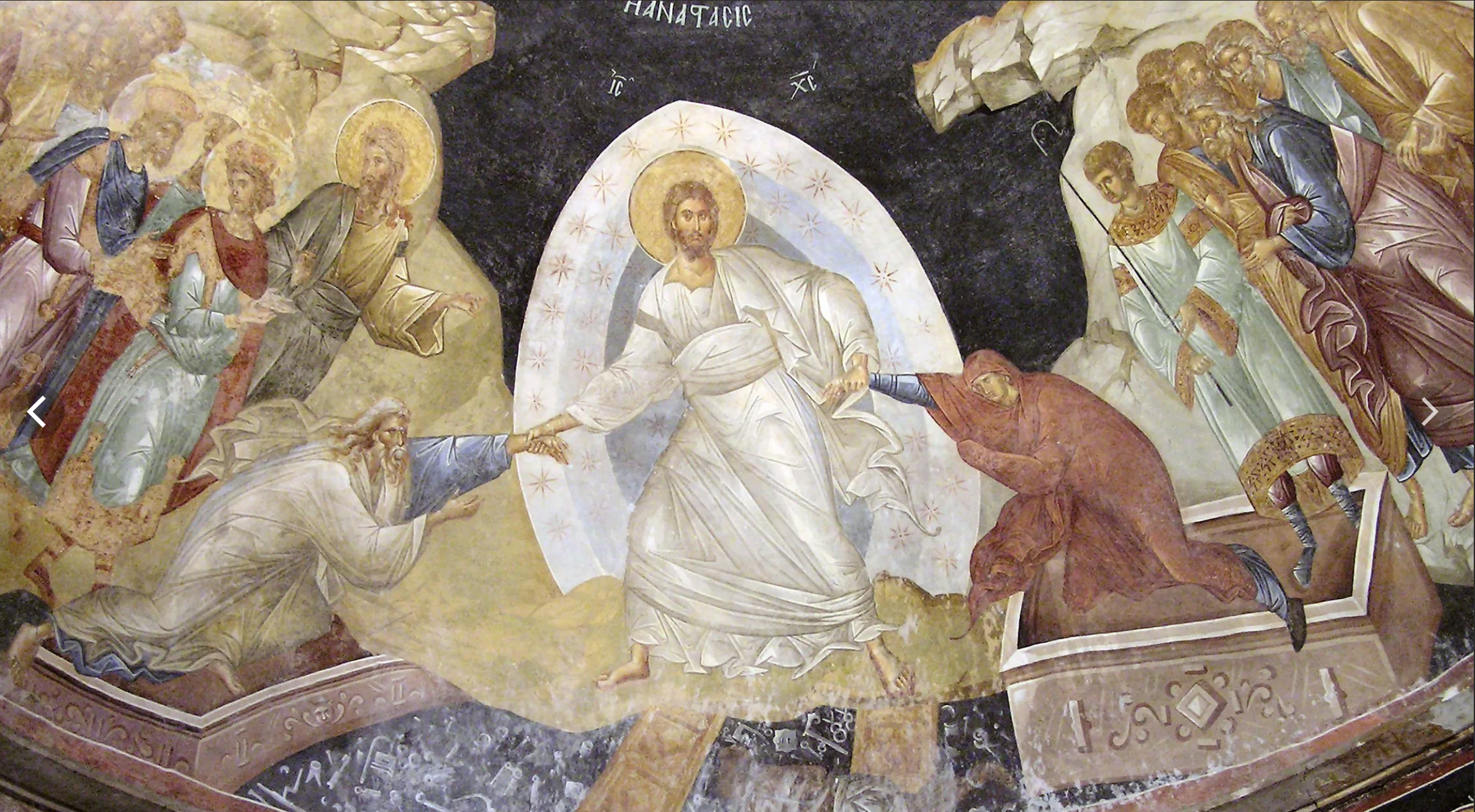
Descent into Hell. Two curious passages in 1 Peter speak of Christ preaching to “spirits in prison” and to “the dead” (3:19-20; 4:6). These references gave rise to a Christian tradition that Jesus descended into hell to rescue lost souls. This doctrine is sometimes called “the harrowing of hell.”
1 Peter.
Related Concepts
- 2-peter
- apocryphal-petrine-literature
- apologetics
- baptismal-conformity-to-christ
- baptismal-new-identity
- canon-formation
- catechesis
- christlike-humility
- christs-victory-over-powers
- christus-victor
- corporate-ecclesiology
- discipleship-of-the-powerless
- election
- eschatological-reward
- exhortation
- glory-following-suffering
- holy-saturday
- hope
- imitation-of-christ
- inheritance
- joy-in-suffering
- liturgical-tradition
- living-stones
- new-birth
- new-israel
- new-testament-parallels
- parenesis
- pauline-theology
- petrine-perspective
- pilgrimage
- prophecy-fulfilled
- royal-priesthood
- social-order
- social-ostracism
- spiritual-sacrifices
- steadfastness
- suffering-unjustly
- supersessionism
- testing