New Testament — Topic 18
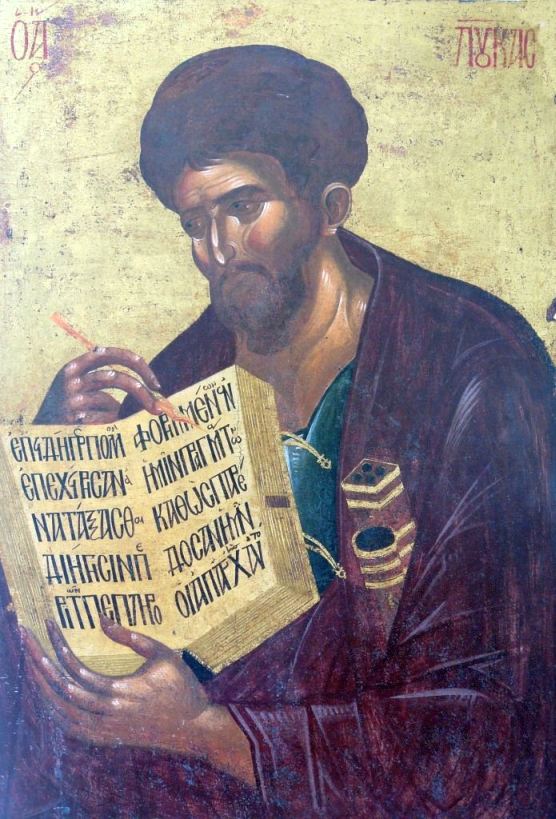 The Book of Acts of the Apostles is
the second part of the dilogy, the author of which is recognized in the Church
tradition as St. Apostle Luke. The first part consists of the Gospel according
to Luke, and the Book of Acts is intended as its continuation: it begins from
the moment when the Gospel ends.
In the Book of Acts itself, Luke’s authorship is not indicated in any way. The handwritten tradition attests to the practice of indicating Luke’s name in the inscription of the Book of Acts. However, if this practice has been known for the Gospel of Luke since the beginning of the 3rd century, then for the Book of Acts it is attested only since the 9th century. This practice has not become generally accepted, and in modern translations of the New Testament, Luke’s name is not mentioned in the inscription of the Book of Acts.
However, we have something more: the Church tradition, expressed in the testimonies of the Church Fathers. We shall call this kind of evidence as “external evidence”. And such evidence has come down since the 2nd century. St. Irenaeus of Lyon (c. 122-202) calls the Apostle Luke the author of the Book of Acts and was the first who used the title “Acts of the Apostles” (Greek: Praxeis Apostolon): “Therefore, if anyone, on the basis of the Acts of the Apostles, carefully examines the time about which it is written that he came to Jerusalem on the above-mentioned issue [refers to the preaching of the Apostle Paul among the Gentiles], he will find that the years indicated by Paul coincide with it. So, Paul’s indication is consistent and identical with Luke’s testimony about the Apostles”.
Saint Irenaeus mentions Luke here, showing that the Book of Acts agrees with the testimony of the Apostle Paul himself. Irenaeus of Lyon mentions Luke’s authorship as self-evident, as obvious not only to him, but also to the heretics with whom he argues. Further, in his book «Against Heresies», Irenaeus of Lyon returns to the apostle Luke again, devoting an entire chapter to him: “About Luke, Paul’s companion, and about the peculiarities of the Gospel history, which are known only through him”.
For additional external evidence, see also: Clement of Alexandria (Strom. 5:12.82.4), Tertullian (Adv. Marc 4:2, 5; 5:2), Origen (ap. Euseb. HE 6.25.14), Eusebius (HE 3.4.6), and Jerome (De vir.ill 7).
Further, we will speak about internal evidence:
A. The Author was the Third Evangelist:
- This is implied in Acts 1:1, “In the first book …”
- “Theophilus” is probably the same person as in Luke 1:1-4, “most excellent Theophilus.”
- There is close similarity in style and language between Luke and Acts
- The tone of Luke and Acts is similar: worldwide outlook, interest in Gentiles, interest in woman, apologetic tendency
- The end of Luke dovetails into the beginning of Acts
- Jesus Christ only appears to his disciples in Jerusalem in Luke and Acts
- Luke is the only Gospel which refers to Jesus’ appearance before Herod Antipas in his trial (Luke 23:7-12), and this theme is alluded to in Acts 4:27)
B. The Author Was a Companion of Paul:
There is good evidence for the support of this position:
- There are movements in the narrative from the 3rd person to the 1st person plural – the “We” sections (16:10-17; 20:5-21:18; 27:1 – 28:16). It is most natural to understand these to refer to the personal memoirs of one of Paul’s companions. There is no change in style which demonstrates these not to be an external source.
- The earliest traditions identify the author with the expression of Col. 4:14, “Luke, the beloved physician” and this epistle probably aligns with Paul’s Roman imprisonment which Luke would have been present according to the “We” sections (see also Philemon 24; 2 Tim. 4:11).
Interesting to know. If someone asked you who wrote the most in the New Testament, you’d likely be tempted to say, Paul. After all, Paul wrote 14 epistles. There’s no question that Paul wrote the most New Testament books. Things change, however, when you look at the word count. If you add up all the words Paul wrote, it comes to about 32,000. Definitely, a respectable amount. But Luke wrote nearly 38,000 words (in just two books!), making him the author of about 27 percent of the New Testament. Paul, on the other hand, is responsible for about 23 percent. So, we can say that Luke wrote most of the New Testament.
«The book of Acts» is a book that reveals the power of the Church. This is the story of how the Holy Spirit entered a small group of believers, filled them with power and enthusiasm from above, and exploded this group, scattering it like a pile of burning coals all over the world and lighting new bonfires and new churches from them. In the first century, the gospel spread everywhere like wildfire.
That’s why this book is sometimes called «The Acts of the Holy Spirit», or, more precisely, «Тhe continuation of the acts of the Lord Jesus Christ», Christ himself being the principal actor through the working of the Holy Spirit. This is already mentioned in the introduction to the book. Since Luke is writing this book for the same friend for whom he wrote his Gospel, he begins like this: «The former account I made, O Theophilus, of all that Jesus began both to do and teach…» (Acts 1:1). It becomes clear that the Gospel of Luke was the first volume, and Acts is the second volume. Acts is the continuation of the story of what Jesus did and taught from the beginning. Then Luke says: «…Until the day on which He was taken up, after He through the Holy Spirit had given commandments to the apostles whom He had chosen, to whom He also presented Himself alive after His suffering by many infallible proofs, being seen by them during forty days and speaking of the things pertaining to the kingdom of God. And being assembled together with them, He commanded them not to depart from Jerusalem, but to wait for the Promise of the Father, «which,» He said, «you have heard from Me; for John truly baptised with water, but you shall be baptised with the Holy Spirit not many days from now». (Acts 1:2-5).
That’s the essence of the Book of Acts. This is a story about how the Holy Spirit, acting through the Church, continued to accomplish what Jesus had begun in His earthly ministry. The Gospels tell us only about the beginning of the work of the Lord Jesus Christ. And when you reach the end of the Gospels, you haven’t reached the end at all, and you haven’t even reached the beginning of the end yet — you’re only reaching the end of the beginning. And already in the Book of Acts, the Holy Spirit begins to fulfill God’s plan, begins to do His work through the new Body of Jesus Christ, His Church.
This book is of crucial importance for understanding how the early Christian Church took its first steps in a Jewish and pagan environment, how the Holy Spirit worked in it, and what miracles and signs accompanied the preaching of the apostles.
However, as St. John Chrysostom notes, “many do not even know that this book exists,” they do not know “either the book itself or the one who wrote and co- authored it.” According to the holy father, “this book can benefit us no less than the Gospel itself: it is so full of love, such purity of dogmas, and such abundance of miracles, especially those performed by the Holy Spirit. Let’s not ignore it, but investigate it carefully. Here one can see the fulfillment in practice of those prophecies that Christ proclaims in the Gospels, the truth shining in the very events, and the great change for the better in the disciples by the Holy Spirit.”
The Book of Acts contains valuable information about the life of the first Christian community, about the preaching and miracles of the two preeminent apostles, Peter and Paul. From this book, says Chrysostom, “you will see how the apostles themselves, as if on wings, circumnavigated the earth and the sea, how they, fearful and unwise, suddenly became different people, began to despise wealth, became insensitive to fame, inaccessible to anger or lust, and turned out to be decidedly above everything; you will see that they had a great unity of mind, and that between them never, as before, there was no envy, no dispute about primacy, but, on the contrary, they were dominated by every perfect virtue, and especially love began to shine.”
It is important to note that the Book of Acts ends, leaving a feeling of incompleteness. Why is that? Because the Holy Spirit wanted the book of Acts to remain unfinished!
The Book of Acts is still being written. Like the Gospel of Luke, the Book of Acts is just another description of what our Lord Jesus Christ did and taught from the beginning. He hasn’t finished working or teaching yet. He began His ministry in a human body, as the Gospels tell us. He continued this ministry in His Body, the Church, as described in Acts. And today He continues His ministry through us and every believer on planet Earth. In this regard, the Rev. Maximus the Confessor teaches that the Church, as the Body of Christ, is the unceasingly continuous and expanding incarnation of the Lord. That means that every Christian in the Body of Christ, the Church, is a continuation of the incarnation of Christ through incessant voluntary grace-filled self- transformation in Christ.
Someday the Book of Acts will be finished. And when that happens, we will have an opportunity, God willing, to read it in glory, in eternity, when God’s plan will be fulfilled. When are we going to read this great book, what will it say about me? And you?
- FOREWORD. THE BOOK OF ACTS AS THE BOOK OF ACTS OF THE HOLY SPIRIT
- AUTHORSHIP
- THE DATE OF ACTS: Around A.D. 64/65
- PURPOSE
- LITURGICAL READING
In the Orthodox Church, Acts is the first part of the Apostolos, a liturgical book containing the various Apostolic Readings.
If the Synoptic Gospels were primarily devoted to the story of Christ’s earthly ministry, and the Gospel of John and the Apostolic Epistles were devoted to the theological understanding of this ministry, then the Book of Acts of the Apostles is primarily a testimony to the gracious action of the Holy Spirit in the Church founded by Christ. Therefore, Acts is read liturgically from Pascha through Pentecost. Selections of Acts are also read at other feasts of the Church, St. Stephen’s Day, and the Beheading of the Forerunner, and Baptist John. It is also the custom of the Church to read the book of Acts over the tomb of Christ on Holy Friday. The Book of Acts, is also read in full in the Church on the evening of Holy Saturday before Pascha.
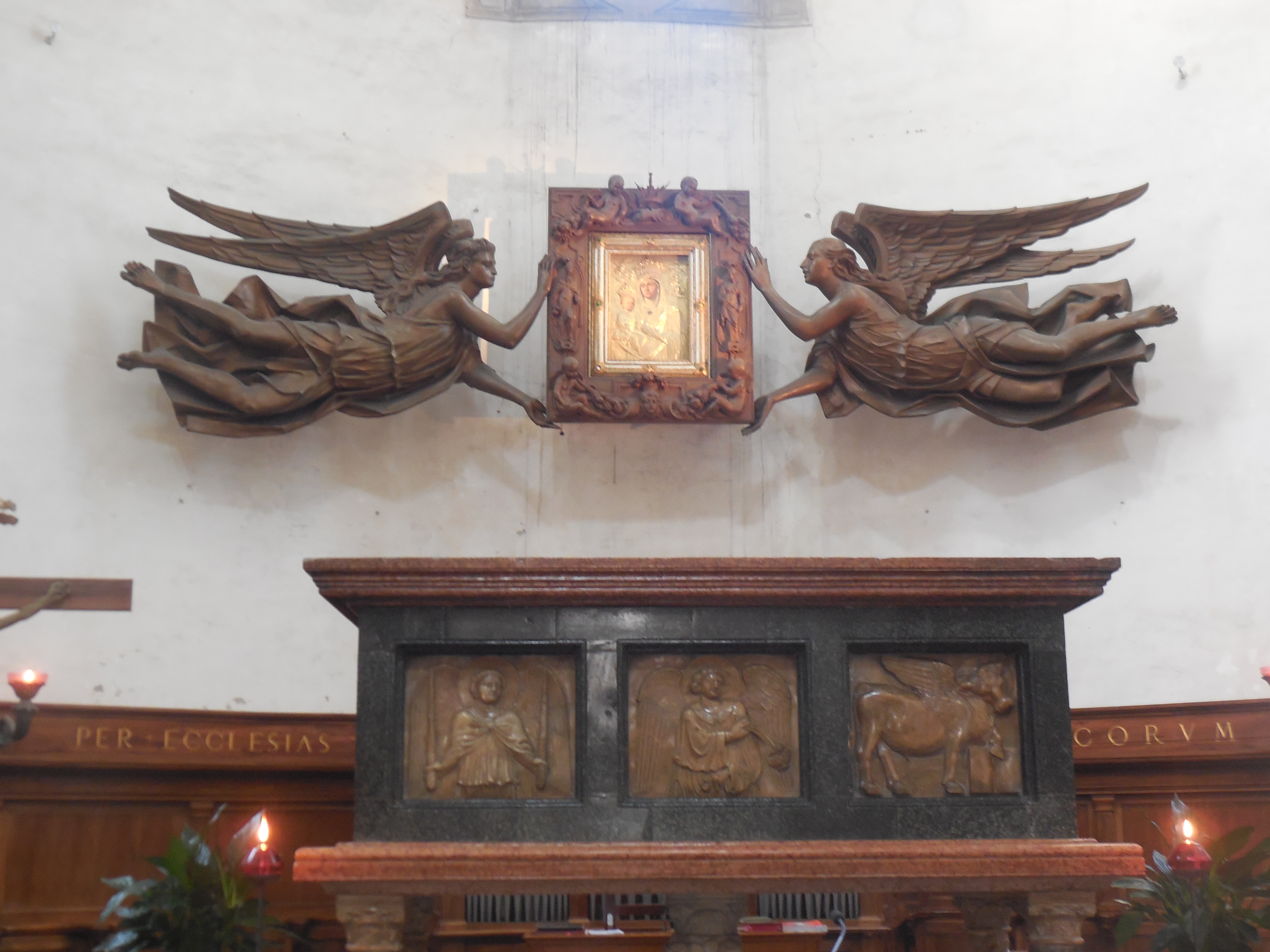 Suggested purpose: Perhaps the question which
is being asked by Theophilus (a Gentile-Christian) and those with him is, “How
is it that Christianity is primarily Gentile in nature if it came from
Judaism?” Therefore, Luke writes Luke-Acts to argue that the Christian Gospel
is not anti-semitic, but is rooted in the Hebrew Scriptures’ promise of
salvation to both the Jews and the Gentiles. “The Way” (see: Acts 18:25-26)
relies in its beginning on the spiritual promises to Israel. The apostles are
the stewards of the promises to Israel. The reason it is primarily Gentile in
nature is because the Jews rejected the message of Jesus as Messiah, and
pushed the Church out. Nevertheless, the Jews as a people are not rejected by
God or his servant Paul. The promises will yet be consummated for the nation through the
resurrected Jesus – the hope of Israel (see: Acts 13:32-33).
An apologetic goal. (The Book of Acts defends Christianity of accusations against it). Christianity in its development caused pagans to fear about the political stability of the state, it seemed to them as a threat, a danger to the existing order. The very origin of Christianity has already alarmed everyone. The Divine Founder (Our Lord Jesus Christ – Blessed be His name!) was sentenced, condemned by the Romans to death by crucifixion on charges of rebellion. The author tries to show the innocence of Christianity, to show that this new religion is not a threat to the foundations of Roman society. Despite repeated accusations, the guilt of the apostles has not been proven anywhere in the Acts.
The innocence of the apostles is conditioned by the innocence of the Founder. Acts. 3:13: “The God of Abraham, Isaac and Jacob, the God of our fathers, glorified His Son Jesus, whom you betrayed and denied in the face of Pilate, when he thought to set Him free”. 13:28: “And though they found no cause for death in Him, they asked Pilate that He should be put to death”.
There were frequent riots, but their culprits, abusers were the Jews, their local communities, not the Gentiles. The attitude of the authorities towards the preachers of the word was always positive: the proconsul of Cyprus Sergius Paulus (an intelligent man) believed, being astonished at the teaching of the Lord (13:12), the governors (magistrates) in Philippi apologize (16:39), Gallio proconsul of Achaia in Corinth defended Paul (18:14-17), some of the officials of Asia, who were friends of Paul, sent to him pleading that he would not venture into the theater (19:31), the commander Claudius Lysias, Felix the governor and Festus do not accuse him and can not specify the charges against him, king Agrippa 2 agrees with Festus (ch. 23-26), and, finally, Paul preaches in Rome undisturbed (ch. 28).
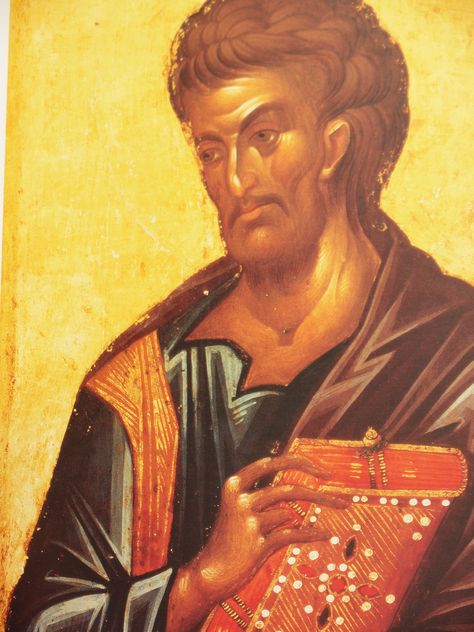 A. The earliest
date for the book of Acts is the two-year imprisonment which is recorded in
Acts 28:30-31 which would have been around A.D. 60 and 61.
B. The latest date for the book of Acts is in the 2nd century writings of the Church fathers.
C. The abrupt ending of Acts allows for an early date (around the time of the events), but could also be understood theologically to emphasize the continuance of Paul’s mission through other believers. Acts 20:25 may hint at Paul’s death. Therefore, it is not determinative.
D. The Neronian persecution of c. A.D. 64/65 probably had not taken place by the time the book was written. There is no evidence of oppression by Rome, even if the Roman officials are less than scrupulous. There is also no indication of oppression in Rome (Acts 28). This is an argument from silence and is not determinative.
E. The Jewish revolt of A.D. 66 and the fall of Jerusalem in A.D. 70 are not indicated in the book of Acts. This leads many to date the book no later than A.D. 70. This is an argument from silence and is not determinative. There may also be indirect allusions to the fall of Jerusalem in Luke especially (Luke 19:41-44; 21:20-24; 23:28-31). But these cannot be limited to the fall of A.D. 70. Rather, it is a part of a greater whole – the final judgment upon the nation (Luke 21:22, 24).
F. Many subjects in Acts would have been prominent before A.D. 70: Gentile admission to church fellowship, coexistence of Jews and Gentiles in the Church, food requirements of the apostolic decree.
G. Many facts: “political, geographical, and social fields,” “nomenclature,” “titles of officials,” and “Roman citizenship” indicate that the work was written not long after the events occurred.
I. MAIN OUTLINE
SECTION 1: ACTS 1-12 (BIRTH OF THE CHURCH; PETER’S LEADERSHIP)
Theme 1.1: Pentecost & Church Foundation (Acts 1-2)
Content: Introduction (1:1-3); Ascension (1:9-11); Matthias chosen (1:15-26); Holy Spirit’s descent (2:1-4); Peter’s sermon (2:14-41); early community life (2:42-47).
Theme 1.2: Early Ministry & Persecution (Acts 3-7)
Content: Healing at Beautiful Gate (3:1-10); Peter/John before Sanhedrin (4:1-22); Ananias/Sapphira (5:1-11); Seven Deacons ordained (6:1-7); Stephen’s martyrdom (6:8-7:60).
Theme 1.3: Expansion to Gentiles (Acts 8-12)
Content: Philip in Samaria (8:4-25); Ethiopian eunuch (8:26-39); Paul’s conversion (9:1-19); Peter heals Aeneas/raises Tabitha (9:32-43); Cornelius’ baptism (10:1-48); Antioch founded (11:19-26); Peter’s prison escape (12:1-19).
SECTION 2: ACTS 13-28 (PAUL’S MISSIONS; JOURNEY TO ROME)
Theme 2.1: Paul’s 1st Journey & Jerusalem Council (Acts 13-15)
Content: Paul/Barnabas sent (13:1-3); Cyprus (13:4-12); Pisidian Antioch sermon (13:16-49); Lystra healing/stoning (14:8-20); Council decision on Gentiles (15:19-29).
Theme 2.2: 2nd & 3rd Journeys (Acts 16-20)
Content: Lydia’s conversion (16:11-15); Philippian jailer (16:25-34); Areopagus sermon (17:22-31); Corinth ministry (18:1-17); Ephesus miracles/riot (19:11-20); farewell to Ephesian elders (20:17-38).
Theme 2.3: Trial & Voyage to Rome (Acts 21-28)
Content: Arrest in Jerusalem (21:27-36); defenses before Sanhedrin/Felix/Agrippa (22-26); storm/shipwreck (27:14-44); Malta miracles (28:1-10); Roman house arrest (28:16-31).
- Theme 1.1: Pentecost and the Foundation of the Church (Acts 1–2).
- Theme 1.2: Early Ministry & Persecution (Acts 3-7).
- Theme 1.3: Expansion to Gentiles. Breaking Barriers — The Gospel to Samaritans and Gentiles (Acts 8–12) or the Jesus Community becomes an international movement.
The opening chapters of Acts establish the Church’s birth through a divine sequence beginning with Christ’s Ascension. Forty days after His Resurrection, Jesus led the disciples to the Mount of Olives, where He commissioned them as witnesses “to the ends of the earth” (Acts 1:8, NKJV) before being “taken up” visibly into heaven as angels proclaimed His eventual return in like manner (1:9–11). This Ascension, celebrated liturgically as the culmination of Christ’s earthly mission, anchors Orthodox eschatology in the promise of His bodily Second Coming and inaugurates His eternal priesthood.
In the days that followed, Peter emerged as the apostles’ voice, guiding the community to fulfill Scripture by replacing Judas. Quoting Psalm 108(109):8 (“Let another take his office”), the disciples prayed for divine guidance and cast lots, selecting Matthias to restore the Twelve (1:15–26). This act signifies the perpetual nature of apostolic ministry—a cornerstone of Orthodox ecclesiology—where authority transfers through prayer and communal discernment, establishing the Twelve as foundational pillars of the New Israel. As St. John Chrysostom emphasizes, this restoration was essential: the Church, built upon apostolic witness, could not stand with a breach in its foundations.
Ten days later, during the Jewish feast of Pentecost, the promised Holy Spirit descended with supernatural power. As “a sound from heaven, as of a rushing mighty wind,” tongues of fire rested on each apostle, including the Mother of God (traditionally present among the “all” in 1:14), filling them with the Spirit’s grace and enabling multilingual proclamation (2:1–4). This event, understood as the fulfillment of Joel’s prophecy (2:16–21) and Christ’s pledge (1:8), marks the Church’s birth. The fire, echoing God’s presence at Sinai, now purifies and empowers the New Covenant community, confirming Pentecost as theophany and the Spirit’s indwelling in the entire Body of Christ.
Compelled by the Spirit, Peter delivered the Church’s inaugural sermon, masterfully interpreting Pentecost through Davidic psalms. Proclaiming Jesus’ death, resurrection, and exaltation as “both Lord and Christ” (2:36), he pierced the hearts of listeners, calling them to repentance, baptism, and reception of the Holy Spirit (2:38). His declaration — that the crucified Jesus is Messiah and Lord —became the kerygmatic core of apostolic preaching. The response was immediate: about 3,000 souls accepted baptism, embodying the Orthodox conviction that Baptism initiates entry into the Church, remits sins, and seals believers with the Spirit.
These new converts then formed the first Christian community, devoting themselves to four essential practices: “the apostles’ doctrine and fellowship, the breaking of bread, and the prayers” (2:42). Here, “the breaking of bread” unmistakably signifies the Eucharist—the center of Orthodox worship — as patristic commentators like Theophylact of Bulgaria affirm: this mystical supper imparts grace and unites the faithful. Shared life flourished through radical generosity (“all things in common,” 2:44), daily Temple worship, and joyful “breaking of bread from house to house” (2:46)—a reference to early Eucharistic liturgies. This communal life, fueled by praise and sacrificial love, drew others to salvation daily (2:47), revealing the Church as a theandric reality where human fellowship is deified by the Spirit.
Pentecost thus fulfills God’s salvation narrative: it completes Christ’s Pascha-Ascension cycle, transforms the disciples into Christ’s unified Body, and launches the Church’s mission. As the “last days” (2:17) dawn, the Orthodox Church perpetuates this apostolic pattern: guarding the Deposit of Faith, celebrating the Eucharist as the “medicine of immortality” (St. Ignatius of Antioch), and embodying koinonia—all while awaiting Christ’s return. The foundations laid in Acts 1–2 remain immutable: the Church is One, Holy, Catholic, and Apostolic.
Orthodox Theological Synthesis:
Pentecost fulfills Christ’s promise (John 14:26, NKJV: “The Helper, the Holy Spirit… will teach you all things”) and establishes the Church as:
- Apostolic: Matthias’ election ensures continuity of the Twelve.
- Eucharistic: The “breaking of bread” (Acts 2:42) is the literal Greek term for Eucharist (κλάσις ἄρτου).
- Spirit-empowered: The “rushing mighty wind” (Acts 2:2) parallels Genesis 1:2, signaling new creation.
Following Pentecost, Peter and John encountered a man lame from birth at the Temple’s Beautiful Gate. When he sought alms, Peter declared: “Silver and gold I do not have, but what I do have I give you: In the name of Jesus Christ of Nazareth, rise up and walk” (Acts 3:6, NKJV). Immediately, the man’s feet and ankles were strengthened, and he entered the Temple “walking, leaping, and praising God” (3:8). This miracle—the first apostolic sign after Pentecost—demonstrates Christ’s ongoing healing power through His Church, affirming the Orthodox understanding of theosis: divine energies restoring broken humanity through the invocation of Jesus’ name.
The ensuing crowd gathered in Solomon’s Porch, where Peter preached repentance and proclaimed Jesus as the fulfillment of the Abrahamic Covenant: “You are sons of the prophets, and of the covenant which God made with our fathers, saying to Abraham, ‘And in your seed all the families of the earth shall be blessed’” (Acts 3:25, NKJV). His bold testimony provoked the Temple authorities, leading to the apostles’ arrest. Before the Sanhedrin, Peter, “filled with the Holy Spirit” (4:8), fearlessly asserted: “There is no other name under heaven given among men by which we must be saved” (4:12, NKJV). This confession epitomizes the apostolic kerygma and the Orthodox conviction that salvation is uniquely mediated through Christ.
The community’s unity deepened through shared prayer and mutual care, manifesting in radical generosity: “All who believed were together, and had all things in common” (2:44, NKJV). Yet this holiness was tested when Ananias and Sapphira conspired to deceive the community by withholding proceeds from a land sale while feigning total devotion. Peter confronted Ananias: “Why has Satan filled your heart to lie to the Holy Spirit?” (5:3, NKJV). Their sudden deaths (5:5, 10) revealed the gravity of violating ecclesial koinonia—not as divine cruelty, but as a sobering affirmation of the Church’s theophoric nature. As St. John Chrysostom observed, this event purified the early community, teaching that the Church is “a hospital for sinners, not a hostel for hypocrites.”
As the Church grew, tensions arose between Hebrew and Hellenistic believers over food distribution. The Twelve ordained seven deacons through prayer and laying on of hands: “They set them before the apostles; and when they had prayed, they laid hands on them” (6:6, NKJV). This act established the sacramental foundation of Orthodox diaconal ministry—an extension of apostolic service ensuring both physical and spiritual care remain united. Among them, Stephen—“full of faith and power” (6:8)—performed wonders and confounded opponents in synagogues, culminating in false accusations of blasphemy.
At his trial, Stephen delivered a sweeping salvation history sermon, indicting Israel’s resistance to God’s Spirit (7:51–53). His vision of Christ standing at God’s right hand—“Look! I see the heavens opened and the Son of Man standing at the right hand of God!” (7:56, NKJV)—reveals Christ’s priestly intercession for His martyr. Stoned outside Jerusalem while praying, “Lord, do not charge them with this sin” (7:60), Stephen’s death mirrors Christ’s forgiveness on the Cross. The Orthodox Church venerates him as “Archdeacon and Protomartyr,” commemorated December 27, recognizing his sacrifice as the ultimate witness (μάρτυς) that births ecclesial perseverance: “And on that day a great persecution arose against the church… and they were all scattered” (8:1, NKJV).
Orthodox Theological Synthesis:
- Sacramental Continuity: Miracles like the lame man’s healing confirm the apostles as living icons of Christ’s power — grace transmitted through His Body, the Church.
- Ecclesial Holiness: The Ananias episode underscores the Church as “a chosen generation, a holy nation” (1 Peter 2:9, NKJV), where hypocrisy fractures communion with God and the faithful.
- Martyrdom as Eschatological Victory: Stephen’s vision of the glorified Christ reveals martyrdom as participation in Christ’s Paschal triumph—a core tenet of Orthodox soteriology. As the Paschal troparion proclaims: “Christ is risen from the dead, trampling down death by death!”. “The blood of martyrs waters the seeds of the Church.” (Tertullian)
The persecution following Stephen’s martyrdom ignited the Church’s missionary expansion, as believers “were all scattered throughout the regions of Judea and Samaria” (Acts 8:1, NKJV). Philip, one of the newly ordained deacons, preached Christ in Samaria, where crowds “heeded the things spoken by Philip, hearing and seeing the miracles he did” (8:6)—including the exorcism of unclean spirits and healings of paralytics. Even Simon the sorcerer, who had long “astonished the people of Samaria” (8:9), professed faith and was baptised. Yet when Peter and John laid hands on the Samaritans to impart the Holy Spirit, Simon offered money for apostolic authority, provoking Peter’s rebuke: “Your money perish with you, because you thought that the gift of God could be purchased with money!” (8:20). This encounter established Orthodoxy’s enduring condemnation of simony (trafficking in sacred things) while affirming that sacramental grace flows only through apostolic succession.
Divine guidance then led Philip to the Gaza Road, where he encountered an Ethiopian eunuch—a treasurer of Candace, queen of Ethiopia—reading Isaiah’s prophecy of the Suffering Servant (“He was led as a sheep to the slaughter,” Isaiah 53:7). When Philip asked, “Do you understand what you are reading?” the eunuch replied, “How can I, unless someone guides me?” (8:30–31). Philip proclaimed Jesus as the fulfillment of Isaiah’s prophecy, culminating in the eunuch’s baptism in desert waters: “Philip said, ‘If you believe with all your heart, you may.’ And he answered, ‘I believe that Jesus Christ is the Son of God’” (8:37). This event, celebrated in Orthodox tradition as the foundation of the Ethiopian Church, demonstrates the Spirit’s sovereignty in crossing geographical, racial, and ritual boundaries to graft seekers into Christ’s Body.
Meanwhile, Saul of Tarsus, “breathing threats and murder against the disciples” (9:1), journeyed to Damascus to arrest Christians. Near the city, “suddenly a light shone around him from heaven” (9:3), and the risen Christ confronted him: “Saul, Saul, why are you persecuting Me?” (9:4). Blinded and humbled, Saul was led to Damascus, where the disciple Ananias—initially fearful but obedient to Christ’s vision—laid hands on him, declaring, “Brother Saul, the Lord Jesus, who appeared to you on the road, has sent me that you may receive your sight and be filled with the Holy Spirit” (9:17). Saul’s baptism and recovery inaugurated his transformation into Paul, the Apostle to the Gentiles—a radical conversion Orthodoxy venerates as proof that “where sin abounded, grace abounded much more” (Romans 5:20, NKJV).
In parallel, Peter’s ministry expanded through miracles confirming Christ’s presence. In Lydda, he healed Aeneas, bedridden eight years with paralysis, declaring, “Jesus the Christ heals you. Arise and make your bed” (9:34). In Joppa, he raised the charitable disciple Tabitha (Dorcas) from the dead, kneeling to pray before commanding, “Tabitha, arise!” (9:40)—echoing Christ’s resurrection of Jairus’ daughter. These miracles, performed in Christ’s name, manifested the Kingdom’s inbreaking and validated apostolic authority.
The decisive breakthrough came when the Gentile centurion Cornelius, “a devout man who feared God” (10:2), received a vision instructing him to summon Peter. While praying in Joppa, Peter saw “heaven opened and an object descending like a great sheet knit at the four corners” (10:11) filled with unclean animals, accompanied by the command: “Rise, Peter; kill and eat” (10:13). When Peter protested ritual impurity, the voice responded: “What God has cleansed you must not call common” (10:15). Recognizing God’s invitation to the Gentiles, Peter accompanied Cornelius’ messengers to Caesarea. As he preached Christ to the household, “the Holy Spirit fell upon all those who heard the word” (10:44)—astonishing the Jewish believers. Peter then baptised them, defending his actions in Jerusalem: “If God gave them the same gift as He gave us when we believed on the Lord Jesus Christ, who was I that I could withstand God?” (11:17). This Pentecost for the Gentiles, ratified by the Jerusalem Church (“Then God has also granted to the Gentiles repentance to life,” (11:18), irrevocably shattered the old covenant’s ethnic barriers, fulfilling Christ’s commission (“You shall be witnesses to Me… to the end of the earth,” (1:8).
Persecution resurged under Herod Agrippa I (10 BC – 44 AD), who executed James the brother of John with the sword and imprisoned Peter during Passover. The Church responded with fervent prayer (“constant prayer was offered to God for him by the church,” 12:5), resulting in Peter’s miraculous deliverance by an angel: “Suddenly an angel of the Lord stood by him… and his chains fell off his hands” (12:7). Herod’s subsequent death — “eaten by worms” (12:23) after accepting blasphemous praise — confirmed God’s judgment on persecutors. Meanwhile, the Gospel flourished in Antioch, where Barnabas and Paul taught “a great many people” (11:26), and disciples “were first called Christians” (11:26) — a name Orthodoxy embraces as confessional identity.
Orthodox Theological Synthesis:
- Sacramental Boundaries Broken: The baptisms of the Ethiopian (Acts 8), Saul (Acts 9), and Cornelius (Acts 10) demonstrate the Holy Spirit’s disregard for human divisions — fulfilling Christ’s words: “Go therefore and make disciples of all nations” (Matthew 28:19, NKJV).
- Divine Reversals: Saul’s conversion embodies the paradoxical power of the Cross: the persecutor becomes the Apostle (“My strength is made perfect in weakness,” 2 Corinthians 12:9, NKJV).
- Prayer and Deliverance: Peter’s angelic liberation (Acts 12) underscores the Church’s faith in heavenly intercession.
Following the Jerusalem Council’s decree, Paul embarked on his second missionary journey with Silas, revisiting churches in Syria and Cilicia. At Lystra, he invited Timothy — “the son of a certain Jewish woman who believed, but his father was Greek” (Acts 16:1, NKJV) — to join them, circumcising him to avoid scandalizing local Jews. This pastoral compromise exemplified Orthodox oikonomia (economy): adapting discipline for salvation’s sake without compromising truth. Forbidden by the Spirit to preach in Asia, they reached Troas, where Paul received the “Macedonian Call” in a vision: “A man of Macedonia stood and pleaded, ‘Come over to Macedonia and help us’” (16:9). Immediately setting sail, they planted Europe’s first church in Philippi.
There, Lydia — “a seller of purple from Thyatira” (16:14) — heard Paul preach by the riverside. The Lord “opened her heart”, and after her baptism, she implored: “If you have judged me to be faithful to the Lord, come to my house” (16:15). This marked Orthodoxy’s paradigm for domestic churches: households becoming centers of Eucharistic fellowship. When Paul exorcised a demonized slave girl exploited for divination, her owners incited a riot, leading to Paul and Silas’ imprisonment. At midnight, “while they were praying and singing hymns to God … suddenly there was a great earthquake” (16:25–26). The jailer, assuming prisoners had fled, drew his sword to kill himself, but Paul intervened: “Do yourself no harm, for we are all here!” (16:28). Asked “What must I do to be saved?”, Paul declared: “Believe in the Lord Jesus Christ, and you will be saved, you and your household” (16:31). Baptised immediately, the jailer “rejoiced, having believed in God with all his household” (16:34) — affirming the Orthodox practice of family baptism and the power of worship amid suffering.
In Thessalonica, Paul reasoned from Scripture for three Sabbaths, proving “that the Christ had to suffer and rise from the dead” (17:3). Though many believed, jealous Jews incited mob violence, forcing Paul’s flight to Berea, where seekers examined “the Scriptures daily to find out whether these things were so” (17:11) — a model for Orthodox engagement with Holy Tradition. In Athens, disturbed by rampant idolatry, Paul preached at the Areopagus, masterfully contextualizing the Gospel: “God, who made the world and everything in it … does not dwell in temples made with hands … He has appointed a day on which He will judge the world in righteousness by the Man He has ordained” (17:24, 31). While most mocked the resurrection, Dionysius the Areopagite and others believed — laying foundations for later patristic theology.
Corinth became Paul’s longest ministry base (18 months). Partnering with Aquila and Priscilla — expelled from Rome under Claudius — he supported himself tentmaking while “reasoning in the synagogue every Sabbath” (18:4). When Jews opposed him, he declared: “From now on I will go to the Gentiles” (18:6). The Lord assured him in a vision: “Do not be afraid, but speak … for I have many people in this city” (18:9–10). After Gallio the proconsul dismissed Jewish accusations as internal disputes (18:12–17), Paul sailed to Ephesus — the strategic hub for his third journey.
At Ephesus, Paul encountered disciples of John the Baptist who knew only “John’s baptism” (19:3). He explained: “John baptised with a baptism of repentance, telling the people to believe in Him who would come after him — that is, in Christ Jesus” (19:4). Upon rebaptism in Christ’s name, “the Holy Spirit came upon them, and they spoke with tongues and prophesied” (19:6) — confirming Orthodoxy’s insistence on Trinitarian baptism. For two years, Paul taught daily in Tyrannus Hall, working “miracles by the hands of Paul” (19:11), including healings and exorcisms. When Jewish exorcists mimicked him, the demon retorted: “Jesus I know, and Paul I know; but who are you?” (19:15) — routing them naked and wounded. This exposed occultism’s futility, prompting mass repentance: “Many who had believed came confessing and telling their deeds … a number of those who had practiced magic brought their books and burned them” (19:18–19).
The gospel’s success threatened Artemis-worshipping silversmiths led by Demetrius, who provoked a city-wide riot: “Great is Artemis of the Ephesians!” (19:28, 34). Paul’s companions were seized, but the city clerk dispersed the mob, acknowledging Christianity’s legality. Later, Paul gathered Ephesian elders at Miletus, delivering Orthodoxy’s quintessential pastoral charge: “Take heed to yourselves and to all the flock, among which the Holy Spirit has made you overseers [episkopoi], to shepherd the church of God which He purchased with His own blood” (20:28). Warning of “savage wolves” (20:29) and apostasy, he entrusted them “to God and to the word of His grace” (20:32).
Orthodox Theological Synthesis:
1. Sacramental Integrity: The rebaptism of John’s disciples (19:1–7) affirms Orthodoxy’s practice of baptising converts from heterodox groups to ensure grace-bearing validity.
2. Domestic Church: Lydia’s household baptism (16:15) and the jailer’s family conversion (16:33–34) model the Orthodox vision of families as “little churches” (St. John Chrysostom). Faith leads immediately to baptism not only of the adults, but of the entire household, including small children.
3. Pastoral Shepherding: Paul’s Miletus address codifies Orthodox ecclesiology: bishops (episkopoi) are Spirit-appointed shepherds guarding against heresy — “savage wolves” (20:29) — through apostolic teaching. “Paul’s tears at Miletus (20:31) water the Church’s roots — reminding pastors that love, not duty, binds Christ’s flock” (St. Gregory the Theologian).
4. Incarnational Mission: Paul’s Athenian sermon (17:22–31) exemplifies Orthodox contextual evangelism: engaging culture while uncompromising “Christ and Him crucified” (1 Cor 2:2, NKJV).
- Paul’s 1st Journey & Jerusalem Council (Acts 13-15)
- 2nd & 3rd Journeys (Acts 16-20)
- Trial & Voyage to Rome. The Gospel Unchained — Suffering and Triumph in Christ (Acts 21-28)
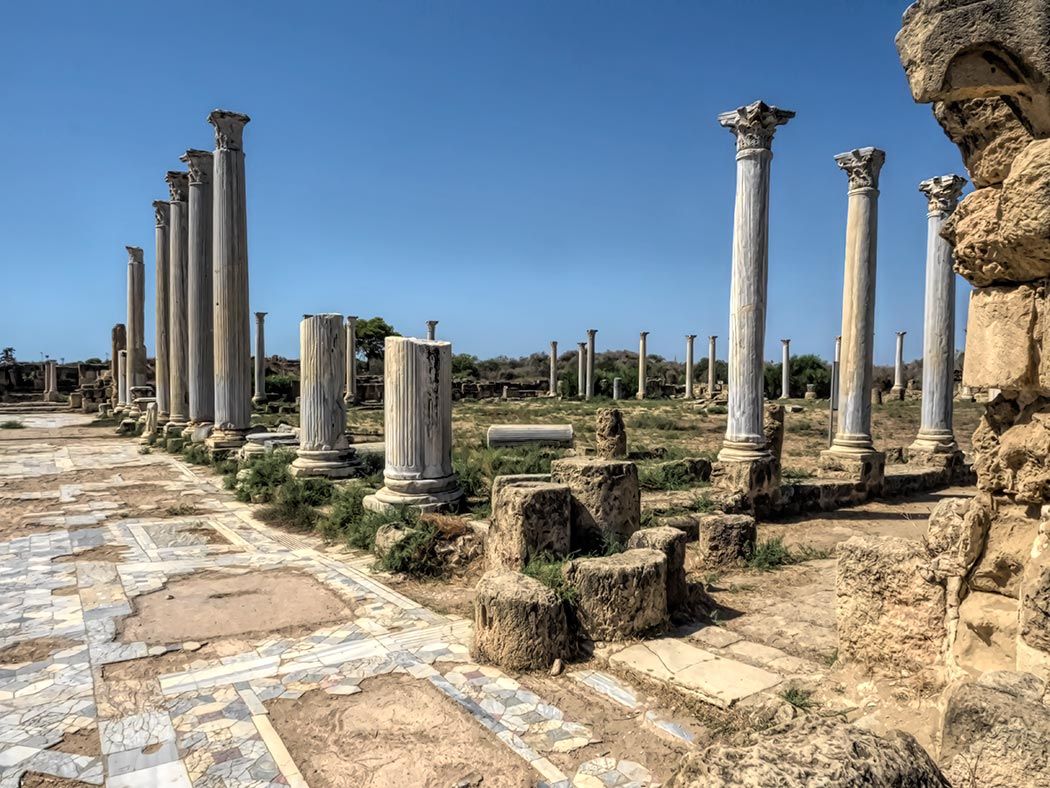
Cyprus. Salamis. The ruins of ancient city.
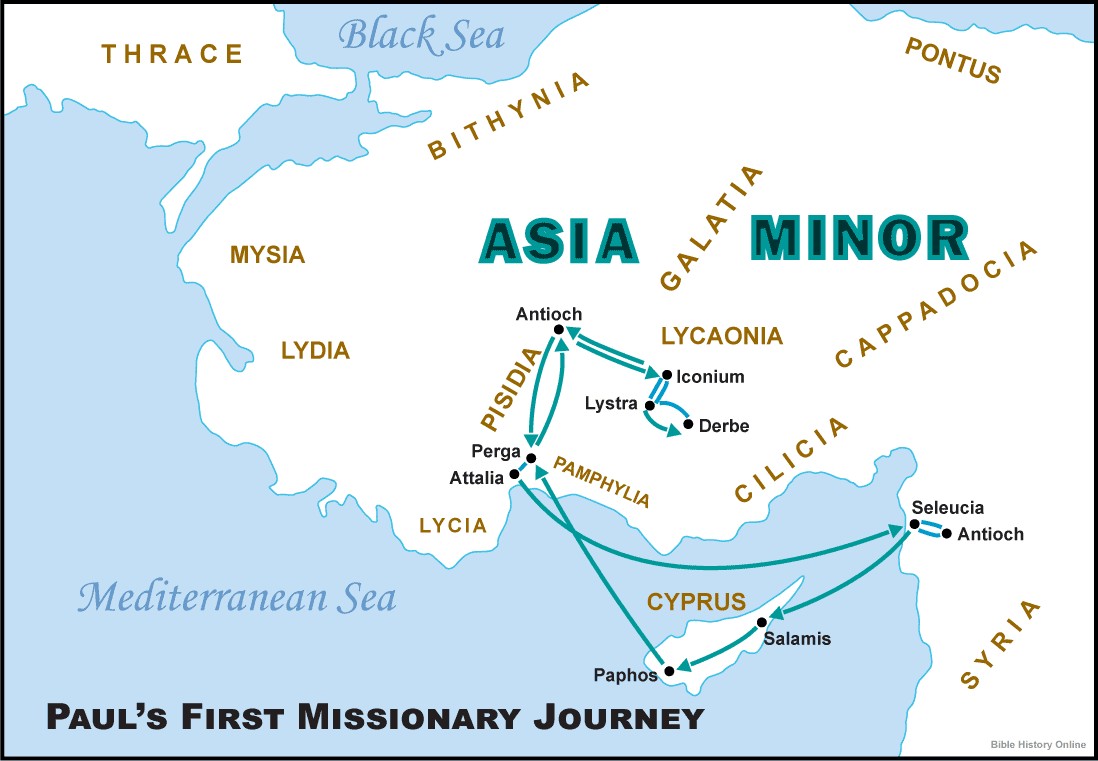
The Church in Antioch, nurtured by Barnabas and Saul, became the launchpad for the Gentile mission when the Holy Spirit commanded during worship: “Now separate to Me Barnabas and Saul for the work to which I have called them” (Acts 13:2, NKJV). Commissioned by the prophets and teachers through fasting, prayer, and laying on of hands, they embarked on their first journey — a paradigm for Orthodox missions, where apostolic work flows from liturgical discernment and ascetical preparation.
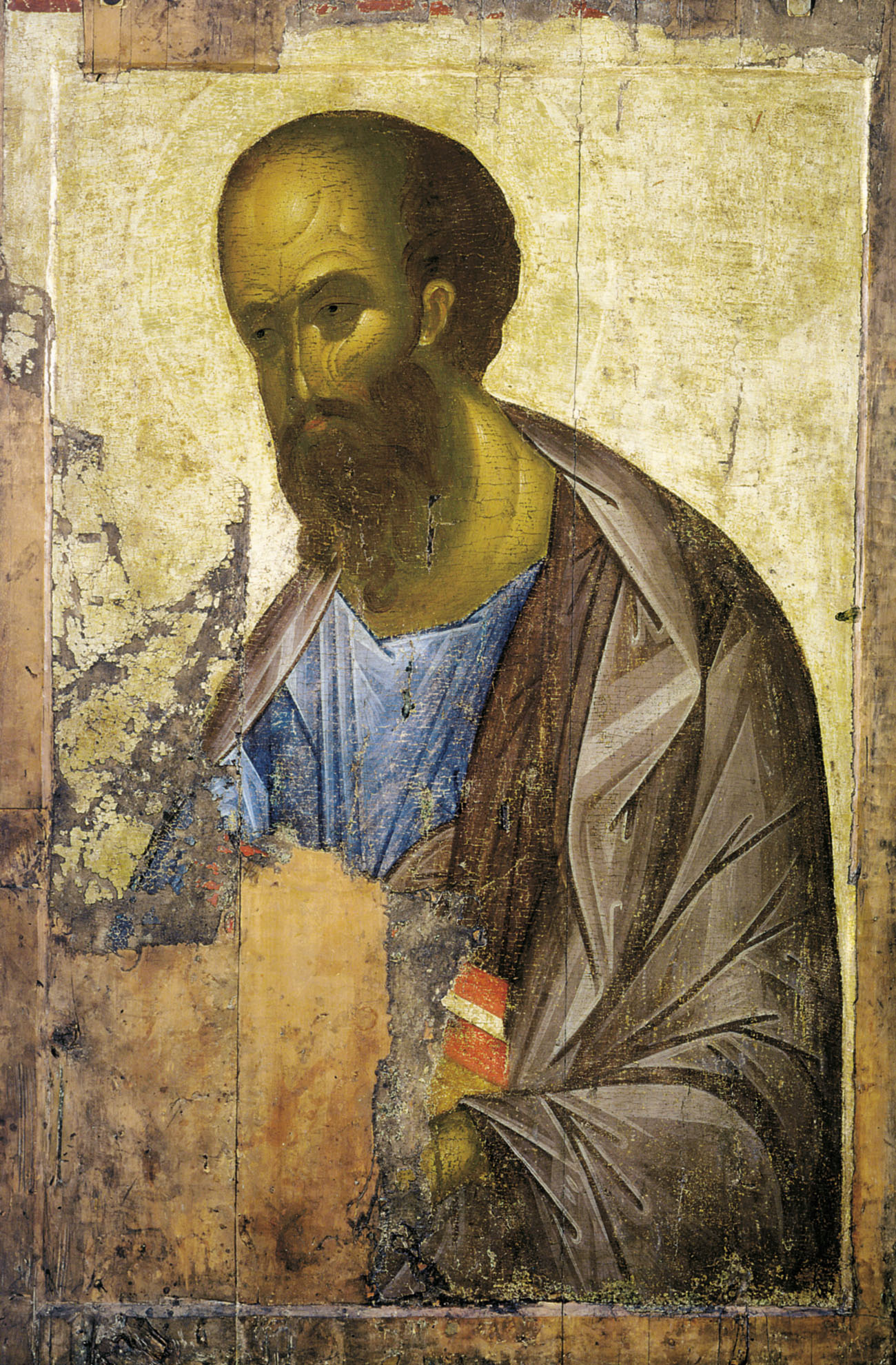 Their initial focus was Cyprus, Barnabas’ homeland. At
Paphos, they confronted the sorcerer Elymas (Bar-Jesus), who opposed the
proconsul Sergius Paulus’s faith. Saul, now called Paul (13:9), filled with
the Holy Spirit, denounced him: “O full of all deceit and all fraud, you son
of the devil! … The hand of the Lord is upon you, and you shall be blind”
(13:10–11). Elymas’ blindness mirrored Paul’s own Damascus encounter,
confirming Christ’s authority over occult powers. The astonished proconsul
believed, demonstrating God’s power to convert civic leaders—a sign Orthodoxy
sees in saints like Emperor Constantine.
Sailing to Perga and Antioch of Pisidia, Paul preached in the synagogue on the Sabbath, tracing salvation history from Exodus to David and culminating in Christ’s resurrection: “God has fulfilled this for us their children, in that He has raised up Jesus. As it is also written in the second Psalm: ‘You are My Son, today I have begotten You’” (13:33, NKJV). While many Jews rejected this message, the Gentiles “were glad and glorified the word of the Lord” (13:48). This pattern—Jewish resistance and Gentile receptivity—defined Paul’s strategy: “It was necessary that the word of God should be spoken to you first; but since you reject it … we turn to the Gentiles” (13:46). The Church’s explosive growth ignited persecution, forcing Paul and Barnabas to Iconium.
In Lystra, Paul healed a man lame from birth, prompting the crowd to declare them gods: “The gods have come down to us in the likeness of men!” (14:11). When pagan priests prepared sacrifices, the apostles tore their clothes, insisting: “We also are men with the same nature as you, and preach to you that you should turn from these useless things to the living God” (14:15). This rebuke of idolatry anchors Orthodox apophatic theology: the distinction between created humanity and the Uncreated God. Soon after, hostile Jews from Antioch stoned Paul and left him for dead—but he rose and pressed on, embodying Christ’s words: “If they persecuted Me, they will also persecute you” (John 15:20, NKJV).
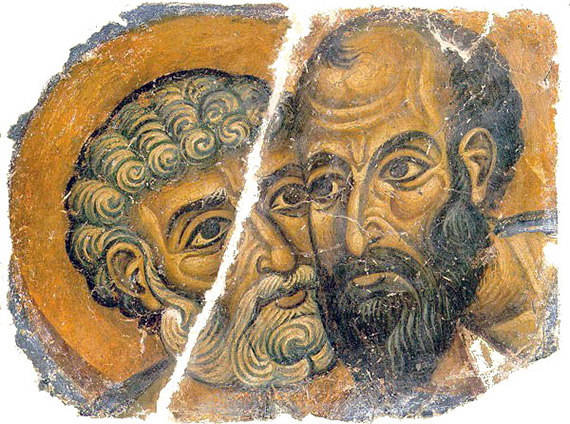 Upon returning to Antioch, Paul and
Barnabas reported “all that God had done with them, and that He had opened the
door of faith to the Gentiles” (14:27). Yet conflict arose when Judaizers from
Jerusalem insisted: “Unless you are circumcised according to the custom of
Moses, you cannot be saved” (15:1). This sparked the Church’s first council in
Jerusalem (A.D. 49), where Peter rose to defend grace-based salvation: “God
made no distinction between us [Jews] and them [Gentiles], purifying their
hearts by faith … why do you test God by putting a yoke on the neck of the
disciples?” (15:9–10). James, the Brother of the Lord, presiding as bishop of
Jerusalem, then synthesized the decision with scriptural authority (Amos
9:11–12): Gentiles need not be circumcised but should “abstain from things
polluted by idols, from sexual immorality, from things strangled, and from
blood” (15:20). This conciliar decree, delivered by letter through Judas
Barsabas and Silas, established the Orthodox principle of sobornost: Spirit-
led unity amid diversity, resolving disputes through shared discernment.
Orthodox Theological Synthesis:
1. Council as Ecclesial Blueprint: The Jerusalem Council models Orthodox synodality: hierarchical (Peter/James speaking authoritatively) yet conciliar (all apostles/elders participating). As St. Mark of Ephesus declared: “Councils are the lamps of Orthodoxy.”
2. Four Prohibitions: The abstentions (idol meats, blood, strangled animals, πορνεία porneia) were pastoral compromises ensuring table fellowship between Jewish and Gentile Christians — rooted in Leviticus 17–18. Orthodoxy still views these as safeguards against pagan practices.
3. Grace vs. Legalism: Peter’s declaration (“purifying their hearts by faith,” 15:9) echoes Orthodox soteriology: salvation is theosis through grace, not ritual compliance.
Compelled by the Spirit, Paul journeyed to Jerusalem despite warnings of imprisonment. After meeting with James and the elders, he purified himself ritually to quell rumors of teaching Jews “to forsake Moses” (21:21). But when Asian Jews saw him in the Temple, they accused him of defiling it by bringing Greeks inside (21:28–29). The ensuing mob dragged Paul out, beating him until Roman troops intervened. As soldiers bound him, Paul requested permission to address the crowd. Standing on the barracks steps, he recounted his conversion—emphasizing Ananias’ words: “The God of our fathers has chosen you that you should know His will, and see the Just One, and hear the voice of His mouth” (22:14, NKJV). At the mention of his Gentile mission, the crowd erupted: “Away with such a fellow!” (22:22).
Facing the Sanhedrin, Paul provoked division between Pharisees and Sadducees by declaring: “I am a Pharisee, the son of a Pharisee; concerning the hope and resurrection of the dead I am being judged!” (23:6). That night, the Lord stood by him: “Be of good cheer, Paul; for as you have testified for Me in Jerusalem, so you must also bear witness at Rome” (23:11). A Jewish plot to assassinate Paul was thwarted when his nephew alerted the tribune, who transferred him to Caesarea under heavy guard. During two years of imprisonment, Governors Felix and Festus heard his case. Before Festus, Paul appealed to Caesar: “I stand at Caesar’s judgment seat, where I ought to be judged… I appeal to Caesar!” (25:10) — a strategic exercise of Roman citizenship affirming Orthodoxy’s engagement with civil authority for the Gospel’s advance.
When King Herod Agrippa II (27 AD – 93 AD) and Bernice visited, Festus presented Paul’s “unreasonable” charges (25:27). Paul’s defense climaxed in his conversion story and Christ’s commission: “I have appeared to you to make you a minister and a witness… to open their eyes, to turn them from darkness to light” (26:16, 18). Agrippa’s skeptical reply — “You almost persuade me to become a Christian” (26:28) — underscored the scandal of the Cross to the powerful. Paul’s response, “I would to God that not only you, but all who hear me today, might become such as I am — except for these chains” (26:29), revealed his paradoxical freedom in Christ.
The voyage to Rome became a tremendous icon of divine providence. Despite Paul’s warning that sailing would bring “loss and damage” (27:10), the centurion ignored him. A tempestuous “Euroclydon” wind (27:14) battered the ship for fourteen days. When all despaired, Paul stood declaring: “Take heart, for there will be no loss of life… For there stood by me this night an angel of God… saying, ‘Do not be afraid, Paul; you must be brought before Caesar’” (27:22–23). Urging them to eat, “he took bread; and giving thanks to God in the presence of them all, he broke it and began to eat” (27:35) — a Eucharistic act amid chaos. Shipwrecked on Malta, all 276 souls survived. There, Paul healed Publius’ father and others, moving islanders to honor him (28:10).
Arriving in Rome under house arrest, Paul called Jewish leaders to explain his “hope of Israel” (28:20). Some believed, but others rejected his message, fulfilling Isaiah’s prophecy of hardened hearts (28:26–27). Paul then declared: “Therefore let it be known to you that the salvation of God has been sent to the Gentiles, and they will hear it!” (28:28). For two years, he welcomed all who came, “preaching the kingdom of God and teaching the things which concern the Lord Jesus Christ with all confidence, no one forbidding him” (28:31). This open-ended conclusion affirms Orthodoxy’s conviction: the apostolic witness continues through the Church — the living Acts of the Holy Spirit.
Concise Orthodox Theological Synthesis:
1\. Suffering as Communion: Paul’s chains embodied participation in Christ’s passion ("I fill up in my flesh what is lacking in the afflictions of Christ," Colossians 1:24, NKJV). His midnight hymns in prison (Acts 16:25) prefigure the Orthodox midnight Office, a solemn service held in the early hours of the morning, which focuses on themes of vigilance and anticipation of Christ's coming.

2\. Providential Sovereignty: The storm and shipwreck demonstrated God’s mastery over creation — "The waves of death surrounded me... In my distress I called upon the Lord" (Psalm 18:4, 6) — while Paul’s survival fulfilled Christ’s promise: "You must bear witness at Rome" (23:11).

3\. Eucharist in Exile: Paul’s bread-breaking at sea (27:35) mirrors the Divine Liturgy’s essence: thanksgiving (eucharistia) amid earthly turbulence. St. John Chrysostom notes: "He gave thanks to show we must bless God even in storms."

4\. Unhindered Gospel: The final verse ("no one forbidding him," 28:31) signifies the Word’s invincibility — a truth celebrated in Orthodox processions with the Gospel Book, proclaiming Christ’s eternal reign. "Rome bound Paul’s hands but not his tongue; the dungeon became a pulpit, the chains a sacrament" (St. Nikolai Velimirović (Prologue of Ohrid).
The Book of Acts.
Related Concepts
- 1-corinthians-22
- acts
- adoption-as-sons
- ananias-and-sapphira
- apologetics
- apostolic-leadership
- apostolic-office
- apostolic-teaching
- apostolic-witness
- areopagus
- aristides-of-athens
- ascension
- assumption-cathedral
- bereans
- bishops
- body-of-christ
- canonical-discipline
- cappadocian-fathers
- cappadocians
- church-as-body
- church-catholicity
- church-finances
- church-foundation
- church-order
- clergy
- colossians-124
- common-possessions
- communion
- communion-with-god
- community-life
- contextual-evangelism
- councils
- creator-and-creation
- deacons
- diocesan-administration
- discernment-of-the-body
- divine-names
- divine-will
- ecstasy
- episcopacy
- episcopal-college
- episcopate
- eschatology
- family
- final-judgment
- glorification
- glory
- gregory-of-nyssa
- head-and-body
- healing
- heart
- historical-continuity
- holy-humility
- holy-spirit
- household-baptism
- idol-sacrifice
- ignatius-of-antioch
- immanence
- incomprehensibility-of-god
- incorporation
- jailer
- jerusalem-council
- joel
- joels-prophecy
- koinonia
- last-days
- last-judgment
- lydia
- lystra
- martyrdom
- matthew-parker
- matthias
- maximus-the-confessor
- metropolitan-peter
- miletus-address
- millennium
- miracles
- mission
- monotheism
- moscow-as-spiritual-center
- mutual-edification
- mystical-knowledge-of-god
- natural-theology
- neoplatonism
- nicholas-cabasilas
- nuptial-union
- ongoing-mission
- organic-unity
- orthodox-anglican-dialogue
- pastoral-compromise
- pastoral-shepherding
- patriarchal-reform
- patristics
- pauls-imprisonment
- penance
- pentecost
- persecution
- personhood
- peter
- peters-sermon
- philippi
- prevenient-grace
- priesthood
- prison
- providence
- rebaptism
- relics
- resurrection
- revelation
- rome
- rules-of-kirill-ii
- sacrament-of-priesthood
- sacramental-guarantee
- saints
- salvation
- savage-wolves
- scripture
- second-coming
- shipwreck
- simon-magus
- simony
- spiritual-gifts
- st-ignatius
- st-polycarp
- stephen
- suffering
- tertullian
- theophylact
- theosis
- timothy
- trinitarian-formula
- truth
- union-with-god
- unity
- unknowability-of-god
- vision
- vladimir-lossky