New Testament — Topic 15
The Last Days of the Lord’s Terrestrial Life. Part 3.
Great Thursday. The Archpriest Prayer. The Lord’s Arrest.
Great Thursday. The Archpriest Prayer.
(John chap. 17)
According to some interpreters’ supposition, immediately after the end of the parting conversation, and on the way to Gethsemane, the Lord and His disciples came to the stream of Hebron, and before crossing it, the Lord read out loud before His disciples the triumphant prayer to God the Father. This prayer is usually called the Archpriest Prayer , because the Lord prays in it to God the Father as the Great Archpriest, bringing Himself as a sacrifice that has a great inexplicable meaning to the whole world.
“Father, the hour has come. Glorify Your Son, that Your Son also may glorify You” — it is with these solemn words that the Lord commences His prayer. The hour of My sufferings has arrived: allow Me to demonstrate all My love for You and for the world created by You in this hour, so that through My forthcoming exploit of mankind atonement, Your glory would be revealed. “As You have given Him authority over all flesh…” God entrusted the whole human race to His Son, so that He might arrange its salvation and grant eternal life to humanity. The Lord defines eternal life as the knowledge of God and the Redeemer of the world that was sent by Him. In God’s eyes, all His work appears as accomplished. That’s why He says: “I have glorified You on the earth…” Now, it follows to enter into the Divine glory in human terms, of what He prays: “And now, O Father, glorify Me together with Yourself, with the glory which I had with You before the world was.” This is the first part of the Lord’s Prayer about Himself (verses 1-5).
Having finished the prayer about Himself, the Lord prays further about His disciples (verses 6-19), about those, to whom He was entrusting the mission of spreading and affirming His Kingdom on earth. The Lord speaks as though He is giving an account to God the Father of what He had achieved: He revealed to His disciples the full and correct understanding of God, and they became God’s special elects, having received the Divine teaching, brought to them from the Father by His Son. They also comprehended the Divine mystery of building God’s Church. The Lord further prays for His disciples, so that the Heavenly Father would take them under His special protection in this world, hostile towards them, where they remain alone, after the Lord’s departure; that He would preserve them pure and holy in the spiritual accord of faith and love among themselves, in the unity that is akin to the unity between God the Father and God the Son. The Lord states further that He, being in the world, protected them from downfall, and “none of them is lost except the son of perdition, that the Scripture might be fulfilled”(Judas the betrayer), i.e., according to the prophesy of Psalm 40:10. Praying to His Father about the preservation of His disciples from all the evil in this world that hates them, the Lord asks for their enlightenment with the Word of Divine truth , i.e., to transfer to them the special blissful gifts for their successful service of spreading the truth throughout the whole world. The Lord states further that He dedicates Himself for them , — bringing Himself as a sacrifice, so that they might follow His steps and become His witnesses to His sacrifice for the truth.
The third part of the Lord’s Prayer — for the faithful — begins from the 20th verse. The Lord prays for them: “That they all may be one, as You, Father, are in Me, and I in You; that they also may be one in Us, that the world may believe that You sent Me” — the union of the faithful in Christ must be similar to the union of God the Father with God the Son. Naturally, this means the moral union. Such a union of all Christians in love and faith would help to bring the whole world to believing in Christ as in the Messiah. We can see this in the first centuries of the Christianity, where the Jews and heathens were captured by the elevated beauty of Christ’s teaching, becoming Christians themselves — except those that were completely spiritually blinded and hard- hearted. The Lord determines this union of all the faithful as being the unity in the glory of God and Christ. In the following verses (22-24), the Lord as if He contemplates about His Church in the Heavenly glory and in the union with God in the Messiah’s Kingdom and says that this glory will bring even the hostile world — against its will — to realization that the Lord Jesus is the true Messiah. The words: “Father, I desire that they also whom you gave Me may be with Me where I am” are akin to the last will of the Dying, which should undoubtedly be carried out, especially when the Son of God’s will is inseparable with that of God the Father: here giving His life for the world’s salvation, the Son of God is appealing to God the Father, asking for those Heavenly habitats about which He told His Apostles at the beginning of His farewell conversation at the Last Supper, for all the faithful (John 14:2).
Verses 25 and 26 represent the conclusion of the Archpriest prayer, where the Lord addresses God the Father as the All-righteous Due-Giver. The Lord points at the superiority of the faithful over the rest of the world in that they “have known the God ” and consequently are capable of receiving the gifts of Divine love. He asks so that God the Father could distinguish them in front of the world with His generosity, and make them the participants in the matter of the love that He has for His Son: “That the love with which You loved Me may be in them.” For this, the Lord Jesus Himself promises to “be in them,” so that the love of the Father that continuously dwelled in the Son, might extend from and for the sake of the Son, over those, in whom the Son abides. Thus, the all-enveloping love will be all fulfilling in the eternal glory of the Kingdom of the Father, the Son and the Holy Spirit.
The Appeal about the Cup.
(Mat. 26:36-46; Mark 14:32-42; Luke 22:39-46; John 18:1).
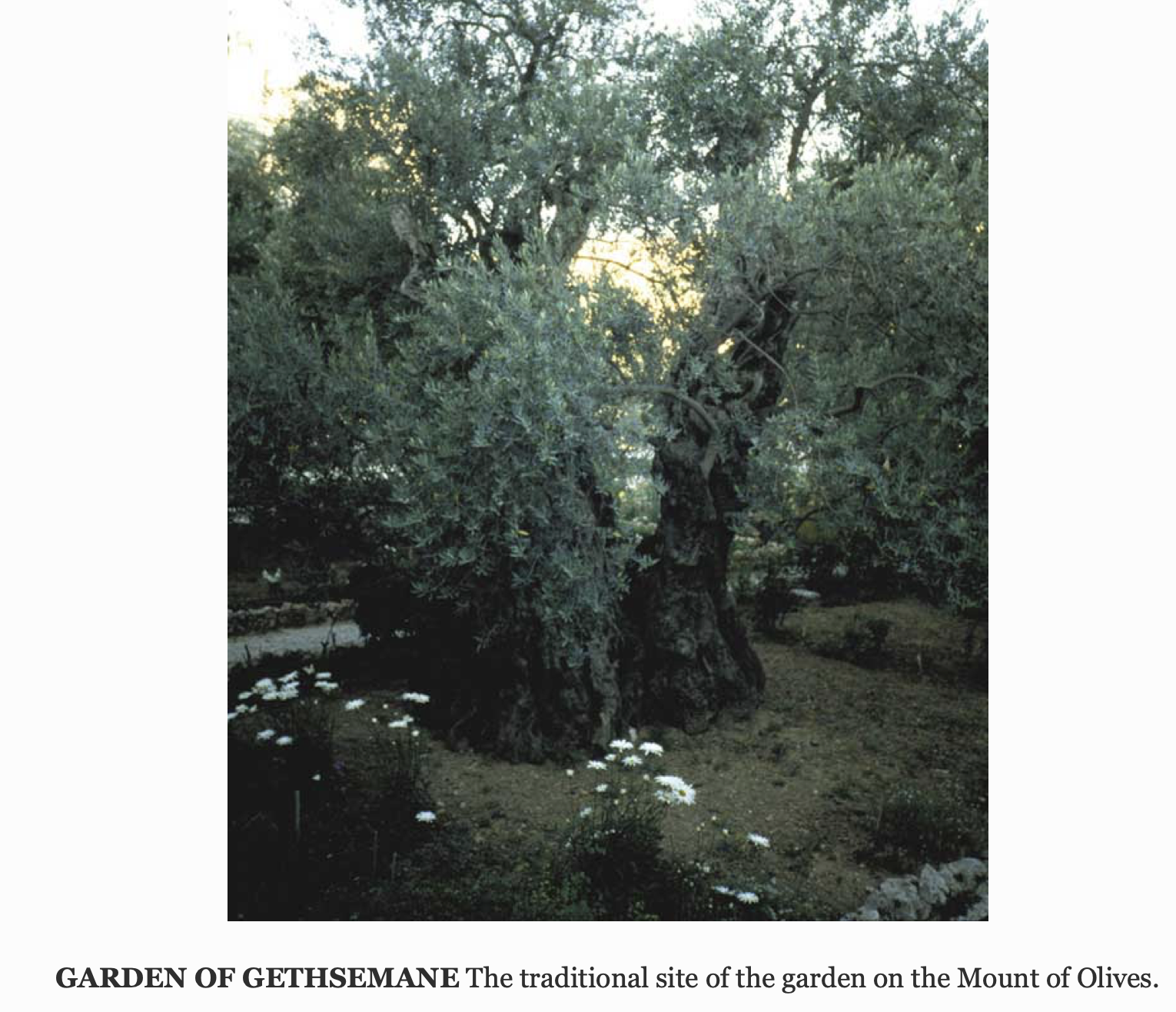
As narrated by Saint Evangelist John, having finished His Archpriest prayer, “He went out with His disciples over the Brook Kedron, where there was a garden, which He and His disciples entered”. The brook of Kedron (meaning “black”) was an insignificant brook, which filled up with water only after heavy rains. At other times it remained dry, or nearly so. It flowed through the Jehoshaphat valley and separated Jerusalem from Eleon. Saint John writes that behind that valley, there was a garden that the Lord entered with His disciples. However, he doesn’t name the garden and doesn’t say what happened there before the arrival of Judas and the soldiers. Evangelists Matthew and Mark call it Gethsemane, while Luke indicates its location at the Mount of Olives. All the three narrate about the Lord’s prayer in this Gethsemane garden. Gethsemane means a press for squeezing oil. Apparently, in the garden grew olives and olive oil was prepared there. It can be assumed that the garden’s owner was favorably inclined towards the Lord, because according to Saint John (18:2), He often gathered there with His disciples. That’s why after the Last Supper, Judas led the soldiers there, being firmly assured of finding Him at that place, and he wasn’t wrong.
Having entered the garden, the Lord stopped His disciples, saying: “Sit here while I go and pray,” and taking Peter, James and John, according to Saint Luke, withdrew from them “about a stone’s throw” — at a distance, which reaches the thrown stone, and began “to be troubled and deeply distressed.” “My soul is exceedingly sorrowful,” said the Lord to His closest and most trusted disciples. “Stay here and watch with Me.” According to both Saints Matthew and Mark, having walked “a little farther,” kneeling, He fell on His face and prayed: “O My Father, if it is possible, let this cup pass from Me; nevertheless, not as I will, but as You will.” The prayer was so intense that according to Saint Luke, “His sweat became like great drops of blood falling down to the ground.” It is said that sometimes extreme moral sufferings, can truly produce perspiration of blood. Saint Luke states, that “an Angel appeared to Him from Heaven, strengthening Him.” God the Father as if left His Son temporarily (see Mat. 27:46). That’s why He is being comforted and strengthened by an Angel.
What was the reason for the incarnate Son of God to grieve and suffer so extremely in the Gethsemane garden?
Who among us, the sinful souls, would dare to state that he truly knows everything that was going on in the holy soul of Human God at that moment, when the decisive hour of giving Him over for the death on the cross for the sake of mankind salvation approached? Currently, just as before, they tried to explain the causes of the Lord’s moral tortures, endured by Him in the Gethsemane garden, in those pre-death hours. The most natural hypothesis is that it was His human nature that was grieving and afraid of death. As Blessed Theothylactus says: “Death entered mankind not through its nature. That’s why human nature is afraid of it and flees from it.” Death is the consequence of sin (Rom. 5:12, 15), and that’s why the sinless nature of Human God should not have been exposed to death. To it, the matter of death was unnatural : that’s why the pure, sinless nature of the Lord is rebelling against death, lamenting and experiencing melancholy at its sight. These moral sufferings of Christ are the proof of existence of two natures within Him: the Divine and human, which was denied by the heretic-Monophysites, and also that He had two wills, which was denied by the Monophylites.
Undoubtedly, together with this, the moral sufferings took place because of the fact that the Lord had accepted all the sins of the world upon Himself — and was going to die for them: the fact that he had to suffer for the whole world’s sins was concentrated only on Him. It is also quite possible that the devil, having departed from Him temporarily (Luke 4:13), had then approached Him with his temptations, attempting (even though unsuccessfully) to distract the Lord from His forthcoming sufferings on the cross. The Lord’s sorrows were also caused by the realization of the human embittered state and ingratitude to God.
The first two Evangelists say that, having finished His prayer, the Lord twice approached the three disciples that stayed nearby. However, instead of finding comfort in their attentiveness and faithfulness to Him, their readiness to be vigilant with Him, He finds them sleeping. Chastising them meekly, the Lord adds: “Watch and pray, lest you enter into temptation. The spirit indeed is willing, but the flesh is weak.” How could it happen that the disciples fell asleep at such a moment? Saint Luke explains that they fell asleep because of sorrow. Life testifies that sometimes intense sufferings indeed produce strong over- exhaustion of the nervous system, so that the person is incapable of staying awake. The Lord specifically directs His reproach to Peter, because he had sworn in his faithfulness to the Lord just before that event. Great temptations and trial of faith awaited the disciples, that is why the Lord convinces them to pray and be vigilant to overcome this temptation. “The spirit indeed is willing, but the flesh is weak” means: your soul is willing to fight with these temptations and is capable of overcoming them, however, human nature is weak and, with weak vigilance and prayer, is capable of a tremendous downfall.
The Lord prayed three times. The first time, He prayed so that the cup of suffering would pass Him by, the second time He expressed His outright subordination to God’s will, and an Angel was sent to Him to finally strengthen Him in this choice, after what He exclaimed with full determination: “Your will be done” (third time). Having prayed the third time, He came to the disciples to warn them of the betrayer’s approach: “Are you still sleeping and resting? Behold, the hour is at hand, and the Son of Man is being betrayed into the hands of sinners,” indicating that He has no need of their assistance. (When the Lord was ready to be betrayed, He said: now you are sleeping; or pronounced that to shame them, as though saying: now that the betrayer has approached, if it is convenient to you and the time allows sleeping, then sleep, — Blessed Theothylactus). “Into the hands of sinners,” — according to Saint John Chrysostom, the Lord is saying this to encourage the disciples’ spirit, showing that what is happening to Him is an act of the malice of the sinners, and not of His fault in any sin.” “Rise, let us be going,” i.e., let us go and meet the betrayer, so that what was to happen according to the Scripture, would be fulfilled.
The Lord’s Arrest.
(Mat. 26:47-56; Mark 14:43-52; Luke 22:47-53 and John 18:2-12)
All the four Evangelists tell of the betrayal of Christ in full accordance. Moreover, each one only brings his own details that complete the whole scene. According to Saint John, Judas brought the whole spire , the part of a legion of soldiers, called a cohort, and consisting of 1000 people, commanded by a centurion. This is especially mentioned in verse 12, as well as the servants of the high priests and Pharisees. Although there was a full moon, the crowd arrived with lamps and torches supposing that the Lord might hide in the concealed parts of the garden. The soldiers were armed with swords while the servants — with staves. Evidently, they expected the possibility of serious resistance. The betrayal is characteristic with kissing. Fearing of the public uprising, the high priests ordered Judas to use caution in arresting Christ. Apparently, it was not told to the detachment of troops, Whom they had to seize: they were told to take the One, at Whom would point Judas. And Judas, keeping his mission secret, limited himself with only one indication: “Whomever I kiss, He is the One; for Whom we came, seize Him and lead Him away safely”(Mark 14:44). It can be assumed, that Judas, separating himself from the detachment, intended to approach the Lord with the usual greeting, kiss Him and withdraw to the Apostles, thereby concealing his betrayal. However, he was unable to achieve this. When he came up to Jesus and uttered in confusion: “Rabbi, Rabbi…,” Jesus gently asked him: “Friend, why have you come?” Not knowing how to respond to this question, Judas in his confusion exclaimed: “Greetings Rabbi” and kissed Him.” In order to show Judas that he could not conceal his betrayal, the Lord said: “Judas, are you betraying the Son of Man with a kiss?”
At the same time, the detachment came near and, as Saint John narrates (complementing the first three Evangelists), the Lord asked: “Whom are you seeking?” Naturally, there were Jewish elders with the detachment, aware of Whom the soldiers had to seize, and they were the ones that replied: “Jesus of Nazareth.” “I am He” the Lord responded loudly. The arrived were instructed that they would have to take Jesus cunningly, carefully, because He had adherents that might stand out for Him. And He suddenly and openly — as though not fearing anything — declares: “I am He!” Those words of Christ contained an incredible force for His enemies. The unexpectedness of such an answer and the power of the spirit revealed, produced extraordinary impression: they stepped back and fell to the ground. When they had somewhat recovered from that shock, the Lord repeated His question: “Whom are you seeking?” and again they replied: “Jesus of Nazareth.” The Lord then said: “I have told you that I am He. Therefore, if you seek Me, let these go their way.” The Lord’s concern for His disciples is quite touching. Saint John explains, concerning this, that the Lord’s words of His Archpriest prayer had to be fulfilled: “Of those whom You gave Me I have lost none.” Indeed, the guards left the Apostles alone and approached Jesus to take Him.
It was at that moment when the Apostles decided to intervene for Him. Not waiting for a response to the question posed by one of them: “Lord, shall we strike with the sword?”, impatient Peter drew his sword and struck one of the high priest’s servants, Malch, nearly cut off his ear, but not fully, so that with one touch the Lord healed him (Luke 22:51). “Put your sword in its place” said the Lord to Peter, “for all who take the sword will perish by the sword” — of course, this is not a prophesy but merely the law of God’s truth, of the general nature: the one, who attacks another with the intention of killing or wounding him, deserves that himself. This is the same thought that is contained in the commandment given after the Flood: “Whoso sheddeth man’s blood, by man shall his blood be shed”(Gen. 9:6). “Or do you think that I cannot now pray to My Father, and He will provide Me with more than twelve legions of Angels?” The Romans called a legion a division, made up of 12 cohorts and 10,000 soldiers. All the Angelic World would have taken up arms in defense of the Son of God, if He had not committed Himself to the sufferings voluntarily. The Lord as if contrasts 12 legions with His 12 disciples. “How then could the Scriptures be fulfilled, that it must happen thus?”(Mat. 26:54) — this means that everything happening is the fulfillment of the prophesies. Luke narrates that among those that had come to seize Christ, there were the high priests and church leaders themselves. The Lord addressed them with exposure: “Have you come out, as against a robber, with swords and clubs to take Me?” The meaning of this exposure is that they evidently were ready to commit the unrighteous act, for they didn’t want to accuse the Lord openly, in front of all the people and then seize Him as a violator of the law — in the middle of the day, in the presence of the people. Instead, they used that clandestine method to seize the Lord at night: “But this is your hour, and the power of darkness. Then all the disciples forsook Him and fled.” — so the Lord’s prophesy, pronounced just before, came true (Mat. 26:31). Evangelist Mark was the only one to add that a youth, covered with just a cloth, followed the detachment that had seized Jesus. Thinking that this suspicious, they grabbed the youth, but he managed to escape naked, leaving the cloth in their hands.
The ancient tradition recognizes this youth to be Evangelist Mark. Living nearby, he was awakened by the noise, and not dressing but just wrapping himself in a blanket, hurried to have a look at what’s happening. However, not all the Apostles abandoned the Lord completely. Peter and John watched distantly the detachment of troops that took Jesus. They followed Him at a distance, and thereby reached Jerusalem, seeing where their Teacher was brought. The fact of where the rest of the disciples fled, is unknown. But apparently, they were so shocked and frightened with everything that happened that they hid behind the locked doors — as we know from John, 20:19.
Great Thursday. The Establishment of the Eucharist Mystery. The Argument
about the Superiority.
Great Thursday. The Establishment of the Eucharist Mystery.
(Mat. 26:26-29; Mark 14:22-25 and Luke 22:19-20).
All the three forecasters narrate about this event in almost the same detail. The Lord “took” the bread, blessed it and in distributing it among the disciples, said: “Take, eat; this is My Body.” The word “bread” here is “artos” in Greek, which means “the leavened bread”, that one made with yeast, which is different to “azymon”, the bread that is unleavened, which was eaten by the Jews in the Passover. It must be assumed that such leavened bread was especially prepared on the Lord’s instructions, in order to establish the new Mystery. The significance of such bread lies in that it is seemingly alive, symbolizing life, as opposed to unleavened bread, which is lifeless. “Blessed”, “gave thanks” indicate the verbal expression of gratitude to God the Father, as it happened before, for instance, at the moment of Lazarus’s resurrection: the requested was fulfilled at the very moment of appealing. That’s why at that moment it too became the object of gratitude.
It is extremely important to note that the Lord said: “This is My Body ”: He didn’t say “this bread” but specifically “this” because at that moment, the bread ceased to be bread and became the genuine Body of Christ, retaining the appearance of bread. The Lord didn’t say: “Here is the image of My Body, but “this is My Body” (Saint John Chrysostom and Blessed Theothylactus). As a result of the Lord’s Prayer, the bread took on the nature of flesh while preserving its outward appearance of bread. “Because we are weak,” says Blessed Theothylactus, “and would not dare to eat raw meat, especially human flesh, we are offered bread, though in reality it is flesh.” “Why did the disciples,” asks Saint John Chrysostom, “not become agitated when hearing this? Because prior to this, the Lord said many important things to them about that Mystery” (recall His sermon about the bread descending from heavens, John chap. 6). The term “Body of Christ” means all the physical nature of Human God, inseparably connected with His soul and Divinity. This same nature of Human God is given in the form of wine, not as a separate identity but only for the fullness of its visible form. That’s why the expression “Partake the Holy Communion in its two forms” is an absolutely precise expression — meaning: partake the Holy Communion of one and the same essence.
However, this doesn’t mean that the Flesh can replace the Blood and that it is sufficient to have Communion of the Flesh alone. If this was so, the Lord would not have established the Communion under the two forms. As all the three forecasters narrate, having communed His disciples with the Flesh, the Lord picked up the chalice and again gave thanks , i.e., appealed to the Holy Spirit in a prayer that changed the wine into the genuine Blood of Christ, and said: “Drink from it, all of you. For this is My Blood of the new covenant, which is shed for many for the remission of sins.” It is not by chance that the words “all of you” were included. The wine could not be divided like the bread, that the Lord Himself divided and distributed among the disciples. As there was one chalice, it had to be passed from hand to hand. So that nobody would be missed and would not let the chalice to pass by, the Lord resolutely declares: “Drink from it, all of you.” Here one cannot but see the accusation of the Roman-Catholics, who deprived their laymen of Christ’s chalice. As Blessed Theothylactus explains: “As not everyone can take in the firm food, but only those of the perfect age, everybody can drink. It is for this reason that the Lord said: “all of you”. Again, the Lord declares: _“This is My Blood” _— not only its image, not symbolic blood, but genuine, real blood.

What does “of the New Testament” mean? As Saint John Chrysostom explains: “Just as the Old Testament had sheep and lambs, so the New Testament has the Lord’s Blood.” With that the Lord shows that He endured death. That’s why He mentions the New and the Old Testament, for it too was renewed with blood. By its initial meaning, the word “testament ” is identical to the word “will”. The testament holds within itself promises, together with the conditions for obtaining them; in this instance, it is the observance of God’s commandments. From this point of view, the word testament may be explained as the “agreement” between God and people.
An agreement is always confirmed and signed. And the Lord wants to explain that the Old Testament between God and the people is replaced by the New agreement, signed with His Blood . “Shed for many for the remission of sins ” — means, that the sufferings of the One and only Son of God served as the relenting sacrifice for the sins of the whole human race (many is said instead of all), which are forgiven to all those, who believe in Christ and partake of His Ever-Pure Flesh and Blood. In the 11th chapter of the first Epistle to Corinthians, both Saints Luke and Paul state that the Lord added to that: “Do this in remembrance of Me”. Therefore, the Eucharist cannot be taken as just a plain “remembrance” of the Last Supper — as the sectarians do. This was said because the Lord would not be with His disciples and followers in the visible manner, and that they will be entering into a mysterious communion with Him through the partaking of His Flesh and Blood, remembering His former bodily presence among them. In the Book of the Acts of the Holy Apostles, in Apostle Paul’s Epistles and in the Christian literature, we find many proofs that every Christian prayer gatherings of those days was accompanied by the partaking of Christ’s Flesh and Blood, in the form of bread and wine. In the initial centuries, all Christians (excluding those banned and excommunicated) that came to the church on Sundays and feast days, invariably partook of the Holy Gifts.
The Argument about the Superiority.
(Luke 22:24-30)
Saint Luke narrates that after that, the argument about who was superior among them arose between the disciples. By washing the feet of the Apostles, the Lord taught them to humbly serve one another. However, this did not eradicate the very idea of superiority or authority, and having suggested the general uniform equality in His Church, like washing the feet, He didn’t lose His merit of the Lord and Teacher. In enlightening His disciples, the Lord stated that even the powerful must serve to the others. If we were to take the point of view of the Roman-Catholics that Apostle Peter was the head of all the Apostles, then that argument among the Apostles would make no sense, and the Lord would have stopped the argument by confirming Peter to be the superior one among them. Meanwhile, we hear something totally different from the Lord: just as before, in the similar cases, the Lord suggests to the Apostles that they shouldn’t strive for primacy but think about the mutual service among them. For their faithfulness to Him, they are promised the inheritance of the Heavenly Kingdom, and that they will anyway all sit on thrones to judge the 12 tribes of Israel, i.e., they will receive the especial honor in the next world.
Great Thursday. The Establishment of the Eucharist Mystery. The Argument
about the Superiority.
Great Thursday. The Establishment of the Eucharist Mystery.
(Mat. 26:26-29; Mark 14:22-25 and Luke 22:19-20).
The Argument about the Superiority.
(Luke 22:24-30)
Great Thursday. The Final Conversation.
Great Thursday. The Final Conversation.
(John 13:31-38 and chaps. 14-16 Mat. 26:30-35; Mark 14:26-31; Luke 22:31-38)
Only Evangelist John tells of this wonderful and moving conversation of the Lord with His disciples, in full. Saint Luke presents only a small segment, while the first two Evangelists only relate about the Lord’s predictions of Peter’s renunciation and the meeting in Galilee after the Resurrection. The whole conversation is quite extensive and covers a number of chapters. Together with the following so-called Lord’s “Pontifical prayer,” it is read in its entirety during the church service on Great Thursday, as the first reading of the Gospel about the Holy Passions.
According to Saint John, as soon as Judas left, the Lord Jesus Christ began His dialogue with the words: “Now the Son of Man is glorified, and God is glorified in Him…” However, it has to be assumed that the Lord began his speech not only after Judas’s departure, but also after He had established the Mystery of the Eucharist, because Saint John does not mention about it — like the one, completing the narratives of the first three Evangelists.
Having given His Flesh and Blood to the disciples and seeing the mystery of redemption as though being fulfilled — as if He had already been brought as a sacrifice, conquering the hostile forces — the Lord exclaims those triumphant words: “Now the Son of Man is glorified…” “Now”, meaning at that mysterious and frightening night, the glorification of the Son of Man happened, which simultaneously was the glorification of God the Father, Who had deigned to give His Begotten Son as a sacrifice for mankind’s salvation. This earthly glorification of His Son was the beginning of His future heavenly glorification as the destroyer of death and hell. Wishing to lead His disciples out of their depressing mood, in which they found themselves, under the influence of the thought that one of them was a betrayer, the Lord turned their thoughts to His Divine glory, which would be revealed in both His forthcoming sufferings and in His Resurrection and Ascension into Heaven. “Glorify Him immediately” means that His humiliation will not continue for very long and soon, His visible glorification will commence. “Little children, I shall be with you a little while longer” — this extraordinarily tender address by the Lord to His disciples cannot be seen anywhere else in the Gospel: it stemmed from the deep feeling of the imminent farewell under such difficult and tempting for their faith circumstances. Just as I have said to the Jews before, so am I telling you, that I am leaving you, using the path upon which you cannot follow Me.
I am leaving you in this world for the continuation of My works, “A new commandment I give to you, that you love one another, as I have loved you…” Because of My love for the people, I give My life for them, and you must continue to imitate Me in this. The command of love for the neighbors had already been given in the law of Moses, but Christ gave it a new character unknown before — about love even for the enemies, to the point of self- sacrifice in the Name of Christ. Such pure, selfless and self-denying love is the sign of genuine Christianity. Saint Paul then poses a question full of sorrow and fear: “Lord, where are You going?” The Lord confirms that now he is unable to follow Him, but Peter forecasts that in the future he shall follow the same path of martyrdom. Then follows the prediction of the renunciation to Peter, about which narrate all the 4 Evangelists. Warning Peter against self-confidence, when he started to assert that he will lay his life down for the Lord, Saint Luke writes that the Lord said to him: “Simon, Simon! Indeed, Satan has asked for you, that he may sift you as wheat…”
It is characteristic that the Lord calls him here Simon and not Peter , because having renounced the Lord, Peter showed that he had ceased to be a “rock.” Such “sowing” means satan’s temptations, to which the Apostles were indeed submitted in the hours of their Teacher’s sufferings — when their faith in Him was ready to waver. This request of satan reminds us of his similar request concerning the Long-suffering Job, who was submitted to such a painful temptation because the Lord permitted it. The Lord’s almighty prayers protected His disciples — in particular Peter — from the total downfall. The Lord permitted Peter to fall temporarily, so that through this, he would become stronger and fortify his fellow disciples. “I have prayed for you” — although the danger from the side of the satan was threatening everyone, the Lord especially prayed for Peter because being more passionate and determined, he was threatened with more danger. “And when you have returned to Me, strengthen your brothers” — this indicates that after Peter’s repentance, concerning his denial of Christ, he would appear to be a model of true confession and an example of resoluteness. To this (as recorded by all the 4 Evangelists), Peter commences to assure the Lord of his unwavering loyalty to Him, in his readiness to follow Him to the dungeon and death. Then how was Peter’s renunciation possible, if the Lord prayed for him so that his faith would not diminish? However, Peter’s faith didn’t diminish: he renounced Christ in the fit of faint-hearted fear, and instantly indulged in the most profound contrition. All the Evangelists describe the episode about Christ foretelling Peter that in the coming night, he would renounce Him thrice, before the rooster had crowed three times — twice, according to Mark.
This absolute preciseness of Apostle Mark is explained by the fact that he was writing his Gospel under the direction of Apostle Peter himself. The first crowing of roosters usually occurs in the middle of the night, the second — before the morning; consequently, the meaning of this is in that before the morning comes, Peter would thrice deny his Teacher and Lord. As it can be seen, the Lord twice predicted to Peter his forthcoming renunciation: the first time was at the Last Supper, as narrated by Saints Luke and John, while the second time was when they left the Last Supper, on the way to Gethsemane, as narrated by Saints Matthew and Mark.
To the prediction of the renunciation (according to Saint Luke), the Lord also adds the prediction about the deprivation and struggle that await His disciples. “When I sent you without money bag, knapsack and sandals, did you lack anything?” — so as before the Apostles had no need to worry about anything because everywhere they found food and everything necessary while they traveled and preached throughout Judea and Samaria during Christ’s time, the same way different times arrive, when the hatred of people against their Teacher is spreading onto them. The rest of the Lord’s speech about taking a knapsack and moneybag and buying a knife (or a sword), must obviously not be interpreted literally but symbolically. The Lord is simply warning them of the extremely difficult approaching period in their lives, and that they should prepare for it themselves — that what awaits them are hunger, thirst, misfortunes and the animosity of people; if their Teacher Himself would be assigned to villains in the eyes of the people, then what good can they expect for themselves? Through their naivety, the Apostles accepted the Lord’s words literally and said: “Lord, here are two swords.” Realizing that He is being misunderstood, the Lord ended the conversation with the words: “enough.”
“Let not your heart be troubled” — the thought of the Lord’s soon departure from them shouldn’t trouble the disciples, because it is only a means of bringing them into the constant, eternal communion with Him: the Lord promises them that when that time comes, He will take them into the eternal realm of His Heavenly Father. Still deceived by the former false images of the Messiah’s earthly kingdom, the disciples don’t understand the Lord’s words, so Thomas utters: “Lord, we do not know where You are going…” In reply, the Lord explains that He is that path along which they must go to reach the Father, in order to settle into the eternal dwellings. “No one comes to the Father except through Me” — as Christ is the Redeemer, and salvation can only be achieved through faith in the fulfilled by Him matter of mankind atonement. “If you had known Me, you would have known My Father also ,” because in Christ there is the complete revelation of God, just as He had previously said to the Jews: “I and My Father are one ” (John 10:30). And the Lord’s disciples, knowing Christ, must know the Father. Although it is true that they didn’t know Christ very well, they were gradually approaching to that knowledge, which the Lord had given them — especially through the washing of their feet at the Last Supper, partaking of His Flesh and Blood and His edifying conversations. Similar in character to Thomas and like him, remarkable for his sobriety, Philip said to the Lord: “Show us the Father, and it is sufficient for us ” meaning his wish to see the vision, like some of the Prophets appeared to be worthy to see.
The Lord expresses something like regret about Philip’s incomprehension and shows him the lack of necessity in his request, for in Him — through His works, through His teaching and the very Human God’s nature — they should have long ago recognized the Father. The Lord continues to comfort His disciples further by promising to endow them with power to work wonders, fulfilling everything that they would ask through the prayer: the prayers in the name of the Lord-Redeemer will work wonders. On the condition that the disciples, loving the Lord would observe His commandments, He promises to send them the Consoler, Which will be with them always, the Spirit of Truth , Which will as if replace Christ for them, and because of Which, they will have continuous mysterious communion with Christ.
“The world” as a union of those that do not believe in the Lord and those that are hostile towards Him, that is alien and opposed to the Spirit — Consoler, is unable to accept Him — while He abode in the Apostles owing to the disciples communion with the Lord during His terrestrial life, and will continue to be with them eternally, when He descends upon them at the Pentecost . “I will not leave you orphans; I will come to you,” in the visible sense, after the Resurrection and through the spiritual communication in the mystery of Communion, by means of the Holy Spirit. “You will live also” in the union with Me, as with the source of eternal life, while at the same time, the spiritually dead world will not see the Lord. “At that day,” i.e., the day of the Pentecost, “You will know that I am in My Father, and you in Me, and I in you,” and you will understand the essence of the spiritual communication with God in Christ. The only condition for this Divine communication is to love the Lord and follow His commandments. Judas (not Iscariot), called Lebbaeus or Thaddaeus, who apparently had not left the favorite thought of the Jews about the sensuous Kingdom of the Messiah, took the Lord’s words literally that He would appear in a sensuous-physical form to those who love Him and follow His commandments. Consequently, he expresses his bewilderment about the fact, why the Lord wanted to appear only to them and not to the whole world, as the founder of the glorious worldwide kingdom of the Messiah. The Lord explains that He speaks of His mysterious spiritual appearance to His followers, repeating His previous thought about the necessity of loving Him and fulfilling His commandments. While the world, not loving Him and not fulfilling His commandments, is incapable of having such spiritual communication with Him. At the same time, Christ’s commandments appear as the commandments of the Father. Perhaps at that time, this was not clear to the disciples, but when the Consoler, the Holy Spirit would come— He would be sent by the Father in the name of Christ — He will instruct the Apostles. He will teach them everything and will recall to them of everything that Christ had taught: open to them the mystery of the spiritual life, the life in Christ. Usually, finishing the Passover supper, the head of the family said to those present: “Peace be to you,” and the supper ended with the singing of Psalms. The Lord, intending to leave the Pascal room, and meaning that he would soon depart from His disciples, following the tradition, offers them peace, but the higher peace compared to the one offered by the world laying in the evil: “Peace I leave with you” — this is the peace that gives complete stability to all the powers of the human spirit, brings full harmony to the internal disposition of a person, calms all turmoil and anxieties — it is that very peace about which the Angels sang on the night of the Nativity. Consequently, the Apostles should not be confused with anything or get scared.
The supper was finished. It was high time they left the Zion chamber where it was held. Outside, there was the gloom of uncertainty, the fear of parting with Christ and helplessness in the hostile world. That’s why the Lord again comforts His disciples with a promise to come to them, saying that they had to rejoice over the fact that He was going to His Father, “for My Father is greater than I” — greater of course as the Primary Source (the Son is born of the Father and borrows from Him His existence), and greater that God in comparison with Christ as Human God. Everything has to pass according to what was written, just as the Lord pre-warned the disciples. Through the realization of predictions, the disciples will be convinced in the genuineness of Christ’s words “I will no longer talk much with you” — there were just a few hours left before Judas and the soldiers would seize Christ. The Lord sees the approach of His enemy with His spiritual eyes, “the prince of this world”
— the satan in the image of Judas with a spire (a detachment of troops) in the Gethsemane garden. This is where the devil previously attacked the Lord, tempting Him with the fear of tortures and the hour of death — his final attempt to prevent the Savior from completing His redeeming act for the salvation of mankind. With this, the Lord states that the devil “doesn’t have anything” in Him, i.e., because of Christ’s sinless nature, the satan cannot find anything, that he could take control of.
This proves the Lord’s total moral freedom, with which He, only through His love and for the fulfillment of His Father’s will, gives His life to save the world. “Rise, let us be going” — let us go and meet the approaching enemy, the prince of the world in the face of Judas-betrayer.
Many interpreters incline to the idea that after these words, it is necessary to read the words of Evangelist Matthew, which correspond with Evangelist Mark’s words: “And when they had sung a hymn, they went out to the Mount of Olives.” That is, in accordance with the Jewish custom, the Lord and disciples sang the Psalms from the second part of “Hallelujah” (115-118), and went towards the Mount of Olives, and further conversation was held along the way. However, Saint Theophan the Recluse considers that the conversation still continued in the room, and that it was left only after the end of the conversation and the high priest’s prayer of Christ. The first hypothesis has the proof in the fact that the Lord further says about Himself as of the grapevine. On the way to the Mount of Olives and on its slopes there were many grapevines, looking at which the Lord made use of such a demonstrative and lively example.
The Continuation of the Farewell Conversation.
(Chapters 15 and 16 from John)
As surmised, while walking through the vineyard and pointing at the grapes, the Lord borrows from the grapevine an example of the spiritual relationship between Him and those that believe in Him: “I am the true vine, and My Father is the vinedresser.” As the owner of the vineyard, the Father vinedresser cultivates it Himself and through others; He sent His Son to the earth and planted Him, like the fruit-bearing Grapevine, so that the wild and unproductive branches of humanity would graft with this Grapevine, obtain new sap from It and become productive as well. The branches that are unproductive are being cut off: those who do not prove their faith through deeds, are ejected from the community of the faithful — sometimes in this life, and definitely on the Judgment Day. The faithful that bear fruits are cleansed by the power of the Holy Spirit, the temptations of various types and sufferings, in order to improve more in their moral life. Listening to the Lord’s teachings, Christ’s Apostles had already cleaned themselves. But in order to bring to life and sustain this purity, they have to be continually concerned of being in unity with Christ.
Only the one, who is in continuous spiritual communication with Christ, can bring the fruits of the Christian perfection: “Without Me you can do nothing.” The branches that do not have fruit, “they gather them and throw them into the fire, and they are burned.” When the Lord was making this statement, it was the time for cleaning the grapevine yards. Perhaps, in front of the eyes of the Lord and His disciples was the fire of burning the dry grapevines. This was an expressive image of the spiritually dried up individuals, for whom the fiery Gehenna was prepared in the next world. Further on, the Lord promises to the disciples that if they abide in the constant spiritual communication with Him, each of their prayers will be answered — naturally, if it coincides with God’s will. In order to realize this, it is necessary that they constantly dwell in Christ’s love and fulfill His commandments.
As the expression of dwelling in Christ’s love serves their mutual love for each other, which should extend up to the willingness to sacrifice their own life for a neighbor. “You are My friends if you do whatever I command you” — their mutual love among themselves makes them friends, and as the union of this mutual love is in Christ, Who has the same love for them, then becoming friends with one another, they become Christ’s friends. Because of this love, the Lord revealed to them the complete will of God: this is the proof that they are not the slaves, but the friends of Christ. Having fully portrayed His love towards the Apostles, which was manifested in the fact that He chose them for the great service, the Lord concludes this part of His speech (verses 12-17) with a new exhortation: “These things I command you, that you love one another.”
Further on (in verses 12-17 and 1-3 of the 16th chap.) the Lord extensively warns the disciples of those persecutions that await them from the side of the world that is hostile to Christ. They should not be disturbed by this hatred of the world, knowing that their Divine Teacher was the first to be subjected to that hatred. This hatred is understandable, because the Lord separated the disciples from the world that loves only that, which belongs to it, which corresponds with its spirit of every type of sin, malice and slyness. In the persecutions from the world, the disciples should console themselves with the thought that they are not greater than their Lord and Teacher. However, the sin of the world is unpardonable, for the Son of God Himself came into it with the sermon of repentance and the world, seeing His glorious works, did not repent but also began to hate Him: to hate the Son is to hate the Father. Supporting the disciples in their forthcoming sorrows, the Lord once again reminds them of the forthcoming ascension of the Consoler, the Spirit of Truth, Who proceeds from the Father , Who will testify about Christ to the world through the Apostles. The Lord Jesus Christ will send the Consoler, but not from Himself , but from the Father , because the eternal origin of the Holy Spirit is not in the Son, but comes from the Father: “Who proceeds from the Father”(verse 26). This verse completely rejects the false teaching of the Roman-Catholics that the Holy Spirit proceeds not only from the Father, but also from the Son. Further, the Lord foretells that the Apostles would testify about Him in the world as those, who saw His glory and who were the first to receive His grace and truth.
All this “I have spoken to you, that you should not be made to stumble”, i.e. so that your faith would not waver in the forthcoming persecutions awaiting you. These persecutions will reach the point that you will be excommunicated from the synagogues and that they will regard killing you as a God-pleasing act. Indeed, the Jewish fanaticism did reach such a stage of blindness. The Jews were convinced that “who sheds blood of the unholy, is doing the same as bringing a sacrifice.” Saint First-Martyr Stephan became a victim of such fanaticism. The persecutor Saul, who later became Apostle Paul, also thought that by participating in the killing of the Christians, he was pleasing God (Acts 8:1; 22:20; 26:9-11; Gal. 1:13-14). Evidently, these words of Christ plunged the disciples into such deep sorrow, that comforting them, the Lord started to explain to them, how much His departure is important for them and the whole world, because only in that case the Consoler , Who “will convict the world of sin, and of righteousness, and of judgment” will come to them. “Will convict” was used to mean: will bring to the outside, let them know of injustice, crime and sin (John 3:20; 8:89; 8:46; 1 Cor. 12-24; Titus 1:9; Mat. 18:15; Luke 3:19). This exposure is the same as the moral judgment over the world. The consequence of such a judgment can only be one of the two: either converting to Christ through repentance, or complete spiritual blindness and bitterness. (Acts 24:25; Rom. 11:7).
The exposure to the world by the Holy Spirit should be realized through the sermons of the Apostles and their successors, and all the faithful in general that have accepted the Holy Spirit, becoming His organs.
The first object of this exposure is the sin of disbelief in the Lord being the Messiah. This is the most substantial and grave sin, because it rejects the Redeemer and Savior of mankind. The second object — “About the truth that I go to My Father — is about Christ being truly the Son of God, Whose righteousness is completely distinct from that of the Pharisees, being attested by God with that he sat Him at His right hand (Ephesians 2:6). The third object — the judgment over the prince of this world — the devil, the same judgment and condemnation, to which will be subjected all the unrepentant and hard-hearted, like the devil. Thus, the Apostles with the help of the Holy Spirit will be able to win the great moral victory over this world that lies in the evil, even though it will pursue and persecute them. This prediction of the Lord came true when the formerly timid and fearful disciples, who ran in all directions when the Lord was captured and then hid in a locked room “from the fear of Jews”, began to preach Christ fearlessly, after the Holy Spirit descended upon them, to the large crowds of people, testified of Him to the whole world without any fear, even when they were “brought” before kings and leaders of the world (Mat. 10:18).
“I still have many things to say to you, but you cannot bear them now ” — the Lord is saying that before they are enlightened by the Grace of the Holy Spirit, they are incapable of properly understanding and assimilating that which He has to say to them. But when the Holy Spirit comes, “He will guide into all truth”, i.e., He will guide them in hard to understand at that moment realm of the Christian truth. All these revelations of the Holy Spirit will be drawn from the same source of God’s wisdom, like the teaching of Jesus Christ: Like Christ, He will speak “just as the Father had told Him” (John 3:32; 5:30; 12:49-50), as from the Primary Source of the Divine truth.
Christ will be glorified through these actions of the Holy Spirit, because the Spirit will be teaching the same thing that Christ taught, and that way seemingly vindicate Christ’s mission in the world. “He will take of Mine,” because the Father and Son are the One, and everything that the Spirit will be saying, belongs equally to the Father as to the Son. “A little while, and you will not see Me” — the Lord goes anew to the thoughts of His leaving the disciples, but immediately consoles them with hope for a new meeting with Him, apparently as with the Lord’s appearance upon the Resurrection and through the mysterious spiritual communication with Him. To some of the disciples those words seemed mystical — again revealing the immaturity of their spiritual understanding. The following course of the conversation was devoted to explaining those words of Christ. Once again, the basis of the disciples’ bafflement lays in their same prejudice about the Messiah’s earthy kingdom. If the Lord wants to establish His kingdom on earth, then why is He leaving? And if he doesn’t want to establish this kingdom, why is He promising to come back again?
The Lord responds: “A little while, and you will not see Me.” This means: “You will weep and lament,” because the world will fulfill its murderous plans — this is the concealed indication of His impending sufferings and death. “Again in a little while, you will see Me” means: “your sorrow will be turned into joy,” just as the sorrow of a woman giving birth turns to joy. The joy here is that of the disciples, which they experienced upon seeing the resurrected Christ — the joy that never left them for the rest of their lives: “And your joy no one will take from you. And in that day…” — in the day when the Holy Spirit descends upon them, they will enter into the constant spiritual communication with Christ, and all the Divine mysteries will become clear to them, and every prayer of theirs will be answered, in completing the fullness of their joy.
“I go to the Father” means “I came forth from the Father and have come into the world. Again, I leave the world and go to the Father.” Thus, for the Lord to go to the Father, means to return to that state, in which He was before the incarnation, as the Hypostatic Word. The clarity of these words stunned the disciples. They noted with special satisfaction that the Lord was speaking to them directly, without the concealed parables, and they expressed their fervent faith in Him as in the true Messiah. It was genuine and deep faith, but the Lord saw its deficiency, for their faith was not yet enlightened by the Holy Spirit. “Do you now believe?” — He asks: no, your current faith is not perfect yet. It will not stand the first test, which you soon (in some hours) will be subjected to, when “you will be scattered, each to his own, and will leave Me alone.” “These things I have spoken to you, that in Me you may have peace,” — so that you don’t let your spirit fall in the hour of the forthcoming trials, recalling that I have warned you beforehand. You will find essential tranquility of the spirit in the spiritual communication with Me.
“In the world” that is hostile to Me and My work, in the company of people you will be unhappy. But do not lose your courage, remembering that “I have overcome the world” — conquered it through the fulfillment of the great work of redeeming humanity through My death, overcame the dominating in the world spirit of pride and hatred with My humility and self-abasement even unto death, and established the commencement of the conversion of this world from the satan’s dominion into God’s Kingdom.
- Great Thursday. The Establishment of the Eucharist Mystery. The Argument about the Superiority.
- Great Thursday. The Final Conversation.
- Great Thursday. The Archpriest Prayer. The Lord’s Arrest.
Related Concepts
- abiding-in-christ
- anamnesis
- anti-roman-catholic-polemic
- anti-roman-polemic
- ascetic-struggle
- bearing-fruit
- body-of-christ
- chalice
- christus-victor
- church-membership
- communion-with-god
- consolation
- conviction-of-sin
- divine-indwelling
- early-church-communion
- eucharistic-discipline
- eucharistic-memorial
- faith-and-participation
- fall
- freedom-of-christ
- friendship-with-christ
- fulfilment-of-prophecy
- gehenna
- glorification-through-the-cross
- high-priesthood-of-christ
- human-frailty
- human-weakness
- imitation-of-christ
- inner-stillness-hesychia
- intercessory-prayer
- joy
- judgment
- kingdom-of-god
- knowledge-of-god
- laity-and-clergy
- laity-communion
- liturgical-symbolism
- love-as-the-mark-of-christianity
- memorial
- metousiosistransubstantiation
- mission
- mutual-love
- mystery-of-communion
- nativity
- nicene-constantinopolitan-creed
- obedience-to-the-father
- old-testament-sacrifices
- passover-typology
- pastoral-ministry
- pentecost
- petrine-ministry
- pneumatology
- prayer-and-temptation
- prosphora
- remission-of-sins
- resurrection
- revelation-of-the-father-in-the-son
- roman-catholic-polemic
- sacramental-realism
- sacrifice-for-sin
- sacrifice-of-christ
- satans-sifting
- self-denial
- shed-for-many
- sinlessness
- sinlessness-of-christ
- spiritual-illumination
- suffering-servant
- temptation
- the-prince-of-this-world
- theandric-nature
- unity-of-the-church
- universal-redemption
- watchfulness