New Testament — Topic 14
The Last Days of the Lord’s Terrestrial Life. Part 2.
Great Thursday. The Mystical Supper.
Great Thursday.
The Mystical Supper.
(Mat. 26:17-29, Mark 14:12-25; Luke 22:7-38 and John 13-17)
All the four Evangelists narrate about the Lord’s Mystical Supper with His disciples on the eve of His cruciferous sufferings, but not all report the circumstances of this supper with equal detail. Apart from that, the expressions used by the first three Evangelists about the day, when the Mystical Supper happened, appear somewhat contradictory to those applied by the fourth Evangelist, Saint John. The only thing of absolute certainty is that the Last Supper took place on the fifth day of the week, i.e., according to our calendar, Thursday. Likewise it is clear that the Lord was condemned and crucified on the sixth day of the week — Friday , remained in the tomb on the seventh day of the week — Saturday , and resurrected from the dead on the first day of the week. However, what brings out the difference in opinion is the relation of the Last Supper to the celebrated then Jewish Passover, i.e., was the Last Supper on the 14th of Nisan in the evening of the Jewish Passover, or was it on the 13th of Nisan, i.e., on the eve of the Passover celebration? These confusions regarding the Last Supper day, are born from the following indications of the Evangelists:
Mat. 26:17 “Now on the first day of the Feast of Unleavened Bread…”
Mark 14:12 “Now on the first day of Unleavened Bread, when they killed the Passover lamb…”
Luke 22:7 “Then came the Day of Unleavened Bread…”
John 13:1 “Now before the Feast of the Passover…”
__
The Passover began on the evening of the 14th Nisan and consequently, if to take to the strict, biblical word usage, “the first Day of the Unleavened Bread feast” can only be the day after it, i.e., the 15th of Nisan. Apparently, the first three Evangelists didn’t take to the strict, biblical phraseology, but to the everyday, conversational use. That’s why it was possible to call “the first Day of the Feast of Unleavened Bread,” not the 15th of Nisan, which falls on the day after the partaking of the Pascha, not even the 14th (when the Pascha is eaten), but the 13th — the day before the Passover — as it is clearly indicated by Evangelist John, stating that the Last Supper was “before the Feast of the Passover”. Moreover, Saint John has other testimonies that the Jewish Passover began only on Friday evening, when the Lord was crucified: John 18:28, — those leading Jesus to Pilate didn’t enter the Praetorium, “lest they should be defiled, but that they may eat the Passover,” and John 19:31 — the Jews hurried to break the knees of those crucified, so as not to leave the bodies on the crosses on Saturday, “for that Sabbath was a great day,” i.e., Saturday coincided with the first day of the Passover and consequently, the Pascha was eaten on the eve, on Friday, after the Lord was crucified.
There appears a question— why did Christ perform the Jewish Passover one day earlier than it was required, (which He undoubtedly performed on the day at the Mystical Supper), even though the Apostles do not describe it in detail, because their main attention was focused on establishing the New Testament Pascha, the Holy Communion of Christ’s Flesh and Blood. The basic assumption is that because the evening of the 14th of Nisan that year was the beginning of the Sabbath’s rest (Saturday was approaching), so the Passover lamb was slain on the evening of the 13th. This coincides with Saint Mark’s denotation: “When they killed the Passover lamb” and with Saint Luke’s: “When the Passover must be killed ” Besides, it was known that after the Babylonian bondage, the Jews — especially the Galileans — began to celebrate even those days, preceding the approaching of the feast day and in particular, for the Galileans that arrived at Jerusalem, the lamb was always slain one day earlier, i.e., on the 13th instead of the 14th. This was the great relief to the temple workers, to whom slaughtering 256,000 lambs in one day of the 14th of Nisan would have been too burdensome.
Finally, it is assumed that the Lord performed the Passover one day earlier (as He knew that the following day He would fall into the hands of the Jews and be crucified), so that the Sacrifice on the Cross — symbolized by the Paschal lambs — would be brought the same day and hour when the Passover lambs were slain. In any case, we know that the aim of Saint John was to complete the narratives of the first three Evangelists. Therefore, we must accept his indisputable indication that the Last Supper took place before the Passover feast came, i.e., not on the 14th but on the 13th of Nisan.
The actual preparation for the Last Supper was quite miraculous. The Lord sent two disciples from Bethany to Jerusalem, telling them that they would meet the person carrying a water urn. They were to follow him into whatever house he entered, and tell its owner: “The Teacher says, ‘My time is at hand.” I cannot postpone the celebration of the Passover, and today “will keep the Passover at your house with My disciples.” According to Saint Luke, Peter and John, the disciples went forth and everything happened just as the Lord said. The owner of the house gave them a large, prepared chamber where they prepared the Pascha. The Lord’s all-knowing power became evident in all these events. With that, in the view of the time coming close when the great and final events of His earthly life had to take place, the Lord’s words indicate the sense of haste. Saint John begins his narrative about the Supper in a moving way: “Now before the Feast of the Passover, when Jesus knew that His hour had come that He should depart from this world to the Father, having loved His own who were in the world, He loved them to the end” — here, the Divinity and humanity of Christ are being united: as God, He knows of the nearness of His hour and approaches it Himself; as a human, He humanly grieves over His forthcoming physical separation from His disciples, and this creates the surplus of love towards them. And this love of His “till the end” the Lord revealed in everything that was said and done during the Mystical Supper.

Saint Luke states that the Lord began the supper with the following words: “With fervent desire I have desired to eat this Passover with you before I suffer, for I say to you, I will no longer eat of it until it is fulfilled in the Kingdom of Heaven.” This was the last Paschal supper that the Lord could celebrate with His disciples in His earthly life; instead of that legally sanctioned Passover, He then intended to establish the genuine Pascha — the Mystical Supper of His Flesh and Blood, the mystery of the Eucharist. That was the last Old Testament Passover for all His followers: from that moment on, they would have Holy Communion of His Flesh and Blood until they enter into the closest and most sincere communion with Him in the next blessed life — “in the day without night of His kingdom”, as it is sung in one of the Troparions of the Paschal canon. The closeness of communion of all the true Christians with Christ in that future life can be partly compared to that closeness which the Lord had with His disciples at the Mystical Supper. Consequently, the meaning of the above mentioned words of the Lord is: “Such Passover as we are performing today will not be repeated again until in the next life, in the triumphant Church, it will be performed in its complete and final measure”. According to Saint Luke, immediately after and following the Old Testament ritual, the Lord gave His disciples a chalice with wine to drink, saying: “I will not drink the fruit of the vine until the Kingdom of God comes” and according to Saint Mark, “when I drink it new in the Kingdom of God.” The Church teaches us about what new wine is that when it sings on the day of Christ’s Resurrection: “Come to the birth of the new wine and join in the Divine joy of Christ’s Kingdom.” Hence, as wine is the symbol of joy and happiness, the new grape harvest, the new wine, is the Divine joy of Christ’s kingdom.
It must be assumed that after those words of Christ, the Passover viands were consumed with the usual prayers and rituals, which the Evangelists regarded as superfluous to speak of. Their task was to denote the completely new Christian Passover established by the Lord — the Mystery of the Eucharist. This New Testament supper began with washing the feet.
The Washing of the Feet.
(John 13:2-20).
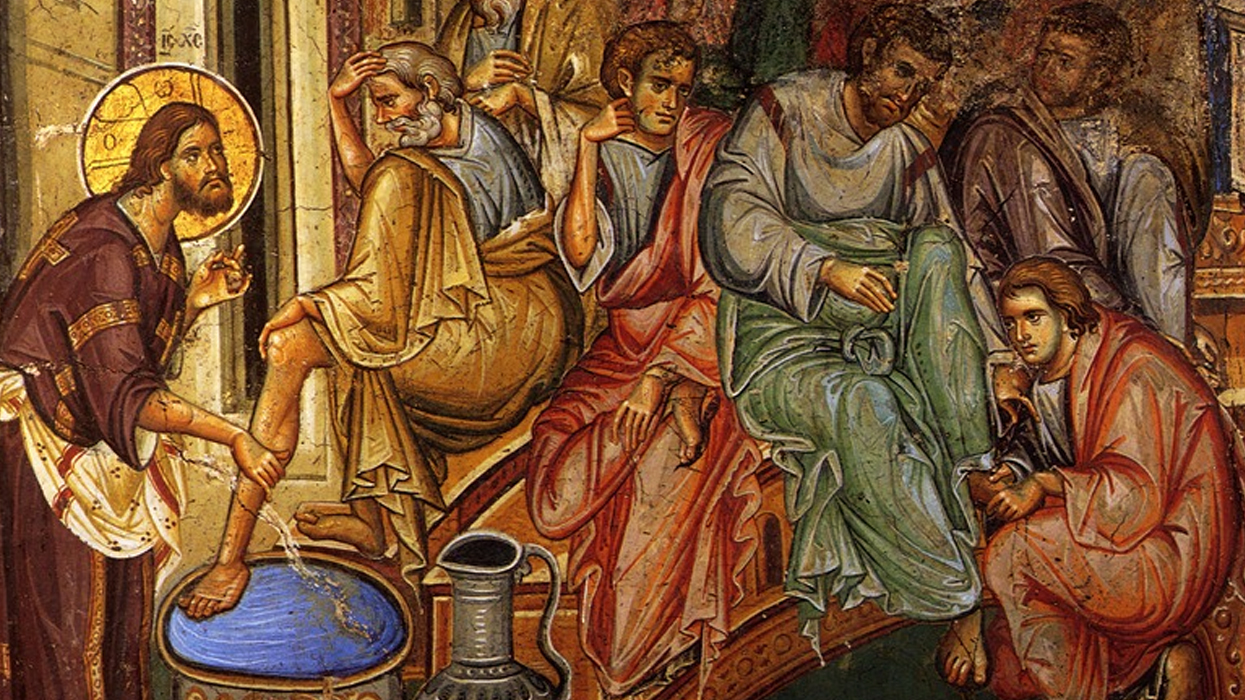
There was a custom to have the feet washed before the supper, and that was done by a servant. However, this custom was not always carried out (Luke 7:44); evidently, this was not fulfilled in Christ’s small community, because the Lord Himself meant to show His disciples the example of humility and selfless love. Saint Luke tells that during the supper, an argument between the disciples about who among them was the senior, took place. Apparently that argument became the cause to show the disciples the visual example of humility and mutual love, by washing their feet. This washing of the feet is described in detail by Evangelist John alone — who usually completes the narratives of the other Evangelists. “Jesus, knowing that the Father had given all things into His hands, and that He had come from God and was going to God,” — the meaning of these words is such: Human God was allowed by Father God to utilize all means that He might find useful in order to save people — that’s the reason why now He performs such an unusual task, which does not coincide with the human notions. The Lord stands up, removes His outer garment so that it won’t be in the way, only with His tunic left. Then He ties a towel around His waist like a servant, He fills a wash basin with water and commences to wash the feet of His disciples, drying them with the towel, with which He was tied around. This was a silent yet demonstrative behest of the departing Teacher to His disciples — the behest of humility and mutual service , without any superiority of one before another. What a powerful refutation of the false Roman-catholic teaching about the supremacy of Saint Apostle Peter above all the other Apostles, and built on that false dogma about the Pope’s primacy in the Church.
“Then He came to Simon Peter…” it can be seen from this phrase that Simon was not the first one that He approached, and that evidently, he was reclining away from the Lord (comp. verse 24). Peter was astounded by the Lord’s actions and found them incompatible with His high merit; that was why for the second time in his life, he contradicted Christ (Mat 16:22): “You shall never wash my feet!” Because of this declaration, he heard the frightening threat — if he persisted in being disobedient up to the end and placing his mind instead of Christ’s, then he will have no “part” with Christ, i.e., he will be excommunicated from Christ’s company. Scared of that threat and inflamed with love for his Divine Teacher, Peter offers: “wash not my feet only, but also my hands and my head,” i.e. expresses as though readiness to obey His Lord even more than others, who only have their feet washed.
“How in this personal feature in characterized Simon Peter”, says Bishop Michael, “who decides to go to the Lord on the waves and then cries out — I sink, who strikes the servant of the high priests with his sword and then runs away, who penetrates into the courtyard where the Lord was judged, there repudiates Him and leaves with bitter tears”. In His answer to Peter, the Lord reveals the high purpose of His actions and at the same time as though consoles him after the threat, expressed to him. “You are not all clean” — is the distinct hint about traitor Judas. Having finished washing their feet, the Lord explained His intention to His disciples, instructing them that they too should serve one another with love, not regarding any effort as being demeaning and not boasting one in front of another.
The Lord Announces of the Betrayer.
(Mat. 26:21-25; Mark 14:18-21; Luke 22:21-23 and John 13:21-30).
Being the closest to the Lord at the Last Supper, having rested his head On Christ’s bosom as narrated by him, Saint John gives the most detailed description of the Lord’s exposure of His betrayer. Having washed the feet of His disciples and given them the edification about it, the Lord was “troubled in spirit” from the knowledge that in those solemn hours, when He was preparing to establish the great mystery of Communion of His Flesh and Blood and give the disciples His last directives, His betrayer was in their midst. Of course, maybe in order to arouse repentance within Judas about that planned by him terrible crime when the Lord exclaimed: “Most assuredly, I say to you, one of you will betray Me”. Quite understandably, those words provoked uproar among the disciples: it produced the feeling of profound sorrow because their Beloved Teacher would find betrayal among them. According to Saint Mark, “they began to be sorrowful”, while according to Saint Matthew, “they were exceedingly sorrowful.” Clearly realizing the profound decline of human nature, they all, as though having no reliance upon themselves, ask: “Lord, is it I?” and exchange glances, according to Saint John, perplexed about whom the Lord meant. According to Saint Matthew, Judas as well asked “Rabbi, is it I?” and the Lord quietly answered him: “You have said it”, trying for the last time to arouse repentance in him, even though it was fruitless. “Now there was leaning on Jesus’ bosom one of His disciples, whom Jesus loved” – so narrates the beloved disciple of Christ, John the Theologian, not naming himself because of his humility. Customarily, the face and chest of those reclining at the refectory faced the table, the left elbow rested on a pillow while the right arm was free to reach out towards the food. The legs were lying at an angle, away from the table so that the next person would be not at the feet of the first person, but close to his chest.
It was precisely that way that John had his head close to Christ’s chest — in other words, his head was resting on Christ’s chest. Taking advantage of this, Saint Peter made a sign to Saint John to ask the Lord about the betrayer. That shows that Peter wasn’t that close to the Lord and in the terms of the contemporary to them customs, didn’t occupy the place next to the Lord — contrary to the Roman-catholic false teaching about Peter’s primacy). With especial temerity, with which could dare to speak only the beloved disciple John, he drew very near to the Lord’s chest and softly asked: “Lord, who is it?” And the Lord answered: “It is he to whom I shall give a piece of bread when I have dipped it… . He gave it to Judas Iscariot.” At the Passover supper, the bread was usually dipped in a sauce of dates and figs. Sometimes, the head of the family distributed such pieces of bread as a sign of his special affection. And of course, through this act the Lord once again wanted to awaken the feeling of repentance in Judas.
This was evident only to John. As the first three Evangelists narrate, the Lord told the other Apostles about the betrayer only in general terms: “The hand of My betrayer is with Me on the table.” “Woe to that man by whom the Son of Man is betrayed” — here, the Lord focuses attention on the miserable lot of the betrayer, and not on the hideousness of the act, and expresses grief about him. “However, some will say,” says Saint John Chrysostom: “If it is written that Christ will suffer like this, then why Judas is condemned? He only fulfilled what was written. However, he didn’t do that with that thought but through malice. If one doesn’t look at the intention, then the devil can be released from blame. But no, no. The one and the other deserve countless tortures, even though the whole world would be saved. Because it wasn’t Judas’s betrayal that gave us salvation, but Christ’s wisdom and His great plan that converted the evil acts of others to our benefit. Then what, one might ask, if Judas didn’t betray Christ, wouldn’t He be betrayed by someone else? If everyone was righteous, then there would be no fulfillment in the formation of our salvation — let it not be so — because the Wise One Himself knew how to arrange our salvation, even if there was no betrayal. His Wisdom is great and incomprehensible. That’s why Jesus calls him a wretched man”. In giving Judas a piece of bread, the Lord wanted to arouse repentance in Iscariot, but with his gloomy soul happened the absolutely opposite thing: “Now after the piece of bread, satan entered him.”
Despite the Lord’s gesture and words of warning, calling him towards repentance, Judas — as it happens with the souls that are deeply polluted with evil — became more embittered against the Lord. Reading the hearts, the Lord saw what was happening in Judas’s soul. Not wanting to expose that openly before all the disciples — in case they might decide to take forceful measures against Judas — and not to raise any useless thoughts of impeding the Divine predetermination, the Lord uttered the words to Judas, which he alone would understand: “What you do, do quickly” — “Whatever you have decided upon, do it quickly”
— is the Lord’s authoritative order, eager to realize God’s will as soon as possible and to fulfill His act as the Atoner of mankind. At the same time, the plausible excuse would liberate the group of disciples from the presence of Judas; establish the great mystery of the Eucharist without his unworthy participation, and give the disciples final, parting edification.
Saint John confirms that no one understood those words, including John himself, not suspecting the betrayal to occur that very night. Everyone thought that the Lord was giving instructions to Judas about purchasing all that was necessary for the feast-day. This is the fresh proof that the feast- day had not yet arrived and consequently, the Last Supper was performed on the eve of the Jewish Passover, 13th of Nisan. It would have been impossible to purchase anything on the evening of the feast-day itself, and it would not have been possible to find beggars to help them, because that night, everyone — the rich and poor — did not come out of their homes, celebrating the Passover according to the law. Blessed Theothylactus as if supposes that with the words “And it was night” the Evangelist might have had in mind the mental night, that spiritual gloom that finally covered the gloomed with covetousness soul of Judas-betrayer.
Further on, Saint John begins to narrate the Lord’s farewell conversation with His disciples, beginning with the words: “Now the Son of Man is glorified,” which is heard in the evening during our Church service on Great Thursday, while reading the first Gospel of the Holy Passions. However, it is imperative to assume that with Judas’s exit, the Lord first established the mystery of the Eucharist, about which narrate the first 3 Evangelists, while John does not. It was only after that, when He addressed to the disciples with those words, which Saint John tells of in detail, adding it to that which was not mentioned by the first three Evangelists.
Great Tuesday. Part 3
About the Second Coming.
(Mat. 24:1-51; Mark 13:1-37; Luke 21:5-38).
After leaving the temple, the Lord and His disciples headed to the Mount of Olives. Along the road, He predicted the destruction of the temple, which occurred in the year 70, when Jerusalem will be taken by the Romans and converted into ruins. Then shortly after, Emperor Trojan will obliterate the last traces of the city. In spite of the Roman commander Titus’s wish to save the temple as a miracle of art, God’s will was fulfilled: because of the flaming torch thrown accidentally by a Roman soldier the temple burnt down. A magnificent view of the Jerusalem temple opened up from the top of the Mount of Olives, and the disciples continued the conversation, concerning their future with the Lord. Christ’s disciples assumed that Jerusalem would stand till the end of time, and consequently posed two questions to Him as one: “Tell us, when will these things be? And what will be the sign of Your coming, and of the end of the age?” The Lord responds, apparently not separating the two events, like they supposed that to be. In prophetic visions, distant and imminent events are sometimes seen as though in one perspective, they blend into one, especially if the imminent event serves as the representation of the following one.
Here the fact that the destruction of Jerusalem and the horrible events following it, as the representation of those horrors that will occur before the end of the world, and Christ’s Second Coming, leaves no doubt. At the same time, the Lord gives a chance to understand clearly that His Second Coming will not happen soon after the destruction of Jerusalem.
The Lord presents the appearance of false “Christs” as the first sign of the coming of God’s judgment day. Joseph Flavius, the historian, testifies that before the fall of Jerusalem, there really appeared many false messiahs- deceivers.
The second symptom will be the wars , local and distant ones (“And you will hear of wars”). But even these wars and natural calamities will only be the beginning of the coming agonizing horrors, which by their gravity are compared by the Lord with childbirth pains.
The Lord presents as the third sign the severe persecutions of His disciples and their followers, which are described in the Book of Acts (e.g., Nero’s persecutions and others). The very word “a Christian” was truly hated by the heathen, which resulted in the emergence of countless martyrs for the sake of Christ. “Then many will be offended”, i.e., they will renounce from their faith in Christ and will begin to betray — to hand over their brothers for torture and death — in order to save themselves. Many false prophets will appear. During the Roman siege of Jerusalem, those false prophets promised to the Jews the help from heaven . “He who endures to the end shall be saved,” — those who will endure all the calamities without betraying Christ, and succumbing to the false prophets, will earn eternal salvation.
The fourth sign of the God’s Judgment coming close will be the preaching of the Gospel throughout the whole world. The New Testament will be preached “as a witness to all the nations,” i.e., the Lord will not come before the Gospel will be preached. This sermon will then become the accusing witness at the judgment against those who after hearing it, did not believe.
“Then the end will come.” The closest image is the destruction of Jerusalem, although all these signs will be foretelling the coming of the end of the world and the Dread Judgment. These signs are common for the both of these events. Thus: 1) The Judgment of Jerusalem arrived as the consequence of its iniquities and impoverishment of love within its walls (“love of many will grow cold” for “lawlessness will abound”); likewise, the end of the world will arrive as the result of the iniquities multiplication and diminution of love among the people, who will forget that they are brothers in Christ; 2) Jerusalem fell only after the Lord did everything to save it: it was resounded with the evangelical sermons: likewise, the end of the world will come only after all its nations will hear the Evangelic sermon, so that at the Dread Judgment — like the Jews — they would stand speechless. The Lord then continues to enumerate the particular signs that concern the very destruction of Jerusalem.
“Abomination of desolation,” about which Prophet Daniel spoke in 9:27, — this is about the Roman soldiers, entering into the half-ruined temple with the banners bearing images of the emperor and eagles, which they worshiped, as idols. “Flee to the mountains,” where there were many caves and shelters to hide from the Romans. “Let him who is on the housetop not go down…” The rooftops were flat and were used for walking or seclusion: during the calamity, those found on the rooftops should immediately flee and not waste the time to go into the house to take the belongings. Likewise, those working in the fields should flee to the mountains without returning home to retrieve their clothing, as they normally worked in the fields without their outer garments.
The historian Eusebius testifies, that the Christians in Jerusalem, having remembered that prediction of the Lord, really ran to Pella and the other beyond-Jordan towns, when the Romans were approaching, and thereby avoided the horrors that fell onto the besieged city. The Lord persuades them to pray so that these calamities do not occur when one cannot flee very far away. On a Sabbath — according to the interpretations of the Scribes, one could not travel more than 1 mile away. “For then there will be great tribulation…” i.e., such calamities that everybody would have perished if there had been no “chosen” among the Jews (those who believed in Christ), for whose sake those days “will be shortened.”
Historian Joseph Flavius testifies that indeed, “all the calamities that had befallen on the different peoples of the world, are insignificant compared to those that had been inflicted on the Jewish people.” During the siege of Jerusalem and its outlying areas, more than a million Jews perished within those boundaries. Many perished from starvation, which was so great that one mother killed and ate her own infant. A vast number of Jews were crucified, thereby fulfilling their own curse when they demanded from Pilate the crucifixion of Christ: “His blood is on us and on our children”(Mat. 27:25). All those disasters were the fulfillment of the prophecies uttered by Moses (Deut. 28:49-57). Titus, who surrounded Jerusalem, originally wanted to force the Jews to surrender the city by hunger. However, the affairs of the Empire demanded his speedy return to Rome, so he decided to take Jerusalem by storm, thereby shortening the period of suffering for the besieged.
The Lord then proceeds anew with the speech on His Second Coming. “False Christs and false prophets will rise and show great signs…” — this means the false miracles, which will sometimes mislead even the righteous. According to Ap. Paul (2 Thes. 2:9-10) and Revelation (chap. 13), these signs will be performed by the antichrist and his servants. The Son of God’s appearance will be like a flash of lightning, i.e., undeniably evident to everyone. Contrary to the false messiah (who will be hiding in the wilderness or in hidden quarters), the true Messiah, in commencing His judgment over the world, will make it evident and frightening everywhere where there will be the spiritually dead sinners — just like eagles gather where there are corpses.
“After the tribulation…” the calamities that had befallen Jerusalem will end and people will become indifferent, which is mentioned further on (Mat. 24:37-39). Saint Luke adds that “Jerusalem will be trampled by Gentiles until the times of the Gentiles are fulfilled,” — the long period of time must pass from the destruction of Jerusalem to Christ’s Second Coming, during which (according to Ap. Paul), the great number of heathens will enter Christ’s Church, and will become the new spiritual Israel (Rom. 11:25).
“Immediately after the tribulation of those days the sun will be darkened, and the moon will not give its light” — these words are not as definitive as those of Luke’s verse 24 (about Jerusalem being trampled by heathens for a lengthy period), telling us about the significance of the period between the destruction of Jerusalem and the end of the world. However, they do let us know that before the end of the world, the totally different days, which through their frightening events will surpass every imagination, will arrive. The Greek text of this particular verse, gives the basis for the following paraphrasing: “Do not think that immediately after the destruction of Jerusalem, My Coming and the end of the world will follow. No, it will be otherwise. For that to happen, there will come the different days. Then the sun will darken and the moon will not give its light etc…” Saint Matthew applies the word “abbeya” (then). However, in the Holy Scripture, it doesn’t normally mean “immediately, straight away, following that” but simply: “unexpectedly, suddenly”, which is like it is translated in the Russian text. Bishop Michael states that sometimes under this ancient Prophetic word “abbeya” many centuries might be meant.
“Powers of the heavens will be shaken,” i.e., the whole structure of earth will be shaken. Saint Luke in chap. 21:25-26 points at the characteristic features of those frightening times: there will be despondency and confusion among the nations of the world: the seas will roar with agitation, people will begin to moan from fear and anticipation of the arrival of calamities, coming over the universe. “Then the sign of the Son of Man will appear in heaven” — Saint Chrysostom considers that it will be the sign of a Cross, which will appear before the coming of Christ the Savior Himself, just as an earthly king is preceded by his royal heraldic banner. It will be that sign, which will force the unbelieving Jews denying God, in the late and fruitless burst of repentance, to exclaim involuntarily: “Blessed is he that comes in the name of the Lord!” And seeing how they had been deluded, living previously in the darkness of disbelief, all the unbelievers “will mourn.” “They will see the Son of Man coming on the clouds of heaven with power and great glory.”
On the signal of the mysterious trumpet, all the dead will resurrect and be gathered by the Angels from all the corners of the world. Moses used to call the Jews for gatherings by blowing into silver trumpets: this form of convening became a custom and was used by the Jews thereafter (Lev. 25:9; Num. 10:2; Jud. 3:27). This is why the Savior uses this descriptive form, familiar to all the Jews, to denote the act of God, on Whose order the Angels “will gather together His elect from the four winds,” i.e., from all the ends of the earth. The Angels will gather the “elect” for eternal glory, as well as “all the workers of iniquity” for eternal suffering.
“Now learn this parable from the fig tree…” Just as about the coming of Summer it was judged by the branches of the fig tree, so is it necessary to judge about the coming of the end of the world by the signs of the times, which the Lord had enumerated previously. “This generation will by no means pass away till all these things take place” — the word “this” is contrasted to “that”, about which it is said further in verse 36. Indeed, the destruction of Jerusalem took place during the Lord’s contemporary generation. However, this expression can be related to the end of the world: then, as Saint John Chrysostom interprets, the words “this generation” can be understood as “This is the generation of them that seek him” (Psalm 24:6), the generation of the believed in Christ, which despite all the horrors will endure till the end. “Heaven and earth will pass away, but My words will by no means pass away” — this confirms the irrevocability of the said prophesy. Having witnessed the precise fulfillment of the Lord’s prophecy about the destruction of Jerusalem, no one can have a doubt that the prophecy about His Second Coming will also be fulfilled with equal accuracy. “But of that day and hour no one knows,” and according to Saint Mark, not even the Son — naturally, as a human, not as God.
According to Saint Luke, just as before the Great Flood during Noah’s times, people will be living quite care-freely, and the day of Christ’s Second Coming will arrive unexpectedly like a net, snaring all living matter on earth (Luke 17:26-27 and 21:34:35). This comparison of the last days with those of Noah’s times is found in the Gospel of Saint Matthew. “Then two men will be in the field…” — these words show how swiftly and decisively the separation between the righteous and the unrighteous will occur, even though at the moment of Christ’s Second Coming they would be very close to one another, involved in the same activity, and even if they slept in the same bed (Luke 17:34).
“Therefore, you also be ready, for the Son of Man is coming at an hour you do not expect” — from this naturally comes out the necessity for constant vigilance: the Lord desires that we should not sleep spiritually, should not be indifferent, but be attentive to the signs of the times and always be ready to meet Him by leading virtuous live. Because of its unexpectedness and suddenness, the Lord’s coming is often compared to the appearance of a thief. The ensuing parable about the faithful overseer or servant and the negligent one, is aimed at suggesting the necessity of constant spiritual vigilance. This parable has an especially close relation to the clergy and civil leaders, who consequently must fear to be negligent in fulfilling their responsibilities, remembering that they will have to give an account of their actions.
The Parable about the 10 Virgins.
(Mat. 25:1-13).
In this parable, the Second Coming of Christ is portrayed as the arrival of the bridegroom at the bride’s house. The arrival of the bridegroom, accompanied by “friends of the bridegroom” (John 3:29; Mat. 9:15), was celebrated very triumphantly. He was met by people with lighted lamps in their hands, and as he might be late, they had to have a supply of oil in case the lamps’ oil would run out before his late arrival. Using this example that was well known in the East, the Lord compares the waiting for His Second Coming with that of the bridegroom, who was to be met by 10 virgins with lighted lamps in their hands. Five of them were “wise”, i.e., far-seeing and carried extra oil, while the other five were “foolish”, i.e., not very prepared, and didn’t take any spare oil with them, so their lamps’ oil started to run out and the light fade. While they were away purchasing more oil, the bridegroom arrived and the doors of the wedding-hall were locked, and they were not allowed by the bridegroom to participate in the wedding feast.
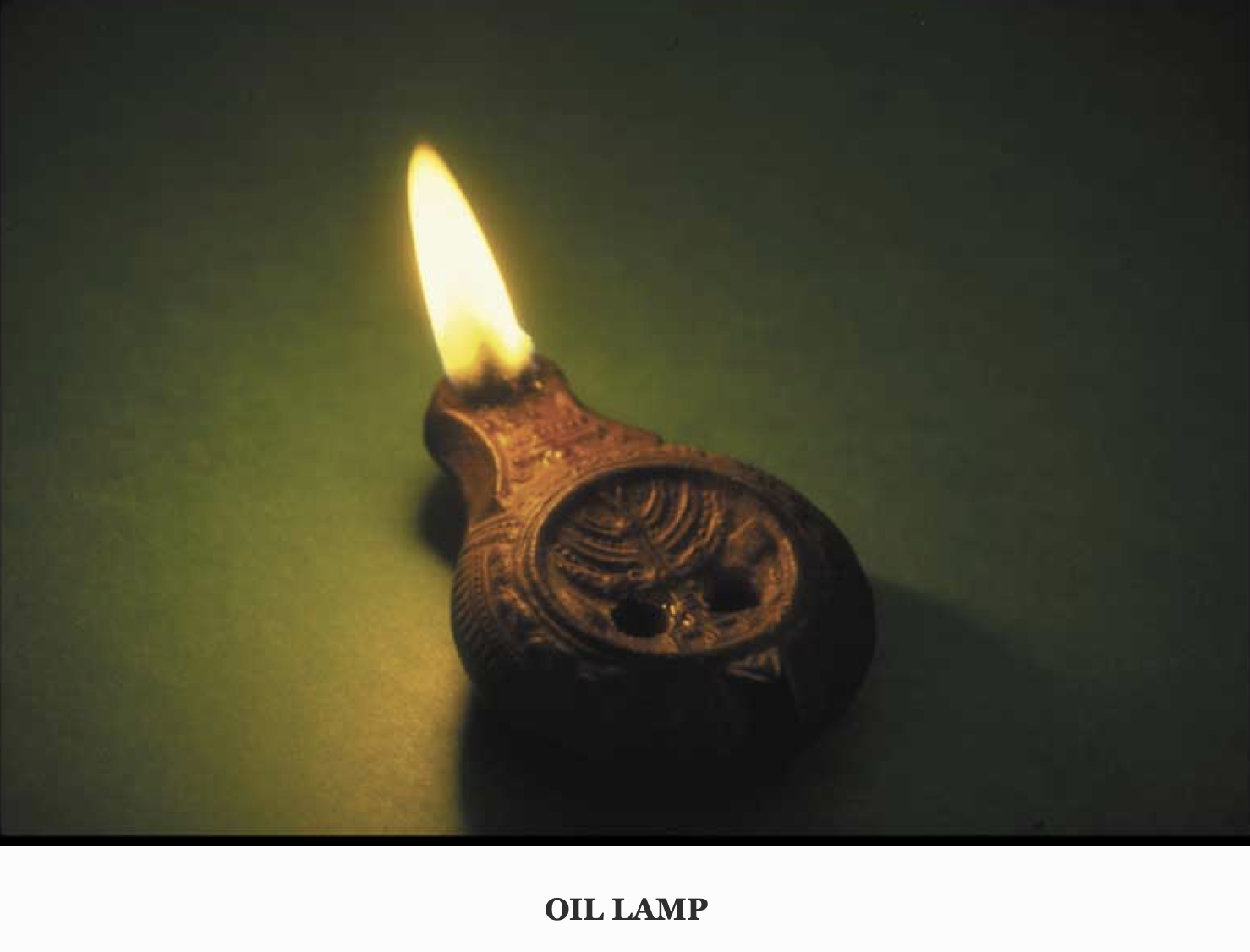
The “wise” virgins represent all the true Christians that are always ready to meet the Lord, and that have with their sincere faith, good works (oil); while the “foolish” virgins represent the Christians by name only, who are indifferent and lack virtues. Such will not attend the wedding feast, i.e., the Heavenly Kingdom, because the Lord said: “Not everyone who says to Me, ‘Lord, Lord,’ shall enter the Kingdom of Heaven”(Mat. 7:21). The last words of the parable: “Watch, therefore…”(Therefore, be alert) again indicate the necessity for constant spiritual vigilance in order to meet the Lord, as the day and hour of His coming is hidden from us.
About the Final Judgment.
(Mat.25:31-46).
The full picture of the Dread Judgment over the whole humanity, , is drawn only by Evangelist Matthew through the words of the Lord Jesus Christ Himself, in connection with the Lord’s sermons on the necessity of continuous spiritual vigilance and readiness to meet His Second Coming. The description of the Dread Judgment is preceded by the parable about talents (Mat. 25:14-30), very similar to the parable about the ten minas , narrated by Saint Luke (19:11-18). The idea of this parable is that everyone will have to give the answer to God at the Dread Judgment Day how he utilized his God-given abilities — both natural and grace- endowed — and what good he achieved with their help.
The Lord commences His narrative about the Dread Judgment by comparing His Second Coming with the triumphant entrances of earthly kings “in their glory.” “He will sit on the throne of His glory ” — that means that the Lord will appear as the King and Judge of the universe. He will be accompanied by “all the holy Angels,” and will be met by all the people that would be alive at the time of His coming, as well as by those, who ever lived on the earth. Before Christ’s coming, there will be the universal resurrection. Moreover, those resurrected will be in the “spiritual” bodies, while those that are alive will change instantly (1 Cor. 15:25-54). “He will separate them one from another, as a shepherd divides his sheep from the goats,” — the sheep represent the righteous, because they serve as an example of innocence and simplicity (John 10:7-14; Psalm 100:3 and Psalm 74:1), while the goats — the condemned, as they serve as an example of evil moral qualities (Ezek. 34:17) and they produce no fruit — no wool, no milk, no lambs — that what all sheep produce. The sheep will be placed on “His right hand,” because the right side was always regarded as an honored position, appointed only to the very close people, while the “goats” will be placed on the left less honored side, in this instance, being the place for the condemned. “Come, you blessed of My Father, inherit the Kingdom prepared for you from the foundation of the world” — those Christians that have been worthy of receiving God the Father’s blessing, often are called in the New Testament as the inheritors of the promised blessings, the true children of God, to whom belong the blessings that have been prepared for them by God (Rom. 8:17; Gal. 4:6-7; Heb. 1:14). God at the very beginning had foreseen the works that will be done. That is why at the very beginning, He had determined the appropriate recompense for those works: for the good works — the Kingdom of Heaven, while for the evil works — tortures. As we can see from this portrayal of the Dread Judgment, the righteous will inherit the Kingdom of Heaven for their works of love and mercy to their neighbors.
Faith is not mentioned because it is supposed to exist by the actual acts of love themselves, which are the fruits of love (John 13:35; 1 Cor. 13:1). Likewise, prayer and other deeds of faith are not mentioned, because without them, there is no true love for one’s neighbor or the sincere, non- hypocritical works of mercy. There are mentioned only the works of mercy, because they attest to true faith and piety of a Christian (see James 2:14-26;
1 John 3:15-18, 4:20-21). The reply from the righteous testifies of their humility and realization of their unworthiness. This is the law of moral self- improvement: the more a person improves, the more he realizes the insignificance of his achievements.
The Lord calls His followers “My brothers,” as close and related to Him in spirit, in disposition, in suffering; He calls them “the least,” because they are humbled, because they are poor, outcasts. “Depart from Me, you cursed” — cursed, meaning deprived of blessings. They are condemned “into the everlasting fire prepared for the devil and his angels” — here, the fire represents the highest degree of tortures, as the death by burning with the fire is the cruelest form of punishment.
This example is taken from the fire in the valley of Genomes, to the southwest of Jerusalem, where during the Jews’ digression from the true faith, were brought the sacrifices to Moloch. Later, it was used to dump waste and corpses of the executed, and in order to purify the area, there was a constant fire burning. This is how the area got its name as the valley of fire, which began to serve as an example of eternal tortures for the sinner. The eternal tortures were specifically allotted to the rebelling against God spirits. However, as the sinners become the participants in that evil, which the devil and his angels sow, they too are sentenced for the tortures. “And these will go away into everlasting punishment” — the tortures for the sinners, which contrary to the teachings of some false prophets, will have no end as they voluntarily rejected God’s love. As many surmise, these tortures will consist of the terrible pangs of conscience, which will remain fruitless. Some of its traces are already experienced in this life, such is, for example, the state of perpetual melancholy. So great will be the bliss of the righteous, beginning sometimes here on the earth.
Great Wednesday
Great Wednesday
The High Priests’ Decision to Kill Christ.
(Mat. 26:1-16; Mark 14:1-11; Luke 22:1-6)
Having finished the above sermons to His disciples, the Lord predicted the fast approach of the hour of His sufferings on the cross through the words narrated only by Evangelist Matthew: “You know that after two days is the Passover, and the Son of Man will be delivered up to be crucified.” The feast of the Passover began on the evening of the 14Th of Nisan, which fell on a Friday that year (see John 19:14): we can conclude from this, that those words were pronounced either on a Tuesday night or on Wednesday.
Passover was the greatest and most triumphant feast among the Jews. It was celebrated in the memory of the liberation of Jews from the Egyptian bondage. The word “Pascha” itself is a derivative from the Jewish “peisah,” which means: “a passage”, “mercy” in memory of that moment, when after killing the Egyptian first-born, the Angel seeing the blood of a sacrificial lamb upon the door jambs and cross-beams of the Jewish houses passed by, thereby sparing the Jewish first-born (Exod. Chap. 12). Together with the feast day of “Unleavened Bread” which began on the second day of the Passover, the Passover itself was celebrated for 8 days — from the evening of the 14th up to the 21st of the month of Nisan, which corresponds to the end of our March and the beginning of April. On the 10th day of Nisan, the heads of families had to select a one- year-old lamb, free of any defects. Then on the 14th day, it was prepared according to established practice, sacrificed in the courtyard of the sanctuary and baked. During the Passover celebrations, in the memory of the original smearing of doorjambs and crossbeams with blood, the sacrificial table was sprinkled with the blood of the slaughtered lamb. That’s why the lamb was sacrificed near the tabernacle, and then within the temple. The baked lamb was eaten in its entirety, without leaving the bones or veins — with the unleavened bread and bitter greens. The eating commenced precisely at the sunset, on the 14th of Nisan. Before anything else, everybody approached the chalice filled with watered-down wine: after praising God, the head of the family drank from it, followed in turn by everybody that was present. This was called the first cup. Everybody then washed their hands and thanked God. They then commenced to taste the Pascal lamb, together with the unleavened bread, bitter greens and thick sauce, made of dates, figs, grapes and vinegar. At the same time, they pronounced the words of praise, after that the serving plates were taken away and another chalice of watered-down wine was brought in. The serving plates were removed in order to arouse interest among the children, prompting them to ask questions that would receive a detailed narrative about the feast day history (Exod. 12:26-27).
The head of the family told the story of the Jewish bondage in Egypt, their liberation and the establishment of the feast day — the Passover — to commemorate that event. When the serving dishes were brought in again, he would pronounce: “This — Pascha, is eaten in memory of the Lord sparing our homes in Egypt”; raising the bread and the bitter greens, he explained that the first remind them of the haste of their flight from Egypt, while the second — the bitterness of their Egyptian bondage. Following that, they sang the first part of the so-called Hallelujah , namely Psalms 110-114, said the short prayers and once again drank wine from the chalice, which was called the second chalice. They again washed their hands and ate the lamb, bitter greens and bread. The lamb had to be totally consumed before the next day. Then they again washed their hands and drank from the third chalice — called the chalice of benediction , because drinking from it, the head of the family uttered a special prayer of praise to God for His exceptional grace. In conclusion, the fourth chalice, called “gallel”, was drunk because following that, the second part of Hallelujah (Psalms 115-118) was sung. The common belief among the liturgists is that this paschal supper laid the foundation for our Christian Eucharist — the mystery of Communion.
The words: “after two days is the Passover, and the Son of Man will be delivered up to be crucified,” shows the Divine prevision of the Lord. He knew the day of His death, despite His enemies stating: “not during the feast, lest there be an uproar among the people.”
Later, all the three forecasters relate about the meeting of the high priests and Jewish elders about the destruction of Jesus. Fearing to agitate the people who might intervene for the Lord, they decided to take Him cunningly and quietly away from the people, after the feast day. Possessed by frenzied rage and finding the betrayer, they decided not to wait for the end of the feast period. Saint Matthew narrates that this meeting took place in the house of the high priest Caiaphas, in his courtyard. The courtyards in the East were found inside of the building and often served as the meeting places. The first name of Caiaphas was Joseph, while Caiaphas was his nick-name of the family name. He was the son-in-law of the former high priest Anna or Annanas, who was replaced by the order of the Roman pro-consul.
Then, the first two Evangelists, Saints Matthew and Mark, narrate about the anointment of the Lord by a certain woman in the house of Simon the leper. The Church tradition differentiates this anointment to that performed by Mary, the sister of resurrected Lazarus, occurred 6 days before the Passover and before the Lord’s entry to Jerusalem. Simon was called the leper, because apparently the Lord had healed him of leprosy. According to the Church tradition (represented in a very moving way in the church service following Great Wednesday), the woman that approached the Lord with the intention of anointing Him with expensive oil, was a repenting sinner. She brought the myrrh in an alabaster container. The myrrh was the aromatic liquid, made of oil and scented additives — usually, the oil was the finest olive oil, combined with fragrant resins like nard or Commiphora gum and various flowers. Alabaster is the type of marble, known for its lightness, transparency and beauty. Vases, urns, perfuming-pans and containers for preserving the aromatic substances were made from this marble. In the East, the anointment with oil was used not only in the highest sense, like anointing the kings and high priests, but within the ordinary life by the people of wealth and fame for delight. The myrrh was applied to the head, forehead, face, beard, clothing (Psalm 23:5; 133:2; Eccl. 9:8 and others), and as a sign of exceptional respect — to the feet.
“But there were some who were indignant among themselves, and said, “Why was this fragrant oil wasted?” — not knowing the thoughts and profound feelings of reverence in the woman-sinner, and being aware of the Lord’s intolerance towards extravagance, who put mercy and benefaction above all else, the disciples condemned her act. However, in that case they were mistaken. The Lord justified her actions as coming from warm faith and sincere contrition. “For you have the poor with you always” and you can always show benevolence towards them: “But Me you do not have always” — this was the concealed indication about His death. Apart, the Lord gives a special symbolic meaning to this action : “She has come beforehand to anoint My body for burial” — as this was an ancient practice to anoint the bodies of the dead with aromatics. As a reward for her action, the Lord foretells the perpetual commemoration of her deed among the Christians. And we see this — the narration about it is not only recorded in the Gospel, but also included in our Church Service: following Great Wednesday, our Church glorifies this woman’s action, drawing the parallel between that and Judas’ betrayal, which occurred later on the same day, soon after that case.
“Then one of the twelve called Judas Iscariot went to the chief priests and said, ‘What are you willing to give me if I deliver Him to you?” — “Then” — this expresses not only the consequential events, but also the inner, logical connection. Judas expected earthly gifts, worldly riches and dominion from Jesus Christ: his avarice was losing patience in seeing the Teacher’s total non-covetousness. According to Evangelist John (John 12:6), he began to reward himself from the treasury box, secretly appropriating the alms put into the box. The incident in the house of Simon the leper finally made him understand that it was futile to expect enrichment from the Teacher of voluntary poverty and self-abasement. The annoyance with the Lord, Who as he thought, deceived his expectations and a desire to utilize any situation for personal gain, made him a betrayer.
Knowing of the Sanhedrin’s decision to seize the Lord, he approached the high priests in order to offer his services for money — to betray the Lord in an isolated place, away from people. “What are you willing to give me?” — These words indicate his annoyance and rancor towards his Teacher, whom he decided to betray without arguing about the price. That’s why they nominated a paltry sum — the price of a white slave — “thirty pieces of silver”, i.e., 30 silver coins, so-called “blessed shekels”, the approximate value of each being 80 kopecks, making in totality 24 silver rubles. Apparently, this sum was offered to show their contempt to the Lord Jesus Christ, taking into account the stinginess and greed of the betrayer that would not start bargaining. And indeed, Judas was very compliant, not demanding more, and “ from that time he sought opportunity to betray Him”, any opportunity when the Lord was alone, without the many people that usually surrounded Him. The nominated sum fulfilled Zachariah’s prophecy (11:12-13) about the 30 silver pieces, with which the ungrateful people evaluated the fatherly care of Jehovah about them.
- Great Tuesday. Part 3
- Great Wednesday
- Great Thursday. The Mystical Supper.
Related Concepts
- 13th-of-nisan-chronology
- 13th14th-nisan
- abomination-of-desolation
- agony
- alabaster
- apostolic-equality
- avarice
- bliss-of-the-righteous
- burial-of-christ
- chalcedonian-doctrine
- confession-of-jesus
- contempt
- daniels-prophecy
- devil-and-his-angels
- divine-power
- divinity-of-christ
- dread-judgment
- eschatological-fulfillment
- eucharistic-chalice
- faithful-steward
- farewell-discourse
- free-will
- great-wednesday
- holy-communion
- immortality-of-the-soul
- james-2
- john-the-theologian
- joy
- judgment-of-jerusalem
- kingdom-of-god
- love-of-neighbour
- love-to-the-end
- mary-of-bethany
- moloch
- myrrh
- new-wine
- pangs-of-conscience
- parable-of-the-ten-virgins
- paschal-canon
- preaching-of-the-gospel
- primacy-of-peter
- prophecy-and-fulfilment
- readiness
- refutation-of-papal-primacy
- resurrection-of-lazarus
- roman-catholicism
- sacrifice-of-the-cross
- satan
- self-knowledge
- selfless-love
- servant-leadership
- sheep-and-goats
- sign-of-the-cross
- simon-the-leper
- synoptic-vs-johannine-accounts
- ten-virgins
- thirty-pieces-of-silver
- valley-of-hinnom
- watchfulness
- works-of-mercy
- zechariahs-prophecy