New Testament — Topic 12
The Savior’s Social Service. Part 9.
About the Forthcoming Sufferings of Christ. (Mat. 20:17-28; Mark 10:32-45;
Luke 18:31-34).
About the Forthcoming Sufferings of Christ.
(Mat. 20:17-28; Mark 10:32-45; Luke 18:31-34).
All the three forecasters narrate concordantly that on the way to Jerusalem, the Lord once again began to tell His disciples about His forthcoming sufferings, death and Resurrection. The most detailed and lively account is from Saint Mark, who had undoubtedly heard about that from the mouth of Apostle Peter. He states that the Lord was marching in front , apparently towards the impending voluntary sufferings, thirsting to fulfill God’s will (compare to Luke 12:50). His disciples, thinking in earthly terms and only of the Messiah’s earthly glory, “were amazed. And as they followed, they were afraid.”
Having called His 12 disciples aside as apparently there were many people following them, He privately told them that everything written about Him by the Prophets, would happen in Jerusalem; that He would be subjected to abuse, condemned to death and given over to the heathens, i.e., Romans, who after spitting, beating and abusing Him, would crucify Him, while on the third day, He would Resurrect. Saint Luke adds that the disciples did not understand any of this, because “this saying was hidden from them ”.
It was then that the mother of the Zebedee brothers, James and John, approached the Lord (and according to Saint Mark, together with both of them), with a request — for one to sit on His “right hand”, i.e., occupy the second place after the Lord in the unfolding (as they imagined) earthly kingdom of the Messiah, and for the other – to sit on the “left hand,” occupying the third place. The Lord responded to that request: “You do not know what you ask.” The Apostles at that time truly did not understand that asking to be the first, meant to be in the forefront of self-denial and martyrdom in the Name of Christ; they thought they were asking for only honors, authority and happiness. That’s why the Lord’s question: “Are you able to drink the cup I drink?” specifically shows that the nearness to Him in His Kingdom will be determined by the comparison to His sufferings. Sufferings here are presented as a cup, which is to be shared with Christ by those who wish to be close to Him. This image is taken from the custom of the Eastern kings, who used to send a chalice with poison to those condemned to death. The Son of God is presented as the One condemned, to Whom the chalice of death is sent by His Heavenly Father (John 18:11).
“Be baptised with the baptism that I am baptised with?” — conveys the following meaning: enduring sufferings is presented as though a person is immersed and washed in them as though in water. “We can,” answered the Apostles, “in the heat of enthusiasm, not realizing what they had said” (Chrysostom) — saying the same thing as all the disciples, promising to follow the Lord, even unto death. “You will indeed drink My cup” … “even though the promise had not been thought through,” was as if the Lord’s answer, “but indeed in the future (seeing this with His Divine eyes), you will be akin to Me in patience and exploit”, “but to sit on My right hand and on My left,” i.e., in the kingdom of glory, that has to be fought for in this world, “is not Mine to give, but it is for those for whom it is prepared” — this means: “it’s not in My power to grant this to every person that desires this, only to those for whom it has been prepared, those that have earned this through their exploits”. The other Apostles — apparently through jealousy — became displeased, whishing that the brothers would not receive what they were seeking. The Lord makes the suggestion to everyone, persuading them not to seek primacy.
In response to their display of ambition, the Lord teaches them that the fundamental rule of morality for the members of His Kingdom that differs from the earthly kingdoms, is humility and self-denial. As an example of such humility and selflessness, the Lord points to the Apostles at Himself: He “did not come to be served”; “but to serve, and to give His life a ransom for many.” Instead of “all,” the word “many” is used. All people were spiritually enslaved by the devil and worked for sin. In order to liberate them, a ransom was needed (in Greek “litron”). It was the Lord, who gave that payment, ransom (“apalitrossi”), with the price of His cruciferous sufferings and death.
-
The Cleansing of ten Lepers. (Luke 17:20-37). Christ’s Second Coming. (Luke 17:20-37). The Parable about the Unrighteous Judge. (Luke 18:1-8). The Parable about the Publican and the Pharisee. (Luke 18:9-14).
- The Rich Young Man. (Mat. 19:16-26; Mark 10:17-27 and Luke 18:18-27). The Parable about the Workers that Received Equal Payment. (Mat. 20:1-16).
- About the Forthcoming Sufferings of Christ. (Mat. 20:17-28; Mark 10:32-45; Luke 18:31-34).
- The Healing of the Jericho Blind. (Mat. 20:29-34; Mark 10:46-52; Luke 18:35-43). The Visit of Zacchaeus. (Luke 19:1-10). The Parable about the Talents. (Luke 19:11-28 and Mat. 25:14-30).
- The Resurrection of Lazarus. (John 11:1-46). The Sanhedrin’s Decision to Kill Jesus Christ. (John 11:47-57) The Supper at Lazarus’s House. (John 12:1-11).
-
The Savior’s Social Service. Part 9.
-
The Savior’s Social Service. Part 9.
-
The Savior’s Social Service. Part 9.
-
The Savior’s Social Service. Part 9.
-
The Savior’s Social Service. Part 9.
The Cleansing of ten Lepers. (Luke 17:20-37). Christ’s Second Coming. (Luke
17:20-37). The Parable about the Unrighteous Judge. (Luke 18:1-8). The Parable about the Publican and the Pharisee. (Luke 18:9-14).
The Cleansing of ten Lepers.
(Luke 17:20-37).
This miracle was performed by the Lord during His last travels from Galilee to Jerusalem, on the last day of the Sabbath holiday, when He was crucified. The group of ten lepers, “who stood afar off” because the law banned them from coming close to the healthy people, began to plead in a loud voice for the Lord to have mercy on them. The Lord directed them to go and show themselves to the priests. This meant that through His miraculous power, He cured them of their leprosy, because He was sending them to the priests so that they — according to the law — might testify of their cure from leprosy. This was followed by the sacrificial offering and the permission to live freely in the community. Their submissiveness to the Lord’s words — to appear before the priests for to be examined — shows their living faith. And indeed, along the way, they noticed that their leprosy left them. However, as it is often the case, having received their cure they forgot the Source of their joy, and only one of them
— the Samaritan — returned to thank the Lord for his cure. This event shows that although the Jews despised the Samaritans, the latter sometimes stood higher than them. Saddened, the Lord inquired with a short rebuke: “Were there not ten cleansed? But where are the nine? Were there not any found who returned to give glory to God except this foreigner?” These nine are the living example of human ingratitude to Benevolent God.
Christ’s Second Coming.
(Luke 17:20-37).
To the Pharisees’ question about when God’s Kingdom will arrive, the Lord replies: “The Kingdom of God does not come with observation, nor will they say, ‘See here!’ or ‘See there!’ For indeed, the Kingdom of God is within you.” There is no certain place on earth for God’s Kingdom, because it is not of material substance: the essence of God’s Kingdom is in the inner restoration and sanctification of people. In the term “God’s Kingdom” the Pharisees saw the earthly reign of the Messiah, which they expected would rid them of the hated by them Roman yoke. The Lord suggests to them that this is the spiritual kingdom, the inner and not the outward, earthly, sensate one, and that it has already arrived. “Within you” has a dual meaning: 1) God’s Kingdom has already arrived — it is among you, among the Jewish people, even though because of your spiritual blindness you cannot see it; 2) God’s Kingdom is invisible to the physical eyes, because it settles in the man’s soul. Having said about the coming of God’s Kingdom, which will only be like the spiritual leaven, transforming the world inwardly, the Lord turns to the thoughts of misfortunes that await the Jews, who haven’t noted the advent of His Kingdom (the destruction of Jerusalem by the Romans in the year 70), and of the clear revelation of His Kingdom, which will arrive with His Second Coming in all the glory. It will be like lightning that flashes in the sky from one end to the other. Just as unexpectedly as the day of the Great Flood in Noah’s times and the destruction of Sodom and Gomorrah in Lots era, so will be Christ’s coming to judge Jerusalem before its destruction — and His Second Coming before the end of the world, to judge the human kind. Then one would have to go towards the Lord, without looking back on the condemned world akin to Lot’s wife — because it is then that the final separation between the righteous and sinners will take place, even though that night they shared the same lodge, or were together, busy with the same activity. Stunned by those words, the disciples asked when all this will happen. The Lord answered them with a saying: “Wherever the body is, there the eagles will be gathered together”(Habakkuk 1:8), i.e., just like predatory birds gather where there is corpse, God’s judgment will appear where the inner life has died away and moral decay started.
The Parable about the Unrighteous Judge.
(Luke 18:1-8).
Hard times will be before the Second Coming of Christ, but there is no need to be desponded because of that but “always pray”. The Lord directs how to pray through the figurative presentation of a callous judge in the parable, who refused to respond to the plea of the aggrieved widow to protect her. But eventually, because she was giving him no peace bothering him, he fulfilled her request. The Lord doesn’t want to compare God with this unrighteous judge (an extra proof that not all the details in a parable should be interpreted in the spiritual sense), but only as the result from the bad to the complete, makes a conclusion that more so, the Ever-good and righteous God will protect His chosen if they will appeal to Him day and night, even though He may be initially slow in protecting them. “Nevertheless, when the Son of Man comes, will He really find faith on the earth?” — notwithstanding the certain truth of God’s speedy protection of His chosen, would He find such faithful that will have such commitment and such persistence in prayer that is required? In other words: there is no need to fear that God will not protect His faithful from imminent misfortunes and troubles, but sooner one should fear that with the Second Coming of Christ, there will be no such faithful.
The Parable about the Publican and the Pharisee.
(Luke 18:9-14).
Through telling the parable, about how two people — a Pharisee and a publican — prayed in the temple, the Lord shows what kind of prayer is required of the faithful Lord’s followers so that it can attract His help and protection. The Pharisee prayed with a feeling of conceit and self-exaltation, showing off his good deeds before God as his merits and humiliating the others. The publican prayed, realizing his sinfulness and unworthiness. As a result, he went home “justified, rather than the other ”, i.e. the Pharisee. Thus, the Lord expresses the idea of this parable in its last words: “everyone who exalts himself will be humbled, and he who humbles himself will be exalted.” Consequently, one must pray with humility, with the sincere repentance about one’s sins. The publican’s prayer: “God, be merciful to me a sinner!” has become a specimen for the universal usage.
The Healing of the Jericho Blind. (Mat. 20:29-34; Mark 10:46-52; Luke
18:35-43). The Visit of Zacchaeus. (Luke 19:1-10). The Parable about the Talents. (Luke 19:11-28 and Mat. 25:14-30).
The Healing of the Jericho Blind.
(Mat. 20:29-34; Mark 10:46-52; Luke 18:35-43).
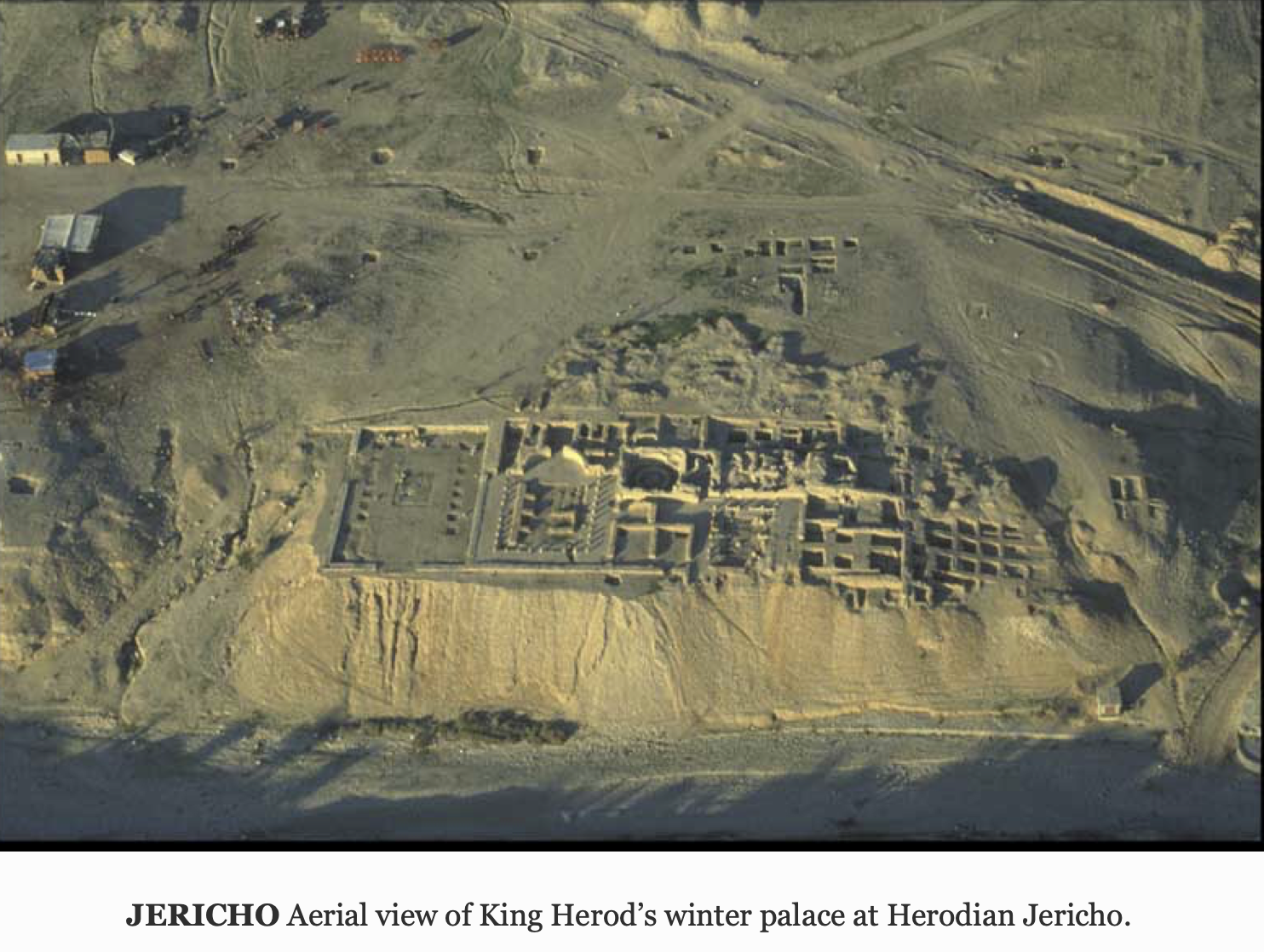
In those days, Jericho was a large Jewish city, situated some 12 miles northeast of Jerusalem and 4 miles to the west from Jordan, and according to historical records, was an important city. Nearby was where the Jews crossed the river Jordan in their exodus from Egypt (Joshua 3:16). This was the first city, that was miraculously taken by the Jews (Joshua 6:20). Later, it had the schools for prophets (Kings 2:5), and it was there where the Prophet Elisha performed the miracle of sweetening the bitter waters (2 Kings 2:21). Its suburbs were outstanding in its luxurious flora and excellent climate. However, further on the way to Jerusalem, there laid the grim and rocky wilderness, populated by wild beasts and robbers. When the Lord was leaving Jericho, taking the road usually used by the Jews to go from Galilee through the beyond Jordan region Perea, “a great multitude followed Him ”, who like Him were going to Jerusalem for the feast of Pascha. Sitting by the road and begging for alms, the blind beggars began to cry out: “Have mercy on us, O Lord, Son of David!” Those cries proved their living faith in Jesus Christ as in the Messiah. The people were forcing them to keep silent so as not to disturb Jesus, Who apparently at the time was giving an admonishment to them. The Lord enquired them about what they wanted from Him. Having received the answer “Lord, that our eyes may be opened,” the Lord touched their eyes and cured them of their blindness, after that they followed Him.
While all the three forecasters narrate about this event, only Saint Matthew speaks of two blind men; Saints Mark and Luke speak only of one. As well, Saint Mark narrates about this miracle with great detail, even pointing out the name of one of them — Bartimaeus, which means “the son of Timaeus”. It has to be assumed that one of the blind was well known to everybody, while the other was an unknown and was unseen by many. That’s why the other two forecasters didn’t mention him. There is another difference in the narrations: according to the first two forecasters, the Lord healed them when He was leaving Jericho, while according to Saint Luke, when He was approaching Jericho. Bishop Michael explains that Saint Luke’s use of the Greek word “angisin” in fact doesn’t mean entering, but means “to be near something”; consequently, it would have been more correct to state that the miracle was performed by the Lord when He was near Jericho — and while entering or leaving — is immaterial.
The Visit to Zacchaeus.
(Luke 19:1-10).
The Lord’s visit to the chief publican, Zacchaeus, is narrated only by Evangelist Luke. After healing the blind, the Lord entered Jericho where he was much sought by the very wealthy publican leader, Zacchaeus. Zacchaeus a purely Jewish name meaning “pure” and “just.” Jericho was famous with its production and trade of balsam, and the post of a publican was especially important — as well as beneficial and lucrative. Zacchaeus was not an ordinary publican, but the chief of all the publicans in the area, having authority, apparently, over the publicans of the whole region. The emphasis here is laid on that he was a wealthy man: after all, very few rich individuals followed the poor Galilean Teacher. Being short in stature, Zacchaeus climbed upon a sycamore tree to get a better view of the Lord, Who was surrounded by the crowd of people. Evidently, knowing Zacchaeus’s good moral disposition, how he wanted to see the Lord, and that it wasn’t just senseless curiosity, the Lord honored his house with His visit.
The great joy over the fact that the Lord did not despise him as a sinner, completely awakened Zacchaeus’ conscience and produced the complete moral turnaround in his soul. Accepting that his conscience is sullied by the methods of obtaining his wealth, he loudly gave the solemn promise to erase his sin of covetousness: “I give half of my goods to the poor; and if I have taken anything from anyone by false accusation, I restore four-fold.”(in accordance with the law concerning thieves, outlined in the Book Exodus 22:1). The Savior responds to this with: “Today salvation has come to this house,” i.e., to the house of Zacchaeus. The Lord’s further words were addressed to those who were displeased, because “He has gone to be a guest with a man who is a sinner.” However, Zacchaeus too was a “son of Abraham” — not only by flesh, but especially in spirit. Zacchaeus’ repentance is the model of true confession, which is not limited only with the barren regrets of the committed sins, but has the aspiration to erase those sins with the opposite good deeds. That’s why the Gospel about Zacchaeus is always read before the first preparatory week, before Great Lent
— the week about the Publican and the Pharisee.
The Parable about the Talents.
(Luke 19:11-28 and Mat. 25:14-30).
While in the house of Zacchaeus, the Lord told a parable about the 10 Minas, which contained many similarities to the parable about the talents, narrated by Evangelist Matthew. With all their great similarity, there is the substantial difference between the two; with that, as it can be seen from the Gospel of Matthew, the parable about the talents was told by the Lord significantly later, in relation to His talks about His Second Coming, the end of the world and the Dread Judgment. Nevertheless, the basic idea of both the parables is one and the same, allowing them to be examined on a parallel basis. In the parable about the Minas, the narration is about the person of high position, who travels to a faraway land to receive his kingdom and then return. Evidently, this example is taken from the situation with the monarchal rule in Judea. The Jewish kings had to travel to Rome to receive their authorization to rule. Archelaus, the son of Herod the Great had to do that, and Herod Antipas, the Tetrarch of Galilee, did the same. In the parable about the talents, the narration is simply about the individual who goes off to a foreign land. In both the parables, the individual is understood to be Christ, from Whom many Jews at the time were waiting the commencement of the glorious kingdom of the Messiah.
In the parable about the Minas, the master gives his ten servants one mina each, ordering them to put this silver into use. Mina was worth 100 Drachmas, or approximately 25 rubles. In the parable about the talents, the master upon leaving, handed over all his possessions to his servants, handing each one such a part, with which he was able to cope. Each talent is equal to 60 Minas. Of course, in both the parables, the servants meant the disciples and followers of Christ, who received various gifts from Him, as well as different outward blessings, which they had to utilize and multiply for God’s glory, for the benefit of their neighbors and for the salvation of their souls. Further on in the parable about the Minas, we find the circumstance which doesn’t exist in the parable about the talents. The citizens started to hate that noble master and sent the messengers after him, saying: “We don’t want him to rule over us.” This is the trait that reminds us of the recent episode of Archaleus’s travel to Rome. The Jews that disliked him, sent a delegation of 50 people to Rome, to ask that he should not be put as their ruler — although in vain.
Concerning the Lord Jesus Christ, the Jews rejected Him as their Messiah. However, this was ineffectual as He remained the Messiah, as well as the whole world’s King and Judge, Who will demand the account from His servants and punish those who refused to accept His authority. The return of the master in both the parables is to be understood as the Second Coming of Christ, when every person will be obliged to give an account at the Dread Judgment, about how he utilized his God-given talents and the outward welfare. Those who multiplied their Minas and talents, will be worthy of praise and will receive the reward equal to their efforts. Those, who hid their Minas or talents, will be punished as a “wicked and lazy servant” for being unwilling to work with God-given gifts of goodness, in which God’s grace remained unproductive. The servant’s accusation of the master being a cruel person is the sinner’s usual self-justification. Having lost the feeling of filial affection for God, he presents God as cruel and unjust. The one, who uses his gifts in a good way, increases them; the negligent and indifferent person will be deprived of even that what he possesses. That’s why, “to everyone who has, more will be given, and he will have abundance; but from him who does not have, even what he has will be taken away.” The parable about the Minas is concluded with a threat of grave punishment to the Jewish people for not accepting the Lord Jesus Christ as the Messiah. Ending His sermon, the Lord traveled further in the direction of Jerusalem.
The Resurrection of Lazarus. (John 11:1-46). The Sanhedrin’s Decision to
Kill Jesus Christ. (John 11:47-57) The Supper at Lazarus’s House. (John 12:1-11).
The Resurrection of Lazarus.
(John 11:1-46).
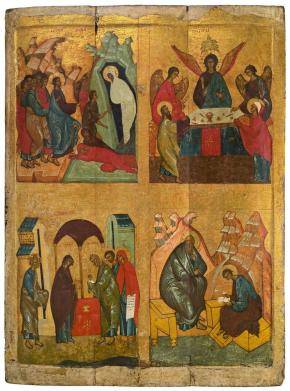
Only Evangelist John tells of this event. It was during the time of the Lord’s stay at Perea that the news of His beloved friend Lazarus’s sickness reached Him. Lazarus lived in Bethany with his sisters Martha and Mary. This family was especially close to the Lord and it must be assumed, that whenever He was in Jerusalem, He visited them in order to rest and get away from the noisy crowds that accompanied Him, as well as from the sly cross-examiners, the Scribes and Pharisees. The sisters sent a message to the Lord: “he, whom You love is sick,” in hope that the Lord Himself would hurry to them to cure Lazarus. However, the Lord not only didn’t hurry, but remained where He was for further “two more days,” saying: “This sickness is not unto death, but for the glory of God, that the Son of God may be glorified through it.” The Lord knew that Lazarus would die, and if He said that his sickness is not unto death, it is because He intended to resurrect him. It was only after two days since Lazarus’s death, when the Lord said to His disciples: “Let us go to Judea again.” The Lord doesn’t specify Bethany, but Judea as their trip’s destination, so as to bring out into the open, known to Him and nesting in the hearts of the Apostles thought of the danger awaiting Him in Judea.
Those words were used by the Lord to implant the idea of the necessity, and thereby the inevitability of their Teacher’s sufferings and death. The disciples indeed expressed their fear for Him, reminding Him that it was only recently that the Jews wanted to stone Him in Jerusalem. The Lord responded to the disciples’ worry with the allegorical sermon, based on the situation, in which He was in at that time. Probably, that took place in the early hours of the day, at sunrise: consequently, they had 12 hours of daylight for their trip.
During all that period, it was possible to travel without any difficulties: it would be dangerous if it was necessary to travel after the sunset — at night. However, there was no need for that as it was possible to reach Bethany before the sunset. This means in the spiritual sense that our time on earth is determined by the higher will of God. That’s why, while this time continues, we can go forward on our established path without fear, performing works to which we were called: we are safe because God’s will is protecting us from all dangers, just like the light of the sun protects those who travel in the daytime. There would be dangers if the night overtook us during our works, i.e., if opposite to God’s will, we would decide to continue our activity: then we would stumble. In relation to Jesus Christ, it means that the life and works of the Lord Jesus Christ would not cease earlier than it is established from above, and therefore, the disciples should not fear the dangers that are threatening Him. Following the path in the light of God’s will, Human God cannot be subject to unforeseen dangers. Having explained this, the Lord expresses the aim of their travel to Judea: “Our friend Lazarus sleeps, but I go that I may wake him up”.
The Lord called Lazarus’ death sleep, just as He had done in other similar cases (see Mat. 9:24, Mark 5:29). To Lazarus, death was indeed like sleep because of its short duration. The disciples, taking into account His previous words that the sickness was not unto death, didn’t understand that the Lord was speaking about the death of Lazarus: they supposed that the Lord will come and cure him miraculously. “If he sleeps, he will get well”
— was apparently said to dissuade the Lord from traveling to Judea: “There is no need to go as the illness had taken a turn for the better.”
Setting aside all the objections of the disciples and wishing to underline the unconditional necessity to go to Judea, the Lord said directly: “Lazarus is dead.” To that, the Lord added that He was glad for the Apostles that He wasn’t in Bethany when Lazarus was ill, as the simple healing of Lazarus would not strengthen their faith in Him, as would the impending great miracle of his resurrection from the dead. Decisively ending the conversation, brought about by the disciples’ worries, the Lord declares: “Let us go to him.” Although their indecisiveness was conquered, their anxiety did not disappear, and one of them — Thomas, called Didimus — the Twin — expressed that anxiety in a very touching way: “Let us also go, that we may die with Him,” i.e., if one cannot divert Him from this journey, surely we will not leave Him. Then let us too go for death with Him.
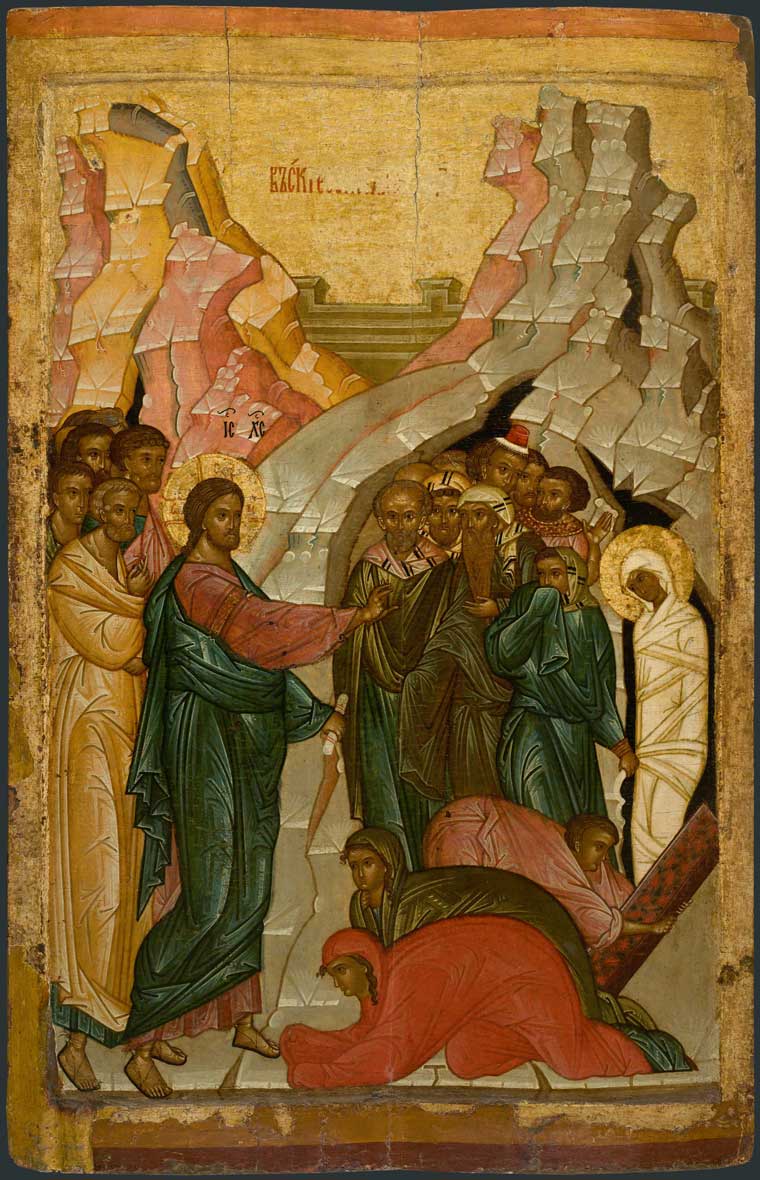
When they got close to Bethany, it turned out that Lazarus was in his coffin for 4 days. Bethany was situated close to Jerusalem, some 2 miles or 30-minute walk away. This is mentioned in order to explain how so many people were present at the house of Martha and Mary, in the sparsely populated village. Heaving heard of the Lord’s arrival, Martha, being noted for her lively character, hurried to meet Him without even telling her sister Mary, who was “sitting in the house” in great sorrow, receiving condolences from those, who came to console her. With great sadness, not rebuking the Lord, but only expressing regret that this happened, she exclaims: “Lord, if You had been here, my brother would not have died.”
Faith in the Lord establishes in her an assurance, that even at that time all is not lost. Although she doesn’t state directly that there still could be a miracle, she declares: “I know that whatever You ask of God, God will give you.” The Lord responds to this directly: “Your brother will rise again.” As though checking herself to see if she is not wrong and wishing to induce the Lord to let her understand clearly about which resurrection He is talking — the one He intends to perform now, or about the general resurrection after the end of the world — Martha says: “I know that he will rise again in the resurrection at the last day.” Martha expressed her faith in that God will fulfill every request of Jesus: consequently, she didn’t have faith in Jesus Himself, as in the Almighty Son of God. That’s why the Lord elevates her towards such faith by concentrating her faith on His own personality, saying: “I am the resurrection and the life. He who believes in Me, though he may die, he shall live. And whoever lives and believes in Me shall never die.” The meaning of these words is: I have the source of revivification and eternal life: consequently, if I want to, I can resurrect your brother before the general resurrection. “Do you believe this?” asks the Lord Martha, and receives the affirmative answer that she believes Him to be the Messiah-Christ that has come into the world.
At the Lord’s order, Martha went to fetch Mary and bring her to Him. Because Mary was called secretly, the Jews, consoling her, didn’t know where she was heading, and thinking that she was going to the tomb “to weep there,” followed her. Weeping, Mary fell to her knees before Jesus, exclaiming the same words that Martha uttered previously. Probably because of their grief, the sisters often said among themselves that if the Lord-Teacher was with them, their brother would not have died. Now, without any prior agreement, they both express their hope for the Lord with the same words. In the face of that sight of sorrow and death, the Lord “groaned in the spirit and was troubled.” Bishop Michael supposes that the Lord’s grief and distress is explained by the presence of the Jews, weeping insincerely while burning with hatred against Him, the One, Who was preparing to perform that great miracle. The Lord wanted to perform that miracle in order to give His enemies the opportunity to change their mind and repent, believe in Him, before His forthcoming sufferings: but instead, they became even more inflamed with hatred toward Him, and pronounced the decisive formal death sentence to Him. Having overcome that groaning of the spirit, the Lord asks: “Where have you laid him?” The question was directed to the sisters of the deceased. “Human God knew where Lazarus was buried, but in dealing with people, acted humanely” (Blessed Augustine). The sisters replied: “Lord, come and see.” “Jesus wept” — this, of course, is attributed to His human nature. The Evangelist further on describes the impression those tears made on the present. Some were moved, while the others gloated, saying: “Could not this Man, who opened the eyes of the blind, also have kept this man from dying?” They thought that, of course He couldn’t, because as He loved Lazarus, He would not have permitted him to die. But as Lazarus died, He obviously was incapable of stopping that and that’s why He was crying then. Overcoming the feeling of sorrow over the hatred of the Jews in Himself, the Lord approached the tomb and asked for the stone to be rolled away. The tombs in Jerusalem were arranged in the form of caves, the entrances to them were blocked by stones.
Those entrances were opened only in extreme circumstances, and even then, shortly after internment and not at the time when the corpse had started to decompose. Decomposition of cadavers in the warm climate of Jerusalem began very quickly, and as a consequence, the Jews buried their dead on the same day of their death. On the fourth day, the decomposition must have reached such a stage that even faithful Martha could not refrain from protesting to the Lord: “Lord, by this time there is a stench, for he has been dead four days.” Reminding Martha about what was said to her previously, the Lord states: “Did I not say to you that if you would believe you would see the glory of God?” When the stone was rolled away, the Lord raised His eyes to heaven and exclaimed: “Father, I thank You that You have heard Me.” Knowing that His enemies ascribe His healing powers to the powers of demons, the Lord wanted to show through this prayer, that He performed that miracle through His power of full unity with God the Father. The soul of Lazarus returned to his body, and in a loud voice, the Lord commanded: “Lazarus, come forth!” Here, the loud voice was meant either as an expression of the decisive will, which was certain of absolute submission, or the awakening from the deep sleep. There was another miracle, which came together with that miracle of resurrection: Lazarus having his hands and feet bound with burial bandages, could still by himself come out from the cave, after what the Lord directed that they should be removed. The details of that event testify of the fact that it was described by the eyewitness. As a result of this miracle, there occurred the usual division among the Jews: many believed, but the others went to the Pharisees — the Lord’s worst enemies — evidently, with animosity and bad intentions, in order to tell them about what had happened.
The Sanhedrin’s Decision to Kill Jesus Christ.
(John 11:47-57)
The news of the miracle disturbed the Lord’s enemies so much, that the high priests and Pharisees immediately assembled the high Jewish court of the Sanhedrin. They weren’t afraid to speak quite openly among themselves, and therefore directly raised the question about what they had to do, in order to preserve their authority and influence among the people. While acknowledging the Lord’s miracles as genuine, they express their worry that that could bring about the civil disorder, which the Romans would take advantage of, in order to eliminate the last vestiges of Jewish independence that they still had.
The fatal lie of such a reason laid in the fact that not recognizing the Lord as the Messiah — because He didn’t correspond to their perverted idea of the Messiah — the Jews were expressing their fear that He might become the head of the civil riot, which would inflict a disaster upon their nation. “And one of them, Caiaphas, being high priest that year”
— this doesn’t mean that the archbishops, or the Jewish high priests, were elected to that post only for one year, but shows the frequent change of high priests, which depended on the Roman ruler of Judea — “said to them, ‘You know nothing at all, nor do you consider it is expedient for us that one man should die for the people ”, i.e., it is necessary to prevent the possibility of allowing such a dangerous man to join with the rebellious Jews, headed by Christ against the Romans — by killing Him.
Here, Caiaphas puts on the mask of the zealous about the national good and finds the excuse for the planned murder within the considerations of the state-national politics. Evangelist John points at the involuntary prophecy in Caiaphas’s words that the Lord Jesus Christ had to “die for the people”, i.e., suffer for the salvation of mankind. The high priests, as the foretellers of God’s will, were like middlemen between God and the man, and being such, they were foretelling involuntarily, what was about to happen in this case with such an unworthy high priest as Caiaphas. While Caiaphas spoke only about the Jewish people, Christ died for the salvation and gathering together in His Church, even the heathens, as “children of God who were scattered abroad.” As the final sentence, the decision to kill the Lord was approved and the orders — issued for His arrest. Having found out about their sentence, the Lord left Bethany and went to the town of Ephraim, close to the Jericho desert because the time for His sufferings had not arrived. As the true Paschal Lamb, He had to die on the day of Passover in the triumphant manner — not secretly, as apparently the Sanhedrin desired, fearing the people (Mat. 26:4).
The Supper at Lazarus’s House.
(John 12:1-11).

That supper was arranged for the Lord six days before Passover and it differed from that supper, which is described by the first two Evangelists and which occurred two days before Passover in the house of Simon the leper. Naturally, the supper took place in the house of resurrected Lazarus. This is clearly indicated by the fact that Martha, Lazarus’ sister, was serving there, while Lazarus was the one, “who sat at the table.” At that supper, Mary anointed the feet of the Lord with the expensive oil, just as at the supper, about which narrate the two Evangelists, when a woman anointed the Lord’s head with oil. According to the tradition, that particular woman was a sinner (which is reflected in our church service of Great Wednesday, when that anointment is recalled). According to Evangelist John, only Judas made a remark, concerning the value of the oil: while according to the first two Evangelists — the other disciples commented as well. There is nothing extraordinary in that the Lord was anointed twice with oil: Mary did it through her feelings of gratitude for resurrecting her brother, while the woman-sinner — as a sign of her repentance, the feeling that is more interesting, and that was why she received a promise of a great reward. She was giving more than Mary. Apparently, Mary “kept this” since her brother’s burial, as though in the prophetic prediction.
The Rich Young Man. (Mat. 19:16-26; Mark 10:17-27 and Luke 18:18-27). The
Parable about the Workers that Received Equal Payment. (Mat. 20:1-16).
The Rich Young Man.
(Mat. 19:16-26; Mark 10:17-27 and Luke 18:18-27).
The first three Evangelists narrate about the young man (“the ruler”, as St. Luke calls him), who inquired the Lord Jesus Christ what to do to inherit eternal life. This talk, as the following one, took place on the way to Jerusalem, where the Lord was going for His forthcoming sufferings. Turning to the Lord, the youngster called Him: “Good Teacher”. The Lord responded: “Why do you call Me good? No one is good but One, that is, God”, i.e., if you are referring to Me only as to a “Teacher”, that is as to an ordinary person, consequently, you shouldn’t call Me good, because this term is befitting only God. The Lord offered the following answer to his question: “Keep the commandments”.
Apparently, the young man assumed that the Lord was speaking of some special commandments unknown to him, and therefore asked: “Which ones?” But the Lord told of some of the ordinary commandments from the Decalogue, mentioning only some of them — 6,7,8,9 and 5 — and then the general commandment on the love for one’s neighbor. To this, the young man answered: “all these things I have kept from my youth”. It has to be assumed that he had the Pharisee’s understanding of these commandments — otherwise he would not have responded in such a way. Still, it is important to note that he regarded himself as not having completed everything that was required, in order to be saved: evidently, his conscience was prompting him that it was not enough to fulfill the commandments just outwardly. The Lord then revealed to him the mystery of Christian completeness: “If you want to be perfect, go sell what you have and give to the poor, and you will have treasure in Heaven; and come, follow Me”. In response to that call towards the highest completeness, the young man walked away from the Lord, “sorrowful”, because he had great possessions.
Consequently, the riches that he had were such an idol to him that he was unable to part with them. He preferred that idol to eternal life, which he apparently, genuinely sought.
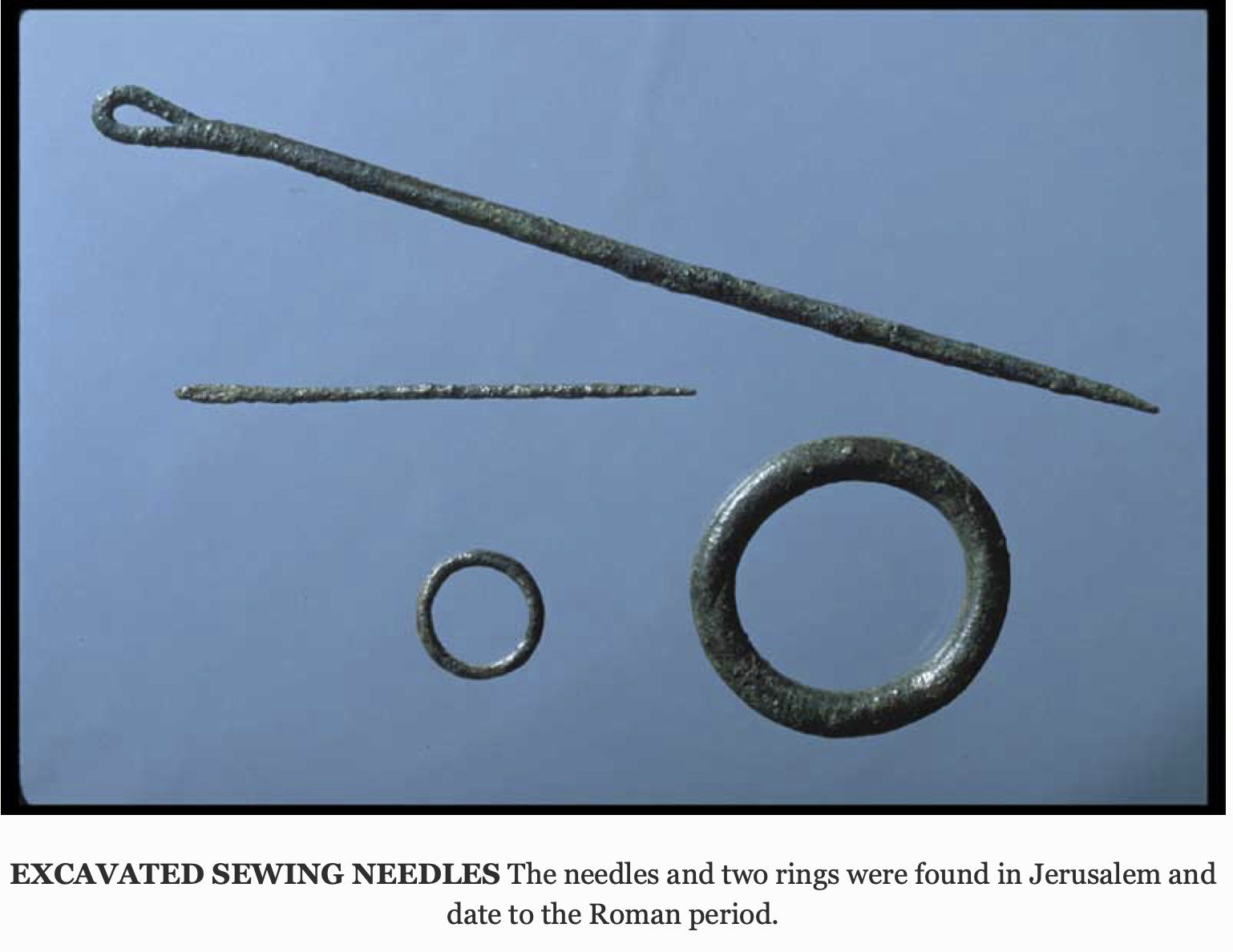
Bearing in mind that wealth by itself does not enslave the man but passions do, the Lord said: “Assuredly, I say to you that it is hard for a rich man to enter the Kingdom of Heaven.” Evangelist Mark adds that the disciples were astonished at his words. And this is understandable, because wealth is something that everybody desires, and according to the law, is God’s blessing to the man. At the same time, the Lord places it as a strong barrier along the path towards God’s Kingdom. In order to calm His disciples and explain to them in what sense that was stated, the Lord says: “Children, how hard it is for those who trust in riches to enter the Kingdom of God.” As Saint John Chrysostom explains: “The Lord doesn’t censure riches, but those that are attached to them”, because for the sinful nature of the man, riches present many temptations and obstacles in fulfilling God’s commandments. “It is easier for a camel to go through the eye of a needle than for a rich man to enter the Kingdom of God!” — this is the popular saying, which is as well used these days in the East, meaning that the matter is either impossible or extremely difficult to achieve.
Some understood the word “camel” to mean a ship’s hawser that was made out of camel fur. Others thought that “the eye of a needle” meant the low and narrow gates through which a loaded camel found very difficult to pass through. Wealth itself is not dangerous, only when a person relies on it and thinks it to be all his earthly happiness, then it becomes as if an idol to him. However, the agitated Apostles still were amazed: “Who then can be saved?” To that, the Lord “looked at them ”, i.e., calming them with His very look and said: “With men this is impossible, but with God all things are possible”, i.e., the merciful and saving Divine grace is powerful enough to do that, what a person is incapable of doing with his own strength: God can cure a rich man of his ulcer of avarice that prevents him of his salvation.
The Parable about the Workers that Received Equal Payment.
(Mat. 20:1-16).
The aim of this parable is to elucidate how the “last will be first.” This mercy will be shown through the Divine grace. God’s Kingdom is presented here as a landowner, hiring workers for his vineyard. Having agreed to pay a “denarius a day” to those hired in the morning, he too gave a denarius, when the time for paying came, to the rest of the workers hired later in the day: some in the 3rd hour, some in the 6th, 9th and even 11th hour. The ones that started early in the day began complaining that it was unfair, to what the landlord replied: “Friend, I am doing you no wrong. Did you not agree with me for a denarius? Take what is yours and go your way. I wish to give to this last man the same as to you. Is it not lawful for me to do what I wish with my own things? Or is your eye evil because I am good?”
The “denarius” was equal in value to one Greek drachma or 25 kopeks (in those days), and was the normal daily wage in the East. The Jews regarded a day as 12 hours — commencing with sunrise. The meaning of this parable is that the Lord Himself disposes the rewards to those who serve Him: people cannot enter into agreements with Him or determine conditions. The Lord rewards people purely through His goodness. It must be also understood that on the matter of the man’s salvation, the man himself does very little about it that there can be no talk of the due retribution. The Lord rewards not because of some type of dues, but “through His benevolence” : therefore, He does it with full freedom and according to His Personal determination. That’s why the one who labored less can receive as much as one who labored much. This is where hope lies for the sinners, who with a solitary repentant sigh, emanating from the bottom of the soul, can attract God’s mercy and grace, cleansing them of their sins. What was the aim of this parable? Peter just asked: “We have left everything behind to follow You: what reward will we receive for this?”
The Lord didn’t expose this arrogance of a juvenile mind immediately, but, it seems, on the contrary, promised the Apostles great rewards. At the same time, through the parable, He showed that the recompense is not dependent on the human merit but exclusively on God’s mercy. It could happen that the first in merit will receive the last rewards, while the ones summoned by the Lord in the last moment of their lives, could receive the first rewards. In conclusion of this parable, the Lord said: “For many are called, few are chosen,” i.e., although many, in fact everyone, are called towards the eternal joy in the Heavenly Kingdom, only a few are chosen for this bliss. Naturally, as within the other parables, it is unnecessary to seek out the meanings of its every individual feature: the only important thing is its basic idea, its basic thought that a person is not rewarded according to the number of his merits, but solely because of God’s mercy.
The Cleansing of ten Lepers. (Luke 17:20-37). Christ’s Second Coming. (Luke
17:20-37). The Parable about the Unrighteous Judge. (Luke 18:1-8). The Parable about the Publican and the Pharisee. (Luke 18:9-14).
The Cleansing of ten Lepers.
(Luke 17:20-37).
Christ’s Second Coming.
(Luke 17:20-37).
The Parable about the Unrighteous Judge.
(Luke 18:1-8).
The Parable about the Publican and the Pharisee.
(Luke 18:9-14).
The Rich Young Man. (Mat. 19:16-26; Mark 10:17-27 and Luke 18:18-27). The
Parable about the Workers that Received Equal Payment. (Mat. 20:1-16).
The Rich Young Man.
(Mat. 19:16-26; Mark 10:17-27 and Luke 18:18-27).
The Parable about the Workers that Received Equal Payment.
(Mat. 20:1-16).
About the Forthcoming Sufferings of Christ. (Mat. 20:17-28; Mark 10:32-45;
Luke 18:31-34).
About the Forthcoming Sufferings of Christ.
(Mat. 20:17-28; Mark 10:32-45; Luke 18:31-34).
The Healing of the Jericho Blind. (Mat. 20:29-34; Mark 10:46-52; Luke
18:35-43). The Visit of Zacchaeus. (Luke 19:1-10). The Parable about the Talents. (Luke 19:11-28 and Mat. 25:14-30).
The Healing of the Jericho Blind.
(Mat. 20:29-34; Mark 10:46-52; Luke 18:35-43).
The Visit to Zacchaeus.
(Luke 19:1-10).
— the week about the Publican and the Pharisee.
The Parable about the Talents.
(Luke 19:11-28 and Mat. 25:14-30).
The Resurrection of Lazarus. (John 11:1-46). The Sanhedrin’s Decision to
Kill Jesus Christ. (John 11:47-57) The Supper at Lazarus’s House. (John 12:1-11).
The Resurrection of Lazarus.
(John 11:1-46).
The Sanhedrin’s Decision to Kill Jesus Christ.
(John 11:47-57)
The Supper at Lazarus’s House.
(John 12:1-11).
Related Concepts
- ambition-of-zebedees-sons
- camel-and-needle
- confession-of-christ
- courage-of-the-disciples
- cup-and-baptism-of-suffering
- destruction-of-jerusalem-in-ad-70
- divine-and-human-will
- divine-benevolence
- divine-grace
- dread-judgment
- eternal-life
- exaltation-and-humbling
- exegetical-method
- faith-of-the-disciples
- gods-providence
- great-lent
- habakkuk-18
- healing
- high-priesthood
- hope-for-sinners
- humility-in-prayer
- jesus-prayer
- lazarus
- legalistic-soteriology
- lightdarkness
- lots-wife
- minas
- obedience
- obedience-to-the-father
- old-testament-typology
- parable
- parable-interpretation
- parable-of-minas-and-talents
- parable-of-the-talentsminas
- parable-of-the-vineyard
- parable-of-the-workers
- paschal-lamb
- passion
- passion-prediction
- pharisaic-messianism
- phariseeism
- prayer-to-the-father
- providence-and-divine-timing
- publican-and-pharisee
- ransom
- renunciation
- resurrection
- rich-young-man
- samaritans
- sanhedrin
- second-coming
- self-denial
- self-exaltation
- servanthood-of-christ
- sin-as-self-justification
- slavery-to-sin
- spiritual-blindness-of-the-pharisees
- spiritual-leaven
- talents
- theanthropic-action
- theosis-through-suffering
- thomass-devotion
- treasure-in-heaven
- universal-redemption
- unrighteous-judge
- workers-in-the-vineyard