New Testament — Topic 10
The Savior’s Social Service. Part 7.
The story of the woman caught in adultery (8:1-11). The Conversation with
the Jews in the Temple. (John 8:12-59)
The story of the woman caught in adultery (8:1-11).


This story of the woman caught in adultery is not found in ancient greek manuscripts, nor is it interpretated in the commentaries of St. John Chrysostom and certain other Fathers, because it wasn’t known in the Christian East. However, it is still sealed by the Church as inspired, authentic, canonical Scripture, and it bears the same authority as all other Scripture. The story has been preserved in the oral tradition before its interpolation into the canonical text of the New Testament. Eusebius of Caesarea says that Papias of Hierapolis told such a story (Hist. 3:39). It is also mentioned by Tatian, Didymus the Blind. St. Ambrose, St. Jerome and St. Augustine interpret this story, because it is present in the Vulgate.
The law dictated the death penalty for adulterers (Lv 20:10; Deut 22:22). This ordinance was not observed to the letter in the days of Jesus; the Pharisees brought this particular woman because they saw an opportunity to test Him. If Christ objected to the punishment, He could be accused of opposing the Law. If He advised, in accordance with the law of Moses, to put a woman to death, He could have been accused of speaking out against the Roman authorities, who forbade Jews to impose death sentences. According to custom, the oldest of the accusers was the first to throw the stone. The focus thus shifts to the elders when Jesus suggests to them, “Whoever of you is without sin, be the first to throw a stone at her.” Each of the accusers leaves as soon as he becomes the eldest after the previous elder leaves. The final admonition, “Go, sin no more,” implies that Jesus does not teach a frivolous attitude towards the sin of adultery.
This is the only place in the NT where our Lord wrote something. Several theories exist as to what He wrote. Some say He wrote out the Ten Commandments, which all the accusers had violated at least once. Others say He wrote the names of the accusers who had themselves committed adultery. In particularly, St. Nicolai (Velimirovich) says the following (a fragment):
“When the tempters asked the question, “What do You say?” there was a dead silence. Silence among the assembled people. Silence among the judges of a sinful woman. Silence with bated breath in the soul of a sinful woman. Great silence ensues in large circuses, in which animal tamers bring out tamed lions and tigers and order them to perform different movements, numbers and positions at will. But this is not a beast tamer, but a human tamer, a much more difficult task than the first one. For it is often much more difficult to tame those who have become savage from sin than to tame the wild from nature. “What do you say?” once again, the burning anger and distorted faces continued to advance on him.
Then the Lawgiver of morality and human behavior bent down to the ground, smoothed the dust with his palm and “wrote on the ground with his finger” (Jn 8:6). What did the Lord write on the dust? The evangelist kept silent about this and did not write it down. It was too disgusting and vile to be recorded in the Book of Joy. But it remained in the Holy Tradition, and it was scary. The Lord was writing something unexpected and startling to the elders, the accusers of the sinful woman. With His finger on the ground, He revealed their secret iniquities. For these sin hunters were adept at hiding their own sins. But it’s in vain to hide anything from the eyes of the All-seeing.
“Meshulam is a thief of church treasures,” - the Lord wrote with His finger on the ground.
“Asher committed adultery with his brother’s wife…”
“Shalum is an oathbreaker…”
“Aled hit his father…”
“Amarnakh appropriated the widow’s estate…”
“Merari committed the sin of sodomy…”
“Joel worshipped idols…”
And so, in a row, the terrible finger of the Righteous Judge wrote on the dust. And those to whom it referred, bent down, read what was written with inexpressible horror. They were trembling with fear. They didn’t dare look into each other’s eyes. They no longer thought about their sinful wife. They thought only of themselves and their death, which was written on the dust. Not a single tongue could turn around to utter this unpleasant and sly question anymore: “What do You say?” The Lord didn’t say anything. What is so dirty deserves only to be written on dirty dust. Another reason why the Lord wrote on the dust is even greater and more wonderful. What is written on the dust is quickly erased and does not remain. Christ did not want their sins to be made public to everyone. If He wanted to, He would have declared them in front of all the people and, accusing them, would have led them to be stoned, according to the law. But He, the merciful Lamb of God, did not think of revenge or death for those who had prepared a thousand deaths for Him and who wanted Him dead more than eternal life for themselves. The Lord only wanted to direct them to think about themselves and their sins. He wanted to remind them that, under the burden of their iniquities, they should not be strict judges of other people’s iniquities. That’s all the Lord wanted. And when it was done, the dust was smoothed out again, and the writing disappeared.”
The Conversation with the Jews in the Temple. (John 8:12-59)
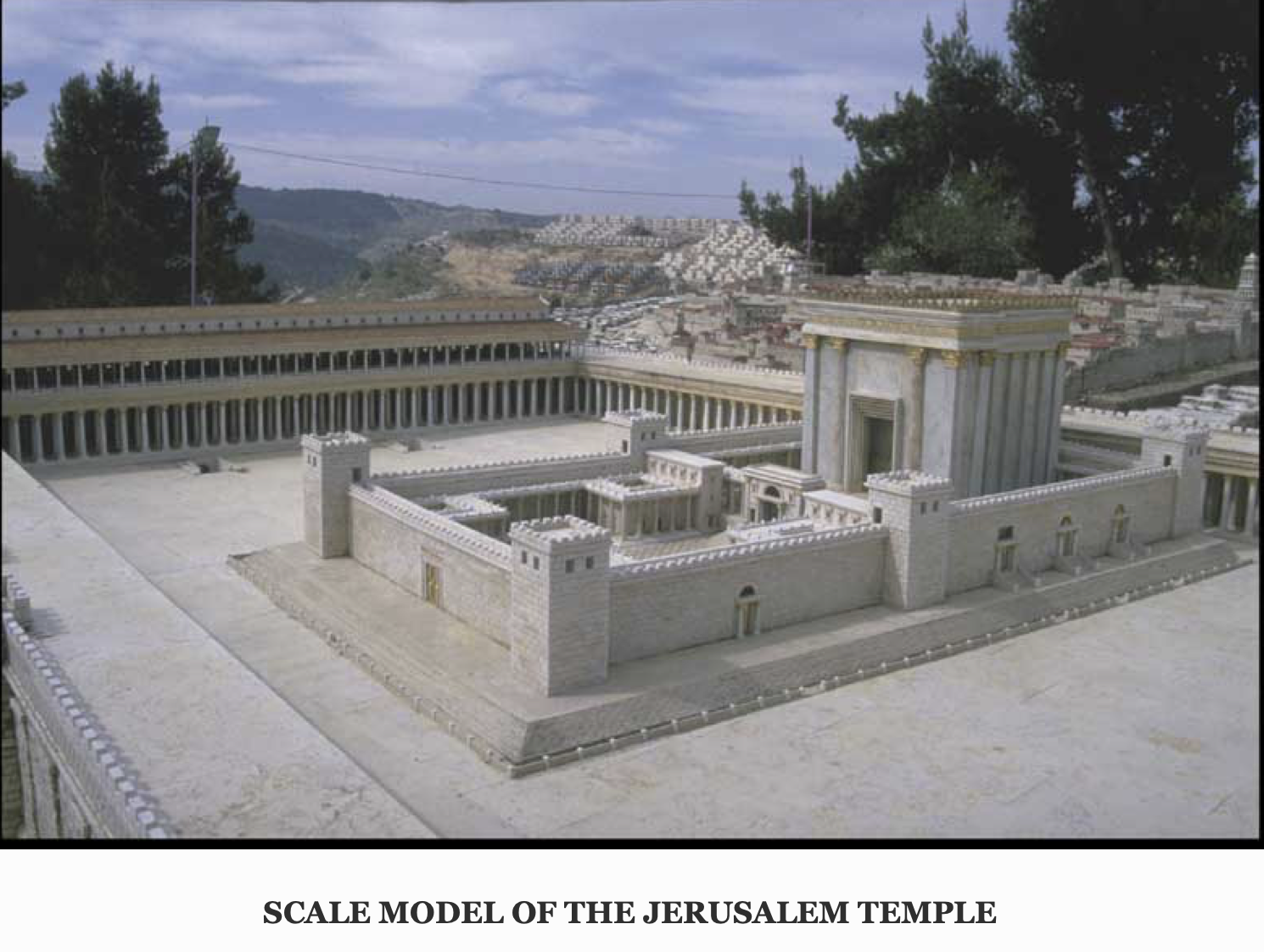
This conversation, which apparently took place also on the next day after the end of the Feast of Tabernacles, the Lord applied another image from the history of the Jews and their wandering in the wilderness to Himself — that of the fiery column that miraculously lit the way for the Jews at night. The column contained Jehovah’s Angel, in which the Holy Fathers see the second Face of the Ever-Holy Trinity. And the Lord begins His conversation with the words: “I am the Light of the world”. Just as in the Old Testament, the column of fire showed the Jews the way out of Egypt towards better life in the Promised Land, so Christ in the New Testament shows, not only to the Jews, but to all humanity, the way from the realm of sin into eternal life. The Pharisees, relying on the commonly accepted rule that no person can be a witness to his own works, objected that His witness about Himself cannot be accepted as genuine. To that the Lord responded with exceptional power, that the human statement cannot be applied to Him, that He cannot be judged “according to the flesh”, as the Pharisees are doing, regarding Him as an ordinary person. “I know where I came from and where I am going ” — these words, according to Saint John Chrysostom, mean the same as: “I know that I am the Son of God and not an ordinary person”. This admittance of His origin from God the Father by the Lord confirms the absolute authenticity of His testimony about Himself, as well as the impossibility of self-deception. The Lord adds: “My witness is also genuine from the formal point of view, because not only I testify of Myself, “The Father who sent Me bears witness of Me”.
Having heard the Lord’s sermons about His Father sending Him many times, they, pretending not to understand, mockingly and blasphemously pose Him the question: “Where is your Father?” The Lord responds that they don’t know the Father because they don’t want to know the Son. Here is the concealed indication to the consubstantiality of God the Son with God the Father, to the fact that the Father revealed Himself to humanity in His Son. The Evangelist notes that this was uttered by the Lord “in the treasury”, which was located close to the meeting-hall of the Sanhedrin that was hostile to the Lord. Although the Lord testified of His Messianic merit before, so to speak, in front of the eyes and ears of the Sanhedrin, “no one laid hands on Him” because the hour of His sufferings had not yet arrived: in other words, the people themselves didn’t have any authority over Him. The hostile mood of the listeners turned the Lord’s thoughts anew towards the sufferings awaiting Him, and He once again said about their hopeless situation, in which they will find themselves in, after He would gone, if they did not believe in Him as in the Messiah (verse 21): “Where I go you cannot come”. Those words, once again, irritated them and caused their mockery: “Will He kill Himself?”, i.e., if He was thinking of a suicide? Ignoring their rough mockery, the Lord points at their moral character that prompts that type of their behavior: “You are from beneath…”, i.e., you have lost the ability to comprehend the Divine, heavenly; you judge about everything through the example of mankind, led by the earthly and sinful concepts, and therefore if you don’t believe in Me (“that I am He” — meaning the Messiah), “you will die in your sins”. The Lord didn’t call Himself the Messiah once, but He spoke so transparently, explaining it though the other words, so that the Pharisees had to understand that. However, they pretended not to understand, as they didn’t want to hear that name from Him, and therefore they asked Him: “Who are You?”
Likewise, to that question, the Lord didn’t give them the direct answer that they expected. The Lord’s answer is translated into Church-Slavonic too literally (“tin arhin” — “the beginning”) — which is the peculiarity of the Church-Slavonic translation, prompted by the fear of sinning by not translating the Greek text inexactly — so consequently, it doesn’t respond to the thoughts enclosed within it; the Russian translation — “from the Beginning” — is also incorrect. According to the ancient interpreters, the meaning of the Lord’s answer is: “I am That, about what I was telling you from the beginning” or: “Didn’t I call Myself the Son of God — right from the start? And such I am”. Continuing His speech about the sad moral state of the Jewish people, the Lord explains that He has to do this, for the One Who sent Him is the very truth, and He has to testify about the truth that He had heard from Him. Once again, they didn’t understand that He was telling them about the Father. That’s why He further tells them about the time when they will involuntarily realize the truth of His teaching about Himself and His Father Who sent Him: this will happen when they would raise Him on the cross, because the death on the cross served as the beginning of the Son of God’s glorification, that drew everyone to Him: the subsequent events, such as Christ’s Resurrection, His Ascension into Heaven, the descent of the Holy Spirit on the Apostles — all that testified about the truth of Christ’s teaching and His Divine mission.
These words produced the great impact on the listeners, so that “many believed in Him”, and evidently, even some from the number of those Jews hostilely inclined towards Him before. There were those new believers which Lord addressed with His next sermon. He instructs them how to become and remain His genuine disciples. For this, they “must abide in His word” : only then they will know the truth — which contains genuine freedom — and the truth will liberate them from sin. Then among the listeners, the voice of national pride was heard. “We are Abraham’s descendants” and the Abraham’s descendants were promised by God the dominion over the world, and the blessing of the world through us (Gen. 12:7; 22:17), “and have never been in bondage to anyone”. Amid such a passionate and painful cry of exacerbated nationalistic conceit, they seemingly forgot about their Egyptian, Babylonian captivity and the current Roman one.
The Lord responds that He is speaking about a different type of captivity — the spiritual one, which every sinner finds himself in: “Whoever commits sin is a slave of sin”. The one who is committed to sin, cannot remain in the Messiah’s Kingdom, where there should be absolute spiritual freedom and where everybody should realize that they are nothing but the children of the Heavenly Father. “And a slave does not abide in the house forever” because the master, being dissatisfied with him, can sell or send him away: such a position of a slave is contrary to that of the son who, as the inheritor of the whole house, cannot be sold or sent away, but remains the son forever. “As those sinning, you are the slaves of sin. You can receive genuine freedom and become the sons of God, only if you believe in the Begotten Son of God, abide in His word — and He will liberate you from the captivity of sin”. Further on, the Lord tells them that He does not reject their origin from Abraham — but doesn’t recognize them as his genuine children in the spirit, since they seek to kill Him only because “His word has no place in them”, i.e., found no favorable soil in their hearts for its growth.
As Abraham didn’t commit anything like the things they had, then their father is not Abraham or God as they keep on insisting, but the devil who “was a murderer from the beginning” because he injected the lethal disease of sin into humanity. Speaking of the devil, the Lord indissolubly connects the fact that he is an ancient murderer with that he is the enemy of the truth and “father of lies.” Accordingly, speaking of Himself, the Lord sets the same tight link between His sinless nature and the fact that He teaches the truth. If the Jews are not accepting the truth of His teaching, then let them prove the sinfulness of His life: “Which of you convicts Me of sin?” However, if nobody can accuse the Lord of leading sinful life, then as a consequence of His piety, the Truth taught by Him must be accepted as inseparable with it. According to the Lord’s words, the Jews clearly demonstrate through their disbelief they “are not of God”.
That provoked their violent indignation: “Do we not say rightly that You are a Samaritan and have a demon?” because only Samaritans and those possessed by the demon that hate us, the Jews, can deny our Abraham origin. The Lord quietly ignores this insult and states that through such talks, which seem to them as those of the possessed, He only honors to His Heavenly Father: I speak with you this way, because I “honor My Father” while you dishonor the One, Who says the truth to you on the behalf of the Father . “I do not seek My own glory; there is One who seeks and judges” — and that is the Heavenly Father, Who will condemn those who reject His Son. Then, addressing those that believed in Him, the Lord speaks: “I say to you, if anyone keeps My word, he shall never see death” — of course, in the sense that “he will receive eternal life”. The non-believers pretended that they understood the Lord’s words literally — concerning the natural, physical death — and again found a reason to accuse Him of being possessed: “Are You greater than our father Abraham, who is dead?”
The Lord answers to this that He is not glorifying Himself, but is glorified by His Father, Whom He knows and Whose word He fulfils. He then shows His predominance over Abraham, as though saying to the Jews: “Yes, I am greater than your father Abraham, for I was the subject of his expectations during his earthly life, and upon his death, was the subject of his joy — in Heaven”: “he saw it and was glad”. Assigning that, what was said by the Lord about Abraham, to the earthly life, the Jews find another incongruity, in order to reproach the Lord again: “You are not 50 years old and You have seen Abraham?” The Lord gives to this reproach the decisive answer, which would be understood even by the Pharisees that were blinded by their own hatred: “Most assuredly, I say to you, before Abraham was, I AM”, i.e., “I am more ancient than Abraham himself, because I am — Eternal God”.
How definitely the Lord teaches here about His Divinity! The Pharisees understood that correctly, but instead of believing in Him, they became embittered, seeing only blasphemy in His words, and picked up stones to beat Him. However, having finished His testimony of Himself on a triumphant note and surrounded by His disciples and other people, the Lord merged with the crowd that filled the Church yard, “going through the midst of them, and so passed by”.
Christ Goes to the Feast of Jerusalem. (John 7:1-9). The Samaritans do not
Accept Christ. (Luke 9:51-56). Sending Seventy Disciples to Preach. (Luke 10:1-16).
Having described in the 6th chapter the Lord’s conversation with the Jews about Himself as of the “bread of life”, Evangelist John narrates that after that the Lord walked in Galilee. As we have read above, the Lord’s long stay in Galilee and His works there are depicted in detail by the first three Evangelists. The Lord didn’t want to go to Judea, as “the Jews sought to kill Him,” while His hour of suffering had not arrived yet. “Now the Jews’ Feast of Tabernacles was at hand”. This was one of the three main Jewish feasts (Pascha, Pentecost and the Feast of Tabernacles) and was celebrated for 7 days from the 15th day of the month of Tisrah, according to our calendar, at the end of September and the beginning of October. It was established in the memory of the 40-year-wandering of the Jews in the wilderness. The whole 7 days of the feast was spent by the people in the tents, especially constructed for this occasion. Because the feast was celebrated shortly after the harvest time, the celebrations were very merry with partaking of wine, which gave cause for Plutarch to compare it with the heathen celebrations in the honor of Bacchus. Before that feast day came, the Lord had not been to Jerusalem for nearly a year and a half (from the second to the third, and from the third to the Feast of Tabernacles were nearly 6 months), and His brothers were suggesting that He go to Jerusalem for the feast. They wanted the Lord to enter Jerusalem triumphantly, like the Messiah in the absolute miraculous manifestation of His power. The Lord’s rejection of human glory was not understandable to them, and was tempting them. “For even His brothers did not believe in Him” notes the Evangelist: they were perplexed about their named Brother and wished to be released from that state of perplexity; on the one hand, they could not deny His extraordinary deeds, being the witnesses of them; while on the other hand, they were unwilling to accept the man, with Whom they were in the ordinary earthly relations since their childhood, as the Messiah.
In that state of the spirit, they suggested Him to get out from such an uncertain (in their opinion) position which Jesus maintained. If He was truly the Messiah, why was He afraid to appear before the whole world in Jerusalem, as the Messiah should do? He must appear there in all His greatness and glory (the Interpretation of the Gospel by Bishop Michael). In reply, the Lord explains to His brothers that His appearance in Jerusalem has a meaning, which differed to that, maintained by the others, including His brothers. His brothers will not see any hatred towards themselves there, because they belonged there; while the Lord will be met with hostility as the denouncer of the evil deeds of the world. Consequently, they can go there whenever they wish, but He can go there not any time, but only at the appointed hour of His suffering for the world, determined from above. Having let his brothers go, the Lord remained in Galilee with the intention to come to the feast secretly, only in the company of His trusted disciples.
The Samaritans do not Accept Christ. (Luke 9:51-56).
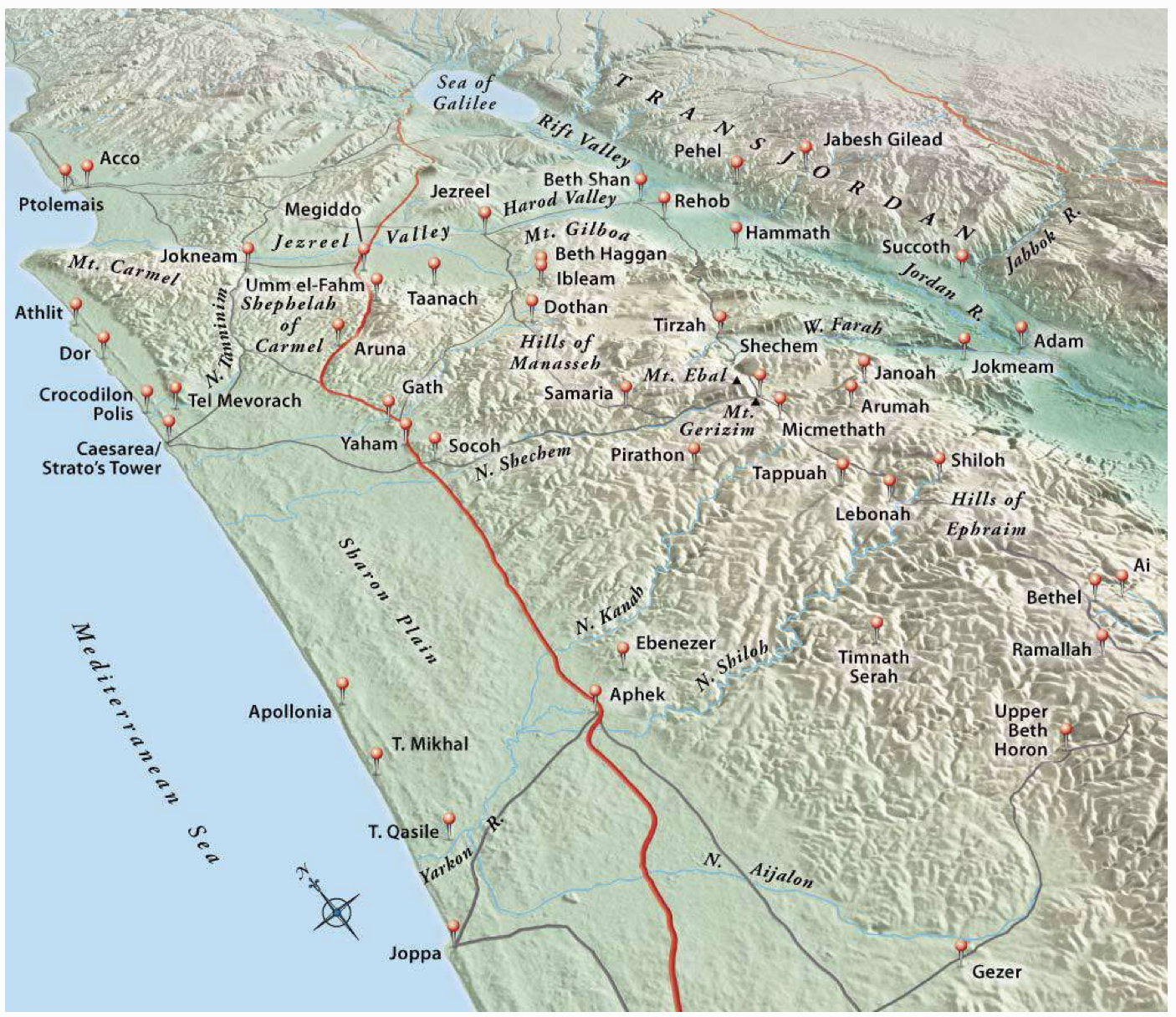
The Lord was already famous in Samaria, but the hostility between the Jews and Samaritans was such that He didn’t hope to meet a kind reception. Consequently, he sent some of His disciples in advance to predispose the Samaritans. It is unknown which settlement the Lord’s messengers visited. However, it can be surmised that it was probably located in the north of Samaria, closer to Galilee, one day traveling distance from there, where presumably they would stay overnight. “Because His face was set for the journey to Jerusalem”, the Samaritans apparently did not receive Him because of the deep hatred they had for the Jews. James and John, who were named by the Lord “Sons of Thunder” (Mark 3:17), because of their spiritual strength and energy, and for their rash and strong impulses, got the fire of zeal because of the insult of their Teacher’s honor. Recollecting how the Prophet Elijah dealt with those that were sent to seize him, destroying them with fire from the heavens (2 Kings 1:9-12), they asked their Teacher if He wanted them, by their word, to bring down fire from heaven and destroy as well those Samaritans? Through God’s will, they had already performed many miracles while giving sermons throughout Judea; consequently, they didn’t feel incapable of performing such a miracle, should that be accepted by their omnipotent Teacher. To that, the Lord told them that they didn’t realize of what spirit they were: the spirit of the New Testament was different to the spirit of the laws of the Old Testament — there, it was the spirit of strictness and punishment, whereas here, it was the spirit of love and mercy, because the aim of the Son of Man’s coming was not to destroy, but to save (Mat 18:11). Apart from that, the Lord apparently wanted to point at the fact that in the given case, within the Apostles was not love towards Him, but sooner the feeling of animosity towards the Samaritans — and that old feeling of animosity towards people had to be forgotten by servers of the New Testament. Receiving such a reception, the Lord apparently returned to Galilee and went to Judea with the other way, which was usually used by the Jews through the-beyond-Jordan district of Perea. From the subsequent descriptions of Saint Luke, it is evident that the Lord was also in Galilee and Perea, and only went to Judea much later.
Sending Seventy Disciples to Preach. (Luke 10:1-16).
At that time, i.e., when the Lord decided to leave Galilee permanently, as the hour of His sufferings on the cross came close, He chose many other disciples (70) — additional to the 12 He had already chosen — and sent them out in pairs into the areas that He would visit. That was done, so that the testimony of Christ would be stronger in the eyes of the people, and that they would be prepared for His arrival. The number 70 was honored by the Jews, as were the numbers 40 and 7. The Sanhedrin consisted of 70 members. The names of those 70 disciples are not known with full certainty. “The harvest truly is great, but the laborers are few” — Samaria and Judea were not much resounding with Christ’s sermon, while there were many souls there that had ripened like the ears of corn, ready for Christ’s granary, for His Church. The instructions given further to the 70 disciples, remind us in many ways the instructions given to the 12 Apostles before, about which Saint Matthew narrates in the 10th chapter of his Gospel. The prohibition of greeting people, met along the road, is repeated.
The explanation for such a prohibition is that the people of the East, did not express greetings like we do, with a slight bow or a handshake, but with bows to the ground, embracing and kissing, together with expressions of various good wishes, which required much time. Through that prohibition, the Lord tried to suggest His disciples the haste, with which they should visit the towns and villages. Exactly the same instructions were given in his time by the Prophet Elisha to his disciple Gehazi, when he sent him with his baton to resurrect the son of a widow (2 Kings 4:29). “Son of peace” means the peaceful man, ready to accept that peace, with which he will be greeted by the messengers of peace, the Lord’s disciples, into his heart. Directing them to eat what they are offered, the Lord prescribes to His disciples to be decorous, non-demanding and non-choosy. He also tells them to disregard that squeamishness, with which the Jews treated the Samaritans, as it was unworthy of the preachers of peace and love. The Lord concludes His edification with the warning of God’s punishment to those cities, where His power was revealed, but yet they did not repent. He also points out how important His disciples’ sermons should be for everyone: the one, rejecting them, rejects Him, and the one rejecting Him, rejects the One Who sent Him, i.e., Father-God.
Jesus at the Feast of the Tabernacles. (John 7:10-53).
Having sent His brothers to Jerusalem for the Feast of the Tabernacles, the Lord went there Himself some time later, “but as it were in secret,” i.e., not triumphantly — like on the eve of His last Pascha when He was going for His sufferings — without the crowds of people that usually accompanied Him, but quietly and unobtrusively. “What a sad gradation is in the Lord’s appearance in Jerusalem,” notes Bishop Michael, the Gospel interpreter, “enforced, of course, not by His own actions, but by the increasing hostility of His enemies. On the first Pascha, He triumphantly appears in the temple as the Son of God, the Messiah, with authority (John chap. 2); on the second (chap. 5), He appears as a traveler, but His actions and sermons arouse animosity towards Him, and intents to kill Him. As a consequence, He doesn’t go to Jerusalem for the next Pascha at all, but keeps away from it for 18 months, after which He is forced to come there secretly! ”
Verses 11 to 13 give the visual representation of what was occurring at that time in Jerusalem. Everybody was talking about Christ there. It is evident that His enemies kept a vigilant eye on Him, watched Him and His actions, at which the question is asked: “Where is He?” Among the people, there were many ideas of the most contradictory nature about Him
— but nobody spoke openly “for fear of the Jews”, which Evangelist John understands to be the usual, hostile to the Lord party of the Jewish leaders, with the members of Sanhedrin and the Pharisees at the head. Saint John Chrysostom and Blessed Theothylactus both surmise that people in general spoke well of the Lord, while the leaders spoke with hostility: “The leaders said that He was deluding the people, while the people said that He was kind”. This is evident from the fact that the leaders stood out from the people saying that “He was deceiving the people”. It was only mid-way through the feast, i.e., apparently, on its fourth day, when the Lord entered the temple and began to teach, i.e., probably, He was interpreting the Bible, which was the custom of the Jews.
Being aware that the Lord did not study at school under any known Rabbi, the Jews were amazed with His knowledge of the Scriptures that He was revealing. Characteristically, they were deaf to the content of His teachings, but fixed their attention only at the fact that He didn’t study. This indicates their contempt and hostility towards the Lord. The Lord then solved their puzzlement: “My doctrine is not Mine, but His Who sent Me”. With that the Lord as though said to them: “I didn’t study at your Rabbi schools, but I have the perfect Teacher, Who is the Heavenly Father that had Sent Me”. The means to be convinced in the divine source of this teaching lies in the man’s decision to do “the will of the Father”. The one, who decides to carry out the will of God, will be convinced through the internal feeling that the teaching is from God. The term “the will of God” must be understood as the complete moral law of God: both the law of conscience, and the Old Testament law. The one who wishes to go along the path of moral completeness in fulfilling this law, then that person through the internal feeling will understand that Christ’s teaching is the divine teaching. The Lord underlines that saying that He preaches, to seek glory of the One, Who had sent Him, and not for Himself, as the One preaching His personal teaching. Keeping in mind the Jewish leaders, the Lord says further that they seek to kill Him for violating the law, which they themselves are not fulfilling.
Unaware of their leaders’ intentions to kill Jesus, the people thought the Lord’s words were said about them, and feeling hurt, some of them exclaimed: “Who is seeking to kill You?” and isn’t it the evil spirit that prompts You to say this? “You have a demon”. From the Lord’s following sermon, it is evident that the cure of the paralytic on Saturday continued to be the subject of the talks, especially as the consequence of His opposition to the exaggerated importance of the Sabbath. The Lord points to the fact that good deeds may be performed on the Sabbath because, as an example, the circumcision occasionally takes place on the Sabbath so as not to violate the law of Moses, which decrees this be carried out on the 8th day after birth. After this, one should not be amazed that He cured the whole person on a Sabbath. The Lord concludes His sermon by calling to judge about the law not according to its written word, the outer form but by its spirit, so that the judgment can be regarded as correct. “Moses, who broke the Sabbath with circumcision, you free from the exposure, but judge Me for breaking the Sabbath through the good deed, made to the man” — excellently comments Blessed Theothylactus. “It is as though Christ remonstrates to the Jews, ‘If you judged My act of healing from the moral point of view and not from the formal one, then you wouldn’t have condemned Me; then, your judgment would have been just and not biased’” (Bishop Michael).
This powerful sermon of the Lord made an extraordinary impression upon the Jerusalemites, who knew of the Lord’s enemies’ intentions; that is why they find it strange that seeking His death, they permit Him to speak freely, not opposing Him. Unable to explain this, they express their thought that perhaps their leaders have been convinced “that this is truly Christ”. But immediately, they also express their doubts. According to the rabbis’ teaching, the Messiah had to be born in Bethlehem. He then had to disappear unnoticeably, and then reappear in such a way that nobody would be aware from where and how. In response to the Jerusalemites’ interpretations that He cannot be the Messiah-Christ because they know where He is from, the Lord, with particular solemnity, responds in a raised voice that although they state that they know Him, their knowledge is incorrect. “Assuming that you know Me, you state that I came from Myself, i.e., I am the self-appointed messiah; but I came not from Myself but am the true messenger of Him, Who you don’t know — God”. Those words were particularly hurtful to the proud Pharisees and “they sought to take Him”, but “because His hour had not yet come”, i.e., the hour of His coming sufferings, their attempt was unsuccessful: “no one laid a hand on Him” because apparently His enemies were afraid of the people, who were predisposed towards Christ. Perhaps, it was because their conscience was not yet completely extinguished, as happened subsequently. Many among the people believed in Him as the Messiah, at the same time, as though objecting to the Lord’s enemies, exclaiming: “When the Christ comes, will He do more signs than these which this Man has done?”, i.e., in other words, they wanted to say that the signs and miracles, performed by Jesus sufficiently powerfully testify of Him as of the Messiah.
Having heard such talks of the people, the Pharisees arranged a meeting with the high priests. At the same time, deciding not to postpone the realization of their intentions, they sent their servants to seize the Lord. Responding to their plan to seize and kill Him, the Lord said: “I shall be with you a little while longer, and then I go to Him who sent Me” — that aroused within Him the thought of His forthcoming death, and He admonished the Jews to take advantage of His presence by learning from Him. The further words of the Lord have the following meaning: “Currently you are pursuing and persecuting Me, but the time will come when you will be seeking Me as the omnipotent wonder- worker, able to deliver you from your woes — but it will be too late”. But the cruel Jews were not enlightened by the Lord’s words and began to mock at Him: “Where does He intend to go? Does He intend to go to the Jews living in the heathen countries (“Hellenic Dispersion”), so that He can preach to the heathens as well (the term “Hellenes” usually meant heathens in general.) This was the unintentional prophecy of the future enlightenment of heathens through the faith in Christ.
“On the last day, that great day of the feast,” i.e., the eighth day, which was assigned, according to the Book of Leviticus 23:36, to the seven-day feast of Tabernacles and was celebrated with special great solemnity, Jesus stood and exclaimed, saying, “If anyone thirsts, let him come to Me and drink”. In these and further words, the Lord took advantage of the rituals that were performed during the Tabernacles’ feast day: at the end of the morning offering in the temple, the serving priest and the people went to the holy well of Siloam, where the priest filled a golden vessel with water; accompanied by the joyful cries of the people and the sounds of trumpets and cymbals, he carried it into the temple and poured it over the altar of burnt offerings, thereby performing the “sacrifice of libation”, which was meant to be the reminder of how Moses produced water from a rock during the Jews’ wandering in the wilderness. At that time the people were chanting to the music the words of Prophet Isaiah (12:3), addressed to the Messiah. The Lord Jesus Christ compares Himself with the rock that gave water to the thirsty people in the wilderness, pointing to Himself as being the Source of goodness, the image of which was that very rock. The Lord also points out that whoever believes in Him will also become the source of goodness, which will quench the spiritual thirst of everyone that seeks salvation. The Evangelist explains that here, the Lord means the grace of the Holy Spirit, which had to be sent to the people after the glorification, i.e. after Christ’s Resurrection and Ascension.__
The Lord’s words impressed the crowd: many among them decisively passed to His side, acknowledging Him as a “Prophet,” while some were openly saying that “this is Christ”. The Pharisees began to suggest to the people — who were not aware that Jesus Christ was born in Bethlehem — that He couldn’t be the Messiah: “Will the Christ come from Galilee?’ and this started a quarrel over Him. Wanting to carry out the orders of the authorities, the servants of the Sanhedrin attempted to seize Jesus, but every time they could not raise their arms: they didn’t dare to do that: evidently, their conscience told them that it would be a sin to touch such a man. Returning to their masters in such a mood, they confessed that the power of the Lord’s word was so mighty and overwhelming, that they couldn’t carry out their instructions. That answer caused a most annoyed response from the members of the Sanhedrin: “Are you also deceived?” To the servants, originating from the simple people, they say that none of the “rulers” or “Pharisees” started to believe in Christ. “But this crowd that does not know the law is accursed” — that is the expression of the mad fury of the Jewish leaders against the common people that believed in Christ. They attempt to discredit that faith, explaining it as “the ignorance of the law.” But there, Nicodemus (himself a Pharisee and the member of the Sanhedrin) spoke, deciding to show them bravely that they themselves were forgetting the law: “Does our law judge a man before it hears him and knows what he is doing?” The law in Exodus 23:1 and Deut. 1:16 demands that the matter of the accused should be investigated and the empty rumors should not be accepted. That only aroused annoyance: “Are you also from Galilee?”, i.e., only a Galilean could think like that. They didn’t notice that they were falsifying the history, because for example, Prophet Jonah was from Galilee.
- The Talk about Who is the Greatest in the Kingdom of Heaven. (Mat. 18:1-5; Mark 9:33-37; Luke 9:46-48). he Parable about the Lost Sheep. (Mat. 18:10-20 and Luke 15:3-7).
- The Parable about the Unmerciful Debtor. (Mat. 18:21-35 and Luke 17:3-4).
- Christ Goes to the Feast of Jerusalem. (John 7:1-9). The Samaritans do not Accept Christ. (Luke 9:51-56). Sending Seventy Disciples to Preach. (Luke 10:1-16).
- Jesus at the Feast of the Tabernacles. (John 7:10-53).
- Christ and the woman taken in adultery (8:1-11). The Conversation with the Jews in the Temple. (John 8:12-59)
- The Healing of the Born Blind Man. (John 9:1-41). The Sermon about the Good Shepherd. (John 10:1-21).
The Healing of the Born Blind Man. (John 9:1-41). The Sermon about the Good
Shepherd. (John 10:1-21).
The Healing of the Born Blind Man.
(John 9:1-41).
Evidently, this great miracle performed in the temple straight after the Lord’s sermon to the Jews about His Divine origin and worthiness, is narrated only by one Evangelist, John, and in detail. Seeing the man — known to be blind from birth — begging for alms, the disciples asked the Lord: “Who sinned, this man or his parents, that he was born blind?” The Jews believed that all major misfortunes happened with people, as the punishment for their personal sins, or the sins of their parents, grandparents or great grandparents. This belief was based on the Law of Moses that declared that God punished children for the sins of their fathers, up to the fourth generation (Exodus 20:5), and on the Rabbi’s teaching, which asserted that a child could sin in his mother’s womb, for he could differentiate between right and wrong from the day of his conception. In response to His disciples’ question, the Lord indicates the purpose for the man’s blindness instead of the cause: “Neither this man nor his parents sinned”, although, of course, being human beings, they were not without sin in general, “but that the works of God should be revealed in him”, i.e., so that his healing would reveal that Christ was the “Light of the world”, that He came into the world for humanity’s enlightenment, which abode in the spiritual blindness, symbolized by the man’s physical blindness. “I must work the works of Him who sent Me while it is day”, i.e., while I am on earth and can be seen by everybody, because “night is coming”, i.e., the time of My departure from the world, when Christ the Savior’s activity as a Wonder-Worker in the world will not be as apparent to everybody as it is now.
“As long as I am in the world, I am the Light of the world” — although Christ always was and will be the Light of the world, His visible activity on earth will continue only for the duration of His earthly life, which was coming to its end. The Lord performed many miracles with just a word of His, while sometimes He resorted to the particular preliminary actions. The same happened that time: “He spat on the ground and made clay with the saliva; and He anointed the eyes of the blind man with the clay. And He said to him, ‘Go wash in the pool of Siloam”. It can be assumed that all this was done in order to evoke faith in the healed man: to let him know that a miracle is about to occur with him. The bathhouse of Siloam was built on the Siloam spring, which flowed from the foot of the holy Mount Sinai, as a place of God’s special presence in Jerusalem and in the temple. Consequently, it was granted as a special gift, or sent by God to His people, as an extraordinary blessing, and therefore it was regarded as a holy spring with the symbolic meaning.
The Evangelist explains that “Siloam” means “the sent”. Was the Lord Jesus Christ trying to express that He is the true Messenger of God, the fulfillment of all the Divine blessings, the representation and symbol of which the Siloam spring was to the Jews? Having washed himself in the Siloam waters, the blind man regained his sight. That miracle produced a strong effect on his neighbors and those who knew him, even then some of them hesitated if he was the one and the same blind person that they regularly saw begging for alms. However, the cured individual confirmed that it was he, and explained to them how the miracle had happened. After listening to his narration, the people took him to the Pharisees in order to examine such an extraordinary event and to learn their opinion, how to regard it, because the miracle was performed on a Saturday, when, according to the Pharisee law regarding the Sabbath’s tranquility, even treating the ill was not permissible. The cured man explained to the Pharisees all he knew about his healing.
This story caused a quarrel between the Pharisees. Some — and it must be assumed the majority — were saying: “This Man is not from God, because He does not keep the Sabbath”. The others thought just: “How can a Man who is a sinner do such signs?” Then the unbelieving in the Lord Pharisees turned to the cured man with the question, about what he could say about his Healer. Apparently, they were trying to find something in his words with what to find faults, in order to reject the authenticity of the miracle or to re-interpret it. However, the healed decisively declared: “He is a Prophet”. Finding no support in him, the irate Jews summoned his parents for questioning. Afraid of being excommunicated from the synagogue, the parents gave the evasive answer: they confirmed that he was their son who was born blind, but to the question why he could see again — they answered that they did not know, suggesting that they ask himself as he was an adult and could speak for himself.
Summoning the cured man for the second time, the Jews attempt to suggest to him that after the detailed investigation concerning that Person, they reached the indisputable belief that “this Man is a sinner”. “Give God the glory” was an oath formula to say the truth under oath applied by the Jews in those times, meaning: acknowledge Him on your part as a sinner, who violates the laws of the tranquility of the Sabbath. But the cured individual gives an answer to the Pharisees, that is filled with truth and deep irony: “Whether He is a sinner or not I do not know. One thing I know: that though I was blind, now I see”. Not having any success in their inquiries, the Pharisees once again request that he recount the miracle in hope of finding some new trait, which would give them a chance to condemn Jesus. However, this begins to annoy him: “I told you already, and you did not listen. Why do you want to hear it again? Do you also want to become His disciples?” This audacious sarcasm provoked a reproach for the daring confessor of the truth: “You are His disciple, but we are Moses’ disciples. We know that God spoke to Moses; as for this fellow, we do not know where He is from”. The Jewish leaders had to ascertain where that Person Who was constantly followed by multitudes of people, came from. But they lied when they said they did not know Him. Such a lie outraged the cured man even more, amplifying his boldness in defending the truth. “Why, this is a marvelous thing, that you do not know where He is from”, he responds the Pharisees — yet you should know where He is from, having performed such an unheard miracle: sinners are incapable of performing such miracles — therefore it is clear that He is a holy Man, sent by God. Astounded by such implacable logic of a simple person, the Pharisees were incapable of continuing their argument; exposing him in that he was “completely born in sins”, they threw him out.
Learning about this and wishing to open his spiritual eyes as well, the Lord found him and by revealing Himself as his Healer, brought the cured man to the faith in Him, as in the Son of God. All those events gave occasion for the Lord to express His thoughts, that an unavoidable consequence of His arrival to the world was the sharp separation of people into believers and disbelievers. “For judgment I have come into this world, that those who do not see may see, and that those who see may be made blind”. “Who do not see” — are the humble, poor in spirit who believed in Christ; “who see” — are those who thought themselves to be seeing and sensible, and therefore felt no need to believe in Christ. They are the false elders, which were the Pharisees, who rejected Christ; the Lord calls them as “blind” because they were spiritually blind, not seeing the Divine truth, which He had brought into the world. To this, the Pharisees asked: “Are we blind also?” But the Lord gave them an unexpected answer : “If you were blind, you would have no sin; but now you say, ‘We see.’ Therefore your sin remains.” The meaning of these words is such: if you were among those blind that I am speaking about, then you would have no sin, because your disbelief would have been a forgivable sin of ignorance and weakness. However, because you state that you can see, and regard yourselves as the experts and interpreters of God’s Revelation and you have at hand the laws and Prophets, in which you can see the truth — your sin is nothing else but that of stubbornness and obdurate opposition to God’s truth. And this sin is unforgivable because it is the sin of blasphemy against the Holy Spirit (Mat. 12:31- 32).
The Sermon about the Good Shepherd.
(John 10:1-21).
This conversation is the continuation of the Lord’s accusatory words, addressed to the Pharisees in connection with the healing of the man that was born blind. Having explained to them their responsibility for “those who see may be made blind” the Lord (in an allegorical form) reveals to them that they are not the true spiritual leaders of the religious life of the people, as they imagined themselves to be. Because they thought more of their personal profit than about the welfare of the people, they were not “good shepherds,” and as a consequence, were leading the people towards destruction instead of salvation. The Pharisees only at the very end understood the sense of that marvelous allegorical sermon, borrowed from a shepherd’s life in Palestine. The Lord compares the people with a flock of sheep and the leaders, with the shepherds of this flock. In order to protect the flock at nightime from wolves and robbers, it was driven into caves or specially arranged compounds. It was common to have some flocks, belonging to different owners, driven in one compound. In the morning, the gate-keepers opened the gate, allowing the shepherds to come in and separate their flock by calling out the individual names of their sheep: the sheep would recognize the voice of their shepherds, listen to them and follow them out of the compound to graze — this practice can be witnessed in Palestine up to this day.
Naturally, afraid to confront the armed gatekeeper, the robbers secretly climbed over the fence into the compound. Making use of such a well-known example from life, the Lord uses the word “sheepfold” for the God-chosen Jewish people, or God’s Church of the Old Testament, from which the New Testament church was formed; the word “shepherd” means every genuine leader of the religious-moral living; the words “thieves” and “robbers” mean all false, self-styled prophets, pseudo-teachers, heretics, false leaders of the religious life of the people, thinking only of themselves and their own interests, like those exposed by the Lord, Pharisees.
The Lord calls Himself “the Door” and the “good Shepherd”, Who “gives His life for the sheep” protecting them from wolves. The Lord calls Himself the “Door” in the sense that He is the only genuine mediator between God and the people, the only path for the pastors and the flock: into the Kingdom of God, depicted by Him as the “sheepfold” and only through Him the entry can be gained. Everyone, who avoids Him, “climbs up some other way”(not the normal way),” are “thieves and robbers,” i.e., not true pastors but the imposters that are pursuing personal goals, and not the good of the flock. “Sheepfold” is the earthly Church, while “pasture” is the Heavenly Church. The Pharisees didn’t understand the first part of the sermon. Consequently, in the second part, the Lord revealed Himself as the “good Shepherd”. The meaning of the word “hireling” must be understood as that of the unworthy pastors who, according to the Prophet Ezekiel, “feed themselves”(34:2) and at the first sign of a danger, abandon their flock to the mercy of the four winds. The word “wolves” means the devil and his servants that destroy “sheep”.
The Lord points out the main distinctive qualities of a genuine pastor: 1) Selflessness — even to the point of death for the sake of the flock. 2) Knowing his sheep. In the highest sense, this knowledge belongs to Him: this mutual knowledge of one another, pastor and sheep, should be akin to the mutual knowledge of God the Father and God the Son: “As the Father knows Me, even so I know the Father”.
The Lord’s words “other sheep,” “which are not of this fold” but which “also I must bring” , mean the heathens who are also called into Christ’s Kingdom. The Lord concludes His parable with the words: “I lay down My life for the sheep” voluntarily: “No one takes it from Me, but I lay it down of Myself,” because He has the power to “lay it down” and “the power to take it again” — the expression of absolute freedom, i.e., Christ’s death was the chosen by Him and voluntarily fulfilled the means of saving His flock. These words caused another quarrel among the Jews, resulting in that some empathically accepted the Lord’s words, while the others continued to declare Him as the possessed.
The Parable about the Unmerciful Debtor. (Mat. 18:21-35 and Luke 17:3-4).
The Lord’s edification about the forgiveness of the sinned and repentant brother, caused Peter’s question as to how many times one should forgive the brother. The question was raised because according to the Jewish Scribes’ teaching, one might forgive only three times. Wishing to surpass The Old Testament righteousness and appear generous, Peter asks if it is sufficient to forgive up to seven times. To that, the Lord responded that one had to forgive until seventy times seven, i.e., one needs to forgive always, the unlimited number of times. As an explanation for such constant and boundless all- forgiveness, the Lord narrated the parable about the merciful king and the unmerciful debtor. In this parable, God appears as a king, to whom his servants owe the certain sums of money. Similarly, the man appears as a debtor before God, because he does not have good deeds, which he is obliged to do, but sins instead. “To settle accounts” means to demand the debt to be paid, which is depicted in the Parable through Gods demand of the account of every person at the Dread Judgment, and partly, at the individual judgment after the death of each man.
The debtor that owed ten thousand talents represents every man-sinner who appears before God as an unforgiven debtor. Ten thousand talents is an enormous sum: one Jewish talent equaled 3000 sacred shekels, while in turn a shekel was worth 80 Russian silver kopeks. Therefore, one talent equaled 2400 silver rubles. Instead of an uncertain sum, the specific amount of the debt is nominated here. In accordance with the laws of Moses — Leviticus chp. 25; the king ordered the unforgiven debtor to be sold. However, having mercy on him after his diligent plea, the king forgave him his debt.
This is a wonderful example of God’s mercy towards every penitent sinner. The forgiven debtor, locating his agent who owed him some 100 denarii, (one denary being worth 20 cents) — an amount that could not be compared to the first sum — started choking him (according to the Roman laws, the lender could torment his debtor until the amount was paid), demanding the repayment of that insignificant amount. He did not have mercy on him, in spite of his plea to wait and put him in a jail. Having seen that and feeling upset, his friends went and told about all that to the king. Angered by the evil servant’s actions, the king summoned him, and after giving him a severe reprimand for not following his example of mercy towards his debtor, he was handed over to his tormentors, until the time, when he would pay his debt — i.e., forever, as he will be in no position to repay such a huge sum ever (a sinner is saved only through God’s mercy — he, with his own forces, is never in the position to satisfy God’s just judgment, just like the unforgiven debtor).
The meaning of the parable is briefly expressed in the last verse (35th): “So My Heavenly Father also will do to you if each of you, from his heart, does not forgive his brother his trespasses”. Through this parable the Lord wishes to suggest to us that as all of us sin so much, so that we appear before God as unforgiven debtors; the sins of our brothers against us are as insignificant as that sum of 100 denarii — in comparison with the huge sum of 10,000 talents; however, through His boundless mercy, the Lord forgives us our sins only if we, in our turn, reveal the merciful attitude towards our neighbors and forgive them their sins against us; although, if we show ourselves cruel and merciless towards our neighbors and do not forgive them, then the Lord will not forgive us, but will subject us to eternal tortures. This parable appears to be a wonderful demonstrative explanation of the petition in the Lord’s Prayer: “and forgive us our debts, as we forgive our debtors”.
The Talk about Who is the Greatest in the Kingdom of Heaven. (Mat. 18:1-5;
Mark 9:33-37; Luke 9:46-48). he Parable about the Lost Sheep. (Mat. 18:10-20 and Luke 15:3-7).
After the miraculous payment of the Temple tax in Capernaum, the disciples began an argument about who was the greatest among them, i.e., who would have preeminence in power and honor in that Messiah’s kingdom, which they expected to be revealed shortly. With that, they approached the Lord “saying, ‘Who then is greatest in the Kingdom of Heaven?’” The Lord’s response is direct and definite, aimed against any inclinations among His disciples towards supremacy: “If anyone desires to be first, he shall be last of all and servant of all”. It is as though the Lord is saying: “Don’t strive for primacy in My Church, because this is connected with the greatest labors and greatest self- renouncement, and not peace and glory as you imagine”. Having called a little child — who, according to Nicephorus’s testimony, further on became holy martyr Ignatius God-bearer, the Bishop of Antioch — the Lord put him in the middle of His disciples and pointing at him said: “Assuredly, I say to you, unless you are converted and become as little children, you will by no means enter the Kingdom of Heaven”. In other words, if you do not abandon your false opinions about the Messiah’s kingdom and your conceited hopes to obtain the first places in that kingdom, then you shall not be able to enter it. Children have pure heart. They do not have preconceived thoughts about fame or possession. They are meek and humble, they do not have envy and vainglory yet, and the desire to be first — the qualities that should be imitated by those who wish to enter the Kingdom of Heaven. “Therefore whoever humbles himself as this little child is the greatest in the Kingdom of Heaven” — only the one who would humble himself, acknowledge his unworthiness to enter the Kingdom of Heaven, regard himself less worthy than the others, will appear as the greatest. Therefore, the one who would set aside the imagined self-importance, who would turn away from ambition and pride towards humility and meekness, and become as diminutive as a little child, would have the greater significance in the Heavenly Kingdom.
At the same time, the Lord taught His disciples a lesson on the interrelationship between the Members of Christ’s Kingdom: “Whoever receives one little child like this in My name receives Me”, i.e., anybody who will treat these little children — or any meek and humble people, akin to the children — with love in the name of Christ, i.e., to fulfill My commandment about loving all the weak and humiliated, will do it as though for Me Personally. Here the speech of the Lord, narrated by Evangelist Matthew without a break, according to Evangelists Mark and Luke, was interrupted with Apostle John’s words about the man, casting the demons out with the name of Christ.
The Parable about the Lost Sheep. (Mat. 18:10-20 and Luke 15:3-7).
This sermon depicts the boundless love and mercy of God towards the fallen human. “Take heed that you do not despise one of these little ones” — do not despise, almost the same as “do not tempt”, i.e., do not regard them as being so insignificant as to find it unimportant to even tempt them; “those little ones”, i.e., those that have, for Heavenly Kingdom’s sake, belittled themselves, — the genuine Christians. Each one of them has his Guardian Angel from God; therefore, if God Himself is concerned about them, so might the people despise them? “For the Son of Man has come to save that which was lost” — this new encouragement is to not despise these little ones, because the Lord Himself came down to earth for their salvation. In order to show more evidently how dear the salvation of mankind in the eyes of God is, the Lord compares Himself to a shepherd, who leaving the whole flock, i.e., the countless legions of Angels, went searching for one lost sheep — the fallen man.
As Blessed Theothylactus explains, the meaning of this sermon is “that God is concerned about converting sinners, and rejoices over them more than over those confirmed in righteousness”. Then follow the Lord’s directives on how to correct the neighbor, which is tightly bound with the prohibition of tempting him. If enticing the neighbor is contrary to love, then it is no less contrary to love to allow him to remain in sin and not worry about his correction when he sins. But this has to be done carefully, with brotherly love: initially, one should expose him privately, and if he acknowledges his sin and condemns himself, then “you have gained your brother”, acquired that person, who was lost through the sin and ceased to be a member of Christ’s Kingdom, anew. If he does not listen to your brotherly exposure and admonishment, being persistent in his sin, then it is necessary to take one or two more people, who will be the witnesses of that brother’s persistent pausing in the sin, and at the same time will influence and encourage him to repent (the Law of Moses demanded that in all court matters, there had to be two or three witnesses present — Deut. 19:15). If he does not listen even to them, “tell it to the Church”.
Here, the term “Church” naturally does not mean the whole community of believers but those placed in Its charge — the presiding clergy, the pastors to whom there has been given the authority to bound or to release. “But if he refuses even to hear the Church, let him be to you like a heathen and a tax collector”, i.e., if he had taken root in his sin so that he does not care about the authority of the Church pastors, then let him be excommunicated from the communication with you, just as all heathens and tax-collectors were excluded from the communication with the Jews, because they were regarded as the extremely defiled people. The meaning of the statement is such: the person who does not recognize the authority of the Church should not be regarded as your brother; put an end to your brotherly communication with him so as not to become infected with his sickness. Such obdurate sinners that reject the authority of the Church hierarchy are totally expunged from the Church, as it is shown by Apostle Paul’s example in 1 Corinthians 5th Chapter. These words of Christ provide the foundation from the apostolic times on which the Church practices excommunication called “anathema”, which is in full accord with Corinthians 16:22.
“Anathema” does not mean “curse”, as many contemporary people think, condemning the Church, as though permitting the act against the Christian love. “Anathema” (excommunication) is the extreme enlightening measure for the persistent sinners, unwilling to change, and also for warning the others against following them. This right was given to the Church hierarchy by the Lord Himself, Who said: “Assuredly, I say to you, whatever you bind on earth will be bound in Heaven, and whatever you loose on earth will be loosed in Heaven.” That, what was previously promised to Peter (16:19), now is being promised to all the Apostles. The Apostles passed this authority to bind or loose the sins to their successors — the pastors of the Church that have been placed to continue their work on earth. But in any other situation, when Christ’s Apostles join for a united prayer, concerning any need, the Lord promises to fulfill their desire, “For where two or three are gathered together in My name, I am there in the midst of them”.
The Parable about the Unmerciful Debtor. (Mat. 18:21-35 and Luke 17:3-4).
Christ Goes to the Feast of Jerusalem. (John 7:1-9). The Samaritans do not
Accept Christ. (Luke 9:51-56). Sending Seventy Disciples to Preach. (Luke 10:1-16).
The Samaritans do not Accept Christ. (Luke 9:51-56).
Sending Seventy Disciples to Preach. (Luke 10:1-16).
Jesus at the Feast of the Tabernacles. (John 7:10-53).
The story of the woman caught in adultery (8:1-11). The Conversation with
the Jews in the Temple. (John 8:12-59)
The story of the woman caught in adultery (8:1-11).
“Asher committed adultery with his brother’s wife…”
“Shalum is an oathbreaker…”
“Aled hit his father…”
“Amarnakh appropriated the widow’s estate…”
“Merari committed the sin of sodomy…”
“Joel worshipped idols…”
The Conversation with the Jews in the Temple. (John 8:12-59)
The Healing of the Born Blind Man. (John 9:1-41). The Sermon about the Good
Shepherd. (John 10:1-21).
The Healing of the Born Blind Man.
(John 9:1-41).
The Sermon about the Good Shepherd.
(John 10:1-21).
The story of the woman caught in adultery (8:1-11).
“Asher committed adultery with his brother’s wife…”
“Shalum is an oathbreaker…”
“Aled hit his father…”
“Amarnakh appropriated the widow’s estate…”
“Merari committed the sin of sodomy…”
“Joel worshipped idols…”
The Conversation with the Jews in the Temple. (John 8:12-59)
The Talk about Who is the Greatest in the Kingdom of Heaven. (Mat. 18:1-5;
Mark 9:33-37; Luke 9:46-48). he Parable about the Lost Sheep. (Mat. 18:10-20 and Luke 15:3-7).
Related Concepts
- 1-corinthians-5
- ambition
- christs-mission
- christs-sinlessness
- church-discipline
- church-hierarchy
- common-prayer
- debt-and-judgment
- debt-and-mercy
- devil
- divine-testimony
- dread-judgment
- exodus-typology
- ezekiel-34
- falsehood
- fraternal-love
- freedom
- gods-mercy
- guardian-angels
- hellenic-dispersion
- hireling
- holy-trinity
- i-am-sayings
- illumination
- judgment
- kingdom-of-heaven
- lies
- lost-coin
- lost-sheep
- meekness
- messianic-self-revelation
- mission
- moral-proof-of-revelation
- national-pride
- one-flock
- one-flock-one-shepherd
- pastoral-ministry
- pastoral-responsibility
- pharisaism
- prodigal-son
- resurrection
- revelation
- righteous-judgment
- sacrament-of-confession
- scripture-and-tradition
- servanthood
- sheepfold-and-pasture-earthly-and-heavenly-church
- sin-and-death
- sonship-by-grace
- symbolism
- textual-criticism
- the-all-seeing-god
- the-angel-of-the-lord
- the-father-as-witness
- the-healing-of-the-blind-man
- the-healing-of-the-paralytic
- the-holy-spirit
- the-keys-of-the-kingdom
- the-kingdom-of-god
- the-light-of-the-world
- the-lost-sheep
- the-name-i-am
- the-promises-to-abraham
- the-rock-in-the-wilderness
- the-secrecy-of-sins
- theology-of-suffering
- trinitarian-theology
- true-freedom
- truth
- voluntary-death-of-christ