New Testament — Topic 5
The Savior’s Social Service. Part 2.
Healing - Sermon
The Healing of Peter’s Mother-in-Law.(Matt. 8:14-17; Mark 1:29-34; Luke 4:38-41).
The Evangelists Mark and Luke, place this in direct relationship with the preceding event. Leaving the synagogue, the Lord entered Simon Peter’s house probably to eat bread. Peter’s mother-in-law was found to be extremely ill, moreover, Evangelist Luke explains as a physician that it was a “high fever”. On one word from Jesus, the fever instantly left the afflicted woman and even her strength returned to her to such an extent, that she got up and began to serve them. The expulsion of the evil spirit in the synagogue, and then the miraculous cure of Simon’s mother-in-law, produced such a powerful impression, that after the sunset (apparently, because this was Saturday), people started to bring the ill and possessed to the doors of Simon’s house, so that soon the whole town gathered outside; and the Lord healed many, suffering of the various illnesses, and expulsed many demons. Proving through his Gospel that Jesus is That Redeemer, about Whom the prophets foretold, Evangelist Matthew explains that through this mass healing, had been fulfilled Isaiah’s prophecy: “He Himself took our infirmities, And bore our sicknesses”. To take infirmities, means to remove the weakness from the ill and destroy it; to bear sicknesses, means to ease the pain of the ill, to heal. Not wishing to hear the testimony of evil spirits, the Lord forbids them to pronounce through the lips of the possessed, that He is Christ, the Son of God.
The Sermon in Galilee. (Matt. 4:23-25; Mark 1:35-39; Luke 4:42-44).
As a human being, Christ the Savior Himself suffered from physical exhaustion as a result of so many labors, and in that sense, it can be said, that He took upon Himself our infirmities and carried our illnesses. So, in order to rest and restore His strength through the solitary prayer, in the early morning of next day, He left the people. However, the people again started to crowd around Simon’s house, and having discovered that Jesus was not there, started to look for Him. Realizing this, Simon and those with him, i.e., Andrew, John and James, also started to look for Jesus, and when locating Him, asked Him to come back to town, where everybody was waiting and looking for Him. However, the Lord told them that He had to go to other towns and settlements to preach, “because for this purpose I have come forth”, i.e., to spread the good news for everyone. Leaving Capernaum, Jesus traveled over the whole of Galilee, preaching and working wonders. The rumor of Him spread far beyond the boundaries of Galilee, across all Syria, and the sick from distant lands were brought to Him: from Decapolis, from Judea and Jerusalem, from the other bank of Jordan; and He healed them. Many people followed Him, listening to His teaching.
The Sermon in the Nazareth Synagogue. (Luke 4:16-30).
This event is described by Evangelist Luke in the very beginning of the Lord’s sermon, though there is a short narrative before that: “and news of Him went out through all the surrounding region. And He taught in their synagogues, being glorified by all” (Luke 4:14-15). Because of this, as well from the narrative on this event it can be seen that the Lord came to Nazareth long before the beginning of His public service, but after many miracles, performed by Him in Capernaum, about which it was mentioned above. On the other hand, Evangelists Matthew and Mark as though assigning this event to the later period of time. However, such noted interpreters of the Gospel, as Bishop (now Saint) Theophan the Recluse, regard that the Lord’s visit to Nazareth, about which is said by Saint Matthew in 13:53-58, and Saint Mark in 6:1-6, differs from the visit, described by Saint Luke. And indeed, with all the similarities, in these descriptions there are also seen some very substantial differences. In general, it must be said that it is almost impossible to establish the rather accurate and indisputable chronological flow of the Gospel’s events, for each Evangelist had his own system of narrating, in concordance with the task set, and the exact chronology was not the subject of their major care.
Having entered the Nazareth synagogue, the Lord began to read that part of Isaiah’s book, where the Prophet in the person of the arrived Messiah speaks figuratively about the purpose of His coming. Speaking through the lips of the Prophet, the Messiah states that He was sent by God to proclaim to all the beggars, the poor and the miserable that the Kingdom of God is at hand for them — the Kingdom of love and mercy. The Jews did not doubt that the prophecy referred to the Messiah, therefore, when the Lord Jesus said, “Today this Scripture is fulfilled in your hearing”, there remained nothing for them but to acknowledge Him as the Messiah. And indeed many, knowing and recalling the miracles, performed by Him, were ready to accept Him as the Messiah. But among those in the synagogue, there were undoubtedly those Scribes and Pharisees, antagonistically disposed towards the Lord. They had a false understanding of the coming Messiah as of a mighty, though earthly king, the national leader of the Jewish people, who would place all other nations under the Jewish rule, and make the Scribes and Pharisees, as His confidantes, the heads of the authority. The Lord’s teachings of the kingdom of the poor and penitent hearts were totally unacceptable for them. Likewise, the rest of them, though they were delighted by the Lord’s sermons, knew Him from His childhood days as the son of a poor carpenter and therefore did not dare to acknowledge Him as the Messiah. They were just amazed with His wisdom and the miracles that He performed — instead of believing in Him. Then the Lord, not wishing to resort to miracles to prove His Divine origin before the unbelievers, made two examples from the ancient history about Prophets Elijah and Elisha, visually explaining, that those present were not worthy of those miracles and signs, which they were expecting. Having heard such bitter truth and comprehending from the words of Jesus, Whom they were used to treating as their equal, but not higher, that He puts them, the proud Jews, lower than the heathens, they “were filled with wrath”. They drove Him out of the town and attempted to put Him to death by throwing Him off the mountain on which their town was situated, but they were withdrawn from committing that crime, by the power of God and “He went His way”.
The Healing of the Leper. (Mark 1:40-45; Luke 5:12-16).
Saint Matthew also narrates about the healing of the leper (8:1-4), and such an authoritative interpreter as Bishop Theophan, finds this to be a special miracle, performed by the Lord much later — after the sermon on the mount, whereas Saint Luke says that this occurred in the city. Of all the diseases mentioned in the Bible, leprosy is the most frightful and repulsive. It appears on the body in blotches, akin to herpes — first on the face around the nose and eyes, and then slowly spreads over the whole body, until it is covered with sloughs. With this, the face swells, the nose dries up and becomes pointed, the sense of smell totally disappears, the skin becomes brown and cracks, the voice grows hoarse, the hair falls out, the eyes become watery, there begin to form malignant ulcers that give off a stench, from the disfigured bloated mouth flows foul-smelling spittle, the joints of the arms and legs grow numb, the whole body becomes decrepit. Thereupon, fingernails start falling off, as well as the fingers and the separate digits, until finally the death arrives to terminate the agonies of the sufferer. Those born lepers live 30 or 40 and sometimes 50 years, dragging out their miserable existence. Moses, in the book of Leviticus (chap. 13), gave the detailed directives concerning those afflicted with leprosy. A priest had to define and investigate the disease, and remove the ill from the general public to avoid spreading the infection.
The leper boldly violates the law that prohibits him coming close to the healthy people, by approaching them with a deep conviction that among them, there is the Lord Himself. His request about the healing is as full of profound humility, as of belief in the miraculous power of the Lord. While healing, the Lord touched the suffering in order to show that He is not bound with any laws, forbidding the touching of a leper — that for the Clean there is nothing unclean, at the same time expressing through that gesture the feeling of deep compassion towards the miserable. “I am willing; be cleansed”, — says the Lord, indicating His Divine authority. He tells the former leper to go and show himself to the priest, i.e., to fulfill the Law of Moses, but not to tell anyone about the happened miracle. The main reason why the Lord forbad spreading the news about His miracles, can be seen in the humility, with which the Son of God demeaned Himself. Assuming the figure of a slave for our salvation, He did not want to walk the earth on a path of glory (see John 5:41), especially, if His glory of a wonder-worker could assist in strengthening the unnecessary, dreamy ideas about the Messiah’s Kingdom — the ideas with which He fought. The Lord directs the healed leper to show himself to the priest “as a testimony to them” in the sense that, the priest had to, according to the Law, testify of the fact of being cured from leprosy and allow the ill to return to the society, and as well to show that the Lord does not violate the Law, but fulfils its demands.
The Healing of a Paralytic in Capernaum. (Matt. 9:1-8; Mark 2:1-12; Luke 5:17-26).
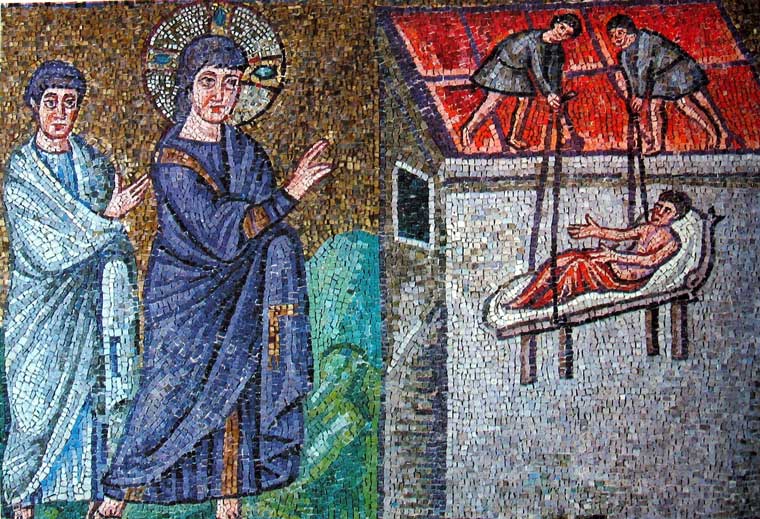
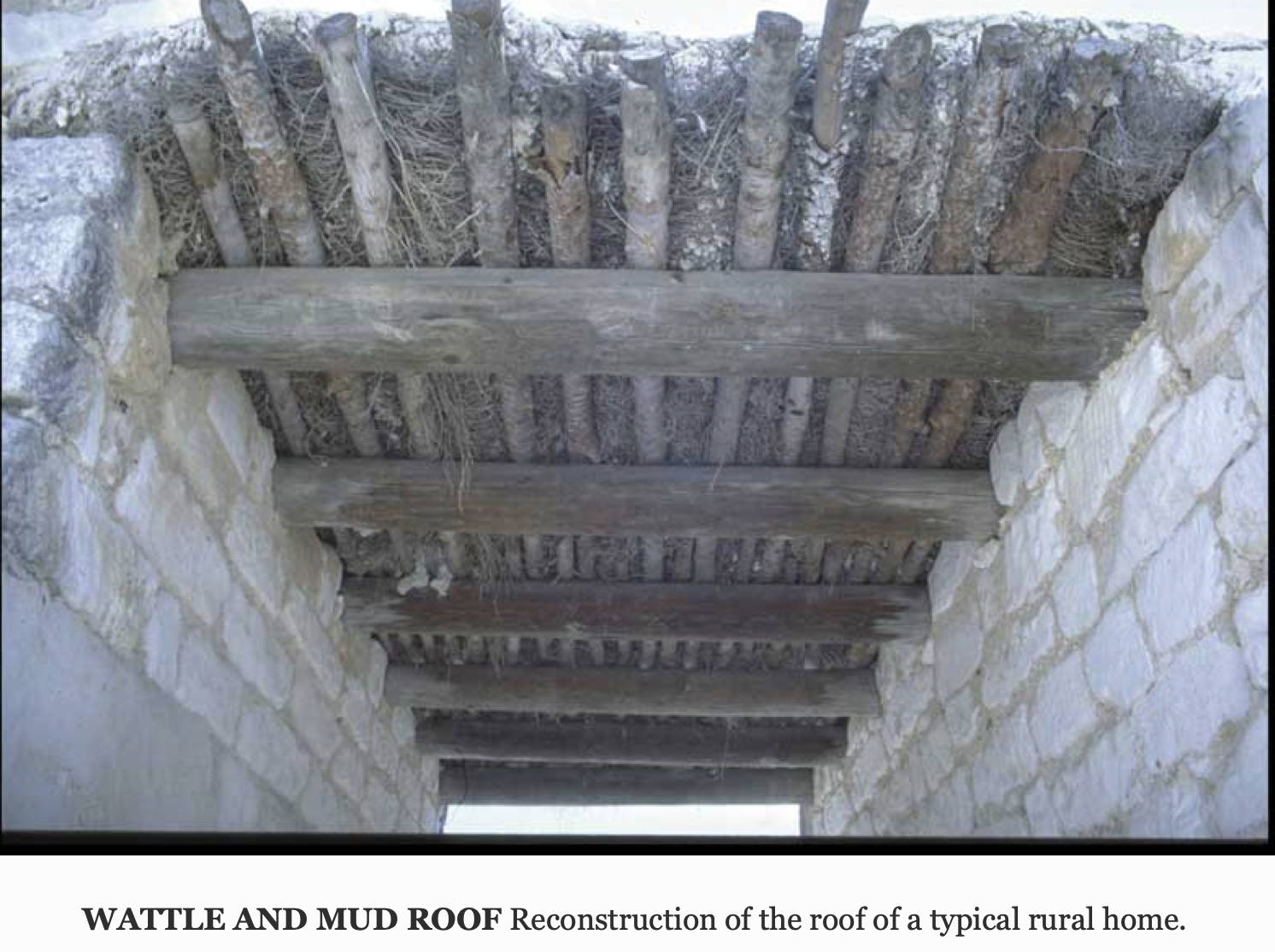
Matthew, Mark and Luke are the three Evangelists who harmoniously narrate about this miracle. Moreover, Mark names Capernaum as its location, while Matthew states that the Lord performed this miracle, having come “to His Own city”, Capernaum, which became worthy of this calling (as mentioned above); Saint John Chrysostom testifies about this: “He was born in Bethlehem, brought up in Nazareth, but lived in Capernaum”. The paralytic was brought to the Lord on a bed, and consequently, could not move by himself. Judging by the description, the actual name of the illness of such a type, as it is narrated in the Gospel, he suffered from the infirmity that in today’s terms is called paralysis. Saints Mark and Luke add that because of the mass of people surrounding Christ inside the house, those that had brought the paralytic, were unable to enter, so they lowered him on his bed through the temporary roof over the courtyard. During the hot season, temporary roofs were erected over courtyards and were made out of planks, leather or cloth and were bordered by the walls of the houses with flat roofs, making it quite easy to get to the rooftop by the ladder. Only strong faith could move those who brought the paralytic to such a bold action. Seeing such faith, and also the faith of the suffering, who allowed himself to be lowered in such a risky manner to the feet of Jesus, the Lord says to him: “Son, be of good cheer, your sins are forgiven you”, — thus showing the close connection between his illness and his sins. According to the teachings of the Word of God, illnesses appear as the result of sins (John 9:2) and are sometimes sent by God as a punishment for them (1 Cor. 5:3-5, 11:30). Often, the link between sickness and sin is quite evident, for example, the illnesses from drunkenness and dissoluteness. That is why, in order to cure the illness, one must first have to remove the sin, get it forgiven. Apparently, the paralytic saw himself as such a great sinner that he hardly hoped to be forgiven; therefore, the Savior encouraged him with such words: “Son, be of good cheer!” Those Scribes and Pharisees, who were present, began to condemn Him in mind for His blasphemy, seeing in His words the unlawful appropriation of the authority, which belonged only to God alone. The Lord, knowing what they were thinking, let them know that their thoughts were known to Him by saying: “For which is easier, to say, ‘Your sins are forgiven you,’ or to say, ‘Arise and walk?’” Clearly, both the first and the second do require the similar Divine authority.
“But that you may know that the Son of Man has power on earth to forgive sins” — then He said to the paralytic, “Arise, take up your bed, and go to your house”. Saint Chrysostom excellently explains the coherency of the speech: “As you cannot see the healing of the soul, while the healing of the body is evident, then I join the last to the first, which, while being lower, is more evident so that through this to bring belief in the higher, the unseen”. Following the Lord’s words, the miracle of healing confirmed that Christ, endowed with the Divine power, not in vain said it to the leper: “Your sins are forgiven you”. Moreover, it must not be thought that the Lord performed the miracle only wishing to convince the Pharisees in His Divine omnipotence. That miracle, like all the others, was the act of His Divine goodness and mercy. The suffering testified of his full recovery by carrying the bed on which he was brought to the Lord. The result of the miracle was that the people became amazed, and praised the Lord for giving such power to humans; i.e., evidently, not only the Pharisees, but also the common people did not believe in Jesus as the Son of God, regarding Him as just a human.
- The Lord Jesus Christ’s dialogue with Nicodemus. (John 3:1-21).
- The Last Testimony of John the Baptist. (John 3:22-36). The Imprisonment of Saint John. (Matt. 14:3-5; Mark 6:17-20; Luke 3:19-20).
- The Talk with a Samaritan woman. (Matt. 4:12; Mark 1:14; John 4:1-42)
- The Arrival to Galilee and the Beginning of the Sermon.
- Healing - Sermon
The Arrival to Galilee and the Beginning of the Sermon.
The Arrival to Galilee and the Beginning of the Sermon. (Matt. 4:13-17; Mark 1:15; Luke 4:14-15; John 4:43-45).
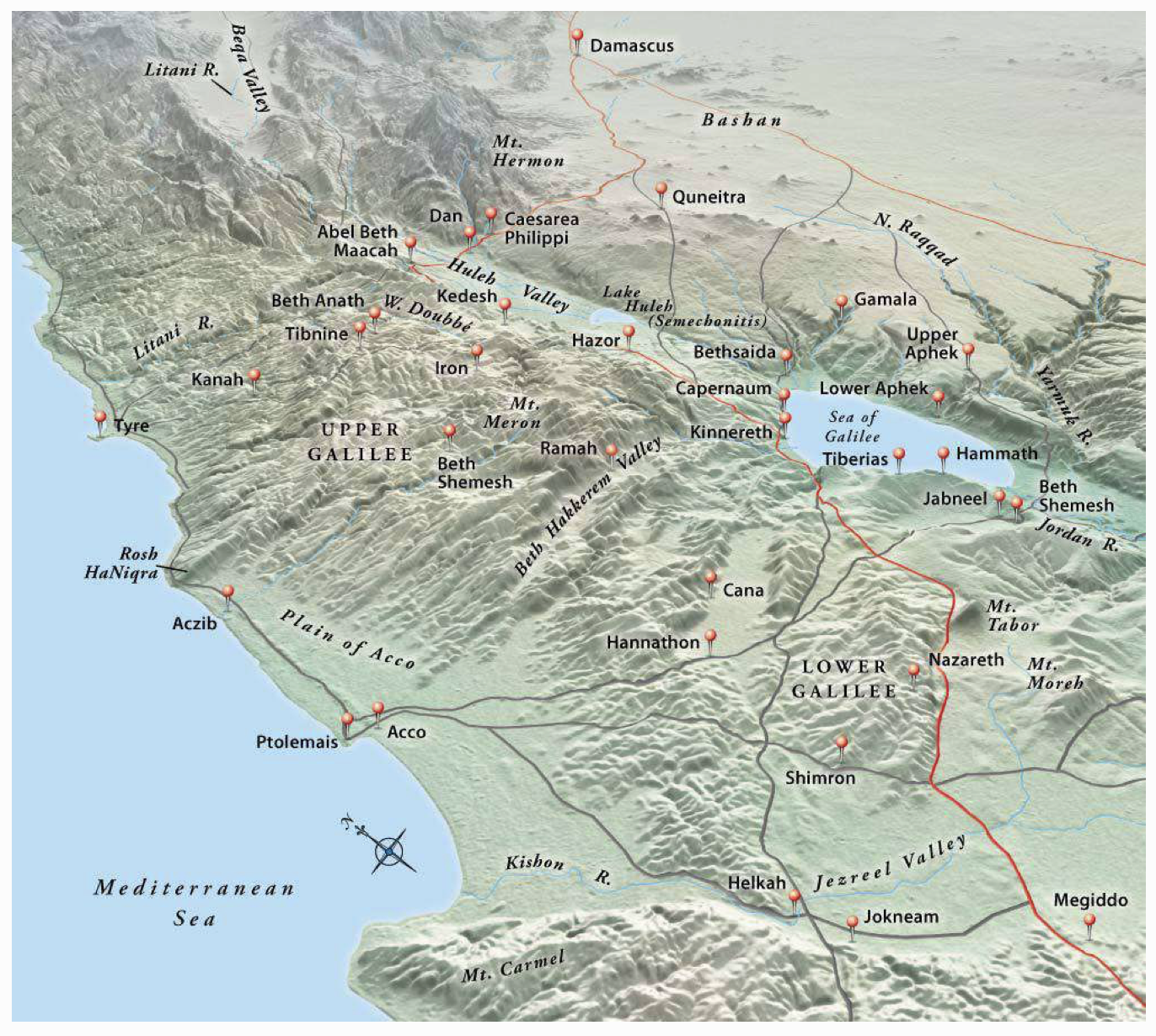
All four Evangelists testify about the Lord’s arrival to Galilee and the beginning of His sermons. Arriving to Galilee, He left His native town of Nazareth, testifying that a Prophet has no honor in His own town, and settled in Capernaum. This was treated by Saint Matthew as the fulfillment of Isaiah’s prophecy: “In the former time he brought into contempt the land of Zebulum and the land of Naphtali, but in the latter time hath he made it glorious by the way of the sea, beyond Jordan, Galilee of the nations. The people that walked in darkness have seen a great light” (Isaiah 9:1-2).
The Healing of the Nobleman’s Son. (John 4:46-54).
On the way to Capernaum, the Lord visited Cana where He performed His first miracle by turning water into wine. Having found out about this, one of the inhabitants of Capernaum, the former Herod’s noblemen, hurried to Cana to ask Jesus to come to Capernaum and heal his son, who was about to die. “Then Jesus said to him, “Unless you people see signs and wonders, you will by no means believe”. The Lord appreciated faith that was based on the contemplation of miracles less than that, based on the comprehension of His pure and sublime Divine teaching. Faith, born from seeing miracles, demands more and more new miracles in order to sustain itself, because the previous ones become habitual and cease to amaze. Together with this, a person accepting the teaching that is accompanied with miracles can fall into delusion, accepting a lie to be true, as miracles might be false, from the devil. That is why the Word of God warns us to be wary of all miracles (Deut. 13:1-5). And the Lord speaks with some sorrow about the Galilee inhabitants’ indiscriminating attitude in this respect. However, after this reproach, the nobleman displays persistence, which shows the magnitude of his faith: “Sir, come down before my child dies!” And the Lord heals the nobleman’s son, and moreover, He does it by correspondence, saying: “Go your way; your son lives”. At that precise time, the fever left the boy. Startled by the dying youth’s instant recovery, the nobleman’s servants hurried to their master to report him about the joyous news. The father, believing the Lord’s words but thinking that the healing will happen slowly, inquired, at what hour the youth recovered. When he found out that it was at the precise hour when the Lord said that his son was cured, the nobleman “himself believed, and his whole household”, i.e., when he notified them of the miracle, his whole family and servants believed in the Lord. Perhaps, it was the same Chuza, whose wife, Johanna, later followed Christ, serving Him.
This was the second miracle, which “Jesus did when He had come out of Judea into Galilee”.
The Calling of the Fishermen. (Matt. 4:18-22; Mark 1:16-20; Luke 5:1-11)
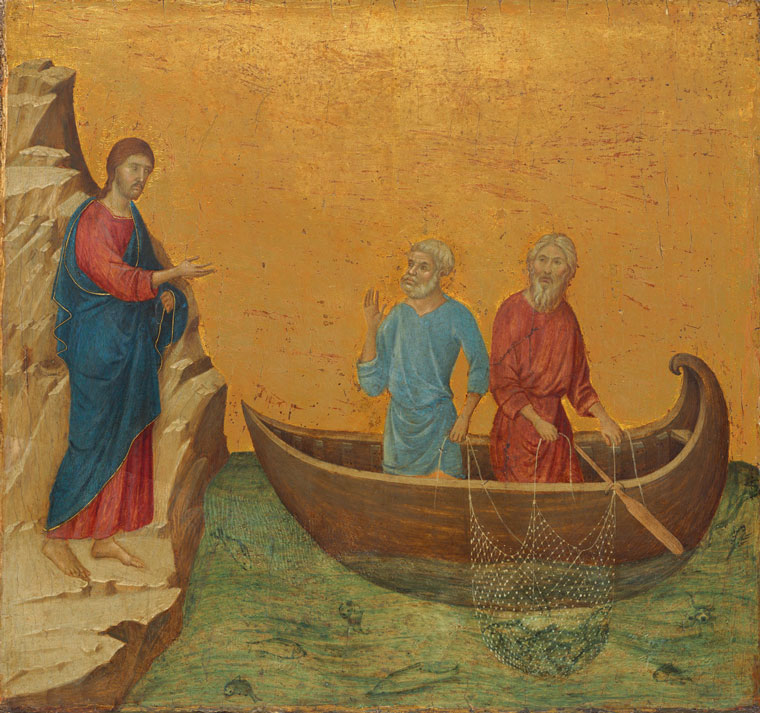
Three Evangelists narrate about the calling of the first Apostles: Matthew, Mark and Luke. Together with that, the first two mention the event very briefly, just stating the very fact, while Saint Luke gives the detailed description of the miraculous netting of the fish, preceding the calling. As Saint John writes, the first disciples, Andrew and John, designated by the Lord, followed Him even in Jordan, and later Simon, Philip and Nathanael joined him. However, having returned with Jesus to Galilee, they little by little turned to their former activity of catching fish. But the Lord calls them anew to follow Him, directing them to leave their fishing and dedicate themselves to another activity — catching people for the Kingdom of God.
Healing in Capernaum. (Mark 1:21-28; Luke 4:31-37).
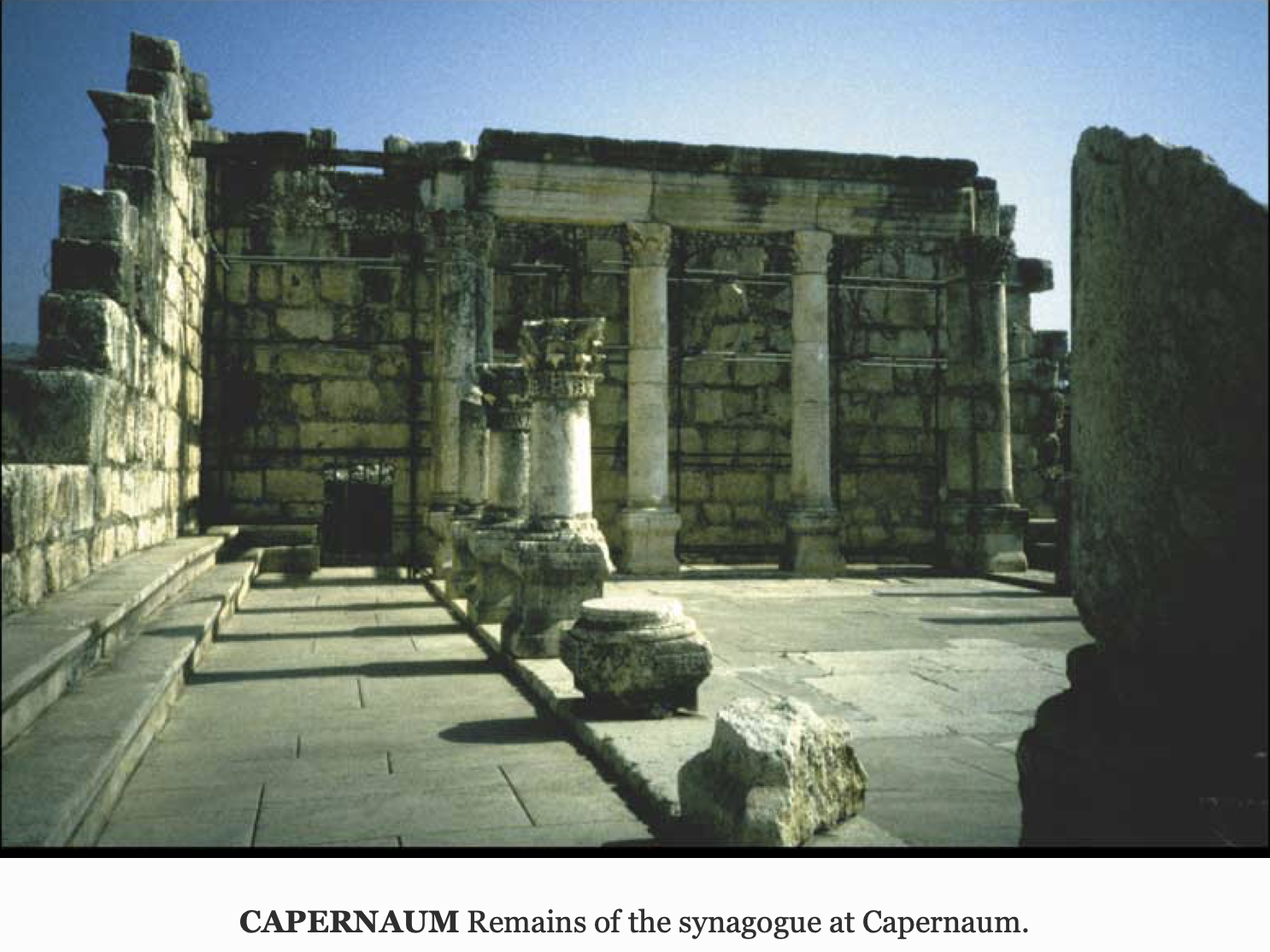
When in Galilee, Christ mainly remained in Capernaum — so much so, that it became “His town”. Capernaum, located on the border of two domains — Galilee and Iturea, was outstanding for its salutary climate, material abundance and in general, had everything for that the people, wanting to listen to Christ, could converge there in large numbers. Living in Capernaum, the Lord taught on Saturdays in synagogues — the houses where the Jews gathered for prayer. The church services and sacrificial offerings could only be performed in the temple of Jerusalem; however, while being in captivity, the Jews felt the extreme necessity to gather in prayer meetings for the common readings of the books of the Law and collective prayers. Such meeting-places became the synagogues. After the Jews’ return from captivity, the synagogues became an essential attribute in every Jewish settlement, both in Palestine itself, and in every place of the Jewish settlement. The synagogue contained the urn, in which the books of the Law were kept, the pulpit, from which these books were read and the seating area. Anyone that regarded himself capable could read and interpret the Law and the Prophets. The reader usually stood up while reading and sat down when he passed over to interpreting of the reading. Continually listening to the lifeless word of their teacher-Scribes and Pharisees, the Galileans were astounded in hearing the Lord’s lively word. If the former interpreted the Law as its servants, Jesus spoke as the One, Who had authority. The Scribes and Pharisees, not understanding the Law themselves, distorted its meaning and therefore were unconvincing in their interpretations. Whereas Jesus was saying His own words, i.e., that which He had heard from His Father, and spoke authoritatively, convincingly and persuasively, which was producing a strong impression on the listeners.
At the time, when the Lord was teaching in one of the synagogues in Capernaum, there was a man possessed by the evil spirit. He unexpectedly cried out in a loud voice: “Let us alone! What have we to do with You, Jesus of Nazareth? Did You come to destroy us? I know who You are — the Holy One of God!” This involuntary confession of truth wrenched through the presence of the Son of God was a cry of low, slavish fear, pretending and flattering in the deviation from judgment; a slave’s lament, whose imagination draws the tortures and torment awaiting him, when meeting with his master. Perhaps by this confession, the enemy was hoping to undermine the people’s trust in Jesus Christ, and we can see that the Lord indeed, forbade him to testify about Him, commanding: “Be quiet, and come out of him”. The possessed instantly fell to the ground in the middle of the synagogue, but stood up fully recovered, because the demon, obeying, had left him. Both the Evangelists underline the extremely powerful impression this made on the people by the healing of the possessed person.
The Last Testimony of John the Baptist. (John 3:22-36). The Imprisonment of
Saint John. (Matt. 14:3-5; Mark 6:17-20; Luke 3:19-20).
The Last Testimony of John the Baptist. (John 3:22-36).
After the conversation with Nicodemus, which took place in Jerusalem during the Passover, “Jesus and His Disciples came into the land of Judea, and there He remained with them and baptised”.
At the same time, Saint John the Baptist continued to baptise “in Aenon near Salim”. John’s disciples came to him and said: “Rabbi, He Who was with you beyond the Jordan, to Whom you have testified — behold. He is baptising, and all are coming to Him”.
Absolutely devoid of any envy towards Christ, the Baptist begins his answer by directly revealing Christ’s greatness in comparison to himself, and gives the new (and final) solemn testimony of Christ’s Divine worthiness. Defending Christ’s right to baptise, John states that of all of God’s messengers, no one can assume that which had not been given to him from Heaven. That is why if Christ baptises, then He has the authority from God to do that. The Baptist reminds them that as he said from the beginning, he is not Christ, but only His Forerunner. Instead of vexation and envy, John expresses his joy about Christ’s successes. He calls Him the bridegroom and himself as a friend of the bridegroom, who does not envy the bridegroom’s advantage but stands before Him as a servant and “rejoices greatly” hearing His voice. In the Old Testament, the union of God with the faithful — just as the union of Christ with the Church in the New Testament — is often presented in the Holy Scripture in the form of a marriage (Isaiah 54:5-6, 62:5; Ephes. 5:23-27). Christ is the Bridegroom of the Church, and John — His friend, a close, trustworthy individual, who can only rejoice about the Bridegroom’s success. To the Jews, the friend of the bridegroom played an important role during the time, prior to the wedding. Once the wedding took place and the bridegroom became a husband, the role of the friend ended. So it was with John: he had the leading role in the preparation of the people to accept Christ, but when Christ began His public service, John’s role was over. That is why he states: “He (Christ) must increase, but I must decrease”, just as the morning star dims in the brightness of the rising sun.
Professing Christ’s superiority over him, John states that Christ is the One “Who comes from above” and therefore “is above all”, i.e., that He is greater than all people, even God’s messengers, and that he, John, having the earthly origin, proclaimed God’s truth only to the extent as one, who originates from the earth, can; but coming from Heaven, Christ testifies about the Heavenly and Divine, as about that, what He directly saw and heard, and that no one human is capable to accept this testimony without the grace of God (Matt. 16:17; John 6:44).
Sadly, noticing the unkind feelings in his disciples, John praises those who accept Christ’s testimony, because He proclaims to the people the words of God Himself: he who accepts His words as the truth, accepts the words of God the Father as true. God the Father gave in abundance the gifts of the Holy Spirit, beyond all measure, to His Son Jesus Christ., because He loves His Son, and handed everything in His hands. Consequently, those who believe in the Son of God, the Lord Jesus Christ, have eternal life, while the one who does not believe in Him, will not see eternal life but “the wrath of God abides on him”.
The Imprisonment of Saint John. (Matt. 14:3-5; Mark 6:17-20; Luke 3:19-20).
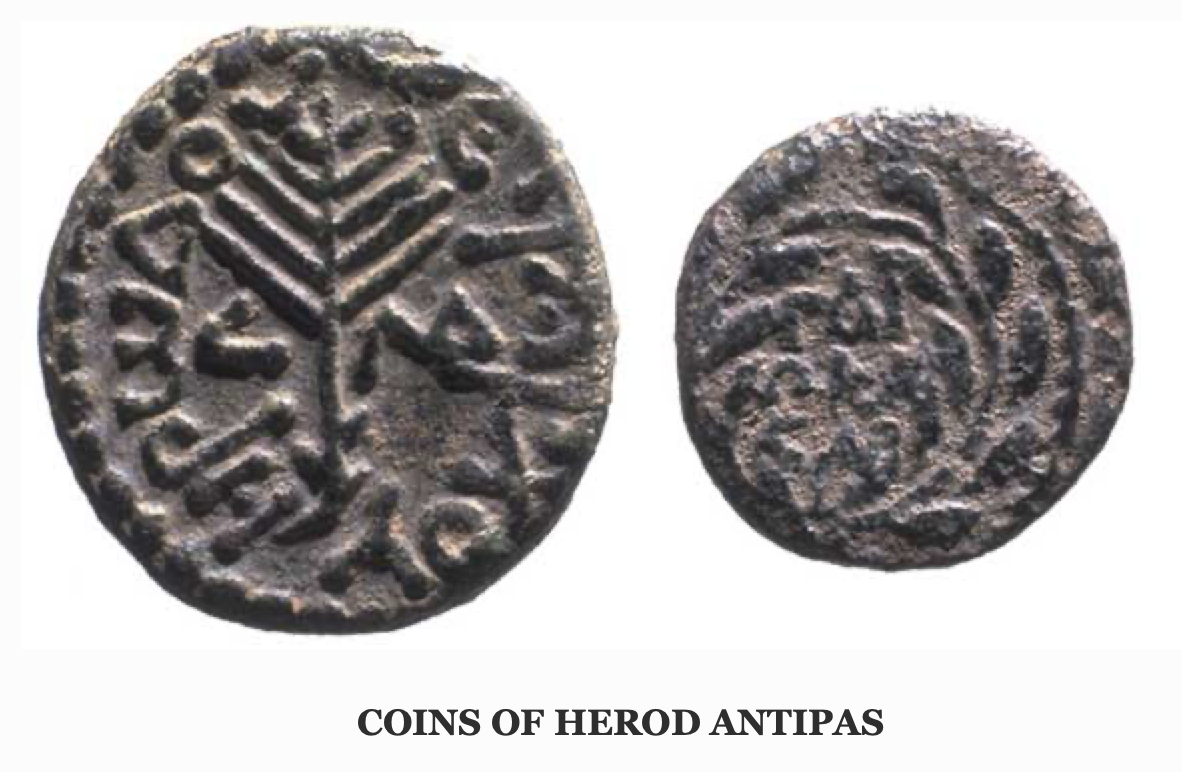
Soon after Saint John the Baptist’s last testimony of Christ’s Divinity, he was seized and imprisoned for exposing the illegal co-habitation of king Herod Antipas and Herodias, the wife of his brother Philip. The first three Evangelists narrate about this. Herod Antipas, the son of Herod the Great, who ordered the slaying of the infants in Bethlehem, ruled Galilee and Perea. Being married to the daughter of the Arab King Aretus, he started a love affair with Herodias, unhappy in her marriage with Philip. She openly moved into the palace, having banished Herod’s legal wife. Feeling insulted about his daughter, Aretus declared war against Herod. Herod himself had to leave to the fort Machaerus (to the east of the Dead Sea), to take command of the troops. There, Herod heard about John the Baptist as of the Prophet that attracted many people to himself. Hoping to find support in his campaign, he sent for John. However, instead of the supporting word, he heard the very unpleasant for him accusation: “It is not lawful for you to have your brother’s wife” (Mark 6:18).
These words annoyed in particular Herodias, and she used all her influence in order to incite Herod to kill John. Fearing the people, Herod did not dare to kill John but just imprisoned him in the Machaerus fortress.
The Last Testimony of John the Baptist. (John 3:22-36). The Imprisonment of
Saint John. (Matt. 14:3-5; Mark 6:17-20; Luke 3:19-20).
The Last Testimony of John the Baptist. (John 3:22-36).
The Lord Jesus Christ’s dialogue with Nicodemus. (John 3:1-21).
The Lord Jesus Christ’s dialogue with Nicodemus. (John 3:1-21).
Driving the sellers out of the temple and the miracles performed by the Lord in Jerusalem, so strongly influenced the Jews that one of the “princes” — or leaders of the Jews Nicodemus, a member of the Sanhedrin, came to see Jesus. Apparently, he wanted very much to hear His teachings, but fearing to incur the wrath of his associates that were hostile towards the Lord, he arrived at night. Nicodemus calls the Lord “Rabbi,” i.e., the teacher and thus acknowledging His right to teach, which, according to the view of the scribes and Pharisees, Jesus was not allowed to have — not having finished the Rabbinic school. This already shows Nicodemus’s disposition towards Christ. Later, he calls Him “a Teacher come from God,” accepting that He works wonders with the Divine power, typical of Him. Nicodemus speaks not only for himself but for all the Jews, who believed in the Lord, and perhaps even from the name of some members of the Sanhedrin — although the majority of them was hostile towards the Lord.
All of the following discourse is remarkable, for it is aimed at destroying the false Pharisee outlook on the Kingdom of Heaven, and the conditions under which a human can enter this Kingdom. This conversation is divided into 3 parts: The spiritual rebirth as the basic demand for entry into God’s Kingdom; Redemption of humanity through the sufferings of the Son of God, without which, people would not be able to inherit God’s Kingdom; The nature of the judgment over the people that have not believed in the Son of God.
With His first words in the conversation, the Lord destroys the Pharisees’ false pretensions of being the chosen ones: “Most assuredly, I say to you, unless one is born again, he cannot see the Kingdom of God”. Or, in other words, it is insufficient to be a Jew by birth. There must be the complete moral rebirth, which is given to a person from above, from God, and one should as if be born again, become a new being (which is the essence of Christianity). For the Pharisees imagined the Messiah’s Kingdom as the physical and earthly kingdom, there is nothing surprising in the fact that Nicodemus also took the Lord’s words in a physical sense, i.e., that in order to enter the Messiah’s Kingdom, it is necessary to have the second carnal birth, so he expressed his bafflement, emphasizing the absurdity of such a demand: “How can a man be born when he is old? Can he enter a second time into his mother’s womb and be born?” Jesus then explains that the conversation is not of the physical birth, but of the special spiritual birth, which is distinguished from that bodily both in purpose and fruits.
This birth is “of water and the Spirit”. Water is the means or weapon, and the Holy Spirit — the Power, which brings about the new birth and the Cause of the new existence: “Unless one is born of water and the Spirit, he cannot enter the Kingdom of God”. “That which is born of the flesh is flesh,” — when a person is born from the earthly parents, he inherits from them the primal sin of Adam, nesting in the flesh, he thinks according to the flesh and pleases his physical passions and lusts. These deficiencies of the physical birth can be corrected through the spiritual birth: “That which is born of the Spirit is spirit”. He who accepted the rebirth from the Spirit, himself enters the spiritual life that is higher than anything carnal or sensual. Seeing that Nicodemus still does not understand, the Lord begins to explain what this birth is made up of, comparing the means of this birth with the wind: “The wind blows where it wishes, and you hear the sound of it, but cannot tell where it comes from and where it goes. So is everyone born of the Spirit”. In other words, in the spiritual rebirth, a person has access to observe the change only that takes place within him, but the power of rebirth and the method through which it acts, as well as the paths by which it arrives all this is mysterious and subtle. In the same manner we feel how the wind affects us: we hear its “voice”, but we do not see and know, where it comes from and where it goes, so free in its strife and in no way depending on our will. The effect of the Holy Spirit that gives us rebirth is akin to this: it is evident and sensory, yet enigmatic and unexplainable.
However, Nicodemus continues to remain in the state of incomprehension, and his next question “How can these things be?” expressed his mistrust of the words of Christ and the Pharisee’s pride, with the pretension to understand all and to able to explain everything. It is this Pharisee’s sophistry that the Lord destroys with His response, and with such power, that Nicodemus is unable to object — and in his state of self-humiliation, little by little begins to prepare in his heart the grounds on which the Lord will later sow His seeds of the redemptive teaching: “Are you the teacher of Israel, and do not know these things?” By these words the Lord not only accuses Nicodemus but also the high-minded Pharisee teachers, who, taking the key of understanding the mysteries of God’s Kingdom, neither entered it themselves nor allowed the others to do so. How was it that the Pharisees did not know the doctrine on the necessity of the spiritual rebirth, when in the Old Testament one often encountered the thoughts on the necessity of the spiritual regeneration, about God’s gift of a heart of flesh and not one of stone (Ezekiel 36:26). Even King David prayed: “Create in me a clean heart, O God; and renew a right spirit within me” (Psalm 51:10-11).
Passing to the revelations of the higher mysteries of Himself and of His Kingdom, the Lord remarks to Nicodemus in the form of a prologue that in opposition to the teachings of the Pharisees, He Himself and His disciples are proclaiming the new teaching, which is based directly on the knowledge and the contemplation of truth: “We speak what We know and testify what We have seen, and you do not receive our witness,” — that is, you, the Pharisees are the false teachers of Israel.
In the further words: “If I have told you earthly things and you do not believe, how will you believe if I tell you Heavenly things?” under “earthly” the Lord is thinking of the teaching on the necessity of rebirth, as the need of rebirth and its consequences happen within a person and are known through his inner experience. While speaking about the “Heavenly” the Lord means the sublime mysteries of God, which are higher than any human observation or knowledge: About the eternal unity of Triad-God, about accepting by the Son of God of the redeeming exploit for people’s salvation, about conjoining in this exploit of the Divine love with the Divine justice. Perhaps, about what happens within the person and with the person may be known by the person himself. But what human can ascend to heaven and penetrate into the mysterious domain of the Divine life? Nobody, except the Son of God, Who in descending to earth did not abandon heaven: “No one has ascended to Heaven but He Who came down from Heaven, that is, the Son of Man Who is in Heaven”. By these words the Lord reveals the mystery of His incarnation, convincing him in that He is greater than an ordinary messenger of God, akin to the ancient Prophets, for which Nicodemus takes Him, that His appearance on earth in the form of the Son of Man is the descending from the highest state to the lowest, belittled one, because His genuine, eternal existence is not on earth, but in heaven.
Afterwards the Lord reveals the mystery of His redeeming exploit to Nicodemus: “And as Moses lifted up the serpent in the wilderness, even so must the Son of Man be lifted up”. Why is it that the Son of Man had to be raised on the cross for the human salvation? This is exactly what is heavenly, which is impossible to comprehend with the earthly mind. As to the symbol of His exploit on the cross, the Lord points to the brass snake that Moses raised in the wilderness. Moses raised the brass snake in front of the Israelites, so that they, struck by snakes, would receive a cure by looking at it. Likewise, the whole human race, living in flesh and struck by the ulcer of sin, receives its cure by looking with faith at Christ, Who had come down in the form of sinful flesh (Rom. 8:3). In the basis of the Son of God’s exploit of crucifixion lies God’s love for people: “For God so loved the world that He gave His only begotten Son, that whoever believes in Him should not perish but have everlasting life”. The everlasting life is established in a person by the grace of the Holy Spirit, while the access to the altar of grace (Heb. 4:16), is received by people through the redeeming death of Jesus Christ.
The Pharisees thought that Christ’s pursuit would consist of judging the people of other faiths. The Lord explains that He was currently sent to save the world, and not to judge. The unbelievers will condemn themselves, because together with their disbelief will be revealed their love for darkness and hatred for light, forthcoming from their love for dark deeds. Those who render truth, the honest and moral souls, walk towards the light themselves, not fearing the exposure of their deeds.
The Talk with a Samaritan woman. (Matt. 4:12; Mark 1:14; John 4:1-42)
The Talk with a Samaritan woman. (Matt. 4:12; Mark 1:14; John 4:1-42)
All the four Gospels speak about the departure of the Lord to Galilee. Saints Matthew and Mark note that this happened after John had been imprisoned, while Saint John adds, that the reason for that was the rumor that Jesus was receiving and baptising more disciples than John, although the Evangelist explains that it was not Christ, Who was baptising them, but His disciples. After John’s imprisonment, the Pharisees’ hatred focused on Jesus, Who started to seem to them more dangerous than the Baptist. As His time for the suffering had not arrived yet, Jesus leaves Judea and goes to Galilee, in order to avert the persecution of His envious enemies. Only Evangelist John narrates about Christ’s conversation with the Samaritan woman that happened on the way to Galilee.
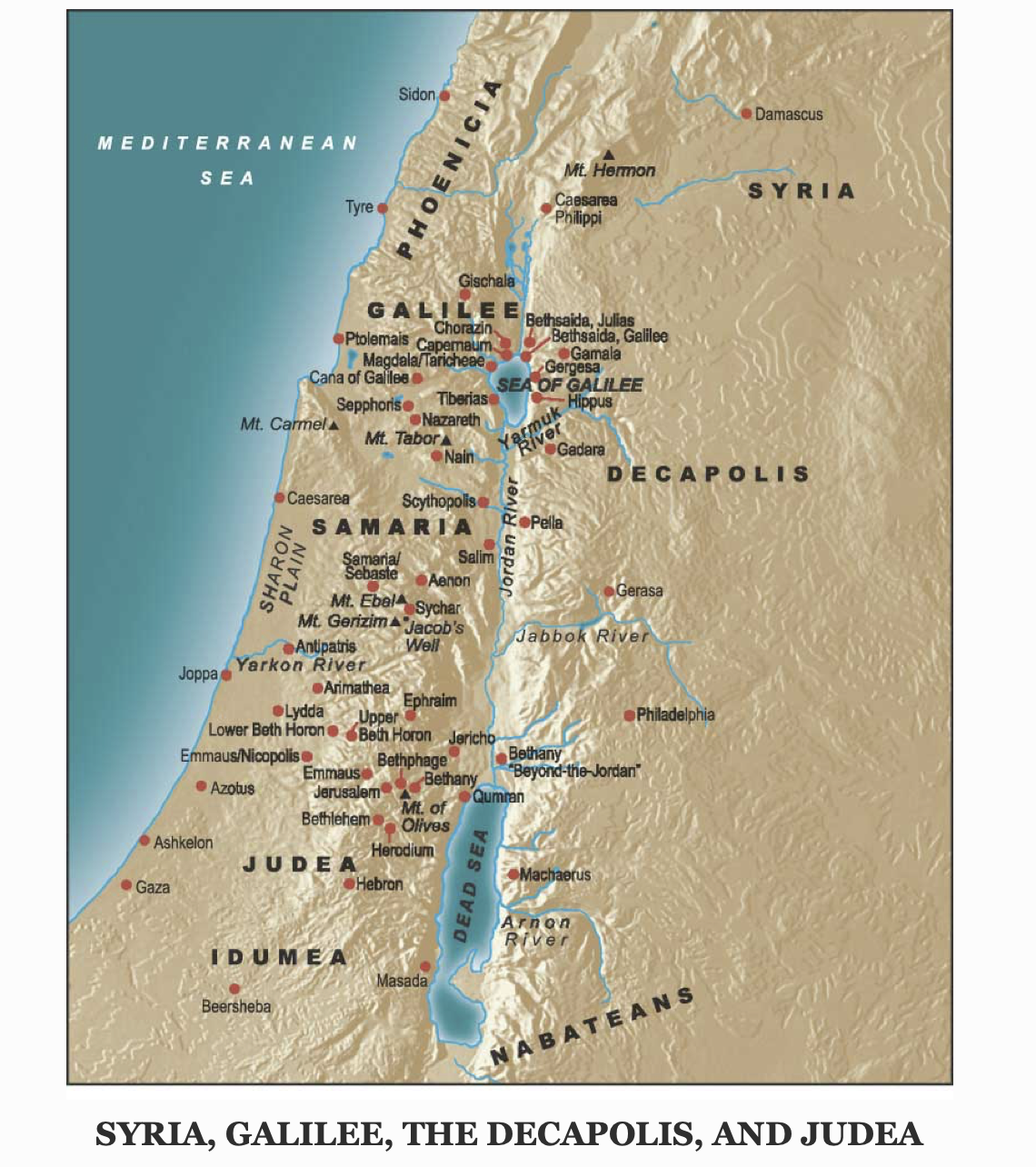
The Lord’s way was through Samaria — the district located to the north of Judea and formerly belonging to the three tribes of Israel: Dan, Ephraim and Manasseh. There was a town in this district called Samaria, Israel’s former capital. The Assyrian king Salmanassar conquered the Israelites and took them into captivity, replacing the population with heathens from Babylon and other places. The mixture of these settlers with the remaining Jews gave birth to the Samaritans. They accepted the Five Books of Moses, worshipped Jehovah — as well as their own gods. When the Jews returned from their Babylonian captivity and started to erect the temple of Jerusalem, the Samaritans also wanted to join them in their endeavors. However, the Jews rejected them, so they erected their own temple on the Mt. Gerizim. While accepting the Books of Moses, the Samaritans, however, rejected the writings of the Prophets and the entire tradition. Because of this, the Jews’ attitude towards them was worse than to heathens, they avoided the contact with them in every way possible, loathing and despising them.
Passing through Samaria, the Lord with His disciples stopped to rest near a well, which according to the tradition, was dug by Jacob close to the town named Sychema, called by Saint John as Sychera. St. John points at the fact that it was “about the sixth hour” (the noon according to our time), the time of the maximum heat, which most probably was the reason for having rest. “A woman of Samaria came to draw water”. While the disciples of Jesus went to the town to buy some food, Christ turned to the Samaritan woman with a request: “Give Me a drink”. Seeing by the clothing or manner of speech that the addressing her man was a Jew, the Samaritan woman expressed her surprise with that He, being a Jew, is asking her, a Samaritan, for water, meaning the hatred and contempt that the Jews felt towards the Samaritans. But Jesus, having come to the world to save everyone, but not only the Jews, explains to the woman that she would not be asking such things if she knew Who she was talking to and what great fortune (“Gift of God”) God sent her through this meeting. If she only knew Who was asking her for a drink, then she herself would be asking Him to quench her spiritual thirst and reveal to her the mystery, which everybody is seeking to know: and He would give her “living water”, which is meant to be understood as the grace of the Holy Spirit (see John 7:38).
The Samaritan woman misunderstood the Lord: she thought the living water meant the water found at the bottom of the well. That was why she asked Jesus, where she could get the living water if He did not have anything to scoop it up with, while the well was deep. “Are you greater than our father Jacob, who gave us the well, and drank from it himself, as well as his sons and his livestock?” (John 4:12). She then recollects patriarch Jacob with pride and love, as the one who left the use of the well to his offspring. Then the Lord elevates her mind to the highest understanding of His words: “Whoever drinks of this water will thirst again, but whoever drinks of the water that I shall give him will never thirst. But the water that I shall give him will become in him a fountain of water springing up into everlasting life” (John 4:13-14). In the spiritual life, the blessed water has a different effect than the earthly water in the physical life. The one who is filled with the grace of the Holy Spirit, will never feel the spiritual thirst, because all his spiritual needs have been satisfied; meanwhile, the one who drinks the physical water, as well as the one who satisfies some other type of the earthly needs, quenches his thirst for some time, and soon after “will thirst again”.
Moreover, the blessed water will dwell in the man, establishing a spring within him, gushing (skipping — the literal translation from Greek) into eternal life, i.e., making that person a communicant of the eternal life. Still not understanding the Lord and thinking that He is speaking about the ordinary water — only some special type which quenches the thirst forever — she asks the Lord for some of this water, so as to get rid of the need to come to the well for the water. Finally, in order to make her realize that she is speaking with no ordinary man, the Lord initially directs her to call her husband, and afterwards, He directly accuses her that while she had 5 husbands, at that moment, too, she was living in the adulterous union.
Realizing that the one standing before her was a Prophet Who knows everything concealed, the woman turns to Him for the resolution of the problem, which greatly tormented the Samaritans in their relationship with the Jews: who is correct in the argument about the place for worshipping God. Were correct the Samaritans who, following their forefathers, built the temple at the Gerizim Mount, and worshiped God there, or, were correct the Jews who assured that it was allowed to worship God only in Jerusalem? Guided by Moses’s directive to deliver a blessing on this mountain, the Samaritans chose Mt. Gerizim for their worship. And although their temple that was erected there was destroyed by John Hyrcanus in the year of 130 BC, they continued to bring their sacrificial offerings to the location of the ruined temple. Responding to the woman’s question, the Lord explains that it is wrong to think that it is allowed to worship God only in one specific place — and that the argumentative question between the Samaritans and the Jews will soon lose its meaning by itself, because the both types of the divine service — the Jewish as well as the Samaritan — will cease in the nearest future. This prophecy was accomplished when the Samaritans, decimated by the soldiers, became disillusioned with the importance of their mountain, while Jerusalem was destroyed by the Romans and the temple was burnt in the year of 70 AD.
Nevertheless, the Lord gives His preference to the Jewish worship, meaning, of course, the fact that the Samaritans have accepted only the Pentateuch of Moses, rejecting the Prophetic writings, which contained the detailed description of the Personality and the Kingdom of the Messiah. But “salvation is of (will come from) the Jews” for the Redeemer comes from the Jewish people. Further, the Lord, elaborating His initial statement, points to the fact that the “hour is coming, and now is” (since the Messiah had already appeared), the time of the new, highest worship of God, which will not be constrained by any location, but will be everywhere, for it will be in the spirit and truth. Only this type of worship is genuine, because it corresponds to the nature of God Himself, Who is the Spirit. To worship God in the spirit and truth means to endeavor to please God, not only in the outward form but through the sincere and openhearted strife with all the strength of the spiritual being, for God as the Spirit, not through the sacrificial offerings, which both the Jews and Samaritans were making, as though this was the only way to honor God, — but to know and love God, not falsely and hypocritically, wishing to please Him by fulfilling His commandments. Worshipping God in “Spirit and truth” by no means excludes the outward, ritual side of honoring God, like some false teachers and sectarians attempt to affirm, but the main power is not contained in this outward side of God’s worshipping. The actual ceremony of worshiping God should not be seen as prejudicial: it is both essential and unavoidable, for a human consists not only of the spirit, but of the body. Jesus Christ Himself physically worshipped God the Father, kneeling and prostrating Himself on the ground, and not rejecting similar worshipping of Himself from the people, during His life on the earth (see examples: Matt. 2:11, 14:33, 15:25; John 11:32, 12:3; and many other examples in the Gospel).
The Samaritan woman, somehow, begins to understand the meaning of Christ’s words and in her deliberation says: “I know that Messiah is coming (Who is called Christ). When He comes, He will tell us all things”. The Samaritans were also awaiting the Messiah, calling Him — Gashageb — basing their expectations on the words of Genesis 49:10, and especially on Moses’s words in Deuteronomy 18:18). The Samaritans’ understanding of the Messiah was not as distorted as of the Jews, because they awaited Him as a Prophet and not as a political figure. That was why Jesus, not calling Himself the Messiah before the Jews for a long time, directly says to this simple Samaritan woman that He is the Messiah-Christ promised by Moses: “I (am the Messiah) Who speak to you am Me”. Elated with joy from seeing the Messiah, the woman drops her water-pot near the well and hurries into the town to announce to everybody about the arrival of the Messiah, He to Whom all hearts are open, revealed to her all her past actions. Just then, His disciples arrived and were surprised to find their Teacher talking to a woman, for it was condemned by the rules of the Jewish rabbis, who edified: “Do not speak for long with a woman” and “nobody should talk to a woman on the road, even with a lawful woman” and also: “It is better to burn the words of the law, than to teach them to a woman”. However, being reverent to their Teacher, the disciples did not in any way show their amazement and just asked Him to taste the food that they brought.
During those explanations, the Samaritans approached the Lord. While many believed in Him “because of the word of the woman”, many more of them believed “because of His own word,” when on their invitation, He stayed with them in the town for two days. In listening to the Lord’s teachings they were convinced, according to their own admittance, that “this is indeed the Christ, the Savior of the world.”
Related Concepts
- beheading-of-john-the-baptist
- bridegroom
- church-as-tower-built-on-water
- cross
- divine-authority
- divine-gift
- divine-mercy
- eternal-life
- exorcism
- false-miracles
- fasting-before-baptism
- fatigue
- forgiveness-of-sins
- galilean-faith
- gentiles
- gods-love
- harmonization
- healing
- heart
- holy-spirit
- human-nature-of-christ
- initiation
- isaiah-534
- isaiah-91-2
- jewish-messianic-expectations
- john
- john-the-baptist
- judgment
- kingdom-not-of-this-world
- kingdom-of-god
- leper-healing
- leprosy
- levitical-law
- light-and-darkness
- marriage-imagery
- messianic-authority
- messianic-expectations
- messianic-prophecy
- miracles
- mission
- moral-responsibility
- mt-gerizim
- nativity-of-john-the-baptist
- nazareth-rejection
- nazareth-synagogue
- nicodemus
- noblemans-son
- paralytic
- paralytic-healing
- pedagogy-of-the-disciples
- pharisee-expectations
- pharisees
- priest
- regeneration
- ritual
- ritual-purity
- rom-83
- samaritan-question
- samaritan-woman
- samaritans
- savior-of-the-world
- seal-of-the-son-of-god
- sonship
- synoptic-gospels
- teaching-with-authority
- temple
- temple-cleansing
- theophan-the-recluse
- warning-against-false-wonders