New Testament — Topic 4
The Savior’s Social Service. Part 1.
John the Baptist and his testimony about our Lord Jesus Christ. (Matt.
3:1-12; Mark 1:1-8; Luke 3:1-18; John 1:15-31)
John the Baptist and his testimony about our Lord Jesus Christ. (Matt. 3:1-12; Mark 1:1-8; Luke 3:1-18; John 1:15-31)
Beginning his narration about John the Baptist starting his sermon, Saint Luke wants to say that at the time, Palestine was a part of the Roman Empire, and was governed by tetrarchs, or the rulers of quarters of the province, in the name of Emperor Tiberius, the son and successor of Octavius Augustus, during whose time Christ was born. In Judea, the Roman procurator Pontius Pilate governed instead of Archelaus; in Galilee — Herod Antipas, the son of Herod the Great, who slew the innocent infants in Bethlehem; his other son, Philip, governed Iturea — the country, situated to the east of Jordan, and Trachonitus, located to the north-east of Jordan; the fourth province, Abilene, that was adjacent to Galilee in the north- east, at the foothill of Antilebanon, was under the rule of Lycinius. The high priests at the time were Annas and Caiaphas, it is necessary to understand this: actually, the high priest was Caiaphas, and his father-in-law — Annas, who, though being precluded by the civil authorities from his post, had the authority and respect of the people, and in reality, shared the leadership with his son-in- law.
After the death of Augustus in the 767th year from the foundation of Rome, Tiberius ascended the throne. However, two years before, in 765, he had already become a co-ruler, and consequently, his fifteenth year of ruling began in 779, when according to the most probable suppositions, Christ became 30 years old, about what Apostle Luke tells later, mentioning the age, in which Jesus Christ was baptised by John and commenced His social service.
Saint Luke testifies that “the word of God” came to John — in other words, a special calling or revelation from God that prompted him to begin his service. Saint Matthew calls the place where he commenced his service “the wilderness in Judea”. Situated on the western shores of the Jordan and the Dead Sea, it carried this name because of its sparse population. After God’s calling, John started to appear in the more populous areas of the region, like Bethabara on Jordan (John 1:28), or Aenon near Salim (John 3:23), closer to the water, which was necessary for baptism.
Evangelists Matthew (3:3), Mark (1:3) and Luke (3:4) call John the Baptist “the voice of one crying in the wilderness: Prepare the way of the Lord; Make His path straight”. Exactly the same way John the Baptist calls himself in the Gospel of John (1:23). These words are taken from the Prophet Isaiah’s speech, where he comforts Jerusalem by saying that the period of their humiliation is over, and that soon the glory of the Lord will appear and “all flesh shall see it together” (Isaiah 40:5).
In the spiritual sense, the wilderness are the people of Israel, while the unevenness that had to be leveled as the obstacles for the Messiah’s coming — are human sins; that is why the essence of the Forerunner’s sermon led to the call to: “Repent!” This Isaiah’s symbolic prophecy the last of the Old Testament Prophets, Malachi, expresses directly, calling the Forerunner, who was preparing the way for the Messiah, the “Messenger of the Lord”. Saint Mark begins his Gospel with the same quotation (Mark 1:2). John the Baptist’s sermon about repentance was based on the approaching of the Kingdom of Heaven, i.e., the Kingdom of the Messiah (Matt. 3:2). As such, a Kingdom of the Word of God is understood as the liberation of man from the authority of sin and the ascension of righteousness within his nature (Luke 17:21; Rom. 14:17), and also the unification of all nations, which were worthy of this, into one organism — the Church (Matt. 13:24-43, 47-49), and their eternal heavenly glory in the next life (Luke 23:42-43).
Preparing people for the entry into this Kingdom, which was soon to be revealed with the coming of the Messiah, John called people to repent and those who reacted to that call, he baptised with “a baptism of repentance for the remission of sins” (Luke 3:3). This was not the blessed Christian baptism, but only the immersion into the water as a symbol that the person wished to be absolved of his sins, the same way as the water cleansed his body of the bodily grime.
John the Baptist was a strict ascetic, who wore the roughest raiment of camel’s hair and ate locusts and honey of wild bees. He was a sharp opposition to the contemporary teachers of the Jewish people, and his sermon on the coming of the Messiah, the coming of Whom so many were tensely anticipating — could not but attract general attention. Even the Jewish historian, Joseph Flavius, testifies that “the people, captivated by John’s teachings, flooded to him in the great number”, and that the authority of this man over the Jews was so great that they were ready to do all following his advice, and even Herod the King was afraid of this great teacher’s power. Even the Pharisees and Sadducees could not watch indifferently as masses of people came to John, and they themselves went to him into the wilderness, but hardly with the sincere feelings. Therefore, it is little wonder that John greets them with the stern, reproaching words: “Brood of vipers! Who warned you to flee from the wrath to come?” (Matt. 3:7). The Pharisees skillfully covered their vices with the strict observance of the purely outward instructions of the Law of Moses, while the Sadducees, succumbing to the bodily comforts, rejected that what went against their epicurean style of living: the spiritual life and retribution beyond the grave. John accuses them of arrogance, of their assurance in personal uprightness, and instills onto them that their hope of being Abraham’s descendants, will bring them no benefit if they do not carry out the fruits worthy of repentance, because “every tree which does not bear good fruit is cut down and thrown into the fire” (Matt. 3:10; Luke 3:9), as useless. The genuine children of Abraham are not those who have originated from him by flesh, but those who will live in the spirit of his faith and devotion to God. “And do not think to say to yourselves, ‘we have Abraham as our father.’ For I say to you that God is able to raise up children to Abraham from these stones” (Matt. 3:9; Luke 3:8).
According to the Evangelist Luke, this stern speech was directed to the people. But this cannot be treated as a contradiction, for in its significant part the people were infected with the false teachings of the Pharisees. Confused by the strictness of the speech, people began to ask: “What shall we do then?” (Luke 3:10). John answers that it was necessary to perform deeds of love and benevolence, and to refrain from any type of the evil. These would be the “fruits worthy of repentance”.
Then there was the time of a general expectation of the Messiah’s coming, together with that the Jews believed that the Messiah, when He would come, He would baptise (John 1:25). So, it is not surprising that many started to pose the question, if John is Christ Himself. To this John replied that he baptises with water unto repentance (Matt. 3:11), i.e., as a sign of repentance. But the One, Who is coming after him is Mightier, Whom he, John, is not worthy to untie His sandals and carry them (Luke 3:16; Mark 1:7, 3:11), just as slaves do for their master. “He will baptise you with the Holy Spirit and fire” (Matt. 3:11; Luke 3:16; Mark 1:8)
— the grace of the Holy Spirit will act in His baptism, searing every type of iniquity with fire. “His winnowing fan is in His hand, and He will thoroughly clean out His threshing floor, and gather His wheat into the barn; but He will burn up the chaff with unquenchable fire” (Matt. 3:12; Luke 3:17) — Christ would clean His people, just as the master cleans his thrashing floor of weeds and dirt, collecting the wheat, i.e., gathering all those who have believed in Him into His Church, as though into a granary, and all those rejecting Him, will subject to the eternal suffering.
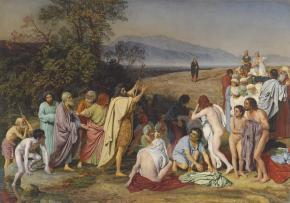
- John the Baptist and his testimony about our Lord Jesus Christ. (Matt. 3:1-12; Mark 1:1-8; Luke 3:1-18; John 1:15-31)
- The Baptism of the Lord Jesus Christ. (Matt. 3:13-18; Mark 1:9-11; Luke 3:21-22; John 1:32-34). The Forty-Day Fast and Tempting by the Devil. (Matt. 4:1-11; Mark 1:12-13; Luke 4:1-13).
- The First Disciples of Christ. (John 1:35-51). The First Miracle at the Wedding at Cana of Galilee. (John 2:1-12).
- The First Pascha. Driving the sellers out of the Temple. (John 2:13-25).
The Baptism of the Lord Jesus Christ. (Matt. 3:13-18; Mark 1:9-11; Luke
3:21-22; John 1:32-34). The Forty-Day Fast and Tempting by the devil. (Matt. 4:1-11; Mark 1:12-13; Luke 4:1-13).
The Baptism of the Lord Jesus Christ. (Matt. 3:13-18; Mark 1:9-11; Luke 3:21-22; John 1:32-34).
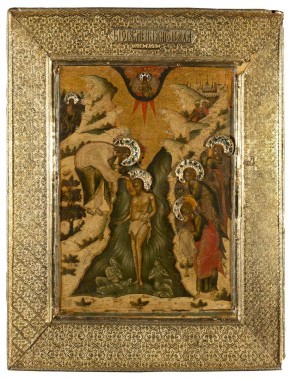
The 4 Evangelists narrate about the Baptism of the Lord Jesus Christ. Saint Matthew depicts this event in the most detail.
“Jesus came from Nazareth of Galilee…” Evangelist Mark adds that He came specifically from Nazareth of Galilee. Apparently, it was in the 15th year of Tiberius Caesar’s ruling when, according to Saint Luke, Jesus became 30 — it was the age, required to be a teacher of faith. Saint Matthew writes that John refuses to baptise Jesus saying: “I need to be baptised by You, and are you coming to me?” But according to the Gospel of John, the Baptist did not know Christ before His baptism (John 1:33), until he saw the Holy Spirit, in the form of a dove, descending upon Him. There is no contradiction here. Before the baptism, John did not recognize Jesus as the Messiah. However, when He came to him requesting to be baptised, John, being a prophet who penetrated people’s hearts, immediately felt His holiness, purity and His eternal pre- eminence over him; therefore he could not but exclaim: “I need to be baptised by you…” When he saw the Holy Spirit ascending on Jesus, then he became finally assured that before him was the Messiah-Christ.
“For thus it is fitting for us to fulfill all righteousness” — responded Jesus Christ to the Baptist (Matt. 3:15); this meant that the Lord Jesus Christ, as a Human and the Head of new, regenerated by Him humanity had to show by His own example, the essentiality of all of God’s determinations.
“The heavens were opened to Him, and He saw the Spirit of God descending like a dove and alighting upon Him”. As John says, God’s Spirit not only descended on Jesus, but “He remained upon Him” (John 1:32).
The voice of God the Father: “This is My beloved Son, in Whom I am well pleased” (Matt. 3:17, Mark 1:11 and Luke 3:22), was the indication to John and those people present about the Divine entitlement of the One Baptised as the Son of God.
The Forty-Day Fast and Tempting by the devil. (Matt. 4:1-11; Mark 1:12-13; Luke 4:1-13).
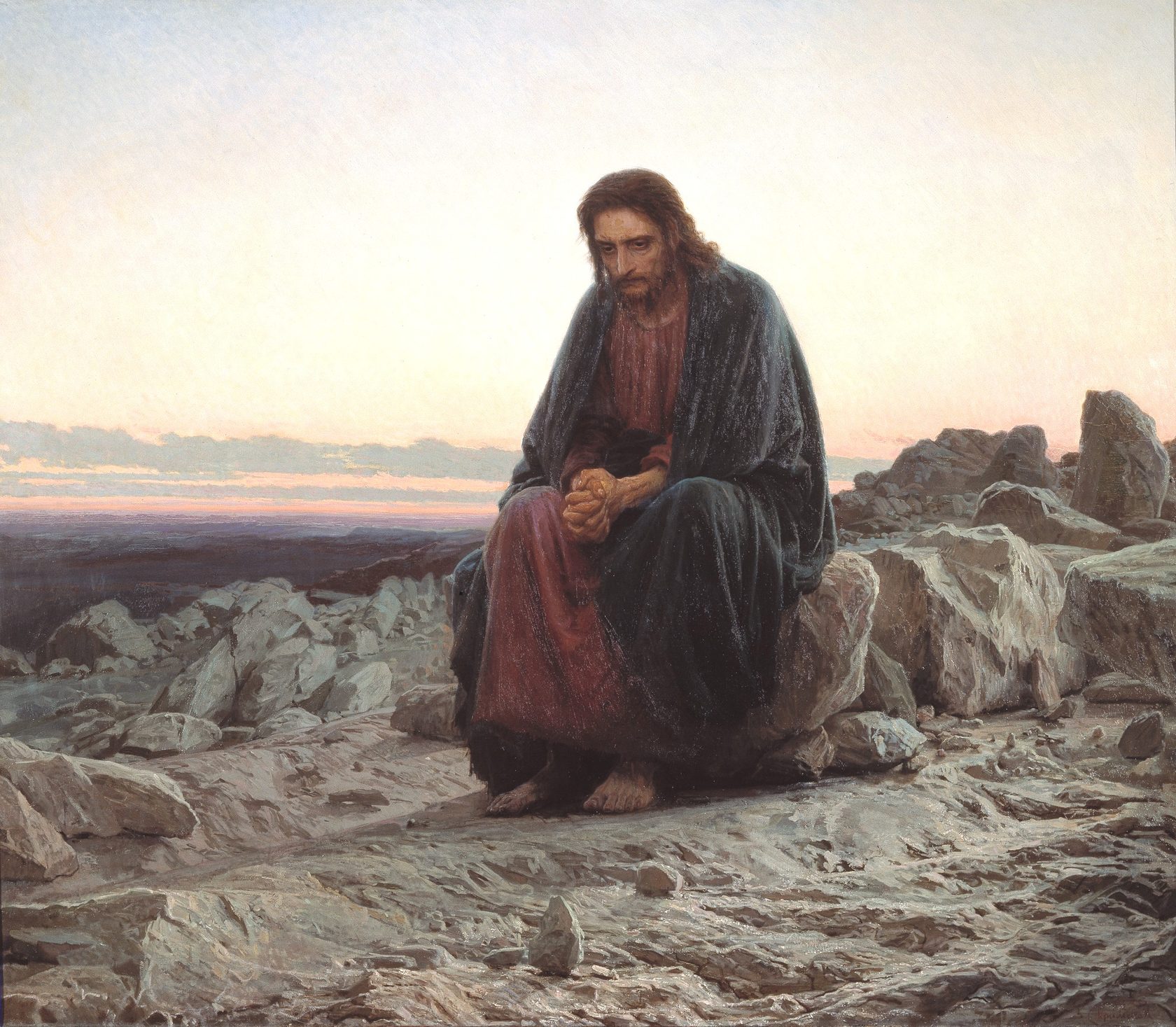
The narration about the Lord Jesus Christ’s 40 day fast and His following tempting by the devil in the wilderness is contained in the Gospels of the first three Evangelists. Moreover, Saints Matthew and Mark tell about this in detail, while Saint Mark mentions it briefly, without depicting the details.
After the baptism, “Jesus was led up by the Spirit into the wilderness to be tempted by the devil” (Matt. 4:1). This was situated between Jericho and the Dead Sea. There, He fasted for 40 days and nights, i.e., according to everything, not eating anything and finally “was hungry” (Matt. 4:2, Luke 4:2), that is, He reached the acute stage of hunger and drain of energy. “Now… the tempter came to Him” (Matt. 4:3). This was the concluding approach of the tempter, because according to Luke, during the whole period of forty days, the devil never ceased to tempt the Lord (Luke 4:2).
What was the sense of this devil’s temptation of the Lord?
Having come to the earth to destroy the works of the devil, the Lord of course could have obliterated them with one breath of His lips, however, it is necessary to remember that the devil’s works had taken root in the delusion of the free human soul, which the Lord had come to save without depriving it of God’s greatest gift — its freedom. The human was created neither as a pawn, nor as a soulless machine or an animal guided by instinct, but as a free and intelligent personality.
In the first place, taking advantage of Christ’s hunger, which was torturing Jesus as a human the devil attempted to convince Him to use His divine power so as to rid Himself of that so hard to bear for every human being feeling of hunger. Pointing to the stones (which to this day retain the shape of loaves), he says: “If you are the Son of God, command that these stones become bread” (Matt. 4:3; Luke 4:3). The devil hoped that having been tempted once, Jesus will react likewise in the future: surround Himself with the legions of Angels from His enemy hordes, come down from the cross and call Elijah to His aid (Matt. 26:53, 27:40, 49), and then the matter of saving humanity with His sufferings on the cross would not be realized. Having turned water into wine for the others and miraculously augmented the number of loaves, Human-God rejected this wily advice with the words of Moses, spoken in the regard to the manna which God sent to His people, while they were in the wilderness over a 40-year period: “Man shall not live by bread alone, but by every word that proceeds from the mouth of God” (Deuter. 8:3; Matt. 4:4; Luke 4:4). Under the term “every word” one must understand God’s benevolent will that thinks of the man. The Lord performed miracles to satisfy not His needs but those of the others.
Having suffered a defeat with his first temptation, the devil started with the second one: he took Him to Jerusalem and setting Him on the pinnacle of the temple, suggested: “If You are the Son of God, throw Yourself down. For it is written: ‘He shall give His Angels charge over You, in their hands they shall bear You up, Lest You dash your foot against a stone” (Matt. 4:6; Luke 4:9-10). The proposal was aimed at astounding the people’s imagination with this miracle, which were full of expectation for the coming of the Messiah — and thus enticing them easily. Of course, this would have been of no moral benefit for the people’s moral life, and the Lord rejected that proposal with the words: “It is written again, ‘You shall not tempt the Lord your God” (Matt. 4:7; Luke 4:12). These words were said by Moses to the people of Israel (Deut. 6:16). Jesus Christ meant that without necessity, it was inadvisable to expose oneself to danger, trying out the wonder-working power of God’s omnipotence.
Then the devil starts his third temptation by showing Christ, from a high mountain “all the kingdoms of the world and their glory. And he said to Him, ‘All these things I will give You if You fall down and worship me’” (Matt. 4:8-9, Luke 4:6-7). Naturally, with these words the devil promised Jesus the purely outward power over humans, only the outward authority over them, keeping for himself the inner, spiritual authority. But this was exactly what the Lord did not want, teaching that He did not come to rule outwardly, not to be served as an earthly ruler (Matt. 20:28), and that His Kingdom is not of this world (John 18:36), His Kingdom is purely spiritual. That is why the Lord, using the words of Deuteronomy (6:13), drives the devil away from Himself: “Away with you Satan! For it is written, “You shall worship the Lord your God, and Him only you shall serve” (Matt. 4:10). With this, Jesus wants to show that He does not accept the devil’s authority over the world, because the universe belongs to the Lord God, and He is the only One to be to be worshipped in it.
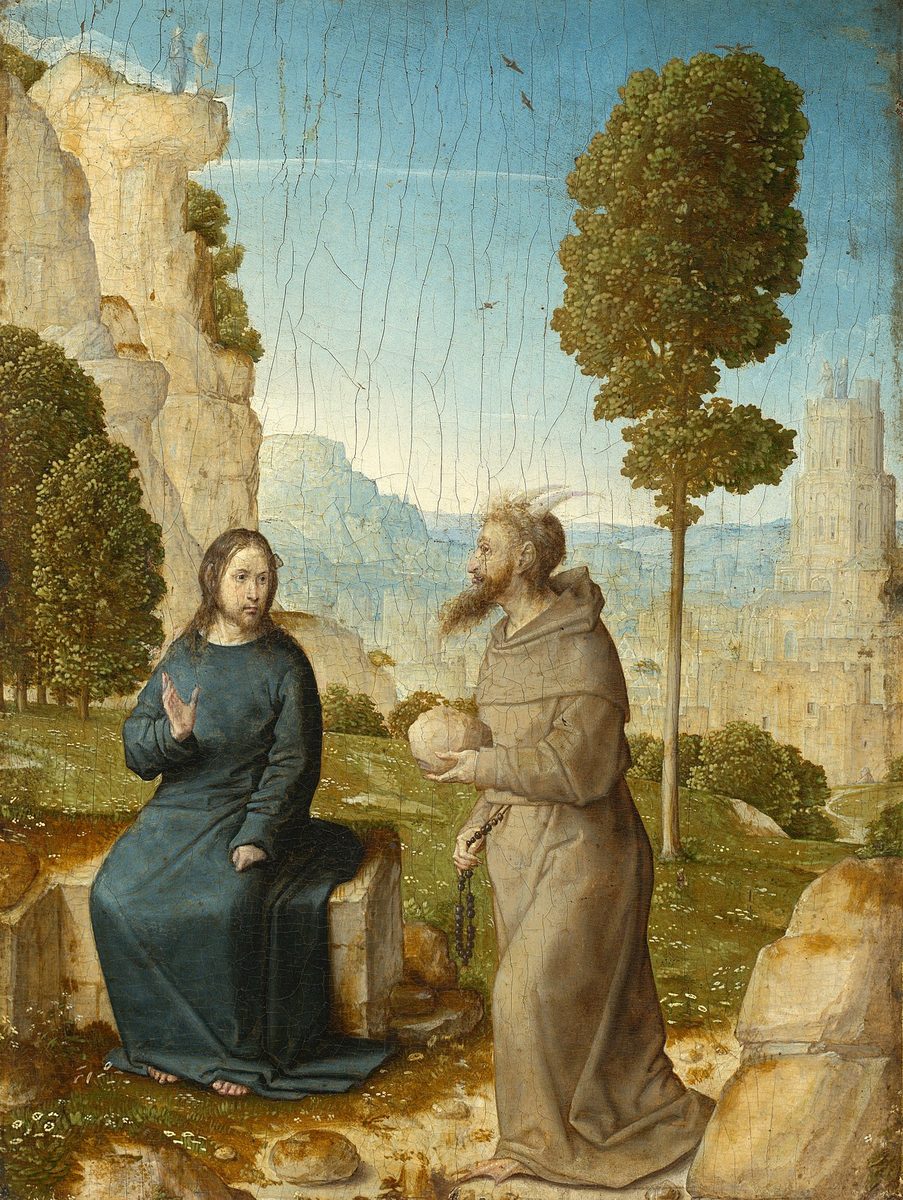
According to Evangelist Luke, the devil leaves Jesus Christ “until an opportune time” (Luke 4:13), because he soon begins to tempt the Lord through people, creating all types of snares.
Evangelist Mark makes an important reference to the fact that in the wilderness, Jesus “was with the wild beasts” (Mark 1:13). As the New Adam, the beasts would not venture to attack Him, acknowledging in Him their Sovereign.
The First Disciples of Christ. (John 1:35-51). The First Miracle at the
Wedding at Cana of Galilee. (John 2:1-12).
The First Disciples of Christ. (John 1:35-51).
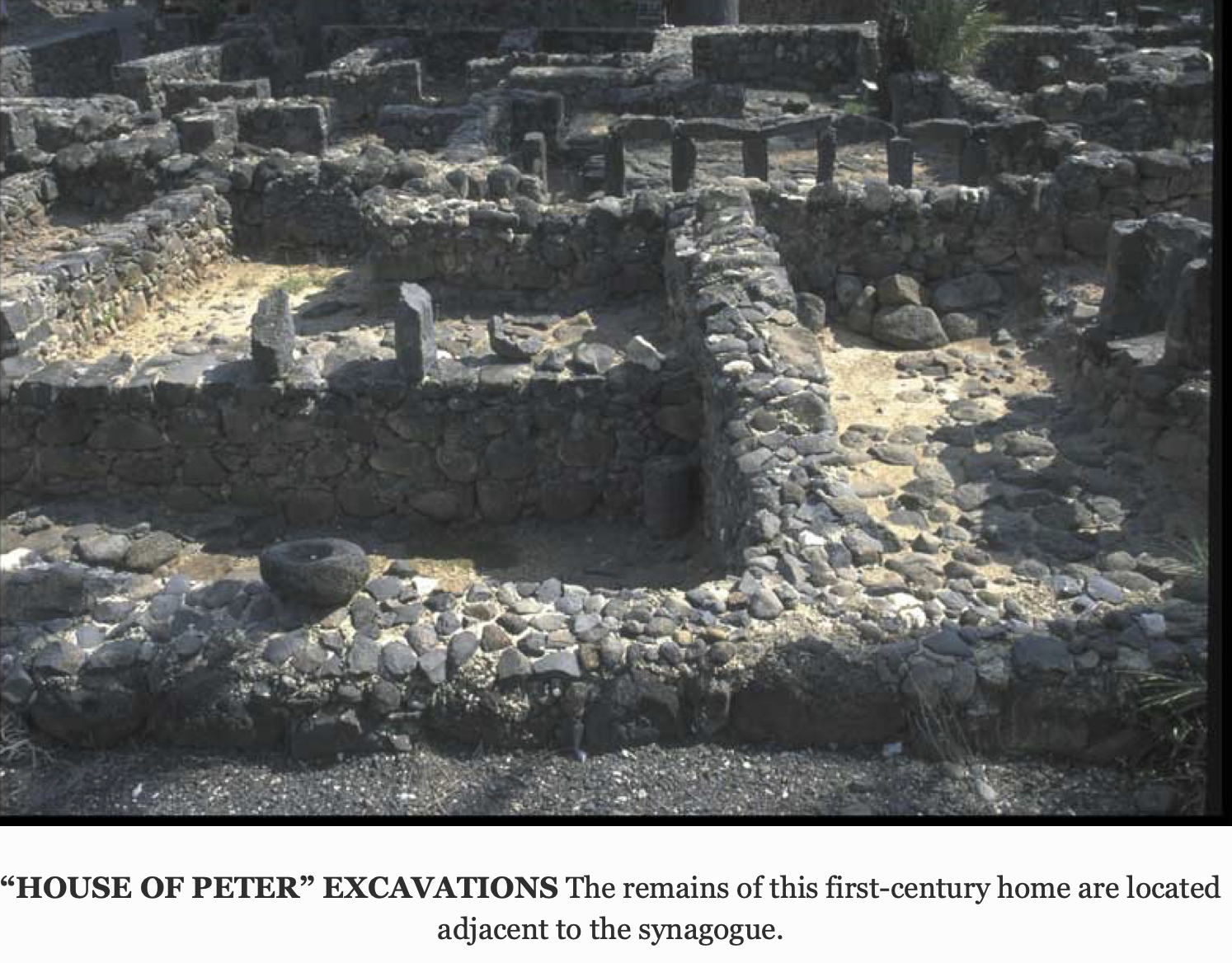
“The next day,” i.e., the next time, after the 40-day fast and the devil’s temptations, Jesus again comes to John at Jordan. Upon seeing Him, John announces to everyone: “Behold! The Lamb of God Who takes away the sin of the world!” (John 1:29); confirming that this is the One Who baptises with the Holy Spirit, the Son of God.
The following day, after the personal testimony of the arrived Messiah, the Son of God that had taken all the sins of the world upon Himself, John was once again standing on the bank of the river Jordan with two of his followers, while Jesus was passing by the bank. Seeing the Lord, John again repeats the same words about Him: “Behold! The Lamb of God”. In calling Christ the Lamb, John relates to Him the wonderful prophecy of Isaiah where he presents Messiah as a sheep led to slaughter — a mute lamb before his shearers (Isaiah 53:7). Consequently, the basic thought of John’s testimony lies in that Christ is the sacrifice, brought by God for people’s sins.
After hearing this testimony on Jesus’s Divinity, this time both of John’s disciples accompanied Him to where He lived, and stayed with Him from the 9th hour (or, in our terms since 4 o’clock in the afternoon) till late evening, listening to His speech, which increasingly was instilling in them the unshakeable belief that He is the Messiah. One of the disciples was Andrew, and the other — Evangelist John himself, who never mentioned himself in the narration about those events, in which he personally participated. Returning home after conversing with the Lord, Andrew was the first to announce that he and John had found the Messiah; he informs his brother Simon: “We have found the Messiah (which is translated, the Christ)”. Thus, Andrew was not only the First-Called disciple of Christ, how they are used to call him, but he was also the first of the Apostles to preach about Him and to convert and bring the future leader of the Apostles. When Andrew brought his brother to Christ, the Lord, looking at him with a trying glance, called him Cephas, meaning “a rock,” i.e., Petros in Greek, or — Peter.
The following day, after Andrew and John’s visit, Jesus wished to go to Galilee and summoned Philip to follow Him. Philip, locating his friend Nathanael, tried to invite him as well, saying: “We have found Him of Whom Moses in the law, and also the prophets, wrote — Jesus of Nazareth, the son of Joseph”. However, Nathanael objected: “Can anything good come out of Nazareth?” Apparently, Nathanael shared the common opinion of many Jews, the prejudice that Christ, as a King with earthly greatness, will come and appear in glory among the higher echelons of Jewish society; apart from this, at that time, Galilee was held in bad repute among the Jews, and Nazareth, this small town that is not mentioned anywhere in the holy writings of the Old Testament, seemed in no way to be the birthplace of the Messiah, Who had been promised by the Prophets. Nevertheless, Philip did not see the need to refute his friend’s prejudice and offered him to be convinced in the genuineness of his words, saying: “Come and see”.
Being a forthright and sincere person, and wishing to investigate the veracity of his friend’s words, Nathanael went to Christ. The Lord testified of the simplicity and artlessness of his soul, and declared: “Behold, an Israelite indeed, in whom is no deceit!” Nathanael expressed surprise, where the Lord knew him from, seeing him for the first time. So, to totally disperse Nathanael’s doubts and draw him towards Himself, Christ reveals His Divine omniscience by hinting at a private circumstance in Nathanael’s life, the meaning of which could only be known to no one but Nathanael: “Before Philip called you, when you were under the fig tree, I saw you”.
Whatever Nathanael was doing under the fig tree is unknown to us, but as we can see, there is a hidden mystery in this event, about which besides Nathanael only God could know. This revelation startled Nathanael so much that all his doubts about Jesus dispersed in a moment: he realized that standing before him was not an ordinary human, but the One gifted with a Divine omniscience, and he instantly believed in Jesus as the Divine Messenger - Messiah, expressing this with the words filled with fervent faith: “You are the Son of God. You are the King of Israel”. There is a premise that Nathanael was in the habit of performing his established prayer rites under the fig tree and, apparently, at that particular time, he probably experienced the peculiar anguish during the prayer, which clearly lodged itself in his memory and about which none of the people knew about. This is most likely why the Lord’s words aroused such fervent faith in Him as in the Son of God, to Whom the states of the human soul are opened.
To Nathanael’s exclamation, the Lord addresses not only to him alone, but to all His followers, predicting: “Most assuredly, I say to you, hereafter you shall see heaven open, and the Angels of God ascending and descending upon the Son of Man”. With these words the Lord is saying that His disciples will see His glory with their spiritual eyes, that the ancient prophesy of heaven connection with earth by a mysterious ladder, which the Old Testament Patriarch Jacob foresaw, is fulfilled (Gen. 28:11-17), through the incarnation of the Son of God, Who had now become “Son of Man”. The Lord often calls Himself with this name; there are 80 cases of this in the Gospel. Through this, Christ positively and irrefutably confirms His human nature, and also underlines that He is the Human in the highest meaning of the word: the ideal, universal and absolute Person, the Second Adam, the primal father of the new mankind, regenerated through His sufferings on the cross. This way, the similar name comes in no way to denigrate Christ, but expresses His superiority above the general level, indicating in Him the accomplished ideal of human nature, i.e., of such a man, which is necessary for Him to be in accordance with the thoughts of His Maker and His Creator — God.
The First Miracle at the Wedding at Cana of Galilee. (John 2:1-12).
Only one Evangelist — John, narrates about the first miracle, made by Jesus Christ (turning water into wine at a wedding or “marriage,” at Cana in Galilee. This occurred on the third day of His departure with Philip and Nathaniel to Galilee. Cana was a small town, located about 2-3 hours of walking towards the north of Nazareth and was called Galilean, unlike the other one — situated close to the city of Tyre. Nathaniel was a native of Galilean Cana.
By the custom of hospitality, Jesus was invited there as an ordinary person, like an acquaintance. His Mother was there already, having presumably arrived there earlier. The family that was celebrating the wedding was not rich, that was why, during the celebrations, they found out the lack of wine. The Ever- Holy Virgin took an active part in this circumstance, which threatened to spoil the innocent delight of the family’s jubilation. Her soul, filled with grace, manifested the first example of Her consideration and intercession for people before Her Divine Son. “They have no wine,” — She says to Her Son, undoubtedly counting on His miraculous help to these poor people. “Woman, what does your concern have to do with Me?” In the word “woman” one should not see even a shade of disrespect — this form of addressing was usual in the East. During the hardest moments of His sufferings on the cross, the Lord likewise addresses His Mother, entrusting the care of Her to His beloved Disciple (John 19:26). “My hour has not yet come” — says the Lord. More likely, Christ meant, that not all the wine that had been saved for the wedding, ran out. In any case, from the further words of His Mother one can see that She did not interpret His response as a refusal. “Whatever He says to you, do it” — She says to the servants.
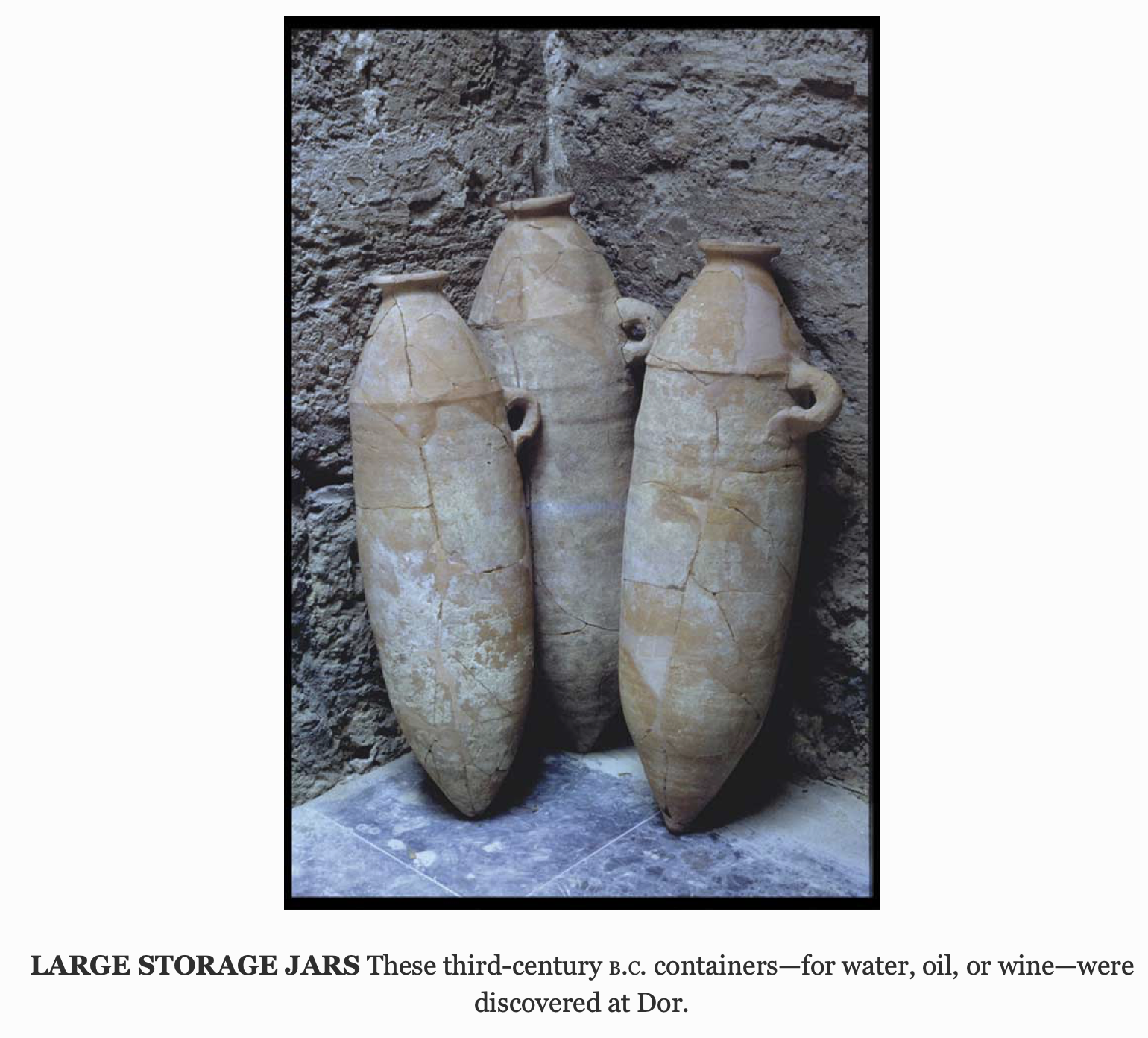
There were 6 stone waterpots, which served for frequent ablutions that were established by the Jewish laws, for example, for washing the hands before meals. The capacity of those waterpots was huge, for a “measure” or “bat” was equal to our measurement of one and a half buckets; therefore, there could be from 18 up to 27 buckets in the total capacity, the more striking was the miracle, made by the Lord.
Jesus directed the servants to fill the waterpots with water, “and they filled them up to the brim”. Jesus further orders them to draw some of it out and present it to master of the feast, so that he would be convinced in the authenticity of the accomplished miracle. Not knowing where the wine came from, the master calls the bridegroom and gives witness through his words to the authenticity of the accomplished miracle, testifying with his words the veracity of the accomplished miracle and even emphasizing that the miraculous wine is of much higher quality than that which they had. From the words “when the guests have well drunk” one should not draw the conclusion that at this wedding, everybody was drunk. The conversation here is about the general custom and not about the specific usage concerning this case. It is well known that the Jews were noted for their moderation in the use of wine, which in Palestine was considered an ordinary drink and was diluted with water. To get drunk was regarded as extremely improper.
The First Pascha. Driving the sellers out of the Temple. (John 2:13-25).
**The First Pascha. **Driving the sellers out of the Temple. (John 2:13-25).
The first three Evangelists do not tell very clearly about the Lord’s stay in Jerusalem, they narrate in detail only about the Pascha, which was on the eve of Christ’s suffering. Only Saint John gives us sufficient detail about the Lord’s every visit of Jerusalem at Pascha during all three years of His public service, as well as His visits to Jerusalem on some other feast days. It was totally natural for the Lord to appear in Jerusalem on the great feast days, because all the spiritual life of the Jewish people was concentrated there, an on those days, people from all over Palestine, as well as from the other countries, gathered there, and it was important for the Lord to reveal Himself as the Messiah exactly there.
Driving the sellers out of the Temple, described by John at the beginning of His Gospel, differs from the same event, described by the other three Evangelists. The first event occurred at the beginning of Christ’s public service, while the last one (which in reality could be several) took place at the end of His public service, before the 4th Pascha.
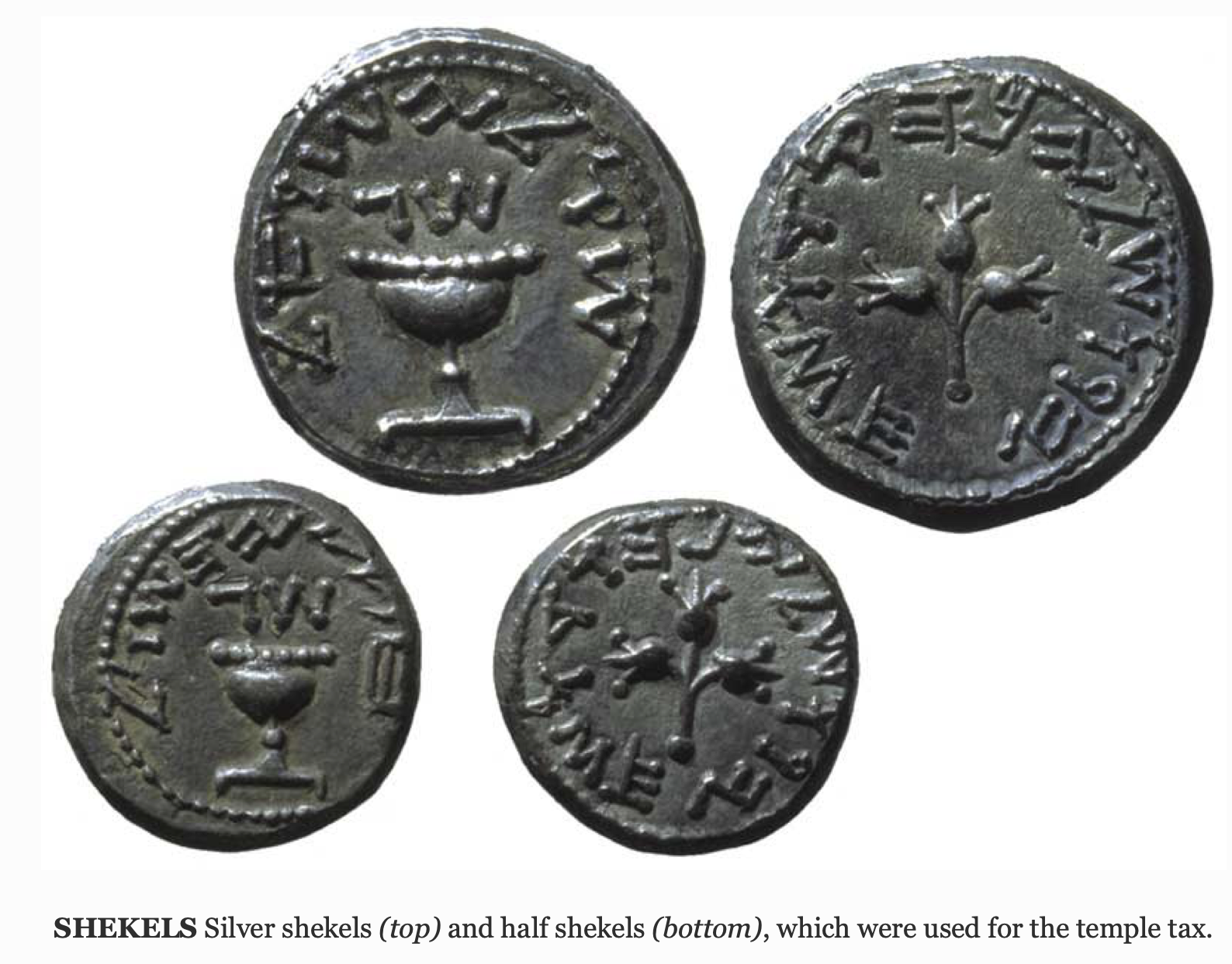
As it can be seen further, the Lord in the company of His Disciples traveled from Capernaum to Jerusalem, but this time, it was not simply because of the obligations to the law, but in order to render the will of His Sender, to continue the Messianic service that had commenced in Galilee. At the feast day of Passover, up to two million Jews gathered in Jerusalem, who were obliged to kill the Paschal lambs and bring the sacrifice to God in the Temple. According to the testimony of Joseph Flavius, in the year 63 AD, on the day of the Jewish Passover, some 256,500 lambs were given to the priests for slaying, not counting minor livestock and birds. For the sake of ease in selling such a large number of animals, the Jews converted the so called area of “courtyard of the heathen” into a market-place: they gathered the sacrificial animals, placed cages with birds, erected shop-fronts for the sale of everything, necessary for sacrificial offerings and set up money-exchange centers. At the time, the official money in circulation was in Roman coins, while the law demanded that contributions to the temple were in Jewish shekels. The Jews arriving for Passover had to change their money, and this exchange brought great profit to the moneychangers. Striving for the maximum profit, the Jews were selling in the temple’s courtyard the other items, which had nothing to do with sacrificial offerings, for example, oxen. The high priests themselves took part in breeding doves for their sale at high prices.
The Lord, having made a whip out of ropes, which were apparently used to restrain the animals, drove the lambs and oxen out of the temple, overturned the money-changers’ tables, scattering their coin, and walking up to those who sold doves, said: “Take these things away! Do not make My Father’s house a house of merchandise!” Thus, for the first time, calling God His Father, Jesus declared Himself publicly as the Son of God. Nobody had the audacity to oppose the Divine authority of the act, because apparently John’s witness of Him as of the Messiah had already reached Jerusalem, and it might be that the traders’ consciences woke. Only when He reached the doves (thereby affecting the self-interests of the high priests), He received a query: “What sign do you show to us, since you do these things?” Jesus answered to that: “Destroy this temple, and in three days I will raise it up”.
Furthermore, as the Evangelist explains further, what Christ meant was the “temple of His Body”, i.e., what He wanted to say with this to the Jews was: You are asking for a sign from Me — it will be given to you, but only not now: when you destroy the temple of My Body, I shall raise it up in three days and this should serve as a sign of that authority, with which I am doing this.
The high priests did not understand that with those words, Jesus predicted His Own death, destruction of His body and His resurrection from the dead on the third day. They took His words regarding the temple literally, relating them to the Jerusalem temple, and attempted to provoke the people against Him.
John the Baptist and his testimony about our Lord Jesus Christ. (Matt.
3:1-12; Mark 1:1-8; Luke 3:1-18; John 1:15-31)
The Baptism of the Lord Jesus Christ. (Matt. 3:13-18; Mark 1:9-11; Luke
3:21-22; John 1:32-34). The Forty-Day Fast and Tempting by the devil. (Matt. 4:1-11; Mark 1:12-13; Luke 4:1-13).
What was the sense of this devil’s temptation of the Lord?
The First Disciples of Christ. (John 1:35-51). The First Miracle at the
Wedding at Cana of Galilee. (John 2:1-12).
The First Disciples of Christ. (John 1:35-51).
The First Pascha. Driving the sellers out of the Temple. (John 2:13-25).
Related Concepts
- baptism-of-the-lord
- barren-fig-tree
- cana
- christ-the-judge
- christian-baptism
- coming-to-oneself
- danielic-imagery
- daniels-prophecy
- devil
- divine-judgment
- divine-sonship
- divinity-of-christ
- example
- exorcism
- forgiveness-of-sins
- freedom
- genesis-28
- holy-spirit
- holy-spirit-and-fire
- human-nature
- human-nature-of-christ
- isaiah-53
- isaiahs-prophecy
- jacobs-ladder
- jewish-privilege
- john-1836
- judgment
- malachis-messenger-of-the-lord
- marian-feasts
- mark-1462
- messiah
- messianic-authority
- moral-action
- moral-theology
- nathanael
- nazareth
- obedience
- old-testament-prophecy
- paschal-lamb
- passion-prediction
- pharisaism
- remission-of-sins
- resurrection
- revelation
- russian-liturgical-reception
- scripture-as-weapon
- second-adam
- service
- sign
- sonship
- spiritual-kingdom
- symbol
- teaching-with-authority
- temple
- temple-cleansing
- temptation
- true-abrahamic-sonship