New Testament — Topic 3
The Coming into the World of Our Lord Jesus Christ.
- The Gospels’ preface: Their authenticity and purpose. (Luke 1:1-4, John 20:31). The Pre-Eternal Birth and the Incarnation of the Son of God. (John 1:1-14).
- The conception of Christ’s Forerunner, John. (Luke 1:1-25).
- The Annunciation to the Holy Virgin Mary. (Luke 1:26-38). The meeting of the Holy Virgin Mary with Elizabeth. (Luke 1:39-56).
- The Birth of Saint John the Baptist. (Luke 1:57-80). The Earthly Lineage of the Lord Jesus Christ. (Matthew 1:1-17 and Luke 3:23-38).
- The Nativity of Christ.
- The Flight into Egypt and the Slaying of the Infants. (Matt. 2:13-23). Jesus Christ’s adolescence. (Luke 2:40-52).
The Annunciation to the Holy Virgin Mary. (Luke 1:26-38). The meeting of
the Holy Virgin Mary with Elizabeth. (Luke 1:39-56).
The Annunciation to the Holy Virgin Mary. (Luke 1:26-38).
In the sixth month after John the Baptist’s conception, the Angel Gabriel was sent to the small town of Nazareth, situated in the Zebulun area of the southern part of Galilee, “to a Virgin betrothed to a man whose name was Joseph, of the house of David. The Virgin’s name was Mary.” The Evangelist doesn’t say: “Virgin, Who was married,” but “betrothed to a man.” This means that formally and in the eyes of society, the Blessed Virgin Mary was regarded as Joseph’s wife, even though in reality, She was not.
Having lost Her parents at an early age, the Blessed Virgin Mary was consecrated to serving in the temple. When She turned fourteen, She was not allowed (according to the law) to remain at the temple, and was unable to return to Her parents. Following tradition, She was obliged to marry. Knowing that She made a promise to remain a virgin, the high priests and priests did not want to leave Her without a guardian, so they betrothed Her to Her relative, an eighty year old carpenter named Joseph, who was renowned for his righteousness and who also had an extensive family from his first marriage (Matthew 13:55).
In appearing to Her, the Angel called Her “full of grace,” i.e., having found favor with God (see verse 30) — God’s special love and benevolence, His help that is essential for holy and great deeds. The words of the Angel bewildered Mary by their extraordinary nature, and She commenced to ponder over them. Having calmed Her, the Angel foretells the birth of a Son from Her, Who will be great not like John, but much greater because He will not simply be full of God’s blessed gifts as John, but He Himself will be the Son of the Almighty. Why is the Angel saying that the Lord will give Him the throne of His father David and He will reign over the house of Jacob? Because the Jewish kingdom in the Old Testament was predetermined to prepare people for a spiritual, eternal Kingdom of Christ and to slowly transfigure into it. Consequently, David’s kingdom as such is one in which God Himself placed kings, which was ruled according to God’s laws, in which all forms of civil life was permeated with the idea of serving God, which was found in an uninterrupted link with the New Testament Kingdom of God.
Mary’s question, “How can this be, since I do not know a man?” — would have been completely incomprehensible and would have made no sense, if She hadn’t given a promise to God, to remain a Virgin forever. The Angel explained that Her promise would not be violated, as She will give birth to a Son without a husband, by extraordinary means. The Holy Spirit, “the power of the Almighty,” will bring about this seedless conception; i.e., the Son of God Himself (see 1 Corinthians 1:24) will overshadow Her, will enter Her like a cloud akin to that which overshadowed the tabernacle, as expressed by Isaiah (19:1), “upon a swift cloud.” While the Blessed Virgin did not demand any proof, the Angel himself in confirmation of the authenticity of his words pointed to Elizabeth, who had conceived a son in her old age by the will of God, to Whom nothing is impossible. The Holy Virgin knew through the books of the prophets that not only glory awaits Her and Her Divine Son, but also grief. Nevertheless, completely obedient to God’s will, She replied: “Behold the Virgin servant of the Lord! Let it be to Me according to your word.”
Having accepted the glad tidings, the Blessed Virgin said nothing to Joseph, and as St. John Chrysostom explains, She was justly afraid that he may not believe Her and think that through Her warning, She is trying to hide a transgression.
The meeting of the Holy Virgin Mary with Elizabeth. (Luke 1:39-56).
The Holy Virgin hurries to share Her joy with Her relative Elizabeth, who, presumably, lived in Judea in a town named Juttah, situated close to the sacred city of Hebron. Elizabeth greeted Her with the same extraordinary words that were uttered by the Angel: “Blessed are You among women” — and added: “And blessed is the fruit of your womb!” — Although, as Her relative, she should have known about the promise given by Mary to remain chaste. Following this, Elizabeth exclaimed: “But why is this granted to me, that the Mother of my Lord should come to me?” Elizabeth immediately explains the meaning of her words, in that the child she was carrying “leaped in the womb” no sooner than she heard Mary’s greeting. Undoubtedly, under the infusion of the Holy Spirit, the child in Elizabeth’s womb sensed the other Child — He, before Whose arrival into the world, humanity would have to be prepared by him. That’s why he produced such an unusual movement in his mother’s womb.
From Elizabeth’s words, the Blessed Virgin Mary understood that the mystery revealed to Elizabeth was from God Himself. Amid feelings of rapture and emotions at the thought that the time for the long-awaited Messiah and the liberation of Israel has arrived, the Holy Virgin praised God with a marvelous song. This song is now constantly sung in Her honor during matins: “My soul doth magnify the Lord, and My spirit hath rejoiced in God My Saviour …” She wards off any thoughts of personal worthiness and praises God because He has been attentive to Her humility. In a prophetic prescience, She foretells that for this mercy from God, She will be glorified by all generations and that this mercy of God will be extended to all that are fearful of the Lord. She subsequently praises God that the promise given to the Fathers and to Abraham has been fulfilled and that the Kingdom of the Messiah, anticipated so much by the Israelites, has come— that His humble followers, despised by the world, will soon triumph, be uplifted and filled with goodness, while the proud and powerful will be disgraced and vanquished. It’s apparent that the Holy Virgin, not having waited for the Forerunner’s birth, returned home.
The Birth of Saint John the Baptist. (Luke 1:57-80). The Earthly Lineage of
the Lord Jesus Christ. (Matthew 1:1-17 and Luke 3:23-38).
The Birth of Saint John the Baptist. (Luke 1:57-80).
When the time had arrived for Elizabeth to give birth, relatives and neighbors joined in the joy which overtook her, and on the eighth day they gathered at her house so as to perform the rite of circumcision, established at the time of Abraham (Genesis 17:11-14) and demanded by the law (Leviticus 12:3). Through this ritual, the newborn entered the society of the chosen people. Consequently, the day of circumcision was regarded as a joyful family holiday. With circumcision, the infant was given a name, usually in honor of some senior relative. Consequently, the mother’s wish to name her son John would have aroused general consternation. Obviously, the Evangelist underscores this situation because it is quite miraculous: Elizabeth’s desire to call her son John was the result of the inspiration of the Holy Spirit. They turned to the father for his decision. As he was still mute, he wrote on a piece of flat wood, covered with wax: “His name is John.” Everyone was completely taken aback by the concordance of both parents’ wishes to give their son a name that did not exist among their relatives. And immediately, according to the Angel’s prediction, Zacharia’s tongue was freed and he could speak. In a state of prophetic inspiration and by now foreseeing the approach of the Messiah’s Kingdom, he began to exalt God Who visited His people and made possible their salvation, He Who “had raised the horn of salvation in the house of David.” Just as in the Old Testament, when offenders fled from their avengers to the altar for burning sacrifices and, seizing its horns, regarded themselves as inviolable (1 Kings 2:28), so does the whole human race, oppressed by sins and persecuted by God’s righteous judgment, find salvation in Jesus Christ.
This salvation is not so much liberation of Israel from its political enemies (as the majority of Jews believed, especially the scribes and Pharisees) as it is the fulfillment of God’s law, given to their Old Testament forefathers, fulfillment that would give all faithful Israelites an opportunity to serve God “in holiness and in righteousness.” Here the word “righteousness” is understood to mean the justification of humanity by Divine means, through the imputation to man of Christ’s redeeming accomplishments. “Holiness” here is the internal correction of a person that is achieved by the effort of the person himself with the assistance of grace. Zacharias goes on to foretell to his son the future that was predicted by the Angel, saying that his son will be designated the Almighty’s Prophet — Forerunner of the Divine Messiah. He also points out that the purpose of the Forerunner’s ministry is to prepare the people for the Messiah’s coming and to allow the people of Israel to realize that its salvation lies in none other than the forgiveness of sins. Consequently, Israel must seek righteousness and forgiveness of sins and not earthly greatness, which the then spiritual leaders were hoping for. The forgiveness of sins will come “through the tender mercy of our God, with which the Dayspring from on high has visited us.” — that is the Messiah-Redeemer, by which name the prophets Jeremiah (25:5) and Zechariah (3:8 and 6:12) called Him.
The Earthly Lineage of the Lord Jesus Christ. (Matthew 1:1-17 and Luke 3:23-38).
The lists of the earthly ancestors of the Lord Jesus Christ are contained in two Gospels — Matthew and Luke. Although both give witness of Christ’s origin from David and Abraham, the names listed in the two do not always coincide. As St. Matthew was writing for the Jews, it was important for him to prove that in accordance with the Old Testament prophecies, the Lord Jesus Christ did descend from Abraham and David. Consequently, he begins his Gospel with the Lord’s lineage and, moreover, takes us from Abraham and brings us to “Joseph the husband of Mary, of Whom was born Jesus Who is called Christ.” Invariably, the question arises: Why does the Gospel gives Joseph’s lineage and not that of the Holy Virgin Mary? The custom of the Jews was not to maintain any genealogy on the mother’s side. However, because the Blessed Virgin was undoubtedly the only child of Joachim and Anna, then in accordance with the demands of the Law of Moses, She had to marry a relative of the same branch, tribe, and clan. As Joseph was from the same tribe as David, it follows that She too was of the same descent.
Saint Luke placed a different task before himself — to show that the Lord Jesus Christ belongs to the whole of humanity and appears as the Savior of all people. That’s why he traces the lineage of Christ to Adam and to God Himself. However, this descent differs somewhat from that of Saint Matthew’s. As an example, according to Matthew, Joseph — the nominal father of our Lord — is the son of Jacob, while according to Luke, he is the son of Elias. Similarly, Salathiel, the father of Zerubbabel and a man mentioned by both Evangelists, is, according to Saint Matthew, the son of Jeconiah, while according to Saint Luke he is the son of Neri. Julius the African, a renowned intellectual of ancient times, explains this variance superbly through the code of living, whereby, if one of the brothers dies childless, the other brother has to take his wife for himself, and “The first child she bears, will remain with his brother’s (deceased) name, so that it is not erased in Israel” (Deuteronomy 25:5-6). This law extended not only to the immediate relatives but also to stepbrothers, who in fact were Jacob and Elias. While they had different fathers, they had the same mother, Esther. Thus, when Elias died, Jacob restored his brother’s lineage by marrying his widow and fathering Joseph. This is where the difference came about, as Saint Luke traces the origins of Joseph through Rhesa, son of Zerubbabel and Elias, while Saint Matthew does it through Abiud, the other son of Zerubbabel, and through Jacob, the other father of Joseph.
It is not by chance that Saint Matthew includes in the Lord’s lineage women that were formerly heathen or sinners. He wanted to show that God, having not disdained including such women in His chosen family, is not loathe to summon the heathen and sinners to His Kingdom: a person is not saved by his personal achievements but through the power of the purifying grace of God.
For details and very interesting information about the genealogy of our Lord
Jesus Christ, see in Rev. John of Damascus: Exposition of the Orthodox Faith:
An Exact Exposition of the Orthodox Faith by St John Damascene - Book
4
The Gospels’ preface: Their authenticity and purpose. (Luke 1:1-4, John
20:31). The Pre-Eternal Birth and the Incarnation of the Son of God. (John 1:1-14).
The Gospels’ preface: Their authenticity and purpose. (Luke 1:1-4, John 20:31).
**
**
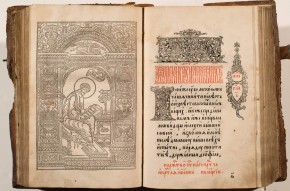
The preface of the four Gospels can be regarded to be the first four verses of the first chapter of Luke, in which the Apostle speaks of the careful research done for everything that he writes and describes the purpose of writing the Gospel: to know the firm basis of the Christian teachings. To this end, the Apostle John the Theologian adds in the 31st paragraph of the 20th chapter of his Gospel “that Jesus is the Christ, the Son of God, and that believing, you may have life in His name.”

As can be seen from St. Luke’s preface, he undertook the writing of his Gospel because by that time there had appeared fairly numerous and similar works but lacking in authority and unsatisfactory in substance. He also regarded it as his responsibility (from his desire to reaffirm in the Faith one “sovereign Theophilus” and, at the same time, all Christians in general) to write an epistle on the life of our Lord Jesus Christ, carefully checking all the data from the words of “eyewitnesses and ministers of the Word.” Undoubtedly he wrote a significant part of his Gospel from the words of eyewitnesses; that is, on the basis of tradition.
The foremost and most important eyewitness to the very early events of the Gospel’s history was surely the Holy Virgin Mary. Saint Luke specifically notes twice that she kept the recollections of all these events, retaining them in her heart (Luke 2:19 and 2:51).
There can be no doubt that the pre-eminence of the Gospel of Luke over other writings that existed before his is found in that he wrote only after a thorough examination of facts and the strict sequence of events. This pre- eminence over other writings is shared by the other three Evangelists, as two of them — Matthew and John — were of Christ’s original twelve disciples (they themselves were eyewitnesses and ministers of the Word) while the third, Mark, wrote from the words of Christ’s closest disciple and an assured eyewitness and close participant in the Gospel’s events — the Apostle Peter.
The purpose given by St. John is seen particularly clearly in his Gospel, which is full of jubilant eyewitness of the Lord Jesus Christ’s divinity. But naturally, the other three Evangelists also have the same goal.
The Pre-Eternal Birth and the Incarnation of the Son of God. (John 1:1-14).
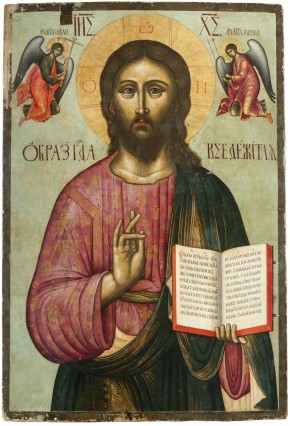
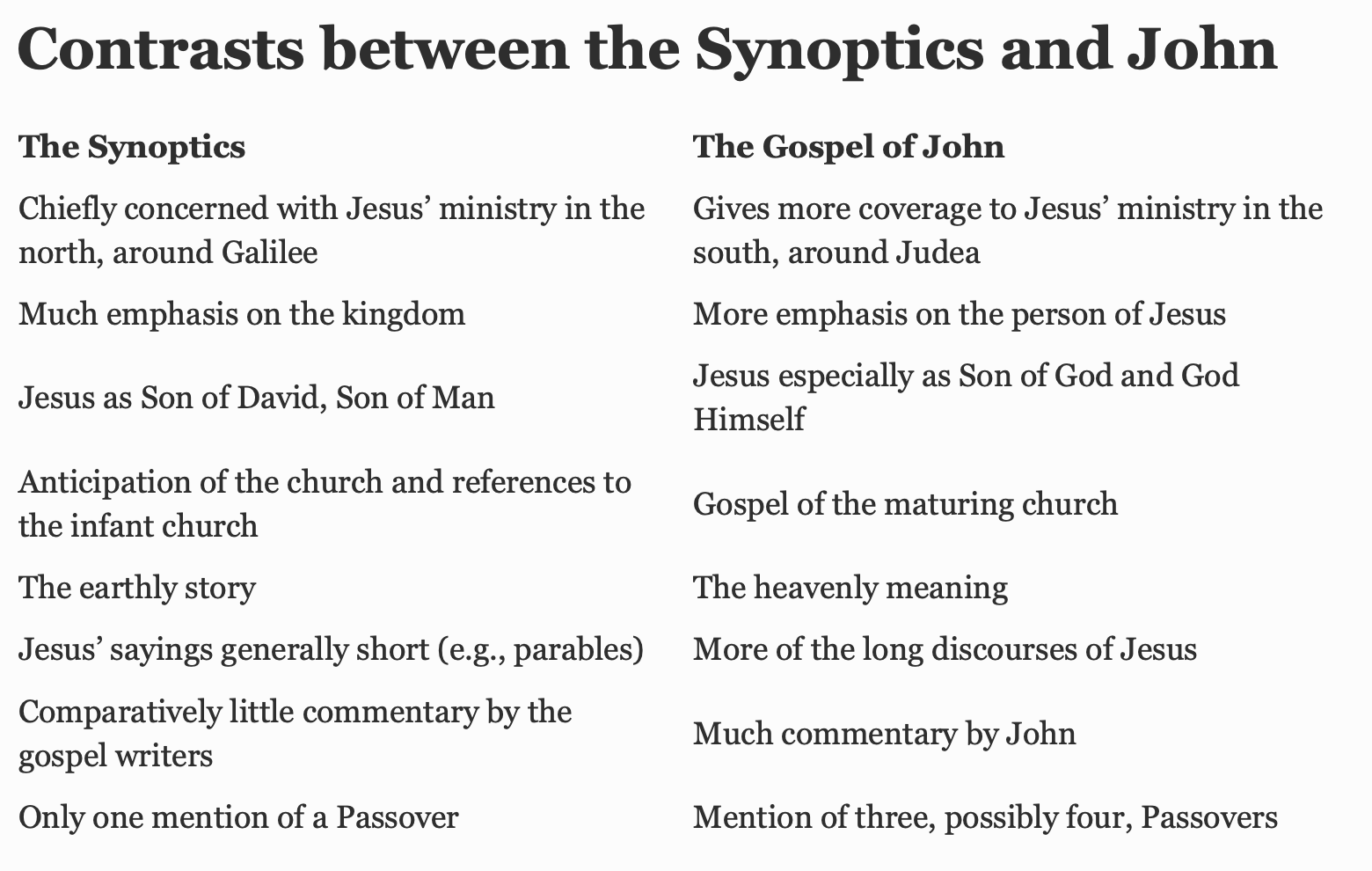
While the Evangelists Matthew and Luke write of the earthly birth of our Lord Jesus Christ, St. John begins his Gospel by expounding the teachings about His pre-eternal birth and His incarnation as the Only Son of God. The first three Evangelists begin their narrations with that event as a consequence of which the Kingdom of Heaven received its beginning in time and space, while Saint John, akin to an eagle, soars to the pre-eternal basis of this Kingdom, observing the eternal existence of Him Who only in “these last days” (Hebrews 1:1) became a human being.
The second person of the Holy Trinity — the Son of God — is named by John as “the Word.” At this point, it is important to note and remember that the Greek word “logos,” unlike the corresponding word in Russian, doesn’t only mean the spoken word but also thought, reason, and wisdom expressed by word. Consequently, the naming of the Son of God as “the Word” means the same as His being named “Wisdom” (see Luke 11:49 and Matthew 23:34). The holy Apostle Paul in 1 Corinthians 1:24 calls Christ “the Wisdom of God.”
Undoubtedly, the teachings about “God’s wisdom” are expressed in the same sense in Acts (see especially the wonderful text of Proverbs 8:22-30).
“In the beginning was the Word” means that the Word is co-eternal with God. What’s more, St. John explains further that with respect to His existence, the Word does not separate from God, and consequently It is of one essence with God, and finally, he directly calls the Word God: “and the Word was God.” Here, the word “God” was applied in Greek without any article, giving rise to the assertion by the Arians and Origen that the Word is not the same God as God the Father. However, this is simply a misunderstanding. In reality, this hides a most profound conception of the distinction of the three countenances of the Holy Trinity. The use of an article in Greek indicates that the dialogue is about the same subject as that just spoken of. So if in saying “the Word was God,” the Apostle had used the same article and said “o Theos” in Greek, the result would have been the incorrect idea that the Word was the same as God the Father, Who had been referred to just before. Consequently, in speaking of the Word, the Evangelist calls Him simply “Theos” indicating by this His Divine quality, but also at the same time underlining that the Word has an independent hypostatic existence and is not identical to the hypostasis of God the Father.
As Blessed Theothylact notes, in revealing to us the teachings on the Son of God, St. John calls Him Word and not Son, “so that we, having heard of the Son, did not think in terms of passion and carnal birth. He called Him the Word, so that you would know that as the word is born from the mind without passion, so is He born from the Father without passion.”
The words “all things were made through Him” are not meant as though the Word was only an instrument in the creation of the world but that the world originated from the Primal Reason and Primal Source of all existence (including the Word Himself) — God the Father, through the Son, Who by Himself is already the source of everything that began to exist (that was made), only not for Himself and not for the other countenances of God.
“In Him was life” — here the meaning of the word life is not to be understood in the ordinary sense but as a spiritual life that induces intelligent creatures to strive toward the cause of their creation, toward God. This spiritual life is obtained through the path of communion and unification with the hypostatic Divine Word. Consequently, the Word is the source of genuine spiritual life for any intelligent being.
“And the life was the light of men” — has in mind that this spiritual life that emanates from the Divine Word enlightens a person with a full and complete guidance.
“And the light shines in the darkness …” The Word that presents light of genuine guidance does not cease to direct them amid sinful darkness, as the light is not absorbed by darkness: Those who persist in sin have preferred to remain in the darkness of spiritual blindness. However, “the darkness did not comprehend it” — did not restrict its activity and dissemination.
Then, in order to join the people who abode in sinful darkness with His Divine light, the Word undertook extraordinary measures: John the Baptist was sent, and, finally, the Word became flesh.
“There was a man sent from God, whose name was John” — “there was” as stated in Greek is “egenetos” (“became”) and not “in” as enunciated about the Word; that is, John “came to being,” was born at a point in time and did not exist eternally like the Word, Who Himself “gives light to every man coming into the world.”
The world did not recognize the Word, even though it was obliged to Him for its existence. “He came to His own,” i.e., to His chosen people of Israel, “and His own did not receive Him” — of course not everybody.
“But as many as received Him” with love and faith, “He gave the right to become children of God.” That is, He gave them the beginning of a new spiritual life, which, like a physical one, also begins through birth — although the birth is not from carnal passion but through a higher power, from God.
“And the Word became flesh.” Here the understanding of the word “flesh” does not mean the human body alone but the whole, complete person — in the same meaning as the word “flesh” is often applied in the Holy Gospels (e.g., Matthew 24:22). That is, the Word became a complete person, at the same time not ceasing to be God. “And dwelt among us … full of grace and truth.” It must be understood that grace means God’s goodness, as the gifts of goodness from God, revealing the access to a new spiritual life for humanity, i.e., gifts of the Holy Spirit. The Word that dwells among us was also filled with the Truth — complete guidance in everything that concerns the spiritual word and spiritual life.
“And we beheld His glory, the glory as of the only begotten of the Father.” The Apostles actually saw His glory in the Transfiguration, Resurrection, and Ascension to Heaven — glory in His Teachings, miracles, works of love, and voluntary self-abasement. He is — the “only Son of the Father,” for only He alone is the Son of God in essence, by His Divine nature. These words point to His immense superiority over God’s sons and children through grace, the faithful that are mentioned above.
The conception of Christ’s Forerunner, John. (Luke 1:1-25).
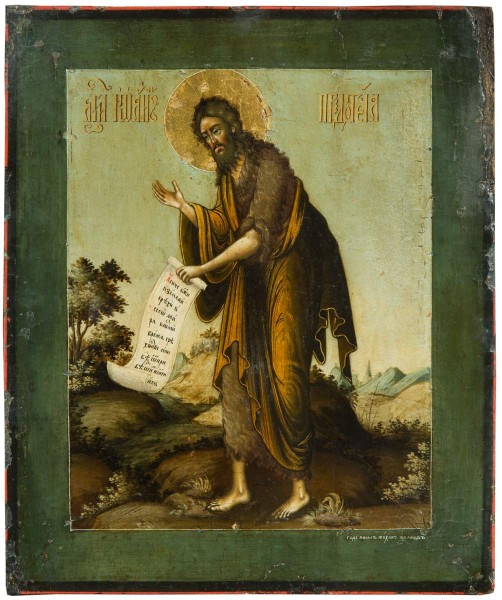
This section tells of the appearance of God’s Angel to the priest Zacharias during a service in the temple. The Angel foretells the conception and birth of a son to Zacharias and his wife, Elizabeth, who is to be called John and who will be great in the sight of the Lord, and speaks of Zachariah’s punishment, in the form of muteness, for his disbelief.
King Herod (mentioned here) was by birth an Idumean (an Edomite), son of the Antipater who, at the time of Hyrcanus, last in the dynasty of the Maccabees, had authority over Judea. Herod received his title of king from Rome. Although he was even a proselyte, the Judeans did not regard him as one of their own, and his rule was such that “the scepter shall not depart from Judah,” after which the Messiah should appear (see the prophecy of Genesis 49:10).
The priests were divided into twenty-four divisions, among which Abijah headed one. Zacharias belonged to this division. Elizabeth also came from an ecclesiastical background. While they both were outstanding in their genuine righteousness, they were without children. This was regarded by the Judeans as God’s punishment for sinning. Every week, a divine service was conducted in the temple by each division (twice a year). With that, the priests allocated responsibilities among themselves by casting lots. Zacharias’ lot was to perform the censing of the temple. That’s why he entered the second part of Jerusalem’s temple — called the Holiest of the Holy or the sanctuary — where the incensory altar was located. At the same time, all the people were praying in a specially designated open area, a courtyard, of the temple. Having entered the sanctuary, Zacharias observed an Angel, and a great fear gripped him because according to Jewish understanding the appearance of an Angel foretold of impending death. The Angel calmed Zacharias, telling him that his prayer was answered and that his wife will bear him a son who will be “great in the sight of the Lord.” It is difficult to suppose that Zacharias with his righteousness, being old and at such a solemn moment of the religious service, would have been praying for a son. Apparently, as one of the finest people of that time, he prayed to God for a swift coming of the Kingdom of the Messiah — and it is precisely this prayer that the Angel said was answered. And here his prayer received its high reward: not only is his sorrowful infertility resolved, but also his son will be the Forerunner of the Messiah, whose coming he had waited for so intensely. His son will surpass everyone in his extraordinary, strict abstinence and from birth will be filled with particular, blessed gifts of the Holy Spirit. The son is faced with the task of preparing the Judean people for the coming of the Messiah, which he does with sermons on repentance and the reformation of their lives. He diverted toward God many sons of Israel who honored Jehovah formally but had distanced their hearts and lifestyles away from Him. To accomplish this, John will be given the spirit and strength of the prophet Elijah, to whom he will be likened by his fiery zeal, strictly ascetic life, sermons on repentance, and exposure of iniquities. He will have to call the Judeans from the abyss of their moral decline, returning into the hearts of parents the love for children, and to confirm thoughts of the righteous in the minds of those resisting the right hand of God.
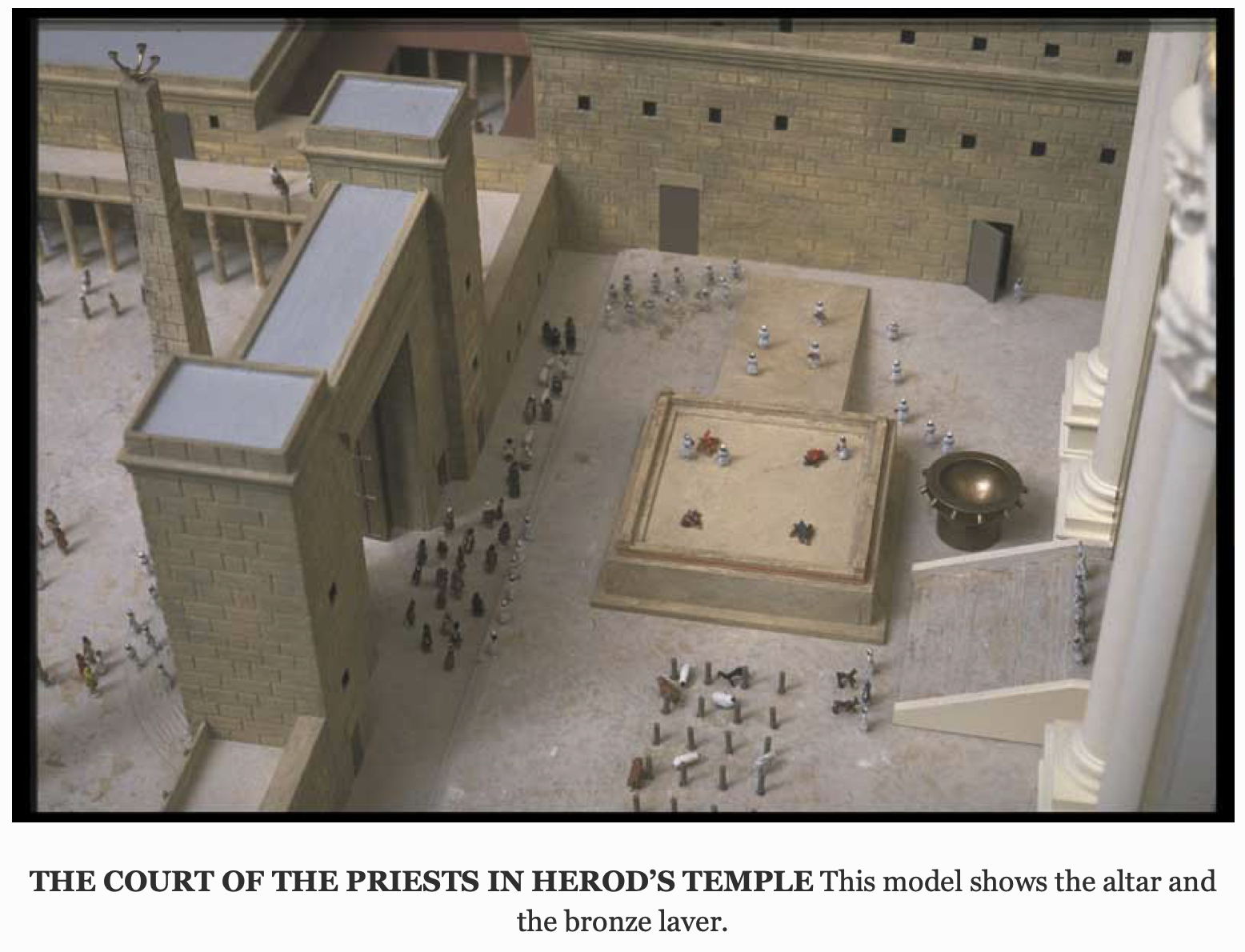
As he and his wife were too old to hope for an offspring, Zacharias did not believe the Angel and asked him for a sign as proof of the authenticity of his words. In order to dispel Zacharias’ doubts, the Angel enunciates his name: he is Gabriel, which means God’s power, the same that brought the good tidings of the time of the Messiah’s coming to the prophet Daniel, having indicated the time with “sevens” (Daniel 9:21-27). For his disbelief, the Angel inflicts him with muteness and apparently at the same time with deafness, as all future communications with him are with signs. Normally, censing continues for a short period so that the people started to wonder: why is Zacharias lingering in the sanctuary? However, no sooner had Zacharias appeared and begun to gesticulate, that the people realized that he had a vision. It is remarkable that Zacharias did not cease but continued to fulfill his turn at serving at the temple — right up to the end. After he returned home, his wife Elizabeth did indeed conceived a son. For five months she hid this from fear of disbelief and ridicule from the public, while her soul rejoiced and thanked God for lifting the denouncements of her.
The Annunciation to the Holy Virgin Mary. (Luke 1:26-38). The meeting of
the Holy Virgin Mary with Elizabeth. (Luke 1:39-56).
The Birth of Saint John the Baptist. (Luke 1:57-80). The Earthly Lineage of
the Lord Jesus Christ. (Matthew 1:1-17 and Luke 3:23-38).
The Birth of Saint John the Baptist. (Luke 1:57-80).
The Nativity of Christ.
The Nativity of Christ.
The Revelation of the mystery of the incarnation to the betrothed Joseph. (Matthew 1:18-25).
Saint Matthew informs us that soon after the Holy Virgin’s betrothal with eighty-year-old Joseph, “before they came together,” i.e., before the consummation of their marriage, Mary’s condition of being with child became clear to Joseph. Being righteous (and this means just and merciful), Joseph did not wish to expose Her seeming transgression before the public, so as not to subject Her to the shameful and agonizing death called for by the law of Moses (Deuteronomy 22:23-24), and intended to release Her without announcing the reason. As soon as he thought this, the Lord’s Angel appeared to him and explained “that which is conceived in Her is of the Holy Spirit” and not the fruit of a clandestine sin. The Angel further announces: “And She will bring forth a Son, and you shall call His name Jesus, for He will save His people from their sins.” The name Jesus, Joshua in Hebrew, means Savior. So that Joseph has no doubts about the veracity of what was said, the Angel quotes Isaiah’s prophecy that witnesses to the fact that this great miracle of the seedless conception and birth of the Savior of the world by the Blessed Virgin was preordained in God’s pre-eternal counsel: “Behold, a Virgin shall conceive, and bear a Son …” (Isaiah 7:14). There is no need to imagine that the prophecy had not been fulfilled because the prophet had said “and shall call His name Immanuel,” whereas the Newborn was named Jesus. Immanuel is not a personalized name but a symbolic one meaning “God is with us.” So when this miraculous birth from a Virgin takes place, people will say “God is with us” because it is in this identity God came down to earth and lived among mankind. This is only a prophetic indication of Christ’s Divinity — indication that this extraordinary infant will not be an ordinary person, but God. Convinced by the Angel’s words, Joseph “took to him his wife,” that is, rejected his intention to send Her away and left Her to live in his house as a wife “and did not know Her till She had brought forth Her Firstborn Son.” This does not mean that he “knew” Her after the birth of Jesus and began living with Her as a wife. Saint John Chrysostom rightly notes that it is simply not credible to submit that such a righteous individual as Joseph would decide to “know” the Holy Virgin after She had so miraculously become a mother. While in Greek the word “zos” and in Church Slavonic “dondezhe`” mean “until” this cannot be interpreted in the way that those who do not honor the Holy Virgin do — Protestants and sectarians — as though Joseph did not “know” Her before Christ’s birth and then he did. He absolutely never “knew” Her. In the Holy Scriptures the word “zos” is used in the narration on the concluding stages of the Flood: “And he sent forth a raven, and it went forth to and fro, until (“zos”) the waters were dried up” (Genesis 8:6) — but the raven never did return afterwards. Or again, in the words of our Lord: “I am with you always, even to (“zos”) the end of the age” (Matthew 28:20). As the Blessed Theothilact rightly observed, this doesn’t mean that Christ would not be with us after the end of the age. Definitely not, as it is especially then that He would be with us! Jesus is named “Firstborn” not because the Blessed Virgin had other children after Him but because He was born first, and, being that, was her only child. In the Old Testament, God decrees that “all the firstborn” are to be consecrated to Him, irrespective of whether the family will have further additions or not. And if the Gospel mentions “brothers of Jesus Christ” (Matthew 13:55, John 2:12, and others), it certainly doesn’t mean that they were His brothers by birth. As tradition witnesses, Joseph’s children were from his first marriage.
The Circumstances and Time of the Nativity of Christ. (Luke 2:1-20).
**
**
The most detailed narrative of the circumstances of the Nativity of Christ and of those times is provided by the Evangelist Luke. He refers the events of Christ’s birth to the time at which Caesar Augustus decreed a census of all citizens of the Roman Empire, the reign of the Roman Emperor Octavius, who received from the Roman Senate the title “Augustus” — “honorable.” Unfortunately, the exact date of this census was not preserved. However, the time of Octavius Augustus’s rule, a personality historically well known, gives us an opportunity to approximate the year of Christ’s Birth. With the aid of other facts, which we shall mention later, it is possible to determine this with a degree of accuracy — within a few years. A Roman monk Dionysius, named “the Small” introduced the accepted method of calculating the years “after Christ.” As the basis of his calculations, Dionysius estimated that the Lord Jesus Christ was born in the 754th year from the establishment of the city of Rome. However, further and more thorough calculations proved his computations flawed: the year he had nominated was at least five years later than the actual date. Nevertheless, from the tenth century, the application of this Dionysian period of time (which was originally intended for Church use only) was wide-spread among Christian countries and accepted by civil authorities, even though it was acknowledged as being flawed by all chronologists. The actual date of Christ’s birth can be determined accurately on the basis of the following facts found in the Gospel:
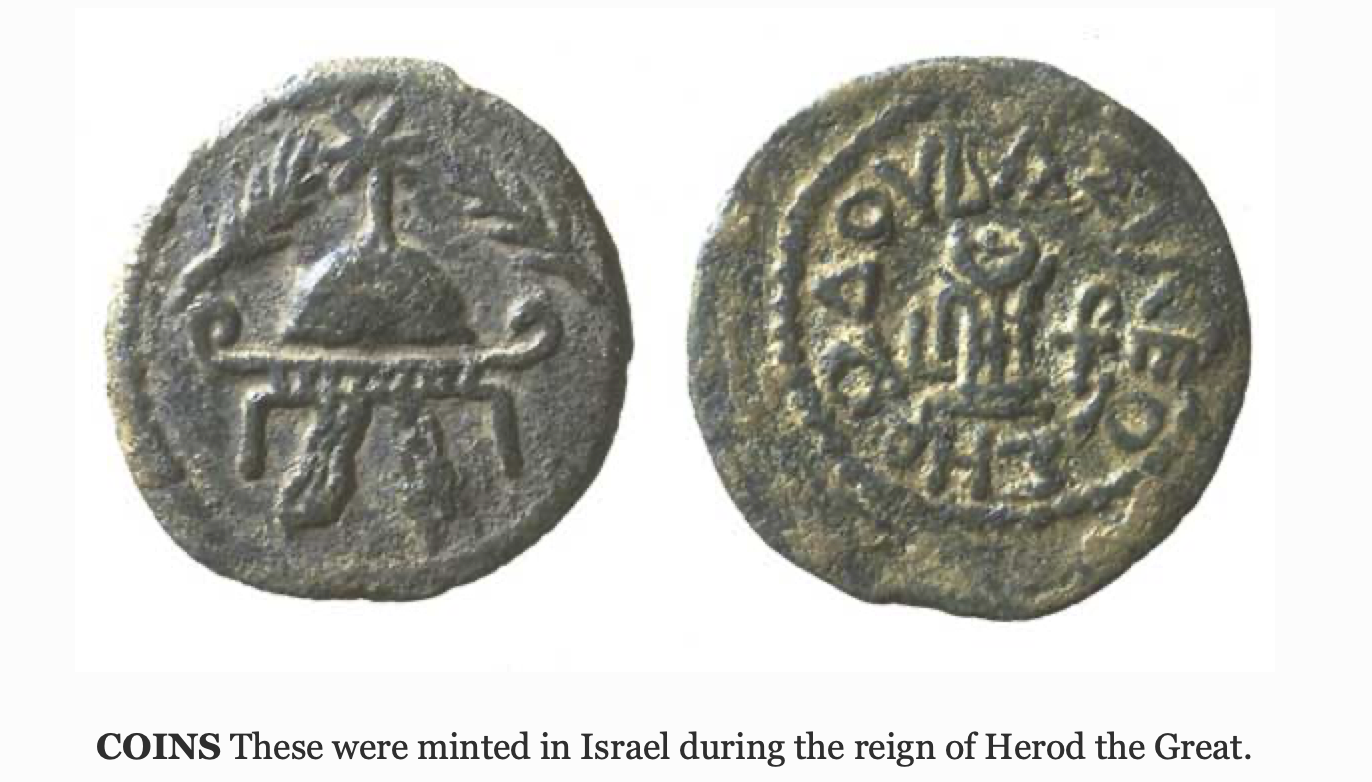
The time of the reign of Herod the Great. From Matthew 2:1-18 and Luke 1:5, it is absolutely clear that Christ was born when Herod was in power. He ruled from the 714th year of the establishment of the city of Rome and died in the 750th, eight days before Passover (Pascha) and soon after the lunar eclipse. According to astronomers’ calculations, the eclipse occurred on the night of the 13th or 14th of March, while the Jewish Pascha fell on the 12th of April in that year. Consequently, Herod died at the beginning of April in the 750th year after the establishment of Rome — at least four years earlier than that established by Dionysius.
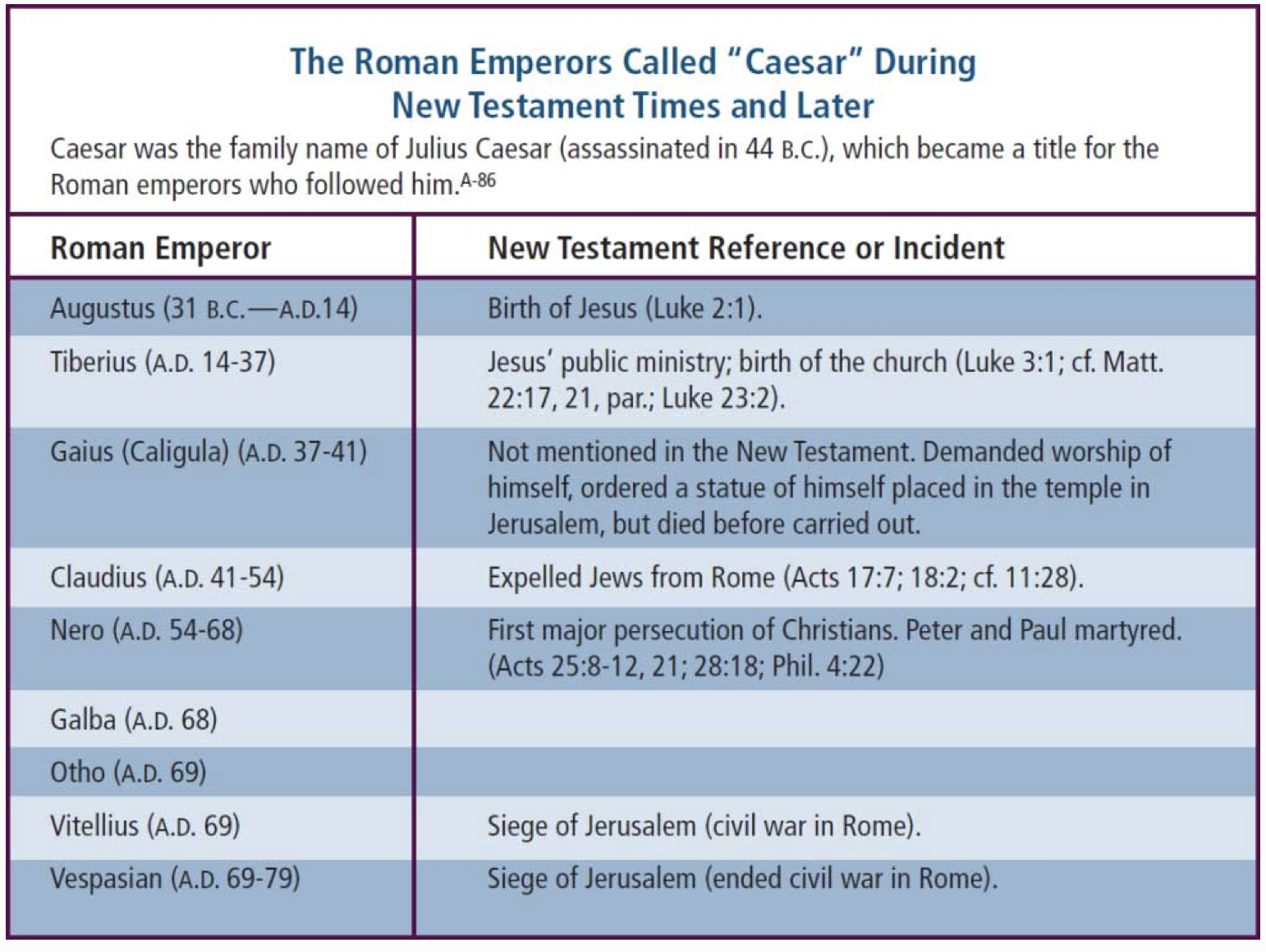
The census mentioned in Luke 2:3, was ordered by Augustus’ decree in the 746th year after the founding of Rome. The census commenced in Judea during Herod’s reign, was suspended as a consequence of his death, and continued when Quirinius was governing Syria. This is mentioned in Luke’s Gospel (2:2). As a result of the census, there was a public uprising in Palestine. By Herod’s directive, the instigator was burned at the stake on the 12th of March in the 750th year of Rome. Consequently, the census commenced some time a little earlier.
According to Saint Luke’s witness (3:1), Saint John the Baptist commenced his ministry in the fifteenth year of Caesar Tiberius’ rule, and “Jesus Himself began His ministry at about thirty years of age” (Luke 3:23). Two years before his death in January 765, Augustus accepted Tiberius as a co-ruler. Therefore, the 15th year of Tiberius’ reign would have commenced in January 779. As a result of Saint Luke’s statement that the age of Lord Jesus was 30, then it follows that He was born in 749.
Astronomical calculations show that Christ’s death on the cross could only have occurred in the year 783, (according to the data in the Gospel, this transpired in the year when the Jewish Pascha fell on a Friday evening). And as the Lord’s age was advancing toward 34 years, He therefore must have been born in the 749th year from the establishment of Rome.
So, all the above facts testify to the fact that the year of the Nativity of Christ was necessarily in the 749th year from the founding of Rome.
Some confusion arises from the statement by the Evangelist Luke about the census conducted at the time of Christ’s birth, that “This census first took place while Quirinius was governing Syria,” whereas, according to historical facts, Quirinius was governor of Syria some ten years after the birth of Christ. The quickest way to resolve this misunderstanding is through the following: during the translation from the Greek text (and there is strong support for this), instead of the word “this” census, the word “same” census should have been applied. Augustus issued the decree for the census before the birth of Christ. However, because of the public’s unrest and the death of Herod, it was delayed and completed only some ten years later, during the governorship of Quirinius. There is further data that Quirinius served twice as governor of Syria, and the census, begun during his first tenure, was completed only during his second term in office. That’s why the Evangelist calls the census — commenced at the time of the birth of Christ — as the “first.”
Every person had to be registered “in his own city.” Roman politics always acceded to the customs of the conquered, so as the Jewish customs demanded that the census be conducted according to branch, tribe, and clan, everyone was obliged to turn up for registration in that city, where the head of his tribe once lived. As Joseph was David’s descendant, he had to go to Bethlehem — David’s city of birth. God’s wonderful providence can be seen in this: in accordance with the ancient prophesy from Micah 5:2, the Messiah was required to be born in this city. According to Roman law covering conquered nations, not only men but also equally women were subject to this census. Consequently, there is nothing amazing in that the Holy Virgin Mary, albeit in Her condition, accompanied the guardian of Her virginity — the “elder” Joseph — and undoubtedly being aware of Micah’s prophecy, could not but recognize God’s providence in the census that directed Her toward Bethlehem.
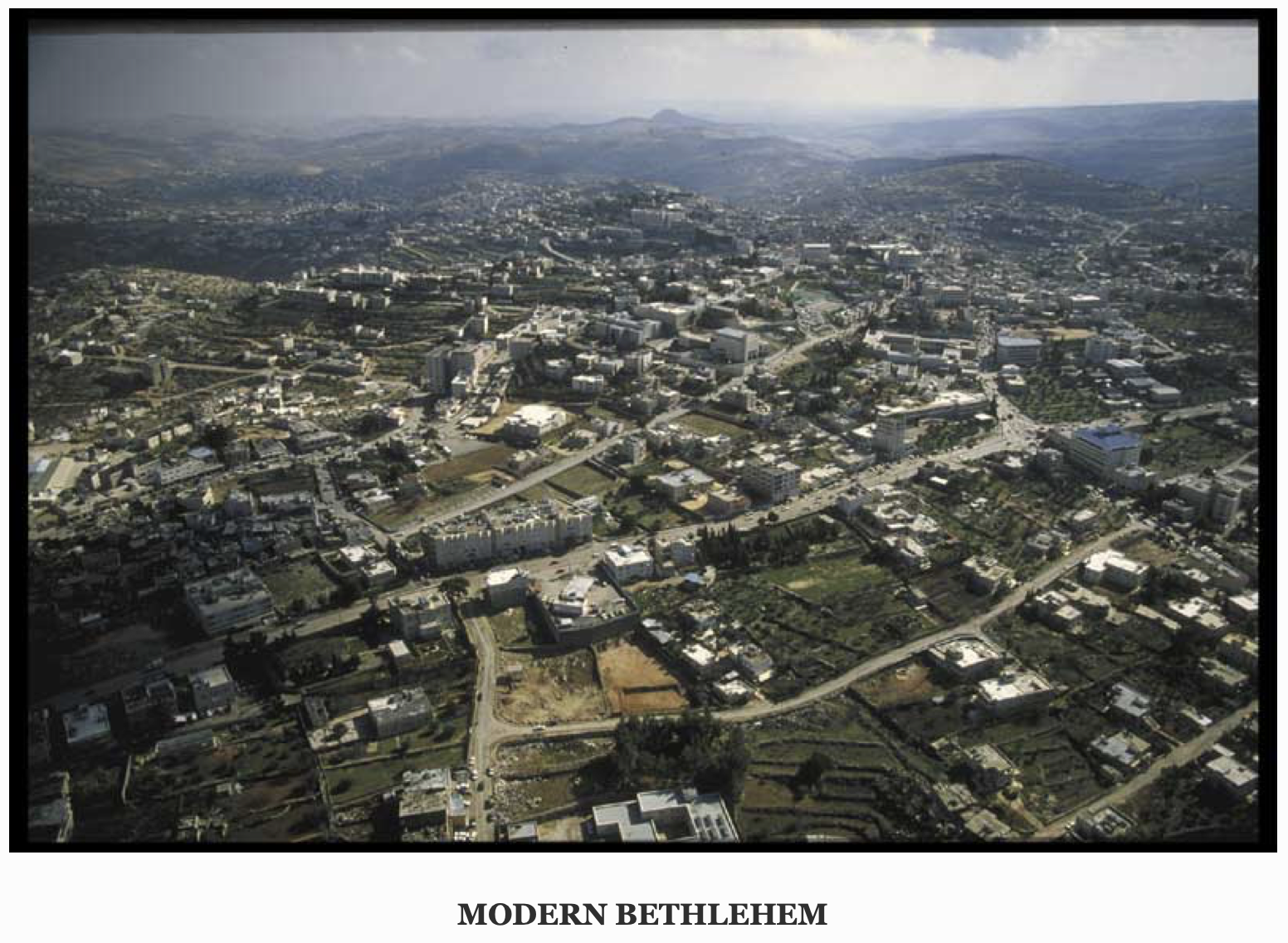
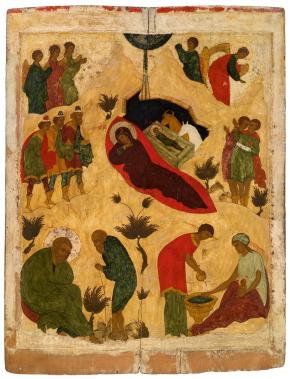
“And She brought forth Her firstborn Son, and wrapped Him in swaddling clothes, and laid Him in the manger, because there was no room for them in the inn.” The Evangelist emphasizes the fact that Holy Virgin Mary Herself diapered Her newborn Infant, meaning that the birth was completely painless. Again, Her Son is called “firstborn” not because the Blessed Virgin had other children after Him. According to the law of Moses, every first male child born was called firstborn, even though he was the only child in the family. Because of the multitude of travelers that had arrived earlier, but more so because of their poverty, the Holy Family were forced to settle in one of the many caves, that were abundant throughout Palestine. These caves were used to shelter stock during inclement weather. It was here that the Divine Messiah was born. Instead of being placed in a child’s cradle, He was laid in a manger and thereby, from His Own Nativity, accepting the cross of abasement and suffering for the redemption of humanity. And by His Own Nativity, giving us a lesson in humility — that highest virtue, which He later taught His followers continually. According to ancient tradition, during the Savior’s birth, near His crib stood an ox and an ass, as though signifying that “The ox knoweth his owner, and the ass his master’s crib” (Isaiah 1:3).
However, not only humiliation accompanied Him at birth and throughout His earthly life but also reflections of His Divine glory. God’s Angel, illuminated with Divine glory, appeared to the shepherds — who may have been the owners of the cave and were sleeping in the field due to the prevailing good weather — and announced to them “great joy” of the birth of the Savior in the city of David, “Who is Christ the Lord.” It is important to note here the words of the Angel “great joy… to all people.” The Messiah did not come to earth for the Jews only, but for the whole human race. With this, the Angel gave a “sign”, an indication as to how they will recognize Him: “You will find a Babe wrapped in swaddling clothes, lying in a manger.” And as though in corroboration of the veracity of the Angel’s words, there appeared “a multitude of the Heavenly host,” a whole mass of Angels praising the astonishing glory of the Newborn God-Infant — the Messiah: “Glory to God in the highest, And on earth peace, goodwill toward men!” The Angels are praising God for sending the Messiah to earth; they are acclaiming the peace that will settle in people’s souls who have accepted the Savior; they are happy for the people to whom God’s grace had returned. The higher powers, the sinless eternal spirits, continually praise their Creator and Lord in the heavens. They especially praise Him for the extraordinary manifestation of His Divine clemency, which in fact is an expansion of His domain. The peace that was brought to earth by the incarnate Son of God cannot be confused with ordinary human tranquility and well-being. This is a peace, of conscience in the soul of the human-sinner, who has been redeemed by Christ the Savior. It is a peace of conscience, reconciliation with God, with people and with yourself. And as much as this is God’s peace that surpasses all understanding (Philip. 4:7) and settles in the souls of humans that have accepted Christ, so does the inner peace become the heritage in human life. Redemption revealed the total greatness of God’s benevolence, His love toward humanity. Therefore, the purpose for the Angels’ praises is in the following: Worthy are the praises to God by the Heavenly Spirits, as peace and salvation has settled on earth, because humanity has become deserving of a particular Divine blessing. The shepherds — who were evidently pious — immediately hurried to the location indicated by the Angel and became worthy of the honor of being the first to worship the Christ-Infant. Wherever they went, they proclaimed the news about the appearance of the Angel and the Heavenly announcement, much to the amazement of their listeners. The Blessed Virgin Mary, filled with feelings of profound humility, memorized all that was happening, “kept all these things and pondered them in her heart.”
The Circumcision and Meeting of the Lord. (Luke 2:21-39).
After eight days had passed and in accordance with the law of Moses (Leviticus 12:3), the God-Infant was circumcised and given the name (as designated by the Angel) of Jesus, which means Savior.
According to the Law of Moses, a woman bearing a male child was regarded as unclean for the first forty days after the birth (eighty days if it was a female child). On the fortieth day, she had to bring a sacrifice of a one- year-old lamb to the temple for burning and a young dove as a sacrifice for her sins. In case of poverty, this could be replaced with two doves — one for each sacrifice. Complying with this law, the Holy Virgin and Joseph brought the infant with them to Jerusalem so as to pay the required five shekels for Him. This law came into being when on the eve of the exodus of Jews from Egypt, God sent His Angels to slay all the Egyptian new-born, while all the Jewish new-born were consecrated to serve at the temple. With the passing of time, this practice was allotted to the tribe of Levi only, while the new-born of other tribes were released from this obligation by paying a special levy of five silver shekels (Numbers 18:16). It can be seen from the Gospel’s narrative that the Holy Virgin and Joseph brought a sacrifice of the poor: two doves.
Why was it necessary to subject the Lord, Whose conception and birth were devoid of sin, to circumcision, and His Ever-Blessed Mother to the law of purification?
Firstly, this was in order to “fulfill all righteousness” (Matthew 3:15) and show by example complete submission to God’s law. Secondly, this was essential for His ministry as the Messiah in the eyes of His people. Uncircumcised, He would not have been part of the community of God’s people; He would not be able to enter the temple, nor the synagogue. Uncircumcised, He would be unable to have influence on the people or to be acknowledged as the Messiah. Equally, His Holy Mother, not being cleansed, would not be regarded as a true Israelite. At the time, the mystery of His chaste conception and birth was unknown to anyone besides the Holy Virgin Herself and Joseph. Consequently, everything that was required by the law had to be executed exactly.
At the time at which the Mother of God brought Her sacrifices and payment of indemnity to the temple, there was a pious “elder” named Simeon who was waiting for the “Consolation of Israel,” God’s promised Messiah, whose appearance would bring consolation to the Israelites (Isaiah 40:1). The Evangelist advises us only that Simeon was foretold by the Holy Spirit that he would not see death until such time as he experienced the honor of seeing his expected “consolation”; that is, the Lord Christ. According to ancient tradition, Simeon was one of seventy-two erudite old men that were charged by the Egyptian King Ptolemais to translate holy books from the Jewish language into Greek. Given the Book of Isaiah to translate, Simeon became dubious when he came upon the prophecy of the birth of Immanuel from a Virgin (Isaiah 7:14). It was then that an Angel appeared to him and foretold that he would not die until his own eyes had witnessed the fulfillment of this prophecy. Through the Holy Spirit’s prompting, he apparently came to the sacrificial altar in the temple and, upon seeing the Virgin Mary’s Infant, recognized Him as the Messiah-Christ. The old man (tradition has it that he was three-hundred years old) took Him in his arms and proclaimed the inspired prayer of gratitude for being able to witness, in the face of this Infant, the salvation that has been prepared for humanity. “Lord, now let Your servant depart in peace, According to Your word,” exclaimed the elder. He was saying: From this moment, the tie that connected me to life has been severed, and You, Master, are releasing me from this life into a new life, “according to Your word,” through the prophecy given to me from You by Your Holy Spirit, “in peace,” with complete spiritual tranquility, “For my eyes have seen Your salvation,” the salvation promised by God through His Redeemer-Messiah, Whom I now have the great happiness to see before me — the salvation, “which you have prepared before the face of all peoples,” not only for Jews but also for all peoples. This salvation is “A light to bring revelation to the Gentiles, And the glory of Your people Israel,” as coming out of its midst. Joseph and the Mother of the Divine Child probably marveled that everywhere they found people to whom God had revealed the secret of this Child.
Returning the Child to His Mother and blessing Her and Joseph, Simeon — by right of a profound elder on whom the Holy Spirit rested — foretells in a prophetic enlightenment that this Infant will be the subject of arguments and disputes between His followers and His enemies: “That the thoughts of many hearts may be revealed.” Depending on the diverse relationships of people toward this Infant, their true nature will be revealed, the disposition of their souls: Those who love the truth and strive to fulfill God’s will, will believe in Christ, while those who love evil and deeds of darkness will hate Christ and, in order to justify their malice, will slander Him in every way. This, in reality, took place in the figures of scribes and Pharisees and continues to be enacted in the form of all godless individuals and Christ- haters. For those who believe in Him, He stands “for arising,” or for eternal salvation, and for the disbelievers — “for falling,” or for their eternal condemnation, for eternal perdition.
Simeon spiritually foresees those sufferings by the Blessed Virgin for Her Divine Son: “yes, a sword will pierce through Your own heart also.”
Present at the time was a woman named Anna, “daughter of Phanuel.” Because she was moved by especial actions of the Holy Spirit and because she possessed the gift of inspired speech, the Evangelist calls her a prophetess. Evidently, the Evangelist praises her as an upright widow, who devoted herself to God after living with her husband for just seven years. Having reached eighty-four years of age and not departing from the temple, she “served God with fasting and prayers night and day.” Like Simeon, she too praised the Lord and, apparently in a state of prophetic inspiration, repeated approximately the same words uttered by Simeon to everyone anticipating the liberation of Jerusalem, to those awaiting the coming of the Messiah.
The Evangelist says further that having fulfilled everything according to the law, the holy family returned to Galilee, “to their own city, Nazareth.”
The Adoration of the Magi. (Matthew 2:1-12).
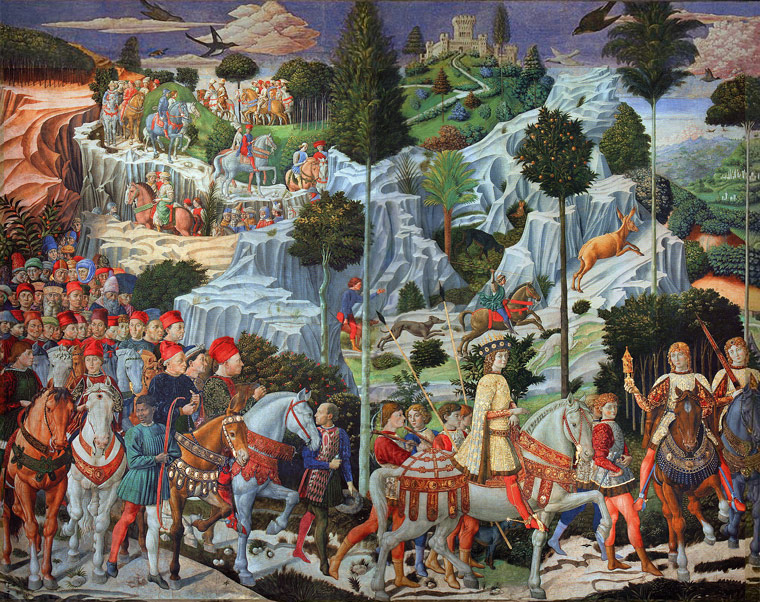
When Christ was born in “Bethlehem of Judea,” the Magi arrived in Jerusalem from the East. It is named here as Judean Bethlehem because there was another Bethlehem, in Galilee, in the region of Zebulun. The Magi who came to adore Christ were not those who are usually associated with this name, not sorcerers or wizards that create illusory miracles, calling up the spirits and interrogating the dead (Exodus 7:11, Deuteronomy 18:11), who are condemned by the Word of God. These were highly learned individuals possessing great knowledge, over whom Daniel presided in the land of Babylon (Daniel 2:48). They judged the future by the stars and studied the mysterious powers of nature. Such wise men were highly revered in Babylon and Persia, as they used to be priests and advisers to kings. The Evangelist says that they came “from the East,” not naming from which specific country.
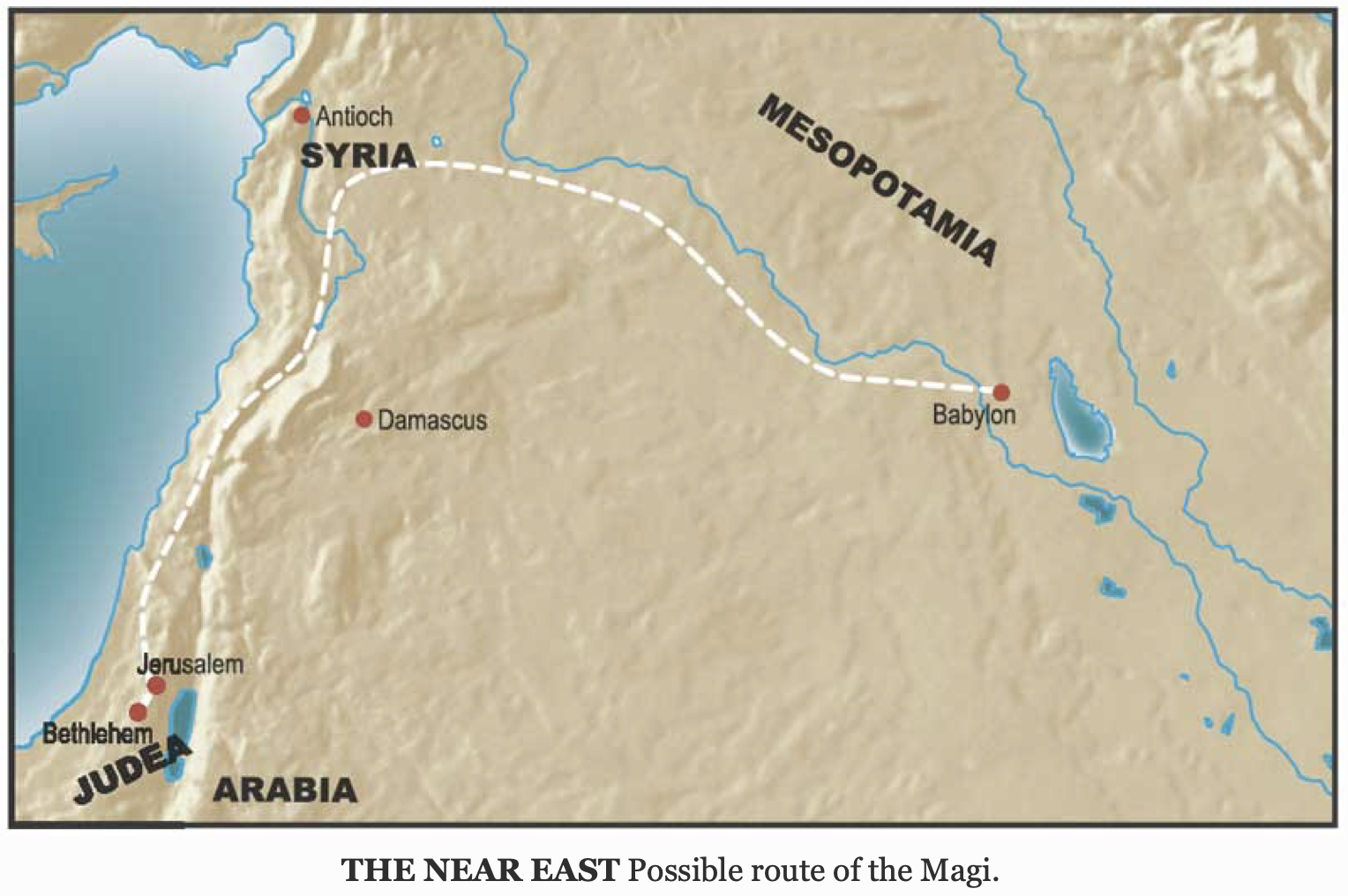
The study of stars in the heavens was one of the major occupations of the Persian wise men, and the Lord summoned them through the appearance of an extraordinary star to adore the Newborn Savior of the world. At the time in the East, there was a widely spread belief that the Lord of the world would appear in Judea, to Whom adoration would be fitting from all peoples. That is why, upon arriving in Jerusalem, the Magi confidently inquire: “Where is He Who has been born King of the Jews?”
These words alarmed Herod the Great, as he himself had no legal right to the Judean throne, was an Idumean, and, being a tyrant, aroused hatred from his subjects. All of Jerusalem became alarmed with him because it was afraid of new repressive measures from Herod, who was agitated by the extraordinary news.
Bloodthirsty Herod, in deciding to exterminate the Newborn — regarding Him as his antagonist — summoned all his high priests and scribes and directly poses to them the question as to the place of birth of the Messiah, King of the Jews: “Where is Christ to be born?” The scribes immediately pointed out to him Micah’s well-known prophecy (5:2), not citing it literally but its meaning that the Messiah had to be born in Bethlehem. Bethlehem means “house of bread” and Euphratus, “fertile field,” a name that characterizes the exceptional fertility of the soil.
It is striking that in Micah’s original prophecy there is the statement that the Messiah will only “come” from Bethlehem but will not live there and that His true origins “are from of old, from everlasting” (Micah 5:2). In order to execute his bloody intentions with certainty, Herod also wanted to know the time of birth of the Judean King. He summons the Magi so as to interrogate them clandestinely as to the time of the appearance of the star and then sends them to Bethlehem so that when they return, they can relate all they found out about the Newborn. When the Magi set out toward Bethlehem, the star that they saw in the East traveled before them, showing the accurate route until it stopped where the Newborn Infant was located.
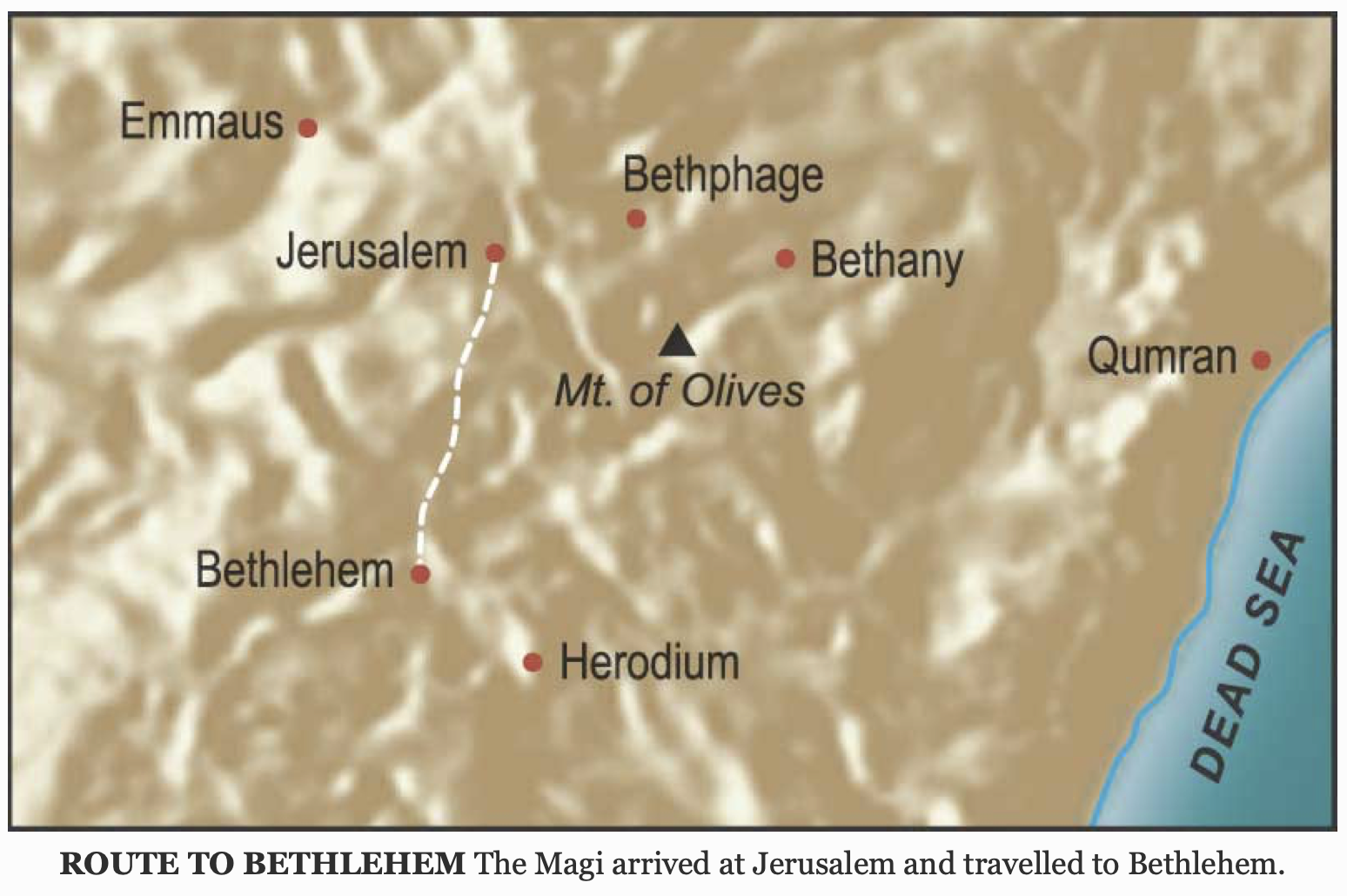
What sort of star was it? There are varied thoughts on this issue. Saint John Chrysostom and the Blessed Theothilactus thought that it was a certain Divine and Angelic force, appearing in the form of a star. The marvelous meaning of the Wise Men’s arrival from a distant land is explained excellently by Saint John Chrysostom: “Because the Judeans, listening ceaselessly to the prophets’ proclamations on the coming of Christ, did not pay any particular attention, the Lord instilled into the barbarians the need to come from a distant land, inquire about the King that was born among them, and the Judeans first recognize from the Persians that which they did not want to learn from the prophets.” Naturally, the star that showed the way to the wise men from Jerusalem to Bethlehem, “till it came and stood over where the young Child was,” was now a real star — not a planet but a completely special and miraculous manifestation. When they saw the star, the wise men “rejoiced with exceedingly great joy,” because undoubtedly, they saw in it a new strengthening of their faith in the authenticity of the birth of this extraordinary Infant. It is said further about the Magi that they came to a house and there “fell down and worshipped” the Newborn. Consequently, the Magi did not come to the cave where Christ was born; by that time, the Infant and His mother could have resettled into an ordinary house. “And when they had opened their treasures, they presented gifts to Him: gold, frankincense, and myrrh.” Having received a Divine warning in a dream not to return to Herod, who had designs to kill the God-Infant, the Magi returned to their homeland along a different route, not through Jerusalem but probably to the south from Bethlehem.
The Flight into Egypt and the Slaying of the Infants. (Matt. 2:13-23).
Jesus Christ’s adolescence. (Luke 2:40-52).
The Flight into Egypt and the Slaying of the Infants. (Matt. 2:13-23).
After the wise men’s departure, the Lord’s Angel appeared to Joseph in a dream and directed him to take the Infant and His mother and flee to Egypt, what he soon did and at night. Egypt was located southwest of Judea. At the time, it was also a Roman province where many Jews lived; they had their own synagogues and as Herod’s authority did not extend there, the Holy Family, having stopped at one of their compatriot’s houses, could feel finally themselves out of danger. To the question as to why Christ did not save Himself from Herod’s executioners, St. Chrysostom responds: “If the Lord started to work wonders in His initial years, then He would not have been acknowledged as a Human” (Discourse on Matthew 7).
In the fact that Child - Jesus had to flee specifically to Egypt and return from there, St. Evangelist sees the fulfillment of Hosea’s prophecy: “…called My Son out of Egypt” (11:1). In reality, these words of the prophet refer to the exodus of the Jews from Egypt, but because the chosen by God Jewish nation was a symbol of the true, one and only Son of God, Jesus Christ, then the withdrawal of the Jewish people from Egypt served as a symbol of Jesus Christ’s recall from the same Egypt. In the Old Testament, on the note of St. Chrysostom, everything had a symbolic meaning, everything served as the symbols of events in the New Testament.
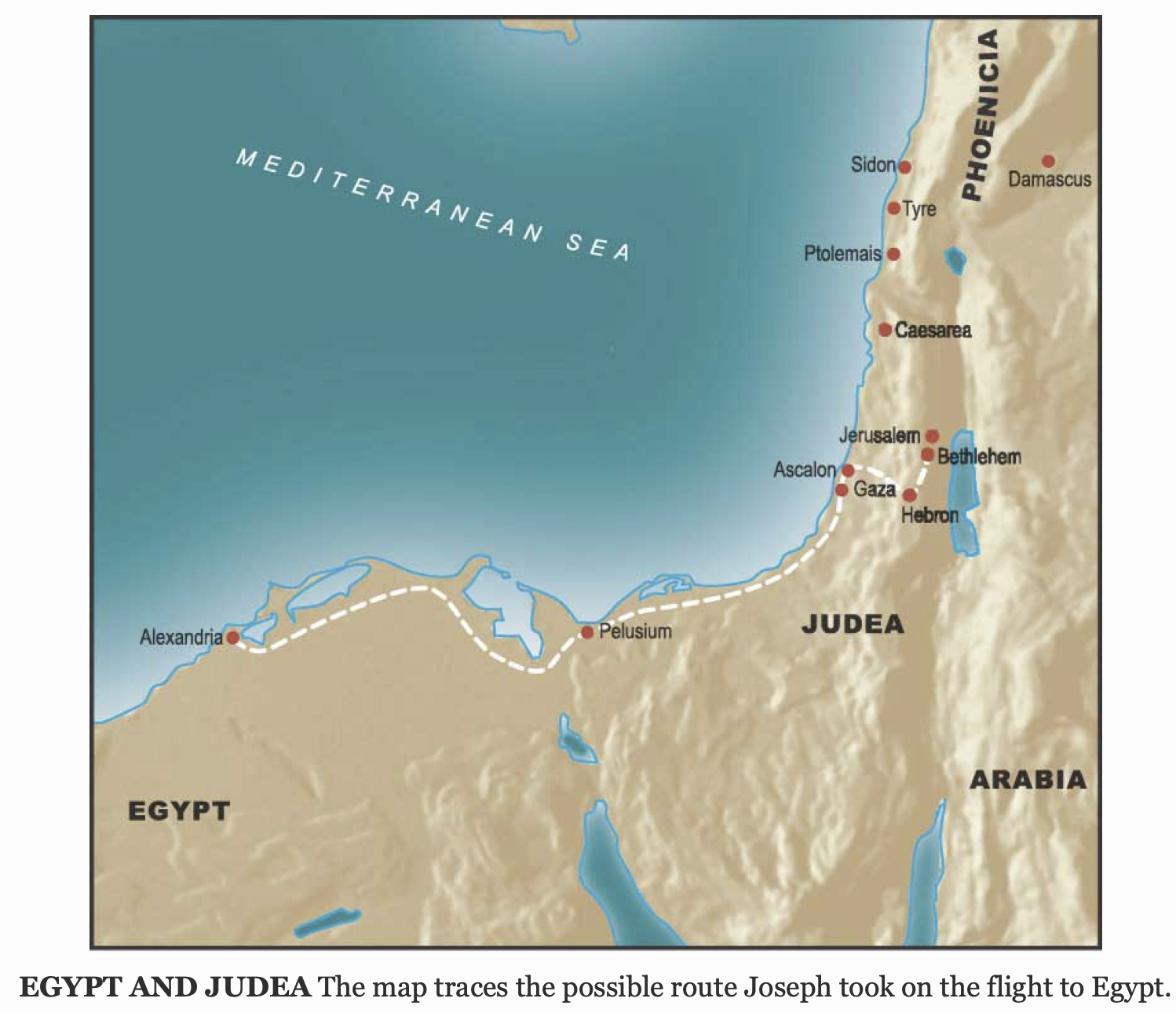
When the wise men failed to return to Jerusalem, Herod became angry, felt “mocked of” and ridiculed by them. This produced greater wrath in him. Having learned from the Magi that the star appeared to them over a year ago, he concluded that even if the Infant is more than 12 months old, He would be less than 2 years old. Therefore, he issued the brutal decree to slay all the infants “from 2 years old and under” in Bethlehem and all the coasts thereof, reckoning that among them will be Jesus Christ. The similar savagery was absolutely typical of Herod, about whom according to the testimony of the Jewish historian Joseph Flavius; it is well known that because of the groundless suspicion, he ordered his wife to be strangled and his 3 sons to be put to death.
In the slaying of the children, the Evangelist sees the fulfillment of Jeremiah’s prophecy: “A voice is heard in Ramah, lamentation, and bitter weeping” (Jer. 31:15). In these words, the Prophet Jeremiah describes the calamity and grief of the Jewish people, led to the Babylonian captivity and previously gathered in Ramah, a small town of Benjamin tribe, to the north of Jerusalem). A witness of this event, Prophet Jeremiah depicts it like the weeping of Rachel about her children, who were led away to death. Saint Matthew sees in this a symbol of the true loss of Rachel’s children, who are buried close to Bethlehem.
For the precise date of Christ’s birth is not known, there is no definite data, how long the Holy Family lived in Egypt. However, it is clearly and definitively said that soon after the death of Herod, the Holy Family returned to the land of Israel, and this date can be regarded as more or less definite. As Joseph Flavius testifies, Herod died in a dreadful agony in March or the beginning of April, in the 750th year from the foundation of Rome.
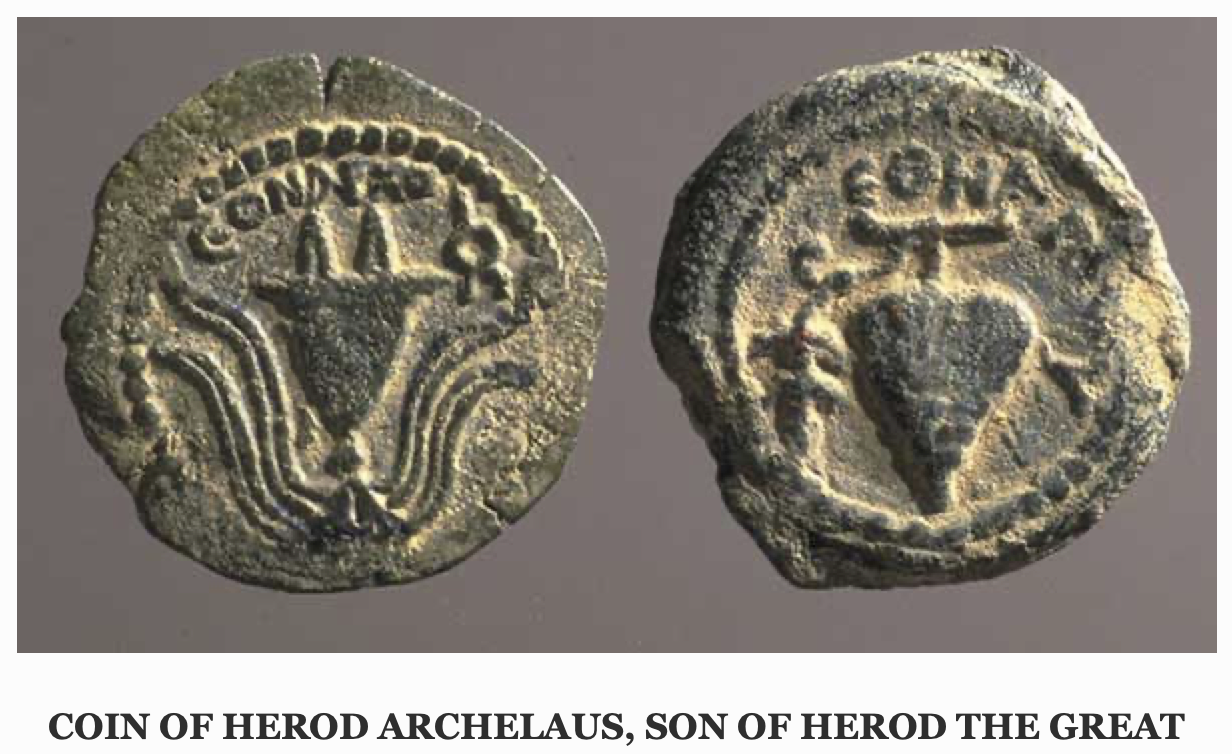
Upon their return, Joseph apparently decided to settle in Bethlehem, where, as it seemed to him, the Son of David — future Messiah-Christ — had to be brought up. However, when hearing that the worst of Herod’s sons Archelaus, bloodthirsty and cruel, similar to his father, began to reign in Judea, he was “afraid to go thither”. Having received a new warning in a dream, he headed towards the boundaries of Galilee and settled in the township of Nazareth, where he used to reside previously, pursuing his trade of carpentry.
Jesus Christ’s adolescence. (Luke 2:40-52).
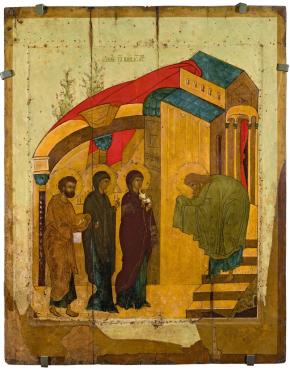
Before His appearance in the society to serve the human race, Lord Jesus Christ remained in anonymity. Concerning this period, Evangelist Luke tells us about one event from His life. He gives us the general characteristics of this period in the following words: “And the Child grew and became strong in spirit, filled with wisdom; and the grace of God was upon Him”.
Consequently, when adolescent Jesus became 12, this Divine wisdom revealed itself clearly for the first time. According to the Law of Moses (Deut. 16:16), all male Jews were obliged to appear in Jerusalem on the feast days of Pascha, Pentecost and Festival of Tabernacle. An adolescent, turning 12, became “the Child of the law”: from this point on, he had to learn all the demands of the law, fulfill its directions and in particular.
The celebration of the Passover continued for 8 days, after which the faithful returned to their homes, normally in groups. Joseph and Mary did not notice how adolescent Jesus stayed in Jerusalem, surmising that He walks nearby in another group, with His relatives or friends. Seeing that He did not join them for a long time, they began to look for Him, and having not found Him, they returned to Jerusalem in anxiety, where after three days of searching (presumably from the day they departed from Jerusalem), they found Him, seated in the midst of the doctors, listening to them and asking them questions. That happened, probably, in one of the parts of the temple, where the rabbis gathered, holding discussions between them and with the people, edifying in the law all willing to listen to them. In this discussion, adolescent Jesus already displayed His Divine wisdom — that was why everybody listening to Him marveled at His answers and His mind. His Mother, expressing their anxiety over Him, calls Joseph as the father of Jesus, as She could not call him in any other manner, because in everybody’s eyes, Joseph was the father. Adolescent Jesus responds to His Mother’s words by revealing His designation — to serve the will of the One that had sent Him, and then corrects His Mother by pointing out that not Joseph but God is His father: “Wist ye not that I must be about my Father’s business?” However, neither Blessed Mary nor Joseph understood His words, as the mystery of Christ’s matters on earth was not fully revealed to them.

The conception of Christ’s Forerunner, John. (Luke 1:1-25).
The Flight into Egypt and the Slaying of the Infants. (Matt. 2:13-23).
Jesus Christ’s adolescence. (Luke 2:40-52).
Jesus Christ’s adolescence. (Luke 2:40-52).
The Gospels’ preface: Their authenticity and purpose. (Luke 1:1-4, John
20:31). The Pre-Eternal Birth and the Incarnation of the Son of God. (John 1:1-14).
**
**
The Nativity of Christ.
The Nativity of Christ.
The Adoration of the Magi. (Matthew 2:1-12).
Related Concepts
- adoption
- angelic-doxology
- annunciation
- athanasius
- baptism-of-repentance
- bethlehem
- betrothal-of-joseph
- body-of-christ
- chronology-of-the-nativity
- creation-through-the-son
- cyrus-as-type-of-christ
- davidic-kingdom
- election
- elijah
- firstborn
- flight-into-egypt
- forgiveness-of-sins
- genealogy-of-christ
- historicity-of-revelation
- holy-trinity
- hosea-111
- incarnation
- isaiah-714
- john-114
- john-the-theologian
- joseph-the-betrothed
- josephs-children
- josephs-children-by-a-first-wife
- judgment
- kingdom-of-god
- law-and-gospel
- magi
- manger
- mary-mother-of-james-and-joses
- meeting-of-the-lord
- messiah
- messianic-names
- micah-52
- mother-of-god-at-the-cross
- new-birth
- old-testament-typology
- on-the-incarnation
- only-begotten
- only-begotten-son
- passionless-generation
- presentation-in-the-temple
- prophecy-fulfillment
- prophecy-fulfilment
- prophetic-ministry
- protestant-exegesis
- resurrection
- revelation-to-the-gentiles
- salvation
- self-abasement
- simeons-prophecy
- theotokos-at-the-cross
- virgin-birth
- virginal-conception