Liturgics — 15. Annual movable liturgical cycle.
The moveable cycle of the annual liturgical cycle.
Lent is preceded by preparation weeks. The order of the services of Great Lent and the weeks preparing for it, beginning with the Week of the Publican and the Pharisee, and Holy Week, ending on Holy Saturday (70 days in total), is explained in the Lenten Triodion.
Preparations for the Great Lent begin shortly after the Feast of Epiphany. In fact, the Lent is preceded by four preparatory Sundays: Sunday of the Publican and the Pharisee (without a week), of the Prodigal son, Meat-fare (allowing meat) and Cheese-fare (allowing cheese) (with weeks).
In the preparatory Weeks, the Church prepares believers for fasting by the gradual introduction of abstinence: after a fast-free week, the fasts of Wednesday and Friday are reintroduced; this is followed by the highest degree of preparatory abstinence - the prohibition to eat meat food. In preparatory services, the Church, recalling the first days of the world and man, the blessed state of the progenitors and their fall, the coming to earth of the Son of God for the salvation of man, disposes believers to fasting, repentance and spiritual feat.
The synaxar of the Cheese -fare Saturday says that “just as chieftains speak before the militia army already standing in formation speak of the exploits of the ancient men and thereby encourage the soldiers, so do the holy fathers who enter the fast point to the holy men who shone in fasting, and teach that fasting consists not only in the alienation of dreams, but also in the curbing of the tongue, heart and eyes.”
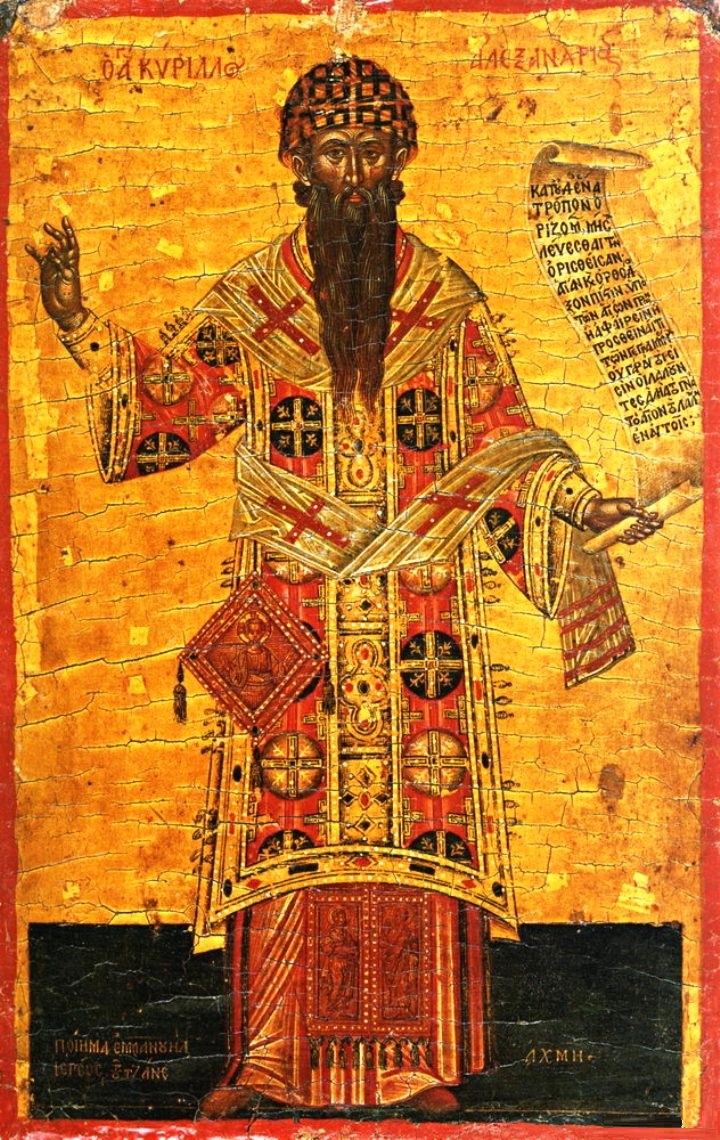 This preparation for
the Great Lent is an ancient institution of the Church. Thus, the already
famous preachers of the IV century, Saints Basil the Great, John Chrysostom,
Cyril of Alexandria, in their conversations and words spoke about abstinence
in the Weeks preceding Great Lent. In the eighth century, Saints Theodore and
Joseph the Studites composed services for the Week of the Prodigal Son, the
Meat-fare and Cheese-fare; in the ninth century, George, Metropolitan of
Nicomedia, compiled a canon for the Week of the Publican and the Pharisee.
In preparation for fasting and repentance, the Church in the first Week, following the example of the publican and the Pharisee, recalls humility as the true beginning and foundation of repentance and all virtue, and of pride, as the main source of sins, which defiles man, alienates him from people, makes him an apostate, imprisoning himself in a sinful self-shell.
Humility, as the path to spiritual exaltation, was shown by God himself, the Word, humbled to the weakest state of human nature, taking up “the form of a servant” (Phil. 2: 7).
In the hymns of the Week of the Publican and the Pharisee, the Church calls for rejection — “rejection” of highly praised pride, an exaltation, pernicious fierce, “great boasting” and “vile. arrogance”
To awaken feelings of repentance and brokenness about sins, the Church sings at Sunday Matins in preparatory weeks, starting with the Week of the Publican and the Pharisee and ending with the fifth Sunday of fasting, after the Gospel, the following hymn: “Having beheld the Resurrection of Christ”, followed by reading the 50th Psalm, reverential stichera (troparia) before the canon: “Open to me the doors of repentance”, “At salvation paths lead my, Mother of God ”, “A plurality of commited the evil”. Bringing the 70-day period of the Triodi closer to Israel’s 70-year stay in Babylonian captivity, the Church in some preparatory Weeks mourns the spiritual captivity of the new Israel by singing Psalm 136 ” On the Rivers of Babylon”.
The basis of the first verse - “Open to me the doors of repentance” - is the parable of the publican: from it comparisons are taken to depict the penitential feeling. The second song, “At salvation paths,” is based on the parable of the prodigal son. At the heart of the third is “A plurality of commited the evil” - the Savior’s prediction of the Last Judgment.
In the Week of the Prodigal Son of the Gospel Parable (Luke 15:11-32), from which the Week itself is named, the Church shows an example of God’s inexhaustible mercy to all sinners who turn to God with sincere repentance. No sin can shake the love of God. To a soul that has repented and converted from sin, imbued with hope in God, God’s grace emanates into the dream, kisses it, decorates and triumphs reconciliation with it, no matter how sinful it may have been before, until its repentance.
The Church instructs that the fullness and joy of life lie in a gracious union
with God and in constant communion with Him, and the distance from this
communion is a source of spiritual calamity.
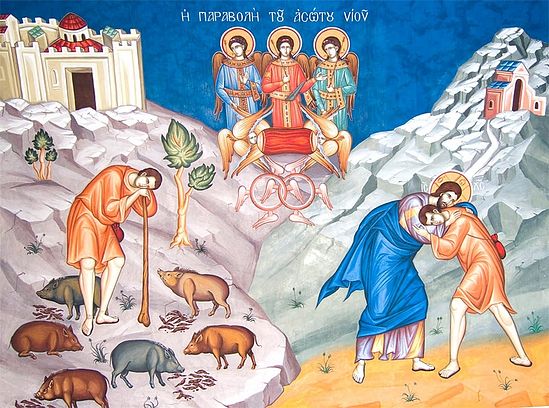
By showing in the Week of the Publican and the Pharisee the true beginning of repentance, the Church reveals its full power: with true humility and repentance, forgiveness of sins is possible. Therefore, no sinner should despair of the gracious help of the Heavenly Father.
The Meatless week is also called the Week of the Last Judgment, since the Gospel is read about it at the liturgy (Matt. 25: 31-46).
On Meatfare Saturday, which is also called the Saturday of Souls, the Church commemorates “from the age of the dead all who have lived faithfully by faith and those who have died faithfully, or in the wilderness, or in the gradech, or in the sea, or on the earth, or in every place … from Adam even to the day, who served God cleanly, our fathers and brethren, friwnds and kinsmen, every man, in the life of the faithful served, and to God in many and varied ways.” The Church asks diligently “this in the hour of judgment the answer of the good giving to God and the bottom of His presence to receive in joy, in the part of the righteous, and in the holy lots of light, and worthy of being his kingdom.
According to inscrutable Providence, death is different with different people. “But it befits the knownig,” says the synaxar, “as it is not all in the abyss of falling, and into the fire, and into the sea, and the verbal destructions, and cold and hunger, by the direct command of God these suffer: this is the essence of God’s fate, their (one) is by the favor (of God), the (to others) by connivance, the other for the sake of and transgression (warning), and there are other calamities.”
On Meatfare Saturday, the Church, in its love of humanity, especially prays for those who have not received a church funeral service or even a church prayer: “not received legalized psalms and hymns of memory.” The Church prays for”in the part of the righteous desciples”, who were “covered the water, the scolding will burn, caught by an earthquake, murdered, burnt by the fire.” Prayers are offered for those who, in ignorance and not in their own minds, ended their lives, for those whom the Lord, all useful knowledge, allowed to die by a sudden death - “from the sorrow and joy of the coming unreliable (unexpectedly)” and for those who died at sea or on earth, on rivers, springs, lakes, which became the prey of animals and birds, killed by the sword, burned by lightning, froze in the cold and in the snow, buried under an earthen collapse or walls, killed by poisoning, strangulation and hanging from their neighbors, died from every other kind of unexpected and violent death.
The thought of the end of our lives when remembering those who have already departed into eternity has a sobering effect on everyone who forgets about eternity and clings with all his soul to the perishable and fleeting.
Meatfare Sunday is dedicated to the reminder of the Last Judgment of the living and the dead (Matt. 25:31-46). This reminder is necessary so that sinning people do not indulge in carelessness about their salvation in the hope of the ineffable mercy of God. The Church in the poems and troparions of this Week’s service depicts the consequences of a lawless life, when a sinner will appear before the impartial Judgment of God.
While recalling the last judgment of Christ, the Church also points out the true meaning of the very hope for God’s mercy. God is merciful, but He is also a righteous Judge. In liturgical hymns, the Lord Jesus Christ is called justiful, and his judgment is called a righteous and incorruptible test (unwashed torture, unwashed judgment). Both hardened and carelessly relying on the mercy of God sinners must therefore remember their spiritual responsibility for their moral condition, and the Church, through all her worship of this Week, seeks to lead them to the realization of their sinfulness.
What works of repentance and correction of life are particularly paid attention to? First and foremost, on the acts of love and mercy, for the Lord will pronounce His judgment primarily in works of mercy, and moreover possible for all, without mentioning other virtues that are not equally accessible to everyone. None of the people has the right to say that he could not help the hungry, drink the thirsty, visit the sick. Material works of mercy have their value when they are a manifestation of love that possesses the heart and are combined with spiritual works of mercy, by which both the body and soul of neighbors are facilitated.
The last week preparing for the Great Lent is called cheese week, oil week, or pancake week. During this week, dairy products are consumed: milk, cheese, butter, eggs.
The Church, condescending to our infirmity and gradually leading us into the feat of fasting, established in the last week before the Great Lent to eat cheese food, “so that we, from meat and polygamy, lead to strict abstinence … little by little, from the pleasant dishes they took the reins, that is, the feat of fasting.” On cheese Wednesday and Friday, the fast is more strict (until the evening).
By the hymns of Cheese Sunday, the Church inspires us that this week is already a prelude to repentance, a forefeast of abstinence, a week before cleansing. In these hymns, the Holy Church invites to abstinence, recalling the fall of the progenitors, which occurred from incontinence.
On Cheese Saturday, the remembrance of the holy men and women who shone forth in the feat of fasting is commemorated. By the example of the holy ascetics, the Church strengthens us to a spiritual feat, “and to the primordial, non- evil looking at their lives, the many and varied virtues we do, I am the power of the man,” remembering that the holy ascetics and ascetics glorified by the Church were people endowed with the infirmities of the flesh like us.The last Sunday before Great Lent has an inscription (title) in the Triodion: “On Cheese Sunday is the expulsion of Adam.” On this day, the event of the expulsion of our ancestors from paradise is remembered.
**
**
The Great Lent.
Having prepared believers for feats of fasting and repentance, the Church leads them into the very feat. The services of Great Lent, as well as the services of the weeks preparing for it, constantly encouraging fasting and repentance, depict a state of mind repenting and weeping for its sins. This corresponds to the external image of the performance of Lenten services: on the weekdays of Great Lent, excluding Saturdays and Sundays, the Church does not perform the full liturgy, this most solemn and festive Christian service. Instead of a full liturgy on Wednesdays and Fridays, the liturgy of the Presanctified Gifts is served. The composition of other church services changes according to time. On weekdays, singing almost ceases, reading from the Old Testament scriptures, especially the Psalms, is preferred, the prayer of St. Ephraim the Syrian with great (earthly) bows is introduced into all church services, and the third, sixth and ninth hours are connected to the evening hour to indicate the time to which the daytime fast should extend.
The Great Lent and its services begin with vespers of Cheese Sunday. This day is also called in common parlance Forgiveness Sunday, because after the evening service on this day there is a rite, or rite, of general forgiveness in the church.
The rite of forgiveness is performed as follows: icons of the Savior and the Mother of God are carried out on the soleas and placed on analogion; the abbot makes earthly prostrations before them and bows to them, then he usually utters the word, asks for forgiveness of his sins from the parish and the people, saying: “Bless me, fathers of holiness and brethren, and forgive me, a sinner, who have sinned (that) on this day and in all the days of my belly: in word, deed, thought and all my feelings.” At the same time, he creates a common earthly bow to the clergy and the people. Everyone also responds with an earthly bow, saying, “God will forgive you, Holy Father. Forgive us sinners and bless us.” Then the abbot takes the altar Cross, and all the priests, in order presedence, attach themselves to the icons on the analogion, approach the abbot, kiss the honest Cross and his hand holding the Cross, and lobbed with the abbot. After them, the laity come, attach themselves to the holy images and the Cross and ask forgiveness from the priest and from each other.
During the rite of forgiveness, it is customary to sing “Open to me the doors of repentance”, “On the rivers of Babylon” and other reverential chants. In some churches, the Pascha stichera are also sung, up to and including the words “and thus let us cry out” (in the last verse).
In accordance with the words of the Gospel recited on this Sunday, encouraging to forgive their neighbors transgressions and be reconciled with everyone, in ancient times the desert dwellers of Egypt would gather on the last day of Cheese week for a common prayer and, asking each other for forgiveness and blessing, when singing Easter verses, as if in reminder of the expected Ressurection of Christ, they left at the end of Vespers in the desert for solitary feats during the Great Lent and gathered again only for Palm Sunday. Therefore, even now, following this ancient pious custom, the sons of the Orthodox Church, as a sign of reconciliation and forgiveness, pray for the dead and visit each other on cheese week.
The first week of Great Lent is particularly strict, for it is decent to have jealousy of piety at the beginning of the feat. Accordingly, the Church in the first week performs divine services longer than in the following days. From Monday to Thursday, the penitential canon of St. Andrew of Crete († 712) is read at the Great Vespers. This canon is called the Great both by the multitude of thoughts and memories contained in it, and by the number of troparia contained in it - about 250 (in ordinary canons there are about 30 of them). For reading in the first week of fasting, the canon is divided into four parts, according to the number of days.
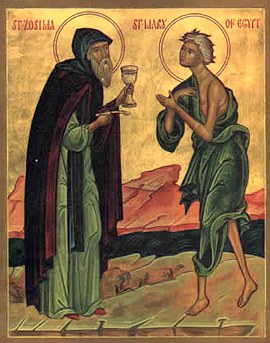 On Wednesday and Thursday, several troparia
are added to the Great Canon in honor of St. Mary of Egypt († 522), who came
from a deep spiritual fall to high piety. The great canon ends with troparions
in honor of its creator, St. Andrew of Crete.
On Monday or Tuesday of the first week after matins or hours, the priest in the epitrachile reads to the parishioners “Prayers at the beginning of the fast of the Great Lent”, explained in the Trebnik.
On the Saturday of the first week, the Church commemorates the miraculous help shown by the Great Martyr Theodore Tyrone († c. 306) to the Christians of Constantinople in 362, under the emperor Julian the Apostate († 363), when in the first week of Great Lent the saint, appearing to the Archbishop of Constantinople, ordered to use koliva (boiled grain) instead of the food defiled by the secret sprinkling of the blood of idol victims on the market. The consecration of the koliva (or kutia) is performed on the Friday of the first week at the Presanctified Liturgy, according to the pulpit prayer and prayer singing to the Great Martyr Theodore.
In many churches, on Fridays or Sundays, a adorable liturgical rite is performed, called a passion (from the Latin passio - suffering). It was introduced into ecclesiastical use under Metropolitan Peter Mogil of Kiev (XVII century). It is performed at the Vespers (on Friday) or during the Vespers (on Sunday) on the first, second (often from the second), third and fourth weeks of fasting and consists of reading the Gospel of the Passion of Christ, singing the hymns of Holy Week - “To You, alone with light, like a robe”, “Come, let’s please Joseph” and others - and teachings. The passions are not mentioned in the Church Statute. The rite of passion was first placed in the the end of the Triodion of Color, published in 1702 by the Archimandrite of the Kiev-Pechersk Lavra, Joasaph Kronovsky. At the end of the description of the rite it is said: “All these are remembered by counsel, and not by command, but all under the reasoning of the Church of the Holy Orthodox are given.”
The First Sunday of the Great Lent is called otherwise the Week, or Feast, of Orthodoxy. On this day, a remembrance is made of the triumph of Orthodoxy, established in Byzantium in the first half of the IX century in memory of the final victory of the Orthodox Church over all heretical teachings that outraged the Church, especially over the last of them - the iconoclastic, condemned by the Seventh Ecumenical Council in 787. This Week a special divine service is performed, called the rite of Orthodoxy. This rite was compiled by Methodius, Patriarch of Constantinople (842-846). The victory of Orthodoxy was originally celebrated in the first Week of Great Lent, and thus the basis for the celebration of the triumph of Orthodoxy on this day is historic.
The rite of Orthodoxy consists mainly of prayer singing and is performed in cathedrals after reading the hours before the liturgy or after the liturgy in the middle of the temple, in front of the icons of the Savior and the Mother of God.
The second week and Sunday of Great Lent are called the week and the Week of Light Fasts: the Church prays to the Lord for the gracious illumination of those who fast and repent. In the worship service of this week and Sunday, along with the lamentation of the sinful state of man, fasting is praised as a path to such an inner gracious illumination.
The Orthodox doctrine of fasting is revealed with particular force in the second week of St. Gregory Palamas, Archbishop of Solun, a miracle worker (XIV century). Saint Gregory, himself the great ascetic of Mount Athos, is known as the defender of Orthodoxy and the denouncer of the heretical teachings of Barlaam, a Calabrian monk who rejected the Orthodox doctrine of a gracious light that enlightens the inner man and sometimes opens up visiblely, for example, as was the case at Tabor and Sinai. Barlaam did not allow the opportunity to achieve this illumination by prayer, fasting and other spiritual feats of selflessness. At the Council of Constantinople convened on this occasion in 1341, St. Gregory Palamas, called the son of the Divine Light, denounced heretics and defended the doctrine of the Divine Light, uncreated, with which the Lord shone on Tabor and with which ascetics are illuminated, who achieve such illumination through prayer and fasting.
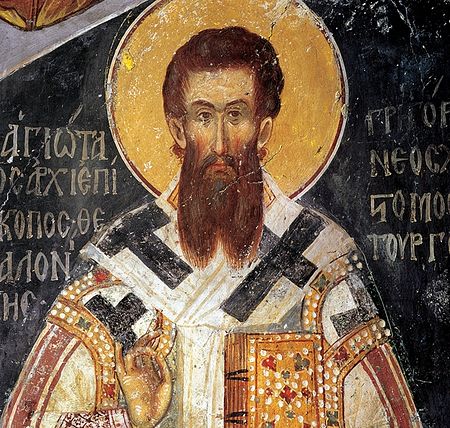 The church service in honor of St. Gregory
Palamas and his Life biography were compiled by Philotheus, Patriarch of
Constantinople (XIV century), and the canon by Gennadius Scholarius (XV
century).
The Third Week of Great Lent is called the Week of the Cross, because on this Sunday the Church glorifies the Holy Cross and the spiritual fruits of the Savior’s Death on the Cross.
The significance of the Cross of Christ for those who are fasting is explained by the Church in liturgical hymns in many different images and likenesses. Like a hay tree that gives thick shade and brings coolness and rest to a weary traveler, the Cross of Christ in the midst of the feats of fasting gives believers coolness and encouragement to the completion of work. The cross of Christ, as a banner of victory over death, prepares us for the joyful glorification of the Conqueror of Hell and Death. The cross of Christ is compared to the tree that delighted the bitter waters of Merra, to the tree of life planted in the middle of paradise. The gospel of the Cross and the worship of it comfortingly remind us of the approaching the feast of the Resurrection of Christ.
In addition to the glorification of the Holy Cross, on which the Lord humbled Himself to death, the worship service of the fourth week of Great Lent exposes Pharisaic pride condemned by God and praises publicanic humility.
Starting from the Wednesday of the Holy Cross Week, special litanies are pronounced at the liturgies of the Presanctified Gifts until Great Wednesday about those preparing for baptism.
In the liturgy of the fourth Sunday, the Church offers a high example of fasting life in the person of the ascetic of the sixth century, St. John of the Ladder, who from the age of 17 to 80 fought on Mount Sinai and in his creation “The Ladder of Paradise” depicted the path of man’s gradual ascent to spiritual perfection along the ladder of the soul, rising from the earth to eternal glory. There are 30 such steps in the Ladder, according to the number of years of the Savior’s earthly life before His entry into public service to the human race.
On Thursday of the fifth week, at matins, the entire Great Canon of St. Andrew of Crete and the Life of St. Mary of Egypt (V-VI centuries) are read from the abyss of vice, which has risen by repentance to such a height of perfection and holiness that it has become like incorporeal angels. This worship service is therefore called otherwise Mary’s (or less commonly: Andrew’s) standing. In practice, it is done on Wednesday night. The Life is divided when read into two parts: one part is read after the kafism, the second - according to the third canon of the canon. The Life of St. Mary was compiled by Saint Sophronius, Patriarch of Jerusalem (638-644), and Saint Andrew of Crete, sent from Patriarch Theodore of Jerusalem to the Council of Trulla, VI Ecumenical Council (680-681), brought the Life of St. Mary along with his canon.
The reading of the canon of St. Andrew and the Life of St. Mary of Egypt on Thursday of the fifth week at Matins is established at this Council.
On Wednesday of the fifth week, at Vespers, which refers to Thursday, in addition to the usual verses on the “Lord, I have cried”, 24 penitential stichera of the Great Canon, the creation of St. Andrew of Crete, are sung . All the stichera have the ending: “Lord! At least in the end, save me.”
On Thursday, for the sake of reading the Great Canon, the liturgy of the Presanctified Gifts is celebrated and the ringing is not Lenten.
The Saturday of the fifth week is called the Saturday of the Akathist, and the service itself was called the “Praise of the Most Holy Theotokos”. On this day, at matins, the Akathist [from Greek - non-sedentary (meaning the singing)] of the Mother of God is read in memory of Her intercession and deliverance of Constantinople in the days of fasting from the invasion of foreigners in the VII century. this first of the akathists was compiled in the VII century. on the basis of even more ancient kontakia, in which the events of the Nativity of the Lord and the Annunciation of the Most Pure Theotokos are glorified.
On the fifth Sunday of Great Lent, the Church remembers and glorifies St. Mary of Egypt.
In the hymns of the canon for this Week, as well as in the liturgy of the weeks of the following week, the Gospel parable of the rich and Lazarus is revealed in order to encourage believers to true repentance, by which the Kingdom of God is attained. The Church urges believers to avoid the unmercifulness and inhumanity of the rich man, to be jealous of the patience and generosity of Lazarus, for the Kingdom of God is not food and drink, but righteousness and abstinence with holiness and mercy.
On the Saturday of the sixth week - the Church remembers the miracle of the resurrection of Lazarus by the Lord Jesus Christ, so it is called Lazarus Saturday.
By the resurrection of Lazarus, Jesus Christ revealed His divine power and glory and assured His disciples and all of His coming Resurrection and the common resurrection of the dead on the day of God’s judgment.
Palm Sunday is dedicated to remembering the solemn Entry of the Lord into
Jerusalem, where He went for suffering and death on the Cross. This event is
described by all evangelists: Matt. 21, 1-11; Mk. 11, 1-11; Lk. 19, 29-44; Jn.
12, 12-19. This feast is called the Week of Palms, the Flower Week, and in
common parlance among Russians also Palm Sunday from the custom of
consecrating palm branches on this day, replaced by willows in our
country.
The beginning of the feast dates back to ancient times. The first indication of the feast - in the III century belongs to St. Methodius, Epius of Patara († 312), who left the teaching for this day. In the IV century, the holiday, as evidenced by St. Epiphanius of Cyprus, was performed very solemnly. Many of the holy fathers of the fourth century left their teachings for this feast. In the VII-IX centuries. Saints Andrew of Crete, Cosmas of Maium, John of Damascus, Theodore and Joseph the Studites, as well as the Byzantine Emperor Leo the Philosopher, Theophanes and Nicephorus Xanthopoulos glorified the holiday with hymns, which are still sung by the Orthodox Church.
The Feast of the Entry of the Lord into Jerusalem belongs to the Twelve great Feasts, but has neither a forefeast nor an afterfeast, as it is surrounded by the days of fasting of the Great Lent and Holy Week. However, although it has no days of forefeast, like other Telve Great Feasts, the worship of the entire previous week, starting on Monday, in many verses and troparions is dedicated to the event of the Entry of the Lord into Jerusalem.
On the Friday of the week, the fast of the Great Lent ends. On this day, in one of the verses on “Lord, I have cried” it is sung: “Having soulfully finished the Great Lent , we ask You to see the holy week of Thy Passion, Manlover.”
Lazarus Saturday and Palm Sunday serve as the transition from the great Lent to the Holy Week.
_
_
Passion week
** __** Passion Week is dedicated to remembering the last days of the Savior’s earthly life, His suffering on the Cross, death and burial. According to the greatness and importance of the events that took place, each day of this week is called holy and great. These sacred days are perceived by believers as a Divine feast, illuminated by the joyful contemplation of the received salvation received through the suffering and death of the Savior. Therefore, on these holy days, neither the memory of the saints, nor the commemoration of the dead, nor molebens are performed. As on all major holidays, the Church calls all the faithful to take a spiritual part in the divine services and become partakers of the sacred memory.
Since apostolic times, the days of Holy Week have been in deep reverence among Christians. Believers spent Passion Week in the strictest abstinence, fervent prayer, performing deeds of virtue and mercy.
All the services of Passion Week, which are distinguished by the depth of reliving of the events, pious contemplation, special tenderness and duration, are organized in such a way that they vividly and gradually reproduce the history of the Savior’s suffering, His last Divine instructions. For each day of the week, a special remembrance is assigned, expressed in hymns and Gospel readings of matins and liturgy.
Participating in the sufferings of the Savior, “being made conformable unto His death” (Philippians 3:10), the Holy Church takes on a sad image this week: sacred objects in temples (throne, altar, etc.) and the clergy themselves are dressed in dark clothes, and the character of worship is of a touching, solemn contrition, with compassion for the Passion of Christ. In modern liturgical practice, Lenten services are usually performed in black vestments, which change to bright vestments on Holy Saturday. In some monasteries and temples, during Great Lent the service is performed, in accordance with a more ancient practice, in purple vestments, and on Holy Week - in scarlet - burgundy, the color of blood - in remembrance of the Blood of the Savior poured out on the Cross for the salvation of the world.
On the first three days of Passion Week, the Church prepares the faithful for worthy contemplation and heartfelt participation in the Savior’s suffering on the Cross. Already at the Vespers on the week of Palm Sunday, the Church invites the faithful to flock from the highest and sacred Divine Feast of Palm Sunday to the Divine Feast of the honest, saving and mysterious remembrance of the Passion of Christ, to see the Lord accepting voluntary suffering and death for us. In the hymns of the Triodion on these days, the Church encourages believers to follow the Lord, to be crucified with Him, and with Him to be able to enter the Kingdom of Heaven. In the divine services of the first three days of Passion Week, a general repentant character is retained.
On Great Monday, the Church in its hymns invites to meet the beginning of the Passion of Christ. In the divine service on Monday, the Old Testament Joseph is remembered, who, out of envy, was sold by his brothers to Egypt, representing and foreshdowing the suffering of the Savior. In addition, on this day, the Lord withers the richly leafed but barren fig tree, which serves as an image of the hypocritical scribes and pharisees, in whom, despite their outward piety, the Lord did not find the good fruits of faith and piety, but only the hypocritical shadow of the Law. The barren withered fig tree is a symbol of every soul that does not bear spiritual fruits - true repentance, faith, prayer and good deeds.
On Great Tuesday, we remember the denunciation of the Lord of the scribes and Pharisees, His conversations and parables, spoken by Him on this day in the Temple of Jerusalem: about the question of the tribute to Caesar, about the resurrection of the dead, the Last Judgment, about the ten virgins and the parable about the talents.
On Great Wednesday, we remember the sinful woman who washed her tears and
anointed the feet of the Savior with precious ointment when He was at the
supper in Bethany in the house of Simon the leper, and thereby prepared Christ
for burial. Here, Judas, with imaginary concern for the poor, revealed his
love of money, and in the evening he decided to betray Christ to the Jewish
elders for 30 pieces of silver (at that time, it was an amount sufficient to
acquire a small plot of land even in the vicinity of Jerusalem). 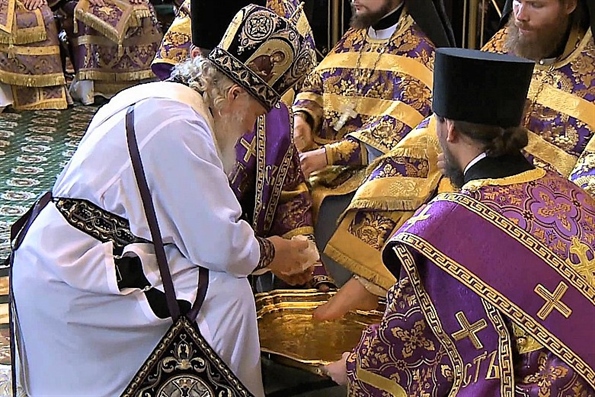
On Great Wednesday at the Liturgy of the Presanctified Gifts, after the prayer beyond the ambon, the prayer of St. Ephraim the Syrian is said for the last time with three great prostrations.
On Thursday of Holy Week, the four most important evangelical events that took place on that day are commemorated in the divine service: The Last Supper, at which the Lord established the New Testament sacrament of Holy Communion (Eucharist), the washing of the feet of His disciples by the Lord as a sign of deepest humility and love for them, the prayer of the Savior in the garden Gethsemane and the betrayal of Judas.
In commemoration of the events of this day, after the prayer beyond the ambon at the liturgy in cathedrals, during the hierarchal service, a touching rite of washing the feet is performed, which resurrects in our memory the immeasurable condescension of the Savior, who washed the feet of His disciples before the Last Supper. The rite is performed in the middle of the temple. When the protodeacon reads the corresponding place from the Gospel, the bishop, having taken off his vestments, washes the feet of the 12 priests sitting on both sides of the place prepared in front of the pulpit, representing the disciples of the Lord who have gathered for the supper, and wipes them with a ribbon (a long cloth).
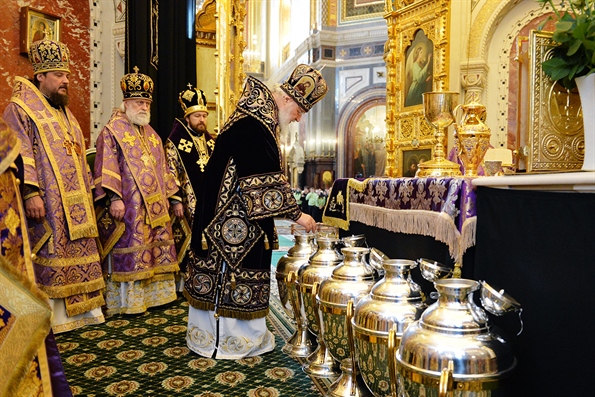
In the Patriarchal Cathedral in Moscow, at the Liturgy of Great Thursday, after the transfer of the Holy Gifts, His Holiness the Patriarch performs the consecration of the holy myrrh (as much as is needed). The consecration of the myrrh is preceded by its preparation (the rite of chrismation), which begins on Holy Monday and is accompanied by the reading of the Holy Gospel, with the prescribed prayers and hymns.
The Day of Great Friday is dedicated to the remembrance of the condemnation to
death, the suffering on the Cross and the death of the Savior. In the worship
of this day, the Church, as it were, sets us at the foot of the Cross of
Christ and before our reverent and trembling eyes depicts the saving
sufferings of the Lord. At Matins of the Great Friday (usually served on
Thursday evening), the 12 Gospels of the New Testament of the Holy Passion are
read.
At the end of Vespers on Great Friday, the rite of taking out the Epitaphios of Christ is performed with the image of His position in the tomb, after which there is a reading of the canon about the crucifixion of the Lord and the cry of the Most Holy Mother of God, then the dismissal of the evening service follows and the application to the epitaphios (kissing of the epitaphios) is performed. Nothing is said in the current Typicon about the removal of the epitaphios on Good Friday. It is only spoken of carrying it out on Great Saturday after the great doxology. There is no mention of the epitaphios in the Friday service and in the most ancient Greek, South Slavic and Old Russian charters. Presumably, the custom of taking out the epitaphios at Great Vespers on Great Friday began with us in the 18th century, later than 1696, when the editing of the Typicon in our Church was completed under Patriarchs Joachim and Adrian of Moscow.
On Great Saturday, the Church commemorates the burial of Jesus Christ, the stay of His body in the tomb, the descent of the soul into hell to proclaim victory over death there and the deliverance of souls who with faith awaited His coming, and the introduction of the good thief into paradise.
Divine services on this Saturday, unprecedented and unforgettable in all ages of human life, begin in the early morning and continue until the end of the day, so that the last Saturday hymns of the so-called Paschal Midnight Office merge with the beginning of the solemn Paschal hymns - at Paschal Matins.
On Great Saturday, the liturgy of Basil the Great is served, beginning with vespers. After a small entrance with the Gospel (next to the epitaphios), 15 paraemias are read in front of the epitaphios, which contain the main prophecies and prototypes relating to Jesus Christ, as having redeemed us from sin and death by His death on the Cross and His Resurrection. After the 6th paraemia (about the miraculous crossing of the Jews across the Red Sea) we hear: “Gloriously glorified.” The reading of the paraemias concludes with the song of the three youths: “Sing to the Lord and exalt unto all ages.”
Instead of the Trisagion, the hymn “They were baptized into Christ” is sung and the Apostle is read about the mysterious power of Baptism. This singing and reading serve as a remembrance of the custom of the ancient Church to baptize catechumens on Holy Saturday. After reading the Apostle, instead of “Alleluia”, seven verses selected from the psalms containing prophecies about the Resurrection of the Lord are sung: “Arise, O God, judge the earth.” During the singing of these verses, the clergy change into bright clothes, and then we hear the Gospel of Matthew, ch. 115. Instead of the Cherubic Hymn, the song “Let all mortal flesh keep silence” is sung. The Great Entrance takes place near the epitaphios. Instead of “He rejoices in you” - the irmos of the 9th song of the canon of Holy Saturday “Do not cry for me Mother” is sung. The communion verse is “Wake up, as if sleeping, Lord, and rise again, save us.” The Prayer beyond the ambon is read behind the epitaphios. Everything else happens according to the order of the Liturgy of St. Basil the Great. After the dismissal of the liturgy, the blessing of bread and wine is directly performed. This rite recalls the ancient pious custom of Christians to wait for the onset of Pascha in the temple, listening to the reading of the Acts of the Apostles. In view of the strict fast that was observed for a whole day until the Pascha holiday, and the impending vigil, the Church physically strengthens the faithful with blessed bread and wine.
__Holy Resurrection of Christ
At the end of the services, the Lenten Triode enters into liturgical use the Triodion of Color.
The color Triodion contains prayers glorifying the Resurrection of the Lord Jesus Christ and the events that took place after the Resurrection of Christ. Thus, the Triodion of Color is used in worship from the first day of Easter to the Week of All Saints, covering a period of time of 57 days. In the Statute, this time is called the period of Pentecost, which is why the Triodion of Color is otherwise called Penticostarion (Penticostarium), from the Greek πεντηκοστάριον - “fifty” (that is, the book).
The main memories to which the divine services of the Triodion of Color are dedicated relate to the three most important events of the glorious state of the Lord: the Resurrection of Christ, His Ascension and the Descent of the Holy Spirit on the Apostles. All other days from Easter to Pentecost in relation to these feasts are days of forefeasts and festivities, so that according to the peculiarities of the divine service, the entire period of singing the Triodion of Color is divided into sections: Easter (Bright) Week, weeks after Easter - from Anti-Pascha, the Week of Thomas, to the afterfeast of Easter, the Week from the afterfeast of Easter to the Ascension and from the Ascension to the Week of All Saints.
Among the movable Feasts of the Lord, the Feast of Easter occupies a central
place, and among all Christian feasts, the Resurrection of Christ is the most
important, most joyful and solemn feast of the feast and the triumph of
celebrations. 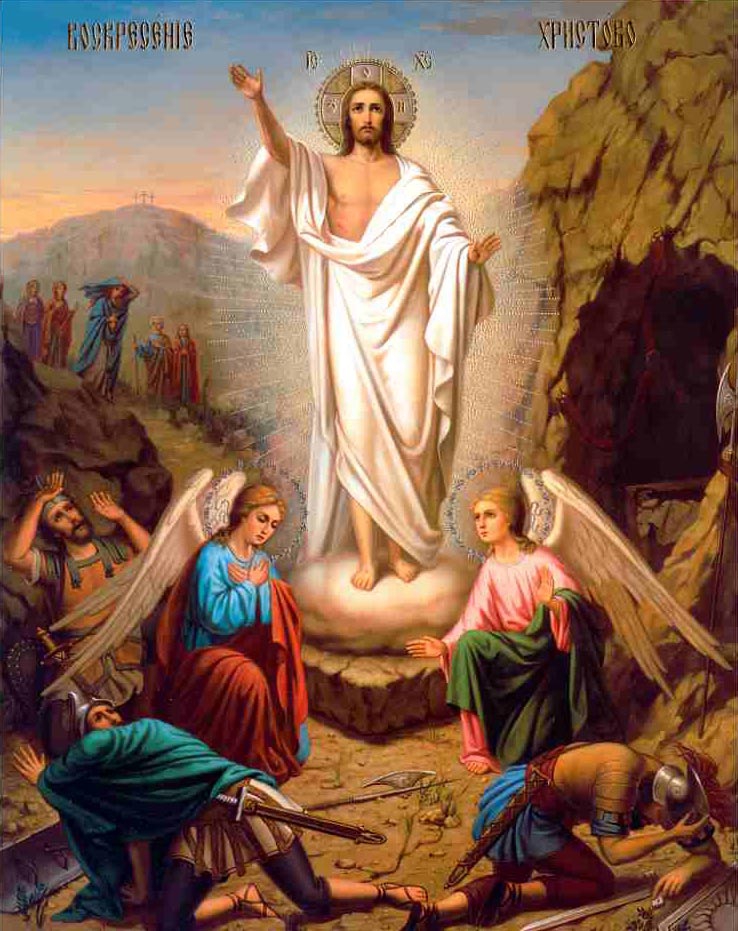
The bright feast of the Resurrection of Christ is called Passover in internal relation to the Old testament feast of Passover, which, in turn, was so named in memory of the event when, at the exodus of the Jews from Egypt, the angel who destroyed the firstborn of Egypt, seeing the blood of the Passover sacrificial lamb on the doors of Jewish dwellings, passed by (Heb. “Pesach”), leaving the first-born of the Jews untouched. In accordance with this Old Testament memory, the Feast of the Resurrection of Christ, denoting the passage from death to life and from earth to heaven, was called Easter. Another ancient interpretation of the holiday, which owes its origin to the Greek exegetes, connects it with the consonant Greek πάσχω - suffer.
The resurrection of the Lord Jesus Christ from the dead completed the Divine- human feat of salvation and the re-creation of man. The resurrection was evidence that Jesus Christ is the true God and Lord, the Redeemer and Savior. Christ died in the flesh, but His flesh is united into one Hypostasis inseparably, unchangingly, inseparably, inseparably from God’s Word.Christ was resurrected, for death could not hold in its power the body and soul of Christ, who are in hypostatic unity with the Source of eternal life, with the One Who in his Divinity is the Resurrection and Life itself.
The Resurrection of Christ is a manifestation of Divine omnipotence: Christ descended into hell upon His death, “as he ascended,” overthrew death, “as God and Master.” He was resurrected and with Himself he resurrected Adam and the entire human race from the bonds of hell and decay. By breaking the gates (stronghold) of death, Christ showed the way to eternal life.
Jesus Christ rose as the beginning of the dead, the firstborn from the dead (Col. 1:18). When He was resurrected, He sanctified, blessed, and affirmed the general resurrection of all people who would rise from the earth on the universal day of the resurrection, as an ear grows out of a seed.
The resurrection of the Lord Jesus Christ testifies that He is truly the Son of God — “God has risen.” It revealed the glory of His Deity, previously hidden under the veil of humiliation.
The body of Jesus Christ rose in glory. In Him, a great and salvific new- creating action is performed. In Himself, He renews our nature, which has fallen into decay.
The Resurrection of the Lord completes the victory over sin and its consequence, death. Death is overthrown. Rejected, condemned ancient condemnation of death. The bonds of hell are broken, and we are delivered from the hell of torment. Death after the Resurrection of Christ does not have those who lived and died honestly, for Christ predestined the power of death with His death and gave life in the Resurrection.
Christ rose again, conquering death. But even after His Resurrection, death in humanity temporarily continues to carry away its sacrifices. But it only melts down the vessels of our soul - the body for re-creation on the day of resurrection in a new, spiritually renewed form. And since flesh and blood cannot inherit the kingdom of God and decay does not inherit incorruptibility, our soul-body life is only a seed for sowing, which must rot - in death to give the ear - new life. Our decay in death is the path to incorruptibility. Just as Christ died according to the flesh and was made alive by the spirit, so we are freed by Him from the law of sin and death according to the law of the spirit and life in Him (Rom. 8:2).
Through His Resurrection, Christ made us the victors of death, and by life in Christ we receive the predestinations of the immortality granted by His resurrection to our mortal nature: “Let no one be afraid of death,” exclaims St. John Chrysostom, “freedom be upon us Saviour’s death.”
Therefore, the soul of the Christian is so enthusiastic on the day of Holy Easter: the saving and luminous night of the Resurrection of Christ is the herald of the future day of the general resurrection. This is truly the great Easter, the Easter, the doors of paradise opening to us, for death passes, there is incorruptibility and eternal life.
Christ’s Life-Giving Resurrection enlightened all creation. Christ illuminated the entire universe with the divine brilliances of His Resurrection.
Easter is the oldest feast of the Christian Church. It was established and celebrated already in apostolic times. The ancient Church under the name of Easter combined two memories - of suffering and of the Resurrection of Christ and dedicated to its celebration the days preceding and following the Resurrection. To denote both parts of the feast, special names were used - Easter of suffering, or Easter of the Cross (Greek: πάσχα σταυρώστμου) and Easter of the Resurrection (Greek: πάσχα άυαστάστμυη). Based on the nature of the commemorations, the first of these days were honored with fasting, the second with solemn joy. Subsequently, these days were called Holy and Bright Weeks.
In the first centuries of Christianity, Easter was not celebrated everywhere at the same time. In the East, in the Churches of Asia Minor, it was celebrated on the 14th day of Nisan (according to our account, March - April), on whatever day of the week this date falls. The Western Church performed it on the first Sunday after the spring full moon. An attempt to establish agreement between the Churches in this matter was made under Saint Polycarp, Bishop of Smyrna, in the middle of the second century. The First Ecumenical Council of 325 decided to celebrate Easter everywhere at the same time. The conciliar definition of Easter has not reached us. Since ancient times, the Orthodox Local Churches have determined the date of the celebration of Easter according to the so-called Alexandrian Paschal: on the first Sunday after the Easter full moon, between March 22 and April 25. At the Sixth Ecumenical Council, another disagreement about the time of termination of fasting before Easter was resolved: it was decided to stop fasting in the middle hours of the night after Holy Saturday.
The divine glory of the Risen Lord and the greatness of the bright feast of Easter correspond to the high and special solemnity that accompanies the divine services on the first day of Easter and throughout the Bright Week.
The dark robes of the clergy are replaced by light ones.
Before the beginning of the Easter service, the Acts of the Apostles are read in the church from the evening, as constituting an immutable testimony to the truth of the Resurrection of Christ.
Before the beginning of the Easter Matins, the church, according to the ancient custom, is filled with incense as a sign of the abundance of grace that we received through the Resurrection of Christ. In ancient times, vessels with burning coals and incense were supplied to churches for this. During the Easter service in the churches, all the lamps are lit, and those in the church stand with candles as a sign of the fullness of spiritual joy.
Since the time of the Apostolic Church, Easter services have been performed at night. Like the ancient chosen people who were awake on the night of their deliverance from slavery in Egypt, Christians are awake on the sacred and forefestive and saving night of Christ’s Bright Resurrection.
At the end of the liturgy on Easter Day, after the Amvon prayer, the consecration of the artos is performed. Artos (Greek for “bread”) is a large prosphora depicting the Cross or resurrection of Christ. Artos is relied on Easter day on the analogion in the church near the local icon of the Savior along with the image of the Resurrection of the Lord. On each day of the Bright Week, after the liturgy, according to custom, a procession is made around the temple: with a lantern, banners, the Gospel, icons of the Resurrection of Christ and the Most Pure Mother of God, with the singing of the canon of Easter. Usually artos is also carried around. In monasteries, after the liturgy, the artos is transferred to the refectory when singing the troparion of Easter, after the meal there is an offering of artos and then it is again transferred to the temple when singing the 9th ode of the Easter canon. On Bright Saturday, the artos is crushed when reading the prescribed prayer and is distributed to believers after the liturgy as a great shrine of the church for eating before taking ordinary food.
Historically, the use of artos arose in imitation of the apostles, who, having learned to eat a meal with the Lord, imagined Him present among them. At the same time, artos reminds us that Jesus Christ, by His Death on the Cross and Resurrection, became for us the true Bread of eternal life.
The feast of Easter since its establishment has been the brightest, universal, longest Christian celebration. From the days of the Apostles, Christian Easter, like the Old Testament, lasted seven or eight days, if we count all the days of the continuous celebration of Easter until Monday after the Week of Thomas. The Fathers of the Church and the rules of the Church (VI Ecumenical Council, right 66) command believers throughout the Bright Week to practice in churches in psalms, singing and spiritual songs, rejoicing and triumphing about Christ.
Bright Week ends on the eighth day - in the Week of Thomas, which therefore from ancient times was a special celebration - as if a replacement, a repetition of the Easter day itself, which is why it was called Anti-Easter. From this day begins the circle of Weeks and weeks of the whole year, so Anti- Easter is also called the Week of the New, the Day of Renewal. Such names are all the more appropriate for this day because on the eighth day, the Lord Himself favored to renew the joy of His Resurrection with His new appearance to the apostles, including the Apostle Thomas, who was convinced by the touch of the Lord’s ulcers of the reality of His Resurrection, in memory of which this Week was also called the Week of Thomas (in the Russian colloquialism also called Joyful Sunday, Red Hill).
Pointing to the ongoing renewal of nature after the winter sleep, the service of the Week about Thomas encourages believers to awaken from the dream of sin, to turn to the Sun of Truth - Christ. In the hymns of this Week, the Holy Church, pointing to the joyful truth of the Resurrection of the Lord, especially turns our reverent gaze to the truth of His Divinity and humanity.
After His Resurrection, the Lord Jesus Christ dwelt on earth for forty days, appearing to the apostles and teaching them the mysteries of the kingdom of God. Therefore, the Easter Feast is celebrated for forty days.
After Easter, from the Week of Thomas to Pentecost, there are seven weeks, and before the afterfeast of Easter there are six.
According to their memories, these Weeks and weeks after Easter refer to the Divine glorification of the Risen Christ, who ascended to heaven and sent down the Holy Spirit on His disciples.
All the weeks after Easter, before the giving of Easter, having each special memory, are devoted to the memory of the Resurrection of Christ, which is reflected in the services of these Weeks and the weeks that follow them.
 The second Week and week of Easter - about
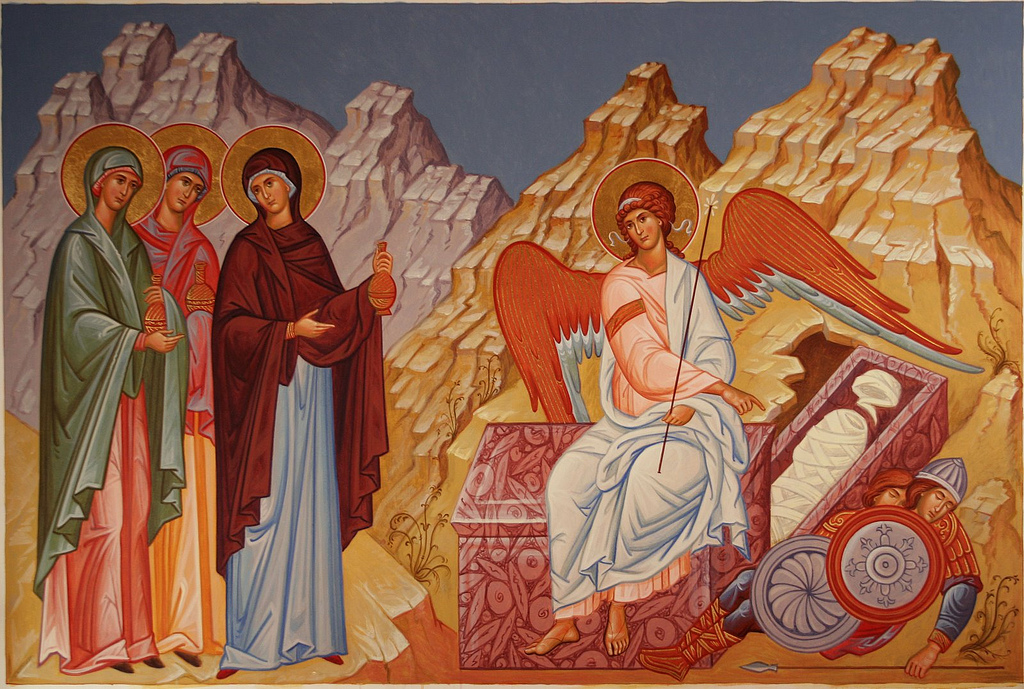
Thomas - is followed by the Week of the Holy Myrrh-Bearing Wives. This Week,
the Church remembers the holy myrrh-bearing wives, the righteous Joseph of
Arimathea and Nicodemus, the secret disciples of Christ, who witnessed the
death and Resurrection of the Lord.
Memories of the witnesses of the burial and Resurrection of the Lord, the Church by its divine service delivers us to Calvary at the Cross of Christ, from which Joseph and Nicodemus remove His Most Pure Body, and in the heliport at the tomb, where they believe the Body of Jesus Christ and where then the myrrh-bearers are the first to be honored to see the Risen Lord. The Church glorifies in this divine service the Cross and the saving death of the Lord, His glorious Resurrection, and then the holy feat of faith and love of the disciples and disciples of the Lord, reminding us that the first and predominant object of remembrance and glorification should be now, as always, the Lord Himself, who suffered for us and was resurrected.
On the fourth week of Easter, the Church remembers the healing of the paralytic, who was in sickness for 38 years (John 5:1-14), performed by the word of Jesus Christ in the second year of His preaching of the Gospel during the Jewish Pentecost.
In the healing of the paralytic, we see the gospel of the power and glory of Christ crucified but resurrected and illuminated the world with the light of His Resurrection.
With the memory of the healing of the paralytic canon of Matins relaxed in some troparia, the glorification of the Holy Archangel of God Michael is combined, because the Gospel reading of the relaxed evangelizes that the angel of the Lord disturbed the water in the font of Siloam, and Michael is the Archangel of the heavenly forces serving the believers.
On Wednesday of the fourth week after Easter, Mid-Pentecost is celebrated - this is half the time from Easter (twenty-five days) to the Ascension of the Holy Spirit on the apostles. On this day, the Gospel event is remembered, when the Savior, in the transfiguration of the Old Testament feast of Tabernacles, taught in the temple of Jerusalem about His Divine messenger and life-giving water, which is understood as the gracious teaching of Christ and the gifts of the Holy Spirit. This water is also mentioned in the troparion of the feast. Therefore, on the feast of the Mid-Pentecost, the consecration of water is performed in churches.
The Sunday service of the fifth week and the service of the following weeks are dedicated to the Gospel conversation of the Lord Jesus Christ with the Samaritan woman in the first year of His preaching on the days of Pentecost, when the Lord walked after Passover from Judea to Galilee. This discourse, which belongs to the days of Pentecost, serves at the same time as evidence of the Divine glory of the risen Lord, who gives “living water, which dries the sources of sin” and “washes the defilement of the soul.”
In the services of the feast it is said how the Lord Jesus Christ, by His gracious word, living wise conversation, wondrous irresistible charm of His Face, revives the souls of people, raising the spiritually fallen, returning to the direct, true path those who have departed from him. Thus, the Samaritan woman, having known the goodness of the Lord, who gave her the water of life, and having drunk abundantly with the water of the Wisdom of God, inherited the Kingdom of Heaven.
In the Sixth Week after Easter, of the blind man, the Church remembers Jesus Christ’s gift of sight in Jerusalem to the blind man in the third year of His preaching of the Gospel, the Feast of Tabernacles, or the feast of the renewal of the church (Jn. 7:2; 10:22). This miracle reveals the Divine power and glory of the resurrected Lord, who is the Light Giver and the true Light. The hymns of the Week’s service tell, according to the Gospel, about the spiritual insight of the blind man, about the gradual increase in his faith in the Lord Jesus Christ. Composed by divinely inspired fathers, these chants are imbued with deep thoughts and a variety of holy feelings. In them there is a deep pity for the unfortunate sufferer, for whom the world of God in all its wondrous beauty was closed from birth, and a reverent reverence for the omnipotence of God, who opened the eyes of the blind man, and sorrow for the bitterness and spiritual blindness of the Pharisees, who continued, however, to stagnate in their spiritual blindness.
The service of the Week of the blind is addressed to every soul, leading to the realization that each of us is subject to spiritual blindness, has darkened our spiritual eyes with sin.
On Wednesday of the sixth week after Easter, the afterfeast of Easter is celebrated and the forefeast of the Ascension of the Lord (one day)begins .
- Annual Moveable Liturgical Cycle.
Related Concepts
- abstinence
- andrew-of-crete
- anti-easter
- apostolic-custom
- artos
- blind-man
- bright-week
- catechumens
- cheesefare
- christ-as-light
- colossians-118
- comfort
- communion
- community
- compunction
- constantinople
- cross-sunday
- ephrem-the-syrian
- exodus
- fasting
- first-sunday-of-lent
- forgiveness-sunday
- funeral-service
- great-lent
- concepts/greek-πάσχω
- gregory-palamas
- holy-saturday
- holy-spirit
- holy-thursday
- holy-week
- hymnography
- hypocrisy
- icons
- illumination
- incorruptibility
- job-1925-27
- john-737
- john-climacus
- last-judgment
- last-supper
- lenten-matins
- liturgical-calendar
- mary-of-egypt
- meatfare
- mid-pentecost
- old-testament-passover
- pascha
- passion
- pentecost
- pentecostarion
- pharisaism
- presanctified-liturgy
- prodigal-son
- psalm-50
- publican-and-pharisee
- renewal
- repentance
- resurrection
- rite-of-orthodoxy
- romans-6
- salvation
- samaritan-woman
- seventh-ecumenical-council
- sin
- spiritual-perfection
- spiritual-responsibility
- spiritual-works-of-mercy
- sunday-of-the-triumph-of-orthodoxy
- tabor
- thomas
- water-consecration
- weeping