Liturgics — 14. The Great non-Dodekaorton Feasts.
Service of great feasts that are not the Twelve Great Feasts
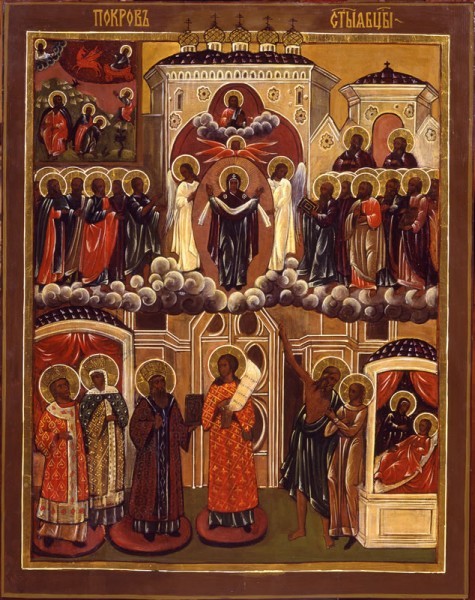 October 1,
according to the old style, is the feast of the Intercession of the Most Holy
Mother of God. It is not one of the Twelve Great Feasts, but simply a great
one; Its very establishment in Russia testifies to the extraordinary breadth
of liturgical thinking of our ancestors. This feast marks the defeat of the
Russians at Constantinople, and what breadth of thinking must Russians have to
introduce this feast in their own country – to celebrate how they were once
defeated. But it is not this that the Russians celebrate, but the miraculous
manifestation of God’s help and intercession of the Most Holy Mother of God.
Interestingly, in Greece, where it would be logical to celebrate this
celebration in a particularly solemn way, the Intercession is not as beloved
among the people, as revered as it is in Russia. There, the most beloved Feast
of the Mother of God is the Saturday of the Akathist, the Praise of the Mother
of God in the fifth week of Great Lent. In Russia, the most beloved Feast of
the Mother of God is the Intercession, and the Saturday of the Akathist, on
the contrary, is as if in some oblivion. However, it would be wrong to say
that in Greece the feast of the Intercession is completely unknown. But there
it is celebrated on another day - October 28 AD. The unity of Nativity and
Epiphany is manifested in the fact that these days are united by holy days -
holy days, special days that are comparable in some ways with the Bright Week:
there is no fast, but marriage, for example, does not take place during this
period. These are special days given to God, days of celebration. The
celebration of the Nativity of Christ is interrupted by the Circumcision of
the Lord - January 1 according to the old style. This is not one of the
Twelve Great Feasts, but a great feast, the only one of its kind, because on
this day the Lord’s feast is combined with the feast of the saint - the memory
of St. Basil the Great is celebrated. For this purpose, the liturgy of Basil
the Great is served, and it is worthy of attention that the polyelion at
Matins - the central part of the divine service - is given to Basil the Great,
i.e. when combining the Feast of the Lord and the Feast of the Saint, the
saint has primacy in some parts of the divine service. It’s an absolutely
unprecedented thing.
The Nativity of John the Baptist is celebrated every year on June 24. The most authoritative testimony of this saint belongs to our Lord Jesus Christ, who said that of those born of wives, no more John the Baptist rose (Mr. 11: 11, 11). The place befitting this testimony is occupied by the feasts of the Forerunner in Orthodox worship, there are seven of them in the church year and two of them are great.
This feast is performed according to the usual statute for the vigil service to the saint, and it makes no sense to describe it in detail. But the significance of this saint and this feast is noted in the divine service by the fact that at Matins the canon of John the Baptist is read first, not preceded by the canon to the Most Holy Mother of God.
We need to cite two texts full of strikingly successful and vivid images that hymnographers find to glorify John the Baptist. So it says in one of the aposticha (Glory on Praise):
“The star of stars, the Forerunner, is born on earth today, from a barren womb, John the beloved of God, and manifests the dawning of Christ, the Orient from on high.”
What amazing words: “star of stars”; in modern parlance we would probably use
the expression “first magnitude star”. There are many stars in the sky, but
among them there are particularly bright ones, and the Forerunner is called a
star that stands out among all the others. It is called dawn, followed by the
sun – Christ. 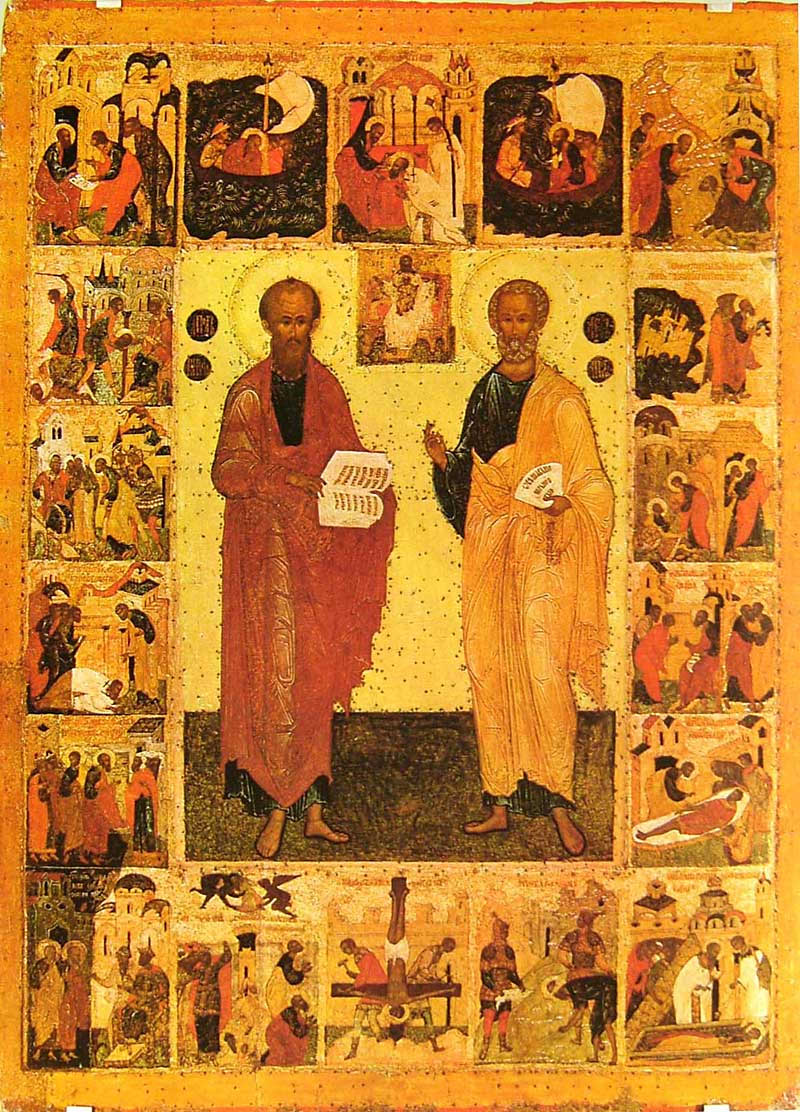
Another text (Glory in apostichon):
“See Elizabeth to the Virgin Mary (this is an appeal to each of us: look at the righteous Elizabeth, who says to the Most Holy Mother of God): What has come to me, Mother of my Lord? You are the King of The Noshishi, and az is a warrior. You’re a Lawmaker, you’re a Lawmaker. You are the Word, and az is the voice that preaches the kingdom of heaven.”
Beautiful and surprisingly good words tell us about John’s ministry as the Forerunner of the Messiah: the Lord the Lawgiver and John the Lawgiver, the Lord the Word, and John the Voice.
The peculiarity of this feast is that it has one day of feasting, which does not happen in the middle feasts of the saints. The feast of the Nativity of John the Baptist falls on the period of the St.Peter Fast, which precedes the day of the feast of the memory of the holy apostles Peter****and Paul (June 29, O.S.).
The memory of these saints is particularly marked by the fact that it is the only feast of the saints preceded by lent; all other fasts end with the Lord’s or Mother of Gods’ feast. This fast does not have a fixed beginning, so its duration is different every year: sometimes it is almost equal to the Great Lent, and sometimes it is very short - only eight days; it depends on the Triodion, on the date of Pentecost.
The memory of Peter and Paul is celebrated on the same day, because, according to church tradition, they died in Rome, suffered for Christ on the same day, although from a historical point of view this is incorrect. The Church seeks to show us the unity of their feat, the unity of their life and martyrdom, although in St. John the Baptist. In Scripture we find traces of their differences. Judging by the text of the Epistles, they sometimes made rather sharp remarks about each other: one about the incomprehensible language of the other (2 Pet. 3:16), the second about some inconsistent behavior of the first (Gal. 2: 11-14). But all this is overcome, all this is overcome by love for Christ, glorification of the Lord, to whom the life of each of them was directed, and it is not by chance that the Church established a joint celebration for them.
The very first text of the feast tells us about this (1 verse on the Lord, crying out at the vespers): “With these praise crowns we will tie Peter and Paul, separated bodies and copulated with the spirit…” One was one of the first apostles, who was a “witness of the Word and a servant,” the other was a persecutor who converted him in asupernatural and miraculous way. “Divided bodies”, not so much time during their lifetime they spent together, but they celebrate them together, and on the icon they are depicted together, “copulated in spirit”. This unity is revealed to us in worship as well. What sounds worn out and familiar to us: Peter and Paul, the Church of Peter and Paul, the Peter and Paul Fortress – we must feel more acutely, remember that this unity, “copulation of the spirit”, was not easy, as a result of overcoming many earthly conventions and divisions.
There is also an idleness in this feast: the day after the memory of Peter and Paul, the Council of the 12 Apostles is celebrated.
The last great feast of the whole year is the Beheading of the Head of the
Forerunner (August 29, O.S.). Maybe we do not feel it as the last feast of the
church year, because now we have everything mixed: the new year of the church
and the civil years, the old style and the new style. This is a Lenten day (as
well as the Exaltation of the Cross), and the Typicon contains a very
interesting and inspiring exhortation to the fact that that everyone on this
day will certainly fast. “All things shall be worthy of us on that day by
lamenting the dull being, and not by gluttony, by abstinence for the sake of
the life of the saint, and by the foul-killing bloodshed of it by Herod.” The
Typicon reminds us that John the Baptist lived in the greatest austerity, in
unimaginable poverty, not even eating bread; having no cup, he drank water
from a handful, “never drinking wine, nor drinking worldly.” What should we do
on the day of his memory: “Do we drink wine?” Do we eat from other sweet
brushes? Should we enjoy earthly joys on this day? No, we must observe
fasting, “let us not show up to Herod’s gluttony.” 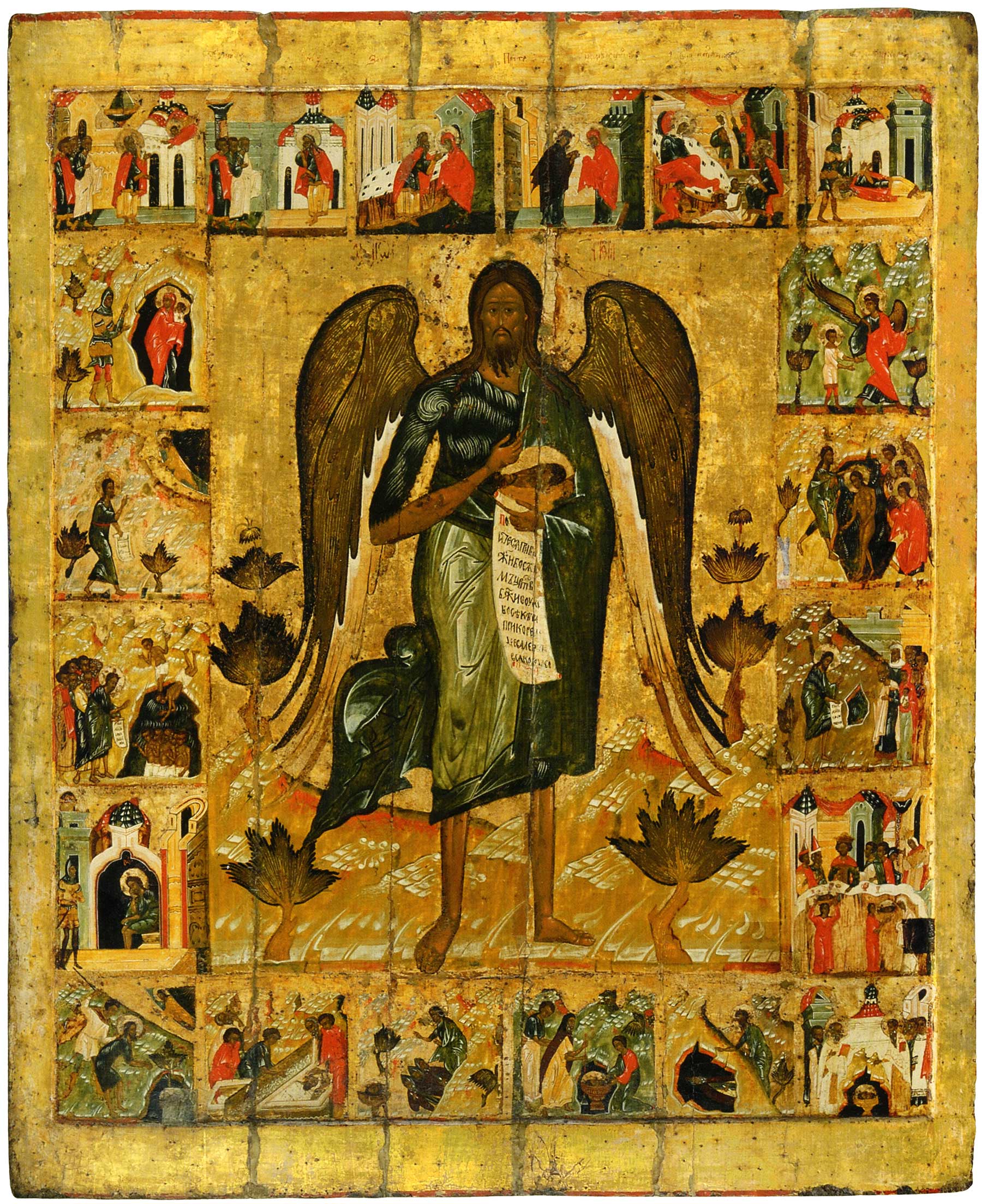
This chapter talks about those who attach importance to the quality of the food, and not to fasting (some believe, for example, that on this day you can not eat anything round). The editor remarks to this: “There is nothing to be found in the various typicons” - we could not find anything about this in other typicons. It is necessary to attach importance not to the quality, not to the form of food, but to fasting, the very idea of abstinence on this day “for the truth of the suffered prophet.”
Each feast has its own special image, its own special atmosphere, which we most acutely perceive in the church. The feast of the Beheading of John the Baptist is characterized by a strict, focused mood. In the church on this day there is a very special silence, it can be heard and felt. The events that we remember on this day are indelibly terrible, bitter, blasphemous. This can only be a feast in the ecclesiastical sense: this day should be free from worldly affairs and dedicated to God, to the Church.
The charter of this day is customary for a great feast, but the liturgical texts, surprisingly vivid, are among the best in the entire church year. Here, for example, is the stichera sung after Psalm 50:
“The disciple of the most evil devil danced, and received thy head as her reward, O forerunner. O feast full of blood! Better would it have been not to have sworn thine oath, O iniquitous Herod, grandson of lies! For even though thou didst make thy vow, it was not well sworn. Better would it have been to be proved false, than to cut off the head of the forerunner, who spake the truth. Yet, honoring the Baptist as the greatest born of women, we call him blessed, as is meet.”
The last words, which are the refrain of several stichera, contain a vivid contrast to “a feast full of blood”, to the devil’s work. We, the people of the Church, are not with those who feast with Herod, we seem to take the other side and honor the Forerunner, glorifying him as the greater among those born of wives.
The 4th stichera on “Lord, I have cried” at vespers begins with the words: “Again Herodias rageth insanely, again is she vexed (John Chrysostom, persecuted by Empress Eudoxia, who was ready to do anything to destroy him, began his sermon with these words: Again is Herodias furious, again is looking for the head of John …).
“Again Herodias rageth insanely, again is she vexed. O what deceitful dancing, what a feast of deception! The Baptist is beheaded, and Herod is troubled. Through the supplications of Thy forerunner, O Lord, grant peace to our souls.”
Liturgical texts constantly confront us with the horror, the blasphemy of this event, and at the same time do not leave us in this darkness. A remarkable thought captured in the kontakion of the feast:
“The glorious beheading of the forerunner was part of God’s dispensation, that he might proclaim to those in hades the coming of the Savior.”
Even this terrible event is provided for by Divine providence. John the Baptist was the Forerunner, the forerunner of the Savior in all things: in the preaching of repentance, and in suffering and death. And in hell the Forerunner appeared before Christ, with the preaching of the Savior’s coming. This is the “divine gaze”, the meaning of the feast, which is revealed in the liturgical text.__
Divine service on Twelve great Feasts** (moveable)**
The Holy week and Easter week form the center of the liturgical year. They are
the time in the life of the Church, which is preceded by a long and serious
preparation – Lent. The last, 6th week of Great Lent has a special name -
“palm week”. All its days from Monday to Friday have the following definition:
“Palm Monday”, “Palm Tuesday”, etc. This week, by its arrangement, by the
content of the divine service, is aimed at the Palm Week, or to the feast that
we habitually call the “Entry of the Lord into Jerusalem”. 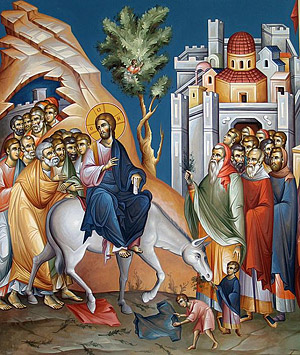
The divine service of these days reveals to us an important principle of the Church Statute. Participation in church worship is not simply a remembrance of past events or contemplation of theological ideas – everything in the organization of worship is aimed at ensuring that the events remembered and celebrated by the Church are experienced by us in essence, become a fact of our life, so that we enter the reality into which the Church seeks to lead us. This is achieved in different ways, and during the Palm week, for 5 days, there are chants that make us tensely wait for the events of the end of the week.
This week should lead us to two special feasts – Lazarus Saturday and Palm Sunday. On Saturday, the Church celebrates the resurrection of the righteous Lazarus. We remember that the Lord resurrected the man, who was already dead for four days (John 11:1-45). The Lord knew that Lazarus was sick and then dead, and yet it was as if he had deliberately delayed not coming to Bethany, even though the house of the righteous Martha and Mary and their brother Lazarus was the house that the Lord apparently frequented. And so, knowing about the illness of Lazarus, his death and burial, the Lord came when he had been lying in the tomb for 4 days. All this is experienced and appears in worship. There are mentions of this in the liturgical texts from the first days of the week: “Yesterday and today was the illness of Lazarus, Christ was shown by relatives…” - yesterday and today Lazarus is already sick, and Christ knows about it, because he was informed by relatives. Thus, we are not just informed, but involved in the course of events. On Wednesday, we hear, “Today Lazarus has died,” Lazarus died today. And finally: “The day of Lazarus the dead is buried…” – he is already put in the coffin. Thus, all the stages preceding this great miracle are traced. And we, together with the sisters of Lazarus, are waiting for the Lord and wonder why He does not come. This week becomes the path leading to the day of the resurrection of Lazarus.
Holy Week and the feast preceding it – Palm Week and the Saturday of Lazarus – must be distinguished from Great Lent. The Great Lent is a time of preparation, and the Holy Week is no longer a fast, but the goal of the fasting, something that we have been preparing for, and in which we must, having prepared and worked to the best of our ability, participate. On Palm Friday, the following text is sung several times: “To the soulful one who has committed the quadrangle…” i.e. having already finished the time of the Holy Forty Days, which was supposed to benefit the soul, ”… and the Holy Week of Thy Passion we ask you to see, Lover of man.” On Friday during the week of the Holy Four Days ends; we are already standing on the eve of Holy Week.
There are 6 weeks in Great Lent, but Saturdays and Sundays are not fasting days – not in the sense that bodily abstinence is abolished, but in the fact that the arrangement of divine services is completely different: on Saturday and Sunday a full liturgy is celebrated, the Sacrament of the Eucharist is celebrated. As for food, on Saturday and Sunday there is always a relaxation of fasting on spruce, and thus Saturday and Sunday are not among the days of theGreat Lent. So, 6 weeks and each 5 days, a total of 30 fasting days, but we are talking about the Holy Lent. Here it must be said that the idea of pre- Easter fasting has existed since ancient times and is an apostolic institution, but the calculus of the days of the Great Lent has undergone very significant changes. Thus, in the Orthodox East until the IX century there was no unity in determining the period of the Great Lent. It is clear why the Great Lent, sometimes also called the Holy Forty Days, has such a name - after all, Reverent Fathers decided to liken their fast to the fast of the Lord, who stayed in the wilderness for 40 days, but the arrangement of this fast turned out to be quite difficult. The pre-Easter period could consist of both 7 and 8 weeks: from the beginning of Lent to the day of Easter, it could be both seven and eight weeks. Our cheese week (as we know, the pennant for meat occurs already a week before Lent) is marked by many features of the Lenten service and is a semi-fasting week. This is the remnant of the eight-week pre-Easter fast that existed in the East. Its duration varied because it was constantly sought to bring the number of days of fasting to 40 days. But it was not possible to fully implement this: despite all attempts to bring the number of fasting days to 40, this is possible only at the cost of some stretches and looks somewhat far-fetched.
The Saturday of the Lazarus Week in its liturgical dispensation is a very special, unlike anything else day. On the eve of Friday, as on all Fridays of Great Lent, the liturgy of the Presanctified Gifts is celebrated. Since this liturgy is always served at Vespers, begins with vespers, the Saturday of Lazarev begins already at the heel of the evening. In parishes, the Presanctified is served on Friday morning, and this is already the beginning of the liturgical day of Lazarus Saturday. From that day onwards, the menaion service is postponed until the Monday of St.Thomas Week. It is easy to understand that this is not some kind of formal establishment, and this is an indication that no glorification of saints is now inappropriate - a period has come when everything is focused on one thing, so all worship during this period is carried out only by Triodion. The exception is the feast of the Annunciation of the Blessed Virgin Mary, which is necessarily celebrated, on whatever day of Holy or Bright Week it falls this year.
The Saturday of Lazarus and the Palm Week that follows are to some extent a single feast: they have a common troparion dedicated to the events of these two days. In addition, some parts of the Sunday service, which cannot be performed on Palm Sunday, because this is the Lord’s Twelve Great Feasts, have been moved to Saturday.
So, matins, which are performed on Saturday of Lazarus, contain several Sunday texts - those that, in the usual order of worship, are sung only on Sunday and are an indispensable part of the Sunday all-night vigil. So, after the 17th kathisma, the familiar Sunday troparia following Psalm 119 are sung: “The assembly of angels”. But what is even more surprising is that on Lazarus Saturday the Resurrection of Christ is sung – the text that we sing only on Sundays and during the celebration of Easter. The Saturday of Lazarus is the day when we are convinced of the universal resurrection “before the passion” of Christ, and even before His rebellion we see the Resurrection of Christ in the resurrection of Lazarus. After singing the canon, the verses “Holy is the Lord our God” are proclaimed - this is the text of the Sunday service. 8 doxology stichera are sung, like on a Sunday,, and their Theotokion “Most blessed art Thou, O Virgin Theotokos…” taken from sunday service. Behind the prescriptions of the Charter is the desire to show us the content of the event and its true meaning. The service is essentially a Sundayone , and Lazarus Saturday anticipates the joy of Easter. The liturgical texts unequivocally testify to the Sunday nature of the divine service of this day.
In the exapostilarium of this day, read on “Glory and now”, we hear the words of apostle Paul (1 Cor. 15:55), which we will soon hear in the jubilant Easter word of John Chrysostom: “With Lazarus Christ is already destroying you, death, and o grave, where is thy victory? Bethany weeping is now placed on you; we will bring all the branches of victory to Tom.” This text shows us the unity of Lazarus Saturday and Easter, Lazarus Saturday and Palm Week.
Reminding us of the external outline of events, liturgical texts reveal their deep theological meaning. Some dwell on the testimony of the two natures of Christ, human and divine. Thus, the synaxarium is preceded by these verses: “Weep, Jesus, this mortal being; revive thy friend, these divine fortresses.” The fact that You, Lord, mourn Lazarus, the manifestation of a “mortal being,” the resurrection of a friend is a testament to Divine power.
On Lazarus Saturday, the liturgy of John Chrysostom is celebrated in its usual order, but it is not the Trisagion that is sung, but the “For as many of you as were baptized into Christ”. On the exclamation Of the Most Holy Mother of God, the zadostoinik is sung, although the Typicon does not mention this.
Palm Sunday**,** The Flower Week, the feast of the Entry of the Lord into Jerusalem - these are all names of the feast that takes place on the next day. On this day, we do not sing Sunday hymns, we do not celebrate the Resurrection of Christ, and it must be said that such a construction of the divine service is subject to general rules: if one of the Twelve Great Feasts of the Lord falls on a Sunday, “we do not sing the Sunday”, i.e. Sunday is not celebrated, but only the Lord’s Feast. In a sense, we can say that Sunday is postponed to Lazarev’s Saturday. The troparion of the feast is common with Lazarus Saturday, however, there is also a second troparion of the Entry of the Lord into Jerusalem; it is the only Lord’s feast that has two troparia. This second troparion shows us a special feature of this event, it sounds like this:
“Buried with Thee through Baptism, O Christ our God, we have been granted immortal life by Thy Resurrection, and we sing Thy praises, saying: Hosanna in the highest! Blessed is He that comes in the Name of the Lord”
Here it is said on behalf of all who gathered in the church: “Be with Thee through Baptism, O Christ our God,” behold, we were baptized and by our baptism we were buried to You, we died with You, Lord, and granted immortal life “by Thy Resurrection.” It is very interesting that the troparion talks not about the event being celebrated, but about the mysterious meaning of the Christian life. Related to the same theme in the Palm Week is one sticheron; it is repeated 7 times during the service, with surprising consistency.
“Today the grace of the Holy Spirit has gathered us together, and we all take up Thy Cross and say: Blessed is He that comes in the Name of the Lord; Hosanna in the highest.”
This text is repeated, of course, not because for so many centuries there has not been a person who would compose six more stichera to replenish the divine service, but because the text of this poem is very important. Imagine parents raising a child: “I told you, and yesterday I told you, and today I say again”; what is important is repeated by the parent. On “Lord, I have cried” this sticheron is heard two times in a row, in the same cycle it sounds on Glory and on And now, on the apostichon it is sung twice and at Matins after Psalm 50. Probably this text should be given special attention. It says that the Lord has gathered us in the Church and united us by the grace of the Holy Spirit. And then the mysterious words: “And we all take up Thy Cross and say.” Usually we talk about carrying our Cross, but how do we take the Cross of Christ? It must be about a fervent heartfelt desire to share everything with the Lord. It says here that we meet Him with all our being: the Lord is coming to a free passion, and we go with Him, This text is very personal, it relates personally to everyone and at the same time unites all whom “the grace of the Holy Spirit has gathered.”
The service of the Palm Week is an All-Night Vigil, with reading of Prophecies (Paraemia) and a lity at great vespers, and polyeleos and festive ending at matins. Palm Sunday is also notable for the fact that on this day we carry blossoming branches of willow to the church. Interestingly, the Typicon does not mention Christmas trees or birch trees on the Trinity, but on Palm Sunday it indincated the consecration of the branches, and in a very important place of service - after the Gospel and Psalm 50 . During the reading of Psalm 50, a huge bundle of branches is censed, which should then be distributed to the brethren, but before that a special prayer is said for the consecration of the willow branches and they are sprinkled with holy water (the Typicon does not talk about sprinkling). And when the brethren come to kiss the Gospel, the abbot gives everyone these branches. Of course, these should be branches of a date palm, but in Russia we do not grow palm trees. At this time in Russia, the willow is usually just blooming, that is why in Russia we call it Willow Sunday . It is worthy of attention that the consecration of these twigs is performed not before the service and not after the service (somewhere there, on the outskirts, when everyone is already dispersing), it is performed in the very center of the service, in its very heart. And the abbot distributes these twigs to the brethren, so that now, during the reading of the canon, everyone will touch them as their people, the youths who met Christ, touched them. This moment testifies not to the “theatrical splendor” of worship, but to the fact that the feast should enter our entire being – through sight, hearing, smell (when we feel the fragrance of censer smoke) and even touch. All our bodily senses, open to the perception of this higher, spiritual reality, help us to approach it.
After ode 9 of the canon, there is no exapostilarion. “We do not serve the exaposilarion, but timmediately: Holy is the Lord our God,” the liturgical books say.
The Divine Liturgy on this day is celebrated according to the rite of John Chrysostom, during which festive antiphons are sung and the entrance verse is proclaimed. Its peculiarity is also in the fact that the zadostoinik is sung, the festive release is pronounced.
The liturgyof Palm Sunday is over, and we are already entering Holy Week. First of all, we will talk about the service of its first three days – Monday, Tuesday and Wednesday. They have unity in the service Charter and jave many common features. But first of all, it should be noted that vespers performed on Palm Sunday - on Sunday evening - once again show us the main feature of vespers, its position between liturgical days. The day ends not before or after Vespers, but inside it. This is especially noticeable when the liturgy is celebrated at Vespers, but also in some other cases - for example, in the evening of Cheese-fare Sunday, in the evening of Palm Sunday.
On “Lord, I have cried”, stichera to the Entrance of the Lord into Jerusalem are still sung:
“The Saviour has come today to the city of Jerusalem, to fulfil the Scriptures; and all have taken palms into their hands and spread their garments before Him.” (2 stichera on the Lord I have cried).
The aposticha indicate the transition—both in the life of the Lord, in the service, and, therefore, in our own lives:
“Passing from one divine Feast to another, from palm s and branches let us n ow make haste, ye faithful, to the solemn and saving celebration of Christ’s Passion.”
The subsequent stichera are quite different. They also talk about the events of the Passion Week, when a host of evil is plotting condemnation and execution of the Lord, and begin the theme of the eleventh hour for each of us, when it is still possible to change something, to come to your senses. Thus, the first sticheron tells us about the transition from the feast of Palm Sunday to the Holy Week, and the second begins with these words:
“It is a fearful thing to fall into the hands of the living God: for He is Judge of the thoughts and meditations of the heart…”
Here we are talking not about the events of the Gospel, but about the fate of each of us, about the choice that we must make.
 The Feast of the
Ascension of the Lord is celebrated on the fortieth day after the Resurrection
of Jesus Christ, the day on which the Lord ascended to heaven (Acts 1, 1-12;
Mk. 16, 12-19; Luke 24, 50-52). This day always falls on the Thursday of the
sixth week after Easter.
Through the Ascension of the Lord, the fallen human nature of Christ, the Master of our salvation, is raised from earth, decay, and death to a never- ending life in heaven. Christ, having been resurrected by the power of His divinity through Ascension, has honored the deified and spiritualized human nature with the greatest honor and glory of sitting at the right hand of the Father.
According to the Gospel narrative and liturgical hymns, on the day of the Ascension of the Lord, the apostles were given to understand that Christ would no longer be seen on earth in bodily form, as it was before and after His Resurrection. And this is because from the Ascension He and in His humanity received the glory that He always had through His divinity, and a place equal to God the Father in dignity and power, which is figuratively called “to sit to the right of the Father.”
Having ascended to heaven and sat at the right hand of the Father, the Lord did not leave the earth with His divine presence. He is invisible to the bodily eyes of Christians, but as the kontakion of the Feast of the Ascension says, “not being parted from those who love You, but remaining with them” and promises those who believe in Him and love Him: “I am with you, and no one is will be against you.”
Through His Ascension, the Lord became even closer to man, to all those who believe in Him. Now He is on earth not only in His omnipresent Divinity, but also in the great and heavenly sacrament of the Eucharist- His Divine Body and Blood, which are sincerely communed by the faithful.
The Glorious Ascension of the Savior to Heaven was the continuation and completion of His glorification for mankind, which began in the Resurrection and was founded by the Cross of Christ. Here the sacrament of the planning of our salvation by Christ in His staying in flesh on earth is accomplished and completed: “The Lord ascends to heaven, desiring to perform the Father’s sacrament till the end:.
The ascension of Jesus Christ into heaven at the same time opens the way for all believers to heaven, to eternal life, just as His death and Resurrection are the victory over sin and death for all mankind. Christ ascended to heaven as the firstborn of the dead, imagining in His Face the beginning of His redeemed and regenerated human nature. He ascended with glory to the Illuminator His Father, appeasing all things, destroying by His Cross the ancient condemnation of mankind and the “mediastinum” (barrier) of enmity between man and God to His passion.
The establishment of the feast of the Ascension of the Lord dates back to ancient times. This is evidenced by the evidence of written monuments. Thus, already the Apostolic Decrees prescribe that it be performed on the fortieth day after Easter (book V ch. 18). Especially important are the testimonies of St. John Chrysostom († 407) and St. Augustine († 430). St. John Chrysostom calls this feast the most important and great and refers to the category of feasts that, like Easter and Pentecost, were established by the apostles. St. Augustine, mentioning the universal celebration of the feast, according to Tradition, also assimilates to him the apostolic institution. The canons for the Ascension of the Lord were written by St. John of Damascus († 776) and St. Joseph the Hymn Writer († 883). The kontakion and ikos belong to St. Roman the Melodist (V century).
The Feast of the Ascension is one of the moveable feasts of the Lord and lasts ten days: one day of pre-feast, coinciding with the giving of Easter, and eight days of feasting. The feast takes place on the Friday following the feast of the seventh week of Easter.
On the feast of Pentecost, the descent of the Holy Spirit on the apostles in the form of fiery tongues is remembered and glorified.
This feast received the name of Pentecost both because the event remembered on this day took place on the Old Testament feast of Pentecost, and because after Easter it is on the 50th day. This feast is also called the Day of the Descent of the Holy Spirit on the Apostles and the Day of the Holy Trinity (colloquially - Trinity Day). The latter name is explained by the fact that the descent of the Holy Spirit on the apostles revealed the perfect activity of the third person of the Most Holy Trinity, and the teaching of the Lord Jesus Christ about the Triune God and the participation of the three hypostases in the salvation of humanity has reached perfect clarity and completeness. On this feast day, the Church especially calls on believers to worship the Triune God: the Son in the Father with the Holy Spirit.
The feast in remembrance of the great event of the descent of the Holy Spirit was established by the apostles. After the day of the descent of the Holy Spirit, they began to celebrate the Day of Pentecost annually and commanded all Christians to remember this event (1 Cor. 16, 8; Acts 20, 16). The Apostolic Decrees command the celebration of Pentecost: “Ten days after the Ascension, there is the fiftieth day from the first day of the Lord (Easter); let this day be a great feast. For in the third hour of this day the Lord sent the gift of the Holy Spirit.” So the feast of Pentecost, called the Day of the Holy Spirit, was celebrated solemnly by the Church from the very first times. A special triumph was given to him by the custom of the ancient Church to perform baptism of the announced on this day (hence the singing at the liturgy of the feast “For as many of you as were baptized into Christ”). In the IV century, St. Basil the Great composed kneeling prayers, recited to this day at the festive vespers. In the eighth century, Saints John of Damascus and Cosmas of Maiuma composed many hymns in honor of the feast, which are still used by the Church today.
Since ancient times, the custom of decorating churches and dwellings with tree branches, plants and flowers on the feast of Pentecost has been preserved. This custom was observed in the Old Testament Church on the feast of Pentecost (Lev. 23:10-17). Naturally, this is how the Zion Cenacle was decorated, where the Holy Spirit descended on the apostles on the day of Pentecost. From the apostles and Christians decorate their churches and houses with green tree branches and flowers. The decoration of the green branches of churches and houses is reminiscent of the sacred oak tree of Mamre, where the patriarch Abraham was honored to meet the Triune God under the guise of three wanderers. The trees and flowers of the renewing spring on this day of divine grace point to the mysterious renewal of our souls by the power of the Holy Spirit and serve as a call for the spiritual renewal of all our lives in Christ the Lord and Savior.
On Monday after Pentecost, there is a feast in honor of the All-Holy, Life- Giving and All-Powerful Spirit, united in the Trinity, consubstantial to the Father and Son. This separate worship service and the glorification of the Holy Spiriton the next day of the feast is performed “for the sake of the All- Holy Spirit.”
- Great Feasts apart from the Twelve great Feasts
Related Concepts
- agony
- ascension
- beheading-of-john-the-baptist
- bridegroom
- cana
- chalcedonian-doctrine
- communion
- confession-of-jesus
- divine-power
- divinity-of-christ
- easter
- farewell-discourse
- hades
- holy-spirit
- holy-week
- liturgical-calendar
- love-to-the-end
- marian-feasts
- nativity-of-john-the-baptist
- palm-sunday
- palm-week
- pentecost
- peter-and-paul
- resurrection
- resurrection-of-lazarus
- russian-liturgical-reception
- salvation
- session-at-the-right-hand
- st-basil-the-great