Liturgics — 12. The Fixed Annual Liturgical cycle
-
The importance and the meaning of a fixed yearly liturgical structure
- The concept of the 12 Greatest feasts (Dodekaorton) of the Orthodox Church.
- The services that are fixed throughout the year.
-
The Fixed Annual Liturgical cycle.
CYCLE OF ANNUAL WORSHIP****
As with the days of the week, the Orthodox Church sanctifies the days of the year with special memories. These services are collectively called annual, that is, they are performed once a year. Every day of the year is dedicated to remembering the most important events in the earthly life of our Lord Jesus Christ or the special graces of God revealed to the Christian race, or the memory of the holy pleasers of God. These memories, connected with the days of the year, serve as the theme of the services, revealed in the changing parts of the divine service, without changing, however, its structure. The services are maintained in the Menaion of the Month and are arranged according to the month, that is, according to the numbers of days of each month. Some of them, depending on the importance of the rememebered events, are celebrated in a solemn way, others less solemnly, and some go on an ordinary daily service. Solemn services of the annual cycle are called festive ones, and this day is called a church feast. Annual worship, in addition to festive ones, also includes services of days of remembrance: on the Saturday before the Meatfare Week, on Saturdays of the 2nd, 3rd and 4th weeks of Great Lent, on the Saturday before the Week of Pentecost (Trinity Saturday), on the Saturday before the feast day of the Holy Great Martyr Demetrius of Myroblute of Thessalonica - October 26 (Demetrius Saturday), on the day of the Beheading of the Head of St. John the Baptist - August 29, on Tuesday or Monday of the Week of Thomas (this day is also called Radonitsa). The annual cycle also includes lent services services, that is, the services of the Great lent and Holy Week, given in the Lenten Triodion, and the services of Pentecost, starting from the day of Holy Easter, explained in the in the Colour Triodion.
In terms of time, the memories of the holidays are divided into immovable and movable: some are timed to the day, and others to the date; therefore, some of them change the day without changing the date, while others change the date without changing the day. The former are called immovable, while the latter are called movable. The main of the fixed feasts of the Lord is the feast of the Nativity of Christ, and of the movable ones is the feast of Easter. In addition, the holidays are divided into general, equally solemnly departing in all temples, and local, which are performed with special solemnity in individual areas.
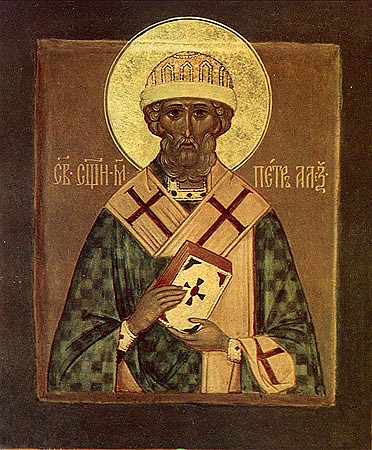 The sanctity of feast days was guarded
constantly by ecclesiastical rules (Peter of Alexandria rule 15, Laodicean
Council rule 29, Sardica council rule 11, Timothy of Alexandria rule 13,
Carthaginian council rules 71, 72; The Sixth Ecumenical Council rules 66 and
80, the Nomocanon rule 162). It is the duty of the clergy of the Church to
instill in believers the need to sacredly observe the feast days by attending
divine services, staying in prayer, abstinence, works of mercy and resting
from their daily labors.
The establishment and observance of church feasts is necessary for our salvation. Being dedicated to remembering the greatest events in the history of the Economy of our salvation and the greatest blessings of God to people, they clearly teach us the truths of the Christian faith and, imprinting them in our minds, excite and nourish in the hearts of people love, reverence, gratitude and obedience to God. By presenting the examples of the Christian virtues revealed to us by the Savior during His earthly life, which were zealously imitated by the many holy pleasers of God, the feasts remind us of heaven, of the true purpose of our life on earth, indicate the means to achieve this goal, warm up in our hearts the desire for virtue, strengthen in us the determination to go “to the honor of the highest rank” (Phil. 3:14) and by examples of the life of the saints to march without stopping and steadily, as St. Gregory the Theologian († 389) says, “in the footsteps of that good leader” who directly “brings to the breadth of the bliss of heaven.” Christian holidays, accompanied by church-wide prayer, lead us into mysterious communion with God, bring Down His helping grace on us, enlightening and sanctifying our souls, strengthening them to fight sin.
God is always close to man in His omnipresence, but man is not always close to Him in his spiritual imperfection, in his inattention and absent-mindedness, in his preoccupation with worldly affairs, in his tendency to act contrary to God. Holidays provide an opportunity to move away from earthly thoughts with the mind, with the heart from worries, with the body from everyday work, in order to get closer to God without any obstacles. Therefore, on feast days it is necessary to leave all worries and deeds, and everything that separates us from God, and come to the church, where everything reminds us of the appearance of our God, where the Word of God sounds and the Spirit of God breathes, where the Calvary Sacrifice of Christ resumes and grace opens its arms to the worshippers, where angels will serve the secret people, and they mysteriously portray themselves as Cherubim. According to the teaching of the Church, from the consecration of the festive day and from the diligent visit to the church of God, there is a pure blessing and success in all the good undertakings of the Orthodox Christian.
Christian feasts are necessary not only for spiritual salvation, but also for
bodily, earthly well-being. “The honest and varied celebrations of the
festivities,” says Saint Proclus, Archbishop of Constantinople († 446-447),
“serve as a consolation for human life: they turn the sad heaviness of life
into merriment.” By teaching us to always rejoice in the Lord, the feasts,
like the days of church celebrations, bring sacred gaiety to our spirit,
purifying and elevating our earthly joys, driving away despondency,
alleviating the cares and hardships of life, have a beneficent influence on
every Christian and provide a wide opportunity to show love for one’s
neighbor. These days, everything touchingly tells us about the goodness of God
to the human race, excites in us feelings of tenderness, meekness, mercy and
compassion, and the heart involuntarily opens for brotherly love for neighbor.
Properly held church feasts bring God’s blessing down to our pursuits and
labors and other days of the year (Isa. 56:4-6; Jer. 17:21-27), bring peace to
the body, and strengthen strength. 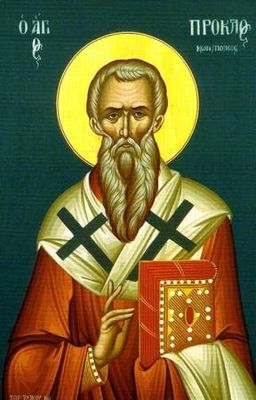
Feasts without spiritual joy, without heartfelt participation and inner feeling, in the words of His Eminence Filaret, Metropolitan of Moscow (1782-1867), are a body without a soul. The feasts reveal to us the vast field of religion, prayer, the Word of God, the works of love and strengthen our spirit with gracious powers. Man feels the possibility in the hereafter of bliss that he can receive from God, and his premonition excites the heart of man on these holy days, giving him spiritual satisfaction, destroying the deadly monotony of everyday life. The joy of the feast supports in a person cheerfulness of spirit and love for work.
But Christian festive joy is not the joy of doing nothing and entertaining the vain. For a Christian, true festive joy can be expressed as follows: if your hands and back break from yesterday’s work, but you willingly go to the church and are not afraid of fatigue; if your feelings, thoughts, and heart are so preoccupied with worship that you forget the outer, then you truly rejoice in the Lord; if, even after leaving the church, you bring the peace of your soul into the atmosphere of the home, family, then you have rejoiced in the Lord. The joy of the Lord, the inner, spiritual consolation, visits and fills the heart of a person, and he feels spiritually saturated, filled so that the thirst for external pleasures subsides and stops. Spiritual joy motivates him to spiritual and God-pleasing deeds - love and mercy for his neighbors, who, being reborn in the hearts of the beneficent, bring the greatest consolation and bliss.
St. Gregory the Theologian teaches: “To celebrate is to acquire for the soul goods that are constant and eternally possessed; the main thing on the holiday is the remembrance of God and our heavenly fatherland.”
“The Holy Church,” says His Eminence Demetrius, Archbishop of Kherson (1806-1883), “established feasts so that our soul, rejecting all the cares and cares of life, could freely ascend to its heavenly homeland, breathe the native heavenly air; that our thought, having shaken the dust of the earth, renouncing the vain thoughts, may immerse itself entirely in the contemplation of the mysteries of God, rest in the vision of the abodes of heaven, prepared for those who love the Lord; that our hearts, freed from the burden of the passions and lusts of the flesh, may enjoy the treasures of the love and grace of the Divine and drink, in the words of the holy prophet, from the tuk of the house of God; that by spending the triumphs of the church in psalms and spiritual songs and singing and songs, we prepare ourselves for the great and glorious triumph of God’s elect, who sing to God the eternal and unceasing song of praise and thanksgiving.”
“Feasts,“st. John Chrysostom teaches († 407), “are established so that we may conduct them piously, they are the discovery of good deeds, the piety of the soul, the improvement of life.”
According to the teachings of St. Cyril, Archbishop of Alexandria († 444), “it is least proper for God to do an inglorious and very painful sin, but, on the contrary, letting go free and saturating the mind, to enjoy virtuous pursuits.”
“Everyone,” says St. Gregory the Theologian, “has his own way of triumphing: a Jew celebrates, but according to the letter of the law; celebrates the Hellenes, but physically, in the satisfaction of passions, in pleasing the demons, and we must celebrate spiritually.” Spiritual and worthy of a Christian celebration , - teaches His Eminence Philaret, Metropolitan of Moscow “consists in being free from pleasant work to the womb, scattering, vanity, vanity of various kinds; to make in every possible way one’s mind, one’s heart, and one’s very feelings idle from every creature seducing, caring, embarrassing, so that it may be possible to receive God into the mind, into the heart, into the inner sense by contemplation, desire, sensation, through spiritual teaching, through pure prayer, through works of goodness and holiness.”
TYPES OF FESTIVE ANNUAL LITURGICAL CYCLE****
Christian feasts, according to the importance of the events remembered by the Holy Church, are divided into great, medium and minor and differ from each other in the nature of worship (Charter, Chapter 47). Holy Easter, or the day of the Resurrection of Christ, as a feast of feasts, has a special service that distinguishes it from the services of other feasts.
The great feasts include the Twelve great feasts of the Lord and the Theotokos and some other feasts, as well as feasts in honor of saints. The great feasts, therefore, include the following.
Feast of Feasts: Bright Resurrection of Christ.
Twelve Great Feasts:
 1)
The Entry of the Lord into Jerusalem (the week before Passover);
-
Ascension of the Lord (on the 40th day after Easter);
-
Pentecost, or the descent of the Holy Spirit on the apostles (on the 50th day after Easter);
-
Baptism of the Lord (January 6);
-
Presentation of the Lord (February 2);
-
Transfiguration of the Lord (August 6);
-
Exaltation of the Holy Cross of the Lord (September 14);
-
Nativity (December 25);
-
Nativity of the Blessed Virgin Mary (September 8);
-
Introduction to the Church of the Blessed Virgin Mary (November 21);
-
Annunciation of the Blessed Virgin Mary (March 25);
-
Assumption of the Blessed Virgin Mary (August 15).
Other feasts:
Circumcision of the Lord (January 1);
Intercession of the Most Holy Theotokos (October 1);
Nativity of John the Baptist (June 24);
Day of the Holy Apostles Peter and Paul (June 29);
Beheading of the head of the Prophet, the Forerunner and the Baptist of the Lord John (August 29).
On great feasts, worship is dedicated to the event being celebrated, which is reflected in variable parts of the service (readings, prayers and chants). In addition to the particular features in the worship of some of the feasts, which are indicated in the Menologium and Triodion, only festive canons are sung at matins on all these feasts. On all the Twelve Great Feasts dedicated to the Lord, on any day of the week, as well as on all the Twelve Great Feasts dedicated to the Mother of God and on the Feast of the Circumcision of the Lord, if they occur on weekly days, special choruses and immediately the irmos of ode 9 are sung on ode 8 instead of “More honourable”. On all Twelve Great Feasts at the Divine Liturgy, instead of “More honourable”, the irmos of the 9th ode of the canon is sung - the zadostoinik - a hymn replacing “More honourable”. On the Lord’s Twelve Great Feasts, if they coincide with Sunday, only the festive service is sung, and the Sunday service is canceled. At the Divine Liturgy on these days, festive antiphons are always sung, if the church feast does not coincide on these days, and a special “entrance” is pronounced. After the services, special dismissals are read.
On the great feasts of the Mother of God and in honor of the saints, if they occur on a Sunday, the festive service is combined with the Sunday one, and the feasts themselves do not have the above features of the Lord’s feasts.
In the church celebration of the Twelve Great Feasts, in addition to the feast day itself, it is necessary to distinguish, as their peculiarity, the days of forefeast, afterfeasting and the giving of the feast. Some of the Lord’s feasts are preceded and concluded by special Saturdays and weeks, as indicated in the Menologium. Forefestivities and afterfestivities appeared in the Church of Christ early and were accepted in divine services in the IV century, mainly at the most important feasts - Holy Easter, Pentecost and Nativity. In the following centuries, the number of forefeasts and festivities increased: the Holy Church, for greater solemnity, attaches them to other great feasts.
On the days of the forefeast, the Orthodox Church, prophetically predicting the day of the great feast, prepares the faithful for its worthy meeting. Therefore, on these days, along with prayers and hymns to the saints, the Holy Church offers prayers and chants in honor of the upcoming feast. The Twelve Great Feasts have one day of forefeast, with the exception of the Nativity of Christ and the Epiphany: Christmas - 5 days, and Epiphany - 4 days. The charter, indicating the number of days of celebration of the feast, begins counting from the day of the feast to its giving, not including in the number of days of the forefeast.
Days of celebration follow the feast. Along with hymns to the daytime saint on these days, the Orthodox Church sometimes remembers and glorifies the participants of the event, in general - the event of the former feast. In addition to these types of worship, on the days of forefeast and feasting, there are others: if a saint happens on these days with a vigil or polyeleos or days sung on 6, as stated in a special chapter of the General Menaion. The number of days of festivities varies and, depending on subsequent feasts or days of fasting, ranges from one to eight (and forty for Easter). The last day of the feast is called the apodosis of the feast and differs from other days of the feast by the greater solemnity of the divine service.
Medium feasts are of two types: some, like the great feasts, have an all-night vigil, others only a polyeleos. The order of celebration of the middle feasts is mentioned in a special chapter of the General Menaion.
In liturgical books, medium feasts with the vigil are indicated by a red cross in a semicircle, and those with a polyeleos are marked by a red cross.
The all-night vigil takes place on the following feasts: The Council of the
Three Saints (January 30), the Great Martyr George the Victory-bearer (April
23), the Holy Apostle and Evangelist John the Theologian (May 8), Saints Cyril
and Methodius (May 11), the Holy Equal-to-the-Apostles Grand Prince Vladimir
(July 15), the Holy Apostle and Evangelist John the Theologian (September 26),
St. John Chrysostom (November 13), St. Nicholas the Wonderworker (December 6),
in honor of the transfer to Constantinople of the Miraculous Image of the
Savior (August 16), in memory of the transfer of the relics of the Holy Prince
Alexander Nevsky from Vladimir to St. Petersburg (August 30), St. Sava the
Sanctified (December 5). Feasts of this type also include temple feasts and
feasts in honor of especially revered saints. 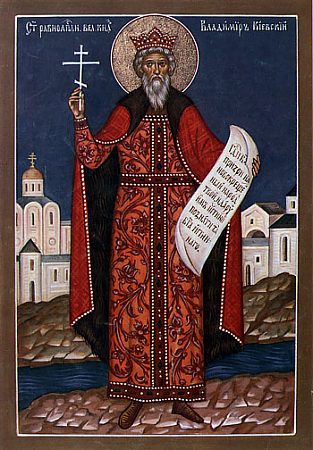
In the Charter, the memory of these saints is sometimes marked with signs of only minor feasts, and sometimes they do not have a festive sign at all. But, according to the prescription of the Charter, on these days “the council of the saint is being held in his monastery, and his relics lie,” and in the city glorified by his exploits, which indicates the performance of the all-night vigil in the given places, as can be seen from the instructions of the Charter: “His council is performed in his monastery, and his temple is performed; in other churches the polyeleos is served.”
The structure of the medium feasts with all-night vigil, in contrast to the observances of the great feasts, are not devoted exclusively to the commemorated event, for on them the canon of the Mother of God is attached to the festive canon at Matins. Medium feasts with a polyeleos on the eve have a great vespers and on it “Blessed is the man” - the first antiphon of the 1st kathisma, on the “Lord, I have cried” - verses on 6, and, if it is wished - on 8, three paraemias and aposticha, which are always present in the structure of these feasts. Some of the feasts have litia stichera. In the morning, the medium feasts of the second type have a polyeleos, followed by a sessional hymn to the saint with the Theotokion and the Gospel, the stichera to the saint, sung after the Gospel, taken mostly from, litia stichera, the canon for 8 and the great doxology. In such sequences, in many cases, there are prayers that are sung if a vigil is made, and before which it is usually written: “If the abbot wished to, we serve a vigil.”
If the memory of a saint who has a special prescription in the Menaion coincides with a medium feast, then this saint is commemorated on another day, and not on the feast itself. Medium feasts, when they coincide with others, sometimes become very close and similar to the feasts that have an all-night vigil. In such cases, the service is sent to them on the same chapter.
Minor feasts (they are mentioned in a special chapter of the Menaion general) are of two types. The first type is indicated in the liturgical books by red brackets with three red dots in the middle (service with great doxology), the second type is marked in black (sixfold service). The first have the usual kathisma at Vespers, then “Lord, I have cried”, 6 stichera, at matins - canon for 6, great doxology, which is sung, not read, doxology stichera. At the Divine Liturgy, not the all-day, but the typica antiphons are sung. On some of these feasts, which are not marked by a festive sign, the service to another saint on that day is sung at the vespers. Feasts marked with a black sign take from the Menaion: on “Lord, I have cried” 6 stichera and on matins canon on 6. If there is a black sign next to the date of the minor feast, and in Menaion there are successions for two saints, then sometimes there are two canons for 8: 4 for each saint. From these feasts there are also those when the service to another saint is sung at Vespers, for example, to the martyr Irinarchus (November 28). In these cases, the great doxology is not sung, but read. The doxology stichera are needed only on some of these days, when, according to the Charter, at the liturgy on the 3rd antiphon of the Divine Liturgy, ode 3 or odes 3 and 6 of the canon are read from Menaion. If on these days a special Gospel to the saint is indicated, then in Menaion there are prokeimens, hallelujarus and communions chants.
Church, or patronal, feasts are local feasts, and they are celebrated on the days of consecration of church or on days of remembrance of events and saints in whose honor churches are arranged.
By the nature of worship, church feasts belong to the category of medium feasts, having the sign of the cross in a semicircle. But some of them belong to the general ones: in the ancient Church, some dates of the consecration of church were recorded in the monthly words for honoring by all Christians, for example, the day of the renewal of the Jerusalem Church of the Resurrection.
The beginning of church feasts dates back to Old Testament times (Ex. 20, 24; Lev. 16; 2 Ch. 7, 8-9; 1 Mac. 4, 39-59; 2 Mac. 1, 18; Jn. 10, 22). From New Testament times, evidence of church feasts has been particularly frequent since the fourth century. Thus, Eusebius, Archbishop of Caesarea (260-340), recounting the triumph of the Holy Church of Christ under the holy Equal-to- the-Apostles King Constantine the Great († 337), says: “For all of us a touching and coveted spectacle has been revealed: the feasts of the renewal and consecration of newly built churches began in the cities; and for this purpose bishops began to meet; strangers flocked from afar; the nations came together in a friendly manner.”
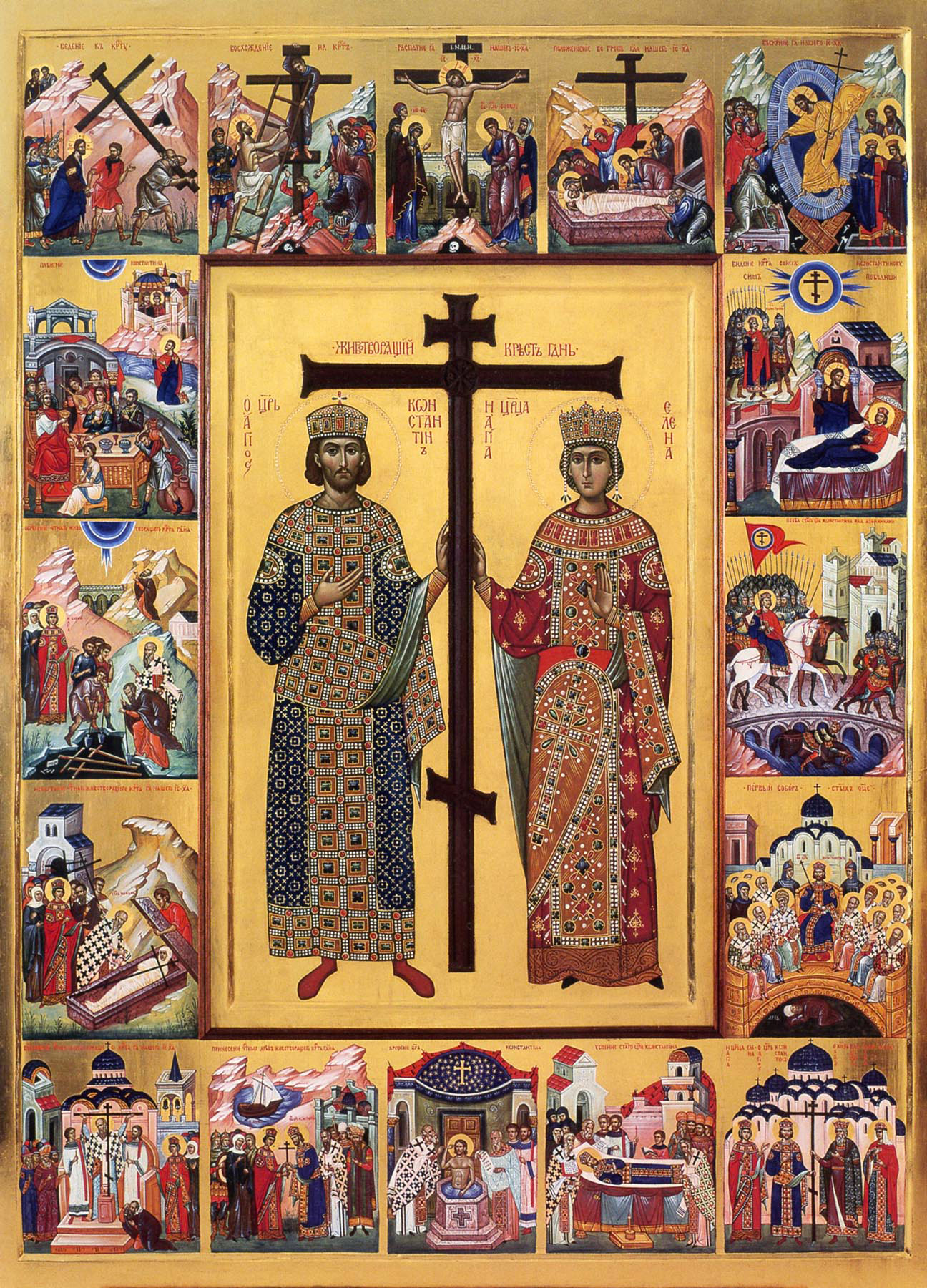 Emperor Constantine the Great built a
magnificent church of the Resurrection of Christ on Calvary. In 335, on
September 13, the Fathers of the Synode of Tyre solemnly consecrated it and at
the same time laid the celebration of this day to renew annually in the memory
of Christians the consecration of the Jerusalem Temple in honor of the
Resurrection of the Savior. Since the Holy Church on this day glorifies the
Risen Lord in her hymns, this feast is popularly called the “Word
Resurrection”.
Metropolitan Filaret of Moscow thus explains the name of this feast: “This name is not ecclesiastical, but folk. The people see the Church of the Resurrection of Christ, wait for the church feast and see that this feast is celebrated not on bright Sunday, but on Monday or another day of the week, on which the 13th day of the month (September) falls. Encountering a kind of incongruity and not knowing the history to explain it, the people sought expressions to distinguish this feast from Sunday, and gave it the name of the word, that is, the so-called Resurrection. He wanted to say: this is not the Bright Resurrection, not the Sunday of the week, but a special feast, which, although it does not happen on a Sunday, but slovet (known. - Ed.), in popular vernacular usage is called the Resurrection; because it belongs to the church of the Resurrection of Christ.”
Although this feast does not belong to the big festivities, it is treated with special respect, since in the Resurrection Churches on this day patronal feasts were solemnly sent. At the end of the Charter there are 58 chapters “On Churches” with instructions on how to perform a service on church feasts, especially if the church feast coincides with another feast. The first 25 chapters contain the srevices of church festivities that occur during the singing of Menaion with the Octoechos, from September 1 to the Week of the Publican and Pharisee. If the feast happens on the Friday before the Epiphany or Nativity (in certain cases provided for by the Charter, the celebration of the Great Hours is postponed to it), then the Great Hours are not omitted, but served specially. After them, as usual, the Divine Liturgy of St. John Chrysostom is celebrated. Chapters 26-48 speak of church feasts that occur on the days of singing the Lenten Triodion, and the rest of the feasts on the days of the singing of the Triodiion of Color. In the church chapters, there are few indications of the following of the church Twelve Great Feasts of the Lord and the Mother of God, since on these days the festive service is performed in all churches in the same way. On church feasts, the Charter prescribes to send the service in such a way as: if it is dedicated to saints, “the vigil is performed”, regardless of which feasts - great, medium or minor
- belongs to the feast day of a particular saint. The subject of the church chapters is precisely the instructions on how to send the service to the church feast in conjunction with another festive service that falls on the same day. Some instructions on the performance of services to the church are in chapters 48-50 of the Charter.
On the days of church feasts, before the Divine Liturgy, it is customary to perform a minor water consecration and sprinkling of holy water on the altar and the whole church. At the end of the liturgy, a prayer service is performed witha polychronion.
If the patronal feast occurs in Great Lent on the 1st or Holy Week, then, according to the instructions of the Charter, it is postponed. If the feast happens on Sundays in the middle weeks of the Great Lent, in some churches it is ruled according to the Annunciation chapter, that is, the Divine Liturgy of St. John Chrysostom is served in conjunction with the vespers, and in others - according to the Predtechenskaya chapter, that is, they celebrate the liturgy of the Presanctified Gifts, as indicated in chapters 34 and 35 of the Charter “On Churches”. If the patronal feast is on the Monday of the 1st week of Great Lent, it is transferred to Cheese Sunday; if in the next 4 days of this week - on the Saturday of the 1st week of the Great Lent; if on Monday, Tuesday, Wednesday and Thursday of Holy Week - for Palm Sunday; if on Friday and Saturday of that week or on the 1st day of Holy Easter it is postponed to Monday or Tuesday of the Bright Week (church chapters 30-32, 45-47 of the Statute). If the church feast happens on a Wednesday or Friday of Cheese Week, then a service of the feast is performed, and only at the end of Vespers, Matins and every hour there are three great prostrations (temple chapter 28 of the Charter).
According to the decree of the Charter, “the same day” when the church feast happens, at the all-day vespers “there is a giving of the feast for the honor of the church”, that is, for the sake of honor, for the glory of the church, since the feast of one-day giving do not have. The order of this Vespers is set forth in the 1st church chapter of the Charter. Thus, the celebration of the patronal feast, according to the Charter, is limited to one day. On the church feast there is usually a procession.
RULES FOR THE LINKING OF SUNDAY SERVICES AND THE MENAION
I. If the Sunday service has a service to a saint that does not have a festive sign (Typicon, chapter 2), then at Vespers, on “Lord, I have cried” - 7 Sunday stichera and 3 to the saint, and to him on “Glory”, if there is a”Glory”. At matins, on “God the Lord” - the Sunday troparion (twice), “Glory” - the troparion to the saint, “And now” - the Theotokoion of the Sunday troparion of the tone on which the troparion to the saint is sung (at the end of each Menaion appendix 3). There is no megalynarion. On the canon, we sing 4 Sunday troparia with an irmos, 3 of the Sunday cross, 3 for the Mother of God and 4 to the saint of Menaion. After the 3rd ode - the kontakion, ikos and sessional hymn to the saint. After the 6th ode - kontakion and Sunday ikos. During the hours there is a Sunday troparion, “Glory” to the saint, if he has a troparion (if there is no troparion to the saint, this is immediately followed by “Glory” and the Sunday troparion). After “And now” - the Theotokion of the hour. After “Our Father” - the Sunday kontakion. The same is done on all hours.
At the liturgy - “Blessed” Octoechos on 8. During the entrance - a Sunday troparion, troparion of the church and the saint of the day, if he has a troparion. Sunday kontakion, kontakion of the church, “Glory” - to the saint, if he has a kontakion. “And now” - to the church of the Mother of Gof; if the church is not in honor of the Most Holy Mother of God, then on “And now” - the kontakion “O undisputed intercessor of Christians”. On Sundays, the troparion and kontakion to the Church of Christ are not sung at the liturgy throughout the year; they are replaced by the main troparion of Christ - the Sunday ones.
“Prokeimenon, Apostle and Gospel of the tone (of the Sunday) and of the saint, if there is one” (Typicon, Chapter 2).
II. If the service is sixfold or with a doxology (Typicon, chap. 5), then at Vespers, on the “Lord, I have cried” - 6 stichera from the Octoechos and 4 to the saint from the Menaion. If there are two saints, then 4 from the Octoechos, for two saints - 3 each. On “Glory” there is a stichera from the Menaion, on “And now” there is the dogmatist of the current tone. If there is litia, then, after the first litia stichera of the church feast, stichera to the saint are sung, but of the aposticha; on “Glory” - not the stichera, before which it is written “Glory” (it is supposed to be sung in its own place), but one of the aposticha. On “And now” - the Sunday Theotokion determined by the tone of “Glory”. On the apostichon - the Sunday stichera, on “Glory” - the stichera to the saint, and on the “And now” - the Sunday Theotokion according to the tone “Glory”. During the blessing of the loaves - the troparion “Most blessed are Thou” (three times).
At matins, on “God the Lord” - the Troparion sunday (twice), “Glory” - to the saint, “And now” - the Theotokos Sunday according to the tone of the troparion to the saint. Canons: resurrected with irmos on 4, cross-ressurected - on 2, Theotokos - on 2 and saint - on 6. Katawasia according to the Charter. According to the 3rd canto - kontak, ikos and sedalen to the saint. On the 6th canto - kontak and ikos Sunday. On the 9th song - “Honest”. According to the 9th canto, after the Sunday luminary, the luminary to the saint is added, on the “And now” - the Theotokos of the ordinary voice. On the praise verses, after 4 Sundays, 4 to the saint; for the last two verses, the choruses are taken from the vespers. The rest is in the morning as in the service, which does not have a festive sign. “Glory” - evangelical verse, “And now” - “Blessed with Esi”. At the 1st hour, the troparion is resurrected, “Glory” to the saint, “And now” to the Theotokos of the hour. According to the Trisagion, the kontak is resurrected. If a saint has praise , according to the Trisagion — kontak to the saint. On the other hour , the kontak is resurrected and the saint is “pre-exchangeable verb”.
At the liturgy - “Blessed” Sundays on 6 (begin with the verse “Blessed are the meek”) and the saint - on 4. The troparion to the saint must be taken from the 3rd ode of the canon. The penultimate troparion is for “Glory”, the last one is for “And Now”. The rest is like in a service that does not have a festive sign.
III. If the service is with polyeleos (Typicon, chapter 4), then at Vespers,
on the “Lord, Cry” - 4 Sunday verses and 6 to the saint. “Glory” to the saint,
on “And now” - the dogmatic of the current voice. Parimias to the saint. On
lithia - temple stichira and stichira to the saint (if any). “Glory” to the
saint, “And now” - the Theotokos Sunday according to the voice of the saint.
On the verse, the verses are resurrected, “Glory” to the saint, “And now” -
the Sunday Theotokos according to the voice “Glory” (1st addition at the end
of the Menaion monthly). On the blessing of the loaves - the troparion “To the
Virgin Mary” (three times). 
At matins, on “God the Lord” - the Sunday troparion (twice), “Glory” - to the saint, “And now” - the Sunday Theotokion , but according to the tone of the troparion to the saint. Polyeleos and, most importantly, the magelynarion to the saint. After the megalynarion,“Glory, and now” is not sung, then “Blessed art Thou, O Lord” and Sunday troparion. Small litany and Ypakoi ́. After that ́ - sessional hymns to the saint, consecutively, without the Theotokion. “Glory” is a sessional hymn meant in the Menaion for after polyeleos, on “And now” - its Theotokion. Then the ascents and theprokeimenon of the Octoechos tone. The Sunday Gospel. “Having beheld the resurrection”. Psalm 50. Sunday sticheron. The Sunday canon with irmos on 4, to the Cross - on 2, the Theotokos on 2 and the saint on 6. If a saint has two canons, both canons are 8, and the cross canon is omitted. Katavasia according to the Charter. The 3rd ode is followed by the kontakion, ikos and sessional hymn - to the saint, “Glory, and now” - its Theotokion. On the 6th ode - the Sunday kontakion and ikos. On the 9th ode we sing “More honourable”. The Sunday exapostylarion, “Glory” to the saint. “And now” and the Sunday Theotokion of the tone. On “Praise” - 4 stichera of the Sunday tone and 4 to the saint with the “Glorious”, with its evening choruses, that is, with those choruses that are indicated in the Menaion on the evening aposticha. “Glory” and the Gospel sticheron. “And now” - “Most blessed art Thou”. The great doxology and the Sunday. Litany and dismissal “May Christ, our true God”.
At the 1st hour - the Sunday Troparion, “Glory” - to the saint, “And now” - the Theotokion of the hour. After the “Our Father” - kontakion to the saint. On other hours there is a Sunday kontakion and kontakion to the saint.
During the liturgy - “Blessed” of tone 6 and the 3rd ode to the saint on 4. During the entrance there are are troparia, kondakia, as indicated in chapter 3 of the Typicon. The troparion and kontakion to the holy church are sung at polyeleic services. This is in contrast to the service of saints with a vigil.
Prokeimenon, the Apostle, “Hallelujah”, the Gospel and communion hymn first to the Sunday, then to the saint.
IV. If the service is with a vigil (Typicon, chapter 3), at vespers and matins, hours and liturgy, then all the features of the previous service are with a polyeleos, but at vespers the troparion “To the Virgin Mary” (twice) and to the saint (once), at matins - the Sunday canon on 4, the Theotokion on 2 and the saint on 8, and the canon to cross is omitted. At the liturgy at the entrance there is thr Sunday troparion, the troparion to the church of the Mother of God, if the church is in her honor, and to saint from the Menaion. Kontakia: Sunday, “Glory”, to the saint, “And now” - to the Church of the Virgin. If it is not a church of the Virgin, then on “And now” - “O indisputed intercessor of Christians”. The troparion and kontakion to the church saint are not read on these days. On the 1st and 6th hours -the kontakion to the saint, on the 3rd and 9th - the Sunday kontakion. Prokeimena, “Hallelujah”, the Gospel and communion hymns - first of Sunday, then to the saint.
V. If the service of the Feast of the MOther of God with the sign of the great feast, the service is performed according to the instruction under this date “as on a Sunday”.
VI. If the service is one the Twelve Great Feasts of the Lord, the Sunday service (Octoechos) is omitted, and only the feast of Menaion or Triodion is performed.
VII. If the service on Sunday is combined with the service of two revered saints, then on the “Lord, I have cried” there are 4 Sunday stichera, 3 to the saint and 3 to the other revered saint. On “Glory” - to the revered saint. On the canon of matins - Sunday troparia - 4, to the Theotokos - 2, to the saints
- 8.
Related Concepts
- antiphons
- church-calendar
- church-dedication
- clergy
- communion-with-god
- easter
- entry-of-the-theotokos
- epiphany
- feast
- feast-ranking
- feast-sanctity
- feasts
- festal-cycle
- forefeast
- general-menaion
- giving-of-a-feast
- great-entrance
- great-feasts
- great-lent
- katavasia
- lenten-vespers
- liturgy-of-st-john-chrysostom
- local-feasts
- love-of-neighbor
- megalynarion
- menaion-of-the-month
- minor-feasts
- monastic-practice
- movable-cycle
- nativity
- nativity-of-christ
- odes
- patronal-feast
- pentecost
- polychronion
- procession
- psalm-33
- saints-commemoration
- salvation
- sunday-services
- theotokology
- typicon-chapters-on-churches
- virtue
- water-blessing
- zadostoinik