Liturgics — 11. The Weekly Services of the Octoechos chanting period
-
The Services of a common week during the year.
- The ways to connect different saints in an ordinary week service.
-
The Weekly Services of the Octoechos period.
WEEKLY CYCLE OF WORSHIP
The Orthodox Church, following the example of the Christians of apostolic times (Acts 2:46), sanctifies all the days of the week by performing church services. Each day is given certain sacred rememberances, and daily church services, while remaining essentially unchanged, change only in particulars, and only in those parts of worship that are allowed to be changed.
The days of the week have the following dedications: Sunday, the first day of
the week, is devoted by the Holy Church to the remembrance and glorification
of the Resurrection of Christ; Monday is dedicated to the Incorporeal Forces
created before man, who are in the Church the triumphant spirits closest to
God and sent by Him to help people to achieve salvation; Tuesday is dedicated
to the Old Testament prophets, as proclaimers of the kingdom of Christ on
earth, and especially to the honest and glorious prophet, the Forerunner and
Baptist of the Lord, John, who was the greatest of all born of women (Matt.
11:11). 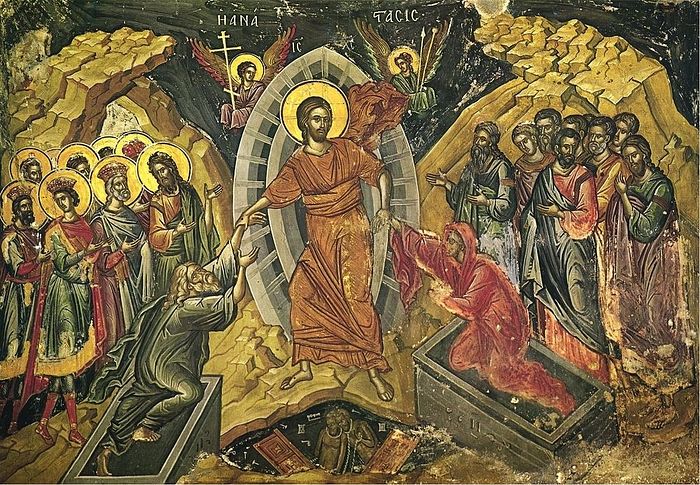
The first day of the week after the Old Testament Saturday is marked by the event of the glorious Resurrection of Christ. Hence its name - the day of the Lord. Sunday is called the Week (Churchslavonic. - rest), or Sabbath, following the Old Testament name (Hebrew-Aram. Shabbat - rest). On this day we remember to not do any worldly things and devoting ourselves to serving God.
The commandment of Sabbath rest was given by God at the creation of the world and then repeated to Moses at Sinai (Gen. 2:2-3; Ex. 20:8-11). In the New Testament, Saturday as a feast in remembrance of the creation of the world, later overshadowed by the fall of men, in rememberance of the new creation by which we were “created in Christ Jesus for good works” (Eph. 2:10) and “reborn by the resurrection of Jesus Christ from the dead to the hope of the living” (1 Pet. 1:3), was replaced Sunday (1 Cor. 16: 2; 2 Cor. 5, 17). According to the teaching of St. Athanasius the Great (293-373), the Lord Himself transferred the celebration of the Saturday to the Sunday day, which Christians are commanded to celebrate by the rule 29 of the Council of Laodicea (IV century). Just as in the Old Testament Church, the name of the Saturday meant that other days are established for celebration (Lev., chap. 23), so in the New Testament Church, in addition to the Sunday day, other feasts are established - for the glory of God, in honor of the Most Holy Mother of God and other saints. These days before the other days of the year were exalted by the Lord Himself, marking them with special events and blessings to His human race.
Sunday in the weekly cycle is similar to Easter in the annual cycle. Therefore, the Sunday service is especially solemn. The Holy Church attaches such high importance to the remembrance of the Resurrection of Christ that it does not leave it even when any other feast occurs on Sunday, except for the Twelve Feasts dedicated to the Lord.
Following the memories associated with them, Monday and Tuesday represent Old Testament times. Entering the new Testament times, with Wednesday and Friday, the Holy Church associates the memory of the tradition of Jesus Christ to suffering and death, the suffering and death itself, especially the worship of the Life-Giving Cross these days - the instrument of saving suffering and the atoning death of Jesus Christ.
On Thursday, the Church glorifies the apostles- the first heralds of the
Gospel of the accomplished redemption of man, and of the successors of their
evangelistic ministry - especially St. Nicholas, Archbishop of Myra, the
Wonderworker. 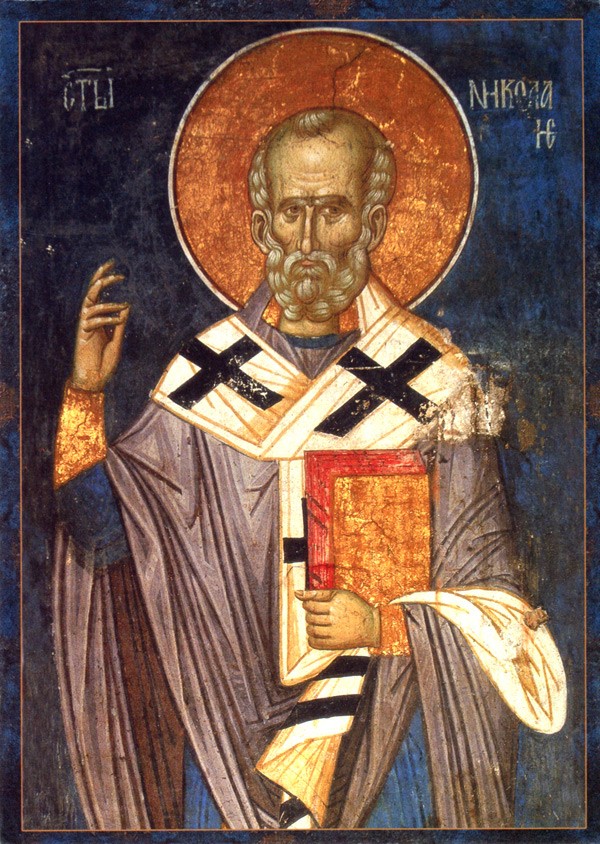
On Saturday, God’s creation of the world is completed. This day indicates mainly eternal blissful rest, waiting for His faithful servants in union with God. Therefore, Saturday is dedicated to remembering and glorifying those who enjoy bliss in the abodes of the Heavenly Father and all those who have died in the faith.
The Most Holy Mother of God, the Representative for Christians before the Throne of Her Son, is remembered and glorified by the Church on all days of the week, mainly on Sunday, Wednesday and Friday. The services of the weekly cycle are performed along the Octoechos, where they are arranged by day and by the order of the vowels.
An all-day, or weekday, worship service is performed on Monday, Tuesday, Wednesday, Thursday and Friday, unless there is a special holiday on these days. The strucure of church services, designated in the liturgical books as all-day or performed on all days, are sent along the Octoechos and Menaion. During these services, the sacred memories of both the weekly and the annual cycles of a given day are equally honored, so in the modified parts of the divine service, borrowed from the Octoechos and Menaion, a balance is maintained: how many changeable prayers are taken from the Octoechos, the same from Menaion, and the chants of Octoechos precede the Menaion ones.
The Saturday service is held along the Octoechos and Menaion, and the chants of Menaion and then the Octoechos are recited or sung. The difference between the Saturday service and the all-day service is mainly in the fact that on the “Lord, I have cried” and after the troparia, the Sunday Theotokia (Dogmaticon) are used, and not the weekly ones, and after the kathismas the litany is pronounced.
TYPES OF WEEKLY SERVICES
Types of all-day services. On weekdays, there is the service of the day and the service of the saint or two saints following the Menalogium. The service of the day is set according to the Octoechos, while the service to ordinary saints is set according to the monthly Menaion . The combination of the chants of Octoechos with the chants of The Menaion during the divine service is done according to the instructions of the Charter. In addition, on weekdays there is sometimes a Forefeast or a Feast, the combination of which with the weekly service is also regulated by the Charter. The instructions of the Charter on the combination of services with each other and changes in the simple day divine services may be as follows: (1) how to conduct the daytime service of Octoechos with the service of one ordinary saint according to Menaion (Statutes, Chapters 9 and 48; General Menaion); (2) how to conduct a daily service for two ordinary saints (Statute, Chapter 48; General Menaion); 3) how to send the daytime service on the eve of the pre-feast or feast (Charter, chapter 48; General Menaion ).
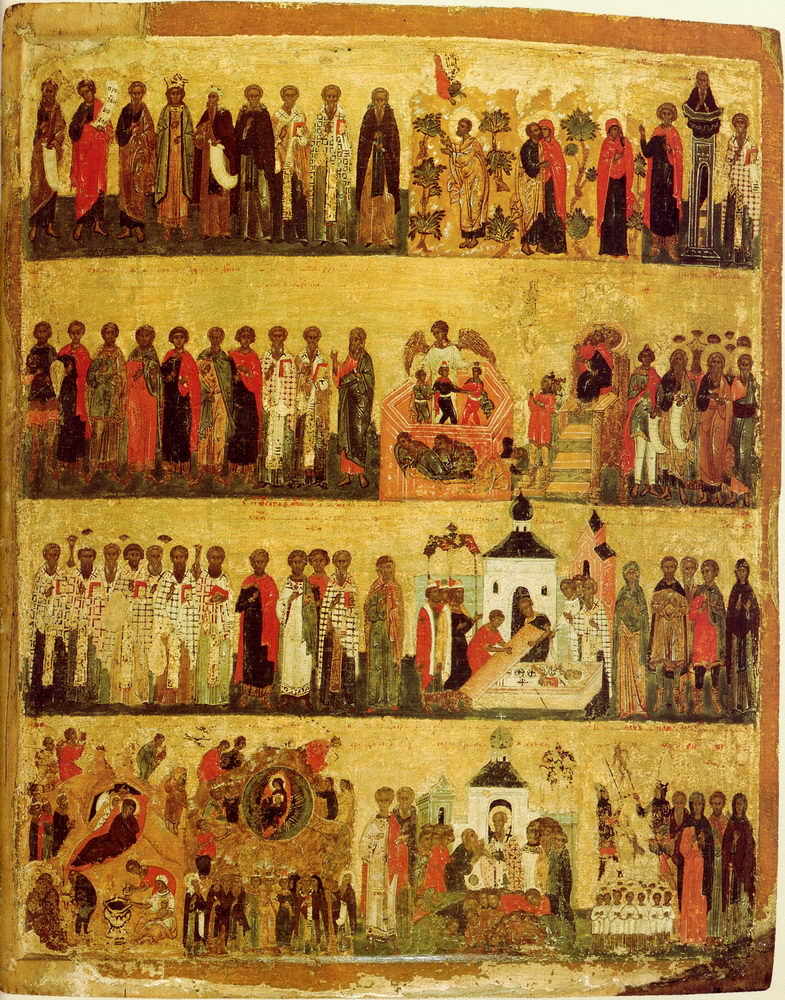
Types of Saturday services. Saturday worship can be presented in the
following forms: 1) Saturday worship with one or two ordinary saints and 2) as
a special kind of Saturday service, when the dead are commemorated. The
Charter designates two types of Saturday worship as follows: (a) “God the Lord
is sung at Matins” (chapter 12) and (b) “Alleluia is sung” (chapter 13); in
addition, the Charter contains Chapter 15, “On the Holy Lord, Who Has a Vigil
or a Polyeleos on the Saturday.” It indicates the features of this service in
case of pre-feast or feast, and in the general Menaion there are indications
of the peculiarities of the Saturday service with the saint having praise and
sung on 6.
Types of Sunday services. Sunday worship has the following types of prayers: (1) Sunday worship with one or two ordinary saints (Statute, Chapter 2; General Menaion); (2) with the saint sung to 6 (Statute, Chapter 5; General Menaion); (3) with a saint who has polyeleos (Statute, Chapter 4; General Menaion); (4) with a saint who has a vigil (Statute, Chapter 3; General Menaion); 5) Sunday worship with the service of the Twelve Great Feasts (Charter, Chapter 48); 6) when on the specified days there is a pre-feast or a feast.
RITE OF PASSAGE OF THE WEEKLY CYCLE SERVICES
The Saturday service. The Saturday service dedicated to a small saint, the polyeleic service and that with an all-night vigil all have a common feature - the service to the saint following the Menaion takes precedence over the service according to Octoechos; the troparia are followed by the Sunday Theotokion of the week tone, and at the liturgy there are the Typica antiphons.
Distinctive features of the rite of the Saturday services are mostly as follows.
At Sunday Vespers , the verses on “Lord, I have cried” are sung only to the saint of Menaion, and are left out from the Octoechos . The Theotokion of these verses is sung on Sunday: the dogmatic of the great vespers of the weekly tone, that is, the tone that was sung throughout the week, or the first Theotokion of this tone. The poems are verses from the Octoechos: one, the first, is a verse, and two, the second and the third, are martyrs, laid on “Lord, I have cried.” After “Our Father” on “Glory” - the troparion to the saint, on “And now” - the Sunday Theotokion of the weekly tone, and not on the tone of the troparion to the saint.
At Matins, the features of the Saturday service are as follows.
On “God the Lord” after the troparion to the saint - the Sunday Theotokion from the Octoechos. At the same time, there may be such a peculiarity: if on Saturday there is a saint who is not entitled to an all-night vigil or polyeleos (Typicon, chapter 12), then the first Theotokion, the Sunday one, is sung according to the tone of the troparion to the saint, and, if on Saturday there is a saint with an all-night vigil or polyeleos (Typicon, chapter 15), or great doxology (Typicon, chapter 2), then the first Theotokion of the current tone is sung, that is, the tone that was sung last Sunday. The kathisma is followed by the small litany and the martyr sessional hymns from the Octoechos. The canon of the church is not sung only if the church is dedicated to the saint and on Saturday there are two saints, who are entitled to the canons, or if there is a saint who has praise, polyeleos and vigil. In this case, instead of the canon of the church, a canon to the Mother of God is sung. If on Saturday there is a pre- celebration or an afterfeast, then the canons of Octoechos and the canon of the church are not sung, but the canons of the feast on the 8th and the saint on the 4th are sung. The verses of praise are sung only to the saint from the Menaion, if there any, and three praise stichera of Octoechos in the glorification of the martyrs are sung instead of the aposticha, and the Saturday aposticha remains. Nor are the aposticha of the Octoechos sung(Typicon, chapter 12).
At a Saturday Liturgy, there are the following features: after the psalms of pictorial 102 and 145, the troparia of the canon to the saint are read on the antiphons and then the “Blessed” Octoechos (Typicon, chapter 12), and on other weekly days the “Blessed” of the Octoechos of the current tone are read on 4, then the troparia from the third canon to the saint, also on 4. After entering with the Gospel, troparia and kontakia are sung according to the Charter. The prokeimena, the Apostle, the Gospel, are Communion chants are first to the saint, and then to the day of the week, that is, Saturday. However, from the Week of the Publican and the Pharisee to the Week of All Saints the contrary happens - first the Saturday, and then to the saint.
Small Vespers before the Vigil. Small Vespers begins immediately after the end
of the 9th hour with the priest’s exclamation “Blessed is our God”, which is
pronounced on the soleas in front of the royal gates closed by the veil.
Reader: “Amen”, “Come, let us bow” (three times); Psalm 103, “Glory, and Now”;
“Hallelujah” (three times); “Lord, have mercy” (three times); then sings
“Lord, I have cried”, verses on 4, “Glory, and now”, Theotokion or feast
sticheron. There is no entrance. The Theotokion is immediately followed by “O
gentle Light”, the prokeimenon of the day, “Vouchsafe”, the aposticha, “Glory,
and now”, the Theotokion or the sticheron of the Feast, “Now lettest Thou”,
the Trisagion, “Our Father”, “For Thine is the Kingdom”, the troparion,
“Glory, and Now”, the Sunday Theotokion according to the tone of the
Troparion, the small litany on the seleas “Have Mercy on Us, O God”, the
exclamation “For a merciful God art Thou”, “Glory to Thee, Christ O God”,
“Glory, and now”, “Lord, have mercy” (three times), “Bless”, the small
dismissal and “The Great Lord and Our Father”. This is how the small Vespers
before the Vigil usually ends. 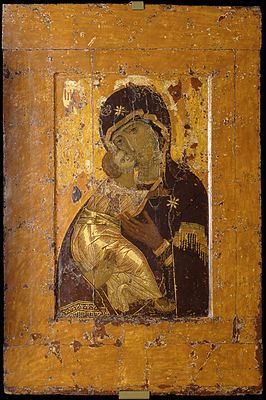
The statute on the rite of Small Vespers is found in Chapter I of the Typicon, sometimes in the Kiev edition of sluzhebnik (service book), and in the Octoechos.
Sunday worship. The rites of Sunday Vespers, Midnight and Matins, if there is no all-night vigil, are as follows.
On the eve of Sunday, the 9th hour takes place as usual. At the end of it, the priest puts on a phelonion, opens the veil of the royal gates, leaves the altar with the northern door, stands in front of the royal gates and begins vespers with an exclamation: “Blessed is our God.” Reader: “Amen”, “Come, let us bow” (three times); psalm 103, during which the priest reads the exapostilarion prayers, and after the end of it, if there is no deacon, here, on the soleas, he pronounces the great litany. Then “Blessed is the man” is sung and the whole first kathisma is versed. After each of the three “Glory” there are small litanies with exclamations, followed by “Lord, I have cried” in the tone of Octoechos, 10 stichera: 3 Sunday ones , 4 Anatolian (Eastern) and 3 to the ordinary saint 3. If the saint is sung on 6, this means 3 Sunday stichera, 3 Eastern and 4 to the saint . Then “Glory” to the saint, if there is one, “And now”, dogmatic of the ordinary tone. If the saint is given vigil or polyeleos, this means 3 Sunday stichera, 1 Eastern and 6 to the saint. “Glory” to the saint, “And now”, the dogmatic of the current tone.
During the singing of the stichera, the altar, the church, the icons and the people are censed. When a dogmatist is sung, the royal gates are opened and the entrance is censed. “O gentle Light” and the Sunday prokeimenon “The Lord is King” (four times) are sung. Then the royal gates are closed and, if the saint has polyeleos, paraemias are read, the litany is pronounced on the soleas, the litany “Let us all say” - then “Vouchsafe, O Lord”, then the supplicative litany “Let us complete our evening prayer”, the Sunday aposticha, “Now lettest Thou”, the Sunday troparion, “Glory, and now” - the tone of the Theotokion. If here is a troparion to the saint, it is sung on “Glory”, whilst on “And now” the Sunday Theotokion by the tone of “Glory” is sung. During the reading of “Now lettest Thou” the royal gates are opened. The troparia are followed by “Wisdom”, “Bless”, “He that is blessed”, “Establish, O God”, “Most Holy Mother of God, save us”, “More honorable than the Cherubim”, “Glory to Thee, O Christ God”, “Glory, and now”, “Lord, have mercy” (three times), “Bless”. Then in the royal gates the priest pronounces the full dismissal “Risen from the dead”, and after it the choir sings the usual polychonion “The Great Lord and Our Father”. Thus ends vespers.
Sunday Midnight is performed in the usual manner. After the end of it, the priest dressed in a phelonion opens the veil of the royal gates and, censing the front of the Holy Throne, proclaims “Blessed is our God”, and the matins begin in the usual order. The priest censesthe altar, the church, the faces and the people, and at the end of the troparia “Save, Lord, Thy people” pronounces a brief litany “Have mercy on us, God” and after the words of the choir “In the name of the Lord bless, Father” proclaims: “Glory to the Saints.” Further rite of the Sunday Matins without an all-night vigil happens as in the all-night vigil.
All-night vigil . The all-night vigili s performed on the eve of Sundays and feasts with vigil and consists of Vespers, Matins and 1st hour, and sometimes of the Great Vespers, Matins and 1st hour.
Upon entering the altar, the priest dresses in an epitrachelion and a phelonion, and the deacon, with the blessing of the priest, in a sticharion with an orarion. The deacon opens the Holy Throne, opens the royal doors and takes the candle, and the priest, kissing the edge of the throne, with the prayer “We bring the Censer to You” and the sign of the cross, takes the censer. Then the priest and the deacon silently perform the censing of the throne: successively from the west, south, east and north sides; they cense the high place, the icons located in the altar on the right and left sides, the altar and the icon above the royal gates. Then, with a censer in his hands, the priest stands before the Holy Throne for the second time, and the deacon goes out through the royal gates to the soleas and, with a candle in his hands, proclaims: “Arise, Lord, bless.” The priest, censing the front of the throne in the shape of a cross, with the exclamation “Glory to the Holy…” marking the beginning of the all-night vigil. The chorus replies, “Amen.” The deacon, returning to the altar and standing at the eastern side of the throne facing the priest or next to him (where it is customary), sings with the priest “Come, let us worship.” Then the choir sings Psalm 103, and the priest and the deacon, according to custom, perform a complete censing of the temple and the congregation. At the end of the censing, the royal gates are closed and the priest reads seven exapostilaria prayers in front of them. Then, from the northern door, the deacon goes to the soleas, where, after bowing to the priest, he pronounces the great litany, and the priest returns with the southern door to the altar. If there is no deacon, the litany on the soleas is pronounced by the priest himself.
After the great litany, the entire first kathisma will be versed. On festive days, solemn days, as well as on ordinary holidays with a polyeleos and vigil, and on the feasts of the Mother of God. If all of them do not happen on a Sunday, only the antiphon “Blessed is the man” is sung. It is the same on the great feasts of the Lord, if they are on a Monday. After each antiphon, a small litany is served. The priest’s exclamations are as follows: after the first antiphon “For Thine is the Dominion”, after the second - “For a good God art Thou”, after the third - “For Thou art our God”. But usually only the verses of the first antiphon are sung and one litany is said, and the other two antiphons are omitted. After the verse of the first kathisma, on “Lord, I have cried” verses from the Psalms (140, 141, 129 and 116) are sung, and then stichera are sung, which are taken from Octoechos or is replaced by the Triodion and Menaion. Stichera on feasts with a vigil and on the Twelve Great Feasts, usually 8 are sung, and 10 on Sundays. On “Glory”, the sticheron to the pleaser of God, if there is one, and on “And now” - the sticheron to the feast or the Theotokion. During the singing of a dogmatic or the last stichera, the royal gates are opened and and entrance with a censer is made. Coming to the soleas through the northern door, the deacon quietly says: “Let us pray to the Lord,” and the priest reads the prayer “Evening and morning and noon.” The deacon censes before the icons of the Savior and the Mother of God and then, taking the censer in his left hand, addresses the priest and, pointing with his right hand with the oral to the royal gates, says: “Bless, o Lord, the holy entrance!” The deacon censes the priest and, standing in the holy gates facing east, makes a cross with a censer and at the same time proclaims: “Wisdom, aright.” “O gentle Light” is sung. The deacon enters the altar and censes before the Holy entrance. Behind him comes the priest, kissing small icons of the Savior and the Mother of God on the royal gates and the edge of the throne, and together with the deacon, blessing the candlebearer, he goes to the high place. From there, the prokeimenon is pronounced, after which the royal gates are closed.
 On feast days, paraemias
prescribed by the Charter are read. During their reading, the priest sits on
the pulpit to the right side of the throne. During the reading of paraemias on
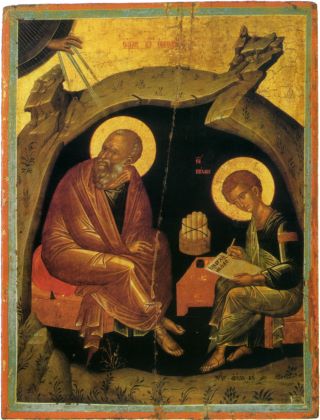
the day of the Repose of Apostle and Evangelist John the Theologian (September
26), as well as on the day of the holy glorious and all-powerful supreme
apostles Peter and Paul (June 29), when paraemias are taken not from the Old ,
but from the New Testament, according to the old Russian church custom, one
does not sit. During the reading of paraemias from the New Testament, the
royal gates remain open. After their reading or, if there are no paraemias, in
front of the royal gates, after the prokeimenon, an augmented litany “Let us
all all say” is pronounced. Then “Vouchsafe, O Lord” is read, the supplicative
litany “Let us fulfill the evening prayer” is pronounced, and the litia is
performed. With the singing of special stichera, called litia stichera, the
priests, accompanied by candles, and the deacon with the censer, go through
the royal gates to the narthex of the church. On the litia on great feast
days, litia stichera of the feast are sung, and on Sundays the sticheron to
the temple, that is, to the holy or sacred event in whose honor it is
consecrated. During the singing of stichera, the deacon censes the church and
the narthex: icons, singers and worshippers. Then, after giving the censer,
the deacon, or, in his absence, the priest, reads the prayers “Save, O God,
Thy people”, “We are still praying for the great Lord”, “Again we pray that
this city”. After the first petition, the choir sings “Lord, have mercy” 40
times, after the second - 50 times and after the third - 3 times. After
pronouncing the petition “Again we pray for this land,” the choir sings “Lord,
have mercy” three times, and the priest silently commemorates all by name whom
he wishes, the living and the dead, and then reads the prayer “Hear us, God.”
Chorus: “Amen”; priest: “Peace to all!”; deacon: “Let us bow our heads to the
Lord,” believers bow their heads. The priest loudly reads the prayer “O Master
plenteous in mercy”, at the end of which the clergy from the narthex of the
temple walks to its middle against the royal gates, where a table is set up,
on which five loaves of bread, wheat, wine and oil are placed on a special
tray. Meanwhile, the choir sings the aposticha. This is followed by “Now
lettest Thou”, the Trisagion, “Our Father”, then the troparion is sung three
times - on Sunday “O Theotokos Virgin” and on holidays - the troparion to the
feast. During the singing of the troparion, the deacon censes around the table
with the above gifts, then the priest and again the table, now from the front
- three times. At the end of the singing of the troparion, he proclaims: “Let us pray to the Lord,” the choir answers: “Lord, have mercy.” The priest at this time takes one bread, makes a sign of the cross over the other loaves and, without kissing it, places it on top of the others, and then loudly reads the prayer “Lord, Jesus Christ.” When he utters the words, “Bless the breads, wheat, wine, and oil,” he does not bless them, but only points to them. Chorus: “Amen,” “Blessed be the name of the Lord” (three times), and Psalm 33 to the words “Shalt not lose all good.” The priest ascends to the solea and from it with the words “Blessing of the Lord on you” blesses those who are to come. Reader: “Amen” and reads the Six Psalms.
During the Sunday Vigil, the Litany is usually not performed unless there is a saint or a feast with an all-night vigil.
At the end of it, the priest enters the altar with the royal gates, and after the reader reads the words “Glory to God in the highest”, they are closed. The loaves consecrated during the litia are carried away by the deacon into the altar.
After reading the first three psalms, the priest goes to the soleas and reads the 12 morning prayers. After the Six Psalms, the great litany, the singing of the verse “God the Lord” (four times) and the troparions: on Sunday Sunday, on the feast day. The troparion is sung twice, “Glory” to the holy day, “And now”
- the Theotokion according to the tone of the troparion to the saint.
At the end of the troparia there are two kathismas, after each of which there is a litany and a reading of the sessional hymns. Then the royal gates are opened and the whole church begins singing verses from Psalms 134 and 135 “Praise Ye the Lord.”
According to the Charter, the Polyeleos is supposed to be on Palm Sunday, the Week of Thomas and Pentecost together with a doxology, on three Sundays before Lent with the singing of Psalm 136 and from September 21 to December 20. On all other Sundays from Cheese Week to the Exaltation of the Holy Cross and the Life-Giving Cross of the Lord, unless a special feast occurs, the polyelea are replaced by “immaculate” (Typicon, ch. 17). Usually the polyelea are sung on Sundays throughout the year. On these days, the troparia “Angelic Cathedral” are sung with the chorus “Blessed is the Lord.” The choir then sings “Glory, and Now”, “Hallelujah, Hallelujah, Hallelujah, Glory to Thee, O God” (twice). After the troparia on Sundays, a small litany is pronounced, ending with the exclamation “For blessed is Thy Name”, the Octoechos ypakoi of the ordinary tone and antiphons are sung - also in the tone of Octoechos. On holidays sessional humns from the Menaion are sung, the first antiphon of the power of the 4th tone “From my youth”.
Then the Sunday prokeimen. The priest utters the exclamation “For Thou art holy”; choir: “Amen”, priest or deacon: “Every breath”, “And that He will vouchsafe”. The priest reads the Sunday or festive Gospel. On feast days at the all-night vigil, all prayers and the reading of the Gospel from the polyeleos to the canon are performed in front of the icon in the middle of the church.
After the Gospel, “Having beheld the resurresction of Christ”, Psalm 50 is read and verses are sung on “Glory” - “By the prayers of the apostles” or such and such a saint, on “And now” - “By the prayers of the Mother of God”, “Have mercy on me, God”, “Jesus rose from the tomb”, and on holidays - the stiсheron from Menaion. On Sundays, during the singing of “Having beheld the resurrection of Christ”, a deacon or priest in the presentation of a lit candle brings out the Holy Gospel for the worship of the people.
Then the deacon or priest proclaims “Save, O God, Thy people”, the choir answers: “Lord, have mercy” (12 times), the priest: “Mercy and compassionate”; the choir begins to sing the canon. On Sundays, irmos, the opening song of the canon, is sung, followed by the kontakia of the canons of Sunday, the Cross, the Mother of God and the saint who happened on that day; and at the end, according to the Charter, it is supposed to sing the katavasia. After the 3rd and 6th odes of the canon - a small litany, and after the 8th - “More honourable”. On feast days, two canons are sung: the first canon of the Mother of God, the second from Menaion, and the katavasia according to the Statute. After the 3rd and 6th odes, as on Sundays, a small litany is pronounced, and after the 8th on great feasts, instead of “More honourable”, special choruses are sung, which are attached to the entire 9th ode. On feasts, during the singing of the canon, the anointing of the worshippers is performed. On the Sunday after the 9th ode, the poems “Holy is the Lord our God” are sung, the exapostilaria and praise psalms are read, and the verses on “Praise” are sung. The last two verses are sung on “Glory” and on “And now”. On Sundays, except for Palm Sunday and Pentecost, the same verse is always sung on “And Now” - “Blessed is, to the Virgin Mary”, and on feast days - the sticheron according to the Statute. When singing the last verse on “Praise”, the royal gates are opened, if they have already been closed at the end of the kissing of the Gospel or icon by believers, and at the end of it the priest proclaims before the throne: “Glory to Thee, who hast showed us the light” - and the great doxology and the Trisagion are sung. Then in the odd tones of Octoechos - the 1st, 3rd, 5th and 7th - the Sunday troparion “Today is salvation come unto the world”, and on the even - the 2nd, 4th, 6th and 8th - “Having arisen from the tomb”. Followed by a augmented and supplicant litany and a great dismissal in the royal gates with preceding prayers. With the singing of “The Great Lord and Our Father”, matins end the choir, the royal gates and veil are closed. The priest and deacon at the altar further act as in the service of the daily matins. The first hour is read on the choir, at the end of it on Sunday “To Thee, the Champion Leader” is sung, and on the great feasts - kontakion to the holiday and a small dismissal is performed.
In Chapter 2 of the Church Statutes, there are certain indications of the
conciliar celebration of the vigil: “When there is (at the vigil) a polyeleos”
and “the abbot is dressed in sanctuaries and all the clergy in phelonion
according to custom.” After the singing of the megalyranion, “the litany is
small, and the exapostylaria are sung, and all the priests enter the holy
altar, and the sacred garments are clothed”, “the priest remains in his
vestments for the reading of the Gospel” (and this priest before and after the
polyeleos makes a vigil alone). After the exapostilaria, a “reading” is
supposed, but it is usually omitted, and the priests enter the altar and are
exposed after reading the Gospel and after anointing themselves with oil, and
the Gospel is read by the first, he anoints the believers with oil, if not
all, then some of the people who are to come. There is a custom by which the
litia is also performed together.
In the presence of two or more elders, and even without a deacon, if there is none, the conciliar ministry can also be celebrated by the divine liturgy.
The rector at the cathedral services precedes the other priests of the same church, and the priest gives way to the archpriest. A priest who does not have a nabedrennik must give way to a priest who has been awarded one. The same applies to other awards. The seniority of service in the priesthood is also taken into account. When persons of equal hierarchical or service degree and academic rank serve, the previously ordained or received archpriest, kalimavkion and other ecclesiastical awards are appointed, that is, seniority is granted to the one who has the highest distinction, and in case of equality
- to the previously ordained priest or higher in theological education. Mitred archpriests, except for the advantage of honor in divine services with other non-mitred archpriests, have no other privileges, and divine services with their participation are performed according to the usual order, as in the conciliar services of priests.
Pastors should avoid disputes about the place at the throne of the Lord in every possible way, remembering the Savior’s commandment “he that is the greatest among you, let him be as the younger, and he that is chief, as he that doth serve” (Luke 22:26).
Priests should always remember the Savior’s response to the request of the mother of the sons of Zebedee to place one of them on His right side and the other on His left in His kingdom. “Jesus said in reply, ‘You do not know what you are asking for… to let me sit on my right side and on my left it is not up to me, but to whom my Father is prepared” (Matt. 20:22-23).
Related Concepts
- annual-cycle
- archpriest
- clergy
- commemoration-of-the-dead
- council-of-laodicea
- cross
- daily-worship
- departed
- dogmaticontheotokion
- easter
- feast
- feast-ranks
- festal-cycle
- festal-rank
- forefeast
- general-menaion
- gospel-reading
- great-feast
- hymnography
- litia
- lords-day
- lords-feasts
- luke-2226
- mariology
- matt-2022-23
- menaion
- octoechos
- passion
- pastoral-theology
- polyeleos
- psalm-136
- queen-of-heaven
- rest
- rubrics
- sacred-time
- saints
- saints-service
- service-combination
- sunday
- sunday-service
- sunday-services
- tone
- tone-system
- typiconcharter
- wednesday-and-friday
- weekday
- weekly-cycle