Liturgics — 9. Service of the Hours. The Midnight Office and Compline
- The Hours.
SERVICE OF THE HOURS
The daily service cycle includes four services called hours: the 1st hour, the 3rd hour, the 6th hour and the 9th hour. The name “hour” reflects the fact that each of these services was originally timed to coincide with a certain time of day. Since, following the Old Testament chronology, the day begins in the evening, at about 18.00 according to the modern time reference system, then the 1st hour corresponds to approximately 7:00, the 3rd hour –to 9:00, the 6th hour – to 12:00, and the 9th hour – to 15:00. Nowadays, the 1st hour is almost always added to Matins (except for the Great Hours), the 3rd and 6th hours are celebrated in the morning before the Liturgy, and the 9th hour is served in the evening, before Vespers.
The 1st hour completes the morning group of services and takes place
immediately after Matins, with the Royal doors and the veil closed. After the
daily Matins, the 1st hour is celebrated in the church (in a sense, together
with Matins it merges into one whole, so a complete dismissal follows after
the 1st hour), and in the case of Matins with a great doxology or polyeleos,
the 1st hour (according to the Charter) takes place already in the northex of
the church (see the 9th and 2nd chapters of the Typicon). In all these cases
during the 1st hour the priest is dressed only in an epitrachelion. 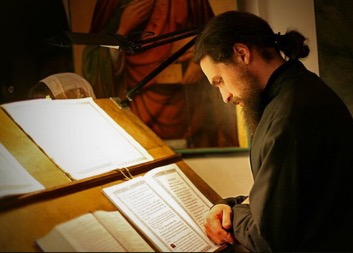
The ideological content of the 1st hour. The main theme of the 1st hour is the morning prayer of a Christian (psalms of the hour, biblical verses).
As well as this, the Embodiment of God the Word is recalled in the sequence of the 1st hour, (“What shall we call thee, O thou that art full of grace?…” and “O Christ the True Light…” - the Theotokion and the prayer of the hour). In addition, during the celebration of the 1st hour, the Missal indicates to recall the preliminary judgment of Christ at Caiaphas, which took place at the 1st hour, according to the Jewish reckoning (see the Missal, “ Teaching news…”).
The 3rd and 6th hours are included in the daily group of services and are always performed together immediately before the liturgy in the church. During the reading of these hours, the priest and deacon perform the proskomedia.
At the beginning of the 3rd hour there is the exclamation and the usual beginning. During the reading of the 3rd and 6th hours after the dismissal of the proskomedia, the deacon opens the veil of the Royal doors[1]and censes the church.
The ideological contents of the 3rd hour. During the celebration of the 3rd hour, the trial of Christ by Pilate is recalled, which was at the 3rd hour according to the Jewish reckoning (see the Missal, “Teachable news…”).
In addition, two more themes are reflected in the rites of the 3rd hour:
• the repentant prayer of a Christian (psalms, Theotokion and prayer of the hour);
• the descent of the Holy Spirit upon the apostles (Lenten troparion of the hour).
The ideological content of the 6th hour. The 6th hour covers the following two themes:
• the crucifixion of the Savior on the Cross, which happened, according to the evangelists, at 6 o’clock in the afternoon (the Lenten troparion of the hour, Theotokion and prayer of the hour);
• a Christian’s prayer expressing hope in God’s mercy (psalms, Biblical verses).
The 9th hour is usually celebrated before vespers. It opens the evening service of the coming church day, though, at the same time, it is in itself also the last service of the departing day, since the troparion and kontakion of the departing day are read at the 9th hour. As we have noted, this particular meaning of the 9th hour symbolises the continuity of the Orthodox Church service.
The 9th hour can be celebrated both in the church and in the narthex, as clearly stated in the chapters 1 and 9 of the Typicon. If the 9th hour is celebrated in the narthex, then a small dismissal is held. If it is in the church, then there is no dismissal, and Vespers follows immediately after the prayer of the hour.
On the weekly days of Great Lent, in the case of an Alleluia service during other fasts, or on Wednesday and Friday of the Meatfare week, as well as on the eve of the Nativity of Christ and Theophany, the 9th hour is celebrated together with the 3rd and 6th hours, immediately after the 6th hour. In all these cases, the 9th hour must be celebrated in the church (Typicon, services of November 14 and Monday of the 1st week of Great Lent).
The ideological content of the 9th hour. The main theme of the 9th hour is the death of the Savior on the Cross, since it was at the 9th hour (according Jewish reckoning) that Jesus Christ “cried with a loud voice, and gave up the ghost.” (Mark 15:37). This theme is reflected in the Lenten troparion (“O Thou Who at the ninth hour for our sake didst taste of death in the flesh…”) of this hour, in the troparia, which are read on the weekly days of the Great Lent after “Our Father …” (instead of a kontakion to a holiday or a saint), as well as in the prayer of the 9th hour (“O Master, Lord Jesus Christ, our God…”).
In addition, the psalms and Biblical verses of the 9th hour are also a prayer of a Christian, who is expressing his desire for the Kingdom of Heaven, his desire to enter the “tabernacles of the Lord of hosts.”
TYPES OF HOURS AND DAYS OF THEIR COMPLETION
In the Orthodox service Charter, four types of hours are distinguished: daily(ordinary), Lenten, Great and Paschal.
The daily (ordinary) hours are served throughout the whole year, with the exception of those cases when it is necessary to hold other types of hours. As the other three types of hours account for only 45 days a year, everyday hours occur 320 days a year (in leap years - 321 days).
Lenten hours are served 35 days a year****:
• on Wednesday and Friday of Meat-fare week;
• on all seven days of the Holy Forty Days;
• on Holy Monday, Holy Tuesday, Holy Wednesday
** The Great (Royal) Hours** take place three times a year: on the eve of the Nativity of Christ, on the eve of Theophany and on Holy Friday. If the Nativity of Christ or Epiphany happens on a Sunday or Monday, then the Great Hours take place on Friday (before Vespers).
Paschal hours take place on Easter and on all days of the Bright Week (so altogether 7 days a year).
THE SERVICE OF THE DAILY HOUR
The general sequence of the daily hour
Reader : “O come, let us worship…” and the usual psalms of the hour. “Glory, now” and always, “Alleluia, Alleluia, Alleluia, glory to Thee, O God”(three times), “Lord, have mercy ” (three times). “Glory ”: troparion according to the Charter, “And now ”: Theotokion of the hour.
If there are two troparia , then: “Lord, have mercy ” (three times), 1st troparion. “Glory ”: 2nd troparion, “And now ”: Theotokion of the hour.
Reader : Biblical verses of the hour.
Reader : Trisagion and “Our Father…”.
Priest(exclamation): “For Thine is the Kingdom and the power and the glory...”.
Reader : “Amen.” Kontakion according to the Charter.
It is very interesting that, according to the Charter, in the cases where the
alternating reading of two or three kontakia is required, the second most
important kontakion is read at the 1st hour, which is read after the 3rd ode
of the canon in the morning (if there are several kontakia, then the first of
them is read). This is due to the fact that the 3rd hour opens the daily group
of services, and therefore at the 3rd hour the most “important” kontakion
should be read, that is, the one that was read after the 6th ode of the canon
in the morning. In particular, if a vigil or polyeleic feast occurs on a
Sunday, the Sunday kontakion is read after the 6th ode of the canon.
Therefore, during the hours, the alternation of the Sunday kontakion and the
kontakion of the saint begins with the kontakion of the saint, so that at the
1st and 6th hours the kontakion of the saint is read, and on the 3rd and 9th -
the Sunday kontakion (see Typicon, chapter 3). At the same time, if a Great
Theotokos feast or a church feast occurs on Sunday, then the kontakion of the
feast is read after the 6th ode of the canon. Therefore, in this case the
kontakion of the holiday is also supposed to be at the 3rd and 9th hours, and
the kontakion of Sunday, as inferior in status, is appointed at the 1st 6th
hours (see September 8, “If the Nativity of the Theotokos happen on a Sunday”,
also the 1st church chapter). 
Reader : “Lord, have mercy ” (40 times). Prayer: “Thou Who at all times and at every hour…” “Lord, have mercy ” (three times), “Glory… and now”, “More honourable than the Cherubim…”, “In the name of the Lord…”.
Priest: at the 1st and 9th hours - “God be gracious unto us…”, at the 3rd and 6th hours - “Through the prayers of our holy Fathers…”.
Reader : “Amen ” and reads the prayer of the hour.
Particular features of daily hours
At the 1st hour:Psalms of the hour: 5, 89,100.
Theotokion of the hour: “What shall we call thee, O thou that art full of grace?…”.
Prayer of the hour: “O Christ the True Light…” (in practice read by the priest).
Ending and dismissal. After the exclamation ” God be gracious unto us…”:
Reader : “Amen.”
Priest(in practice): “O Christ the True Light…”.
Chorus : “To Thee, the Champion Leader…” (in practice, this kontakion is sung throughout the year, although it is not mentioned in the Typicon). On the Twelve Great Feasts and during their after-feasts, the kontakion of the holiday is sung.
Priest : “Glory to Thee, O Christ God…”.
Chorus : “Glory… and now.” “Lord, have mercy ” (three times) - “Bless.”
After that there are two alternatives:
If polyeleic Matins or Matins with a great doxology were celebrated
__
If daily Matins was served
Priest(from the pulpit): the small dismissal.
Chorus : “Amen ” (in practice, “Lord, have mercy ” is also often sung (three times).
Priest : the daily dismissal.
Chorus : “Great master…”.
PARTICULAR FEATURES OF THE HOURS
At the 3rd hour
The 3rd hour opens the daily group of services and therefore has a regular beginning :
The priest(standing in front of the Royal doors, on the pulpit) proclaims: “Blessed is our God…”.
Reader : “**Amen. Glory to Thee, our God, glory to Thee.**O Heavenly King…”, Trisagion, “Our Father…”.
Priest(exclamation): “For Thine is the kingdom…”.
Reader : “Amen.” “Lord, have mercy ” (12 times). “Glory… and now.” “O Come, let us worship…” and the ordinary psalms of the hour.
Psalms of the hour : 16, 24, 50.
Theotokion of the hour: “O Theotokos, thou art the true vine…”. Prayer of the hour: “O Master, God the Father Almighty…”.
At the 6th hour:Psalms of the hour : 53, 54, 90.
Theotokion of the hour: “Seeing that we have no boldness…”. Prayer of the hour: “O God and Lord of hosts…”.
At the 9th hour
__
The 9th hour opens the evening group of services and therefore, just like the 3rd hour, it has a regular beginning(see above).
Psalms of the hour: 83, 84, 85.
Theotokion of the hour: “O Thou Who for our sake wast born of a Virgin**.**..”.
Prayer of the hour: “O Master, Lord Jesus Christ, our God…”.****
A dismissal of the hour takes place if the hour is performed in the northex.
The dismissal scheme at the 9th hour is the same as at the 1st:
Priest(after the prayer of the hour): “Glory to Thee, O Christ God…”.
Chorus : “Glory… and now.” “Lord, have mercy ” (three times). “Bless.”
Priest : the small dismissal.
Choir : Amen.
If the 9th hour is celebrated in the church, then there is no dismissal, and Vespers begins immediately. In parish churches, the 9th hour is always served without a dismissal.
THE SEQUENCE OF THE LENTEN HOUR
First of all, let us point out the features that distinguish the Lenten hour from the ordinary hour.
1. The 3rd, 6th and 9th hours are served together.
2. A kathisma is read at every hour, except for the 1st hour on a Monday and the 1st and 9th hours on a Friday.
3. The Lenten troparion of the hour is sung with bows (excluding the feasts of the Annunciation of the Most Holy Theotokos and the polyeleic saint on a Sunday, when the troparion of the feast is read instead of the Lenten troparion).
4. After “Our Father …” special troparia are read, the text of which is given in the sequence of the hour (in the Book of Hours or the Followed Psalter) on a row. However, on the feasts of the Annunciation of the Most Holy Theotokos and the polyeleic saint on the weekday, instead of the troparia of the Book of Hours, the kontakion of the feast is read, and on the week of the Adoration of the Cross, on Thursday of the 5th week and on the days of Passion Week, the Triodion kontakion is read.
5. Before the prayer of the hour, the prayer of St. Ephrem the Syrian is
performed with 16 (or three) bows. 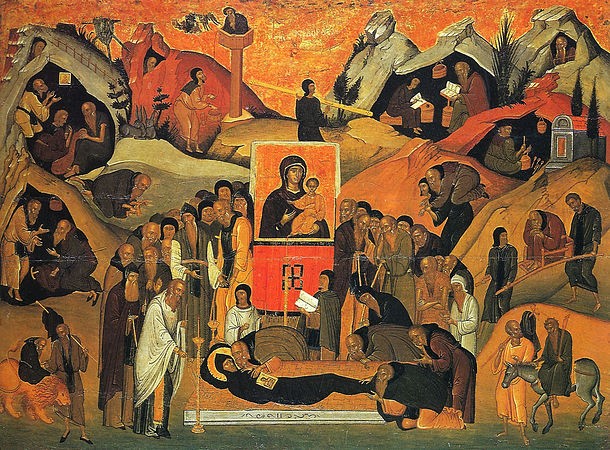
6. At the 6th hour, after the Theotokion, the prophetical troparion, the prokeimenon, paroemia and the 2nd prokeimenon are read.****
The service of Lenten Hours Monastery of Vatopedi on Athos
The general service of the Lenten Hour
Reader : “Come, let us worship…” and the usual psalms of the hour. “Glory… and now”, “Alleluia …”(three times).
Chorus : “Lord, have mercy ” (three times). “Glory…”.
Reader : “And now…”, the kathisma. Each kathisma, as always, is divided into 3 “glories”, and after reading each such part, the reader says: “Glory…”, then the choir sings: “And now …”, “Alleluia … ” (three times), “Lord, have mercy ” (three times), “Glory…”. After that, the reader says: “And now…” and continues the reading of the kathisma.****
The kathisma is not read only on Mondays at the 1 sthour and on Friday at 1stand 9thhours. In these cases, the Lenten troparion of the hour follows immediately after the psalms.
Reader(at the end of the whole kathisma): “Glory… and now ”, “Alleluia…” (three times). “Lord, have mercy ” (three times).
The priest sings the troparion of the hour , then bows (together with the congregation).
The choir sings the troparion of the hour.
The priest says the 1st verse of the troparion.
The choir sings the troparion of the hour.
The priest says the 2nd verse of the troparion.
The choir sings the troparion of the hour.
Priest : “Glory to the Father and the Son and the Holy Spirit.”
Reader : “And now… Amen ” and reads the Theotokion of the hour.
Reader : Biblical verses of the hour. Trisagion and “Our Father…”.
Priest(exclamation): “For Thine is the kingdom, and the power, and the glory**…** ”.
Reader : “Amen”, ordinary troparia or kontakia(from the Book of Hours or the Psalter).
Reader : “Lord, have mercy ” (40 times). Prayer: “Thou Who at all times and at every hour**…” “Lord, have mercy”**(three times), “Glory… and now”, “More honourable than the Cherubim …”, “In the name of the Lord …”.
Priest : “God be gracious unto us…” (on all hours).
Reader : “Amen.” ****
The priest pronounces the prayer of St. Ephrem the Syrian twice with 16 bows as follows: “O Lord and Master of my life, take from me the spirit of sloth, despair, lust of power, and idle talk.” (earth-low bow). “But give rather the spirit of chastity, humility, patience, and love to Thy servant.” (earth-low bow). “Yea, O Lord and King, grant me to see my own transgressions, and not to judge my brother, for blessed art Thou, unto ages of ages. Amen. ” (earth-low bow). This is followed by 12 waist - bows with the prayer “O God, cleanse me a sinne****r.” (this prayer is read secretly, although it is permissible for the priest to say it out loud). Finally, the priest once again loudly pronounces the prayer of St. Ephraim the Syrian (this time in full) and makes another earth-low bow.
After that the reader says “Amen ” and reads the prayer of the hour.****
PARTICULAR FEATURES OF LENTEN HOURS
At the 1st hour
__
The troparion of the hour “**In the morning, hearken unto my voice,**O my King and my God” , the verses **“**Unto my words give ear, O Lord, hear my cry ” and “For unto Thee will I pray, O Lord ”.
The Bible verses of the hour “My steps do Thou direct…” are sung (not read).
After “Our Father…” only one kontakion is read, depending on the day of the
week: on Mondays, Tuesdays and Thursdays - “The Most Glorious Mother of
God...”, and on Wednesday and Fridays - “Hasten to our aid…”. 
After the prayer of St. Ephrem the Syrian with 16 bows, the final Trisagion and the end with the dismissal of Matins are read:
Reader : “Amen.” Trisagion, “Our Father…”.
Priest(exclamation): “For Thine is the kingdom…”.
Reader : “Amen.” “Lord, have mercy”(12 times).
Priest(in practice): “O Christ, the true Light…”.
Chorus : “To thee, the Champion Leader…” (this kontakion is sung in practice, although it is not mentioned in the Typicon).
Priest : “Glory to Thee, O Christ God…”.
Chorus : “Glory… and now.” “Lord, have mercy ” (three times). “Bless.”
Priest(from the pulpit): “May Christ our true God…”
daily dismissal according to the Charter, since this is the dismissal of Matins).
Chorus : “Amen ” (in practice, there is also “Lord, have mercy ” sung three times).****
At the 3rd hour
This is the only Lenten hour that has a regular beginning (the other hours begin immediately with “Come, let us worship…”).
Reader : “Amen. Glory to Thee, our God, glory to Thee. O Heavenly King…”, Trisagion, “Our Father…”.
Priest(exclamation): “For Thine is the kingdom…”.
Reader : “Amen.” “Lord, have mer cy” (12 times). “Glory… and now.” “O Come, let us worship…” and the ordinary psalms of the hour.
Troparion of the hour “O Lord, who didst send down Thy Most-holy Spirit…” and the verses: “Create in me a clean heart, O God…”; “Cast me not away from Thy presence…”
After “Our Father …”, the same prayers are always read: “Blessed art Thou, O Christ our God******…”;** “Glory”: “Grant speedy and steadfast consolation…”, “And now”: “The hope and protection****and refuge…”.
At the 6th hour
__
Troparion of the hour “O Thou Who on the sixth day and in the sixth hour**…”**. Verses: “Give ear, O God, unto my prayer…”; ” As for me, unto God have I cried…****”.
After the Theotokion of the hour, the troparion of prophecy, the 1st prokeimenon, paroemia and the 2nd prokeimenon are read as follows:
Reader[2]: “Troparion of the Prophecy… (reads the text of the troparion).” “Glory… and now”: once again the same troparion (although in practice, the troparion of the prophecy is read once).
Priest : “Let us stand.”
Reader : “Prokeimenon, tone… (calls the tone and proclaims the 1st prokeimenon)”.
The choir sings the 1st prokeimenon.
The reader reads the verse of the 1stprokeimenon.
The choir sings the 1st prokeimenon.
The reader speaks half of the 1st prokeimenon.
The choir sings the rest of the prokeimenon.
Priest : “Wisdom.”
Reader: ”… reading ” (announces the heading of the proverb). On weekly days of the Great Lent, paroemias are read from the book of Isaiah (“Prophecies of Isaiah reading”).
Priest : “Let us stand.”
The reader reads the proverb.
Priest : “Let us stand.”
Reader : “Prokeimenon, tone… (calls the tone and reads the 2nd prokeimenon)”.
The choir sings the 2nd prokeimenon.
The reader says the verse of the 2nd prokeimenon.
The choir sings the 2nd prokeimenon
.
The reader speaks half of the 2nd prokeimenon.
The choir sings the rest of the prokeimenon.
Reader : Biblical verses of the hour “ Let them soon precede us…” and the Trisagion.
After “Our Father…”: “Thou hast wrought salvation**…”,** “Glory ”: “We worship Thine immaculate icon**…”.**
After “And now: on Monday, Tuesday and Thursday, the Theotokion “As thou art a well-spring of pity…” is read, and on Wednesday and Friday - a special Stavrotheotokion“Most glorified art thou, O Virgin Theotokos…”.
At the 9th hour
__
Troparion of the hour “O Thou Who at the ninth hour…”. Verses: “Let my supplication draw**…”;** “Let my petition come…”
After “Our Father …”, the same prayers are always read: “Seeing the Author of life…”; “Glory ”: “In the midst of two thieves…”, “And now ”: “When she who bare the Lamb and Shepherd…”.
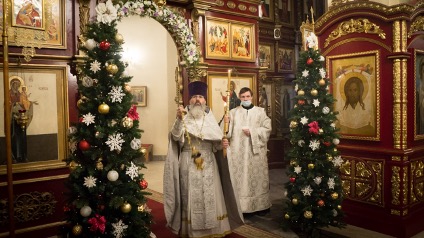 At the end of the
hour, after “God be gracious unto us…”, the prayer of St. Ephrem the
Syrian is always performed with only three prostrations. This is how St.
Athanasius (Sakharov) explains this particularity: “In the Great Lent at the
9th hour, the prayer of Ephrem the Syrian is read once and is accompanied by
only three prostrations. In small fasts, when a service is performed with
alleluia, becoming almost Lenten, the prayer of St. Ephrem the Syrian at the
9th hour is read twice with 16 prostrations. This is because in the Great Lent
the typica following the 9th hour begins immediately with the singing of the
blessed with 17 prostrations (14 waist and 3 earthly). The combination of
many bows at one time (16 and 17) would be a violation of the measure and
would not without difficulty for many the congregation. But the Blessed are
sung once a day, so prostrations during this time can neither be emitted nor
shortened. Therefore, at the end of the 9th hour, the number of bows is
reduced and the prayer of St. Ephrem the Syrian is read only once. During
small fasts, the interval between the reading of the prayer of Ephrem the
Syrian at the 9th hour and the singing of the Blessed is longer, because,
after the prayer of the 9th hour, there should be a pause between the
hours, and on the Typica before the Blessed psalms 102 and 145 are read,
and the hymn “Only Begotten Son” is sung. In this way, there will not be no
excessive combination of many prostrations in one place, and separated by a
sufficient gap, they will not be tiring even for the weak members of the
congregations[3].”
SEQUENCE OF THE GREAT HOUR
Great Hours, as we have already noted, take place three times a year: on the eve of the Nativity of Christ, on the eve of Theophany and on Good Friday. However, if the Nativity of Christ or Epiphany happens on a Sunday or Monday, then the Great Hours take place on Friday (before Compline). This is the most solemn type of hours; The Great Hours are performed with open Royal doors, and censing is done at each hour. The most complete sequence of the Great Hours is given in the Typicon, December 24 (see: “The sequence of the Hours Sung on the Eve of the Nativity of Christ”). Let us first name the distinguishing features of the Great Hour in comparison with the ordinary hour.
1. All four Great Hours (1st, 3rd, 6th and 9th) are celebrated together (an exception occurs only if the Annunciation happens to be on Good Friday; in this case, the 1st hour joins the Matins, and the 3rd, 6th and 9th are performed together with the typica).
2. At the beginning of the 1st hour, the Royal doors are opened and the priest and deacon go out into the middle of the church, where they remain until the end of the reading of the Gospel at the 9th hour (see December 24). After the Gospel at the 9th hour, the clergy go to the altar and close the Royal doors.
3. Special psalms are read, selected in accordance with the content of the holiday (out of three psalms at each hour, one constant for a given hour is read (1sthour - Ps. 5; 3rdhour - Ps. 50; 6thhour - Ps. 90; 9thhour - Ps. 85), while the other two are special).
4. During the reading of the Psalms, censing is performed: on the 1st and 9th
- the censing by the priest of the entire church, on the 3rd and 6th - a small censing is performed by the deacon (see December 24).
5. After the Theotokion of the hour, a special lengthy insertion is required: stichera and a prokeimenon are sung, and paroemia, the Apostle and the Gospel are read.
Let us now move on to a more detailed account of the sequence of the Great Hour.
Royal Hours on Good Friday
Before the beginning of the hours, the Royal doors open, the priest in a stole and phelonion kisses the Gospel and the throne (the deacon only kisses the throne), then the priest, holding the Gospel in his hands, preceded by candle- bearers and a deacon with a censer and a candle, leaves the altar through the Royal doors and goes to the lectern, which is placed in the center of the church directly opposite the Royal doors. After placing the Gospel on the lectern, the priest utters the initial exclamation: “Blessed is our God…”.****
Then immediately the regular beginning follows (only at the beginning of the 1st hour):
Priest(exclamation): “For Thine is the kingdom …”
Reader : “Amen.” “Lord, have mercy”(12 times). “Glory… and now.”
This is followed by the regualar sequence for all hours.
Reader: “Come, let us worship…” and the ordinary psalms of the hour. Three psalms are read, of which one is fixed for a given hour, and the other two are special, selected in accordance with the content of the holiday.****
During the reading of the psalms, the church is censed. At the 1st and 9th hours, the priest, together with the deacon, who is walking in front with a candle, censes the whole church: first, he censes the Gospel on the lectern from four sides, then the icon on the central lectern from the front and rises to the pulpit, enters the altar through the Royal doors and censes the whole church according to the order (like during the censing of the polyeleos). But on the 3rd and 6 thhours, a small censing is performed, now only by the deacon. He censes the Gospel on the lectern from four sides, the icon on the central lectern, the Royal doors, the iconostasis, the clergy, the choir, the people and again the Royal doors, the local icons, the Gospel from the front and the parson of the church.
The reader continues: “Glory… and now”, “Alleluia, Alleluia, Alleluia, glory to Thee, O God”(three times), “Lord, have mercy”(three times).”Glory”.
The choir sings the troparion of the pre-feast or the Triodion (on Holy Friday).
Reader : “And now ”: The Theotokion of the hour.
The choir sings festive stichera (called troparia in liturgical books) with verses similar to the singing of the aposticha. In total, there are three stichera and two verses which are sung as follows: the 1st sticheron is sung twice without the verse, then the 1st verse, the 2nd sticheron, the 2nd verse and the 2nd sticheron again. “Glor y”: 3rd sticheron[4], “And now ”: 3rd sticheron again.
Deacon : “Let us stand.”
Reader : “Prokeimenon, tone… (says the tone and proclaims the prokeimenon).”
The choir sings the prokeimenon.
The reader says the verse of the prokeimenon. 
The choir sings the prokeimenon.
The reader says half of the prokeimenon.
The choir sings the rest of the prokeimenon.
Deacon : “Wisdom.”
Reader : ”… reading”(announces the name of the paremia).
Deacon : “Let us stand”
The reader reads the paremia.
Deacon: “Wisdom ”.
Reader[5]: ”… reading”(announces the name of the Apostle).
Deacon : “Let us stand.”
[1]Some priests mistakenly believe that the veil should be opened at the beginning of the 6th hour. In fact, the opening of the veil is associated only with the beginning of the incensing and takes place immediately after the dismissal of the proskomedia, regardless of which hour (3rd or 6th) is read at that time.
[2]According to the Charter, the deacon does not take part in the service of the hours, so the exclamations before the prokeimenon and paroemia are pronounced by the priest.
[3]Athanasius (Sakharov), bishop. About the commemoration of the dead according to the Charter of the Orthodox Church. pp. 23-24.
[4]On the eve of the Nativity of Christ and of Theophany, at the 9th hour, the polychronion is sung. This is done in the following way: the 3rd sticheron is sung (and “Glory” is not sung before the stichera), then the deacon proclaims many years, after which the choir sings “Glory… and now” and, once again, the 3rd verse.
[5]If two deacons are serving, then the Apostle can be read by the second Deacon.
- The Midnight Service and Compline.
NIGHT SERVICE (MIDNIGHT OFFICE AND COMPLINE)
The Compline.
Compline is a divine service of the daily cycle, which is performed according to the charter after the evening meal. There are two types of Compline in Orthodox worship: great and small.
The key meaning of Compline, which is reflected in one way or another in almost all psalms, prayers and hymns, is thanksgiving to God for the past day, repentance for committed sins and prayer before sleep. As well as this, in certain parts of Compline, there is a prayer appeal to the Mother of God asking for Her intercession for us before the Lord (the troparia which are sung at Great Compline after “O Lord of Hosts …”, as well as the prayer “O spotless, unstained…”).
GREAT СOMPLINE. DAYS OF ITS COMPLETION
Great Compline is celebrated in the church with the veil and Royal doors
closed. However, if Great Compline is part of the All-Night Vigil (Nativity,
Theophany and Annunciation of the Most Holy Mother of God), then in these
cases the veil is open throughout the entire Compline, and in practice the
royal doors also open at certain moments. 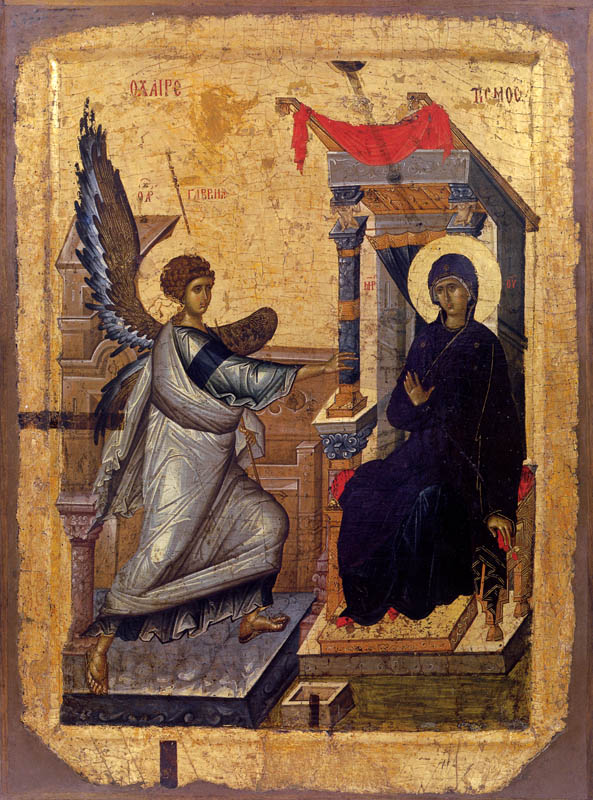
Great Compline is celebrated on the following days.
On the eve of Wednesday and Friday of the Meat-fare week (however, if the Meeting of the Lord happens on one of these days, then Compline is not served).
On all weekdays (Monday - Friday) in the evening of Holy Fortecost (except Wednesday and Friday of the 5th week, March 25 in the evening, on the eve of the celebration of the feast of the Annunciation).
On Holy Monday and Holy Tuesday in the evening.
At Nativity and Epiphany as part of the vigil.
NIGHT SERVICE (MIDNIGHT OFFICE AND COMPLINE)
THE SEQUENCE OF GREAT COMPLINE
First of all, let us discuss the regular service of the Great Compline, celebrated in the evening on fast days (except Fridays) on the 2nd, 3rd, 4th, 5th and 6th weeks of the Great Lent.
The sequence of Great Compline is found in the Book of Hours and the Followed Psalter, and its charter is in the 49th chapter of the Typicon (Monday of the 1st week of the Great Lent).
The rite of Great Compline consists of the usual beginning and three parts, each of which begins with the words “Come, let us worship …”. Therefore, it is preferable if three readers read Compline in the following way:
first reader - regular beginning and the 1st part;
second reader - 2nd part;
the third reader is the 3rd part.
The regular beginning and part 1
The priest puts on the epatrikhilion, goes out onto the soleas, stands in front of the Royal doors and proclaims: “Blessed is our God …”.
Reader: “Amen. Glory to Thee, our God, glory to Thee. Heavenly King…”, Trisagion, “Our Father…”.
Priest (exclamation): “For Thine is the Kingdom…”.
Reader: “Amen.” “Lord, have mercy” (12 times). “Glory… and now”[1]. “Come, let us bow…” Psalm 4: ” Hear me when I call…”. Psalm 6: “O Lord, rebuke me not in Thine anger…”. Psalm 12: “How long wilt thou forget me…”. “Glory… and now.” “Alleluia” (three times). “Lord, have mercy” (three times). “Glory… and now.” Psalm 24: “Unto Thee, O Lord, do I lift up my soul…”. Psalm 30: “In Thee, O Lord, I trust…”. Psalm 90: “Alive in the help of the Most High …”. “Glory… and now”, “Alleluia” (three times), “Lord, have mercy” (three times), “Glory… and now.”
The reader (or sometimes a canonarch) loudly and solemnly proclaims: ““God is with us, know it you nations and be submissive,
For God is with us.”
Chorus: “God is with us…” (2 times in full).
Then the reader reads the verses, and the choir sings the chorus to each verse: “For God is with us.”
Reader: “Hear it to the ends of the earth.”
Chorus: “For God is with us.”
Reader: “You mighty shall be defeated.”
Chorus: “For God is with us” (further according to the text of Great Compline). <…>
Reader: “Father of age to come” (last verse).
Chorus: “For God is with us.”
Reader: “God is with us, know it you nations …” (in full).
Choir: “God is with us…” (in full).
Reader: Glory to the Father and the Son and the Holy Spirit.
Choir: “God is with us…” (in full).
Reader: “And now… Amen”.
Choir: “God is with us…” (in full).
Reader: “Having passed the day, I give thanks to you, Lord…”. “Glory”: “Having traversed the day, I sing hymns to you, O Holy One…”. “The world of the bodiless Cherubim”. “I believe in one God…”.
(…) The glorification of the Holy Trinity which follows is expressed in the form of an exclamation “For You are merciful …” (after a Litany of Fervent Supplication) or after the repeated “Lord, have mercy”, in the form of “Glory… and now”. The latter is read (sometimes after “O Christ our God, who at all times and at every hour…” or another prayer) or sung at the dismissal (in the 2nd part of the Midnight Office or on the weekly Days of the Great Lent at Compline and at the 1st hour, after the final Trisagion).
Priest: “Most Holy Lady Theotokos, for all of us sinners do intercede.” and bows to the ground.
The choir repeats: “Most Holy Mother of God …” (twice).
Priest: “All the heavenly powers of the holy Angels and Archangels, for all of us sinners do intercede” (bow to the earth).
The choir repeats this hymn once.
Similarly, an appeal to other saints takes place: the priest proclaims another hymn and makes a bow, and the choir repeats the hymn once.
After the final melody (“God be gracious on us sinners and have mercy on us”), the reader reads the Trisagion and “Our Father …”. In the Church Charter, this Trisagion is called “the first Trisagion.”
Priest (exclamation): “For Thine is the Kingdom…”.
The reader says: “Amen” and reads the troparia from the Book of Hours:
On Monday and Wednesday evenings: “Illumine my eyes,…”, “Glory”: “O God, be the protector of my soul…”, “And now”: “Since we have no standing…”.
On Tuesday and Thursday evenings: “O Lord, you know the wakefulness of my enemies…”, “Look graciously upon me…” (verse), “O how awesome is your judgment…”, “Glory”: “Give me tears, Lord…”, “And now”: “Trusting in your unashamable hope…”.
In all these cases, after the troparia, the reader says: “Lord, have mercy” (40 times), “Glory… and now.” “Greater in honour than the Cherubim…” “In the name of the Lord, Father give the blessing.”
Priest: “Through the prayers of our holy Fathers, Lord Jesus Christ, our God, have mercy on us and save us.”
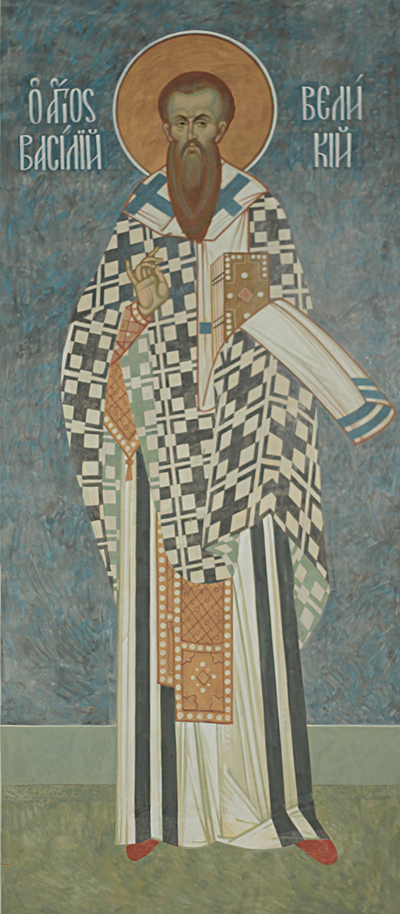
Reader: “Amen.” And he reads the prayer of St. Basil the Great: “Lord, Lord, who have delivered us from every arrow that flies by day …”.
Part 2
Reader: “Come, let us worship…”. Psalm 50: “Have mercy on me, O God, according to Thy great mercy…”. Psalm 101: “O Lord, hear my prayer, and let my cry come to you…” - Prayer of Manasseh: “O Lord, Almighty, the God of our Fathers …”. Trisagion and “Our Father …” (“second Trisagion”).
Priest: “For Thine is the Kingdom…”.
The choir sings penitential troparia: “Have mercy on us, O Lord …”. “Glory”: “Lord, have mercy on us…”. “And now”: “O blessed Theotokos, open to us the gate of compassion…”.
Reader: “Lord, have mercy” (40 times). “Glory… and now”, “Greater in honour than the Cherubim…”, “In the name of the Lord…”.
Priest: “Through the prayers of our holy fathers…”.
Reader: “Amen.” And the prayer “O Master God…”.
Part 3
Reader: “Come, let us worship…”. Psalm 69: “O God, come to my assistance…”. Psalm 142: ” Lord, hear my prayer, lend your ear to my supplication in your truth…”. “Glory to God in the highest…” (doxology).
The choir and the reader perform the canon according to the Charter (irmos are sung once, and there is no katavasia). In the period we have been studying (from Monday of the 2nd week to Thursday of the 6th week inclusive), at Compline, along with the canons of the Mother of God from the Octoechos, the canons of those saints whose memory will occur in the period from Saturday of Lazarus to the Week of Antipascha inclusive - are sung. First the canon of the Theotokos is sung, and then the canon of the Menaion.
After to the 3rd hymn: “Lord, have mercy” (thrice) (instead of a small litany), kontakion of the Menaion, sessional hymn of the Menaion, “Glory… and now”: Theotokion of the Menaion.
After the 6th hymn: “Lord, have mercy” (three times), “Glory… and now”: sessional hymn to the Mother of God from the Octoechos.
After the 9th hymn, “It is truly meet to bless Thee…”.
Reader: Trisagion and «Our Father…” (immediately after “It is truly meet to bless Thee…”. This Trisagion is called “the third Trisagion” in the Charter).
Priest: “For Thine is the Kingdom…”.
Choir: “Amen. Lord of the Powers … “(with verses). “Glory”: “Lord, if we did not have your Saints as intercessors…”. “And now”: “Great is the multitude of my errors, O Mother of God…”, “All-Holy Theotokos …”, “My one and my every hope…”.
Reader: “Lord, have mercy” (40 times). Prayer: “O Christ our God, who at all times and at every hour…” “Lord, have mercy” (three times), “Glory… and now”, “Greater in honour than the Cherubim …”, “In the name of the Lord …”.
Priest: “God, have mercy on us…”.
Reader: “Amen.”
The priest reads the prayer of St. Ephrem the Syrian twice with 16 bows as follows: “O Lord and Master of my life, take from me the spirit of sloth, despair, lust of power, and idle talk.” (earth-low bow). “But give rather the spirit of chastity, humility, patience, and love to Thy servant.” (earth-low bow). “Yea, O Lord and King, grant me to see my own transgressions, and not to judge my brother, for blessed art Thou, unto ages of ages. Amen. ” (earth-low bow). This is followed by 12 waist - bows with the prayer ” O God, cleanse me a sinner. ” (this prayer is read secretly, although it is permissible for the priest to say it out loud). Finally, the priest once again loudly pronounces the prayer of St. Ephraim the Syrian (this time in full) and makes another earth-low prostration.
After that the reader says: “Amen” and reads the Trisagion and “Our Father …” (the “final Trisagion”).
Priest (exclamation): “For Thine is the Kingdom…”.
Reader: “Amen.” “Lord, have mercy” (12 times) and the prayers: “O spotless, unstained…”, “And grant to us, Master, as we depart for sleep…”, “Most glorious, ever virgin, blessed Theotokos…”, “The Father is my hope… ”.
Priest: “Glory to Thee, O Christ God…”.
Chorus: “Glory… and now”, “Lord, have mercy (three times). Bless.”
The priest pronounces the great dismissal, accompanied by the prayer “Most merciful Master, Lord Jesus Christ our God… and save our souls as a good friend of man.” During the reading of this prayer, the congregation kneels down. After the prayer, the priest, faces the people and says: “Bless, holy fathers (in parish practice, it is added: brothers and sisters), forgive me a sinner.”
People: “God forgive you, holy father.”
Priest: “Let us pray for our great lord…”. During the recitation of this prayer, the choir slowly sings “Lord, have mercy” many times. At the end of the prayer, the priest proclaims: “Let us also say for them.”[2]
Chorus: “Lord, have mercy” (three times).
Priest: “Through the prayers of our holy Fathers…”.
Choir: Amen.
SMALL COMPLINE AND THE DAYS OF ITS COMPLETION
Small Compline is served in the northex of the church, and sometimes in secretly. The veil of the royal doors is closed, and the priest is dressed only in an epitrachelion during the whole the Compline.
Small Compline is celebrated on the following days.
In the period from Antipascha to Meatfare Week, it is celebrated every day, except when it is necessary to perform an all-night vigil (on the eve of Sundays, great and vigilant holidays).
On Monday, Wednesday and Friday of the meat-fare week (in the evening).
On some days of the Great Lent: all the Sunday evenings, on Wednesday and Friday of the 5th week (performed secretly), on Holy Wednesday, Holy Thursday, Holy Friday in the evening. In addition, Small Compline is celebrated on the evening of the feast of the Annunciation of the Most Holy Theotokos, on the eve of March 26, if the Annunciation itself takes place on a weekday of the Great Lent (see Typikon, March 26, 3rd “behold”).
Small Compline on the eve of Holy Thursday
Small Compline is not celebrated on the evening of Great Saturday (this is replaced by the reading of the book of the Acts of the Holy Apostles) and during Bright Week (replaced by the Easter hour).
THE SEQUENCE OF THE SMALL COMPLINE
The rite of Small Compline is presented in full only in the Sequence Psalter(part II), whereas in the Book of Hours only a diagram is given. In any case, the Small Compline almost coincides with the third part of the Great Compline.
Priest: Blessed is our God…
Reader: “Amen. Glory to Thee, our God, glory to Thee. Heavenly King…” Trisagion and “Our Father…”.
Priest (exclamation): “For Thine is the Kingdom…”.
Reader: “Amen.” “Lord, have mercy” (12 times). “Glory… and now.” “Come let us worship…” Psalm 50: “Have mercy on me, O God, according to Thy great mercy…”. Psalm 69: “O God, come to my assistance… Psalm 142: “O Lord, hear my prayer, lend your ear to my supplication…”. “Glory to God in the highest…” (doxology). “I believe in one God, Father Almighty …” (Creed).
The choir and the reader perform the canon according to the Charter (the irmoses are sung once, and there is no katavasia). At Compline, the canon to the Mother of God, which can be found in the Octoechos, is always sung.
However, if a service to a saint takes place at Compline (for example, if the memory to three or more saints is celebrated, see September 6, 22), then two canons are sung. In this case, the canon to the Mother of God is sung first, followed by the canon of the Menaion. In this case, after the 3rd ode, the following prayers are read: “Lord, have mercy” (thrice) (instead of the small litany), the kontakion of the Menaion, the sessional hymn of the Menaion, “Glory… and now”: The Theotokion of the Menaion. If only the canon of the Mother of God is sung, then the 4thode follows the 3rdimmediately.
After the 6th ode (always): “Lord, have mercy” (three times), “Glory… and now”: sessional hymn to the Mother of God (from the Octoechos.
After the 9th ode, “It is always meet …”.
Reader: Trisagion, “Our Father …”.
Priest: “For Thine is the Kingdom…”.
Choir: “Amen” and the troparia as follows:
• in a church of the Lord: the troparion of the church (on Wednesdays and Fridays the troparion of the church is omitted), the troparion of the day (on Thursdays - two daily troparia), the troparia “God our Father…”, “As with fine porphyry and royal purple…”, “Glory”: “With the Saints give rest …”, “And now”: “Through the prayers, O Lord, of all the saints and the Mother of God…”.
• in a church of the Mother of God: the troparion of the church (on Wednesdays and Fridays, the troparion of the day is first sung, followed by the troparion of the church), the troparion of the day (on Thursdays - two daily troparia), the troparion “God our Father …”, “Thy martyr all over the world …”, “Glory”: “With the Saints give rest…”, “And now”: “Through the prayers, O Lord, of all the saints and the Mother of God…”.
• in the church of a saint: troparion of the day (on Thursdays - two daily troparia), troparion of the church[3], troparia “God our Father …”, “Thy martyr all over the world …”, “Glory”: “With the Saints give rest…”, “And now”: “Through the prayers, O Lord, ofall the saints and the Mother of God…” (see Typikon, chapter 52).
Note. If the troparion of the church saint coincides is the same as the daily
troparion, or if the church saint belongs to the rank to which the daily
troparion is dedicated, then only the troparion of the day is sung. This
happens, therefore, on Monday in a church of the Celestial Incorporeal
Powers , on Tuesdays in a church of John the Baptist and on Thursdays in an
apostolic church or the church of St. Nicholas. 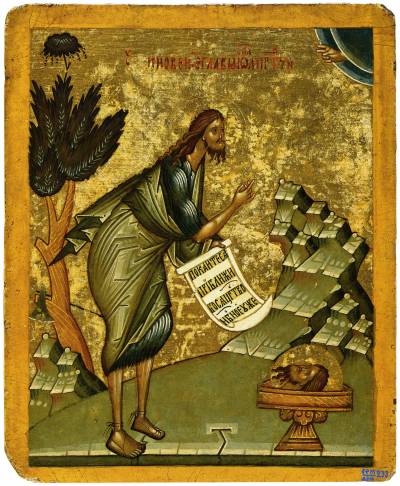
Reader: “Lord, have mercy” (40 times). Prayer: “Thou Who at all times and at every hour…”, “Lord, have mercy” (three times), “Glory… and now”, “Greater in honour than the Cherubim…”, “In the name of the Lord …”.
Priest: “Through the prayers of our holy Fathers…”.
Reader: “Amen” and the prayers: O spotless, unstained…”, “And grant to us, Master, as we depart for sleep…”, “Most glorious, ever virgin, blessed Theotokos…”, “The Father is my hope… ”.
Priest: “Glory to Thee, O Christ God…”.
Chorus: “Glory… and now”, “Lord, have mercy” (three times). “Bless.”
The priest pronounces the small dismissal, and the choir sings “Amen.” In practice, this ends Little Compline.
However, according to the Charter, the rite of forgiveness and an ending similar to the end of Great Compline are also required. Thus, after the dismissal, the priest, turning to the people, says: “Bless, holy fathers (in parish practice, he adds: brethren and sisters), forgive me a sinner.”
People: “May God forgive and have mercy on thee, holy father.”
Priest: “Let us pray for the great master…”. Meanwhile, the choir slowly sings “Lord, have mercy” many times. At the end of the prayer, the priest proclaims: “Let us also say for them.”
Chorus: “Lord, have mercy” (three times).
Priest: “Through the prayers of our holy Fathers…”.
Choir: Amen.
MIDNIGHT OFFICE
The Midnight Office is a service of the daily circle, meant to be performed after a night’s sleep. It is served in the northex of the church (or sometimes in the cells), while the veil of the royal doors is closed, and the priest is dressed only in epitrachelion.
The Midnight Office covers three themes:
• remembrance of the night prayer of the Savior in the Garden of Gethsemane (see the Missal, “ Teaching News…”);
• imitation of the Heavenly Powers , incessantly glorifying the Lord (see the troparia at the Saturday Midnight Office);
• expectation of the Second Coming of Christ (“Behold, the Bridegroom is coming at midnight…”).
The Charter of the Orthodox Church distinguishes three types of Midnight Office:
• daily Midnight Office (takes place on all weekdays, except Saturday);
• Saturday Midnight Office;
• Sunday Midnight Office (performed in the case if, for some reason, a vigil is not served, which, however, is supposed to be celebrated every Sunday according to the Charter).
Midnight Office, just like Small Compline, is not celebrated if the All-Night Vigil is served. However, in practice, midnight office is not performed in parish churches at all, with the exception of the Bright Week.
PECULIARITIES OF THE SATURDAY MIDNIGHT SERVICE AND ITS DIFFERENTIATION FROM THE DAILY
The sequence of the Saturday Midnight Office is given in the Sequence Psalter. The Saturday Midnight Office, if compared to the daily one, has three features:
• instead of the 17th kathisma, the 9th kathisma is read;
• after the first Trisagion, the following troparia are sung (or read): “O Thou Who art by nature Uncreated, the Fashioner of all…”, “Glory”: “Imitating on earth the Hosts on high…”, “And now”: “From bed and sleep hast Thou raised me up…”;
• at the end of the 1st part, and the prayer: “O Master, God the Father Almighty…”, - the prayer “Most highly do I magnify Thee” is read.
Part 2 of the Saturday Midnight Office has no special features.
FEATURES OF THE FESTIVE MIDNIGHT SERVICE
Reader: “Amen. Lord, have mercy” (12 times), “Glory… and now”, “Come, let us worship …”. Psalm 50: “Have mercy on me, O God, according to Thy great mercy…”.
Canon of the Most Holy Trinity (from Octoechos).
Troparia: “It is truly meet to glorify Thee, God the Word…”. Trisagion, “Our Father…”.
Priest: “For Thine is the Kingdom…”.
Reader: “Amen.” Hypakoeof the tone. “Lord, have mercy” (40 times). “Glory… and now.” “More honourable than the Cherubim…” “In the name of the Lord…”
Priest: “God be gracious unto us…”.
Reader: “Amen. O omnipotent and life-creating Holy Trinity…”.
Priest: “Glory to Thee, O Christ God…”.
Chorus: “Glory… and now.” “Lord, have mercy” (three times). “Bless.”
The priest performs the small dismissal and then says: “Bless, holy fathers, brethren and sisters, and forgive me a sinner.”
Chorus: “Lord, have mercy” (three times).
Priest: “Through the prayers of our holy Fathers…”.
Choir: Amen.
THE SEQUENCE OF THE EASTER MIDNIGHT OFFICE
This is the only Midnight Office of the year that is celebrated in parish
churches. Since Easter is always on a Sunday, the Easter Midnight Office
consists of one part. Its charter is set out at the end of chapter 49 of the
Typikon in the sequence of Great Saturday (which means that the Paschal
Midnight Office is the last divine service of Great Saturday, especially since
the canon of Great Saturday is sung on it). 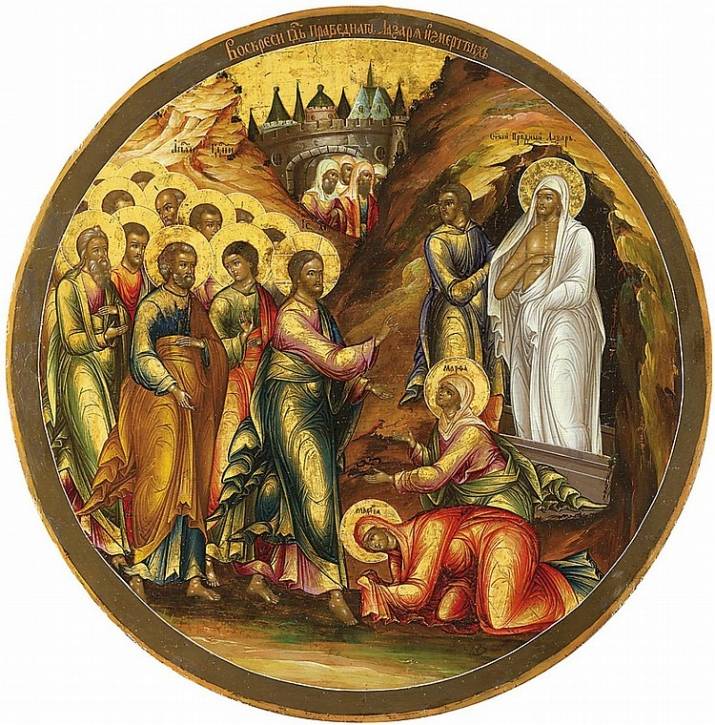
The Festive Midnight Office is celebrated on the great feasts of the Lord and the Mother of God, as well as on the feasts of vigilant saints, in the case if for any reason the all-night vigil is not performed (see, for example, September 8, January 1). The Charter also specifies to celebrate the festive Midnight Office on certain special days of the church year: December 26, January 7, Lazarus Saturday, Great Saturday, Mid-Pentecost, the celebration of Pascha and on the Monday of the Holy Spirit. In these cases, the Midnight Office, unlike the usual daily or Saturday Midnight Office, has the following three features:
• 1st part: a festive troparion (troparia) is(are) sung after the first Trisagion;
• 2nd part: after the second Trisagion, the kontakion of the feast ( or of the great saint) is sung;
• the prayer “Remember, Lord, in the hope of the Resurrection…” is omitted.
SEQUENCE OF THE SUNDAY MIDNIGHT OFFICE
Sunday Midnight Office consists of only one part (unlike the daily and Saturday offices). Its charter is given in the 7th chapter of the Typicon and the Book of Hours, and the sequence is in the Sequence Psalter.
Priest: Blessed is our God…
Reader: “Amen. Glory to Thee, our God, glory to Thee.” “Heavenly King…”, Trisagion, “Our Father…”.
Priest: “For Thine is the Kingdom…”.
Priest: Blessed is our God…
Reader: “Amen.”, Trisagion, “Our Father…”.
Priest: ” For Thine is the Kingdom…”.
Canon of Holy Saturday (from the Triodion). Irmoses are sung twice, 12 troparia are read (usually the priest reads the canon before the Shroud), and after each hymn a katavasia is sung (irmos of the same hymn).
After the 3rd ode: “Lord, have mercy …” (three times, instead of litanies), sessional hymn of the Triodion, “Glory… and now”: and the same sessional hymn.
AFter the 6th ode: “Lord, have mercy …” (three times), kontakion and ikos of the Triodion.
Aftero the 9th ode, the choir sings the katavasia (“Weep not for Me Mother…”). Meanwhile the priest carries the Holy Shroud with the royal gates into the altar.
Reader: Trisagion, “Our Father…”
Priest: “For Thine is the Kingdom…”.
Choir: “Amen. When Thou didst descend unto death…” (Sunday troparion of the 2nd tone).
The priest pronounces an abbreviated special litany consisting of four petitions and, after that, an exclamation: “For a merciful God art Thou, and the Lover of mankind…”.
Choir: Amen.
Priest: “Glory to Thee, Christ God…”. Chorus: “Glory… and now.” “Lord, have mercy” (three times). “Bless.”
The priest pronounces a dismissal: “May Christ our true God, Who rose from the dead, through the intercessions of His most pure Mother, of our holy and God- bearing fathers, and of all the saints, have mercy on us and save us, for He is good and the Lover of mankind.”
Choir: Amen.
[1]Note that in the Book of Hours the words “Glory… and now” are marked in red (not black), so readers often skip them (this applies equally to reading the usual beginning on the hours or other divine services performed separately). This is absolutely unacceptable, especially since the presence of “Glory… and now” the has a certain particular here. This is because, after the reading of the Trisagion and “Our Father …” (sometimes after the troparia or kontakion) an intensified prayer and glorification of the Holy Trinity are always read. This intensified prayer can be presented in the form of special litanies (at the end of Vespers and at the beginning and end).
[2]In the Greek Book of Hours, this petition looks different: “Let us say also for ourselves.” This option is also indicated in a footnote in the Slavonic Book of Hours. Indeed, the petition “for ourselves” looks more logical, since, firstly, all other members of the Church (hierarchies, civil authorities, and others) have already been named in previous petitions, and secondly, in the church tradition, the prayer “for us ourselves” usually follows at the end, after other commemorations (for example, when the priest withdraws a particle for himself at the end of the Liturgy of Preparation).
[3]In a church of an Archangel, on Tuesdays and Thursdays, and in the Church of the John the Baptist (as in the case of any prophet), on Thursdays, the troparion of the church is sung before the daily troparion (see Typikon, chapter 52).
- The Services performed between the Evening service and the Divine Liturgy.
- The Service of the Hours.
- The Midnight Service.
- The Compline.
- Some features of these Services.
Related Concepts
- 1st-hour
- 3rd-hour
- 6th-hour
- 9th-hour
- apostle
- bright-week
- compline
- dismissal
- easter
- easter-midnight-office
- gethsemane
- great-lent
- heavenly-powers
- holy-week
- hours
- lent
- liturgical-order
- matthew-25
- parish-practice
- paroemia
- paschal-midnight-office
- passion-chronology
- prayer-before-sleep
- prayer-of-st-ephrem
- prostrations
- rubrics
- second-coming
- st-basil-the-great
- st-ephrem-the-syrian
- theotokos-canon
- watchfulness