Liturgics — 7. The Daily Liturgical cycle. The Vespers
- The Services of the Daily cycle. The Mystery of Time and Worship. The Prayer Time. The Vespers.
The Services of the Daily cycle. The Mystery of Time and Worship.
When we think about time, we always encounter the mystery of time and its mysterious nature, which is expressed in many ways.
For example, we know that time runs only forward, never backward, for it is directed only forward. On the other hand, time is cyclical: the day ends today, and a new day starts tomorrow; weeks, months, years, centuries, millennia are some kind of cycles. We know that time is bound up with the existence of our created world; the end of the world is sometimes called “the end of time,” when time will no longer exist. We exist only in temporal reality and cannot imagine any other existence, yet the soul can certainly feel the eternity, which in some incomprehensible way is present in time and can appear to us in it. On the other hand, we can suppose that time will also be present in eternity.
Whatever we feel and vaguely discern about the nature of time can be felt with greater clarity in the structure of worship time, in the way astronomical time, belonging to the created world, is included in liturgical service time, transfigured in it.
 Let us recall the classification of divine
services in the Orthodox Church. The central point of worship is the
sacrament of the Eucharist. The two sacraments of entry into the Church,
that are the Baptism and the Anointing, make the participation in the
Eucharistic life possible and are connected with the Eucharist, ass well as
the other four main sacraments.
The Service of time , formed by a cycle of services (in this case it is better to speak of the services of the daily cycle), is also linked to the Eucharist. The sacrament of the Eucharist cannot be included in this cycle, because its nature is different, not essentially related to “times and terms”, since the essence of the sacrament of the Eucharist is not temporal, but eternal. Therefore, the sacrament of the Eucharist, which is celebrated during the liturgy, is not one of the services of the daily circle, and we cannot say that it is part of that circle. Fr. Alexander Schmemann says that the sacrament of the Eucharist is in some way “contiguous” with the divine service of time and is brought into it, being eternally present to us in time.
“The conjunction of the Eucharist and the service of time is a common and basic form of the Charter,” writes Fr. Alexander Schmemann. The Charter regulates and creates the forms of entry of the timeless Sacrament into the temporal and ephemeral nature of our world. The very existence of the Service of time in Christian tradition reveals to us the natural connection between the New Testament and the Old Testament liturgical structure. The liturgical life of the Apostles had a dualistic character: on the one hand, they participated in the services in the temples, which were predominantly services of the time; on the other, they “broke bread at home” and celebrated the Eucharist in private homes, as described in the Acts of the Apostles. This juxtaposition of two unequal and incomparable but united parts of worship has been present in Christian life since the earliest times.
The study of liturgical time should prepare us for the study of the proper order of liturgical services, therefore the main points concerning this subject should be very well known; not all subtleties and details will be immediately apparent, but they will be clarified further on.
Prayer Time.
Orthodox worship is divided into hours, days, weeks, and months. We can distinguish three cycles in the time of worship.
The first one is the daily (or diurnal) cycle of divine service, the second one lasts a week , and the third is a year -long cycle.
The Orthodox worship is not simply a strictly regulated distribution of services spread over the time of the day. This distribution has been understood and filled up with a high theological meaning since very ancient times. This understanding contained an explanation of a common prayer at a certain hour, as well as a certain aid to prayer. If we refer to the earliest Christian records, for example, before the fourth century, we can see that the time appointed for prayer is not the same in different sources and authors, but we can also notice that all of them got common points on the matter.
 What
has been the appointed time for prayer since antiquity? Sunrise ,
third , sixth and ninth hours after sunrise, evening and
midnight. It is worth saying that these instructions about time of prayer
evolved and were refined, but, in principle, they remained the same till our
time.
So how were these prayer hours interpreted? For example, St. Cyprian of Carthage says that during the morning service we should remember the Resurrection of Christ as people learned about His Resurrection in the morning, so we should remember it every morning as well. Other sources say the morning time is dedicated to the remembrance of the enlightenment of God: the sun illuminates the earth, and the Lord illuminates our hearts, our souls, our minds. The third, sixth and ninth hours have from ancient times corresponded to the events of the life of Christ and the Apostles: the third hour was the hour when the Holy Spirit was given to the Apostles, the sixth hour was the hour when the Lord was nailed to the Cross, and the ninth hour was the hour of the Savior’s death on the Cross.
The evening was traditionally a time of prayer. Even the center of the Christian worship was set at the Last Supper. St. Cyprian says that in the evening we should remember that Christ replaces the sun: as the sun has gone down and darkness is about to come, Christ replaces it and there is no darkness for Christians. We can perceive this poetic reflection on this time of prayer up to this day, for example, in the hymn “Silent Light” the Lord is called the Light of Heavenly Father’s glory.
A few Words about Vespers.
As an office Vespers requires clarification. Although we have said that the first service of the liturgical day is Vespers, this formulation is inadequate and imprecise; the correct statement should be somewhat different: the first service of the church day is Vespers, preceded by the ninth hour. As such, this wording best expresses the meaning of the union of the two services. Vespers is the first service of the liturgical day, and the ninth hour is the last one. So, the beginning and the end of the divine service day are joined together, they are sort of connected. Is it possible just because of some rule of the Charter which obliges us to read the ninth hour before Vespers?
 Let us try to comprehend and understand the meaning of
this connection. Bishop Afanasiy Sakharov said that it is a kind of
fulfillment of the apostolic commandment to ” pray unceasingly”. As soon as
one worship day was over, the next one would begin without any interruption.
The prayer does not cease for a minute. However, the liturgical remembrance of
the ninth hour and the Vespers are not the same, they are united only in the
sequence of the services, but their subjects are different. For example, St.
Sergius is commemorated on September 25; the next day, it’s St. John the
Evangelist’s and St. Tikhon’s day. Let us imagine that we attended the Divine
Liturgy on the day of St. Sergius, and in the evening we attended the All-
Night Vigil on the Feast of St. John. Vespers is supposed to be preceded by
Minor Vespers. Parish churches do not celebrate it, but for us it is of no
importance at the moment. The ninth hour is to be served before the Minor
Vespers. However, at the ninth hour the Troparion and Kontakion of the passing
Day of St. Sergius are read, while Vespers is already dedicated to the feast
of St. John and St. Tikhon, which means that the liturgical themes of these
two services are different and this should be remembered firmly.
We have already said that the liturgical course of time differs from the astronomical one ; but the liturgical order does not break or destroy the astronomical cycle, but only transforms it giving it a new meaning. This can be observed in the importance of the position of Vespers in the liturgical day. It refers both to the passing day and to the coming day, to the day united with it by the same liturgical theme, with Compline, Midnight office, Matins and the Hours. Vespers is directed forward and begins the day according to its liturgical content, expressed in the troparia, canticles and readings; however, it has features that indicate its closest connection with the passing day.
The Vespers of the Twelve Great Feasts of the Lord have a more solemn, more joyful character. They may include the following great prokeimena: “Who is the great God, as our God, You are God, doing wonders”, and another: “Our God in heaven and on earth, do whatever He wills”. These prokeimena are proclaimed to mark the evening of a great feast.
TheDaily cycle Service is, of course, the foundation of all worship ; it forms a frame which contains everything else, or, rather, it is the canvas upon which we can embroider with different shades of colour. It is of absolute importance in the structure of worship: there is no day of the year when Vespers is not celebrated; there are some days when the liturgy is not celebrated , but Vespers and Matins always are. The Eucharist, being celebrated at the Liturgy, is incorporated and connected with the daily service in a certain manner. It should be said that the place of the liturgy among the daily services is not always the same. It may not take place at all, but it may also be celebrated at different times of the daily cycle. There are two options for performing the liturgy in conjunction with the other services of the daily cycle: the liturgy may be performed before Vespers or after Vespers. To clarify, it is important to understand the relationship between the astronomical and the liturgical flow of time.
The liturgical day begins in the evening : ninth hour and Vespers are
served, then Compline and Midnight office, then Matins, first, third, and
sixth hours, and, finally, the Divine Liturgy. This is the ” standard” order
we are used to. This order is known as “the celebration of the liturgy
before Vespers ”, because it is celebrated before Vespers of the same
astronomical day. When the order of divine services is as follows: Vespers,
preceded by the ninth hour, Compline, Midnight office, Matins, first, third,
sixth and ninth hours, Typica (Изобразительны), and then the Liturgy. It is
somewhat challenging for us to notice this order, because in current practice
the liturgy is always celebrated in the morning. We do not always realize that
the liturgy is being celebrated after Vespers, but there are such days: for
example, on Great Thursday and Saturday, on Christmas Eve, on Epiphany Eve,
and some on some other occasions (we have listed only the main ones).
What is the meaning of the indication “after Vespers” or “before Vespers”? It shows us again the dual and borderline place of Vespers: even the liturgy of an astronomic day can be transferred to a time after Vespers.
Let us also recall the Liturgy of the Presanctified Gifts. In fact, it is Vespers, at which the faithful receive communion with the previously consecrated Gifts, which means that the consecration of the Gifts is not celebrated at this liturgy. This Liturgy is served at Vespers or, in other words, after Lent Vespers, usually on Wednesdays and Fridays. It is served after Wednesday Vespers and after Friday Vespers, but belongs specifically to Wednesday and Friday. At the ending of the Liturgy of the Presanctified Gifts, the saints of both days are commemorated: these of the previous day and of the day that has started. The occurrence of this Liturgy at Vespers is the clearest manifestation of the dual, borderline nature of this office.
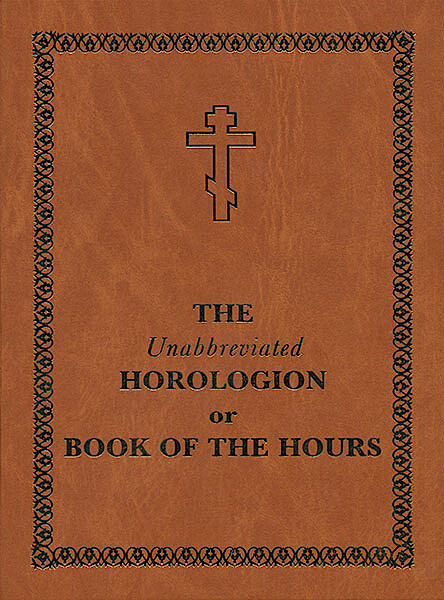
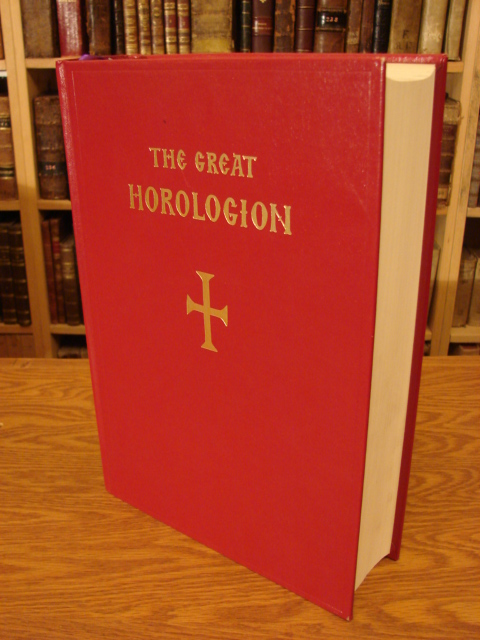
The unchanging, recurring text of the services of the daily cycle can be found in the Book of Hours (Greek Ὡρολόγιον). It mostly has a biblical origin, i.e. it was taken from the books of the Old and New Testament. Just as the daily diurnal circle forms the basis of worship, so do the Scriptures for all liturgical texts.
The daily cycle of worship is supplemented by the one-week and annual cycle. The seven-day and annual divine service cycles do not have their own separate services, and their material is merely inserted into certain places in the services of the daily cycle. This is why it is the daily cycle is the primary one, while the one-week and annual cycles are merely supplemented by its individual elements.
- The Vespers.
The Structure of the Vespers and its meaning.
Vespers is the first divine service of the daily cycle , since it is during Vespers that the prayers of the day or feast are used for the first time.
The rite of Christian Vespers has its roots in the Old Testament tradition of lighting a lamp in the****evening(Exodus 30:8; Lev. 24:1-4), which later received a Christian interpretation (Christ is the Light of the World: John 1:9; 8:12). Therefore, in the Ancient Church, Vespers began by bringing in a lamp into the prayer meeting, after which certain prayers were read. As a result, the ancient evening service itself was already in the 3rdcentury called “thanksgiving by the lamp” (by the way, this is why the Vespers prayers read secretly by the priest during Psalm 103 are called “of the lamp”).
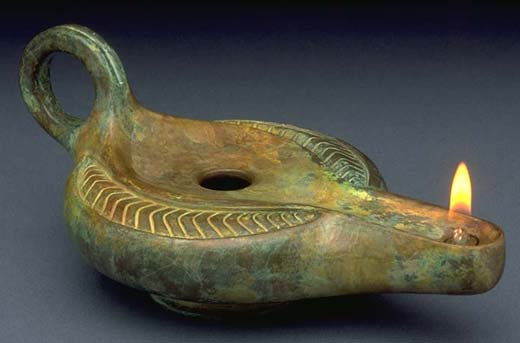 As well as
this indicated historical connection with the rite of bringing a lamp into
the church , the following four themes are mentioned in the fixed prayers of
Vespers:
• God’s creation of the world and God’s providence for the world (Psalm 103);
• The fall of man and repentance (psalms used in “Lord, I have cried…”);
• the coming of the Son of God into the world (“Oh joyful Light”);
• the finiteness of a human’s earthly life(“Lord, now You are letting”).
An important role in the Vespers is played by hymns that can change , depending on the day (stichera during «Lord, I have cried …”, on the lity and during the aposticha, troparia), which include the glorification of this holiday. In addition, the Holy Scripture is often read at Vespers (mainly these are proverbs dedicated to the celebration; the Apostle and the Gospel are read very rarely).
Small Vespers.
The Charter of the Orthodox Church distinguishes three types of vespers: the small , daily and great. In addition, there are two ways of serving Great Vespers: separately from other services and together with Matins as part of the All-Night Vigil. Finally, following a special rite, Vespers is celebrated on the Sundays of the Great Lent. In this chapter, we will cover only those types of Vespers that are celebrated throughout the year, excluding the Lenten period.
Small Vespers , as appointed by the Charter, is served before the All- Night Vigil and is always celebrated if the All-Night Vigil begins with the Great Vespers[1]. In this case, the vigil begins “after the sun is low” (Typicon, Chapter 2), that is, later than the usual time appointed for vespers. And “in order not to leave the usual hour of vespers without the customary prayerful consecration, small vespers is meant for it.”[2]This is performed “before the sun sets” (Typicon, Chapter 1), so before sunset.
Small Vespers immediately follows the 9 thhourand is celebrated in the church, with the veil of the royal gates closed. The serving priest, according to the charter, is dressed only in an epitrachelion throughout the entire small vespers. Also, during the small vespers (as opposed to the daily and great ones), the kathisma and almost all litanies are omitted. Because of this, the rite of small vespers is similar to the canonical hours, with the only difference that it includes non-fixed parts (stichera and troparia).
The text of small vespers can be found in the 1 stchapter of the Typicon, and its features are also indicated in the 3rd, 4th, 15th, 48th, 49thand 50thchapters of the Typicon.
Small Vespers and its structure.
At the end of the 9thhour, the priest comes out of the Sanctuary onto the pulpit and, after the end of the prayer of the 9thhour, begins small vespers with the exclamation: “Blessed is our God …”.
Reader: “Amen. Come, let us worship…”, Psalm 103 (Book of Hours).
Reader: “Glory… Now and always”, “Alleluia, Alleluia, Alleluia, glory to You, O God” (three times). “Lord, have mercy” (thrice) (instead of litanies), “Glory… Now and always.”
Chorus: “Lord, I have cried…” (tone of the 1st stichera). Reader: “Set, a guard, o Lord…” (Psalms 140, 141, 129, 116, see Book of Hours) until the words “From the watch of the morning until night…”. The choir then sings stichera tone 4 according to the Charter, and then sings the hymn “O Joyful light …”.
Priest: “Let us stand.” “Peace be with all”. “Wisdom. Let us stand.”
Then the priest and choir perform the prokeimenon of the day (if small vespers is celebrated on Saturday evening, then the prokeimenon “The Lord reigns …” is sung with one apostichon (the first apostichon is “He has clothed himself”), and not with three, as opposed to great vespers).
Reader (or choir): “Vouchsafe, o Lord …”.
Chorus: apostichon according to the Charter.
Reader: “Lord, now You are letting”, the Trisagion and “Our Father …”.
Priest (exclamation): “For Yours is the Kingdom and the power and the glory…”.
The choir sings “Amen” and troparia according to the Charter.
The priest pronounces an abbreviated Litany of Fervent Supplication, consisting of four petitions (“Have mercy upon us, O God …”).
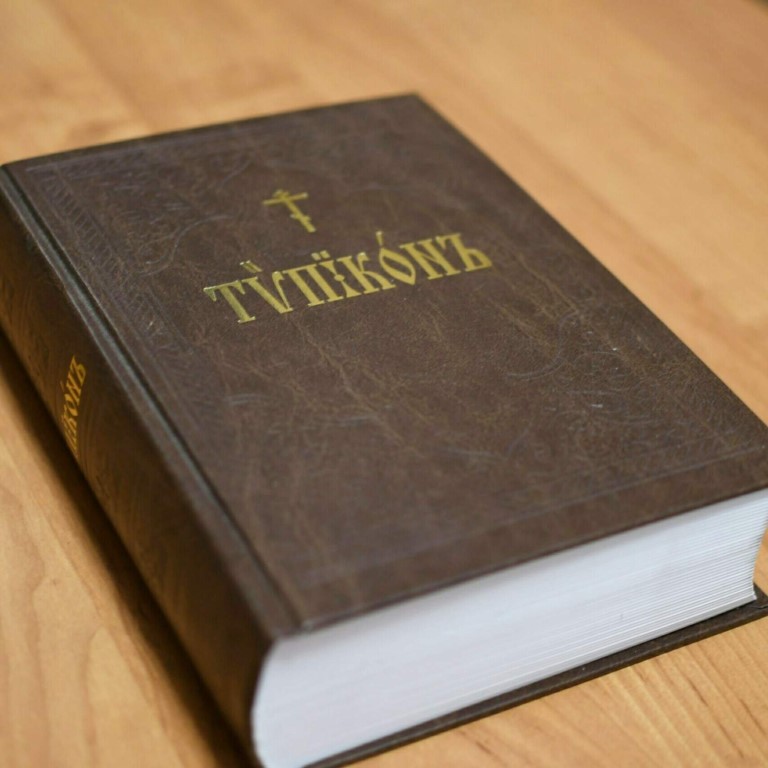 In the 1st chapter of the Typicon,
these exclamations before the prokeimenon are not indicated, although they are
quite appropriate here. This is due to the fact that, in general, the
exclamations before the prokeimenon at vespers “distinguish it from a number
of other vespers songs, focusing extra attention of the worshipers on it”
(Skaballanovich M., Explained Typikon, p. 563). Therefore, at the small
vespers, where the prokeimenon is also sung, the exclamations “Let’ us stand”,
“Peace be with all”, “Wisdom. Let us stand” should not be read out.
Chorus: “Lord, have mercy” (three times for each petition).
Priest (exclamation): ” For You are a merciful and loving God…”.
Choir: Amen.
Priest: ” Glory to You, Christ our God ”.
Chorus: “Glory… now and always”. “Lord, have mercy” (three times). “Bless.”
Priest (from the pulpit): “Christ our true God …” (small dismissal).
Chorus: “Great master …”.
** Features of the Small Vespers**
Special characteristics of Sunday Small Vespers in the case of a celebrating as mall saint or a saint “sung on 6” (with 6 stichera).
The charter of such a service can be found in the 1stchapter of the Typicon.
On “Lord, I have cried out to You…”: Sunday stichera of the 4thtone, which are taken from the Great Vespers (these are the first 3 Sunday stichera). With this the 1ststichera is sung twice. “Glory … now and always”: The Theotokion of the Octoechos , also called the “small****dogmatic ” (as opposed to the dogmatic chant, which is sung at the great vespers).
During the aposticha: the Sunday stichera of the tone (1ststichera from Great Vespers) and 3 stichera of the Theotokion with their refrains (i.e., of the Theotokion). ” Glory … now and always ”: The Oktoechos Theotokion (this Theotokion is sung only at the small Vespers).
After “Lord, now You are letting” the Sunday troparion of the tone. ” Glory … now and always ”: Sunday Theotokion of the tone.
Features of Sunday Small Vespers in the case of a great (Vigil or Polyeleic)
saint.
The features of such a service can be found in the 3rdchapter of the Typicon.
During “Lord, I have cried out to You…”: Sunday stichera of the 4thtone, “Glory”: sticheron of the saint; “now and always”: Oktoechos Theotokion (“small dogmatic chant”) of the current tone.
During the aposticha: Sunday stichera of the tone and 3 stichera of the saint, which are taken from the great vespers, with their refrains (since in our case there are only 2 refrains for three stichera, the first refrain is sung 2 times). “Glory”: stichera of the saint; “Now and always”: Theotokion according to the tone of the “Glory” sticheron:
• if there is a Theotokion in the Menaion, then this Theotokion is sung (for example, of 26thSeptember);
• if only the first words of the Theotokion are indicated in the Menaion (September 25th, service to St. Sergius of Radonezh), then one should look for this Theotokion in the 2ndannex of the Menaion;
• if there is no Theotokion in the Menaion (September 2nd, service to St. Anthony and Theodosius of the Caves of Kiev), then the Theotokion from the Octoechosfrom the Sunday Small Vespers of the corresponding tone is sung.
After ” Lord, now You are letting ” - the Sunday troparion of the tone. “Glory”: troparion of the saint; “Now and always”: The Sunday Theotokion (3rd appendix) according to the tone of the saint’s troparion.
Features of Sunday Small Vespers in case of a feast dedicated to the Holy Virgin Mary.
The features of such a service can be found in the Typicon in the service of 8thSeptember “If the feast occurs on a Sunday” (Mark’s chapters):
On “Lord, I have called…”: stichera of Sunday tones on 4, “Glory, …now and always”: sticheron of the holiday.
During the aposticha: the Sunday stichera of the tone and 3 stichera of the celebration, which come from the great vespers, with their (festive) refrains (and since we have only 2 refrains for three stichera, the first refrain is sung twice). “Glory… now and always”: stichera of the feast from the small vespers of the feast.
After ” Lord, now You are letting ”: the Sunday troparion of the tone. “Glory … now and always”: troparion of the holiday.
Features of small vespers in the case of one of the Twelve Great Feasts (on any day) or a Theotokos (Holy Virgin Mary) feast on a Sunday.
 The
features of this service are indicated in the Typicon in the services of 8th
and 14th September.
During “Lord, I have cried out to you.”, the stichera of the celebration of the 4th tone, “Glory… now and always”: the stichera of the celebration.
During the aposticha: 3 stichera of the feast with their refrains. “Glory…now and always ”: the stichera of the holiday.
After ” Lord, now You are letting…”: the troparion of the holiday.
Peculiarities of Small Vespers in the Case of a Great Saint or a Saint celebrated with a Vigil on a Weekday.
The peculiarities of this service can be found in chapter 15 of the Typicon, as well as in the service of 26th September.
During ” Lord, I have cried out to you ”: the stichera of the saint on the 4th tone, “Glory”: the stichera of the saint; “Now and always”: Theotokion according to the tone of the “Glory sticheron”:
• if there is a Theotokion in the Menaion, then this Theotokion is sung (for example, June 29th);
• if the Menaion contains only the first words of the Theotokion, then one should look for this Theotokion in the 2nd annex of the Menaion (June 24th);
• if there is no Theotokion in the Menaion, then the Theotokion Octoechos(“little dogmatist”) is sung according to the tone of the “Glory” stichera (for example, September 26).
During the aposticha: 3 stichera of the saint and their refrains. “Glory”: stichera of the saint; “Now and always”: Theotokion according to the tone of the “Glory” sticheron:
• if there is a Theotokion in the Menaion, then this Theotokion is sung (for example, September 26th);
• if only the first words of the Theotokion are indicated in the Menaion (September 25th, service to St. Sergius of Radonezh), then one should look for this Theotokion in the 2nd annex of the Menaion;
• if there is no Theotokion in the Menaion (September 2nd, service to St. Anthony and Theodosius of the Caves), then the Theotokion from the Octoechosfrom the Sunday Small Vespers of the corresponding tone is sung.
After ” Lord, now You are letting ”: troparion of the saint; “Glory… now and always”: The Sunday Theotokion (3rd appendix of the Menaion), depending to the tone of the saint’s troparion.
 Daily Vespers
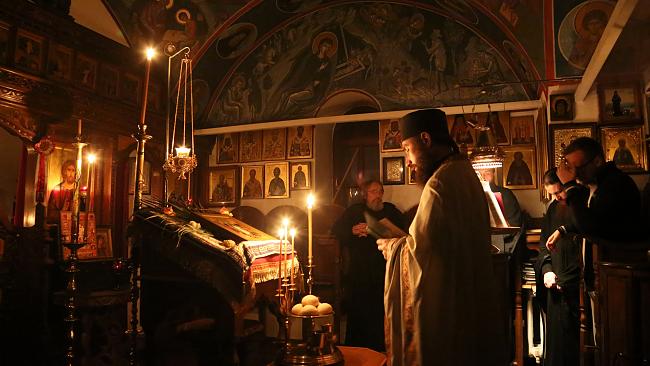
The Daily Vespers follows immediately after the 9th hour and is served in the church, with the curtain of the royal doors open (whilst the royal doors themselves remain closed throughout Vespers). Following the charter, the serving priest must be dressed only in an epitrachelion throughout the whole Vespers (Typicon, chapter 9), although in our days, in almost all parish churches, the priest also wears a phelonion. As well as this, at the daily vespers (unlike the midnight office and hours) the lighting of lamps is prescribed (see the chapter 25 of the Typicon).
Strucure of the Daily Vespers
Daily Vespers is celebrated on those days of the week when the Charter does not require Great Vespers to be served. (The days on which Great Vespers is celebrated will be given below when discussing this type of Vespers.) The order of the daily Vespers itself can be found in the Book of Hours and in chapter 9 of the Typicon. In the course of Vespers there are both fixed and changeable prayers. The fixed texts of Vespers are given in the Euchologion, the Following Psalter and the Book of Hours, and the changeable texts can be found in the Octoechos, Menaion, and Triodion (obviously, the Triodion is used at daily Vespers only on meat-fare week and on the week days of the Great Lent and Pentecost).
At the end of the 9th hour, after the exclamation “God be merciful to us …” the priest puts on a phelon (in parish churches), kisses the Gospel and the Altar and proceeds towards the pulpit. Meanwhile, the deacon opens the veil. After waiting for the end of the prayer of the 9th hour, the priest reverently bows three times and begins Vespers with the exclamation “Blessed is our God …”.
During the reading of the psalm, the priest, his head uncovered, stands in front of the royal doors and secretly reads the prayers of the lamp (a total of 7 prayers, the text of which can be found in the Missal).
Reader: “Glory… now and always”, “Alleluia, Alleluia, Alleluia, glory to You, O God” (three times).
Meanwhile, the deacon exits the north door, bows three times towards the Altar together with the priest, then bows to the priest once, asking for permission from the priest. The priest, in turn, gives this permission with a bow and enters the Sanctuary through the southern door.
The deacon pronounces the great litany ” In peace let us pray to the Lord ” and other petitions.
Chorus (for each petition): “Lord, have mercy.”[3]
Deacon (last petition): ” Remembering our most holy, pure, blessed, and glorious…”.
Chorus: “To You, O Lord.”
Priest (at the end of the litanies): “For to You belong…”.
Choir: Amen.
 The reader reads the kathisma of Vespers
according to the Charter (Typicon, chapter 17). Each kathisma is divided into
3 parts, called “glories”, because, after reading each part, the reader says:
“Glory …”, then the choir sings: “Now and always …”, “Alleluia, Alleluia,
Alleluia, glory to You, O God” (three times), “Lord, have mercy” (three
times), “Glory…”. After that, the reader says: “Now and always” - and
continues the reading of the kathisma.
Reader (at the end of the kathisma): “Glory … now and always”, “Alleluia …” (three times).
On a Sunday evening, as well as if there were a vigil the day before, no kathisma is read (so “Lord, I have cried…” is sung immediately after the peaceful litany).
The deacon, after performing the kathisma, reads the small litany “Again and again …” (after the litanies, he enters the Sanctuary, takes the priest’s blessing for censing, and censes the entire church).
Priest (acclamation): “For to You all glory…”.
Choir: Amen.
Canonarch (One of the Chanters): “Tone … (introduces the tone in accordance with the tone of the first sticheron). Lord, I have cried…”
Choir: “Lord, I have cried…” - depending on the tone of the 1ststicheron.
Reader: “Set, a guard, o Lord…” (Psalms 140, 141, 129, 116, see Book of Hours) to the words “If you see iniquity…”.
Then the choir sings 6 stichera, according to the Charter (before each stichera, the canonarch proclaims the corresponding verse).
Two practices are used, depending on the possibilities of the choir: either the reader says the first half of the apostichon, and the choir sings the rest and sings the sticheron (common in cathedral churches), or the canonarch reads the entire verse, and then immediately the choir sings the sticheron (in small churches). The first practice is preferable, although its main difficulty lies in the singing of the aposticha. They are sung in a special chant that is different from the chant of the sticheron (which is a real obtacle for inexperienced or insufficiently trained regents and singers). As well as this, before the “Glory” stichera, the canonarch says: “Glory, tone … (names the tone)”, and the choir sings: “Glory to the Father and the Son and the Holy Spirit”, and before the Theotokion stichera or the last stichera, the canonarch says: “Now and always, tone … (names the tone)”, the choir sings: “Now and forever and to the ages of ages. Amen”. If the stichera is sung immediately on “Glory… now and always,” then the canonarch says: “Glory to the Father and the Son and the Holy Spirit, and now, tone … (names the tone)”, and the choir sings: “Now and forever and to the ages of ages. Amen” (and then sings the stichera). The choir after the stichera on “Now and always” performs the chant “O joyful Light …”.
Deacon (enters at the end of the singing “Quiet Light …” and stands on the pulpit): “Let us stand.”
Priest: “Peace be with all.”
In many dioceses of the Russian Church, in practice, the choir responds to the words of the priest: “And with your spirit.” However, in chapter 2 of the Typikon, nothing is said about the singing of “And with your spirit” after “O joyful Light …”, despite the fact that the very sequence of the service in this part of the Vespers is clearly and specifically stated: “At the end of “O joyful Light,” the deacon says: “Let us stand”, the priest: “Peace be with all.” And once again the deacon: “Wisdom, let us stand.” In fairness, it should be mentioned that the Typicon does not speak of singing “And with your spirit” and in other places either, when in practice this phrase follows the blessing “Peace be with all” (after the supplication litany, on the lity before the prayer “O most merciful Lord…” etc). Therefore, it is necessary to turn to the text of the Missal, where, indeed, in many places the phrase “And to your spirit” is present after the words “Peace be with all” (although it is not mentioned in the relevant places in the Typicon). But what is more important for us is that, in the course of Vespers which is celebrated together with the Liturgy of the Presanctified Gifts, the answer “And to your spirit” is still missing. As a result, in the liturgical books there is not a single argument in favour of singing “And to your spirit” after “O joyful Light …”.
Archpriest Yevgeny Popov is one of those who argues against the singing of “And to your spirit” as a response to “Peace be with all” following “O joyful light”. He believes that the priest should not bless with his hand when pronouncing the exclamation “Peace to all”, and that the choir should not answer “And to your spirit.” This is due to the fact that “the priest only draws the attention of those who are about to hear the prokeimon, and does not express anything more with his exclamation”[4].
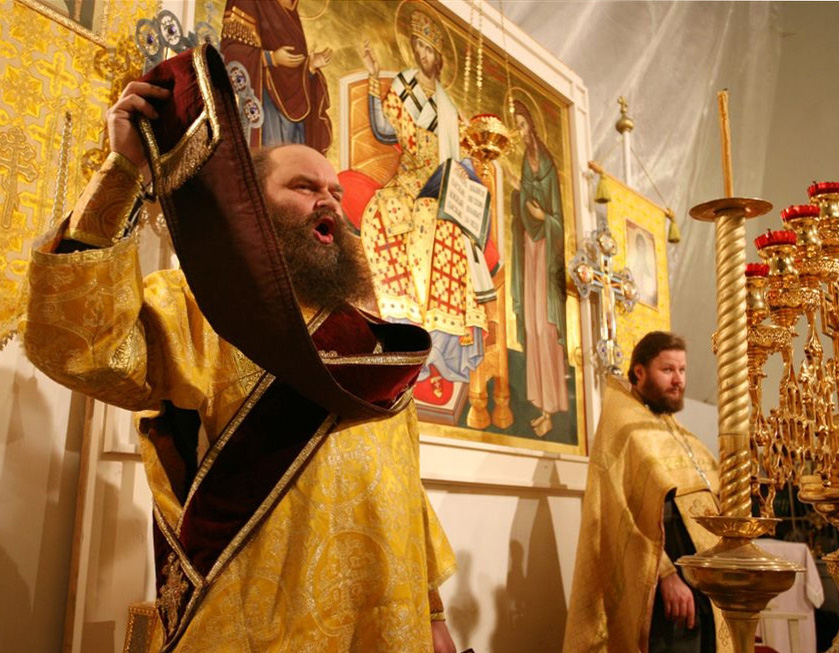 Deacon: Wisdom. Let
us stand.”
Then the deacon and the choir perform the prokeimenon of the day (the text of the prokeimenon is in the Missal and the Book of hours):
Deacon: “Prokeimenon, tone … (names the tone and proclaims the prokeimenon).”
The choir sings the prokeimenon. The deacon pronounces the apostichon of the prokeimenon. The choir sings the prokeimenon. The deacon speaks half of the prokeimenon. The choir sings the rest of the prokeimenon. Reader (or choir): “Vouchsafe, Lord …”. The deacon pronounces the supplication litany “Let us fulfill our evening prayer to the Lord…”.
Priest (exclamation): “For you are a good and loving God…”.
Choir: Amen.
Priest (blessing the people): “Peace be with all.”
Choir: “And to your spirit.”
Deacon: Let us bow our heads to the Lord.
Chorus: “To You, O Lord.”
The priest secretly reads the prayer of head bowing “Lord our God, bowing the heavens”, and then proclaims: “May the might of your kingdom…”.
Choir: Amen.
Canonarch: “Tone… (names the tone and the first words of the 1ststicheron).”
The choir sings the apostichon according to the Charter.
Reader (or choir): “Lord, now let your servant…”. Reader: Trisagion and “Our Father …”.
The deacon pronounces the Litany of Fervent Supplication “Let us all say…”, but without the first two petitions (from the words “Have mercy on us, O God…”).
Chorus (for each petition): “Lord, have mercy” (three times).
Priest (exclamation): “For you are a merciful and loving God …”.
Choir: Amen.
Deacon: Wisdom.
And goes to the Sanctuary.
Chorus: “Bless.”
Priest: “Blessed are You, Christ our God, always now and forever and to the ages of ages.”
Choir: “Amen. Make firm, Lord our God, the holy and pure faith…” (it is sung in a lingering manner, as at this time the priest goes out to the pulpit).
Priest (from the pulpit): “All Holy Mother of God, save us.
Chorus: “More honorable than the Cherubim…”
Priest: “Glory to You, Christ our God…”.
Chorus: “Glory …now and always.” “Lord, have mercy (thrice). Bless.”
Priest: “Christ our true God …” (dismissal according to the Charter).
The Chorus chants the Polychronion.
In practice, if Vespers is followed by Matins, then the choir sings only a lingering “Amen.” At this time, the priest enters the Sanctuary, takes the censer, stands in front of the Altar and begins Matins.
**  Features of the All-day
Vespers.**
If the celebrated saint is without a sign (little saint).
The charter of such a service can be found in the 10thstatutory chapter of the General Menaion, as well as in the Menology (chapter 48 of the Typicon) in studies of services to saints without a sign (September 25, September 27, November 2, etc).
The stichera sung on “Lord, I have cried…” are sung as follows: 3 stichera of the Octoechos, 3 stichera of the saint; “Glory”: sticheron of the saint; “Now and always”: Theotokion of the 2ndannex of the Menaion according to the tone of the “Glory” sticheron[5]; if Vespers is celebrated on the eve of Wednesday or of Friday, then an ordinary sticheron of the Cross-Theotokion from the Menaion is sung.
Aposticha: stichera of the Octoechos with the daily refrains of the Vespers (“To You I lift up my eyes…” and “Have mercy on us, O Lord…”)[6].
After that, two options are possible:
• if there is no sticheron for “Glory” in the Menaion, then for “Glory, now and always” the Theotokion (Cross-Theotokion) from the Octoechos is sung;
• if the Menaion does contain a stichera for “Glory”, then the order will be as follows: “Glory”: the stichera of the saint; “Now and always”: Theotokion of the 2nd annex of the Menaion (Irmology), according to the tone of the “Glory” stichera and; on the eve of Wednesday or of Friday - the Menaion of the Cross – Theotokion in a row.
After “Lord, now You are letting …”: troparion of the saint; “Glory, now and always”: The Theotokion of the 4th annex of the Menaion, in accordance with the tone of the troparion (in this case, the choice of the Theotokion is also determined by the tone and day of the week).
In the case of a saint “sung with 6 stichera”.
The Charter for the service of saints of the 6th tone on a Sunday can be found in the 9th statuary chapter of the General Menaion. Some indications are also found in the services to the saints of the 6th tone in chapter 48 of the Typicon (for example, September 5, September 6, September 24, and so on).
Stichera for “Lord, I have cried…”: 6 stichera of the saint (if there are only 3 stichera in the Menaion, then each must be sung twice); “Glory”: stichera of the saint; “Now and always”: Theotokion of the 2nd annex of the Menaion according to the tone of the “Glory” stichera; if Vespers is celebrated on the eve of Wednesday or of Friday, then the Menaion of the Cross – Theotokion in a row is sung.
Aposticha: stichera of the Octoechos with the daily refrains of vespers (“To You I lift up my eyes…” and “Have mercy on us, O Lord…”); “Glory”: stichera of the saint; “Now and always”: Theotokion of the 2nd appendix of the Menaion (Irmology) according to the tone of the stichera of “Glory”; if Vespers is celebrated on the eve of Wednesday or of Friday, then Menaion of the Cross – Theotokion in a row is sung.
After “Lord, now You are letting…”: troparion of the saint; “Glory, now and always”: Theotokion of the 4th annex of the Menaion, of the same tone as the troparion of the saint.
 In the case of two saints.
The Charter of such a service is found in the 10th statutory chapter of the General Menaion and in the Menology (chapter 48 of the Typicon), in studies of services to two saints without a sign (September 2, September 3, and so on).
The stichera on “Lord, I have cried…”: stichera of the first saint (3rd tone); stichera of the second saint (3rd tone_; “Glory”: the stichera of the first saint (rarely the stichera of the second saint, see September 22); “Now and always”: Theotokion of the 2nd annex of the Menaion according to the tone of the “Glory”stichera; if Vespers is celebrated on the eve of Wednesday or of Friday, then an ordinary Menaion of the Cross – Theotokion is sung.
Aposticha: stichera of the Octoechos with the daily refrains of vespers (“To You I have lifted up …” and “Have mercy on us, O Lord …”).
After that, two options are possible:
• if there is no stichera for “Glory” in the Menaion, then for “Glory, now and always” the Theotokion (Cross-Theotokion) Octoechos is sung;
• if the Menaion does contain a stichera for “Glory”, then the order will be as follows: “Glory”: the stichera of the saint (the first or the second); “Now and always”: Theotokion of the 2nd annex of the Menaion (Irmology), according to the tone of the “Glory” stichera and; on the eve of Wednesday or of Friday
- the Menaion of the Cross – Theotokion in a row.
After “Lord, now You are letting …”: troparion of the first saint; “Glory”: troparion of the second saint; “Now and always”: The Theotokion of the 4th annex of the Menaion, depending om the tone of the troparion of the second saint.
In the case of one saint (with 6 stichera or small) on a Saturday.
The Saturday service has features determined, firstly, by the fact that on a Saturday the afterfeast of the tone is performed, and secondly, to the fact that in the Octoechos there are some funeral hymns, which, however, are sung only in the case of a parastas (mortuary service). If, however, the usual daily service is performed with the singing of “God the Lord …” in the morning, then the hymns for the deceased are omitted. The charter of the daily Saturday service is found in chapter 12 of the Typicon.****
Stichera for “Lord, I have cried…” are sung as follows: 6 stichera of the saint (if there are only 3 stichera in the Menaion, then each must be sung twice); “Glory”: stichera of the saint; “Now and always”: Sunday dogmatic chant of the present (outgoing) tone.
Aposticha: martyr stichera of the Octoechos with the daily refrains of vespers (“To Thee I lift up my eyes…” and “Have mercy on us, O Lord…”). But since there are one or two funeral stichera on the aposticha in the Octoechos, instead of them the stichera from “Lord, I have cried …”are sung (therefore, you can sing one stichera from the aposticha and two from “Lord, I have cried …”) . “Glory”: stichera of the saint; “Now and always”: Theotokion of the 2ndannex of the Menaion (Irmology) according to the tone of the “Glory” sticheron. If there is no stichera in the Menaion, then the apostichon Theotokion of the Octoechos is sung on “Glory, now and always”.
After “Lord, now You are letting …”: the troparion of the saint; “Glory, now and always”: Sunday Theotokion of the present (outgoing) tone.
In the case of two saints on a Saturday, the Stichera on “Lord, I have cried…”: stichera of the first saint (3rd tone); stichera of the second saint (3rd tone); “Glory”: stichera of the first saint; “Now and always”: Sunday dogmatist of the present (outgoing) voice.
Aposticha: martyr stichera of the Octoechos with the daily refrains of vespers (“To Thee I lift up my eyes…” and “Have mercy on us, O Lord…”). But since there are one or two funeral stichera on the aposticha in the Octoechos, instead of them the stichera from “Lord, I have cried …” are sung. “Glory”: stichera of the saint; “Now and always”: Theotokion of the 2nd annex of the Menaion (Irmology) according to the tone of the «Glory” sticheron.
If there is no stichera in the Menaion, then the apostichon Theotokion of the Octoechos is sung on “Glory, now and always”.
After “Lord, now You are letting …”: the troparion of the first saint; “Glory”: troparion of the second saint: “Now and always”: Sunday Theotokion of the present (outgoing) tone.
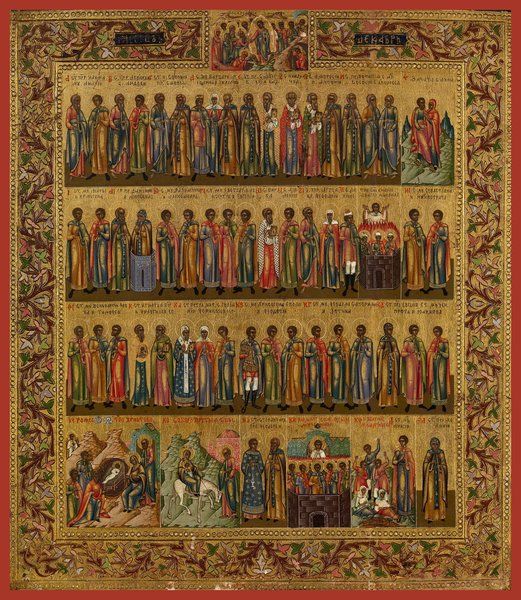 In the case of a saint with a
doxology.
On the days of remembrance of saints with a doxology, the daily vespers are performed. The Charter and features of such a service can be found in the Typicon in the aftermath of September 23 and October 23. As well as this, some statutory instructions can be found in the 8th statutory chapter of the General Menaion.
Stichera sung on “Lord, I have cried…”: 6 stichera of the saint (if there are only 3 stichera in the Menaion, then each one must be sung twice); “Glory”: stichera of the saint; “Now and always”: Sunday dogmatist according to the tone of the “Glory” stichera. If it is a Saturday, then the dogmatist of the present (outgoing) tone is sung.
Aposticha: 3 stichera of the saint with their refrains. “Glory”: stichera of the saint; “Now and always”: Theotokion Menaion on a row (of the same tone). If only the first words of the Theotokion are given in the Menaion, then one should look for the text of the corresponding “Glory” sticheron in the 1st or 2nd annexes of the Menaion. If in the Menaion there is no Theotokion at all, then the apostichon Theotokion of the 1st annex is sung, following the tone of the “Glory” sticheron.
After “Lord, now You are letting …”: troparion of the saint; “Glory, now and always”: Sunday Theotokion of the 4rd annex of the Menaion, following the tone of the saint’s troparion. On a Saturday the Theotokion of the present (outgoing) tone is sung.
In the case of one saint (with 6 stichera or small) celebrated during the forefeast or afterfeast of one of the Twelve Great Feats.
Each of the Twelve Great Feast has both a pre-feast period (the period of preparation for the feast, which in the case of most feasts consists of one day (although Christmas is 5 days and Epiphany is 4 days)), and an afterfeast period, which lasts from 1 day (the Annunciation of the Most Holy Mother of God) up to 8 days (Assumption, Epiphany, Ascension). During this period, the Octoechos is not used and, instead of the hymns of the Octoechos, the hymns of the feast are sung. The charter of services to one saint during the period before or after the feast can be found in the 12thstatutory chapter of the General Menaion and in the offices of September 7, September 10, September 15 and others.
The stichera sung on “Lord, I have cried…”: 3 stichera of feast, 3 stichera of the saint; “Glory”: sticheron of the saint; “Now and always”: sticheron of the feast. If the saint does not have his own sticheron, “Glory, now and always” of the feast is sung. On a Saturday the sticheron of the feast is sung on “Glory”, “Now and always”: Sunday dogmatic chant of the present (outgoing) tone.
Aposticha: the stichera of the feast with their (festive) refrains. “Glory”: sticheron of the saint; “Now and always”: the sticheron of the feast. If the saint does not have a “Glory” sticheron, then “Glory, now and always” is sung together with the sticheron of the feast.
After “Lord, now You are leaving …”: troparion (apolytikion or dismissal chant) of the saint; “Glory, now and always”: troparion (apolytikion) of the feast. If there is no troparion of the saint, only the troparion of the feast is sung once.
In the case of two saints in the period before or after one of the Twelve Great Feasts.
The charter of a service for two saints during the period before or after a feast can be found in the 12thstatutory chapter of the General Menaion and in the offices of September 11, November 23 and 24, December 27, etc.
Stichera sung on “Lord, I have cried…”: 3 stichera of the first saint; 3 stichera of the second saint; “Glory”: stichera of the saint; “Now and always”: sticheron of the feast. If the saint does not have a stichera for the “Glory” acclamation, then the sticheron of the feast on “Glory,… now and always” is sung. If it is a Saturday, then the feast sticheron is sung on “Glory”, “Now and always”: Sunday dogmatic hymn of the present (outgoing) tone is sung.
The stichera on the verse: the stichera of the holiday with their (that is, festive) refrains. “Glory”: stichera of the saint; “And now”: stichera of the holiday. If the saint does not have a stichera for “Glory”, then he sings for “Glory, and now” the stichera of the feast.
After “Lord, now You are leaving …”: troparion of the first saint; “Glory”: troparion of the second saint; “Now and always”: troparion of the feast.
** 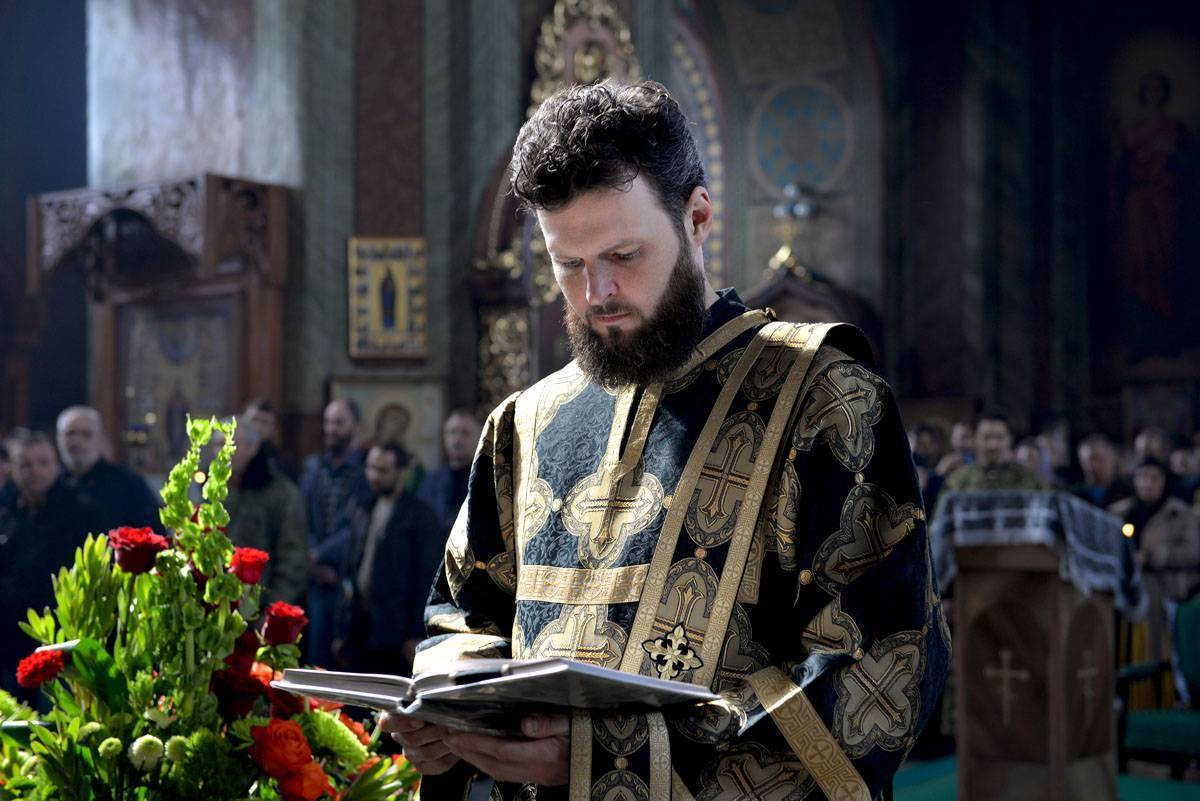 The Great Vesper and the days of its services**
The Typicon often uses the term “Great Vespers” to refer to that Vespers which is celebrated at the Daily Vigil and follows the Small Vespers. But in liturgics, the concept of “Great Vespers” is much broader and means any festive vespers, as opposed to Daily ones. Therefore, it is not entirely clear what the criterion should be used for distinguishing the Great Vespers from the Daily one. Archpriest K. Nikolsky believes that this criterion could be the position of the Litany of Fervent Supplication (at the Daily vespers, the Litany of Fervent Supplication is celebrated at the end of vespers, and at the Great litany - in the middle, before the singing of “Vouchsafe, Lord …”). However, from a historical point of view, the presence of the entrance during the service should be considered as the main feature of the Great vespers. As Professor N.D. Uspensky, an authoritative liturgist of the 20thcentury, writes, “this Vespers borrowed the name ‘great’ from the great churches — the Great church of Constantinople, the Church of the Holy Resurrection in Jerusalem and others, where the evening Entrance used to be an obligatory rite of this service. In other words, Great Vespers is a type of Vespers, which is celebrated with an Entrance, in the traditions of great churches. Thus, the rite of entry itself serves as the main feature by which the great Vespers differs from the Daily one”[7]. As an argument for this approach, one can also remember the idea that, on the feast of the Annunciation, if it happens to be on a Sunday of the Great Lent, a Litany of Fervent Supplication is served at the end of Vespers. However, it is incorrect to say that the daily Vespers is celebrated e.g. on the Feast of the Annunciation. In this way, the list of days for the celebration of Great Vespers given below contains all the cases when an Entrance is present at Vespers.
In addition to the given main feature of Great Vespers (the presence of an Entrance), there are a number of secondary features that often (but not always) are present at the Great Vespers and distinguish it from the Daily Vespers. These include:
• the singing of “Blessed is the man…” instead of an ordinary kathisma[8];
• the number of stichera for “Lord, I have cried…”, which are often sung at 10 or 8 at the Great Vespers, while at the daily hymn only 6 of them are always sung[9];
• reading of Prophecies (Paremia) from the Old Testament[10];
• serving a Litany of Fervent Supplication after the prokeimenon or Prophecies (whereas at the daily vespers it read after singing the troparia on “Lord, now You are letting …”)[11].
The Great Vespers, if it is celebrated separately from Matins, that is, not as part of the vigil, follows immediately after the 9thhour and is celebrated in the church, with the veil of the royal doors open. At certain moments of the Great Vespers, the Royal Doors also open. The serving priest is dressed in an epitrachelion and phelonion during Vespers, and also, in practice, wears epimanikia.
Days when Great Vespers is served:
1. All Sundays (the day before, on Saturday evening).
2. Great, vigil and polyeleic feasts.
3. On the Twelve Great Feasts dedicated to the Lord and on St Thomas Sunday - on the very day of the feast in the evening, that is, on the 1stday of the afterfeast (for the sake of the great prokeimenon).
4. New Year (September 1), Renovation of the Church of the Resurrection (September 13) and Mid-Pentecost (Wednesday of the 4th week of Easter).
5. On Meat-dare Week and all the Sundays of the Great Lent, in the evening (for the sake of the great prokeimenon).
6. Whenever the Liturgy of the Presanctified Gifts is served[12].
7. Holy Thursday, Holy Friday, Holy Saturday.
8. Easter Sunday evening, and all days of Bright (Easter) Week.
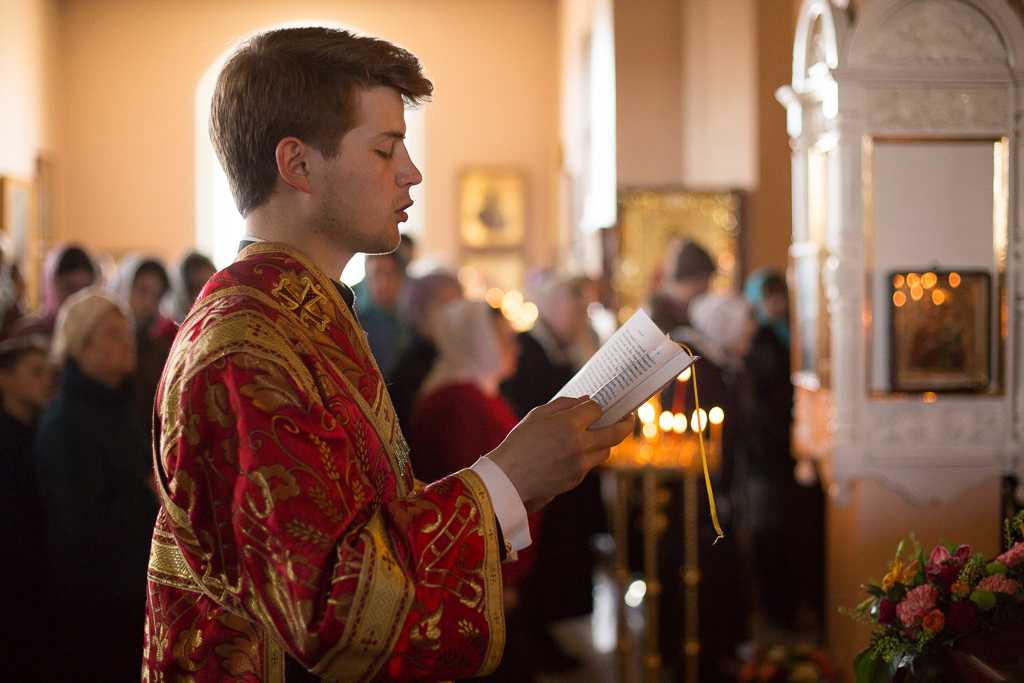 Structure
of the Great Vespers.
The service of the Great Vespers celebrated separately from Matins is given in chapter 7 of the Typicon. According to this scheme, Great Vespers is served on the occasion of a polyeleic feast, as well as on cases 3 and 4 listed above. At the end of the 9thhour, after the exclamation “God, have mercy on us …” the priest dresses into a phelonion, then kisses the Altar and goes to the pulpit. After waiting for the end of the prayer of the 9thhour, the priest reverently bows three times and begins Vespers with the exclamation “Blessed is our God …”.
During the reading of the psalm, the priest, with his head an uncovered, secretly reads prayers of the lamp in front of the royal doors.
Reader: “Glory, now and always”, “Alleluia, Alleluia, Alleluia, glory to You, O God” (three times).
The deacon pronounces the great litany “In peace let us pray to the Lord…”
Priest (after the litany): “For to You belong…”.
Choir: Amen. “Blessed is the man…” (1stantiphon of the 1stkathisma). “Glory, now and always”, “Alleluia, Alleluia, Alleluia, glory to You, O God” (three times).
On the feasts of the Renewal of the Church of the Resurrection and of Mid- Pentecost, an ordinary kathisma is read, in accordance to the Charter. However, in the cases indicated in 3, 5, 7, 8 (see above), there is no kathisma at all (so, after the Great litany, “Lord, I have cried…” is immediately sung).
The deacon pronounces the small litany “Again and again…”.
Priest (acclamation): ” For to You all glory…”.
At this point the deacon enters the Sanctuary, receives the priest’s blessing for censing (the priest, when blessing the censer for the first time during the service, pronounces the prayer “We bring the censer to You …”). During the singing of “Lord, I have cried…” and the stichera, the deacon censes the entire church.
Choir: Amen. “Lord, I have cried…” (of the same tone as the 1ststicheron).
Reader: “Set a guard, O Lord…” (Psalms 140, 141, 129, 116; see Book of Hours).
After that the choir sings 8 (from “Out of the depths have I cried to Thee, O Lord…”) or 6 (from “If you see iniquity …”) stichera according to the Statute[13]. While singing the dogmatic hymn or sticheron of the holiday on “Now and always”, the Entrance is performed with a censer (or the Gospel[14], if the Gospel is going to be read).
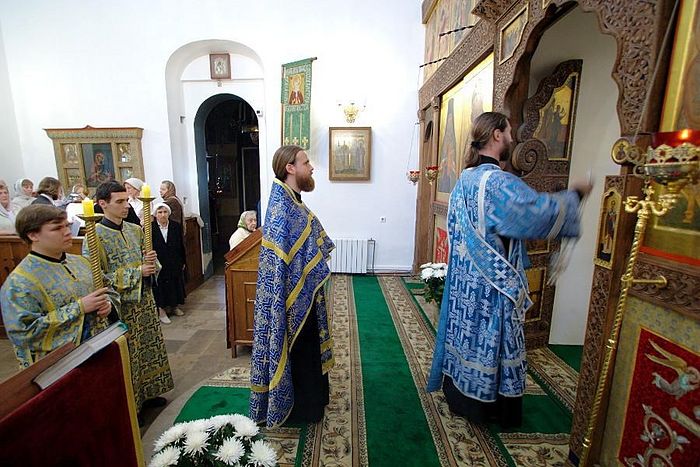 In practice, theEntrance
with a censer is done as follows[15]. When the canonarch reads “Now and
always…” the deacon opens the royal doors and the clergy bow to the Altar,
the priest kisses the Gospel and the Altar, the deacon kisses the Altar. The
sexton gives the deacon the censer, the deacon, standing at the south side of
the Altar, raises the censer and asks the priest for a blessing: “Master,
bless the censer”, the priest blesses the censer, and they both proceed to the
high place. Having reached it, the deacon says: “Let us pray to the Lord”, the
priest secretly reads the entrance prayer “In the evening, in the morning and
at noon…” (however, according to the Charter, this prayer should be read on
the pulpit). After that, the clergy go out to the pulpit through the northern
door: first the candle-bearers, then the deacon with a censer in his raised
right hand and, finally the priest, “simple” (as the Typicon says, see chapter
2) – that is, with his head uncovered (see Typicon, chapter 29) and his hands
down. On the pulpit, the candle-bearers stand in front of the Sovereign icons
(one in front of the icon of the Savior, the other one in front of the icon of
the Holy Mother of God), the priest stands directly opposite the Royal Doors.
The deacon censes the Royal Doors, the Sovereign icons and the priest[16],
then takes his place to the right of the priest, as if half-turned to him,
and, pointing his orarion to the east, quietly says: “Master bless the holy
entrance.” The priest, whilst blessing the open Royal Doors, answers: “Blessed
is the entrance of Thy saints…”. The deacon replies: “Amen”, censes the
priest (during a conciliar service he censes co-serving priests as well), and
stands facing the Royal Doors.
Deacon (at the end of the dogmatic hymn or feast sticheron, having drawn a cross with the censer): “Wisdom, arise.”
Chorus: “O joyful Light…”
The deacon enters the Sanctuary, censes the Altar from four sides, then censes the high place and the priest and hands over the censer. The priest kisses the icons on the royal doors and, following the deacon, enters the Sanctuary, after which the priest and deacon kiss the Altar and go to the high place. The priest stands to the right of the high place, and the deacon to the left, facing the people.
Deacon: “Let us stand.”
Priest: “Peace be with all.” At this time, the candle-bearers bow to the high place, then to each other and after that they take the candlesticks to the place, but do not extinguish the candles (they should be extinguished only after the prokeimenon has sung).
Deacon: Wisdom. Let us stand.”
Then the deacon and choir perform the prokimen of the day.
If the paremias (Prophecies) are to be read in honour of the feast, then, during the performance of the prokeimenon, the appointed reader, dressed in a surplice, leaves the Sanctuary through the north door and stands in the middle of the church, in front of the lectern, on which the icon of the feast lies.
Deacon: Wisdom.
At this point the royal gates are closed; however, if Prophecies from the New Testament are read (the Charter appoints them from the General Epistles to be read on celebrations of the apostles), then the royal doors remain open until the end of paremias.
Reader: ”… reading” (announces the inscription of the proverb).
Deacon: “Let us stand.”
The reader reads the first proverb. A dialogue similar to the above between the deacon and the reader is pronounced before other proverbs. At the end of the last paremia, the deacon, having kissed the edge of the Altar on the north side, goes to the pulpit to begin the Litany of Fervent Supplication.
The deacon pronounces the special litany “Let us all say…”.
Priest (acclamation): “For You are a merciful and loving God…”.
Choir: Amen. “O Lord, keep us this evening…”.
During the singing of this hymn, the deacon approaches the icon of the Savior, where he stands, waiting for the hymn to end.
The deacon pronounces the supplication litany “Let us fulfill our evening prayer to the Lord…”.
Priest (acclamation): “For You are a good and loving God …”.
Choir: Amen.
Priest (blessing the people): “Peace be with all.”
Choir: “And with your spirit.”
Deacon: Let us bow our heads to the Lord.
Chorus: “To You, o Lord.”
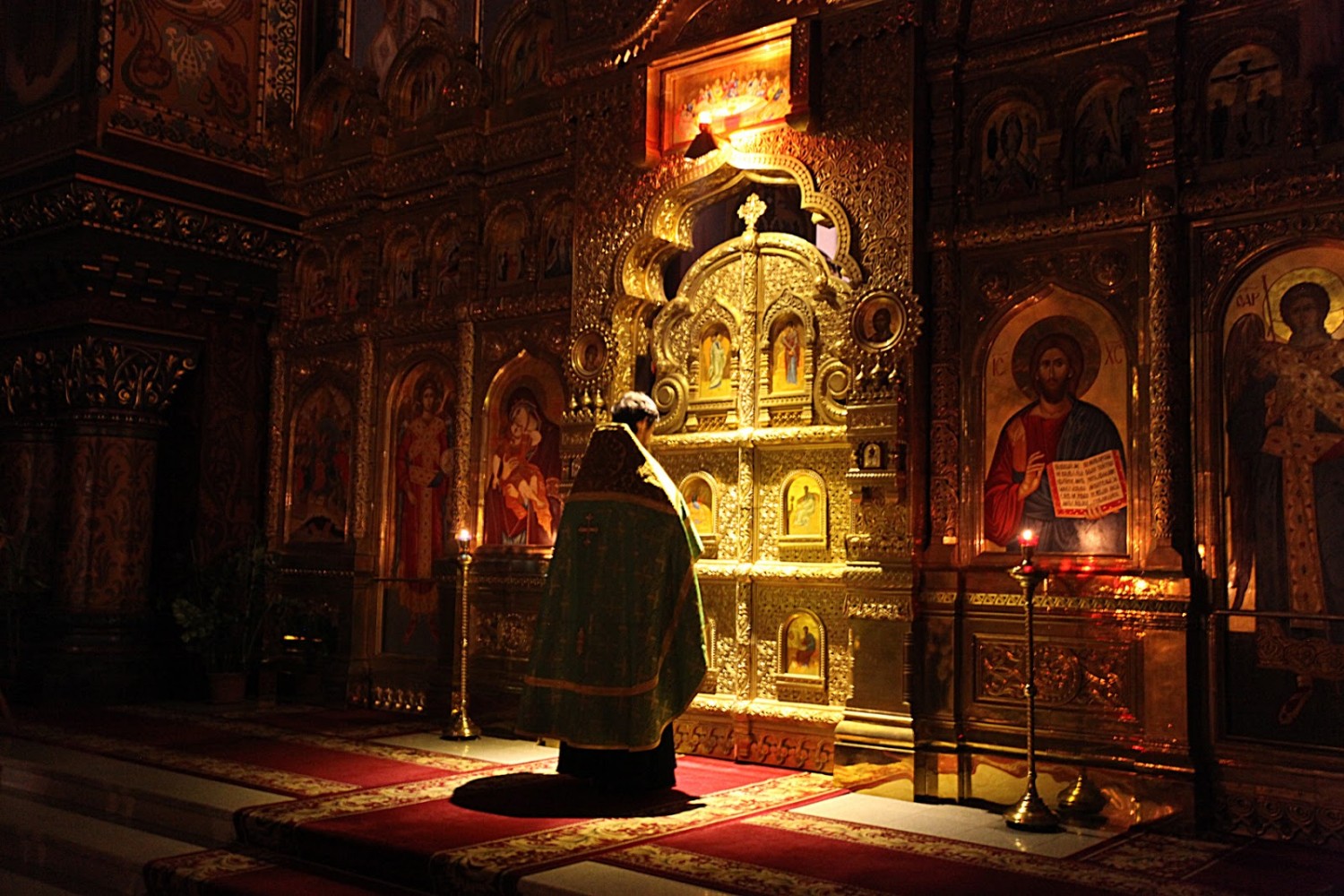
The priest secretly reads the prayer of the bowed head: “Lord our God Who has
bowed the heavens…”, and then acclaims: “Blessed and most glorified be the
dominion of Your Kingdom …”.
Choir: Amen. And it sings the aposticha, in accordance with the Charter.
Chorus: “Lord, now You let …”.
Reader: Trisagion and “Our Father …”.
Priest (acclamation): “For Yours is the Kingdom…”.
Choir: “Amen” and sings the troparia according to the Charter.
Deacon: Wisdom.
Chorus: “Bless.”
Priest: Blessed are You, Christ our God…
Choir: “Amen. Make firm, Lord our God..” (it is sung at length, as meanwhile the priest is walking out onto the pulpit).
Priest (from the pulpit): ” All Holy Mother of God, save us..”
Chorus: ” More honorable than the Cherubim…”
Priest: ” Glory to You, Christ our God…”.
Chorus: “Glory, now and always.” “Lord, have mercy” (three times). “Bless.”
Priest (from the pulpit): “Christ is our true God…” (dismissal according to the Charter).
Chorus: “The great master …”.
** Features of the Great Vespers.**
In the case of a polyeleic saint (celebrated during the period when the Octoechos is used)
Features of such a service can be found in the Typicon, in services for saints, marked with a red cross (for example, October 6 and 9, February 24). As well as this, some indications can be found in the 7thstatutory chapter of the General Menaion (“On the saint who has a polyeleos, if it happens on a Sunday”).
“Blessed is the man…” (1stantiphon of the 1stkathisma).
The stichera sung on “Lord, I have cried…”: 8 or 6 stichera of the saint; “Glory”: sticheron of the saint; “Now and always”: Sunday dogmatic hymn according to the tone of the “Glory” sticheron. On Saturday, the dogmatic hymn (Theotokion) of the present (outdoing) tone is sung.
Number of Prophecies of the feast of a saint - 3.
Aposticha: 3 stichera of the saint and their refrains. “Glory”: stichera of the saint; “Now and always”: Menaion Theotokion on a row (of the same tone). If only the first words of the Mother of God are indicated in the Menaion, then it is necessary, based on the tone of the “Glory” sticheron, to search for the corresponding text in the 1stor 2ndannexes of the Menaion. If there is no Theotokion in the Menaion at all, then the verse Theotokion of the 1stannex is sung, according to the tone of the “Glory” sticheron.
After ” Lord, now You are letting ”: troparion of the saint; “Glory… now and always”: The Sunday Theotokion (3rdappendix of the Menaion), depending to the tone of the saint’s troparion. On a Saturday the Sunday Theotokion of the present (outdoing) tone is sung.
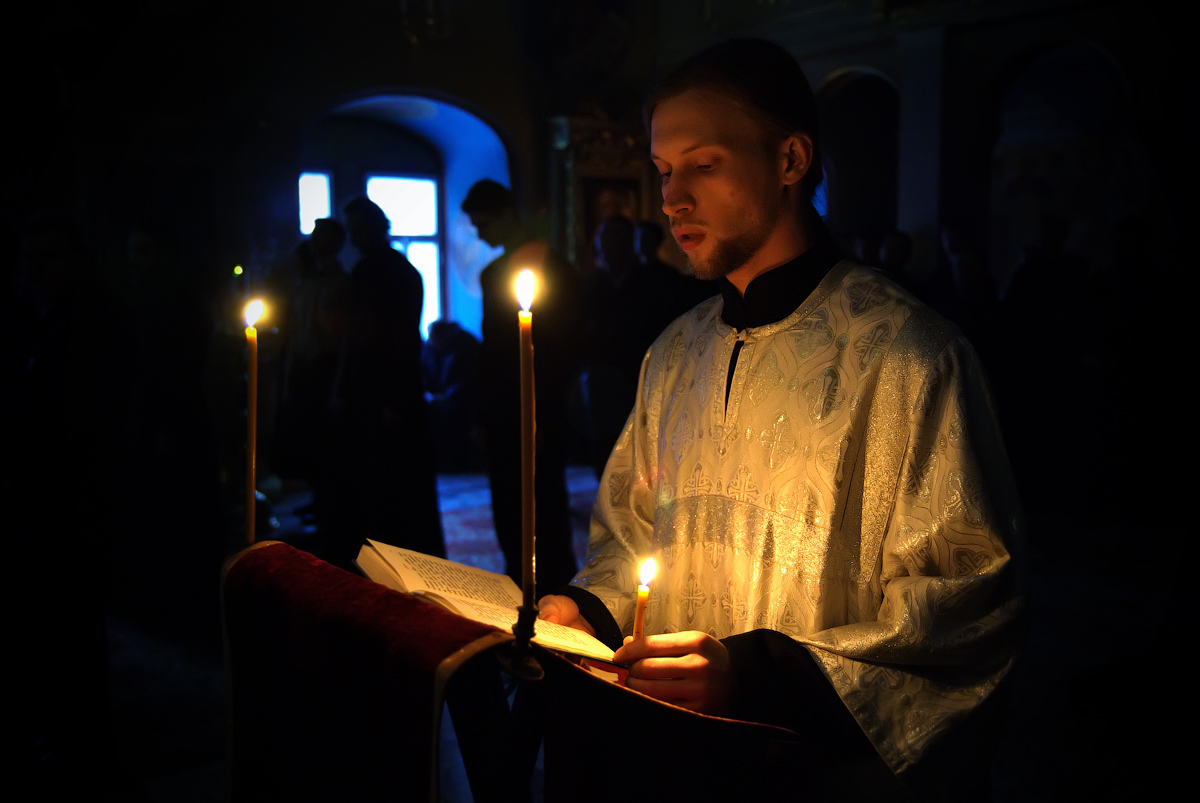 In the
case of a polyeleic saint celebrated during the period before or after the one
of the Twelve Great Feasts.
The charter of such a service is presented in the chapter 11 of the General Menaion (“Of the saint who has a vigil or a polyeleos, on prefeasts or afterfeasts, except for Sundays”). As well as this, the features of the service can be found in the Typicon in the offices of April 30 (Apostle James the Great), May 25 (Third acquisition of the head of St. John the Baptist) and August 9 (Apostle Matthew).
“Blessed is the man…” (1stantiphon of the 1stkathisma).
The stichera for “Lord, I have cried…”: if they are 8, then 3 stichera of the celebration are sung and 5 stichera of the saint; “Glory”: sticheron of the saint; “Now and always”: sticheron of the feast. On a Saturday, on “Now and always”: the Sunday dogmatic hymn (Theotokion) of the present (outgoing) tone.
Prophecies of the feast of a saint - 3.
Aposticha: the stichera of the saint with their refrains; “Glory”: sticheron of the saint; “Now and always”: sticheron of the feast.
After ” Lord, now You are letting ”: troparion (apolytikion or dismissal) of the saint; “Glory, now and always”: troparion of the feast.
If the feast is dedicated to an icon of the Mother of God, celebrated with a service to a saint.
If the feast of the Mother of God is not one of the Twelve Great Feasts, then it is prescribed by the Charter to be performed in conjunction with the service to an ordinary saint.
More specifically, on most feasts in honour of an icons of the Mother of God, a polyeleos is supposed to be performed, and the charter prescribes to connect the polyeleic service of the Mother of God to an ordinary saint service that can be found in the Charter (Typikon) on November 27 (the icon of the Mother of God “Our Lady of the Sign”).
“Blessed is the man…” (1stantiphon of the 1stkathisma).
8 stichera sung after “Lord, I have cried…”: 4 stichera to the Mother of God; 4 stichera of the saint; “Glory”: sticheron of the saint; “Now and always”: sticheron to the Mother of God. On a Saturday after “Glory”: sticheron of the Holy Mother of God; “Now and always”: Sunday dogmatic Theotokion of the present (outgoing) tone.
Prophecies of the feast of the Holy Mother of God - 3.
Aposticha: stichera to the Mother of God with their refrains; “Glory”: sticheron of the saint; “Now and always”: sticheron to the Mother of God.
After “Lord, now You are letting …”: troparion (dismissal hymn) of the saint; “Glory, now and always”: troparion to the Mother of God.
[1]If the All-Night Vigil opens with Great Compline (on the Nativity of Christ, on Theophany, as well as the Annunciation of the Most Holy Theotokion and on the special celebration of the church, on Sundays of the Great Lent), then Little Vespers is not served.
[2]Skaballanovich M. Explanatory Typicon. p. 480.
[3]A litany is an ancient component of the service that enables the participation of the people of God, the parish, in the prayer of the Church. The most important element of the litanies is the so-called response of the people - “Lord, have mercy”; the petitions proclaimed by the deacon are, in fact, an addition to the popular prayer “Lord, have mercy” to help believers pray more specifically. In a way, the deacon invites the faithful to prayer with the words “let us pray,” “we ask,” but it is the people themselves that pray (see: M. Arranz, The Historical Development of the Divine Liturgy. Leningrad, 1978, pp. 105-106).
[4]See: Popov E., prot. Letters on Orthodox pastoral theology. SPb., 2000. pg. 283. Other authoritative liturgists, in particular, Fr. K. Nikolsky and M. Skaballanovich, do not comment the issue with singing “And to your spirit” (see: Nikolsky K., archpriest. Manual for the study of the charter of worship of the Orthodox Church. S. 169, 210; Skaballanovich M. Explanatory Typikon. pg. 563).
[5]The choice of the Theotokion in the 2nd annex is determined not only by the tone, but also by the day of the week on which the service is performed. At the same time, during “Lord, I have cried …” and during the aposticha of Vespers, on “Now and always”, the Theotokion are sung. These are marked by “on Sunday evening”; “on Monday evening” and so on. On the same days, during “Let us praise …” and the aposticha of Matins, other Theotokion are sung, which are marked by “on Monday morning”, “on Tuesday morning” and so on.
[6]According to the Charter, on some days, after the stichera of the Octoechos and before the “Glory” sticheron, the stichera of the saint is sung together with its refrain (for example, on November 2). A similar addition of a stichera is also possible in the case of a sixfold saint or two saints (for example, November 11, January 22).
[7]Uspensky N.D. Orthodox Vespers: A Historical and Liturgical Essay. The rite of the all-night vigil in the Orthodox East and in the Russian Church. pg. 57.
[8]This is only a feature of those Twelve Great Feast that are dedicated to the Mother of God, for great, vigil and polyeleic holidays, as well as September 1 (New Year), when the 1stantiphon of the 1stkathisma is sung. As well as this, “Blessed is the man…” is sung on Sundays, but in this case the entire 1stkathisma is sung, which is due on Saturday evening according to the schedule (see Typicon, chapter 17) and is, in this case, an ordinary kathisma.
[9]However, on some polyeleic feasts (September 28, January 11, February 24 and others), on the Twelve Great Feasts dedicated to the Lord, in the evening (when the great Vespers is served for the sake of the great prokeimenon), on the Renewal of the Church of the Resurrection (September 13) and on Mid- Pentecost (Wednesday 4th week after Easter), on Good Friday and all the days of Bright Week, 6 stichera are sung on “Lord, I have cried …” at Great Vespers.
[10]There are no paremias (Prophecies) during Great Vespers on Sundays (unless there is a saint or a feast that has them), on Bright Week and in the cases when Great Vespers is celebrated for the sake of the Great Prokeimenon (on the Twelfth Great Feasts dedicated to the Lord and in Sundays of the Great Lent, in the evening).
[11]However, if Great Vespers is celebrated on Sundays of the Great Lent, the Litany of Fervent Supplication is served at the end of Vespers (February 24, March 9 and 25) or is omitted altogether (on Meat-fare Week and all Sundays of the Great Lent, in the evening).
[12]That is, on the evening of every Wednesday and Friday of the Great Lent, as well as on the Thursday of the 5th week of Great Lent, on Great Monday, Great Tuesday, Great Wednesday.
[13]Very rarely, at the Great Vespers which is not celebrated as part of a vigil, the the stichera are sung. If we do not take into account the period of the Great Lent (after all, Vespers of the Great Lent schematically differs from the usual Great Vespers), the stichera for “Lord, I have cried …” at 10 are sung only on New Year (September 1), in the case of a polyeleic saint, on the afterfeast of one of the Twelve Great Feasts (see the corresponding chapter of Mark on May 25), and, finally, if a Holy Mother of God feast is combined with a service for two saints (see October 1).
[14]The entrance with the Gospel at Vespers is made according to the order of the Small Entrance at the Liturgy.
[15]The entrance is made with a censer both at the Great Vespers as part of the vigil, and at the vespers as part of the Liturgy of the Presanctified Gifts in a way described below.
[16]According to chapter 2 of the Typicon, the deacon should incense only the primate (who is in his place on the kliros), at the same time, there is no mention of burning the alternate priest who officiates.
-
The types of Services and prayers pronounces during a day.
- The evening Service and its features.
Related Concepts
- anastasius-of-sinai
- annual-cycle
- apostolic-command
- astronomical-time
- boundary-office
- christ-as-light
- commemorations
- crucifixion
- deacon
- entrance
- epitrachelion
- evening-prayer
- feasts
- fervent-supplication
- festal-vespers
- first-hour
- holy-spirit
- hours
- john-19
- john-812
- koinonikon
- lamp-lighting
- lay-asceticism
- litany
- litany-of-fervent-supplication
- liturgical-day
- liturgy-after-vespers
- liturgy-before-vespers
- lord-have-mercy
- lord-i-have-cried
- lord-now-you-are-letting
- ninth-hour
- o-joyful-light
- parables
- paremias
- people-of-god
- prokeimenon
- psalm-103
- psalmody
- psalter
- resurrection
- weekday-service
- weekly-cycle