Liturgics — 4. The Sacraments of the renewal of life. The Confession and the Unction
- The Confession.
The Greek word for repentance is metanoia , which means “change of mind.” While repenting, a person is being renewed and changed, spiritually cleansed and transformed. Strictly speaking, repentance is fulfilled not even when a person has verbalized his sins at a confession with a priest being his witness, but when it becomes a genuine change of mind, i.e. when a person faces the opportunity to repeat a sin and doesn’t, because it has no more foundation in him. Nonetheless, the central and most important moment of the repentance remainsthe confession of a sin to a priest and the cleansing of one’s soul from it by the power of Divine grace acting through the Sacrament of Confession.
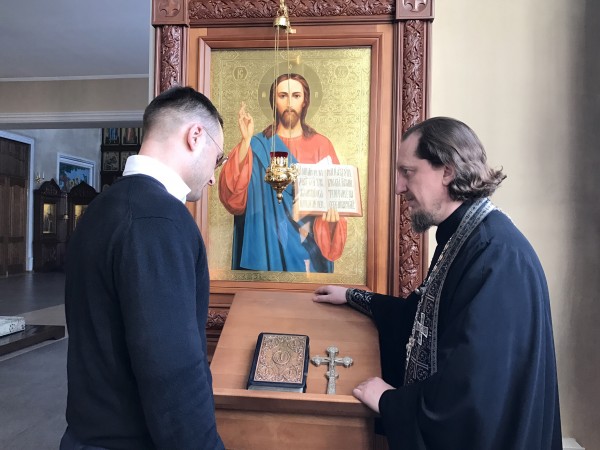 Generally speaking, the process of repentance follows
a certain order. First, a person goes through the stage of repentance ,
realizing the scale of his fall and his estrangement from God. However, a
simple statement of one’s own sinfulness is not enough. The next step is to
achieve a conversion towards God that is to start seeking the forgiveness
of sins. The third stage is available to the sinner through the confession
of sins before God and a priest through the Sacrament of Confession. The
fourth step of repentance no longer depends on the person, but on God, who
grants the penitent His resolution of sins or absolution. With this
grace the Lord renews one’s mind and will, He gives him the strength to fight
temptations in the future. Finally, the fifth stage of repentance liesin the
rooting in virtue , in the firmness of a Christian in his following of the
path of Salvation, and in his freedom from temptations and dependence from a
sin that he once committed.
According to the definition of St. Maximus the Confessor, sin always manifests itself in the form of a specific evil deed and carries “the fall of the human will from God’s goodness to the evil” in its essence[1]. Through sin, one voluntarily separates himself from God and retreats hissalvation.
The Orthodox Church considers sin as a disease****of the soul that breaks the primordial harmony of God’s plan for the world. Such a statement finds its confirmation in one of the prayers from the Confession, which says: “you came to the hospital, do not leave it unhealed”. Therefore, the goal of the Sacrament of Repentance lies in the spiritual healing of a person and the restoration of his soul’s health. This said, the Orthodox perception of the meaning of the Confession differs from its Catholic understanding, where the confessor is sometimes perceived as a judge and an investigator. St. John Chrysostom testifies to this as follows: “Enter the church and repent: here is a hospital, not a tribunal; you will find no torture here, but forgiveness of sins. Tell your sin to God alone and your sin will be forgiven”[2].
**What happens to a **sin during the confession?
It is being destroyed and ceases to be a part of one’s spiritual content. However, this does not mean that all the sinful deeds that were once committed, even if confessed, do not have an effect on the repentant anymore. On the contrary, they do, but they exist no longer as a guilt, but as a memory or a scar that remain in our souls. Moreover, it is important to distinguish those of our sins, which can no longer be remembered, from those, for which we are still responsible before God and people, since many of them have far- reaching consequences that affect our neighbours and that we still have to correct. For example, some man had an illegal extramarital affair before coming to confession and got a child. Now let’s imagine that he confesses his sin and after that suddenly says: “That’s it. My previous life is over, I have now been cleansed by the Confession, and therefore I don’t want to know any of my former children…” Such an approach is clearly non-Christian because events that once happened to a person, even before Repentance or Baptism, still make himresponsible for his previous actions.
 Still, it is important
to stress on the fact that there is no more guilt for the sins forgiven
while repentingin front ofGod and that the confessed misdeeds have
nothing in common with the present spiritual condition of a person. Moreover,
there is no such sin that could not be forgiven by the Lord if our
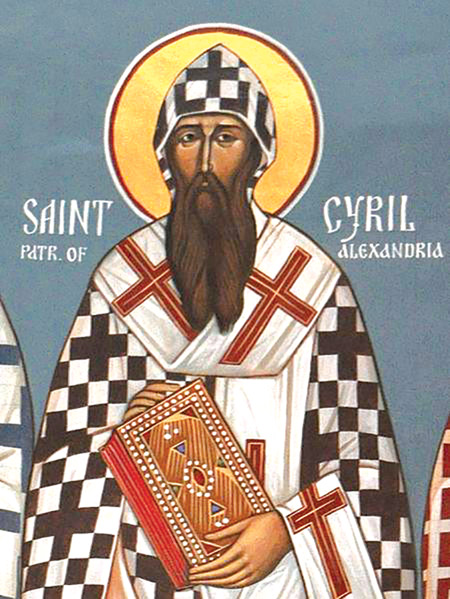
repentance was sincere: according to St. Cyril of Alexandria, “there is no
unforgiven sin before God for those who sincerely and worthily repent”[3].
Being enslaved to sin is not just some kind of “spiritual” hibernation, but a constant inner torment that one experiences. Being under its power is a spiritual torture that subjugates the sinnerand unceasingly tortures and destroys his soul until the sin is confessed and cleansed. This thought was confirmed bya vast number of Fathers of the Church. Thus, St. Cyril of Jerusalem teaches: “The sin is a terrible evil and it must be healed. It is terrible for those who retain it but is easily healed once they put it away by repentance. Imagine someone holding a burning coal with bare hands. It undoubtedly burns while carried, but if the man throws it away, the pain will finally subside”[4]. By refusing to confess a sin, we just put ourselves in the position of that person who has a coal in his hand but the sin burns our soul. The only way to get rid of this pain is to cast off this coal through the Holy Confession.
The Sacrament of Repentance has the ability to restore the blissfulinitial state that we once acquired with the baptism. This is why Repentance is often referred to as the “second Baptism ” or the renewal of Baptism. St. Ephraim the Syrian writes that “repentance is a ladder that raises us to where we fell from”[5]. St Symeon the New Theologian is also clear on this point: “If we deviate into vile and evil deeds after the Baptism, we completely loose its very sanctity. But with repentance, confession and tears and according to our deeds, we receive back the remission of our sins, and the sanctification by the highest grace”[6].
Therefore, even if once crossed out, the mutual holy love between God and a Christian soul that was born before in the Sacraments of Baptism and Confirmation is now reborn due to Repentance. According to the Serbian Bishop Athanasius (Evtich), “Repentance is a regret for the lost love. With the Confession, God and man re-enter into the activity of (this) love”[7].
Christians often perceive the Sacrament of Repentance as the least “positive” one. Indeed, all the other Sacraments bring a positive gifts: a new birth with the marriage, a baptismal partaking in the Christ’s co-crucifixion and co- resurrection, a gratification of the Holy Spirit with the Chrismation, a Eucharistic communion of Christ’s body. On the other side, the Sacrament of Repentance, as it may seem, does not give any new gift and its action is directed towards negation rather than acquisition. It does not reward us with concrete blessings but destroys the sin instead; it does not elevate a person to the heights of God’s communion but turns him into a blank white sheet of paper, ready do receive and fulfil the Lord’s commandments.
**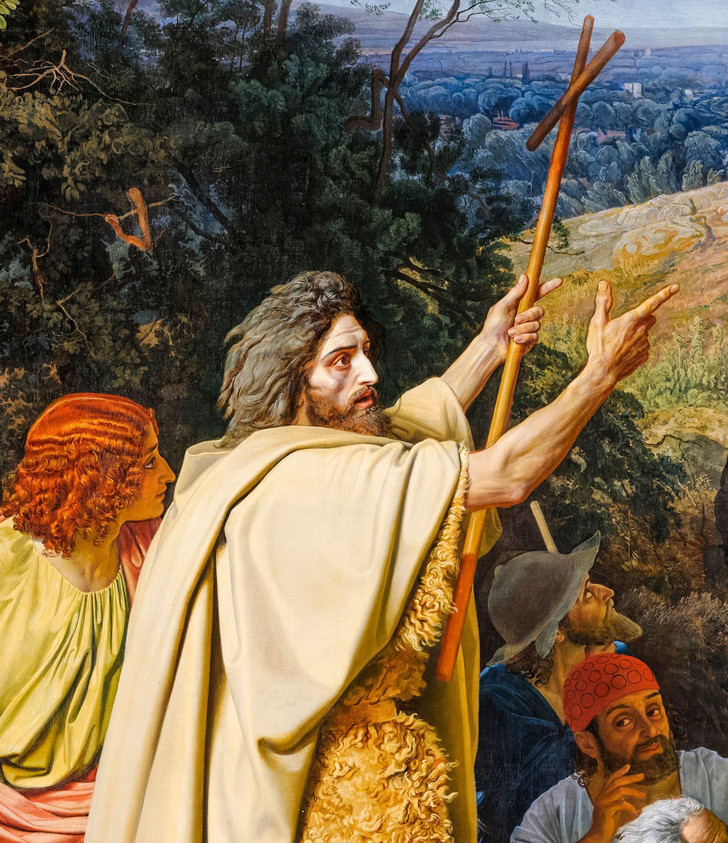 A special ability is still given to the penitent during the
**Confession : a person does not simply overcome the power of sin through
the action of grace and becomes a “blank sheet of paper” ready to receive his
own list of good deeds in the future. By the gift of the Creator, a person
acquires the ability to comprehend the will of God about himself and the
empowerment to fulfill this very will. This means that he does not only
acquire the skill to avoid the sin in the future, but he can also clearly feel
how to follow the path of Salvation and how to correlate it with the Divine
Providence. He gets to know the Divine will about his destiny, his earthly
life and his relationship with his neighbours. He becomes able to overcome
the sin and acquires the mind and the will of Christ. In fact, he turns out
to be endowed with the ability that is commonly called the gift of prophecy
, which, of course does not mean that he will instantly be able to predict the
future although this is how the prophetic gift is most often understood. We
should remember, however, that the main task of the prophets was not to
predict the future in ancient times but to let everyone know the will of God
and the ways of Salvation, so it is in this exact sense that a Christian with
a change of conscience becomes a prophet during his Repentance. He acquires
the ability to know the will of God about the ways of Salvation in relation to
himself, to comprehend what the Lord really expects from him.
A Christian is likened to Christ with this unique gift also because prophecy was one of the Lord’s earthly ministries: He proclaimed the will of God about the ways of world’s Salvation. On the other hand, the repentant Christian also becomes aware of the path of his own Salvation, he knows which way to follow; he understands how he should live his life.
There is another important point about the Sacrament of Confession: it is the most significantelementin Christian pastoral leadership. According to Archimandrite Cyprian (Kern), a remarkable specialist in pastoral theology who perfectly understood the deep meaning of church confessorship and pastoral work, “the confession is a door for repentance and an exit to a new life path for a sinner, and an opportunity to approach the soul of a penitent, to revive and to re-educate it for a spiritual shepherd. In this revival, enormous opportunities are given to a confessor, e.g. leading the penitent, directing his life along a different path, understanding his aspirations, introducing him to church and to the mystical life of the Body of Christ”[8].
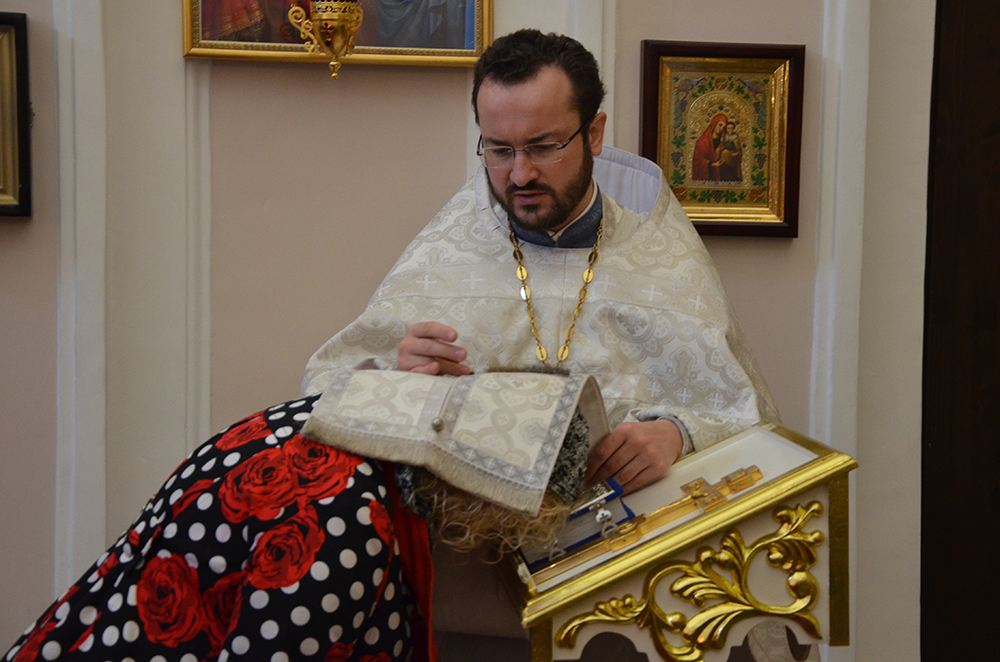
In the New Testament, the theme of repentance is connected to a mysterious event described in John 20. The Saviour appeared to the apostles hidden behind the shut doors after His Resurrection, He breathed on them and said: “Receive the Holy Spirit. If you forgive the sins of any, they are forgiven them; if you retain the sins of any, they are retained” (John 20, 22-23). Through this breath, the Lord gave the apostles the grace of the Holy Spirit. The Church bears witness to two gifts of the Holy Spirit to the apostles accomplished in the Gospels: the first, just described in this fragment of the Gospel of John, and the second, on the day of Pentecost. The first gift was general and impersonal, given by the Lord through a single breath to the entire council of the apostles as the foundation of the church hierarchy. In this way, the first gift of grace is fundamentally different from the second, which took place on the day of Pentecost, when the Holy Spirit personally descended on each disciple in the form of flamingtongues. What is the meaning of the first gift of God realized through the breath? Jesus Christ, when appearing after the Resurrection before His disciples in the upper room, gave them a special grace of priesthood service through a breath. Christ gave this priestly grace not only to all the apostles present in the chamber, but even to Thomas, who was absent that day because when the Lord appeared before His disciples and Thomas again, He did not give him the Holy Spirit separately: he had already received this priestly grace in absentia. Through the breath of Christ the apostles received t****he power to perform the Sacrament of Repentance: to forgive and forgive sins.
 Saint
Matthew also says that Jesus Christ promised the apostles that they will be
able to bind and solve sins: “Assuredly, I say to you, whatever you bind on
earth will be bound in heaven, and whatever you loose on earth will be loosed
in heaven” (Matthew 18, 18). This Gospel fragment treats of the same power to
“bind and loose” sins, that is given to priests.
It is also important to note that, when a Christian confesses his sins and the priest expresses a forgiveness wit a visible action, the Lord invisibly resolves the repentant from his sins. Thus, the priest cooperates with God and realizes with Him a mysterious synergy. The priest has been given the power to “bind and decide” - to put or not put the epitrachelion on the repentant’s head and yet the grace of God does not belong entirely to the priest, although the Lord acts precisely through the priest. The grace belongs to God and the Lord Himself ultimately performs the Sacrament of Repentance , like any other Church Sacrament, the priest only co-serves Him.
How does a sin appear in the human soul?
A sin cannot only be limited to a concept of an evil deed that has once occurred in one’s life. As a rule, the sin has its own dark, deep and inconspicuous source in the human soul.
If someone is ill and has the flu, the situation is usually obvious. We can look at such a person and say, “He doesn’t look well, he got a pale face, a cough and a runny nose and he behaves in a strange way: he probably has fever”. It is easy for us to determine that a person is sick, but we see only the external features of his disease, which are secondary: fever, cough, runny nose - the consequences of a deep disease-causing virus that has settled in and that we will not be able to see with the naked eye. Likewise, sin is often only an external manifestation of a deep spiritual disease that lives and acts in a person slowly destroying his soul. Sin is a manifestation of a special spiritual “virus” or a sinful origin that is present in a person, and is usually called “vice ” or “capital sin ” in the Church: a hidden virus, often completely inconspicuous not only for the others, but also for the sinner himself.
The good and evil actions that a person performs are of great importance for Salvation in spiritual life: the first must be strived to carry out all the time and the second must be resolutely fought. But we must also remember that both evil and good deeds are a consequence of the state in which our soul resides. And if a vice lives in it - as a habit or an organic rootedness of the sin - the internal condition will incessantly manifest itself outwardly as a specific sinful act. The sinner must simultaneously struggle with these external manifestations - with each specific sin - and at the same time strive to eradicate the “spiritual virus”, the vice, living in him, because it presses the person with a particular severity and it is the reason for his dependence on sin.
All vices can be closely interconnected with each other and even originate from each other. Saint Isaiah of Nitria writes: “Vices are like links in a chain, they hold on to one another”[9]. St. Gregory Palamas adds to this thought: “Vices and wickedness are not only introduced one through the other, they are similar by nature to each other”[10]. According to the Holy Fathers, evolve from other vices. Thus, for example, gluttony gives rise to lust, which requires money to satisfy itself. Disappointment in a wasteful and prodigal life that does not bring a person constant comfort, gives rise to anger, sadness or dejection- depending on the character of the sinner.
Capital sins are usually divided into carnal and spiritual. Some of them can only appear from other vices, while the others, oddly enough, can be born in the soul not only from vices, but also from virtues.
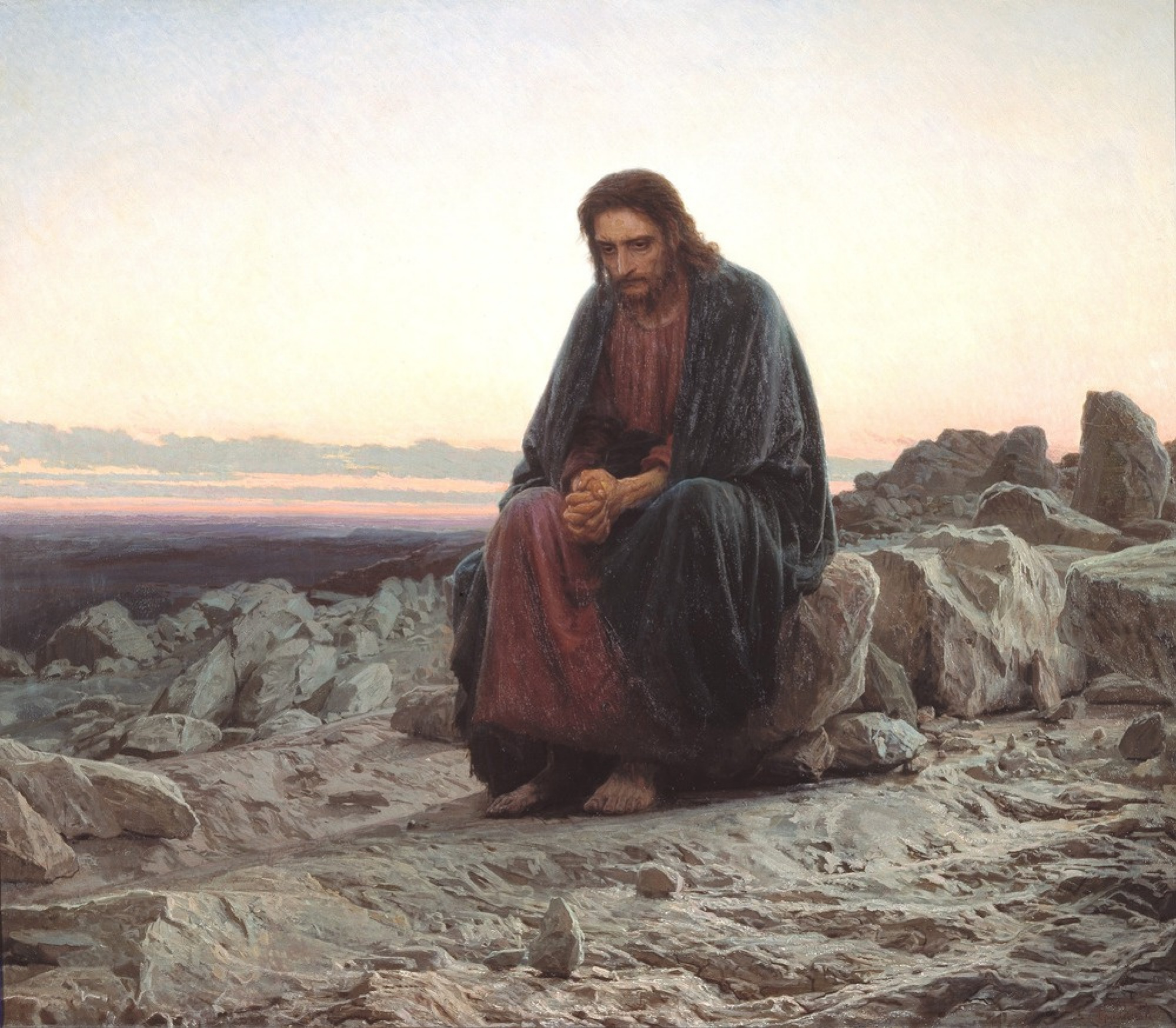In addition, it should be remembered that all sins develop gradually. The Church tells us how a sin appears, evolves and becomes a deed, and teaches how it can still be avoided at certain stages of such a development. For example, let’s imagine that on Wednesday, which is a fasting day, one passes by a meat shop and is very attracted by a delicious sausage smell. Here comes the first level of a complex spiritual struggle for that person, which can be followed by a “chain reaction” of spiritual falls that can eventually lead him to sin, that is to breaking the fast day. In the meantime, it is still quite easy to cope with the beginning of the sin: it is enough just to shrug your shoulders and move on, without dwelling on this involuntary external perception and movement of the heart. This stage of the birth of a sin is called “attachment ” or “attack ” in the ascetic tradition, in other words it is “the arrow of the devil ”. The human openness to demonic “attacks” is a consequence of the general damage of the human nature, which results from the fall of Adam. The Lord also experienced similar “attacks” during His temptation in the desert; however, He simply threw them away, always inevitably defeating Satan who approached Him.
The sin originates from the mind , then comes into attention before falling into feelings and will , and finally becoming an action. Which are the means of dealing with primary “attacks”? The first thing to do is to keep sobriety and a constant observation of the deeds and to make the effort not to allow attachment to one’s mind. The second is prayer. This method is good because if our mind is constantly occupied with prayer, there is simply no room left for anything else.
The goal of a Christian is not to completely destroy the energy of the passion, but to “retarget ” it from the creation towards the Creator. St. Maximus the Confessor writes about this in a vivid manner. He speaks of two passionate principles in a person: lust and anger, must be not destroyed in us, but transformed into their direct opposite. St. Maximus says “whoever keeps his mind close to God develops his lustful desire into Divine passion and completely turns rage into divine love. Because, due to a long-lasting communion with Divine illumination, his mind becomes completely luminous, and, having his passion connected to himself, he transforms it into an endless divine passion and unceasing love, completely turned from the material world to the Divine”[11]. What an unexpected twist! Moreover, according to St. Gregory Palamas, with such a re-creation of the passions, the Christian is literally seized by the “magic of divine love” as the ability of the human passion to aspire to the unity of love with God [12].
Of course, we know that the Holy Fathers invite Christians to reach a condition of absence of vices or dispassion. But dispassion is not inaction: it is not an endless holiday in paradise, accompanied by an endless playing of the harp. Dispassion is a very active state, it is and incessant and creative appeal to God. The Hesychast Fathers who anciently practiced the Jesus Prayer taught that dispassion is by no means the disappearance of the passion in a person, which leads him to some kind of inactive peace, but, on the contrary, it is the best energy, the activity of human corporality. As St. Gregory Palamas writes, “Dispassion is not the death of the passionate power of the soul, but its direction from worse to better and its action in the divine state”[13]. Our true and active striving for God, for that Heavenly Kingdom, becomes possible only by dispassion, which, on its turn, a huge spiritual strength.
[1]Преподобный Максим Исповедник. Творения. Кн. 2. Вопросоответы к Фалассию. М., 1993. С. 110.
(Saint Maximus the Confessor. Works. Book. 2. Questions and answers to Thalassius. M., 1993. p. 110.)
[2]Святитель Иоанн Златоуст. Беседы о покаянии, 3, 4 // Полное собрание творений св. Иоанна Златоуста. Т. 2, кн. 1. М., 1993. С. 332.
(Saint John Chrysostom. Dialogues on Repentance, 3, 4 // Complete Works of St. John Chrysostom. T. 2, book. 1. M., 1993. p. 332.)
[3]Святитель Кирилл Александрийский. Толкование на Матфея. Цит. по: Игумен Дионисий (Шленов). Догматические аспекты покаяния // Таинства Церкви. Материалы подготовительных семинаров Международной богословской конференции Русской Православной Церкви «Православное учение о церковных Таинствах». М., 2007. С. 105.
(Saint Cyril of Alexandria. Commentary on Matthew. Cit. Quoted from: Hegumen Dionysius (Shlenov). Dogmatic aspects of repentance // Sacraments of the Church. Materials of the preparatory seminars of the International Theological Conference of the Russian Orthodox Church “Orthodox Teaching on Church Sacraments”. M., 2007. p. 105.)
[4]См.: Святитель Кирилл Иерусалимский. Поучения Огласительные и Тайноводственные. С. 18—19.
(cf: St. Cyril of Jerusalem. Baptismal and Mystagogical Catechesis. pp. 18-19.)
[5]Цит. по: Цветник духовный. Ч. 2. С. 181.
(Quoted from: Spiritual Meadow. Part 2. p. 181.)
[6]Преподобный Симеон Новый Богослов. Деятельные и богословские главы, 83 // Добротолюбие. Т. 5. Свято-Троицкая Сергиева Лавра, 1993. С. 28.
(Simeon the New Theologian, saint. Practical and Theological Texts, 83 // Philokalia. T. 5. Holy Trinity Sergius Lavra, 1993. p. 28.)
[7]Афанасий (Евтич), епископ. Новое слово о покаянии, исповеди и посте. М., 1996. С. 11.
(Athanasius (Yevtich), Bishop. A new word about repentance, confession and fasting. M., 1996. p. 11.)
[8]Киприан (Керн), архимандрит. Православное пастырское служение. Париж, 1957. С. 131.
(Cyprian (Kern), archimandrite. Orthodox pastoral ministry. Paris, 1957. S. 131.)
[9]Цит. по: Киприан (Керн), архимандрит. Православное пастырское служение. С. 163.
[10]Святитель Григорий Палама. Беседы. Т. 1 . М., 1994. С. 86.
[11]Преподобный Максим Исповедник. Главы о любви // Творения преподобного Максима Исповедника. Кн. 1. М., 1993. С. 114.
[12]См.: Святитель Григорий Палама. Триады в защиту священно- безмолвствующих. М., 1995. С. 183.
[13]Там же. С. 178.
- The Unction.
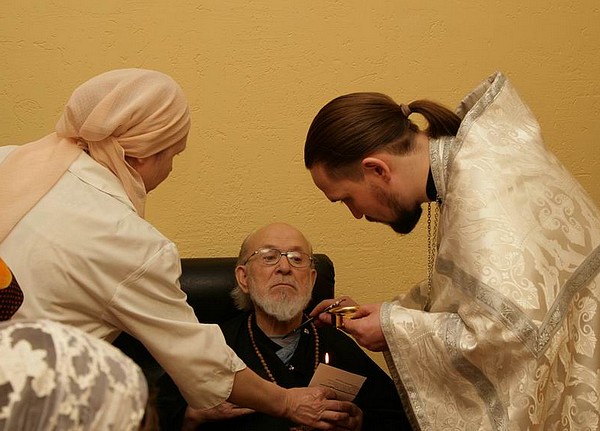
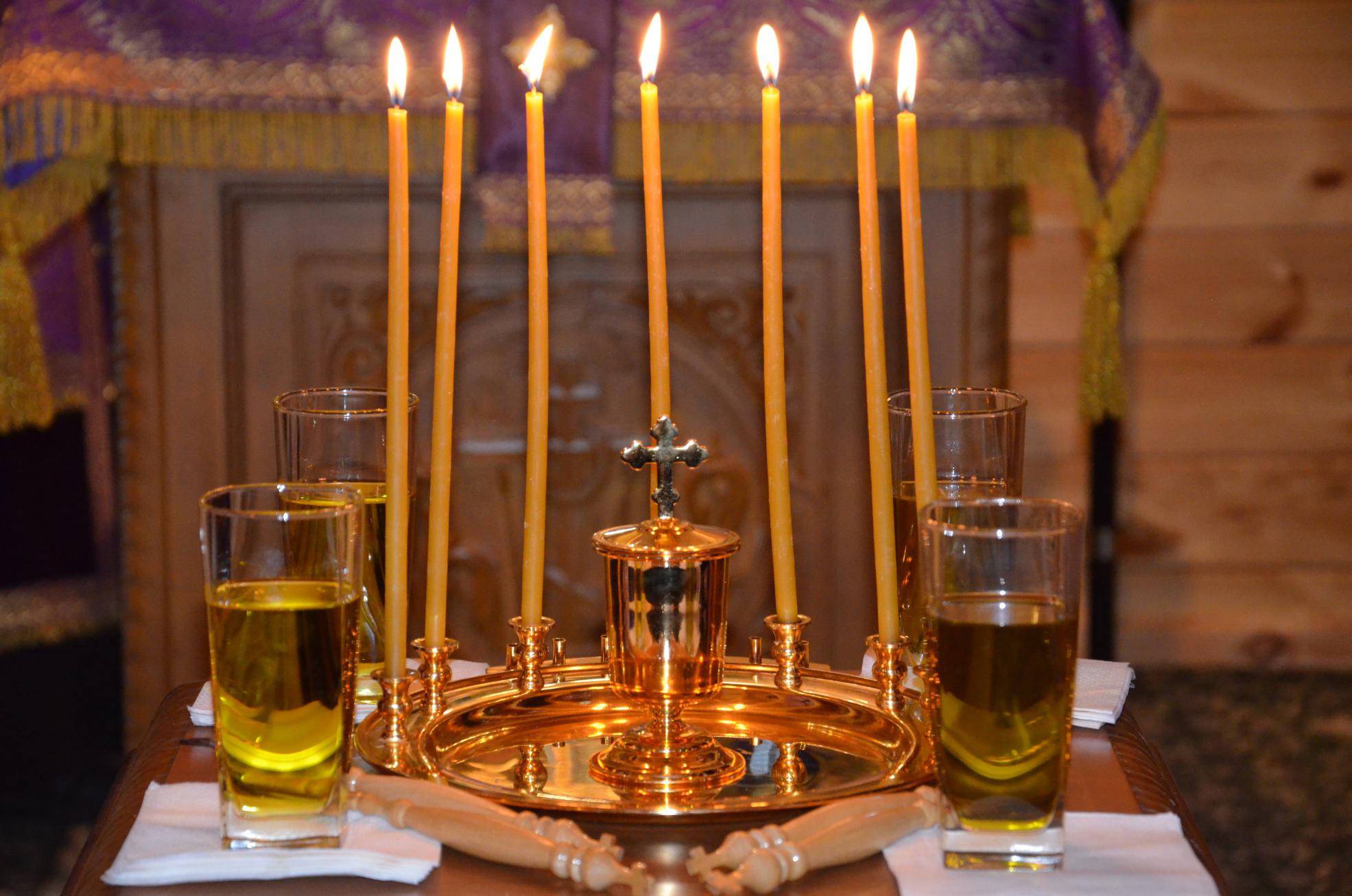
The Sacrament of Holy Unction(also Extreme Unction or Anointing) is most often performed in Orthodox churches during Lent, but it can also be performed on any other day of the church year. During this Sacrament, an Orthodox Christian is anointed seven times by priests (ideally there should be seven, but the sacrament is often served by one presbyter) with the consecrated oil mixed with red wine. The Gospel is read and special prayers are said each time. The Unction is performed for the healing of the****Christian’s soul and body. Thus, when the congregation prays and anoints the person with the consecrated oil and wine, the grace of God descends upon the sick Christian, which is able to heal both his physical and spiritual diseases.
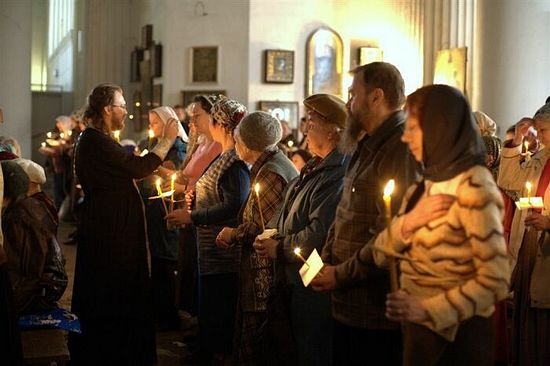 According to St. Nicholas
Kabasilas, “the sacrament of Oil gives to those who receive it both healing of
bodily illness and remission of sins”[1]. Some say that, during the Holy
Unction, people receive forgiveness of forgotten sins. However, it is
important to keep in mind that this is rather a popular conception of the
meaning of the Sacrament rather than a teaching rooted in the liturgical or
the ancient patristic tradition of the Church. Although we should remember
that the Sacrament of the Holy Unction is directly related to the Sacrament of
Confession (as well as to the Sacrament of the Eucharist), while clearly
having a penitential character, for it leads one to healing from
theservitudeto a sin that dominates him. It is in this sense that
the Sacrament of the Holy Unction leads to the remission of one’s sins.
The Sacrament of Holy Unction is not a simple blessing before death , as it is sometimes understood in the Orthodox or the Catholic Church. The Holy Unction serves to restore and revive people to life. It is called to heal people from both physical and spiritual diseases: to protect from the death of both the body and the soul, as a depersonalization of a man and his deprivation from the sanctifying Divine grace. This Sacrament is also designed to free the man from his sinful condition, thereby to save him from the death, because sins are the cause of our physical and spiritual deaths.
During the Sacrament of the Holy Unction priests perform a joint prayer to the Lord, to the Mother of God and to all the saints. Ultimately, however, the common prayer is not only limited to the intercession of seven priests before God. In fact, they ask the entire Heavenly Church for an intercession for the person before Christ, and the entity of it raises a conciliar prayer to God for that Christian, asking the Lord for his healing.
Anyone who is seriously ill and participates in this Sacrament is certainly aware of the fact that he might not definitely receive a physical healing after the Unction and may still die very soon . But even in this case, if the sick person has received the grace of the Sacrament with dignity, with faith and humility, he acquires, thanks to the Unction, another ability: to perceive his mortal illness in a new, firm and grateful way, to approach in a truly Christian way his entrance into eternal life. Both his illness and his suffering then serve as a glorification or a transformation, since becoming one of the gracious conditions of his Salvation. This happens because, by suffering in Christ and in compassion with the Lord, by being united with Him in His crucifixion, one is truly purified and sanctified. It has already been said before that, according to St. Nicholas Kabasilas, through the participation in each of the Church’s sacraments, one gets united with Christ, truly taking part in His redemptive Featand participating in His earthly ministry. This happens to a person also in the Holy Unction, because it allows him to share the suffering on the cross with the Lord. This is why, thanks to one’s mystical unity with Christ in the Holy Unction, physical death is no longer terrible for the person participating in this Sacrament: for in ascending with the Lord to the Cross, he gains an eternal life in Christ and overcomes a spiritual death, a far more terrible ending.
 As for the spiritual death that threatens a
person outside of God, the Holy Fathers got a clear common position on that.
Here is what St. Macarius of Egypt says: “True death is hidden within the
heart, therefore a man is mortified from the inside. But, if someone has
secretly passed from death into life (cf. John 5, 24), he will truly live
forever and will never die. And even if the bodies of such men are destroyed
after a while (in physical death), they will rise again with glory, because
they are sanctified. This is why we call “dormition” the Assumption of the
saints”[2].
The Sacrament of the Holy Unction reveals the Divine will about the person : whether he should be healed or pass away. Some experienced priests do not recommend that a person receives Holy Unction twice for the same illness, since the person has already experienced God’s will once and the Lord’s decision has already been taken. After the Unction, it is up to the person to accept the Divine will and to fulfill the feat of his salvation.
It is important to add a few words about the very understanding of the phenomenon of death in the Orthodox theological tradition since it is can be perceived in two ways in Christianity: as a****divine punishment or a gift from God.
Of course (and no Orthodox theologian would deny this), death is not natural for humans. It is a violation of the “normal” order of existence of the entire universe and it is a curse on the human race. While creating everything God did not create death because He is not a destructor Himself but the Creator and Life, and death is above all a diminution and negation of all existence, a backward step toward the original nothingness. It is the man who allowed this destructive nothing to rule over himself through the fall of sin, despite the fact, that he was called by God to co-creation and to transformation.
At the same time, we find unexpected statements about death in the patristic tradition. St. John Chrysostom writes that “death is a good deed” of God[3]. We see that Christian theologians quite often see death as God’s humane gift to people, as a realization of the Creator’s love to His own creation. What is the meaning of such a perception?

In order to elucidate this seemingly paradoxical statement that death is a
humanistic gift from God, we may recall an example from our childhood. Many of
those who live in regions with sub-zero temperatures have built snowmen.
Everyone can remember that the snowman comes out best on days when the snow is
a little wet and easily gathers into a lump. In addition, it is of great help
if there is a hill near that place: in that case it is only necessary to show
a little ingenuity - and the snowman turns out to be huge. After all, one can
simply run a snowball molded from the slide down, and then, having rolled to
its base, it turns out to be truly gigantic - a lot of snow sticks to it, and
we make almost no effort to do it.
Something similar happens every day in our lives: we always easily roll down under our own weight, which is going astray, making mistakes and committing dishonorable deeds. At the same time, one accumulates sin like a wet snowball and if we imagine that the hill is endless, the sinner will never stop in his fall and will never stop sinning, thus turning into a kind of a terrible, huge and immortal monster. It is precisely for the sake of ensuring that the sins will not crush men with their weight, that humans are given death: it is, according to St. Cyril of Alexandria, “a human-loving punishment”[4]. As St. Cyril writes, God “stops the spread of sin through death, and He shows His love for humanity in this philanthropic punishment”[5]. In the same way St. Gregory the Theologian (of Nazianzus) argues, affirming that God established “death for stopping sin, so that evil does not become immortal. Thus punishment itself becomes philanthropic. I am certain that this is how God punishes”[6].
The point here is also that a human, according to the teaching of the Church, can only sin and repent as long as he lives. For these actions always affect humans as a whole – they both act in body and soul and change them in parallel, simultaneously. This integrity of personality is broken with the dissolution of the physical and spiritual natures of the deceased and with the destruction of his body after death, but people still keep a personal self- consciousness and an undying personality. And yet, a huge split takes place in them, when a spiritual-physical being gets through a division into “compositions” - a split that takes away the ability to sin previously available to the “full” man. This is the precise reason why a human being finds himself free from the inclination to sin, from that sinful disease which previously could possess his whole being.
Thus, by “allowing” the existence of physical death, the Lord saves humanity from another, much greater danger: He saves man from the eternal death of the soul. This is the precise patristic understanding of the meaning of death. On the one hand, it is a punishment, a curse, an unnatural state of splitting of body and soul for human nature. And on the other hand it is a gift given by God to stop this endless “sticking” of sin on humanity, which likens the human being not to God, but to Satan.
 Where can one find the
theological basis for the Sacrament of the Holy Unction in the Holy
Scriptures? First of all, there is a passage from the Gospel of Mark, which
communicatesthat the Apostles, sent by the Savior into the world, “preached
repentance, cast out many demons and anointed many sick people with oil and
healed them” (Mark 6, 12-13). Probably, this passage does not speak directly
about the Sacrament of Holy Unction, but only refers to its prototype. One can
also recall a passage from the Gospel of Matthew, in which the Savior commands
the Apostles to “heal the sick, cleanse the lepers” (Matthew 10, 8). The
Sacrament of Confirmation realizes these precise words of Christ are realized
in the, which is designed to heal a person. The most important basis for the
Sacrament of Holy Unction is found in the fifth chapter of the Epistle of
James. This passage is also read during the Sacrament of Confirmation: “Is any
sick among you? Let him call for the elders of the church; and let them pray
over him, anointing him with oil in the name of the Lord: And the prayer of
faith shall save the sick, and the Lord shall raise him up; and if he have
committed sins, they shall be forgiven him. Confess your faults one to
another, and pray one for another, that ye may be healed. The effectual
fervent prayer of a righteous man availeth much.” (James 5, 14-16). We see
that this particular New Testament fragment indicates both the way, in which
the sacrament is performed, its common character and its inseparable link with
repentance, with the possibility of liberation from the weight of sin
“pressing” on the person.
Finally, a few words should be said about the symbolic meaning of the substances used in the Sacrament of Unction. The spiritual symbolism of the oil used in the Church has already been discussed in detail in connection with the Sacrament of Baptism. In the Sacrament of Holy Unction, the oil is a symbol of Church prayer and, at the same time, a symbol of Divine mercy being poured out on the sick. Wine and oil are also symbols of the healing grace of the sick. Both of these substances were used in ancient times in medicine: it was considered that wine disinfects wounds, and oil has an analgesic effect (remember the parable of the merciful Samaritan: oil and wine were poured on the wounds of the man attacked by robbers).
The Sacrament of Holy Unction also uses grains poured into a vessel, into which seven burning candles are usually inserted. These grains are a symbol of new life, and a symbol with a dual meaning, a two-fold spiritual interpretation, depending on the fate that befalls the sick person in the future: if he gets well, the grains mean the sprouting of a new life , to which he is reborn; if he passes away, then these grains become a symbol of the pledge of future new life in his coming resurrection from the dead.
[1]Святой Николай Кавасила. Изъяснение Божественной Литургии // Христос. Церковь. Богородица. С. 158.
[2]Преподобный Макарий Египетский. Духовные беседы. С. 346.
[3]See:Святитель Иоанн Златоуст. Беседа 31 на святого Евангелиста Матфея // Иже во святых отца нашего Иоанна архиепископа Константина града Златоустого Избранныя творения. Толкование на святаго Матфея Евангелиста. Т. 1. М., 1993. С. 344—345.
[4]Цит. по: Василиадис Н. Таинство смерти. Свято-Троицкая Сергиева Лавра, 1998. С. 95.
[5]Цит. по: Помазанский М., протопресвитер. Православное догматическое богословие. С. 116.
[6]Святитель Григорий Богослов. Слово 38, на Богоявление или на Рождество Спасителя // Святитель Григорий Богослов. Творения. Т.1. С. 528.
- The Confession and its meaning.
- The Unction and its meaning.
Related Concepts
- anointing
- apostolic-call
- ascetic-struggle
- ascetical-model
- attack
- canon-of-st-andrew-of-crete
- capital-sins
- christ-likeness
- conversion
- discernment
- dispassion
- divine-love
- divine-will
- fall
- concepts/gods-relenting-niḥam
- great-lent
- healing
- hesychast-fathers
- holy-spirit
- hospital-not-tribunal
- metanoia
- priesthood
- psalm-50
- remission-of-sins
- renunciation
- resurrection
- sackcloth
- sacramental-symbolism
- sin-as-disease
- sobriety
- st-maximus-the-confessor
- temptation
- transformation
- vice
- virtue