Liturgics — 3. The Holy Sacraments. The introducing Sacraments_ The Baptism and the Chrismation (or Confirmation).
- The Baptism.
In the pagan world, before the incarnation of Christ, _mysterion _was the name given to secret religious rites, in which only people who were initiated in a special mystical way could take part. In the Old Testament, the concept of mysterion(sacrament) originally meant any deep, secret thought, thing or action. The New Testament presents this term as the Divine Economy of the Salvation of the human race. Thus, saint Paul writes to Timothy: “And without controversy great is the mystery of godliness: God was manifest in the flesh, justified in the Spirit, seen of angels, preached unto the Gentiles, believed on in the world, received up into glory” (1 Tim 3:16). These words refer to the act of Salvation and to the event of God’s incarnation , which are called by the Church “the Great Godly Mystery ”. The Greek original text of the New Testament uses the word mysterion here. 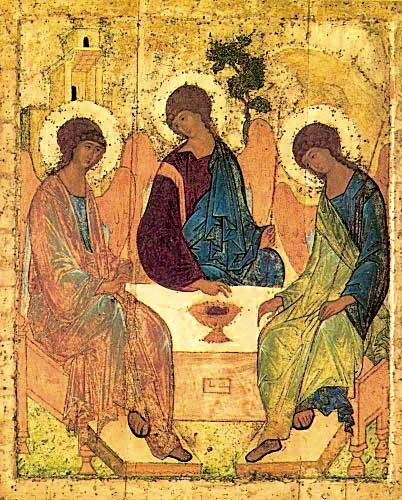
The modern theological tradition explains the Holy Sacrament as a special act of God’s Providence towards believers that communicates the grace of God to Christians through visible and material means, transforms a person and renews his nature and his personality. As individuals we become members of the Body of the Church through the Sacraments, so they serve as the foundation of our Christian life. The countdown of our Christian existence begins with the Sacraments of Baptism and Confirmation. Moreover, we cannot remain and consider ourselves Christians without a constant and regular participation in the Church Sacraments.
Saint Seraphim of Sarov proclaims that the true purpose of the Christian life is to acquire the Holy Spirit of God and the Sacraments help us to reach this goal: the acquisition of the Holy Spirit is the fruit of our participation in the Sacraments. Thus, the well-known Russian dogmatist, bishop Sylvester (Malevansky) says that the Sacraments are “God-ordained sacred rites, which were established with the sole purpose of giving believers the sanctifying grace of the Holy Spirit through their own agency”[1].
There are seven Church Sacraments: the Baptism , the Confirmation , the Eucharist , the Confession , the Ordination , the Marriage , and the Unction. In ancient times, Christian authors named various numbers of Sacraments and even included other Church rites than the existing today, e.g. Saint Theodore the Studite considered the Tonsure and the Funeral service to be Sacraments; the same opinion was held by the author known today as Denys the Areopagite.
The sacraments are spiritual actions but the Church gives them through material means. Therefore, we achieve salvation through the waters of Baptism, through the bread and the wine changed into the Body and Blood in the Eucharist, through the oil of the Unction. Thus, the Sacrament has an impact not only on the soul of a Christian, but also on his body; it affects him not only spiritually, but also materially because a person is to be saved in the integrity of his nature. This gives to Christians a pledge of the coming glory in the afterlife – since the entirety of our mental and physical composition, body and soul, has to be equally sanctified and united with God forever through the gift of His grace.
The purpose of the Orthodox Sacraments lies in the deification of a Christian : according to Saint Apostle Peter, God invites us to become partakers of the Divine nature (2 Pet 1:4), therefore we must take part of the grace of God so He can bestow on us the Divine properties that He possesses by nature. Moreover, since God revealed Himself as mercy, love and goodness, we must also become love, mercy and goodness by the gift of His grace. Saint Athanasius the Great says “God’s Word became human so that we could become gods”[2], and with His help humans are able to acquire His qualities and properties and they can become gods by grace.
The Orthodox Church explains, that this deification by grace will not be available to us only in the afterlife, but it is partly achievable for us today, here on earth. Deification is not only the ultimate goal of a person after his resurrection from the dead - it is a state to which a person must strive constantly: through his life in Church and through the Sacraments.
The Sacrament of Baptism
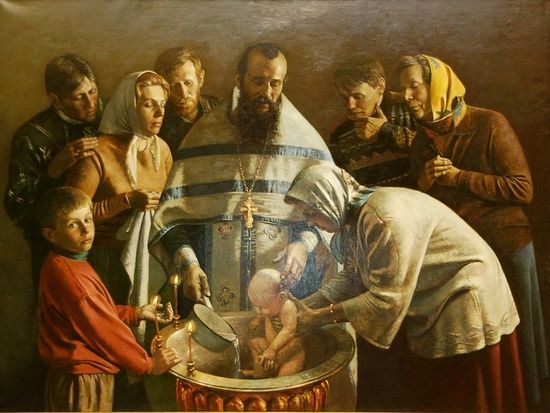 The word ‘baptism’ comes from the Greek
baptisma , which means immersion in water. Its Slavonic analogue is the word
крещение that presents a wider signification of this Sacrament than its
Greek counterpart. In fact, this word (related to крест __– ‘cross’) is
consonant with the themes of the Holy Cross and the Crucifixion. Thus, when
being baptized, Christians accept to carry Jesus Christ’s cross through their
life.
Baptism is also often referred to as the Sacrament of Enlightenment. It is called so because during the Baptism a person receives the light of the Divine Grace, which gives him the ability of knowledge of God. According to St. Basil the Great, “one who has not been baptized is not enlightened; and without light, the soul is not capable of contemplating God just as the eye does not perceive what it can see” [1]. Clement of Alexandria vividly testifies to the same: “through Baptism we receive light into the soul, with light we receive the right for sonship, with sonship - perfection, with perfection - immortality. I said,__« You are gods, And all of you are children of the Most High(Ps. 81, 6)». This act has various names: grace,enlightenment, perfection, ablution. It is called ablution because in Baptism our sins are washed away; grace, because in it we are freed from the punishment for sins; enlightenment - because in it we see the heavenly saving light, that is, we know God. We call perfection the absence of any defect; but what is lacking in him who knows God?” [2]. In the radiance of this Divine light, the Christian comprehends the saving significance of the Sacraments, is vouchsafed true communion with God, becomes a partaker of God Himself.
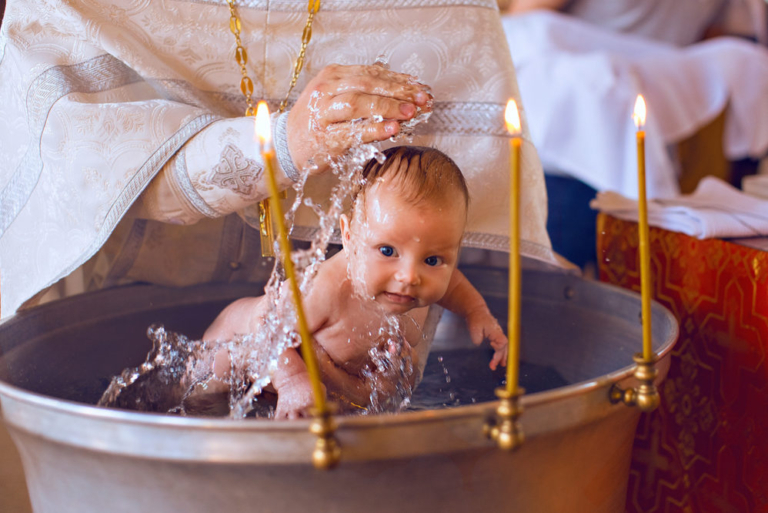 In itself, the custom of sacred water
diving is very ancient - much older than Christian Baptism. Even in the Old
Testament Church, there was a practice of water immersion, although in it they
had a completely different, much less significant than in the New Testament,
spiritual meaning. According to the Old Testament establishment, any Jew,
after any defilement that happened to him, had to perform a special water
ablution - “mikveh”. Also, when pagans who believed in the true God wanted to
join the Old Testament Church, it was not customary to circumcise them; for
them there was a different, special, as it were, partial and imperfect way of
joining the Church. The Old Testament Church professed national exclusiveness,
God’s chosenness of the Jews, and therefore in fullness did not allow anyone
to join her, except for the sons of God’s chosen people. For those who
believed among the pagans, there were just water immersions, which were for
them the way to enter the Church through washing away the filth of idolatry.
Such people were called “gate proselytes” or “God-fearing.” St. John the
Baptist, as you and I remember, also baptized Jews in the waters of the
Jordan. It is important to emphasize that John’s baptism and Christian baptism
are two completely different baptisms. The baptism of John was a baptism
of repentance, although it did not free a person from the source of all sins -
the original sin. Christian baptism gives us the forgiveness of all sins,
renews a person. The baptism of John was a preparation for each person who
received it for a personal meeting with Christ, for the acceptance of the
Messiah that the Jews longed for. John called on those who received his
baptism to become pure, because among them was already standing, the One who
came to redeem them and with whom they were to meet, remaining in moral,
spiritual purity, with a repentant feeling, with awareness of their own fall,
unworthiness. So, through the baptism of John, a person had to prepare for a
meeting with Christ, who had just come into the world, having entered into the
battle with Satan and sin. Christian baptism is the baptism with the Holy
Spirit; it gives us absolutely new gifts, which are the result of the Lord’s
victory over the devil - co-crucifixion with Christ, resurrection with Christ,
new life, new spiritual birth, victory over sin. The same baptism as John’s
was the baptism of the apostles, performed by them even before the
Resurrection of Christ.
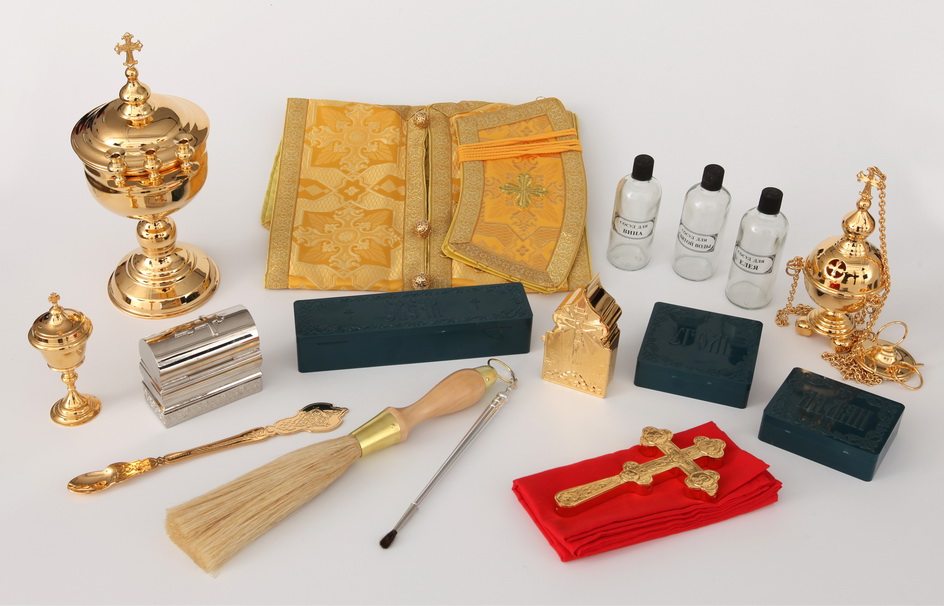 Only after Pentecost did the new Christian
Baptism manifest itself in the New Testament Church. The book of the Acts of
the Apostles cites the words of the Lord, Who Himself says about this: “John
baptized with water, but in a few days after this you will be baptized with
the Holy Spirit ” (Acts 1:5). We learn about the establishment of Baptism
from the Gospel of Matthew: “… all power in heaven and on earth has been
given to me. Go therefore, make disciples of all nations, baptizing them in
the name of the Father, and of the Son, and of the Holy Spirit, teaching them
to observe all that I have commanded you; and lo, I am with you always, to the
end of the age” (28:18-20). We see that already here, at the establishment of
the Sacrament, the Lord says that one should baptize in the Name of the Most
Holy Trinity. We learn about the New Testament understanding of the spiritual
meaning of Baptism from chapter 3 of the Gospel of John: “… truly, truly, I
say to you, unless one is born of water and the Spirit, he cannot enter the
kingdom of God” (3, 5).
As we can see, Baptism, according to the firm conviction of the Church, based on the Gospel Revelation, is one of the most important conditions of our Salvation. Since ancient times, the possibility of dying unbaptized has been the greatest fear of those who have converted to faith in Christ. Saint Gregory of Nyssa tells a vivid and sad story of a certain young man named Archias, who lived in the city of Comanаat a time when these places were being ravaged by nomadic Scythian tribes. This young man once walked carelessly out of town, came upon his enemies, and was mortally wounded by them with an arrow. Archias believed in Christ, but had not yet had time to be baptized and was terrified that he would die unbaptized. According to Saint Gregory, Archias “as he fell and was nearing death, he cried out (because he was not baptized): ‘mountains and woods, baptize me, trees, springs, stones, give me grace,’ and he died with these piteous cries. The city, having learned of these things, mourned more than of the calamities caused by the war.”
However, we know from the history of the Church examples of how people who
were deprived of water baptism were nevertheless not only considered to have
been baptized, but were also revered by Christians as saints. These are the
ancient Christian martyrs, who were at first convinced pagans, but who
suddenly sincerely believed in Christ and who immediately confessed their
conversion to God in front of the enemies of the Church and were immediately
killed and executed for this confession. In this case, of course, they could
not receive any water baptism. Such a martyr’s death became for them Baptism
in Christ - Baptism with blood. Here is what St. Basil the Great says about
such a Baptism: “some, in deeds of piety, really, rather than imitatively,
having accepted death for Christ, had no more need for their salvation in the
symbol - water, having been baptized with their own blood”. But more often the
catechumens, not having had time to be baptized, perished in a similar way at
the hands of the persecutors of Christians. In the so-called “Apostolic
Tradition” (a third-century writing), it is said that the martyrdom of the
catechumens is equivalent to water Baptism: “If the catechumens was seized for
the name of the Lord, let him not doubt the completeness of his testimony
(i.e., the salvific nature of his martyrdom testimony to the Truth of Christ).
If he was martyred when his sins were not absolved (i.e., he died unbaptized),
he will be justified. For he received Baptism with his own blood.”
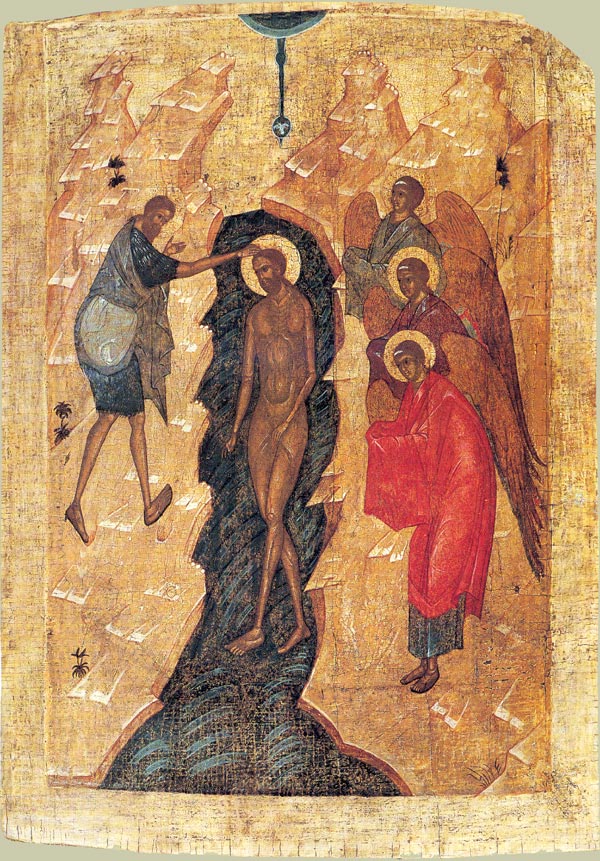
The theological meaning of the Sacrament of Christian Baptism has always been understood by the Church in the same way: as Baptism in the Name of the Most Holy Trinity and Baptism in the image of the death and Resurrection of Christ , performed for the sake of liberation from original sin and for the forgiveness of personal sins. St. Cyril of Jerusalem, a Holy Father of the fourth century, explains in his writings the meaning and procedure of Baptism as follows: “…then you were led to the holy font of Baptism, just as Christ was moved from the Cross to the tomb prepared in advance. Each one was questioned in the name of the Father, the Son, and the Holy Spirit. Having confessed your faith, you were immersed in the water and raised up from it three times, which symbolizes Christ’s three-day staying in the tomb. Through this act you died and were born, and the water of salvation was to you both a tomb and a mother’s womb”. The Apostolic Decrees, which explain the spiritual meaning of Baptism in a similar way, command to the priest performing the sacrament: “…sanctify this water, so that those who receive Baptism may be crucified with Christ, die with Him, be buried with Him, and be raised to sonship”.
Baptism is not just a moral change that happens to a person; it is the real event of a person’s death and resurrection in Christ. The ancient Church called resurrected everyone who has been baptized and has attained a level of spiritual life and communion with God. The Apostle Paul also testifies to this in his Epistle to the Romans (note - this very passage is read during Baptism and Anointing): “Or don’t you know that all of us who were baptized into Christ Jesus were baptized into his death? We were therefore buried with him through baptism into death in order that, just as Christ was raised from the dead through the glory of the Father, we too may live a new life. For if we have been united with him in a death like his, we will certainly also be united with him in a resurrection like his. For we know that our old self was crucified with him so that the body ruled by sin might be done away with, that we should no longer be slaves to sin—because anyone who has died has been set free from sin. Now if we died with Christ, we believe that we will also live with him. For we know that since Christ was raised from the dead, he cannot die again; death no longer has mastery over him. The death he died, he died to sin once for all; but the life he lives, he lives to God. In the same way, count yourselves dead to sin but alive to God in Christ Jesus”(Romans 6,3-11).
In addition, Baptism becomes for us a new birth with water and the Holy Spirit for the Kingdom of God. A person who was previously outside of God and therefore, in fact, had no true spiritual being (for there can be no true life outside of God), though living as flesh, but in reality being spiritually “non-existent,” is truly born, spiritually created in the baptismal font. As St. Nicholas Cabasilas writes, “to be baptized means to be born in Christ, and to receive the very being and existence for those who do not yet exist” [8]. From now on, the Christian begins to live the life of Christ : in His Body and as His Body itself. In the words of Cabasilas, “coming out of the water (of Baptism), we carry in our souls, in our heads, in our eyes, in our innermost being, in all our members, the Saviour Himself, clean from sin, free from all corruption, as He rose and appeared to His disciples and ascended, as He will return…” Moreover, according to the vivid and paradoxical thought of Saint Augustine, Mother Church gives birth to Christ Himself again and again through us and with us, while receiving Baptism and thus becoming new members of the Body of Christ. The church brings us into the world as the infinitely multiplying Body of the Lord, gradually embracing with Himself the saved. Saint Augustine writes: In Baptism, the Church “gives birth to children… And if you think about it, she also gives birth to Christ: those who receive Baptism become members of Him.”
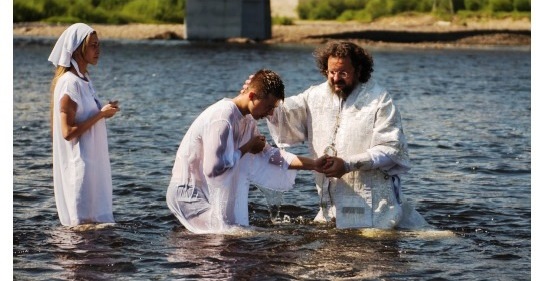
The Church gives birth to us in Baptism as a Mother. But who becomes
our Father? God Himself. It is in Baptism that what the evangelist
John the Theologian testifies about takes place:
“Yet to all who did receive him, to those who believed in his name, he gave the right to become children of God—children born not of natural descent, nor of human decision or a husband’s will, but born of God.” (John 1,12-13).
Christians who are born of God in Baptism acquire not only the Divine image, which has been clouded by sin; a resemblance to the Parent, but also His power, His holiness. “What is the intention and what is the power of Baptism?”- St. Basil the Great asks. And immediately he answers: “Through it the baptized person’s mind, word, and deed are changed and by the power given to him the person is made the same as the One who gave birth to him.” Thus, according to St. Basil, the Parent for the baptized Christian here is the Holy Spirit. St. Basil recalls the words of the Gospel: “Flesh gives birth to flesh, but the Spiritgives birth to spirit.” (John 3:6). Thus, by the power of the giver of grace, the baptized Christian is reborn in the font as an entirely new spiritual being: spiritual in the Spirit, graced by the gift of Divine energies, mighty with Divine power, holy with the Lord Holiness. The Holy Fathers tradition calls Christ Himself our Parent in Baptism. According to St. Gregory Palamas, it is Christ who “became our Father by Baptism into Him…”
Baptism can be compared not only to the birth of a Christian into eternal
spiritual life, life in Christ, but also to God’s creation of new beings,
God’s unceasing creation. Such new spiritual human beings, receiving their
existence in the waters of Baptism from the hands of their Creator, according
to the ancient Holy Fathers, are far more perfect, higher than even Adam and
Eve, once created by God. Here is how St. John Chrysostom vividly speaks about
it: “As in the beginning, the ground was laid as a foundation (of creation),
but all the work belonged to the Creator, so now water is laid as foundation,
and all the work (of rebirth) belongs to the grace of the Spirit. And then -
“The first man Adam became a living being”; the last Adam, a life-giving
spirit.” (1 Cor. 15: 45). But the difference between the one and the other is
big. The soul does not impart life to another being; but the Spirit not only
lives in itself, but imparts life to other beings as well. The apostles also
raised the dead this way. Then, after the creation was completed, man, at
last, was created; but now, on the contrary, the new man is created before the
new creature: first he is born, and then the world is transformed. And as in
the beginning (God) created man wholly, so now He forms him wholly. But then
He said, “I will make a helper suitable for him.” (Gen. 2:18), and here
nothing of the sort. Whoever has received the grace of the Spirit, can he need
any other helper? Who belongs to the Body of Christ, does he need anyone to
help him? Then man was created in the very image of God; but now he is united
to God Himself. Then God commanded him to possess fishes and beasts; and now
He has lifted us up above the heavens. Then He gave heaven to dwell in; now He
has opened heaven to us. Then man was created on the sixth day, for by this
time creation was to end; but now he is created on the first day, and at the
very beginning, as light. From all this it is clear that what is happening now
belongs to another, better life and to a state that has no end.” 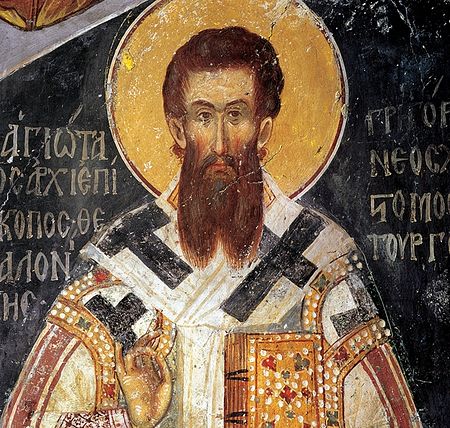
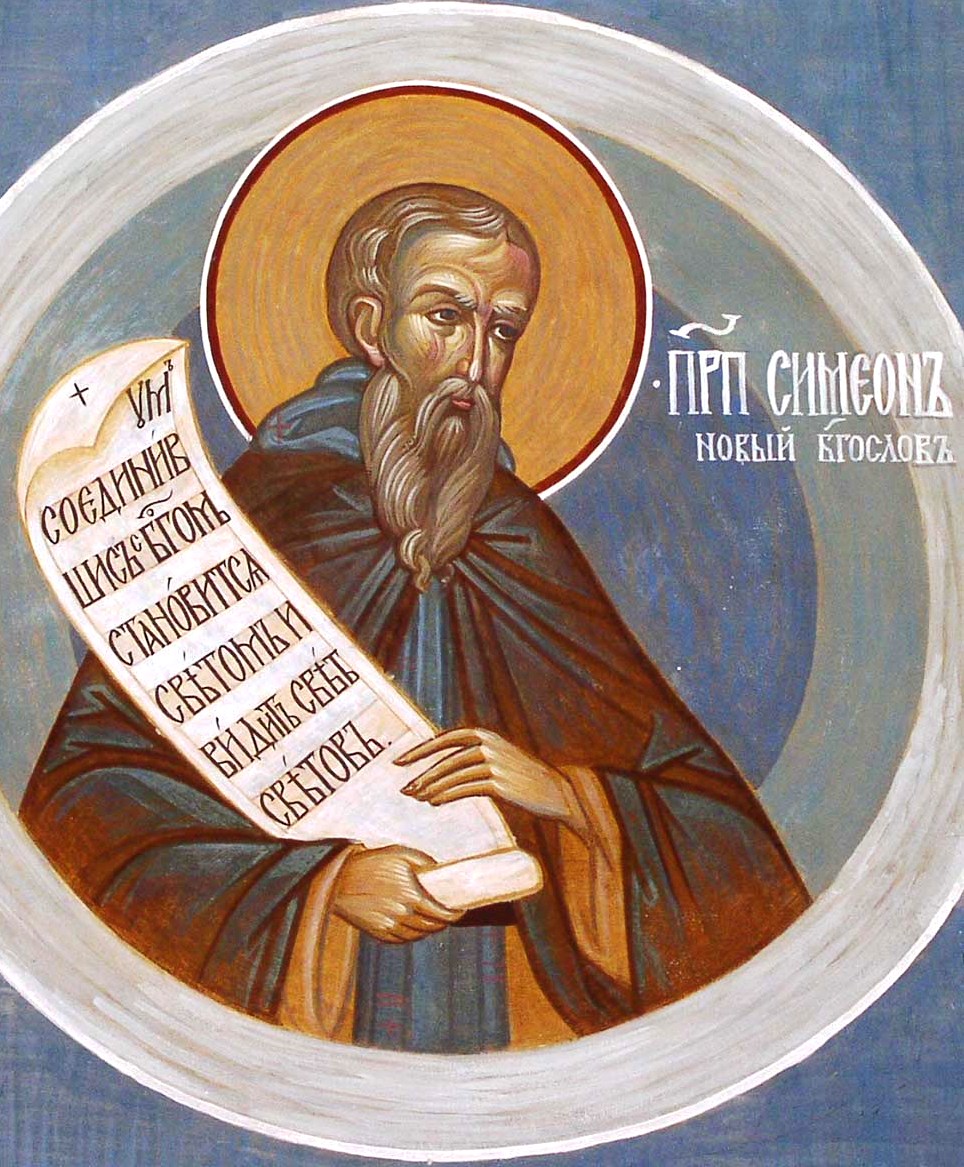
As said before, Baptism - as the beginning of the work of the Holy Spirit in man - is performed to liberate us from original sin and from personal sins. According to St. Symeon the New Theologian, “in Baptism we receive remission of sins, we are freed from the ancestral oath, and we are sanctified by the inspiration of the Holy Spirit. Many Holy Fathers expressed the Orthodox Church’s common belief in the forgiveness of sins that is realized during Baptism. For example, St. Ignatius (Brianchaninov) writes: “In Baptism a person is forgiven the original sin borrowed from the forefathers, and his own sins committed before Baptism”. It is interesting that in the prayers of the rite of the Catechumens (in the so-called “prayers of prohibition”) the deliverance of man from sin is described in the categories of liberation from enslavement to Satan. “Forbid you, devil, the Lord, who came into the world and dwelt in men, that your torment might be destroyed and men be changed… Fear, depart, and depart from this creature, and let not you return, neither let you be hidden in it… Depart from man, and let not you enter into him…”. Thus, the original sin, overcome in Baptism, is understood here not at all as our personal guilt for the once committed sin of Adam (such an idea of “inheriting” our personal guilt for the sin of our forebears directly contradicts the words of the prophet Ezekiel: “The child will not share the guilt of the parent, nor will the parent share the guilt of the child. The righteousness of the righteous will be credited to them, and the wickedness of the wicked will be charged against them.” (Ezek. 18:20), and not at all as a certain propensity of human nature to sin, not as its general corruption, perishability or mortality. Original sin is described in the prayers of the rite of the Catechumens as the universal enslavement of mankind to the devil, which arose as a result of Adam’s sin and inevitably operates in each of his descendants. Original sin is thus here almost synonymous with the name of Satan. Saint Diadochos of Photiki attests to this liberation of man from slavery to the devil through Baptism, “We are reborn in water by the action of the Holy and Life-giving Spirit, whereby we are immediately purified in mind and body, if we come unto God with a full disposition. Thereby the Holy Spirit dwells in us, and sin is cast out by Him … Satan … is cast out of the soul by holy Baptism”. Such a “personification” of sin as operating in fallen man may also be related to the well-known words of St. Paul, who speaks of sin as dwelling within man, holding him in slavery and ruining him, drawing him to transgression against God’s will by a dark spiritual force: “For I do not do the good I want to do, but the evil I do not want to do—this I keep on doing. Now if I do what I do not want to do, it is no longer I who do it, but it is sin living in me that does it. So I find this law at work: Although I want to do good, evil is right there with me.**** For in my inner being I delight in God’s law; but I see another law at work in me, waging war against the law of my mind and making me a prisoner of the law of sin at work within me. What a wretched man I am! Who will rescue me from this body that is subject to death?” (Rom. 7,19-24).
The Conditions for being Baptized
In order to be baptized, a person needs two essential qualities, two states of soul: faith and repentance. The search for Salvation begins with repentance, with a firm conviction that our own strength is not enough to achieve this Salvation, with the feeling that we can be brought out of such a heavy, sad and deplorable state only by Divine power and grace. One of the main tasks of the priest, to whom the person wishing to be baptized comes, is to awaken in his soul this penitential feeling: that the person, having felt his unworthiness and fallenness, at the same time understands that it is in Baptism that all his sins, both original and personal, will be forgiven. The person must understand that not only is he baptized into Christ, but he is also absolved of the sad and shameful burden that rests upon him.
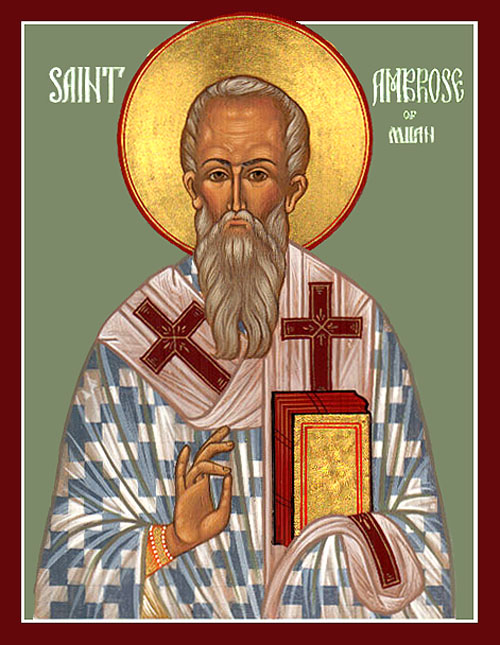
So, since Adam’s fall into sin, the entire human race has been under the dominion of sin. But today we have received a reliable and only possible cure for this spiritual affliction that has seized us-the Sacrament of Baptism. As Saint Ambrose of Milan accurately noted, “There is no man without sin. Therefore only he who resorts to the Baptism of Christ recognizes himself as a man”.
The New Testament also witnesses to the great importance of faith and repentance for man’s entry into the Church: “After John was put in prison, Jesus went into Galilee, proclaiming the good news of God.**** “The time has come,” he said. “The kingdom of God has come near. Repent and believe the good news!” (Mk. 1,14-15); “Peter replied, “Repent and be baptized, every one of you, in the name of Jesus Christ for the forgiveness of your sins. And you will receive the gift of the Holy Spirit.”(Acts 2:38).
We have spoken earlier about the importance of faith for the Christian. But
what is repentance, the repentant feeling in the Orthodox understanding? In
Greek the term “repentance” is “metanoia”, which means a change, a
transformation of the human mind. That is, for a Christian, repentance is a
change of self, a transformation and overcoming of his sinful state,
achieving a new and holy spiritual purity. In Christian perception, there is
a great semantic difference between “remorse” and “repentance”. Judas the
traitor had remorse about his crime, but went and hanged himself, but the
apostle Peter repented and was restored to his apostolic ministry. Remorse
here is simply the traitor’s acknowledgement of his error, which was never
followed by his turning to God; remorse alone was not enough for his inner
transformation, his rebirth. On the other hand, apostle Peter’s completed
repentance led him to spiritual rebirth, to restoration of his former purity.
In our minds, the very notion of repentance is often confused with the spiritual meaning of the Sacrament of Confession. However, it must be remembered that repentance for a person begins, but does not end, with this Sacrament. Strictly speaking, true repentance is carried out in a person’s heart and is completed for him only when he is faced with the choice of whether or not to commit again the sin which he has already confessed. And if he no longer repeats this sin, it means that repentance is really complete; this sin is no longer rooted in his heart, satan has nothing of his own in this Christian. And so, if a man is free from the urge to sin, from the “narcotic” dependence on the sin that dominated him before, if he is rooted in virtue, it means that a change of mind has taken place in him - a change of mind as a change of life.
Baptism in the Church’s understanding is not a private rite , as we often perceive it today. In the ancient Church people were baptized on the most solemn days of the year, on the most important Christian feasts: Baptism itself was then for believers their most important church feast. Newly baptized people, dressed in white robes, went solemnly to the main cathedral, where they took Communion for the first time; the whole congregation prayed and waited for them to come from the baptistery. Today, you and I, alas, do not have that sense of universal jubilation that overwhelmed the ancient Christians when they realized that a new member had joined the Body of the Church, a new person had been born in Christ. And yet, it is important for us to remember that every Baptism, regardless of who receives it-our friend, relative, or even a total stranger-is also our holiday, because we are all together one Body of Christ, and this Body is multiplied through Baptism; the saving change, the transformation occurs not only to the baptized, but also to the whole Church. It is very important to remember that every Sacrament is an event that takes place in the life of an individual Christian as well as in the life of the entire Church.
[1]Святитель Василий Великий. Беседа 13, побудительная к принятию святого Крещения // Святитель Василий Великий. Творения. Т. II. СПб., 1911. С. 193.
Saint Basil the Great. Conversation 13, inciting to the acceptance of holy Baptism // St. Basil the Great. Creations. T. II. SPb., 1911. S. 193.
[1]Сильвестр (Малеванский), епископ. Опыт православного догматического богословия (с историческим изложением догматов). Т. IV. Киев, 1897. С. 351.
(Sylvester (Malevansky), Bishop. Experience of Orthodox dogmatic theology (with a historical exposition of dogmas). T. IV. Kyiv, 1897. S. 351.)
[2]Святитель Афанасий Великий. Слово о воплощении Бога Слова и о пришествии Его к нам во плоти // Святитель Афанасий Великий. Творения. Т.1. М., 1994. С. 260.
(Saint Athanasius the Great. A word about the incarnation of God the Word and about His coming to us in the flesh // St. Athanasius the Great. Creations. T.1. M., 1994. S. 260.)
- The Chrismation.
The Sacrament of Chrismation.
The service of Baptism is followed by the service of Chrismation. During
the Sacrament of Chrismation, the Holy Spirit descends upon the baptized
person. Chrismation is the “fulfillment ” of Baptism - as its completion
and its realization. If Baptism can be compared to the birth or creation of a
new man by God, then the Chrismation gives to the new-born Christian the very
ability to live, breathe, feel and perceive the Divine grace that touches him
and sanctifies his entire being. According to the martyr Cyprian of Carthage,
“The birth of Christians takes place in Baptism… One is born not by laying
on of hands, when he receives the Holy Spirit, but in the Baptism of the
Church; and the Holy Spirit is received after being born, as it was already
done for the first man Adam; God first formed him from the dust of the ground,
and then breathed into his nostrils the breath of life (Gen. 2:7). For the
Spirit cannot be received unless first there be a receiver” [1]. The very
Beginning of Life, the Holy Spirit dwells and works in man, giving him true
being, filling him with His sanctifying breath. 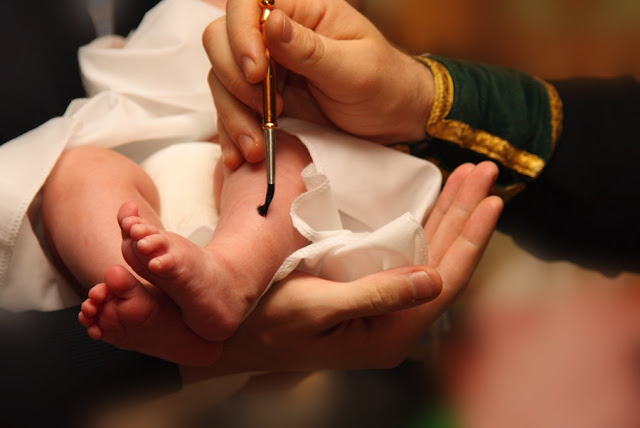
We remember well the two New Testament events directly related to these two Sacraments, the Baptism and the Chrismation: the death on the Cross, followed by the Resurrection of Christ, which for all is realized personally in Christian Baptism, and the descent of the Holy Spirit upon the Apostles on the fiftieth day after the Resurrection of Christ, the Descent to which we are united during the Chrismation. These are two of the most important components of the Church history, two events with which each of us is in close contact through participation in the Sacraments of the Church, and through which we walk the path of Salvation.
During the sacrament of Chrismation, the same thing happens to us that happened to the apostles in the Cenacle, when the Holy Spirit descended upon the Mother of God and the disciples. In their outward, visible form, the two events are markedly different: once, almost two thousand years ago, the descent of the Holy Spirit took place in the form of the descent of tongues of fire ; nowadays, it takes place through the Chrismation in the form of a cross. At the same time, we must remember that today, in the same measure as then in Jerusalem, the Holy Spirit descends upon the Christian at the Chrismation, sanctifying him, making him a receptacle of His gracious fiery presence. The sacrament of Chrismation is our personal Pentecost.
To receive the Holy Spirit, to receive the vocation of a member of the Christ’s Church, is possible only for a person whose true nature has already been restored in Christ: this is why Baptism precedes Chrismation. In fact, there is only one case known in Holy Scriptures when, on the contrary, the descent of the Holy Spirit preceded Baptism: that of Cornelius the centurion. The Holy Spirit first came upon him and those who believed in Christ with him, and then they were baptized (Acts 10).
Chrismation is, on the one hand, the gift of the Holy Spirit, the indwelling of the Holy Spirit in a person, and, on the other hand, spiritual gifts of grace given to us as a kind of spiritual food. Every infant needs material food for its physical growth. But spiritual growth of the “newborn” Christian, born in the baptismal font, requires spiritual nourishment, the work of God’s grace: nourishing and helping us to grow spiritually.
“You … are God’s special possession,” says the apostle Peter, addressing all
Christians in his First Epistle (1 Peter 2:9). These words of the Apostle
Peter are realized in the Sacrament of Chrismation. Chrismation is also the
acceptance of the person, participating in the sacrament, into God’s
possession. Through the Sacrament of Chrismation, one is truly anointed into
the Kingdom of Heaven. According to the canon of the Laodicean Council,
dedicated to the spiritual meaning of this Sacrament, “Those who are baptized
must be anointed with the Chrismation of heaven and to be partakers of the
kingdom of God” [3]. 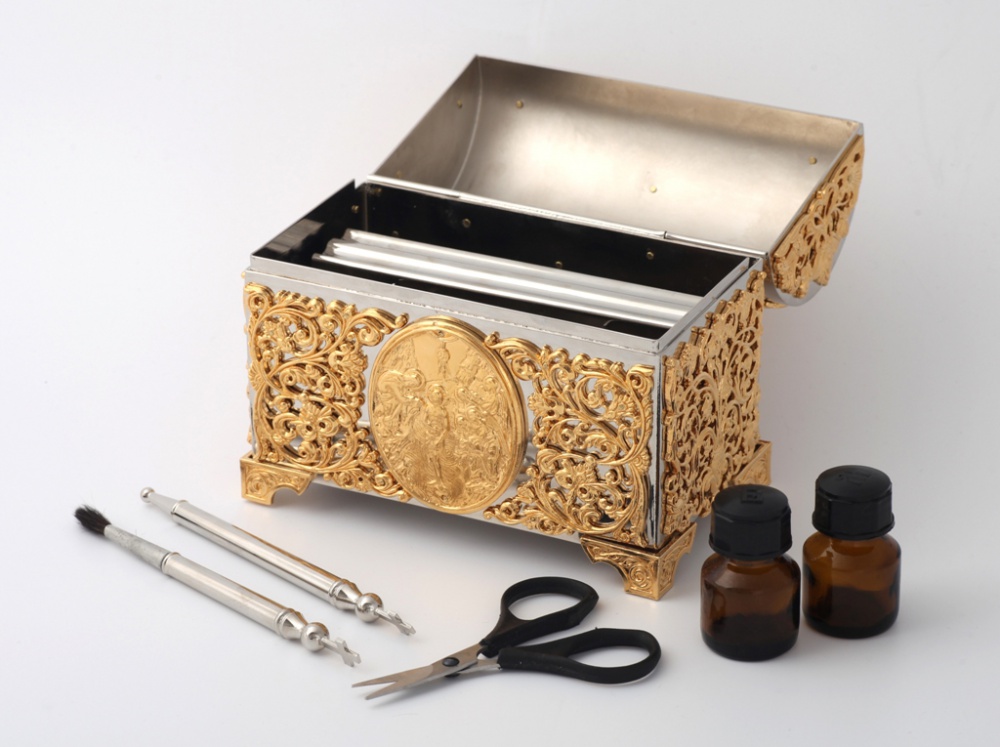
We find a number of New Testament evidences of the Holy Spirit’s work being realized in Christians through their participation in a personal Pentecost - the Chrismation. For example, apostle John the Theologian quotes the Savior’s words and then explains them: “Let anyone who is thirsty come to me and drink. Whoever believes in me, as Scripture has said, rivers of living water will flow from within them.” By this he meant the Spirit, whom those who believed in him were later to receive. Up to that time the Spirit had not been given, since Jesus had not yet been glorified.” (John 7:37-39) The glory of Christ appeared and was realized in His ultimate humiliation - crucifixion, death, and in His victory over sin and hell - in the Resurrection. The visible manifestation of this glory of Christ to man was also realized in His Ascension. The Ascension was one of the conditions for the granting of the Holy Spirit to the apostles. In His last talk to His disciples, Christ said to them: “for if I go not away, the Comforter will not come to you; but if I depart, I will send him to you.” (John 16:7), which means that if the Lord does not ascend to the Father, He will not send the Holy Spirit to the apostles either. And only after the Ascension of Christ did the flaming tongues of the Holy Spirit descend on His disciples in the Cenacle.
We should not confuse the perception of the Holy Spirit as a personal Hypostasis , the Third Person of the Holy Trinity, with the gifts of the Holy Spirit , by which the Holy Fathers often understand the impersonal and common Holy Trinity’s grace. Grace is always given to man by the Holy Spirit in the sense that the Spirit is always the concluder of the Divine providential actions, but that all Three Persons of the Holy Trinity always act together, although in a manner appropriate to each of them. Saint Athanasius the Great writes: “…we may say that the Father is the spring, the Son is the river, and from the river we drink of the Spirit. For it is written, “and we were all given the one Spirit to drink” (1 Cor. 12:13) [4]. We must remember that this image of the Holy Trinity is of course conditional and imperfect, like all symbolic images that pretend to express the mysteries of the Holy Trinity. At the same time, the image that Saint Athanasius gives us helps us, to a certain extent, to understand what happens to us during the Chrismation: the bestowal of Divine grace common to the whole of the Holy Trinity. And yet during the Chrismation we receive not only the grace of God as the one gift of the whole Holy Trinity. During this personal Pentecost, we also become the temple of God, because from now on the Spirit of God, the Third Person of the Holy Trinity, personally dwells in us. This is accomplished according to the words of the Apostle Paul: “Do you not discern and understand that you are God’s temple, and that God’s Spirit has His permanent dwelling in you?”(1 Cor. 3:16).
Thus, during the Chrismation , just as during the descent of the Holy Spirit upon the apostles on the day of Pentecost, the Third Person of the Holy Trinity begins to dwell personally in the anointed , making him His Temple. According to Saint Gregory the Theologian, the Holy Spirit, after the Day of Pentecost, is not only “present in action as before, but is essentially present … coexisting and cohabiting” [5] in the Christian. The remarkable theologian of the XII Century, Bishop Nicholas of Methone, also testifies to this personal indwelling of the Holy Spirit in Christians since Pentecost: the Holy Spirit “at Pentecost descended upon the Apostles essentially, clearly and separately, in other words the very Hypostasis of the Spirit descended. For it was neither the Father nor the Son, but the Spirit Himself which was seen in the form of tongues of fire and separating” [6].
The gift of the Holy Spirit received during the Chrismation is something that cannot belong to our created human nature. Man was created in order to attain, with God’s help and grace, this gift as the union of love between the Creator and His creation and through this to achieve deification. The Apostle Paul writes, “Now it is God who makes both us and you stand firm in Christ. He anointed us,**** set his seal****of ownership on us , and put his Spirit in our hearts as a deposit, guaranteeing what is to come.”(2 Cor. 1:21-22). These words about our being sealed by the Spirit refer to the most important, indeed central, words in the service of the sacrament of Chrismation: “the seal of the gift of the Holy Spirit ”.
We know very well what the word “seal” means in its everyday meaning. A seal is put on documents to verify their authenticity, a seal certifies that a person owns something, a seal prevents unauthorized people from reading someone else’s letters, a seal seals a crime scene so that no one can illegally enter there and damage or steal any possible evidence.
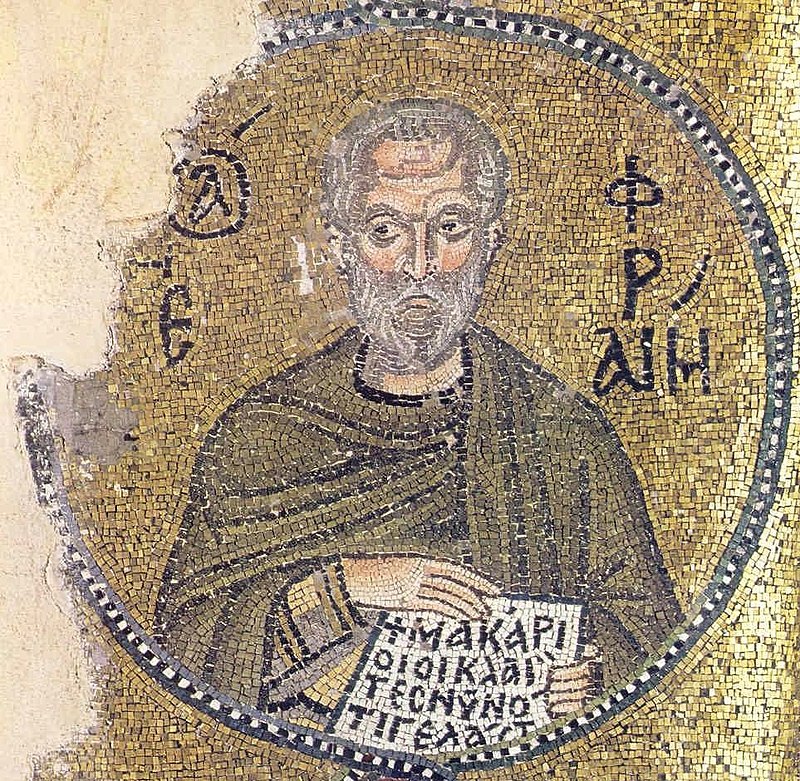 All
these modern, commonplace meanings of the word “seal” are quite in harmony
with some of the Holy Fathers’ interpretations of the meaning of sealing a
Christian with the seal of the Chrismation. Saint Ephrem the Syrian says:
“…with the seal of the Holy Spirit are sealed all the entrances into your
soul, with the seal of Chrismation are sealed all your members” [7]. The doors
of our souls are firmly “sealed” by the Holy Spirit during the Chrismation,
and it is difficult for satan to penetrate our “inner man” (cf. 2 Cor. 4:16),
unless we ourselves break this seal with our sins. St. Gregory the Theologian
says: “…if you seal yourself with a seal, securing your future by the best
and most real help, marking your soul and body with the Chrismation and the
Spirit, as Israel with the blood and Chrismation of the firstborn (Exodus
12:13); then what can happen to you? [8]. You will recall that when the angel
passed through Egypt on the night of the first Old Testament Passover and
smote the firstborn of Egypt, he did not touch the Jewish firstborn,
recognizing their homes by a peculiar “seal”: the Jews anointed the doorjambs
with the blood of sacrificial lambs. This event is also an Old Testament
example of the fact that God will recognize His sons, faithful children, at
the hour of judgment awaiting us all by His seal of Chrismation and will not
allow them to perish, provided, of course, they keep this seal intact. St.
Basil the Great, speaking of what awaits man after his death, says: “…how
will the angel take you to himself, how will he snatch you from the enemy, if
he does not know the seal… Or do not you know that the angel passed over the
houses sealed and killed the firstborn in the houses unsealed? Unsealed
treasure is conveniently stolen by thieves, the unsealed sheep can be safely
lured away” [9].
Chrismation gives the gift of understanding the Truth of Christ. The Holy Spirit, Who enters us, teaches us to understand Scripture, to understand Church teaching, to understand what happens during the Sacraments; the Spirit Himself teaches us everything, because the Holy Spirit lives in us and gives us a new mind, a new prayer, a new way of understanding the ways of salvation. As apostle John the Theologian says in his First Epistle, “But you have a Chrismation from the Holy One, and all of you know the truth. <…> “As for you, the Chrismation you received from him remains in you, and you do not need anyone to teach you. But as his Chrismation teaches you about all things and as that Chrismation is real, not counterfeit — just as it has taught you, remain in him.” (1 John 2:20, 27). Of course, this does not mean that we must rely only on our “inner voice” and not on the advice of our spiritual leaders and teachers, expecting that the Lord Himself will somehow teach us everything. Such an action of divine grace is, of course, known to us from the history of Orthodox holiness, but it was accessible only to the highest Christian ascetics, who had no theological education, but who had a fine understanding of the Orthodox dogma (such, for example, was Saint Silvanus (Siluan) of Athos). We, on the other hand, can be enlightened by the Holy Spirit as if “indirectly”: through our participation in church services, through our spiritual fathers’ advices, through reading Holy Fathers’ writings, learning with God’s help what is most important for our salvation and gaining new strength to follow this path thanks to the gift of our personal Pentecost.
Related Concepts
- 1-corinthians-1545
- 1-corinthians-316
- 1-timothy-316
- 2-corinthians-121-22
- 2-peter-14
- abraham
- acts-238
- adams-disobedience
- adoption
- ambassador-for-christ
- apostles
- baptism
- body-of-christ
- bondage
- calvinism
- catechumens
- cenacle
- chrismation
- christ
- christ-as-true-god-and-true-man
- christs-obedience
- church-life
- church-membership
- clement-of-alexandria
- cloud-of-witnesses
- co-crucifixion
- concupiscence
- conversion
- council-of-ferrara-florence
- council-of-trent
- death-and-resurrection
- devil
- enlightenment
- ezekiel-1820
- faith
- fall
- first-communion
- freedom
- fruitless-fig-tree
- god-as-father
- gods-forbearance
- holy-spirit
- holy-trinity
- hope
- human-nature
- image-and-likeness
- inaugurated-eschatology
- infant-baptism
- initiation
- john-112-13
- john-35
- judgment
- kingdom-of-god
- mark-114-15
- material-means
- maximus-the-confessor
- metanoia
- new-birth
- new-life
- obedience
- orthodox-critique
- ownership
- pentecost
- perseverance
- pioneer
- positive-redemption
- prodigal-son
- protection
- remorse
- resurrection
- revelation
- revelation-211
- romans-512
- romans-6
- romans-7
- sacramental-economy
- sacramental-theology
- salvation
- satan
- seal
- seal-of-god
- sinlessness-of-christ
- st-athanasius
- st-augustine
- st-basil-the-great
- st-john-cassian
- st-john-chrysostom
- supernatural-birth
- temple-of-god
- temporal-mission
- the-two-ways
- triple-immersion
- union-with-christ
- valid-sacraments
- zions-restoration