History of the Russian Orthodox Church — Topic 15
The Russian Orthodox Church under Nicholas II. Local Council of the
Russian Orthodox Church 1917-1918. The Russian Orthodox Church in 1917-1940.
- The Russian Church during the reign of Nicholas II
- The Local Council of the Russian Orthodox Church 1917-1918
- The Russian Orthodox Church in 1917-1940
The Local Council of the Russian Orthodox Church 1917-1918
Preparations for the Local Council began long before its opening. As early as 1905 voices in the ranks of the hierarchy, clergy and laity began to be heard in favour of giving the Church independence from the state. The oppressive synodal system was increasingly causing discontent. There was support for the restoration of the patriarchate as the most acceptable form of government of the life of the Church. Emperor Nicholas II was invited to convene a Council of Bishops on 22 March 1905 to discuss these problems. Paying lip-service to the proposal, the Tsar in fact kept postponing the summoning of the council, citing “bad timing”. The question was delayed even more actively by the unfavourable political situation in the country. Feeling an increasing danger to his authority, the Tsar made certain concessions to the Church: on January 16, 1906, the Presidium of the Council was approved and its members were to draw up an agenda for the Council. However, nine months later, when the situation in the country came to a visible normalcy, by imperial decree the work of the Presidium was stopped. It was not until 28 February 1912 that a permanent Presidium was instituted as part of the preparations under the Holy Synod. Its work continued until the opening of the Local Council in 1917.
By its composition the Council was very representative. All members of the Russian episcopate, professors of ecclesiastical academies, members of the Academy of Sciences and the State Duma, etc. were present. There were also representatives of the Romanian and Serbian Churches. However, despite this qualitatively non-monolithic composition of the Council, questions of a dogmatic and canonical nature (after consideration by the entirety) were only subject to approval by the Hierarchical Council. The Local Council opened in the Assumption Cathedral of the Kremlin on 15 (28) August 1917. The solemn liturgy was celebrated by Metropolitan Volodymyr of Kiev1, accompanied by Metropolitans Veniamin of Petrograd and Platon of Tiflis. The process began three days later at the Moscow Diocesan House. Metropolitan Vladimir of Kiev was confirmed as Honorary Chairman. Metropolitan Tikhon (Belavin), the Bishop of Moscow, presided (by right of master). The Council was composed of the Chairman of the Council and his deputies, Archbishops Arseny (Stadnitsky) of Novgorod and Anthony (Khrapovitsky) of Kharkov, Protopresbyters N. A. Lyubimov and G. I. Shavelsky, Prince E. N. Trubetskoy and the Chairman of the State Council M. V. Rodzyanko, who was replaced by A. D. Samarin in February 1918.
The last days of the Provisional Government, which was increasingly losing control not only of the country but also of the demoralised army, became the context of the council deeds. Soldiers deserted en masse from the front, killing officers, committing riots and looting. The Council formed 22 divisions, which prepared reports and draft resolutions that were presented at the meetings. The most important divisions were the Statutes Division, the Supreme Church Administration Division, the Diocesan Administration Division, the Department of Parish Improvement and the Legal Status of the Church in the State. Most of the departments were headed by bishops. The main theme of the Council was still the restoration of the patriarchate. With each day of work, it gained more and more adherents. However, at the plenary sessions this question was very seriously criticised. Proponents of the synodal system expressed the fear that the establishment of the patriarchate might stifle the principle of conciliarity in the life of the Church. Among the arguments against patriarchy were ostensibly dogmatic arguments, such as that the figure of the Primate was a middle ground between the faithful people and Christ. There were also politically tinged arguments that the Patriarchate was illiberal. The supporters of the restoration of the Patriarchate recalled the state collapse and the sad state of people’s morals, for which reason, they said, “we should not hesitate to elect the spiritual guardian of our conscience, our spiritual leader, the Holy Patriarch, for whom we will go to Christ”.
M.N. Speransky (Academician) noted a deep inner connection between the existence of the primatial throne and the spiritual countenance of pre-Petrine Russia: “While in Holy Russia we had the supreme pastor…, our Orthodox Church was the conscience of the state… The precepts of Christ were forgotten, and the Church in the person of the Patriarch boldly raised her voice, no matter who the transgressors were…”. Thus, the argument “for” was the tradition of perceiving the Patriarch as a personified national reflection, the people’s conscience. As a result of the debate, the Local Council decided by a majority vote:
- In the Orthodox Russian Church, the supreme power - legislative, administrative, judicial and supervisory - belongs to the Local Council, convened periodically, at fixed dates, consisting of bishops, clergy and laity.
- Patriarchy is restored, and the administration of the Church is headed by the Patriarch.
- The Patriarch is the first between the bishops who are his equals.
- The Patriarch, together with the organs of church government, is accountable to the Council.
The Council proposed a procedure for the election of the Patriarch: on the first ballot, the Councilors submit notes with the name of their proposed candidate for Patriarch. If one candidate receives an absolute majority of votes, he or she is elected. If no candidate receives more than half of the votes, a second ballot shall be held in which the names of the three persons nominated shall be submitted. The person obtaining a majority of votes shall be regarded as elected as a candidate. The ballot shall be repeated until three candidates have obtained a majority. Then the Patriarch will be chosen from among them by lot. On 30 October (12 November) 1917 a ballot was held. Archbishop Antony of Kharkov received 101 votes, Archbishop Kirill (Smirnov) of Tambov 27 and Metropolitan Tikhon of Moscow 22. After four rounds of voting the Council chose Archbishop Antony of Kharkov, Archbishop Arseniy of Novgorod and Metropolitan Tikhon of Moscow as candidates for the primatial throne. Archbishop Antony, a brilliantly educated and talented church writer, was a prominent church figure in the last two decades of the synodal era. A long- time advocate of patriarchy, he was supported by many at the Council as a fearless and experienced Church leader. Another candidate, Archbishop Arseny, was an intelligent and commanding hierarch who had many years of church- administrative and governmental experience (formerly a member of the Council of State). Saint Tikhon, however, relied on God’s will for everything. He did not strive for patriarchate, but was prepared to take up the feat of the cross, if the Lord called him.
The election took place in the Church of Christ the Saviour on 5 (18) November. At the end of the Divine Liturgy, Metropolitan Volodymyr of Kiev took the reliquary with lots to the ambo, blessed the people with it and removed the seals. Out of the altar came the blind starets Monk Alexius2. Having prayed, he drew lots from the reliquary and handed it to the metropolitan. The saint read aloud: “Tikhon, Metropolitan of Moscow - axios!” The enthronement of the Patriarch took place on November 21 (December 3) on the Feast of the Presentation in the Assumption Cathedral of the Kremlin. The staff of St. Peter, the cassock of the holy martyr Patriarch Hermogenes, and the mantle, mitre, and visor of Patriarch Nikon were taken from the Armoury for the enthronement celebration. The restoration of patriarchy was not the end of the transformation of the whole system of Church government. The documents “On the Rights and Duties of the Holy Patriarch…”, “On the Holy Synod and the Supreme Council of the Church”, etc., were adopted.
The Council granted the Patriarch rights in accordance with canonical norms:
To have the care of the welfare of the Russian Church and to represent it before the state authorities;
- to communicate with the autocephalous Churches;
- to address the all-Russian flock with teaching messages;
- to take care of the timely replacement of bishops’ cathedrae;
- to give the bishops fraternal advice.
The Patriarch, in accordance with the Council’s Decisions, is the diocesan bishop of the Patriarchal Region, which consists of the Moscow diocese and the stauropegial monasteries. The Local Council formed two bodies of collegial governance of the Church in the intervals between Councils: the Holy Synod and the Supreme Council of the Church. The jurisdiction of the Synod covered hierarchical, pastoral, doctrinal, canonical, and liturgical matters, while the High Council was responsible for church and social affairs: administrative, economic, and educational. Finally, questions of especial importance, such as those concerning the protection of the rights of the Church, the preparations for the next Council and the opening of new dioceses, were to be decided jointly by the Holy Synod and the Supreme Ecclesiastical Council.
On November 13 (26), 1917, the Council began its deliberations. The Council began to discuss the report on the legal status of the Church in the State. The report was delivered by Professor S. N. Bulgakov. The report provoked a heated discussion. The main decisions on the issue were the following theses: “The Orthodox Russian Church occupies in the Russian state a primary public legal position among other confessions, befitting it as the greatest shrine of the vast majority of the population and as the greatest historical force, which built up the Russian state. The Orthodox Church in Russia is independent of the state power in the teaching of faith and morals, in divine services, in internal church discipline and in relations to other autocephalous Churches… Regulations and directives issued by the Orthodox Church for itself, as well as acts of church government and courts, are recognized by the State as legally valid and significant insofar as they do not violate State laws … State laws relating to the Orthodox Church are not issued except by agreement with the church authority… The Head of the Russian State, the Minister of Confessions and the Minister of National Education and their companions must be Orthodox … Property belonging to the establishments of the Orthodox Church shall not be subject to confiscation…”. It is important that the Church in the person of the Council has proclaimed its independence from state power in matters of faith and of its inner life. The Church is guided only by its dogmatic teaching and canons.
On 25 October (7 November) the Provisional Government fell and Soviet power was established in the country. Street fighting broke out in Moscow between the Junkers occupying the Kremlin and the revolutionary insurgents in whose hands the city was. In an attempt to stop the bloodshed, the Council sent a delegation to negotiate with the military revolutionary committee and the Kremlin commandant’s office. The delegation was led by Metropolitan Platon. However, these peacemaking efforts were fruitless. Here is how Metropolitan Evlogy recalled those days: “In those bloody days a great change took place in the Council. Petty human passions subsided, hostile bickering died down, alienation vanished … The Sobor, which at first resembled a parliament, began to transform into a genuine “Church Council,” into an organic whole united by one aspiration for the good of the Church…”.
The second Sobor council began on January 20th 1918 and lasted until April 7th (20th). It was held in the building of the Moscow Theological Seminary. The beginning of the Civil War made it difficult to move around the country and only 110 members of the Sobor could be present at the Sobor session on 20 January, which didn’t guarantee a quorum. The Council was therefore forced to adopt a special resolution: to hold sittings with any number of Council members present. The main subject of the second session was the organisation of diocesan administration. Serious controversy erupted over the provision that a bishop “shall rule the diocese with the conciliar assistance of the clergy and laity”. Amendments were proposed. Some sought to emphasise more sharply the authority of the bishops as successors to the apostles. Others proposed that clerics and laity be given greater rights in deciding diocesan affairs. The Bishops’ Conference concluded: “The diocesan bishop, in continuity of authority from the holy apostles, is the Primate of the local Church, governing the diocese with the conciliar assistance of the clergy and laity.
The Council set the age limit for bishop candidates at 35 years of age. According to the “Outline on Diocesan Administration”, bishops were to be elected “from among monks or persons of white clergy and laity who were not married, and for both the clergy and laity the habit of taking monastic vows was mandatory”. According to the “Definitions”, the body through which the bishop rules the diocese is the diocesan assembly, elected from among the clergy and laity for a three-year term of office. The diocesan assemblies in turn form their own permanent executive bodies: the diocesan council and the diocesan court. The most extensive of the Council’s resolutions is the “Definition of the Orthodox Parish” (Parish Statute). The definition of a parish was given: “A parish… is a society of orthodox Christians, consisting of clergy and laity, residing in a particular area and united at the church, forming part of the diocese and under the canonical authority of its diocesan bishop, under the direction of the appointed priest-principal”. The Council declared that the sacred duty of a parish was to take care of the maintenance of its sanctuary - The Сhurch.
The “Charter” allowed the parishioners to elect churchwardens, who were responsible for the acquisition, preservation and use of the church property. To solve the issues related to the church upkeep, to provide for the clergy and to elect the parish officials, it was proposed to convene the Parish Assembly at least twice a year, whose permanent executive body was to be the Parish Council, consisting of the clergy, the churchwarden or his assistant, and several laymen - chosen by the Parish Assembly. The Chairman of the Parish Assembly and the Parish Council was vested in the rector of the Parish.
The civil war which engulfed the territory of the former empire as well as the red terror in the provinces marked the beginning of the new government’s attack on the Church. On January 25 (February 7) 1918, Metropolitan Volodymyr was murdered in Kiev. In connection with this news, the Council decreed:
“1. That special petitions be established in the churches during Divine Services for those now persecuted for the Orthodox Faith and the Church and for the confessors and martyrs who have ended their lives …
2. To establish throughout the whole of Russia the annual prayerful commemoration of the confessors and martyrs.
At a closed session on January, 25, 1918 it was decided, that “in case of illness, death and other unfortunate circumstances for the Patriarch, he should be invited to elect a number of guardians of the Patriarchal Throne who would guard the power of the Patriarch and succeed him in the order of precedence”.
The last, third, session of the Council lasted from June 19 (July 2) to September 7 (20), 1918. It continued working on the drafting of the “Resolutions” on the activities of the supreme organs of the Church government. There the work on the drafting of the Resolutions on the Procedure for the Election of the Holy Patriarch was continued.
One of the most important decisions of the third session of the Council was the Resolution on Monasteries and Monastics. It stipulated the age limit for taking monastic vows - not less than 25 years; the blessing of the diocesan bishop was required in order to take monastic vows at a younger age. The ruling restored the ancient custom of having the abbots and vicars elected by the brethren, so that the diocesan bishop, if he approved the choice, would submit him to the Holy Synod for confirmation. The Local Council stressed the preference of monasticism and recommended that all monasteries, wherever possible, should have a monastic charter. The most important concern of the monastic authorities and brethren must be the strictly statutory divine service, “without omission, without replacement by the recitation of what is to be sung, and accompanied by the word of edification”. All of the monastic brethren were required to be industriously obedient.
At its final session on 7 (20) September 1918. The Council decided to convene a regular Local Council in the spring of 1921. Working for more than a year, the Council did not exhaust its program: some divisions did not manage to elaborate and submit agreed reports to the plenary sessions. A number of Council Resolutions could not be carried out due to the socio-political situation in the country. The significance of this Council is epochal. It marked the beginning of a new and qualitatively different page in the history of the Russian Orthodox Church. The restoration of the Patriarchate was the main (but not the only) fruit of the Council. In the face of the coming 70-year turmoil it became the factor which preserved Orthodoxy in Russia. As in the 17th century, the Patriarchate was a means of strengthening the Church and preserving its internal unity.
In addition, the Church was able to purify itself of all extraneous matters and correct the deformities accumulated during the long period of synodal inertia. It was an example of extraordinary courage, canonical firmness and fidelity to the dogmatic and moral teachings of Christ under unprecedented historical conditions. The foundations which were laid in 1917-1918 were in many ways ahead of their time, and for a long time (in some respects, right up to this day) have determined the course of life of the Russian Church through the darkness of the twentieth century.
The Russian Church during the reign of Nicholas II
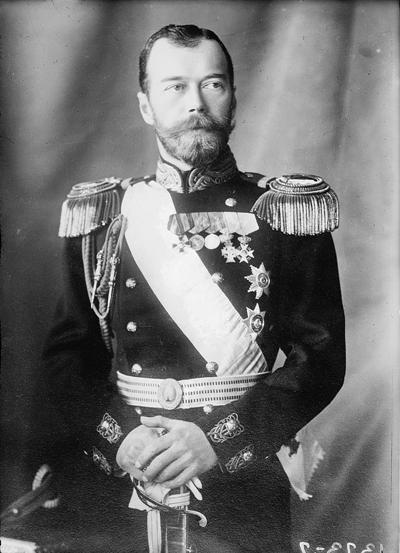
In 1894 Nicholas II, the last Russian monarch, ascended the imperial throne. His reign coincided with the turn of the century and with it the beginning of a new turmoil in Russia. It began to make itself known at the end of the nineteenth century and became particularly pronounced at the beginning of the twentieth century. It was not only a socio-political crisis, but, as in the 17th century, it was a complex crisis that affected all aspects of the life of the state and the people in it. And above all it was a spiritual tragedy. There were characteristic trends within the Church at that time: some of the hierarchs became increasingly involved in worldly matters and in their eagerness to free themselves from the tutelage of the state they inevitably became involved in politics. In the ranks of the clergy reformers, liberals and even revolutionaries began to appear (priest George Gapon3 is a vivid example). Theological academies and seminaries more and more often graduated not clergymen, but revolutionaries from their walls. The reason for this was not only the “depravity” of the young students, but often the inability or unwillingness of the heads of the spiritual schools to fight for the souls of future clergymen.
The desire of some parts of the clergy to keep up with the times, the partial politicization of the clergy, on the other hand, led to a loss of authority and an erosion of trust in the priesthood. Metropolitan Veniamin (Fedchenkov) said later that many Orthodox priests and hierarchs in the early 20th century were no longer “salt of the salt” and could not “salt” others. Without denying the striking examples among the clergy, Metropolitan Veniamin regretted that “for the most part we were becoming ‘claim-bearers’ rather than burning torches”. At the start of the 20th century, the Russian Orthodox Church had more than 100 bishops, over 50,000 parish churches, about 100,000 white clergy, including priests and deacons, 1,000 monasteries, 50,000 nuns4. But parishes and clergy were clearly in short supply. There was an even greater shortage of higher theological educational institutions.
The Emperor Nicholas II himself, as an Orthodox Christian, took very close to heart the cares and needs of the Church, in which he saw the best support and backing for his autocracy. At the very beginning of his reign steps were taken to improve the life of the Church. At the personal initiative of the Tsar, the Venerable Seraphim of Sarov was canonized5. His canonization was the beginning of the glorification of many Russian saints. Among them are St. Joasaph of Belgorod, St Princess Anna of Kashinsk, Holy Martyr Patriarch Ermogen, St. John of Tobolsk, St. Euphrosyne of Polotsk. During the reign of Nicholas II more saints were glorified than during all previous reigns. Many churches and monasteries were built at the same time. The number of churches, for example, increased by 10 thousand to 57 thousand by 1917 and the number of monasteries by more than 250 (by 1917 there were 1025). The monarch himself and his family were an example of piety and deep faith. They donated personal funds for the construction of temples, often attended church services, kept fasts, and regularly took communion. Nicholas II helped the spiritual-educational missionary work among the Tatars of Kazan Diocese, where the first ten students were maintained at his expense; the Orthodox Mission in Japan, the Palestinian Orthodox Society was maintained using royal money, temples were built in the Holy Land.
However, the nature of the monarch’s personal religiosity, for all its outwardly traditional Orthodoxy, was more of an inter-confessional mysticism. The coldness of the royal family, chiefly the Tsarina, towards the Russian clergy is well known; even with the highest hierarchs the interactions of the Tsar and Tsarina were diplomatically official. Contemporaries noted that Nicholas II was very thoughtful about his anointed office. From his father Alexander III, whom he tried to imitate in everything, he took an unshakable faith in the destiny of his power. His calling came from God. His actions only followed his conscience and the Almighty.
The beginning of the 20th century in the life of the Russian Church was marked by a movement for reform in church government; a significant part of the bishops and some laypeople advocated independence of the Church from the state. The “Bloody Sunday” of 9 January 1905 exacerbated the situation, which was becoming explosive. Sensing this, the Orthodox hierarchs also raised their voices, expressing their dissatisfaction with the Church’s denigrated position within the state. After the events of January, a Special Council was set up of Cabinet of Ministers under the chairmanship of Count S.Y. Witte. Metropolitan Anthony Vadkovsky was introduced into it, as was V. K. Sabler, comrade of the Chief Procurator. Vladyka Antony requested that “the constant tutelage and overly vigilant control of secular power over the Church, which deprives it of independence and initiative, should be removed or at least somewhat relaxed”. A note (authored by the professorial corporation of the Moscow theological academy) was submitted for discussion on the present situation of the Orthodox Church, with sharp criticism of the Ober-Prosecutor’s arbitrariness. The question was transferred to the Synod, and on 22 March 1905 the Emperor received a proposal to convene in Moscow a Council of Bishops to elect a Patriarch. A week later the Tsar agreed in principle to the convocation of a council, but only “when the time was favourable for this purpose”.
It must be said that the time was most favourable. The diocesan bishops in their comments on the state of church affairs decisively supported the convening of a council. It was expected that it would take place no later than autumn 1905. The social aggravation in the country prompted him to act (let us not forget that Nicholas wished to see the Church as an ally, a support). In December the situation heated up (an armed uprising at Krasnaya Presnya on 17 December), and the Tsar suggested to Metropolitan Anthony (Vadkovsky) “that the time of the convocation of a council be determined”. On January, 16, 1906 for its preparation the structure of Presobornoe Presence (Pre-Sobor council) has been confirmed. It was headed by Metropolitan Anthony (Vadkovsky). It met in Alexander Nevsky Lavra for 9 months. By a majority of votes the question of electing a Patriarch was resolved. In April 1907, however, by order of the Emperor, the Synod suspended the Priesthood. All matters were transferred to the Synod. In effect, this was a dispersal of the Presence. The Tsar demanded documents and materials. The reasoning was that the Tsar “found the convening of a council to be untimely”. The mood was different: the situation in the country was stabilizing and the new prime minister - Stolypin - was against the council and the patriarchate. Work resumed only 5 years later - on February 28, 1912, when a permanent Pre-Sobor council was established under the Holy Synod.
The nature of the synodal system had also changed. On 1 March 1916 the Emperor decreed that “from now on the reports of the Chief Procurator to His Imperial Majesty on matters concerning the internal order of Church life and the substance of Church government should be made in the presence of the senior member of the Holy Synod, in order to provide comprehensive canonical coverage”, which was a step towards eliminating the imbalance within the synodal office, and was hailed by the conservative press as “a great act of imperial trust”. It was, however, only a small, almost imperceptible correction on the enormous scale of the whole suppressed Church organism. Being deeply religious, Nicholas II still did not dare to make radical changes in this area. Not only did he not abolish the anti-canonical leadership and rule of the Church by a layman (the Emperor), introduced according to the Protestant model, and its actual subordination to the chief prosecutors, the tsar’s minions and Rasputin, which manifested itself in their interference in any, including purely internal affairs, but he exacerbated its oppressive position with the reforms of 1905-1906. As a result, the Russian Church was the only one of all the religious associations which, under the new laws, did not receive any freedoms, remaining a state “department”.
The personality of Grigory Rasputin in the life of the last Russian Emperor is very significant. In 1902 he was in St. Petersburg, where by chance he met with Bishop Sergius (Stragorodsky), who was then rector of the St. Petersburg Theological Academy. Through him, Rasputin became acquainted with many influential people, including those in the tsar’s inner circle. His personal charisma, religious fanaticism, and exaltation successfully attracted people to him, especially women. Thus, the wife of Grand Duke Nikolay Nikolaevich, Anastasia Chernogorskaya6, introduces Grigory to the Tsar’s family. He gains great confidence at court and enormous influence over the Empress Anastasia Fiodorovna7. Guided by the advice of the “elder” and the influence of his wife Emperor appointed and removed about 20 ministers8. Rasputin interfered in the affairs of the Synod. He appointed and dismissed the bishops. With his assistance Pitirim (Oknov) was elevated to the St. Petersburg cathedra in 1915, replacing his opponent, Vladimir (Bogoyavlensky). A similar fate befell Bishop Hermogen of Tobolsk, who was exiled to Zhirovitsy9. Barnabas (Nakropin) was appointed in his place. Rasputin secured the dismissal of Chief Procurator F. Samarin10.
In general, the personality of Grigory Rasputin played a fateful role in the lives of the royal couple, becoming a catalyst for discontent with the secular elite and the Church hierarchy. And it must be said very many of these social groups reacted positively to the fall of the monarchy in March 1917. The state of synodal affairs at the time is described by Protopresbyter Georgy Shavelsky, a member of the Synod in the pre-revolutionary years: “The exceptionally squalid composition of the Metropolia <…> in a certain sense characterized the state of our hierarchy in the pre-revolutionary years. <…> There was a grave atmosphere of distrust in the Synod. Members of the Synod were afraid of each other, and not without reason: every word, openly spoken within the walls of the Synod by Rasputin’s opponents, was immediately passed on to Tsarskoe Selo”. In late 1916, Rasputin’s protégés already had practically all control in their hands. After the fall of the monarchy, on 14 April 1917 the Provisional Government issued a decree dismissing all the members of the Synod except Archbishop Sergius (Stragorodsky) and summoning new members to the summer session. The meaning of the dissolution was the removal from the Synod of persons who were then perceived by society as the “Rasputin party”. In fact, this was already the time of the decline of the synodal system. On 25 July 1917 A.V. Kartashyov was appointed the last Chief Procurator.
On August 5, 1917 with the establishment of the Ministry of Religion the Chief Public Prosecutor’s Office was abolished. On February 1, 1918 according to the resolution of the Local Council, the powers of the Holy Synod were vested in the Patriarch and the collegiate bodies - the Holy Synod and the Supreme Church Council.
The Russian Orthodox Church in 1917-1940
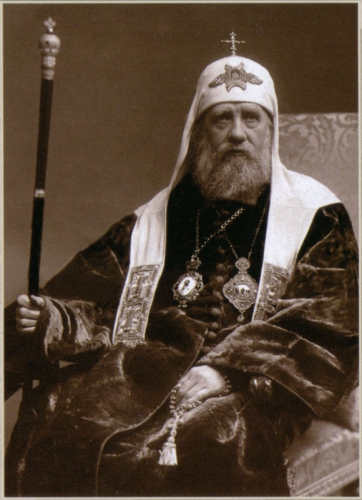
The Provisional Government’s undoubted merit is the permission to convene the Local Council, for which the Church community also fought. However, on 20 June 1917 the bourgeois government issued a decree nationalising the general education schools of the Church. It caused a wave of protest in the ranks of the clergy. The Council of People’s Commissars in turn began preparing a law on the separation of Church and State and school from Church. A commission was set up to draft the decree. On the eve of its publication on 19 January Patriarch Tikhon made an appeal to the faithful to stand up for the oppressed and insulted Mother Church. Soon afterwards, in view of the confiscation of churches and monasteries which had begun, the Patriarch sent an appeal to the Synod to set up church militias to protect them.
The Decree “On Separation of the Church from the State and of the School from the Church” was issued on 23 January 1918. Its main theses were:
- Freedom of conscience was proclaimed: The Church was losing its privileged status and every citizen could now practice any religion or no religion at all;
- Schools were separated from the Church; teaching of religion in school was no longer allowed; citizens could study religion privately;
- Church communities lost the status of legal persons as well as the right to own property. Buildings and religious objects were given to the congregations for free use.
This has led to justifiable protest among the faithful. Protest processions were organised in a number of towns. The first skirmishes began. The Bolsheviks began shooting up the processions in the towns. At this time fighting continued on the fronts of World War I, which had already moved into Russian territory. When the Germans were preparing an attack on Petrograd, the Patriarch called for a repulse. But on 3 March 1918 the infamous Treaty of Brest was signed. Its conditions were predatory for Russia: the country lost the Baltics, Ukraine, Belorussia and Transcaucasia. In addition, she was imposed a huge contribution. His Holiness Tikhon condemned this peace, predicting even greater losses and turmoil in the future. His words soon came true: the separate peace served as a pretext for the intervention of the former Entente allies who wanted to punish Russia as a traitor and prevent the Germans from occupying the northern regions. The Kola Peninsula, Murmansk and Arkhangelsk were all hotbeds of interventionist invasion. This undoubtedly exacerbated the course of internal strife.
At the end of August, 1918, the Social Revolutionaries organised terrorist acts against the government. The assassination of M.S. Uritsky, chief of the Petrograd Cheka, was used by the Bolsheviks to unleash the “red terror”, not least of which was the terror against the Russian Church. On September, 14, 1918. The Central Executive Committee has made the decision of prosecuting a group of clergy of criminal liability. The Patriarch has been arrested, and has been placed under house arrest. A few months earlier he had been offered the possibility of fleeing abroad, but he refused, saying that his flight would play into the hands of the enemies of the Church. Already under arrest the Patriarch was constantly interrogated and subjected to unbearable conditions, deprived of food rations. After his release, the Patriarch continued to be attacked. One day a woman stabbed him in the side as he was leaving the Cathedral of Christ the Saviour. The detainee was soon recognised as mentally ill and released. The Patriarch was saved by a leather monastic belt that softened the stabbing.
The turning point in his attitude to the Civil War and the Soviet power was his message to the clergy on 25 September/8 October 1919, which said: “The establishment of this or that form of government is not a matter for the Church, but for the people themselves. The Church does not bind itself to any form of government, for it has a relative historical significance <…> The ministers of the Church must stand above political interests and must be mindful of the canonical rules of the Holy Church. Fathers and brethren, do not give any reason to justify the suspicion of Soviet power. Obey its dictates insofar as they do not contradict faith and piety”. This appeal to the clergy - to stand above the fray - meant a significant shift in the Patriarch’s position, so initially irreconcilable with the Soviet authorities. His tone changed somewhat, becoming softer. Perhaps in view of the obvious outcome of the Civil War.
All this time persecution of the clergy did not cease in the country. By January 1919, 19 bishops, 102 priests, 154 deacons, 95 monks and nuns were killed, and by 1921 over 12.000 laymen, several thousands of clergy and monks and 28 bishops were killed11. In 1919 the desecration of the relics began and a special decree was even issued on this occasion. The Patriarch responded to this by commanding that the relics be examined (i.e., that the clergy display the relics in their true form to the faithful) before their public opening, in order to eliminate temptation. This was important because the people believed that the relics of the saints were intact (i.e., bodies untouched by decay). Some bishops were repressed for this examination.
When the Russian Empire began to fall apart, the national suburbs immediately began to secede. Church separatism contributed to this in a number of regions. Thus, after February 1917, there was an ecclesiastical upheaval in Georgia. The Exarch was expelled from the country, and property and churches were taken away. The election of a Georgian patriarch-catholicos was soon announced. On March 12, 1917, a council of four Georgian bishops, clerics and laymen was held in the ancient capital of Georgia, Mtskheta, which proclaimed the restoration of autocephaly. The Catholicos Kirion (Sadzagelishvili) was soon elected. But this unauthorised restoration of autocephaly was received with hostility by the hierarchs of the Russian Church. On 29 December Patriarch Tikhon protested against this act. Communion between our Churches was not restored until 31 October 1941 under Patriarchs Sergiy and Kalistrat.
A similar pattern of events took place in the Ukraine. Here, in the spring of 1917, the Central Rada came to power. As part of its separatist policy, it also encouraged church separatism. The Ukrainian Church Council was created with the aim of convening a Local All-Ukrainian Council. It must be said that Moscow reacted favorably to this proposal. The Council was opened on January 7, 1918. The main issue was the separation of the Ukrainian Church from the Moscow Patriarchate. There were three parties on this issue. The first, the parish councils in Kiev, were firmly against autocephaly. The second, while allowing autocephaly, considered it necessary to preserve unity with the Russian Church by participation in the Councils. The third was in favor of full autocephaly. Voting revealed a majority of the former. However, when Ukraine was occupied by the Soviets the autocephalous project gained a lot of support as it played into the hands of the Bolsheviks. In April 1920 a new Ukrainian Church Council was formed which declared a full autocephaly with a Ukrainian liturgical language, the admission of a married bishopric and the enfranchisement of the clergy. Thus, these were the first sprouts of Renewalism. Support by the Soviet government was short-lived. In 1922 the GPU decided to shift its support from the Autocephalists to the Ukrainian Renewalists.
In 1921-1925, Russia experienced the New Economic Policy, and with it, relative freedom in politics and ideology. At the same time, this was also the time when the Renewal movement began its schism within the Russian Orthodox Church as an organized hierarchical community. In the summer of 1921, a terrible famine broke out in the Volga region, the Fore-Urals, the south of Ukraine and the Caucasus. The dry summer destroyed the entire harvest. In August 1921, Patriarch Tikhon organized the All-Russian Church Committee on Assistance to the Starving. He appealed for help from the world community. The Soviet government thwarted this initiative, even though the Church managed to collect 9 million rubles, as well as food and gold products, by 1922. Then the Bolsheviks decided to attack the Church. On 23 February 1922, the All-Union Central Executive Committee12 adopted a resolution on the confiscation of all valuables, including sacred vessels, from the Church, ostensibly to help the starving. The Patriarch allowed “donations of items not consecrated and having no liturgical use”, but it was forbidden to give away sacred vessels. This caused a flurry of indignation, and the press began a real persecution of the clergy and the Patriarch as enemies of the starving people. During this barbaric programme, the people rose up in defence of their sacred vessels. The first bloody confrontations took place in the spring of 1922 (there were about 1.5 thousand in total). According to official figures more than 5 million roubles, 33 poods of gold, 24,000 poods of silver and 35,000 diamonds were taken. All confiscated sacred vessels were treated as scrap. Most of this money never reached the hungry.
In those days Lenin wrote: “The seizure of valuables … must be carried out with ruthless determination. Certainly not stopping at anything and in the shortest possible time. It is now, and only now, when people are being eaten in famine areas, that we can and therefore must carry out the seizure with the most frantic and merciless energy and without stopping before the suppression of any resistance …”.
At that time, in the first half of 1922 there were mass trials of the clergy, including Patriarch Tikhon, who was placed in the internal prison of the Lubyanka. Priests of the Petrograd group of progressive clergy: Vvedensky, Krasnitsky and others took advantage of this. They demanded that the Patriarch relinquish power and convene a Local Council. But the Patriarch, as part of the established procedure, withdrew from governing the Church and handed power over to one of the oldest hierarchs, the Metropolitan Agafangel of Yaroslavl. The Renewalists succeeded in persuading several bishops to join their work and immediately appealed to their flock to join their so-called “Living Church”. Its main points were:
A revision of dogma, with a view to highlighting those features which had been introduced into it by the royal system (referring to the supremacy of the monarch over the Church);
Revising the liturgy of the Church in order to clarify and eliminate distortions;
Ensuring freedom of pastoral creativity in the area of worship, but without violating the sacramental ranks.
By July 1922, 37 bishops out of 73 recognized the Renewed Hierarchy. The reason for such a mass conversion to Renunciation was simple: the Renovationists were being covered up by the Soviet authorities. This was important to many who wanted to avoid repression or removal from office. This, of course, does not paint a good picture of the moral character of the episcopate of those years. The first Local Council of Renewal was opened in Moscow on April 29, 1923. The Council endorsed the revolution, condemned capitalism as a mortal sin and repealed Tikhon’s anathema to the Soviet authorities. It abolished the Patriarchate, since it had not existed until the fifth century13. Tikhon was declared deprived of his dignity and monasticism, and returned to his former secular status with the name Vasily Ivanovich Belavin. But the Patriarch, of course, did not recognise this.
In addition, the Council legalised the equivalence of the married and celibate episcopate, as well as the celibacy of the clergy. The Gregorian calendar was introduced. It was henceforth determined to close monasteries, turn them into labour communes and parishes. But dogma, sacraments, liturgical office and veneration of relics were left intact. Instead of the Patriarchate a High Council of the Church (HCC) of 18 members under the chairmanship of Metropolitan Antonin Granovsky was elected. All this action took place when Patriarch Tikhon was under arrest. During the interrogations he often conceded the charges: he admitted that he had spoken against the authorities. He was charged under two articles - calling for the overthrow of Soviet power, and inciting the masses to resist lawful decrees of the government. He pleaded guilty.
On June 16, 1923, the Patriarch unexpectedly wrote a penitential letter to the Supreme Court of the RSFSR. Among other things, he wrote: ”… I repent of these transgressions against the state system and ask the Supreme Court to release me from prison <… > I declare to the court that I have ceased to be an enemy of Soviet power. I definitively and firmly dissociate myself from both the foreign and internal monarchist-Belogvardean counterrevolution. Here is how Metropolitan Anthony Khrapovitsky commented on this Patriarchal Message: ”… the Message has undoubtedly a beneficial meaning - it has saved the Church from spiritual despair, from the danger of turning into a sect of the popes. The Church is gradually being freed from the gang of false bishops, false popes of the Renewalists. Now, legitimate pastors are likely to be released from prison, as employees of the patriarch recognized by the authorities. He, the clergy and laity would have to accept martyrdom if they were required to renounce directly the true faith of Christ, its commandments and canons. Since this was not the case, it is unlawful to require a deliberate striving for martyrdom.”
It was not only this statement that contributed to the release of the Patriarch. A month earlier, on May 8, 1923, an agent of the British government in Moscow handed the Soviet government an ultimatum from the British government, a note from Lord Curzon. It protested against religious persecution in Russia. The Bolsheviks clearly understood that it was impossible to create a new strong state in diplomatic, let alone economic isolation, and therefore badly needed international loyalty. The Patriarch was released. His release was the impetus for the return to the Church of those who had gone into schism. Repentance began. However, his ordeal was not over. In the spring of 1925 he was again questioned, already very ill. In the spring of 1925 he was again interrogated, this time on serious illness. He not only signed the charges, but also put another signature to the effect that he would keep everything secret, what questions he was asked and how he answered them. Patriarch Tikhon’s death was met with grief by the people. At the time of his burial there were some 300,000 people in the courtyard of the Donskoi monastery. He was buried in the Little Donskoy Cathedral. In 1992 His Holiness Patriarch Alexy II gave his blessing to begin the search for the relics of St Tikhon. The relics, which had been lying damp for 67 years, were in fact imperishable14. The Russian Church consecrated Patriarch Tikhon a saint.
After Tikhon’s death, Metropolitan Peter Polyansky of Krutitsy became the Locum Tenens, and after his arrest, on 17 June 1926, Metropolitan Sergius of Stragorod15, Metropolitan of Nizhny Novgorod, was appointed Locum Tenens. Sergius was arrested in November 1926 but was released a few months later, and was even given the right to reside in Moscow. Particularly memorable is the “Epistle to the Pastors and the flock”, signed by Metropolitan Sergius and the members of the Synod on July 29, 1927. It says in part: “We need not in word, or in deeds, show that faithful citizens of the Soviet Union can be not only indifferent to Orthodoxy, not only traitors to it, but also the most fervent adherents of it… We want to be Orthodox and at the same time be conscious of the Soviet Union as our civic homeland, whose joys and successes are our joys and successes, and whose failures are our failures. Any blow aimed at the Soviet Union, be it war, boycott, some kind of social calamity, or simply murder from around the corner, <…> is recognised by us as a blow aimed at us”.
This declaration cemented the provisions that had already been put forward in the documents drawn up by Patriarch Tikhon during the last two years of his primacy. However, any critical element in the assessment of the Soviet Government’s policy towards the Church was absent here. By decree Sergius instituted an exaltation of prayers for the Soviet power, with the result that a great many people were put off by it. By 1930 there were as many as 37 hierarchs who refused to obey Sergius.
At the end of the 20s the National Economic Policy was curtailed, and with it an attack on capitalism, which was permitted within certain limits: private enterprises and shops were closed, trade, hiring of labour was forbidden, dispossession was announced in the countryside. The Church shared the fate of the peasants. On April 8, 1929 the All-Union Central Executive Committee adopted a regulation on Religious Associations, which stipulated that parishes were headed by a “twenty”, elected from among the parishioners. These were people under the control of the authorities. Priests were not allowed in them. Mass closing of temples began. They were given as ware-houses, monasteries were given to prisons and colonies. Bells and icons were confiscated.
In 1934 after assassination of the first secretary of regional party committee Kirov, a wave of terror started: clergy, nobility and intelligentsia were all expelled from the country16. An active role in the policy of godlessness was played by the Union of the Militant Godless, formed in 1925. The Union of militant atheists played an active role in this policy. A five-year plan of anti-church “cleansing” was adopted. In 1937 more than 8,000 churches were closed, in what was once the most powerful Local Church there were only 3 bishops apart from the head of the Church, Sergiy Voskresensky, Alexei Simansky and Nikolai Yarushevich. If this had continued, a few years would have been enough to destroy the entire Russian hierarchy and then the Russian Church. But God has judged otherwise: in 1939 World War II broke out.
Editorial Footnotes
Related Concepts
- apostolic-pattern
- autocephaly
- bishops
- bishops-conference
- canonical-authority
- canonical-independence
- canonical-norms
- canonical-order
- canonical-territory
- christian-life
- church-administration
- church-autocephaly
- church-governance
- church-of-japan
- church-order
- church-separatism
- church-turmoil
- church-unity
- churchwarden
- conciliar-forms
- confiscation-of-church-valuables
- constantinople-patriarchate
- cult-of-the-martyrs
- deacons
- desert-fathers
- diocesan-administration
- diocesan-authority
- diocesan-bishop
- divine-service
- egypt
- enthronement
- episcopacy
- episcopal-college
- episcopate
- finnish-orthodox-church
- florentine-union
- georgian-orthodox-church
- greek-metropolitans
- hierarchical-authority
- historical-continuity
- holy-synod
- legal-status-of-the-church
- liturgical-feasts
- liturgical-piety
- liturgical-reform
- local-church
- local-council
- locum-tenens
- matthew-parker
- matthias
- metropolis
- metropolitan-isidore
- metropolitan-jonah
- metropolitans-photius-and-isidore
- monastic-charter
- monastic-prikaz
- monastic-vows
- monasticism
- moscow-church
- moscow-metropolis
- mother-church
- nationalism
- ober-procurator
- orthodox-anglican-dialogue
- orthodox-church-in-america
- papist-tendencies
- parish
- parish-assembly
- parish-council
- patriarch-of-constantinople
- patriarch-tikhon
- patriarchal-enthronement
- patriarchal-succession
- patriarchate
- patriarchate-of-constantinople
- patriarchs-job-and-hermogenes
- penance
- persecution
- pre-sobor-presence
- priesthood
- primacy
- primate
- primates
- red-terror
- relations-with-constantinople
- religious-associations
- restoration-of-patriarchate
- russian-church
- sacral-monarchy
- sacrament-of-priesthood
- sacramental-guarantee
- saint-job
- sanctity
- sanctity-of-the-body
- secularization
- sergianism
- soviet-church-policy
- soviet-power
- spiritual-awakening
- st-job
- st-metropolitan-jonah
- state-church-relations
- the-desert-a-city-chitty
- thomos
- time-of-troubles
- ukrainian-church-council
- unia
Footnotes
-
The officiant was Metropolitan Vladimir (Bogoyavlensky) of Kiev; the lesson renders his name inconsistently, as both “Volodymyr” (the Ukrainian form) and “Vladimir.” He was murdered near the Kiev Caves Lavra on 25 January 1918 (the “January 25 (February 7)” killing mentioned later) and is traditionally counted as the first hieromartyr-bishop of the Soviet persecution. ↩
-
Tradition identifies the elder who drew the lot as Hieroschemamonk Alexy (Solovyov), a recluse of the Zosima Hermitage; “Monk Alexius” and the detail of his blindness come from devotional accounts and should be read as hagiographical tradition rather than documented fact. ↩
-
Georgy Gapon is an ambiguous example of a “revolutionary” priest. He led the workers’ procession of Bloody Sunday (1905), but his Assembly of Russian Factory Workers had been organised with the sponsorship of the Okhrana (secret police), and he was later hanged by Socialist Revolutionaries as a suspected police informer. His case is more complicated than the text’s framing implies. ↩
-
These are round approximations and do not fully agree with the figures given a few sentences later (“57 thousand” churches, “1025” monasteries by 1917). Standard estimates for c. 1914 give roughly 54,000 churches, about 100 ruling and vicar bishops, some 50,000 priests, and around 1,000 monasteries and convents. ↩
-
St Seraphim of Sarov was glorified in 1903. The canonisation is indeed usually attributed to Nicholas II’s personal insistence, which overrode hesitation in the Holy Synod (partly over the condition of the relics) — a frequently cited instance of direct imperial intervention in church affairs. ↩
-
Rasputin’s introduction to the imperial family is usually credited to the Montenegrin sisters Militsa and Anastasia (“Stana”). At the time (c. 1905) Anastasia was not yet married to Grand Duke Nikolai Nikolaevich: that marriage took place only in 1907, after the annulment of her first marriage to the Duke of Leuchtenberg. ↩
-
Factual error. The empress was Alexandra Feodorovna, not “Anastasia Feodorovna.” Anastasia was the name of the youngest imperial daughter, not of the reigning empress. ↩
-
The claim that Rasputin effectively appointed and removed some twenty ministers is a polemical exaggeration rooted in wartime opposition rhetoric. The “ministerial leapfrog” of 1915–1916 was real, and Rasputin and the empress influenced certain appointments, but historians regard a precise count of ministers hired and fired on his advice as unverifiable and overstated. ↩
-
This conflates two stages of the life of Hermogen (Dolganyov). He clashed with Rasputin and was removed and confined to the Zhirovitsy Monastery in 1912, when he was Bishop of Saratov; he became Bishop of Tobolsk only in 1917 (and was drowned by the Bolsheviks in 1918). ↩
-
The chief procurator forced out in 1915 was Alexander Dmitrievich Samarin (A. D. Samarin) — the same man named earlier in the lesson as a council official — not “F. Samarin.” ↩
-
These casualty tallies derive largely from émigré martyrologies (above all those of Protopresbyter Mikhail Pol’sky) and should be treated as early, contested estimates rather than verified statistics. Archival research since the 1990s has refined and in places revised such figures. ↩
-
Anachronism. In February 1922 the body that decreed the confiscation of church valuables was the All-Russian Central Executive Committee (VTsIK). The “All-Union” Central Executive Committee did not exist until the USSR was constituted in December 1922. ↩
-
This reproduces the renovationist council’s own justification, which is historically tendentious. Episcopal primacy and the office later called the patriarchate developed gradually; the title “Patriarch” was formalised for the senior sees in the fifth and sixth centuries, so the assertion that the patriarchate simply “had not existed until the fifth century” oversimplifies the history. ↩
-
The incorruption of the relics is a devotional claim rather than an established historical fact; it is reported here from within the tradition that venerates St Tikhon, whose remains were recovered at the Donskoy Monastery in 1992. ↩
-
“Metropolitan Sergius of Stragorod” garbles the name: he was Sergius (Stragorodsky), at this date Metropolitan of Nizhny Novgorod. “Stragorod” is not an episcopal see but a mangling of the surname Stragorodsky. ↩
-
Inaccurate. After Kirov’s assassination (1 December 1934) clergy, nobility and intelligentsia were not “expelled from the country” but arrested, exiled internally, imprisoned in the camps, or shot. The mass expulsion of intellectuals abroad had happened earlier, in 1922 (the “Philosophers’ ships”). ↩