History of the Russian Orthodox Church — Topic 14
The Russian Orthodox Church under Nicholas I, Alexander II, Alexander
III
- The Russian Church during the reign of Nicholas I
- The Russian Church during the reign of Alexander II
- The Russian Church during the reign of Alexander III
The Russian Church during the reign of Alexander II
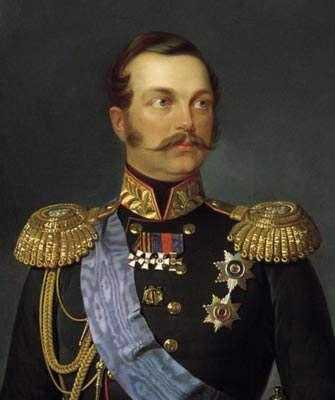
During the reign of Alexander II (1855-1881) the Church was in decline, in a subordinate position to the state; it was part of the state apparatus, its functions came close to those of a police supervisory body, which led to a decline in the authority of the Church in society. This was the main problem. At the time of the Great Reforms this problem was clearly recognised and some steps were taken to solve it. The liberalization of public opinion in the 1860s played a major role in this. It led to a public debate about the reforms of the Church. Along with general speculation, the church press made many useful practical suggestions. Clergy issues were of course in the foreground, but they were always seen in connection with the social situation as a whole.
The relationship between secular and clerical powers was in no small measure influenced by the personality of the emperor: on the one hand he was convinced of the inviolability of autocracy, but on the other hand, under pressure from outside circumstances, he decided to carry out liberal reforms. This ambivalence became a leitmotif of all of Alexander’s transformative activities. The main thrusts of the ecclesiastical policy of Alexander II’s government were:
- the use of the Russian Church to enforce social reforms, which in turn implied the propaganda of justice, the necessity of the reforms undertaken: the manifesto on the abolition of serfdom was drafted by Metropolitan Philaret (Drozdov)1;
- decrees on all reforms were announced and explained to the people by priests before preaching; the enlightenment activities of the Russian Church, etc.
- democratisation and liberalisation of the life of the clergy;
- preservation of control over the Church;
- strengthening the position of the Russian Church in society.
The church reform began as one of the first of many, in 1863, for the same reasons as the other transformations of Alexander II, including the abolition of serfdom. The author of the Church Reform should be regarded primarily as Minister of the Interior P.A. Valuyev. He himself expressed the idea of strengthening the Orthodox Church through the development of its internal forces under an appropriate government policy. It was Valuyev who induced the Emperor to carry out a wide-ranging reform of the Church. This plan was based on two ideas: the dismantling of the insularity of the clerical estate by allowing free retirement from it and a reduction in the number of clergy, as well as reform of the clerical educational institutions with a review of curricula.
On June 28, 1862 Alexander II approved a draft of the Special presence (council) to improve the life of the Orthodox white clergy. The same document formulated the programme of reform. The Presence was instructed to find ways to:
- to expand the means of material provision for the clergy
- to increase their personal civil rights and benefits
- to open avenues of civil activity for the children of clergymen
- to open up ways for the clergy to become closely involved in parochial and village schools.
Since its formation, the Presence had been the scene of latent resistance on the part of some of the hierarchs, who saw in this latest scheme of secular power an attempt to subordinate the Church even more to the bureaucracy. The hierarchs’ discontent was compounded by the fact that the establishment of the Presence actually dashed their hopes for a restoration of the canonical order of the Church (patriarchy), which is why the Orthodox hierarchy hated the very initiator of the reform. This was revealed as soon as Valuyev took some concrete steps in fulfilling the other part of his plan, the liberalization of confessional policy.
In undertaking the reform of the Church in the name of safeguarding the foundations of autocracy, its main effect was to increase the prestige of the Orthodox parish clergy among the people. In reality things did not go as expected, for many reasons. Firstly, the personality of Alexander II and his conviction in the firmness of the basics of autocracy played a major role. It was for this reason that the emperor agreed to only minor changes at the lower level, but could not accept measures aimed at relaxing state control over the Church. Secondly, the initiator of the reforms, Count Valuyev, had a dual stance: on the one hand, he understood the necessity of the social reforms, and that they would facilitate other liberal reforms, but on the other hand Valuyev was never able to carry them through to the extent he had intended, because the positions of some high-ranking officials prevented him from doing so. The changes initiated by Valuev were therefore incomplete and in general did not achieve their goals.
During the reign of Alexander II, Metropolitan Philaret (Drozdov) had a great influence on various aspects of Church and state life. Thanks to his active participation, from the second half of the 19th century the level of teaching in seminaries and academies was improving, schools of theological and church- historical science were developing, and church journalism was flourishing. On June 3, 1865 Count D. A. Tolstoy was appointed Public Prosecutor. He was a typical stale St Petersburg bureaucrat, who believed that only the same reforms should be carried out in the Church as in the state. Tolstoy made no secret of his disdain for the episcopate and the clergy. Under his leadership in 1867-1869 the entire system of church education was reformed. The aim of the reform was to bring spiritual education closer to secular education. Seminary graduates were prepared for pastoral work, combined with teaching. Therefore, curriculums were being refined, the number of hours for philosophy was being increased and pedagogy was being taught. The principle of all- genderedness2 is being introduced. Seminary graduates could now go on to universities.
The reform of the Theological Academies followed in 1869 which, to the indignation of the hierarchy, had much in common with the University Statutes (electability). As for the lower level of the whole church educational system, the network of parochial schools was enlarged and the level of teaching was increased. Another aim of the reform was to broaden the rights of the clergy. A law of May 26, 1868, declared children of clergy not belonging to the estates, but reserved for them privileges and rights, including freedom from conscription and the right to enter institutes of clergy education. On April 30, 1871, another law was passed whereby, depending on the position of their fathers, their children received the rights of nobility and honorary citizens. This created new opportunities for promotion to secular life. Moreover, the procedure for the resignation of priests and the consequences of this act were released in 1863.
The changes in the life of the Russian Orthodox Church in the second half of the 19th century. Speaking about the reforms in the life of the Russian Orthodox Church in the second half of the XIX century, one must say that on the one hand the reforms had certain achievements: the class isolation was liquidated, clerical educational institutions were reformed, parishes and priests were reduced, the life of the parish community was animated, the rights of the clergy were legalized, it received a chance to participate widely in the primary education of the people. On the other hand, the reforms never released state control over the spiritual administration, and thus did not achieve their main goal. This had to do with the state system itself - absolutism - which, by its very nature, demanded restrictions on the independence of the Russian Church. Alexander II himself was convinced that the most optimal (if not the only possible) form of political system for Russia at that time was monarchy, which had absolute power in all spheres of public life, including religious life. Therefore, he could not allow the restoration of the Church’s independence or accept the weakening of its dependence on the state.
The incompleteness of the reforms and the unwillingness or even inability of the state to make concessions to the Church had negative consequences: the crisis of the Russian Church consisted in a weakening of its authority in society, which was never overcome. Only a weakening of its dependence on the state could restore the Church’s credibility in society. There was no happy change in the administrative life of the Church either. The generally accepted rule was to put pressure on the spiritual independence of the Synod, which led to the depersonalization of the hierarchs of the Church and its general emasculation. The Ober-Prosecutor sought to undermine the influence of the clergy in popular and state life. In the field of ecclesiastical administration, he strove to impart to all church authorities, as far as possible, a government-ordered, official character, so as to deprive the Church of all independence.
A few words must be said about the events that took place during the reign of Alexander II. After the death of Nicholas I, (1855), the Synod, with the participation of Metropolitan Philaret (Drozdov) and Archbishop Innokenty (Borisov), renewed its discussion about the translation of the Bible into modern Russian. In the draft regulation drawn up by Archbishop Philaret it was pointed out that the Word of God had originally been preached in the “natural language”, that the Slavonic language had become incomprehensible to the common reader, and that the translation was sanctioned by the Synod in 18133. Philaret stressed that work on the Russian Bible had been suspended “for reasons not officially explained”.
However, this activity provoked resistance. Metropolitan Philaret (Amfiteatrov), the chief procurator of the Synod, A. P. Tolstoy, and a number of persons writing anonymously drew up a series of reports against the Russian Bible. Philaret (Amfiteatrov) wrote that “the Russian vernacular cannot render the sacred scripture with all the power and fidelity that the Slavonic translation has”. He feared that the people would become cold to temples after receiving the Russian Bible, stressed the foreign origin of the idea of translation, and saw in it a dangerous political background. The difficulties in reading the Slavonic text, in his opinion, could be overcome by the diligence of the readers and individual corrections of the text. Tolstoy, however, argued that the new Russian Bible threatened pan-Slavic unity, and demanded that the Hellenic Orthodox Church should be consulted. All these arguments were completely defeated by Metropolitan Philaret (Drozdov). In 1858 Alexander II sanctioned a positive decision on this matter. The decision stated that the translation would be done by professors of the theological academies under the supervision of the Synod. The Old Testament translation is to be based on the Masoretic text, but taking into account the Greek and Slavonic translations. In 18634, the Russian-language New Testament was published, and in 1876 - the entire Bible. The edition indicated that it was printed “with the blessing of the Holy Synod”, and therefore the translation was called synodal.
At the time of Alexander II there was a reunion of the Church with the Uniates of the Kholmsk region. In 1875 the Greek Uniate clergy and the faithful people were reunited with the Russian Orthodox Church. The first Orthodox bishop of Kholmsk diocese was the tireless worker of the reunification of the Uniates of Kholm, Preosvjashchennyj Markell (Popiel). After that the Brest Uniate remained only in Galicia, which after the first partition of Poland in 1772 came under the Austro-Hungarian Empire. Here, the Uniates were led to believe, was the “root of the union” for all its offshoots abroad. The success of the mission of the Russian Church in this period is witnessed by the writings of the great enlightener of Japan, St Nicholas (Kasatkin). In 1855, a treaty of friendship was concluded between Russia and Japan, and in 1861, the 24-year- old Hieromonk Nicholas (Kasatkin), a graduate of the St. Petersburg Theological Academy, arrived in Hakodate (Hokkaido) as a priest at the Russian Consular Church. His apostolic ministry in pagan Japan demanded tremendous strength, exertion, self-discipline and an endless trust in God’s help. Here medieval prohibitions on Christian preaching were still in force. The missionary Nicholas began to study the culture and history of the country and became so well versed in Japanese and Chinese writing that he could read medieval Buddhist sutras, inaccessible to most Japanese. In fact, he was one of the first native Japanese scholars5. On April 6, 1870, at the request of a missionary, a Russian Spiritual Mission was established by the Supreme Ruling of the Holy Synod in Japan, consisting of the chief of the mission, elevated to the rank of Archimandrite, St. Nicholas, three missionary hieromonks and a vicar. The missionary’s duties were to not only preach the Word of God in Japanese, but also to translate the Holy Scriptures, according to a special instruction which explained the missionaries’ duties.
The Russian Church during the reign of Alexander III
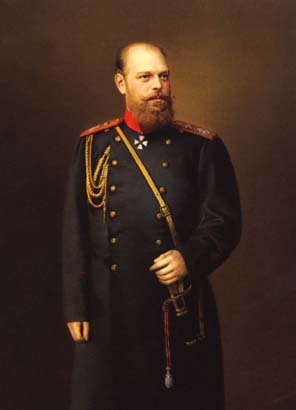
Emperor Alexander III ruled from 1881 to 1894. He was a consistent Russophile. This determined his attitude to the Orthodox Church. He was a deeply religious and unselfishly pious man. It was not by chance that on his deathbed the emperor called upon the great luminary of the Russian land - the righteous Fr. John of Kronstadt. To a large extent the church policy of Alexander III was under the influence of his teacher and mentor K.P. Pobedonostsev, who from 1880 to 19076 was chief procurator of the Holy Synod. K.P. Pobedonostsev (1880-1905) was born in Moscow in the family of a professor. He graduated from the Law School and became a professor of civil law. He then tutored the Tsar’s children. He was a liberal in his views, but in due course his views evolved towards staunch conservatism. As Chief Procurator for 25 years Pobedonostsev enjoyed the unbounded trust of Alexander III.
It was he who was the author of the royal Manifesto “On the firmness of the autocracy”7, which determined the political line of the reign of Alexander III on the rollback of those reforms that were carried out in 60-70’s. Pobedonostsev believed that the Orthodox Church had an enormous, if not decisive, role to play in carrying out this policy. Under him, parishes that had been abolished in the 60-70’s were restored and new ones opened. During the reign of Alexander III up to 250 churches were annually built and 10 monasteries were founded, the number of clergy and 30% of monks increased by 22%8. With the support of secular power, Pobedonostsev sought to raise the religiosity of the Russian people and spread Orthodoxy among the non-Russian nations. Under his reign the activity of Orthodox missions revived and the number of church periodicals and circulation of religious literature increased. He encouraged the establishment of church brotherhoods, called, especially in the western provinces of Russia, to strengthen Orthodoxy.
Pobedonostsev believed that the Church, in addition to its religious duties, should develop other forms of activity to strengthen its authority among the people. He attached great importance to the preaching of the church, to extra liturgical meetings of priests with their parishioners, to the organization of libraries of spiritual books in churches, to the organization of church charity as well as to the celebration of various church anniversaries. Henceforth Pobedonostsev decided all the matters in the department of the Synod alone, without taking into account the opinions of the Synod Board.
The centralization of church administration intensified. Under the strict control of the chief prosecutor was placed the diocesan clergy. He entrusted “trusted” persons to supervise diocesan bishops. These persons sent to dioceses were to be attached to the bishops and to send him confidential reports on their behavior and sentiments. There were frequent transfers of the bishops from diocese to diocese. There were 180 such transfers in 13 years. Zealous and not to please anyone in any way, the chief prosecutor sent bishops to remote dioceses (in Siberia or in the Far East), which caused dislike and protests amongst the bishops about his “autocracy”. In turn, parish clergy were placed under the strict subordination of the local episcopate. Diocesan consistory, which was under double subordination (to diocesan bishops and the Synod) were obliged to report to the Synod on the sentiments of the parish clergy.
The bishops were instructed to “recognise the worthy, punish the unworthy, instruct and support the weak”. The Synod was also concerned about the state of affairs in the seminaries. Not only faithful servants of God, but also freethinking atheists came out of the seminaries. It was well known that students of the theological academies and senior seminarians took part in the people’s movement. On August 22, 1884, a new charter for the Theological Academies and Seminaries was published which abolished the autonomy of those institutions and the elected rectors and professors introduced by Alexander II. The oversight of the theological institutions was strengthened. In 1890, the special injunction to diocesan bishops followed, to ensure that no unreliable periodicals penetrated into seminaries and that seminary authorities did not conceal cases of dissemination of unwholesome literature and creation of secret societies among seminarians. The works of Leo Tolstoy, M. E. Saltykov-Shchedrin were removed from seminary libraries. Saltykov- Shchedrin, N.G. Chernyshevsky, N.A. Dobrolyubov, D.I. Pisarev and almost all secular magazines were removed from seminary libraries. Seminarians and students of ecclesiastical academies were put in solitary confinement for reading unauthorised books. In response to these harsh measures in the 80’s riots broke out in a number of theological schools.
Pobedonostsev in every way opposed the spiritual contacts of the intelligentsia with the people and its dialogue with the Сhurch. He closed the emerging, in the 70-80’s, in Moscow and St. Petersburg Society Amateurs of Spiritual Enlightenment, which included representatives of the highest circles of the capital and some professors (mostly theological academies). Under his leadership the tightening of spiritual and secular censorship and subordination of primary public education to the Сhurch influence occurred. On the initiative of the chief prosecutor since 1884 the number of parochial schools which were under the direct authority of the Synod sharply increased. These schools were headed by parish priests, who were also ‘law-teachers’ (teachers of the Law of God, the main subject in these schools). Pobedonostsev said about the true purpose of these schools: “Parochial schools, by the very conditions of their training and supervision are much better guarantees for the correct and trustworthy in the Сhurch and public spirit of education and therefore deserve support and encouragement from the government”. By the measures which the government took, parochial schools became widespread in the 1980s and 1990s9. For the sake of justice, it is fair to say that the extension of the network of parochial schools did play a positive role in the spread of literacy among the people.
With the growth of the workers’ movement in the 70-90’s of the 19th century, secular power demanded that the Orthodox Church help it fight against the influence of populist and later social-democratic propaganda on the working class. On the initiative of Pobedonostsev and the editor of Moskovskie Vedomosti, M.N. Katkov in the early 80’s a society was set up at St. Isaac’s Cathedral in St. Petersburg with the task of publishing clerical-monarchical literature and distributing it to the workers for free.
The attempt to spread Orthodoxy among the non-Christian population of Russia was not very successful: the followers of Islam, Judaism and Buddhism held firmly to their faith. The policy towards Old Believers was rather flexible. A new law on Old Believers issued in 1883 confirmed in principle the decrees of the 60-70’s, which abolished many restrictions for them imposed by Nicholas I. Now Old Believers (except for “harmful sects”) were allowed to hold public offices, to engage in commercial and industrial activities, and to obtain passports on a common basis. They could open their houses of worship, but each time with the permission of the Minister of Internal Affairs and the Chief Procurator of the Synod. However, they were prohibited from erecting belfries and church processions, and most importantly from disseminating their teachings among the Orthodox population. They were also to be persecuted for “falling away from Orthodoxy into schism. From 1884 the policy towards schism was tightened. At the Council of Bishops held in 1885 the question of the fight against schism was also considered.
However Church and secular authorities were more worried by the broad spread of the so-called “rationalistic” sects: Stundists, Baptists, Pashkovites, Tolstovites and others. These new religious teachings, which emerged mostly in the West and were transferred to Russia, emphasized “reason” (that is why they are generally considered “rationalistic”). They, on the contrary, practically rejected or minimised all ritualism. Therefore, their divergence from Russian Orthodoxy was most of all on the basis of dogmatics (unlike the Old Believers). The preaching of the ideas of universal equality, communality, benevolence, charity, strict morals, mutual help, as well as non-violence and universal love especially attracted common people to these sects, and this ensured their considerable success in Russia in the late 19th century. The Russian secular and Church authorities consequently undertook a number of radical measures to eradicate these sects. Persecutions and even prosecutions followed. Many tens of thousands of the followers of rationalist sects were forced to emigrate (mainly to the US and Canada).
The persecution of denominations in opposition to Orthodoxy had the opposite effect, creating a halo of martyrs around the persecuted. The liberal press also raised its voice against religious persecution; the new courts, which stood for legality, also opposed it. The persecution of the faith alienated not only the liberal, but also the loyalist conservatives, and inflamed discontent in the national regions. Discontent on religious and national grounds inevitably led to social protest.
Speaking of Church life during the reign of Alexander III, one cannot ignore such a figure as Father John of Kronstadt. Father Ioann (Ivan Ilyich Sergiev) was born on 19 October 1829 in Arkhangelsk province. His family was poor, but for his academic success Ioann was admitted to the Archangelsk DS, and then to the St. Petersburg Academy of Education10, from which he graduated in 1855 with a degree in theology, having defended a thesis entitled “On the Cross of Christ in the rebuke of the alleged Old Believers”. Although married, he and his wife had no children, as they both consented to remain virgin. After his ordination he was sent to Kronstadt, a place of administrative deportation of asocial characters and numerous beggars and labourers. In Kronshtadt, Fr. John visited shanty towns, dugouts and poor flats. He consoled abandoned mothers, nursed their children while the mother did the laundry; helped with money; admonished and exhorted drunkards; gave away all his wages to the poor, and when there was no money left, he gave his cassock and boots and returned home to the church house barefoot himself.
In his sermons he departed from dry academic homiletics. His words were always extremely emotional (according to witnesses, he often wept at them), which was often misunderstood and disapproved of by other clerics. From the very beginning of his ministry, he was engaged in private charity: he founded the House of Diligence (a workhouse with workshops), a school for the poor, a women’s almshouse, and an orphanage. Contrary to the practice then adopted in the Russian Church, he introduced general confession (in the sacrament of penance), and called for frequent Communion of the Blessed Sacrament (in Russia it was a common custom at that time to be communicated twice or even once a year, during Lent). Towards the beginning of the 1890s, Father John was so venerated by the people, that crowds gathered everywhere in Russia, wherever it was known of his arrival; crowds gathered around him and literally tore his clothes off (on one occasion, the people of Riga tore his cassock to pieces, wanting to have a piece for themselves).
The growth of fame and veneration of John of Kronstadt led to him donating large sums of money. Father Ioann donated large sums (up to 50 thousand rubles) for the building and maintenance of charitable institutions, schools, hospitals, monasteries and temples, donated to charitable societies, including those of other confessions (to the Tatars and the Jews). Father John said of his charity work: “God has neither Hellenes nor Jews. I do not have my own money. They donate to me, and I donate. I often do not even know who sent me this or that donation, and from where. Therefore, I also donate where there is a need and where the money may be of use”.
On the other hand, the renowned generosity of John of Kronstadt attracted to him a great number of beggars, from ordinary beggars to wealthy merchants, who had come to despair due to critical situations (bankruptcy, losing at cards, etc.). Father John travelled through Kronstadt accompanied by an “army” of beggars, to whom he distributed alms twice a day, in the morning and in the evening. Before the distribution the crowd of beggars was divided into tens, each of which was given a ruble, which was then divided among 10 people. This amount - 10 kopeks in the morning and 10 kopeks in the evening - was enough to find food for the day and pay for the night. The more money he handed out, the more he donated (according to various sources, from 150 thousand to a million rubles a year passed through the hands of Father John).
Father Ioann was present at the last moments of life of Emperor Alexander III in 1894. Two years later, on May 14, 1896, he attended the Divine Liturgy in the Assumption Cathedral of the Moscow Kremlin, that followed immediately after the coronation of Emperor Nicholas II and Empress Alexandra Feodorovna.
Every day Fr. Ioann awoke about four in the morning, after a service in the Kronstadt Cathedral, which ended about noon, to visit the visitors and local residents of Kronstadt, who had invited him for one or another of his needs. Then he set off for St. Petersburg. In summer by steamboat to Oranienbaum, and in winter by sledges on ice. In St. Petersburg he also visited people who asked to see him, as well as public events and celebrations, e.g., opening of factories. Late in the evening, often after midnight Fr. Ioann returned home to Kronstadt. During Lent he cancelled his daily trips to St. Petersburg, but after visiting his flat in Kronstadt, he would take confession in St. Andrew’s Cathedral. Since there was a large number of people who wanted to come to confession, it was very long and often lasted from one or two in the afternoon until two in the morning, and sometimes Father John confessed until the morning service. After getting very tired by eleven o’clock in the evening, he would interrupt the confession for half an hour to take a ride in the carriage out into the fresh air and recover his strength, after which he would return to the cathedral and continue his confession. Not infrequently during the day he had no opportunity to eat properly. He did not have personal time. He slept very little, very often only 3-4 hours. He lived in this mode every day for several decades. Sometimes his expensive clothes or other items of wealth were criticised by some people. However, according to witnesses, he did not buy or order them for himself, and only accepted them in order not to offend those who gave them, who sincerely wanted to thank him or do him favours. During the last 3 years he suffered from “an excruciating bladder disease”. He celebrated his last Divine Liturgy on December 9, 1908 and during the last days of his life he received Holy Gifts daily at home.
He died in Kronstadt on December 20, 1908, in his 80th year, leaving no last will and testament. He was canonized for the first time in Russian diaspora: in June 1964, the Council of Bishops of ROCOR in New York ruled to recognize Fr. John of Kronstadt, he was declared a God-pleaser and canonised as a saint. On June 8, 1990, he was glorified as a saint for the reverence of God at the Local Council, during which Metropolitan Alexis of Leningrad (Ridiger) was also elected to the Patriarchal throne.
The Russian Church during the reign of Nicholas I
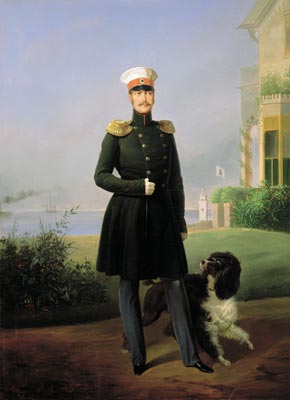
Emperor Nicholas I, (1825-1855), was a deeply religious and ecclesiastical man. He ascended the throne following the disinheritance of his elder brother, Grand Prince Constantine Pavlovich, who had married a Roman Catholic.11 On Nicholas’ orders, Philaret (Amphitheatrov) became metropolitan of Moscow12, for whom the Tsar had great respect. The Hierarch was a true ascetic, unshakable in his orthodoxy and strictly conservative in all church matters. This was probably what brought him closer to the no less conservative Emperor. According to the 1819 timetable, the Synod had seven members, who were present when summoned from the dioceses. Prince Meshchersky, to whom the Tsar confirmed his right to report directly to him, remained the chief procurator for the first time. On April 2, 1833 S. D. Nechaev became the Public Prosecutor.
Nechaev, like his predecessor, tried to strengthen the power of the chief prosecutor. He tried to establish special personal control over the church departments for strict financial and economic accounting. A surveillance of diocesan bishops was established. All this was evidence of the increase in the power of the Chief Procurator, which naturally armed the members of the Synod against him. As a result, the synodals petitioned the emperor to give Nechaev, “as a man of vast state abilities,” another, higher appointment, “and to appoint as chief procurator the Minister of National Education, Count Protasov, known for his zeal for the Orthodox Church”. The Emperor honoured this petition and on June 25, 1836 Nechaev was appointed a member of the Senate, appointed Privy Councillor and a member of the commission of religious schools.
Count N. A. Protasov, who until then had been temporarily in charge of the Church government, became the Ober-Prosecutor. This was a welcome figure. His appointment was received with great joy and the best of expectations. But when Protasov took up his duties he pursued the policy of his predecessors with even greater insistence on the Synod. In 1839 Protasov submitted for the approval of the emperor the following projects: 1) on the abolition of the Commission of Ecclesiastical Schools, 2) on the formation of a clerical- educational department under the Synod, 3) an economic department under the Synod, and 4) on the connection of the department of spiritual affairs of the Orthodox and Greek-Uniat confessions with the office of the Chief Procurator. The Tsar approved these projects. Thus, the reforms of 1839 concentrated effective control of all the affairs of the synodal office in four central institutions, organized or greatly transformed, that had previously existed under the Holy Synod, but now were under the chief superintendence of the Chief Procurator.
Protasov gained predominant influence over the whole course of church life and over the whole system of spiritual administration, and the Holy Synod was placed in a subordinate position to the representative of state power. But however great the importance of Protasov, still among the higher hierarchy there were certain individuals who, in certain cases, dared not to betray their convictions to please the views and desires of the all-powerful Chief Procurator: for instance, the Emperor’s confessor, Musovsky, and the Metropolitan of Moscow, Philaret (Drozdov). The latter had often entered into polemics with the Chief Procurator, which did not, however, prevent him from remaining the focal point of Russian Church life at this time. From the 1850s his administrative role began to appear on such a grand scale that it was not confined to the confines of a single church office, but embraced almost the whole of national life.
In 1841, as part of the reform, the form of government of the Church in the dioceses was changed. A Statute of Ecclesiastical Consistory was adopted, which introduced uniformity into the life of Russian dioceses. Diocesan administrations received a unified legal basis. Now all the administrative and judicial functions on the local level were carried out by the consistory, under the direction of the diocesan bishops. The highest authority for consistory was the Synod. The consistory consisted of officials (appointed by the bishop from white and black clergy) and an office. The Statutes defined the administrative tasks of the consistory as follows: 1) appointments to church offices; 2) reports and characteristics of candidates; 3) ordinations in the monasteries of the diocese; 4) supervision of the keeping of church books (metrical and others); 5) management of the bishop’s house, its property, and the management of monasteries and churches. Jurisdiction of consistory extended to the clergy and laity.
The jurisdiction of the diocesan court under the Statutes extended to the following cases: 1) misdemeanours and crimes against an office, ministry and piety; 2) litigations concerning the use of church property; 3) complaints of clergy and lay persons (excluding criminal cases). With regard to lay persons, the diocesan court was responsible for: 1) unlawful marriages; 2) dissolution of marriages and their restoration in case of unlawful divorce; 3) issuance of marriage certificates and birth certificates from a lawful marriage; 4) misdemeanours by lay persons involving the Church. The competence of secular courts in relation to clergy was defined. It included: 1) litigations of clerics against each other or with laymen regarding unfulfilled contracts and obligations as well as for damages; 2) crimes against state laws; and 3) serious criminal offences. In criminal cases, the initial investigation was conducted by the clergy.
The following penalties were imposed on clerics: (1) deprivation of ministry and, for hieromonks, of ministry and monasticism, with exclusion from the ecclesiastical office; (2) deprivation of ministry of the clergy with retention in the clerical office in lower positions and deprivation of ministry of the clergy with retention in one monastic office for penance; (3) temporary banishment from priestly service, with suspension from office and assignment to the rank of vicar; (4) temporary banishment from priestly service, without suspension from office, but with the imposition of penance in a monastery or place; (5) temporary probation in the houses of bishops and monasteries; (6) exclusion from the state (i.e., the forfeiture of monetary pay). (8) increased supervision; (9) fines and penalties; (10) bows; (11) severe or simple reprimands; (12) a reprimand.
In general, the Statute of spiritual consistory of 1841 regulated legal relations within the Church. In addition, the Statute defined as the main person in the consistory, its secretary, who, although appointed by the Synod, was directly accountable to the chief procurator, to whom the secretary reported. The chief procurators thus obtained a strong and independent support in diocesan administrations, independent of the bishop. Count Protasov died on 15 January 1855. A month later, Emperor Nicholas I died. During his reign the allotment of land to the churches was strengthened. Small, auxiliary salaries were apportioned for the western dioceses in 1842, and from 1843 gradually spread to the other dioceses. The white clergy lived on: 1) government salaries; 2) land grants, which were not taxed; and 3) donations.
The articles of the Code of Laws of 1842 clearly defined the rights of birth and education of the clergy children. The children were now entitled to a more favourable and honourable retirement from the clergy, with privileges when they chose service or another occupation. As a result, as early as 1869 it was decided that the children of clergy, when they left the clergy, received the rights of personal nobility or hereditary honorary citizenship, while the children of clergymen received the rights of personal honorary citizenship. Only those in active church service remained in the clerical estate.
During the reign of Nicholas I, the clerical mission continued its activities. So, from 1820, a mission was established in Unalaska and Athens13. Here began the missionary service, transfered from Irkutsk, priest Ioann Veniaminov, later, Enlightener of Siberia and the Far East, St. Innocentiy (1797-1879). He learned to speak six local languages, translated the Gospel of Matthew, prayers and hymns. He fought against drunkenness and polygamy. As bishop of Kamchatka and the Kuril Islands and the Aleutians, he travelled all of eastern Siberia, laying the foundations for future local dioceses. The mission of the Russian Orthodox Church was not limited to this Eurasian geography. From the beginning of the 19th century, Church and state circles alike dissipated the question of establishing a representative of the Russian Church in the Holy Land. There was good reason for this: the difficulties experienced by pilgrims from Russia when they visited Palestine. There was also foreign policy interest: the strengthening of Russia’s position in the Middle East.
In February of 1847, Emperor Nicholas I approved the establishment of the Russian spiritual mission in Jerusalem, which was headed by Archimandrite Porfiry (Uspensky). With him, the hieromonk and future saint Theophanes (Govorov) arrived in Jerusalem. The Jerusalem Patriarchate allocated the Jerusalem Archangelsk Monastery for their accommodation. Archimandrite Porfiry and his assistants devoted much time to scholarly research, studying church life and the history of the Christian East. However, the Crimean War of 1853-1856 forced the mission to temporarily halt its activities.
The Old Believers question also remained one of the most important problems of the state and the Church during the reign of Emperor Nicholas I. At the very beginning of his rule, in 1826, instructions were dispatched to the provinces not to persecute the Old Believers for performing church services according to their rites, but only to watch that they did not seduce into schism. They were all administered by special secret committees in both the centre and the provinces. However, Old Believers were soon deprived of their rights to public office by a series of measures. The right to enrol in the merchant guilds was restricted. Their societies were made illegal. Baptism and marriages were recognised only when performed in orthodox churches. It was forbidden to build or repair their prayer buildings. Public preaching of schismatic doctrines was unconditionally forbidden. The polemic with schism went on not only by administrative measures, but also in the public sphere. Among the clergy, the Olonets Archbishop Arcady (Feodorov) and the Metropolitan of Moscow Philaret (Drozdov). Archbishop Ignatius (Semenov) of Voronezh and Metropolitan Grigory (Postnikov) of St. Petersburg wrote about ceremonial issues.
Of the events in the internal life of the schism, the emergence of the so- called Austrian hierarchy among the Popovtsy (old believers who have a hierarchy) is remarkable. In 1846 they asked Metropolitan Ambrosius of Bosnia, who had been deprived of his See and was living in great misery in Constantinople, to head their community. He agreed. A schismatic monastery in Bela Krynica (in Austrian Bukovina) was appointed as his cathedra. Ambrosius was a metropolitan for a short space of time. In 1848 the Austrian government, at the request of the Russians, deported him from Belaya Krynitsa and imprisoned him in Zill, where he died in 1863, joining the Orthodox Church before his death.14 But the schismatic hierarchy was consolidated. He managed to ordain two bishops, Cyril and Arkady Bald. During the next 12 years a dozen Russian dioceses with numerous flocks were opened. The establishment of the Austrian hierarchy predictably led to a new schism amongst the Old Believers themselves. The Popovtsy (old believers who have a hierarchy) was divided into those who accepted this hierarchy and those who did not. A conciliatory current gradually gained the upper hand in the ranks of the same Popovtsy. A party was formed, mainly among Moscow’s Old Believers intelligentsia, which argued that there were remnants of true Orthodoxy in the ruling Church. Then, as before, monotheism15 remained the main form of reconciliation. During the reign of Emperor Nicholas I, the unlikely faith as an ecclesiological form of compromise became more and more popular. In 1851 the co-religionist movement already had 179 churches. It is true that sometimes the transition to co- religionism was not sincere, but with direct material benefits.
Editorial Footnotes
Related Concepts
- alexander-ii
- alexander-iii
- assumption-cathedral
- austrian-hierarchy
- autocracy
- bible-society
- bureaucracy
- canon-law
- canonization
- censorship
- chief-procurator
- church-bureaucracy
- church-influence
- civil-rights
- class-isolation
- clergy-reform
- crisis
- diaspora
- dogmatic-divergence
- emigration
- frequent-communion
- galicia
- holy-gifts
- house-of-diligence
- imperial-policy
- japan
- japan-mission
- jerusalem-mission
- john-of-kronstadt
- kholm
- literacy
- liturgical-renewal
- local-council-1990
- markell-popiel
- masoretic-text
- metropolitan-peter
- miracles
- moscow-as-spiritual-center
- nicholas-i
- old-believers
- old-rite
- parochial-schools
- pastoral-practice
- pastoral-renewal
- patriarchate-of-constantinople
- patriarchy
- persecution
- philaret-drozdov
- pobedonostsev
- popovtsy
- primary-education
- protasov
- relics
- religious-dissent
- religious-persecution
- rocor
- sacrament-of-penance
- scripture-translation
- sectarianism
- self-immolation
- seminaries
- simeon-the-new-theologian
- slavonic-language
- social-credibility
- social-estates
- social-ministry
- spiritual-education
- st-innocent-veniaminov
- st-jonah
- st-nicholas-kasatkin
- st-photius
- state-control
- synodal-bible
- theological-academies
- veneration
- veneration-of-saints
- western-inquisition
- western-provinces
- white-clergy
Footnotes
-
Metropolitan Philaret (Drozdov) did give the Emancipation Manifesto of 19 February 1861 its final literary form at the government’s request, but he did not originate or author its substance — the terms were worked out by the Editing Commissions (under Rostovtsev and N. A. Milyutin). Philaret in fact had misgivings about the reform and reworked an earlier draft prepared by Yuri Samarin. The emancipation also belongs to 1861, whereas the surrounding text frames it loosely within the reign. ↩
-
“All-genderedness” is a mistranslation of the Russian vsesoslovnost (всесословность), meaning “all-estate” — i.e. open to every social class. The reforms opened the seminaries to pupils of all estates and allowed seminarians to proceed to universities; they did not make the schools co-educational. Russian Orthodox seminaries remained exclusively male. ↩
-
The body that sanctioned Russian-language Scripture was the Russian Bible Society, founded in St Petersburg in 1812–13; the formal decision to translate the New Testament into Russian came by imperial command in 1816, not by a Synodal act of 1813. The project was then suspended in 1826 under Nicholas I. ↩
-
The complete Russian (Synodal) New Testament was published in 1862 — the four Gospels having appeared in 1860 — so “1863” is slightly early or reflects a particular printing. The date of the full Bible (1876) is correct. ↩
-
St Nicholas (Kasatkin) was Russian, not Japanese; the sentence presumably means he was among the first serious Western students of Japanese language and culture — a pioneering foreign Japanologist. His translation labours were into Japanese (chiefly the liturgy and New Testament), not the reverse. ↩
-
Pobedonostsev was Ober-Procurator of the Holy Synod from 1880 until his resignation in October 1905 (the parenthetical “1880–1905” a few lines later is correct); he died in 1907. The “1907” here wrongly conflates the end of his term with the year of his death. ↩
-
The manifesto of 29 April 1881, drafted by Pobedonostsev, is conventionally titled “On the Inviolability of Autocracy” (O nezyblemosti samoderzhaviya); “On the firmness of the autocracy” is a loose rendering of the same document. ↩
-
These figures are garbled. “The number of clergy and 30% of monks increased by 22%” is not a coherent statistic; the underlying source presumably gave separate percentage increases for clergy and for monastics that have been scrambled in translation. ↩
-
A clear slip: this refers to the 1880s and 1890s, not the 1980s and 1990s. The expansion of parish (tserkovno-prikhodskie) schools under Pobedonostsev belongs to the late nineteenth century. ↩
-
“St. Petersburg Academy of Education” is a mistranslation. John of Kronstadt graduated in 1855 from the St Petersburg Theological Academy (Санкт-Петербургская духовная академия); there was no “Academy of Education.” ↩
-
Constantine Pavlovich was not “disinherited”; he voluntarily renounced his right of succession in a secret act of 1823 (bound up with his morganatic marriage to the Polish Catholic countess Joanna Grudzińska). Because the renunciation was kept secret, Nicholas’s accession in December 1825 was attended by the interregnum confusion that precipitated the Decembrist revolt. ↩
-
Factual error: Philaret (Amfiteatrov) was made Metropolitan of Kiev (1837), not of Moscow. The Metropolitan of Moscow throughout this period was the other Philaret — Philaret (Drozdov) — with whom he is here confused (and whom the text elsewhere correctly identifies as Metropolitan of Moscow). ↩
-
“Athens” is a mistranslation of Atka (Атха), one of the Aleutian Islands; the mission served Unalaska and Atka in Russian Alaska, not Greece. Veniaminov in fact reached Unalaska in 1824, so “from 1820” is also somewhat early. ↩
-
Whether Metropolitan Ambrose (Amvrosii) reconciled with the official Orthodox Church before his death in 1863 at Cilli (Celje; here rendered “Zill”) is disputed. Old Believers of the Belokrinitsa (Belaya Krinitsa) hierarchy reject the claim, which derives from Russian anti-schismatic polemic. ↩
-
“Monotheism” — and, in the next sentence, “the unlikely faith” — are garbled renderings of edinoverie (единоверие), the “same-faith” union under which Old-Rite communities retained their rituals while submitting to the Synodal Church. It is the very thing correctly called “co-religionism”/“co-religionist movement” in the following lines, and has nothing to do with monotheism. ↩