History of the Russian Orthodox Church — Topic 11
- The Russian Church under Patriarch Joasaph II
- The Russian Church under Patriarch Pitirim
- The Russian Church under Patriarch Joachim
- The Russian Church under Patriarch Adrian
The Russian Church under Patriarchs Joasaph II, Pitirim, Joachim,
Adrian
The Russian Church under Patriarch Adrian
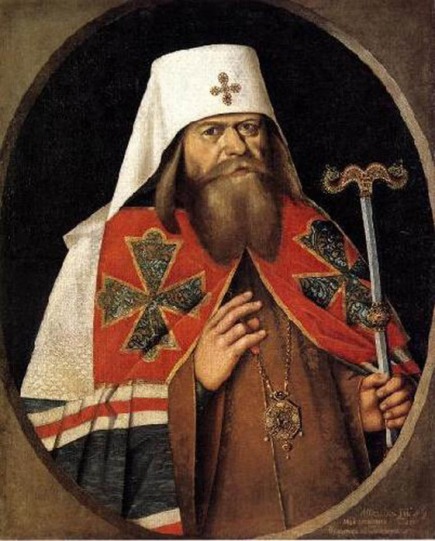
In his whole ethos of government, Patriarch Adrian was a solid representative of Moscow’s “old regime”. He did not like Europe, nor was he interested in its culture and knowledge. And his education was, it seems, completely unknowledgeable. However, by the conviction and precept of Patriarch Joachim, he was fully agreeable to Peter’s succession to the throne.
After the death of Natalia Naryshkina, the Patriarch’s patron, the real ordeal began for Adrian. Tsar Peter had grown up and, in the Russian-Asian tradition, began to ruthlessly smash the old order. His brutal mockery of the old Russian way of life did not spare the Church, organically fused with it.
There were no more processions on donkeys and holding the Tsar at the reins and ceremonies to enter the Church and receive the blessing of the Patriarch. Instead, noisy drinking sprees started in the Nemetskaya Sloboda and blasphemous games in the “All-Russian, Most Insane and All-Drunken Council of prince Ioannikita, patriarch of Presburg, Yauza and all Kukui” where the Tsar himself played the role of a deacon. There was something pathological in this, akin to the pseudo-monastic “revelries” of the oprichniks of Ivan the Terrible.
The people, always latently old-believers, patriarchal and living by tradition, naturally could not calmly perceive such a drastic change in the nature of tsarist power. Many resented the Patriarch’s passivity and scolded him for his alleged career fear: “he takes care of his cloak and white hood, and then does not denounce it”. It was not simple cowardice, however, but the near hopelessness of the hierarch’s position before the lawful autocratic power of the Tsar.
Peter no longer put the ancient sacred status of the head-hierarch at any price. When, after the Streltsy uprising, executions began, the Patriarch appeared to the Tsar with an icon to “grieve” for those being executed. Peter chased him away with orders to put the icon back in its place. And after that he completely cancelled the custom of making the Patriarch mourn for the condemned. Regarding the innovations of everyday life introduced by the Tsar, Adrian simply did not know what to do with these alien phenomena, and so in his Church precepts he simply denounced and rejected new forms of life.
He also feared against Latinism and freethinking. That is why he had an inherent fear of education. This was the reason for the expulsion of the Likhud brothers to the Ipatiev monastery1, because they taught Latin and philosophy. This was a dangerous mix in the eyes of the Primate. Such a blow considerably lowered the level of teaching at the Academy, although the need to go to school for official, commercial and ecclesiastical reasons automatically increased and deepened in Moscow. In time the Academy descended to a junior level of grammar, pithics, rhetoric, Slavonic and Greek only. And the Patriarch did not want to support the school. The Tsar himself asked him to do so.
On 21st February 1696 the Patriarch was struck down with paralysis and since then he has been almost continuously absent at his Perervinsky monastery in the countryside. But the business of organising the Church, especially in such rapidly changing times, was piling up. Adrian died in 1700. After his death Peter tactfully lingered on the traditional form of the patriarchal throne. He did not yet know what he was going to do, but he was certain of the need for change. His waiting would last 20 years, until a new form was found: the one- man rule of the Russian Church would be replaced by a collegiate synodal system.2
After 111 years3 (almost the entire 17th century) the Patriarchal period will be over.
The Russian Church under Patriarch Joachim
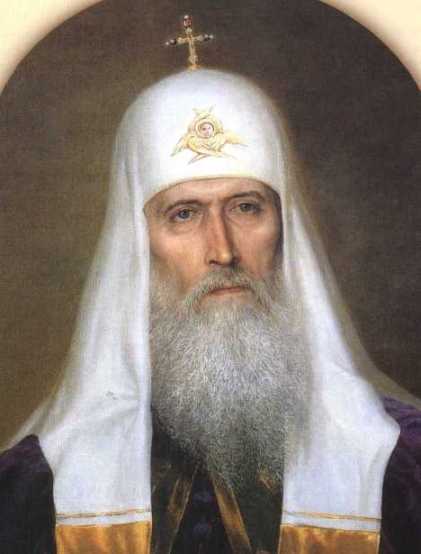
Joachim was from the noble Savelov family. As a young man he was almost a non- believer, but being widowed by the age of 35 decided to change his life. He took monastic vows in Kiev, and in 1657 Patriarch Nikon took him to his Valday Iberian monastery. But despite this patronage, Joachim took the position of Nikon’s opponents. Already in 1673, he - the metropolitan of Novgorod - was summoned to the capital, where he was involved in patriarchal administration (Pitirim was already dying). After Pitirim’s death Joachim was recognised as a suitable successor.
When he became Patriarch, he dealt actively with the program of the council of 1667, in particular, on the abolition of the influence of the Monastic department (Prikaz). In 1675 the Patriarch convened a council which decreed that the Monastic Prikaz (which happened in 1677) be closed not formally, but in fact, and that the administration, courts and finances be transferred into the hands of the clergy. Secular officials were assigned auxiliary and executive services for auditing and inventorying the property of churches and monasteries, for conducting judicial investigations and for police duties.
The total immunity of the clergy to the secular authorities was proclaimed. This was essentially a Nikonian programme which fought against the dominance of the Tsarist administration. It turned out that the bishops overthrew Nikon, but stood for his program. And so did all the Patriarchs of the pre-Synodal period. However, while making some concessions, the state, on the other hand, tightened the tax “screws”. Here everything corresponded to the principles of the Ulozhenie of 1649. The increased duties from Church estates remained in full force. To this were added other burdens: for example, the mandatory care for the disabled (as in 17-18 centuries was called the wounded or simply old servicemen), the need to establish almshouses and hospitals, etc.
In 1682, at the suggestion of the Tsar Feodor Alexeyevich, a Church Council was convened at which the questions of 1667 were reanimated, namely: 1) the question of the system of hierarchical subordination (junior to senior, and finally to the Patriarch); 2) the problem of the fragmentation of metropolises into small dioceses. There was indeed an urgent need for this, and the reason for this was the extremely vast geography of the Russian Church. It was necessary to break up the Church’s territory into smaller ones, in the Greek manner, according to the number of all the significant cities. This would have yielded a figure of at least about 100 dioceses. But of course, this would significantly reduce the property power of the bishops as well as their national importance and personal self-awareness.
Such was the time. After the Time of Troubles, the paradigm of land tenure changed from patrimonial to bureaucratic. Old-fashioned feudal magnanimity, including that of the bishops, was no longer in keeping with the spirit of the times. Of course, among the episcopate there were none who would support this essentially tsarist project. The long debates and meetings went nowhere. The bishops were bringing the whole project to naught. In the end it was decided to open only 4 bishoprics instead of the initial 72: Ustyuzhsk and Kholmogorsk, Tambov and Voronezh. It was also decided to abolish the small monasteries, reducing their inhabitants to large monastic cloisters. The monasteries were freed from the misplaced laymen who settled there, while some monks and nuns wandered about in the world, living with secular families and becoming street beggars. They were caught on purpose and placed in special monasteries for correction. In 1682 the Tsar Feodor Alexeyevich died. He left no heir and so passions again flared around the throne.
The successor was his brother Ivan, but due to his health he was incapable of governing. It was decided to hand over succession to the youngest son of Tsar Alexey, the 10-year-old Peter4. The Patriarch was behind him. But this was opposed by the Miloslavskys and with them Alexei’s daughter Sophia, who sided with Ivan. On their side was the governor of Streltsy troops, Prince Khovansky. They led a revolt. In front of little Peter, the streltsys carried out a lynching of supporters of his mother Naryshkina. The result of this quarrel was a shaky compromise: both brothers - Ivan and Peter - were proclaimed Tsars, and their sister Sophia became regent. This state of affairs lasted from 1682 to 1689. A new outbreak of internecine strife forced Peter to flee to the Trinity Sergius Lavra, and he did not return from there until October 16825. At his request the rioters were pardoned. In November 1682 the Tsar’s court returned to Moscow from its flight.
On this rebellious wave the Old Believer opposition rose. Its energy was supported by the Streltsys of Khovansky. Under their pressure in the summer of 1682 a public debate about the faith took place - it was a revenge of the zealots of the old days, who wanted to show to the world their mission. The head of the dissenters was Nikita Dobrynin (Pustosvyat), and against him stood the former dissenter, now Archbishop Athanasius of Kholmogory. For the Old Believers, the dispute was a failure. Moreover, for their insolence they were accused of insulting the royal family. Streltsys themselves arrested and handed over to the legal authorities the ringleaders of the riot, who were sent to monastic prisons, and Pustosvyat himself was executed as a political criminal on the Red Square for insulting the Tsar’s authority. All this further determined Peter’s policy towards the Russian antiquity, and in particular towards the Old Believers.
The introduction of the Old Believer element in the political life of the country, its real and destructive influence on the state created the need for stricter measures against the Old Believer agitation. A whole system of repression was approved and put into effect by the Council. It was then that for the first time in the life of the Russian Orthodox Church and the state the system of the Western Inquisition was applied6. And over time the decisive role here was played by the state and the state judicial system. All this gave rise to a response, which was the increasing practice of self-immolations (burning), self-mortems, etc. - All in view of the alleged end of times, apostasy. The fanatics fled to the forests with their families and children, and incinerated themselves in dugout caves, dugouts and log cabins. Even a peculiar theory was put under this practice: death to avoid the seal of Antichrist. Old Believers went into the woods, sometimes abroad. Thus, Old Believers’ settlements were formed in Pomerania, Siberia, Austria (Belaya Krynitsa)7, etc.
Patriarch Joachim also fought against the Polish-Latin influence. A council of 1690 was devoted to it, where he achieved a complete condemnation of the Latins. A ban was placed on the writings of Metropolitan Peter Mohyla of Kiev, Simeon of Polotsk, and Bishop Lazar Boronovich. In the same year the Jesuits were expelled from Moscow. Earlier they had bought a house in the Nemetskaya Sloboda, and even opened a school. But the intolerant Joachim got them expelled. Under him the abbot of Zaikonospassky monastery Silvester Medvedev was sentenced to death. He was accused of the so-called “heresy of bread”, the essence of which was the opinion that the consecration of the Holy Gifts takes place upon the words “Come ye, this is My Body… My Blood…”. The Roman- Catholics thought so too. It should be said that the conductor of this idea and Simeon Polotskiy, a scribe from Little Russia8, brought up in the spirit of the Polish-Latin school, whose traditions he brought to Moscow, was a teacher of Sylvester. The Orthodox view of the dispute was somewhat different: the Gifts are consecrated during the epiclesis - the invocation of the Holy Spirit: “For this bread is made with an honest Body… and in this Cup is made with an honest Blood…”. The Orthodox regarded the Latins as bread- worshippers, for they worshipped bread as Body and Blood. Sylvester was sent to be educated at Trinity Sergius Lavra, for re-education. Here he languished for three years, but never renounced it. His head was cut off.9
During that anti-Latin struggle and with the active support of the patriarch in 1681 the School of Greek reading, language and writing started functioning in the Sealed Court which in five years had already 233 pupils and in 1687 the Slavic-Greek-Latin Academy10 headed by the Likhud brothers was opened in the Zaykonospassky monastery as the centre of orthodox schools of the East. Joachim personally supervised the process of setting up the Academy. In 1689 Sophia was removed from power. The only legitimate challenger was the young Peter (then 17 years old). Until the death of his mother Natalia Naryshkina, Peter was not yet all-powerful, but in 1694 she died. It was she who achieved the coronation of Metropolitan Adrian of Kazan to the patriarchal throne in 169011, who immediately after his elevation to the patriarchate proclaimed the struggle against Roman Catholicism, Protestantism and schism.
The Russian Church under Patriarch Joasaph II
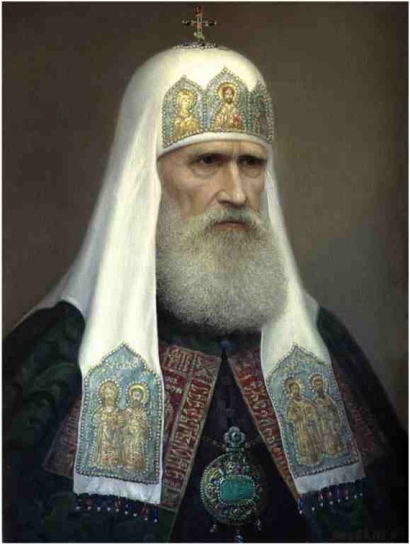
At the Council of 1667, immediately after the deposition of Nikon, Joasaph II, Archimandrite of the Trinity Sergius Lavra, was elected and appointed. This was an elderly and inconspicuous man who did not even dare to think about meddling in affairs of state. He merely participated in the established order of affairs.
This Council, among other things, abolished the traditional Russian rites: two-time singing of Hallelujah, 15 prostrations at the prayer of Ephraim of Syria and others. In general, it abolished the authority of the entire Stoglav council12. The rules of the Council regulated monastic life, the life of the clergy and the laity. Many new rules concerning liturgical matters were given. Patriarch Joasaph II tried to execute all these decrees in a new reformed spirit in practice.
Here are some of his acts:
1. Under Joasaph II two catechisms were compiled and published: the Major and Minor. Oral preaching in churches was restored.
2. Spassky monastery - centre of missionary work in Eastern Siberia and the Far East was founded on the Amur River in 1671. Missionary preaching reached Dauria (Transbaikalia).
3. In icon-painting he stopped the invasion of the Italian tradition while legitimising the Byzantine style. On this issue the patriarch approached the Tsar and Simon Ushakov, who was the court isographer13. He also continued to correct the liturgical books according to Greek models.
It was under Patriarch Joasaph II that the schism finally formed. He died in 1672.
The Russian Church under Patriarch Pitirim
Patriarch Josaph II was succeeded by Pitirim (1672-1673), formerly of Novgorod metropolitanate.
It is known that under Nikon he was Metropolitan of Krutitsky, and thus deputy to the patriarchal seat. Nikon, who left the throne, reproved Pitirim in particular for the fact that, as the first hierarch, he performed the rite of procession on Palm Sunday on a donkey. This, of course, turned Pitirim against him as well. For the same “anti-Nikonianism” he was taken after Joasaph to the patriarchal seat. True his reign, which lasted only 10 months, was not marked out by anything special. After his death (April 19, 1673) a new successor was sought by the same anti-Nikonian criterion (at that time Nikon was in exile).
He became Joachim (1674-1690).
Editorial Footnotes
Related Concepts
- adrian
- almshouses
- anaphora
- anti-latin-polemics
- apocalypse
- apostasy
- austrian-hierarchy
- belaya-krynitsa
- church-administration
- church-discipline
- church-estates
- church-geography
- consecration
- consecration-of-the-holy-gifts
- council-of-1667
- council-of-1682
- epiclesis
- episcopate
- eucharistic-consecration
- eucharistic-controversy
- eucharistic-theology
- greek-models
- heresy-of-bread
- hierarchical-subordination
- holy-gifts
- holy-spirit
- icon-painting
- iconography
- jesuits
- joachim
- latinism
- lazar-boronovich
- liturgical-aesthetics
- liturgical-books-correction
- monastic-prikaz
- nikita-dobrynin-pustosvyat
- nikonian-programme
- old-rite
- patriarch-adrian
- patriarchal-period
- peter-i
- peter-is-reforms
- peter-mohyla
- popovtsy
- religious-persecution
- repression
- rites
- seal-of-antichrist
- self-immolation
- silvester-medvedev
- simeon-of-polotsk
- simon-ushakov
- slavic-greek-latin-academy
- transformation-of-the-gifts
- ulozhenie-of-1649
- western-inquisition
- words-of-institution
Footnotes
-
The Greek Likhoud (Leichoudes) brothers, Ioannikios and Sophronios, were removed from the Slavic-Greek-Latin Academy in 1694 under pressure from Patriarch Dositheos of Jerusalem and Russian conservatives suspicious of their Latin learning. After confinement at the Novospassky Monastery they were exiled to the Ipatiev Monastery in Kostroma only around 1701 — that is, after Adrian’s death in 1700 — so the move cannot straightforwardly be credited to Adrian as this passage implies. ↩
-
Adrian died in October 1700. Peter left the see vacant and appointed Stefan Yavorsky as locum tenens (“guardian of the patriarchal throne”); the patriarchate was formally replaced by the Holy Governing Synod under the Spiritual Regulation of 1721 — an interval of roughly 21 years. The patriarchate itself was not restored until the Local Council of 1917–18 (Patriarch Tikhon). ↩
-
Accurate as arithmetic: the Moscow patriarchate was established in 1589 under Patriarch Job, so 1589–1700 spans 111 years. The institution was then suppressed in favour of the Synod and only restored in 1917. ↩
-
Peter was born on 30 May 1672 (9 June New Style), so during the Streltsy uprising of spring 1682 he was nine years old, not ten. ↩
-
These dates in fact describe the Khovanshchina revolt of 1682, during which the whole court fled Moscow to the Trinity–Sergius Lavra and returned in the autumn; for that episode they are broadly correct. They should not be confused with Peter’s decisive personal flight to the same Lavra in August 1689, which precipitated the fall of Sophia’s regency. Placing the 1682 events immediately after the mention of the 1682–1689 regency makes the chronology read as if a single later crisis is meant. ↩
-
“Western Inquisition” is rhetorical rather than descriptive. The systematic repression of Old Believers was codified chiefly in the regent Sophia’s “Twelve Articles” of 1685, which prescribed interrogation, torture and death by burning for the obstinate. These measures drew on Muscovite and Byzantine precedent at least as much as on any Western model. ↩
-
Anachronism. Belaya Krinitsa (Bila Krynytsia), in Bukovina — then under Habsburg (Austrian) rule — became an Old Believer centre only in the nineteenth century, when the Belokrinitskaya hierarchy was founded there in 1846, well over a century after the events described here. “Pomerania” also renders the Russian Pomorye, the White Sea region (home of the Vyg community), not Baltic Pomerania. ↩
-
Simeon of Polotsk (Samuil Petrovsky-Sitnianovich) came from Polotsk in the Belarusian lands of the Polish–Lithuanian Commonwealth and was trained at the Kyiv-Mohyla Collegium; “Little Russia” (Malorossiya, roughly Ukraine) is an imprecise label for his origin. ↩
-
Sylvester Medvedev was beheaded in 1691. His condemnation was not purely doctrinal: as a protégé of Sophia’s chancellor Fyodor Shaklovity, he was implicated in the 1689 conspiracy against Peter, and the “bread-worship” charge was bound up with that political fall. He held the office of stroitel (steward/director) of the monastery rather than being its abbot in the ordinary sense. ↩
-
The foundation of the Slavic-Greek-Latin Academy is dated variously to 1685 (when the Likhoud brothers began teaching) and 1687 (its formal opening in the Zaikonospassky Monastery); there is no single uncontested founding date. ↩
-
Patriarchs are enthroned or installed, not “crowned.” Adrian’s election in 1690 was contested: Peter is reported to have favoured the more learned Marcellus of Pskov, but the conservative party together with the tsar’s mother Natalia Naryshkina secured the election of Adrian, then metropolitan of Kazan. ↩
-
The Great Moscow Council of 1666–67 annulled the rulings of the Stoglav (“Hundred Chapters”) Council of 1551, declaring that they had been adopted “in ignorance.” This is the official pro-reform account; the Old Believers regarded the Stoglav as fully authoritative, and modern scholarship treats the 1667 repudiation as a contested act of ecclesiastical politics rather than a neutral correction. ↩
-
This characterisation is questionable. Simon Ushakov is generally regarded as a leading exponent of the new, more naturalistic “life-like” (zhivopodobie) manner influenced by Western European art — not as a champion of the older Byzantine style. The later seventeenth century in fact saw the Westernising fryazh style advance in Russian icon-painting. ↩