History of the Russian Orthodox Church — Topic 8
The Establishment of the Patriarchate
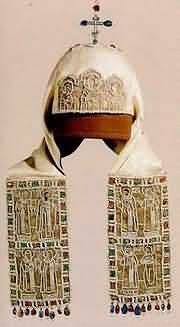 A
An epoch–making event in the history of the Russian Church – the establishment of the patriarchate - had a number of preliminary and long-developing conditions.
First of all, it is the general growth of the importance and influence of the Russian Church and its Metropolitan in the Orthodox world. By the second half of the 16th century, by the time all the ancient Eastern patriarchates had been under the yoke of Muslims for more than a century1, Moscow had advanced to high positions not only in the political sense (uniting specific principalities around itself), but also on a spiritual universal scale: the Eastern patriarchs looked in its direction, hoping to get financial and political help.
At the same time, it is impossible not to see the participation of God’s will in the establishment of the Patriarchate in Russia. It was not only a new church-political status, but by the Providence of God, Russia – the people and the Church – gained a qualitatively new support in the face of the coming Time of Troubles. It is the Church and its patriarch who will have to act as a unifying and sobering force that organized the people to fight foreign intervention and Catholic aggression.
The autocephaly2 established earlier also became a certain condition for the establishment of the patriarchate. Over time, Russia began to realize the exceptional importance of the independent Russian Church in the Orthodox world, which it was received as the most influential, numerous, and most importantly, connected with the existence of the only Orthodox state in the world, it was the Local Church.
The coronation of Ivan the Terrible in 1547 determined the new status of the Russian monarch: he officially and legitimately entered the Byzantine inheritance, became the successor of the Roman Emperors3. With this new position of state power in Russia, the quality of ecclesiastical power had to change.
However, the elevation of the Moscow Metropolis to the degree of Patriarchy at that time was hindered by strained relations with the Patriarchate of Constantinople, offended at Russia for the transition to autocephaly and proudly unwilling to recognize it. At the same time, without the consent of the Eastern Patriarchs, the independent proclamation of the Russian Metropolitan as Patriarch would be illegal. Favorable historical circumstances for this developed only by the end of the XVI century, during the reign of Tsar Theodore Ioannovich.
However, it was not he who took the initiative in implementing the idea of the patriarchate. The brain center of the whole enterprise was Boris Godunov, the brother–in-law of the sovereign, and, in fact, the real ruler of the state.
Godunov was a very bright figure: a talented politician, creatively and unconventionally thinking. He created a large-scale reform program with the aim of transforming the Russian state, strengthening its power and international prestige.
Unfortunately, the brightness of his statesman’s mind was not supported by spiritual adequacy. Therefore, his great enterprise was not always carried out by morally acceptable means, which was one of the reasons for the collapse of his plans.
Nevertheless, Godunov was jealous of the greatness of Russia. And the idea of the Russian patriarchate was at the very center of this project.
In 1586, Patriarch Joachim of Antioch arrived in Moscow. He was coming to ask for money. His visit was unprecedented, because for the first time in history, the Eastern Patriarch came to Moscow. Godunov decided to take advantage of this. He planned everything in such a way that the Antiochian hierarch was clearly shown who was the beggar here and who was the Primate of a truly great Church. The meaning of the action was quite transparent: Greek Patriarchs turn to the Russian sovereign for help, but for some reason only the metropolitan is at the Moscow department. It was as if the Eastern patriarchs were given to understand that such a discrepancy urgently needs to be corrected.
However, Joachim himself was not ready for such a turn of events. To resolve the issue of the establishment of the patriarchate in Russia, it was necessary to have the opinion of other patriarchs. He promised to consult with them.
By that time, Jeremiah II Tranos had established himself in Constantinople. He was in exile, and on his return found the affairs of the Patriarchate neglected, the temples looted, the treasury plundered. Huge debts were the main inheritance from the former patriarch. Jeremiah decided to turn to Moscow.
By that time, Job, supported by Boris Godunov, had become the Metropolitan of All Russia. He was a man of holy life, who after death was ranked among the host of saints. Despite his closeness to Boris, Job was not at all his obedient servant, he could sharply object to him on occasion.
His ascent to the top of the church service began under Ivan the Terrible. Job was distinguished by a huge mind, a great memory, and was well-read. All this was combined with the deeply spiritual disposition of the saint’s soul. The Russian leader Boris Godunov, who advocated strengthening the prestige of the Russian Church and the Russian State, was also close to him due to his outstanding qualities.
The Patriarch of Constantinople was received in Moscow with great honors. He was settled in the Ryazan compound. But along with a rich allowance, strict supervision of him and his entourage was also established.
Negotiations with the patriarch were conducted by Godunov. But even here the patriarch pointed out his lack of authority. Then it was decided to resort to cunning. Jeremiah was simply left alone in his Ryazan compound for quite a long time. For almost a year he remained inactive, away from his flock. None of the Muscovites or foreigners were still allowed to see the patriarch. In fact, it was house arrest in the most luxurious conditions.
Being in such a “golden cage” gradually began to give results. Jeremiah began to “give up.” It got to the point that he decided to stay in Moscow as patriarch himself. This thought, apparently, was suggested to him by Godunov. But that was just a bait, with which real negotiations on the establishment of a new – Russian – patriarchate began.
Once again, Godunov’s clever preparation was used. Referring to the fact that Job already resides in the Moscow Metropolis, Jeremiah was invited to live in Vladimir, and not in Moscow. At the same time, the Russians diplomatically referred to the fact that Vladimir is formally the first chair in Russia. However, in fact, Vladimir was a very provincial city. Its former greatness of the ancient capital of Russia and the Russian Church are in the past.
Jeremiah refused such a place. He said that the Patriarch should be next to the sovereign, as it has been since ancient times in Constantinople. New negotiations began, which were cunningly and secretly directed by Godunov. As a result, Jeremiah was forced to promise to make Job the Patriarch of Moscow.
On January 17, 1589, the Boyar Duma was assembled together with the council of bishops, and the sovereign proposed to turn to Job, asking the Metropolitan what he thought about the establishment of the Patriarchate. Job replied that he, along with all the bishops, trusted the tsar.
A frenzied preparation for the upcoming ceremony began. The rank of the Byzantine primates was taken as a basis, which, however, seemed extremely modest to the Russians. It was decided to rework it, adding new elements. In particular, a characteristic feature of the old Russian rank was introduced: repeated episcopal consecration4.
On January 26, 1589, Job was elevated to the patriarchal throne in the Assumption Cathedral of the Moscow Kremlin. A new era in the life of the Russian Church has begun.
In order to leave for his homeland, Patriarch Jeremiah had to give in to Godunov’s insistence again. A special letter was drawn up, which stated the consent of all the Eastern patriarchs to establish a patriarchate in Moscow. The charter again pointed to the high status of the Russian Church as the Church of the Third Rome, and as an assertion of the authority of the Moscow Patriarchate placed it in the Patriarchal Diptychs in a certain place corresponding to the position of Russia, quite high. Russia claimed that the name of the Moscow Patriarch was commemorated in third place, after Constantinople and Alexandria, before Antioch and Jerusalem.
Only after the signing of the charter, Jeremiah, caressed and generously gifted by the tsar, left home in May 1589.
On the way, he arranged the affairs of the Kiev metropolis, and only in the spring of 1590 returned to Istanbul5. In May 1590, a Council of Bishops was assembled there. It was to confirm the Patriarchal dignity of the Moscow Primate. Which is what happened. However, only the fifth place in the diptychs was approved for the Moscow Patriarch6.
- Establishment of the Patriarchate
- The Russian Church under the Patriarch Job
- The Russian Church under the Patriarch Hermogene
The Establishment of the Patriarchate
A
The Russian Church under the Patriarch Hermogene
After Job was deposed, by decree of the False Dmitry, the bishops’ Council appointed Ignatius as the new patriarch (June 24, 1605). He was a Greek, a native of Crete. From 1603 he was metropolitan at the Ryazan department.
When Boris Godunov died, Ignatius, like some of the bishops, joined the supporters of False Dmitry I. Together with the impostor, he paraded into Moscow, and a staff and a Cross were presented to him as patriarch. Already in Moscow, Ignatius had the “honor” to crown the impostor and marry him with Marina Mnishek, joining the latter to Orthodoxy7. This, and even the pro-uniate views of the “patriarch” turned many Russian patriots against him.
After the murder of False Dmitry I (May 18, 1606)8, Ignatius will be defrocked and a simple monk will be imprisoned in the Chudov monastery. He was released by the Poles, and, despite the living legitimate Patriarch Hermogenes, Ignatius will be restored to patriarchal dignity (St. Hermogenes was languishing in the prison of the Chudov Monastery at that time).
Feeling his position precarious, in 1611 Ignatius will travel to the Polish- Lithuanian Commonwealth. Near Smolensk, the Poles will intercept him and send him to King Sigismund III, who will offer him either to return to Moscow or stay in the Polish possessions. Ignatius will choose the latter, and will wish to settle in the Trinity Uniate Monastery in Vilna.
But let’s go back to the previous events.
Almost from the first day of the reign of False Dmitry I, a wave of discontent swept through the capital due to his non-observance of church posts and violations of Russian customs in clothing and everyday life, his disposition towards foreigners, his promise to marry a Polish woman and the war with Turkey and Sweden being started. At the head of the dissatisfied were Vasily Shuisky and the most conservative-minded representatives of the clergy.
On May 17, 1606, as a result of a conspiracy, the deceiver was killed, and two days later the adherents of Vasily Ivanovich began to call Shuisky the tsar.
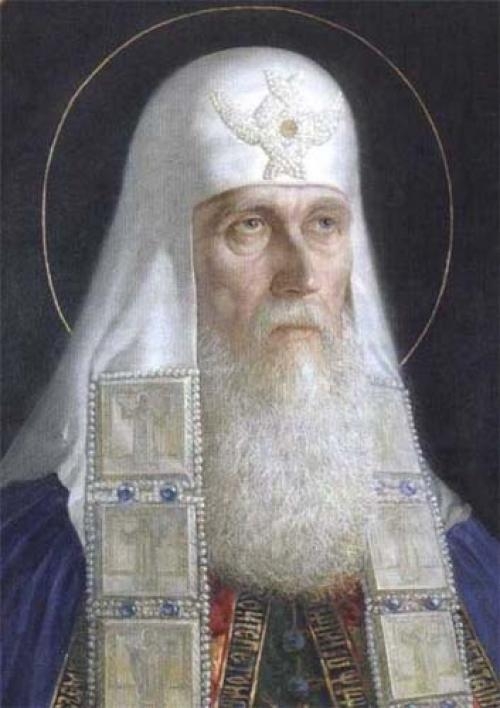
The new sovereign chose a new image – the defender of the nation and the guardian of Orthodoxy. He expelled all the impostor’s henchmen (among whom was Patriarch Ignatius). And now Russia needed a new primate. Which was found in the person of Metropolitan Hermogenes of Kazan – a staunch supporter of Orthodoxy and an enemy of the Poles. The enthronement took place on July 3, 1606.
The path of his church ministry began in Kazan. It is assumed that Hermogenes arrived in Kazan after the conquest of the city by Ivan the Terrible. Here he became a priest of the St. Nicholas Church.
In 1579, it was Hermogenes who had the honor to find the holy image of the Kazan Mother of God9, found after the city fire. Soon after this miracle, he becomes a monk. Hermogenes was distinguished by education and piety. All this opened the way for him to hierarchical service. He is delivered by the Metropolitan to Kazan.
Metropolitan Hermogenes was well known in Moscow. False Dmitry I included him in the Boyar Duma as a well-known and influential person. But there Hermogenes showed himself to be an opponent of the self-styled tsar: he opposed the election of Ignatius as patriarch and demanded the Orthodox baptism of Marina Mnishek. False Dmitry ordered him to be expelled from the Duma and sent into exile. However, they did not have time to execute the order because of the murder of False Dmitry.
The new tsar Vasily Shuisky, by his rule, only strengthened the Time of Troubles, further delaying its end. The time of Vasily Shuisky in Russian history became a model of classical oligarchy: state power was completely in the hands of a small group of noble boyars. Together with the incorrect coming to power, this was the main reason for the popular discontent with Vasily, which was expressed in the support of another False Dmitry (Tushinsky thief).
Being a witness to the current system of government, Hermogenes, by virtue of his nature, could not stand aside. He often reproached Tsar Vasily for his methods of government, for corruption. Of course, all this quickly created for him, an unfavorable reputation at court.
However, with all this, Patriarch Hermogenes did not deviate one step from his deep conviction about the sanctity of the royal power. Despite the constant clashes with the Tsar, however, he did not give his support to his numerous enemies, but also always defended Vasily. A strict follower of tradition, Hermogenes respected in him a person who, no matter what ways he reached the throne, was consecrated with a royal crown and anointed.
By that time, having fortified themselves near Moscow, False Dmitry II and the Polish forces supporting him attempted to organize a complete blockade of it. In their way lay the Trinity-Sergius Monastery, which at that time was a first-class fortress. The occupation of the monastery ensured control over the north-eastern regions of Russia, as well as enrichment at the expense of the monastic treasury.
The siege of the monastery lasted almost 16 months (October 3, 1608 – January 22, 1610), and claimed hundreds of lives of the defenders. The besieged needed food, water, gunpowder, fuel… From hunger, scurvy began.
However, the defenders of the monastery were not left without help. Cellarer Avraamiy Palitsyn in his story about the siege of the Trinity Monastery recounts about the many phenomena of the Rev. Sergius of Radonezh and his disciples, who constantly strengthened the morale of the besieged.
Over time, a split occurred in the besiegers’ camp between the Tushin (Russians) on the one hand, Poles and mercenaries on the other. Many atamans of the Tushin people withdrew their troops from the Trinity-Sergius Monastery, desertion became widespread in the remaining detachments. The approach of the Russian army of Prince Mikhail Skopin-Shuisky forced the Poles to lift the siege on January 22, 1610. Such a successful end to the siege had a significant impact on the mood of the population, raised the morale of the army, which for the first time in the Time of Troubles gave such a decisive rebuff to foreign invaders.
During the formation of the first people’s militia against the interventionists, the monasteries responded to the call of Procopius Lyapunov and Patriarch Hermogenes, supplying the army with people assigned to their subordinate patrimony. The same thing happened to the second militia.
But not only did the monasteries help the state with money during the difficult period of the Time of Troubles. When in 1608 there was a famine in Moscow, and dealers speculated on the sale of bread, the Trinity-Sergius Monastery, at the suggestion of the tsar and Patriarch Hermogenes, opened its storehouses located in the capital, as a result of which the people were saved from starvation, and the price of bread was stabilized.
During the devastation of the environs of Moscow by the Polish army, monasteries became the only place where peasants could hide. Most of the victims of the Poles were taken by the Trinity-Sergius Monastery. Literally all of it was turned into an almshouse; houses for homeless shelters were built in monastic villages untouched by the Poles; the bodies of the dead were collected in the vicinity and buried at the monastery’s expense.
In 1610, a group of seven boyars (Semiboyarschina) overthrew Tsar Vasily Shuisky and elected 15-year-old Polish prince Vladislav as Tsar10. On September 21, Polish troops entered the Russian capital. Pogroms and looting began.
Seeing this, the Patriarch called on all Russian people to defend the faith and the Fatherland. He became the center of the liberation movement, its ideological and spiritual inspirer. Despite the conclusion, he sends letters to the cities calling for the fight against the Polish intervention. He blessed both militias designed to liberate Moscow from the Poles. Muscovites raised an uprising, in response to which the Poles set fire to the city, and themselves took refuge in the Kremlin. Together with some traitors from the boyars, they imprisoned Hermogenes in the Miracle Monastery.
On the second day of Easter 1611, the Russian militia approached Moscow and began the siege of the Kremlin, which lasted several months. The Poles besieged in the Kremlin have repeatedly sent ambassadors to the Patriarch demanding that he order the Russian militia to withdraw from the city, threatening him with the death penalty.
Already from prison Hermogenes addressed his last message to the Russian people, blessing the liberation war against the conquerors. On February 17, 1612, without waiting for the liberation of Moscow, he died of hunger.
The time of troubles ended with the election of a new ruler, Mikhail Romanov, on February 21, 1613. However, if the state finally found its head, the Church will remain without a patriarch for another 6 years. Even then, Filaret Nikitich (Romanov), the Metropolitan of Rostov, and the father of the young monarch, who was then in Polish captivity, were destined for this place.
Therefore, the Council of Bishops decided to resort to a temporary wait-and- see form of supreme governance of the Russian Church. Metropolitan Paphnutius of Krutitsky was appointed acting administrator of church affairs, and after his death, Ephraim of Kazan was appointed.
Metropolitan Ephraim performed the royal wedding of Mikhail Romanov on July 11, 1613 in the Assumption Cathedral. After him, the leadership of the Council of bishops passed into the hands of the newly installed Metropolitan of Krutitsky Jonah.
The Russian Church under the Patriarch Job
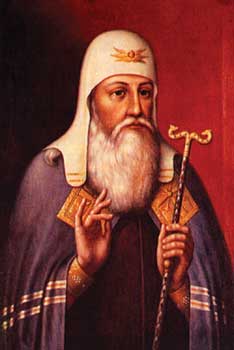
The Patriarchate in Russia immediately raised the question of the reorganization of the church administration. The oldest departments were transformed into metropolitanates (Novgorod, Rostov, Kazan and Krutitskaya). New archdioceses and bishoprics have appeared.
Job clearly expressed the idea of multiplying the episcopate – so that each city had its own ruling bishop (and not one for thousands of kilometers around), so that the bishop was exactly the father of his flock and knew its problems.
Several dozen new monasteries were opened. A lot of work is being done to correct and publish liturgical literature, which was lacking everywhere, especially in the newly enlightened lands – in Kazan, Astrakhan, Siberia. For the first time, the following were published: The Lenten Triod, the Colored Triod, the Octoechos, the General Minea, the Official of the Episcopal Ministry and the Service Book. At the direction of the Patriarch, some measures were taken to correct inaccuracies in the liturgical books. Comparing ancient manuscripts, he selected the best ones as a model for printing. Patriarch Job was the first to put the printing process on a broad basis.
He paid a lot of attention to the correction of morality among the parish clergy, among whom the lowest vices were often encountered. For this purpose, the institute of deans or provosts was established.
The new Russian saints were glorified: Basil the Blessed, the Monk Joseph of Volotsky (the saint himself wrote a canon to him and “corrected the service”), the Kazan saints Gurius and Varsonofy, the blessed Prince Roman of Uglich, the Venerable Anthony the Roman and Cornelius, Ignatius of Vologda and others. New days of celebration were established for some saints already revered in Russia.
Patriarch Job used his personal funds and rich royal gifts for alms and for the construction of temples. In Moscow alone, 12 churches were built in the period from 1592 to 1600.
The Patriarch also organized missionary activities, which were mainly directed to remote areas of the state (to Siberia, to the Russian North), as well as to Georgia.
By tradition, the patriarch also took part in the discussion of state affairs, where he had the first voice. The Tsar held all boyar meetings only in the presence of the patriarch. However, this was a heavy burden for Job. After all, he was a monk, not a statesman. However, he did not withdraw from matters of national importance, realizing his patriarchal responsibility to the people.
This was already manifested in the case of Tsarevich Dimitri, the younger brother of Fyodor Ivanovich, in which he, having no children of his own, saw the only heir.
Dimitri died on May 15, 1591 in Uglich, according to the official version – from epilepsy during a knife game11. But human rumor immediately blamed Godunov for everything: allegedly he was clearing his way to power. Tsar Fyodor sends the case to the patriarch for review, and he, following the authoritative majority, confirms the conclusions of the official investigation.
Thus, Job simply loyally followed the official truth. He did not contribute anything personally to the Uglich case, following the still legitimate government.
In 1598, Tsar Fyodor died. The Rurikovich family has ended12. The Zemsky Sobor (public council) for the first time in Russia elected a new monarch, who became Boris Godunov. Of all the possible candidates, this was the most adequate successor: from Boris, more than from anyone else, one could expect good for the state. Patriarch Job also actively participated in his election.
The epoch-making event of the change of dynasties could not be easily perceived by the Russian consciousness. And Boris fully understood this – he understood the precariousness of his position. Suspicious of everyone, he began to settle personal scores with the boyars.
Patriarch Job saw all this, but there was nothing he could do. The flywheel of the new government was launched, and any attempt to stop it threatened death. The saint suffered internally, but outwardly did not dare to confront Godunov. According to the chronicler, he “day and night, with tears, incessantly stood in prayer in the church and in his cell; incessantly sang prayer songs in the cathedral, with weeping and great sobbing.”
It was the beginning of the Time of Troubles.
When the False Dmitry I appeared, the patriarch resolutely opposed the impostor. In it, he was the first to recognize his former deacon, Grigory Otrepiev13. An adventurer who appeared at the time and place both in Catholic Poland and in the Moscow state.
The false Dmitry was indeed under the patronage of the patriarch for some time, he had a kind of personal secretary. However, after two years of such labors, according to the chronicle, the future False Dmitry was convicted of heresy and moral misconduct. This served to remove Otrepiev from the patriarch and his flight from the country.
The Patriarch sends out letters in which he calls for loyalty to the legitimate monarch. It was also a religious struggle, because it is known that the False Dmitry entered into a criminal relationship with Catholics, and promised them to introduce a union in Moscow.
However, the country was already deeply affected by the unrest. Whole cities were separated from Moscow. Russians considered Godunov to be a liar, and not the “miraculously saved” Tsarevich Dimitri – this wild logic had its own truth, its own faith – in a kind and true tsar-father, whom a Russian person is always looking for.
In the spring of 1605, Tsar Boris died. And on June 20, the self - proclaimed Tsar entered the gates of Moscow in triumph. Job was arrested at worship in the Assumption Cathedral of the Kremlin, his patriarchal vestments were torn off, and beaten as a simple monk was sent into exile – to the Staritsky Assumption Monastery. After the expulsion of Job, the church council elected the Greek Ignatius, who joined the supporters of False Dmitry, as the new patriarch of Moscow. However, the change of Patriarchs was not legal: St. Job was neither deposed, nor even deprived of his dignity.
Job lived in Staritsa for two more years, and died in 1607. Before his death, rehabilitated by Vasily Shuisky, he visited Moscow, but for health reasons (completely blind) refused to return to the patriarchal throne and returned to Staritsa, where he died on June 19.
Establishment of the Patriarchate. Patriarchs Job and Hermogenes and
their ministry during the Time of Troubles.
Editorial Footnotes
Related Concepts
- archdioceses
- autocephaly
- byzantine-inheritance
- byzantine-rank
- canonical-independence
- canonical-recognition
- canonical-territory
- catholic-aggression
- church-administration
- church-as-unifying-force
- church-autocephaly
- church-governance
- church-mission
- church-of-japan
- church-separatism
- church-turmoil
- church-unity
- clergy-discipline
- colored-triod
- conciliar-forms
- constantinople
- constantinople-patriarchate
- council-of-bishops
- deaneryprovost
- deposition-of-a-patriarch
- diocesan-reform
- diptychs
- eastern-patriarchs
- ecclesial-prestige
- ecclesiastical-honor
- enthronement
- episcopal-fatherhood
- false-dmitry-i
- fifth-ecumenical-council
- finnish-orthodox-church
- florentine-union
- georgian-orthodox-church
- greek-convergence
- greek-metropolitans
- holy-synod
- ignatius
- intercession-of-saints
- kiev-theological-school
- lenten-triod
- liturgical-calendar
- liturgical-composition
- liturgical-rite
- local-church
- loyalty-to-the-legitimate-monarch
- metropolis
- metropolitan-isidore
- metropolitan-jonah
- metropolitanates
- metropolitans-photius-and-isidore
- moscow-as-new-constantinople
- moscow-church
- moscow-conservatism
- moscow-metropolis
- moscow-patriarchate
- mother-church
- national-liberation
- nationalism
- orthodox-church-in-america
- orthodox-resistance
- pastoral-care
- pastoral-oversight
- patriarch-hermogenes
- patriarch-ignatius
- patriarch-job
- patriarch-of-constantinople
- patriarchal-diptychs
- patriarchal-enthronement
- patriarchal-ministry
- patriarchate
- patriarchate-of-constantinople
- patriarchs-job-and-hermogenes
- pentarchy
- polish-intervention
- primacy
- primate
- relations-with-constantinople
- royal-anointing
- russian-church
- russian-church-prestige
- russian-liturgical-tradition
- russian-saints
- sacral-monarchy
- saint-job
- service-book
- siege-of-trinity-sergius
- st-metropolitan-jonah
- symphony
- thomos
- time-of-troubles
- trinity-sergius-monastery
- ukrainian-church-council
- unia
- usurpation
- vasily-shuisky
- vigilius
Footnotes
-
The three ancient Eastern patriarchates of the Middle East — Alexandria, Antioch, and Jerusalem — had in fact been under Muslim rule since the Arab conquests of the 7th century, nearly a millennium earlier, and under Ottoman rule specifically from 1516–1517. Only Constantinople had fallen comparatively recently (1453). “More than a century” greatly understates the duration for most of the Eastern sees. ↩
-
Russian autocephaly is conventionally dated to 1448, when a council of Russian bishops elected Metropolitan Jonah without the sanction of Constantinople in the aftermath of the Council of Florence. It long lacked canonical recognition; Constantinople acknowledged it formally only in the acts establishing the Moscow patriarchate (1589) and the confirming councils of 1590 and 1593. ↩
-
This reflects the “Third Rome” ideology and the Russian adoption of the title tsar (from Caesar). Neither the Byzantine successor states, the other Orthodox churches, nor the Western powers recognized the Muscovite ruler as the legitimate heir of the Roman/Byzantine emperors; the claim is a theological-political construct rather than a recognized juridical succession. ↩
-
The Greeks regarded the re-consecration of Job — who was already a consecrated metropolitan — as uncanonical, since Orthodox (and broader Christian) practice holds episcopal consecration to be unrepeatable. The Russian insistence on re-consecrating their patriarchs was later abandoned and is often cited as evidence of the canonical irregularity of the 1589 ceremony. ↩
-
“Istanbul” is anachronistic here: in Orthodox ecclesiastical usage of 1590 the city was called Constantinople (the name used earlier in this same text). “Istanbul,” though in colloquial Ottoman use, became the city’s official name only under the Turkish Republic in 1930. ↩
-
Moscow’s fifth (and last) place after Constantinople, Alexandria, Antioch, and Jerusalem was the ranking confirmed here and reaffirmed by the larger council of 1593; Russia’s aspiration to third place was never granted. The 1593 council is usually regarded as the definitive canonical confirmation of the Moscow patriarchate. ↩
-
Marina Mniszech was not in fact received into Orthodoxy. Her refusal to convert — she was chrismated and crowned tsaritsa but remained Roman Catholic and reportedly declined Orthodox communion — was among the chief scandals of the False Dmitry affair and precisely what outraged conservative Muscovites. ↩
-
This date is inconsistent with the “May 17, 1606” given later in this same text. The generally accepted date (Julian calendar) for the killing of False Dmitry I is 17 May 1606. ↩
-
By tradition the icon’s hiding place was revealed in a vision to a young girl, Matrona, who uncovered it in the ashes; Hermogenes, then the parish priest Yermolai, took part in the icon’s solemn translation and later composed the written account of the miracle. Attributing the discovery itself to Hermogenes compresses the traditional narrative. ↩
-
Władysław Vasa was offered the throne by treaty with the Seven Boyars but never actually reigned in Moscow, was never crowned, and never fulfilled the condition that he convert to Orthodoxy. He maintained a claim to the Russian throne until formally renouncing it only in 1634. ↩
-
The cause of Dmitry’s death remains one of the most disputed questions of the period. The Shuisky commission ruled it an accident (a self-inflicted wound during an epileptic seizure), but Vasily Shuisky himself later publicly reversed this verdict to accuse Godunov, and many historians regard the truth as unrecoverable; murder on Godunov’s behalf has been neither proven nor disproven. ↩
-
Strictly, only the senior Moscow (Daniilovich) line of the Rurikid dynasty died out with Fyodor I. Numerous other Rurikid branches survived — indeed Vasily Shuisky, himself a Rurikid, took the throne in 1606 — so the dynasty as a whole did not “end” in 1598. ↩
-
The identification of False Dmitry I with the runaway monk-deacon Grigory Otrepyev was the official position of Godunov’s government and remains probable but unproven; historians continue to debate the impostor’s true identity, and the equation should be read as the contemporary Muscovite claim rather than as established fact. ↩