History of the Russian Orthodox Church — Topic 6
The Russian Church during the reign of Great Prince John III. The Russian
Church during the reign of Great Prince Basil III and the infancy of John IV
-
The Russian Church during the reign of Great Prince John III
-
The Russian Church during the reign of Great Prince Vasily III
-
The Russian Church during the infancy of John IV
-
The Russian Church during the reign of Great Prince John III. The Russian Church during the reign of Great Prince Vasily III and the infancy of John I1
-
The Russian Church during the reign of Great Prince John III. The Russian Church during the reign of Great Prince Vasily III and the infancy of John I
-
The Russian Church during the reign of Great Prince John III. The Russian Church during the reign of Great Prince Vasily III and the infancy of John I
The Russian Church during the infancy of John IV
Vasily III Ivanovich died on December 4, 1533. Before his death, he transferred his wife and three-year-old Ivan IV under the patronage of Daniel. Elena Glinskaya was ordered to rule until the heir matured.
It was then that the consequences of the metropolitan’s obsequious policy towards the secular authorities appeared. No one took any not him. Daniel’s position, like his authority, was only a word. He was unable to protect the interests of the church and the hierarchy from the secular attacks of the government of Elena Glinskaya, when the increase of church lands was prohibited, church funds were withdrawn, and the clergy were obliged to perform certain duties.
On April 3, 1538, Elena Glinskaya died. The position of the unpopular metropolitan has become even more precarious. The princess, after all, could stand up for him with her power. Grand Duke Ivan IV was still too young, and therefore the regency over him was transferred by the dying princess into the hands of the boyar Duma, in which a party struggle for supremacy immediately took place. The Shuisky and Belsky parties shared power right in front of the heir.
The metropolitan chose a side unsuccessfully: the Belskys lost, and with them the hour of Daniel was approaching.
What happened: on February 2, 1539, Ivan Shuisky unceremoniously removed the metropolitan, as his political enemy, from the pulpit and exiled him to the Joseph-Volotsky Monastery. There he died on May 22, 1547.
After the overthrow of Daniel in 1539, Shuisky installed the abbot of the Trinity Monastery Joasaph as metropolitan. He ruled for about 3 years, and was forced to leave his post. Joasaph was a non-possessor, and followed their way of behavior. He was straightforward and honest. That is why he could not stay away from controversy during the reign of Ivan Shuisky.
Apparently, considering Ivan Shuisky an unworthy ruler, Joasaph leans towards Belsky, a inmate in prison. He petitions the sovereign for his release. Belsky was released and together with the metropolitan began to strengthen the power. But severe retribution followed: the Shuisky party immediately organized a conspiracy, and on the night of January 3, 1542, Belsky was captured and sent into exile. The metropolitan was almost killed. At the Trinity compound he was taken, and also exiled to prison. He died in the Trinity-Sergius Monastery in 1555.
The Russian Church during the reign of Great Prince John III
Metropolitan Jonah died in 1461. Before his death, he bequeathed the metropolitan table to Theodosius of Rostov (1461-64), who was elevated to the rank of metropolitan on May 3, 1461. Prior to that, Theodosius was the rector of the Moscow Chudov Monastery, and since 1454 - Archbishop of Rostov. He supported the policy of John III Vasilyevich (1462-1505) on the collection of Russian lands.
In this sense, the Novgorod land, famous for its political freedom, caused particular concern. Novgorodians were burdened by the influence of Moscow. There were calls in the Novgorod society to separate from the Metropolitan of Moscow and move to the Lithuanian Uniate metropolitan in order to further conclude an alliance with Polish-Lithuanian Rus’. Theodosius managed to prevent Novgorod from coming under the power of the Uniate hierarchy.
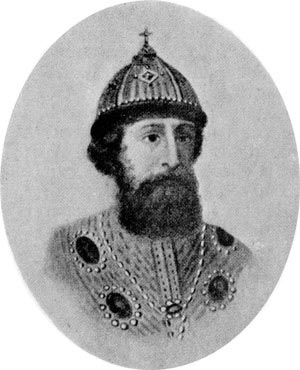
The reign of Theodosius lasted only three years. During this time, he directed his efforts to correct the morals of the clergy, among whom there were many lazy and illiterate people. By his strictness to ecclesiastical discipline, Theodosius aroused against himself the extreme indignation of an ignorant society. Not wanting to endure reproaches and curses for this, Theodosius left the metropolis in 1464 and retired to the Chudov Monastery. He lived in retirement for another 11 years and died in 1475 in the Trinity Sergius Monastery.
When retiring, Theodosius pointed out his successor. The candidacy was coordinated with the will of Grand Prince John III. The next Metropolitan became Bishop Philip of Suzdal (1464-73).
Under him, the separatist attempts of the Novgorodians in the church and political spheres manifested themselves with particular force. In 1470, Lithuanian Metropolitan Gregory the Bulgarian, convinced of the impossibility of introducing a union in Lithuania, converted to Orthodoxy.
This made him even more dangerous for Moscow. Patriarch Dionysius I of Constantinople attached Gregory to Orthodoxy, recognized him as Metropolitan not only of Lithuania, but also of All Russia. The Patriarch sent his ambassador to Moscow and Novgorod, demanding the acceptance of Gregory as the legitimate metropolitan and the rejection of the Metropolitan of Moscow. John III ordered not even to let the ambassadors of the Patriarch and Metropolitan Gregory into Moscow. This is a confirmation of the formal break between Constantinople and Moscow, which occurred as a result of the emergence of Russian autocephaly.
At the same time, the “Novgorod issue” was resolved. In 1470 a new archbishop was elected in Novgorod. Theofil, loyal to Moscow, became theirs. But there were those who were dissatisfied with this election, who formed a party and began resistance. Metropolitan Philip, in his letters, urged the city not to fall away from the true faith, not to accept the Catholic faith. Novgorodians remained faithful to Moscow in terms of faith, but not in terms of politics. In the hope of preserving its special status, the Novgorod party of Marfa Boretskaya concluded an agreement with King Casimir (1447-92), according to which the independence of the Orthodox Church in Novgorod was guaranteed.
This has overwhelmed Moscow’s patience. On July 14, 1471, in the battle on the Shelon River, Moscow troops defeated Novgorod. The Novgorodians refused to cooperate with Lithuania, and also pledged to maintain not only state, but also church subordination to Moscow.
The name of Metropolitan Philip I is also associated with the construction of the new Moscow Assumption Cathedral. According to the plan, the temple was supposed to surpass all other Russian temples in its volumes. The construction was commissioned by Moscow craftsmen and started in the spring of 1472. But Metropolitan Philip did not live long enough to see the completed church – he died when the cathedral was halfway to completion. The completion of the construction took place under his successor, Gerontius.
The construction of the new temple was timed to coincide with an important event – the second marriage of Grand Prince John III and the niece of the last Byzantine Emperor Constantine XII2 Palaiologos - Zoya (Sophia in Russian).
Sophia was a Uniate3, a pupil of Metropolitan Cardinal Vissarion of Nicaea, one of the organizers of the Florentine Union. This circumstance did not bother John III – he was sure that Catholicism would not affect Russia. And as it turned out – Zoya-Sophia’s Catholic companions were deported from Moscow. Metropolitan Philip died on April 5, 1473. His successor was Gerontius (1473-79)4.
Gerontius was formerly bishop of Kolomna. When he became Metropolitan, he wanted to finish the Assumption Cathedral of the Kremlin as soon as possible. But the Russian builders did not cope with the task – the almost finished building collapsed. It was decided to invite Pskov builders. They were led by the Italian Aristotle Fioravanti5. He successfully coped with the task. The Assumption Cathedral was solemnly consecrated in the summer of August 12, 1479.
After the celebration of the consecration, there was a dispute between the Grand Prince and the metropolitan on the issue of making the procession. The dispute continued with varying degrees of intensity until 1481, when the metropolitan retired to the Simonov Monastery. Gerontius announced that he would leave his rank if the prince apologized and did not allow him to continue making processions counterclockwise.
The metropolitan had the majority of the clergy on his side, so the Grand Prince was finally forced to accept. He personally went to Gerontius with an apology and a promise of complete obedience. The Metropolitan returned to his ministry.
Another clash between the prince and the metropolitan took place in 1478. Then the Archbishop of Rostov Vassian decided to subdue the Kirillov Belozersky Monastery. That, at the behest of the metropolitan, was under the jurisdiction of Prince Mikhail Andreevich.
Vassian protested this decision of Gerontius, but the metropolitan stood his ground. Then the Archbishop of Rostov turned to the Grand Prince, who took more energetic measures. John III ordered to take away the right to rule from Mikhail Andreevich, and in Moscow he gathered a council of the clergy to review the metropolitan’s decision. The decision was against Gerontius. The prince tore up the metropolitan charter and, together with the council, indicated to the Kirillov monastery to be in the power of the Rostov archbishop.
Despite these clashes, the metropolitan was a faithful adviser to the prince in political affairs. Thus, during the invasion of Akhmat in 1480, Metropolitan Gerontius, and with him Archbishop Vassian and all the clergy, persuaded the cautious prince into a decisive struggle with the khan.
Grand Prince John III did not have warm feelings towards Metropolitan Gerontius, and even had a desire to remove him from the pulpit. But these were only the first timid plans of the Moscow Grand Prince — to autocratically dispose of his metropolitans, and therefore at first, they were not crowned with success. At the end of 1483, Mitr. Gerontius retired to the Simonov Monastery due to illness, assuming he was to leave the metropolis altogether. The illness, however, soon passed, the metropolitan wanted to resume his duties. Then the Grand Prince made an attempt to remove Gerontius from ministry, but did not dare open lawlessness, and the metropolitan was returned to service again.
During the reign of Metropolitan Gerontius, the Moscow Metropolitanate was once again disturbed by events in Lithuania. In 1472, Metropolitan Gregory the Bulgarian died. The Patriarch appointed the Tver monk Spyridon, nicknamed Satan for his courage and dexterity, as the Metropolitan of Kiev. He went to Constantinople without the recommendation of the Lithuanian government and, through Sultan Mohammed II, persuaded Patriarch Raphael to dedicate himself to the Lithuanian see (1476).
When Spyridon arrived in Lithuania in 1476, he was imprisoned. However, Satan managed to send a letter to Moscow by trickery. He writes to Grand Prince John: “I brought you a lot of relics from the patriarch, but the king took everything for himself.” John III secured the release of Spyridon, who immediately went to Moscow. There he was captured and sent to Solovki, where he died in 1503.
During the reign of Metropolitan Gerontius, another notable event took place in the life of the Russian Church – the discovery and destruction of the heresy of the Jews6.
The discovery of heresy occurred after John III appointed Archimandrite Gennady (Gonzov) of the Chudov Monastery as bishop of Novgorod in 1484. Soon the newly appointed bishop sounded the alarm: in his opinion, heresy appeared and spread widely in Novgorod (which received the name “heresy of the Jews” in historical literature). Gennady began an active struggle against it, but he came across unforeseen circumstances: some of the alleged heretics enjoyed the patronage of the Grand Prince. Thus, Fyodor Kuritsyn had considerable influence on state affairs; the places of priests in the Assumption and Archangel cathedrals were occupied by two more heretics - Dionysius and Alexei; the wife of the heir to the throne of Ivan Ivanovich, Elena Voloshanka, was associated with heretics. Gennady’s attempts to obtain the arrest of Moscow supporters of heresy on the basis of the testimony of heretics arrested in Novgorod did not yield results; John III was not inclined to attach much importance to the case of heresy. Nevertheless, Gennady managed to attract a number of church hierarchs to his side; among others, he was actively supported by hegumen Joseph Volotsky.
In May 1489, Metropolitan Gerontius died. Archbishop Gennady became the senior hierarch of the church, which immediately strengthened the position of supporters of the eradication of heresy. In addition, on March 7, 1490, the heir to the throne, Prince Ivan Ivanovich, whose wife was the patroness of heretics, Elena Stefanovna, died, as a result of which the influence of adherents of the zealot of Orthodoxy, Sophia Palaiologos, and the heir to the throne, Vasily, grew. Nevertheless, on September 26, 1490, Archbishop Gennady’s enemy, Zosima, became the new metropolitan (Joseph Volotsky, not shy of strong expressions, reproached Zosima for heresy), and on October 17 a church council was assembled.
The result of the council was the condemnation of heresy. A number of prominent heretics were arrested; some were imprisoned (they were kept in very harsh conditions that became fatal for many), some were extradited to Gennady and demonstratively transported around Novgorod. One of the Novgorod chronicles mentions more brutal reprisals: the burning of heretics “on the Dukhovskoye field”. However, some supporters of heresy were not arrested. Metropolitan Zosima retired to the Trinity Sergius Monastery in 1494, where he died two years later.
Instead of Zosima, Archimandrite Simon was elevated to the Moscow Chair on September 22, 1495.
During his primacy, Councils were repeatedly convened under his chairmanship to resolve issues of church life. The Council of 1503 dealt with disciplinary issues. The issues of protégé duties and “about widowed priests” were considered. Together with other hierarchs, he opposed the plans of Grand Prince John III on the secularization of church lands. At the Council in November 1504, the heresy of the Jews was finally condemned. At the Council in July 1509, due to a conflict with Joseph Volotsky, Archbishop Serapion of Novgorod was convicted, dismissed from the administration of the diocese and exiled to the Andronikov Monastery. In 1505, Simon married Vasily Ivanovich and Solomonia Saburova. The metropolitan received the deathbed confession of John III, who refused to accept monasticism. On April 30, 1511, Simon left the metropolis. He died on January 28, 1512
The Russian Church during the reign of Great Prince Vasily III
After Simon, Prince Vasily III in 1511 personally (that is, without a conciliar election) appointed Archimandrite of the Simonov monastery Varlaam as metropolitan. In the civil sphere, according to Karamzin, mitr. Varlaam was “a firm man and not a flatterer to the Grand Prince, in any matters contrary to conscience.” So, at that time he was not quite “at the court” of the Grand Prince. In addition, his relations with the secular ruler were complicated by the methods that Vasily III chose in the policy of unification of Russia. After all, Metropolitan Varlaam was spiritually oriented towards non- possessors, that is, he advocated putting into practice the pure principles of Christian morality. Therefore, he could not approve of all the actions of the princely policy, as a result of which he was forced to leave the department after ten years of his reign.
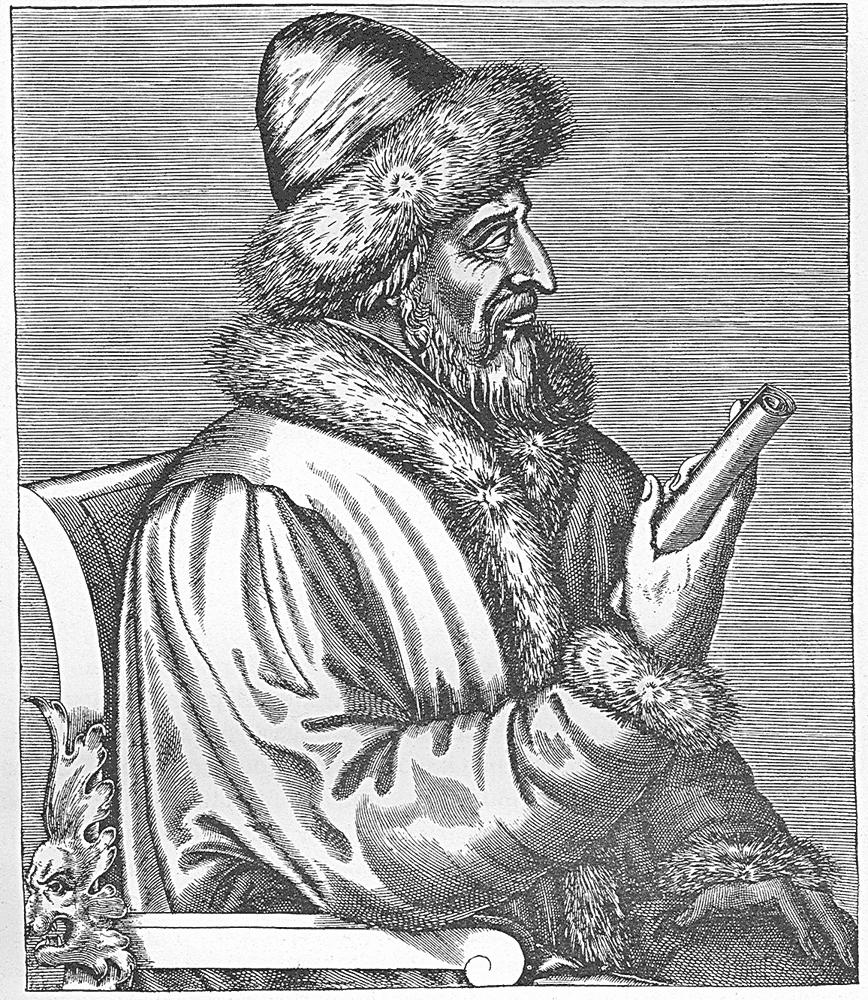
The power of the Moscow Prince grew very quickly, and not only in the civil sphere, but also in church administration. Over time, it became possible for Basil III not only to drive Varlaam from the metropolis, but also to send him to prison.
Under Metropolitan Varlaam, Maxim the Greek arrived from the east in 1518.
He came as a learned translator and stayed in Russia until his death. The fact is that in the library of Vasily III there was a large Explanatory Psalter, consisting of the interpretation of many interpreters. There was an idea to translate it into Slavic. But there were no competent translators in Moscow. It was decided to look among the Greeks. The choice fell on the young Maxim.
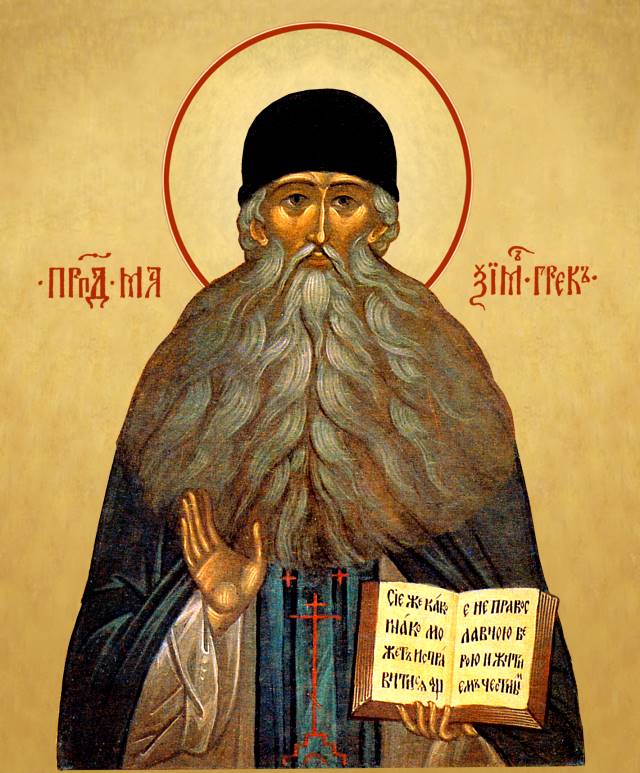
He was born in 1475 in modern Albania in the city of Arte7 in an enlightened Christian family. His name was Mikhail Trivolis before his tonsure. At a young age, he went to Florence. The young Greek was greatly impressed by the sermons of non-possessiveness of Hieronymus Savonarola. The enthusiasm of the latter also ignited Mikhail Trivolis. He took vows with the name Maxim in the Dominican monastery in Florence.
But soon it became dangerous for Savonarola’s followers to stay in the city. All Maxim’s friends were arrested, and in 1505 he himself fled to Mount Athos, where he converted to Orthodoxy. Here, on Mount Athos, there were 18 monasteries8 with rich book depositories. And Maxim begins to diligently study the Holy Fathers. Hence, he was called to Moscow.
When he arrived in Russia (March 4, 1518), he was settled in the Chudov Monastery, and the maintenance was given from the royal court, and his meal was also from the court atmosphere. Here he was engaged in the translation of the Explanatory Psalter. After 1.5 years, the work was done, and Maxim requested to go home. But he was assigned a new task - the correction of liturgical books, and this was a huge task. The work had become endless. Over time, Maxim enters the field of journalism, religious polemics with Uniates. But his main topic was still the dispute about the monastic patrimony, where the Greek opposed the money-grubbers.
While the non-possessive Varlaam Maxim was metropolitan, he lived quietly, but in 1521 Daniel (1521-1539) became the primate of the Russian Church, whose views were opposite.
 I
In addition, he also turned against himself the Grand Prince Vasily III. Maxim was critical of the prince’s divorce from Solomonia Saburova, whom he sent to a monastery in Suzdal. All this led to very deplorable consequences.
At the beginning of 1525, Maxim was taken into custody. He was judged by the metropolitan with a council of bishops. Accused of heresy. There was also a reason – errors in translations. Superficial knowledge of the Russian language played a cruel joke with the monk: errors in the texts were interpreted as a deliberate distortion of meaning and teaching.
He was also accused of Turkish connections and witchcraft. Maxim was excommunicated from the Church and imprisoned in the Joseph-Volotsky Monastery. In 1531, a new trial took place at the council, where the previous accusations were repeated. Tired and exhausted by his imprisonment, Maxim pleaded guilty to some minor errors in translations. He was convicted and sent to the Tver Otrotch monastery. After the death of Metropolitan Daniel in 15399, Maxim was released, but left in Tver. He repeatedly asked to lift the ban on Eucharistic communion from him, but this became possible only 12 years later, when he was transferred to the Trinity-Sergius Lavra10. Maxim the Greek died in 1556 in the Lavra. In 198911 he was glorified as a saint.
At the beginning of 1522, Metropolitan Daniel became the head of the Church. He came from a simple estate and rose to the position of abbot thanks to his abilities and strict monastic life. However, the properties of his character were also such as servility and unscrupulousness. In his person, Vasily III found a zealous political associate, which was manifested in the case with Vasily Shemyachich, who was deceived into depriving Daniel of land with his consent.
His other “deed” directly testifies to the violation of church rules. We are talking about the divorce process of Grand Prince Vasily Ivanovich with his infertile wife Solomonia Saburova.
After 20 years of marriage, Vasily III had no children, and therefore no heir, to whom power could be safely transferred without causing troubles. However, according to the church canons, this could not be the basis for divorce. They turned to the metropolitan, and he, in turn, to the Eastern patriarchs and the Athos elders. The answer from the East was negative. Then Metropolitan Daniel, by his authority and the council submissive to him, divorced the prince from Solomonia and forcibly tonsured her into monasticism under the name of Sophia. And on January 21, 1526, Daniel blessed Vasily for a new marriage with Elena Glinskaya. From this union Ivan the Terrible would be born.
Daniel explains this divorce as a state necessity. He devoted three whole works to justifying this violation. A number of other, partly unknown to us acts of Mitr. Daniel, who aimed to adapt to the policy of the Grand Prince, also aroused discontent with him among most of his contemporaries. The metropolitan acted as a mourner before the Grand Prince only in those few cases when it did not threaten the interests of his own personality.
In the sphere of church life, Metropolitan Daniel was also noticed in unpleasant deeds. Firmly standing on the Josephite positions, he was known for his irreconcilable hatred of non-possessors. Under his leadership, Maxim the Greek was unjustly sued and mercilessly punished for preaching non- possessiveness.
Editorial Footnotes
Related Concepts
- archbishop-gennady
- boyar-duma
- break-with-constantinople
- cardinal-bessarion
- catholicism
- christian-morality
- church-councils
- church-discipline
- church-independence
- church-property
- conciliar-election
- council-of-1503
- council-of-1504
- councils-of-1525-and-1531
- deathbed-confession
- divorce-of-vasily-iii
- elena-glinskaya
- gerontius
- grand-prince-vasily-iii
- heresy-of-the-jews
- joseph-volotsky
- josephites
- josephites-money-grubbers
- lithuanian-metropolitan
- lithuanian-metropolitanate
- liturgical-order
- maxim-the-greek
- maximos-the-greek
- metropolitan-authority
- metropolitan-daniel
- metropolitan-gerontius
- metropolitan-simon
- metropolitan-varlaam
- metropolitan-zosima
- metropolitanate-of-moscow
- monastic-patrimony
- non-possessors
- novgorod-separatism
- patriarchate-of-constantinople
- penance
- procession
- russian-church-history
- secularization-of-church-lands
- solomonia-saburova
- sophia-palaiologos
- st-nil-of-sora-tradition
- state-necessity
- union-of-florence
- unjust-condemnation
- vasily-iii
Footnotes
-
The heading reads “John I,” but the ruler meant is Ivan (John) IV — the three-year-old grand prince named throughout this section. “John I” is an error; read “John IV.” (This defective bullet line is a stray artifact and appears three times in the source; only the first occurrence is annotated here.) ↩
-
The last Byzantine emperor was Constantine XI Palaiologos (reigned 1449–1453), not “Constantine XII.” Zoe (Sophia) Palaiologina was his niece — the daughter of his brother Thomas, despot of the Morea. ↩
-
“Uniate” overstates the matter. Zoe/Sophia was raised in Rome as a ward of Cardinal Bessarion after her family fled the Ottoman conquest, and the papacy hoped the marriage would advance the Union of Florence; but she had been baptized Orthodox and conformed fully to Orthodox practice once in Moscow, and (as the text notes) her Catholic entourage was sent back. ↩
-
The dates are wrong. Gerontius held the metropolitan see from 1473 until his death in May 1489 (as this text itself states further down), a tenure of some sixteen years, not until 1479. ↩
-
This conflates two distinct groups. Pskov masons were consulted after the first cathedral collapsed but did not undertake the rebuilding; Ivan III summoned the Bolognese architect Aristotele Fioravanti from Italy, and it was he who directed the reconstruction (1475–1479) using new techniques. He did not “lead the Pskov builders.” ↩
-
The so-called “heresy of the Jews” (the “Judaizers”) is one of the most contested episodes in Russian church history. Most of what is recorded comes from its prosecutors — Archbishop Gennady and Joseph of Volokolamsk — and modern scholarship disputes the movement’s size, its actual doctrines, and whether it had any genuinely Jewish content, with some historians treating the “Judaizing” label itself as a polemical construct. ↩
-
Maximus the Greek (Michael Trivolis) was born in Arta, in Epirus in northwestern Greece — not in modern Albania. His birth is usually dated c. 1470. ↩
-
Mount Athos has comprised twenty ruling (sovereign) monasteries since Byzantine times, not eighteen; the number twenty is fixed by the Holy Mountain’s charter. ↩
-
Metropolitan Daniel did not die in 1539. He was deposed from the metropolitanate in 1539 and died in 1547 (as this text states earlier, in the section on the infancy of John IV). Maxim’s conditions were eased after Daniel’s removal from office, not after his death. ↩
-
Anachronism. The Trinity-Sergius Monastery received the honorific title “Lavra” only in 1744, granted by Empress Elizabeth. In Maxim’s day — and as the text itself calls it elsewhere — it was simply the Trinity-Sergius Monastery. ↩
-
Maxim the Greek was canonized by the Russian Orthodox Church at the Local Council of 1988, convened to mark the millennium of the Baptism of Rus’, not in 1989. ↩