History of the Russian Orthodox Church — Topic 4
The Russian Church under Metropolitans Peter, Theognost, Alexy and
Cyprian
- The Russian Church under Metropolitan Peter
- The Russian Church under Metropolitan Theognost
- The Russian Church under Metropolitan Alexy
- The Russian Church under Metropolitan Cyprian
The Russian Church under Metropolitan Alexy
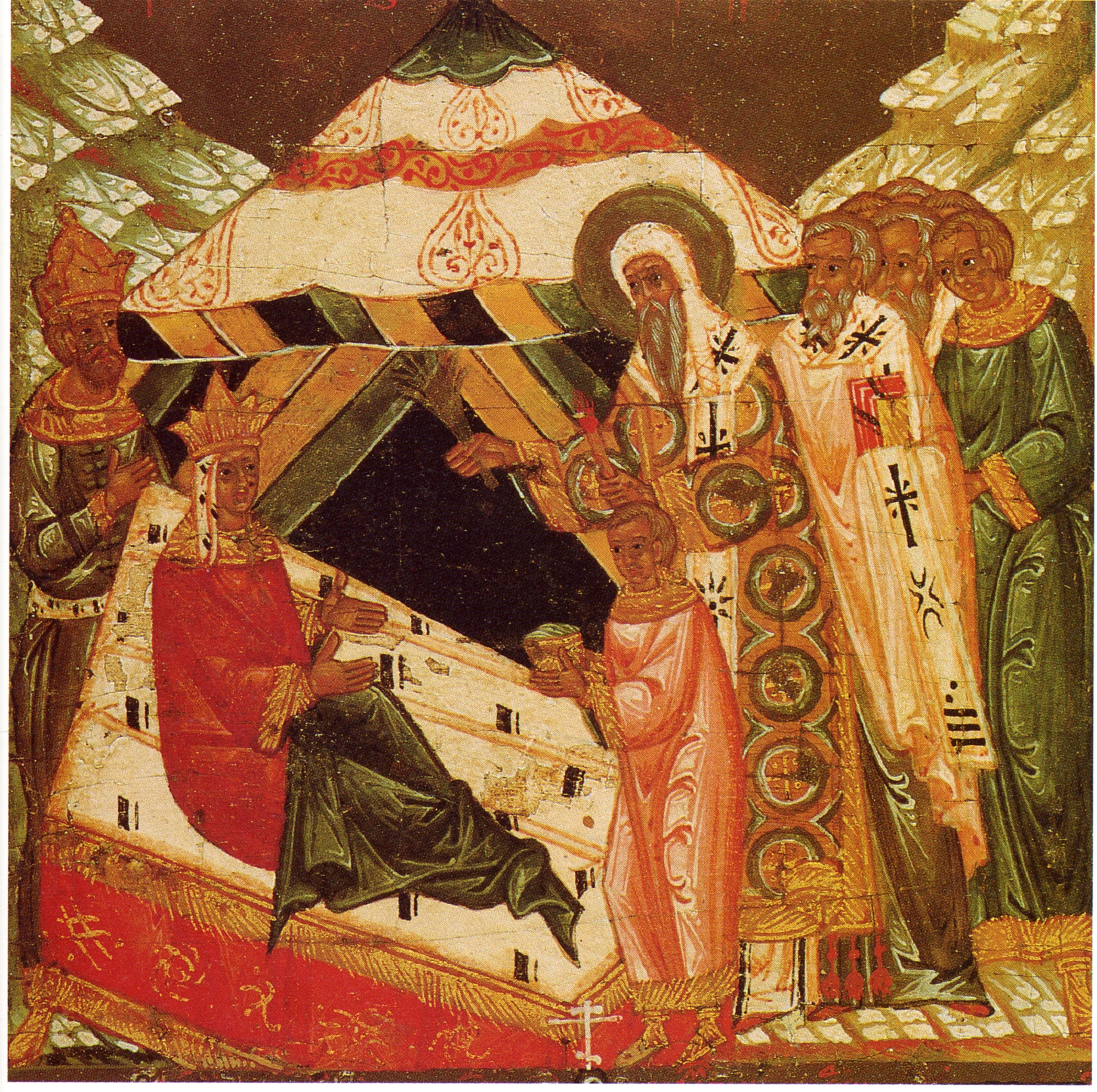
The era of Church administration under the Russian Metropolitan Alexy of Kiev, Moscow and All Russia is an important epoch in the history of the Russian Church and the Russian state. During the metropolitan’s ministry, the unification of Russia around Moscow and the creation of a powerful, centralized Russian state took place. Saint Alexy (before monasticism - Eleutherius) was born around 1300 in the family of boyar Theodore Byakont. Already in his younger years, Eleutherius, who received a brilliant education, knew the Greek language, showed a penchant for monasticism. At the age of twenty, he became a monk at the Epiphany Monastery in Moscow. The future saint spent more than twenty years as a simple monk in this Moscow monastery. Around 1340 Metropolitan Theognost made Alexy his representative in Vladimir. And when Theognost fell ill in 1350, he decided to ask the Patriarch of Constantinople to appoint Alexy to the metropolitanate in the event of his death.
Without waiting for a reply from Constantinople, Theognost consecrated Alexy as Bishop of Vladimir in 1352.
The envoy of Theognost returned to Moscow, bringing the news of the Patriarch’s consent to the appointment of Alexy, in 1353, when neither Theognost himself nor the Grand prince, who died of the plague, were still alive. The new Grand prince was John (Ioannovich) Krasny (1353-1359) and He sent Alexy to Constantinople for delivery. Here, however, he was kept for about a year, for a long time not daring to put him in the metropolitanate. Alexy was tested - for loyalty to the Greeks (after all, Alexy is Russian). In addition, having approved Alexy at the metropolitan see, he was placed under very strict control by the Patriarchate. He was required to report to Constantinople every two years to report on his activities.
It was already felt that the church’s dependence on Constantinople for the Russian Church, which had fully matured by the middle of the XIV century, needed its independence-autocephaly, it becomes an uncomfortable hindrance. Russian metropolitans, Greeks by nationality, independent of the Russian princes, contributed a lot to the unification of Russia in the spiritual sense during the period of fragmentation, but now, when the process of state unification of Russia began, Greek influence became its brake, since in Constantinople they sought to take into account first of all their own interests, and not the Russians.
If there was a bishop at the pulpit who, unlike Theognost, was indifferent to the affairs of Russia, this could lead to sad consequences for Russia. Therefore, it is quite understandable that Russians want to see their compatriot at the metropolitan see, at such a crucial time. However, the Greeks are also desperately trying to maintain their influence on the Russian Church in order to extract maximum benefits in the years when the fate of Byzantium “hangs in the balance.” Hence the aggravation of contradictions between the Russians and the Greeks when the metropolitans were appointed to the Kiev-Moscow Metropolitanate in the XIV-XV centuries.
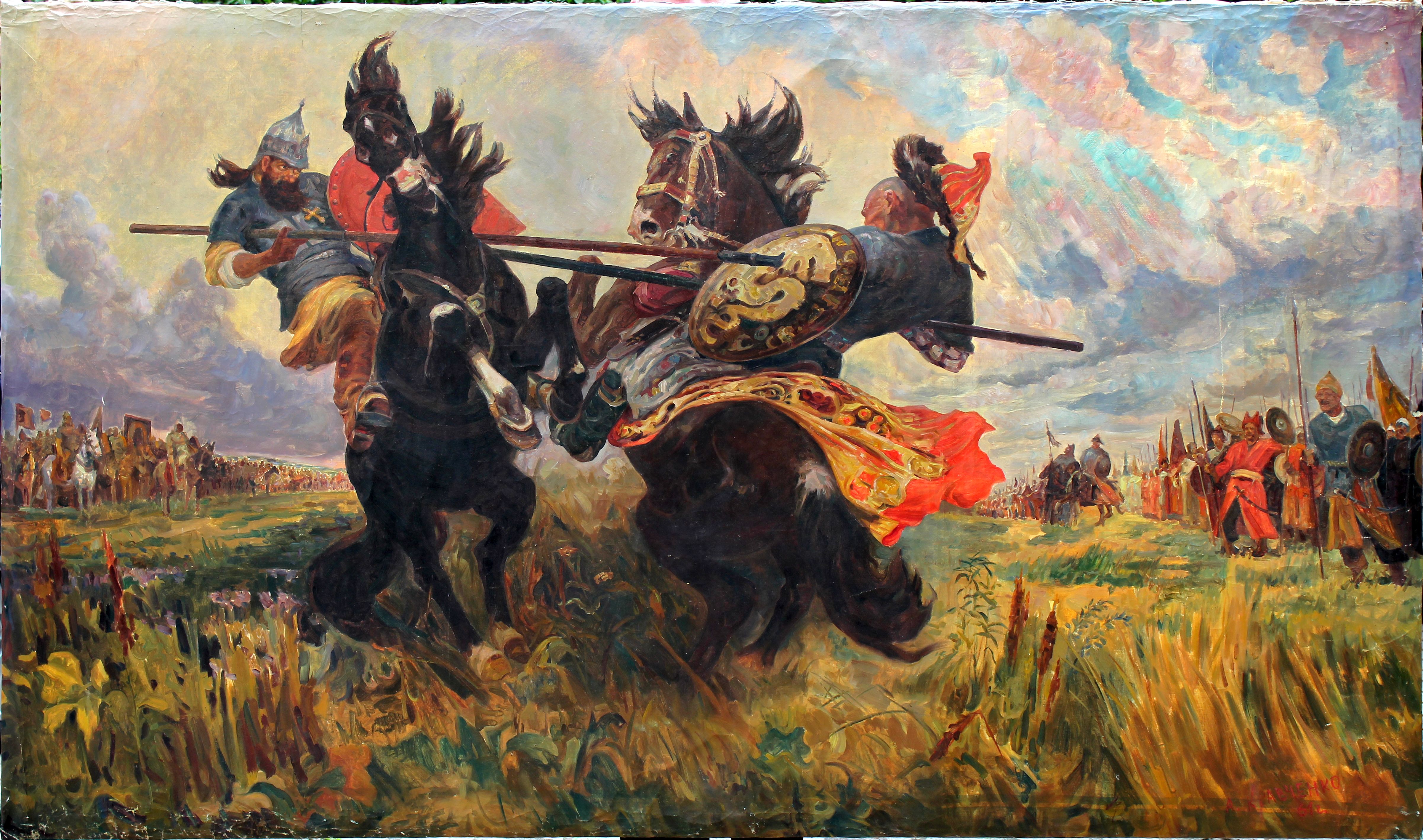
Mixed in with this is another problem – the desire of the Lithuanian princes to create a metropolis independent of Moscow on the lands of Russia subject to Lithuania. And the Greeks are also acting in this direction, first of all, assessing the political benefits of an alliance with the Lithuanian prince. Algirdas, the Prince of Lithuania, who learned a useful lesson from the unsuccessful scam with Theodoret, decided to repeat the attempt to withdraw his Orthodox subjects from Moscow jurisdiction. Algirdas urged Constantinople to consecrate Roman (a representative of the Tver boyars) as metropolitan for Lithuania, promising in return to accept Orthodoxy and baptize all Lithuanians.
Roman was made Metropolitan of Lithuania. But by this time Alexy, fortunately, had already been placed at the Kiev pulpit. Otherwise, the Lithuanian prince would have had the opportunity to create intrigue in terms of setting their new metropolitan as the Metropolitan of Kiev and All Russia. A new division of the Russian Church was also possible due to the ongoing confrontation between the Palamites and the Varlaamites1 in Byzantium. The latter actively supported Roman. But in Constantinople, however, they determined otherwise: St. Alexy retained Kiev and the title of Metropolitan of Kiev and All Russia.
Subsequently, Roman did not give up trying to go beyond the boundaries of the Lithuanian metropolis outlined to him. Soon he made an attempt to establish himself in Kiev by a show of force. Having settled there, he could claim succession from the metropolitans of All Russia, and at the same time to all the dioceses of the Russian Church, which were located on the territory of the Lithuanian principality, but were assigned to the jurisdiction of St. Alexy. However, the Kiev population did not accept it. Taking advantage of the change of power in Byzantium, Roman again arrived in Constantinople in 1356. Here he managed to take away from Alexy the dioceses of the Galician-Volyn lands: Vladimir, Lutsk, Kholm, Peremyshl and Galician. Then Roman arrived in Kiev again and began serving there.
St. Alexy complained about Roman to Constantinople, but it did not have much success. When Alexy personally arrived in Kiev in 1358, he was arrested by order of the Lithuanian prince, but managed to escape. For this reason, Alexy no longer visited Orthodox dioceses on the territory of the Lithuanian Principality. The conflict between Alexy and Roman turned into a prolonged church turmoil. Russian citizens were accustomed to the idea of the possibility of the separation of the united Russian Church and the subsequent existence of two metropolitans independent of each other – Moscow and Lithuania. Roman died in 13612, but his death did not stop the process of dividing the metropolies. Thus, Patriarch Philotheus of Constantinople in 1364 issued an act that declared the Russian Church indivisible for all time, with all subsequent successors of St. Alexy. However, it was already impossible to put it into effect. The patriarchal letter had reached us in a crossed-out form, with a note on the recognition of the act as invalid. And although the final division of the Russian Church into two metropolitans will take place only after almost a century, but already during the reign of Metropolitan Alexy it became clear that in the current political situation this division must inevitably happen.
Added to the confrontation between Moscow and Lithuania in the struggle for the legacy of Kievan Rus, was the agony of the dying Byzantium, convulsively clinging to any opportunity to prolong its existence. All these circumstances were also overlaid by the quite distinct tendency of Catholic Rome to use a difficult situation to implement its expansionist plans.
Nevertheless, despite the difficult situation, St. Alexy continues the work of reviving Orthodox spirituality in the Russian land, begun by his predecessors. During his Church reign, Moscow finally acquires the status of the spiritual center of Northeastern Russia, which greatly contributed to the state unification of Russian lands around the Moscow princely House. And although only when St. Alexy was installed as metropolitan in Constantinople, that led to the act of transferring the metropolitan see from Kiev to Vladimir and was legally formalized, in fact it was already possible to talk about the end of the short Vladimir period of Russian church history: metropolitans since the time of St. Theognost firmly settled in Moscow.
Through the works of St. Alexy, the authority of the new church center of Russia was finally secured in Moscow. An important role in this was played by the fact that the Primate became, according to the spiritual testament of Grand prince Simeon the Proud, the trustee of his brothers – Princes John the Red and Andrew. After the death of John (ruled in 1353-1358), Alexy became the guardian of the young son and successor of Grand prince Dimitry Ioannovich. The Russian Orthodox Church’s Primate became the de facto head of the Russian state in an unprecedented case. This was made possible thanks to the now high authority that the Church had in Russia at this difficult time – the people saw it as the main guarantee of unity.
And at the same time, despite the exceptional position of St. Alexy as the ruler-regent the boy Prince Dimitry Ioannovich, the mixing of the state and the Church, the substitution of one by the other did not happen. Orthodoxy gave Russia a happy opportunity to avoid clericalism in the Western spirit and put into practice the idea of a genuine symphony of the state and the Church. Metropolitan Alexy’s wisdom was manifested in the fact that he did not take advantage of the weakness of state power in order to elevate the Church above it.
The story of the healing of Taidula, the wife of the Horde Khan Janibek3, by St. Alexy in 1357 is well known. The latter appealed to the Moscow prince with a request to send the great saint to him in the Horde. Janibek, although he was a Muslim, in this situation showed a typically pagan relativism in the spirit of the tradition of religious tolerance of the Mongols, which had already noticeably dried up by this time. However, Janibek accompanied his request with a threat to destroy Russia if the metropolitan refused to help his blind wife.
Alexy goes to the Horde, not knowing what awaits him. If Hansha (Taidula) had not recovered, he could really have been in danger of death. But the metropolitan is actually sacrificing himself in order to avert the threat of a new Tatar invasion of Russia. The prayer of the saint healed the sick Hansha.4 Alexy returned to Moscow with honor and a gift: he was presented with a Tatar courtyard in the Moscow Kremlin.
Alexy saved Moscow from this terrible symbol of the yoke by his feat. On the site of the courtyard, in memory of the miracle of healing that happened on September 6, the saint founded the Miracle Monastery, in which, according to his will, he was subsequently buried (the monastery was destroyed in the 1930s, the relics of St. Alexy were subsequently transferred to the Patriarchal Cathedral of the Epiphany in Yelokhov).
The authority of the Church has more than once helped to preserve the political line of Moscow, which was so necessary at that time. Thus, St. Alexy and the Rev. Sergius of Radonezh helped solely by his spiritual authority ended the conflict that arose in Nizhny Novgorod bloodlessly. On another occasion, St. Alexy excommunicated Prince Svyatoslav of Smolensk and some other Russian princes for perjury, violation of the union treaty with Moscow and subsequent participation in the campaign against Moscow of the Lithuanian Prince.
But it was much more difficult with another one who wanted to tear off part of its dioceses from the Russian Church – the King of Poland, Casimir III the Great. In the second half of the XIV century, he finally annexed Galicia and part of Volhynia into his possessions. On this basis, the king demanded the restoration of the Galician Metropolis, independent of the jurisdiction of St. Alexy. Casimir slyly portrayed himself as a defender of the interests of Orthodox Galicians and demanded the restoration of “historical justice”, referring to the fact that the Galician Metropolis had existed allegedly “from time immemorial”5.
Such an example, of course, could not but inspire the Lithuanian prince Algirdas to new claims. After Algirdas’ new complaints against Alexy, the Patriarch of Constantinople sent Hieromonk Cyprian, a native of Bulgarians (or, according to another version, a Serb)6, to Lithuanian Rus’ to familiarize himself with church affairs. His goal was to reconcile Algirdas with Alexy. However, the ambitious Cyprian led the case in such a way that he managed to convince the Patriarch of Constantinople of the impossibility of peace between the Lithuanian Prince and Metropolitan Alexy and the need for the sake of Orthodoxy to put a new metropolitan independent of Moscow on Lithuanian Rus’.
Cyprian brought a letter from Lithuania, which contained new accusations against St. Alexy and the threat of the Lithuanian prince to convert his people to Catholicism if the Greeks refused to give Lithuanian Rus’ a separate metropolitan. Cyprian, apparently, was not averse to becoming the head of not only the Lithuanian metropolia, but also to unite the entire Russian Church under his jurisdiction, moving its center to Kiev conquered by Lithuania.
Constantinople, in the current situation, acted in the most unacceptable and tactless way. At the end of 1375, Cyprian was made metropolitan of “Kiev and All Russia”, that is, with the same title that Alexy had. At the same time, a group of Greek patriarchal officials were sent to Moscow to conduct an investigation. In search of proof of Metropolitan Alexy’s guilt, the council’s ruling prescribed that he be removed from the management of church affairs, and Cyprian should lead the entire Russian Church.
However, in Moscow, the Greeks did not find any facts confirming the accusations leveled against Alexy. Meanwhile, Cyprian arrived in Kiev and from there sent letters to Novgorod and Moscow, declaring himself Metropolitan of All Russia. From both cities he was answered in a dignified manner, announcing that they recognize only one metropolitan - Alexy. The situation was scandalous, as Prince Dimitri Ioannovich of Moscow noted in his rebuke to Cyprian. In Russia, this has never happened before, so that when the Metropolitan of all Russia was alive, a new one was put in his place. Dimitri and Alexy sent their protest to Constantinople.
Meanwhile, the dismemberment of the Russian Church into three independent metropolia with centers in Moscow, Kiev and Galich became a reality.
This had not happened in the history of Russia until now. It was obvious that the Russian Church was beginning to become a hostage of politics – mainly Lithuanian and Byzantine. There came a time when there was a need to gain independence from the Greeks.
The unseemly actions of the Patriarchate of Constantinople had already put the Russian Church in a situation that could lead to very dramatic consequences in the event of the death of St. Alexy. It was not possible to receive Cyprian in Moscow after all that had happened. At the same time, Moscow could no longer allow the Russian Church to be headed by a person hostile to its political line. Rev. Sergius of Radonezh, a saint known throughout Russia, to whom Alexy offered to become his successor, resolutely refused. Prince Dimitri was gradually preparing the ground for the promotion of his confessor, Priest Mityai–Mikhail, to the metropolitans. The contours of a new church turmoil were already outlined ahead. It broke out after the death of St. Alexy, which followed on February 12 (25), 1378.
The Russian Church under Metropolitan Cyprian
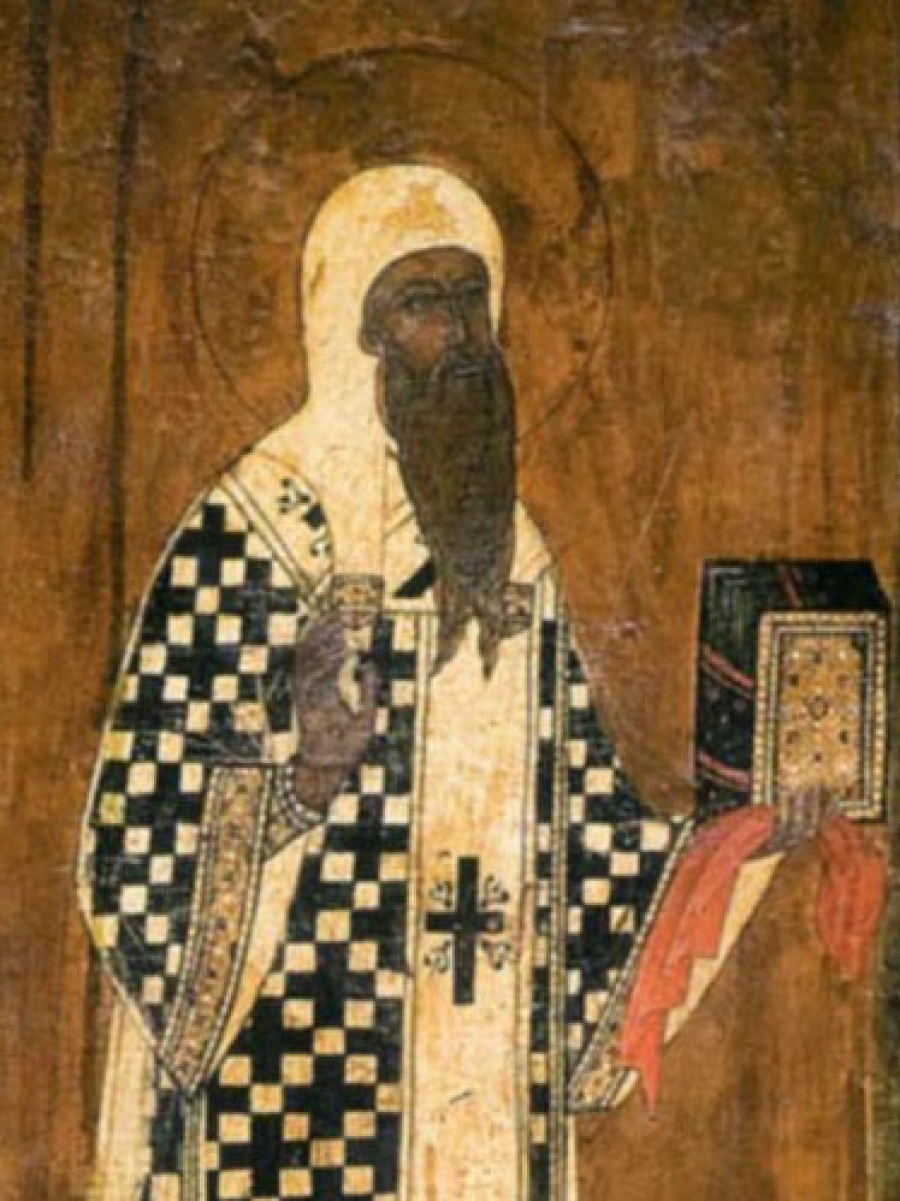
Even during his lifetime, Alexy did not recognize Mityai-Mikhail as his successor. But immediately after his death, the latter entered the metropolitan court and began to manage everything, collect metropolitan tribute, and manage affairs like a real metropolitan. Since he wanted to be consecrated by Russian bishops, a council of bishops and the highest clergy was held in Moscow, by order of the Grand prince. However, there were many people among them, especially monastics, who did not want to have Mityai as a metropolitan.
The bishop of Suzdal, Saint Dionysius, spoke against him more than others. And Mityai would not let him rest, hotly demanding from him an answer why, upon arrival in Moscow, he did not come to him for a blessing. Having learned that Dionysius himself intended to go (on a call from Constantinople) for the metropolitan dignity to Greece, Mityai and the Grand prince put him in custody. Dionysius, however, soon managed to free himself and go to the patriarch. Meanwhile, another candidate for the metropolitanate, Cyprian, was on his way from Kiev to Moscow, who was now to occupy the entire metropolitanate by virtue of the council’s definition of 1376. The Grand prince himself rebelled against this candidate, who saw in him the chosen one of Algirdas, and drove him out of Moscow with dishonor. After that, Mityai decided to hurry up with the dedication and moved to Greece with a huge retinue, with gifts for the Greeks and with several forms sealed with the seal of the Grand prince just in case. But already in view of Constantinople itself, Mityai suddenly died in 1379.
After Mityai’s death, his companions decided to arbitrarily choose one archimandrite from the retinue — Pimen as metropolitan. On one of the forms behind the Grand prince’s seal, a petition was written on behalf of the Grand prince for his delivery. Patriarch Nile and the emperor at first refused to fulfill his request, referring to the fact that Cyprian had long been consecrated metropolitan in Russia. But the ambassadors, using another form, borrowed money, distributed up to 20,000 rubles to those who needed it, and so achieved their goal. Having learned about Pimen’s deception, the Grand prince, even before his return, invited Cyprian to Moscow, and ordered Pimen to be imprisoned on his return. After a while it turned out that the prince did this solely out of anger at Pimen, and not because he trusted Cyprian.
During the invasion of Tokhtamysh, Metropolitan Cyprian retired from Moscow to Tver, an ally of Lithuania. Then the Grand prince invited Pimen to the metropolis. But since this metropolitan was also displeasing to him, he sent a request to Greece for the appointment of Dionysius as metropolitan. Dionysius was delivered, but on his way back from Greece, the Lithuanians detained him in Kiev, where he died in 1385 while in prison. Meanwhile, Cyprian and Pimen went to Greece to argue about the metropolitanate. The patriarch decided the case in favor of Cyprian. All other circumstances have now developed in his favor: in 1389, Grand prince Dmitry died, and the deposed Pimen also died.
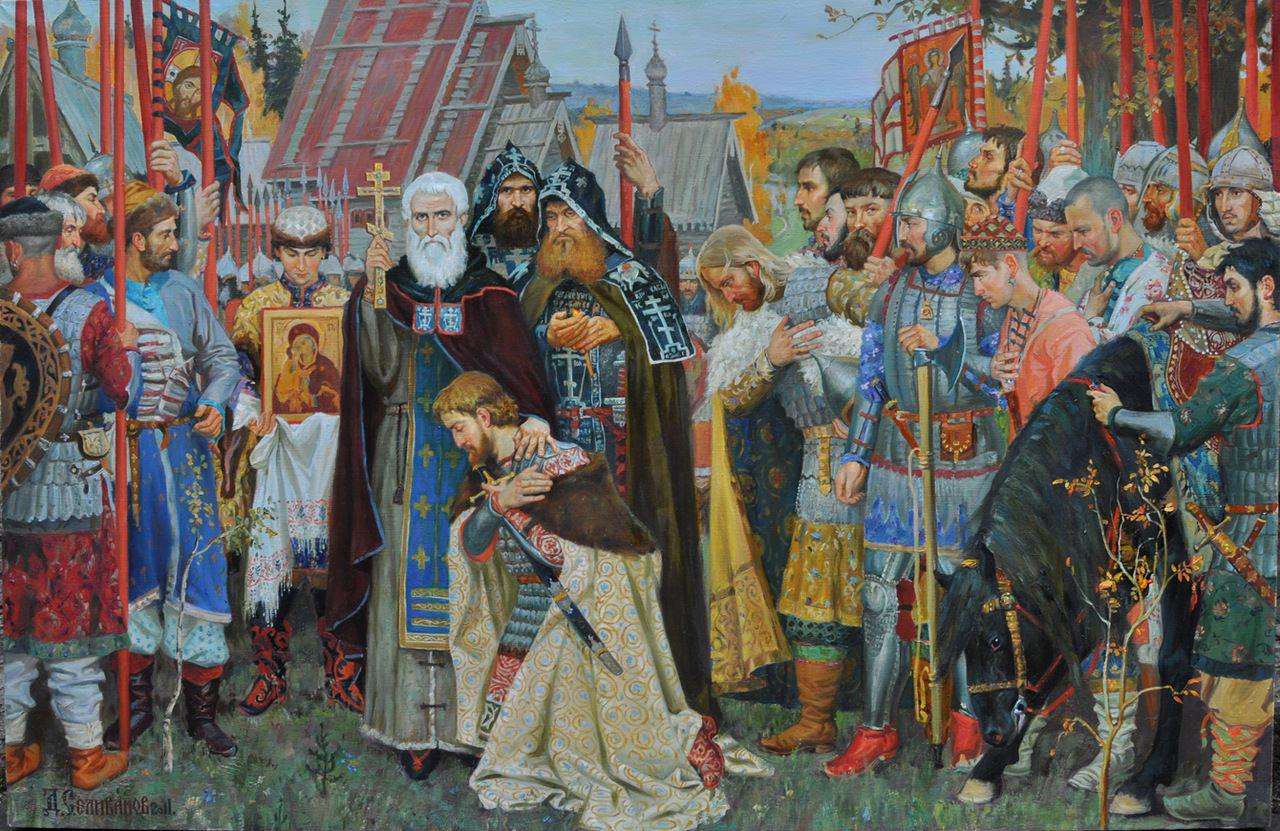
As a result, Cyprian became metropolitan, uniting Moscow, Kiev and Galich. The entire sole reign of Cyprian passed in peace. His agreement with the new Grand prince Vasily Dmitrievich was never violated, and since the Grand prince was in constant friendship with the Lithuanian Prince Vitovt (his father-in-law), then in Lithuania they stopped bothering about a special metropolitan. He no longer had to go to the Horde, because after Dmitry Donskoy’s victory over Mamai on the Kulikov field in 1380, it ceased to be terrible for Russia.7
With the weakening of the strength and power of the Mongols, the metropolitans stopped applying for khan jarligs, and began to ask their grand princes for the gramota (special certificate). In 1404, such a certificate was given to Metropolitan Cyprian by Grand prince Vasily Dmitrievich. Russian princely charters contained various restrictions on the former civil rights of the Church, granted to her by gramotas, since they were already given from the real state power, and not from the power of the wild Horde, which demanded only slavish obedience from the Russians and did not pay attention to the very structure and needs of the Russian state.
By the charter of 1404, metropolitan people were still exempt from taxes, duties and from princely courts, but in both cases with restrictions: for war, the metropolitan had to put his regiment with the voivode under the banner of the Grand prince. According to the court, all church people were subordinate to the metropolitan, but in the case when it concerned both a princely and a metropolitan person together, a common court was appointed — the metropolitan and the Grand prince.
The restrictions also affected the scope of the church department: the metropolitan was not supposed to put the Grand prince’s servants and hardworking people in as priests and deacons - this was one of the most important reasons why children of the clergy mainly entered church places. This was how the relations between the state and church departments were determined. The Grand prince even entered into the internal administration of the metropolitan diocese and determined in it the number of church tributes and decennial fees (a type of tax); this was probably necessary in connection with some abuses that were discovered during the church troubles.
The reign of Metropolitan Cyprian was fruitful in purely ecclesiastical terms. He took care of the elimination of various disorders that arose in the liturgical order of the Russian Church, about the correction and multiplication of liturgical books. He himself brought with him many manuscripts from Serbia and, living in seclusion in his village near Moscow, Golenishchev, was engaged in translations from Greek. The saint died in 1406 and was buried in the Assumption Cathedral, where all Russian metropolitans were buried after St. Peter (with the exception of Metropolitan Alexy, who was buried in the Chudov (the Miracle) Monastery).
The Russian Church under Metropolitan Peter
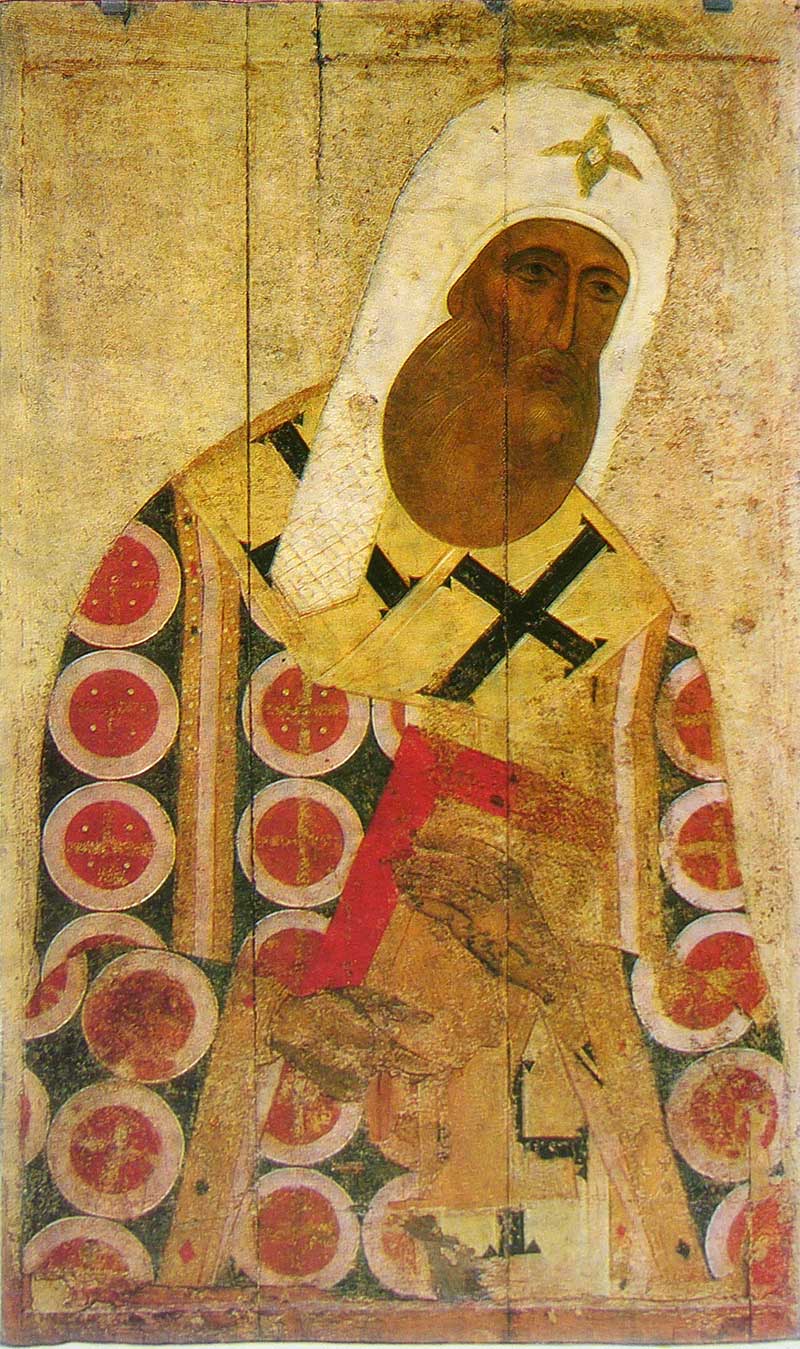
The next Primate of the Russian Church after Metropolitan Maxim was St. Peter, Metropolitan of Kiev. A very important stage in the history of our Church - the beginning of the Moscow period - is connected with the personality of this holy hierarch. St. Peter was a native of the Galician-Volyn land. Very early he takes monasticism in one of the monasteries in Volhynia. Later he founded his own monastery on the Rat River (on the border of the present Lviv and Volyn regions of Ukraine). It is known that St. Peter was a wonderful icon painter. One of his icons - the Mother of God “Petrovskaya” - has survived to our time.
Peter’s elevation to the metropolitan took place under interesting circumstances. He arrived in Constantinople as a candidate for the Metropolitan of Galicia. At the same time, Metropolitan Maxim of Kiev died - the hierarch, who, as mentioned earlier, moved his residence from Kiev to Vladimir. Abbot Gerontius, a candidate for the Kiev (in fact, Vladimir) chair, turned out to be in Constantinople with Peter. Emperor Andronikos II Palaiologos and Patriarch Athanasius decided to appoint one metropolitan for Russia - for the united Russian Church. Peter was considered more worthy of the assignment. Peter was made metropolitan in 1308. He also went not to Kiev, but to Vladimir. The local prince was dissatisfied with the fact that Peter became the metropolitan, and not Gerontius, who was sent by him. Probably catering to his prince’s dislike of Peter, Bishop Andrei of Tver sent a slanderous denunciation of Peter to Constantinople.
This case was tried in Constantinople, since, apparently, very serious accusations were contained in Andrew’s message. First of all, Peter was accused of simony (ordination of clerics for money), against which Metropolitan Kirill fought so hard. For the proceedings in Pereslavl-Zalessky, a Council was convened around 1311, which was attended, in addition to Metropolitan Peter, by Bishops Andrei of Tver and Simeon of Rostov, many hegumens of monasteries, representatives of the parish clergy, princes and boyars. What is remarkable about this Council is such an active participation of the laity in the proceedings of the most important issue of church life.
In the end, Peter was fully acquitted, and Andrew was exposed as a slanderer. All his accusations were based on the fact that Peter really charged some small amount of money when delivering the clergy, which was provided for by the Rules of Kirill II. It was not a question of payment for ordination, but of reimbursement of the costs associated with ordination: payment for the passage of the bishop and his retinue, funds for their maintenance (if it was a question of trips to other cities), payment of everything necessary for worship and ordination. The representative of the Patriarch of Constantinople, who conducted an independent investigation, admitted that Peter had not erred in any way against Kirill’s rule on simony.
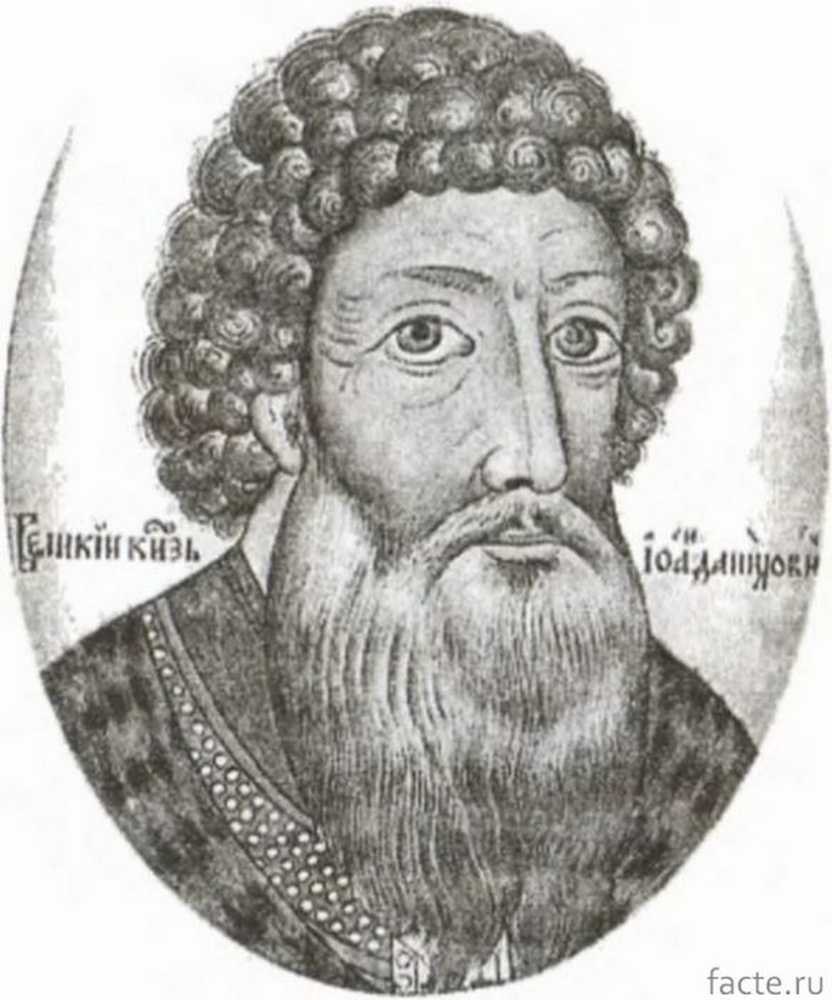
The church biography of St. Peter says that he forgave the slanderer Andrew and allowed him to keep the Tver pulpit. However, the attempts to denigrate Peter did not stop there. Probably, Andrew continued to intrigue against the primate, hoping to take his place, since he was the bishop of Tver, he wanted the support of the Grand princes city (Prince Mikhail of Tver was at that time the Grand Prince of Vladimir and All Russia). The Metropolitan, which is natural in such a situation, began to see help from Moscow, and found an ally in Prince Yuri Danilovich. Having alienated the Metropolitan with groundless hostility, Mikhail Tverskoy gave up Moscow to his still weak rival, and unwittingly and unknowingly aided the transformation of Moscow to become the Capital.
St. Peter’s dependence on Moscow was natural. Native Galich was far away, its princes were weakening every day, and it was obvious to Peter that their disastrous political strategy would soon lead to the complete disappearance of the Galician-Volyn principality. In the North-East of Russia, where Rostov was already beginning to decline, and Yaroslavl, Suzdal or Ryazan did not represent a great political force, the main rivalry unfolded between Moscow and Tver. Therefore, Prince Yuri Danilovich of Moscow realized what mistake Mikhail was making and used it.
Yuri immediately helped Peter. It was Yuri who was the most ardent defender of Peter at the Pereslavl council. Of course, this was not done by the Moscow Prince by chance: he wanted the status of a grand prince, having taken the throne from Mikhail. Peter’s authority, as Yuri cleverly calculated, could help him in this. St. Peter accepted this hand of friendship. Soon he received Moscow: when in 1311 the Tver army led by Mikhail’s son Dimitri went to war against Moscow8, Peter excommunicated him from the Church for inciting a civil war.
About Peter, his life testifies that, like his predecessors, he traveled a lot in Russia, spiritually nurturing even the most remote dioceses. He also visited his native Volhynia. It was probably not too comfortable for Peter to stay in the Vladimir episcopal see, again because of Mikhail Tversky’s hostility to him. Therefore, he often lived for a long time in Moscow, which did not have its own bishop at that time.
Since Yuri Moskovsky spent almost all the time in the Horde with his relative, the Uzbek Khan, his younger brother John Danilovich Kalita ruled Moscow. Saint Peter had very friendly relations with him. John bore little resemblance to Brother Yuri. He was a pious and merciful prince. He was nicknamed Kalita, supposedly for a money purse - kalita - which he wore on his belt so that he could give alms to beggars at any time. Others believed that the prince was so called for his avarice. Most likely, it was both. Only it was not innate avarice as a vice that distinguished Prince John, but thrift for the sake of accumulating the forces of the Moscow Principality, for the sake of increasing the power of Russia to fight the Horde. Metropolitan Peter understood this, and therefore greatly favored Kalita.
Since 1322, the saint had been living in Moscow almost continuously. In 1325, here in Moscow, St. Peter ordained Archbishop Moses to the Novgorod see. However, there is no talk about the official transfer of the church center yet, because there is no reason to transfer it from a large, quite prosperous Vladimir to a much less significant town of Moscow. In addition, Vladimir is the capital city of Russia, although Mikhail, and later his children - Dimitri and Alexander - as grand dukes are only called princes of Vladimir, at the same time living in Tver.
Meanwhile, in Moscow, Peter is surrounded by honor and respect. The Metropolitan responds to the house of Moscow princes with sincere friendship. In 1325, he buried Yuri Danilovich, who was killed in the Horde by Dimitri of Tver, in the Moscow Kremlin. Yuri is replaced at the Moscow Principality by John Kalita. Peter gives his friend full support. Sensing the approach of death, the saint decides that he should be buried here in Moscow. His relics should, as it were, consecrate the future capital of Russia. Therefore, on the advice of Peter Kalita, in August 1326, he hastily laid the first stone church in Moscow – the Assumption Cathedral in the Kremlin. Here the holy Metropolitan personally arranges his tomb - in the altar of the temple under construction.
St. Peter died on December 20, 1326 and was buried in the still unfinished Assumption Church. Of course, in the entire history of the relationship of the saint with the Moscow and Tver princely houses, there is a complex political conflict. But at the same time, it is impossible not to see in the Metropolitan’s appeal to Moscow and God’s Providence about this city, which will soon become the new spiritual and political capital of Russia.
The Russian Church under Metropolitan Theognost
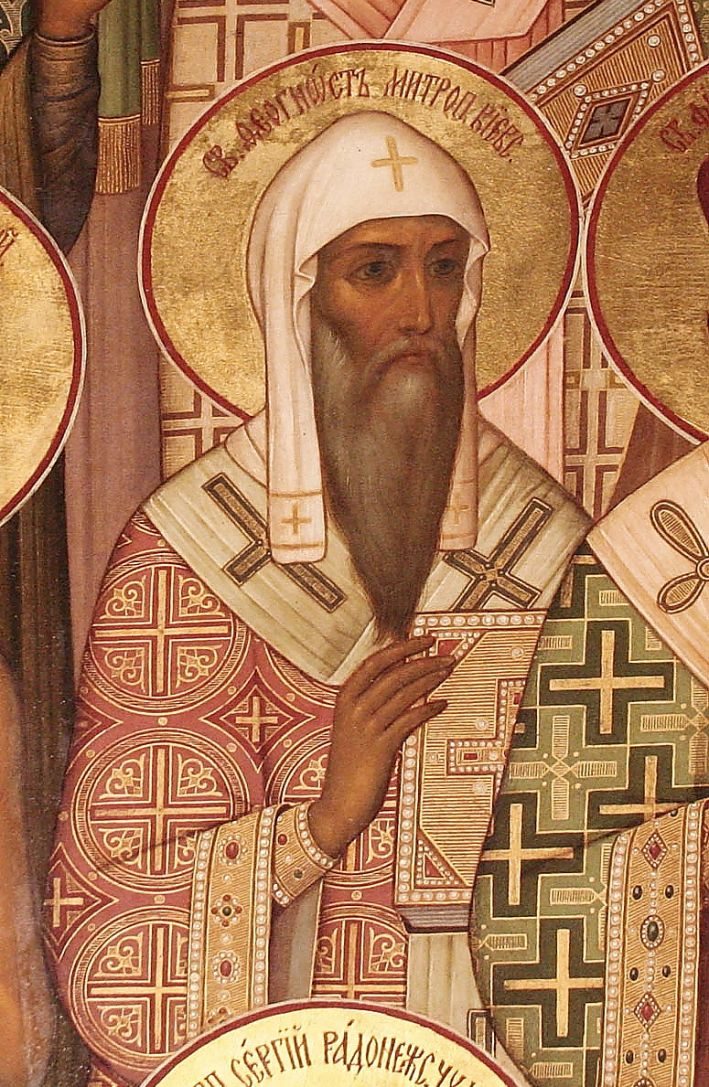
Theognost became the new Metropolitan of Kiev and All Russia after Peter’s death. Metropolitan Peter, together with the Moscow Prince, unsuccessfully tried to identify a successor – Archimandrite Theodore. But Constantinople did not heed this and, in an effort to maintain control over the richest metropolis of the Patriarchate of Constantinople, which in fact contained at that time not only the Patriarchate, but also the imperial court, they put the Greek Theognost on the Kiev pulpit.
Saint Theognost arrived in Russia in the same year 1328, when John Kalita became the Grand Prince of Vladimir. The latter did not show resentment for the failure to ordain his candidate. He hastened to establish very friendly relations with the metropolitan. Some accused both the prince and the metropolitan of rapprochement on the basis of the accumulation of material resources. Metropolitan and Prince alike understood the importance of strengthening the financial and economic situation of Russia and the Russian Church in the context of the process of centralization and unification of the Russian principalities.
Theognost’s attention to financial and material resources is not a sinful passion, but a severe necessity of that time: the more lands and property belonged to the metropolitan’s house, the more people served the metropolitan, the more they became free from Tatar dependence, because these were lands, people and funds that were not being paid as a tribute to the khans. So Theognost did a great thing for Russia, saving up the funds of the metropolis. In addition, the Church needed funds to carry out its ministry: to engage in charity, to develop church arts, monastery construction and much more. The metropolitan had to be rich enough to remain completely independent of the princes, fulfilling his role as the spiritual leader of the people and arbiter in princely disagreements and strife.
Theognost was accused of avarice, first of all, by those boyars dissatisfied with the new metropolitan, who during the time that had passed since Peter’s death had managed to plunder the treasury and the lands of the metropolitan house. Theognost managed to prevent them, but generated slander from those who failed to realize their selfish plans. Very soon after his arrival in Russia, Theognost, who, as expected, visited Kiev, then Vladimir, nevertheless completely moved to live in Moscow. Unlike Peter, he already had a serious reason for this: the Grand Prince now lived in Moscow.
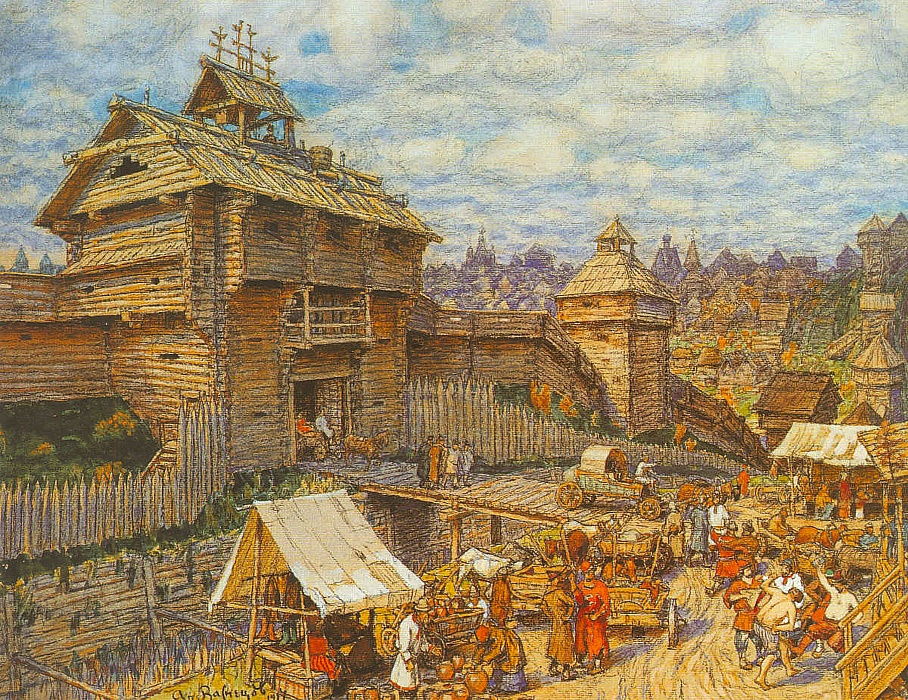
It is amazing how the Greek Theognost, taking the concerns of his new Fatherland to heart, subtly understood the specifics of the political situation in Russia. He was aware that the political line of the Moscow princes was the only true one in the conditions of Tatarism, and therefore he fully supported the Moscow dynasty. Theognost abundantly decorates his new center of the metropolis and at the same time the new capital of the Grand Principality with stone temples. The saint knew the value of architecture as a means of influencing the consciousness of contemporaries. During his reign, the wooden Kremlin of John Kalita was decorated with the Church of John the Ladder, the Archangel Cathedral, the Church of the Savior on the Bor with the monastery attached to it, where the monks of St. Daniel’s Monastery were transferred.
No less significant for the prestige of Moscow was the canonization of Metropolitan Peter after numerous miracles celebrated at the relics of the saint. Theognost, unlike the metropolitans of the Pre-Mongol time, who were not too inclined to glorify Russian saints, acts as a zealous defender of the canonization of St. Peter. In 1339, he received consent to this from Constantinople Patriarch John the Cripple9. The foresight of St. Peter began to come true. Peter, who by his burial in Moscow foreshadowed a great future for her. Like his predecessors, Theognost traveled a lot in Russia. It is known that he visited Bryansk, Kostroma, twice went to Novgorod and Volyn. Such pontifical trips were already perceived as an integral part of the metropolitan ministry. The citizens of Novgorod, however, met the metropolitan not too kindly. The fear of the rise of Moscow, supported by the first hierarch, had already affected. Moreover, the Novgorodians were dissatisfied with the fact that Moscow was decorated with new churches with their money.
The relations of Metropolitan Theognost with the Horde were also not cloudless. Twice he went to the Sarai - the capital of Horde. The first time, back in the reign of the Uzbek. And during the second trip in 1342, he was slandered before Khan Janibek. Some, most likely princes (primarily Tver), dissatisfied with the metropolitan’s alliance with Moscow, informed the khan that the metropolitan had huge funds. Janibek, who was already a Muslim, was naturally less tolerant of the Orthodox Church than his predecessors. He almost deprived the Russian Church of its privileges, demanding tribute from the clergy as well. Theognost showed all his diplomatic talent, but still managed to defend the freedom of the Russian Church from paying tribute to the Horde.
Many troubles for Saint Theognost were caused new attempts to violate the unity of the Russian Church. During his reign, the Galician princes again sought from the Patriarch of Constantinople to open the Galician Metropolitan See. In 1331, the new Metropolitan of Galicia, Theodore, signed the acts of the Patriarchate of Constantinople. Theognost vigorously set about the task of liquidating the Galician Metropolis. In 1330-1332, he himself visited this “hot spot”. Here the Metropolitan of Kiev, with the participation of almost all the bishops of Western Russia: Vladimir-Volyn, Kholm, Peremyshl, Galician and Polotsk, appointed bishops of Novgorod and Tver. Thus, he confirmed his jurisdiction over the whole of Russia. From here, from Volhynia, Theognost sent envoys to Constantinople demanding the abolition of the metropolis of Galich. In 1332, on this occasion, he personally arrived in Constantinople and achieved his goal: the Metropolitan of Galicia was again reduced to the rank of a simple bishop in the jurisdiction of Theognost.
The Galician church turmoil, which had barely subsided, broke out again fifteen years later. Around 1346, the Bishop of Galicia again came to Constantinople and, taking advantage of the unrest in Byzantium itself, sought his approval as metropolitan. This was greatly facilitated by the disputes about the Tabor light, which were conducted between the supporters of St. Gregory Palamas and Barlaam of Calabria. Most likely, Patriarch John XIV, a supporter of Barlaam and his rationalistic theory, reopened the metropolis in Galich in defiance of hesychast Theognost. In addition, the influence of Rome could also be felt here: having failed to introduce the union under Daniel of Galicia, the Latins could not help but realize that the gradual separation of Galicia from Russia in ecclesiastical terms would later facilitate its conversion to Catholicism. The Vatican will use a similar scheme in the future more than once in the West of Russia.
New trials awaited the Russian Church and St. Theognost shortly before his death. In 1352, a certain monk Theodoret arrived in Constantinople from the Russian borders and declared that Metropolitan Theognost had already died. The patriarch, however, showed distrust and sent his people to Russia. Theodoret, realizing that his deception would inevitably be revealed, fled from Constantinople to Tarnovo, where the Bulgarian Patriarchate had previously been restored. Here he was tricked into becoming the Metropolitan of All Russia.
Perhaps, if the Russian Church at St. Vladimir really was in the Bulgarian jurisdiction10, it was this circumstance that influenced the holding of such an unusual action. But by the XIV century. this could no longer be taken seriously as a reason for such actions. This violation of the canons, both by the Bulgarian Patriarch and by Theodoret, was condemned both in Moscow and in Constantinople. But this did not prevent Theodoret from coming to Kiev and settling here at St. Sophia Cathedral as Metropolitan of All Russia. However, the Russian bishops did not recognize him as such.
Metropolitan Theognost died on March 11, 1353. He was buried in the chapel of St. Nicholas built by him near the Assumption Cathedral, next to the tomb of St. Peter canonized by him. Shortly before his death, summing up the sad results of the troubles that took place during his administration of the Russian Church, the metropolitan decided to ask the Patriarch of Constantinople to approve his successor at the Kiev-Moscow department. The choice of St. Theognost fell on St. Alexy.
Editorial Footnotes
Related Concepts
- assumption-cathedral
- autocephaly
- barlaam-of-calabria
- byzantine-politics
- byzantium
- canon-law
- canonical-discipline
- canonical-independence
- canonical-regulation-of-ordination
- canonical-territory
- canonical-unity
- canonization
- church-authority-in-politics
- church-finances
- church-of-japan
- church-property
- church-separatism
- church-turmoil
- church-unity
- clergy
- communion
- constantinople-patriarchate
- council-of-1593
- deposing-of-emperors
- dimitry-donskoy
- divine-names
- divine-will
- ecclesiastical-economy
- excommunication
- finnish-orthodox-church
- florentine-union
- galician-metropolia
- georgian-orthodox-church
- greek-metropolitans
- greek-translations
- immanence
- inter-princely-strife
- jarligs-and-gramotas
- john-of-kronstadt
- khan-jarligs
- latins
- lithuanian-metropolia
- liturgical-books
- local-church
- lords-supper
- metropolia
- metropolis
- metropolis-of-galich
- metropolitan-cyprian
- metropolitan-house
- metropolitan-isidore
- metropolitan-jonah
- metropolitan-peter
- metropolitan-theognost
- metropolitans-photius-and-isidore
- miracle-working-prayer
- miracles
- mongol-horde
- moscow-as-spiritual-center
- moscow-as-spiritual-centre
- moscow-church
- moscow-metropolis
- moscow-third-rome
- mother-church
- nationalism
- oikonomia-in-politics
- orthodox-church-in-america
- palamites
- palamites-and-barlaamites
- papal-opposition
- pastoral-responsibility-for-the-people
- patriarch-of-constantinople
- patriarchal-authority
- patriarchal-reform
- patriarchate-of-constantinople
- penance
- pereslavl-council
- prevenient-grace
- princely-conflicts
- providence
- purity
- regency
- relations-with-constantinople
- relics
- rocor
- rome
- rules-of-kirill-ii
- russian-church
- serbian-manuscripts
- shipwreck
- simeon-the-new-theologian
- simon-magus
- simony
- spiritual-authority
- st-gregory-palamas
- st-jonah
- st-metropolitan-jonah
- st-photius
- suffering
- tabor-light
- tatar-yoke
- thomos
- ukrainian-church-council
- unia
- varlaamites
- vatican
- veneration
- veneration-of-saints
- western-russia
Footnotes
-
The characterization of a living “Varlaamite” faction in the mid-1350s is anachronistic. Barlaam of Calabria lost the hesychast debate at the Constantinopolitan councils of 1341, left Orthodoxy for the Latin Church (becoming Catholic bishop of Gerace) in 1342, and died in 1348; Palamism was given definitive conciliar sanction in 1351. An anti-Palamite party (around Gregory Akindynos and Nikephoros Gregoras) did persist, but it is loose to speak of “Varlaamites” backing Roman’s cause after Barlaam himself was long gone. ↩
-
Roman, the rival metropolitan installed for Lithuania, is more commonly dated by the chronicles and modern scholarship to 1362 rather than 1361. ↩
-
Taidula (Taydula Khatun) was almost certainly the widow of Khan Öz Beg (Uzbeg) and the mother of Janibek, not his wife. She was a powerful figure at court through the reigns of her sons and grandson. Her 1357 yarlyk granting privileges to Metropolitan Alexy is historically documented; the familial relationship stated here is a common error in the hagiographic tradition. ↩
-
The curing of Taidula’s blindness is a hagiographic tradition elaborated in later lives of St. Alexy. What the documentary record attests is Alexy’s standing at the Horde court and the charter (yarlyk) of 1357 confirming the Church’s tax exemptions; the miracle itself is pious tradition rather than independently verifiable fact. ↩
-
The claim is rhetorical and historically false even as the text flags it. The separate Galician (Halych) metropolitanate was a recent creation, first erected around 1303 under Emperor Andronikos II and Patriarch Athanasius I, and repeatedly abolished and revived across the fourteenth century — far from existing “from time immemorial.” ↩
-
Modern scholarship identifies Cyprian firmly as a Bulgarian from Tarnovo, associated with Patriarch Euthymius and the Tarnovo literary school and with Mount Athos. The “Serb” tradition is a minority view; the text’s hedging reflects an older uncertainty now largely resolved in favor of Bulgarian origin. ↩
-
This is a significant oversimplification. The victory at Kulikovo (1380) did not end the Mongol yoke: only two years later, in 1382, Tokhtamysh (mentioned earlier in this same text) stormed and sacked Moscow and restored tribute, and Muscovite dependence on the Horde formally continued until the Great Stand on the Ugra in 1480. ↩
-
According to the chronicles, the 1311 campaign of Dmitry Mikhailovich of Tver was directed against Nizhny Novgorod (where Yuri of Moscow’s interests lay), not against Moscow itself, and Metropolitan Peter halted it by withholding his blessing and detaining the army at Vladimir rather than by a formal excommunication. ↩
-
This is Patriarch John XIV Kalekas (reigned 1334–1347), under whom the local veneration of Metropolitan Peter was approved around 1339; he is the same “Patriarch John XIV” named later in the text regarding Galicia. The epithet “the Cripple” is not a recognized designation for this patriarch and appears to be a translation error. ↩
-
The theory that the earliest Rus’ Church stood under Bulgarian (Ohrid) rather than Constantinopolitan jurisdiction is a contested minority hypothesis (associated especially with M. D. Priselkov). The mainstream scholarly view holds that the Kievan metropolitanate was subordinate to the Patriarchate of Constantinople from its foundation. ↩