History of the Christian Church — Topic 14
-
Explain the importance of pope Hildebrand for the Western Church.
- Explain the importance of pope Innocent III or the Western Church.
- Give a brief account of the schism within the Western Church.
- Why were the popes force to relocate to Avignon?
- At which council were the problems which threatened to undermine the Catholic Church solved?
-
R.W. Southern, Western Society and the Church in the Middle Ages, Harmondsworth, 1990
General notes on the papacy
As those responsible for the rupture between the East and West, the popes of Rome continued to impose their hegemony over the Eastern Church. In the West, they intended to make of the Catholic world a theocratic monarchy headed by the pope as unconstrained spiritual and secular monarch. Such an unusual development of the papacy provoked a reaction against it from both the ecclesiastical and civil perspective. The best representatives of the Catholic Church attempted to limit the pope’s ecclesiastical power to canonical law. The secular authorities aimed to cast off the yoke of papal absolutism and achieve independence in civil affairs. From these two tendencies we can highlight two phases in the development of the papacy in the late medieval period.
The first phase is characterized by a strengthening of church absolutism. The popes were at the height of a power that no such regime had ever enjoyed in the history of the world. The period of papal absolutism takes in the eleventh to the thirteenth centuries.
The second phase, which lasted from the thirteenth century to the Reformation was a time of reaction against the papacy, an attempt to limit its secular and spiritual might. Throughout this period the papacy mercilessly fought the state for its interests.
Pope Gregory VII Hildebrand (1073-1085)
The feudal system which ensnared the Church in its network meant that the Western Church was in a state of enslavement with regard to the secular authorities. It was within the power of the secular authorities, together with investiture, to implement the most important of rights of the Church, which saw the election of candidates to higher church positions. This enslavement of the hierarchy by the secular authorities also had an effect on the papacy. From the latter half of the ninth century for almost two hundred years the papal see was a picture of profound political and moral degradation. Only the notion of the pope as head of the Catholic Church remained; in reality this head had turned into the plaything first of various political parties in Italy, then the Holy Roman Emperors, who in the latter half of the eleventh century became absolute lords over the papal see.
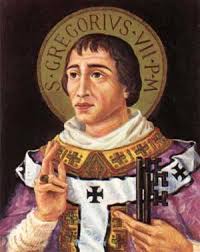 Thus arose the idea of creating a strong
church hierarchy independent of the secular authorities. The reform movement
against the encroachment of secular power could be seen in the monasteries of
the Cluniac congregation, which were in the direct jurisdiction of the pope.
Among the many supporters of this idea was the energetic figure of the Cluniac
monk Hildebrand. He was a practical man who possessed an iron will, and who
was devoted with his whole being to the Catholic Church.
Hildebrand understood that the salvation of the Church lay in its liberation from secular power. Under the influence of Hildebrand in 1059 pope Nicholas II issued a ruling according to which the people and the Roman aristocracy were deprived of their right to elect the popes, and this right was transferred to a college consisting of cardinal bishops and cardinal presbyters.1 The ordinary clergy, societal elites and people, as well as the emperor were accorded the right of confirming the chosen candidate, while the emperor enjoyed this right as a special privilege granted by the papal see. In his role as secretary to the popes, Hildebrand was such a popular individual that on the day of the funeral of pope Alexander II, the successor of Nicholas II, the people of Rome chanted his name as the next pope. The cardinals confirmed this choice; Hildebrand, however, was unwilling to take up the position. Nonetheless, he proved himself to be the first person to be a genuine proponent of firm papal authority.
Hildebrand expressed his ideas in his writings. The first hierarch of Rome, he believed, should enjoy the right to depose other bishops in their absence without first convoking a synod or council. He can review all sentences and appeals, while there can be an appeal to the sentences; he had in effect become higher than any court. The bishop of Rome could compile the canons of the Church. The Church of Rome had never been in error and had always been infallible, and the pope, by the merits of the apostle Peter, became a saint. Hence the pope had the right to depose emperors and free those bound by oaths. Hildebrand’s ideas contained an absolute system of theocratic order headed by the absolute monarch of the pope.
But Hildebrand realized that in order to put this into effect he had to rely upon the clergy who were not involved in worldly matters and who were exclusively dedicated to the Church. This clergy, he believed should be celibate. At the Council of Rome in 1074 he returned once more to the issue of clerical celibacy. He resisted the opposition of the clergy and unremittingly made this idea a reality of life.
The next year at the Council of Rome Hildebrand spoke decisively against investiture. However, the secular rulers saw this as an infringement of their rights and their state property, as the ecclesiastical authorities, who had no desire to renounce their land holdings, did not want to place them at the disposal of the state. The higher hierarchy, used to their feudal ways, was also unhappy with the pope’s decree. The fight for investiture intensified. The culmination of the bolstering of papal power came with the so-called ‘Walk to Canossa’.
The Holy Roman Emperor Henry IV, disregarding the threats of the pope to excommunicate him, boldly sought out conflict with him. Supported by the bishops who were dissatisfied with the pope’s innovations, he tried to get him deposed and indeed at the synod of Piacenza2 pope Hildebrand was deposed.
In reply, the pope deprived Henry of his power over Germany and Italy and cursed him. The opposition bishops were defrocked and excommunicated. To be Holy Roman Emperor and excommunicated at the same time was an extremely difficult position to be in as it brought with it particular political consequences. The German kings demanded that Henry reconcile with the pope within a year.
During the harsh winter Henry and his wife and child traveled to Italy. They encountered the pope in the castle of countess Matilda in Canossa. In the rough mohair shirt of a penitent sinner, barefoot, he stood for three days in the frost in expectation of an audience with the pope. The excommunication was removed from him, but he remained without his rights to be ruler until the relevant investigation. Unhappy with the results of the ‘Walk to Canossa’, Henry entered upon a new conflict with Hildebrand. He even conquered Rome and elected Clement III as the new pope. But with the help of the Normans Rome was returned to Hildebrand, who forced Henry to leave Italy.
The population of Rome was horrified by the robbery and arson of the Normans in their city. Hildebrand fled to Salerno, where he died in 1085.
The long-running Investiture Controversy eventually wore down the papacy and the empire and concluded with the Concordat of Worms, signed by pope Callixtus II and emperor Henry V in 1122. The Concordat of Worms provided for the clergy to elect the hierarchy of bishops. However, the right to own estates remained with the secular authorities and the clergy were obliged to be responsible for all of the crimes relating to the ruler and emperor proceeding from the relations of fiefdom.
- General notes on the papacy
- Pope Innocent III (1198-1216)
- The Avignon Papacy (1309-1377)
- The great Western schism
Pope Innocent III (1198-1216)
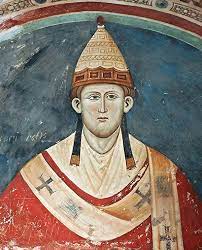 It was in the person of Innocent III that the might
of the papacy shone most brilliantly of all. Innocent possessed the personal
qualities of being an outstanding man of his time. He was possessed of an iron
will and indomitable energy, he was a subtle politician, and loved music and
poetry, as testified by his erudition. So, the ascension to the papal see of
this gifted thirty-seven-year-old was not fortuitous.
Innocent wholly adopted Gregory Hildebrand’s view of the state as a human institution. He compared the Church to the sun and the state to the moon. The moon takes its light from the sun, but remains in beauty and dignity less than the sun, so too kingly power takes the brilliance of its dignity from papal authority. The Lord had granted to the apostle Peter the power to rule not only the Church, but also the state. These insights were fully expressed in the life work of Innocent, and he in effect acted as an absolute monarch of the entire Catholic world, thereby destroying any remaining traces of independence among the secular authorities. He also demanded that the citizens pledge an oath to him. From central and southern Italy Innocent drove out the imperial feudal barons and extended the church’s land holdings.
In Rome the representative of imperial might was the prefect, whom Innocent compelled to take an oath to the papal see and receive from his hands the investiture not only in the form of a sword (the symbol of secular power), but also in the form of a cloak and silver chalice.
In 1197, after the death of Holy Roman Emperor Henry VI, he took an active participation in the struggle for the German crown. Since the heir to the Holy Roman Emperor was only three years old, between the German kings there arose disagreements regarding the new emperor. Of the two claimants to the crown, Otto of Saxony and Philipp of Swabia, Innocent recognized the former. But when Otto began to assert his rights to Italy and wanted to subjugate papal authority to himself, the pope excommunicated him, deprived him of his imperial crown and declared all the German kings to be free of all obligations towards the emperor. The pope directed Friedrich, the son of Henry VI, to be the new Holy Roman Emperor.
He demonstrated his power also to the king of France Philipp Augustus by intervening in his family life. The pope demanded that the king marry queen Ingeborg, whom he had sent to a convent, and break off his marriage with princess Agnes of Merania. In order to break the stubborn king, the pope placed the whole of France under an interdict with all the consequences which flowed from this terrible measure.
Innocent also instituted control over Spain, Portugal, Hungary, Poland and the Scandinavian countries.
The Latin empire, founded in Constantinople as a result of the fourth Crusade, allowed Innocent to assert his power, albeit temporarily, in the East. Thus, Innocent II’s policies came full circle. The Catholic world had been transformed into a theocratic monarchy. In the sphere of civil administration, the pope had proved to an able arbiter in affairs of state.
Innocent III’s rule was noted for yet one more innovation which was to become an avenging sword descending on all Europe – the Inquisition. This sacred tribunal, the Sanctum officium, was subject to the pope and was served by Dominican monks.3 The Inquisition had the right of judgment and sentence over those suspected of heresy without regard to their origin or sex. The Inquisition played a significant role in the fight against Judaism, Islam and later Protestantism.
THE RISE AND FALL OF THE PAPACY IN THE WEST FROM THE ELEVENTH TO THE
FIFTEENTH CENTURIES
The Avignon Papacy (1309-1377)
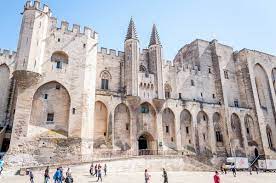 At the end of the thirteenth
century the papacy was confronted with the dangerous threat posed by the king
of France Philipp the Fair (1285-1314). The pope had by now made it a custom
to intervene in the affairs of rulers. However, Philipp violated this
tradition by declining the mediation of pope Boniface VIII in his war with the
king of England Edward I. But the pope was further angered by the taxes
imposed by Philippp upon the French clergy in order to cover the expenses of
the war. In 1296 the pope issued a bull in which, without mentioning the king,
he threatened with excommunication all people who imposed taxes on the clergy
as well as those clerics who paid them.
Philipp replied to this bull by banning the export from France of precious metals. As a result of this law, the pope lost his income in France, so he had to make concessions. Philipp even accepted the pope’s offer of mediation. But, when Boniface, in his role as arbitrator, supported the king of England, the hostile relations between him and Philipp were renewed. Then, in order to encourage the entire French nation to go into conflict with Boniface, Philipp gathered in 1302 deputies from all layers of society who solemnly declared that the king had received his crown directly from God, and not the pope. The French clergy were in agreement with this.
The Synod in Rome condemned the actions of the French, and the pope issued his famous Unan Sanctam bull, in which he outlined definitively his theocratic theory. Christ gave two swords to the Church, the bull states, as a symbol of the two authorities of the spiritual and the secular. Both powers were instituted for the good of the Church. Spiritual authority is higher than secular authority as the soul is higher than the body, and therefore, as the body is subject to the soul, so too secular authority is to be subject to the spiritual. It is only in this state of subjugation that secular power can serve the Church with benefit. In instances of abuse, secular authority must be judged by spiritual authority, while spiritual authority does not answer to anyone or anything.
In 1303 pope Boniface cursed Philipp and placed an interdict upon him. Philipp gathered a third assembly. Here his clever lawyers accused Boniface of simony and other crimes, including non-existent ones, for example, such as sorcery, as a result of which it was necessary to convoke as soon as possible an Ecumenical Council in Lyons to hold judgment over the pope and to vindicate the king. Shocked by all that had taken place, the pope died later that year.
Boniface’s successor Benedict XI, aware that his predecessor had acted too dramatically, tried to reconcile with France, but he died eight months later in 1304. The choice for a new pope fell upon the Frenchman who was the archbishop of Bordeaux, who ascended the papal throne under the name Clement IV (1305-1314).4
Philipp the Fair undoubtedly had an influence on the choice of pope and obliged him to take an oath that he would destroy all of Boniface’s degrees concerning him, condemn Boniface himself and disband the Order of the Knights Templar (also known as the Knights of the Temple who were founded in the twelfth century in Palestine to protect pilgrims and the Church of the Holy Sepulchre). Wary of encountering danger in Rome for his concessions to France, Clement decided to stay in France forever, summoned his cardinals there and in 1309 founded his residence in Avignon. Here the popes lived until 1377, and this almost seventy-year period in Avignon became known as the ‘Babylonian captivity of the papacy’. The Avignon popes, beginning with Clement V, were completely dependent upon the kings of France and acted under their influence. At the same time, they led a lifestyle unworthy of the calling of chief hierarchs of the Church, which even more weakened their influence.
Even in Italy the power of the popes waned significantly. In the papal provinces the popes were recognized as lords only formally, whereas in actual fact neither they, nor their deputies and legates had any influence at all upon the way things were governed. The zealous supporters of the papacy, fearing the eradication of the papacy as such, thought of returning the primate of the Church of Rome back to Italy. Gregory XI (1370-1378) finally transferred his residence back to Rome, where he soon died in 1377.5
The great Western schism
With the death of Gregory XI there began in the Church of Rome the so-called great Western schism. In the papal curia most of the cardinals were Frenchmen who had arrived from Avignon. They insisted that a Frenchman be elected pope, but the people of Rome demanded that he be a Roman.
Finally, an Italian Urban VI (1379-1389)6 was elected, a difficult individual. The new pope began his reign by correcting the morals of the clergy, and even the cardinals. Insulted by this, the French cardinals seized the papal jewels, left Rome, declared Urban’s election to be illegitimate and chose as their own pope Clement VII (1379-1394), who soon settled in Avignon. Clement was recognized by France, Neapoli and Spain, while Urban was recognized by the remaining countries. Thus, a diarchy arose within the Church of Rome.
As a great schism had occurred in the Church of Rome, Western Christendom, which had been accustomed to viewing the pope as the sole head of the Church, was tested by all of this, and the popes of both Rome and Avignon, with their dissolute lifestyles, and curses upon each other, only served to make the temptation greater. Church discipline also fell into decline. It was in this state of ecclesiastical affairs that voices began to heard that it was only through an Ecumenical Council that it was possible to put an end to the schism and eradicate all of the abuses within church life.
In 1409 a synod was called in Pisa. But, in spite of the sincere desire to rid the Church of the diarchy, the synod did not achieve its aim, only establishing that the pope could be called to accountability through the synod as a court. The synod of Pisa wanted to try the two popes, but when they did not appear, they were deposed. But the cardinals tried to persuade the synod of the need to elect a new pope, under the leadership of whom reforms would be enacted. The new pope was Alexander V (1409-1410). Here the synod committed an error. Alexander, stating that pre-conciliar work was essential for the carrying out of reforms, dissolved the synod with the promise to call a new one in three years-time. Thus, the synod achieved nothing, and the Church of Rome got a third pope. The death of Alexander V in 1410 did not resolve the issue of who was the legitimate pope.
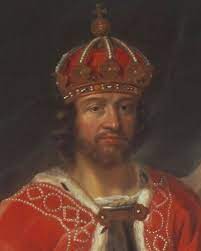 Alexander’s successor was cardinal
Baldassare Cossa, who occupied the papal throne as John XXIII (1410-1415).
John convoked a new council. The council, however, was opened not in Rome,
where John could exercise influence on the decisions, but in the German city
of Konstanz in 1414 in the presence of the Holy Roman Emperor and other
elites. The Council elected Martin V (1417-1431) as pope and the Western
Schism came to an end. The Council also confirmed its right to judge the pope,
and deposed John XXIII the Avignon antipope, who fled to Spain.7
During the period of the pontificate of Martin V the schism came to an end, but the authority of the vicars of the apostle Peter in the Catholic world was seriously undermined. The medieval policy of the Holy See ended with the Protestant movement which divided the Church of Rome and heralded a victory over papal absolutism. The consequence of all this was that now the power of the papacy had faded historically, and its authority needed to be stabilized and prestige increased throughout the Christian world. It was the militant Society of Jesus, founded in 1540l, and the Tridentine Council from 1545 to 1563 that took on the task of returning to the papacy its lost prestige.
Editorial Footnotes
Related Concepts
- antipope
- antipopes
- avignon-papacy
- boniface-viii
- boniface-viii-vs-philip-the-fair
- canon-law
- canonical-discipline
- cardinal-college
- cardinal-curia
- cardinal-schism
- church-hierarchy
- clement-v
- cluniac-movement
- cluniac-reform
- communion
- conciliarism
- conclave-principle
- concordat
- concordat-of-worms
- council-of-konstanz
- council-of-pisa
- councils-of-pisa-constance-basel-and-florence
- decline-of-papal-prestige
- deposing-of-emperors
- deposition-of-emperors
- dictatus-papae-ideas
- disciplinary-reform
- dominican-order
- dominicans
- ecumenical-councils
- excommunication
- feudal-system
- gallican-influence
- great-western-schism
- gregorian-reform
- gregory-vii
- holy-roman-empire
- infallibility-of-the-roman-church
- interdict
- investiture
- lay-investiture-controversy
- liberation-of-the-church-from-secular-power
- lords-supper
- martin-v
- papal-absolutism
- papal-authority
- papal-centralization
- papal-discipline-of-rulers
- papal-opposition
- papal-theocracy
- patriarchal-authority
- penance
- philip-the-fair
- primacy-of-rome
- princely-conflicts
- protestantization
- purity
- reform-of-the-church-in-head-and-members
- spiritual-authority
- sun-and-moon-allegory
- synod
- theocratic-monarchy
- two-swords-theory
- vicar-of-peter
Footnotes
-
The 1059 Papal Election Decree of Nicholas II assigned the decisive electoral role specifically to the cardinal bishops, with the cardinal clergy (presbyters and deacons) then giving their assent and the rest of the clergy and people acclaiming afterward; it was not an undifferentiated “college” of bishops and presbyters acting jointly. The electoral monopoly of the full College of Cardinals came only later (formalized under Alexander III in 1179). ↩
-
This should read the Synod of Worms (January 1076), where Henry IV and the German bishops renounced obedience to Gregory VII and declared him deposed. The Council of Piacenza was a later and unrelated event (1095, convened by Urban II). The confusion may stem from the Synod of Brixen (1080), where Henry’s supporters elected the antipope “Clement III.” ↩
-
This is anachronistic. Innocent III (d. 1216) launched the Albigensian Crusade and issued anti-heresy decrees at the Fourth Lateran Council (1215), but the institutional papal Inquisition staffed by Dominican inquisitors was established only under Gregory IX, c. 1231–1233. The Dominican Order itself was confirmed only in 1216, and the “Sanctum Officium” (Congregation of the Holy Office) was not created until 1542 by Paul III. Attributing a standing Dominican tribunal called the Holy Office to Innocent III conflates several centuries of development. ↩
-
Factual error: the first Avignon pope was Clement V (Bertrand de Got, archbishop of Bordeaux, r. 1305–1314), not Clement IV (who reigned 1265–1268). The regnal dates given (1305–1314) are in fact Clement V’s, and the text itself correctly names “Clement V” a few paragraphs later. ↩
-
Gregory XI returned to Rome in January 1377 but died on 27 March 1378, not 1377 — consistent with the regnal dates “(1370–1378)” given in the same sentence. His death in 1378 is what triggered the conclave that produced the Western Schism. ↩
-
Urban VI was elected on 8 April 1378 (pontificate 1378–1389), not 1379; likewise the antipope Clement VII was elected in September 1378, not 1379. The Schism began in 1378, immediately after Gregory XI’s death. ↩
-
Two errors here. John XXIII (Baldassare Cossa) was the antipope of the Pisan line, not the Avignon line; after fleeing Constance in disguise he was captured and imprisoned in Germany, he did not flee to Spain. The figure who fled to Spain was Benedict XIII, the Avignon-line antipope, who withdrew to Peñíscola in Aragon and refused to resign until his death. ↩