History of the Christian Church — Topic 12
-
What were the differences between Patriarch Photios and pope Nicholas I?
- What were the main differences between Patriarch Michael and pope Leo in the tenth-century?1
- What liturgical differences existed between the Church of the East and the Church of Rome at this time?
- Where did the Filioque first emerge and why was it inserted into the Creed?
- Did the withdrawal of the anathemas in 1965 lead to full reconciliation between the Roman Catholic Church and the Orthodox Church?
-
Francis Dvornik, The Photian Schism: History and Legend, Cambridge, 1978
- Philip Sherrard, Church, Papacy and Schism: A Theological Inquiry, London 1978
-
The causes for the division of the Churches
- The history of the schism of the Churches
- The events of 1054
THE DIVISION OF THE CHURCHES: THE SCHISM OF 1054
The causes for the division of the Churches
** _1. The Historical and canonical aspect of the division of the Churches
_**
It is possible to write a great many things on the causes for the division of the churches, but both secular and church historians agree upon two points, in spite of their different approaches, when discussing the two cornerstones of this process
These are:
- The struggle by the popes of Rome to rule the Universal Church;
- The dogmatic and liturgical differences of the Christian life of the East and the West;
The historical causes for the division came into being under the threat of the fall of the Byzantine Empire on the one hand from the military attacks by the Ottoman Turks,2 and on the other, from the political blows of the popes as the idea of supremacy had literally turned their heads. This was connected to the way church administration was organized in the West under a single, powerful bishop. The pope, as bishop, was recognized to be the head of the Church. This system of governance, known as the papacy, developed gradually.
It was fostered by a whole series of subjective circumstances. By its political status, Rome did not stand comparison with any other city. It was the capital of the entire empire. This importance of Rome meant of course that the bishop of the city was in a specially honoured position among the hierarchs of entire Christendom, and therefore all the bishops of the Christian Church accorded the bishop of Rome a special primacy of honour.
But Rome’s political advantage was an unreliable justification for the papal pretensions to supremacy, and it was not on these claims that supremacy was based. There was also a legal foundation, one of the main elements of which were the words of the Saviour spoken to Saint Peter: “You are Peter, the Rock; and on this rock I will build my church, and the powers of death shall never conquer it; I will give you the keys of the kingdom of heaven” (Matt 16.19). These words were interpreted as special hierarchical rights granted to Saint Peter as enjoying supremacy over the apostles. Thus, in the West Saint Peter came to be seen as the prince of the apostles. Accordingly, his rights over the other apostles would then be transferred to the rights of the bishop of Rome as the successor to the see which was founded by the apostle Peter and which, according to the tradition of the Church of Rome, he occupied for twenty-five years (this is according to the testimony of Saint Jerome of Stridon).3
In taking their cue from this conception, the popes without hesitation moved towards their goal of being the head of the Church Universal and to exercise supreme authority. Even the transfer of the capital from Rome to the East was interpreted as a sign of the lack of desire of the emperor Constantine, who considered himself unworthy to live in the same city as the vicar of Christ. A document was forged, known as the Donation of Constantine. In it, Constantine supposedly gave to pope Sylvester complete control not only over Rome and Italy, but also over all the Western lands and thus affirmed the supremacy of the bishop of Rome over all the other bishops of the Christian Church.
It should be noted that the see of Rome was the only see in the West of apostolic origin, and therefore the bishop of Rome occupied a special in it from the very beginning. No other bishop could dare to be equal in rank and honour to the bishop of Rome. On important issues the bishops of the West turned to the bishop of Rome as the Church of apostolic origin and the keeper of apostolic tradition. These appeals were understood by the popes, as were the appeals from the East, as appeals to the supreme church authority.
Stronger union with the secular authorities had great meaning in the role of strengthening the supremacy of the pope and his authority. Pope Zachary blessed the Frankish king Pepin to depose the last Merovingian king and helped him assumed his throne, while pope Stephen performed the coronation of Pepin. The Frankish kings did not take long to pay back their debt. When the Lombards seized the exarchate of Ravenna, a region in northern Italy belonging to the Byzantine emperor and which posed a threat to Rome, the pope asked Pepin to help him regain these lands. Pepin’s successor Charlemagne greatly enlarged the possessions of the papal see and placed on the tomb of Saint Peter a certificate of gratitude for these possessions. Thus, the pope had become a secular ruler. He now had his own ecclesiastical province. The acquisition of these possessions had huge meaning for the subsequent history of the papacy. Now holding these possessions, the popes had accumulated great material wealth, which not only made it easier for them to strengthen their ecclesiastical and secular authority in the West, but also enabled them to realize further their ambitious plans to become the supreme masters over all of the states of the Catholic world. But this tendency, of a purely political nature, was realized in the following period of church history.
As a result of these circumstances, by the ninth century the supremacy of the popes in the West was recognized ubiquitously. But the promise of the Saviour to Saint Peter was deemed insufficient by the popes to justify the canonical basis of their authority, since in both the West and the East it was not interpreted in the sense it was interpreted by the apologists of the papacy.
In the ninth century in the West there appeared a compilation of canons ascribed to the Spanish scholar the bishop of Seville Isidore. But this book was a forgery and became known as the Pseudo-Isidorian Decretals. This book contained, along with acts of certain unknown councils, one hundred decretals and papal letters beginning with the contemporaries of the apostles Anacletus and Clement. The forged nature of these documents is clearly demonstrated by the crude anachronisms and other errors. People who lived in different centuries corresponded with each other, while the ancient bishops of Rome used the translation of the Scripture which was made by Saint Jerome in the later fourth century.
In these decretals the authority of the pope was presented as the sole supreme authority in the Christian Church. The pope is the supreme head, the legislator and judge of the Church, as the sole bishop of entire Christendom. The authenticity of this document was accepted for a long time and it was used to justify the foundation of the edifice of the papacy.
2. The dogmatic and liturgical aspects of the division of the Church
The process of the division is important not only from the historical perspective but also from the perspective of what divides the Church in essence to this day, that is to say, the claims by the Church of Rome of itself (the dogma of papal infallibility), and then the faith of the Church (the teaching on the Holy Spirit, the teaching on the immaculate conception of the Virgin Mary), which for the Orthodox come into direct contradiction with the basics of the truth of Christianity.
In the dogmatic teaching of the Church of Rome we find the teaching on the procession of the Holy Spirit from the Son (Filioque). The Eastern Church in her teaching on the Holy Spirit refers to the words of the Saviour: “When the advocate has come, whom I shall send you from the Father – the Spirit of truth that issues from the Father” (Jn 15.26). This dogma became the 8th article of the Nicene Creed.
In the Western Church Saint Augustine suggested the idea that the Holy Spirit proceeded from the Father and the Son, although at first the procession of the Holy Spirit from the Father and the Son was understood ambiguously. By the procession from the Father was meant his pre-eternal origin, while the procession from the Son was taken to mean that he eternally proceeds from the Father and is sent temporarily into the world from the Son too. This was how it was explained to the Greeks by the Eastern father Saint Maximus the Confessor when the Greeks became confused and consternated by this innovation. But this difference between the eternal and temporal procession of the Holy Spirit was soon forgotten in the West, and there arose a new teaching on the eternal procession of the Holy Spirit from both the Son and the Father.
As the opinion of a few individuals, it would not have had such great significance and would not have been a cause for discord between the East and West. But the Western Church made this opinion into a dogma and introduced it into the Creed. This addition to the Creed (“and from the Son”, Filioque) was made for the first time at the Council of Toledo in Spain in 589,4 where the Visigoth Aryans were reunited to the Orthodox Church. In order to make it more obvious to the heretical Aryans, the Spanish theologian made the Holy Spirit equal to the Father and the Son, and both were the source of the procession of the Spirit.
But this teaching did not immediately take root in the West. Its proponent Charlemagne, who personally guided the proceedings of the Council of Aachen in 809, was unable to insist upon a new redaction of the Creed. He therefore turned to pope Leo5 with a request to affirm this teaching and introduce it as the 8th article of the Creed. Disagreeing strongly with Charlemagne, the pope refused to affirm this new teaching. He even ordered the Nicene Creed to be engraved in Greek and Latin in two tablets without the addition of “and from the Son” and placed them in the Basilica of Saint Peter.
The Eastern Church at the Councils of 867 and 879 decisively repudiated this teaching as an innovation not recognized by the Universal Church.
But the new Roman tendency became ever stronger, and pope Benedict VIII in 1014 introduced the Filioque into the Creed of the Church of Rome, therefore claiming for himself the right to determine dogmatic teaching, which belonged solely to the Universal Church, and thus violated the conventions of the Universal Church which forbad at the III Ecumenical Council the introduction of whatever changes into the Creed. Such arbitrary behaviour was sufficient cause for a rupture in union between the Churches of the East and the West.
There were also changes in ritual in the Western Church. These included the introduction of fasting on Saturdays, the celebration of the Eucharist on non- leavened bread, the celebration of the service of unction by bishops alone and the celibacy of the priesthood. In themselves these things did not have great significance, but they clearly expressed Rome’s tendency to disregard the traditions of the Eastern Church and to build up its own church life according to its own principles.
The Eastern Church, which had strictly preserved the commandments of universal Orthodoxy and church order, could not but disapprove of Rome’s claims. But, while pointing out these departures from the faith, she did not wish to stir up controversy around them for the sake of preserving peace within the Church, until the arbitrary behaviour of the Church of Rome overstepped the mark and started to threaten the purity and freedom of the Universal Church. This happened as a result of the papal claims to supremacy and the attempts to substitute the conciliar order of the Church for autocratic rule.
The events of 1054
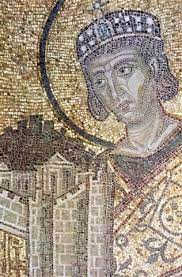 In the first half of the eleventh century the see
of Constantinople was taken by Patriarch Michael Cerularius (1043-1058), a man
who had a strength of character to rival that of Photius. The see of Rome was
occupied at that time by pope Leo IX.6 The clash between the pope and patriarch
happened among the following circumstances.
In southern Italy, Calabria, Apulia and on the island of Sicily there were lands that belonged to the Byzantine emperor. Colonies of Greeks inhabited them, and the churches were in the jurisdiction of the Patriarchate of Constantinople. Michael Cerularius kept a watchful eye on the preservation of the purity of the Orthodox faith in the Italian colonies.
At the initiative of the Latins, their rituals spread to these places, especially the use of unleavened bread in the Eucharist, which was what also happened in Constantinople. Unhappy at this, the Patriarch closed the Latin monasteries in Constantinople, while in Italy he sent to bishop John of Tranum in Apulia a letter condemning some of the departures of the Church of Rome from the Eastern Church. He devoted special attention in the letter to the use in the Western Church of unleavened bread and the observance of fasting on Saturdays. This letter provoked a lively controversy between East and West on both the issue of unleavened bread and other disagreements.
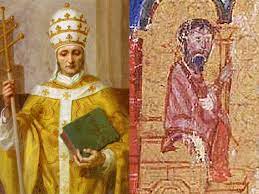 Pope Leo was greatly indignant
at the Patriarch’s letter and arrogantly replied to Michael, reproaching him
for “unheard of insolence” in teaching the Church of Rome. Using the forged
document of the Donation of Constantine, the pope raised the authority of the
first hierarch of Rome to a level that his predecessors could only dream of.
From their perspective, the popes were not only the supreme first hierarchs
but also earthly lords. But as the Orthodox Church was already familiar with
this tone and sententiousness of papal letters, it came as no surprise. The
constant threat, however, to the Greek colonies in Italy from attacks by the
Normans compelled the Byzantine emperor to seek a union with the pope, who
himself had also suffered from these incursions by the Normans. It would
appear that a common enemy would have united the two sides, but Rome’s pride
prevented it from doing so. A papal embassy came to Constantinople for
negotiations which pursued the aim of reconciling the patriarch and the pope.
The behaviour of the envoys, however, was arrogant in that they felt themselves to be the owners of the Church of Constantinople. The embassy was headed by Cardinal Humbert, a zealous ideologue of papal autocracy. He treated his meeting with Michael Cerularius with demonstrative haughtiness and viewed him as a bishop of lower rank. The tactlessness and arrogance of the papal legates became evident at their first introduction to the Patriarch. The Patriarch received the legates surrounded by metropolitans and bishops. He believed that the papal representatives would take their place among the rows of bishops and pay honour to the patriarch. But the legates entered the assembly with the majestic pride of representatives of masters of the universe, and even considered it unworthy to bow to the patriarch. They believed that they would be allowed to preside at the assembly. But when the patriarch showed them their places among the rows of bishops, they handed him the papal bull and, without saying a word, turned on their heels and exited the gathering.
Insulted by this behaviour of the legates, and not wishing to accede to any of Rome’s claims, Michael Cerularius refused to continue negotiations with the pope’s envoys. The emperor, in pursuing political goals, tried to calm the tense situation between the legates and the patriarch. He treated them with exceptional kindness and deference, and confiscated all of the polemical works written against the Church of Rome. But the attention of the emperor was not enough for them: they wanted to see the patriarch incline his heard before them.
Angered by his steadfastness, the legates then did something of an unprecedented nature. On 16th July 1054 during divine worship, they placed on the altar of the Church of Hagia Sophia in Constantinople a bull excommunicating the Patriarch of Constantinople Michael. As they left the church, the legates shook the dust from their feet and loudly proclaimed: “May the Lord judge you!” In its immediate intent the bull of excommunication concerned only the patriarch and his entourage, but indirectly it was aimed at the entire Eastern Church. Compiled in Latin, the bull was put on the most sacred place of the church and caused a storm of indignation within the Church of Constantinople.
On 20th July 1054 Patriarch Michael Cerularius convoked a council in the Church of Hagia Sophia and pronounced an anathema on the papal legates. The decision of the council was communicated to all of the Eastern patriarchs, who accepted the resolution to break completely canonical and eucharistic communion with the Roman Catholic Church.7 The name of the pope of Rome was expunged from the diptychs of the Church of Constantinople.
The incursions of the Crusaders into Constantinople in 1204 and the destruction they visited upon the Orthodox holy sites only served to deepen the division of 1054 and make the relationship between the two Churches only worse.
The centuries passed by, and in the twentieth century on 7th December 1965 in Saint Peter’s Basilica in Rome and in the Patriarchal Cathedral of St. George in Constantinople Patriarch Athenagoras and Pope Paul VI annulled the anathemas of 1054. However, in this exchange of declarations, the heads of the two Churches nonetheless emphasized that this act of mutual reconciliation did not put an end to the historic differences between the Roman Catholic and Orthodox Churches.
The history of the schism of the Churches
** The affair of Patriarchs Ignatius and Photius**
From 846 the Patriarchal see in Constantinople had been occupied by Patriarch Ignatius. He was a man of lofty moral demeanour, but in his pastoral demands he was quite severe. From the very outset he made many enemies, among whom the most dangerous was the guardian and uncle of the young emperor Caesar Bardas, who was suspected of having a love affair with the wife of his deceased son. Ignatius told Bardas to break off this illegitimate relationship. But when this did not happen, the Patriarch decided to take the bold step of refusing Bardas holy communion on the feast of the Epiphany of Our Lord. Bardas could not forgive the Patriarch this insult. The emperor Michael was also angry at this step taken by the primate of the Church. In addition, he vented his anger on Ignatius for refusing to support his plan of removing his mother from state governance and having her tonsured a nun. Having carried out his plan with Ignatius’ participation, Bardas accused him of treason and sent him into exile on the island of Tenerife.8
In Ignatius’ place on the Patriarchal throne on 25th December 858 there was placed the senator Photius, who was an exceptionally bright personality compared to his not-so-far-sighted contemporaries. He was a strong-willed man and possessed a firm character, vast experience of life and state imperial administration, and was extremely erudite.
It was under great pressure that Photius accepted the Patriarch throne, believing that Ignatius had long accepted his fate of having been deposed. Going through all the six degrees of priestly ordination to be made Patriarch, Photius was elected unanimously by a synod of bishops to the primatial see.
But this was only the beginning of the great drama which was enacted out during his Patriarchal rule, the result of which was a temporary rupture between the Churches of the East and the West.
Ignatius was not broken by the loss of the Patriarchal throne, and he was soon to be part of the battle between himself and Photius, each forming two implacable camps. Thus, there occurred a schism within the Patriarchate of Constantinople.
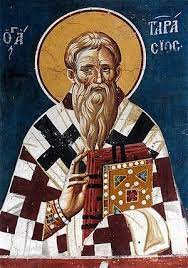 In spite of its few followers, Ignatius’ party
started a ferocious campaign against the supporters of Photius. The supporters
of Ignatius in 859 gathered a council and excommunicated Photius. Photius
replied by convoking his own council and excommunicating Ignatius.
The unrest which had begun in the Patriarchate of Constantinople prompted pope Nicholas I to intervene in church affairs in the East. This pope was a fanatical adherent of the idea of the supremacy of the bishop of Rome throughout the Universal Church. The initial pretext for his intervention in the affairs of the Church of Constantinople was the circular letter by Photius to the Church of Rome, together with similar letters to the other patriarchs notifying them of his ascension to the patriarchal throne. Along with the letter of Photius, the emperor for his part sent a letter to the pope with abundant gifts for the apostolic see. Nicholas I, however, understood these actions to be support for the See of Rome.
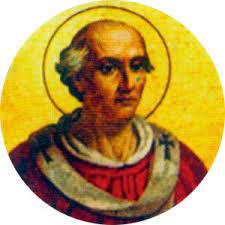 The arrogant Nicholas I sent two legates to
Constantinople with letters for Photius and the emperor. Using the tone of a
supreme judge, the pope announced to the emperor and Photius that he could not
recognize as legitimate all that which had taken place in Constantinople until
his legates had investigated the affair, because all of this had happened
without the pope being informed. The pope did not recognize Photius to be the
legitimate patriarch as it was uncanonical to be elected to this see from
among the laity. To prove his point, he referred to the main rulings of the
Western Church, including the rules of his predecessors. The pope’s letters
produced an unfavourable impression in Constantinople. The bishops realized
the danger they were in from Rome. This played out to Photius’ advantage. The
bishops of Constantinople saw that only Photius was capable of defending the
independent status of the whole Church. In these conditions, the papal legates
did not feel they enjoyed respect in the East, and at the Bilateral Council of
Constantinople in 861 their numbers were merely symbolic. The papal legates
expressed full agreement with this rule. The rulings of the Council were sent
to pope Nicholas I. At the same time, the emperor and patriarch sent their
letters to the pope. In his letter, distinguished by its lofty dignity and
power of argument, Photius explained to the pope that he had become patriarch
by dent of circumstances and declared roundly that the Church of
Constantinople knows of no such canons whereby he had been elected patriarch
illegally. The rules of the local Churches, he explained to the pope, had not
yet been confirmed by an Ecumenical Council and so could not be regarded as
binding. Photius defended his rapid ascent to the Patriarchal throne by
reference to historical precedent. He pointed out that Patriarchs Tarasius,
Nicephorus and Nectarius in the East and in the West bishop Ambrose had been
elected to their sees while still laymen, while the last two had been elected
bishops even before they had been baptized!
The pope received Photius’ letter and realized that he was dealing with a steadfast and intelligent opponent. Nicholas I, however, was not put out by this lack of success. In his letters of reply to the emperor and Photius he continued the tradition of the pope playing the role of supreme arbiter in church affairs. He declared that the apostle Peter, compared to the other apostles, had been granted more rights, and the pope, as his vicar, was the inheritor of these privileges. Referring to these privileges, the pope decided without hesitation not to recognize Photius as the legitimate patriarch, believing that Ignatius was. The emperor and the Patriarch ignored these letters. But the controversy, having seemingly ended, flared up again.
The deposed Patriarch Ignatius appealed to pope Nicholas with a request to investigate his case. By turning to the pope in this way, Ignatius’ party had in effect recognized the supreme ecclesiastical jurisdiction of Rome. The pope rejoiced, as he saw that Ignatius’ triumph would mean his own triumph. The Council in Rome of 863 deprived Photius not only of his rank as patriarch but also defrocked him of all holy orders. The Council indicated that should Photius not submit to this ruling, then he would be excommunicated and be allowed to receive holy communion only if he was in danger of dying. These consequences concerned also all the church persons devoted to Photius in the instance if they did not break communion with him. Ignatius was restored to his rights as Patriarch along with his supporters, including those who had been accused of various crimes.
In 867 Photius gathered in Constantinople a local Council where he denounced the unlawful claims of Rome to supremacy over the Church of Bulgaria and condemned all of the errors of the Church of Rome. In a special letter to the Patriarchs of the East he informed them of what had happened in Bulgaria. In the same year of 867, with the participation of representatives of the Eastern Churches, a new council took place which condemned all of Rome’s departures in dogmas and rituals, as well as the claims of pope Nicholas I to supremacy in the Church. The Council answered the anathemas pronounced upon Photius by the pope with an anathema on the pope himself.
After the Councils, events took a completely different turn. Photius’ supporter Bardas was in disgrace with his nephew the emperor Michael and upon his orders was murdered. His place was taken by the emperor’s new favourite Basil the Macedonian, who had been elevated to the dignity of Caesar. He was an uneducated, brutish man. His only merit was that he possessed remarkable physical strength and was able to handle and bridle horses.
Yet inconsistent in his preferences, the emperor distanced himself from this Caesar. Basil warned Bardas of the fate that awaited him, killed the emperor and assumed the Byzantine throne. This affected Photius’ fate too. Basil the Macedonian deposed Photius and returned Ignatius to the helm of the Church. The Church then affirmed its pro-Western position and recognized the supremacy of the pope in her affairs. But to the credit of the Church of Constantinople it has to be said that that the recognition of papal supremacy was merely the affair of the emperor and the small party surrounding Ignatius. The better part of Byzantine society and the larger part of the bishops of Constantinople were against this development in their relations with Rome. In the meantime, an embassy arrived in Rome representing the new dispensation. While it was on its way, Nicholas I died and his successor Hadrian II had no inclination of the groveling that the Roman see was about to be in receipt of.
In 868 a council was convoked in Rome where the rulings of pope Nicholas I regarding Photius and his supporters were confirmed. The conciliar acts of 867 were destroyed. Under threat of excommunication and being defrocked from priestly orders, the same was to done by those who enjoyed these ranks. The jurisdiction of the rulings extended to all of the Eastern patriarchates. In this manner, the pope declared his universal rights at this council. At the wish of Basil the Macedonian, the pope sent his envoys to Constantinople.
In 869 a council took place in Constantinople. Strictly, this was not a council but rather an insignificant synod which opened with only twelve participants, if we exclude the president of the council and the representatives of the secular authorities. Only at the last session of the council did the number of participants reach one hundred. The representatives of the Eastern patriarchs at this council, as demonstrated above, were pretenders. Thus, the session of the council represented the governing elite, and so all of it definitions, including the recognition of the supremacy of the pope, were uncanonical. Photius, who had been summoned to the council, remained silent when replying to questions. On the other hand, Photius’ supporters energetically defended themselves, from which it became clear that it was impossible to bring them over to Ignatius’ side. Thus, peace was not brought to the Church. At the seventh session sentence was pronounced upon Photius and his supporters. This sentence was bolstered for greater solemnity by the blood of the Eucharist. The acts of the councils of 861 and 867 were burnt.
The pope rejoiced, but was unhappy even so at the council’s refusal to resolve the issue of papal supremacy over the Church of Bulgaria. Now the former Patriarch Photius was kept under guard and forbidden to converse with his relatives, the monks and the clergy. He was even refused medicine. His property was confiscated, including his books. Photius’ supporters were also persecuted, who had courageously shared his tribulations with him. Thus, the schism became worse in the Church of Constantinople, even to the extent that in some cities there appeared two bishops.
In the relationship between Ignatius and the pope the stumbling block remained the issue of the Church of Bulgaria. Hadrian II’s successor, John VIII, categorically demanded from Ignatius that he should within thirty days purge the Church of Bulgaria of Greek clergy and transfer the Church to the jurisdiction of the pope, threatening him with being deprived of the Patriarchal throne. But Ignatius died while still patriarch in 877, and with his death there collapsed those false premises which the papacy had used for asserting its supremacy in the East.
After the death of Ignatius, Photius was elected a second time to administer the Church. Basil the Macedonia saw that Photius was the only person who was capable of putting an end to the unrest in the Church. But the emperor understood that in order to strengthen Photius’ position, it was necessary to annul the excommunication pronounced upon him at the council of 869. Only then could Ignatius’ party enter into communion with Photius, and the schism in the Church of Constantinople would be ended.
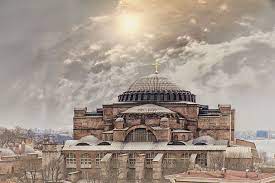 In 879 and 880 a great council took place
in Constantinople at the Church of Hagia Sophia. It was attended by 380
bishops, three papal legates and representatives of the Eastern patriarchs.
The Council rehabilitated Photius, which came as a serious blow to the
authority of the pope. John VIII tried to present Photius’ rehabilitation as
an act of his own mercy, hoping that the Church of Bulgaria would submit to
him. The pope expressed his dissatisfaction with the results of the Council in
letters to the emperor and Photius. Unsuccessful too was the attempt of the
new papal legate Marinus to remove the Bulgarian Church from its canonical
submission to Constantinople.
After the Council of 879-880, Patriarch Photius maintained his steadfast and independent political line from Rome. In 886, for reasons unknown, Photius was deposed once more from the Patriarchal throne by the new emperor Leo the Wise, and he died on 6th February 8919 in retirement at a monastery.
Editorial Footnotes
Related Concepts
- 1054
- apostolic-see
- apostolic-sees
- augustine
- autocephalous-movement
- bonn-conferences
- canon-law
- canonical-order
- co-redeemer
- conciliarity
- dogmatic-differences
- dogmatic-innovation
- donation-of-constantine
- double-procession
- ecumenical-councils
- eucharistic-communion
- filioque
- first-vatican-council
- forgery
- frankish-kings
- goths
- gregory-palamas
- holy-spirit
- holy-trinity
- immaculate-conception
- isidore-decretals
- john-1526
- magisterium
- mariology
- mark-of-ephesus
- nicene-constantinople-creed
- nicene-constantinopolitan-creed
- nicene-creed
- one-principle
- papal-authority-to-define-dogma
- papal-jurisdiction
- papal-states
- papal-supremacy
- patriarchal-election
- petrine-claims
- petrine-primacy
- photian-schism
- photius
- pre-redemption
- pseudo-isidorian-decretals
- renovationism
- schism
- second-ecumenical-council
- st-augustine
- st-maximus-the-confessor
- third-ecumenical-council
- toledo-589
- triadology
- trinitarian-theology
- vatican-i
- virgin-mary
Footnotes
-
Date error. Michael Cerularius and Pope Leo IX, and the events of 1054, belong to the eleventh century, not the tenth; the text’s own section “The events of 1054” places Cerularius’s patriarchate at 1043–1058. ↩
-
Anachronism. In the era of the ninth-to-eleventh-century schism the Turkic threat to Byzantium came from the Seljuk Turks (culminating at the Battle of Manzikert, 1071). The Ottoman Turks did not emerge until c. 1300 and only threatened Constantinople in the fourteenth–fifteenth centuries, long after the schism; they are not a plausible cause of the division. ↩
-
The twenty-five-year Roman episcopate of Peter derives from a traditional chronology (reflected in Jerome’s De viris illustribus and the Liber Pontificalis), but it is legendary. Modern historians regard the notion of Peter holding a continuous monarchical “bishopric” of Rome for twenty-five years as unhistorical; the monoepiscopal structure at Rome itself developed only in the course of the second century. ↩
-
The claim that the Filioque was first inserted into the Creed at the Third Council of Toledo (589) is the traditional account but is contested. A number of scholars argue the Filioque in the surviving Toledo acts may be a later interpolation, and that the clause’s firm liturgical establishment is better documented through later Spanish councils and especially Frankish usage under Charlemagne. (The “Aryans” are the Arian Visigoths; the misspelling is an artifact of the source text.) ↩
-
This is Pope Leo III (reigned 795–816) — not to be confused with Leo IX, who appears later in the 1054 narrative. The detail about Leo III having the Creed (without the Filioque) engraved on two silver shields and displayed in St. Peter’s is historically attested. ↩
-
Important context: Pope Leo IX had died on 19 April 1054, roughly three months before the legates placed the bull of excommunication on 16 July 1054. Because a legation’s authority normally lapses on the death of the pope who commissioned it, many historians (and canonists) regard the legates’ act as of dubious validity, having been performed in the name of an already-deceased pope. ↩
-
Modern scholarship cautions against reading 1054 as the definitive, church-wide “Great Schism.” The mutual excommunications were, in strict terms, directed at specific individuals (the legates on one side, Cerularius and his associates on the other), not formally at the two churches as wholes; contemporaries did not regard East and West as permanently sundered, and communion persisted in places for generations afterward. The schism is better understood as a gradual estrangement that only hardened later (notably after 1204). The term “Roman Catholic Church” is also anachronistic for the eleventh century. ↩
-
Geographical error, almost certainly a translation corruption. Ignatius was exiled not to Tenerife (in the Canary Islands, in the Atlantic) but to the island of Terebinthos, one of the Princes’ Islands in the Sea of Marmara near Constantinople. ↩
-
The date of Photius’s death is uncertain. It is most commonly given as 6 February 893 (some sources say 891); the year, unlike the commemorated day, is not securely fixed. ↩