History of the Christian Church — Topic 8
-
Explain the meaning of Monothelitism?
- What is the opposite of Monothelite?
- Give a brief summary of the Orthodox theology of the two wills of Christ.
- Why was Sophronius of Jerusalem persecuted?
- Why was Maximus the Confessor persecuted?
-
John McGuckin, The Path of Christianity: The First Thousand Years, Downers Grove, 2017
- Jaroslav Pelikan, The Christian Tradition: A History of the Development pf Doctrine 2. The Spirit of Eastern Christendom (600-1700), Chicago, 1974
-
The Monothelete Heresy
- The VI Ecumenical Council
- Saint Sophronius of Jerusalem and Saint Maximus the Confessor
Saint Sophronius of Jerusalem and Saint Maximus the Confessor
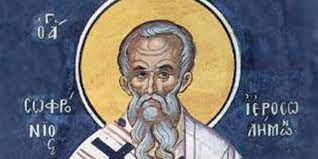 In 634 Sophronius was made patriarch of
Jerusalem and with ever greater zealotry defended Orthodoxy. He convoked in
Jerusalem a Council at which he condemned Monothelitism, and in his letter to
the other patriarchs he set forth the foundations of the Orthodox teaching on
the two wills in Christ. Although in 637 Jerusalem had been conquered by the
Muslims and the patriarch of Jerusalem had been removed from Church affairs,
his letter produced a great impression on the Orthodox empire.
Meanwhile, the Patriarch of Constantinople Sergius wrote to pope Honorius on the issue of the two wills, and Honorius for his part also recognized this teaching to be Orthodox,1 although he advised that discussion on it should be avoided as it was so much useless chatter. Controversies, nonetheless, arose.Heraclius, in his desire to put an end to them, in 638 issued the so- called exposition of faith (Ekthesis) in which, in laying out the Orthodox teaching on the two natures in Jesus Christ, forbad all talk of his wills, even though it added that the Orthodox faith demands the recognition of a single will.
The successor to Sergius as patriarch of Constantinople was Pyrrhus, who accepted and signed the Ekthesis. But the successors to Honorius greeted it unfavourably. At the same time, the monk Maximus the Confessor, one of the greatest theologians, spoke out as an ardent defender of Orthodoxy. From Alexandria, where he was at that time, as Cyrus issued his nine articles, Maximus and Sophronius protested against them, and Maximus moved to North Africa. From there he wrote emotional letters to the East in defense of Orthodoxy. It was here that he held a dispute in 645 with the deposed Patriarch of Constantinople Pyrrhus, who had also moved to Africa, and convinced him to renounce the teaching on a single will. Under the influence of Maximus, a Council was held in Africa in 646 at which Monothelitism was condemned. From Africa Maximus moved to Rome and he successfully acted in defense of Orthodoxy. Pope Theodore excommunicated the new Patriarch of Constantinople Paul, who had accepted the Ekthesis.
Constans II (642-668) ascended the imperial throne after Heraclius. The ecclesiastical divisions with Africa and Rome presented too much of a danger for the empire, especially in view of the fact that the Muslims, who had conquered Egypt in 640, were putting ever greater pressure on the empire. The emperor Constans in 648 issued his Typos which, apart from obliging all to believe in accordance with the previous five Ecumenical Councils, banned all talk of one will, allowing only discussion on two wills in Jesus Christ. The conflict therefore continued. Pope Martin I (649) gathered in Rome a great Council in 649 which condemned Monothelitism and its defenders, as well as the Ekthesis and the Typos, and sent the protocols of the Council to Constantinople to the emperor demanding that Orthodoxy be restored. Constans was indignant at this act and treated Martin harshly. He told the exarch of Ravenna to bring him to Constantinople. In 653 pope Martin was seized in his church and after a lengthy journey, during which he endured much hardship, he was brought to Constantinople. Along with Martin, Maximus the Confessor was also brought from Rome to Constantinople under constraint. Here the pope was falsely accused of political crimes and exiled to Chersoneses in 654, where in 655 he died from starvation.
The fate of Maximus was even more tragic. They tried to compel him through torture to renounce his writings and accept the Typos. Maximus’ spirit could not be broken. Finally, the emperor order that his eye be gouged out and his tongue cut out.2 Disfigured in this manner, Maximus was exiled to Lazia on the east coast of the Black Sea, where he died in 662.
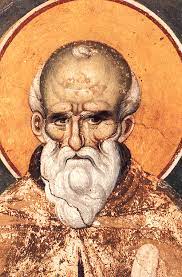
Saint Maximus the Confessor
THE HERESY OF MONOTHELITISM AND THE VI ECUMENICAL COUNCIL
The Monothelete Heresy
The heresy of the Monotheletes was a variant of the heresy of the Monophysites. It emerged from the efforts of the Byzantine ruling administration to unite the Monophysites to the Orthodox Church. The emperor Heraclius (611-641), one of the greatest rulers of the Byzantine empire, understood the evil brought to the empire by religious division and, like his predecessors, he embarked on the task of eradicating religious division.
In the second decade of the seventh century, Heraclius, during his campaign against the Persians, met with the Monophysite bishops, among whom were Athanasius, Patriarch of the Syrian Monophysites and Cyrus, bishop of Phasis in Colchis, and discussed with them the controversial issue of the two natures in Jesus Christ. The Monophysite bishops intimated to the emperor that they might agree to join the Orthodox Church, if the Church was to admit that in Christ there is a single action, or that he possesses a single will.3
The Church had yet to examine the issue of whether there were a single or two wills in Jesus Christ. But, recognizing that in Jesus Christ there are two natures, it was natural that the Church alongside this concluded that there were two wills as two independent natures – the divine and the human – and each ought to have independent actions, that is to say, within Jesus Christ the fact that there are two natures indicates that there are two wills. The opposite idea of recognizing a single will within two natures would be a contradiction: a separate and independent nature is unthinkable with a separate and independent will. In Jesus Christ there should be one nature and one will or two natures and two wills.
The Monophysites, who proposed the teaching of a single will, merely developed their heretical teaching further. The Orthodox, though, if they were to accept this teaching would thereby contradict themselves by also recognizing the Monophysite teaching to be true.
The emperor Heraclius had one goal, and that was to reconcile the Monophysites. Therefore, without paying attention to the deeper meaning of the teaching that was being proposed, he ardently set about the cause of uniting the Monophysites on the basis of this teaching. At his advice, Cyrus, the bishop of Phasis, addressed the issue of a single will to the Patriarch of Constantinople Sergius. Sergius declined to answer, saying that the Councils had not made any decision on this issue, but that some of the fathers admitted a life-creating activity in Jesus Christ the true God; yet, Sergius added, if the fathers had a different doctrine asserting two wills and two actions, then it would be right to assent to the latter.
It was evident therefore that Sergius’ reply favoured the doctrine of a single will. So, Heraclius went further. In 630 he recognized the Monophysite Anastasius to be the legitimate patriarch of Antioch, who had agreed to conclude a union in the same year as the Patriarchal throne in Alexandria was vacant to also make Cyrus, then bishop of Phasis, Patriarch of Alexandria. Cyrus was tasked with establishing a relationship with the Monophysites of Alexandria regarding the reunification with the Orthodox Church on the basis of the dogma of the single will. After negotiations with the Monophysites, especially the moderate ones, in 633 Cyrus issued nine articles, in the seventh one of which the dogma of a single God-man action in Christ or a single will was proclaimed.
The moderate Monophysites recognized these articles and entered into communion with Cyrus, while the strict Monophysites refused to do so. At this time in Alexandria was a monk from Damascus by the name of Sophronius, the beloved disciple of the renowned Patriarch of Alexandria John the Merciful. When the Monothelete heresy became open, Sophronius was the first to speak out in defense of Orthodoxy. He clearly and distinctly proved to Cyrus that the dogma of a single will in essence was Monothelitism. His representations were not heard, as were also not heard his representations to the Patriarch of Constantinople Sergius, who had accepted Cyrus’ nine articles.
The VI Ecumenical Council
Finally, the emperor Constantine IV Pogonatus (668-685), under whom the conflict between the Orthodox and the Monotheletes was renewed, decided to come down on the side of Orthodoxy. In 678 he deposed the Patriarch of Constantinople Theodore, who was an unambiguous Monothelete, and replaced him with the priest George, an adherent of the Orthodox teaching on the two wills. Then the emperor in 680 gathered in Constantinople the VI Ecumenical Council.
Pope Agatho sent to the Council his legates and Tome which, on the basis of the Tome of Leo the Great, set out the Orthodox teaching on the two wills in Jesus Christ. There were approximately one hundred and seventy bishops at the Council. It was also attended by the patriarchs of Alexandria, Antioch and Jerusalem; the emperor was also present at the Council. There were eighteen sessions of the Council. Coming to the defense of the Monotheletes at the first sessions of the Council was the Patriarch of Alexandria Macarius,4 the most zealous of the Monotheletes. The papal legates expressed their objections to him by pointing towards the experience of the ancient fathers of the Church that they had to recognize in Christ two wills. The Patriarch of Constantinople George and the other Eastern bishops agreed with the papal legates. But Macarius, in spite of these convincing arguments, refused to renounce the heresy, and so was condemned by the Council and deposed, and then exiled out of Constantinople by the emperor. Some of the monks, who were present at the Council, also refused to accept the two wills. At the fifteenth session one of them, Polychronius, who was fanatically devoted to the heresy, even suggested that they allow him to prove the truth of the Monothelete teaching by means of a miracle: he challenged them to allow him to raise someone from the dead. He was allowed to attempt this, but of course Polychronius was unable to resurrect anyone from the dead. The Council condemned Polychronius as a heretic and a rebel rouser.
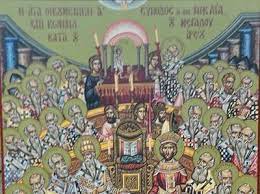 At the conclusion of its deliberations, the
Council thus determined the Orthodox dogma of the two wills in Jesus Christ:
“We proclaim equally two natural volitions or wills in him and two natural
principles of action which undergo no division, no change, no partition, no
confusion, in accordance with the teaching of the holy fathers. And the two
natural wills not in opposition, as the impious heretics said, far from it,
but his human will following, and not resisting or struggling, rather in fact
subject to his divine and all powerful will.”
At the same time, in forbidding the preaching of the teaching of the faith in any other way and in compiling a new Creed, the Council pronounced anathema upon all the Monotheletes, including Sergius, Cyrus, Pyrrhus, Paul, Theodore and pope Honorius. The sessions of the Council concluded in 681.
After the conciliar formulations, Monothelitism in the East faded. At the beginning of the eighth century the emperor Philippicus Bardanes (711-713) for a time restored this heresy within the empire by enlisting the Monothelete party to help him seize the imperial throne, but when he was deposed, the heresy again disappeared.
Editorial Footnotes
Flashcards
Download Anki flashcards for this topic’s quiz — import via Anki’s File > Import (note type “Basic”, fields separated by Tab, “Allow HTML in fields” checked).
Related Concepts
- anathema
- autexousion
- byzantine-church-state-relations
- canonical-discipline
- chalcedon
- chalcedonian-christology
- chalcedonian-definition
- chalcedonian-horos
- church-and-state
- communion
- conciliar-anathema
- confessor
- confessorshipmartyrdom
- constans-ii
- constantine-iv
- coptic-church
- council-of-ferrara-florence
- council-of-lyons
- cyrus-of-alexandria
- cyruss-nine-articles
- deposing-of-emperors
- divine-will
- doctrinal-definition
- dogmatic-definition
- dyothelitism
- dyothelitism-two-wills
- ekthesis
- energiesoperations
- excommunication
- fifth-ecumenical-council
- four-adverbs
- freedom
- freedom-of-the-church
- freedom-of-the-human-will
- heraclius
- heresy-by-omission
- honorius
- human-nature
- human-will
- human-will-subject-to-divine-will
- hypostasisperson
- imperial-pressure
- jacobite-church
- justinian
- lateran-council-649
- lateran-council-of-649
- life-creating-activity
- logos-of-nature
- lords-supper
- maximus-the-confessor
- monenergism
- monophysitism
- monothelitism
- natural-operation-energy
- natural-principle-of-action
- natural-volition
- nature-physis
- nine-articles
- obedience-of-christ
- papal-authority
- papal-infallibility-debates
- papal-legates
- papal-opposition
- patriarchal-authority
- penance
- persecution
- pope-honorius
- pope-martin-i
- princely-conflicts
- purity
- quinisext-council
- reception-of-councils
- self-rule
- sergius-of-constantinople
- single-god-man-action
- single-will
- sixth-ecumenical-council
- spiritual-authority
- st-constantine
- st-maximus-the-confessor
- st-sophronius
- st-sophronius-of-jerusalem
- strict-and-moderate-monophysites
- theandric-action
- two-natures
- two-wills
- two-wills-and-operations
- two-wills-in-christ
- two-wills-of-christ
- vi-ecumenical-council
Footnotes
-
The claim that Honorius “recognized this teaching to be Orthodox” oversimplifies a famously contested episode. In his two letters to Sergius (c. 634–635) Honorius did use the phrase “one will” (Latin unum velle), but modern scholars debate whether he was consciously endorsing Monothelite doctrine or merely affirming, in a less technical sense, that Christ’s human will was never in conflict with the divine. His posthumous condemnation by the Sixth Ecumenical Council (681) became a central flashpoint in later controversies over papal authority and infallibility. ↩
-
Factual error. According to the standard accounts of his final trial (655/662), Maximus was mutilated by having his tongue cut out and his right hand cut off — the organs of speech and writing with which he had defended the faith — not by having an eye gouged out. His severed right hand is venerated as a relic at the Monastery of St. Paul on Mount Athos. ↩
-
The text here blends two distinct stages of the controversy. The initial imperial formula was Monoenergism — the doctrine of a “single action/energy” (Greek mia energeia) in Christ, embodied in the “one theandric energy” of Cyrus’s 633 union. Only after that language proved untenable did the debate shift to the question of wills (Monothelitism, “one will”/hen thelema), formalized in Heraclius’s Ekthesis of 638. The two were related but not identical, and the chronological sequence (energy first, then will) is historically significant. ↩
-
Factual error. Macarius was Patriarch of Antioch (c. 656–681), not of Alexandria. He was the leading Monothelite spokesman at the Sixth Ecumenical Council and was deposed by it; he is also the figure usually credited with citing Honorius’s letters at the council, precipitating Honorius’s condemnation. ↩