History of the Christian Church — Topic 7
-
How did the Monophysites break up in to separate movements?
-
Which Monophysites were considered to be ‘strict’ and which Monophysites were considered to be ‘moderate’?
-
Why did the Armenian Church become separated from the rest of the Church?
-
What were the main subjects of discussion at the V Ecumenical Council?
-
Was the blessed Theodoret recognized eventually as Orthodox or heterodox?
-
The actions taken by Justinian. The Three-Chapter Controversy
- The V Ecumenical Council
- The Monophysites separate into various movements
-
J.N.D. Kelly, Early Christian Doctrines, 5th edition, London, 1977
- John McGuckin, The Path of Christianity: The First Thousand Years, Downers Grove, 2017
- John McGuckin, The Eastern Orthodox Church: A New History, Yale, 2020
- Jaroslav Pelikan, The Christian Tradition: A History of the Development pf Doctrine 1. The Emergence of the Catholic Spirit (100-600)
EMPEROR JUSTINIAN’S AND PEACE WITHIN THE CHURCH. THE V ECUMENICAL COUNCIL
AND THE THREE CHAPTER CONTROVERSY
The actions taken by Justinian. The Three-Chapter Controversy
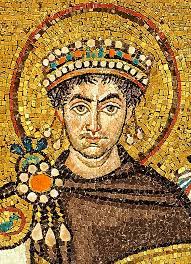 In 527 Justinian (527-565) ascended the imperial
throne. Like his predecessor, he tried to reconcile the Monophysites with the
Orthodox. There were many Monophysites in Egypt, where Orthodox Christians
were in the minority. But like the other emperors who had similar plans,
Justinian did not achieve his objective of reconciling the heretics.
Thus, in 533, under the influence of his wife Theodora, he made concessions to the Monophysites, allowing the addition of ‘who was crucified for us’ to the Trisagion Hymn in the Church of Constantinople1, although the strict adherents of the definitions of the Council of Chalcedon believed this addition to be Monophysite. Also under Theodora’s influence, Justinian in 535 elevated to the patriarchal throne of Constantinople Anthimus, who had pretended to abandon the Monophysites for the Orthodox. Fortunately, Justinian soon found out about the designs of the Monophysites. In 536 pope Agapetus came to Constantinople as an envoy from the Ostrogothic king Theodahad the Great2. Learning that Anthimus was a heretic, Agapetus, in spite of Theodora’s beliefs and threats, reported him to Patriarch Menas3. Yet he did not lose hope of reconciling the Monophysites. As a result, under the presidency of Patriarch Menas a small council was held in Constantinople of Orthodox and Monophysite bishops at which they discussed the reunification of the Monophysites. But the negotiations led nowhere as a result of the stubborn position assumed by the Monophysites. The Patriarch once more condemned the Monophysites and the emperor confirmed the strict laws enacted earlier against them. The Monophysites, under renewed persecution, fled to Armenia and spread their heresy there.
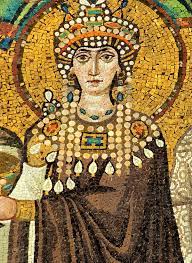 At the instigation of Theodora, upon the death of
pope Agapetus in 5374, she appointed to the see of Rome the deacon Vigilius,
who had promised her during her time in Constantinople along with Agapetus to
help the Monophysites.
Consequently, bishop Theodore Ascidas, who lived at the imperial court, advised Justinian to try to convert the Monophysites and proposed a plan by which the Monophysites could once more be joined to the Church only when the Orthodox Church condemned the teacher of Nestorianism Theodore of Mopsuestia, as well as his friends and followers the blessed Theodoret and Ibas of Edessa, for while their opinions had not yet been condemned, the Monophysites were a source of temptation and suspected the Orthodox Church of Nestorianism.
The emperor, whose aim it was to bring peace to the Church, agreed to put this plan into effect, and in 544 issued the first Edict on the Three Chapters. From the fragments that have survived from Faсundus of Hermiana the main points of them were:
“He who calls Orthodox the impious letter attributed to the authorship of Ibas or who supports it but does not anathematize it as slandering Cyril and criticizing the 12 chapters of Cyril attacking the first Council of Ephesus (i.e., in 431), but who defends Nestorius and defends Theodore of Mopsuestia, shall be anathematized.”
“He who asserts that we have spoked with the aim of humiliating or alienating the holy fathers of the Council of Chalcedon shall be anathematized.”
After the Edict was published, the supporters of Chalcedon found themselves in a difficult situation. This Edict was supposed to be signed by all the bishops. The Patriarchs of the East faced a hugely difficult situation when presented with the imperial Edict: Menas, the patriarch of Constantinople, after initially resisting, signed it, as did the other Eastern bishops, including Ephrem of Antioch.
Unlike the Eastern bishops, the Western bishops resolutely refused to accept the Edict, rejecting the purpose and necessity of condemning old errors and anathematizing people who had long died in peace with the Church. The bishop of Carthage Pontianus refused to put his signature to it, and the learned deacon Fulgentius Ferrandus wrote a treatise refuting the Edict. The Western bishops saw in the condemnations of the Three Chapters a downgrading of the Council of Chalcedon. There had been no discussion of Theodore of Mopsuestia at the Council of Chalcedon. The blessed Theodoret had been vindicated by the Council after he had pronounced anathema upon Nestorius and subsequently renounced his works against Saint Cyril, while the letter of Ibas was condemned in the form it existed in the sixth century at the time of the publication of the Edict, i.e., still containing the false teachings of Nestorius. The resistance of the Western bishops was a cause of consternation for Justinian. In 547 he summoned to Constantinople Vigilius and many other Western bishops, hoping to convince them to sign the condemnation of the Three Chapters. But when in Constantinople the Western bishops refused to do so, Vigilius proposed to the emperor that an Ecumenical Council should be called. Justinian agreed to this.
The Monophysites separate into various movements
Justinian’s efforts to reconcile the Monophysites with the Orthodox Church by, among other things, convoking the V Ecumenical Council led to the desired result. True, the moderate Monophysites joined the Church only within the Patriarchate of Constantinople. The Monophysites of the other patriarchates remained, as before, stubborn heretics. In the interests of the state, Justinian tried to reconcile the strict Monophysites even by making concessions to them. In 564 he demanded that the Orthodox bishops receive them into communion with them. But the bishops refused to accept heretics into the Church who rejected Orthodox teaching. For this, Justinian deposed and imprisoned them. This was also the fate of the Patriarch of Constantinople Eutyches. Yet, Justinian died shortly afterwards in 565 and the attempts to interfere in the life of Church came to a halt. At the same time, the Monophysites finally came together as communities separate from the Orthodox Church. In Alexandria in 536 a new Orthodox patriarch was installed, but he was recognized only by a small minority of the Egyptians, who were mostly of Greek origin. The main population of Egypt, known as Copts, each individually supported Monophysitism and elected their own Coptic patriarch and thus formed the Coptic Monophysite Church. The Egyptian Monophysites called themselves Coptic Christians, while the Orthodox called themselves Melchites, that is, those who adhered to the imperial doctrines. The number of Coptic Christians increased to five million. Along with the Copts, the Abyssinians also joined the Monophysite movement and formed a heretical Church along with the Coptic Church.
In Syria and Palestine Monophysitism did not initially gain as strong a foothold as it did in Egypt. Justinian had deposed all of the bishops and priests who had adhered to the doctrine of Monophysitism and then imprisoned them, as a result of which the Monophysites were left without teachers.
One Syrian monk called Jacob Baradaeus managed to unite all of the Monophysites of Syria and Mesopotamia and set up a Monophysite community. Ordained by the Monophysite bishops, whom Justinian had deposed, as bishop for all the Monophysites of Syria and Mesopotamia, Jacob Baradaeus for more than thirty years from 541 to 578 served the Monophysites faithfully and with success. Dressed as a pauper, he would wander from country to country where there were Monophysites, ordained bishops and priests and even set up a Monophysite Patriarchate in Antioch. From Jacob Baradaeus the Monophysites of Syria and Mesopotamia received the name ‘Jacobites’, and they remain so called to the present day.
The emperor Justin II (565-578) confined to oblivion Justinian’s Edict and issued his own Edict on the true faith using extremely careful language. The Monophysites did not accept the Edict, for it did not condemn the Council of Chalcedon.
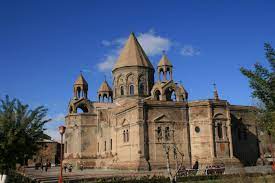 The Armenian Church also fell out of union with the
Universal Church, not so much because it had taken on board Monophysite
teaching but as a result of misunderstandings by which the church did not
accept the decisions of the IV Ecumenical Council and the Tome of Leo the
Great. The misunderstandings were these. At the Council of Chalcedon in 451
there had been no representatives of the Armenian Church as they were not made
aware of the fine points of the decisions of this Council. In the meantime,
the Monophysites had reached Armenia and spread the false rumour that
Nestorianism had been restored at the Council of Chalcedon. In 536, at the
Second Council of Dvin5, the Council of Chalcedon was condemned. From this
moment the Armenian Church was no longer part of the Universal Church and
became, as we can see from the above, not so much a heretical but schismatic
community as in its teachings on the natures in Jesus Christ it was in
agreement with the teaching that had been affirmed by the Church; the
difference was only in the terminology.
In the separated Armenian Church, apart from the peculiar teaching on the natures in Jesus Christ, certain distinguishing features also emerged in church order, which exist till the present. Thus, in the Armenian Church the Trisagion is read and sung with the Monophysite addition of “who was crucified for us”. From the beginning of the sixth century, under the influence of the Syrian Monophysites, the Eucharist has been celebrated on unleavened bread and the wine is not mingled with water. The feast of the Nativity of Christ is celebrated at the same date as the Epiphany of Our Lord on 6th January (Old Style) and the Nativity fast is broken only with the celebration of the Epiphany of Our Lord, and so on.
The emperor Tiberius (578-582), in his desire to avoid further unrest, restrained the Orthodox patriarchs from persecuting the Monophysites. The emperor Maurice (582-602) was a strict adherent to Orthodox faith and all four patriarchal thrones in the East were occupied by representatives who were in close communication and union with the Church of Rome.
The V Ecumenical Council
In 553 the V Ecumenical Council was convoked in Constantinople in order to resolve once and for all the issues surrounding Theodore of Mopsuestia, the blessed Theodoret and Ibas of Edessa.
The Council opened in May of 553 in Constantinople under the presidency of Patriarch Eutyches6. The Western party found itself in a constrained position: the emperor had invited only twenty-five Latin bishops, while one hundred and fifty Greek bishops were present at the Council. When he saw this, pope Vigilius, who was in Constantinople, demonstratively refused the invitation to take part in it, declaring that he would pronounce his own judgment regarding the Council’s decisions when it was concluded. The ecumenical nature of the Council was undermined by this and the chances of attaining a common position in church dogma were put in doubt. But Justinian, in spite of this, opened the Council and informed the pope that his separate decision would not be accepted.
The fathers of the Council at several sessions read the heretical parts pf the works of Theodore of Mopsuestia, read everything that refuted his arguments, resolved the issue of whether it was possible to condemn heretics posthumously and, finally, came to the conclusion in line with the imperial Edicts that Theodore was indeed a heretic, a Nestorian who should be condemned. Also read aloud were the works of the blessed Theodoret and the letter of Ibas. The fathers found the works of Theodoret to be worthy of condemnation, but as he had renounced Nestorius and had been vindicated by the Council of Chalcedon, he was not to be subject to condemnation. Regarding the letter of Ibas of Edessa, the Council also condemned it without touching upon the person of Ibas. In this instance the Council condemned what had been read at the sessions, that is, Ibas’ letter contaminated by the Nestorians. Thus, there were condemned Theodore of Mopsuestia and his works, as well as the works of the blessed Theodoret in defense of Nestorius against Saint Cyril and the letter of Ibas of Edessa to Marius the Persian. At the same time, the Council upheld the dogmas of the previous Ecumenical Councils, including those of Chalcedon.
The following assertions of Theodore of Mopsuestia were recognized as ungodly:
“That a human being, and not God, was born of the Virgin Mary”
“God was present in the human being Jesus at his birth”
“The Virgin Mary is the Mother of God, for God entered the person who was born of her at that moment according to his good will.”
“Christ needed in his struggle with the passions and lusts the guidance of the Holy Spirit.”
“Theodore of Mopsuestia had spoken blasphemously of the books of Job and Song of Songs.”
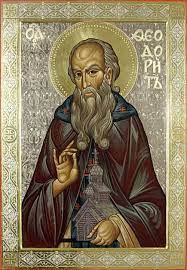 Many things were recognized to be unacceptable
in the writings of the blessed Theodoret of Cyrus:
• His polemic against the twelve anathemas of Cyril;
• The Nestorian formulae “for Christ was formed as a temple in the womb of the holy Virgin” and “the unity of the hypostatic as strange and alien we do not know either from the Divine Scriptures of from the Fathers of the Church”;
• The text of the letter on the occasion of the death in 444 of Cyril of Alexandria: “At last this evil man is dead”;
• The text of the letter of 431 from Ephesus to Andrew of Samosata where the general deportment of Saint Cyril is described as criminal lawlessness;
• The letter, friendly in tone, to Nestorius already after his having been condemned.
Before the conciliar decisions on the Three Chapters were made public, pope Vigilius sent to the emperor a resolution signed by another sixteen Latin bishops. The pope condemned the heretical places in the works of Theodore but not Theodore personally as he had already reposed and faced God’s judgment. The pope also declined to condemn Theodoret and Ibas and even objected to doing so on the grounds that they had anathematized Nestorianism and had been accepted by the Council of Chalcedon.
At the emperor’s suggestion, the Council rejected the pope’s opinion, and imposed a punishment upon him for refusing to participate in the Council: the name of pope Vigilius was removed from the diptychs.
At the last session of the Council there was adopted a proclamation of fourteen anathemas. The text of the document was similar to that of the confession of faith of Justinian, it was practically a repetition of it with insignificant reworkings. The proclamation concluded with the anathematizing of Theodore of Mopsuestia. Theodoret and Ibas were not personally anathematized as they had been vindicated by the Council of Chalcedon.
The hopes that Justinian had placed in the condemnation of the Three Chapters in relation to the East were not vindicated. The Monophysites, as before, separated themselves from the mainstream Church and did not wish to recognize the Council of Chalcedon. On the basis of these differences between the Orthodox and the Monophysites throughout the entire East there arose clashes, quite often ending in violence and bloodshed. Justinian, becoming ever more interested in theological speculation, towards the end of his reign showed interest in the question which once divided the Monophysite community, that is, of the corporality or non-corporality of the body of Christ. The emperor was inclined to support the position of the Aphthartodocetae (‘Julianists’). Expounding his teaching on the non-corporality of the body of Christ in an Edict, he demanded that Patriarch Eutyches sign it. The latter categorically refused to share the heretical views of the emperor, for which he was sent into exile in Armenia.
Editorial Footnotes
Flashcards
Download Anki flashcards for this topic’s quiz — import via Anki’s File > Import (note type “Basic”, fields separated by Tab, “Allow HTML in fields” checked).
Related Concepts
- adoptionism
- antioch
- antiochian-christology
- antiochian-school
- armenian-church
- chalcedon
- christotokos
- church-and-state
- conciliar-anathema
- constantinople
- coptic-church
- copts
- council-of-chalcedon
- council-of-ephesus
- council-of-ferrara-florence
- council-of-lyons
- cyril-of-alexandria
- diptychs
- dogmatic-definition
- ecclesiastical-honor
- edict-of-544
- egypt
- enhypostasis
- ephesus-431
- eutyches
- fifth-ecumenical-council
- ibas-of-edessa
- imperial-edicts
- jacob-baradaeus
- jacobite-church
- jacobites
- julianists
- justinian
- mariology
- melchites
- monophysitism
- moscow-patriarchate
- mother-of-god
- nestorianism
- nestorius
- papal-authority
- papal-legates
- patriarch-eutyches
- patriarchate-of-alexandria
- posthumous-anathematization
- second-council-of-dvin
- st-constantine
- st-cyril
- strict-and-moderate-monophysites
- terminology
- theodore-of-mopsuestia
- theodoret-of-cyrus
- theotokos
- tome-of-leo
- trisagion
- two-natures
- vigilius
- virgin-mary
- woman-clothed-with-sun
- word-became-flesh
Footnotes
-
This conflates two distinct things. The interpolation “who was crucified for us” (ho staurōtheis di’ hēmas) into the Trisagion was introduced by the Miaphysite Peter the Fuller at Antioch in the 470s and was never officially adopted at Constantinople (indeed it triggered riots there under Anastasius in 512). What Justinian promulgated around 533 was the Theopaschite formula — “One of the Trinity suffered in the flesh” (unus ex Trinitate passus est) — which was endorsed by Pope John II in 534 and is a separate issue from the Trisagion addition. ↩
-
Theodahad (r. 534–536) was not styled “the Great.” That epithet belongs to Theodoric the Great (r. 493–526), the founder of the Ostrogothic kingdom in Italy. Theodahad was Theodoric’s nephew and a short-lived, politically weak successor. ↩
-
More precisely, Agapetus did not merely “report” Anthimus: on arriving in Constantinople (early 536) he refused communion with Anthimus — who had been uncanonically translated from the see of Trebizond and was suspected of Monophysitism — secured his deposition, and personally consecrated Menas as the new patriarch. Menas was thus not yet patriarch when Agapetus acted against Anthimus. ↩
-
Agapetus I died in Constantinople on 22 April 536, not 537. The text also omits that his immediate successor was Pope Silverius (consecrated June 536); Vigilius, Theodora’s candidate, only replaced Silverius in 537 after the latter was deposed and exiled. ↩
-
The date is incorrect. The Second Council of Dvin, at which the Armenian Church formally rejected the Chalcedonian definition, is conventionally dated to 554 (sometimes given as 554/555), under Catholicos Nerses II — not 536. (The earlier First Council of Dvin, c. 506, had addressed the Henōtikon and condemned Nestorianism but did not constitute the definitive break.) ↩
-
The presiding patriarch of the Fifth Ecumenical Council (553) was Eutychius of Constantinople (patriarch 552–565, 577–582). He should not be confused with the archimandrite Eutyches, the Monophysite heresiarch condemned a century earlier at Chalcedon (451); the course text uses the same spelling for both. The same Patriarch Eutychius is the figure deposed by Justinian in 565 over the aphthartodocetist edict (mainstream accounts place his exile at a monastery near Amasea in Pontus rather than in Armenia). ↩