History of the Christian Church — Topic 6
-
Give a short summary of Nestorius’s teaching.
- Why is Theodore of Mospsuestia considered a heretic in the Orthodox Church but not in in the Oriental Orthodox Churches (Ethiopia, Egypt)?
- What was the prime purpose of the III and IV Ecumenical Councils?
- Give a short summary of the theology of Cyril of Alexandria on the nature of Christ?
- Why were the Monophysites rejected by the Orthodox Church?
-
J.N.D. Kelly, Early Christian Doctrines, 5th edition, London, 1977
- Jaroslav Pelikan, The Christian Tradition: A History of the Development pf Doctrine 1. The Emergence of the Catholic Spirit (100-600), Chicago, 1973
-
The beginning of the Christological controversies: Diodorus of Tarsus and Theodore of Mopsuestia
- The beginning of the Christological controversies: Nestorius
- The III Ecumenical Council
- The IV Ecumenical Council and the Monophysite heresy
The beginning of the Christological controversies: Diodorus of Tarsus and
Theodore of Mopsuestia
At the end of the fourth century, after a long struggle with various heretics, the Church revealed in fullness her teaching on the Person of the Lord Jesus Christ by asserting that he is both fully God and fully man. Yet the issue of the way there was united in the Person of Jesus his divine and human natures and the mutual relationship between them still remained to be resolved.
This issue was studied at the end of the fourth and fifth centuries by theologians from Antioch who assumed the task of explaining it rationally by means of the human intellect. Nestorius’s heresy was the first heresy that developed in the Church by means of a rational explanation of the way there was united in the Person of Jesus the divine and human natures and their mutual relationship. Like Arius’s heresy, it had emerged from the school of Antioch which did by nature not allow for any mystical approach1 in the understanding of the dogmas of the faith. The theologians of Antioch could not understand or even grasp as possible the teaching on the union of the two natures of the divine and the human, the circumscribed and the uncircumscribed, in the one and same person of Jesus Christ.
In their desire to impart to this teaching a rational and understandable explanation, they turned to the thoughts of heretics. Diodorus, bishop of Tarsus (died 394)2, before that a priest in Antioch and teacher at the school of Antioch, was the first to develop this line of thought. He taught that the Son, perfect before all the ages, assumed perfection from David, that God the Word abided in the one born from the seed of David, and that from Mary there was born a Person, but not God the Word, for only a mortal can give birth to that which is mortal. Hence, according to Diodorus, Jesus Christ was a simple man, in whom there rested the Divinity or who bore within himself the Divinity.
Diodorus’s disciple, Theodore, bishop of Mopsuestia, (died 429)3, developed these ideas more fully. He sharply divided within Jesus Christ the human person from the divine. The substantial unity of God the Word with the human Jesus in a single Person, according to him, would signify a limitation of the divinity, and this was impossible. Between them there can only be an outward union, or, contact of one with the other. Theodore explained this contact in the following manner. The person Jesus was born from Mary in the natural way, just as all people, with all the human passions and imperfections. God the Word, foreseeing that he would obtain victory over the passions and triumph over them, desired that through Jesus all of the human race would be saved, and from the moment of his conception he united with him through his grace. The grace of God the Word, resting upon the person of Jesus, sanctified and strengthened him at his birth, for in entering life, he began his struggle with the passions of the body and soul, destroyed sin in the flesh and extirpated its lusts. For this virtuous life the person Jesus was made worthy to be adopted into sonship by God: from the moment of his baptism, he was recognized to be the Son of God. When Jesus then vanquished all the temptations of the devil in the wilderness and attained a life of complete perfection, God the Word poured upon him the gifts of the Holy Spirit to a degree incomparable to that of the prophets, the apostles and the saints; for example, he communicated to Jesus knowledge from on high. Finally, during his sufferings, the human Jesus obtained the last victory over human infirmities and was rewarded for this by divine knowledge and divine holiness. Now God the Word had united with the human person Jesus in the closest manner possible. Between them there had been established a unity of action, and the human person Jesus became the instrument of God the Word in the cause of the salvation of the human race.
Thus, for Theodore of Mopsuestia, God the Word and the human person Jesus were completely separate and self-sufficient persons. He could therefore hear of no expressions which treated the Person Jesus as the same as God the Word. For example, he believed that it was wrong to state that God had been born, or that there was a Mother of God, for it was not God who was born of Mary, but a human being. Nor could he admit that God could suffer, that God was crucified, for it again was only the human person Jesus who suffered.
The beginning of the Christological controversies: Diodorus of Tarsus and
Theodore of Mopsuestia
The beginning of the Christological controversies: Nestorius
While the teachings of Diodorus of Tarsus and Theodore of Mopsuestia were contained only in their works and were disseminated only as their private opinions, among a circle of people who examined theological issues, they did not encounter any refutations and condemnations on the part of the Church. But when the Patriarch of Constantinople Nestorius wanted to make their teachings universally accepted in the Church, the Church opposed him, solemnly condemning these teachings as heresy
Nestorius, whose name was lent to this heretical teaching, had emerged from the school of Antioch and was a disciple of Theodore of Mopsuestia. In Antioch he was a monk and a priest and was renowned for his eloquence and strict lifestyle. In 428 the emperor Theodosius the Younger invited him to come to Constantinople and made him the archbishop of the imperial city. Nestorius brought with him from Antioch the priest Anastasius. The latter gave in church a number of sermons in which he attempted to prove in the spirit of Theodore’s teaching that the Virgin Mary should not be called the Mother of God, but the Mother of Man.
For the people of Constantinople this was an innovative teaching as in the Church of Constantinople, as in the Church of Alexandria and the other Churches, there had been preserved the ancient Orthodox teaching on the union in the Person of the Lord Jesus Christ of the two natures. It was the union of the two natures in the Person of Jesus Christ that they viewed as being a consubstantial union in a single God-man person, and they therefore could not accept in him, a single person, a division between the Godhead and the human. Hence, in both Constantinople and Alexandria they called the Most Holy Virgin Mary the Mother of God. So, the clergy, monks and people protested against the titles Anastasius used in his sermons. Nestorius, who wanted to put a halt to the unrest, began to preach himself. Like his disciple Theodore, he rejected the title of Mother of God as un-Christian and irreconcilable with reason, but he rejected the title Mother of Man; he called the Most Holy Virgin the Mother of Christ.
The unrest in Constantinople did not go away after his explanation. Nestorius was accused of heresy of Paul of Samosata. Nestorius began to persecute his opponents and even condemned their teaching at the Council of Constantinople in 429, but merely added to his enemies who were already numerous as a result of his attempts to correct the morals of the clergy.
 Rumours of the controversy in Constantinople soon
spread to the other Churches, which began to actively discuss them. In Antioch
and Syria in general very many took the side of Nestorius, mainly those who
had emerged from the school of Antioch. But in Alexandria and Rome Nestorius’s
teaching encountered strong resistance. The bishop of Alexandria at the time
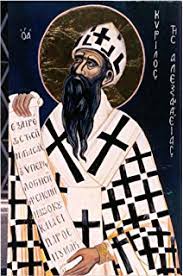
was Cyril (c.412), a theologically educated man and zealous defender of
Orthodoxy.4 He had previously outlined in his Paschal homily what danger
Nestorius’s teaching could bring to Christians. Through trusted people, Cyril
sent to the emperor Theodosius II and his wife Eudoxia5 letters on the
teachings of Nestorius. Then Cyril informed pope Celestine of Nestorius’s
teaching. Nestorius for his part wrote to Rome to justify himself. But
Celestine gathered a synod in Rome in 430, condemned Nestorius’s teaching at
it and demanded that he, under threat of deposition and excommunication,
renounce his ideas within ten days. The synod sent its deliberations to
Nestorius. Cyril informed Nestorius and the leading Eastern bishops of the
decisions of the Roman synod and convinced the latter, especially the
archbishop of Antioch John, from whose clergy Nestorius had originated, to
stand for Orthodoxy. John of Antioch, who was sympathetic to Nestorius’s
ideas, in spite of Cyril’s warning, decided to write to Nestorius a friendly
letter, in which he exhorted him to use the expression of the Most Holy Virgin
Mary accepted by the early Fathers. Meanwhile, Cyril at the Council of
Alexandria in 430 condemned Nestorius and issued twelve anathemas against him
in which he ardently proved the two natures in the indivisible union in the
Person of the Lord Jesus Christ .
Cyril communicated these anathemas to Nestorius via letter. For his part, Nestorius replied to the twelve anathemas by condemning those who ascribed suffering to the divinity and so on.
The III Ecumenical Council
In order to avert discord between the primates of the most prestigious Churches and to assert Orthodox teaching, the emperor Theodosius II decided to gather an Ecumenical Council. Nestorius, who was supported at the time by Theodosius, wanted and asked to convoke the Ecumenical Council, completely convinced that his teaching would triumph.
Theodosius appointed the Council in Ephesus on the day of Pentecost in 431. This would be the III Ecumenical Council. Arriving in Ephesus at the appointed time were Cyril with forty Egyptian bishops, the bishop of Jerusalem Juvenal with the bishops of Palestine, Firmus, bishop of Caesarea in Cappadocia, and Flavian, the bishop of Thessalonica. Nestorius also arrived with ten bishops, and together with them two high-ranking officials Candidianus and Irenaeus, both friends of Nestorius. The first was the representative of the emperor at the Ecumenical Council, while the second was there simply out of sympathy for Nestorius. Absent was John of Antioch and the papal legates of Celestine.
Sixteen days passed after the time appointed by the emperor for the opening of the Council. As a result, Cyril decided to open the Council without waiting for the arrival of John of Antioch and the papal legates, although the imperial legate Candidianus protested against this and informed the emperor in Constantinople. The first session took place on 22nd June in the Church of the Mother of God, which had been put at the disposal of the Council by bishop Memnon. Nestorius and his bishops had been invited to the Council three times: the first time on the eve of the opening of the Council, the second time he replied that he would visit the Council when all the bishops had gathered, and the third time he did not even want to hear the invitation. Then the Council decided to examine Nestorius’s case in his absence.
The Nicene Creed, the letters to Nestorius, Cyril’s anathemas and the letters of Nestorius to Cyril, their dialogues and so on were read aloud. The Fathers found that the letters of Cyril were Orthodox in their teaching and, on the contrary, the letters and dialogues of Nestorius were heterodox. Then the Fathers examined how Nestorius was teaching at the present time and whether he had not now renounced any of his ideas. It transpired, as the bishops testified who had spoken to Nestorius in Ephesus, that he still adhered to his former views. Finally, there were read aloud extracts from the works of the Fathers of the Church who had written on the Person of the Lord Jesus Christ. It turned out that Nestorius had contradicted them, too. In taking all of this into account, the Fathers of the Council of Ephesus determined that Nestorius’s teaching on the union in the Person of the Lord Jesus Christ of the two natures to be heretical and deprived him of his episcopal rank and then excommunicated him. Up to two hundred bishops signed the sentence.
The first session had finished. Having declared on that day that Nestorius had been deposed in Ephesus, the Council informed the clergy of the city of Constantinople of the same, while Cyril wrote a letter to the bishops in Constantinople who were sympathetic to him and to the superior of one the monasteries in Constantinople, abba Dalmatius. The protocols of the Council were soon dispatched to the emperor. The sentence was pronounced upon Nestorius on the following day after the session. He, of course, rejected it and denounced to the emperor the supposedly incorrect procedures of the Council, accused Cyril and Memnon in particular and beseeched the emperor to hold the Council in a different place or allow him to return safely to Constantinople for, as Nestorius complained to his bishops, his life was in danger.
Meanwhile, John of Antioch came to Ephesus with thirty-three bishops. The Fathers of the Council informed him that he was no longer in communion with the condemned Nestorius. But John was not content with the decision that went against Nestorius, and therefore, without entering into communion with Cyril and his bishops, held his own Council made up of the bishops of Nestorius and those bishops who had come with him. John was joined by a number of bishops who had been at the Council with Cyril. The emperor’s representative was also present at John’s Council. John’s Council determined that the condemnation of Nestorius was illegal and began proceedings against Cyril and Memnon and the other bishops who had condemned Nestorius. Cyril was unjustly accused that in his anathemas he had held to views similar to those of the heretics Arius, Apollinarius and Eunomius.
And so, John’s Council condemned and deposed Cyril and Memnon, excommunicated them until they had repented before the other bishops who had participated in Nestorius’s condemnation, and informed the emperor, the clergy and the people of all of this in Constantinople, begging the emperor to affirm the deposal of Cyril and Memnon. The emperor Theodosius who, apart from having received reports from Cyril and Nestorius and Memnon, had also received a report from Candidianus, and did not know how to act in this situation. Finally, he degreed that all of the decisions at the Council under the presidency of Cyril and at the Council of John should be rescinded and that all the bishops who had come to Ephesus should gather together and resolve the controversy in a peaceful manner. Saint Cyril could not agree to such a thing as at the Council under his presidency the right decision had been arrived at, and informed the emperor of such. For his part, John of Antioch also reported to Constantinople that the actions of his Council had also been the correct ones.
All the while when this correspondence between Ephesus and Constantinople was carrying on, the Council under the presidency of Cyril continued its sessions. In all there were seven sessions. At the second session there was read aloud the Tome of pope Celestine, which had only just been presented by the legates who had arrived and was recognized as Orthodox. At the third session, the Roman legates signed the condemnation of Nestorius; at the fourth Cyril and Memnon complained to the Council about John who had unjustly condemned them, and they were justified only after John, invited by the Council to the session for an explanation on the case, did not appear. At the fifth session, they condemned the heresies of Arius, Apollinarius and Eunomius, and the Council excommunicated John himself and the Syrian bishops who had come with him. At the sixth session, it was forbidden to make any alterations whatsoever to the Nicene Creed or compile any other in its place. Finally, at the seventh session, the Council studied the problem of where to determine the boundaries of the dioceses. All of the protocols of the Council were sent to the emperor for confirmation.
Now Theodosius was in an even more difficult position than before as the unfriendly relationship between the Council and John’s party had considerably worsened. And the functionary Irenaeus who had meanwhile arrived from Ephesus to Constantinople had a strong influence at court in favour of Nestorius.
The emperor sent an official to Ephesus who would arrest Cyril, Memnon and Nestorius, and oblige the other bishops to agree among themselves. But no agreement was forthcoming. At the same time, Saint Cyril managed to write while still under arrest to the clergy and people of Constantinople, as well as to abba Dalmatius, on what had happened at Ephesus. Abba Dalmatius gathered the monks of the monasteries located in Constantinople and together with them, as they sang psalms, with lighted lamps amidst a huge crowd of people, headed for the emperor’s court. As they entered the court, Dalmatius beseeched the emperor to free the Orthodox Fathers from imprisonment and to affirm the Council’s decisions concerning Nestorius. The appearance of the venerable abba, eighty-seven years-old and not having once left his monastery, made a powerful impression on the emperor. He promised to affirm the Council’s decisions. Then, in the church to which abba Dalmatius and his monks had set off, the people openly anathematized Nestorius.
Thus, the emperor’s hesitation concerning Nestorius ended. There remained only the task of persuading the Syrian bishops to accept the Council. To this end, the emperor ordered that the warring parties should choose eight deputies and send them to Chalcedon for mutual discussions in the presence of the emperor. Two Roman legates were chosen to join this deputation on behalf of the Orthodox as well as the bishop of Jerusalem Juvenal, while representing Nestorius were John of Antioch and Theodore of Crete. But no agreement was reached in Chalcedon, in spite of the efforts of Theodosius. The Orthodox demanded that the Syrian bishops sign the document condemning Nestorius, but the Syrian bishops were unwilling to do so and refused to accept what they saw as Cyril’s dogmas, i.e., his anathemas. Thus, the case remained unresolved.
Theodosius, though, by this time had decisively come down on the side of the Orthodox bishops. He issued a degree at the end of the Chalcedon assembly obliging all the bishops to return to their sees, including Saint Cyril, and before this he had sent Nestorius to a monastery in Antioch upon being removed from his see in Constantinople. The Orthodox bishops elected Maximilian6, known for his pious life, as Nestorius’s successor.
The Eastern bishops, headed by John of Antioch, returned from Chalcedon and Ephesus to their sees, but along the way arranged their own councils: one in Tarsus, at which they once more condemned Cyril and Memnon, and another at Antioch, at which they compiled their own creed. In this confession it was stated that the Lord Jesus Christ is both Perfect God and Perfect Man, on the basis of the unmerged within him unity of the divinity and humanity, and the Most Holy Virgin Mary could be called the Theotokos (’Mother of God’). Thus, the eastern Fathers had abandoned their Nestorian views, but remained loyal to Nestorius himself, and for this reason the division between him and Cyril of Alexandria continued.
The emperor Theodosius nonetheless did not lose hope in reconciling the Churches and the bishop of Emesa Paul was successful in bringing together the Syrian and Alexandrian Fathers. He convinced John of Antioch and the other Syrian bishops to agree to the condemnation of Nestorius, while Cyril of Alexandria would sign the Antiochian creed.
Cyril, upon discovering that the Antiochian creed was Orthodox in its dogma, signed it without renouncing his anathemas. Thus, peace was restored. The Antiochian creed, with which the representatives of all the Universal Churches were in agreement, attained the significance of being a precise exposition of the ancient Orthodox teaching on the way the two natures were united in Christ and their mutual relationship.
The IV Ecumenical Council and the Monophysite heresy
 During the
Nestorian controversies, as was noted above, some of the defenders of
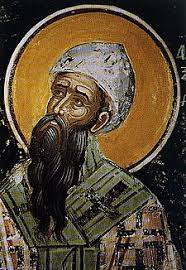
Nestorius accused Saint Cyril of Alexandria of heresy. These reproaches
addressed to Cyril were unjustifiable. But between the adherents of Cyril
there was indeed during the Nestorian controversies a party of heretics which
developed a doctrine of the union in the Person of the Lord Jesus Christ of
two natures in meaning completely opposite to that of Nestorius and even
heretical in content. Taken to their extreme during the Nestorian
controversies, these views became a heretical teaching on the complete merging
in Jesus Christ of the divine and human natures, with the latter being
consumed by the former and even turned into a teaching about a single divine
nature in Jesus Christ. Hence the teaching became known as Monophysitism and
those who shared it were known as heretical Monophysites, that is, they
allowed for a single divine nature in Jesus Christ. The heresy of Eutyches –
Eutychianism – was labelled a Monophysite heresy because it was the
Constantinople archimandrite Eutyches who first declared this teaching and
thus started the Monophysite controversies.
The Monophysite controversies began in the Church immediately after those of the Nestorians. Diodorus (c.444)7 ascended the see of Alexandria after Cyril. He shared the views of the Monophysites and even became the head of the Alexandrian Monophysite movement, while in Constantinople it was the elderly archimandrite Eutyches who headed the Monophysite party there. The Patriarch of Constantinople at the time was Flavian. Under his presidency in 448 in Constantinople there was held a council consisting of thirty bishops from the surrounding district. Eusebius, the bishop of Dorylaeum, who was present at the council, told the council that the Constantinople archimandrite Eutyches had been spreading a heretical teaching, which was that after the union in Jesus Christ of the Godhead and the human nature, his human nature turned into a divinity, and therefore the body of Christ is not consubstantial with our body. The Council invited Eutyches to explain himself, but he appeared only after being summoned three times. His daring assertions proved only that he had indeed been spreading heresy. The Council therefor condemned and deposed him. But Eutyches appealed to the emperor to justify him at the Council.
The powerful pro-court party8 headed by the empress Eudoxia came down on the side of Eutyches, the supposed persecutor of Cyril. Theodosius therefore accepted the appeal favourably and ordered the council, under the presidency of Thalassius, the archbishop of Caesarea in Cappadocia, to review Eutyches’s case. But this time Eutyches was condemned. Then Eutyches, at the wishes of the pro-court party, transferred his case to the Churches of Rome and Alexandria by presenting himself as a defender of Orthodox teaching, while Flavian and Eusebius were in fact Nestorians.
Pope Leo the Great, after Flavian had explained to him the meaning of Eutyches’ heresy, agreed to the latter’s being condemned and wrote to Flavian a Tome in which he set forth the Orthodox doctrine on the unity in Jesus Christ of the two natures.
 But Dioscorus of Alexandria took the side of
Eutyches. He even asked the emperor to appoint an Ecumenical Council to affirm
the pseudo-Orthodox teaching of Eutyches and to condemn the newly-formed
heresy of Flavianite Nestorianism. The emperor gave his consent and appointed
the Council in Ephesus in 449 under the presidency of Dioscorus. There
gathered in Ephesus Dioscorus of Alexandria, Donus of Antioch, Juvenal of
Jerusalem, Flavian of Constantinople, Eusebius of Dorylaeum, the legates of
pope Leo, and others. There were in attendance at the Council one hundred and
thirty bishops. The conciliar proceedings on Eutyches’s case began. But
Dioscorus, without waiting for the case to be resolved by the usual means,
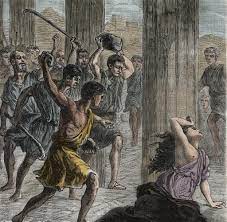
decided to use force. He gathered the Parabalani brought by him and the monks
who were supporters of Eutyches. The crowd burst into the church where the
session of the council was being held and shouted: “Slice in half those who
divide Christ’s nature in two!” There was great disorder, the protocols were
torn up, Flavian and the Orthodox bishops, later severely assaulted, were
thrown out and those who remained were compelled under threat of violence to
sign blank lists of papyrus. Then Dioscorus condemned Flavian, deposed Donus
of Antioch, the blessed Theodoret and Ibas of Edessa, even though the latter
was not present at the Council. Ultimately, Dioscorus and his followers
recognized Eutyches’ teaching to be Orthodox. The Roman legates protested
against this arbitrariness, but their voices were not heard. Flavian also
prepared an appeal to Rome and Constantinople, but Dioscorus, when he found
out about this, had him put in chains and subjected him to torture; Flavian
died three days later.9 Dioscorus replaced Flavian as Patriarch of
Constantinople with his deacon Anatolius, whom he considered to be of the same
mind as him. This Council of Ephesus (449) would later become known as the
‘Robbers’ Council’. The emperor Theodosius, when presented with the council’s
protocols, recognized the council to be legitimate.
Thus, the Monophysites for a period of time held sway over the Orthodox. The Orthodox bishops, at Dioscorus’ insistence, were deposed and sent into confinement. But Leo the Great came to the defense of the Orthodox, who from the very beginning of the appearance of Monophysitism declared his Orthodoxy. In learning of the council in Ephesus, he called a synod in Rome, condemned all that had been approved in Ephesus, and in his Tome to the East insisted upon calling a legitimate Ecumenical Council. The emperor Theodosius, not wishing to have any dealings with the Orthodox, soon died (450). His successor was Marcian, who had entered into a marriage with Pulcheria.
By his degree in 451 there was convoked in Chalcedon a legitimate Ecumenical
Council, which is counted as the IV Ecumenical Council. There were 630 fathers10
in attendance at this Council. Of the more remarkable were Anatolius of
Constantinople, who had come over decisively to the side of the Orthodox
before Marcian assumed the throne, Donus of Antioch, who had been deposed by
Dioscorus and released from imprisonment by Marcian, Maxim, who had been put
in his place, Juvenal of Jerusalem, Thalassius of Caesarea in Cappadocia, the
blessed Theodoret, Eusebius of Dorylaeum, Dioscorus of Alexandria and others.
Pope Leo, who wanted the Council to be held in Italy, sent his legates to the
Council of Chalcedon. The president of the Council was Anatolius of
Constantinople.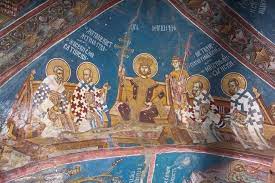
First of all, the fathers of the Council examined the acts of the Robbers’ Council and the proceedings taken against Dioscorus. Dioscorus’ accuser was the famous Eusebius of Dorylaeum, who presented the fathers with a document recording the violence which Dioscorus had enacted at the Robbers’ Council. Upon reading the document, the fathers denied Dioscorus the right to vote, after which he was to be numbered among the accused. Moreover, a number of Syrian bishops accused him of immorality, cruelty and all sorts of acts of violence. For this, the fathers found him guilty and deposed him, just as they had condemned the Robbers’ Council and Eutyches. Those bishops who had participated in the Robbers’ Council with Dioscorus were forgiven by the fathers of the Council of Chalcedon as they had repented and justified themselves by saying they had acted under threats from Dioscorus.
The fathers then attended to the issue of the Church’s doctrine. They had to set forth a teaching on the two natures of in the Person of Jesus Christ which would avoid the extremes of Nestorianism and Monophysitism. It was the Orthodox teaching which proved to occupy the middle way between the extremes of these two teachings. The fathers of the Council of Chalcedon thus approved the Orthodox teaching. Taking as a model of Orthodox teaching the exposition of the faith by Cyril of Alexandria and John of Antioch, as well as the Tome of Leo of Rome to Flavian, they thus defined the dogma of the way there was united in the person of Jesus Christ the two natures: “We, then, following the holy Fathers, all with one consent, teach people to confess one and the same Son, our Lord Jesus Christ … begotten before all ages … to be acknowledged in two natures, inconfusedly, unchangeably, indivisibly, inseparably; … the distinction of natures being by no means taken away by the union, but rather the property of each nature being preserved, and concurring in one Person (prosopon) and one Subsistence (hypostasis), not parted or divided into two persons, but one and the same Son, and only begotten God the Word, the Lord Jesus Christ.”
This definition of dogmatic teaching condemned both Nestorianism and Monophysitism. All of the fathers gave their consent to this definition. The blessed Theodoret, who was suspected of Nestorianism at the Council and especially the Egyptian bishops anathematized Nestorius and signed the document condemning him. The Council therefore removed its condemnation of Dioscorus and restored him to his episcopal rank11, as well as doing the same for Ibas, the bishop of Edessa.
When Marcian had been informed of all that had happened, he came to the sixth session of the Council, and gave a speech in which he expressed his joy that all had been done according to the wishes of all and peacefully. The sessions of the Council, though, had not yet ended. The fathers compiled a further thirty canons.12 The main object of the canons was church order and administration.
After the Council, the emperor issued strict laws regarding the Monophysites. They were ordered to accept the teachings as defined by the Council of Chalcedon; the Monophysites were either imprisoned or sent into exile; their works were burnt, and people could be executed for their distribution and so on. Dioscorus and Eutyches were exiled to remote provinces.
THE CHRISTOLOGICAL CONTROVERSIES. THE NESTORIAN AND MONOPHYSITE HERESIES
AND THEIR DEFEAT AT THE III AND IV ECUMENICAL COUNCILS
Editorial Footnotes
Flashcards
Download Anki flashcards for this topic’s quiz — import via Anki’s File > Import (note type “Basic”, fields separated by Tab, “Allow HTML in fields” checked).
Related Concepts
- adoptionism
- anathemas
- antiochian-christology
- antiochian-school
- arius
- celestine
- chalcedon
- chalcedon-451
- chalcedonian-definition
- christotokos
- council-of-chalcedon
- council-of-ephesus
- cyril-of-alexandria
- cyrils-anathemas
- diodorus-of-tarsus
- dioscorus
- dioscorus-of-alexandria
- dogmatic-definition-horos
- ephesus
- eutyches
- eutychianism
- flavian
- flavian-of-constantinople
- ibas-of-edessa
- iii-ecumenical-council
- iv-ecumenical-council
- john-of-antioch
- leo-i
- leo-the-great
- leos-tome
- mariology
- nestorianism
- nestorius
- one-nature-after-the-union
- parabalani
- paul-of-samosata
- pope-celestine
- reunion-of-433
- robber-council
- robbers-council
- school-of-antioch
- theodore-of-mopsuestia
- theodoret-of-cyrus
- trinitarian-terminology
- two-natures
Footnotes
-
The sharp contrast between a “rationalist, literal” school of Antioch and a “mystical, allegorical” school of Alexandria — and the derivation of Arianism from Antioch — is a traditional schema that modern scholarship regards as considerably oversimplified. Antiochene exegesis and Christology were theologically sophisticated rather than merely “rationalist,” and the supposed link between Arius and an Antiochene “school” (through Lucian of Antioch) is tenuous and disputed. ↩
-
Diodorus is more usually dated to c. 390 (he was prominent at the Council of Constantinople in 381 and died before 394). Almost none of his Christological writing survives intact; this stark “a mere man indwelt by the Word” summary rests largely on fragments quoted by hostile later authors and probably caricatures his actual two-natures teaching. ↩
-
Theodore was not condemned in his lifetime. His posthumous condemnation came only at the Second Council of Constantinople (553), the Fifth Ecumenical Council, during the “Three Chapters” controversy. He remains a venerated teacher (“the Interpreter”) in the Church of the East, and many modern scholars doubt that his Christology was genuinely “adoptionist” in the crude sense his opponents alleged. ↩
-
Cyril is venerated as a saint and doctrinal champion, but modern historians also emphasize his ruthless ecclesiastical politics: he drove Alexandria’s Jewish community from the city, and his partisans (including the parabalani) created the climate in which the pagan philosopher Hypatia was murdered in 415. “Zealous defender of Orthodoxy” reflects the traditional hagiographic framing. ↩
-
A name error. Theodosius II’s wife was the empress Aelia Eudocia. Aelia Eudoxia was his mother, the wife of the emperor Arcadius, who had died in 404. The same mistaken “Eudoxia” recurs below in the Eutyches episode. ↩
-
The name is properly Maximian — Maximian of Constantinople, patriarch 431–434 — not Maximilian. (He should not be confused with Maximus of Antioch, the “Maxim” mentioned later.) ↩
-
An error for Dioscorus. Cyril’s successor as patriarch of Alexandria (444–451) was Dioscorus, who is correctly named throughout the rest of this section; “Diodorus” here mistakenly borrows the name of the earlier Diodorus of Tarsus. ↩
-
The driving force behind the court party favouring Eutyches was the powerful eunuch chamberlain Chrysaphius (Eutyches’ godson), not the empress. Eudocia had withdrawn to Jerusalem years before, and Pulcheria actively opposed Eutyches, so attributing the pro-Eutyches party to “the empress Eudoxia” is doubly questionable (see also the name above). ↩
-
Flavian died in exile soon after the Second Council of Ephesus (449). The vivid account of a beating followed by death within days derives from pro-Chalcedonian sources and is to that extent partisan; the precise circumstances of his death are not certain. ↩
-
The figure of 630 is the traditional, roughly symbolic number for Chalcedon. The actual attendance is debated: surviving subscription lists and modern estimates range from about 350 to 520 bishops. ↩
-
This appears to be a slip. Dioscorus was deposed and exiled by the Council of Chalcedon (as the closing paragraph of this text itself states) and was not restored. The figure rehabilitated here, after anathematizing Nestorius, was the blessed Theodoret of Cyrrhus, alongside Ibas of Edessa. ↩
-
The Council of Chalcedon is generally reckoned to have issued 28 canons (some lists give 27; the items numbered 29–30 are really extracts from the proceedings rather than canons). The celebrated canon 28, granting Constantinople rank second only to Rome, was protested and rejected by Pope Leo. ↩