History of the Christian Church — Topic 2
-
Some Key Doctrines and Practices taught in the Apostolic Fathers: The full deity of Christ
- Relevance of the Apostolic Fathers for today
- The Diocletian Persecution
Relevance of the Apostolic Fathers for today
We can trust the Apostolic Fathers for guidance today because they stand closest in time to the Apostles and Christ Himself. They represent the leadership of the Church in the first few generations directly after Christ and His Apostles, from whom they learned the Faith. And as we mentioned in the beginning of this chapter, we trust the Apostolic Fathers because of Christ’s promise to send the Holy Spirit, the Spirit of Truth, to guide His Church into all the Truth, and His promise to build His Church, His very Body, so that the gates of hell would never prevail against Her.
As we’ve seen, the outlines of basic Christian doctrine and practice are quite clearly visible in the writings of the Apostolic Fathers – things such as the full deity of Christ1 , the three-fold ministerial offices of the Church (bishop, priest, and deacon), the centrality of the Eucharist and the belief that it is truly Christ’s body and blood , the centrality of water Baptism , the veneration of the relics of the Saints, the glorification of martyrdom , the Second Coming of Christ , and the resurrection of the dead and the Last Judgment.
Many modern-day Christians, in varying degrees, do not believe and practice these things. But may we suggest to them that if the Apostolic Fathers were mistaken about these things, this would mean that Christ had broken His promises very soon after His departure from this earth! It also would indicate that His immediate disciples were grievously inept in passing the Faith down to their followers in the way Christ had given them the Faith. So, in the midst of the countless multitude of competing Protestant denominations in our day, why not trust the united witness of the leaders of the Church in the first few generations after Christ and His Apostles? If they did not receive and then faithfully pass down to the subsequent generations the fullness of the Christian Faith, then where else can that fullness be found?
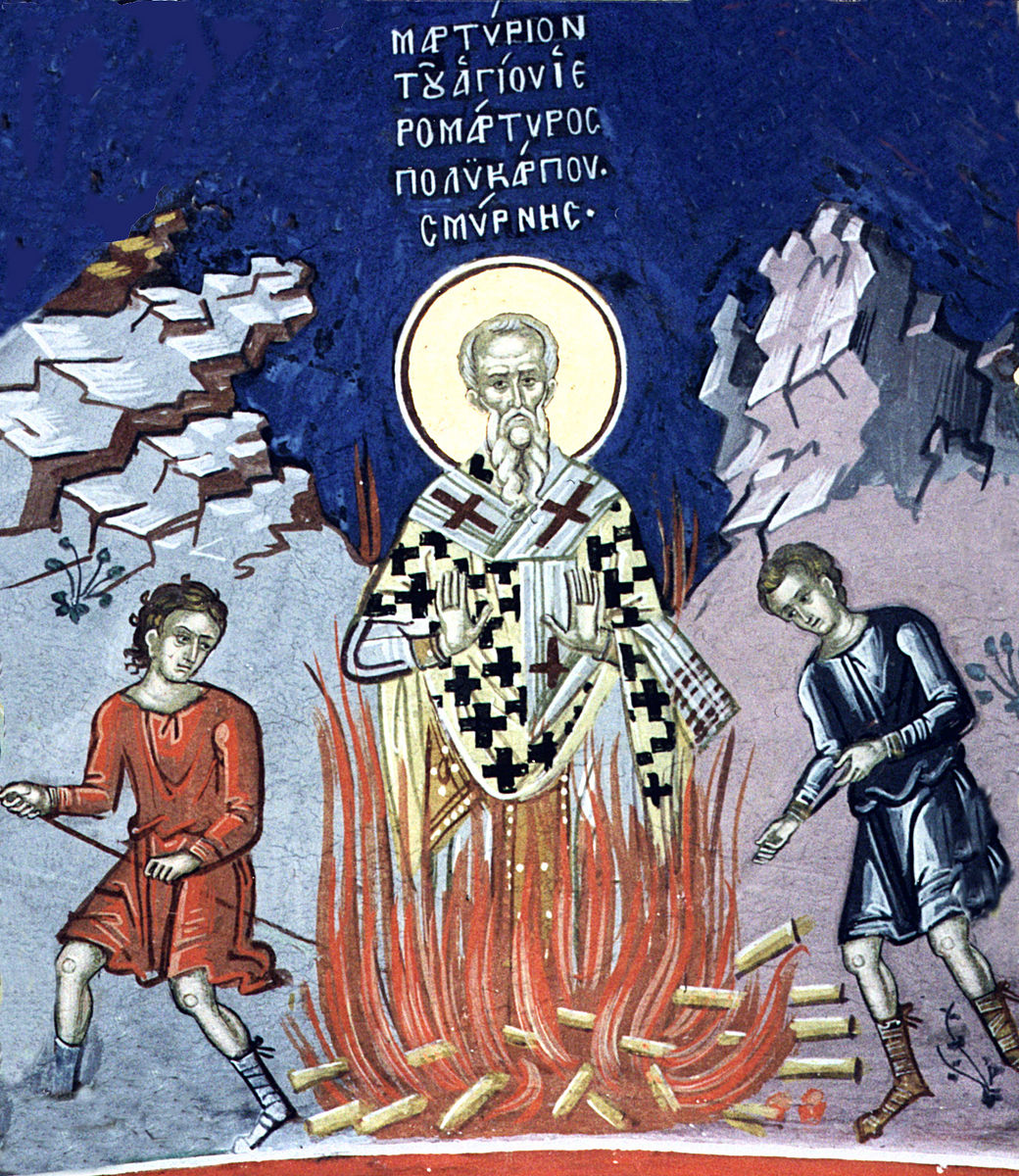 Besides, the Apostolic
Fathers provide us many pages of tremendously edifying spiritual reading. I
would recommend starting with the ‘Account of the Martyrdom of St.
Polycarp ’. Ask him to be with you as you accompany him through his arrest;
his two-hour prayer in the midst of his captors for everyone he ever knew; his
refusal to deny Christ as he stood in the stadium - “I have served Him eighty-
six years and in no way has He dealt unjustly with me; so how can I blaspheme
my King Who saved me?” (9:3); the preparation of the pyre; his request not to
be bound to the stake; the fire encircling him, taking “the form of an arch
like the sail of a ship filled by the wind … and he was in the center of
it not like burning flesh but like baking bread or like gold and silver being
refined in a furnace” (15:2); the “fragrant odor like the scent of incense or
some other precious spice” (15:2); and finally, his being stabbed by the
executioner, whereupon a white dove flew out of him, and enough blood poured
out to extinguish the fire. Radiating throughout the account are his steadfast
faith and quiet endurance through all of this, such that many of the onlookers
were astounded. As the text says, “and the whole crowd was amazed that there
was so great a difference between unbelievers and the elect” (16:1).
Besides the glorious account of St. Polycarp’s martyrdom, we also have his stirring letter to the Philippians , filled with strong exhortations to living the Christian life in purity of mind and heart. It is also replete with a multitude of quotations and/or references from the Gospels, the Book of Acts, and the Epistles of St. Paul (including Hebrews), St. Peter, St. James, and St. John. So it stands as testimony to the general acceptance of these writings as parts of the New Testament2 which was still in the process of being pieced together. (There are also numerous quotations and/or references to I Clement and the epistles of St. Ignatius, which provides another indication of the importance of these writings in the early Church.)
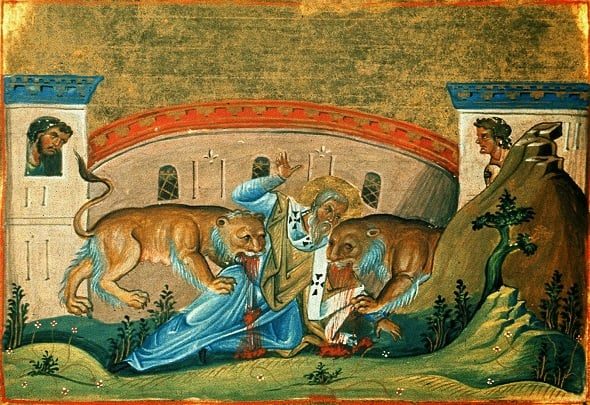 Next in importance come
the celebrated seven letters by St. Ignatius of Antioch , which are filled
with inspiring advice for sound Christian living that would be highly relevant
in any age. His repeated emphasis on the centrality of the bishop as the
hierarchical head of the church in each city – and having full jurisdictional
authority over his flock – is decisive early testimony of this pattern which
becomes the norm for the entire Early Church wherever She spreads.3 Also, St.
Ignatius seems to quote early hymns which exalt, succinctly and poetically,
the two natures of Christ, Who is both truly divine and truly human. And his
emphasis on the centrality of the Eucharist in Christian worship, with the
bread and wine truly also becoming Christ’s body and blood, is valuable very
early testimony to this all-important key aspect of Christian worship in the
Orthodox Church to this day. Knowing that he is writing to two of the very
same Christian congregations (in Rome and in Ephesus) that St. Paul himself
wrote to about fifty years earlier is also, I think, especially thrilling.
Then we have I Clement , in which the Church in Rome gently and painstakingly urges the Christians in Corinth not to revolt against their legitimately elected leaders. With great pastoral tact and wisdom, the letter urges its readers to consider the example of the great saints of the Old Testament , such as Abraham, Moses, David, and Daniel, who accepted the LORD’s will for their lives with great humility and patience, quelling their self-will and their desire for self-aggrandizement in order to work for the greater good. It liberally quotes from the Psalms and the Book of Job along these same lines. And near the end of this letter we find a remarkably beautiful liturgical prayer , filled with heartfelt cries of repentance, and supplication for the LORD’s help in this situation.
II Clement gives a glorious summons to heartfelt repentance in preparation for the Second Coming of Christ and the Last Judgment. It also raises a battle cry to rally all the Christians to the spiritual warfare that they must engage in if they are to keep their faith intact in the midst of a hostile world, and if they are to live purely in mind and heart when our flesh is often so determined to sink us down into unholy passions instead. This work is also filled with quotations and/or references from the Old Testament, as well as from the books that will come to be canonized as the New Testament.
I would suggest reading the Didache next, parts of which may have been written as early as 60 AD4, as we mentioned. It is filled with practical guidelines for Baptism, fasting, prayer, celebrating the Eucharist, discerning true from false prophets, Christian hospitality, and supporting the clergy. In varying degrees these guidelines are all still followed in the Orthodox Church of today. The Didache begins with short expositions on the way of life and the way of death (1:1 – 6:2), which are still as relevant as ever. And it concludes with a highly relevant, rousing exhortation to be ready for the Second Coming of Christ and the Last Judgment (16:1-8).
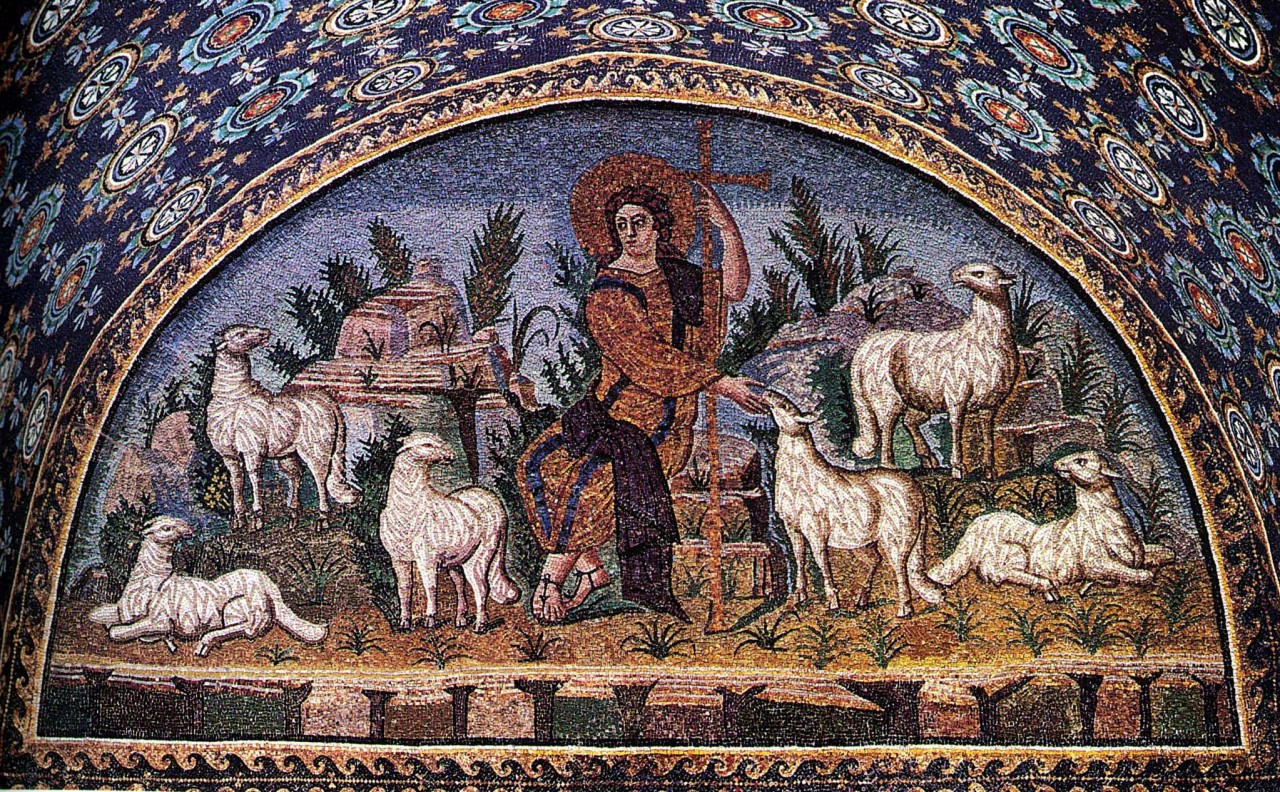 The Shepherd of Hermas also is filled
with edifying exhortations to and guidance for holy living , according to
Christ’s life-giving commandments. The book, by far the longest of the
writings of the Apostolic Fathers, is comprised of descriptions of five
visions , then a series of twelve sermons or mandates , and finally a
collection of ten similitudes or parables. It is all presented through the
lips of the Angel of Repentance sent by the LORD to guide Hermas, and through
him, the Church as a whole. Hermas, a married layman living in Rome in the
middle of the second century, struggled to understand many things about the
nature of Baptism , repentance , and the Church. The imagery and
guidance that Hermas received through God’s gracious provision of the Angel
are all as edifying to us today as they were to him, living so many centuries
ago.
Then we have the Epistle of Barnabas , probably written in the late first or early second century in the vicinity of Alexandria, Egypt.5 It is unlikely that the author was actually the Apostle Barnabas, about whom we read in the Book of Acts. Like the Didache, it also has a graphic description of the way of light contrasted sharply with the way of darkness. Most of the letter presents an intriguing allegorical and typological interpretation of the Old Testament in the light of Christ. Included in this is a strongattack against the ritual requirements of the Mosaic Law , with the claim that they were never meant to be followed literally. In this instance, the Epistle of Barnabas clearly stands beyond the bounds of Church Tradition.
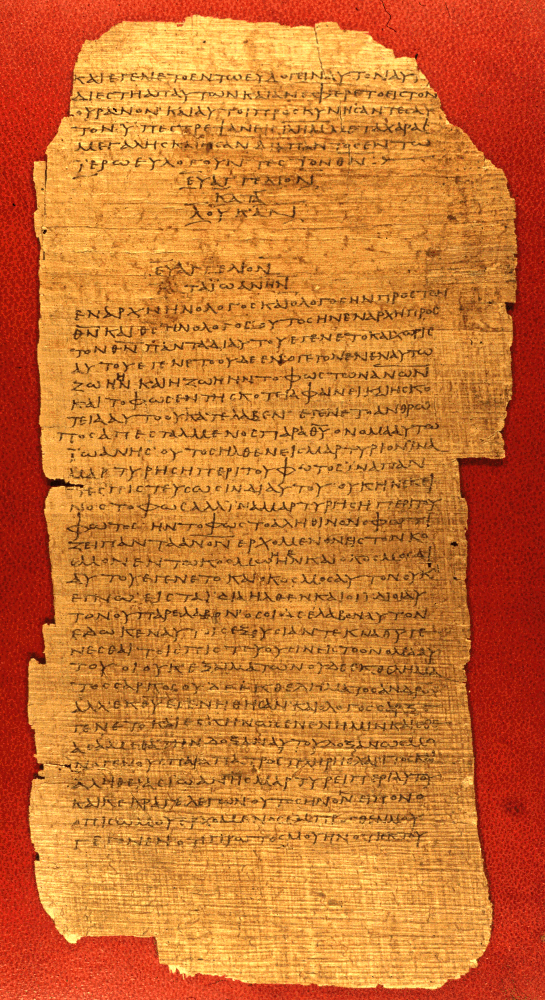 Finally, some editions of the Apostolic Fathers
include the Epistle to Diognetus, written by an unknown author and
addressed to an inquirer, someone interested in learning more about the
Christian Faith. After chiding the Greeks for their idolatry and the Jews
for their superstitions, the author presents a beautiful summary of the
Christian Gospel – the Good News of the Son of God redeeming all of mankind
through His sacrificial death and resurrection. The author marvels at God’s
goodness in all of this:
In Whom was it possible for us lawless and ungodly men to have been justified, save only in the Son of God? O the sweet exchange! O the inscrutable creation! O the unexpected benefits – that the iniquity of many should be concealed in One Righteous Man, and the righteousness of One should justify many that are iniquitous! (ch. 9).
Also, this letter is famous for this passage:
Christians are not distinguished from the rest of mankind either in locality or in speech or in customs… . But while they dwell in cities of Greeks and barbarians as the lot of each is cast, and follow the native customs in dress and food and the other arrangements of life, yet the constitution of their own citizenship, which they set forth, is marvelous, and confessedly contradicts expectation. They dwell in their own countries, but only as sojourners; they bear their share in all things as citizens, and they endure all hardships as strangers. Every foreign country is a fatherland to them, and every fatherland is foreign. They marry like all other men and they beget children; but they do not cast away their offspring. They have meals in common, but not their wives. They find themselves in the flesh, and yet they live not after the flesh. Their existence is on earth, but their citizenship is in heaven. They obey the established laws, and they surpass the laws in their own lives. They love all men, and they are persecuted by all. They are ignored, and yet they are condemned. They are put to death, and yet they are endued with life. They are in beggary, and yet they make many rich. They are in want of all things, and yet they abound in all things. They are dishonored, and yet they are glorified in their dishonor. They are evil spoken of, and yet they are vindicated They are reviled, and they bless; they are insulted, and they respect. Doing good, they are punished as evil-doers; being punished they rejoice, as if they were thereby quickened by life… .
In a word, what the soul is in a body, this the Christians are in the world. The soul is spread throughout all the members of the body, and the Christians are spread throughout the diverse cities of the world. The soul has its abode in the body, and yet it is not of the body. So Christians have their abode in the world, and yet they are not of the world (chs. 5 and 6).
Some Key Doctrines and Practices taught in the Apostolic Fathers: The full
deity of Christ
 1. The full deity of Jesus Christ.
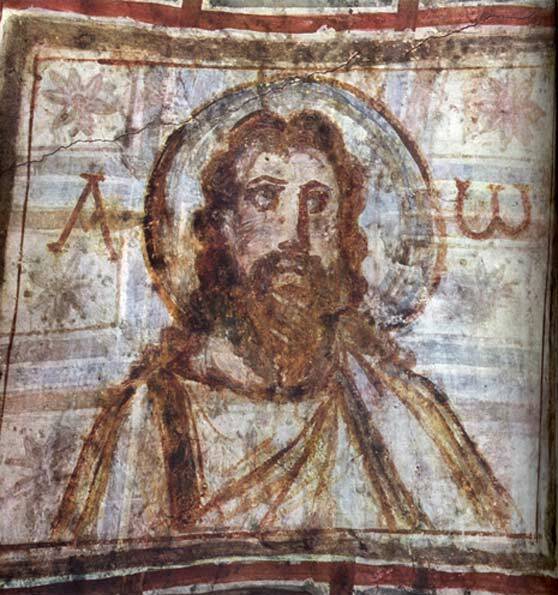
The full deity of Jesus Christ is emphasized in the letters of St. Ignatius. In the salutation/introduction of his letter to the Ephesians, he says, “by the will of the Father and Jesus Christ our God.” He uses the same phrase, “J****esus Christ our God ,” in the beginning of his letter to the Romans, and in that letter in chapter 3 he uses the phrase “our God Jesus Christ.” In chapter 1 of his letter to the Smyrnaeans he says, “I give glory to Jesus Christ, the God who made you so wise.” And in the letter to the Ephesians he says, “For our God, Jesus the Christ, was conceived by Mary in accordance with the plan of God – of the seed of David and of the Holy Spirit ” (18:2).
We also see Christ’s full deity affirmed in the opening words of Second Clement: “Brethren, we ought to think of Jesus Christ just as we do of God, as the Judge of the living and the dead ” (1:1).
2. The full manhood of Christ.
St. Ignatius also affirms the real manhood of Christ. It was especially important to emphasize this in the face of Gnostic heretics who denied that Christ had a real human body. Ignatius exhorts the Trallians, “Be deaf, then, when anyone speaks to you apart from Jesus Christ, who was of the family of David, who was of Mary, who was truly born, ate, and drank, was truly persecuted under Pontius Pilate, was truly crucified and died ” (9:1; my emphasis). He emphasizes the real flesh of Christ a number of times in a long passage to the Smyrnaeans: “become convinced concerning our Lord that he is truly of the family of David as to the flesh … truly nailed for us in the flesh … and he truly suffered just as he truly raised himself – not, as some unbelievers say, that he appeared to suffer ” (chs. 1-2; my emphasis).
In a passage that sounds like a creedal statement and/or an early hymn, St. Ignatius powerfully affirms both Christ’s full deity and humanity:
For there is one Physician:
Both flesh and spirit,
Begotten and unbegotten,
In man, God,
In death, true life,
Both from Mary and from God,
First able to suffer [in His flesh], then unable to suffer [in His divine nature],
Jesus Christ our Lord (Ephesians 7:2).
St. Polycarp quotes John 4:2-36: “For ‘everyone who does not confess that Jesus Christ came in the flesh is antichrist,’ and anyone who does not confess the testimony of the Cross ‘is of the devil ’” (Polycarp, Philippians 7:1).
 3. The Real Body and Blood of Christ in the
Eucharist.
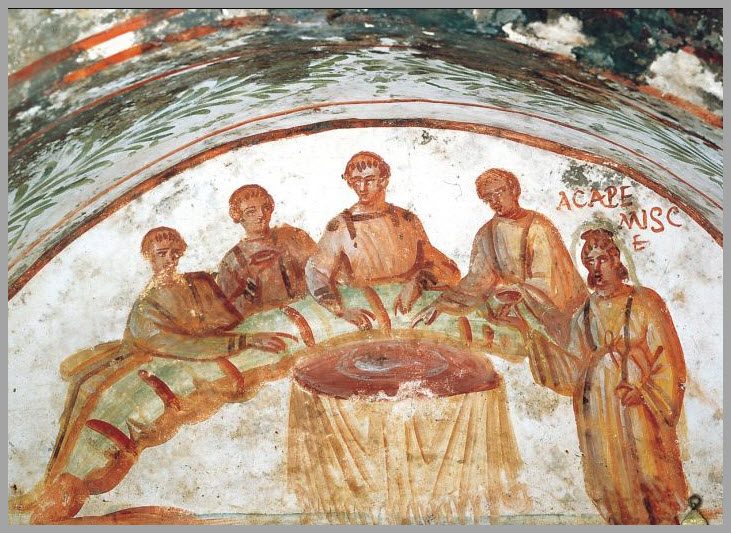
The central understanding of the historic, traditional Church about the Holy Eucharist is that the bread and wine , in a way beyond all comprehension, truly become the body and blood of Christ – just as Christ Himself said (Matt. 26:26-28). So it is natural to see this affirmed in the second generation of the Church, as we see in these quotations from St. Ignatius:
“Let no one deceive himself; unless a man is within the sanctuary, he lacks the bread of God ” (Ign., Ephesians 5:2).
“I take no pleasure in the food of corruption or in the pleasures of this life. I desire the bread of God [cf. John 6:33], which is the flesh of Jesus Christ (who was of the seed of David), and for drink I desire His blood, which is imperishable love ” (Ign., Romans 7:3).
“They abstain from Eucharist and prayer because they do not acknowledge that the Eucharist is the flesh of our Savior Jesus Christ which suffered for our sins” (Ign., Smyrnaeans 7:1).
4. The Great Tribulation before the Second Coming of Christ.
“The fourth vision which I saw, brethren, twenty days after the former vision which came to me, was a foreshadowing of the impending tribulation … this beast is a foreshadowing of the great tribulation which is to come ” (Shepherd of Hermas, Vision IV. 1-2).
5. The Second Coming of Christ.
“Let us then be on the watch hour by hour for the kingdom of God, in love and in righteousness, since we do not know the day when the Lord will appear ” (II Clement 12:1).
“Truly His purpose will be quickly and suddenly accomplished, just as the Scripture confirms when it says, ‘He will come quickly and not delay, and the LORD will come suddenly to His Temple , even the Holy One Whom you expect’ [Mal. 3:1]. Let us consider, beloved, how the Master continually points out that future resurrection which is to be , of which He made our LORD Jesus Christ the first-fruits when He raised Him from the dead [cf. 1 Cor. 15:20]” (I Clement 23:5 – 24:1).
 6. The Resurrection of the Dead and the Last
Judgment.
“Further, let none of you say that this flesh is not judged nor does it rise again. Consider: in what state were you saved, in what state did you regain your sight, if it was not in this flesh? Hence it is necessary to guard the flesh as the temple of God. For as in the flesh you were called, in the flesh you will come. If Christ the Lord who saved us was first spirit but became flesh and in that state called us, so we also shall receive our reward in this flesh ” (II Clement 9:1-5).
“This flesh is able to receive so great a life and immortality because the Holy Spirit is closely joined to it , nor can anyone express or declare ‘what things the Lord has prepared’ [I Cor. 2:9] for his elect” (II Clement 14:5).
“So let not the pious man be grieved if at the present time he is miserable. A time of blessedness awaits him. When he has come to life again with the fathers above, he will rejoice in an eternity that knows no grief [cf. Romans 8:18; James 5:7]… . we are being trained by the present life that we may be crowned by that which is to come” (II Clement 19:4 and 20:2).
“and anyone who perverts the sayings of the Lord to suit his own lusts and says that there is neither a resurrection nor a judgment – that man is the firstborn of Satan! ” (Polycarp, Philippians 7:1).
“But be ready, for you do not know when our LORD is coming [cf. Matt. 24: 42, 44; Mark 13:35; Luke 12:40]… . The LORD will come and all His saints with him[cf. Zech. 14:5]. Then the world will see the LORD coming on the clouds of heaven with power and dominion [cf. Mark 13:26] to repay each man according to his work [cf. Ps. 62:12; Matt. 16:27] with justice, before all men and angels. Amen” (Didache 16:2 and 6).
**_ _7. The
centrality of the Bishop surrounded by the elders (presbyters/priests) and
deacons in the three-fold hierarchical structure of the Church.**
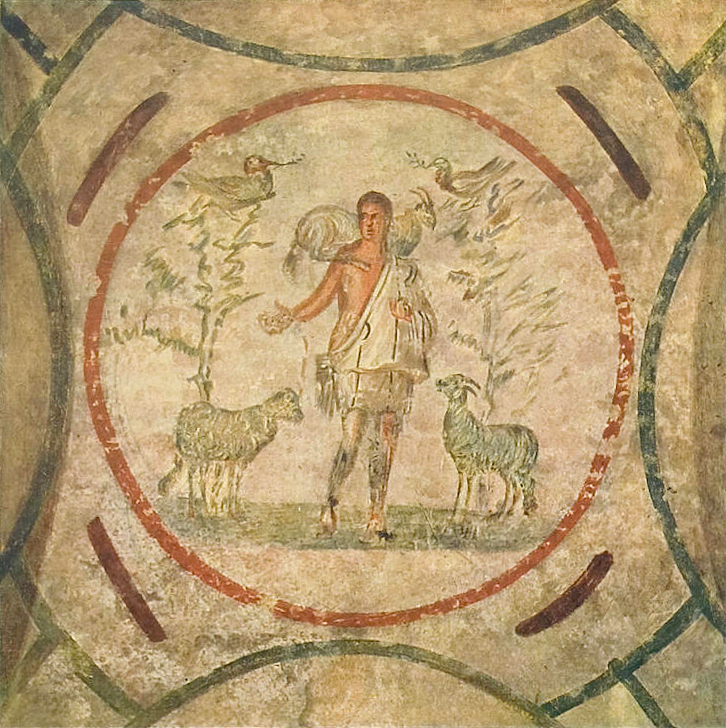
“All of you are to follow the bishop as Jesus Christ follows the Father, and the presbytery as the apostles. Respect the deacons as the command of God. Apart from the bishop no one is to do anything pertaining to the Church. A valid Eucharist is to be defined as one celebrated by the bishop or by a representative of his. Wherever the bishop appears, the whole congregation is to be present, just as wherever Jesus Christ is, there is the whole Church. It is not right either to baptize or to celebrate the agape apart from the bishop; but whatever he approves is also pleasing to God – so that everything you do may be secure and valid” (Ignatius, Epistle to the Smyrnaeans 8:1-2).
“It is good to know God and the bishop. He who honors the bishop has been honored by God ; he who does anything without the bishop’s knowledge worships the devil” (Ibid., 9:1).
“Therefore it is fitting for you to run your race together with the bishop’s purpose – as you do. For your presbytery – worthy of fame, worthy of God – is attuned to the bishop like strings to a lyre. Therefore by your unity and harmonious love Jesus Christ is sung” (Ignatius, Epistle to the Ephesians 4:1).
“Let us, therefore, be eager not to oppose the bishop, so that we may be subject to God ” (Ibid., 5:3).
“Since, then, I was judged worthy of seeing you through Damas your God-worthy bishop and the worthy presbyters Bassus and Apollonius and my fellow slave the deacon Zotion – whom I may enjoy because he is subject to the bishop as to God’s grace and to the presbytery as to the law of Jesus Christ” (Ign., Epistle to the Magnesians 2).
“Since, then, in the persons already mentioned I have beheld the whole congregation in faith and have loved it, I exhort you: be eager to do everything in God’s harmony, with the bishop presiding in the place of God , and the presbytery in the place of the council of the apostles, and the deacons, most sweet to me, entrusted with the service (diakonia) of Jesus Christ” (Ibid., 6:1).
 “When I was with you I cried
out, I spoke with a loud voice, God’s own voice: ‘Pay attention to the
bishop and the presbytery and deacons.’ Some suspected me of saying this
because I had advance information about the division of some persons; but He
for whom I am in bonds is my witness that I did not know it from any human
being. The Spirit made proclamation, saying this: ‘Do nothing apart from the
bishop; keep your flesh as the temple of God [cf. 1 Cor. 3:16, 17; 6:19; 2
Cor. 6:16]; love unity; flee from divisions; be imitators of Jesus Christ as
He is of the Father’ [John 5:19]. I did what I could as a man devoted to
unity. But God does not dwell where there is disunity and wrath. The Lord
forgives all who repent, if they repent and turn toward the unity of God and
the council of the bishop” (Ign., Epistle to the Philadelphians 7:1 – 8:1).
“If you have the will to do so, it is not impossible for you to do this for God’s Name – just as the neighboring churches have sent bishops, and other presbyters and deacons” (Ibid., 10:2).
“Pay attention to the bishop so that God will pay attention to you. I am devoted to those who are subject to the bishop, presbyters, and deacons ; and may it turn out for me that I have a portion with them in God. Labor together with one another, strive together, run together, suffer together, rest together, rise up together – as God’s stewards and assistants and servants” (Ign., Epistle to Polycarp 6:1).
8. Veneration of Relics.
The devil “set about preventing even his poor body being taken by us, though there were many who wanted to do this and to have fellowship with his holy flesh ” (Martyrdom of Polycarp 17:1).
“Accordingly, we later took up his bones, more precious than costly stones and finer than gold, and deposited them in a suitable place. And there, in so far as it is possible, the Lord will grant that we come together with joy and gladness and celebrate the birthday of his martyrdom both in memory of those who have contended in former times, and for the exercise and training of those who will do so in the future” (Ibid., 18:2-3).
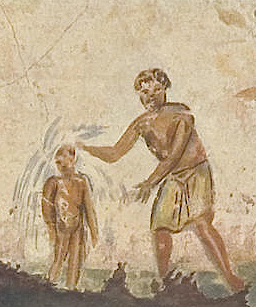 9. Centrality of Water
Baptism.
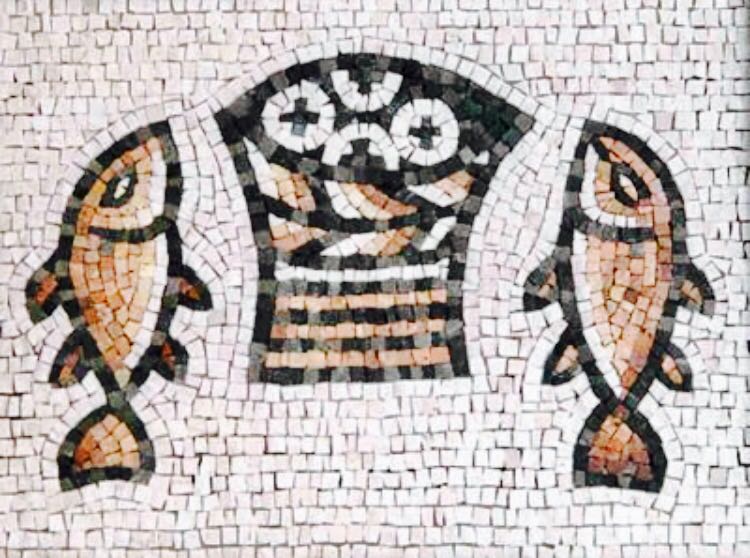
“Now concerning baptism. Baptize as follows, after you have rehearsed the aforesaid teaching: Baptize in the Name of the Father and of the Son and of the Holy Spirit , in running water [cf. Matt. 28:19]. But if you do not have running water, use whatever is available. And if you cannot do it in cold water, use warm. But if you have neither, pour water on the head three times – in the name of Father, Son, and Holy Spirit. And prior to baptism, both he who is baptizing and he who is being baptized should fast, along with any others who can. And be sure that the one who is to be baptized fasts for one or two days beforehand” (Didache 7:1-4).
“Look! Do you not see right before you a great tower being built of lustrous square stones upon the water? ” (Shepherd of Hermas, Vision III.2.4).
The stones “needed to come up through the water in order to be made alive, for otherwise they could not enter the kingdom of God [cf. John 3:5] unless they set aside the deadness of their former life. So even those who had fallen asleep received the seal of the Son of God and entered into the kingdom of God. For before he bears the name of the Son of God, the man is dead, and whenever he receives the seal he sets aside the deadness and receives life. So the water is the seal. Therefore they go down into the water dead and come up alive. So the seal was proclaimed to them also and they used it to enter into the kingdom of God ” (Ibid., Similitude IX.16.2-4).
10. Guidelines concerning the traveling Prophets.
“Now concerning the apostles and prophets. Act in accordance with the precept of the gospel. Every apostle who comes to you should be received as the Lord. But he should not remain more than one day, and if there is some necessity, a second as well; but if he should remain for three, he is a false prophet. And when the apostle departs, he should receive nothing but bread until he finds his next lodging. But if he requests money, he is a false prophet… .
 “And
not everyone who speaks forth in the spirit is a prophet, but only if he has
the kind of behavior which the Lord approves. From his behavior, then, will
the false prophet and the true prophet be known. And every prophet who, in the
spirit, orders a table to be spread shall not eat therefrom; but if he does,
he is a false prophet. And every prophet who teaches the truth, but does not
do the things he teaches, is a false prophet” (Didache 11:3-10).
11. Regulations for Fasting.
“But do not let your fasts fall on the same days as the hypocrites, who fast on Monday and Thursday. Rather, you should fast on Wednesday and Friday ” (Didache 8:1).
Some Key Doctrines and Practices taught in the Apostolic Fathers: The full
deity of Christ
For there is one Physician:
Both flesh and spirit,
Begotten and unbegotten,
In man, God,
In death, true life,
Both from Mary and from God,
Jesus Christ our Lord (Ephesians 7:2).
5. The Second Coming of Christ.
8. Veneration of Relics.
10. Guidelines concerning the traveling Prophets.
11. Regulations for Fasting.
The Diocletian Persecution
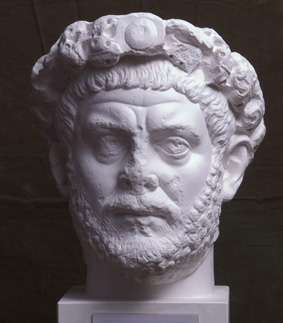 Diocletian rules as the Roman Emperor from 284
until 305. He institutes a radical political, military, economic, and
religious reorganization of the empire after almost 100 years of political
unrest and economic decline, along with the beginning of the breakdown of the
borders of the Empire through barbarian invasions, and the rise of a renewed
Persian Empire to the east. In the preceding 49 years there were 22 emperors,
most of whom were military men, so they are known as the “Barracks Emperors.”
Only one of them died a natural death7, as so often a particular military
legion with a particularly successful general would have more loyalty towards
their general than towards the emperor, and would proclaim their general as
the new emperor. He would then feel obliged to march on Rome, defeat the
emperor in battle, and seize the throne. Some of the generals even ruled parts
of the Empire temporarily.
As with Emperors Domitian (r. 81-96)8 and Decius (r. 249-251) before him, Diocletian attempts to revive the traditional State religion in order to restore Rome’s ancient glory with the aid of the old gods and goddesses. Still, it’s not until the year 303 that the last, longest, and most severe period of persecution of Christians begins.
This Diocletian Persecution is precipitated when Diocletian’s co-ruler in the East, Caesar Galerius , begins to question the loyalty of the Christians in the army. He is influenced by Hierocles, the governor of Bithynia, who was a Neo-Platonist very hostile to Christianity. Then, at a large official public gathering in Nicomedia, the capital of the eastern part of the Empire, the augurs (official diviners) were not able to find the usual signs, or auguries, on the livers of the sacrificed animals. Diocletian consults the oracle of Apollo at Miletus9, and the answer given is that the troubles were caused by the Christians who had been present (who could well have been making the sign of the cross on themselves).
On February 23, 303 , the Christian cathedral opposite the imperial palace in Nicomedia is dismantled, and the next day an edict is posted, declaring:
- all churches are to be destroyed
- all Bibles are to be confiscated and burned
- all meetings for worship are forbidden
- Christians of high rank were to lose their social and legal privileges
- sacrificing to the gods was required as a condition for bringing lawsuits.
Then, after some Christians are accused of plotting against the life of the Emperor, all the Christian clergy are incarcerated. Then they are ordered to make sacrifice. Finally, in 304, all citizens are required to sacrifice to the idols on pain of death. This final edict precipitates a fearsome persecution in the East that is to last over eight more years. Thousands of Christians receive glorious crowns of martyrdom, including St. Demetrius the Myrrhgushing (Feastday, October 26) and his friend St. Nestor (October 27) in Thessalonica, St. Catherine the Greatmartyr (November 24 or 25) in Alexandria10, St. Lucian of Antioch (October 15), and St. George the Trophy-Bearer (April 23) in Nicomedia.
This wave of persecution was always much harsher in the East. In the West , only the first of these edicts was ever put into practice, and Constantine Chlorus11, the western emperor, apparently only ever pulled down some churches.
In 305, when Diocletian abdicated, forcing his co-Augustus Maximian in the West to do so also, his caesar Galerius succeeded him as augustus, with the similarly bloodthirsty Maximin Daia becoming his caesar.
Finally, by the Spring of 311, Galerius was dying of a painful illness. Perhaps in desperation, he issued an edict of toleration for the Christians, and asked them to pray for him and the Empire. At his death two months later, his caesar Maximin Daia succeeded him as augustus, and the persecution was renewed.
The persecution is finally completely brought to an end in February of 313 with the famous Edict of Milan12 , which granted religious freedom to the adherents of all religions. This edict was issued jointly by St. Constantine the Great , who had become the sole ruler in the West, and Licinius , who had prevailed over Maximin to become the sole ruler in the East.
The Edict of Milan marks the end of State persecution of Christians in the Roman Empire, except for some incidents under Licinius – including the illustrious Forty Martyrs of Sebaste (March 9) being cast into a freezing lake in about the year 320 – and under Emperor Julian the Apostate (r. 361-363). Very sadly, though, there will be more periods of Christians suffering persecution in the succeeding centuries – and tragically, such persecution will often be at the hands of other Christians.
The Glory of Christian Martyrdom
Around the year 200, the major Western theologian Tertullian declared, “The blood of the martyrs is the seed of the Church13 ,” as we saw in Chapter Six. All in all the persecutions no doubt helped the Church to spread. The many public martyrdoms brought great publicity, and people marveled at the valor of the martyrs, their fearlessness in the face of torture and death, and the miracles which so often accompanied their martyrdoms. How often do we hear in the stories of the martyrs that their executioners, or by-standers, suddenly declared their faith in Christ!
According to Fr. Schmemann, the Church seemed to recognize martyrdom as the norm of the Christian life, as well as the strongest proof of the truth of Christianity… . The Christian martyr was … a witness; by accepting suffering and death he affirmed that the rule of death had ended, that life had triumphed… . The Church exalted martyrdom because it was proof of the most important Christian affirmation, the resurrection of Christ from the dead” (Historical Road of Eastern Orthodoxy [SVS Press, 1977], p. 37; my emphasis).
Being social outcasts, subject at any moment to arrest, torture, imprisonment, and death:
this inevitably and indelibly shaped the experience of all the early Christians. How difficult this really is for us in the modern world to understand today! Their faith was constantly tried and refined by the fire of this ever-present possibility. And when the crucial time came, the grace of God was always there to help them suffer and die in steadfast faith in the resurrection of the dead, and in the hope of living eternally with Christ in the Kingdom of Heaven.
May we all always be strengthened and inspired, in the midst of whatever suffering we may be called to endure, by the example and the prayers of the vast army of Christ’s holy martyrs, who are ever with us in prayer and spirit. In the words of two of the Church’s hymns during the first week of Great Lent,
The soldiers of Christ cast aside the fear of kings and tyrants; boldly and with courage they confessed Him as the Lord of all, their King and God; and now they intercede for our souls (Matins, Tuesday of the First Week of Lent).
Thy martyrs, O Lord, forgetting the things of the present life, and despising torture in their longing for the life to come, were granted this eternal life as their inheritance, and now they rejoice with the angels. At their supplications bestow upon Thy people Thy great mercy (Vespers, Tuesday of the First Week of Lent).
And in all our trials and tribulations, even unto death, may we, along with Christ’s holy martyrs, be fortified by Christ’s immortal words, “Because I live, you will live also” (John 14:19); and, “I am the resurrection and the life. He who believes in Me, though he may die, he shall live” (John 11:25).
Holy Martyrs of Christ, Pray to GOD for us!
SOME KEY DOCTRINES AND PRACTICES TAUGHT IN THE APOSTOLIC FATHERS: THE
FULL DEITY OF CHRIST
Editorial Footnotes
Flashcards
Download Anki flashcards for this topic’s quiz — import via Anki’s File > Import (note type “Basic”, fields separated by Tab, “Allow HTML in fields” checked).
Related Concepts
- agape-feast
- apocalyptic-imagery
- apologetics
- authority
- authority-in-the-church
- baptismal-death
- baptismal-life
- baptismal-preparation
- beasts
- bread-of-god
- charismatic-ministry
- church-and-world
- church-as-tower-built-on-water
- church-order
- citizenship
- citizenship-in-heaven
- constantinian-era
- cult-of-the-martyrs
- demonology
- diognetus
- dragon
- early-christian-hymnody
- episcopacy
- eschatological-watchfulness
- exorcism
- fasting-before-baptism
- first-ecumenical-council
- full-manhood-of-christ
- galerius
- gnosticism
- great-tribulation
- holy-orders
- holy-spirit
- holy-trinity
- hospitality
- initiation
- kingdom-of-god
- last-judgment
- liturgical-calendar
- liturgical-feasts
- liturgical-piety
- mercy-of-god
- moral-catechesis
- mosaic-law
- nepsis
- nicene-creed
- nicene-faith
- nicomedia
- old-testament-interpretation
- passion-of-christ
- persecution
- prohibitions
- relevance-of-the-fathers
- resurrection-of-christ
- roman-empire
- sanctification-of-the-world
- sanctity
- sanctity-of-the-body
- satan
- schmemann
- seal-of-the-son-of-god
- second-coming
- sojourner
- st-athanasius-the-great
- sword-of-the-spirit
- temple-of-god
- tertullians-seed-of-the-church
- test-of-behavior
- three-fold-ministry
- trinitarian-doctrine
- unity
- victory
- victory-over-the-devil
- witness-martyria
Footnotes
-
The Apostolic Fathers do use strikingly high language for Christ — Ignatius repeatedly calls him “our God” — but describing this as the “full deity of Christ” in the later technical sense reads the fourth-century Nicene settlement back into the early second century. Pre-Nicene Christology was still fluid and in places included subordinationist or “binitarian” elements; precise terms such as homoousios (“of one essence”) and the Trinitarian definitions of Nicaea (325) and Constantinople (381) were not yet in view. ↩
-
Somewhat anachronistic. Polycarp’s echoing of these writings shows they were known and valued, but there was as yet no agreed “New Testament” canon to be “parts of.” A fixed list emerges only gradually; the earliest surviving list matching the present 27 books is Athanasius’s festal letter of 367. Quotation or allusion does not by itself indicate recognized canonical status. ↩
-
Ignatius is the earliest strong witness to the single (“monarchical”) bishop, but his very insistence suggests the pattern was not yet universal. Around AD 110 many churches were still led by a college of presbyters — a situation reflected in 1 Clement and in Ignatius’s own letter to the Romans, which, strikingly, names no bishop there. The threefold order became the norm only over the course of the second century, so “becomes the norm for the entire Early Church wherever She spreads” smooths over a real historical development. ↩
-
The dating of the Didache is heavily debated. A core of its material may be very early, but most scholars place the document roughly in AD 90–120 (some later); “as early as 60 AD” sits at the extreme early end of the range and is far from a consensus date. ↩
-
The dating is contested. Many scholars place the Epistle of Barnabas around AD 130 — partly on the strength of ch. 16’s allusions to the Temple and to events under Hadrian — rather than in the “late first or early second century.” The Alexandrian provenance is a plausible but unproven hypothesis. ↩
-
The citation is mistaken. The words quoted (“everyone who does not confess that Jesus Christ came in the flesh is antichrist”) are from the First Epistle of John (1 John 4:2–3; cf. 1 John 3:8), not the Gospel of John. Polycarp is alluding to 1 John, so the reference should read “1 John 4:2–3,” not “John 4:2-3.” ↩
-
A rhetorical flourish rather than an exact figure. During the “Crisis of the Third Century” most emperors were indeed killed, but not literally all but one died violently — Claudius II Gothicus (d. 270), for instance, died of plague. The underlying point about chronic instability and usurpation is sound; the precise “only one natural death” tally is not reliable. ↩
-
That Domitian (81–96) conducted a systematic persecution of Christians is now widely doubted. The tradition rests largely on later Christian sources (Eusebius, drawing on Melito and Hegesippus); contemporary evidence for an empire-wide persecution under Domitian is thin, and many historians regard it as localized at most, or largely legendary. ↩
-
The oracle in question was that of Apollo at Didyma, the great sanctuary administered by nearby Miletus (the episode is reported by Lactantius). “At Miletus” is loose shorthand for Didyma. ↩
-
Several martyrs listed here are known mainly through later hagiography of doubtful historical value. St. Catherine of Alexandria in particular is widely regarded by modern scholars as legendary — no early evidence attests her, and the Roman Catholic Church removed her feast from the universal calendar in 1969 (restored as an optional memorial in 2002) on these grounds. St. George’s historical core is likewise heavily obscured by legend. The reality of the persecution is not in doubt, but these individual figures rest on much shakier evidentiary ground. ↩
-
The name is garbled. The western Caesar (and, from 305, Augustus) who was the father of Constantine the Great was Constantius Chlorus (Constantius I) — not “Constantine Chlorus.” In 303 the senior Augustus in the West was in fact Maximian; Constantius, as the junior Caesar, is credited with enforcing only the first edict, and that mildly. ↩
-
The traditional label is misleading on several counts. Constantine and Licinius met at Milan in February 313 and agreed on a policy of toleration, but there was no formal “Edict of Milan”; what survives is Licinius’s letter promulgated in the East (at Nicomedia) in June 313. Moreover, legal toleration of Christians had already been granted in 311 by Galerius’s Edict of Serdica. Many historians therefore avoid the phrase or use it only loosely. ↩
-
The familiar wording is a later paraphrase. Tertullian’s actual phrase (Apologeticus 50, c. AD 197) is “semen est sanguis Christianorum” — “the blood of Christians is seed,” not specifically “the blood of the martyrs is the seed of the Church.” ↩