History of the Christian Church — Topic 1
- “Upon this rock I will build My Church, and the gates of hell will not prevail against Her” (St Matthew 16:18)
- The Major Apostles after the Book of Acts
- The Apostolic Fathers Encourage and Teach the Faithful
The Apostolic Fathers Encourage and Teach the Faithful
Who were the Apostolic Fathers?
Have you ever wondered what happened in the Early Church after the Book of Acts? That book, as we’ve seen, gives various highlights in roughly the first 35 years of the history of the Church – up until about 65 AD. But what happened after that?
As we noted at the end of the previous chapter, we can read in the Lives of the Holy Apostles about the travels and the martyrdoms of the original Twelve Apostles, with St. Matthias taking the place of the traitorous Judas. This takes us up to about the year 100, when St. John the Theologian, the last of the Twelve Apostles, died in Ephesus.
But who were the leaders of the Church after that? What writings did they leave? And what do these writings reveal about the teachings, the worship, the spirituality, and the structure of the Church in the decades immediately following the era of the original Apostles?
The writings known as The Apostolic Fathers give us many answers to these questions. These writings date from as early as the late first century up to the middle of the second century. They were composed by leaders in the Early Church , who addressed them to fellow Christians for their instruction, encouragement, and edification – just like the letters of the New Testament which were written in the middle of the first century by St. Paul, St. James, St. Peter, St. Jude, and St. John the Theologian.
So the Apostolic Fathers, as their name suggests, stand in direct continuation with the Apostles. They were taught either by the Twelve Apostles or by those who worked with them. These are some of “the faithful men” whom St. Paul wrote to his spiritual son St. Timothy about: “And the things that you have heard from me among many witnesses, commit these to faithful men who will be able to teach others also” (2 Tim. 2:2).
We can trust their teachings, because Jesus Himself promised to His disciples, “When He, the Spirit of Truth, has come, He will guide you into all Truth” (John 16:13) – referring to the Day of Pentecost (Acts 2). Jesus had commanded the Apostles, “Go therefore and make disciples of all the nations, baptizing them in the name of the Father and of the Son and of the Holy Spirit, teaching them to observe all things that I have commanded you.” Surely those whom He had personally taught for three years, both by His words and the example of His pure life, would be able to accurately convey His teachings to others! We can have even more confidence about this in light of Christ’s promise to His followers when He adds, “and lo, I am with you always, even to the end of the age” (Matt. 28:19-20). And we recall that He had promised them earlier, “I will build My Church, and the gates of hell shall not prevail against it” (Matt. 16:18).
As we have indicated, the Apostolic Fathers immediately follow the first Apostles and their disciples. In fact, First Clement, the earliest of the writings of the Apostolic Fathers, was written in about 96 AD , while St. John the Theologian, the last of the original Twelve Disciples of Christ, was still alive!
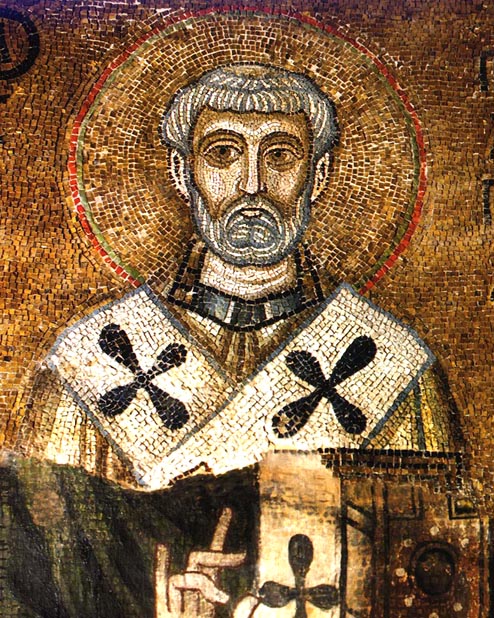 St. Clement of Rome
First Clement was most likely written bySt. Clement of Rome , the third bishop of that city1, even though his name is never mentioned in the book. Clement’s close association with the Apostles Peter and Paul is described by St. Irenaeus of Lyons, the great Church Father of the latter part of the second century, in these words:
The blessed apostles Peter and Paul, then, having founded and built up the church in Rome, committed into the hands of Linus the office of the episcopate. Paul makes mention of this Linus in his Epistles to Timothy [2 Tim. 4:21]. After Linus came Anacletus. And after him, in the third place from the apostles, Clement was allotted the bishopric. This man, as he had seen the blessed apostles, and had been conversant with them, might be said to have the preaching of the apostles still echoing in his ears, and their traditions still before his eyes. Nor was he alone in this, for there were many still remaining alive who had received instructions from the apostles (Against Heresies III.3.3).
First Clement is a letter written by Bishop Clement of Rome to the church in Corinth. It opens with the words, “The church sojourning in Rome to the church sojourning in Corinth.” This, of course, was the same Corinthian church to which St. Paul had written his two epistles just about 45 years earlier. So that means there surely were believers in that church who in 96 AD could remember St. Paul’s letters being received and first read in their church!
St. Clement’s letter was being read as Scripture in the Church of Corinth around the year 170. Also, it occurs in the Codex Alexandrinus, a very important manuscript of New Testament writings dating from the early fifth century.
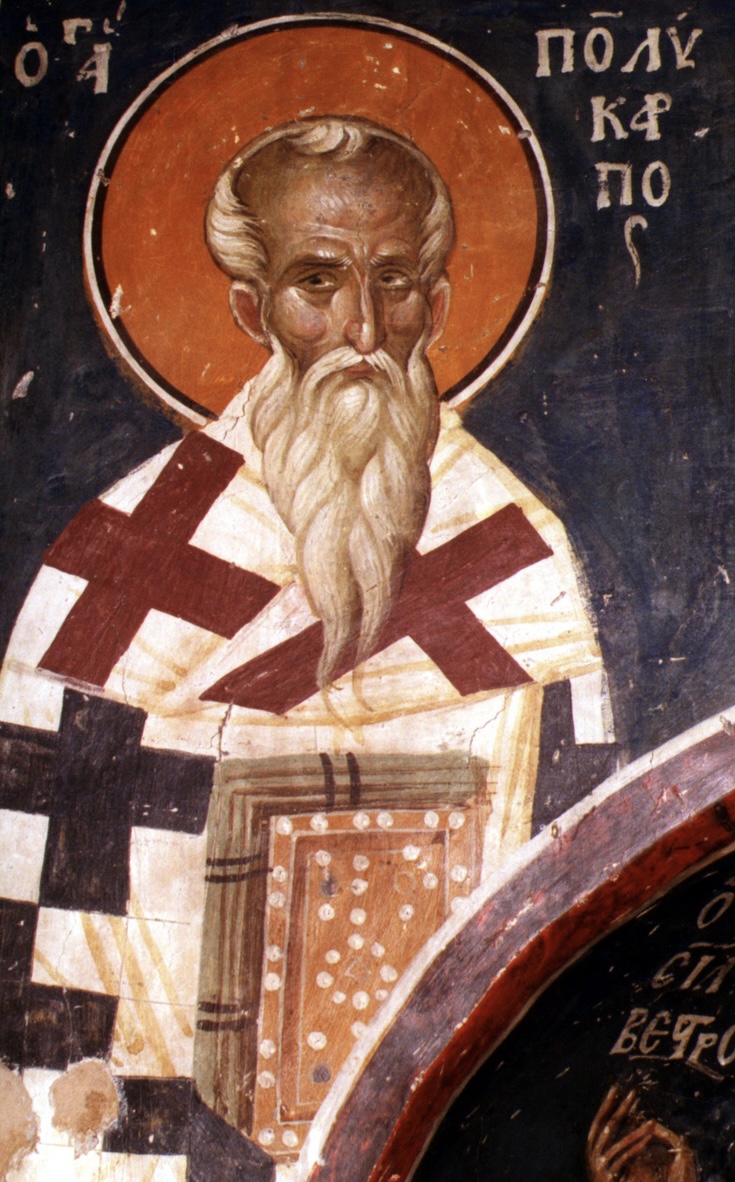 St. Polycarp of Smyrna
St. Polycarp , another of the Apostolic Fathers, as a young man undoubtedly knew St. John the Theologian and was taught by him2. Several years after St. John’s death, Polycarp became Bishop of Smyrna in western Asia Minor (now Izmir, in Turkey). As St. Irenaeus writes, Polycarp also was not only instructed by apostles, and conversed with many who had seen Christ, but was also, by apostles in Asia, appointed bishop of the Church in Smyrna.
St. Irenaeus was born around the year 1203 and grew up in the Church in western Asia Minor. As a young man, he knew Bp. Polycarp and was taught by him. As he says, I saw Polycarp in my early youth, for he tarried on earth a very long time. When he was a very old man, he gloriously and most nobly suffered martyrdom. He departed this life, having always taught the things which he had learned from the apostles, and which the Church has handed down, and which alone are true (Against Heresies III.3.4).
St. Polycarp wrote a letter to the Philippians – the same church that St. Paul wrote to in the previous century. This letter is filled with references to verses in the Acts of the Apostles and in the Epistles of St. Paul, St. Peter, and St. James. This shows how these writings were already being treated as Scripture in Smyrna in the first half of the second century.
We also are blessed to have the remarkable account of St. Polycarp’s martyrdom, which occurred in about the year 1574. This account was written by the Church in Smyrna to the Church in the neighboring town of Philomelium. In this report, the events leading up to Polycarp’s martyrdom are recounted, and his awesome martyrdom itself is described. The Early Church’s understanding of martyrdom, and the importance of the veneration of Saints and their relics, are also presented.
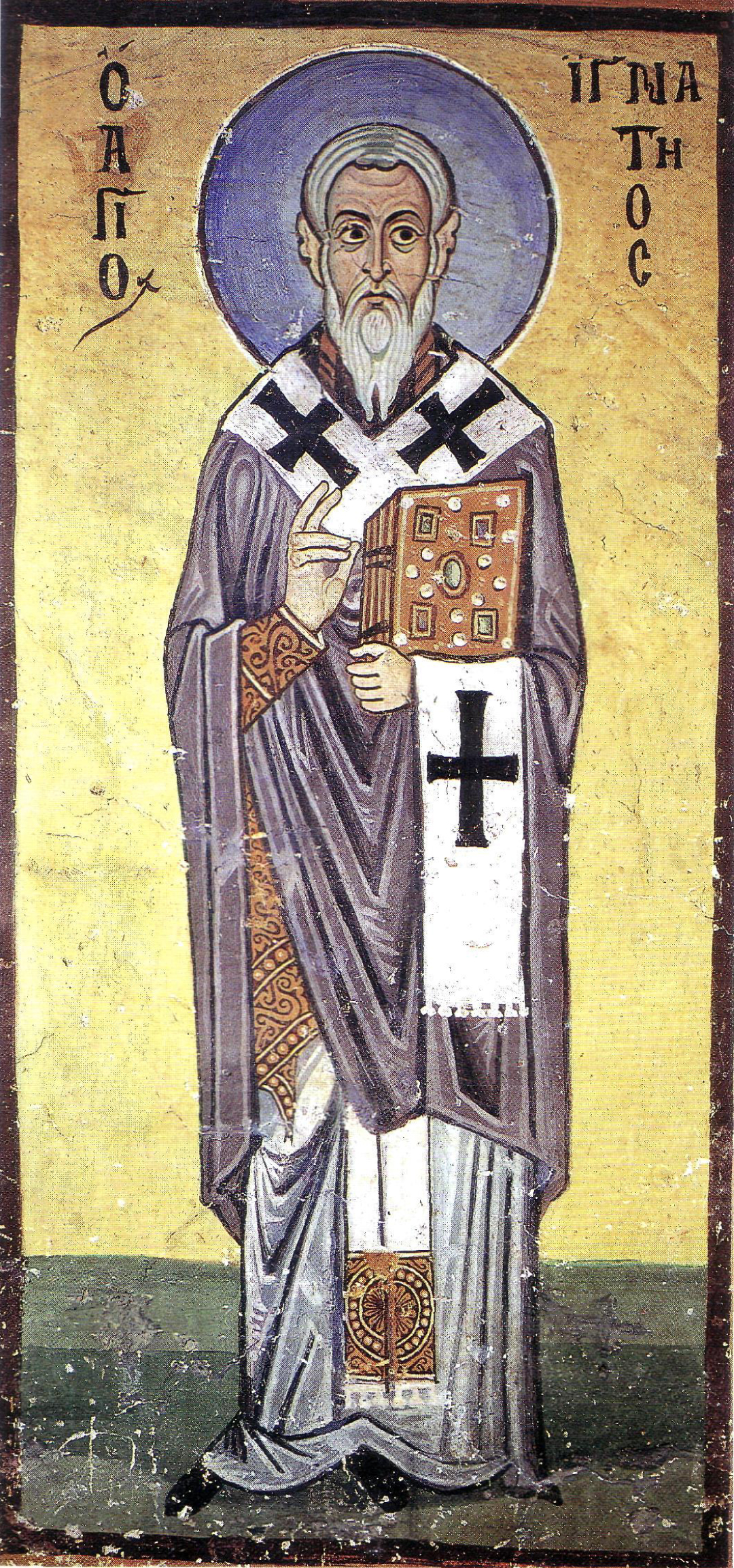 St.
Ignatius of Antioch
St. Ignatius , another of the Apostolic Fathers, lived even earlier than St. Clement and St. Polycarp did. He was born around the year 30 AD. According to tradition, he was the child whom Christ took up into His arms5 (Matt. 18:2). In about the year 69, he became the second bishop of the very important city of Antioch (where the followers of Christ were first called Christians, as it says in Acts 11:26). This was only about ten years or so after the Apostle Peter lived there, helping to strengthen the church there.
In about 107, as St. Ignatius was taken by armed guards across Asia Minor to be martyred in Rome , the soldiers and their captive stopped for a while in Smyrna, where St. Polycarp was bishop. Ignatius was allowed to meet with Polycarp; imagine the glorious and wonderful, yet poignant, fellowship they must have had together! While in Smyrna, Ignatius took the opportunity to write letters to the Churches in Ephesus, Magnesia, and Tralles (all in western Asia Minor). He also wrote a letter to the Christians in Rome , urging them not to try to prevent his martyrdom by appealing to the civil authorities there. For he was utterly convinced that God had revealed to him that he should end his life on this earth as a sacrifice to Christ through being offered to the teeth of wild animals in the arena.
From Troas, on the western coast of Asia Minor, Ignatius wrote a letter back to Polycarp, highly praising him. He also wrote a letter to the Church of Smyrna as a whole, and another letter to the Church in Philadelphia, also in western Asia Minor.
So these are the famous seven letters of St. Ignatius, which give such a dramatic glimpse into the life of the Church in western Asia Minor, the heartland region of Christianity, at the beginning of the second century. (We may remember that in the Revelation of St. John, John was commanded to write messages, dictated by Christ Himself, to the Churches in Ephesus, Smyrna, and Philadelphia. These messages would have been received by these Churches only about ten years before they received the letters written by St. Ignatius).
Bishop Eusebius of Caesarea, the first great historian of the Church, writing in the early fourth century, calls St. Ignatius “one who to this day is universally remembered” (Ecclesiastical History 3.36). And St. Polycarp strongly proclaims the great worth of Ignatius’s letters when he writes to the Philippians, We are sending you at your request the letters of Ignatius which he sent to us, and any others which we possess. They are attached to this letter. You will be able to benefit greatly from them. For they deal with faith and endurance and all the edification which belongs to our Lord (To the Philippians 13.2).
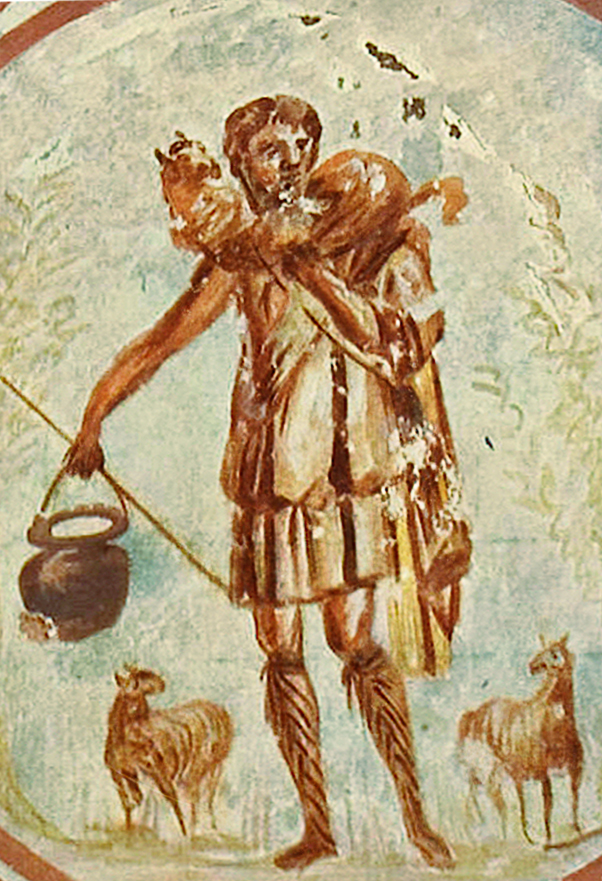 Hermas
of Rome
The Shepherd of Hermas is the longest of the writings of the Apostolic Fathers. It was probably written by a married layman in Rome named Hermas, around the year 150. It was so highly esteemed in certain parts of the Early Church that it was held to be at the same level of inspiration as the Gospels and Epistles which were already becoming recognized as the heart of the New Testament. As the Oxford Dictionary of the Christian Church says of this work.
In the Greek Church of the 2nd and 3rd centuries the work was widely regarded as Scripture, e.g. by St. Irenaeus, Clement of Alexandria, and also by Tertullian in his pre-Montanist days, though there was no unanimity on the subject. It was, however, greatly esteemed for its moral value and served as a textbook for catechumens , as is testified by St. Athanasius. In the Codex Sinaiticus [a very important early manuscript containing the New Testament] it comes after the NT, together with the Pseudo-Barnabas (Third, Revised Edition, p. 764).
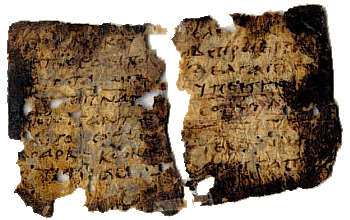 The Didache
 (pronounced dee – dah – KAY), whose full name is The Teaching of the Lord through the Twelve Apostles , is an early handbook of Christian morals and practices. Parts of this short work may date from as early as around 60 AD6 – about the time the Holy Gospels were being written! The Didache is the earliest of a series of similar, lengthier works known as “Church Orders.” It contributed to the Didaskalia Apostolorum (Teachings of the Apostles) , compiled in northern Syria in the first half of the third century. And it forms the basis for most of the seventh section of The Apostolic Constitutions, dating from the second half of the fourth century (also most likely from Syria).
Second Clement
Another work among the writings of the Apostolic Fathers is known as Second Clement , though it is generally recognized not to be the work of St. Clement of Rome. Dating from the first half of the second century, it probably was written in the area of Corinth. We find it attached, along with First Clement, to the Codex Alexandrinus manuscript of the New Testament. A sermon rather than a letter, it gives strong encouragement to Christians to live in repentance, in expectation of the Last Judgment when our Lord returns.
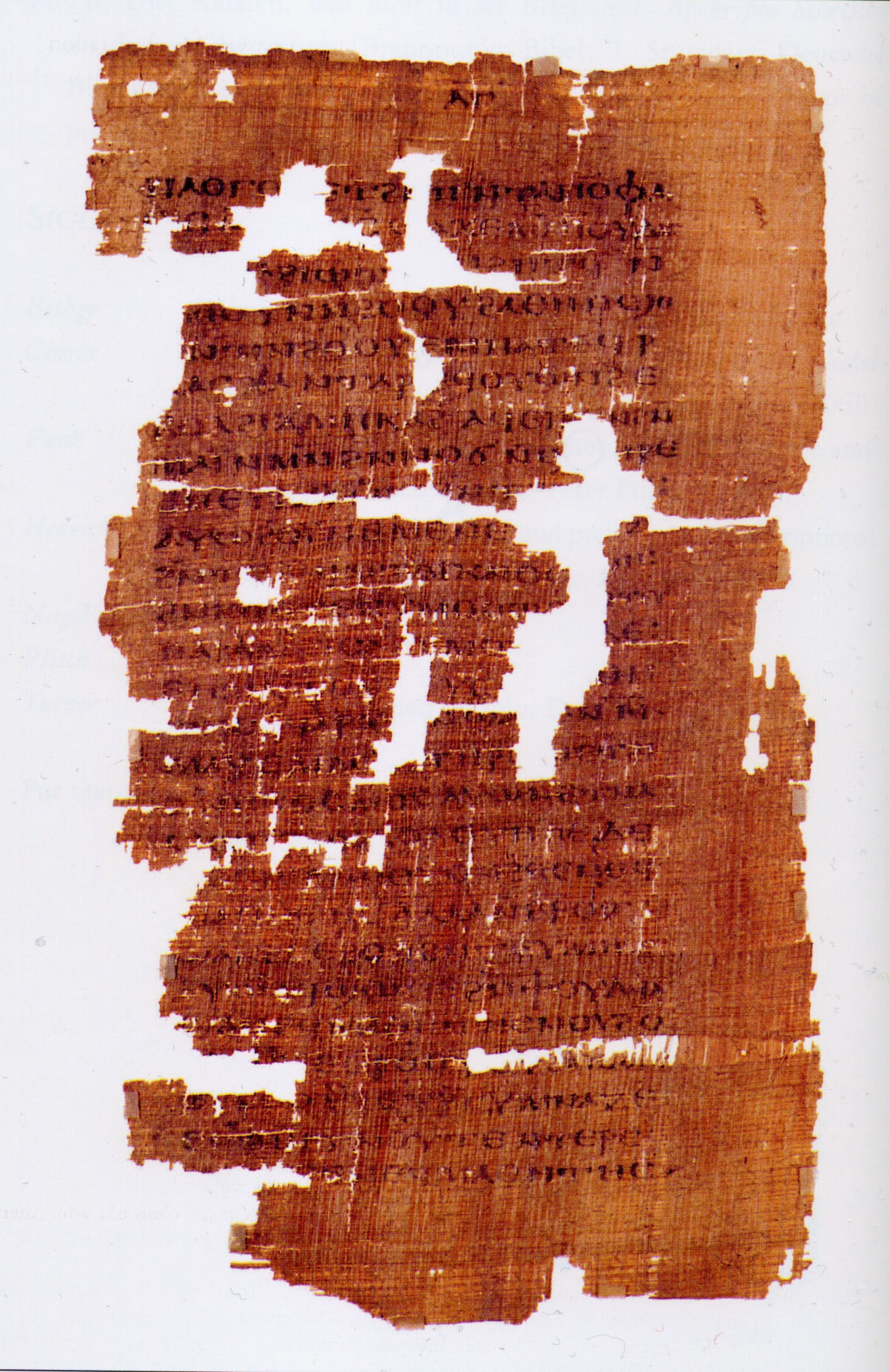 The Epistle of Barnabas
Then there is the Epistle of Barnabas. The writer of this letter does not give his name, but it has been traditionally attributed to St. Barnabas, St. Paul’s close associate (Acts 11:22-26; 13:1 – 15:4; 15:35). Clement of Alexandria, around the year 200, was convinced of this, and his Church in Alexandria regarded the letter as part of the New Testament. Its last four chapters, vividly describing the Way of Light and the Way of Darkness, are very similar to the first six chapters of the Didache which describe the Way of Life and the Way of Death.
The Major Apostles after the Book of Acts
****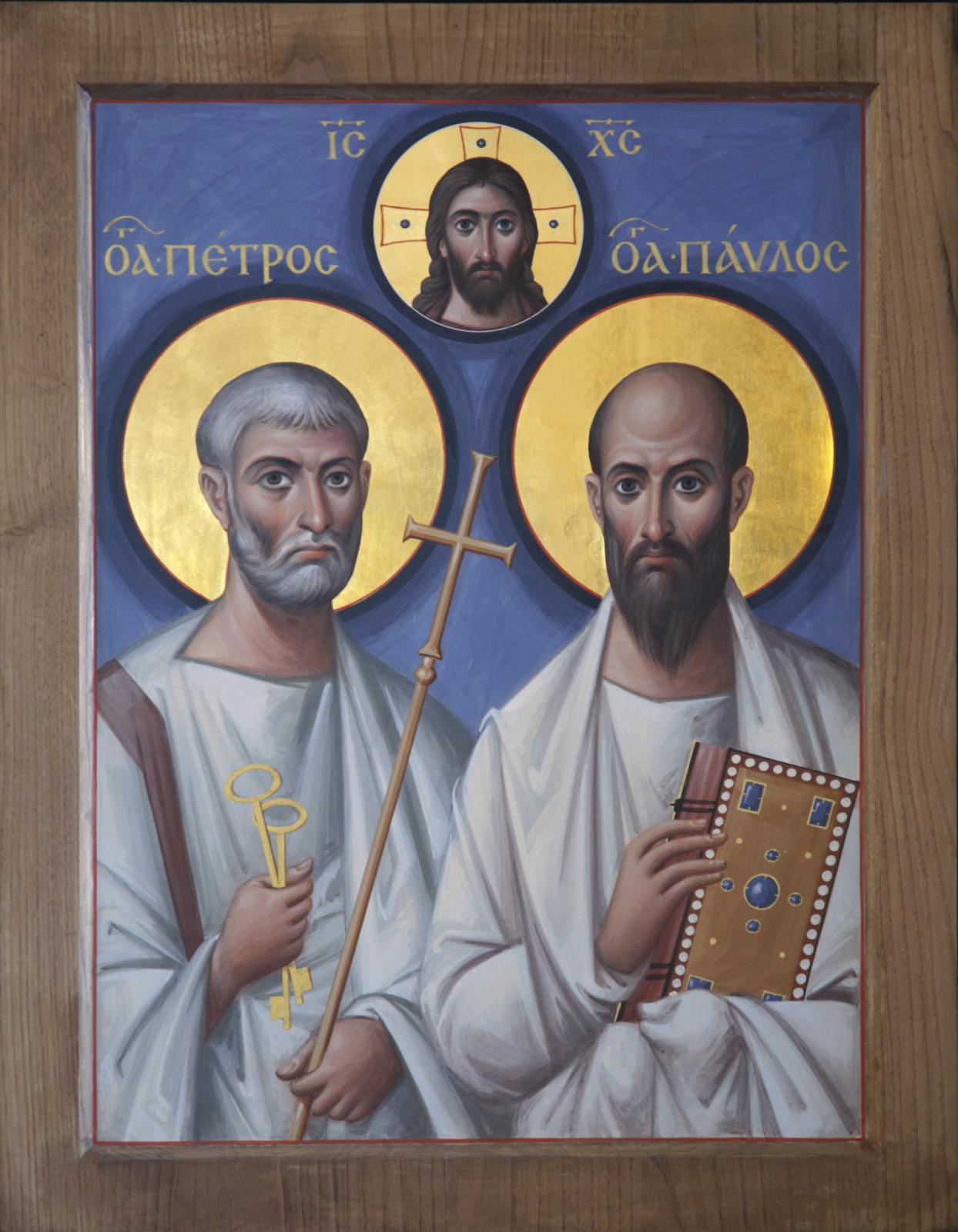 St. Peter –
ministered in Antioch and Rome. As Apostle, he probably ordained St. Linus to
be the first bishop of the Roman Church. He was martyred in Rome, by tradition
on June 29, AD 67, under the crazed Emperor Nero. At his request he was
crucified upside down, feeling he was not worthy to be crucified in the way
the Lord was, and wanting to be looking up to Heaven while being crucified. In
The Lives of the Holy Apostles (taken from the Menology of St. Dimitri of
Rostov and the Great Synaxarion of the Greek Orthodox Church; translated by
Reader Isaac E. Lambertson and Holy Apostles Convent; Buena Vista, Colo.: Holy
Apostles Convent, 1988), it is reported that he also ministered in Spain,
Carthage, Egypt, Milan, Photiki (in northwestern Greece), and Britain.7
Feastday: June 29.
St. Paul – there is a tradition that after two years of house-arrest in Rome – during which time he had considerable freedom to preach and receive visitors, as we see from the final two verses in the Book of Acts (28:30-31) – he traveled to Spain (as he expressed the strong desire to do in Romans 15:24 and 28), and also to Gaul. Tradition says that he was beheaded in Rome, also by order of Emperor Nero, either on the same day as St. Peter was martyred, or on June 29th a year later. Feastday: June 29, together with St. Peter; they are honored together as the two most preeminent of all the Apostles of Christ.
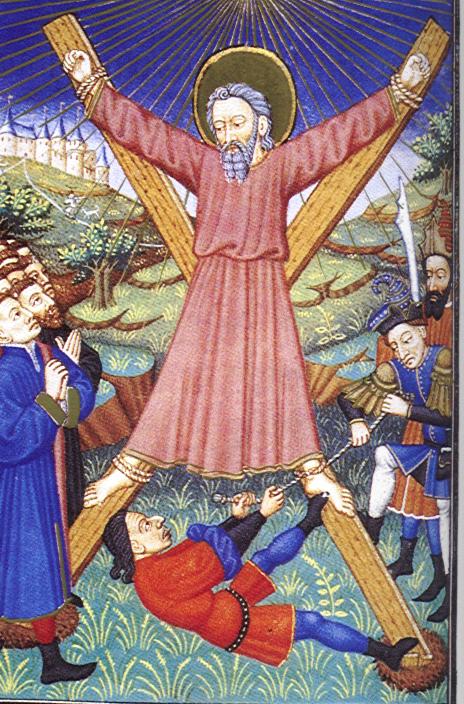 St. Andrew – Eusebius (EH III.1)
reports that when the Apostles drew lots to determine where they would
evangelize, Andrew drew Scythia (in southern Russia8, where he is said to have
reached the site of the future city of Kiev, which he prophesied would arise
at that spot on the Dniepr River. Constantinople hearkens to tradition saying
he preached in early Byzantium. By tradition he was crucified on a X-shaped9
cross in Patras, Greece, on November 30th in AD 60. Feastday: November 30.
St. John – ministered in Ephesus, and in his final years was the kindly, venerable “patriarch” of that whole area of western Asia Minor. By tradition he was taken to Rome during the persecution of Emperor Domitian (ruled AD 81 – 96), where he was cast into a cauldron of burning oil10, from which he emerged unscathed. With that, “Caesar, not daring to torture John further, considered him immortal and sentenced him to exile on the island of Patmos” (The Lives of the Holy Apostles, p. 100). Here he wrote his Apocalypse (or Revelation), the last book of the New Testament (see Rev. 1:9). He probably wrote his Gospel and Epistles after his return to Ephesus shortly after Emperor Nerva (r. 96-98) succeeded Domitian.
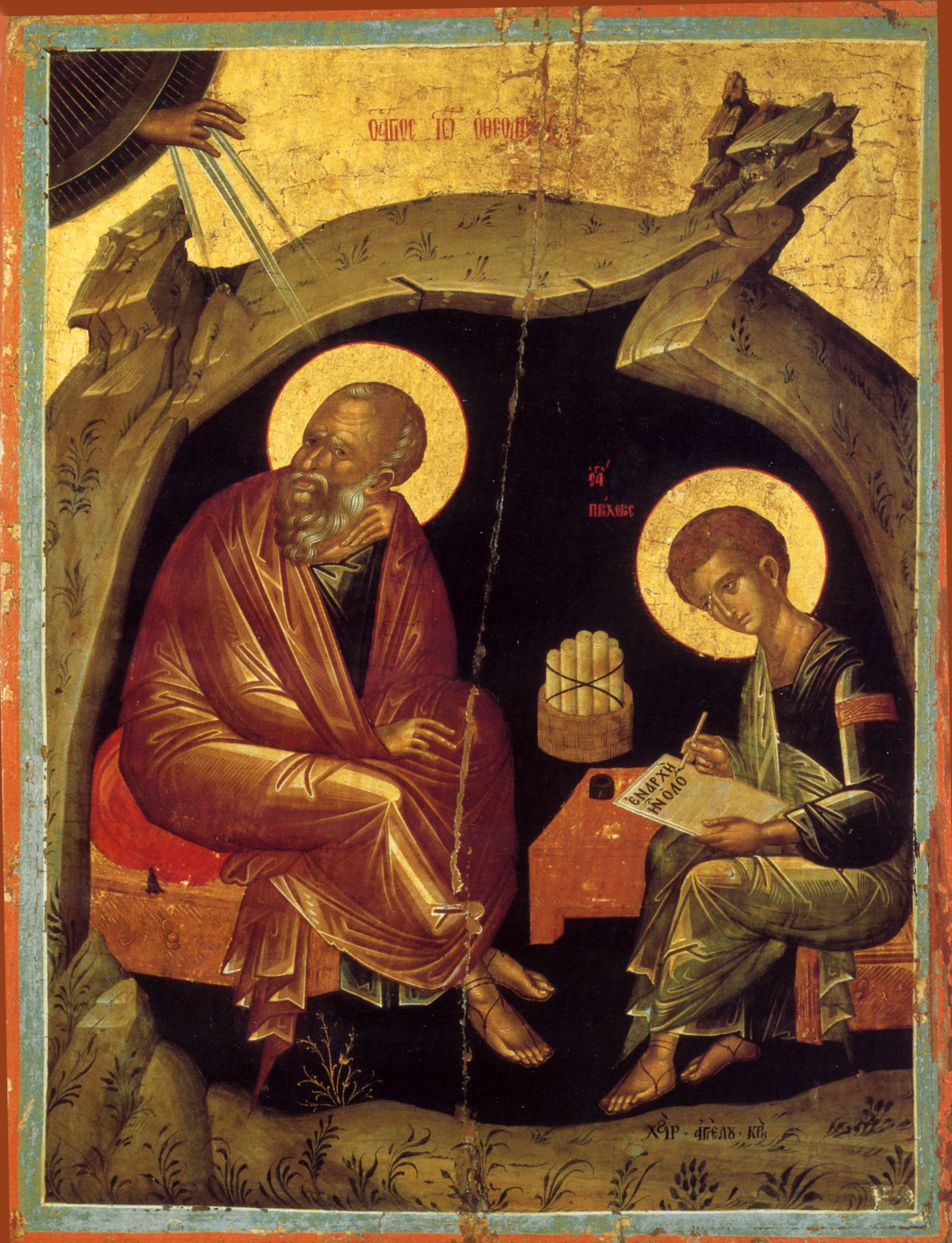 Eusebius (EH III.23) quotes at
length a beautiful story given by Clement of Alexandria (in his “The Rich Man
Who Finds Salvation”) about St. John’s rescue of an errant spiritual son.
Eusebius (EH III.28) also reports the incident related by St. Irenaios
(Against Heresies. III.3.4; he attributes the story to the great St. Polycarp,
Bishop of Smyrna, who had known St. John), about when St. John had entered the
baths, and upon learning that the heretic Cerinthus was inside, he called to
his companions, “Let us get out of here, for fear the place fall in, for
Cerinthus, the enemy of truth, is inside.”
In The Lives of the Holy Apostles (pp. 149-150), it is related that “When the holy apostle became very weak, the blessed Jerome relates, his disciples carried him to the church, but he was no longer able to give long sermons. He then reduced his teaching to the unceasing repetition of ‘Little children, love one another.’ One day, when his disciples asked him why he repeated this to them incessantly, John replied with the following words: ‘This is the Lord’s commandment; and if ye keep it, it is enough.’”
He is the only Disciple to die a natural death, a few years into the reign of Emperor Trajan (r. AD 98-117). Feastdays: Sept. 26 and May 8.
St. Philip – one of the Twelve Apostles; he preached in Hierapolis of Syria11, then through much of Asia Minor. While working with his sister, St. Mariamne (Feb. 17) and St. Bartholomew the Apostle, in trying to bring the people of Hierapolis, in Phrygia, to the Gospel, he was crucified upside down (in the year AD 71 according to The Lives of the Holy Apostles [p. 169]; in AD 86 according to the Prologue from Ochrid by St. Nicholai Velimirovich [vol. 4, p. 196]). Feastday: Nov. 14.
 St.
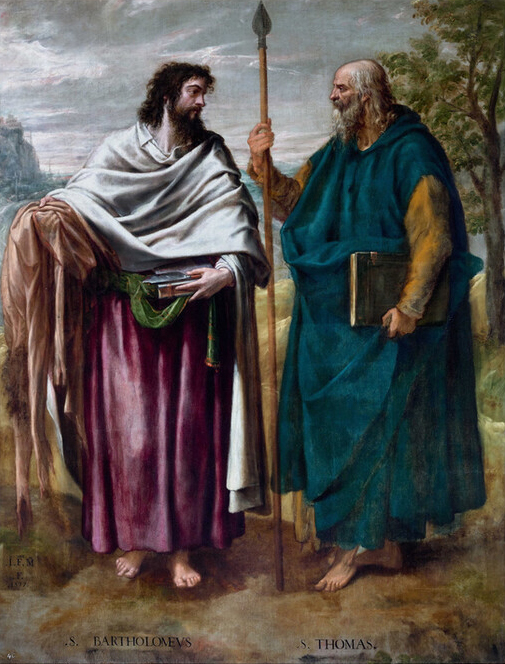
Bartholomew - in Hierapolis in Phrygia, he was crucified along with St.
Philip, but an earthquake enabled the terrified onlookers to take him down
from his cross before he died. From there, he went to India, where according
to The Lives of the Holy Apostles (p. 177), he labored a long time, and
translated the Gospel of St. Matthew into the native language. This account
reports that St. Bartholomew also left with the people there a copy of the
Gospel of St. Matthew in Hebrew, which Pantaenus, the founder of the
catechetical school in Alexandria, brought from there to Alexandria (this is
corroborated by Eusebius - EH V.10). From India he went to Greater Armenia. He
was martyred in Albanopolis (Baku) in Greater Armenia in about AD 90.
Feastdays: June 11 and Aug. 25.
St. Thomas – Eusebius (EH III.1) reports that he drew the lot for Parthia (Persia). According to a very strong Syrian tradition (corroborated by St. Gregory the Theologian, in his Oration 25), he went to India – where he labored especially in the southwestern province of Kerala. Here he was martyred near the city of Mylapore, and buried at Madras. He is considered to be the founding father of the “St. Thomas Christians” in India to this day. Feastday: Oct. 6.
St. Matthew – according to St. Papias, an early bishop of Hierapolis in Asia Minor, he recorded sayings of the Lord in Hebrew; and according to Eusebius, “he committed his own gospel to writing in his native tongue” (EH III.24). Various traditions say he preached in Macedonia, Syria, Persia, Parthia, and Media; then to Ethiopia; and then “in the land of the cannibals” (The Lives of the Holy Apostles, p. 211), where he was martyred at the hands of a prince named Fulvian. Then Fulvian repented and was baptized, taking the name of Matthew; he later became a bishop. St. Matthew’s feastday: Nov. 16.
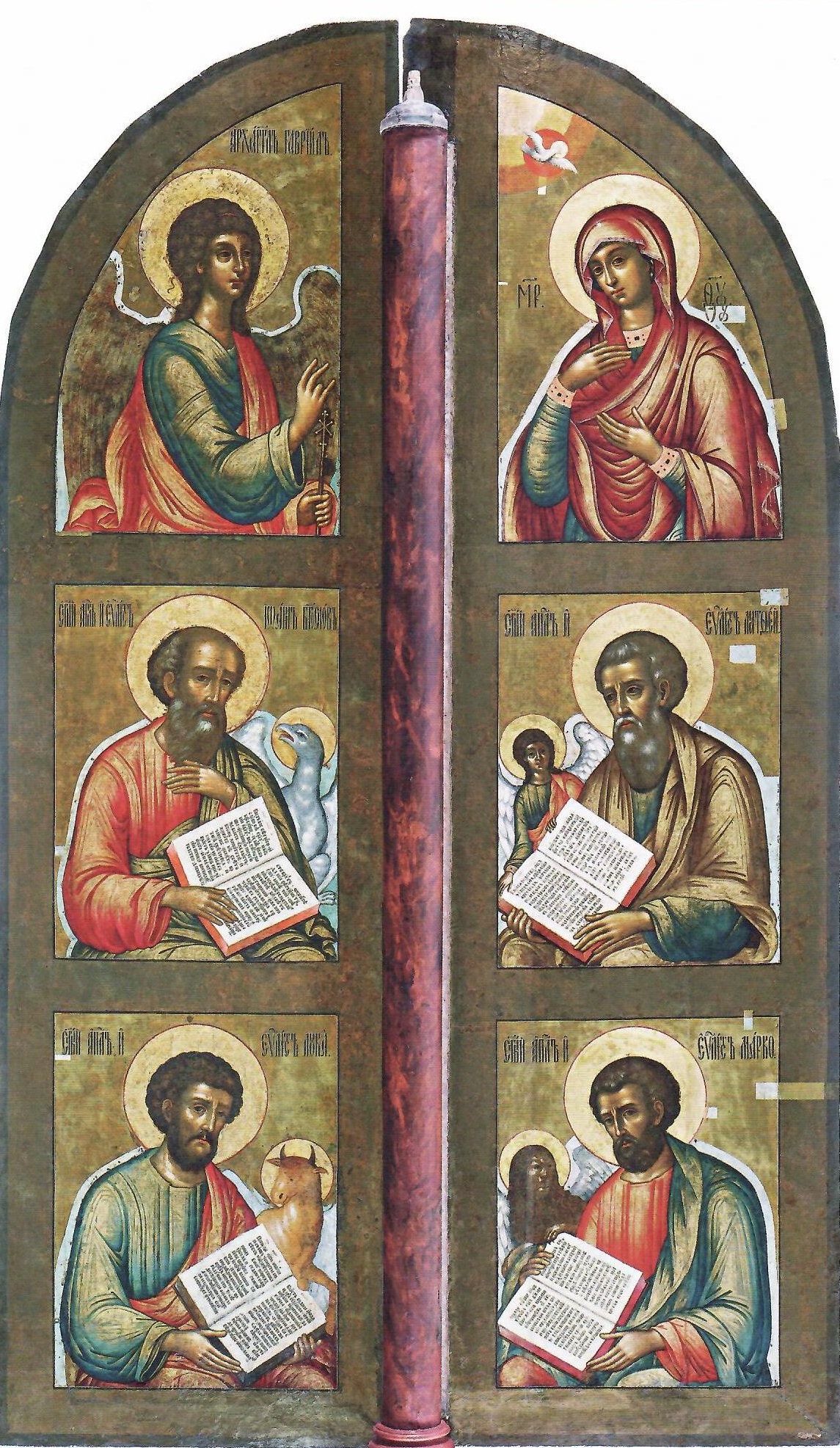 St. Mark (John
Mark) - of the tribe of Levi, cousin of the Apostle Barnabas (Col. 4:10);
accompanied Saints Paul and Barnabas on Paul’s first great missionary journey
across Cyprus and on to Perga in Pamphylia, but here he left the Apostles to
return to his mother’s home in Jerusalem. Then he joined St. Peter on his
missionary trip to Rome; then he went to Aquileia (near Venice); then to Egypt
on the instructions of St. Peter, becoming the first bishop of Alexandria.
Then, when Paul refused to take him on his second great missionary journey, he
went with Barnabas to Cyprus. Then he went back to Egypt. By c. AD 62, he is
back in Rome, restored to the good favor of St. Paul (Philemon 23-24; cf. Col.
4:10-11), who is there in chains.
Eusebius (EH II.15) reports that the faithful in Rome, knowing that Mark was a close associate of Peter, begged Mark to record in writing the events of Christ’s life, as remembered by St. Peter (this is corroborated by I Peter 5:13); this is the origin of St. Mark’s Gospel.
Back in Egypt, after further strengthening the Church there, he became the first martyr of Alexandria and the surrounding province. Feastday: April 25.
St. Luke - Evangelist, physician, first iconographer12, and one of the 70; born in Antioch, he was probably originally a convert to Judaism. He was probably the companion of Cleopas “on the road to Emmaus” (Luke 24:13-35). He went back to Antioch, and then he accompanied St. Paul on part of his second missionary journey – from Troas to Philippi (Acts 16:10-17, in which the account shifts to the first person plural). He remained in Philippi to minister to the new church there. He rejoined St. Paul when he returned to Philippi on his third missionary journey, accompanied him to Jerusalem (Acts 20:5-21), and thence to Rome, where he stayed with him during his captivity there (Col. 4:14; II Tim. 4:11; Philemon 24). After St. Paul’s martyrdom, St. Luke labored in Italy, Dalmatia, Macedonia, and Greece, where he died, being crucified on an olive tree at the age of 84. He was buried in Thebes.
Concerning his iconography, St. Nicholai in his Prologue from Ochrid writes: “He painted three icons of the most holy Mother of God, and also icons of the Apostles Peter and Paul, and is regarded as the founder of Christian iconography” (vol. 4, p. 80).
His feastday is on October 18
St. Philip – one of the first seven deacons (Acts 6:5); after his ministry in Samaria and Azotus (Acts 8), he eventually became bishop in Tralles, in western Asia Minor. He died peacefully in great old age. Feastday: Oct. 11.
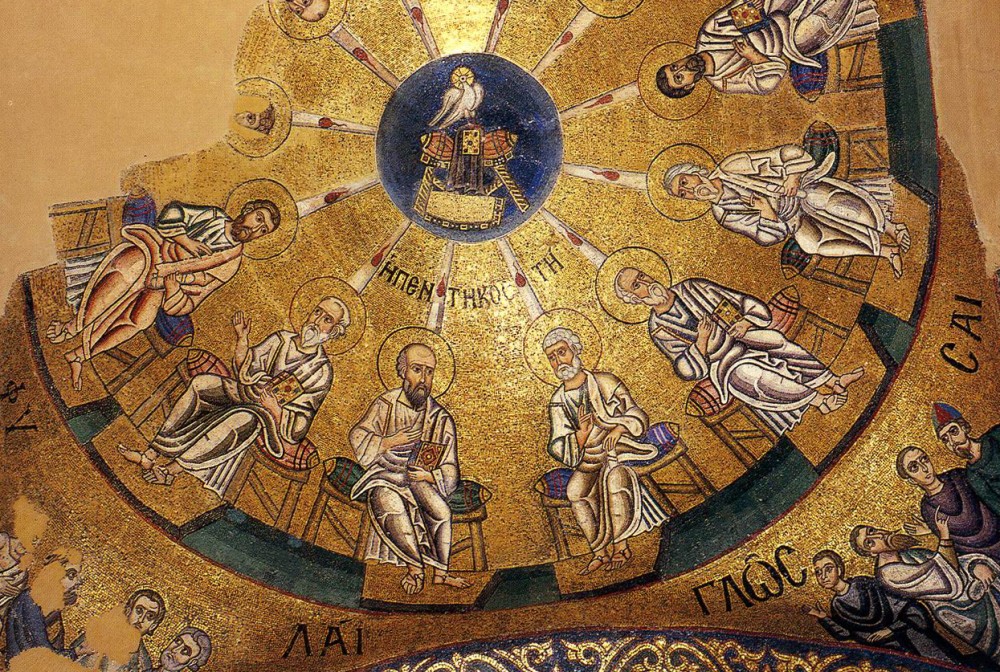
St. Thaddeus - one of the 70. He was sent to Edessa in northern
Mesopotamia, in fulfillment of Christ’s promise to send a disciple to King
Abgar after His ministry on earth was ended. King Abgar had sent a letter to
Christ, asking Him to come and heal him of a grievous disease, and Christ had
responded with a short letter, saying “When I have been taken up I will send
you one of My disciples to cure your disorder and bring life to you and those
with you” (Eusebius, EH I.13). Thaddeus indeed does heal him, and preaches the
Gospel in his city (the whole story is recounted by Eusebius [EH I.13], who
asserts that the letters he quotes he himself found in the Record Office in
Edessa and “translated word for word from the Syriac”).
St. James - the Lord’s brother (in the Eastern tradition, he was the son of St. Joseph by his first wife, making him the Lord’s half-brother; in the Western tradition, through St. Jerome, he was a relative of the Virgin Mary’s family, hence a cousin of the Lord). He was the first Bishop of Jerusalem, who presided at the first council of the Christian Church (the paradigm for all the later councils – Acts 15).
He was martyred in AD 62 in Jerusalem at the hands of Annas, the high priest, who had him thrown from the top of the temple, and then stoned to death - as he prays, “Father, forgive them, for they know not what they do.” An account of his martyrdom is given by St. Hegesippus (April 7), the first historian of the Christian movement, who lived from about AD 60 to 13013; Eusebius (EH II.23) quotes him at length recounting this event. In this account, St. Hegesippus says of St. James: “He used to enter the Sanctuary alone, and was often found on his knees beseeching forgiveness for the people, so that his knees grew hard like a camel’s from his continually bending them in worship of God and beseeching forgiveness for the people. Because of his unsurpassable righteousness he was called the Righteous.”
Eusebius also quotes a brief reference to St. James’s martyrdom in Josephus (from his Antiquities XX.ix.1). Eusebius in this section also quotes Josephus, in reference to the brutal suppression of the Jewish revolt by the Romans, culminating in the destruction of the Temple in AD 70, as saying that “These things happened to the Jews in requittal for James the Righteous14, who was a brother of Jesus known as Christ, for though he was the most righteous of men, the Jews put him to death.”
“Upon this rock I will build My Church, and the gates of hell will not
prevail against Her” (St Matthew 16:18)
Everything we see, everything we have, has a history. Every village, every city, every nation, every word in every language has a history. We have what we have, we are what we are, because of history. We Christians believe and know that there is a Lord and Master of History, the One Who out of nothing created this world, this galaxy, this universe, the One Who took dust and water and invisible gasses and formed the seas, the continents, the air and the sun and moon and stars to mark the seasons and the years of time. Then as we know from our Sacred History Book, this Same Lord of History, in order to fashion the crowning jewel of all His ineffably wondrously Creation, took the dust of the earth and formed Man - Man, the only part of Creation Whom the Lord made in His own image and likeness.
The Lord of History bids us to approach Him on the sacred ground of History and to walk with Him through the pages of history - His Story - so that we might know and so that we might proclaim to others, the One Who has brought us into existence, why He has given us the infinitely precious gift of life and where He calls us to spend Eternity. He invites us to more greatly appreciate and glory in the marvel of His Incarnation, the awesome fact that He, the Creator of the Universe, at a very particular time and place, came to this earth and became one of us, and by His death and Resurrection conquered death and all the forces of Hell which had Man enslaved, and opened to all of us the way into His Eternal Kingdom. And through studying the history of His Church, we will more greatly appreciate and glory in the ways His faithful followers have valiantly lived, preached and preserved through twenty centuries the Truth which Truth Himself had entrusted to them, conquering all the forces of evil thrown against them in their steadfast defense of this Truth. And I’m quite sure we will be all the more convinced that only in the Orthodox Church can the fullness of the deposit of Christ’s saving Truth be found - the One, Holy, Catholic and Apostolic Orthodox Church within which we, by His boundless mercy find ourselves today.
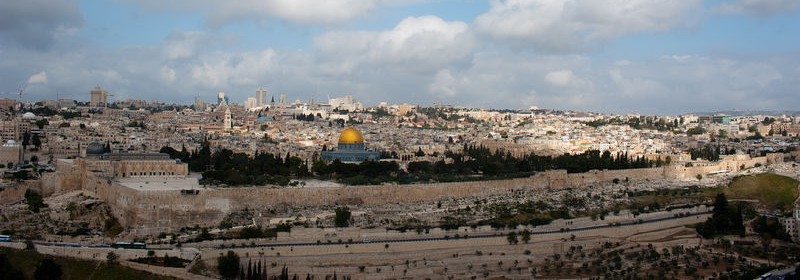
View of the old town. Jerusalem.
Let us first consider some of the ways the Lord of History guided centuries of human history so that the world in the reign of Caesar Augustus of Rome would be fitly prepared for the coming of God to the Virgin’s womb to take human flesh and become Man.
Then we will walk for a while with the Twelve Disciples, a small, seemingly insignificant group, who must have looked more than once at themselves and wondered, after their Leader had disappeared into the clouds, ‘How can we take this message, this Gospel, to the ends of the earth? How can we preach the Good News to every creature?’ But empowered by the mighty Holy Spirit Who filled on the Day of Pentecost, they began. They launched out in faith- not knowing exactly where they would go, but knowing surely Who it would be Who would guide them.
Let us walk with the Apostles, the Apostolic Fathers, the great Apologists,
the illustrious Fathers of the Church, whose faith conquered an empire. Let us
walk with the simple, humble Christians who defied governors and even emperors
with their steadfast faith. Let us behold the all holy and glorious Martyrs of
Christ who witnessed to the Faith not only with their words and deeds, but
with their very blood, with their last breath on this earth.
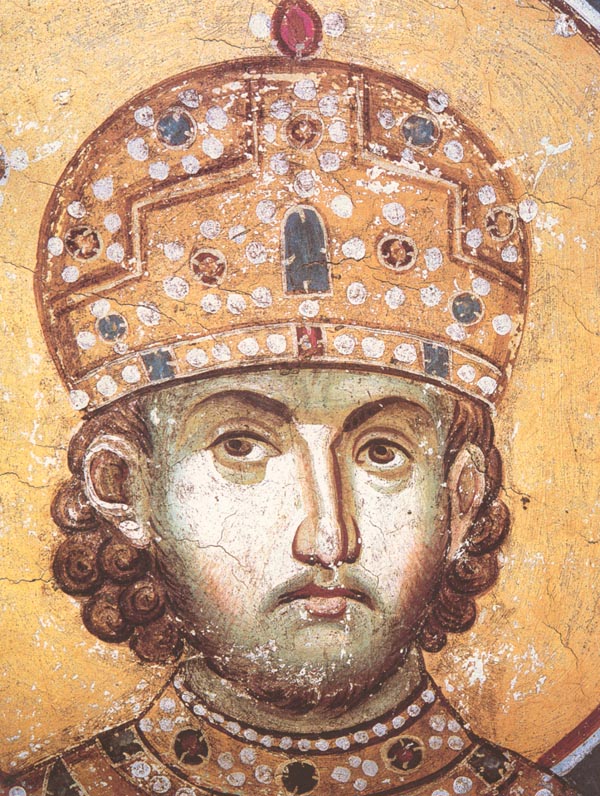
Let us rejoice with our brothers and sisters in Christ when the Roman Emperor himself joins them in the Faith and becomes a Saint, Equal to the Apostles, St Constantine the Great. And with his conversion the very real possibility gradually unfolds that an entire civilization may come to worship the true God and live in Him and be guided by His commandments and by His love. The Roman Empire will indeed become a large and powerful Christian civilization in which the laws of the Church become the laws of the state, and in which virtually every inhabitant is Christian believer - and some of the emperors such as St Justinian the Great will even become noteworthy theologians.
Then let us attend - at least through our study and in our imagination - the
Seven Ecumenical Councils of the Church, the greatest gatherings of the
leaders of the early Church, and let us sit at their feet and receive their
wisdom into our hearts and minds. Let us go to Nicea where the humanistic
reasonableness of Arianism is shattered by the dramatic proclamation that our
Lord Jesus Christ is homoousios - of one essence with the Father. Next, let us
make our way to Constantinople - New Rome - to behold the full Divinity of the
Holy Spirit defended against the Pneumatomachians, those Arians of the Holy
Spirit who also tried to destroy the Truth of the Holy Trinity - One in Three,
and Three in One. 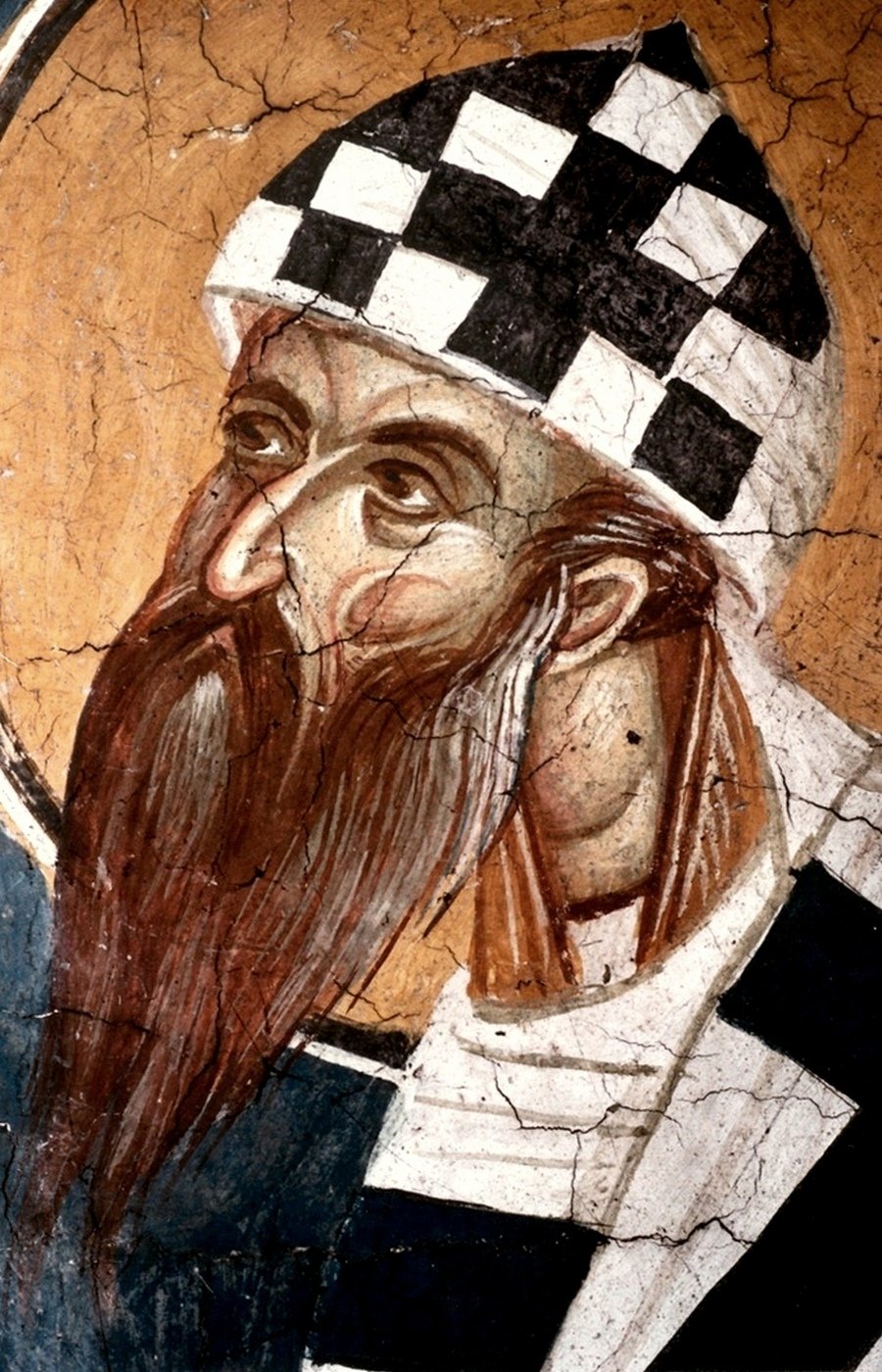
Let us then reach the splendid city of Ephesus to see St. Cyril, Patriarch of Alexandria, expose the errors of Nestorius, and defend the Virgin Mary as indeed the “Mother of God” – “Theotokos” – whose very name summarizes the whole Gospel.
On to Chalcedon, where the vast assembly of 630 bishops15 affirms that our Lord is not only consubstantial with the Father in His Divinity, but He is also consubstantial – homoousios – with us in His humanity. It is here at Chalcedon that the bishops exclaim, “Peter has spoken through Leo!” upon hearing Pope St. Leo the Great’s Tome, which would become the key source in the composition of the Chalcedonian Definition of the Faith.
But let us then weep with the Church as thousands of believers in Egypt, Palestine, and Syria fail to accept the Truth proclaimed at Chalcedon; let us walk with Emperors St. Leo, Zeno, St. Justinian the Great, Justin II, and Heraclius who agonize over how to win back the Monophysites into the bosom of the Holy Church. At Constantinople, the Fifth Ecumenical Council, held under Emperor St. Justinian the Great, declares that “One of the Holy Trinity suffered and died” that we might live, and Theodore of Mopsuestia, the teacher of Nestorius, is condemned 125 years after his death in order to try to assure the Monophysites that Chalcedon was not really crypto-Nestorian.
Then we go to the City (Queen of all cities) again for the Sixth Council in 680, where the Church must rectify the teaching about “one theandric energy,” or “one will,” in Christ – a doctrine which for a time offered so much promise to draw the Monophysites – and even the Nestorians – back to the fold. But St. Sophronius, the ninety-year old Patriarch of Jerusalem, and St. Maximos the Confessor, and St. Martin, Pope of Rome, expose the error: Christ, along with having His natural divine will, must also have a natural human will to be fully human, which enables all of human nature to be fully saved.
Let us weep again when the satanic horror of iconoclasm rends the Church, and thousands die in defense of the holy images which proclaim the Gospel in color and give us glimpses of eternity. Let us rejoice with the Fathers at Nicea in 787, meeting at the Council summoned by Empress Irene, who affirm the icons of Christ as glorious proclamations of His real Incarnation, and as worthy, not of the worship due to God alone, but of veneration by the faithful. Joy turns to sorrow again with the second era of iconoclasm beginning in 815, but joy comes again, after another long night of mourning, with the restoration of the icons in 843, on that glorious first Sunday in Lent known forever afterwards as “The Triumph of Orthodoxy.” Again it was a woman who saved the icons – St. Theodora the Empress – and this time the restoration is permanent.
But troubles are not over for the Church – how can it be otherwise in this grievously fallen world, and with the Devil and all his malignant forces ever trying to tear down and destroy Christ’s Church, “the Pillar and Ground of the Truth” (I Tim. 3:15)? In the 860s the Bishop of Rome, Nicholas, reaches an unheard of pitch of audacity and arrogance, attempting to intervene directly in the internal politics and affairs of the Patriarchate of Constantinople; and with typical Western bias, the resulting four-year schism is blamed on the Patriarch of Constantinople – whom we know as St. Photios the Great! – and is called in the West the “Photian Schism.”
Increasing Western designs upon the Eastern Church and Empire help lead to the Great Schism of 1054, to the sack of Constantinople during the Fourth Crusade in 1204, and to the establishment of a Latin monarchy there which lasts 57 years. Though the Byzantines based in Nicea regain the Great City in 1261, their empire never fully recovers. It finally succumbs, as we know, in 1453, to Mehmet II, Sultan of the Ottoman Turks, which inaugurates a long period of captivity for the Church. To this day the Ecumenical Patriarch in Constantinople is still not completely free from the restraining hands of the Turks.
During the long centuries of the Turkish Captivity, the only free Orthodox Patriarchate – that of Moscow and All Russia – is racked by the controversy between the Possessors and the Non-Possessors in the 1500s, by the schism of the Old Believers beginning in the 1650s, and in the early 1700s by the so- called “Petrine reforms” of Peter the Great, including the loss of the Patriarchate itself. And just as She begins to recover Her former dignity and glory with the restoration of the Patriarchate in 1917, even at that very moment the Bolsheviks are shooting in the streets of Moscow, taking control of Russia and plunging the Church into Her terrible bondage under the Communist yoke. Yet through all these long periods of oppression, the Church has glittered with purity, purged in the fires of persecution, and radiantly shining with the blood of Her Martyrs.
“Upon this rock I will build My Church, and the gates of hell will not
prevail against Her” (St Matthew 16:18)
View of the old town. Jerusalem.
INTRODUCTION
Editorial Footnotes
Flashcards
Download Anki flashcards for this topic’s quiz — import via Anki’s File > Import (note type “Basic”, fields separated by Tab, “Allow HTML in fields” checked).
Related Concepts
- acts-15
- apostolic-constitutions
- apostolic-fathers
- catechesis
- chalcedon
- chalcedonian-definition
- christotokos
- church-history
- councils
- creation-in-the-image-and-likeness-of-god
- deificationsalvation-of-human-nature
- deity-of-the-holy-spirit
- deposit-of-faith
- didache
- ecumenical-councils
- ephesus-431
- episcopacy
- epistle-of-barnabas
- first-clement
- folly
- hagiography
- heresy-and-schism
- holy-spirit-guiding-into-all-truth
- homoousios
- idol-sacrifice
- liturgical-commemoration
- liturgical-veneration
- mariology
- martyrdom
- matthew-1618
- mother-of-god
- narrow-path
- nestorius
- new-testament-canon
- nicaea
- nicene-creed
- orthodox-identity
- orthodox-interpretation-of-history
- orthodox-piety
- papal-primacy-claims
- pax-romana-roman-empire
- pentecost
- persecution
- persecution-under-nero-and-domitian
- reception-of-councils
- relics
- russian-church
- saints
- salvation
- second-clement
- sermons-on-the-veneration-of-holy-icons
- seventh-ecumenical-council
- seventh-ecumenical-council-787
- shepherd-of-hermas
- sixth-ecumenical-council
- song-of-moses
- spiritual-life
- st-cyril
- st-ignatius
- st-maximos-the-confessor
- st-polycarp
- stephen
- tertullian
- the-blood-of-martyrs
- the-church-as-pillar-and-ground-of-the-truth
- the-great-schism-of-1054
- theodore-of-mopsuestia
- theodore-of-mopsuestias-condemnation
- theodore-the-studite
- theotokos
- trinitarian-controversy
- triumph-of-orthodoxy-843
- veneration-of-icons
- veneration-of-saints-and-relics
- virgin-mary
- wisdom
- woman-clothed-with-sun
Footnotes
-
First Clement itself addresses a plurality of presbyter-bishops at Rome and never names a single ruling bishop, so historians generally regard the tidy single-bishop succession (Linus–Anacletus–Clement) preserved by Irenaeus as a later second-century reconstruction. A sole “bishop of Rome” in Clement’s day is therefore an anachronism. ↩
-
The claim rests on Irenaeus, writing decades later, so “undoubtedly” overstates the evidence. Scholars also debate whether the “John” whom Polycarp heard was John the son of Zebedee (the apostle) or “John the Presbyter,” a separate Ephesian figure whom Papias distinguishes from the apostle. ↩
-
Irenaeus’s birth year is not recorded; modern estimates range widely, from roughly 125 to 140. “120” sits at the early edge of the range and should be read as conjecture rather than fact. ↩
-
The date of Polycarp’s martyrdom is disputed. The traditional reckoning derived from Eusebius points to c. 155–156, while an influential alternative keyed to the named proconsul Statius Quadratus argues for c. 167. “About 157” falls between the two and is not secure. ↩
-
That Ignatius was the child Christ embraced (Matt. 18:2) is a later pious legend, unattested in his own letters or in the earliest sources; it likely arose from his epithet Theophoros (“God-bearer”). It also presupposes a birth c. AD 30, improbably early for a bishop still writing and traveling under guard c. 107. ↩
-
A date as early as c. 60 for any portion is a minority view. Most scholars place the Didache’s compilation around 100–120, while granting that it reuses older liturgical, catechetical, and “Two Ways” material. ↩
-
Peter’s presence and death in Rome are early and comparatively well attested, but the wider itinerary through Spain, Carthage, Egypt, Milan, Greece, and especially Britain is legendary, drawn from late hagiographical sources with no first- or second-century support. ↩
-
In ancient usage “Scythia” denotes the Black Sea steppe, not “southern Russia” as a later political entity. The tradition that Andrew blessed the future site of Kiev derives from the twelfth-century Russian Primary Chronicle and is widely treated by historians as a nationalistic legend. ↩
-
The X-shaped (saltire) “St Andrew’s cross” is a medieval development; the earliest surviving accounts of Andrew’s death do not describe a cross of this shape. ↩
-
The episode of the cauldron of boiling oil is a legend first reported by Tertullian around AD 200 and is absent from earlier sources. ↩
-
Hierapolis is in Phrygia, in western Asia Minor, not in Syria — as this same text correctly states a few lines later (“Hierapolis, in Phrygia”). “Hierapolis of Syria” is an error. ↩
-
The tradition that Luke painted icons of the Virgin is not attested before roughly the sixth to eighth centuries and is not historical; it reflects later Byzantine image-veneration read back into the first century. ↩
-
These dates are mistaken. Hegesippus belongs to the later second century — his work reached down to the episcopate of Eleutherus (c. 174–189) — and he is usually dated c. 110–180, not “about AD 60 to 130.” ↩
-
This sentence is not found in any surviving manuscript of Josephus. Eusebius (following Origen) attributes it to Josephus, but it is absent from the extant Antiquities; only the brief, separate notice at Antiquities 20.9.1, mentioning the execution of “James, the brother of Jesus who was called Christ,” is genuine. ↩
-
“630” is a conventional, symbolically rounded figure repeated in the tradition. The council’s subscription lists are incomplete, and modern estimates of the bishops actually present range from roughly 350 to 520. ↩