Comparative Theology — Topic 15. The relations of Protestant theologians with the Eastern Orthodox Church in the XVI-XVIII centuries. The modern theology of Protestantism.
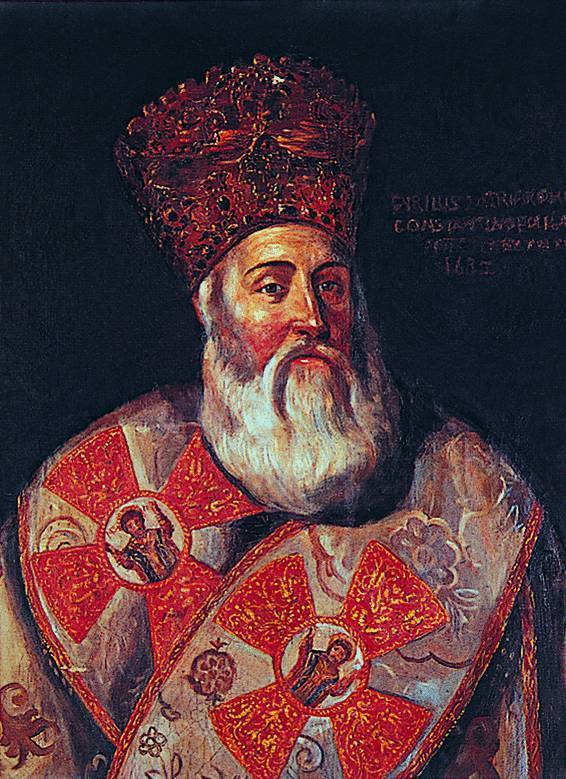
As mentioned above, Patriarch Jeremiah II of Constantinople and Patriarch Mitrofan of Alexandria argued with the Lutherans. Cyril Lucaris (1572-1638), who studied in Venice and at the University of Padua, was an important figure in contacts with the Calvinists. At the beginning of the 17th century, in the rank of Archimandrite, he went to Geneva and Wittenberg.
Subsequently, Cyril Lucaris became Patriarch of Alexandria (1602-1621), and then of Constantinople (1621-1638), although he was deposed from the patriarchal throne five times and then restored. To this day, Patriarch Cyril Lucaris’s “Eastern Confession of the Christian Faith” is hotly debated because it is Calvinistic in content. And the controversy surrounding the “Confession” is not so much about the content as about the authorship of this work: did the Patriarch of Constantinople really compose an openly Protestant text, or is there some other author hiding under the name of Cyril Lucaris, a real Calvinist?
Under the influence of Cyril Lucaris, a small circle of theologians appeared in the Church of Constantinople in the 17th century. A sermon by one of them, Theophilus Corydalleus, on the day of the enthronement of the new Patriarch of Constantinople, Parthenius I, in which he glorified the “Confession” of Cyril Lucaris, caused serious outrage among the faithful in Constantinople. To refute Corydalleus’s views, the theologian Meletius Sirig was summoned to Constantinople from Alexandria, who publicly compared Lucaris and his associates to heretics and atheists.
Cyril Lucaris himself had a sad end. In 1637, after the Cossacks captured the Azov fortress, which was under Turkish rule, Cyril was accused of assisting Orthodox soldiers in favor of the Greek Church. On this charge, in 1638, Patriarch Cyril was deposed from the throne for the fifth time and, at the behest of Sultan Murad IV, strangled on June 27, 1638. His body was thrown into the sea. However, despite Cyril’s condemnation by the Council of Constantinople in 1638, Lucaris was buried with honors by Patriarch Parthenius I of Constantinople in the monastery of the Virgin of Kamariotissa on the island. Halki, on the coast of which the body of the executed patriarch was found.
The first council against the “Confession” of Lucaris was held in Constantinople in 1638, under the chairmanship of Patriarch Cyril II of Constantinople. Patriarchs Mitrofan (Kritopoulos) of Alexandria and Theophanes III of Jerusalem also attended the council. The Council anathematized both the “Confession” and Cyril Lucaris himself. In the same year, the answer to Cyril Lucaris’ “Confession” was also given by South Russian theologians. Metropolitan Peter of Kiev («Mogila»-Grave) and Abbot. Isaiah (Kozlovsky), the first rector of the Kiev College, compiled the “Orthodox Confession of the Catholic and Apostolic Church of the East”, presented at the Kiev Council in 1640. But the participants of the council rightly saw in Peter Graves’ work a strong Catholic influence, especially in understanding the sacrament of the Eucharist. Subsequently, the “Orthodox Confession” was corrected and supplemented during the Council of Yasi in 1642, and then reviewed and approved at the Council of Constantinople in 1643. Nevertheless, “The Orthodox confession of the Catholic and Apostolic Church of the East” (Mitr. Peter Mogila still evokes ambiguous and sometimes diametrically opposed assessments.
Despite the council’s condemnation, Cyril Lucaris’ “Confession” continued to live its life and often served as an argument for Protestants in their theological disputes with Catholics: allegedly, the Orthodox share the views of Calvinists, in particular on the Eucharist. Catholics, on the other hand, tried to enlist the support of representatives of the Orthodox Church in their discussions. Patriarch Dositheus II of Jerusalem (+ 1707) responded to their call, who was concerned not with disputes between Catholics and Calvinists, but with the public cleansing of the Orthodox Church from suspicion of Calvinism.
In 1672, two councils were convened, at which the “Confession” of Cyril Lucaris was discussed. First, in January, a council was held in Constantinople under the chairmanship of Patriarch Dionysius IV of Constantinople. The Council issued a tomos outlining the Orthodox teaching on the seven sacraments of the Church and formulating an Orthodox view of the Eucharist, condemning Cyril Lucaris’ position. Despite the strict judgment of the Council of Constantinople, Patriarch Dositheus of Jerusalem considered it necessary to once again respond to the “Confession” of Lucaris and give a more detailed “Confession” of the Orthodox faith. Another council was held in Jerusalem, which confirmed the condemnation of Cyril Lucaris’ “Confession …”, but at the same time stated that Cyril Lucaris was not its author, thus clearing him of charges of Calvinism. The “Confession of the Orthodox Faith” compiled by Dosifey, which has the same structure as the “Confession…” by Cyril Lucaris, was included in Chapter 6 of the acts. This “Confession” is the most important document. It refutes the claim of some Protestant theologians that Orthodoxy is close to the teachings of the Reformation. Subsequently, this “Confession” was officially approved by all the Eastern Patriarchs, as well as by the Holy Synod of the Russian Orthodox Church, and was published in Russian as part of the collection “Epistles of the Patriarchs of the Eastern Catholic Church on the Orthodox Faith.”
The ecclesiastical condemnation of Cyril Lucaris’ “Confession” was brought to an end by the Council of Constantinople in 1691. The immediate reason for the council’s convocation was the activity of the great logothete of the Church of Constantinople, John Caryophilus (c. 1600 – after 1693), who was a disciple of Theophilus Corydaleus, (1574-1646), an associate of Cyril Lucaris. From Corydaleus, Caryophilus learned Protestant ideas on a number of theological issues. First of all, on the issue of the Eucharist. In his Eucharistic theology, Caryophilus, in particular, rejected the term “transubstantiation.” At the same time, Caryophilus sought to convince ordinary believers of his correctness, without entering into an open discussion with other theologians. “He published and distributed certain “notebooks” in which the word “transubstantiation” was rejected (μετουσίωσις) as a supposedly alien Latin innovation of the Holy Fathers.” Caryophilus’ activities led to the beginning of a real Protestant unrest in Constantinople. The Council of 1691 was called to put an end to it.
The Council ended with the adoption of the Tomos, which was compiled on the basis of the “Confession of the Orthodox Faith” by Patriarch Dositheus. In particular, it said: “Because at times many heretics appeared and denied the essential and real transformation of bread and wine into the Body and Blood of the Lord in the sacrament [of the Eucharist]… and they used ambiguous words and sophisms to deceive the simpletons, the Church, in the end, in order to more clearly present the truth hidden in the sacrament [of the Eucharist], by virtue of her own authority and custom, invoking the All-Holy Spirit, used the word “transubstantiation”, without designating anything else through it than the very thing that [the word] “transfiguration” means in the sacrament .” The Council also anathematized those who deny the word “transubstantiation” or blaspheme it. The fathers of the Council denied borrowing the term “transubstantiation” from the Latins, referring to its use by Orthodox Greek theologians of the XV-XVII centuries. On March 14, 1691, Patriarch Dositheus sent a conciliar letter to Patriarch Adrian of Moscow along with a printed edition of Meletius Syrig’s work “Refutation of the Calvin Chapters of Cyril Lucaris” and the acts of the Jerusalem Council of 1672.
- The beginning of contacts between the Orthodox Church and Protestants
- “Confession of Faith” by Cyril Lucaris
- Relations with Protestants in the 18th century.
- Modern theological problems of Protestant denominations
The story of the modern theological problems of Protestant denominations should begin by going back to the 19th century. It was then that the direction was formed, which then determined the vector of theological discussions throughout the twentieth century and the present. Moreover, not only in the Protestant community, but also more broadly in the entire Christian community. We are talking about the so-called “liberal theology”, which arose as a result of the assimilation of Protestant (mainly Lutheran) theological and philosophical ideas of F. Schleiermacher, E. Kant, G. Hegel and guided by the desire to reconcile the Christian doctrine with the relevant for the XIX – early XX century. XX centuries. science and social studies. Despite the fact that liberal theology has never been distinguished by conceptual unity and the absence of internal contradictions, most of its representations are characterized by doubts about the authority of the Bible, the active use of comparative and historical-critical methods in the interpretation of Scripture. Supporters of liberal theology introduced new practices into the life and work of a number of Protestant churches, and schools and teachings were formed under their influence.
One of the driving forces of liberal theology was the so-called “Tubingen School,” whose founder, Ferdinand Christian Baur (1792-1860), a professor of theology at Tubingen University, used the dialectical method to study the New Testament and the history of the early Christian Church. As a result, Baur came to the conclusion that the driving force behind the development of the early Church was the dialectical contradiction between the theology of the Apostles Paul and Peter (the concept of contradictions between “ecumenical” Paulinism and “Judeo-Christian” Petrinism). The theologians of the Tubingen school believed that in order to understand Christianity, it is necessary to adhere to the historical method, while decomposing the entire church history into its component elements, if possible. Christianity was interpreted by them as a teaching appropriate to its time, and as a form of religious consciousness prepared by the previous development of mankind.
The ideas of the Tubingen school were developed by the German Protestant theologian and public figure David Strauss (1808-1874), who wrote a provocative treatise “The Life of Christ.” Strauss tried to prove that the evangelical image of Christ is a product of collective myth-making. By restoring the image of the historical Christ, Strauss completely deprives the Savior of Divine attributes and makes a number of radical, almost atheistic assumptions. Analyzing the Bible from the standpoint of rationalism, Strauss rejects the historical authenticity of both Old Testament and New Testament miracles, arguing that the assumption of the possibility of supernatural events completely deprives the meaning of historical research.
The French writer and historian Ernest Renan (1823-1892), the author of another biographical study devoted to the “reconstruction of the biography” of the Savior, was less radical in his criticism, but in the preface to the book “The Life of Jesus” (1863) he explicitly stated that the prerequisites of his approach was the rejection of faith in the Divine origin of the New Testament.
The Kantian Albrecht Ritschl (1822-1889) gained considerable fame in Protestant theological circles at the end of the 19th century. Focusing on religious ethics (in fact, contrasting ethics with dogmatics), Ritschl believed that convincing arguments in favor of the existence of God can only be if they are based on morality. The existence of God is manifested in the phenomena of human will, the sphere of feelings and sensations. Accordingly, Ritschl considered the moral improvement of man to be the main task of religion. Salvation is understood by Ritschl as justification, which results in the restoration of a person’s ethical freedom, lost as a result of the fall. The task of faith is to restore the relationship between man and God, as a result of which fear is replaced by trust, and the quality of human will changes, which is thus directed towards doing good deeds. Thus, salvation is understood not only as a soteriological event, but also as an ethical human behavior.
A significant contribution to the development of liberal theology was made by the German theologian and church historian Adolf von Harnack (1851-1930), whose philosophical and theological views were largely influenced by the ideas of the Tubingen school. Considering the history of Christianity largely as a result of the influence of external geopolitical factors on the Church, Harnack believed that the formation of Christian dogma, which began in the early Church, was due to external factors, and did not follow from the logic of church development. In general, considering Christian dogma as the result of a distortion of the content of the Gospels, Harnack attempted to reconstruct the true gospel teaching, which he simplified to three points: faith in God the Father, recognition of the value of each person’s soul, and ethics based on love for one’s neighbor. Harnack’s characteristic adogmatism manifested itself in a consistent critique of traditional Christology, which Harnack considered to have been shaped by the influence of ancient metaphysics. Harnack, who harshly criticized Catholicism and Orthodoxy, believed that the beginning of the liberation of Christianity from historical distortions was due to the Reformation of the 16th century, which put an end to the Catholic monopoly on religious teaching in Europe.
Rudolf Bultmann (1884-1976), a prominent German exegete and historian of the early Church, worked in the paradigm of liberal theology, and the concept of the “demythologization of the Gospels” is associated with his name. Bultmann believed that the crisis of Christianity in the West, manifested in a sharp drop in attendance at Sunday services and rapid secularization, is due to the fact that modern people are no longer satisfied with the mythological format of presenting the content of the New Testament, since for a modern educated person myth cannot be perceived uncritically. At the same time, Bultmann distinguishes between the content of the New Testament – the kerygma, which is eternal and cannot become obsolete, and the mythological form of representation of the latter. As a result, they stated the need to present the content of the New Testament in a form that is acceptable to modern people and does not include concepts and representations of archaic consciousness. Despite the fact that Bultmann’s “demythologization of the Gospels” was apologetic in nature, it actually contributed to the further development of liberalism in theology. As a result, the Christian tradition was questioned, and the methods of critical hermeneutics dealt a blow to traditional Christian dogma, including basic Christological and triadic dogmas.
As a reaction to the challenges of liberalism in North America, an interdenominational association of Protestant theologians opposed to liberal theology took place, which, without claiming to create a new denomination, aimed to spiritually unite conservative Protestants of various faiths in order to counteract the trends of liberalism based on (the foundation of) five basic theses:
- Belief in the inerrancy and inspiration of the Bible,
- Faith in the immaculate conception of Jesus Christ,
- Faith in the salvation of His death on Golgotha,
- Belief in the historicity of His resurrection,
- Faith in the Second Coming of Christ.
Thus, in contrast to liberal theology, fundamentalist theology arose. Despite the fact that the problem of the origin of life was not initially one of the fundamental doctrines of Protestant fundamentalists, nevertheless, the latter soon began to position themselves as radical creationists, and the opinion that the days of creation, i.e. the day described in the first chapter of Genesis, are necessarily equal to 24 astronomical days, is particularly popular among them. by the clock. This conclusion, which has no direct basis in the text of the Bible, is the result of a certain kind of hermeneutic manipulation based on a specific and inherently Protestant methodology of biblical exegesis. This approach is only indirectly related to the Patristic tradition and was developed by Reformation theologians as a development of the theological thesis of sola scriptura and the hermeneutic views of early Protestant theologians, mainly M. Luther, who saw verbatim exegesis as an instrument of apologetics. Accordingly, the struggle against evolutionism, conducted from the standpoint of radical creationism, becomes a kind of “holy war” for Protestant fundamentalists.
In the 1920s, largely influenced by the tragic consequences of the First World War, dialectical (critical) theology was formed, the most prominent and authoritative representative of which is considered to be Karl Barth (1886-1968). The First World War largely undermined the optimistic faith in progress and called into question many provisions of liberalism: both in theology and in politics. In theology, this manifested itself as a rejection of reducing religion to the sphere of morality: there was a need for a theological understanding of the traumatic military experience and the degradation of political institutions that proved unable to prevent war or minimize the humanitarian catastrophe associated with it.
Dialectical theology largely used the methodology of apophatics, based on the impossibility of direct statements about the essence of God. For dialectical theology, the key is the position of the complete and perfect otherness of God, which transcends all rational conceptions. From the absolute differences between God in heaven and man on earth, it follows that it is impossible for a person to approach the knowledge of God if a person acts on his own initiative, relying on his own strength. Turning to the “Protestant classics”, first of all the works of M. Luther, According to Luther, supporters of dialectical theology believed that a real relationship between man and God is possible only if God Himself reveals Himself to man in a special spiritual and existential experience. Thus, dialectical theology completely rejects the attitudes of liberal theology: an attempt to see God in history is just as untenable as an attempt to find God through metaphysical reflection. While criticizing liberal theology, the proponents of dialectical theology were also far from the attitudes of Protestant fundamentalism, since they believed that theology should be based not on a literal exegesis of New Testament texts, but on an existential interpretation of the content of faith. In other words, what is happening here and now in a Christian’s life due to the action of God’s grace?
In the middle of the twentieth century, under the influence of the ideas of the German-American theologian Paul Tillich (1886-1965), an original trend in Protestant theological thought was formed, called the theology of culture. According to Tillich’s views, religion should not be removed from the world, ignore the existing socio-cultural situation, but on the contrary, take into account the peculiarities of the cultural context, cultural and ideological demands of society. At the same time, Tillich believed that neither liberal theology, which sacrifices the essence of Christian teaching in favor of the conjuncture, nor dialectical theology, which actually ignores the problems of modernity, contribute to ensuring that the essence of the faith is expressed and presented without distortion, and, at the same time, in a relevant format, demanded by society.
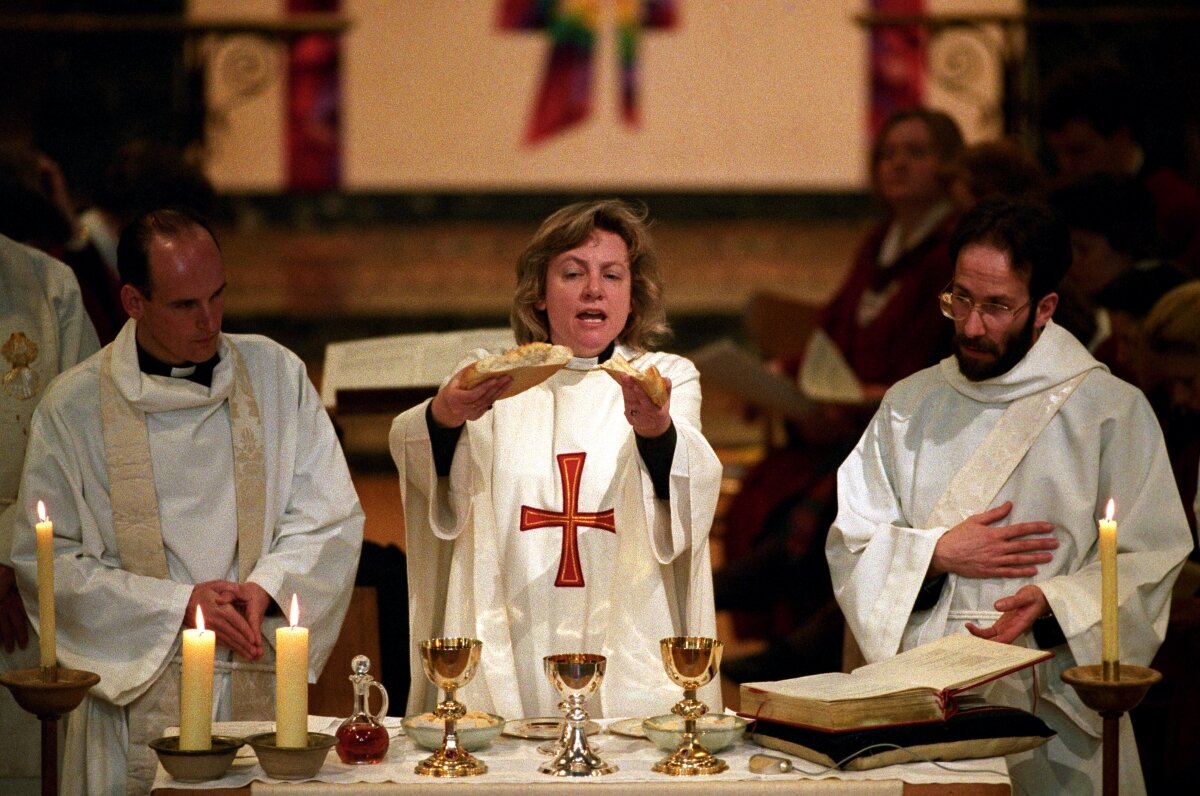
All of the above does not exhaust the diversity of theological trends in modern Protestantism. Along with well-established academic concepts, there are rather marginal areas in it, for example: theology of social action, Protestant liberation theology (an analogue of the Catholic movement of the same name), “black” theology, ecotheology, feminist theology. The liberalization of Protestant churches led to the practice of ordaining women for pastoral and later episcopal ministry.; recognition of homosexual relations as permissible from the point of view of Christian ethics; recognition of the possibility of euthanasia, etc.
Another characteristic feature of many modern Protestant societies, including those belonging to historical Protestantism (Lutheranism, Reformed Christianity, and to a lesser extent Anglicanism), is the tendency to introduce charismatic practices into church life that were previously unknown and even directly condemned. In practice, this is reflected in the unconventional musical accompaniment of divine services – instead of the traditional organ, guitars, drums and tambourines can now be used during divine services, liturgical experiments, the use of extravagant liturgical vestments (for example, the so-called “clown Masses”, during which the liturgist uses clown makeup and other attributes, Halloween masses with their gloomy surroundings).
Protestant confessionalism is trying to counterbalance these trends. Confessionalism opposes the liberal unification of Christianity. Supporters of confessionalism often turn to the theological models and concepts of early Protestantism. While upholding the ideas of confessional infallibility, adherents of this trend zealously protect the doctrine of faith and ritual practices from non—confessional, primarily Catholic influence. Despite the fact that fundamentalism and confessionalism represent movements that differ in goals, objectives, and origins, they are united by their rejection of the ideas of liberal theology and the ideologies of the postmodern world.
All of the above allows us to state that at the present stage, “classical” Protestantism represents a wide range of different trends and movements (intra- and supra-confessional), some of which in one way or another are close to Orthodoxy and are ready for dialogue with it, while others are becoming more and more distant from traditional Christian faith and moralizing.
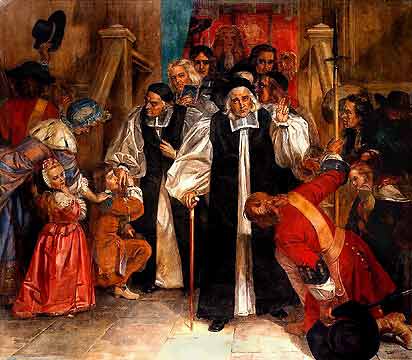
In the 18th century, Orthodox theologians were no longer in dialogue with Lutherans or Reformed Christians, but with Anglicans. The latter entered into a discussion with Orthodoxy under the pressure of historical circumstances. In 1688, William of Orange became King of England. The previous Catholic monarch, James II, fled the country. The subjects of the new King William III were required to take an oath of allegiance to him. Which was done. Eight Anglican bishops from England, Ireland, and Scotland, including the Archbishop of Canterbury, refused to swear allegiance to the new king while the old one was alive, meaning they followed the rule of the “Divine Right” of kings. Despite the fact that James II was a Catholic. The parliament set a condition for the “non-jurors” bishops: to take the oath to the new king on pain of losing their place of ministry. But the rebellious bishops and with them about 400 priests in England and almost the entire clergy of the Episcopal Church of Scotland did not swear an oath. This is how the “non-jurors” movement emerged, which survived until the end of the 18th century.
The “non-jurors” decreased in number over time and were not recognized by anyone. In these circumstances, they tried to find an opportunity to unite with a large and influential Church. In addition, Cyril Lucaris visited England in the 17th century, corresponded with Archbishop of Canterbury George Abbot and sent Greek Orthodox students to study at Oxford.
In 1716, at a meeting of the “non-jurors,” Bishop Archibald Campbell of Scotland reported on his secret conversations in London with Metropolitan Arseny of the Church of Alexandria, who was there on a visit, about the possibility of uniting churches. Most likely, Mitr. Arseny did not mean the “unification” of the churches, but the joining of the “non-orthodox” to Orthodoxy. But the Anglicans understood the meaning of the conversations differently. The proposal for the unification of the Orthodox and Anglican Churches was drafted, translated into Greek and sent to the Patriarchs of Constantinople, Alexandria, Jerusalem and Antioch. In addition, this text was addressed to the Russian Emperor Peter I. In the message, the “non-jurors” on behalf of the Anglicans called themselves “the Orthodox and Catholic remnant of the British Church.” Having listed the points on which there are no differences between the Anglicans and the Orthodox, the authors of the message indicated five positions of the Orthodox faith that are unacceptable to them:
- To recognize the definitions of the Ecumenical Councils as obligatory along with the Holy By writing
- To pray to the Blessed Virgin Mary
- To honor angels and saints
- To believe in and worship the transfiguration of the Holy Gifts in the Eucharist
- To honor icons
The “non-jurors” response was drafted by Patriarch Chrysanthos of Jerusalem and approved in 1718 at the Council of Constantinople by Patriarch Jeremiah III of Constantinople and Patriarch Samuel of Alexandria. He allowed some administrative concessions (for example, granting the Patriarch of Jerusalem the status of primate, as the Anglicans wanted). At the same time, the texts of the tomoses of the Constantinople Councils of 1672 and 1691 were attached to the answer. The latter explicitly stated the position of the Orthodox Church regarding the term “transubstantiation,” which was strongly denied by the Anglicans. The response of the Council of 1718 was first sent to Russia, and only in 1722 reached the “non-jurors” (along with letters from Chancellor Count Golovkin and the Holy Synod).
After receiving the answer, the “non-jurors” sent a second message to the Patriarchs through the Holy Governing Synod of the Russian Orthodox Church, in which they assured them that if there was agreement on the veneration of icons and the worship of the Holy Gifts, then all obstacles to unification would be removed, and peace and complete harmony would be established between them and the Orthodox. The Holy Synod replied in a “non-threatening manner” that it “very favorably” accepted the desire of the Anglicans to “have unity and peace” with the Orthodox and in 1723 promised to apply “every care to such a holy cause.”
At the same time, the Holy Synod asked the Eastern Patriarchs to provide their opinion on the case. In 1723, Patriarchs Jeremiah of Constantinople, Athanasius of Antioch, and Chrysanthos of Jerusalem sent their response to the second epistle of the Anglicans through the Holy Synod. The message was purely dogmatic, based on the “Confession” of Patriarch Dositheus, and boiled down to the following: if Anglicans do not accept Orthodox teaching in its entirety, there can be no question of uniting the churches. This response to the “non- jurors” became known as the “Epistle of the Patriarchs of the Eastern Catholic Church on the Orthodox Faith.” After such an answer, it became obvious that it was pointless to continue negotiations. The Synod of the Russian Church continued the correspondence, but in early 1725 negotiations with the “non- jurors” stopped due to the death of Emperor Peter I.
The “non-jurors” have developed a special idea of the catholicity of the Church, by virtue of which each church, individually, neither Roman Catholic, Orthodox, nor Anglican, each does not constitute a true Church in itself, but only in their totality and in their unanimity they constitute the Universal Church. Thus, do they laid the foundation for the so-called “branch theory”, which received its final form in the Oxford Movement and played a role in the formation of the international ecumenical movement in the twentieth century.
Summing up the Orthodox-Protestant polemic of the XVI-XVIII centuries, it should be noted that in Orthodox theology there are different assessments of the documents compiled as a result of it. Sometimes these documents are called “symbolic texts”, that is, containing in one form or another a catholic expression of the Orthodox faith. Or as the archbishop Vasily (Krivoshein) notes: “The above is especially applicable to two symbolic monuments of the 17th century, which became particularly famous in the Russian Orthodox Church – the Orthodox Confession of Peter the Grave and the Confession of Faith of Patriarch Dositheus (the so-called Epistle of the Four Patriarchs). The Confession of Faith of Mitrofan Kritopulo is higher than them on the theological level, although it is not a conciliar document and has its drawbacks.”
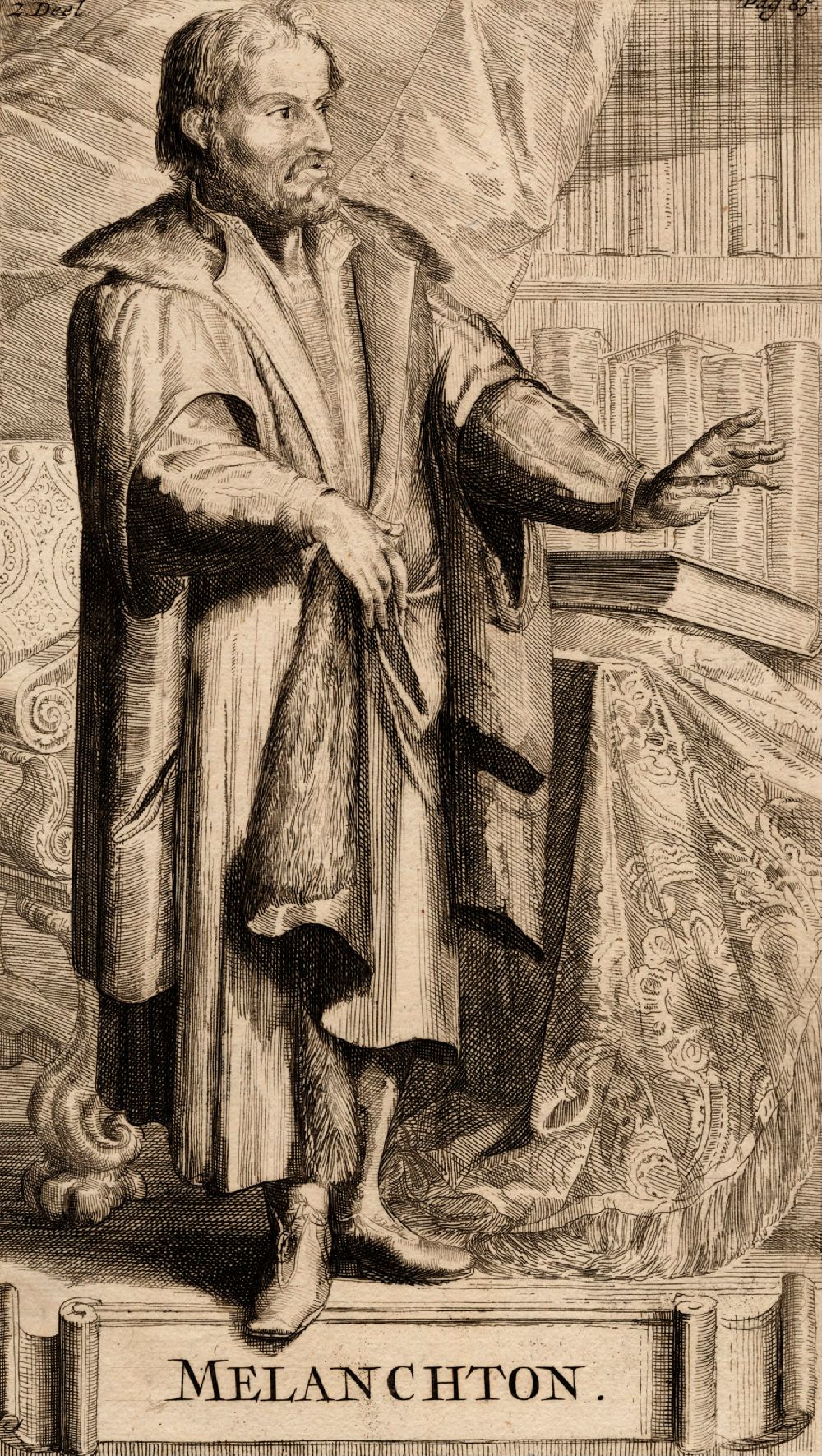
According to established tradition, it is generally believed that Patriarch Joasaph II of Constantinople (c. 1535 – after 1565) sent Deacon Dimitri Mizos to Germany to familiarize himself with the teachings of Protestants. He went to Wittenberg in 1559, where he met an associate of M. Luther, P. Melanchthon. It was Mizos who initiated Melanchthon’s contacts with the Patriarch of Constantinople, and from him the German theologian learned about the existence of the Orthodox Church within the Ottoman Empire. In 1559 Melanchthon sent a letter to the primate of the Church of Constantinople, enclosing a Greek translation of the Augsburg Confession of Faith. Patriarch Joasaph did not respond to Melanchthon’s letter, and contacts with Lutherans did not begin at that time.
The following episode from the history of Orthodox-Lutheran relations is connected with the University of Tübingen. In 1573, the German Emperor Maximilian II of Habsburg sent an embassy to Constantinople, headed by the Lutheran Baron David Ungnad von Sandack. The chaplain of the embassy was Lutheran theologian Stefan Gerlach, a graduate of the University of Tübingen, who had letters from the rector of the university with him. Andrea and Professor M. Cruzia, addressed to Patriarch Jeremiah II of Constantinople (1530-1595) and written with the aim of starting a discussion with the Orthodoxy. The main result of the theological discussions between Orthodox and Lutherans and the Patriarch’s own reflections were the “Answers” of the Church of Constantinople, compiled on behalf of Jeremiah, to the Lutherans. There were three such answers. The texts of the “answers” were included in the corpus of documents that the twentieth-century Greek theologian Professor John Karmiris called “Dogmatic and Symbolic Monuments of the Orthodox Catholic Church” (Athens, 1952-1953).
In 1576, the draft of the first response was ready. The “Reply” consists of 21 chapters, while the Augsburg Confession has 28 paragraphs. Nevertheless, the content of the “Reply” covers the entire Augsburg Confession. The Patriarch’s reply clearly expressed his rejection of the insertion of the Filioque in the Nicene-Tsaregrad Creed; the statement that Baptism is performed by triple immersion, and not by pouring, “as among the Latins”; the statement of seven Sacraments, not two, as among Protestants. Patriarch Jeremiah also disagrees with the Lutherans’ understanding of “justifying faith”: “The Catholic (Orthodox) Church requires living faith, witnessed through good works.” Jeremiah further explains the Orthodox understanding of the dogma of the Church, the sacraments of Baptism and the Eucharist, and refutes the Protestant view that the Holy Sacraments were established to be only “some symbols or signs that distinguish Christians from pagans, but much more than that, to be signs and evidence of God’s favor and grace toward us.” The Patriarch also defends the doctrine of the freedom of human will, the veneration of saints and the Most Holy Gods Mother. At the end of the “Reply”, it says: “All this that we have said, beloved, as you well know, is based on Inspired Scripture, on the interpretation of our wise and holy theologians, on sound teaching and evidence, for you are not allowed to rely on your own explanation,” meaning the interpretation of Scripture. This appeal is also part of the controversy, as Protestants reject the meaning of Sacred Tradition and base their interpretation of the Bible on other grounds.
The beginning of the controversy between Patriarch Jeremiah and the Lutherans was conducted in a calm tone. Rather, the doctrinal positions of each side were explained, as if urging them to agree with the arguments of the opposite side. Over time, the discussion became more acute. This is evident from the response from Tubingen to Patriarch Jeremiah’s “Reply” received in 1577. In particular, it was noted that the definitions of Ecumenical councils and the writings of the holy Fathers are not used to understand theological issues, but only Holy Scripture.
The second “Reply” from Patriarch Jeremiah was sent in 1579. The Primate wrote only about those topics that caused the greatest disagreement between Orthodox and Protestants.
The third “Reply” was transmitted to Tübingen in 1581. These letters no longer contained anything fundamentally new. “Thus, the Protestant church historian of the 18th century, Gottinger, wrote: “Since there have been clear disagreements on the issues of the exodus of the Holy Spirit, free will, good works, justification by faith alone, the invocation of saints, and monastic life, unity cannot be realized.”
In the end, Jeremiah, convinced of the complete futility of dialogue with the Lutherans, wrote at the end of the third “Reply”:: “In conclusion, we ask you not to bother us any more, not to write about it, not to send us when you interpret the Church’s luminaries and theologians differently, and while honoring and extolling them in words, you actually reject them and prove that our weapons are useless, that is, their holy and divine words, with the help of which we could still write and refute you. So, for your part, save us the trouble. Go your own way, and henceforth do not write to us about dogmas, but only out of friendship, if you decide. Goodbye.” Thus, it can be concluded that the Protestants really raised the issue of the rapprochement of the churches. The Patriarch made it clear that without unity in faith there can be no unification.
According to prof. A. Lebedev, “at the end of the 16th and beginning of the 17th centuries, there was an increasing influx of Greeks who wanted to study at Protestant universities in England, Germany, Switzerland and Holland.” Among such Greeks seeking Protestant wisdom is known, in particular, Priest Mitrofan Kritopoulos (1589-1639), who later became Patriarch of Alexandria (1636-1639). In 1617, then Patriarch Cyril Lucaris of Alexandria, who met Mitrofan on Mount Athos in 1613, sent Mitrofan to England to continue his education, where he remained for more than five years. Then he went to Germany, where he studied and lectured at several universities. In 1625, at the request of Lutheran theologians, Mitrofan Kritopoulos compiled the “Confession of the Eastern, Catholic and Apostolic Churches,” which, like the “Answers” of Patriarch Jeremiah, was aimed at clarifying the Orthodox faith to Lutherans. Although modern researchers, in particular A. I. Papadopoulos- Ceramus, call this work of Mitrofan “pro-protestant.”
But not everyone agrees with him. The archbishop highly appreciated the “Confession” of Kritopoulos. Vasily (Krivoshein): “It (Confession) also has Lutheranism in mind and can be described as the first attempt at a theological assessment of Lutheranism from an Orthodox point of view. From a theological point of view, this is the most outstanding symbolic monument of the 17th century, which most successfully expounds Orthodox teaching.” Nevertheless, it is sacred. Mikhail Zheltov writes: “Mitrofan compiled his “Confession…” in which he outlined the teachings of the Orthodox Church on certain controversial points, distancing himself from both Lutheranism and Catholicism.… However, on the question of the number of sacraments, he nevertheless made concessions to Protestantism, as he distinguished between the 3 sacraments necessary for salvation - Baptism, the Eucharist and Penance - and the 4 other sacraments (Chapter 5 of the Confession …), explaining this by the fact that the 3 main sacraments are “epiphany” (τύπος) They claim to be established by Christ Himself.”
Related Concepts
- adogmatism
- anglican-non-jurors
- anthropology
- anti-evolutionism
- apophaticism
- augustine
- baptism-by-triple-immersion
- bonn-conferences
- bultmann
- conciliar-reception
- confession-of-dositheus
- confession-of-mitrofan-kritopoulos
- confessional-infallibility
- confessionalism
- crisis-of-liberalism
- cult-of-saints
- double-procession
- ecumenical-councils
- epistle-of-the-patriarchs-of-1723
- existential-interpretation
- filioque
- first-world-war
- freedom-of-the-will
- fundamentalism
- good-works
- goths
- gregory-palamas
- holy-spirit
- holy-trinity
- inerrancy
- john-caryophilus
- karl-barth
- latin-influence
- luther
- luthers-verbatim-exegesis
- mark-of-ephesus
- mitrofan-kritopoulos
- nicene-constantinople-creed
- nicene-constantinopolitan-creed
- one-principle
- orthodox-confession-of-peter-mogila
- oxford-movement
- patristic-exegesis
- paul-tillich
- penance
- photius
- postmodernism
- relevance
- second-ecumenical-council
- secular-culture
- secularization
- seventh-ecumenical-council
- st-augustine
- st-maximus-the-confessor
- third-ecumenical-council
- tomos-of-1691
- triadology
- concepts/tübingen-school
- unity-in-faith